User login
Supreme Court strikes down abortion clinic buffer zones
WASHINGTON – A Massachusetts law that established a 35-foot protest-free buffer zone around abortion clinics is unconstitutional, the Supreme Court ruled June 26.
The buffer zone represents a "dramatic intrusion on First Amendment rights," said Chief Justice John Roberts Jr., in reading the opinion from the bench.

The Justices were unanimous that the law was a First Amendment violation, but varied on how they formulated their opinions. Chief Justice Roberts Jr. was joined by Justice Ruth Bader Ginsburg, Justice Stephen G. Breyer, Justice Sonia Sotomayor and Justice Elena Kagan. Justice Antonin Scalia was joined by Justice Anthony M. Kennedy and Justice Clarence Thomas, who all agreed that the law was unconstitutional on its face, and that there were no acceptable alternatives to barring protesters from the clinics. Justice Samuel A. Alito Jr. agreed in a separate concurring opinion.
The 2007 law prohibited most people – with the exception of employees and their agents, patients, and people passing by the clinics – from standing within 35 feet of an abortion clinic. Those buffer zones were delineated by painted lines.
In McCullen v. Coakley, Eleanor McCullen said that the law violated her First Amendment right to talk with women going into the clinics, in an effort to counsel them and persuade them not to have an abortion.
The Chief Justice and his five colleagues agreed and said that though the buffer zones had helped the state maintain public safety and preserve access to the clinics, it had done so at the expense of the First Amendment. Ms. McCullen and her colleagues are not "protesters," the Justices said. Instead, "they seek not merely to express their opposition to abortion, but to engage in personal, caring, consensual conversations with women about various alternatives."
And, they said, "It is not enough for Massachusetts simply to say that other approaches have not worked."
Pro-life groups praised the ruling. "The Massachusetts law impermissibly discriminated against and censored pro-life Americans," said Dr. Charmaine Yoest, president and chief executive officer of Americans United for Life, in a statement. "The pro-abortion position could be represented in the zone, while the pro-life view point was strictly prohibited under threat of criminal sanctions."
The Pro-Life Action League issued a statement following the decision that, "The pro-life movement scored a huge victory at the Supreme Court today."
Pro-choice groups, however, said they were disappointed. Ilyse Hogue, president of NARAL Pro-Choice America, noted that there has been a long history of violence against women who patronize clinics, and physicians and other clinic workers, with 8 murders and 17 attempted murders since 1991.
"Let’s be clear: Today’s decision puts women and health care providers at greater risk," Ms. Hogue said in a statement.
Megan Amundson, executive director of NARAL Pro-Choice Massachusetts, said that the ruling "turns back the clock to when women were too intimidated to seek medical care," adding that "women’s health will suffer because of it."
Planned Parenthood echoed that position. "This decision shows a troubling level of disregard for American women, who should be able to make carefully considered, private medical decisions without running a gauntlet of harassing and threatening protesters," Cecile Richards, president of Planned Parenthood Federation of America, said in a statement.
"We are taking a close look at this ruling, as well as patient protection laws around the country, to ensure that women can continue to make their own health care decisions without fear of harassment or intimidation," she said.
On Twitter @aliciaault
WASHINGTON – A Massachusetts law that established a 35-foot protest-free buffer zone around abortion clinics is unconstitutional, the Supreme Court ruled June 26.
The buffer zone represents a "dramatic intrusion on First Amendment rights," said Chief Justice John Roberts Jr., in reading the opinion from the bench.
The Justices were unanimous that the law was a First Amendment violation, but varied on how they formulated their opinions. Chief Justice Roberts Jr. was joined by Justice Ruth Bader Ginsburg, Justice Stephen G. Breyer, Justice Sonia Sotomayor and Justice Elena Kagan. Justice Antonin Scalia was joined by Justice Anthony M. Kennedy and Justice Clarence Thomas, who all agreed that the law was unconstitutional on its face, and that there were no acceptable alternatives to barring protesters from the clinics. Justice Samuel A. Alito Jr. agreed in a separate concurring opinion.
The 2007 law prohibited most people – with the exception of employees and their agents, patients, and people passing by the clinics – from standing within 35 feet of an abortion clinic. Those buffer zones were delineated by painted lines.
In McCullen v. Coakley, Eleanor McCullen said that the law violated her First Amendment right to talk with women going into the clinics, in an effort to counsel them and persuade them not to have an abortion.
The Chief Justice and his five colleagues agreed and said that though the buffer zones had helped the state maintain public safety and preserve access to the clinics, it had done so at the expense of the First Amendment. Ms. McCullen and her colleagues are not "protesters," the Justices said. Instead, "they seek not merely to express their opposition to abortion, but to engage in personal, caring, consensual conversations with women about various alternatives."
And, they said, "It is not enough for Massachusetts simply to say that other approaches have not worked."
Pro-life groups praised the ruling. "The Massachusetts law impermissibly discriminated against and censored pro-life Americans," said Dr. Charmaine Yoest, president and chief executive officer of Americans United for Life, in a statement. "The pro-abortion position could be represented in the zone, while the pro-life view point was strictly prohibited under threat of criminal sanctions."
The Pro-Life Action League issued a statement following the decision that, "The pro-life movement scored a huge victory at the Supreme Court today."
Pro-choice groups, however, said they were disappointed. Ilyse Hogue, president of NARAL Pro-Choice America, noted that there has been a long history of violence against women who patronize clinics, and physicians and other clinic workers, with 8 murders and 17 attempted murders since 1991.
"Let’s be clear: Today’s decision puts women and health care providers at greater risk," Ms. Hogue said in a statement.
Megan Amundson, executive director of NARAL Pro-Choice Massachusetts, said that the ruling "turns back the clock to when women were too intimidated to seek medical care," adding that "women’s health will suffer because of it."
Planned Parenthood echoed that position. "This decision shows a troubling level of disregard for American women, who should be able to make carefully considered, private medical decisions without running a gauntlet of harassing and threatening protesters," Cecile Richards, president of Planned Parenthood Federation of America, said in a statement.
"We are taking a close look at this ruling, as well as patient protection laws around the country, to ensure that women can continue to make their own health care decisions without fear of harassment or intimidation," she said.
On Twitter @aliciaault
WASHINGTON – A Massachusetts law that established a 35-foot protest-free buffer zone around abortion clinics is unconstitutional, the Supreme Court ruled June 26.
The buffer zone represents a "dramatic intrusion on First Amendment rights," said Chief Justice John Roberts Jr., in reading the opinion from the bench.
The Justices were unanimous that the law was a First Amendment violation, but varied on how they formulated their opinions. Chief Justice Roberts Jr. was joined by Justice Ruth Bader Ginsburg, Justice Stephen G. Breyer, Justice Sonia Sotomayor and Justice Elena Kagan. Justice Antonin Scalia was joined by Justice Anthony M. Kennedy and Justice Clarence Thomas, who all agreed that the law was unconstitutional on its face, and that there were no acceptable alternatives to barring protesters from the clinics. Justice Samuel A. Alito Jr. agreed in a separate concurring opinion.
The 2007 law prohibited most people – with the exception of employees and their agents, patients, and people passing by the clinics – from standing within 35 feet of an abortion clinic. Those buffer zones were delineated by painted lines.
In McCullen v. Coakley, Eleanor McCullen said that the law violated her First Amendment right to talk with women going into the clinics, in an effort to counsel them and persuade them not to have an abortion.
The Chief Justice and his five colleagues agreed and said that though the buffer zones had helped the state maintain public safety and preserve access to the clinics, it had done so at the expense of the First Amendment. Ms. McCullen and her colleagues are not "protesters," the Justices said. Instead, "they seek not merely to express their opposition to abortion, but to engage in personal, caring, consensual conversations with women about various alternatives."
And, they said, "It is not enough for Massachusetts simply to say that other approaches have not worked."
Pro-life groups praised the ruling. "The Massachusetts law impermissibly discriminated against and censored pro-life Americans," said Dr. Charmaine Yoest, president and chief executive officer of Americans United for Life, in a statement. "The pro-abortion position could be represented in the zone, while the pro-life view point was strictly prohibited under threat of criminal sanctions."
The Pro-Life Action League issued a statement following the decision that, "The pro-life movement scored a huge victory at the Supreme Court today."
Pro-choice groups, however, said they were disappointed. Ilyse Hogue, president of NARAL Pro-Choice America, noted that there has been a long history of violence against women who patronize clinics, and physicians and other clinic workers, with 8 murders and 17 attempted murders since 1991.
"Let’s be clear: Today’s decision puts women and health care providers at greater risk," Ms. Hogue said in a statement.
Megan Amundson, executive director of NARAL Pro-Choice Massachusetts, said that the ruling "turns back the clock to when women were too intimidated to seek medical care," adding that "women’s health will suffer because of it."
Planned Parenthood echoed that position. "This decision shows a troubling level of disregard for American women, who should be able to make carefully considered, private medical decisions without running a gauntlet of harassing and threatening protesters," Cecile Richards, president of Planned Parenthood Federation of America, said in a statement.
"We are taking a close look at this ruling, as well as patient protection laws around the country, to ensure that women can continue to make their own health care decisions without fear of harassment or intimidation," she said.
On Twitter @aliciaault
AT THE U.S. SUPREME COURT

OTC topical acne meds can cause severe reactions
The Food and Drug Administration says that some over-the-counter acne products can cause severe hypersensitivity or allergic reactions and is warning consumers to discontinue use immediately and seek emergency medical attention if they experience such symptoms.
The reactions seem to be on the upswing, according to the agency’s review of reports from 1969 to early 2013.

The agency said in safety announcement that it has not determined whether the reactions are being triggered by the active ingredients in the products – benzoyl peroxide or salicylic acid – or by the inactive ingredients or a combination of the inactive and active ingredients.
The products include Proactiv, Neutrogena, MaxClarity, Oxy, Ambi, Aveeno, Clean & Clear, and private label store brands, and are sold as gels, lotions, face washes, solutions, cleansing pads, toners, and face scrubs, among other products, according to the agency.
The FDA has received reports stating that – within minutes to a day or longer of use – consumers have had hypersensitivity reactions that include throat tightness, difficulty breathing, or swelling of the eyes, face, lips, or tongue. Hives and itching are also indications of an allergic reaction.
From 1969 to January 2013, the agency identified 131 cases of hypersensitivity reactions, with the majority reported in 2012-2013. A total of 86% (113) of the cases were in women, and the reactions were reported in people aged 11-78 years.
There were no deaths, but 58 of the consumers were hospitalized. A total of 38 of the 131 cases (29%) were categorized as anaphylactic reactions, and the remainder were categorized as nonanaphylactic hypersensitivity. Almost half of the consumers said they had discontinued use after the reaction, the majority of whom reported some degree of recovery after discontinuing product use, with final outcomes unavailable for the rest. Four of the patients who used the product again reported a recurrence of the reaction.
The agency is encouraging manufacturers to add directions on testing for hypersensitivity to the labels of all OTC topical acne products. Some labels already include those instructions, which direct users to apply a small amount to one or two small affected areas of the skin for 3 days. If there is no reaction – topical or otherwise – then the product can be used according to the directions.
Consumers are also being urged to avoid using a product if they have previously experienced a hypersensitivity reaction with its use.
The FDA says that physicians should be aware that some topical prescription acne drug products also contain warnings about allergic reactions, including anaphylaxis.
Physicians can report adverse events involving OTC topical acne products to the FDA MedWatch program.
On Twitter @aliciaault
The Food and Drug Administration says that some over-the-counter acne products can cause severe hypersensitivity or allergic reactions and is warning consumers to discontinue use immediately and seek emergency medical attention if they experience such symptoms.
The reactions seem to be on the upswing, according to the agency’s review of reports from 1969 to early 2013.
The agency said in safety announcement that it has not determined whether the reactions are being triggered by the active ingredients in the products – benzoyl peroxide or salicylic acid – or by the inactive ingredients or a combination of the inactive and active ingredients.
The products include Proactiv, Neutrogena, MaxClarity, Oxy, Ambi, Aveeno, Clean & Clear, and private label store brands, and are sold as gels, lotions, face washes, solutions, cleansing pads, toners, and face scrubs, among other products, according to the agency.
The FDA has received reports stating that – within minutes to a day or longer of use – consumers have had hypersensitivity reactions that include throat tightness, difficulty breathing, or swelling of the eyes, face, lips, or tongue. Hives and itching are also indications of an allergic reaction.
From 1969 to January 2013, the agency identified 131 cases of hypersensitivity reactions, with the majority reported in 2012-2013. A total of 86% (113) of the cases were in women, and the reactions were reported in people aged 11-78 years.
There were no deaths, but 58 of the consumers were hospitalized. A total of 38 of the 131 cases (29%) were categorized as anaphylactic reactions, and the remainder were categorized as nonanaphylactic hypersensitivity. Almost half of the consumers said they had discontinued use after the reaction, the majority of whom reported some degree of recovery after discontinuing product use, with final outcomes unavailable for the rest. Four of the patients who used the product again reported a recurrence of the reaction.
The agency is encouraging manufacturers to add directions on testing for hypersensitivity to the labels of all OTC topical acne products. Some labels already include those instructions, which direct users to apply a small amount to one or two small affected areas of the skin for 3 days. If there is no reaction – topical or otherwise – then the product can be used according to the directions.
Consumers are also being urged to avoid using a product if they have previously experienced a hypersensitivity reaction with its use.
The FDA says that physicians should be aware that some topical prescription acne drug products also contain warnings about allergic reactions, including anaphylaxis.
Physicians can report adverse events involving OTC topical acne products to the FDA MedWatch program.
On Twitter @aliciaault
The Food and Drug Administration says that some over-the-counter acne products can cause severe hypersensitivity or allergic reactions and is warning consumers to discontinue use immediately and seek emergency medical attention if they experience such symptoms.
The reactions seem to be on the upswing, according to the agency’s review of reports from 1969 to early 2013.
The agency said in safety announcement that it has not determined whether the reactions are being triggered by the active ingredients in the products – benzoyl peroxide or salicylic acid – or by the inactive ingredients or a combination of the inactive and active ingredients.
The products include Proactiv, Neutrogena, MaxClarity, Oxy, Ambi, Aveeno, Clean & Clear, and private label store brands, and are sold as gels, lotions, face washes, solutions, cleansing pads, toners, and face scrubs, among other products, according to the agency.
The FDA has received reports stating that – within minutes to a day or longer of use – consumers have had hypersensitivity reactions that include throat tightness, difficulty breathing, or swelling of the eyes, face, lips, or tongue. Hives and itching are also indications of an allergic reaction.
From 1969 to January 2013, the agency identified 131 cases of hypersensitivity reactions, with the majority reported in 2012-2013. A total of 86% (113) of the cases were in women, and the reactions were reported in people aged 11-78 years.
There were no deaths, but 58 of the consumers were hospitalized. A total of 38 of the 131 cases (29%) were categorized as anaphylactic reactions, and the remainder were categorized as nonanaphylactic hypersensitivity. Almost half of the consumers said they had discontinued use after the reaction, the majority of whom reported some degree of recovery after discontinuing product use, with final outcomes unavailable for the rest. Four of the patients who used the product again reported a recurrence of the reaction.
The agency is encouraging manufacturers to add directions on testing for hypersensitivity to the labels of all OTC topical acne products. Some labels already include those instructions, which direct users to apply a small amount to one or two small affected areas of the skin for 3 days. If there is no reaction – topical or otherwise – then the product can be used according to the directions.
Consumers are also being urged to avoid using a product if they have previously experienced a hypersensitivity reaction with its use.
The FDA says that physicians should be aware that some topical prescription acne drug products also contain warnings about allergic reactions, including anaphylaxis.
Physicians can report adverse events involving OTC topical acne products to the FDA MedWatch program.
On Twitter @aliciaault

Maintenance of certification took center stage at AMA Congress of Delegates
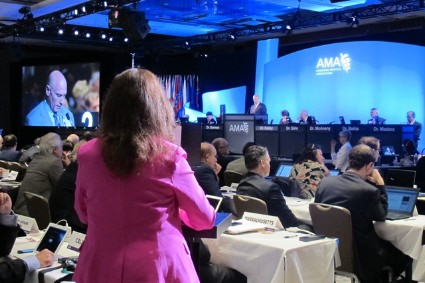
CHICAGO – The American Medical Association should continue to work with the American Board of Medical Specialties to address physicians’ concerns about Maintenance of Certification – that was the consensus at the annual meeting of the AMA House of Delegates.
The AMA’s delegates defeated a resolution that asked the organization to put a moratorium on MOC until it was proven to improve the quality of care and patient outcomes. However, they did agree to a new policy that directs the AMA to:

• Explore with independent entities the feasibility of conducting a study to evaluate the effect MOC requirements and Maintenance of Licensure principles have on workforce, practice costs, patient outcomes, patient safety, and patient access.
• Work with the American Board of Medical Specialties and its 24 member boards to collect data on why physicians choose to maintain or discontinue their board certification.
• Work with the ABMS and the Federation of State Medical Boards to study whether MOC and the principles of Maintenance of Licensure are important factors to physicians when deciding whether to retire and whether they have a direct effect on workforce.
• Oppose making MOC mandatory as a condition of medical licensure, and encourage physicians to strive constantly to improve their care of patients by the means they find most effective.
The new policy applies to both the ABMS MOC process and the Osteopathic Continuous Certification (OCC) process.
Physicians have increasingly voiced their concerns about MOC. Dr. Paul Teirstein, chief of cardiology and director of interventional cardiology for Scripps Clinic in La Jolla, Calif., launched a petition drive to overhaul the American Board of Internal Medicine’s MOC process. The petition has more than 17,000 signatures.
The ABIM says that it is listening to physicians and is making changes in the process, but also recently said that more than 150,000 physicians had participated in its MOC process – making the May 1 deadline to be listed on the ABIM website as having met the MOC criteria.
But anger is still bubbling up, and was expressed at the AMA’s meeting.
"Practicing physicians on the front lines are increasingly burdened, hassled, and confused by the onerous and expensive process of Maintenance of Certification and Maintenance of Licensure," said Dr. James A. Goodyear, a delegate from Pennsylvania.
Dr. Goodyear introduced the resolution to seek a moratorium on the MOC.
But Dr. Darlyne Menscer, a member of the AMA Council on Medical Education, told the delegates that such a moratorium would put a wedge in the close working relationship the AMA has had with the ABMS. "This is more prescriptive than we can commit to as a council, although we definitely do hear the concerns of the House," added Dr. Menscer.
The AMA has been discussing the concerns about MOC with the ABMS, most recently holding a meeting in Chicago in early June.
Dr. Joshua Cohen, a delegate from the American Academy of Neurology, and a member of the AMA Foundation’s Board of Directors, who attended that meeting, also argued against a moratorium. "It would make it impossible for the AMA to improve the process going forward," said Dr. Cohen.
Dr. Chuck Wilson, a pediatrician and delegate from the North Carolina delegation, also opposed any major change in direction for the AMA. He noted that if the AMA was seen as opposed to MOC, it might not be viewed well. "We all want it to be less onerous," said Dr. Wilson. But, he noted, "the Council on Medical Education is working in that direction. Let’s give them a chance to be successful."
In a statement after the HOD meeting, the AMA said that it "continues to ensure the MOC process does not disrupt physician practice or reduce the capacity of the overall physician workforce." Concerns about MOC "center around the need for relevance to the daily practice of physicians and the better integration into physician practices to optimally support learning and improvement."
On Twitter @aliciaault
CHICAGO – The American Medical Association should continue to work with the American Board of Medical Specialties to address physicians’ concerns about Maintenance of Certification – that was the consensus at the annual meeting of the AMA House of Delegates.
The AMA’s delegates defeated a resolution that asked the organization to put a moratorium on MOC until it was proven to improve the quality of care and patient outcomes. However, they did agree to a new policy that directs the AMA to:
• Explore with independent entities the feasibility of conducting a study to evaluate the effect MOC requirements and Maintenance of Licensure principles have on workforce, practice costs, patient outcomes, patient safety, and patient access.
• Work with the American Board of Medical Specialties and its 24 member boards to collect data on why physicians choose to maintain or discontinue their board certification.
• Work with the ABMS and the Federation of State Medical Boards to study whether MOC and the principles of Maintenance of Licensure are important factors to physicians when deciding whether to retire and whether they have a direct effect on workforce.
• Oppose making MOC mandatory as a condition of medical licensure, and encourage physicians to strive constantly to improve their care of patients by the means they find most effective.
The new policy applies to both the ABMS MOC process and the Osteopathic Continuous Certification (OCC) process.
Physicians have increasingly voiced their concerns about MOC. Dr. Paul Teirstein, chief of cardiology and director of interventional cardiology for Scripps Clinic in La Jolla, Calif., launched a petition drive to overhaul the American Board of Internal Medicine’s MOC process. The petition has more than 17,000 signatures.
The ABIM says that it is listening to physicians and is making changes in the process, but also recently said that more than 150,000 physicians had participated in its MOC process – making the May 1 deadline to be listed on the ABIM website as having met the MOC criteria.
But anger is still bubbling up, and was expressed at the AMA’s meeting.
"Practicing physicians on the front lines are increasingly burdened, hassled, and confused by the onerous and expensive process of Maintenance of Certification and Maintenance of Licensure," said Dr. James A. Goodyear, a delegate from Pennsylvania.
Dr. Goodyear introduced the resolution to seek a moratorium on the MOC.
But Dr. Darlyne Menscer, a member of the AMA Council on Medical Education, told the delegates that such a moratorium would put a wedge in the close working relationship the AMA has had with the ABMS. "This is more prescriptive than we can commit to as a council, although we definitely do hear the concerns of the House," added Dr. Menscer.
The AMA has been discussing the concerns about MOC with the ABMS, most recently holding a meeting in Chicago in early June.
Dr. Joshua Cohen, a delegate from the American Academy of Neurology, and a member of the AMA Foundation’s Board of Directors, who attended that meeting, also argued against a moratorium. "It would make it impossible for the AMA to improve the process going forward," said Dr. Cohen.
Dr. Chuck Wilson, a pediatrician and delegate from the North Carolina delegation, also opposed any major change in direction for the AMA. He noted that if the AMA was seen as opposed to MOC, it might not be viewed well. "We all want it to be less onerous," said Dr. Wilson. But, he noted, "the Council on Medical Education is working in that direction. Let’s give them a chance to be successful."
In a statement after the HOD meeting, the AMA said that it "continues to ensure the MOC process does not disrupt physician practice or reduce the capacity of the overall physician workforce." Concerns about MOC "center around the need for relevance to the daily practice of physicians and the better integration into physician practices to optimally support learning and improvement."
On Twitter @aliciaault
CHICAGO – The American Medical Association should continue to work with the American Board of Medical Specialties to address physicians’ concerns about Maintenance of Certification – that was the consensus at the annual meeting of the AMA House of Delegates.
The AMA’s delegates defeated a resolution that asked the organization to put a moratorium on MOC until it was proven to improve the quality of care and patient outcomes. However, they did agree to a new policy that directs the AMA to:
• Explore with independent entities the feasibility of conducting a study to evaluate the effect MOC requirements and Maintenance of Licensure principles have on workforce, practice costs, patient outcomes, patient safety, and patient access.
• Work with the American Board of Medical Specialties and its 24 member boards to collect data on why physicians choose to maintain or discontinue their board certification.
• Work with the ABMS and the Federation of State Medical Boards to study whether MOC and the principles of Maintenance of Licensure are important factors to physicians when deciding whether to retire and whether they have a direct effect on workforce.
• Oppose making MOC mandatory as a condition of medical licensure, and encourage physicians to strive constantly to improve their care of patients by the means they find most effective.
The new policy applies to both the ABMS MOC process and the Osteopathic Continuous Certification (OCC) process.
Physicians have increasingly voiced their concerns about MOC. Dr. Paul Teirstein, chief of cardiology and director of interventional cardiology for Scripps Clinic in La Jolla, Calif., launched a petition drive to overhaul the American Board of Internal Medicine’s MOC process. The petition has more than 17,000 signatures.
The ABIM says that it is listening to physicians and is making changes in the process, but also recently said that more than 150,000 physicians had participated in its MOC process – making the May 1 deadline to be listed on the ABIM website as having met the MOC criteria.
But anger is still bubbling up, and was expressed at the AMA’s meeting.
"Practicing physicians on the front lines are increasingly burdened, hassled, and confused by the onerous and expensive process of Maintenance of Certification and Maintenance of Licensure," said Dr. James A. Goodyear, a delegate from Pennsylvania.
Dr. Goodyear introduced the resolution to seek a moratorium on the MOC.
But Dr. Darlyne Menscer, a member of the AMA Council on Medical Education, told the delegates that such a moratorium would put a wedge in the close working relationship the AMA has had with the ABMS. "This is more prescriptive than we can commit to as a council, although we definitely do hear the concerns of the House," added Dr. Menscer.
The AMA has been discussing the concerns about MOC with the ABMS, most recently holding a meeting in Chicago in early June.
Dr. Joshua Cohen, a delegate from the American Academy of Neurology, and a member of the AMA Foundation’s Board of Directors, who attended that meeting, also argued against a moratorium. "It would make it impossible for the AMA to improve the process going forward," said Dr. Cohen.
Dr. Chuck Wilson, a pediatrician and delegate from the North Carolina delegation, also opposed any major change in direction for the AMA. He noted that if the AMA was seen as opposed to MOC, it might not be viewed well. "We all want it to be less onerous," said Dr. Wilson. But, he noted, "the Council on Medical Education is working in that direction. Let’s give them a chance to be successful."
In a statement after the HOD meeting, the AMA said that it "continues to ensure the MOC process does not disrupt physician practice or reduce the capacity of the overall physician workforce." Concerns about MOC "center around the need for relevance to the daily practice of physicians and the better integration into physician practices to optimally support learning and improvement."
On Twitter @aliciaault
AT THE AMA HOD MEETING
House subcommittee OKs sunscreen ingredient proposal
The Health subcommittee of the House Energy & Commerce Committee unanimously advanced a proposal to make it easier for manufacturers to get new sunscreen ingredients approved by the Food and Drug Administration.
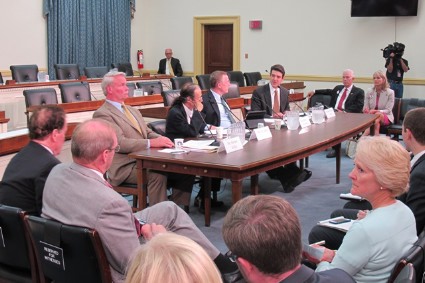
The subcommittee approved the legislation, the Sunscreen Innovation Act (H.R. 4250) on June 19. It has now been referred to the full Energy & Commerce Committee for approval.
One of the bill’s cosponsors, Rep. Ed Whitfield (R-Ky.) said that too many potentially innovative ingredients were languishing at the FDA, including at least one that had been there for a decade. "The American public is being denied effective sunscreen products that have been used safely overseas for years," said Rep. Whitfield, at a mark-up of the legislation.
He said that two outside advocacy groups – the Public Access To SunScreens (PASS) Coalition, a partnership of health organizations, sunscreen ingredient companies, and citizens, and the Environmental Working Group – had been instrumental in crafting the legislation and making sure there was an agreement that would satisfy manufacturers and also protect the public’s health.
Energy & Commerce Committee Chairman Fred Upton (R-Mich.) said in a statement submitted for the record that "it is unacceptable that the FDA has not approved a new sunscreen ingredient in nearly 2 decades." He said this was especially a problem given that there is now "a much better understanding of the deadly consequences of excessive sun exposure."
The Sunscreen Innovation Act would overhaul the reviews and approval process, said Rep. Upton.
Members of the committee are still hashing out some issues on the legislation, including timeframes for FDA review of pending and new applications. Rep. Henry Waxman (D-Calif.) said that the review process had led to "unacceptable backlogs" and unnecessary delays, but, he added, "I will not support a bill that sets FDA up for failure by imposing unrealistic timeframes for action."
The full Energy & Commerce Committee has not yet scheduled a date for taking up the bill.
On Twitter @aliciaault
The Health subcommittee of the House Energy & Commerce Committee unanimously advanced a proposal to make it easier for manufacturers to get new sunscreen ingredients approved by the Food and Drug Administration.
The subcommittee approved the legislation, the Sunscreen Innovation Act (H.R. 4250) on June 19. It has now been referred to the full Energy & Commerce Committee for approval.
One of the bill’s cosponsors, Rep. Ed Whitfield (R-Ky.) said that too many potentially innovative ingredients were languishing at the FDA, including at least one that had been there for a decade. "The American public is being denied effective sunscreen products that have been used safely overseas for years," said Rep. Whitfield, at a mark-up of the legislation.
He said that two outside advocacy groups – the Public Access To SunScreens (PASS) Coalition, a partnership of health organizations, sunscreen ingredient companies, and citizens, and the Environmental Working Group – had been instrumental in crafting the legislation and making sure there was an agreement that would satisfy manufacturers and also protect the public’s health.
Energy & Commerce Committee Chairman Fred Upton (R-Mich.) said in a statement submitted for the record that "it is unacceptable that the FDA has not approved a new sunscreen ingredient in nearly 2 decades." He said this was especially a problem given that there is now "a much better understanding of the deadly consequences of excessive sun exposure."
The Sunscreen Innovation Act would overhaul the reviews and approval process, said Rep. Upton.
Members of the committee are still hashing out some issues on the legislation, including timeframes for FDA review of pending and new applications. Rep. Henry Waxman (D-Calif.) said that the review process had led to "unacceptable backlogs" and unnecessary delays, but, he added, "I will not support a bill that sets FDA up for failure by imposing unrealistic timeframes for action."
The full Energy & Commerce Committee has not yet scheduled a date for taking up the bill.
On Twitter @aliciaault
The Health subcommittee of the House Energy & Commerce Committee unanimously advanced a proposal to make it easier for manufacturers to get new sunscreen ingredients approved by the Food and Drug Administration.
The subcommittee approved the legislation, the Sunscreen Innovation Act (H.R. 4250) on June 19. It has now been referred to the full Energy & Commerce Committee for approval.
One of the bill’s cosponsors, Rep. Ed Whitfield (R-Ky.) said that too many potentially innovative ingredients were languishing at the FDA, including at least one that had been there for a decade. "The American public is being denied effective sunscreen products that have been used safely overseas for years," said Rep. Whitfield, at a mark-up of the legislation.
He said that two outside advocacy groups – the Public Access To SunScreens (PASS) Coalition, a partnership of health organizations, sunscreen ingredient companies, and citizens, and the Environmental Working Group – had been instrumental in crafting the legislation and making sure there was an agreement that would satisfy manufacturers and also protect the public’s health.
Energy & Commerce Committee Chairman Fred Upton (R-Mich.) said in a statement submitted for the record that "it is unacceptable that the FDA has not approved a new sunscreen ingredient in nearly 2 decades." He said this was especially a problem given that there is now "a much better understanding of the deadly consequences of excessive sun exposure."
The Sunscreen Innovation Act would overhaul the reviews and approval process, said Rep. Upton.
Members of the committee are still hashing out some issues on the legislation, including timeframes for FDA review of pending and new applications. Rep. Henry Waxman (D-Calif.) said that the review process had led to "unacceptable backlogs" and unnecessary delays, but, he added, "I will not support a bill that sets FDA up for failure by imposing unrealistic timeframes for action."
The full Energy & Commerce Committee has not yet scheduled a date for taking up the bill.
On Twitter @aliciaault
AMA defers action on Medicaid pay parity
CHICAGO – The American Medical Association House of Delegates voted to defer taking action on Medicaid payment policy so that the primary care societies can continue an almost-year-long lobbying effort to convince Congress to extend a Medicaid pay increase.
The pay increase, established under the Affordable Care Act, brings Medicaid pay up to the same level as Medicare reimbursement for eligible primary care physicians. Currently, family physicians, general internists, pediatricians, and subspecialists in those categories are eligible for the pay increase if they are board certified or can show that at least 60% of the codes they submitted to Medicaid in 2012 were for primary care services. The increase expires on Dec. 31.

At least a year ago, the American Academy of Family Physicians, the American College of Physicians, the American Academy of Pediatrics, the American College of Obstetricians and Gynecologists, and the American Osteopathic Association struck an agreement to urge Congress to extend the pay increase for at least 2 years, and to add ob.gyns. to the list of eligible specialists, Dr. Reid Blackwelder, president of the AAFP, said at the House of Delegates meeting.
He offered a resolution to the House to include ob.gyns. as eligible, but the amendment led to some confusion.
The AMA Council on Medical Service was already recommending that the AMA advocate for both an extension of the payments and to add ob.gyns. to the eligibility list, as AMA policy recognizes them as a primary care specialty.
Initially, an amendment had been offered suggesting that ob.gyns. would have to meet different requirements to get the increased pay. That upset some delegates. But Dr. Blackwelder said that his amendment would "use the same accepted threshold methodology" as for internists, pediatricians, and family physicians.
Even so, many delegates said they were not in favor of the resolution. Dr. Lisa Egbert, an ob.gyn. on the Council on Medical Service, said that for one, current legislation did not give her specialty an opportunity to receive the pay increase. The Council report gave clear directions on how the AMA could lobby Congress to change that, she said.
As debate began again the next day, delegates from the AAFP and the ACP retreated from their amendment, and instead asked that it, along with any AMA action on the pay parity issue, be deferred. They noted the ongoing joint effort by the AAFP, ACP, AAP, and ACOG to help persuade Congress that pay parity needed to be extended.
The four societies sent a letter to Senate Finance Committee leaders Ron Wyden (D-Ore.) and Orrin Hatch (R-Utah) and House Energy & Commerce Committee leaders Fred Upton (R-Mich.) and Henry Waxman (D-Calif.) on May 21, seeking the 2-year extension and also to add ob.gyns.
On June 10, it was resent to the same legislators with 16 additional signatories including other osteopathic organizations, the Society of Hospital Medicine, and the Children’s Hospital Association.
Dr. Yul Ejnes, an ACP delegate and a previous ACP board chairman, urged the AMA delegates to defer action. Otherwise, "it would be injurious to [our] effort, as well as to our AMA, if this body came out with different policy that contradicted what the four organizations are trying to do," said Dr. Ejnes.
AAFP Board Chair Jeffrey Cain agreed. "It would be injurious to the AMA’s reputation to come out against the four groups representing primary care on Capitol Hill," he said.
The delegates voted 223-174 to put off action, referring the amendments and the Council’s report for study by the AMA’s Board of Trustees.
On Twitter @aliciaault
CHICAGO – The American Medical Association House of Delegates voted to defer taking action on Medicaid payment policy so that the primary care societies can continue an almost-year-long lobbying effort to convince Congress to extend a Medicaid pay increase.
The pay increase, established under the Affordable Care Act, brings Medicaid pay up to the same level as Medicare reimbursement for eligible primary care physicians. Currently, family physicians, general internists, pediatricians, and subspecialists in those categories are eligible for the pay increase if they are board certified or can show that at least 60% of the codes they submitted to Medicaid in 2012 were for primary care services. The increase expires on Dec. 31.
At least a year ago, the American Academy of Family Physicians, the American College of Physicians, the American Academy of Pediatrics, the American College of Obstetricians and Gynecologists, and the American Osteopathic Association struck an agreement to urge Congress to extend the pay increase for at least 2 years, and to add ob.gyns. to the list of eligible specialists, Dr. Reid Blackwelder, president of the AAFP, said at the House of Delegates meeting.
He offered a resolution to the House to include ob.gyns. as eligible, but the amendment led to some confusion.
The AMA Council on Medical Service was already recommending that the AMA advocate for both an extension of the payments and to add ob.gyns. to the eligibility list, as AMA policy recognizes them as a primary care specialty.
Initially, an amendment had been offered suggesting that ob.gyns. would have to meet different requirements to get the increased pay. That upset some delegates. But Dr. Blackwelder said that his amendment would "use the same accepted threshold methodology" as for internists, pediatricians, and family physicians.
Even so, many delegates said they were not in favor of the resolution. Dr. Lisa Egbert, an ob.gyn. on the Council on Medical Service, said that for one, current legislation did not give her specialty an opportunity to receive the pay increase. The Council report gave clear directions on how the AMA could lobby Congress to change that, she said.
As debate began again the next day, delegates from the AAFP and the ACP retreated from their amendment, and instead asked that it, along with any AMA action on the pay parity issue, be deferred. They noted the ongoing joint effort by the AAFP, ACP, AAP, and ACOG to help persuade Congress that pay parity needed to be extended.
The four societies sent a letter to Senate Finance Committee leaders Ron Wyden (D-Ore.) and Orrin Hatch (R-Utah) and House Energy & Commerce Committee leaders Fred Upton (R-Mich.) and Henry Waxman (D-Calif.) on May 21, seeking the 2-year extension and also to add ob.gyns.
On June 10, it was resent to the same legislators with 16 additional signatories including other osteopathic organizations, the Society of Hospital Medicine, and the Children’s Hospital Association.
Dr. Yul Ejnes, an ACP delegate and a previous ACP board chairman, urged the AMA delegates to defer action. Otherwise, "it would be injurious to [our] effort, as well as to our AMA, if this body came out with different policy that contradicted what the four organizations are trying to do," said Dr. Ejnes.
AAFP Board Chair Jeffrey Cain agreed. "It would be injurious to the AMA’s reputation to come out against the four groups representing primary care on Capitol Hill," he said.
The delegates voted 223-174 to put off action, referring the amendments and the Council’s report for study by the AMA’s Board of Trustees.
On Twitter @aliciaault
CHICAGO – The American Medical Association House of Delegates voted to defer taking action on Medicaid payment policy so that the primary care societies can continue an almost-year-long lobbying effort to convince Congress to extend a Medicaid pay increase.
The pay increase, established under the Affordable Care Act, brings Medicaid pay up to the same level as Medicare reimbursement for eligible primary care physicians. Currently, family physicians, general internists, pediatricians, and subspecialists in those categories are eligible for the pay increase if they are board certified or can show that at least 60% of the codes they submitted to Medicaid in 2012 were for primary care services. The increase expires on Dec. 31.
At least a year ago, the American Academy of Family Physicians, the American College of Physicians, the American Academy of Pediatrics, the American College of Obstetricians and Gynecologists, and the American Osteopathic Association struck an agreement to urge Congress to extend the pay increase for at least 2 years, and to add ob.gyns. to the list of eligible specialists, Dr. Reid Blackwelder, president of the AAFP, said at the House of Delegates meeting.
He offered a resolution to the House to include ob.gyns. as eligible, but the amendment led to some confusion.
The AMA Council on Medical Service was already recommending that the AMA advocate for both an extension of the payments and to add ob.gyns. to the eligibility list, as AMA policy recognizes them as a primary care specialty.
Initially, an amendment had been offered suggesting that ob.gyns. would have to meet different requirements to get the increased pay. That upset some delegates. But Dr. Blackwelder said that his amendment would "use the same accepted threshold methodology" as for internists, pediatricians, and family physicians.
Even so, many delegates said they were not in favor of the resolution. Dr. Lisa Egbert, an ob.gyn. on the Council on Medical Service, said that for one, current legislation did not give her specialty an opportunity to receive the pay increase. The Council report gave clear directions on how the AMA could lobby Congress to change that, she said.
As debate began again the next day, delegates from the AAFP and the ACP retreated from their amendment, and instead asked that it, along with any AMA action on the pay parity issue, be deferred. They noted the ongoing joint effort by the AAFP, ACP, AAP, and ACOG to help persuade Congress that pay parity needed to be extended.
The four societies sent a letter to Senate Finance Committee leaders Ron Wyden (D-Ore.) and Orrin Hatch (R-Utah) and House Energy & Commerce Committee leaders Fred Upton (R-Mich.) and Henry Waxman (D-Calif.) on May 21, seeking the 2-year extension and also to add ob.gyns.
On June 10, it was resent to the same legislators with 16 additional signatories including other osteopathic organizations, the Society of Hospital Medicine, and the Children’s Hospital Association.
Dr. Yul Ejnes, an ACP delegate and a previous ACP board chairman, urged the AMA delegates to defer action. Otherwise, "it would be injurious to [our] effort, as well as to our AMA, if this body came out with different policy that contradicted what the four organizations are trying to do," said Dr. Ejnes.
AAFP Board Chair Jeffrey Cain agreed. "It would be injurious to the AMA’s reputation to come out against the four groups representing primary care on Capitol Hill," he said.
The delegates voted 223-174 to put off action, referring the amendments and the Council’s report for study by the AMA’s Board of Trustees.
On Twitter @aliciaault
AT THE AMA HOD MEETING

AAP launching initiative to address toxic stress
WASHINGTON – The American Academy of Pediatrics is starting a new initiative that aims to help physicians, researchers, educators, legislators, and parents address the impact of toxic stress on children.
The Center on Healthy, Resilient Children will collect and disseminate the latest scientific evidence on brain health and development and ways to prevent toxic stress. It will also help pediatricians and others identify children who have experienced adversity and then steer them to appropriate supports.

Toxic stress is defined as strong, frequent, and/or prolonged adversity such as physical or emotional abuse, chronic neglect, caregiver substance abuse or mental illness, exposure to violence, and the accumulated burden of economic hardship, according to the Harvard University Center on the Developing Child.
Children in those situations who do not have adequate adult support can develop a prolonged activation of the stress response system, which can disrupt the brain’s development and increase the risk for stress-related disease and cognitive impairment, even into adulthood.
In 2012, the AAP outlined a call to action on toxic stress (Pediatrics 2012;129:e224-e231). The Center is a way to disseminate the policy and translate it into practice, said Dr. V. Fan Tait, AAP associate executive director, and director of its department of Child Health and Wellness. It will coordinate the work of all the AAP sections and committees, and reach out to government agencies and private organizations to help find the gaps, develop tools to address poverty, link with scientists, and encourage, also, said Dr. Tait, a pediatric neurologist.
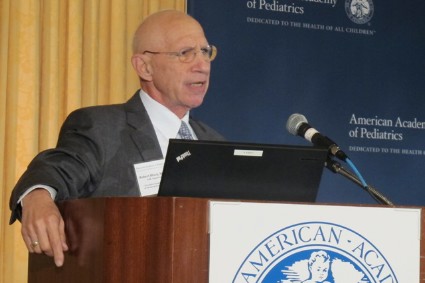
"There needs to be a change in the climate, in our own communities, in our states, and in the way our nation approaches the antecedents of health issues and the antecedents of child wellbeing issues, which are all intimately connected," said Dr. Robert Block, a past president of the AAP who will serve as the medical director of the new center.
Intervening early will help foster an overall healthier society, he said.
"All adults once were children. Who we are, who the adults are, are heavily influenced by what happens in childhood," said Dr. Block, a professor of pediatrics at the University of Oklahoma.
To address toxic stress, pediatricians can first examine ecology of a child’s environment – that is, ask about family life or screen children who might be at high risk of adversity, he said.
There is no perfect screen right now, said Dr. Andrew Garner, chair of the AAP Early Brain and Child Development Leadership Work Group. Instead of focusing on the child’s behavior or dysfunction, pediatricians can "look upstream," said Dr. Garner of the department of pediatrics at Case Western Reserve University, Cleveland, and lead author of the toxic stress paper in Pediatrics.
Even if there is no specific intervention to offer, "We can always demystify, we can always destigmatize, and we can always provide support," Dr. Garner said.
Clinicians also need tools to help teach children the skills to adapt to stress "in a healthy manner as opposed to a maladaptive manner," he said. The goal is not to "put kids in a bubble," but to "actively build resilience."
The resiliency center will also promote the patient-centered medical home as a model to help pediatricians link to other health providers or resources that can aid their patients and families, said Dr. James Perrin, AAP president.
It is clear that the fee-for-service model won’t be the ideal for comprehensively addressing toxic stress, said Dr. Perrin.
Seeking payment for the additional effort may be in the cards, Dr. Tait added.
The center can help give pediatricians what they need to disrupt the handing down of behavioral and health care woes from generation to generation, said Dr. Perrin. "It’s an epic journey, it’s a critically important journey for all of us, and it begins today," he said.
On Twitter @aliciaault
WASHINGTON – The American Academy of Pediatrics is starting a new initiative that aims to help physicians, researchers, educators, legislators, and parents address the impact of toxic stress on children.
The Center on Healthy, Resilient Children will collect and disseminate the latest scientific evidence on brain health and development and ways to prevent toxic stress. It will also help pediatricians and others identify children who have experienced adversity and then steer them to appropriate supports.
Toxic stress is defined as strong, frequent, and/or prolonged adversity such as physical or emotional abuse, chronic neglect, caregiver substance abuse or mental illness, exposure to violence, and the accumulated burden of economic hardship, according to the Harvard University Center on the Developing Child.
Children in those situations who do not have adequate adult support can develop a prolonged activation of the stress response system, which can disrupt the brain’s development and increase the risk for stress-related disease and cognitive impairment, even into adulthood.
In 2012, the AAP outlined a call to action on toxic stress (Pediatrics 2012;129:e224-e231). The Center is a way to disseminate the policy and translate it into practice, said Dr. V. Fan Tait, AAP associate executive director, and director of its department of Child Health and Wellness. It will coordinate the work of all the AAP sections and committees, and reach out to government agencies and private organizations to help find the gaps, develop tools to address poverty, link with scientists, and encourage, also, said Dr. Tait, a pediatric neurologist.
"There needs to be a change in the climate, in our own communities, in our states, and in the way our nation approaches the antecedents of health issues and the antecedents of child wellbeing issues, which are all intimately connected," said Dr. Robert Block, a past president of the AAP who will serve as the medical director of the new center.
Intervening early will help foster an overall healthier society, he said.
"All adults once were children. Who we are, who the adults are, are heavily influenced by what happens in childhood," said Dr. Block, a professor of pediatrics at the University of Oklahoma.
To address toxic stress, pediatricians can first examine ecology of a child’s environment – that is, ask about family life or screen children who might be at high risk of adversity, he said.
There is no perfect screen right now, said Dr. Andrew Garner, chair of the AAP Early Brain and Child Development Leadership Work Group. Instead of focusing on the child’s behavior or dysfunction, pediatricians can "look upstream," said Dr. Garner of the department of pediatrics at Case Western Reserve University, Cleveland, and lead author of the toxic stress paper in Pediatrics.
Even if there is no specific intervention to offer, "We can always demystify, we can always destigmatize, and we can always provide support," Dr. Garner said.
Clinicians also need tools to help teach children the skills to adapt to stress "in a healthy manner as opposed to a maladaptive manner," he said. The goal is not to "put kids in a bubble," but to "actively build resilience."
The resiliency center will also promote the patient-centered medical home as a model to help pediatricians link to other health providers or resources that can aid their patients and families, said Dr. James Perrin, AAP president.
It is clear that the fee-for-service model won’t be the ideal for comprehensively addressing toxic stress, said Dr. Perrin.
Seeking payment for the additional effort may be in the cards, Dr. Tait added.
The center can help give pediatricians what they need to disrupt the handing down of behavioral and health care woes from generation to generation, said Dr. Perrin. "It’s an epic journey, it’s a critically important journey for all of us, and it begins today," he said.
On Twitter @aliciaault
WASHINGTON – The American Academy of Pediatrics is starting a new initiative that aims to help physicians, researchers, educators, legislators, and parents address the impact of toxic stress on children.
The Center on Healthy, Resilient Children will collect and disseminate the latest scientific evidence on brain health and development and ways to prevent toxic stress. It will also help pediatricians and others identify children who have experienced adversity and then steer them to appropriate supports.
Toxic stress is defined as strong, frequent, and/or prolonged adversity such as physical or emotional abuse, chronic neglect, caregiver substance abuse or mental illness, exposure to violence, and the accumulated burden of economic hardship, according to the Harvard University Center on the Developing Child.
Children in those situations who do not have adequate adult support can develop a prolonged activation of the stress response system, which can disrupt the brain’s development and increase the risk for stress-related disease and cognitive impairment, even into adulthood.
In 2012, the AAP outlined a call to action on toxic stress (Pediatrics 2012;129:e224-e231). The Center is a way to disseminate the policy and translate it into practice, said Dr. V. Fan Tait, AAP associate executive director, and director of its department of Child Health and Wellness. It will coordinate the work of all the AAP sections and committees, and reach out to government agencies and private organizations to help find the gaps, develop tools to address poverty, link with scientists, and encourage, also, said Dr. Tait, a pediatric neurologist.
"There needs to be a change in the climate, in our own communities, in our states, and in the way our nation approaches the antecedents of health issues and the antecedents of child wellbeing issues, which are all intimately connected," said Dr. Robert Block, a past president of the AAP who will serve as the medical director of the new center.
Intervening early will help foster an overall healthier society, he said.
"All adults once were children. Who we are, who the adults are, are heavily influenced by what happens in childhood," said Dr. Block, a professor of pediatrics at the University of Oklahoma.
To address toxic stress, pediatricians can first examine ecology of a child’s environment – that is, ask about family life or screen children who might be at high risk of adversity, he said.
There is no perfect screen right now, said Dr. Andrew Garner, chair of the AAP Early Brain and Child Development Leadership Work Group. Instead of focusing on the child’s behavior or dysfunction, pediatricians can "look upstream," said Dr. Garner of the department of pediatrics at Case Western Reserve University, Cleveland, and lead author of the toxic stress paper in Pediatrics.
Even if there is no specific intervention to offer, "We can always demystify, we can always destigmatize, and we can always provide support," Dr. Garner said.
Clinicians also need tools to help teach children the skills to adapt to stress "in a healthy manner as opposed to a maladaptive manner," he said. The goal is not to "put kids in a bubble," but to "actively build resilience."
The resiliency center will also promote the patient-centered medical home as a model to help pediatricians link to other health providers or resources that can aid their patients and families, said Dr. James Perrin, AAP president.
It is clear that the fee-for-service model won’t be the ideal for comprehensively addressing toxic stress, said Dr. Perrin.
Seeking payment for the additional effort may be in the cards, Dr. Tait added.
The center can help give pediatricians what they need to disrupt the handing down of behavioral and health care woes from generation to generation, said Dr. Perrin. "It’s an epic journey, it’s a critically important journey for all of us, and it begins today," he said.
On Twitter @aliciaault
AT AN AAP SYMPOSIUM
Impact of poor sleep on GPA equal to binge drinking for college students
MINNEAPOLIS – College students who do not get enough sleep experience an impact on their academic performance that is on par with binge drinking or regular marijuana use, two researchers say.
"The cultural assumption is that college is a time of bad sleep, and that all-nighters fueled by energy drinks and cheap pizza are just an inherent part of what it means to be a student," investigators J. Roxanne Prichard, Ph.D., and Monica Hartmann, Ph.D., reported at the annual meeting of the Associated Professional Sleep Societies.
But they say that assumption is shortsighted and wrong. "Well-rested students perform better academically and are healthier physically and psychologically," the researchers said.
Dr. Prichard of the department of neuroscience at the University of St. Thomas, St. Paul, Minn., and Dr. Hartmann,professor of economics at the university analyzed data from the Spring 2009 NCHA (the American College Health Association National College Health Assessment), which included survey information from 72, 966 students, 63% of whom were female and 75% of whom were white.
Students who participated in the survey were asked about their physical and mental health, sexual activity, and substance use, among other issues. They also were asked whether they’ve had sleep problems or had been diagnosed with a sleep disorder or insomnia.
Using data from more than 43,000 respondents, the researchers attempted to evaluate factors that predicted academic problems, including dropping a course, earning a lower course grade, and having a lower cumulative grade point average. The researchers examined those impacts for all students but focused on freshmen, because first-year performance "has such a large effect on retention rates and thus the economic stability for the institution of higher education," the researchers said. They found that sleep timing and sleep-related problems in college students were a strong predictor of academic problems, even after they controlled for other factors that might have had an impact, including clinical depression, feeling isolated, and a diagnosis of a learning disability or chronic health issue.
Students who earned "A" grades reported experiencing fewer of the following sleep issues: early awakenings, feeling sleepy during the day, going to bed early because they could not stay awake, or having trouble falling asleep. Students with worse grades tended to report more sleep issues.
Sleep problems had about the same impact on GPA as did binge drinking and marijuana use, the authors reported. In freshmen, poor sleep was an independent predictor of whether a student would drop or withdraw from a course. The authors adjusted their analysis to account for race, gender, work hours, chronic illness, and psychiatric problems such as anxiety.
Reducing sleep problems might have had a greater impact than reducing binge drinking or marijuana use, they said. For instance, improving sleep on just 1 night a week reduced the probability that a freshman drops a course by about 15%, the authors found.
Dr. Prichard and Dr. Hartmann also tried to gauge the effect that sleep disturbances in college eventually might have on the university’s ability to keep the student and the student’s future earnings potential. They determined that a sleep screening program that identified students at risk and led to treatment would be cost effective, even for the smallest universities. "Identifying and treating students with undiagnosed sleep problems early on in a student’s career economically benefits the university through increased retention and increases the students’ lifetime earning potential," they said.
But they noted that most institutions of higher learning do not pay much attention to students’ sleep habits. Rarely is there any time or money devoted to improving sleep, and if there is, it’s much less than the amount spent to address learning disabilities, substance abuse, and contagious illness, the researchers said. They encouraged a reexamination of the resources directed toward sleep quality in this population.
Dr. Prichard and Dr. Hartmann reported no conflicts. They received no outside funding for the study.
On Twitter @aliciaault
MINNEAPOLIS – College students who do not get enough sleep experience an impact on their academic performance that is on par with binge drinking or regular marijuana use, two researchers say.
"The cultural assumption is that college is a time of bad sleep, and that all-nighters fueled by energy drinks and cheap pizza are just an inherent part of what it means to be a student," investigators J. Roxanne Prichard, Ph.D., and Monica Hartmann, Ph.D., reported at the annual meeting of the Associated Professional Sleep Societies.
But they say that assumption is shortsighted and wrong. "Well-rested students perform better academically and are healthier physically and psychologically," the researchers said.
Dr. Prichard of the department of neuroscience at the University of St. Thomas, St. Paul, Minn., and Dr. Hartmann,professor of economics at the university analyzed data from the Spring 2009 NCHA (the American College Health Association National College Health Assessment), which included survey information from 72, 966 students, 63% of whom were female and 75% of whom were white.
Students who participated in the survey were asked about their physical and mental health, sexual activity, and substance use, among other issues. They also were asked whether they’ve had sleep problems or had been diagnosed with a sleep disorder or insomnia.
Using data from more than 43,000 respondents, the researchers attempted to evaluate factors that predicted academic problems, including dropping a course, earning a lower course grade, and having a lower cumulative grade point average. The researchers examined those impacts for all students but focused on freshmen, because first-year performance "has such a large effect on retention rates and thus the economic stability for the institution of higher education," the researchers said. They found that sleep timing and sleep-related problems in college students were a strong predictor of academic problems, even after they controlled for other factors that might have had an impact, including clinical depression, feeling isolated, and a diagnosis of a learning disability or chronic health issue.
Students who earned "A" grades reported experiencing fewer of the following sleep issues: early awakenings, feeling sleepy during the day, going to bed early because they could not stay awake, or having trouble falling asleep. Students with worse grades tended to report more sleep issues.
Sleep problems had about the same impact on GPA as did binge drinking and marijuana use, the authors reported. In freshmen, poor sleep was an independent predictor of whether a student would drop or withdraw from a course. The authors adjusted their analysis to account for race, gender, work hours, chronic illness, and psychiatric problems such as anxiety.
Reducing sleep problems might have had a greater impact than reducing binge drinking or marijuana use, they said. For instance, improving sleep on just 1 night a week reduced the probability that a freshman drops a course by about 15%, the authors found.
Dr. Prichard and Dr. Hartmann also tried to gauge the effect that sleep disturbances in college eventually might have on the university’s ability to keep the student and the student’s future earnings potential. They determined that a sleep screening program that identified students at risk and led to treatment would be cost effective, even for the smallest universities. "Identifying and treating students with undiagnosed sleep problems early on in a student’s career economically benefits the university through increased retention and increases the students’ lifetime earning potential," they said.
But they noted that most institutions of higher learning do not pay much attention to students’ sleep habits. Rarely is there any time or money devoted to improving sleep, and if there is, it’s much less than the amount spent to address learning disabilities, substance abuse, and contagious illness, the researchers said. They encouraged a reexamination of the resources directed toward sleep quality in this population.
Dr. Prichard and Dr. Hartmann reported no conflicts. They received no outside funding for the study.
On Twitter @aliciaault
MINNEAPOLIS – College students who do not get enough sleep experience an impact on their academic performance that is on par with binge drinking or regular marijuana use, two researchers say.
"The cultural assumption is that college is a time of bad sleep, and that all-nighters fueled by energy drinks and cheap pizza are just an inherent part of what it means to be a student," investigators J. Roxanne Prichard, Ph.D., and Monica Hartmann, Ph.D., reported at the annual meeting of the Associated Professional Sleep Societies.
But they say that assumption is shortsighted and wrong. "Well-rested students perform better academically and are healthier physically and psychologically," the researchers said.
Dr. Prichard of the department of neuroscience at the University of St. Thomas, St. Paul, Minn., and Dr. Hartmann,professor of economics at the university analyzed data from the Spring 2009 NCHA (the American College Health Association National College Health Assessment), which included survey information from 72, 966 students, 63% of whom were female and 75% of whom were white.
Students who participated in the survey were asked about their physical and mental health, sexual activity, and substance use, among other issues. They also were asked whether they’ve had sleep problems or had been diagnosed with a sleep disorder or insomnia.
Using data from more than 43,000 respondents, the researchers attempted to evaluate factors that predicted academic problems, including dropping a course, earning a lower course grade, and having a lower cumulative grade point average. The researchers examined those impacts for all students but focused on freshmen, because first-year performance "has such a large effect on retention rates and thus the economic stability for the institution of higher education," the researchers said. They found that sleep timing and sleep-related problems in college students were a strong predictor of academic problems, even after they controlled for other factors that might have had an impact, including clinical depression, feeling isolated, and a diagnosis of a learning disability or chronic health issue.
Students who earned "A" grades reported experiencing fewer of the following sleep issues: early awakenings, feeling sleepy during the day, going to bed early because they could not stay awake, or having trouble falling asleep. Students with worse grades tended to report more sleep issues.
Sleep problems had about the same impact on GPA as did binge drinking and marijuana use, the authors reported. In freshmen, poor sleep was an independent predictor of whether a student would drop or withdraw from a course. The authors adjusted their analysis to account for race, gender, work hours, chronic illness, and psychiatric problems such as anxiety.
Reducing sleep problems might have had a greater impact than reducing binge drinking or marijuana use, they said. For instance, improving sleep on just 1 night a week reduced the probability that a freshman drops a course by about 15%, the authors found.
Dr. Prichard and Dr. Hartmann also tried to gauge the effect that sleep disturbances in college eventually might have on the university’s ability to keep the student and the student’s future earnings potential. They determined that a sleep screening program that identified students at risk and led to treatment would be cost effective, even for the smallest universities. "Identifying and treating students with undiagnosed sleep problems early on in a student’s career economically benefits the university through increased retention and increases the students’ lifetime earning potential," they said.
But they noted that most institutions of higher learning do not pay much attention to students’ sleep habits. Rarely is there any time or money devoted to improving sleep, and if there is, it’s much less than the amount spent to address learning disabilities, substance abuse, and contagious illness, the researchers said. They encouraged a reexamination of the resources directed toward sleep quality in this population.
Dr. Prichard and Dr. Hartmann reported no conflicts. They received no outside funding for the study.
On Twitter @aliciaault
FROM SLEEP 2014
Key clinical point: Interventions aimed at improving sleep hygiene for college students are needed.
Major finding: Insomnia and other sleep disturbances are independent risk factors for poor academic performance, on par with binge drinking or marijuana use.
Data source: An analysis of 43,000 responses to the American College Health Association National College Health survey.
Disclosures: Dr. Prichard and Dr. Hartmann reported no conflicts. They received no outside funding for the study.
AMA: Obama needs to take immediate action on VA health care
CHICAGO – The American Medical Association’s policy-making body called on President Obama to take immediate action to increase access to care for the nation’s veterans by encouraging them to use physicians outside the Veterans Affairs system.
The House of Delegates also urged state medical societies to create registries of physicians willing and able to take veterans as patients.
The action comes as Congress moves to pass legislation to help alleviate delays in the VA system that have led to long wait times for appointments. The revelation that phony wait lists were created in an attempt to cover up the delays led to the resignation of VA Secretary Eric Shinseki on May 30.

The U.S. House of Representatives on June 10 unanimously passed a bill sponsored by Rep. Jeff Miller (R-Fla.) that would allow veterans to seek care outside the VA system. A similar bipartisan bill in the U.S. Senate that is sponsored by Sen. Bernie Sanders (I-Vt.) and Sen. John McCain (R-Ariz.) may be voted on this week.
The proposal adopted by the AMA House of Delegates at its annual meeting was sponsored by delegations from Florida, Texas, New York, and California. In addition to asking President Obama to provide timely access to health care for veterans by allowing for, and paying for, care outside the VA system, it also calls on Congress to act rapidly on a long-term solution that will provide timely access to care. And, the resolution requested that the AMA issue a press release by June 12 that calls attention to its new policy on care for veterans.
Most of the delegates were in favor of the new policy.
Dr. David McKalip, a Florida neurosurgeon, said his delegation sought the policy because a solution was needed now. He said that he was already providing care to veterans, and that there was "an abundance of care" available outside the VA.
Others said they, too, were already treating veterans, either in emergency departments or in their offices. Dr. Mario Motta, a cardiologist and delegate from Massachusetts, said that he often treated veterans for acute problems and then would send them back to the VA for follow-up. But, they often end up back in his office when they can’t get in to see a cardiologist in the VA system, he said. "We need to fix this issue," said Dr. Motta.
Some delegates said that the AMA should not be trying to fix what is essentially a VA problem.
Dr. Richard Evans, a general surgeon from Dover-Foxcroft, Maine, and a veteran, said that he, too, treated many veterans. But he said that it seemed like the AMA was merely trying to take advantage of a hot topic. "I’m certain everyone in this room is supportive of veterans’ care," said Dr. Evans. But, he added, "I see no need for this resolution."
Another physician-veteran, Dr. Thomas G. Peters, an alternate delegate from Florida, said that all physicians should be willing to see veterans. But, said the Jacksonville-based transplant surgeon, "the responsibility to fix the VA should be with the VA."
The American Academy of Family Physicians also recently urged the President to enlist physicians in the community to help alleviate the backlog at the VA.
In a June 4 letter, Dr. Jeff Cain, AAFP board chair, also said the group was recommending that civilian physicians be allowed to order diagnostic tests at VA facilities, and refer to specialists at those facilities, and to allow prescriptions written by civilian physicians to be filled at VA pharmacies.
"While these policy recommendations are not a solution to all the challenges facing the VA health system, they do represent an opportunity to alleviate the current backlog and facilitate access to primary care services for thousands of veterans," Dr. Cain said in the letter.
On Twitter @aliciaault
CHICAGO – The American Medical Association’s policy-making body called on President Obama to take immediate action to increase access to care for the nation’s veterans by encouraging them to use physicians outside the Veterans Affairs system.
The House of Delegates also urged state medical societies to create registries of physicians willing and able to take veterans as patients.
The action comes as Congress moves to pass legislation to help alleviate delays in the VA system that have led to long wait times for appointments. The revelation that phony wait lists were created in an attempt to cover up the delays led to the resignation of VA Secretary Eric Shinseki on May 30.
The U.S. House of Representatives on June 10 unanimously passed a bill sponsored by Rep. Jeff Miller (R-Fla.) that would allow veterans to seek care outside the VA system. A similar bipartisan bill in the U.S. Senate that is sponsored by Sen. Bernie Sanders (I-Vt.) and Sen. John McCain (R-Ariz.) may be voted on this week.
The proposal adopted by the AMA House of Delegates at its annual meeting was sponsored by delegations from Florida, Texas, New York, and California. In addition to asking President Obama to provide timely access to health care for veterans by allowing for, and paying for, care outside the VA system, it also calls on Congress to act rapidly on a long-term solution that will provide timely access to care. And, the resolution requested that the AMA issue a press release by June 12 that calls attention to its new policy on care for veterans.
Most of the delegates were in favor of the new policy.
Dr. David McKalip, a Florida neurosurgeon, said his delegation sought the policy because a solution was needed now. He said that he was already providing care to veterans, and that there was "an abundance of care" available outside the VA.
Others said they, too, were already treating veterans, either in emergency departments or in their offices. Dr. Mario Motta, a cardiologist and delegate from Massachusetts, said that he often treated veterans for acute problems and then would send them back to the VA for follow-up. But, they often end up back in his office when they can’t get in to see a cardiologist in the VA system, he said. "We need to fix this issue," said Dr. Motta.
Some delegates said that the AMA should not be trying to fix what is essentially a VA problem.
Dr. Richard Evans, a general surgeon from Dover-Foxcroft, Maine, and a veteran, said that he, too, treated many veterans. But he said that it seemed like the AMA was merely trying to take advantage of a hot topic. "I’m certain everyone in this room is supportive of veterans’ care," said Dr. Evans. But, he added, "I see no need for this resolution."
Another physician-veteran, Dr. Thomas G. Peters, an alternate delegate from Florida, said that all physicians should be willing to see veterans. But, said the Jacksonville-based transplant surgeon, "the responsibility to fix the VA should be with the VA."
The American Academy of Family Physicians also recently urged the President to enlist physicians in the community to help alleviate the backlog at the VA.
In a June 4 letter, Dr. Jeff Cain, AAFP board chair, also said the group was recommending that civilian physicians be allowed to order diagnostic tests at VA facilities, and refer to specialists at those facilities, and to allow prescriptions written by civilian physicians to be filled at VA pharmacies.
"While these policy recommendations are not a solution to all the challenges facing the VA health system, they do represent an opportunity to alleviate the current backlog and facilitate access to primary care services for thousands of veterans," Dr. Cain said in the letter.
On Twitter @aliciaault
CHICAGO – The American Medical Association’s policy-making body called on President Obama to take immediate action to increase access to care for the nation’s veterans by encouraging them to use physicians outside the Veterans Affairs system.
The House of Delegates also urged state medical societies to create registries of physicians willing and able to take veterans as patients.
The action comes as Congress moves to pass legislation to help alleviate delays in the VA system that have led to long wait times for appointments. The revelation that phony wait lists were created in an attempt to cover up the delays led to the resignation of VA Secretary Eric Shinseki on May 30.
The U.S. House of Representatives on June 10 unanimously passed a bill sponsored by Rep. Jeff Miller (R-Fla.) that would allow veterans to seek care outside the VA system. A similar bipartisan bill in the U.S. Senate that is sponsored by Sen. Bernie Sanders (I-Vt.) and Sen. John McCain (R-Ariz.) may be voted on this week.
The proposal adopted by the AMA House of Delegates at its annual meeting was sponsored by delegations from Florida, Texas, New York, and California. In addition to asking President Obama to provide timely access to health care for veterans by allowing for, and paying for, care outside the VA system, it also calls on Congress to act rapidly on a long-term solution that will provide timely access to care. And, the resolution requested that the AMA issue a press release by June 12 that calls attention to its new policy on care for veterans.
Most of the delegates were in favor of the new policy.
Dr. David McKalip, a Florida neurosurgeon, said his delegation sought the policy because a solution was needed now. He said that he was already providing care to veterans, and that there was "an abundance of care" available outside the VA.
Others said they, too, were already treating veterans, either in emergency departments or in their offices. Dr. Mario Motta, a cardiologist and delegate from Massachusetts, said that he often treated veterans for acute problems and then would send them back to the VA for follow-up. But, they often end up back in his office when they can’t get in to see a cardiologist in the VA system, he said. "We need to fix this issue," said Dr. Motta.
Some delegates said that the AMA should not be trying to fix what is essentially a VA problem.
Dr. Richard Evans, a general surgeon from Dover-Foxcroft, Maine, and a veteran, said that he, too, treated many veterans. But he said that it seemed like the AMA was merely trying to take advantage of a hot topic. "I’m certain everyone in this room is supportive of veterans’ care," said Dr. Evans. But, he added, "I see no need for this resolution."
Another physician-veteran, Dr. Thomas G. Peters, an alternate delegate from Florida, said that all physicians should be willing to see veterans. But, said the Jacksonville-based transplant surgeon, "the responsibility to fix the VA should be with the VA."
The American Academy of Family Physicians also recently urged the President to enlist physicians in the community to help alleviate the backlog at the VA.
In a June 4 letter, Dr. Jeff Cain, AAFP board chair, also said the group was recommending that civilian physicians be allowed to order diagnostic tests at VA facilities, and refer to specialists at those facilities, and to allow prescriptions written by civilian physicians to be filled at VA pharmacies.
"While these policy recommendations are not a solution to all the challenges facing the VA health system, they do represent an opportunity to alleviate the current backlog and facilitate access to primary care services for thousands of veterans," Dr. Cain said in the letter.
On Twitter @aliciaault
AT THE AMA HOD MEETING

AMA calls for background checks for all gun purchases
CHICAGO – The American Medical Association said it will back legislation to require criminal background checks for all gun sales, whether they are public or private.
The House of Delegates voted at its annual meeting to approve the new policy position as a public health issue. The debate and vote took place June 10, the same day as an Oregon school shooting where a high school student and the shooter died.
The resolution to support background checks was brought forward by the Illinois delegation to the House.

Dr. Maryanne C. Bombaugh, an alternate delegate with the Massachusetts Medical Society, introduced an amendment to extend background checks to all gun transfers, as well.
Dr. Bombaugh, an ob.gyn. in Falmouth, Mass., said that adding transfers would help close many loopholes that private sellers use to skirt background checks.
But some delegates said that might be impossible to enforce, and might interfere with transfers among family members. Louisiana delegate Dr. Vincent Culotta said that he had been given a gun by his father to use for hunting when he was younger, and that he did not think that type of transfer should be subject to a background check.
Another delegate, a psychiatrist, said that background checks on transfers could potentially stop family members from taking possession of guns that relatives might use in suicide attempts.
But others said they supported more scrutiny of transfers. One delegate said it might prevent one person from buying a gun for someone else who could not pass a background check.
Another suggested that requiring checks on transfers – even for family members – made sense, just as transferring ownership of a vehicle required a check that the recipient possessed a driver’s license.
On Twitter @aliciaault
CHICAGO – The American Medical Association said it will back legislation to require criminal background checks for all gun sales, whether they are public or private.
The House of Delegates voted at its annual meeting to approve the new policy position as a public health issue. The debate and vote took place June 10, the same day as an Oregon school shooting where a high school student and the shooter died.
The resolution to support background checks was brought forward by the Illinois delegation to the House.
Dr. Maryanne C. Bombaugh, an alternate delegate with the Massachusetts Medical Society, introduced an amendment to extend background checks to all gun transfers, as well.
Dr. Bombaugh, an ob.gyn. in Falmouth, Mass., said that adding transfers would help close many loopholes that private sellers use to skirt background checks.
But some delegates said that might be impossible to enforce, and might interfere with transfers among family members. Louisiana delegate Dr. Vincent Culotta said that he had been given a gun by his father to use for hunting when he was younger, and that he did not think that type of transfer should be subject to a background check.
Another delegate, a psychiatrist, said that background checks on transfers could potentially stop family members from taking possession of guns that relatives might use in suicide attempts.
But others said they supported more scrutiny of transfers. One delegate said it might prevent one person from buying a gun for someone else who could not pass a background check.
Another suggested that requiring checks on transfers – even for family members – made sense, just as transferring ownership of a vehicle required a check that the recipient possessed a driver’s license.
On Twitter @aliciaault
CHICAGO – The American Medical Association said it will back legislation to require criminal background checks for all gun sales, whether they are public or private.
The House of Delegates voted at its annual meeting to approve the new policy position as a public health issue. The debate and vote took place June 10, the same day as an Oregon school shooting where a high school student and the shooter died.
The resolution to support background checks was brought forward by the Illinois delegation to the House.
Dr. Maryanne C. Bombaugh, an alternate delegate with the Massachusetts Medical Society, introduced an amendment to extend background checks to all gun transfers, as well.
Dr. Bombaugh, an ob.gyn. in Falmouth, Mass., said that adding transfers would help close many loopholes that private sellers use to skirt background checks.
But some delegates said that might be impossible to enforce, and might interfere with transfers among family members. Louisiana delegate Dr. Vincent Culotta said that he had been given a gun by his father to use for hunting when he was younger, and that he did not think that type of transfer should be subject to a background check.
Another delegate, a psychiatrist, said that background checks on transfers could potentially stop family members from taking possession of guns that relatives might use in suicide attempts.
But others said they supported more scrutiny of transfers. One delegate said it might prevent one person from buying a gun for someone else who could not pass a background check.
Another suggested that requiring checks on transfers – even for family members – made sense, just as transferring ownership of a vehicle required a check that the recipient possessed a driver’s license.
On Twitter @aliciaault
AT THE AMA HOD MEETING
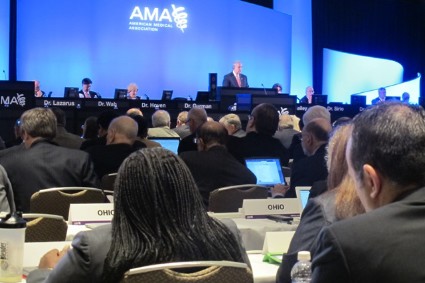
Advocates, House members press for involuntary treatment
WASHINGTON – People with serious mental illness need more attention, including involuntary treatment, advocates said at a hearing to push a wide-ranging bill that addresses issues around the hardest-to-reach patients.
The bill, H.R. 3717, was introduced in December by Rep. Tim Murphy, (R-Penn.), a clinical psychologist and chairman of the Oversight and Investigations Subcommittee of the Energy & Commerce Committee.
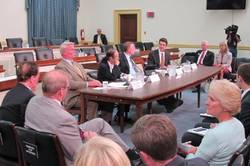
Rep. Murphy said people with serious and persistent mental illness – including severe bipolar disorder and schizophrenia – are not being well served.
An almost-2-year investigation by the subcommittee "reveals that the current mental health system does not respond until after a crisis has already occurred because we do not empower parents, patients, clinicians, and law enforcement to stop it from happening," he said at the hearing.
He cited a recent list of those with severe mental illness who had undertreated or untreated disease, including Elliot Rodger, who killed 6 people and himself in Isla Vista, Calif.; Adam Lanza, who, in 2012, killed 20 children, 6 adults, his mother, and himself in Newtown, Conn.; and Aaron Alexis, who went on a shooting spree in September 2013 at the Navy Yard in Washington and killed 12 people, then killed himself.
Treatment might help prevent violent episodes, Rep. Murphy said. In the subcommittee report, Rep. Murphy and his staff noted that the Substance Abuse and Mental Health Services Administration (SAMHSA) estimated that in 2009, 40% of adults with serious mental illness reported not receiving any treatment. It takes an average of 110 weeks between the onset of symptoms and an individual’s entering into treatment, according to the letter.
Rep. Murphy’s bill – the Helping Families in Mental Health Crisis Act – seeks to create a new infrastructure to focus on serious mental illness. It also takes issue with how SAMHSA is being administered and how it decides on grantees.
A new assistant secretary for mental health and substance use disorders would oversee the SAMHSA administrator, and establish a National Mental Health Policy Laboratory to more closely supervise SAMHSA grantees and make sure that they undertook evidence-based projects. New telepsychiatry and primary care physician training grants would be provided to states to promote the use of telehealth. The bill would allow caregivers to get access to protected health information, when the patient’s provider reasonably believes it is necessary for that information to be made available to protect the individual’s health, safety, or welfare or the safety of one or more other individuals – even it the patient has not consented to disclosure.
After the bill was introduced last year, the American Psychiatric Association wrote a letter to Rep. Murphy praising the comprehensive nature of the package and its emphasis on providing evidence-based services.
At the hearing, Edward F. Kelly III, the father of an adult son with schizophrenia, said HIPAA had prevented him and his wife from getting information on their son’s treatment, hospitalizations, releases, encounters with the legal system, and whereabouts.
He chided organizations that he said were advocating against involuntary treatment of people with severe mental illness. Mr. Kelly urged Congress to support Rep. Murphy’s bill.
"Don’t fear the threats of unconstitutionality. Don’t fear the threats of lawsuits," he said.
Mr. Kelly urged Congress to support assisted outpatient treatment, known as AOT. D.J. Jaffe, founder of Mental Illness Policy Org., said that AOT – which allows courts to order patients into outpatient treatment in the community – reduces violence, incarceration, and homelessness. Many of those with severe mental illness are not aware that they need help, he said. "They are never going to volunteer for treatment," Mr. Jaffe said. "We have to recognize this reality."
AOT is "an off-ramp before jail," he said. "It’s like putting a fence at the edge of the cliff, rather than an ambulance at the bottom."
Rep. Murphy’s bill has 87 cosponsors. There is no companion bill in the Senate.
On Twitter @aliciaault
WASHINGTON – People with serious mental illness need more attention, including involuntary treatment, advocates said at a hearing to push a wide-ranging bill that addresses issues around the hardest-to-reach patients.
The bill, H.R. 3717, was introduced in December by Rep. Tim Murphy, (R-Penn.), a clinical psychologist and chairman of the Oversight and Investigations Subcommittee of the Energy & Commerce Committee.
Rep. Murphy said people with serious and persistent mental illness – including severe bipolar disorder and schizophrenia – are not being well served.
An almost-2-year investigation by the subcommittee "reveals that the current mental health system does not respond until after a crisis has already occurred because we do not empower parents, patients, clinicians, and law enforcement to stop it from happening," he said at the hearing.
He cited a recent list of those with severe mental illness who had undertreated or untreated disease, including Elliot Rodger, who killed 6 people and himself in Isla Vista, Calif.; Adam Lanza, who, in 2012, killed 20 children, 6 adults, his mother, and himself in Newtown, Conn.; and Aaron Alexis, who went on a shooting spree in September 2013 at the Navy Yard in Washington and killed 12 people, then killed himself.
Treatment might help prevent violent episodes, Rep. Murphy said. In the subcommittee report, Rep. Murphy and his staff noted that the Substance Abuse and Mental Health Services Administration (SAMHSA) estimated that in 2009, 40% of adults with serious mental illness reported not receiving any treatment. It takes an average of 110 weeks between the onset of symptoms and an individual’s entering into treatment, according to the letter.
Rep. Murphy’s bill – the Helping Families in Mental Health Crisis Act – seeks to create a new infrastructure to focus on serious mental illness. It also takes issue with how SAMHSA is being administered and how it decides on grantees.
A new assistant secretary for mental health and substance use disorders would oversee the SAMHSA administrator, and establish a National Mental Health Policy Laboratory to more closely supervise SAMHSA grantees and make sure that they undertook evidence-based projects. New telepsychiatry and primary care physician training grants would be provided to states to promote the use of telehealth. The bill would allow caregivers to get access to protected health information, when the patient’s provider reasonably believes it is necessary for that information to be made available to protect the individual’s health, safety, or welfare or the safety of one or more other individuals – even it the patient has not consented to disclosure.
After the bill was introduced last year, the American Psychiatric Association wrote a letter to Rep. Murphy praising the comprehensive nature of the package and its emphasis on providing evidence-based services.
At the hearing, Edward F. Kelly III, the father of an adult son with schizophrenia, said HIPAA had prevented him and his wife from getting information on their son’s treatment, hospitalizations, releases, encounters with the legal system, and whereabouts.
He chided organizations that he said were advocating against involuntary treatment of people with severe mental illness. Mr. Kelly urged Congress to support Rep. Murphy’s bill.
"Don’t fear the threats of unconstitutionality. Don’t fear the threats of lawsuits," he said.
Mr. Kelly urged Congress to support assisted outpatient treatment, known as AOT. D.J. Jaffe, founder of Mental Illness Policy Org., said that AOT – which allows courts to order patients into outpatient treatment in the community – reduces violence, incarceration, and homelessness. Many of those with severe mental illness are not aware that they need help, he said. "They are never going to volunteer for treatment," Mr. Jaffe said. "We have to recognize this reality."
AOT is "an off-ramp before jail," he said. "It’s like putting a fence at the edge of the cliff, rather than an ambulance at the bottom."
Rep. Murphy’s bill has 87 cosponsors. There is no companion bill in the Senate.
On Twitter @aliciaault
WASHINGTON – People with serious mental illness need more attention, including involuntary treatment, advocates said at a hearing to push a wide-ranging bill that addresses issues around the hardest-to-reach patients.
The bill, H.R. 3717, was introduced in December by Rep. Tim Murphy, (R-Penn.), a clinical psychologist and chairman of the Oversight and Investigations Subcommittee of the Energy & Commerce Committee.
Rep. Murphy said people with serious and persistent mental illness – including severe bipolar disorder and schizophrenia – are not being well served.
An almost-2-year investigation by the subcommittee "reveals that the current mental health system does not respond until after a crisis has already occurred because we do not empower parents, patients, clinicians, and law enforcement to stop it from happening," he said at the hearing.
He cited a recent list of those with severe mental illness who had undertreated or untreated disease, including Elliot Rodger, who killed 6 people and himself in Isla Vista, Calif.; Adam Lanza, who, in 2012, killed 20 children, 6 adults, his mother, and himself in Newtown, Conn.; and Aaron Alexis, who went on a shooting spree in September 2013 at the Navy Yard in Washington and killed 12 people, then killed himself.
Treatment might help prevent violent episodes, Rep. Murphy said. In the subcommittee report, Rep. Murphy and his staff noted that the Substance Abuse and Mental Health Services Administration (SAMHSA) estimated that in 2009, 40% of adults with serious mental illness reported not receiving any treatment. It takes an average of 110 weeks between the onset of symptoms and an individual’s entering into treatment, according to the letter.
Rep. Murphy’s bill – the Helping Families in Mental Health Crisis Act – seeks to create a new infrastructure to focus on serious mental illness. It also takes issue with how SAMHSA is being administered and how it decides on grantees.
A new assistant secretary for mental health and substance use disorders would oversee the SAMHSA administrator, and establish a National Mental Health Policy Laboratory to more closely supervise SAMHSA grantees and make sure that they undertook evidence-based projects. New telepsychiatry and primary care physician training grants would be provided to states to promote the use of telehealth. The bill would allow caregivers to get access to protected health information, when the patient’s provider reasonably believes it is necessary for that information to be made available to protect the individual’s health, safety, or welfare or the safety of one or more other individuals – even it the patient has not consented to disclosure.
After the bill was introduced last year, the American Psychiatric Association wrote a letter to Rep. Murphy praising the comprehensive nature of the package and its emphasis on providing evidence-based services.
At the hearing, Edward F. Kelly III, the father of an adult son with schizophrenia, said HIPAA had prevented him and his wife from getting information on their son’s treatment, hospitalizations, releases, encounters with the legal system, and whereabouts.
He chided organizations that he said were advocating against involuntary treatment of people with severe mental illness. Mr. Kelly urged Congress to support Rep. Murphy’s bill.
"Don’t fear the threats of unconstitutionality. Don’t fear the threats of lawsuits," he said.
Mr. Kelly urged Congress to support assisted outpatient treatment, known as AOT. D.J. Jaffe, founder of Mental Illness Policy Org., said that AOT – which allows courts to order patients into outpatient treatment in the community – reduces violence, incarceration, and homelessness. Many of those with severe mental illness are not aware that they need help, he said. "They are never going to volunteer for treatment," Mr. Jaffe said. "We have to recognize this reality."
AOT is "an off-ramp before jail," he said. "It’s like putting a fence at the edge of the cliff, rather than an ambulance at the bottom."
Rep. Murphy’s bill has 87 cosponsors. There is no companion bill in the Senate.
On Twitter @aliciaault
EXPERT ANALYSIS AT AN ENERGY & COMMERCE SUBCOMMITTEE HEARING