User login
Richard Quinn is an award-winning journalist with 15 years’ experience. He has worked at the Asbury Park Press in New Jersey and The Virginian-Pilot in Norfolk, Va., and currently is managing editor for a leading commercial real estate publication. His freelance work has appeared in The Jewish State, The Hospitalist, The Rheumatologist, ACEP Now, and ENT Today. He lives in New Jersey with his wife and three cats.
Something for Everyone
GRAPEVINE, Texas—Femi Adewunmi, MD, MBA, SFHM, might land a new job as a multisite medical director because of it. Amaka Nweke, MD, might have gained an idea for a new committee for her hospital from it. And Randa Perkins, MD, is going to lead one long brown-bag lunch thanks to it.
Everyone gets something different out of SHM’s annual meeting, a four-day bazaar of CME, plenary sessions, and breakout sessions akin to one-hour crash courses that follow clinical, academic, practice management, pediatric, and quality tracks.
The Hospitalist sat down with three attendees to break down what each took home from HM11.
New Year, New Job?
A veteran of multiple annual meetings, Dr. Adewunmi usually splits his time between breakout sessions and networking. But this year, the former medical director of the hospitalist service at Johnston Medical Center in Smithfield, N.C., says he’s looking to step up from a single-site leadership position to a regional head. So the mission was more about networking than note-taking.
“It’s been invaluable for me at this point,” Dr. Adewunmi says, “as I navigate and decide what the next steps should be in terms of my career progression.”
Of course, that progression meant using his time-management skills to hold discussions with potential employers.
“I was in and out,” he says, noting he’s been doing locum tenens work for several months as he weighs his next move. “Sometimes, if you want to have the time to meet one-on-one [at the exhibitor hall]without the crowd and the distractions, it’s probably easier and better to go in between sessions.”
Dr. Adewunmi, a newly seated member of Team Hospitalist, says he met with eight to 10 of the largest HM firms during the meeting. He leveraged contacts he’s built over the years, and also used relationships with SHM staff to make introductions. He thinks employers appreciate the annual meeting for the same reason.
“It’s one spot where rather than trying to fly in 10 or 20 candidates every month or every few weeks, you can just come in one spot and interview several people … or put your feelers out,” he says. “It works both ways.”
Dr. Adewunmi can’t be sure his networking will be successful. He plans to keep working locums with one potential employer so both sides can get to know each other. But even if nothing pans out, between the clinical sessions he attended and the relationships he either built or strengthened, he says he’s glad he came again to the annual meeting.
“This, for me, has always been the best resource in terms of place you could come to one stop and get a little bit of everything,” he adds. “It’s like a buffet.”

Meet and Greet, Over and Over
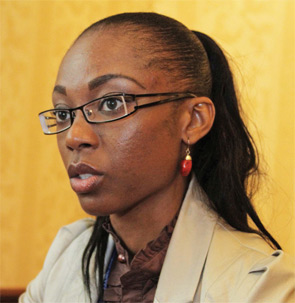
Dr. Nweke, assistant site director for Hospitalists Management Group at Kenosha Medical Center in Wisconsin, wasn’t going to let her first meeting overwhelm her. She laid out her agenda early, planning to attend as many practice management and leadership classes as she could. When she arrived, she sat through talks including “Understanding Your Hospital’s Key Financial Drivers,” “Hiding in Plain Sight,” and “Introduction to QI Methodology.”
But it was a session on basic tips to improve patient-satisfaction scores that gave her the most feedback.
“There are a lot of things you kind of instinctively know just as a human being as opposed to being a physician,” Dr. Nweke says. “It’s only polite that you shake the hand of the person you’re meeting and you smile at them, as opposed to being a grouch. But it’s interesting to hear what questions are asked in the patient surveys. While I was there, I actually sat thinking from a patient’s perspective: ‘What would I be looking for in my hospital?’ ”
Dr. Nweke admittedly felt a bit frustrated with some sessions, as she’d hoped to extract more advanced tips. However, she had no complaints about the networking opportunities. Everywhere she turned, she says, she had the chance to discuss ideas with new faces.
“I’ve randomly met people, introduced myself to people, and talked about different challenges,” she says. “For someone like me, it’s really very important because I’m at the bottom of the totem pole, so to speak, as far as leadership.”
One bit of practical advice Dr. Nweke learned from meeting someone was the idea of a medical records committee. One of her new contacts chairs such a committee, which prompted Dr. Nweke to check in with her hospital while the annual meeting was happening. Turns out, her hospital doesn’t have a similar committee. Yet.
“Maybe this might be something I could throw out there and say, ‘How about we do this or that?’ ” Dr. Nweke adds, “whatever it might be, little things that I could do to improve and add some value and worth to my program, and our relationship with the hospital.”
A Kid in a Candy Store
If Dr. Perkins ever becomes president of the society, HM11 will be why. A self-proclaimed lame-duck chief resident at Tallahassee Memorial’s Family Medicine Residency Program in Florida, she’d already signed her first contract as a hospitalist and starts the job in August. Yet she didn’t know about SHM or the annual meeting until shortly before it started, when a community physician mentioned it to her.
So she booked a room at a nearby hotel (the 1,551-room Gaylord Texan Resort and Convention Center having filled up early) and spent the last of her CME money on HM11. She had trouble picking out any specific tips she wanted to take home to her new practice, Tallahassee Memorial HealthCare Hospitalists Group, as she had so many.
She sat in a recruitment session just to have things to tell her new boss. She took feverish notes during a presentation on best practices in the ICU because she’ll be spending a lot of time there. And during a meet-and-greet pairing residents with potential mentors, she befriended Daniel Dressler, MD, MSc, SFHM, an SHM board member, HM11’s course director, and academic hospitalist heavyweight at Emory University Hospital in Atlanta.
“It’s kind of like when you start any adventure, you don’t have everything laid out in a guidebook,” Dr. Perkins says. “You just kind of have to put your feet out there and start moving and hope to God that things fall into your lap sometimes. This conference kind of did. This is kind of my guidebook, this is my compass, this is what I can look to when I’m trying to figure out how to make my own path in the specialty.”
Dr. Perkins adds that the fraternal feel of HM11 makes her feel like she chose the right specialty. Given all of the research talk, she might even start pushing her 12-member hospitalist group to begin more projects that could “help our community.”
“All the educational opportunities that were at the conference pulled me into it and then, all of a sudden, all these resources are laid out in front of me,” she adds. “I’m literally a kid in a candy store with access to data and information and guides. It’s great.” TH
GRAPEVINE, Texas—Femi Adewunmi, MD, MBA, SFHM, might land a new job as a multisite medical director because of it. Amaka Nweke, MD, might have gained an idea for a new committee for her hospital from it. And Randa Perkins, MD, is going to lead one long brown-bag lunch thanks to it.
Everyone gets something different out of SHM’s annual meeting, a four-day bazaar of CME, plenary sessions, and breakout sessions akin to one-hour crash courses that follow clinical, academic, practice management, pediatric, and quality tracks.
The Hospitalist sat down with three attendees to break down what each took home from HM11.
New Year, New Job?
A veteran of multiple annual meetings, Dr. Adewunmi usually splits his time between breakout sessions and networking. But this year, the former medical director of the hospitalist service at Johnston Medical Center in Smithfield, N.C., says he’s looking to step up from a single-site leadership position to a regional head. So the mission was more about networking than note-taking.
“It’s been invaluable for me at this point,” Dr. Adewunmi says, “as I navigate and decide what the next steps should be in terms of my career progression.”
Of course, that progression meant using his time-management skills to hold discussions with potential employers.
“I was in and out,” he says, noting he’s been doing locum tenens work for several months as he weighs his next move. “Sometimes, if you want to have the time to meet one-on-one [at the exhibitor hall]without the crowd and the distractions, it’s probably easier and better to go in between sessions.”
Dr. Adewunmi, a newly seated member of Team Hospitalist, says he met with eight to 10 of the largest HM firms during the meeting. He leveraged contacts he’s built over the years, and also used relationships with SHM staff to make introductions. He thinks employers appreciate the annual meeting for the same reason.
“It’s one spot where rather than trying to fly in 10 or 20 candidates every month or every few weeks, you can just come in one spot and interview several people … or put your feelers out,” he says. “It works both ways.”
Dr. Adewunmi can’t be sure his networking will be successful. He plans to keep working locums with one potential employer so both sides can get to know each other. But even if nothing pans out, between the clinical sessions he attended and the relationships he either built or strengthened, he says he’s glad he came again to the annual meeting.
“This, for me, has always been the best resource in terms of place you could come to one stop and get a little bit of everything,” he adds. “It’s like a buffet.”
Meet and Greet, Over and Over
Dr. Nweke, assistant site director for Hospitalists Management Group at Kenosha Medical Center in Wisconsin, wasn’t going to let her first meeting overwhelm her. She laid out her agenda early, planning to attend as many practice management and leadership classes as she could. When she arrived, she sat through talks including “Understanding Your Hospital’s Key Financial Drivers,” “Hiding in Plain Sight,” and “Introduction to QI Methodology.”
But it was a session on basic tips to improve patient-satisfaction scores that gave her the most feedback.
“There are a lot of things you kind of instinctively know just as a human being as opposed to being a physician,” Dr. Nweke says. “It’s only polite that you shake the hand of the person you’re meeting and you smile at them, as opposed to being a grouch. But it’s interesting to hear what questions are asked in the patient surveys. While I was there, I actually sat thinking from a patient’s perspective: ‘What would I be looking for in my hospital?’ ”
Dr. Nweke admittedly felt a bit frustrated with some sessions, as she’d hoped to extract more advanced tips. However, she had no complaints about the networking opportunities. Everywhere she turned, she says, she had the chance to discuss ideas with new faces.
“I’ve randomly met people, introduced myself to people, and talked about different challenges,” she says. “For someone like me, it’s really very important because I’m at the bottom of the totem pole, so to speak, as far as leadership.”
One bit of practical advice Dr. Nweke learned from meeting someone was the idea of a medical records committee. One of her new contacts chairs such a committee, which prompted Dr. Nweke to check in with her hospital while the annual meeting was happening. Turns out, her hospital doesn’t have a similar committee. Yet.
“Maybe this might be something I could throw out there and say, ‘How about we do this or that?’ ” Dr. Nweke adds, “whatever it might be, little things that I could do to improve and add some value and worth to my program, and our relationship with the hospital.”
A Kid in a Candy Store
If Dr. Perkins ever becomes president of the society, HM11 will be why. A self-proclaimed lame-duck chief resident at Tallahassee Memorial’s Family Medicine Residency Program in Florida, she’d already signed her first contract as a hospitalist and starts the job in August. Yet she didn’t know about SHM or the annual meeting until shortly before it started, when a community physician mentioned it to her.
So she booked a room at a nearby hotel (the 1,551-room Gaylord Texan Resort and Convention Center having filled up early) and spent the last of her CME money on HM11. She had trouble picking out any specific tips she wanted to take home to her new practice, Tallahassee Memorial HealthCare Hospitalists Group, as she had so many.
She sat in a recruitment session just to have things to tell her new boss. She took feverish notes during a presentation on best practices in the ICU because she’ll be spending a lot of time there. And during a meet-and-greet pairing residents with potential mentors, she befriended Daniel Dressler, MD, MSc, SFHM, an SHM board member, HM11’s course director, and academic hospitalist heavyweight at Emory University Hospital in Atlanta.
“It’s kind of like when you start any adventure, you don’t have everything laid out in a guidebook,” Dr. Perkins says. “You just kind of have to put your feet out there and start moving and hope to God that things fall into your lap sometimes. This conference kind of did. This is kind of my guidebook, this is my compass, this is what I can look to when I’m trying to figure out how to make my own path in the specialty.”
Dr. Perkins adds that the fraternal feel of HM11 makes her feel like she chose the right specialty. Given all of the research talk, she might even start pushing her 12-member hospitalist group to begin more projects that could “help our community.”
“All the educational opportunities that were at the conference pulled me into it and then, all of a sudden, all these resources are laid out in front of me,” she adds. “I’m literally a kid in a candy store with access to data and information and guides. It’s great.” TH
GRAPEVINE, Texas—Femi Adewunmi, MD, MBA, SFHM, might land a new job as a multisite medical director because of it. Amaka Nweke, MD, might have gained an idea for a new committee for her hospital from it. And Randa Perkins, MD, is going to lead one long brown-bag lunch thanks to it.
Everyone gets something different out of SHM’s annual meeting, a four-day bazaar of CME, plenary sessions, and breakout sessions akin to one-hour crash courses that follow clinical, academic, practice management, pediatric, and quality tracks.
The Hospitalist sat down with three attendees to break down what each took home from HM11.
New Year, New Job?
A veteran of multiple annual meetings, Dr. Adewunmi usually splits his time between breakout sessions and networking. But this year, the former medical director of the hospitalist service at Johnston Medical Center in Smithfield, N.C., says he’s looking to step up from a single-site leadership position to a regional head. So the mission was more about networking than note-taking.
“It’s been invaluable for me at this point,” Dr. Adewunmi says, “as I navigate and decide what the next steps should be in terms of my career progression.”
Of course, that progression meant using his time-management skills to hold discussions with potential employers.
“I was in and out,” he says, noting he’s been doing locum tenens work for several months as he weighs his next move. “Sometimes, if you want to have the time to meet one-on-one [at the exhibitor hall]without the crowd and the distractions, it’s probably easier and better to go in between sessions.”
Dr. Adewunmi, a newly seated member of Team Hospitalist, says he met with eight to 10 of the largest HM firms during the meeting. He leveraged contacts he’s built over the years, and also used relationships with SHM staff to make introductions. He thinks employers appreciate the annual meeting for the same reason.
“It’s one spot where rather than trying to fly in 10 or 20 candidates every month or every few weeks, you can just come in one spot and interview several people … or put your feelers out,” he says. “It works both ways.”
Dr. Adewunmi can’t be sure his networking will be successful. He plans to keep working locums with one potential employer so both sides can get to know each other. But even if nothing pans out, between the clinical sessions he attended and the relationships he either built or strengthened, he says he’s glad he came again to the annual meeting.
“This, for me, has always been the best resource in terms of place you could come to one stop and get a little bit of everything,” he adds. “It’s like a buffet.”
Meet and Greet, Over and Over
Dr. Nweke, assistant site director for Hospitalists Management Group at Kenosha Medical Center in Wisconsin, wasn’t going to let her first meeting overwhelm her. She laid out her agenda early, planning to attend as many practice management and leadership classes as she could. When she arrived, she sat through talks including “Understanding Your Hospital’s Key Financial Drivers,” “Hiding in Plain Sight,” and “Introduction to QI Methodology.”
But it was a session on basic tips to improve patient-satisfaction scores that gave her the most feedback.
“There are a lot of things you kind of instinctively know just as a human being as opposed to being a physician,” Dr. Nweke says. “It’s only polite that you shake the hand of the person you’re meeting and you smile at them, as opposed to being a grouch. But it’s interesting to hear what questions are asked in the patient surveys. While I was there, I actually sat thinking from a patient’s perspective: ‘What would I be looking for in my hospital?’ ”
Dr. Nweke admittedly felt a bit frustrated with some sessions, as she’d hoped to extract more advanced tips. However, she had no complaints about the networking opportunities. Everywhere she turned, she says, she had the chance to discuss ideas with new faces.
“I’ve randomly met people, introduced myself to people, and talked about different challenges,” she says. “For someone like me, it’s really very important because I’m at the bottom of the totem pole, so to speak, as far as leadership.”
One bit of practical advice Dr. Nweke learned from meeting someone was the idea of a medical records committee. One of her new contacts chairs such a committee, which prompted Dr. Nweke to check in with her hospital while the annual meeting was happening. Turns out, her hospital doesn’t have a similar committee. Yet.
“Maybe this might be something I could throw out there and say, ‘How about we do this or that?’ ” Dr. Nweke adds, “whatever it might be, little things that I could do to improve and add some value and worth to my program, and our relationship with the hospital.”
A Kid in a Candy Store
If Dr. Perkins ever becomes president of the society, HM11 will be why. A self-proclaimed lame-duck chief resident at Tallahassee Memorial’s Family Medicine Residency Program in Florida, she’d already signed her first contract as a hospitalist and starts the job in August. Yet she didn’t know about SHM or the annual meeting until shortly before it started, when a community physician mentioned it to her.
So she booked a room at a nearby hotel (the 1,551-room Gaylord Texan Resort and Convention Center having filled up early) and spent the last of her CME money on HM11. She had trouble picking out any specific tips she wanted to take home to her new practice, Tallahassee Memorial HealthCare Hospitalists Group, as she had so many.
She sat in a recruitment session just to have things to tell her new boss. She took feverish notes during a presentation on best practices in the ICU because she’ll be spending a lot of time there. And during a meet-and-greet pairing residents with potential mentors, she befriended Daniel Dressler, MD, MSc, SFHM, an SHM board member, HM11’s course director, and academic hospitalist heavyweight at Emory University Hospital in Atlanta.
“It’s kind of like when you start any adventure, you don’t have everything laid out in a guidebook,” Dr. Perkins says. “You just kind of have to put your feet out there and start moving and hope to God that things fall into your lap sometimes. This conference kind of did. This is kind of my guidebook, this is my compass, this is what I can look to when I’m trying to figure out how to make my own path in the specialty.”
Dr. Perkins adds that the fraternal feel of HM11 makes her feel like she chose the right specialty. Given all of the research talk, she might even start pushing her 12-member hospitalist group to begin more projects that could “help our community.”
“All the educational opportunities that were at the conference pulled me into it and then, all of a sudden, all these resources are laid out in front of me,” she adds. “I’m literally a kid in a candy store with access to data and information and guides. It’s great.” TH
ONLINE EXCLUSIVE: Listen to HM11 faculty discuss portable ultrasound and new ACGME rules
ONLINE EXCLUSIVE: Former Obama advisor Bob Kocher talks about hospitalists and health reform
Click here to listen to Dr. Kocher
Click here to listen to Dr. Kocher
Click here to listen to Dr. Kocher
ONLINE EXCLUSIVE: Listen to new SHM President Joseph Li's goals
ONLINE EXCLUSIVE: Hospitalist Compensation Continues Upward Trend
GRAPEVINE, Texas—Community hospitalist compensation rose slightly last year to its highest level, according to preliminary SHM/MGMA survey data revealed at HM11. A national median wasn’t available, but SHM cofounder John Nelson, MD, MHM, says survey figures for compensation, including bonuses, rose roughly 3% over the prior year. Formal survey results are to be released in June.
According to Dr. Nelson, a nonacademic hospitalist in the Northeast seeing only adult patients earns roughly $212,000 per year. In the West, the number ticks up slightly to $213,000. Salaries rose at a higher rate in the Midwest (to $224,000) and the Southeast (to $246,000).
— Robert Bessler, MD, president and CEO, Sound Inpatient Physicians
Sound Inpatient Physicians president and CEO Robert Bessler, MD, says survey data for compensation can be helpful but that individual HM groups need to be acutely aware of what hospitalists earn in their “micro-market” more than in their corner of the country. “The macro numbers are what they are,” he adds. “It’s not going to get less any time soon.”
Dr. Nelson also says that the average financial subsidy for HM groups has risen to $132,000 per FTE hospitalist, a marked jump from the roughly $100,000 level SHM reported in its past two surveys. Some 19% of hospitalist practices reported no support from their hospitals, a point that intrigues new SHM President Joseph Li, MD, SFHM, assistant professor of medicine at Harvard Medical School and director of the hospital medicine division at Beth Israel Deaconess Medical Center in Boston.
Dr. Li wonders how such a large percentage of practices operate independent of financial support, given that the vast majority of programs that do rely on that funding seem to be needing more of it. In short, he says: “Are we looking at two business models or two care models?”
Richard Quinn is a freelance writer based in New Jersey.
GRAPEVINE, Texas—Community hospitalist compensation rose slightly last year to its highest level, according to preliminary SHM/MGMA survey data revealed at HM11. A national median wasn’t available, but SHM cofounder John Nelson, MD, MHM, says survey figures for compensation, including bonuses, rose roughly 3% over the prior year. Formal survey results are to be released in June.
According to Dr. Nelson, a nonacademic hospitalist in the Northeast seeing only adult patients earns roughly $212,000 per year. In the West, the number ticks up slightly to $213,000. Salaries rose at a higher rate in the Midwest (to $224,000) and the Southeast (to $246,000).
— Robert Bessler, MD, president and CEO, Sound Inpatient Physicians
Sound Inpatient Physicians president and CEO Robert Bessler, MD, says survey data for compensation can be helpful but that individual HM groups need to be acutely aware of what hospitalists earn in their “micro-market” more than in their corner of the country. “The macro numbers are what they are,” he adds. “It’s not going to get less any time soon.”
Dr. Nelson also says that the average financial subsidy for HM groups has risen to $132,000 per FTE hospitalist, a marked jump from the roughly $100,000 level SHM reported in its past two surveys. Some 19% of hospitalist practices reported no support from their hospitals, a point that intrigues new SHM President Joseph Li, MD, SFHM, assistant professor of medicine at Harvard Medical School and director of the hospital medicine division at Beth Israel Deaconess Medical Center in Boston.
Dr. Li wonders how such a large percentage of practices operate independent of financial support, given that the vast majority of programs that do rely on that funding seem to be needing more of it. In short, he says: “Are we looking at two business models or two care models?”
Richard Quinn is a freelance writer based in New Jersey.
GRAPEVINE, Texas—Community hospitalist compensation rose slightly last year to its highest level, according to preliminary SHM/MGMA survey data revealed at HM11. A national median wasn’t available, but SHM cofounder John Nelson, MD, MHM, says survey figures for compensation, including bonuses, rose roughly 3% over the prior year. Formal survey results are to be released in June.
According to Dr. Nelson, a nonacademic hospitalist in the Northeast seeing only adult patients earns roughly $212,000 per year. In the West, the number ticks up slightly to $213,000. Salaries rose at a higher rate in the Midwest (to $224,000) and the Southeast (to $246,000).
— Robert Bessler, MD, president and CEO, Sound Inpatient Physicians
Sound Inpatient Physicians president and CEO Robert Bessler, MD, says survey data for compensation can be helpful but that individual HM groups need to be acutely aware of what hospitalists earn in their “micro-market” more than in their corner of the country. “The macro numbers are what they are,” he adds. “It’s not going to get less any time soon.”
Dr. Nelson also says that the average financial subsidy for HM groups has risen to $132,000 per FTE hospitalist, a marked jump from the roughly $100,000 level SHM reported in its past two surveys. Some 19% of hospitalist practices reported no support from their hospitals, a point that intrigues new SHM President Joseph Li, MD, SFHM, assistant professor of medicine at Harvard Medical School and director of the hospital medicine division at Beth Israel Deaconess Medical Center in Boston.
Dr. Li wonders how such a large percentage of practices operate independent of financial support, given that the vast majority of programs that do rely on that funding seem to be needing more of it. In short, he says: “Are we looking at two business models or two care models?”
Richard Quinn is a freelance writer based in New Jersey.
Teamwork Works
Quality-improvement (QI) initiatives should be viewed through the prism of systems change, not just as one-off checklists that show some uptick against core measures, says a researcher whose work was published in the Journal of Hospital Medicine this month.
Ted Speroff, PhD, professor at the VA Tennessee Valley Healthcare System's Center for Health Services Research, led a team of researchers who found that using a collaborative approach to preventing central-line-associated bloodstream infections (CLABSI) and ventilator-associated pneumonias (VAP) worked better than simply using toolkits.
The study, "Quality Improvement Projects Targeting Healthcare-Associated Infections: Comparing Virtual Collaborative and Toolkit Approaches," found that 83% of ICUs using the collaborative approach implemented all CLABSI interventions, versus 64% of those in the toolkit group (P=0.13). The study further reported that 86% of the "collaborative group" implemented the VAP bundle, compared with 64% of the "toolkit group" (P=0.06). There was no statistically significant difference in patient outcomes.
"The key point is that quality improvement has a cultural and psychological component to it," Dr. Speroff says. "It's not just a task force of a subcommittee that you set up to achieve one tactical objective."
The study refers repeatedly to continuous quality improvement (CQI), which Dr. Speroff says HM leaders are in position to spearhead as many hospitalists already are viewed as QI leaders in their institutions.
But reform can only happen if HM and other specialties buy into the concept, and administrators don’t view it in terms of purely a cost-benefit analysis.
"There has to be a will to go that that road or some sense of urgency," Dr. Speroff says.
Quality-improvement (QI) initiatives should be viewed through the prism of systems change, not just as one-off checklists that show some uptick against core measures, says a researcher whose work was published in the Journal of Hospital Medicine this month.
Ted Speroff, PhD, professor at the VA Tennessee Valley Healthcare System's Center for Health Services Research, led a team of researchers who found that using a collaborative approach to preventing central-line-associated bloodstream infections (CLABSI) and ventilator-associated pneumonias (VAP) worked better than simply using toolkits.
The study, "Quality Improvement Projects Targeting Healthcare-Associated Infections: Comparing Virtual Collaborative and Toolkit Approaches," found that 83% of ICUs using the collaborative approach implemented all CLABSI interventions, versus 64% of those in the toolkit group (P=0.13). The study further reported that 86% of the "collaborative group" implemented the VAP bundle, compared with 64% of the "toolkit group" (P=0.06). There was no statistically significant difference in patient outcomes.
"The key point is that quality improvement has a cultural and psychological component to it," Dr. Speroff says. "It's not just a task force of a subcommittee that you set up to achieve one tactical objective."
The study refers repeatedly to continuous quality improvement (CQI), which Dr. Speroff says HM leaders are in position to spearhead as many hospitalists already are viewed as QI leaders in their institutions.
But reform can only happen if HM and other specialties buy into the concept, and administrators don’t view it in terms of purely a cost-benefit analysis.
"There has to be a will to go that that road or some sense of urgency," Dr. Speroff says.
Quality-improvement (QI) initiatives should be viewed through the prism of systems change, not just as one-off checklists that show some uptick against core measures, says a researcher whose work was published in the Journal of Hospital Medicine this month.
Ted Speroff, PhD, professor at the VA Tennessee Valley Healthcare System's Center for Health Services Research, led a team of researchers who found that using a collaborative approach to preventing central-line-associated bloodstream infections (CLABSI) and ventilator-associated pneumonias (VAP) worked better than simply using toolkits.
The study, "Quality Improvement Projects Targeting Healthcare-Associated Infections: Comparing Virtual Collaborative and Toolkit Approaches," found that 83% of ICUs using the collaborative approach implemented all CLABSI interventions, versus 64% of those in the toolkit group (P=0.13). The study further reported that 86% of the "collaborative group" implemented the VAP bundle, compared with 64% of the "toolkit group" (P=0.06). There was no statistically significant difference in patient outcomes.
"The key point is that quality improvement has a cultural and psychological component to it," Dr. Speroff says. "It's not just a task force of a subcommittee that you set up to achieve one tactical objective."
The study refers repeatedly to continuous quality improvement (CQI), which Dr. Speroff says HM leaders are in position to spearhead as many hospitalists already are viewed as QI leaders in their institutions.
But reform can only happen if HM and other specialties buy into the concept, and administrators don’t view it in terms of purely a cost-benefit analysis.
"There has to be a will to go that that road or some sense of urgency," Dr. Speroff says.
SHM Leaders Field Constituent Questions in Town Hall
The vast majority of the more than 2,500 attendees last week at SHM's annual meeting in Grapevine, Texas, were already on their way to the airport when one last dedicated group discussed the future of the specialty.
The question-and-answer session took place at the annual SHM Town Hall, a chance for rank-and-file hospitalists to query society board members and leaders. Some 75 people took turns asking about internal-medicine residency programs, the challenges of maintaining robust society chapters, and HM's role in critical-care delivery. But the theme of the session kept coming back to whether hospitalists have a seat at the table in how healthcare reform is implemented.
Board member and former SHM Public Policy Committee chairman Eric Siegal, MD, SFHM, says that the society has quickly risen in stature in policy circles despite being a newer specialty. He adds that the field's prominence and credibility is helped by the recent appointment of Patrick Conway, MD, MSc, SFHM, a pediatric hospitalist and director of hospital medicine at Cincinnati Children’s Hospital Medical Center, as chief medical officer of the Centers for Medicare & Medicaid Services (CMS).
"We punch well above our weight class right now," says Dr. Siegal, a critical-care fellow at the University of Wisconsin School of Medicine and Public Health in Madison.
In an interesting twist, James Levy, PA-C, suggested that SHM expand its fellowship programs to nonphysician providers (NPPs) as a way of making them feel more included. Several board members nodded and said they would consider the notion.
"We are actually a big-tent society," says board member Daniel Dressler, MD, MSc, SFHM, associate professor and director of internal-medicine teaching services at Emory University Hospital in Atlanta.
The vast majority of the more than 2,500 attendees last week at SHM's annual meeting in Grapevine, Texas, were already on their way to the airport when one last dedicated group discussed the future of the specialty.
The question-and-answer session took place at the annual SHM Town Hall, a chance for rank-and-file hospitalists to query society board members and leaders. Some 75 people took turns asking about internal-medicine residency programs, the challenges of maintaining robust society chapters, and HM's role in critical-care delivery. But the theme of the session kept coming back to whether hospitalists have a seat at the table in how healthcare reform is implemented.
Board member and former SHM Public Policy Committee chairman Eric Siegal, MD, SFHM, says that the society has quickly risen in stature in policy circles despite being a newer specialty. He adds that the field's prominence and credibility is helped by the recent appointment of Patrick Conway, MD, MSc, SFHM, a pediatric hospitalist and director of hospital medicine at Cincinnati Children’s Hospital Medical Center, as chief medical officer of the Centers for Medicare & Medicaid Services (CMS).
"We punch well above our weight class right now," says Dr. Siegal, a critical-care fellow at the University of Wisconsin School of Medicine and Public Health in Madison.
In an interesting twist, James Levy, PA-C, suggested that SHM expand its fellowship programs to nonphysician providers (NPPs) as a way of making them feel more included. Several board members nodded and said they would consider the notion.
"We are actually a big-tent society," says board member Daniel Dressler, MD, MSc, SFHM, associate professor and director of internal-medicine teaching services at Emory University Hospital in Atlanta.
The vast majority of the more than 2,500 attendees last week at SHM's annual meeting in Grapevine, Texas, were already on their way to the airport when one last dedicated group discussed the future of the specialty.
The question-and-answer session took place at the annual SHM Town Hall, a chance for rank-and-file hospitalists to query society board members and leaders. Some 75 people took turns asking about internal-medicine residency programs, the challenges of maintaining robust society chapters, and HM's role in critical-care delivery. But the theme of the session kept coming back to whether hospitalists have a seat at the table in how healthcare reform is implemented.
Board member and former SHM Public Policy Committee chairman Eric Siegal, MD, SFHM, says that the society has quickly risen in stature in policy circles despite being a newer specialty. He adds that the field's prominence and credibility is helped by the recent appointment of Patrick Conway, MD, MSc, SFHM, a pediatric hospitalist and director of hospital medicine at Cincinnati Children’s Hospital Medical Center, as chief medical officer of the Centers for Medicare & Medicaid Services (CMS).
"We punch well above our weight class right now," says Dr. Siegal, a critical-care fellow at the University of Wisconsin School of Medicine and Public Health in Madison.
In an interesting twist, James Levy, PA-C, suggested that SHM expand its fellowship programs to nonphysician providers (NPPs) as a way of making them feel more included. Several board members nodded and said they would consider the notion.
"We are actually a big-tent society," says board member Daniel Dressler, MD, MSc, SFHM, associate professor and director of internal-medicine teaching services at Emory University Hospital in Atlanta.
EDs Look to Hospitalists to Solve Crowding
GRAPEVINE, Texas–ED crowding may not seem like the hospitalist's purview, but an HM leader speaking at HM11 says think again.
Boarding, the term for admitted patients who are held in the ED, makes the issue particularly relevant to HM, says Eric Howell, MD, SFHM, associate professor of medicine at Johns Hopkins University and director of Johns Hopkins Bayview Medical Center's HM division.
"Almost everyone is equating boarding of admitted patients now with ED crowding," says Dr. Howell, an SHM board member. "And who do you think they're going to come to for help with all the boarded patients? They're going to come to you."
Dr. Howell says that although HM leaders might think of bed management mostly as a discharge issue, hospitalists would be well served to work with their respective ED colleagues to manage emergency throughput better. He suggests two initial approaches:
1. Round on boarders. In some practices, including at Johns Hopkins Bayview, a hospitalist can be dedicated to the practice of seeing admitted patients held in the ED. If a dedicated staffer is unavailable, group members can rotate the service.
2. Add capacity. Virtual capacity can be added by initiatives that lower LOS and therefore effectively create more bed space. Capacity can be added physically via something as ambitious as the creation of a unit, or techniques as simple as placing admitted patients in hallways.
"Targeting the ED alone doesn’t work," Dr. Howell says. "Patients boarding in the ED needs to be solved. … People are looking for good hospitalists to solve the problem."
GRAPEVINE, Texas–ED crowding may not seem like the hospitalist's purview, but an HM leader speaking at HM11 says think again.
Boarding, the term for admitted patients who are held in the ED, makes the issue particularly relevant to HM, says Eric Howell, MD, SFHM, associate professor of medicine at Johns Hopkins University and director of Johns Hopkins Bayview Medical Center's HM division.
"Almost everyone is equating boarding of admitted patients now with ED crowding," says Dr. Howell, an SHM board member. "And who do you think they're going to come to for help with all the boarded patients? They're going to come to you."
Dr. Howell says that although HM leaders might think of bed management mostly as a discharge issue, hospitalists would be well served to work with their respective ED colleagues to manage emergency throughput better. He suggests two initial approaches:
1. Round on boarders. In some practices, including at Johns Hopkins Bayview, a hospitalist can be dedicated to the practice of seeing admitted patients held in the ED. If a dedicated staffer is unavailable, group members can rotate the service.
2. Add capacity. Virtual capacity can be added by initiatives that lower LOS and therefore effectively create more bed space. Capacity can be added physically via something as ambitious as the creation of a unit, or techniques as simple as placing admitted patients in hallways.
"Targeting the ED alone doesn’t work," Dr. Howell says. "Patients boarding in the ED needs to be solved. … People are looking for good hospitalists to solve the problem."
GRAPEVINE, Texas–ED crowding may not seem like the hospitalist's purview, but an HM leader speaking at HM11 says think again.
Boarding, the term for admitted patients who are held in the ED, makes the issue particularly relevant to HM, says Eric Howell, MD, SFHM, associate professor of medicine at Johns Hopkins University and director of Johns Hopkins Bayview Medical Center's HM division.
"Almost everyone is equating boarding of admitted patients now with ED crowding," says Dr. Howell, an SHM board member. "And who do you think they're going to come to for help with all the boarded patients? They're going to come to you."
Dr. Howell says that although HM leaders might think of bed management mostly as a discharge issue, hospitalists would be well served to work with their respective ED colleagues to manage emergency throughput better. He suggests two initial approaches:
1. Round on boarders. In some practices, including at Johns Hopkins Bayview, a hospitalist can be dedicated to the practice of seeing admitted patients held in the ED. If a dedicated staffer is unavailable, group members can rotate the service.
2. Add capacity. Virtual capacity can be added by initiatives that lower LOS and therefore effectively create more bed space. Capacity can be added physically via something as ambitious as the creation of a unit, or techniques as simple as placing admitted patients in hallways.
"Targeting the ED alone doesn’t work," Dr. Howell says. "Patients boarding in the ED needs to be solved. … People are looking for good hospitalists to solve the problem."
New President Expects 'Laser Focus'
GRAPEVINE, Texas – SHM's new president has kept his first promise to the constituency: He ended his morning address to HM11 attendees here on time.
Now comes the more difficult part, as Joseph Li, MD, SFHM, associate professor of medicine at Harvard Medical School and director of the hospital medicine division at Beth Israel Deaconess Medical Center in Boston, leads the 10,000-member society through the next year. Dr. Li replaces outgoing president Jeff Wiese, MD, FACP, SFHM, associate professor of medicine at Tulane University Health Sciences Center in New Orleans.
"We're really only at the very beginning," Dr. Li says. "All of hospital medicine only started 10, 15 years ago. For some folks, they believe that's a long time. But this really is the very beginning of this movement."
Dr. Li wants the society to apply a "laser focus" on patient care, both inside the hospital and outside at such places as discharge clinics. He wants more hospitalists to take advantage of training opportunities that the society sponsors for clinical care, transitions of care and leadership skills. Lastly, Dr. Li wants to make sure that as the first generation of hospitalists approaches the end of their careers, SHM is recruiting and retaining the next cohort.
"You have to have the right people on the bus. We need to continue to get the best people out of residency classes to come into hospital medicine," he adds. "We need to reach forward into medical schools and help them understand why they should choose hospital medicine as opposed to any other field in medicine. Take the highest-quality people and then we need to train them."
GRAPEVINE, Texas – SHM's new president has kept his first promise to the constituency: He ended his morning address to HM11 attendees here on time.
Now comes the more difficult part, as Joseph Li, MD, SFHM, associate professor of medicine at Harvard Medical School and director of the hospital medicine division at Beth Israel Deaconess Medical Center in Boston, leads the 10,000-member society through the next year. Dr. Li replaces outgoing president Jeff Wiese, MD, FACP, SFHM, associate professor of medicine at Tulane University Health Sciences Center in New Orleans.
"We're really only at the very beginning," Dr. Li says. "All of hospital medicine only started 10, 15 years ago. For some folks, they believe that's a long time. But this really is the very beginning of this movement."
Dr. Li wants the society to apply a "laser focus" on patient care, both inside the hospital and outside at such places as discharge clinics. He wants more hospitalists to take advantage of training opportunities that the society sponsors for clinical care, transitions of care and leadership skills. Lastly, Dr. Li wants to make sure that as the first generation of hospitalists approaches the end of their careers, SHM is recruiting and retaining the next cohort.
"You have to have the right people on the bus. We need to continue to get the best people out of residency classes to come into hospital medicine," he adds. "We need to reach forward into medical schools and help them understand why they should choose hospital medicine as opposed to any other field in medicine. Take the highest-quality people and then we need to train them."
GRAPEVINE, Texas – SHM's new president has kept his first promise to the constituency: He ended his morning address to HM11 attendees here on time.
Now comes the more difficult part, as Joseph Li, MD, SFHM, associate professor of medicine at Harvard Medical School and director of the hospital medicine division at Beth Israel Deaconess Medical Center in Boston, leads the 10,000-member society through the next year. Dr. Li replaces outgoing president Jeff Wiese, MD, FACP, SFHM, associate professor of medicine at Tulane University Health Sciences Center in New Orleans.
"We're really only at the very beginning," Dr. Li says. "All of hospital medicine only started 10, 15 years ago. For some folks, they believe that's a long time. But this really is the very beginning of this movement."
Dr. Li wants the society to apply a "laser focus" on patient care, both inside the hospital and outside at such places as discharge clinics. He wants more hospitalists to take advantage of training opportunities that the society sponsors for clinical care, transitions of care and leadership skills. Lastly, Dr. Li wants to make sure that as the first generation of hospitalists approaches the end of their careers, SHM is recruiting and retaining the next cohort.
"You have to have the right people on the bus. We need to continue to get the best people out of residency classes to come into hospital medicine," he adds. "We need to reach forward into medical schools and help them understand why they should choose hospital medicine as opposed to any other field in medicine. Take the highest-quality people and then we need to train them."
SHM Doles Out Annual Awards
Dozens of hospitalists were honored this morning by SHM for outstanding clinical practice, research, teaching, and teamwork.
Luke Hansen, MD, and Keiki Hinami, MD, of Northwestern Memorial Hospital in Chicago, are this year’s winners of the Young Researcher Award. Each was given a two-year, $50,000 grant to continue HM-related investigations
“It’s wonderful to be recognized by your peers and your mentors, as producing good work,” says Dr. Hansen, whose research focuses on geriatric patient rehospitalizations. "It also reflects something that I think is important in HM, as a growing specialty, that the society is committing resources to my development and other investigators.”
Dr. Hinami's research looks at perioperative care for medically complex surgical patients during and after hospitalization.
The 2011 SHM Awards of Excellence went to:
Award for Clinical Excellence: John Delgelau, MD, MS-HSRPPA, chief of hospital medicine for HealthPartners at North Memorial Medical Center and medical director of care transitions
Award for Excellence in Research: Raj Srivastava, MD, MPH, associate professor of pediatrics at University of Utah
Award for Excellence in Teaching: Dan Hunt, MD, associate physician at MGH and associate professor of medicine at Harvard Medical School
Award for Outstanding Service in Hospital Medicine: Patrick Conway, MD, MSc, director of hospital medicine and associate professor at Cincinnati Children’s Hospital
Award for Excellence in Teamwork in Quality Improvement:Cleveland Clinic’s Blood Management team, led by Ajay Kumar, MD, FACP, SFHM
Award for Excellence in Hospital Medicine: Ryan Genzink, MS, PA-C, Hospitalists of West Michigan
Also announced were winners in the 2011 Research, Innovations, and Clinical Vignettes competition:
Best Research Poster:Association between Hospital Noise Levels and Inpatient Sleep Among Middle-Aged and Older Adults: Far From a Quiet Night; Jordan Yoder, Arshiya Fazal, Paul Staisiusas, David Meltzer, MD, PhD, Kristen Knutson, PhD, Eve Van Cauter, PhD, Vineet Arora, MD, MA, University of Chicago
Best Innovations Poster: Purposeful Visits for Hospitalized Elderly Patients: Program Impact on Orientation, Agitation, and Mood; Ethan Cumbler, MD, William Mramor, Jan Hagman, RN, Deborah Ford, RN, University of Colorado Denver
Best Adult Vignette Poster:Vitamin D Toxicity: Rare or Underdetected? Dahlia Rizk, DO, Carla Romero, MD, Beth Israel Medical Center, New York City
Best Pediatric Vignette Poster: Occam’s Razor Revisited; Kimberly Tartaglia, MD, Bret Betz, Ohio State University Medical Center, Columbus
Dozens of hospitalists were honored this morning by SHM for outstanding clinical practice, research, teaching, and teamwork.
Luke Hansen, MD, and Keiki Hinami, MD, of Northwestern Memorial Hospital in Chicago, are this year’s winners of the Young Researcher Award. Each was given a two-year, $50,000 grant to continue HM-related investigations
“It’s wonderful to be recognized by your peers and your mentors, as producing good work,” says Dr. Hansen, whose research focuses on geriatric patient rehospitalizations. "It also reflects something that I think is important in HM, as a growing specialty, that the society is committing resources to my development and other investigators.”
Dr. Hinami's research looks at perioperative care for medically complex surgical patients during and after hospitalization.
The 2011 SHM Awards of Excellence went to:
Award for Clinical Excellence: John Delgelau, MD, MS-HSRPPA, chief of hospital medicine for HealthPartners at North Memorial Medical Center and medical director of care transitions
Award for Excellence in Research: Raj Srivastava, MD, MPH, associate professor of pediatrics at University of Utah
Award for Excellence in Teaching: Dan Hunt, MD, associate physician at MGH and associate professor of medicine at Harvard Medical School
Award for Outstanding Service in Hospital Medicine: Patrick Conway, MD, MSc, director of hospital medicine and associate professor at Cincinnati Children’s Hospital
Award for Excellence in Teamwork in Quality Improvement:Cleveland Clinic’s Blood Management team, led by Ajay Kumar, MD, FACP, SFHM
Award for Excellence in Hospital Medicine: Ryan Genzink, MS, PA-C, Hospitalists of West Michigan
Also announced were winners in the 2011 Research, Innovations, and Clinical Vignettes competition:
Best Research Poster:Association between Hospital Noise Levels and Inpatient Sleep Among Middle-Aged and Older Adults: Far From a Quiet Night; Jordan Yoder, Arshiya Fazal, Paul Staisiusas, David Meltzer, MD, PhD, Kristen Knutson, PhD, Eve Van Cauter, PhD, Vineet Arora, MD, MA, University of Chicago
Best Innovations Poster: Purposeful Visits for Hospitalized Elderly Patients: Program Impact on Orientation, Agitation, and Mood; Ethan Cumbler, MD, William Mramor, Jan Hagman, RN, Deborah Ford, RN, University of Colorado Denver
Best Adult Vignette Poster:Vitamin D Toxicity: Rare or Underdetected? Dahlia Rizk, DO, Carla Romero, MD, Beth Israel Medical Center, New York City
Best Pediatric Vignette Poster: Occam’s Razor Revisited; Kimberly Tartaglia, MD, Bret Betz, Ohio State University Medical Center, Columbus
Dozens of hospitalists were honored this morning by SHM for outstanding clinical practice, research, teaching, and teamwork.
Luke Hansen, MD, and Keiki Hinami, MD, of Northwestern Memorial Hospital in Chicago, are this year’s winners of the Young Researcher Award. Each was given a two-year, $50,000 grant to continue HM-related investigations
“It’s wonderful to be recognized by your peers and your mentors, as producing good work,” says Dr. Hansen, whose research focuses on geriatric patient rehospitalizations. "It also reflects something that I think is important in HM, as a growing specialty, that the society is committing resources to my development and other investigators.”
Dr. Hinami's research looks at perioperative care for medically complex surgical patients during and after hospitalization.
The 2011 SHM Awards of Excellence went to:
Award for Clinical Excellence: John Delgelau, MD, MS-HSRPPA, chief of hospital medicine for HealthPartners at North Memorial Medical Center and medical director of care transitions
Award for Excellence in Research: Raj Srivastava, MD, MPH, associate professor of pediatrics at University of Utah
Award for Excellence in Teaching: Dan Hunt, MD, associate physician at MGH and associate professor of medicine at Harvard Medical School
Award for Outstanding Service in Hospital Medicine: Patrick Conway, MD, MSc, director of hospital medicine and associate professor at Cincinnati Children’s Hospital
Award for Excellence in Teamwork in Quality Improvement:Cleveland Clinic’s Blood Management team, led by Ajay Kumar, MD, FACP, SFHM
Award for Excellence in Hospital Medicine: Ryan Genzink, MS, PA-C, Hospitalists of West Michigan
Also announced were winners in the 2011 Research, Innovations, and Clinical Vignettes competition:
Best Research Poster:Association between Hospital Noise Levels and Inpatient Sleep Among Middle-Aged and Older Adults: Far From a Quiet Night; Jordan Yoder, Arshiya Fazal, Paul Staisiusas, David Meltzer, MD, PhD, Kristen Knutson, PhD, Eve Van Cauter, PhD, Vineet Arora, MD, MA, University of Chicago
Best Innovations Poster: Purposeful Visits for Hospitalized Elderly Patients: Program Impact on Orientation, Agitation, and Mood; Ethan Cumbler, MD, William Mramor, Jan Hagman, RN, Deborah Ford, RN, University of Colorado Denver
Best Adult Vignette Poster:Vitamin D Toxicity: Rare or Underdetected? Dahlia Rizk, DO, Carla Romero, MD, Beth Israel Medical Center, New York City
Best Pediatric Vignette Poster: Occam’s Razor Revisited; Kimberly Tartaglia, MD, Bret Betz, Ohio State University Medical Center, Columbus