User login
Larry Beresford is an Oakland, Calif.-based freelance medical journalist with a breadth of experience writing about the policy, financial, clinical, management and human aspects of hospice, palliative care, end-of-life care, death, and dying. He is a longtime contributor to The Hospitalist, for which he covers re-admissions, pain management, palliative care, physician stress and burnout, quality improvement, waste prevention, practice management, innovation, and technology. He also contributes to Medscape. Learn more about his work at www.larryberesford.com; follow him on Twitter @larryberesford.
New Crop of Hospital Medicine Fellows “Arrives” at HM12
A new class of 141 Fellows of Hospital Medicine (FHM), SHM’s designation for recognizing professional leadership by hospitalists, will be introduced Tuesday morning at HM12 in San Diego. This is the fourth class of fellows, a program that began in 2009 with more than 500 inductees. Also honored this year are 54 new Senior Fellows of Hospital Medicine (SFHM) and three Masters of Hospital Medicine (MHM).
“SHM’s Fellows, Senior Fellows, and Masters in Hospital Medicine embody the core ideals of hospital medicine: high-value care delivery, teamwork to integrate health systems, and effective leadership to guide our systems,” says Shaun Frost, MD, SFHM, FACP, who will be inaugurated as SHM’s president this week. “As the vanguard of HM, they challenge our healthcare community to think critically about how care is provided in the hospital.”
For new Fellow Gregory Misky, MD, FHM, a hospitalist at the University of Colorado Denver, the designation represents national recognition and validation for his years of hospitalist work, including work in nonclinical realms such as teaching and hospital committee assignments.
“It also conveys a kind of credibility, both within my institution and my hospital group and among peers elsewhere—like a badge of honor. It feels like arriving as a well-rounded hospitalist and belonging to something bigger,” Dr. Misky says.
Mangla Gulati, MD, FHM, academic hospitalist at the University of Maryland at Baltimore, says that being named a fellow acknowledges the work she has done in areas such as quality, patient satisfaction, and teaching. “Hospitalists all over the country are doing things to make a difference," she says. "This honor encourages us to continue.” Increasingly, says Dr. Gulati, all hospitalists will need to do more than just clinical work; they will need to show what they can do to improve quality of care, patient satisfaction, and efficiency.
The Fellow designation is for physicians who have devoted their careers to HM and whose personal and professional behavior embodies the mission and goals of SHM.
A new class of 141 Fellows of Hospital Medicine (FHM), SHM’s designation for recognizing professional leadership by hospitalists, will be introduced Tuesday morning at HM12 in San Diego. This is the fourth class of fellows, a program that began in 2009 with more than 500 inductees. Also honored this year are 54 new Senior Fellows of Hospital Medicine (SFHM) and three Masters of Hospital Medicine (MHM).
“SHM’s Fellows, Senior Fellows, and Masters in Hospital Medicine embody the core ideals of hospital medicine: high-value care delivery, teamwork to integrate health systems, and effective leadership to guide our systems,” says Shaun Frost, MD, SFHM, FACP, who will be inaugurated as SHM’s president this week. “As the vanguard of HM, they challenge our healthcare community to think critically about how care is provided in the hospital.”
For new Fellow Gregory Misky, MD, FHM, a hospitalist at the University of Colorado Denver, the designation represents national recognition and validation for his years of hospitalist work, including work in nonclinical realms such as teaching and hospital committee assignments.
“It also conveys a kind of credibility, both within my institution and my hospital group and among peers elsewhere—like a badge of honor. It feels like arriving as a well-rounded hospitalist and belonging to something bigger,” Dr. Misky says.
Mangla Gulati, MD, FHM, academic hospitalist at the University of Maryland at Baltimore, says that being named a fellow acknowledges the work she has done in areas such as quality, patient satisfaction, and teaching. “Hospitalists all over the country are doing things to make a difference," she says. "This honor encourages us to continue.” Increasingly, says Dr. Gulati, all hospitalists will need to do more than just clinical work; they will need to show what they can do to improve quality of care, patient satisfaction, and efficiency.
The Fellow designation is for physicians who have devoted their careers to HM and whose personal and professional behavior embodies the mission and goals of SHM.
A new class of 141 Fellows of Hospital Medicine (FHM), SHM’s designation for recognizing professional leadership by hospitalists, will be introduced Tuesday morning at HM12 in San Diego. This is the fourth class of fellows, a program that began in 2009 with more than 500 inductees. Also honored this year are 54 new Senior Fellows of Hospital Medicine (SFHM) and three Masters of Hospital Medicine (MHM).
“SHM’s Fellows, Senior Fellows, and Masters in Hospital Medicine embody the core ideals of hospital medicine: high-value care delivery, teamwork to integrate health systems, and effective leadership to guide our systems,” says Shaun Frost, MD, SFHM, FACP, who will be inaugurated as SHM’s president this week. “As the vanguard of HM, they challenge our healthcare community to think critically about how care is provided in the hospital.”
For new Fellow Gregory Misky, MD, FHM, a hospitalist at the University of Colorado Denver, the designation represents national recognition and validation for his years of hospitalist work, including work in nonclinical realms such as teaching and hospital committee assignments.
“It also conveys a kind of credibility, both within my institution and my hospital group and among peers elsewhere—like a badge of honor. It feels like arriving as a well-rounded hospitalist and belonging to something bigger,” Dr. Misky says.
Mangla Gulati, MD, FHM, academic hospitalist at the University of Maryland at Baltimore, says that being named a fellow acknowledges the work she has done in areas such as quality, patient satisfaction, and teaching. “Hospitalists all over the country are doing things to make a difference," she says. "This honor encourages us to continue.” Increasingly, says Dr. Gulati, all hospitalists will need to do more than just clinical work; they will need to show what they can do to improve quality of care, patient satisfaction, and efficiency.
The Fellow designation is for physicians who have devoted their careers to HM and whose personal and professional behavior embodies the mission and goals of SHM.
Defensive Medicine Enters Med Student Curriculum
A recent article in Academic Medicine examines medical students' and residents' experiences learning the practice of defensive medicine, which the authors define as deviation from sound medical practice due to a perceived threat of malpractice liability. The authors found that while defensive medicine may not be written into the curriculum, it is still being taught.
"We hope this study sheds light on the fact that defensive medicine practices are frequently recommended by faculty as part of the informal curriculum," says Kevin O'Leary, MD, MS, associate chief of hospital medicine at Northwestern University Feinberg School of Medicine in Chicago and lead author of the study. Better, he says, for medical training to reframe the discussion on the risk for preventable adverse events or injuries to patients and the provision of safer patient care, which is not only more ethical but also more likely to reduce malpractice exposure.
A cross-section of 126 fourth-year medical students and 76 third-year residents at Northwestern were asked how often their attendings explicitly recommended taking liability concerns into account when making medical decisions. Forty-one percent of med students and 53% of residents responded that this occurred sometimes or often. Ninety-two percent of medical students and 96% of residents reported encountering the provision of additional services of little clinical value. Withholding necessary procedures out of malpractice concerns was less common.
One student surveyed said, "All the time in the outpatient setting, [my] attending reminds us that we're in a service industry dealing with litigious people and that sometimes you have to do the extra scan or prescribe the antibiotics that are unnecessary to keep people from suing you."
A recent article in Academic Medicine examines medical students' and residents' experiences learning the practice of defensive medicine, which the authors define as deviation from sound medical practice due to a perceived threat of malpractice liability. The authors found that while defensive medicine may not be written into the curriculum, it is still being taught.
"We hope this study sheds light on the fact that defensive medicine practices are frequently recommended by faculty as part of the informal curriculum," says Kevin O'Leary, MD, MS, associate chief of hospital medicine at Northwestern University Feinberg School of Medicine in Chicago and lead author of the study. Better, he says, for medical training to reframe the discussion on the risk for preventable adverse events or injuries to patients and the provision of safer patient care, which is not only more ethical but also more likely to reduce malpractice exposure.
A cross-section of 126 fourth-year medical students and 76 third-year residents at Northwestern were asked how often their attendings explicitly recommended taking liability concerns into account when making medical decisions. Forty-one percent of med students and 53% of residents responded that this occurred sometimes or often. Ninety-two percent of medical students and 96% of residents reported encountering the provision of additional services of little clinical value. Withholding necessary procedures out of malpractice concerns was less common.
One student surveyed said, "All the time in the outpatient setting, [my] attending reminds us that we're in a service industry dealing with litigious people and that sometimes you have to do the extra scan or prescribe the antibiotics that are unnecessary to keep people from suing you."
A recent article in Academic Medicine examines medical students' and residents' experiences learning the practice of defensive medicine, which the authors define as deviation from sound medical practice due to a perceived threat of malpractice liability. The authors found that while defensive medicine may not be written into the curriculum, it is still being taught.
"We hope this study sheds light on the fact that defensive medicine practices are frequently recommended by faculty as part of the informal curriculum," says Kevin O'Leary, MD, MS, associate chief of hospital medicine at Northwestern University Feinberg School of Medicine in Chicago and lead author of the study. Better, he says, for medical training to reframe the discussion on the risk for preventable adverse events or injuries to patients and the provision of safer patient care, which is not only more ethical but also more likely to reduce malpractice exposure.
A cross-section of 126 fourth-year medical students and 76 third-year residents at Northwestern were asked how often their attendings explicitly recommended taking liability concerns into account when making medical decisions. Forty-one percent of med students and 53% of residents responded that this occurred sometimes or often. Ninety-two percent of medical students and 96% of residents reported encountering the provision of additional services of little clinical value. Withholding necessary procedures out of malpractice concerns was less common.
One student surveyed said, "All the time in the outpatient setting, [my] attending reminds us that we're in a service industry dealing with litigious people and that sometimes you have to do the extra scan or prescribe the antibiotics that are unnecessary to keep people from suing you."
Pioneering Hospitalists Earn Masters of Hospital Medicine Designation
Three pioneering hospitalists will join seven distinguished colleagues at the pinnacle of recognition from their field when SHM inducts them as Masters of Hospital Medicine (MHM) at HM12 in San Diego in April, singling them out for what the society calls "the utmost demonstration of dedication to the field of hospital medicine through significant contributions to the development and maturation of the profession."
While the practice of hospital medicine can be personally satisfying, leadership positions are even more gratifying from developing "systems of care that affect not just my own patients but all patients in the hospital," says Patrick J. Cawley, MD, MBA, MHM, CPE, FACP, FACHE, chief medical officer at Medical University of South Carolina (MUSC) Medical Center in Charleston, where he is responsible for the quality and safety of all of its patient care programs and clinical service lines.
Dr. Cawley, one of this year's MHM honorees, is a past president of SHM. He founded an HM program at Duke University and later managed a private HM practice in Conway, S.C., before coming to MUSC.
Peter Lindenauer, MD, MSc, MHM, FACP, who now directs the Center for Quality of Care Research at Baystate Medical Center in Springfield, Mass., is also being honored. Hired as a hospitalist at the University of California at San Francisco in July 1996, he was a founding SHM board member, then called the National Association of Inpatient Physicians (NAIP).
Since moving to Baystate, Dr. Lindenauer has held leadership roles in quality improvement, clinical informatics, and research. His center studies the quality and outcomes of hospital care, the effectiveness of treatments and care strategies for patients with common medical conditions, and methods for translating evidence-based treatments into routine clinical practice.
The third honoree, Mark Williams, MD, FACP, MHM, professor and chief of the division of hospital medicine at Northwestern University Feinberg School of Medicine in Chicago, now leads one of the largest hospitalist practices in an academic setting, but he also founded one of the first hospitalist groups at an inner city public hospital, Grady Hospital in Atlanta, in 1998.
An inaugural fellow of hospital medicine, a past president of SHM, and founding editor-in-chief of the Journal of Hospital Medicine, Dr. Williams has served on numerous SHM committees. He is the principal investigator of SHM's Project BOOST, and leads its new Hospitalist Program Peak Performance initiative. His published research focuses on quality improvement (QI), care transitions, teamwork and health literacy.
Three pioneering hospitalists will join seven distinguished colleagues at the pinnacle of recognition from their field when SHM inducts them as Masters of Hospital Medicine (MHM) at HM12 in San Diego in April, singling them out for what the society calls "the utmost demonstration of dedication to the field of hospital medicine through significant contributions to the development and maturation of the profession."
While the practice of hospital medicine can be personally satisfying, leadership positions are even more gratifying from developing "systems of care that affect not just my own patients but all patients in the hospital," says Patrick J. Cawley, MD, MBA, MHM, CPE, FACP, FACHE, chief medical officer at Medical University of South Carolina (MUSC) Medical Center in Charleston, where he is responsible for the quality and safety of all of its patient care programs and clinical service lines.
Dr. Cawley, one of this year's MHM honorees, is a past president of SHM. He founded an HM program at Duke University and later managed a private HM practice in Conway, S.C., before coming to MUSC.
Peter Lindenauer, MD, MSc, MHM, FACP, who now directs the Center for Quality of Care Research at Baystate Medical Center in Springfield, Mass., is also being honored. Hired as a hospitalist at the University of California at San Francisco in July 1996, he was a founding SHM board member, then called the National Association of Inpatient Physicians (NAIP).
Since moving to Baystate, Dr. Lindenauer has held leadership roles in quality improvement, clinical informatics, and research. His center studies the quality and outcomes of hospital care, the effectiveness of treatments and care strategies for patients with common medical conditions, and methods for translating evidence-based treatments into routine clinical practice.
The third honoree, Mark Williams, MD, FACP, MHM, professor and chief of the division of hospital medicine at Northwestern University Feinberg School of Medicine in Chicago, now leads one of the largest hospitalist practices in an academic setting, but he also founded one of the first hospitalist groups at an inner city public hospital, Grady Hospital in Atlanta, in 1998.
An inaugural fellow of hospital medicine, a past president of SHM, and founding editor-in-chief of the Journal of Hospital Medicine, Dr. Williams has served on numerous SHM committees. He is the principal investigator of SHM's Project BOOST, and leads its new Hospitalist Program Peak Performance initiative. His published research focuses on quality improvement (QI), care transitions, teamwork and health literacy.
Three pioneering hospitalists will join seven distinguished colleagues at the pinnacle of recognition from their field when SHM inducts them as Masters of Hospital Medicine (MHM) at HM12 in San Diego in April, singling them out for what the society calls "the utmost demonstration of dedication to the field of hospital medicine through significant contributions to the development and maturation of the profession."
While the practice of hospital medicine can be personally satisfying, leadership positions are even more gratifying from developing "systems of care that affect not just my own patients but all patients in the hospital," says Patrick J. Cawley, MD, MBA, MHM, CPE, FACP, FACHE, chief medical officer at Medical University of South Carolina (MUSC) Medical Center in Charleston, where he is responsible for the quality and safety of all of its patient care programs and clinical service lines.
Dr. Cawley, one of this year's MHM honorees, is a past president of SHM. He founded an HM program at Duke University and later managed a private HM practice in Conway, S.C., before coming to MUSC.
Peter Lindenauer, MD, MSc, MHM, FACP, who now directs the Center for Quality of Care Research at Baystate Medical Center in Springfield, Mass., is also being honored. Hired as a hospitalist at the University of California at San Francisco in July 1996, he was a founding SHM board member, then called the National Association of Inpatient Physicians (NAIP).
Since moving to Baystate, Dr. Lindenauer has held leadership roles in quality improvement, clinical informatics, and research. His center studies the quality and outcomes of hospital care, the effectiveness of treatments and care strategies for patients with common medical conditions, and methods for translating evidence-based treatments into routine clinical practice.
The third honoree, Mark Williams, MD, FACP, MHM, professor and chief of the division of hospital medicine at Northwestern University Feinberg School of Medicine in Chicago, now leads one of the largest hospitalist practices in an academic setting, but he also founded one of the first hospitalist groups at an inner city public hospital, Grady Hospital in Atlanta, in 1998.
An inaugural fellow of hospital medicine, a past president of SHM, and founding editor-in-chief of the Journal of Hospital Medicine, Dr. Williams has served on numerous SHM committees. He is the principal investigator of SHM's Project BOOST, and leads its new Hospitalist Program Peak Performance initiative. His published research focuses on quality improvement (QI), care transitions, teamwork and health literacy.
ONLINE EXCLUSIVE: Hospitalists turned C-Suiters tell their secrets
Click here to listen to Dr. Sperring
Click here to listen to Dr. Sperring
Click here to listen to Dr. Sperring
By the Numbers: 39
Percentage growth in health spending in 2010, to $2.6 trillion, according to a report in the January 2012 issue of Health Affairs.1 The increase is only slightly more than the 3.8% increase in 2009, and it managed to keep health spending’s portion of the total economy essentially unchanged at 17.9% of GDP. Hospital spending grew 4.9% to $814 billion, which represents 30% of overall health spending and a lower rate of growth than in 2009 (6.4%).
Reference
Percentage growth in health spending in 2010, to $2.6 trillion, according to a report in the January 2012 issue of Health Affairs.1 The increase is only slightly more than the 3.8% increase in 2009, and it managed to keep health spending’s portion of the total economy essentially unchanged at 17.9% of GDP. Hospital spending grew 4.9% to $814 billion, which represents 30% of overall health spending and a lower rate of growth than in 2009 (6.4%).
Reference
Percentage growth in health spending in 2010, to $2.6 trillion, according to a report in the January 2012 issue of Health Affairs.1 The increase is only slightly more than the 3.8% increase in 2009, and it managed to keep health spending’s portion of the total economy essentially unchanged at 17.9% of GDP. Hospital spending grew 4.9% to $814 billion, which represents 30% of overall health spending and a lower rate of growth than in 2009 (6.4%).
Reference
Shift Fatigue in Healthcare Workers
The Joint Commission in December issued a “Sentinel Event Alert” on the dangers of extended shift fatigue in healthcare workers, particularly for nurses who work shifts longer than 12.5 hours.1 A long list of potentially unsafe practices resulting from fatigue includes memory lapses, irritability, impaired communication, diminished reaction time, indifference, loss of empathy, and on-the-job injury.
The Joint Commission’s alert recommends practices to prevent negative effects from lack of sleep, including revisiting patient hand-off processes to maximize safety; giving staff a voice in their scheduling; educating employees about fatigue; and establishing a fatigue management plan and a forum for staff to discuss these issues. The American College of Graduate Medical Education’s current “Duty Hours Standards,” effective July 2011, require faculty members and residents to recognize the signs of fatigue and sleep deprivation and to adopt processes to manage the potential effects of fatigue on patient care.2
References
- Health care worker fatigue and patient safety. Joint Commission website. Available at: http://www.jointcommission.org/assets/1/18/sea_48.pdf. Accessed Jan. 10, 2012.
- Accreditation Council for Graduate Medical Education website. Available at: http://www.acgme.org/acwebsite/dutyhours/dh_index.asp. Accessed Jan. 10, 2012.
The Joint Commission in December issued a “Sentinel Event Alert” on the dangers of extended shift fatigue in healthcare workers, particularly for nurses who work shifts longer than 12.5 hours.1 A long list of potentially unsafe practices resulting from fatigue includes memory lapses, irritability, impaired communication, diminished reaction time, indifference, loss of empathy, and on-the-job injury.
The Joint Commission’s alert recommends practices to prevent negative effects from lack of sleep, including revisiting patient hand-off processes to maximize safety; giving staff a voice in their scheduling; educating employees about fatigue; and establishing a fatigue management plan and a forum for staff to discuss these issues. The American College of Graduate Medical Education’s current “Duty Hours Standards,” effective July 2011, require faculty members and residents to recognize the signs of fatigue and sleep deprivation and to adopt processes to manage the potential effects of fatigue on patient care.2
References
- Health care worker fatigue and patient safety. Joint Commission website. Available at: http://www.jointcommission.org/assets/1/18/sea_48.pdf. Accessed Jan. 10, 2012.
- Accreditation Council for Graduate Medical Education website. Available at: http://www.acgme.org/acwebsite/dutyhours/dh_index.asp. Accessed Jan. 10, 2012.
The Joint Commission in December issued a “Sentinel Event Alert” on the dangers of extended shift fatigue in healthcare workers, particularly for nurses who work shifts longer than 12.5 hours.1 A long list of potentially unsafe practices resulting from fatigue includes memory lapses, irritability, impaired communication, diminished reaction time, indifference, loss of empathy, and on-the-job injury.
The Joint Commission’s alert recommends practices to prevent negative effects from lack of sleep, including revisiting patient hand-off processes to maximize safety; giving staff a voice in their scheduling; educating employees about fatigue; and establishing a fatigue management plan and a forum for staff to discuss these issues. The American College of Graduate Medical Education’s current “Duty Hours Standards,” effective July 2011, require faculty members and residents to recognize the signs of fatigue and sleep deprivation and to adopt processes to manage the potential effects of fatigue on patient care.2
References
- Health care worker fatigue and patient safety. Joint Commission website. Available at: http://www.jointcommission.org/assets/1/18/sea_48.pdf. Accessed Jan. 10, 2012.
- Accreditation Council for Graduate Medical Education website. Available at: http://www.acgme.org/acwebsite/dutyhours/dh_index.asp. Accessed Jan. 10, 2012.
Doctors Help Other Doctors Use Information Technology

Doctors Helping Doctors Transform Health Care, a foundation-supported, nonprofit campaign, was launched Dec. 1 in Washington, D.C., to spur greater and more effective use of health information technology (HIT) by physicians to improve quality, safety, and efficiency. The Doctors Helping Doctors website (www.doctorshelpingdoctorstransformhealthcare.org) provides physicians space to share their lessons learned and strategies via video, audio, written testimonials, and blog posts.
Chaired by Peter Basch, MD, a Washington internist and medical director of ambulatory electronic health records (HER) and HIT policy for MedStar Health, the collaborative campaign is sponsored by the Association of Medical Directors of Information Systems, the American Academy of Family Physicians, and several other medical societies. Doctors Helping Doctors aims to engage physicians from a diverse range of specialties and settings, including hospitalists.
Doctors Helping Doctors Transform Health Care, a foundation-supported, nonprofit campaign, was launched Dec. 1 in Washington, D.C., to spur greater and more effective use of health information technology (HIT) by physicians to improve quality, safety, and efficiency. The Doctors Helping Doctors website (www.doctorshelpingdoctorstransformhealthcare.org) provides physicians space to share their lessons learned and strategies via video, audio, written testimonials, and blog posts.
Chaired by Peter Basch, MD, a Washington internist and medical director of ambulatory electronic health records (HER) and HIT policy for MedStar Health, the collaborative campaign is sponsored by the Association of Medical Directors of Information Systems, the American Academy of Family Physicians, and several other medical societies. Doctors Helping Doctors aims to engage physicians from a diverse range of specialties and settings, including hospitalists.
Doctors Helping Doctors Transform Health Care, a foundation-supported, nonprofit campaign, was launched Dec. 1 in Washington, D.C., to spur greater and more effective use of health information technology (HIT) by physicians to improve quality, safety, and efficiency. The Doctors Helping Doctors website (www.doctorshelpingdoctorstransformhealthcare.org) provides physicians space to share their lessons learned and strategies via video, audio, written testimonials, and blog posts.
Chaired by Peter Basch, MD, a Washington internist and medical director of ambulatory electronic health records (HER) and HIT policy for MedStar Health, the collaborative campaign is sponsored by the Association of Medical Directors of Information Systems, the American Academy of Family Physicians, and several other medical societies. Doctors Helping Doctors aims to engage physicians from a diverse range of specialties and settings, including hospitalists.
Putting the Right Patient in the Right Bed
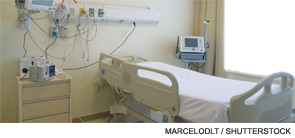
A hospitalist-led project to improve bed assignment practices at Baystate Medical Center in Springfield, Mass., reduced errors in patient placements to 3.1% from 9.4%, according to an abstract presentation at HM11.
The project identified incorrect placement of patients in open beds due to incomplete understanding of the patient’s medical picture, explains lead author Christine Bryson, DO, SFHM, Baystate’s associate medical director for hospital medicine. For example, a patient with a diagnosis of pneumonia who was receiving peritoneal dialysis might be admitted to the respiratory unit, but then would need transfer to the renal unit, where the dialysis could be performed. Such incorrect bed placements and lateral transfers were happening eight times a day, at a cost conservatively estimated at $106 each for nursing, a nonphysician patient placement manager (PPM), and housekeeping services and supplies. That puts potential annual cost savings is $232,000, Dr. Bryson explains.
A committee led by Baystate hospitalists examined current admission processes in detail and recommended a new process: ED physicians confer with the PPM, the PPM reviews the chart and discusses the case with the admitting hospitalist, and then the PPM and hospitalist have an informed, three-way phone conversation about placement.
Hospitalists have been directed to return these calls within 15 minutes, which can be an issue all its own. Another identified barrier was the communications technology, so ED physicians have been issued cellphones so they don’t have to wait at a terminal for a callback from the hospitalist. Dr. Bryson says overall booking process time fell, as did the number of placement errors.
A hospitalist-led project to improve bed assignment practices at Baystate Medical Center in Springfield, Mass., reduced errors in patient placements to 3.1% from 9.4%, according to an abstract presentation at HM11.
The project identified incorrect placement of patients in open beds due to incomplete understanding of the patient’s medical picture, explains lead author Christine Bryson, DO, SFHM, Baystate’s associate medical director for hospital medicine. For example, a patient with a diagnosis of pneumonia who was receiving peritoneal dialysis might be admitted to the respiratory unit, but then would need transfer to the renal unit, where the dialysis could be performed. Such incorrect bed placements and lateral transfers were happening eight times a day, at a cost conservatively estimated at $106 each for nursing, a nonphysician patient placement manager (PPM), and housekeeping services and supplies. That puts potential annual cost savings is $232,000, Dr. Bryson explains.
A committee led by Baystate hospitalists examined current admission processes in detail and recommended a new process: ED physicians confer with the PPM, the PPM reviews the chart and discusses the case with the admitting hospitalist, and then the PPM and hospitalist have an informed, three-way phone conversation about placement.
Hospitalists have been directed to return these calls within 15 minutes, which can be an issue all its own. Another identified barrier was the communications technology, so ED physicians have been issued cellphones so they don’t have to wait at a terminal for a callback from the hospitalist. Dr. Bryson says overall booking process time fell, as did the number of placement errors.
A hospitalist-led project to improve bed assignment practices at Baystate Medical Center in Springfield, Mass., reduced errors in patient placements to 3.1% from 9.4%, according to an abstract presentation at HM11.
The project identified incorrect placement of patients in open beds due to incomplete understanding of the patient’s medical picture, explains lead author Christine Bryson, DO, SFHM, Baystate’s associate medical director for hospital medicine. For example, a patient with a diagnosis of pneumonia who was receiving peritoneal dialysis might be admitted to the respiratory unit, but then would need transfer to the renal unit, where the dialysis could be performed. Such incorrect bed placements and lateral transfers were happening eight times a day, at a cost conservatively estimated at $106 each for nursing, a nonphysician patient placement manager (PPM), and housekeeping services and supplies. That puts potential annual cost savings is $232,000, Dr. Bryson explains.
A committee led by Baystate hospitalists examined current admission processes in detail and recommended a new process: ED physicians confer with the PPM, the PPM reviews the chart and discusses the case with the admitting hospitalist, and then the PPM and hospitalist have an informed, three-way phone conversation about placement.
Hospitalists have been directed to return these calls within 15 minutes, which can be an issue all its own. Another identified barrier was the communications technology, so ED physicians have been issued cellphones so they don’t have to wait at a terminal for a callback from the hospitalist. Dr. Bryson says overall booking process time fell, as did the number of placement errors.
Pediatric Hospitalists Share Lessons Learned on the Path to Executive Leadership

Pediatric hospitalist Jeff Sperring, MD, says he did not go into medicine with aspirations of becoming a hospital administrator. Last November, however, he was named president and CEO of Riley Hospital for Children at Indiana University Health in Indianapolis. It’s a path into healthcare leadership, he believes, that other pediatric hospitalists can and will follow.
“Being a hospitalist was critical to that progression. You are there; you understand what needs to be changed. More than anything else, it’s just being available, willing, and able to help,” Dr. Sperring says. “You lead one project, that leads to additional roles, and that leads to this.”
Dr. Sperring is one of a handful of pediatric hospitalists who have joined the C-suite and assumed major administrative responsibilities in their hospitals. Most say their HM experience was crucial to the journey.
Another pediatric hospitalist, Patrick Conway, MD, MSc, SFHM, earlier this year was named chief medical officer for the Centers for Medicare & Medicaid Services (see “Pediatric Hospitalist Takes CMS Leadership Position,” June 2011, p. 28), and is responsible for administering federal healthcare quality initiatives and setting the government’s quality agenda. Dr. Conway, previously director of hospital medicine at Cincinnati Children’s Hospital Medical Center, says that pediatric HM, in particular, lines up with major priorities in healthcare reform—most notably patient-centered care.
“Pediatricians often have strong communication skills honed by taking care of patients and their families,” Dr. Conway says. “Our training typically emphasizes team-based care and improving the health system.”
The path to hospital leadership might be a little different from the pediatric side. But he urges pediatric hospitalists to look for opportunities beyond pediatrics, within the larger healthcare system and the care of adult patients.
“I am an example of the potential for pediatric hospitalists to take on broader leadership roles,” Dr. Conway says. “I encourage medical students to consider pediatric hospital medicine, with its opportunities for leading change and taking care of patients at the same time.”
Change Agents
Leaders on the path to such C-suite positions as chief executive office (CEO), chief operating officer (COO), chief medical officer (CMO), or chief quality officer (CQO) stress the importance of finding mentors, both within and outside of the hospital, and creating effective teams in which to work. Whether a degree in business or a related field is an essential part of that journey is debatable. Dr. Sperring, for example, did not pursue formal business training, instead concentrating on leadership development. He took a one-year, part-time, multidisciplinary course on the subject offered by Indiana University. “To me, this is about understanding healthcare, how it is delivered, and then having the leadership skills to be able to make change,” he explains.
HM, with its bird’s-eye view of hospital processes and systems, is a good place to start, adds Paul Hain, MD, associate chief of staff and medical director for performance management and improvement at Monroe Carell Jr. Children’s Hospital at Vanderbilt in Nashville, Tenn. “I also think you have to understand quality improvement and be willing to measure, measure, measure.”
But advancing up the hospital’s organization chart requires something more, he notes. “A leader also needs to have a world view that things that are broken need to be fixed,” he says.
Dr. Hain studied engineering in college and worked as an engineer before attending medical school. That experience, he says, laid the foundation for “thinking about processes in healthcare systems, and the use of statistics to help understand those processes.”

—Jeff Sperring, MD, hospitalist, president, CEO, Riley Hospital for Children at Indiana University Health, Indianapolis
Spearhead QI
For Dr. Sperring, advancement to the C-suite was a journey that began nine years ago, following four years in community-based practice. “I absolutely loved the relationships with my kids and families, but I missed the acute-care role,” he says.
In 2002, Riley Hospital recruited him to help start its pediatric hospitalist program. As the program grew to include 22 hospitalists at four affiliated hospitals, his responsibilities also grew to associate chief medical officer in 2007 and chief medical officer in 2009. Along the way, he worked on partnering with pediatricians in the community, spearheaded a quality program that successfully reduced length of stay in the hospital, and developed an integrated call center for hospital admissions across the health system.
By contrast, Steve Narang, MD, CMO of Banner Health System’s pediatric services and its new Cardon Children’s Medical Center in Mesa, Ariz., says he always had one eye on healthcare system and policy issues, even during residency.
“What clearly became the center of my work is the value equation,” he says. “I wanted to be in a career where I could impact on delivering and disseminating best practices in medical care. I wanted to find out what are the best approaches for taking care of patients.”
After residency, Dr. Narang moved to New Orleans in 2000, where he started an academic pediatric hospitalist program at Louisiana State University Medical Center. He later helped launch a firm called Pediatric Hospitalists Louisiana, which collaborated with hospitals across the state to improve pediatric care delivery. “That got me thinking about things more from the management perspective, how to fix gaps in the system and advance our ability to measure quality in pediatric hospital medicine,” he says.
“When you take your first job in the hospital and you start trying to define and design best practices, people look at you differently—not as a young, emerging physician but more as a physician leader. They come to you and say: ‘Will you chair this committee, or lead that effort?’” he says. “And then, suddenly, you run out of tools in your toolbox. That’s what happened to me.”
He enrolled at Harvard University in pursuit of a business degree, along the way learning new ways of looking at systems change and basic principles of financing.
Retain a Clinical Presence
“The great thing about being a hospitalist is that you’re at the intersection of everything that happens in the hospital,” Dr. Narang says. As the pediatric chief medical officer for Banner Health, he is responsible for strategic planning, quality improvement (QI), and patient safety for a 210-bed hospital. He also co-chairs the Clinical Consensus Group, which represents all of Banner’s 23 hospitals, where he is able to influence care processes at the other hospitals as well.
Many hospitalist leaders eventually confront the dilemma of whether growing administrative responsibilities stand in the way of a continuing clinical practice. Dr. Narang moonlights some evenings and weekends on hospitalist and emergency medicine shifts. However, despite still wanting to see patients, he wonders if he has reached the point where growing administrative responsibilities will make that impossible.
“It was a challenge when I became CMO to squeeze in clinical responsibilities,” Dr. Narang says. “But I believed that in order to be the right kind of CMO, I still needed to practice medicine … to know what’s happening on the floor and what still needs to be fixed. You also want your colleagues to see you as a credible physician.”
He hopes to maintain some clinical practice, and says hospitalists have the advantage of blocking out scheduled times on service.
Dr. Sperring says it is “an exciting time” to be a hospitalist. “The way we’re used to defining care is going to change dramatically. Hospitalists will play a key role, both in direct care delivery but also in leadership,” he says. “I don’t think hospitalists have a choice but to lead change. It becomes part of our value proposition and a competency for all hospitalists.”
Dr. Hain often is asked by other hospitalists how to get started with quality initiatives that might lead to something more. “I always say the first one is free, in order to show that you can solve a quality problem while being a full-time clinician,” he explains. “It says to administrators that you’re someone who can deliver, and that starts you on your way. There’s always something to be done to improve quality in the hospital.”
Larry Beresford is a freelance writer based in Oakland, Calif.
Pediatric hospitalist Jeff Sperring, MD, says he did not go into medicine with aspirations of becoming a hospital administrator. Last November, however, he was named president and CEO of Riley Hospital for Children at Indiana University Health in Indianapolis. It’s a path into healthcare leadership, he believes, that other pediatric hospitalists can and will follow.
“Being a hospitalist was critical to that progression. You are there; you understand what needs to be changed. More than anything else, it’s just being available, willing, and able to help,” Dr. Sperring says. “You lead one project, that leads to additional roles, and that leads to this.”
Dr. Sperring is one of a handful of pediatric hospitalists who have joined the C-suite and assumed major administrative responsibilities in their hospitals. Most say their HM experience was crucial to the journey.
Another pediatric hospitalist, Patrick Conway, MD, MSc, SFHM, earlier this year was named chief medical officer for the Centers for Medicare & Medicaid Services (see “Pediatric Hospitalist Takes CMS Leadership Position,” June 2011, p. 28), and is responsible for administering federal healthcare quality initiatives and setting the government’s quality agenda. Dr. Conway, previously director of hospital medicine at Cincinnati Children’s Hospital Medical Center, says that pediatric HM, in particular, lines up with major priorities in healthcare reform—most notably patient-centered care.
“Pediatricians often have strong communication skills honed by taking care of patients and their families,” Dr. Conway says. “Our training typically emphasizes team-based care and improving the health system.”
The path to hospital leadership might be a little different from the pediatric side. But he urges pediatric hospitalists to look for opportunities beyond pediatrics, within the larger healthcare system and the care of adult patients.
“I am an example of the potential for pediatric hospitalists to take on broader leadership roles,” Dr. Conway says. “I encourage medical students to consider pediatric hospital medicine, with its opportunities for leading change and taking care of patients at the same time.”
Change Agents
Leaders on the path to such C-suite positions as chief executive office (CEO), chief operating officer (COO), chief medical officer (CMO), or chief quality officer (CQO) stress the importance of finding mentors, both within and outside of the hospital, and creating effective teams in which to work. Whether a degree in business or a related field is an essential part of that journey is debatable. Dr. Sperring, for example, did not pursue formal business training, instead concentrating on leadership development. He took a one-year, part-time, multidisciplinary course on the subject offered by Indiana University. “To me, this is about understanding healthcare, how it is delivered, and then having the leadership skills to be able to make change,” he explains.
HM, with its bird’s-eye view of hospital processes and systems, is a good place to start, adds Paul Hain, MD, associate chief of staff and medical director for performance management and improvement at Monroe Carell Jr. Children’s Hospital at Vanderbilt in Nashville, Tenn. “I also think you have to understand quality improvement and be willing to measure, measure, measure.”
But advancing up the hospital’s organization chart requires something more, he notes. “A leader also needs to have a world view that things that are broken need to be fixed,” he says.
Dr. Hain studied engineering in college and worked as an engineer before attending medical school. That experience, he says, laid the foundation for “thinking about processes in healthcare systems, and the use of statistics to help understand those processes.”
—Jeff Sperring, MD, hospitalist, president, CEO, Riley Hospital for Children at Indiana University Health, Indianapolis
Spearhead QI
For Dr. Sperring, advancement to the C-suite was a journey that began nine years ago, following four years in community-based practice. “I absolutely loved the relationships with my kids and families, but I missed the acute-care role,” he says.
In 2002, Riley Hospital recruited him to help start its pediatric hospitalist program. As the program grew to include 22 hospitalists at four affiliated hospitals, his responsibilities also grew to associate chief medical officer in 2007 and chief medical officer in 2009. Along the way, he worked on partnering with pediatricians in the community, spearheaded a quality program that successfully reduced length of stay in the hospital, and developed an integrated call center for hospital admissions across the health system.
By contrast, Steve Narang, MD, CMO of Banner Health System’s pediatric services and its new Cardon Children’s Medical Center in Mesa, Ariz., says he always had one eye on healthcare system and policy issues, even during residency.
“What clearly became the center of my work is the value equation,” he says. “I wanted to be in a career where I could impact on delivering and disseminating best practices in medical care. I wanted to find out what are the best approaches for taking care of patients.”
After residency, Dr. Narang moved to New Orleans in 2000, where he started an academic pediatric hospitalist program at Louisiana State University Medical Center. He later helped launch a firm called Pediatric Hospitalists Louisiana, which collaborated with hospitals across the state to improve pediatric care delivery. “That got me thinking about things more from the management perspective, how to fix gaps in the system and advance our ability to measure quality in pediatric hospital medicine,” he says.
“When you take your first job in the hospital and you start trying to define and design best practices, people look at you differently—not as a young, emerging physician but more as a physician leader. They come to you and say: ‘Will you chair this committee, or lead that effort?’” he says. “And then, suddenly, you run out of tools in your toolbox. That’s what happened to me.”
He enrolled at Harvard University in pursuit of a business degree, along the way learning new ways of looking at systems change and basic principles of financing.
Retain a Clinical Presence
“The great thing about being a hospitalist is that you’re at the intersection of everything that happens in the hospital,” Dr. Narang says. As the pediatric chief medical officer for Banner Health, he is responsible for strategic planning, quality improvement (QI), and patient safety for a 210-bed hospital. He also co-chairs the Clinical Consensus Group, which represents all of Banner’s 23 hospitals, where he is able to influence care processes at the other hospitals as well.
Many hospitalist leaders eventually confront the dilemma of whether growing administrative responsibilities stand in the way of a continuing clinical practice. Dr. Narang moonlights some evenings and weekends on hospitalist and emergency medicine shifts. However, despite still wanting to see patients, he wonders if he has reached the point where growing administrative responsibilities will make that impossible.
“It was a challenge when I became CMO to squeeze in clinical responsibilities,” Dr. Narang says. “But I believed that in order to be the right kind of CMO, I still needed to practice medicine … to know what’s happening on the floor and what still needs to be fixed. You also want your colleagues to see you as a credible physician.”
He hopes to maintain some clinical practice, and says hospitalists have the advantage of blocking out scheduled times on service.
Dr. Sperring says it is “an exciting time” to be a hospitalist. “The way we’re used to defining care is going to change dramatically. Hospitalists will play a key role, both in direct care delivery but also in leadership,” he says. “I don’t think hospitalists have a choice but to lead change. It becomes part of our value proposition and a competency for all hospitalists.”
Dr. Hain often is asked by other hospitalists how to get started with quality initiatives that might lead to something more. “I always say the first one is free, in order to show that you can solve a quality problem while being a full-time clinician,” he explains. “It says to administrators that you’re someone who can deliver, and that starts you on your way. There’s always something to be done to improve quality in the hospital.”
Larry Beresford is a freelance writer based in Oakland, Calif.
Pediatric hospitalist Jeff Sperring, MD, says he did not go into medicine with aspirations of becoming a hospital administrator. Last November, however, he was named president and CEO of Riley Hospital for Children at Indiana University Health in Indianapolis. It’s a path into healthcare leadership, he believes, that other pediatric hospitalists can and will follow.
“Being a hospitalist was critical to that progression. You are there; you understand what needs to be changed. More than anything else, it’s just being available, willing, and able to help,” Dr. Sperring says. “You lead one project, that leads to additional roles, and that leads to this.”
Dr. Sperring is one of a handful of pediatric hospitalists who have joined the C-suite and assumed major administrative responsibilities in their hospitals. Most say their HM experience was crucial to the journey.
Another pediatric hospitalist, Patrick Conway, MD, MSc, SFHM, earlier this year was named chief medical officer for the Centers for Medicare & Medicaid Services (see “Pediatric Hospitalist Takes CMS Leadership Position,” June 2011, p. 28), and is responsible for administering federal healthcare quality initiatives and setting the government’s quality agenda. Dr. Conway, previously director of hospital medicine at Cincinnati Children’s Hospital Medical Center, says that pediatric HM, in particular, lines up with major priorities in healthcare reform—most notably patient-centered care.
“Pediatricians often have strong communication skills honed by taking care of patients and their families,” Dr. Conway says. “Our training typically emphasizes team-based care and improving the health system.”
The path to hospital leadership might be a little different from the pediatric side. But he urges pediatric hospitalists to look for opportunities beyond pediatrics, within the larger healthcare system and the care of adult patients.
“I am an example of the potential for pediatric hospitalists to take on broader leadership roles,” Dr. Conway says. “I encourage medical students to consider pediatric hospital medicine, with its opportunities for leading change and taking care of patients at the same time.”
Change Agents
Leaders on the path to such C-suite positions as chief executive office (CEO), chief operating officer (COO), chief medical officer (CMO), or chief quality officer (CQO) stress the importance of finding mentors, both within and outside of the hospital, and creating effective teams in which to work. Whether a degree in business or a related field is an essential part of that journey is debatable. Dr. Sperring, for example, did not pursue formal business training, instead concentrating on leadership development. He took a one-year, part-time, multidisciplinary course on the subject offered by Indiana University. “To me, this is about understanding healthcare, how it is delivered, and then having the leadership skills to be able to make change,” he explains.
HM, with its bird’s-eye view of hospital processes and systems, is a good place to start, adds Paul Hain, MD, associate chief of staff and medical director for performance management and improvement at Monroe Carell Jr. Children’s Hospital at Vanderbilt in Nashville, Tenn. “I also think you have to understand quality improvement and be willing to measure, measure, measure.”
But advancing up the hospital’s organization chart requires something more, he notes. “A leader also needs to have a world view that things that are broken need to be fixed,” he says.
Dr. Hain studied engineering in college and worked as an engineer before attending medical school. That experience, he says, laid the foundation for “thinking about processes in healthcare systems, and the use of statistics to help understand those processes.”
—Jeff Sperring, MD, hospitalist, president, CEO, Riley Hospital for Children at Indiana University Health, Indianapolis
Spearhead QI
For Dr. Sperring, advancement to the C-suite was a journey that began nine years ago, following four years in community-based practice. “I absolutely loved the relationships with my kids and families, but I missed the acute-care role,” he says.
In 2002, Riley Hospital recruited him to help start its pediatric hospitalist program. As the program grew to include 22 hospitalists at four affiliated hospitals, his responsibilities also grew to associate chief medical officer in 2007 and chief medical officer in 2009. Along the way, he worked on partnering with pediatricians in the community, spearheaded a quality program that successfully reduced length of stay in the hospital, and developed an integrated call center for hospital admissions across the health system.
By contrast, Steve Narang, MD, CMO of Banner Health System’s pediatric services and its new Cardon Children’s Medical Center in Mesa, Ariz., says he always had one eye on healthcare system and policy issues, even during residency.
“What clearly became the center of my work is the value equation,” he says. “I wanted to be in a career where I could impact on delivering and disseminating best practices in medical care. I wanted to find out what are the best approaches for taking care of patients.”
After residency, Dr. Narang moved to New Orleans in 2000, where he started an academic pediatric hospitalist program at Louisiana State University Medical Center. He later helped launch a firm called Pediatric Hospitalists Louisiana, which collaborated with hospitals across the state to improve pediatric care delivery. “That got me thinking about things more from the management perspective, how to fix gaps in the system and advance our ability to measure quality in pediatric hospital medicine,” he says.
“When you take your first job in the hospital and you start trying to define and design best practices, people look at you differently—not as a young, emerging physician but more as a physician leader. They come to you and say: ‘Will you chair this committee, or lead that effort?’” he says. “And then, suddenly, you run out of tools in your toolbox. That’s what happened to me.”
He enrolled at Harvard University in pursuit of a business degree, along the way learning new ways of looking at systems change and basic principles of financing.
Retain a Clinical Presence
“The great thing about being a hospitalist is that you’re at the intersection of everything that happens in the hospital,” Dr. Narang says. As the pediatric chief medical officer for Banner Health, he is responsible for strategic planning, quality improvement (QI), and patient safety for a 210-bed hospital. He also co-chairs the Clinical Consensus Group, which represents all of Banner’s 23 hospitals, where he is able to influence care processes at the other hospitals as well.
Many hospitalist leaders eventually confront the dilemma of whether growing administrative responsibilities stand in the way of a continuing clinical practice. Dr. Narang moonlights some evenings and weekends on hospitalist and emergency medicine shifts. However, despite still wanting to see patients, he wonders if he has reached the point where growing administrative responsibilities will make that impossible.
“It was a challenge when I became CMO to squeeze in clinical responsibilities,” Dr. Narang says. “But I believed that in order to be the right kind of CMO, I still needed to practice medicine … to know what’s happening on the floor and what still needs to be fixed. You also want your colleagues to see you as a credible physician.”
He hopes to maintain some clinical practice, and says hospitalists have the advantage of blocking out scheduled times on service.
Dr. Sperring says it is “an exciting time” to be a hospitalist. “The way we’re used to defining care is going to change dramatically. Hospitalists will play a key role, both in direct care delivery but also in leadership,” he says. “I don’t think hospitalists have a choice but to lead change. It becomes part of our value proposition and a competency for all hospitalists.”
Dr. Hain often is asked by other hospitalists how to get started with quality initiatives that might lead to something more. “I always say the first one is free, in order to show that you can solve a quality problem while being a full-time clinician,” he explains. “It says to administrators that you’re someone who can deliver, and that starts you on your way. There’s always something to be done to improve quality in the hospital.”
Larry Beresford is a freelance writer based in Oakland, Calif.
Pediatric Hospitalists Climb the Corporate Ladder
Pediatric hospitalists around the country have made inroads into hospital administration roles. Here are some of the movers and shakers:
Erin Stucky Fisher, MD, FAAP, MHM, medical director for quality improvement at Rady Children’s Hospital, San Diego
Paul Hain, MD, associate chief of staff and medical director for performance management and improvement, Monroe Carell Jr. Children’s Hospital at Vanderbilt, Nashville, Tenn.
Sanford Meltzer, MD, MBA, senior vice president for strategic planning at Seattle Children’s Hospital
Stephen Muething, MD, vice president of safety at Cincinnati Children’s Hospital
Steve Narang, MD, chief medical officer of Banner Health System’s Cardon Children’s Medical Center, Mesa, Ariz.
Brian M. Pate, MD, FHM, FAAP, vice chair of inpatient services for the department of pediatrics at Children’s Mercy Hospitals and Clinics, Kansas City
Shannon Connor Phillips, MD, MPH, FAAP, quality and patient safety officer at the Cleveland Clinic
Jeff Sperring, MD, CEO, Riley Hospital for Children at Indiana University Health, Indianapolis, Ind.
Editor’s note: We, of course, don’t know of all the hospitalists around the country that have risen to C-suite positions. Let us know if we missed one; send Editor Jason Carris an email ([email protected]) and we’ll add it to our monthly “Hospitalists on the Move” section.
Pediatric hospitalists around the country have made inroads into hospital administration roles. Here are some of the movers and shakers:
Erin Stucky Fisher, MD, FAAP, MHM, medical director for quality improvement at Rady Children’s Hospital, San Diego
Paul Hain, MD, associate chief of staff and medical director for performance management and improvement, Monroe Carell Jr. Children’s Hospital at Vanderbilt, Nashville, Tenn.
Sanford Meltzer, MD, MBA, senior vice president for strategic planning at Seattle Children’s Hospital
Stephen Muething, MD, vice president of safety at Cincinnati Children’s Hospital
Steve Narang, MD, chief medical officer of Banner Health System’s Cardon Children’s Medical Center, Mesa, Ariz.
Brian M. Pate, MD, FHM, FAAP, vice chair of inpatient services for the department of pediatrics at Children’s Mercy Hospitals and Clinics, Kansas City
Shannon Connor Phillips, MD, MPH, FAAP, quality and patient safety officer at the Cleveland Clinic
Jeff Sperring, MD, CEO, Riley Hospital for Children at Indiana University Health, Indianapolis, Ind.
Editor’s note: We, of course, don’t know of all the hospitalists around the country that have risen to C-suite positions. Let us know if we missed one; send Editor Jason Carris an email ([email protected]) and we’ll add it to our monthly “Hospitalists on the Move” section.
Pediatric hospitalists around the country have made inroads into hospital administration roles. Here are some of the movers and shakers:
Erin Stucky Fisher, MD, FAAP, MHM, medical director for quality improvement at Rady Children’s Hospital, San Diego
Paul Hain, MD, associate chief of staff and medical director for performance management and improvement, Monroe Carell Jr. Children’s Hospital at Vanderbilt, Nashville, Tenn.
Sanford Meltzer, MD, MBA, senior vice president for strategic planning at Seattle Children’s Hospital
Stephen Muething, MD, vice president of safety at Cincinnati Children’s Hospital
Steve Narang, MD, chief medical officer of Banner Health System’s Cardon Children’s Medical Center, Mesa, Ariz.
Brian M. Pate, MD, FHM, FAAP, vice chair of inpatient services for the department of pediatrics at Children’s Mercy Hospitals and Clinics, Kansas City
Shannon Connor Phillips, MD, MPH, FAAP, quality and patient safety officer at the Cleveland Clinic
Jeff Sperring, MD, CEO, Riley Hospital for Children at Indiana University Health, Indianapolis, Ind.
Editor’s note: We, of course, don’t know of all the hospitalists around the country that have risen to C-suite positions. Let us know if we missed one; send Editor Jason Carris an email ([email protected]) and we’ll add it to our monthly “Hospitalists on the Move” section.