User login
LONDON – More than 90% of patients with chronic hepatitis C and compensated cirrhosis treated with a triple-acting, all-oral, direct-acting antiviral (DAA) regimen achieved sustained virologic responses 12 weeks after the end of therapy (SVR12) in a phase III trial.
In the TURQUOISE II study, 380 patients infected with the hepatitis C virus (HVC) genotype 1 were treated with the interferon (IFN)-free combination of ABT-450/ritonavir, ombitasvir, and dasabuvir with or without ribavirin for 12 or 24 weeks. Results showed that SVR12 rates were 91.8% and 95.9%.
Results were striking, compared with a historical control group using telaprevir plus pegylated IFN plus ribavirin, with the threshold for noninferiority and superiority set at 43% and 54%, respectively.
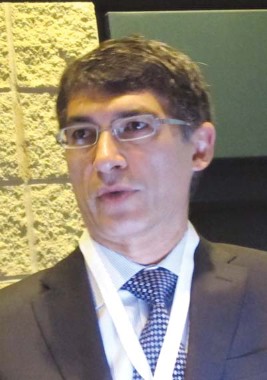
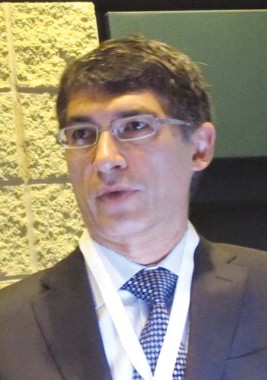
The study is the first to look at the effects of an all-oral, direct-acting antiviral regimen exclusively in patients with HVC genotype 1 infection and cirrhosis, said the lead study investigator Dr. Fred Poordad. The study findings were published online to coincide with his presentation at the International Liver Congress 2014 (N. Engl. J. Med. 2014 Apr. 12 [doi: 10.1056/NEJMoa1402869]).
TURQUOISE II was an international, multicenter, randomized, open-label trial of 380 patients with Child-Pugh class A cirrhosis caused by HCV infection, explained Dr. Poordad of the Texas Liver Institute at the University of Texas Health Science Center, San Antonio. The trial was conducted at 78 sites in Europe and North America and included both treatment-experienced (about 60%) and treatment-naive (about 40%) patients.
Results by HCV subtype showed that the regimen worked equally well in patients with genotype 1a as genotype 1b, with SVR12 rates of 88.6% and 98.5% with 12 weeks’ treatment and 94.2% and 100% with 24 weeks’ treatment, respectively.
SVR rates were also similarly high in patients according to prior treatment response and in those with portal hypertension or reduced hepatic function identified by low baseline platelet counts or low serum albumin.
Dr. Poordad noted that 8.2% and 4.1% of patients did not achieve SVR12 in the 12- and 24-week therapy groups, respectively. Premature discontinuations occurred in 1.9% and 1.7% and were with caused by an adverse event (four vs. one case) or withdrawal of consent (0 vs. two cases).
"Virologic breakthrough was an unusual event in either arm (0.5% and 1.7%, respectively)," the researcher observed. Relapse occurred in 5.9% and 0.6% of patients in the 12- and 24-week arms. "Of the 12 patients who relapsed in the 12-week arm, 7 of them were [genotype]1a null responders, largely driving the difference in relapse between these two arms," Dr. Poordad said.
He noted that 17 patients overall had a virologic failure and of these, 15 of them had at least one resistance-associated variant. The most common variants in GT1a-infected patients were D168V found in NS3 and Q30R found in NS5A. The significance and persistence of these variants is currently under investigation.
In terms of tolerability, fatigue, and shortness of breath were the most common adverse events seen, occurring in a higher percentage of patients treated with 24 (46.5% and 12.2%) vs. 12 (12.2% vs. 5.8%) weeks of treatment (P less than .05 for both comparisons). There were low rates of severe or serious adverse events and low rates of treatment discontinuation (about 2%).
"The efficacy and safety in this large cirrhotic population is similar to noncirrhotics treated with the same regimen," Dr. Poordad noted. He highlighted that the three DAA antiviral regimen – nicknamed 3D – has also been assessed in two pivotal phase III trials and has shown exceptionally high SVR12 rates. In the SAPPHIRE I trial (N. Engl. J. Med. 2014 Apr. 10 [doi:10.1056/NEJMoa1315722]), in treatment-naive patients without cirrhosis, SVR12 after 12 weeks’ therapy with the 3D regimen was 96.2% and in the SAPPHIRE II trial (N. Engl. J. Med. 2014 Apr. 10 [doi: 10.1056/NEJMoa1401561]) in treatment-experienced patients without cirrhosis it was 96.3% in treatment-experienced patients, which included those who had previously not responded to IFN-based therapy. The results of both SAPPHIRE trials were also presented at the meeting, which was sponsored by the European Association for the Study of the Liver.
Dr. Jean-Michel Pawlotsky of Hôpital Henri Mondor, Créteil, France, who chaired the late-breakers session at which the TURQUOISE II data were presented, commented that these data were "outstanding." He asked Dr. Poordad to comment on the treatment duration and when a longer treatment course might be warranted in certain patients.
"I think one has to use their clinical judgment, so if you have a patient who comes in and you cannot determine if they were a previous nonresponder or not then you can certainly consider treating a little bit longer," the investigator responded. "They certainly tolerate treatment just as well."
AbbVie sponsored the study. Dr. Poordad has received research support and acted as a consultant to the company. He also disclosed receiving grants or research support or acting as an adviser or speaker for Boehringer Ingelheim, Bristol-Myers Squibb, Genentech, Gilead Sciences, GlaxoSmithKline, in addition to others.
LONDON – More than 90% of patients with chronic hepatitis C and compensated cirrhosis treated with a triple-acting, all-oral, direct-acting antiviral (DAA) regimen achieved sustained virologic responses 12 weeks after the end of therapy (SVR12) in a phase III trial.
In the TURQUOISE II study, 380 patients infected with the hepatitis C virus (HVC) genotype 1 were treated with the interferon (IFN)-free combination of ABT-450/ritonavir, ombitasvir, and dasabuvir with or without ribavirin for 12 or 24 weeks. Results showed that SVR12 rates were 91.8% and 95.9%.
Results were striking, compared with a historical control group using telaprevir plus pegylated IFN plus ribavirin, with the threshold for noninferiority and superiority set at 43% and 54%, respectively.
The study is the first to look at the effects of an all-oral, direct-acting antiviral regimen exclusively in patients with HVC genotype 1 infection and cirrhosis, said the lead study investigator Dr. Fred Poordad. The study findings were published online to coincide with his presentation at the International Liver Congress 2014 (N. Engl. J. Med. 2014 Apr. 12 [doi: 10.1056/NEJMoa1402869]).
TURQUOISE II was an international, multicenter, randomized, open-label trial of 380 patients with Child-Pugh class A cirrhosis caused by HCV infection, explained Dr. Poordad of the Texas Liver Institute at the University of Texas Health Science Center, San Antonio. The trial was conducted at 78 sites in Europe and North America and included both treatment-experienced (about 60%) and treatment-naive (about 40%) patients.
Results by HCV subtype showed that the regimen worked equally well in patients with genotype 1a as genotype 1b, with SVR12 rates of 88.6% and 98.5% with 12 weeks’ treatment and 94.2% and 100% with 24 weeks’ treatment, respectively.
SVR rates were also similarly high in patients according to prior treatment response and in those with portal hypertension or reduced hepatic function identified by low baseline platelet counts or low serum albumin.
Dr. Poordad noted that 8.2% and 4.1% of patients did not achieve SVR12 in the 12- and 24-week therapy groups, respectively. Premature discontinuations occurred in 1.9% and 1.7% and were with caused by an adverse event (four vs. one case) or withdrawal of consent (0 vs. two cases).
"Virologic breakthrough was an unusual event in either arm (0.5% and 1.7%, respectively)," the researcher observed. Relapse occurred in 5.9% and 0.6% of patients in the 12- and 24-week arms. "Of the 12 patients who relapsed in the 12-week arm, 7 of them were [genotype]1a null responders, largely driving the difference in relapse between these two arms," Dr. Poordad said.
He noted that 17 patients overall had a virologic failure and of these, 15 of them had at least one resistance-associated variant. The most common variants in GT1a-infected patients were D168V found in NS3 and Q30R found in NS5A. The significance and persistence of these variants is currently under investigation.
In terms of tolerability, fatigue, and shortness of breath were the most common adverse events seen, occurring in a higher percentage of patients treated with 24 (46.5% and 12.2%) vs. 12 (12.2% vs. 5.8%) weeks of treatment (P less than .05 for both comparisons). There were low rates of severe or serious adverse events and low rates of treatment discontinuation (about 2%).
"The efficacy and safety in this large cirrhotic population is similar to noncirrhotics treated with the same regimen," Dr. Poordad noted. He highlighted that the three DAA antiviral regimen – nicknamed 3D – has also been assessed in two pivotal phase III trials and has shown exceptionally high SVR12 rates. In the SAPPHIRE I trial (N. Engl. J. Med. 2014 Apr. 10 [doi:10.1056/NEJMoa1315722]), in treatment-naive patients without cirrhosis, SVR12 after 12 weeks’ therapy with the 3D regimen was 96.2% and in the SAPPHIRE II trial (N. Engl. J. Med. 2014 Apr. 10 [doi: 10.1056/NEJMoa1401561]) in treatment-experienced patients without cirrhosis it was 96.3% in treatment-experienced patients, which included those who had previously not responded to IFN-based therapy. The results of both SAPPHIRE trials were also presented at the meeting, which was sponsored by the European Association for the Study of the Liver.
Dr. Jean-Michel Pawlotsky of Hôpital Henri Mondor, Créteil, France, who chaired the late-breakers session at which the TURQUOISE II data were presented, commented that these data were "outstanding." He asked Dr. Poordad to comment on the treatment duration and when a longer treatment course might be warranted in certain patients.
"I think one has to use their clinical judgment, so if you have a patient who comes in and you cannot determine if they were a previous nonresponder or not then you can certainly consider treating a little bit longer," the investigator responded. "They certainly tolerate treatment just as well."
AbbVie sponsored the study. Dr. Poordad has received research support and acted as a consultant to the company. He also disclosed receiving grants or research support or acting as an adviser or speaker for Boehringer Ingelheim, Bristol-Myers Squibb, Genentech, Gilead Sciences, GlaxoSmithKline, in addition to others.
LONDON – More than 90% of patients with chronic hepatitis C and compensated cirrhosis treated with a triple-acting, all-oral, direct-acting antiviral (DAA) regimen achieved sustained virologic responses 12 weeks after the end of therapy (SVR12) in a phase III trial.
In the TURQUOISE II study, 380 patients infected with the hepatitis C virus (HVC) genotype 1 were treated with the interferon (IFN)-free combination of ABT-450/ritonavir, ombitasvir, and dasabuvir with or without ribavirin for 12 or 24 weeks. Results showed that SVR12 rates were 91.8% and 95.9%.
Results were striking, compared with a historical control group using telaprevir plus pegylated IFN plus ribavirin, with the threshold for noninferiority and superiority set at 43% and 54%, respectively.
The study is the first to look at the effects of an all-oral, direct-acting antiviral regimen exclusively in patients with HVC genotype 1 infection and cirrhosis, said the lead study investigator Dr. Fred Poordad. The study findings were published online to coincide with his presentation at the International Liver Congress 2014 (N. Engl. J. Med. 2014 Apr. 12 [doi: 10.1056/NEJMoa1402869]).
TURQUOISE II was an international, multicenter, randomized, open-label trial of 380 patients with Child-Pugh class A cirrhosis caused by HCV infection, explained Dr. Poordad of the Texas Liver Institute at the University of Texas Health Science Center, San Antonio. The trial was conducted at 78 sites in Europe and North America and included both treatment-experienced (about 60%) and treatment-naive (about 40%) patients.
Results by HCV subtype showed that the regimen worked equally well in patients with genotype 1a as genotype 1b, with SVR12 rates of 88.6% and 98.5% with 12 weeks’ treatment and 94.2% and 100% with 24 weeks’ treatment, respectively.
SVR rates were also similarly high in patients according to prior treatment response and in those with portal hypertension or reduced hepatic function identified by low baseline platelet counts or low serum albumin.
Dr. Poordad noted that 8.2% and 4.1% of patients did not achieve SVR12 in the 12- and 24-week therapy groups, respectively. Premature discontinuations occurred in 1.9% and 1.7% and were with caused by an adverse event (four vs. one case) or withdrawal of consent (0 vs. two cases).
"Virologic breakthrough was an unusual event in either arm (0.5% and 1.7%, respectively)," the researcher observed. Relapse occurred in 5.9% and 0.6% of patients in the 12- and 24-week arms. "Of the 12 patients who relapsed in the 12-week arm, 7 of them were [genotype]1a null responders, largely driving the difference in relapse between these two arms," Dr. Poordad said.
He noted that 17 patients overall had a virologic failure and of these, 15 of them had at least one resistance-associated variant. The most common variants in GT1a-infected patients were D168V found in NS3 and Q30R found in NS5A. The significance and persistence of these variants is currently under investigation.
In terms of tolerability, fatigue, and shortness of breath were the most common adverse events seen, occurring in a higher percentage of patients treated with 24 (46.5% and 12.2%) vs. 12 (12.2% vs. 5.8%) weeks of treatment (P less than .05 for both comparisons). There were low rates of severe or serious adverse events and low rates of treatment discontinuation (about 2%).
"The efficacy and safety in this large cirrhotic population is similar to noncirrhotics treated with the same regimen," Dr. Poordad noted. He highlighted that the three DAA antiviral regimen – nicknamed 3D – has also been assessed in two pivotal phase III trials and has shown exceptionally high SVR12 rates. In the SAPPHIRE I trial (N. Engl. J. Med. 2014 Apr. 10 [doi:10.1056/NEJMoa1315722]), in treatment-naive patients without cirrhosis, SVR12 after 12 weeks’ therapy with the 3D regimen was 96.2% and in the SAPPHIRE II trial (N. Engl. J. Med. 2014 Apr. 10 [doi: 10.1056/NEJMoa1401561]) in treatment-experienced patients without cirrhosis it was 96.3% in treatment-experienced patients, which included those who had previously not responded to IFN-based therapy. The results of both SAPPHIRE trials were also presented at the meeting, which was sponsored by the European Association for the Study of the Liver.
Dr. Jean-Michel Pawlotsky of Hôpital Henri Mondor, Créteil, France, who chaired the late-breakers session at which the TURQUOISE II data were presented, commented that these data were "outstanding." He asked Dr. Poordad to comment on the treatment duration and when a longer treatment course might be warranted in certain patients.
"I think one has to use their clinical judgment, so if you have a patient who comes in and you cannot determine if they were a previous nonresponder or not then you can certainly consider treating a little bit longer," the investigator responded. "They certainly tolerate treatment just as well."
AbbVie sponsored the study. Dr. Poordad has received research support and acted as a consultant to the company. He also disclosed receiving grants or research support or acting as an adviser or speaker for Boehringer Ingelheim, Bristol-Myers Squibb, Genentech, Gilead Sciences, GlaxoSmithKline, in addition to others.
AT THE INTERNATIONAL LIVER CONGRESS 2014
Major finding: Sustained virologic responses 12 weeks after treatment was stopped were 91.8% and 96.1%, respectively, with a 12-week and a 24-week regimen.
Data source: TURQUOISE II, a phase III international, multicenter, randomized, open-label trial of 380 patients with Child-Pugh class A cirrhosis caused by hepatitis C viral infection treated with the interferon-free combination of ABD-450/ritnavir, ombitasvir, and dasabuvir with or without ribavirin for 12 or 24 weeks.
Disclosures: AbbVie sponsored the study. Dr. Poordad has received research support and acted as a consultant to the company. He also disclosed receiving grants or research support or acting as an adviser or speaker for Boehringer Ingelheim, Bristol-Myers Squibb, Genentech, Gilead Sciences, GlaxoSmithKline, in addition to others.