User login
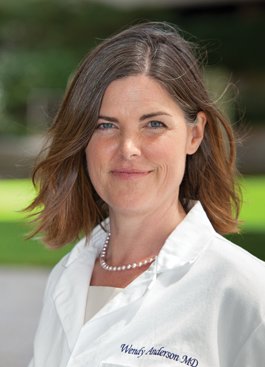
Dr. Wendy G. Anderson of the University of California, San Francisco, hospital medicine and palliative care program, spends most of her time trying to improve the quality of care for seriously ill patients, whether by providing better symptom management to patients or by training other physicians to communicate better.
Dr. Anderson leads a project at UCSF to integrate palliative care into intensive care units by training ICU bedside nurses in how to provide better symptom management and emotional support to patients and families. The project, known as IMPACT-ICU (Integrating Multidisciplinary Palliative Care into the ICU), is now being rolled out across the University of California’s five medical centers.
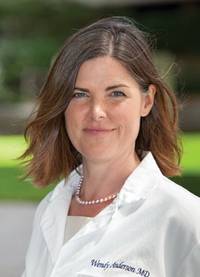
Recently, Dr. Anderson partnered with Dr. Solomon Liao, a hospitalist and director of palliative care services at the University of California, Irvine, Medical Center, and the Society of Hospital Medicine, to develop a toolkit to help hospitalists improve the efficacy and safety of pain management. The toolkit, which is currently under development, will look specifically at techniques and systems changes that can improve care on medical services. The toolkit should be available for hospitalists sometime next year.
In an interview, Dr. Anderson discussed the challenges to effective pain management and the importance of partnering with patients.
Question: What are some of the barriers to effective pain management?
Dr. Anderson: Like anything else in the hospital, we find that it’s a mix of systems factors as well as provider education. What we’ve learned is that within those systems, everything we do impacts pain management, from how the different disciplines work together to the electronic medical record. It is the nurses on the front lines who are usually going to know how well the patient’s pain is being managed. So it’s really important to make sure that there are regular times for the nurses to talk with the hospitalists to let them know when patients are having trouble with pain.
What we’ve found is that sometimes a hospitalist will round in the morning and at that time the patient is doing okay with [his] pain, or [the patient has] other concerns so [he doesn’t] mention pain then. One strategy we’ve tried is adding pain as a topic in the multidisciplinary rounds each day. Another simple strategy is encouraging hospitalists to check the pain levels for their patients in the electronic medical record. Those levels are all charted in the electronic medical record, but they don’t always appear in the same place as the vitals. So part of what we’re looking at going forward are ways that we can change the electronic medical record so that it’s obvious to the hospitalist when the patient’s pain is not well controlled.
Question: Do you have any tips for hospitalists to improve how they manage pain right now?
Dr. Anderson: If a patient is having pain, make sure that you partner with the patient in creating a regimen. You should never change pain medicines without telling the patient first and developing a plan together about what’s going to happen. It’s important if someone is having pain to respond very quickly to that. If you get called by the nurse that someone is having pain, that’s an emergency, and you should go and develop a plan with the patient.
It’s really helpful to make sure that you also respond to the emotional piece of the patient having pain. It’s very frustrating to be in pain, especially in the hospital where you can’t regulate your own medicine. It often feels very out of control for patients. And they also often feel like they are being judged for having pain. Aside from what you’re going to do about deciding on specific pain medicines, the process of validating how a patient is feeling and saying that you want to work on it with them, is a huge piece of patient satisfaction.
Question: What are the biggest safety concerns when treating pain?
Dr. Anderson: Opioid medications require a lot of training to dose safely. People need training to know how to appropriately titrate them. If you don’t have enough training, you either give people too much and that can be risky, or you give them too little and their pain is not completely controlled. There’s also a lot of concern nationally about overuse of opioid medications. One of the pieces of this project has been to figure out the best way to make the Prescription Drug Monitoring Program reports available to hospitalists. Here in California, it can be challenging to get registered for those programs. We’ve found that it is probably best to designate a few point people, so for us at UCSF, it’s our pharmacists who are registered. When a hospitalist has questions about whether a patient has had medications filled by multiple providers or has had multiple prescriptions, we resolve those issues by consulting with the pharmacist who can access the Prescription Drug Monitoring Program reports.
Question: When should a palliative care consult happen?
Dr. Anderson: There are two specialty consult services that are important to think about: the pain-management consult services for acute and chronic pain, and the palliative care consult service, for patients with serious illnesses. There are also outpatient services available for both of those. One of the big pieces of this project has been raising awareness for hospitalists about what resources are available if a patient’s pain isn’t well controlled or if the patient isn’t satisfied with their pain management.
We’ve really been encouraging hospitalists to consult the pain management or palliative care consult service when they have patients in whom they have tried something and it hasn’t worked, or if a patient is having readmissions for pain. Oftentimes, patients are discharged home and have to come back in because they didn’t have an adequate pain-management plan as an outpatient. Those would be patients for whom it’s really important to develop a plan with the primary care provider and to consider referring to outpatient palliative care or pain management.
Question: How do you get patients more engaged, and what are the benefits in doing that?
Dr. Anderson: I’ve met very few patients that don’t want to be engaged when it comes to their pain management. So we, as physicians, need to partner with them and ask them which medications have worked and which haven’t. We need to be open to them having some input into their pain regimen.
In some cases, we may not have a medical explanation for why one medication works better for a patient. If it’s a reasonable medical plan and there are two options for patients to choose between, it helps them to have control over their medications and to feel like they’re involved in their treatment. Just ask about what has worked for them before for their pain. Do they have other ideas for things that they might want to try? They really are the experts. When a patient says that only a certain medication works for them, we tend to disbelieve them. But there’s been a lot of interesting research that has come out recently that shows that people actually do have different genetic opioid receptors. So it may actually be true that some of the medicines don’t work for them. Listening to them, and involving them in the plan, within medical reason, is really important.
On Twitter @maryellenny
Dr. Wendy G. Anderson of the University of California, San Francisco, hospital medicine and palliative care program, spends most of her time trying to improve the quality of care for seriously ill patients, whether by providing better symptom management to patients or by training other physicians to communicate better.
Dr. Anderson leads a project at UCSF to integrate palliative care into intensive care units by training ICU bedside nurses in how to provide better symptom management and emotional support to patients and families. The project, known as IMPACT-ICU (Integrating Multidisciplinary Palliative Care into the ICU), is now being rolled out across the University of California’s five medical centers.
Recently, Dr. Anderson partnered with Dr. Solomon Liao, a hospitalist and director of palliative care services at the University of California, Irvine, Medical Center, and the Society of Hospital Medicine, to develop a toolkit to help hospitalists improve the efficacy and safety of pain management. The toolkit, which is currently under development, will look specifically at techniques and systems changes that can improve care on medical services. The toolkit should be available for hospitalists sometime next year.
In an interview, Dr. Anderson discussed the challenges to effective pain management and the importance of partnering with patients.
Question: What are some of the barriers to effective pain management?
Dr. Anderson: Like anything else in the hospital, we find that it’s a mix of systems factors as well as provider education. What we’ve learned is that within those systems, everything we do impacts pain management, from how the different disciplines work together to the electronic medical record. It is the nurses on the front lines who are usually going to know how well the patient’s pain is being managed. So it’s really important to make sure that there are regular times for the nurses to talk with the hospitalists to let them know when patients are having trouble with pain.
What we’ve found is that sometimes a hospitalist will round in the morning and at that time the patient is doing okay with [his] pain, or [the patient has] other concerns so [he doesn’t] mention pain then. One strategy we’ve tried is adding pain as a topic in the multidisciplinary rounds each day. Another simple strategy is encouraging hospitalists to check the pain levels for their patients in the electronic medical record. Those levels are all charted in the electronic medical record, but they don’t always appear in the same place as the vitals. So part of what we’re looking at going forward are ways that we can change the electronic medical record so that it’s obvious to the hospitalist when the patient’s pain is not well controlled.
Question: Do you have any tips for hospitalists to improve how they manage pain right now?
Dr. Anderson: If a patient is having pain, make sure that you partner with the patient in creating a regimen. You should never change pain medicines without telling the patient first and developing a plan together about what’s going to happen. It’s important if someone is having pain to respond very quickly to that. If you get called by the nurse that someone is having pain, that’s an emergency, and you should go and develop a plan with the patient.
It’s really helpful to make sure that you also respond to the emotional piece of the patient having pain. It’s very frustrating to be in pain, especially in the hospital where you can’t regulate your own medicine. It often feels very out of control for patients. And they also often feel like they are being judged for having pain. Aside from what you’re going to do about deciding on specific pain medicines, the process of validating how a patient is feeling and saying that you want to work on it with them, is a huge piece of patient satisfaction.
Question: What are the biggest safety concerns when treating pain?
Dr. Anderson: Opioid medications require a lot of training to dose safely. People need training to know how to appropriately titrate them. If you don’t have enough training, you either give people too much and that can be risky, or you give them too little and their pain is not completely controlled. There’s also a lot of concern nationally about overuse of opioid medications. One of the pieces of this project has been to figure out the best way to make the Prescription Drug Monitoring Program reports available to hospitalists. Here in California, it can be challenging to get registered for those programs. We’ve found that it is probably best to designate a few point people, so for us at UCSF, it’s our pharmacists who are registered. When a hospitalist has questions about whether a patient has had medications filled by multiple providers or has had multiple prescriptions, we resolve those issues by consulting with the pharmacist who can access the Prescription Drug Monitoring Program reports.
Question: When should a palliative care consult happen?
Dr. Anderson: There are two specialty consult services that are important to think about: the pain-management consult services for acute and chronic pain, and the palliative care consult service, for patients with serious illnesses. There are also outpatient services available for both of those. One of the big pieces of this project has been raising awareness for hospitalists about what resources are available if a patient’s pain isn’t well controlled or if the patient isn’t satisfied with their pain management.
We’ve really been encouraging hospitalists to consult the pain management or palliative care consult service when they have patients in whom they have tried something and it hasn’t worked, or if a patient is having readmissions for pain. Oftentimes, patients are discharged home and have to come back in because they didn’t have an adequate pain-management plan as an outpatient. Those would be patients for whom it’s really important to develop a plan with the primary care provider and to consider referring to outpatient palliative care or pain management.
Question: How do you get patients more engaged, and what are the benefits in doing that?
Dr. Anderson: I’ve met very few patients that don’t want to be engaged when it comes to their pain management. So we, as physicians, need to partner with them and ask them which medications have worked and which haven’t. We need to be open to them having some input into their pain regimen.
In some cases, we may not have a medical explanation for why one medication works better for a patient. If it’s a reasonable medical plan and there are two options for patients to choose between, it helps them to have control over their medications and to feel like they’re involved in their treatment. Just ask about what has worked for them before for their pain. Do they have other ideas for things that they might want to try? They really are the experts. When a patient says that only a certain medication works for them, we tend to disbelieve them. But there’s been a lot of interesting research that has come out recently that shows that people actually do have different genetic opioid receptors. So it may actually be true that some of the medicines don’t work for them. Listening to them, and involving them in the plan, within medical reason, is really important.
On Twitter @maryellenny
Dr. Wendy G. Anderson of the University of California, San Francisco, hospital medicine and palliative care program, spends most of her time trying to improve the quality of care for seriously ill patients, whether by providing better symptom management to patients or by training other physicians to communicate better.
Dr. Anderson leads a project at UCSF to integrate palliative care into intensive care units by training ICU bedside nurses in how to provide better symptom management and emotional support to patients and families. The project, known as IMPACT-ICU (Integrating Multidisciplinary Palliative Care into the ICU), is now being rolled out across the University of California’s five medical centers.
Recently, Dr. Anderson partnered with Dr. Solomon Liao, a hospitalist and director of palliative care services at the University of California, Irvine, Medical Center, and the Society of Hospital Medicine, to develop a toolkit to help hospitalists improve the efficacy and safety of pain management. The toolkit, which is currently under development, will look specifically at techniques and systems changes that can improve care on medical services. The toolkit should be available for hospitalists sometime next year.
In an interview, Dr. Anderson discussed the challenges to effective pain management and the importance of partnering with patients.
Question: What are some of the barriers to effective pain management?
Dr. Anderson: Like anything else in the hospital, we find that it’s a mix of systems factors as well as provider education. What we’ve learned is that within those systems, everything we do impacts pain management, from how the different disciplines work together to the electronic medical record. It is the nurses on the front lines who are usually going to know how well the patient’s pain is being managed. So it’s really important to make sure that there are regular times for the nurses to talk with the hospitalists to let them know when patients are having trouble with pain.
What we’ve found is that sometimes a hospitalist will round in the morning and at that time the patient is doing okay with [his] pain, or [the patient has] other concerns so [he doesn’t] mention pain then. One strategy we’ve tried is adding pain as a topic in the multidisciplinary rounds each day. Another simple strategy is encouraging hospitalists to check the pain levels for their patients in the electronic medical record. Those levels are all charted in the electronic medical record, but they don’t always appear in the same place as the vitals. So part of what we’re looking at going forward are ways that we can change the electronic medical record so that it’s obvious to the hospitalist when the patient’s pain is not well controlled.
Question: Do you have any tips for hospitalists to improve how they manage pain right now?
Dr. Anderson: If a patient is having pain, make sure that you partner with the patient in creating a regimen. You should never change pain medicines without telling the patient first and developing a plan together about what’s going to happen. It’s important if someone is having pain to respond very quickly to that. If you get called by the nurse that someone is having pain, that’s an emergency, and you should go and develop a plan with the patient.
It’s really helpful to make sure that you also respond to the emotional piece of the patient having pain. It’s very frustrating to be in pain, especially in the hospital where you can’t regulate your own medicine. It often feels very out of control for patients. And they also often feel like they are being judged for having pain. Aside from what you’re going to do about deciding on specific pain medicines, the process of validating how a patient is feeling and saying that you want to work on it with them, is a huge piece of patient satisfaction.
Question: What are the biggest safety concerns when treating pain?
Dr. Anderson: Opioid medications require a lot of training to dose safely. People need training to know how to appropriately titrate them. If you don’t have enough training, you either give people too much and that can be risky, or you give them too little and their pain is not completely controlled. There’s also a lot of concern nationally about overuse of opioid medications. One of the pieces of this project has been to figure out the best way to make the Prescription Drug Monitoring Program reports available to hospitalists. Here in California, it can be challenging to get registered for those programs. We’ve found that it is probably best to designate a few point people, so for us at UCSF, it’s our pharmacists who are registered. When a hospitalist has questions about whether a patient has had medications filled by multiple providers or has had multiple prescriptions, we resolve those issues by consulting with the pharmacist who can access the Prescription Drug Monitoring Program reports.
Question: When should a palliative care consult happen?
Dr. Anderson: There are two specialty consult services that are important to think about: the pain-management consult services for acute and chronic pain, and the palliative care consult service, for patients with serious illnesses. There are also outpatient services available for both of those. One of the big pieces of this project has been raising awareness for hospitalists about what resources are available if a patient’s pain isn’t well controlled or if the patient isn’t satisfied with their pain management.
We’ve really been encouraging hospitalists to consult the pain management or palliative care consult service when they have patients in whom they have tried something and it hasn’t worked, or if a patient is having readmissions for pain. Oftentimes, patients are discharged home and have to come back in because they didn’t have an adequate pain-management plan as an outpatient. Those would be patients for whom it’s really important to develop a plan with the primary care provider and to consider referring to outpatient palliative care or pain management.
Question: How do you get patients more engaged, and what are the benefits in doing that?
Dr. Anderson: I’ve met very few patients that don’t want to be engaged when it comes to their pain management. So we, as physicians, need to partner with them and ask them which medications have worked and which haven’t. We need to be open to them having some input into their pain regimen.
In some cases, we may not have a medical explanation for why one medication works better for a patient. If it’s a reasonable medical plan and there are two options for patients to choose between, it helps them to have control over their medications and to feel like they’re involved in their treatment. Just ask about what has worked for them before for their pain. Do they have other ideas for things that they might want to try? They really are the experts. When a patient says that only a certain medication works for them, we tend to disbelieve them. But there’s been a lot of interesting research that has come out recently that shows that people actually do have different genetic opioid receptors. So it may actually be true that some of the medicines don’t work for them. Listening to them, and involving them in the plan, within medical reason, is really important.
On Twitter @maryellenny