User login
New Insights on Treatment of Veterans With CLL From ASH 2025

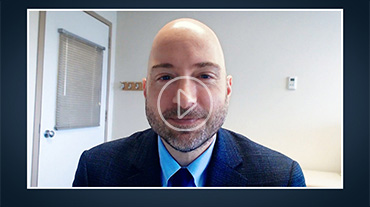
Insights from phase 3 trials presented at the 2025 American Society of Hematology Annual Meeting may expand treatment options for veterans with chronic lymphocytic leukemia (CLL), as discussed by Dr Nicholas Burwick from University of Washington, Seattle.
Dr Burwick begins with the CLL17 trial examining continuous treatment vs fixed-duration therapy in previously untreated patients. The fixed-duration therapy showed noninferior results. Research pertaining to the veterans population in the phase 2 Benefit VA study may offer further insight on these results.
He next discusses the first study comparing the noncovalent BTKi pirtobrutinib to covalent ibrutinib in both treatment-naive patients and those with relapsed/refractory CLL. Pirtobrutinib demonstrated noninferiority in each subgroup.
Pirtobrutinib was compared to bendamustine plus rituximab in the treatment-naive setting in the next study, showing favorable progression-free survival and a notable trend in overall survival. These two trials could lead to use of a noncovalent BTKi as frontline therapy.
Dr Burwick then turns to 6-year follow-up in the SEQUOIA trial, in which zanubrutinib showed sustained superiority over bendamustine and rituximab. He notes that acalabrutinib is currently the preferred BTKi therapy for veterans with CLL.
Finally, he discusses a study examining combination acalabrutinib and venetoclax, to which obinutuzumab was added either early or late. The rate of infections was significantly higher in the early group, an issue of particular concern in the veterans population.
--
Nicholas R. Burwick, MD, VA Puget Sound Health Care System; Associate Professor, Department of Medicine, Division of Hematology, University of Washington, Seattle; President, AVAHO - Association of VA Hematology/Oncology
Nicholas R. Burwick, MD, has disclosed no relevant financial relationships.
Insights from phase 3 trials presented at the 2025 American Society of Hematology Annual Meeting may expand treatment options for veterans with chronic lymphocytic leukemia (CLL), as discussed by Dr Nicholas Burwick from University of Washington, Seattle.
Dr Burwick begins with the CLL17 trial examining continuous treatment vs fixed-duration therapy in previously untreated patients. The fixed-duration therapy showed noninferior results. Research pertaining to the veterans population in the phase 2 Benefit VA study may offer further insight on these results.
He next discusses the first study comparing the noncovalent BTKi pirtobrutinib to covalent ibrutinib in both treatment-naive patients and those with relapsed/refractory CLL. Pirtobrutinib demonstrated noninferiority in each subgroup.
Pirtobrutinib was compared to bendamustine plus rituximab in the treatment-naive setting in the next study, showing favorable progression-free survival and a notable trend in overall survival. These two trials could lead to use of a noncovalent BTKi as frontline therapy.
Dr Burwick then turns to 6-year follow-up in the SEQUOIA trial, in which zanubrutinib showed sustained superiority over bendamustine and rituximab. He notes that acalabrutinib is currently the preferred BTKi therapy for veterans with CLL.
Finally, he discusses a study examining combination acalabrutinib and venetoclax, to which obinutuzumab was added either early or late. The rate of infections was significantly higher in the early group, an issue of particular concern in the veterans population.
--
Nicholas R. Burwick, MD, VA Puget Sound Health Care System; Associate Professor, Department of Medicine, Division of Hematology, University of Washington, Seattle; President, AVAHO - Association of VA Hematology/Oncology
Nicholas R. Burwick, MD, has disclosed no relevant financial relationships.
Insights from phase 3 trials presented at the 2025 American Society of Hematology Annual Meeting may expand treatment options for veterans with chronic lymphocytic leukemia (CLL), as discussed by Dr Nicholas Burwick from University of Washington, Seattle.
Dr Burwick begins with the CLL17 trial examining continuous treatment vs fixed-duration therapy in previously untreated patients. The fixed-duration therapy showed noninferior results. Research pertaining to the veterans population in the phase 2 Benefit VA study may offer further insight on these results.
He next discusses the first study comparing the noncovalent BTKi pirtobrutinib to covalent ibrutinib in both treatment-naive patients and those with relapsed/refractory CLL. Pirtobrutinib demonstrated noninferiority in each subgroup.
Pirtobrutinib was compared to bendamustine plus rituximab in the treatment-naive setting in the next study, showing favorable progression-free survival and a notable trend in overall survival. These two trials could lead to use of a noncovalent BTKi as frontline therapy.
Dr Burwick then turns to 6-year follow-up in the SEQUOIA trial, in which zanubrutinib showed sustained superiority over bendamustine and rituximab. He notes that acalabrutinib is currently the preferred BTKi therapy for veterans with CLL.
Finally, he discusses a study examining combination acalabrutinib and venetoclax, to which obinutuzumab was added either early or late. The rate of infections was significantly higher in the early group, an issue of particular concern in the veterans population.
--
Nicholas R. Burwick, MD, VA Puget Sound Health Care System; Associate Professor, Department of Medicine, Division of Hematology, University of Washington, Seattle; President, AVAHO - Association of VA Hematology/Oncology
Nicholas R. Burwick, MD, has disclosed no relevant financial relationships.
New Insights on Treatment of Veterans With CLL From ASH 2025
New Insights on Treatment of Veterans With CLL From ASH 2025