User login
Lost time amid COVID-19
At the end of my second year of medical school was what I call “The Lost Month.”
Between the end of classes and USMLE-1 we had 30 days to study for an 800-question, 2-day test that covered the entirety of the first 2 years. If you failed it once, you had to retake it. If you failed it twice you were out of medical school.
It was understandably stressful and I felt like every minute counted. I stopped shaving for the month to free up a few extra minutes each day. I unplugged my TV and put it in a closet.
Every day was the same. I was up at 7:00, had corn flakes, walked to Creighton, and found an empty library room. I took 30 minutes off at lunch and dinner to get something from the student union to eat outside (the only chance I had to enjoy sunlight), then study again until 1:00-2:00 in the morning.
The whole month become a blur. Days of the week were meaningless, only the number left until boards. Saturday or Tuesday, my life was the same. I don’t remember many specifics.
That was “The Lost Month.”
Now, somewhere in the middle of my attendinghood, I’ve come to 2020 (and likely beyond) which is, “The Lost Year.”
The days of the week have a bit more meaning now, as I still go to my office for a few hours and am home on weekends. But the weeks and months blend together. I’m home most of the time, I busy myself with working, and I have meal breaks with my family. There are no vacations or parties or movies. Even the holidays aren’t that different from the weekends—there isn’t much else to do to pass the time. And the stress is still there (in the early 90s it was academic, today it’s financial).
At least now I still try to shave regularly.
Thirty years ago I passed the boards and moved on to where I am today. My fear of failing out of medical school never materialized.
Today I try to remain optimistic. Vaccines are coming. Our learning curve on treating COVID-19 is getting better. Hopefully, The Lost Year will gradually become a memory as life goes on and normalizes.
Like the The Lost Month, I have to view 2020 as bump in the road. If this is the worst crisis I and my loved ones have to go through, I can deal with that. I know we’re fortunate compared with others. I try to remember that every time I pass a Salvation Army kettle or canned food drive, and donate.
In 1990 I had a specific date when The Lost Month would be over, and it was coming up way too fast. In 2020 no such date exists, now or in the immediate future.
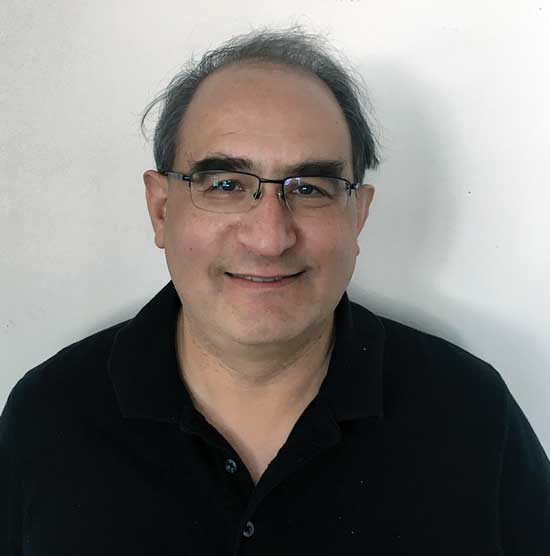
Dr. Block has a solo neurology practice in Scottsdale, Ariz.
At the end of my second year of medical school was what I call “The Lost Month.”
Between the end of classes and USMLE-1 we had 30 days to study for an 800-question, 2-day test that covered the entirety of the first 2 years. If you failed it once, you had to retake it. If you failed it twice you were out of medical school.
It was understandably stressful and I felt like every minute counted. I stopped shaving for the month to free up a few extra minutes each day. I unplugged my TV and put it in a closet.
Every day was the same. I was up at 7:00, had corn flakes, walked to Creighton, and found an empty library room. I took 30 minutes off at lunch and dinner to get something from the student union to eat outside (the only chance I had to enjoy sunlight), then study again until 1:00-2:00 in the morning.
The whole month become a blur. Days of the week were meaningless, only the number left until boards. Saturday or Tuesday, my life was the same. I don’t remember many specifics.
That was “The Lost Month.”
Now, somewhere in the middle of my attendinghood, I’ve come to 2020 (and likely beyond) which is, “The Lost Year.”
The days of the week have a bit more meaning now, as I still go to my office for a few hours and am home on weekends. But the weeks and months blend together. I’m home most of the time, I busy myself with working, and I have meal breaks with my family. There are no vacations or parties or movies. Even the holidays aren’t that different from the weekends—there isn’t much else to do to pass the time. And the stress is still there (in the early 90s it was academic, today it’s financial).
At least now I still try to shave regularly.
Thirty years ago I passed the boards and moved on to where I am today. My fear of failing out of medical school never materialized.
Today I try to remain optimistic. Vaccines are coming. Our learning curve on treating COVID-19 is getting better. Hopefully, The Lost Year will gradually become a memory as life goes on and normalizes.
Like the The Lost Month, I have to view 2020 as bump in the road. If this is the worst crisis I and my loved ones have to go through, I can deal with that. I know we’re fortunate compared with others. I try to remember that every time I pass a Salvation Army kettle or canned food drive, and donate.
In 1990 I had a specific date when The Lost Month would be over, and it was coming up way too fast. In 2020 no such date exists, now or in the immediate future.
Dr. Block has a solo neurology practice in Scottsdale, Ariz.
At the end of my second year of medical school was what I call “The Lost Month.”
Between the end of classes and USMLE-1 we had 30 days to study for an 800-question, 2-day test that covered the entirety of the first 2 years. If you failed it once, you had to retake it. If you failed it twice you were out of medical school.
It was understandably stressful and I felt like every minute counted. I stopped shaving for the month to free up a few extra minutes each day. I unplugged my TV and put it in a closet.
Every day was the same. I was up at 7:00, had corn flakes, walked to Creighton, and found an empty library room. I took 30 minutes off at lunch and dinner to get something from the student union to eat outside (the only chance I had to enjoy sunlight), then study again until 1:00-2:00 in the morning.
The whole month become a blur. Days of the week were meaningless, only the number left until boards. Saturday or Tuesday, my life was the same. I don’t remember many specifics.
That was “The Lost Month.”
Now, somewhere in the middle of my attendinghood, I’ve come to 2020 (and likely beyond) which is, “The Lost Year.”
The days of the week have a bit more meaning now, as I still go to my office for a few hours and am home on weekends. But the weeks and months blend together. I’m home most of the time, I busy myself with working, and I have meal breaks with my family. There are no vacations or parties or movies. Even the holidays aren’t that different from the weekends—there isn’t much else to do to pass the time. And the stress is still there (in the early 90s it was academic, today it’s financial).
At least now I still try to shave regularly.
Thirty years ago I passed the boards and moved on to where I am today. My fear of failing out of medical school never materialized.
Today I try to remain optimistic. Vaccines are coming. Our learning curve on treating COVID-19 is getting better. Hopefully, The Lost Year will gradually become a memory as life goes on and normalizes.
Like the The Lost Month, I have to view 2020 as bump in the road. If this is the worst crisis I and my loved ones have to go through, I can deal with that. I know we’re fortunate compared with others. I try to remember that every time I pass a Salvation Army kettle or canned food drive, and donate.
In 1990 I had a specific date when The Lost Month would be over, and it was coming up way too fast. In 2020 no such date exists, now or in the immediate future.
Dr. Block has a solo neurology practice in Scottsdale, Ariz.
Twenty years later, two gambles that paid off
Amidst the pandemic and election, two anniversaries passed almost unnoticed in early November.
On Nov. 2, 2020, we reached 20 years since the first crew moved into the International Space Station (ISS). This may seem like a minor anniversary to some, but it means a lot if you think about it. From humble beginnings, and scattered launches in different craft between 1961 and 1999, it’s now been over a generation since people weren’t living in space. We certainly aren’t on the starship Enterprise yet, or even going to Mars, but today’s college kids have never known a world where people didn’t live and work in the void upstairs. That’s something to think about.
Equally important, but of significance to far fewer, is that on Nov. 6, 2020, my little solo practice also reached its 20-year anniversary.
To the central person involved, me, this is a pretty big deal. In early 2000, when I made the decision to leave a large practice, I was confident but still nervous. I’d developed a decent referral base while working for the other group, but still didn’t know what would happen. I was 33. My oldest kid was 1 and my wife and I had twins on the way.
Now, it’s 20 years later. All three kids grew up and went off to college, but in the strange circle of the pandemic, they are now back home. Granted they’re not waking us up at night when they’re hungry (they have microwave popcorn – lots of it – for that).
Some things have changed. I’m now across the street from the office I started in. My hospital work, which in 2000 was about 50% of my practice, is now down to 0% for the time being. My medical assistant is still the same one, and my secretary has been with me since 2004. I’m lucky to have such a long-lasting team. Even in 2020, when they’re working from home, we’re still doing a great job of keeping it running.
After 20 years I’m heavier and my hair is thinning and gray, but I still like this job. I still try to do the very best I can for my patients. I sometimes read the personal statement I wrote in the summer of 1987 for my medical school application, trying to keep in touch with who I was then when I started out.
Looking back after 20 years, going solo, like building the ISS, was a big gamble. But both have worked out. My job has allowed me to support and raise a family, to care for patients (contrary to the impression one gets from medical blogs, the vast majority of them are good, decent, people) and get to know them for who they are, and to work with my two terrific long-time office staff who, like my wife, kids, and dogs, still put up with me and my quirks. And all the while I am still doing something that I found I loved in my first week of residency.
Looking forward another 20 years, who knows where I (or the ISS) will be? I probably won’t want to be working full time then, but if I still enjoy medicine I doubt I’ll want to be completely retired, either. Looking back, I’ve been fortunate that I found this one.
Dr. Block has a solo neurology practice in Scottsdale, Ariz.
Amidst the pandemic and election, two anniversaries passed almost unnoticed in early November.
On Nov. 2, 2020, we reached 20 years since the first crew moved into the International Space Station (ISS). This may seem like a minor anniversary to some, but it means a lot if you think about it. From humble beginnings, and scattered launches in different craft between 1961 and 1999, it’s now been over a generation since people weren’t living in space. We certainly aren’t on the starship Enterprise yet, or even going to Mars, but today’s college kids have never known a world where people didn’t live and work in the void upstairs. That’s something to think about.
Equally important, but of significance to far fewer, is that on Nov. 6, 2020, my little solo practice also reached its 20-year anniversary.
To the central person involved, me, this is a pretty big deal. In early 2000, when I made the decision to leave a large practice, I was confident but still nervous. I’d developed a decent referral base while working for the other group, but still didn’t know what would happen. I was 33. My oldest kid was 1 and my wife and I had twins on the way.
Now, it’s 20 years later. All three kids grew up and went off to college, but in the strange circle of the pandemic, they are now back home. Granted they’re not waking us up at night when they’re hungry (they have microwave popcorn – lots of it – for that).
Some things have changed. I’m now across the street from the office I started in. My hospital work, which in 2000 was about 50% of my practice, is now down to 0% for the time being. My medical assistant is still the same one, and my secretary has been with me since 2004. I’m lucky to have such a long-lasting team. Even in 2020, when they’re working from home, we’re still doing a great job of keeping it running.
After 20 years I’m heavier and my hair is thinning and gray, but I still like this job. I still try to do the very best I can for my patients. I sometimes read the personal statement I wrote in the summer of 1987 for my medical school application, trying to keep in touch with who I was then when I started out.
Looking back after 20 years, going solo, like building the ISS, was a big gamble. But both have worked out. My job has allowed me to support and raise a family, to care for patients (contrary to the impression one gets from medical blogs, the vast majority of them are good, decent, people) and get to know them for who they are, and to work with my two terrific long-time office staff who, like my wife, kids, and dogs, still put up with me and my quirks. And all the while I am still doing something that I found I loved in my first week of residency.
Looking forward another 20 years, who knows where I (or the ISS) will be? I probably won’t want to be working full time then, but if I still enjoy medicine I doubt I’ll want to be completely retired, either. Looking back, I’ve been fortunate that I found this one.
Dr. Block has a solo neurology practice in Scottsdale, Ariz.
Amidst the pandemic and election, two anniversaries passed almost unnoticed in early November.
On Nov. 2, 2020, we reached 20 years since the first crew moved into the International Space Station (ISS). This may seem like a minor anniversary to some, but it means a lot if you think about it. From humble beginnings, and scattered launches in different craft between 1961 and 1999, it’s now been over a generation since people weren’t living in space. We certainly aren’t on the starship Enterprise yet, or even going to Mars, but today’s college kids have never known a world where people didn’t live and work in the void upstairs. That’s something to think about.
Equally important, but of significance to far fewer, is that on Nov. 6, 2020, my little solo practice also reached its 20-year anniversary.
To the central person involved, me, this is a pretty big deal. In early 2000, when I made the decision to leave a large practice, I was confident but still nervous. I’d developed a decent referral base while working for the other group, but still didn’t know what would happen. I was 33. My oldest kid was 1 and my wife and I had twins on the way.
Now, it’s 20 years later. All three kids grew up and went off to college, but in the strange circle of the pandemic, they are now back home. Granted they’re not waking us up at night when they’re hungry (they have microwave popcorn – lots of it – for that).
Some things have changed. I’m now across the street from the office I started in. My hospital work, which in 2000 was about 50% of my practice, is now down to 0% for the time being. My medical assistant is still the same one, and my secretary has been with me since 2004. I’m lucky to have such a long-lasting team. Even in 2020, when they’re working from home, we’re still doing a great job of keeping it running.
After 20 years I’m heavier and my hair is thinning and gray, but I still like this job. I still try to do the very best I can for my patients. I sometimes read the personal statement I wrote in the summer of 1987 for my medical school application, trying to keep in touch with who I was then when I started out.
Looking back after 20 years, going solo, like building the ISS, was a big gamble. But both have worked out. My job has allowed me to support and raise a family, to care for patients (contrary to the impression one gets from medical blogs, the vast majority of them are good, decent, people) and get to know them for who they are, and to work with my two terrific long-time office staff who, like my wife, kids, and dogs, still put up with me and my quirks. And all the while I am still doing something that I found I loved in my first week of residency.
Looking forward another 20 years, who knows where I (or the ISS) will be? I probably won’t want to be working full time then, but if I still enjoy medicine I doubt I’ll want to be completely retired, either. Looking back, I’ve been fortunate that I found this one.
Dr. Block has a solo neurology practice in Scottsdale, Ariz.
Do general neurologists fall victim to a plethora of treatment options?
In 1993 I graduated from medical school. That same year Betaseron (interferon beta-1b) came to market as the first treatment specifically approved for multiple sclerosis (MS). This was a groundbreaker at the time, as there’d been little besides steroids and other potent immunosuppressants to try. Now we had a real drug to offer patients.
The demand for Betaseron was huge, so much so that a lottery system was used to determine which patients would get it first, as there simply wasn’t enough to go around. In the next several years a few more agents jumped into the ring – Avonex (interferon beta-1a), Copaxone (glatiramer acetate), Novantrone (mitoxantrone), and Rebif (interferon beta-1a) – before things went quiet for a while.
In 2006 the first monoclonal antibody for MS – Tysabri (natalizumab) – came out, then almost just as quickly vanished again, not returning until 2009.
Since then we’ve had a gradual explosion of new treatments for MS – like watching kernels become popcorn – first one, then two, then a deluge filling up the basket.
So here we are, approaching the end of 2020, with a remarkable collection of monoclonal antibodies, S1P modulators, fumarates, immunosuppressants, and one symptomatic treatment, many of which weren’t even imagined in 1993. Not to mention the original ABCR (Avonex, Betaseron, Copaxone, Rebif) agents, though they’re riding into the sunset.
A friend and I were talking about this remarkable success story. MS certainly hasn’t been cured, but its treatments have had a dramatic improvement in efficacy over the last quarter century.
He made a point though: that this selection of treatments may be relegating MS from the province of a general neurologist to that of the fellowship-trained MS subspecialist.
Not that that is such a bad thing, as MS is a very challenging disease. But the point is well taken. As treatments become increasingly complicated, and numerous, it becomes harder to know which one is best. Most of us likely choose orals first and monoclonal antibodies second, but the question of “which one?” arises for each category. They each have their own risks, side effects, initiation protocols, and peculiarities. In a disease of heterogeneous presentations and courses, there are no clear data on which agent to start first for what patient type. To a general neurologist, also juggling migraines, strokes, Parkinson’s disease, dementia, and neuropathy (and many other disorders) in the course of a day, it becomes tricky to keep up on such.
At some point do general neurologists become a victim of this success? Maybe, but probably not. Just as there are more general practitioners than neurologists, there are more general neurologists than MS subspecialists. Their knowledge and training should be reserved for those patients not responding to our first- (and second-) line treatments, presentations that are atypical, and more complex issues outside the scope of those of us practicing whatever-comes-to-the-door neurology.
It would, however, be nice to have a good consensus on how to best use this array of treatments. Solid guidelines, breaking disease subtypes and treatments down by patient types, drugs, and mechanisms of action, would help those of us on the neurology frontlines to better care for those who need us.
Dr. Block has a solo neurology practice in Scottsdale, Ariz.
In 1993 I graduated from medical school. That same year Betaseron (interferon beta-1b) came to market as the first treatment specifically approved for multiple sclerosis (MS). This was a groundbreaker at the time, as there’d been little besides steroids and other potent immunosuppressants to try. Now we had a real drug to offer patients.
The demand for Betaseron was huge, so much so that a lottery system was used to determine which patients would get it first, as there simply wasn’t enough to go around. In the next several years a few more agents jumped into the ring – Avonex (interferon beta-1a), Copaxone (glatiramer acetate), Novantrone (mitoxantrone), and Rebif (interferon beta-1a) – before things went quiet for a while.
In 2006 the first monoclonal antibody for MS – Tysabri (natalizumab) – came out, then almost just as quickly vanished again, not returning until 2009.
Since then we’ve had a gradual explosion of new treatments for MS – like watching kernels become popcorn – first one, then two, then a deluge filling up the basket.
So here we are, approaching the end of 2020, with a remarkable collection of monoclonal antibodies, S1P modulators, fumarates, immunosuppressants, and one symptomatic treatment, many of which weren’t even imagined in 1993. Not to mention the original ABCR (Avonex, Betaseron, Copaxone, Rebif) agents, though they’re riding into the sunset.
A friend and I were talking about this remarkable success story. MS certainly hasn’t been cured, but its treatments have had a dramatic improvement in efficacy over the last quarter century.
He made a point though: that this selection of treatments may be relegating MS from the province of a general neurologist to that of the fellowship-trained MS subspecialist.
Not that that is such a bad thing, as MS is a very challenging disease. But the point is well taken. As treatments become increasingly complicated, and numerous, it becomes harder to know which one is best. Most of us likely choose orals first and monoclonal antibodies second, but the question of “which one?” arises for each category. They each have their own risks, side effects, initiation protocols, and peculiarities. In a disease of heterogeneous presentations and courses, there are no clear data on which agent to start first for what patient type. To a general neurologist, also juggling migraines, strokes, Parkinson’s disease, dementia, and neuropathy (and many other disorders) in the course of a day, it becomes tricky to keep up on such.
At some point do general neurologists become a victim of this success? Maybe, but probably not. Just as there are more general practitioners than neurologists, there are more general neurologists than MS subspecialists. Their knowledge and training should be reserved for those patients not responding to our first- (and second-) line treatments, presentations that are atypical, and more complex issues outside the scope of those of us practicing whatever-comes-to-the-door neurology.
It would, however, be nice to have a good consensus on how to best use this array of treatments. Solid guidelines, breaking disease subtypes and treatments down by patient types, drugs, and mechanisms of action, would help those of us on the neurology frontlines to better care for those who need us.
Dr. Block has a solo neurology practice in Scottsdale, Ariz.
In 1993 I graduated from medical school. That same year Betaseron (interferon beta-1b) came to market as the first treatment specifically approved for multiple sclerosis (MS). This was a groundbreaker at the time, as there’d been little besides steroids and other potent immunosuppressants to try. Now we had a real drug to offer patients.
The demand for Betaseron was huge, so much so that a lottery system was used to determine which patients would get it first, as there simply wasn’t enough to go around. In the next several years a few more agents jumped into the ring – Avonex (interferon beta-1a), Copaxone (glatiramer acetate), Novantrone (mitoxantrone), and Rebif (interferon beta-1a) – before things went quiet for a while.
In 2006 the first monoclonal antibody for MS – Tysabri (natalizumab) – came out, then almost just as quickly vanished again, not returning until 2009.
Since then we’ve had a gradual explosion of new treatments for MS – like watching kernels become popcorn – first one, then two, then a deluge filling up the basket.
So here we are, approaching the end of 2020, with a remarkable collection of monoclonal antibodies, S1P modulators, fumarates, immunosuppressants, and one symptomatic treatment, many of which weren’t even imagined in 1993. Not to mention the original ABCR (Avonex, Betaseron, Copaxone, Rebif) agents, though they’re riding into the sunset.
A friend and I were talking about this remarkable success story. MS certainly hasn’t been cured, but its treatments have had a dramatic improvement in efficacy over the last quarter century.
He made a point though: that this selection of treatments may be relegating MS from the province of a general neurologist to that of the fellowship-trained MS subspecialist.
Not that that is such a bad thing, as MS is a very challenging disease. But the point is well taken. As treatments become increasingly complicated, and numerous, it becomes harder to know which one is best. Most of us likely choose orals first and monoclonal antibodies second, but the question of “which one?” arises for each category. They each have their own risks, side effects, initiation protocols, and peculiarities. In a disease of heterogeneous presentations and courses, there are no clear data on which agent to start first for what patient type. To a general neurologist, also juggling migraines, strokes, Parkinson’s disease, dementia, and neuropathy (and many other disorders) in the course of a day, it becomes tricky to keep up on such.
At some point do general neurologists become a victim of this success? Maybe, but probably not. Just as there are more general practitioners than neurologists, there are more general neurologists than MS subspecialists. Their knowledge and training should be reserved for those patients not responding to our first- (and second-) line treatments, presentations that are atypical, and more complex issues outside the scope of those of us practicing whatever-comes-to-the-door neurology.
It would, however, be nice to have a good consensus on how to best use this array of treatments. Solid guidelines, breaking disease subtypes and treatments down by patient types, drugs, and mechanisms of action, would help those of us on the neurology frontlines to better care for those who need us.
Dr. Block has a solo neurology practice in Scottsdale, Ariz.
Is the troll tracker crying wolf?
I’m a big believer in my state’s Prescription Monitoring Program (PMP), perhaps more commonly known as the troll tracker. The ability to quickly access a patient’s controlled prescription records across pharmacies has been enormously helpful in my everyday practice. I rely on it and check it often.
With it I can see if my patients are getting the same drug from other prescribers, pharmacy-shopping, or carrying out other concerning activities. The database helpfully sends me emails alerting me to such conflicts, so I can take prompt action on them.
Unfortunately, the threshold for such emails has gradually crept lower, to where I now get maybe 10 a week.
A lady to whom I gave two Valium tablets to get her through a lumbar spine MRI also got 20 Percocet for the same back pain from her internist … and I get an alert email.
A long-established patient for whom I’ve been prescribing Ativan and Tramadol for years, fills them both every month … and I get an alert email every month (and I’m the only prescriber who has written for him in the last 10 years).
A patient who suffered a painful vertebral fracture, got 10 Norco in the ED, follows with up with me 5 days later, and I write her for 20 more … and I get an email.
Now, I understand what the program is trying to do – and wholeheartedly agree with it – but the problem is that the more email warnings I get the less likely I am to have time to investigate each one. It’s like the boy who cried “wolf!” In fact, it’s probably been over a year since a warning email from the PMP told me something I didn’t already know.
Granted, these emails are sent by a computer, following a rigid set of parameters to do so. The machine doesn’t know I’m aware of the situation, or keep track of case nuances, or even notice that I’m the only prescriber of all the medications involved. It just does what it’s set to do. And the warnings all make it clear that they’re just warnings, and that the treatment is still left to physician’s discretion.
Arizona currently has roughly 18,000 practicing physicians. Granted, not all of them are routinely prescribing controlled agents, but I’d guess at least two-thirds of them are. So it’s safe to assume at least 12,000 doctors here are receiving email warnings with varying degrees of frequency.
At some point, with all the other tasks and hats your average doctor goes through in a day, too many of these warnings – the vast majority of them meaningless – become part of the background noise.
There are only so many hours in a day to see patients, write notes, send prescriptions, review tests, return calls, fill out forms, and all the other things that are part of our days. Having to log into the PMP website to see what’s up every time you get an email from them, especially when the last 20 (or more) warnings that you received were meaningless, gets pushed farther and farther onto the back burner. So when a real warning shows up, it may not got noticed much at all.
Like I said, I believe in and routinely use the state PMP. But it may be time to take a second look at the criteria under which its email warning system operates.
Dr. Block has a solo neurology practice in Scottsdale, Ariz.
I’m a big believer in my state’s Prescription Monitoring Program (PMP), perhaps more commonly known as the troll tracker. The ability to quickly access a patient’s controlled prescription records across pharmacies has been enormously helpful in my everyday practice. I rely on it and check it often.
With it I can see if my patients are getting the same drug from other prescribers, pharmacy-shopping, or carrying out other concerning activities. The database helpfully sends me emails alerting me to such conflicts, so I can take prompt action on them.
Unfortunately, the threshold for such emails has gradually crept lower, to where I now get maybe 10 a week.
A lady to whom I gave two Valium tablets to get her through a lumbar spine MRI also got 20 Percocet for the same back pain from her internist … and I get an alert email.
A long-established patient for whom I’ve been prescribing Ativan and Tramadol for years, fills them both every month … and I get an alert email every month (and I’m the only prescriber who has written for him in the last 10 years).
A patient who suffered a painful vertebral fracture, got 10 Norco in the ED, follows with up with me 5 days later, and I write her for 20 more … and I get an email.
Now, I understand what the program is trying to do – and wholeheartedly agree with it – but the problem is that the more email warnings I get the less likely I am to have time to investigate each one. It’s like the boy who cried “wolf!” In fact, it’s probably been over a year since a warning email from the PMP told me something I didn’t already know.
Granted, these emails are sent by a computer, following a rigid set of parameters to do so. The machine doesn’t know I’m aware of the situation, or keep track of case nuances, or even notice that I’m the only prescriber of all the medications involved. It just does what it’s set to do. And the warnings all make it clear that they’re just warnings, and that the treatment is still left to physician’s discretion.
Arizona currently has roughly 18,000 practicing physicians. Granted, not all of them are routinely prescribing controlled agents, but I’d guess at least two-thirds of them are. So it’s safe to assume at least 12,000 doctors here are receiving email warnings with varying degrees of frequency.
At some point, with all the other tasks and hats your average doctor goes through in a day, too many of these warnings – the vast majority of them meaningless – become part of the background noise.
There are only so many hours in a day to see patients, write notes, send prescriptions, review tests, return calls, fill out forms, and all the other things that are part of our days. Having to log into the PMP website to see what’s up every time you get an email from them, especially when the last 20 (or more) warnings that you received were meaningless, gets pushed farther and farther onto the back burner. So when a real warning shows up, it may not got noticed much at all.
Like I said, I believe in and routinely use the state PMP. But it may be time to take a second look at the criteria under which its email warning system operates.
Dr. Block has a solo neurology practice in Scottsdale, Ariz.
I’m a big believer in my state’s Prescription Monitoring Program (PMP), perhaps more commonly known as the troll tracker. The ability to quickly access a patient’s controlled prescription records across pharmacies has been enormously helpful in my everyday practice. I rely on it and check it often.
With it I can see if my patients are getting the same drug from other prescribers, pharmacy-shopping, or carrying out other concerning activities. The database helpfully sends me emails alerting me to such conflicts, so I can take prompt action on them.
Unfortunately, the threshold for such emails has gradually crept lower, to where I now get maybe 10 a week.
A lady to whom I gave two Valium tablets to get her through a lumbar spine MRI also got 20 Percocet for the same back pain from her internist … and I get an alert email.
A long-established patient for whom I’ve been prescribing Ativan and Tramadol for years, fills them both every month … and I get an alert email every month (and I’m the only prescriber who has written for him in the last 10 years).
A patient who suffered a painful vertebral fracture, got 10 Norco in the ED, follows with up with me 5 days later, and I write her for 20 more … and I get an email.
Now, I understand what the program is trying to do – and wholeheartedly agree with it – but the problem is that the more email warnings I get the less likely I am to have time to investigate each one. It’s like the boy who cried “wolf!” In fact, it’s probably been over a year since a warning email from the PMP told me something I didn’t already know.
Granted, these emails are sent by a computer, following a rigid set of parameters to do so. The machine doesn’t know I’m aware of the situation, or keep track of case nuances, or even notice that I’m the only prescriber of all the medications involved. It just does what it’s set to do. And the warnings all make it clear that they’re just warnings, and that the treatment is still left to physician’s discretion.
Arizona currently has roughly 18,000 practicing physicians. Granted, not all of them are routinely prescribing controlled agents, but I’d guess at least two-thirds of them are. So it’s safe to assume at least 12,000 doctors here are receiving email warnings with varying degrees of frequency.
At some point, with all the other tasks and hats your average doctor goes through in a day, too many of these warnings – the vast majority of them meaningless – become part of the background noise.
There are only so many hours in a day to see patients, write notes, send prescriptions, review tests, return calls, fill out forms, and all the other things that are part of our days. Having to log into the PMP website to see what’s up every time you get an email from them, especially when the last 20 (or more) warnings that you received were meaningless, gets pushed farther and farther onto the back burner. So when a real warning shows up, it may not got noticed much at all.
Like I said, I believe in and routinely use the state PMP. But it may be time to take a second look at the criteria under which its email warning system operates.
Dr. Block has a solo neurology practice in Scottsdale, Ariz.
An unplanned ‘vacation’
Looking back at the calendar, I realized that the insane year of 2020 will be the first in memory that I never took a vacation. Not a single trip outside the Phoenix metropolitan area. For that matter, there were only a handful of times I even ventured beyond the borders of Scottsdale.
The vacation is such an ingrained part of western culture that it’s hard to believe I haven’t gone anywhere since a cruise in November, 2019, and I have no vacation plans in the foreseeable future.
Do I feel horribly stressed from the lack of time off? Mmmm … Not really.
I suspect a big part of that is because I have had a lot of time off, albeit unintentionally. Looking back at my schedule, the last completely full day of patients was March 12, 2020. Since then I’ve averaged days that are only one-quarter to one-third full.
One of my idols, Dr. Arlan Cohn, once wrote “When holes appear in your appointment schedule, celebrate.” So, as he suggested, I use the extra time with the patients I do have and organize my drug samples. But there’s only so much time you can spend with a patient before you both get bored, and at this point my sample cabinet is about as organized – and devoid of expired drugs – as it can be.
In the modern age a lot can be handled by email, so if I’m done at the office I’ll often head home and nap, then answer patient queries for the rest of the day.
From a practical viewpoint, you could argue that, since mid-March, 2020 has been a strange, slow-motion vacation. Realistically, I’ve probably had more time off this year than I ever have, even if I haven’t gone too far. My kids have been home from college, giving me more time with them than I thought I’d have, and that’s been an enjoyable plus.
Of course, there are limits to any trip. At some time you reach the point where you’re sick of the whole thing and want your normal life back. I’m there now. There’s only so much nonwork you can do before you start climbing the walls, and obviously the financial worries take over, too. Seeing patients is how I earn a living.
At this point,
Dr. Block has a solo neurology practice in Scottsdale, Ariz.
Looking back at the calendar, I realized that the insane year of 2020 will be the first in memory that I never took a vacation. Not a single trip outside the Phoenix metropolitan area. For that matter, there were only a handful of times I even ventured beyond the borders of Scottsdale.
The vacation is such an ingrained part of western culture that it’s hard to believe I haven’t gone anywhere since a cruise in November, 2019, and I have no vacation plans in the foreseeable future.
Do I feel horribly stressed from the lack of time off? Mmmm … Not really.
I suspect a big part of that is because I have had a lot of time off, albeit unintentionally. Looking back at my schedule, the last completely full day of patients was March 12, 2020. Since then I’ve averaged days that are only one-quarter to one-third full.
One of my idols, Dr. Arlan Cohn, once wrote “When holes appear in your appointment schedule, celebrate.” So, as he suggested, I use the extra time with the patients I do have and organize my drug samples. But there’s only so much time you can spend with a patient before you both get bored, and at this point my sample cabinet is about as organized – and devoid of expired drugs – as it can be.
In the modern age a lot can be handled by email, so if I’m done at the office I’ll often head home and nap, then answer patient queries for the rest of the day.
From a practical viewpoint, you could argue that, since mid-March, 2020 has been a strange, slow-motion vacation. Realistically, I’ve probably had more time off this year than I ever have, even if I haven’t gone too far. My kids have been home from college, giving me more time with them than I thought I’d have, and that’s been an enjoyable plus.
Of course, there are limits to any trip. At some time you reach the point where you’re sick of the whole thing and want your normal life back. I’m there now. There’s only so much nonwork you can do before you start climbing the walls, and obviously the financial worries take over, too. Seeing patients is how I earn a living.
At this point,
Dr. Block has a solo neurology practice in Scottsdale, Ariz.
Looking back at the calendar, I realized that the insane year of 2020 will be the first in memory that I never took a vacation. Not a single trip outside the Phoenix metropolitan area. For that matter, there were only a handful of times I even ventured beyond the borders of Scottsdale.
The vacation is such an ingrained part of western culture that it’s hard to believe I haven’t gone anywhere since a cruise in November, 2019, and I have no vacation plans in the foreseeable future.
Do I feel horribly stressed from the lack of time off? Mmmm … Not really.
I suspect a big part of that is because I have had a lot of time off, albeit unintentionally. Looking back at my schedule, the last completely full day of patients was March 12, 2020. Since then I’ve averaged days that are only one-quarter to one-third full.
One of my idols, Dr. Arlan Cohn, once wrote “When holes appear in your appointment schedule, celebrate.” So, as he suggested, I use the extra time with the patients I do have and organize my drug samples. But there’s only so much time you can spend with a patient before you both get bored, and at this point my sample cabinet is about as organized – and devoid of expired drugs – as it can be.
In the modern age a lot can be handled by email, so if I’m done at the office I’ll often head home and nap, then answer patient queries for the rest of the day.
From a practical viewpoint, you could argue that, since mid-March, 2020 has been a strange, slow-motion vacation. Realistically, I’ve probably had more time off this year than I ever have, even if I haven’t gone too far. My kids have been home from college, giving me more time with them than I thought I’d have, and that’s been an enjoyable plus.
Of course, there are limits to any trip. At some time you reach the point where you’re sick of the whole thing and want your normal life back. I’m there now. There’s only so much nonwork you can do before you start climbing the walls, and obviously the financial worries take over, too. Seeing patients is how I earn a living.
At this point,
Dr. Block has a solo neurology practice in Scottsdale, Ariz.
A cure for dementia? Not so fast
“Diabetes drugs may cure dementia.”
How many of you saw that headline (or similar) earlier this year, before the pandemic took over the news?
My patients sure did. And their families. And people who aren’t my patients but found my name in the phone book after reading the headline. Of course, all of them wanted to be put on diabetes drugs to cure or prevent dementia, like the headline said.
The key word in the headline, though, is “may,” which promises nothing. Not only that, but if you actually read the story you quickly learn that the study was done in people who have diabetes, and lowers the risk of dementia.
While there could, possibly, maybe, be something interesting underlying the finding, it could also be as simple as controlling your vascular risk factors, which is good for you.
Of course, the lay public rarely reads past the first few paragraphs. To the nonmedical reader, the cure has been found, and they want it. Where’s the phone?
I’m sure this is good for business in the lay press. People see the headline and don’t bother to read the story but they immediately forward it to friends, family, Facebook and Twitter groups ... That’s a lot of clicks and advertising.
The study might genuinely mean something, but that’s a big “might.” A lot of common drugs have been hyped as being treatments for dementia – statins, ibuprofen, estrogen patches, to name a few – only to quietly die in larger controlled trials. But that part of the research never seems to make the news, only the first small, preliminary, results.
People want us to find answers. Isn’t that what doctors and scientists are supposed to do? I understand that. But by the same token, it’s generally not that easy. And if we try to explain the difficulty, then we’re often accused of being part of “them,” some secretive group trying to hide inexpensive miracle cures from the public to keep Big Pharma in business.
The real truth is that a lot of things initially seem to be good (or bad) and these things change like the seasons. Everyone should be on daily aspirin, oops, maybe not. Saccharine causes bladder cancer, wait, I take that back. And so on.
While diabetes treatments may indeed lower the risk of dementia in patients who have diabetes, people too often extrapolate that to everyone, and wishfully think the headline says “does cure” instead of “may cure.”
I have nothing against research. Everything we have now came from it. But preliminary results are just that – preliminary. Like many other things in this world, they have to be taken with a grain of salt.
Dr. Block has a solo neurology practice in Scottsdale, Arizona. He has no relevant disclosures.
“Diabetes drugs may cure dementia.”
How many of you saw that headline (or similar) earlier this year, before the pandemic took over the news?
My patients sure did. And their families. And people who aren’t my patients but found my name in the phone book after reading the headline. Of course, all of them wanted to be put on diabetes drugs to cure or prevent dementia, like the headline said.
The key word in the headline, though, is “may,” which promises nothing. Not only that, but if you actually read the story you quickly learn that the study was done in people who have diabetes, and lowers the risk of dementia.
While there could, possibly, maybe, be something interesting underlying the finding, it could also be as simple as controlling your vascular risk factors, which is good for you.
Of course, the lay public rarely reads past the first few paragraphs. To the nonmedical reader, the cure has been found, and they want it. Where’s the phone?
I’m sure this is good for business in the lay press. People see the headline and don’t bother to read the story but they immediately forward it to friends, family, Facebook and Twitter groups ... That’s a lot of clicks and advertising.
The study might genuinely mean something, but that’s a big “might.” A lot of common drugs have been hyped as being treatments for dementia – statins, ibuprofen, estrogen patches, to name a few – only to quietly die in larger controlled trials. But that part of the research never seems to make the news, only the first small, preliminary, results.
People want us to find answers. Isn’t that what doctors and scientists are supposed to do? I understand that. But by the same token, it’s generally not that easy. And if we try to explain the difficulty, then we’re often accused of being part of “them,” some secretive group trying to hide inexpensive miracle cures from the public to keep Big Pharma in business.
The real truth is that a lot of things initially seem to be good (or bad) and these things change like the seasons. Everyone should be on daily aspirin, oops, maybe not. Saccharine causes bladder cancer, wait, I take that back. And so on.
While diabetes treatments may indeed lower the risk of dementia in patients who have diabetes, people too often extrapolate that to everyone, and wishfully think the headline says “does cure” instead of “may cure.”
I have nothing against research. Everything we have now came from it. But preliminary results are just that – preliminary. Like many other things in this world, they have to be taken with a grain of salt.
Dr. Block has a solo neurology practice in Scottsdale, Arizona. He has no relevant disclosures.
“Diabetes drugs may cure dementia.”
How many of you saw that headline (or similar) earlier this year, before the pandemic took over the news?
My patients sure did. And their families. And people who aren’t my patients but found my name in the phone book after reading the headline. Of course, all of them wanted to be put on diabetes drugs to cure or prevent dementia, like the headline said.
The key word in the headline, though, is “may,” which promises nothing. Not only that, but if you actually read the story you quickly learn that the study was done in people who have diabetes, and lowers the risk of dementia.
While there could, possibly, maybe, be something interesting underlying the finding, it could also be as simple as controlling your vascular risk factors, which is good for you.
Of course, the lay public rarely reads past the first few paragraphs. To the nonmedical reader, the cure has been found, and they want it. Where’s the phone?
I’m sure this is good for business in the lay press. People see the headline and don’t bother to read the story but they immediately forward it to friends, family, Facebook and Twitter groups ... That’s a lot of clicks and advertising.
The study might genuinely mean something, but that’s a big “might.” A lot of common drugs have been hyped as being treatments for dementia – statins, ibuprofen, estrogen patches, to name a few – only to quietly die in larger controlled trials. But that part of the research never seems to make the news, only the first small, preliminary, results.
People want us to find answers. Isn’t that what doctors and scientists are supposed to do? I understand that. But by the same token, it’s generally not that easy. And if we try to explain the difficulty, then we’re often accused of being part of “them,” some secretive group trying to hide inexpensive miracle cures from the public to keep Big Pharma in business.
The real truth is that a lot of things initially seem to be good (or bad) and these things change like the seasons. Everyone should be on daily aspirin, oops, maybe not. Saccharine causes bladder cancer, wait, I take that back. And so on.
While diabetes treatments may indeed lower the risk of dementia in patients who have diabetes, people too often extrapolate that to everyone, and wishfully think the headline says “does cure” instead of “may cure.”
I have nothing against research. Everything we have now came from it. But preliminary results are just that – preliminary. Like many other things in this world, they have to be taken with a grain of salt.
Dr. Block has a solo neurology practice in Scottsdale, Arizona. He has no relevant disclosures.
Preserving civility in trying times
Recently I was in a minor car accident. No injuries, just some bent metal and scratched paint from a low-speed parking lot mishap.
The other driver and I got out of our cars, made sure we were both okay, and then I said “Let’s exchange insurance information.” We got our insurance cards out; I took a picture of her card, and she wrote down my info. Then we drove off and went on with our days. The whole thing took a few minutes.
Why am I writing about this?
Because it was all handled very politely. There were no angry words, name calling, or heated exchanges. We checked the damage, made sure the other was okay, and exchanged insurance cards ... without a single impolite phrase or gesture.
To me this is a good thing. In a world in which people yell (and sometimes brandish weapons) over imagined and minor offenses, in which political candidates exchange crude insults rather then debate policy, and in which an opposing viewpoint is treated as blasphemy rather than an honest difference of opinion, it was nice to have a polite, adult, exchange under unpleasant circumstances.
Perhaps it’s sad to find relief in such a minor event, but it’s also reassuring. In medicine (especially hospital work) we often see people at their very worst, and dealing with them can be a challenge. We live in a world of at-times seemingly endless rudeness, one-upping, and “problem-solving” with yelling, threats, and intimidation.
So I was glad the minor incident resulted in nothing more serious at the time than a brief, polite, conversation.
Dr. Block has a solo neurology practice in Scottsdale, Arizona. He has nothing to disclose.
Recently I was in a minor car accident. No injuries, just some bent metal and scratched paint from a low-speed parking lot mishap.
The other driver and I got out of our cars, made sure we were both okay, and then I said “Let’s exchange insurance information.” We got our insurance cards out; I took a picture of her card, and she wrote down my info. Then we drove off and went on with our days. The whole thing took a few minutes.
Why am I writing about this?
Because it was all handled very politely. There were no angry words, name calling, or heated exchanges. We checked the damage, made sure the other was okay, and exchanged insurance cards ... without a single impolite phrase or gesture.
To me this is a good thing. In a world in which people yell (and sometimes brandish weapons) over imagined and minor offenses, in which political candidates exchange crude insults rather then debate policy, and in which an opposing viewpoint is treated as blasphemy rather than an honest difference of opinion, it was nice to have a polite, adult, exchange under unpleasant circumstances.
Perhaps it’s sad to find relief in such a minor event, but it’s also reassuring. In medicine (especially hospital work) we often see people at their very worst, and dealing with them can be a challenge. We live in a world of at-times seemingly endless rudeness, one-upping, and “problem-solving” with yelling, threats, and intimidation.
So I was glad the minor incident resulted in nothing more serious at the time than a brief, polite, conversation.
Dr. Block has a solo neurology practice in Scottsdale, Arizona. He has nothing to disclose.
Recently I was in a minor car accident. No injuries, just some bent metal and scratched paint from a low-speed parking lot mishap.
The other driver and I got out of our cars, made sure we were both okay, and then I said “Let’s exchange insurance information.” We got our insurance cards out; I took a picture of her card, and she wrote down my info. Then we drove off and went on with our days. The whole thing took a few minutes.
Why am I writing about this?
Because it was all handled very politely. There were no angry words, name calling, or heated exchanges. We checked the damage, made sure the other was okay, and exchanged insurance cards ... without a single impolite phrase or gesture.
To me this is a good thing. In a world in which people yell (and sometimes brandish weapons) over imagined and minor offenses, in which political candidates exchange crude insults rather then debate policy, and in which an opposing viewpoint is treated as blasphemy rather than an honest difference of opinion, it was nice to have a polite, adult, exchange under unpleasant circumstances.
Perhaps it’s sad to find relief in such a minor event, but it’s also reassuring. In medicine (especially hospital work) we often see people at their very worst, and dealing with them can be a challenge. We live in a world of at-times seemingly endless rudeness, one-upping, and “problem-solving” with yelling, threats, and intimidation.
So I was glad the minor incident resulted in nothing more serious at the time than a brief, polite, conversation.
Dr. Block has a solo neurology practice in Scottsdale, Arizona. He has nothing to disclose.
Car is king, but commuting takes a back seat
During my sophomore year in high school, we had to read a historical essay about cars, the author and name of which I’ve long forgotten. The basic point of it was that, as of 1982, no invention had changed Western culture more than the automobile.
In America, the car is king. A large portion of society revolves around cars and their trappings: modifications, sports, collectors auctions, parking lots and garages, and many others. The city of Detroit has become synonymous with one industry.
A few times a week I have to walk two to three blocks to and from a research office to see patients and do paperwork. This involves me cutting through a series of parking lots, including one garage, that service the office buildings in the area. For years they’ve always been full on weekdays.
Now, after 6 months of pandemic, they’re maybe 10% filled. Rows and rows of empty spaces certainly makes my walks easier.
But each time I walk there now I wonder where this will lead. The people who used to park still work there, just from home now. If they can work from home successfully for 6 months, why should they even come back to the office on a routine basis?
I don’t think it’s the end of the automobile by any means. The majority of us still depend on it for many things and will continue to do so for a long time to come. I need it to get to my office, the hospital, the store, to take my oldest to and from his job, and many other things.
But It’s certainly driven a dramatic shift to Zoom, Teams, WebEx, Skype, and other remote platforms.
If they’re not really needed, having fewer cars on the road is probably a good thing. It saves commute time, reduces oil dependence and pollution, and provides a number of other benefits. If sustained, in the long term it will affect the calculus of office space and buildings, parking lot sizes, and a million other details.
My secretary has been working from home since late March now. While I miss having her and her daughter at the office, her lack of a commute means she starts taking calls an hour earlier and isn’t spending $60-$100 a week on gas.
We’ll have to see how it all plays out. Like other adverse events that change society, not all of the changes in the aftermath may be bad ones.
The car will be king in America for a long time to come, but its role in commuting may be fundamentally different after the pandemic, and the ripples from this may bring many more changes – hopefully for the better.
Dr. Block has a solo neurology practice in Scottsdale, Ariz.
During my sophomore year in high school, we had to read a historical essay about cars, the author and name of which I’ve long forgotten. The basic point of it was that, as of 1982, no invention had changed Western culture more than the automobile.
In America, the car is king. A large portion of society revolves around cars and their trappings: modifications, sports, collectors auctions, parking lots and garages, and many others. The city of Detroit has become synonymous with one industry.
A few times a week I have to walk two to three blocks to and from a research office to see patients and do paperwork. This involves me cutting through a series of parking lots, including one garage, that service the office buildings in the area. For years they’ve always been full on weekdays.
Now, after 6 months of pandemic, they’re maybe 10% filled. Rows and rows of empty spaces certainly makes my walks easier.
But each time I walk there now I wonder where this will lead. The people who used to park still work there, just from home now. If they can work from home successfully for 6 months, why should they even come back to the office on a routine basis?
I don’t think it’s the end of the automobile by any means. The majority of us still depend on it for many things and will continue to do so for a long time to come. I need it to get to my office, the hospital, the store, to take my oldest to and from his job, and many other things.
But It’s certainly driven a dramatic shift to Zoom, Teams, WebEx, Skype, and other remote platforms.
If they’re not really needed, having fewer cars on the road is probably a good thing. It saves commute time, reduces oil dependence and pollution, and provides a number of other benefits. If sustained, in the long term it will affect the calculus of office space and buildings, parking lot sizes, and a million other details.
My secretary has been working from home since late March now. While I miss having her and her daughter at the office, her lack of a commute means she starts taking calls an hour earlier and isn’t spending $60-$100 a week on gas.
We’ll have to see how it all plays out. Like other adverse events that change society, not all of the changes in the aftermath may be bad ones.
The car will be king in America for a long time to come, but its role in commuting may be fundamentally different after the pandemic, and the ripples from this may bring many more changes – hopefully for the better.
Dr. Block has a solo neurology practice in Scottsdale, Ariz.
During my sophomore year in high school, we had to read a historical essay about cars, the author and name of which I’ve long forgotten. The basic point of it was that, as of 1982, no invention had changed Western culture more than the automobile.
In America, the car is king. A large portion of society revolves around cars and their trappings: modifications, sports, collectors auctions, parking lots and garages, and many others. The city of Detroit has become synonymous with one industry.
A few times a week I have to walk two to three blocks to and from a research office to see patients and do paperwork. This involves me cutting through a series of parking lots, including one garage, that service the office buildings in the area. For years they’ve always been full on weekdays.
Now, after 6 months of pandemic, they’re maybe 10% filled. Rows and rows of empty spaces certainly makes my walks easier.
But each time I walk there now I wonder where this will lead. The people who used to park still work there, just from home now. If they can work from home successfully for 6 months, why should they even come back to the office on a routine basis?
I don’t think it’s the end of the automobile by any means. The majority of us still depend on it for many things and will continue to do so for a long time to come. I need it to get to my office, the hospital, the store, to take my oldest to and from his job, and many other things.
But It’s certainly driven a dramatic shift to Zoom, Teams, WebEx, Skype, and other remote platforms.
If they’re not really needed, having fewer cars on the road is probably a good thing. It saves commute time, reduces oil dependence and pollution, and provides a number of other benefits. If sustained, in the long term it will affect the calculus of office space and buildings, parking lot sizes, and a million other details.
My secretary has been working from home since late March now. While I miss having her and her daughter at the office, her lack of a commute means she starts taking calls an hour earlier and isn’t spending $60-$100 a week on gas.
We’ll have to see how it all plays out. Like other adverse events that change society, not all of the changes in the aftermath may be bad ones.
The car will be king in America for a long time to come, but its role in commuting may be fundamentally different after the pandemic, and the ripples from this may bring many more changes – hopefully for the better.
Dr. Block has a solo neurology practice in Scottsdale, Ariz.
Improving interprovider communication
“Interprovider communication” is a big buzzphrase in medicine these days. Granted, it’s an important aspect of patient care. But, like many words and phrases, a lot of substance is lost in the spin of things.
I get emails, faxes, and letters all the time promising a new system that improves communication between physicians and patients. The hospital I share call at always seems to have something in its physician newsletters about a new software or app to improve communication.
The problem here isn’t that there aren’t already good ways for physicians to communicate – there are. I generally rely on the old standbys of a fax machine, with the post office as a backup for most things, and the phone for more urgent matters.
The real issue is people who don’t use the systems available, and no amount of technology will change that.
Some doctors feel they’re too busy to get a letter out, or forward tests results to another physician, or even have their office staff do it. Others just barely glance at anything that comes through, then pass it on to their staff to file it in a chart. At the hospital some doctors don’t seem to bother to read their consultants’ notes.
Granted, this isn’t entirely the doctors’ faults. As I’ve written before, many of the EMR chart systems are so full of templates and cut and paste that notes are rendered virtually meaningless. To find the impression – if it’s even in there – may need some digging. This takes time, which is always in short supply in a medical practice. The days when you could just flip through to the paragraph labeled “impression” are gone, and probably aren’t coming back. Which is good for no one on either side of the desk or bedrail.
This is sad, because that’s where the vast majority of physician communication happened. Letting people know what you’re thinking and doing, and at the same time asking specific questions you’re hoping they’ll address.
Not all doctors are poor at communication – the vast majority are not. But for those of us trying to care for a patient with one who is, there isn’t a software breakthrough now – or ever – that will make it any easier, no matter how much time, money, and glossy marketing is thrown at it.
Dr. Block has a solo neurology practice in Scottsdale, Ariz.
“Interprovider communication” is a big buzzphrase in medicine these days. Granted, it’s an important aspect of patient care. But, like many words and phrases, a lot of substance is lost in the spin of things.
I get emails, faxes, and letters all the time promising a new system that improves communication between physicians and patients. The hospital I share call at always seems to have something in its physician newsletters about a new software or app to improve communication.
The problem here isn’t that there aren’t already good ways for physicians to communicate – there are. I generally rely on the old standbys of a fax machine, with the post office as a backup for most things, and the phone for more urgent matters.
The real issue is people who don’t use the systems available, and no amount of technology will change that.
Some doctors feel they’re too busy to get a letter out, or forward tests results to another physician, or even have their office staff do it. Others just barely glance at anything that comes through, then pass it on to their staff to file it in a chart. At the hospital some doctors don’t seem to bother to read their consultants’ notes.
Granted, this isn’t entirely the doctors’ faults. As I’ve written before, many of the EMR chart systems are so full of templates and cut and paste that notes are rendered virtually meaningless. To find the impression – if it’s even in there – may need some digging. This takes time, which is always in short supply in a medical practice. The days when you could just flip through to the paragraph labeled “impression” are gone, and probably aren’t coming back. Which is good for no one on either side of the desk or bedrail.
This is sad, because that’s where the vast majority of physician communication happened. Letting people know what you’re thinking and doing, and at the same time asking specific questions you’re hoping they’ll address.
Not all doctors are poor at communication – the vast majority are not. But for those of us trying to care for a patient with one who is, there isn’t a software breakthrough now – or ever – that will make it any easier, no matter how much time, money, and glossy marketing is thrown at it.
Dr. Block has a solo neurology practice in Scottsdale, Ariz.
“Interprovider communication” is a big buzzphrase in medicine these days. Granted, it’s an important aspect of patient care. But, like many words and phrases, a lot of substance is lost in the spin of things.
I get emails, faxes, and letters all the time promising a new system that improves communication between physicians and patients. The hospital I share call at always seems to have something in its physician newsletters about a new software or app to improve communication.
The problem here isn’t that there aren’t already good ways for physicians to communicate – there are. I generally rely on the old standbys of a fax machine, with the post office as a backup for most things, and the phone for more urgent matters.
The real issue is people who don’t use the systems available, and no amount of technology will change that.
Some doctors feel they’re too busy to get a letter out, or forward tests results to another physician, or even have their office staff do it. Others just barely glance at anything that comes through, then pass it on to their staff to file it in a chart. At the hospital some doctors don’t seem to bother to read their consultants’ notes.
Granted, this isn’t entirely the doctors’ faults. As I’ve written before, many of the EMR chart systems are so full of templates and cut and paste that notes are rendered virtually meaningless. To find the impression – if it’s even in there – may need some digging. This takes time, which is always in short supply in a medical practice. The days when you could just flip through to the paragraph labeled “impression” are gone, and probably aren’t coming back. Which is good for no one on either side of the desk or bedrail.
This is sad, because that’s where the vast majority of physician communication happened. Letting people know what you’re thinking and doing, and at the same time asking specific questions you’re hoping they’ll address.
Not all doctors are poor at communication – the vast majority are not. But for those of us trying to care for a patient with one who is, there isn’t a software breakthrough now – or ever – that will make it any easier, no matter how much time, money, and glossy marketing is thrown at it.
Dr. Block has a solo neurology practice in Scottsdale, Ariz.
There is no cure for gullibility
Metformin, oleander extract, azithromycin, famotidine, fluvoxamine, hydroxychloroquine, indomethacin, remdesivir, different vaccines, and many others. What does this disparate group of agents have in common? They’re all being bandied about as treatments for COVID-19.
This sort of thing makes big headlines in the news when someone even mentions them as a possible treatment, but so do proposed treatments for Alzheimer’s disease, various cancers, and other devastating illnesses. It triggers calls to doctors’ offices by patients wanting to be put on them, demands for them to be sold over the counter, and less-then-scrupulous people selling all kinds of things claiming to contain them and cure the disease for only $89.95 with free shipping if you act now.
Even in ordinary times (whatever that means anymore) it doesn’t take much for even a hint of success to make the news, spiking calls to doctors’ offices asking about “that new treatment I saw.” Of course, the number of drugs that are proven to be successful and come to market is a fraction of what’s actually tested.
Since the many failures don’t make headlines like successes do, the general public moves on and doesn’t even remember the initial story after a while. Only the medical and pharmaceutical professions are left to remember “we tried that, it didn’t work.”
We learn as much from failure as we do from success – sometimes more – but failure doesn’t make headlines or sell papers or get clicks.
The research scientists and physicians know this and how long it can take to find something that works. In some diseases it still hasn’t happened, in spite of billions spent and decades going by.
Unfortunately, nonscientific people (which is most of the population) just see our remarkable breakthroughs evidenced by shiny equipment and new drugs, and only read the headlines about successes. They don’t realize the many years and failures behind them.
It doesn’t help to have nonmedical talking heads on the news egging this belief on. The few voices of reason are drowned out.
The polio virus was identified in 1908 (the disease is thousands of years old). The Salk vaccine came out in 1955. That’s a 47-year gap. I doubt it will take that long for COVID-19, but the point is that these things never have, and never will, happen overnight.
The problem isn’t science or medicine. It’s unreasonable expectations for immediate success. While science and diseases may change over time, human nature doesn’t.
Dr. Block has a solo neurology practice in Scottsdale, Ariz.
Metformin, oleander extract, azithromycin, famotidine, fluvoxamine, hydroxychloroquine, indomethacin, remdesivir, different vaccines, and many others. What does this disparate group of agents have in common? They’re all being bandied about as treatments for COVID-19.
This sort of thing makes big headlines in the news when someone even mentions them as a possible treatment, but so do proposed treatments for Alzheimer’s disease, various cancers, and other devastating illnesses. It triggers calls to doctors’ offices by patients wanting to be put on them, demands for them to be sold over the counter, and less-then-scrupulous people selling all kinds of things claiming to contain them and cure the disease for only $89.95 with free shipping if you act now.
Even in ordinary times (whatever that means anymore) it doesn’t take much for even a hint of success to make the news, spiking calls to doctors’ offices asking about “that new treatment I saw.” Of course, the number of drugs that are proven to be successful and come to market is a fraction of what’s actually tested.
Since the many failures don’t make headlines like successes do, the general public moves on and doesn’t even remember the initial story after a while. Only the medical and pharmaceutical professions are left to remember “we tried that, it didn’t work.”
We learn as much from failure as we do from success – sometimes more – but failure doesn’t make headlines or sell papers or get clicks.
The research scientists and physicians know this and how long it can take to find something that works. In some diseases it still hasn’t happened, in spite of billions spent and decades going by.
Unfortunately, nonscientific people (which is most of the population) just see our remarkable breakthroughs evidenced by shiny equipment and new drugs, and only read the headlines about successes. They don’t realize the many years and failures behind them.
It doesn’t help to have nonmedical talking heads on the news egging this belief on. The few voices of reason are drowned out.
The polio virus was identified in 1908 (the disease is thousands of years old). The Salk vaccine came out in 1955. That’s a 47-year gap. I doubt it will take that long for COVID-19, but the point is that these things never have, and never will, happen overnight.
The problem isn’t science or medicine. It’s unreasonable expectations for immediate success. While science and diseases may change over time, human nature doesn’t.
Dr. Block has a solo neurology practice in Scottsdale, Ariz.
Metformin, oleander extract, azithromycin, famotidine, fluvoxamine, hydroxychloroquine, indomethacin, remdesivir, different vaccines, and many others. What does this disparate group of agents have in common? They’re all being bandied about as treatments for COVID-19.
This sort of thing makes big headlines in the news when someone even mentions them as a possible treatment, but so do proposed treatments for Alzheimer’s disease, various cancers, and other devastating illnesses. It triggers calls to doctors’ offices by patients wanting to be put on them, demands for them to be sold over the counter, and less-then-scrupulous people selling all kinds of things claiming to contain them and cure the disease for only $89.95 with free shipping if you act now.
Even in ordinary times (whatever that means anymore) it doesn’t take much for even a hint of success to make the news, spiking calls to doctors’ offices asking about “that new treatment I saw.” Of course, the number of drugs that are proven to be successful and come to market is a fraction of what’s actually tested.
Since the many failures don’t make headlines like successes do, the general public moves on and doesn’t even remember the initial story after a while. Only the medical and pharmaceutical professions are left to remember “we tried that, it didn’t work.”
We learn as much from failure as we do from success – sometimes more – but failure doesn’t make headlines or sell papers or get clicks.
The research scientists and physicians know this and how long it can take to find something that works. In some diseases it still hasn’t happened, in spite of billions spent and decades going by.
Unfortunately, nonscientific people (which is most of the population) just see our remarkable breakthroughs evidenced by shiny equipment and new drugs, and only read the headlines about successes. They don’t realize the many years and failures behind them.
It doesn’t help to have nonmedical talking heads on the news egging this belief on. The few voices of reason are drowned out.
The polio virus was identified in 1908 (the disease is thousands of years old). The Salk vaccine came out in 1955. That’s a 47-year gap. I doubt it will take that long for COVID-19, but the point is that these things never have, and never will, happen overnight.
The problem isn’t science or medicine. It’s unreasonable expectations for immediate success. While science and diseases may change over time, human nature doesn’t.
Dr. Block has a solo neurology practice in Scottsdale, Ariz.