User login
10 Tips for Hospitalists to Achieve an Effective Medical Consult
A medical consult is an amazing way to learn. Consultation challenges us to practice our best medicine while also exposing us to innovations in other specialties. It can forge new and productive relationships with physicians from all specialties. At its best, it is the purest of medicine or, as some put it, “medicine without the drama.”
As hospitalists, we are increasingly asked to be medical consultants and co-managers. Yet most training programs spend very little time educating residents on what makes a high-quality consultation. One of the first articles written on this subject was by Lee Goldman and colleagues in 1983. In this article, Goldman sets out 10 commandments for effective consultation.1
Many of the lessons in these 10 commandments continue to ring true today. As primary providers, we know that consulting another service can run the gamut from being pleasant, helpful, and enlightening to being the most frustrating, slam-the-phone-down experience of the day. In this article, we update these commandments to create five golden rules for medical consultations that ensure that your referring providers’ experiences are purely positive.
One warning about communication: If you do not agree with the primary team’s plan of care, make sure you discuss these concerns instead of just writing them in the chart. Any teaching moments should be reserved for those who are open to that discussion, not forced on providers who are not receptive to it at that time.
Five Golden Rules
1 Listen and determine the needs of your customer.
Understanding the needs of your requesting physician is paramount to being an effective consultant, and the first step is to determine the physician’s question. Some referring providers want the bird’s eye view of a general medicine consult, whereas others have just one specific question. In one study stratified by specialty, 59% of surgeons preferred a general medicine consult, while most non-surgeons preferred a focused consult.2
Next, establish the timeframe: Is it emergent, urgent, or routine? One rule of thumb is that all consults should be seen within 24 hours. But many consults need to be seen more quickly, or even immediately. For example, you may be correct to assume that a patient is stable enough to wait for your consult, but perhaps the lack of pre-operative medical assessment will cause her to lose her spot on the OR schedule. The orthopedic surgeon now operates late into the night. Truly understanding the needs of your referring provider might have avoided that scenario.
There are of course times when you really can’t get to a consult expeditiously, but you must let the referring provider know. Ultimately, once you agree upon the urgency, all parties, including the patient, will know when to expect the consultant at the bedside.
2 Look for yourself, and do it yourself.
We practice in an age in which we spend more time in front of computers than in front of patients. As Lee and colleagues write, “A consultant should not expect to make brilliant diagnostic conclusions based on an assessment of data that are already in the chart. Usually, if the answer could be deduced from this information, the consultations would not have been called.”1 Effective consultants always obtain their own history and physical—your special expertise may allow you to extract overlooked information.
In addition, simply leaving recommendations to repeat tests or obtain records often delays care. If you feel the information is vital, take it upon yourself to obtain it. This may include contacting outside primary care providers or medicine subspecialists, or getting outside records.
Although we are not the primary provider, our goal must always be to do what is best for our patients.
3 Make brief, detailed plans with contingencies.
Recommendations can easily be lost in the deluge of information bombarding the primary care team. Our goal is not only to make recommendations, but also to have them followed.
In a study looking at which aspects of a consultation lead to increased compliance, researchers noted that if dose and duration of therapy were not specified, 64% of recommendations were implemented.3 When only one was specified, implementation increased to 85%, and when both were specified, implementation rates increased to 100%. Sadly, only 15% of over 200 consults had both duration and dose in their recommendations. Another study on compliance found that when five or fewer recommendations were specified, compliance increased from 79% to 96%.4
Contingency plans are a way of life for hospitalists when we sign out. Consultations are no different. Patients we consult on are often critically ill, and their status is dynamic. Anticipating problems and giving recommendations if those problems arise can save valuable time later for both you and your colleagues.
As consultants, we often feel compelled to “do something,” yet we know as primary providers how frustrating it is to have a consultant ask for a battery of tests or treatments that don’t address the big picture. Never be afraid to recommend continuing current management if it is appropriate or even to recommend stopping treatment or avoiding additional testing when it does not help the patient.
In summary, consults are most effective when they are brief (five or fewer recommendations), are detailed, and provide contingency plans. What good is a great consultation if it is not followed?
4 Communicate, communicate, communicate.
When 323 surgeons and non-surgeons were surveyed, both groups agreed that initial recommendations should be discussed verbally. Direct verbal communication allows the primary team to provide important information that you may have missed. In addition, discussing recommendations improves compliance and allows everyone to agree on the next plan of action and provide a unified plan to the patient, improving patient satisfaction and adherence.
Lastly and most importantly, opening the lines of communication between consultant and requesting physician creates effective consulting relationships.
Developing this relationship with other services may mean that the next time you call them for a consult, you will already have good rapport to build on.
One warning about communication: If you do not agree with the primary team’s plan of care, make sure you discuss these concerns instead of just writing them in the chart. Any teaching moments should be reserved for those who are open to that discussion, not forced on providers who are not receptive to it at that time.
5 Follow up.
Several studies have shown that follow-up notes improve compliance with recommendations.3,5 Follow-up is also important to ensure that critical recommendations are followed and that any changes in patient status can be addressed. Furthermore, following up can provide valuable feedback on your own initial clinical judgment. Finally, it is bad practice to recommend testing and then sign off before these tests are completed. Either you feel they are important to patient care and worth obtaining, or they are not needed.
Following these five golden rules can ensure that you are the consultant who gives other physicians the satisfying experience of an effective and great consult. If it’s done right, the experience of a general medicine consult is the purest of medicine.
Dr. Chang is assistant professor, inpatient medicine clerkship director, and director of education in the division of hospital medicine at Mount Sinai Medical Center in New York City. Dr. Gabriel is assistant professor and director of medicine consult preoperative services in the division of hospital medicine at Mount Sinai.
References
- Goldman L, Lee T, Rudd P. Ten commandments for effective consultations. Arch Intern Med. 1983;143(9):1753-1755.
- Salerno SM, Hurst FP, Halvorson S, Mercado DL. Principles of effective consultation: an update for the 21st-century consultant. Arch Intern Med. 2007;167(3):271-275.
- Horwitz RI, Henes CG, Horwitz SM. Developing strategies for improving the diagnostic and management efficacy of medical consultations. J Chron Dis. 1983;36(2):213-218.
- Sears CL, Charlson ME. The effectiveness of a consultation: compliance with initial recommendations. Am J Med. 1983;74(5):870-876.
- MacKenzie TB, Popkin MK, Callies AL, Jorgensen CR, Cohn JN. The effectiveness of cardiology consultations. Concordance with diagnostic and drug recommendations. Chest. 1981;79(1):16-22.
A medical consult is an amazing way to learn. Consultation challenges us to practice our best medicine while also exposing us to innovations in other specialties. It can forge new and productive relationships with physicians from all specialties. At its best, it is the purest of medicine or, as some put it, “medicine without the drama.”
As hospitalists, we are increasingly asked to be medical consultants and co-managers. Yet most training programs spend very little time educating residents on what makes a high-quality consultation. One of the first articles written on this subject was by Lee Goldman and colleagues in 1983. In this article, Goldman sets out 10 commandments for effective consultation.1
Many of the lessons in these 10 commandments continue to ring true today. As primary providers, we know that consulting another service can run the gamut from being pleasant, helpful, and enlightening to being the most frustrating, slam-the-phone-down experience of the day. In this article, we update these commandments to create five golden rules for medical consultations that ensure that your referring providers’ experiences are purely positive.
One warning about communication: If you do not agree with the primary team’s plan of care, make sure you discuss these concerns instead of just writing them in the chart. Any teaching moments should be reserved for those who are open to that discussion, not forced on providers who are not receptive to it at that time.
Five Golden Rules
1 Listen and determine the needs of your customer.
Understanding the needs of your requesting physician is paramount to being an effective consultant, and the first step is to determine the physician’s question. Some referring providers want the bird’s eye view of a general medicine consult, whereas others have just one specific question. In one study stratified by specialty, 59% of surgeons preferred a general medicine consult, while most non-surgeons preferred a focused consult.2
Next, establish the timeframe: Is it emergent, urgent, or routine? One rule of thumb is that all consults should be seen within 24 hours. But many consults need to be seen more quickly, or even immediately. For example, you may be correct to assume that a patient is stable enough to wait for your consult, but perhaps the lack of pre-operative medical assessment will cause her to lose her spot on the OR schedule. The orthopedic surgeon now operates late into the night. Truly understanding the needs of your referring provider might have avoided that scenario.
There are of course times when you really can’t get to a consult expeditiously, but you must let the referring provider know. Ultimately, once you agree upon the urgency, all parties, including the patient, will know when to expect the consultant at the bedside.
2 Look for yourself, and do it yourself.
We practice in an age in which we spend more time in front of computers than in front of patients. As Lee and colleagues write, “A consultant should not expect to make brilliant diagnostic conclusions based on an assessment of data that are already in the chart. Usually, if the answer could be deduced from this information, the consultations would not have been called.”1 Effective consultants always obtain their own history and physical—your special expertise may allow you to extract overlooked information.
In addition, simply leaving recommendations to repeat tests or obtain records often delays care. If you feel the information is vital, take it upon yourself to obtain it. This may include contacting outside primary care providers or medicine subspecialists, or getting outside records.
Although we are not the primary provider, our goal must always be to do what is best for our patients.
3 Make brief, detailed plans with contingencies.
Recommendations can easily be lost in the deluge of information bombarding the primary care team. Our goal is not only to make recommendations, but also to have them followed.
In a study looking at which aspects of a consultation lead to increased compliance, researchers noted that if dose and duration of therapy were not specified, 64% of recommendations were implemented.3 When only one was specified, implementation increased to 85%, and when both were specified, implementation rates increased to 100%. Sadly, only 15% of over 200 consults had both duration and dose in their recommendations. Another study on compliance found that when five or fewer recommendations were specified, compliance increased from 79% to 96%.4
Contingency plans are a way of life for hospitalists when we sign out. Consultations are no different. Patients we consult on are often critically ill, and their status is dynamic. Anticipating problems and giving recommendations if those problems arise can save valuable time later for both you and your colleagues.
As consultants, we often feel compelled to “do something,” yet we know as primary providers how frustrating it is to have a consultant ask for a battery of tests or treatments that don’t address the big picture. Never be afraid to recommend continuing current management if it is appropriate or even to recommend stopping treatment or avoiding additional testing when it does not help the patient.
In summary, consults are most effective when they are brief (five or fewer recommendations), are detailed, and provide contingency plans. What good is a great consultation if it is not followed?
4 Communicate, communicate, communicate.
When 323 surgeons and non-surgeons were surveyed, both groups agreed that initial recommendations should be discussed verbally. Direct verbal communication allows the primary team to provide important information that you may have missed. In addition, discussing recommendations improves compliance and allows everyone to agree on the next plan of action and provide a unified plan to the patient, improving patient satisfaction and adherence.
Lastly and most importantly, opening the lines of communication between consultant and requesting physician creates effective consulting relationships.
Developing this relationship with other services may mean that the next time you call them for a consult, you will already have good rapport to build on.
One warning about communication: If you do not agree with the primary team’s plan of care, make sure you discuss these concerns instead of just writing them in the chart. Any teaching moments should be reserved for those who are open to that discussion, not forced on providers who are not receptive to it at that time.
5 Follow up.
Several studies have shown that follow-up notes improve compliance with recommendations.3,5 Follow-up is also important to ensure that critical recommendations are followed and that any changes in patient status can be addressed. Furthermore, following up can provide valuable feedback on your own initial clinical judgment. Finally, it is bad practice to recommend testing and then sign off before these tests are completed. Either you feel they are important to patient care and worth obtaining, or they are not needed.
Following these five golden rules can ensure that you are the consultant who gives other physicians the satisfying experience of an effective and great consult. If it’s done right, the experience of a general medicine consult is the purest of medicine.
Dr. Chang is assistant professor, inpatient medicine clerkship director, and director of education in the division of hospital medicine at Mount Sinai Medical Center in New York City. Dr. Gabriel is assistant professor and director of medicine consult preoperative services in the division of hospital medicine at Mount Sinai.
References
- Goldman L, Lee T, Rudd P. Ten commandments for effective consultations. Arch Intern Med. 1983;143(9):1753-1755.
- Salerno SM, Hurst FP, Halvorson S, Mercado DL. Principles of effective consultation: an update for the 21st-century consultant. Arch Intern Med. 2007;167(3):271-275.
- Horwitz RI, Henes CG, Horwitz SM. Developing strategies for improving the diagnostic and management efficacy of medical consultations. J Chron Dis. 1983;36(2):213-218.
- Sears CL, Charlson ME. The effectiveness of a consultation: compliance with initial recommendations. Am J Med. 1983;74(5):870-876.
- MacKenzie TB, Popkin MK, Callies AL, Jorgensen CR, Cohn JN. The effectiveness of cardiology consultations. Concordance with diagnostic and drug recommendations. Chest. 1981;79(1):16-22.
A medical consult is an amazing way to learn. Consultation challenges us to practice our best medicine while also exposing us to innovations in other specialties. It can forge new and productive relationships with physicians from all specialties. At its best, it is the purest of medicine or, as some put it, “medicine without the drama.”
As hospitalists, we are increasingly asked to be medical consultants and co-managers. Yet most training programs spend very little time educating residents on what makes a high-quality consultation. One of the first articles written on this subject was by Lee Goldman and colleagues in 1983. In this article, Goldman sets out 10 commandments for effective consultation.1
Many of the lessons in these 10 commandments continue to ring true today. As primary providers, we know that consulting another service can run the gamut from being pleasant, helpful, and enlightening to being the most frustrating, slam-the-phone-down experience of the day. In this article, we update these commandments to create five golden rules for medical consultations that ensure that your referring providers’ experiences are purely positive.
One warning about communication: If you do not agree with the primary team’s plan of care, make sure you discuss these concerns instead of just writing them in the chart. Any teaching moments should be reserved for those who are open to that discussion, not forced on providers who are not receptive to it at that time.
Five Golden Rules
1 Listen and determine the needs of your customer.
Understanding the needs of your requesting physician is paramount to being an effective consultant, and the first step is to determine the physician’s question. Some referring providers want the bird’s eye view of a general medicine consult, whereas others have just one specific question. In one study stratified by specialty, 59% of surgeons preferred a general medicine consult, while most non-surgeons preferred a focused consult.2
Next, establish the timeframe: Is it emergent, urgent, or routine? One rule of thumb is that all consults should be seen within 24 hours. But many consults need to be seen more quickly, or even immediately. For example, you may be correct to assume that a patient is stable enough to wait for your consult, but perhaps the lack of pre-operative medical assessment will cause her to lose her spot on the OR schedule. The orthopedic surgeon now operates late into the night. Truly understanding the needs of your referring provider might have avoided that scenario.
There are of course times when you really can’t get to a consult expeditiously, but you must let the referring provider know. Ultimately, once you agree upon the urgency, all parties, including the patient, will know when to expect the consultant at the bedside.
2 Look for yourself, and do it yourself.
We practice in an age in which we spend more time in front of computers than in front of patients. As Lee and colleagues write, “A consultant should not expect to make brilliant diagnostic conclusions based on an assessment of data that are already in the chart. Usually, if the answer could be deduced from this information, the consultations would not have been called.”1 Effective consultants always obtain their own history and physical—your special expertise may allow you to extract overlooked information.
In addition, simply leaving recommendations to repeat tests or obtain records often delays care. If you feel the information is vital, take it upon yourself to obtain it. This may include contacting outside primary care providers or medicine subspecialists, or getting outside records.
Although we are not the primary provider, our goal must always be to do what is best for our patients.
3 Make brief, detailed plans with contingencies.
Recommendations can easily be lost in the deluge of information bombarding the primary care team. Our goal is not only to make recommendations, but also to have them followed.
In a study looking at which aspects of a consultation lead to increased compliance, researchers noted that if dose and duration of therapy were not specified, 64% of recommendations were implemented.3 When only one was specified, implementation increased to 85%, and when both were specified, implementation rates increased to 100%. Sadly, only 15% of over 200 consults had both duration and dose in their recommendations. Another study on compliance found that when five or fewer recommendations were specified, compliance increased from 79% to 96%.4
Contingency plans are a way of life for hospitalists when we sign out. Consultations are no different. Patients we consult on are often critically ill, and their status is dynamic. Anticipating problems and giving recommendations if those problems arise can save valuable time later for both you and your colleagues.
As consultants, we often feel compelled to “do something,” yet we know as primary providers how frustrating it is to have a consultant ask for a battery of tests or treatments that don’t address the big picture. Never be afraid to recommend continuing current management if it is appropriate or even to recommend stopping treatment or avoiding additional testing when it does not help the patient.
In summary, consults are most effective when they are brief (five or fewer recommendations), are detailed, and provide contingency plans. What good is a great consultation if it is not followed?
4 Communicate, communicate, communicate.
When 323 surgeons and non-surgeons were surveyed, both groups agreed that initial recommendations should be discussed verbally. Direct verbal communication allows the primary team to provide important information that you may have missed. In addition, discussing recommendations improves compliance and allows everyone to agree on the next plan of action and provide a unified plan to the patient, improving patient satisfaction and adherence.
Lastly and most importantly, opening the lines of communication between consultant and requesting physician creates effective consulting relationships.
Developing this relationship with other services may mean that the next time you call them for a consult, you will already have good rapport to build on.
One warning about communication: If you do not agree with the primary team’s plan of care, make sure you discuss these concerns instead of just writing them in the chart. Any teaching moments should be reserved for those who are open to that discussion, not forced on providers who are not receptive to it at that time.
5 Follow up.
Several studies have shown that follow-up notes improve compliance with recommendations.3,5 Follow-up is also important to ensure that critical recommendations are followed and that any changes in patient status can be addressed. Furthermore, following up can provide valuable feedback on your own initial clinical judgment. Finally, it is bad practice to recommend testing and then sign off before these tests are completed. Either you feel they are important to patient care and worth obtaining, or they are not needed.
Following these five golden rules can ensure that you are the consultant who gives other physicians the satisfying experience of an effective and great consult. If it’s done right, the experience of a general medicine consult is the purest of medicine.
Dr. Chang is assistant professor, inpatient medicine clerkship director, and director of education in the division of hospital medicine at Mount Sinai Medical Center in New York City. Dr. Gabriel is assistant professor and director of medicine consult preoperative services in the division of hospital medicine at Mount Sinai.
References
- Goldman L, Lee T, Rudd P. Ten commandments for effective consultations. Arch Intern Med. 1983;143(9):1753-1755.
- Salerno SM, Hurst FP, Halvorson S, Mercado DL. Principles of effective consultation: an update for the 21st-century consultant. Arch Intern Med. 2007;167(3):271-275.
- Horwitz RI, Henes CG, Horwitz SM. Developing strategies for improving the diagnostic and management efficacy of medical consultations. J Chron Dis. 1983;36(2):213-218.
- Sears CL, Charlson ME. The effectiveness of a consultation: compliance with initial recommendations. Am J Med. 1983;74(5):870-876.
- MacKenzie TB, Popkin MK, Callies AL, Jorgensen CR, Cohn JN. The effectiveness of cardiology consultations. Concordance with diagnostic and drug recommendations. Chest. 1981;79(1):16-22.
New Bill Hopes to Increase Residency Medicare Slots after Two Previous Bills Failed

Two federal bills introduced in 2013, the Resident Physician Shortage Reduction Act and the Training Tomorrow’s Doctors Today Act, would have increased the number of Medicare-funded residency slots by 15,000 over five years. The latter bill also would have required each teaching hospital to release annual reports on the costs of training residents and of running specialized services, and it would have tied 2% to 3% of IME funding to quality measures, such as how well an institution trains providers to work in teams and in different settings. (In 2010, the Medicare Payment Advisory Commission, also known as MedPAC, instead recommended redirecting more than half of Medicare’s IME funding to performance-based incentives.)
After both bills died in the House of Representatives, supporters resurrected some key features and incorporated them into the Resident Physician Shortage Reduction Act of 2015 (H.R. 2124), reintroduced this spring in both the House and the Senate. The new version again seeks to increase Medicare residency slots by 15,000 over five years, while attempting to identify physician shortage specialties and increase the workforce diversity.
Deborah Powell, MD, dean emerita of the University of Minnesota Medical School and a member of the IOM committee that recommended a significant GME overhaul, says requirements to increase the transparency of actual training costs would be a step in the right direction if implemented appropriately. She is less enthusiastic about tying a small percentage of funding to quality measures without moving to a robust system that ties funding to residency education in a meaningful way. The IOM report concluded that overall reform of the system is needed, she says, “not tweaking at the edges.”
A bold overhaul may be a tough sell, however, and she acknowledges that the committee’s own recommendations have gained little traction so far.
Vikas Parekh, MD, FACP, SFHM, chair of the SHM Academic Hospitalist Committee, says putting 2% or 3% of a hospital’s total Medicare money at risk is more in line with what the agency is doing in other quality improvement programs.
“So far,” he says, “the indications are that that’s enough money for most big academic medical centers to pay attention to it.”
Two federal bills introduced in 2013, the Resident Physician Shortage Reduction Act and the Training Tomorrow’s Doctors Today Act, would have increased the number of Medicare-funded residency slots by 15,000 over five years. The latter bill also would have required each teaching hospital to release annual reports on the costs of training residents and of running specialized services, and it would have tied 2% to 3% of IME funding to quality measures, such as how well an institution trains providers to work in teams and in different settings. (In 2010, the Medicare Payment Advisory Commission, also known as MedPAC, instead recommended redirecting more than half of Medicare’s IME funding to performance-based incentives.)
After both bills died in the House of Representatives, supporters resurrected some key features and incorporated them into the Resident Physician Shortage Reduction Act of 2015 (H.R. 2124), reintroduced this spring in both the House and the Senate. The new version again seeks to increase Medicare residency slots by 15,000 over five years, while attempting to identify physician shortage specialties and increase the workforce diversity.
Deborah Powell, MD, dean emerita of the University of Minnesota Medical School and a member of the IOM committee that recommended a significant GME overhaul, says requirements to increase the transparency of actual training costs would be a step in the right direction if implemented appropriately. She is less enthusiastic about tying a small percentage of funding to quality measures without moving to a robust system that ties funding to residency education in a meaningful way. The IOM report concluded that overall reform of the system is needed, she says, “not tweaking at the edges.”
A bold overhaul may be a tough sell, however, and she acknowledges that the committee’s own recommendations have gained little traction so far.
Vikas Parekh, MD, FACP, SFHM, chair of the SHM Academic Hospitalist Committee, says putting 2% or 3% of a hospital’s total Medicare money at risk is more in line with what the agency is doing in other quality improvement programs.
“So far,” he says, “the indications are that that’s enough money for most big academic medical centers to pay attention to it.”
Two federal bills introduced in 2013, the Resident Physician Shortage Reduction Act and the Training Tomorrow’s Doctors Today Act, would have increased the number of Medicare-funded residency slots by 15,000 over five years. The latter bill also would have required each teaching hospital to release annual reports on the costs of training residents and of running specialized services, and it would have tied 2% to 3% of IME funding to quality measures, such as how well an institution trains providers to work in teams and in different settings. (In 2010, the Medicare Payment Advisory Commission, also known as MedPAC, instead recommended redirecting more than half of Medicare’s IME funding to performance-based incentives.)
After both bills died in the House of Representatives, supporters resurrected some key features and incorporated them into the Resident Physician Shortage Reduction Act of 2015 (H.R. 2124), reintroduced this spring in both the House and the Senate. The new version again seeks to increase Medicare residency slots by 15,000 over five years, while attempting to identify physician shortage specialties and increase the workforce diversity.
Deborah Powell, MD, dean emerita of the University of Minnesota Medical School and a member of the IOM committee that recommended a significant GME overhaul, says requirements to increase the transparency of actual training costs would be a step in the right direction if implemented appropriately. She is less enthusiastic about tying a small percentage of funding to quality measures without moving to a robust system that ties funding to residency education in a meaningful way. The IOM report concluded that overall reform of the system is needed, she says, “not tweaking at the edges.”
A bold overhaul may be a tough sell, however, and she acknowledges that the committee’s own recommendations have gained little traction so far.
Vikas Parekh, MD, FACP, SFHM, chair of the SHM Academic Hospitalist Committee, says putting 2% or 3% of a hospital’s total Medicare money at risk is more in line with what the agency is doing in other quality improvement programs.
“So far,” he says, “the indications are that that’s enough money for most big academic medical centers to pay attention to it.”
Hospitalist Hopes to Build Website Featuring Stories about Delivering Babies in the 1950s
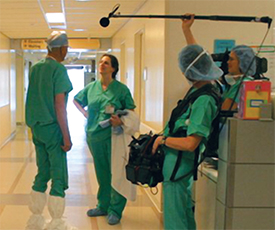
When Ruth Ann Crystal, MD, performed her residency at Stanford University Medical Center more than 15 years ago, she often worked side by side in the operating room with one of her favorite professors, Bert Johnson, MD, a skilled surgeon and obstetrician. While performing vaginal hysterectomies, Dr. Johnson would often share stories of when he was a resident back in the 1950s at the Chicago Maternity Center (CMC) and delivered babies for poor families on Chicago’s south side.
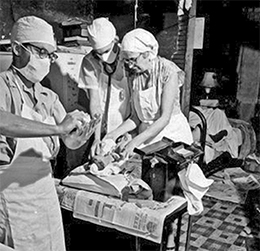
One of the stories Dr. Johnson told was about a time when he and another medical student were called to a home to “turn a baby that was stuck,” recalls Dr. Crystal, now a hospitalist at El Camino Hospital, which supports two campuses in Mountain View, Calif., and Los Gatos, Calif. They were going to administer ether, which is highly flammable, to the young mother to relax the uterus and help turn the baby, but then realized that a wood fire was burning. As the woman writhed in pain, they doused the flames with water.
“He said it was like Dante’s Inferno as smoke filled the room,” Dr. Crystal says. “It was quite the scene.”
Stories told by Dr. Johnson and other physicians who worked at the CMC during medical school or residency in the 1950s are legendary. They reflect a time in medicine when doctors not only made house calls, but also stayed in the family’s home until the baby was delivered, getting glimpses into the life of the poor. In an effort to preserve these stories, Dr. Crystal wanted to produce a one-hour PBS documentary called Catch the Baby. But financial realities set in, and she now plans to convert the stories into short vignettes that will be posted on a website by the same name for medical humanities classes.
“I thought, ‘Wow, this is an amazing part of history that shouldn’t be lost,’” says Dr. Crystal, who also supports a private practice. “The Chicago Maternity Center was an incredible place that, for almost 80 years, taught medical students how to be self-sufficient.
They learned “to count on their own skills and [find] ways of solving problems in very real situations when being sent out to these deliveries.”
Big Plans, No Budget
During her residency, Dr. Crystal videotaped approximately seven hours of interviews with Dr. Johnson about his experiences at CMC. She planned to write a book about the 80-something-year-old doctor, who still owns a ranch, ropes cattle, and, at one time, headed the California Beef Council; however, her job, growing family, and well, life, simply got in the way.
Then, in 2009, roughly a decade later, one of her patients mentioned that she knew a film crew who produced documentaries for PBS. Dr. Crystal asked for an introduction.
Members of the film crew were excited about the project. Their first task was to create a trailer for the documentary. They spent an entire day filming Dr. Johnson at his ranch telling stories about kitchen table deliveries in the slums and doing activities around the ranch, like roping cattle with a fellow cowboy—someone he actually delivered as a baby years ago. More film was later shot at the Santa Clara Valley Medical Center of Dr. Johnson performing a C-section and vaginal delivery with a resident and medical student.

The four-minute and 20-second trailer cost $37,000, she says, explaining that the money was mostly raised through donations from Dr. Johnson’s “cowboy friends” who also owned ranches in the area. It is still posted on the original website Dr. Crystal created: www.CatchTheBaby.com.
–Dr. Crystal
Now came the hard part—fundraising.
“I found out that I would have to raise between $650,000 and $700,000 to make a one-hour film,” Dr. Crystal says. “I tried, but I’m a doctor and don’t like asking people for money. I realized that probably wasn’t going to happen.”
But she wasn’t willing to abandon the project. So she turned her attention to YouTube, which, by then, had been online for four years. At the time, shorter videos were popular. Dr. Crystal had to develop a new plan.
Her current goal is to build a website that would highlight the CMC stories, which would be part of a medical humanities course at medical schools across the country. Medical students, residents, and other doctors could learn about the history of medicine and obstetrics. She says there are many lessons to be learned that don’t involve medical procedures, such as the impact of social and cultural issues on a physician’s ability to deliver healthcare.
“We need to look back on the important lessons the medical students learned at the CMC,” she says. “Not about how to do specific procedures, but how to interact with patients who may be very different from themselves.”
There seems to be plenty of interest in the topic; Dr. Crystal has since built a Twitter following of 5,700 people who read articles she tweets about medicine’s past, present, and future (@CatchTheBaby).
Still, she needs to build the website, edit the hours of film into short films, and then post them on the website with a study guide. The cost, she says, could run anywhere between $35,000 and $65,000.
“I don’t necessarily have to work with people who are PBS documentarians,” she says, adding that over recent years she has contacted several university film professors and students who turned down the project because it was too much to tackle. “I’d like to use a crowd-funding [platform like] Kickstarter or Indiegogo to raise the money, so I could edit the film.”
Meanwhile, Dr. Johnson is getting older and would enjoy seeing this project completed. So would his friends who helped pay for the trailer and original filming, says Dr. Crystal. Besides, she believes these stories can help new doctors better balance their focus between technology and face time with patients.
“Medical school education is changing quite a bit,” she says. “Despite advances in technology, we can’t forget we’re treating a human being first.”
Carol Patton is a freelance writer in Las Vegas.
When Ruth Ann Crystal, MD, performed her residency at Stanford University Medical Center more than 15 years ago, she often worked side by side in the operating room with one of her favorite professors, Bert Johnson, MD, a skilled surgeon and obstetrician. While performing vaginal hysterectomies, Dr. Johnson would often share stories of when he was a resident back in the 1950s at the Chicago Maternity Center (CMC) and delivered babies for poor families on Chicago’s south side.
One of the stories Dr. Johnson told was about a time when he and another medical student were called to a home to “turn a baby that was stuck,” recalls Dr. Crystal, now a hospitalist at El Camino Hospital, which supports two campuses in Mountain View, Calif., and Los Gatos, Calif. They were going to administer ether, which is highly flammable, to the young mother to relax the uterus and help turn the baby, but then realized that a wood fire was burning. As the woman writhed in pain, they doused the flames with water.
“He said it was like Dante’s Inferno as smoke filled the room,” Dr. Crystal says. “It was quite the scene.”
Stories told by Dr. Johnson and other physicians who worked at the CMC during medical school or residency in the 1950s are legendary. They reflect a time in medicine when doctors not only made house calls, but also stayed in the family’s home until the baby was delivered, getting glimpses into the life of the poor. In an effort to preserve these stories, Dr. Crystal wanted to produce a one-hour PBS documentary called Catch the Baby. But financial realities set in, and she now plans to convert the stories into short vignettes that will be posted on a website by the same name for medical humanities classes.
“I thought, ‘Wow, this is an amazing part of history that shouldn’t be lost,’” says Dr. Crystal, who also supports a private practice. “The Chicago Maternity Center was an incredible place that, for almost 80 years, taught medical students how to be self-sufficient.
They learned “to count on their own skills and [find] ways of solving problems in very real situations when being sent out to these deliveries.”
Big Plans, No Budget
During her residency, Dr. Crystal videotaped approximately seven hours of interviews with Dr. Johnson about his experiences at CMC. She planned to write a book about the 80-something-year-old doctor, who still owns a ranch, ropes cattle, and, at one time, headed the California Beef Council; however, her job, growing family, and well, life, simply got in the way.
Then, in 2009, roughly a decade later, one of her patients mentioned that she knew a film crew who produced documentaries for PBS. Dr. Crystal asked for an introduction.
Members of the film crew were excited about the project. Their first task was to create a trailer for the documentary. They spent an entire day filming Dr. Johnson at his ranch telling stories about kitchen table deliveries in the slums and doing activities around the ranch, like roping cattle with a fellow cowboy—someone he actually delivered as a baby years ago. More film was later shot at the Santa Clara Valley Medical Center of Dr. Johnson performing a C-section and vaginal delivery with a resident and medical student.
The four-minute and 20-second trailer cost $37,000, she says, explaining that the money was mostly raised through donations from Dr. Johnson’s “cowboy friends” who also owned ranches in the area. It is still posted on the original website Dr. Crystal created: www.CatchTheBaby.com.
–Dr. Crystal
Now came the hard part—fundraising.
“I found out that I would have to raise between $650,000 and $700,000 to make a one-hour film,” Dr. Crystal says. “I tried, but I’m a doctor and don’t like asking people for money. I realized that probably wasn’t going to happen.”
But she wasn’t willing to abandon the project. So she turned her attention to YouTube, which, by then, had been online for four years. At the time, shorter videos were popular. Dr. Crystal had to develop a new plan.
Her current goal is to build a website that would highlight the CMC stories, which would be part of a medical humanities course at medical schools across the country. Medical students, residents, and other doctors could learn about the history of medicine and obstetrics. She says there are many lessons to be learned that don’t involve medical procedures, such as the impact of social and cultural issues on a physician’s ability to deliver healthcare.
“We need to look back on the important lessons the medical students learned at the CMC,” she says. “Not about how to do specific procedures, but how to interact with patients who may be very different from themselves.”
There seems to be plenty of interest in the topic; Dr. Crystal has since built a Twitter following of 5,700 people who read articles she tweets about medicine’s past, present, and future (@CatchTheBaby).
Still, she needs to build the website, edit the hours of film into short films, and then post them on the website with a study guide. The cost, she says, could run anywhere between $35,000 and $65,000.
“I don’t necessarily have to work with people who are PBS documentarians,” she says, adding that over recent years she has contacted several university film professors and students who turned down the project because it was too much to tackle. “I’d like to use a crowd-funding [platform like] Kickstarter or Indiegogo to raise the money, so I could edit the film.”
Meanwhile, Dr. Johnson is getting older and would enjoy seeing this project completed. So would his friends who helped pay for the trailer and original filming, says Dr. Crystal. Besides, she believes these stories can help new doctors better balance their focus between technology and face time with patients.
“Medical school education is changing quite a bit,” she says. “Despite advances in technology, we can’t forget we’re treating a human being first.”
Carol Patton is a freelance writer in Las Vegas.
When Ruth Ann Crystal, MD, performed her residency at Stanford University Medical Center more than 15 years ago, she often worked side by side in the operating room with one of her favorite professors, Bert Johnson, MD, a skilled surgeon and obstetrician. While performing vaginal hysterectomies, Dr. Johnson would often share stories of when he was a resident back in the 1950s at the Chicago Maternity Center (CMC) and delivered babies for poor families on Chicago’s south side.
One of the stories Dr. Johnson told was about a time when he and another medical student were called to a home to “turn a baby that was stuck,” recalls Dr. Crystal, now a hospitalist at El Camino Hospital, which supports two campuses in Mountain View, Calif., and Los Gatos, Calif. They were going to administer ether, which is highly flammable, to the young mother to relax the uterus and help turn the baby, but then realized that a wood fire was burning. As the woman writhed in pain, they doused the flames with water.
“He said it was like Dante’s Inferno as smoke filled the room,” Dr. Crystal says. “It was quite the scene.”
Stories told by Dr. Johnson and other physicians who worked at the CMC during medical school or residency in the 1950s are legendary. They reflect a time in medicine when doctors not only made house calls, but also stayed in the family’s home until the baby was delivered, getting glimpses into the life of the poor. In an effort to preserve these stories, Dr. Crystal wanted to produce a one-hour PBS documentary called Catch the Baby. But financial realities set in, and she now plans to convert the stories into short vignettes that will be posted on a website by the same name for medical humanities classes.
“I thought, ‘Wow, this is an amazing part of history that shouldn’t be lost,’” says Dr. Crystal, who also supports a private practice. “The Chicago Maternity Center was an incredible place that, for almost 80 years, taught medical students how to be self-sufficient.
They learned “to count on their own skills and [find] ways of solving problems in very real situations when being sent out to these deliveries.”
Big Plans, No Budget
During her residency, Dr. Crystal videotaped approximately seven hours of interviews with Dr. Johnson about his experiences at CMC. She planned to write a book about the 80-something-year-old doctor, who still owns a ranch, ropes cattle, and, at one time, headed the California Beef Council; however, her job, growing family, and well, life, simply got in the way.
Then, in 2009, roughly a decade later, one of her patients mentioned that she knew a film crew who produced documentaries for PBS. Dr. Crystal asked for an introduction.
Members of the film crew were excited about the project. Their first task was to create a trailer for the documentary. They spent an entire day filming Dr. Johnson at his ranch telling stories about kitchen table deliveries in the slums and doing activities around the ranch, like roping cattle with a fellow cowboy—someone he actually delivered as a baby years ago. More film was later shot at the Santa Clara Valley Medical Center of Dr. Johnson performing a C-section and vaginal delivery with a resident and medical student.
The four-minute and 20-second trailer cost $37,000, she says, explaining that the money was mostly raised through donations from Dr. Johnson’s “cowboy friends” who also owned ranches in the area. It is still posted on the original website Dr. Crystal created: www.CatchTheBaby.com.
–Dr. Crystal
Now came the hard part—fundraising.
“I found out that I would have to raise between $650,000 and $700,000 to make a one-hour film,” Dr. Crystal says. “I tried, but I’m a doctor and don’t like asking people for money. I realized that probably wasn’t going to happen.”
But she wasn’t willing to abandon the project. So she turned her attention to YouTube, which, by then, had been online for four years. At the time, shorter videos were popular. Dr. Crystal had to develop a new plan.
Her current goal is to build a website that would highlight the CMC stories, which would be part of a medical humanities course at medical schools across the country. Medical students, residents, and other doctors could learn about the history of medicine and obstetrics. She says there are many lessons to be learned that don’t involve medical procedures, such as the impact of social and cultural issues on a physician’s ability to deliver healthcare.
“We need to look back on the important lessons the medical students learned at the CMC,” she says. “Not about how to do specific procedures, but how to interact with patients who may be very different from themselves.”
There seems to be plenty of interest in the topic; Dr. Crystal has since built a Twitter following of 5,700 people who read articles she tweets about medicine’s past, present, and future (@CatchTheBaby).
Still, she needs to build the website, edit the hours of film into short films, and then post them on the website with a study guide. The cost, she says, could run anywhere between $35,000 and $65,000.
“I don’t necessarily have to work with people who are PBS documentarians,” she says, adding that over recent years she has contacted several university film professors and students who turned down the project because it was too much to tackle. “I’d like to use a crowd-funding [platform like] Kickstarter or Indiegogo to raise the money, so I could edit the film.”
Meanwhile, Dr. Johnson is getting older and would enjoy seeing this project completed. So would his friends who helped pay for the trailer and original filming, says Dr. Crystal. Besides, she believes these stories can help new doctors better balance their focus between technology and face time with patients.
“Medical school education is changing quite a bit,” she says. “Despite advances in technology, we can’t forget we’re treating a human being first.”
Carol Patton is a freelance writer in Las Vegas.
Most Important Elements of End-of-Life Care

An Australian team conducted a literature review of expected deaths in the hospital—where the majority of deaths in the developed world occur—and identified elements of end-of-life care that are important to patients and families.1 Published in the British journal Palliative Medicine, the review of nine electronic data bases and 1859 articles released between 1990 and 2014 identified eight quantitative studies that met inclusion criteria.
The authors, led by Claudia Virdun, RN, of the faculty of health at the University of Technology in Sydney, found four end-of-life domains that were most important to both patients and families:
- Effective communication and shared decision-making;
- Expert care;
- Respectful and compassionate care; and
- Trust and confidence in clinicians.
Not all patients dying in hospitals receive best evidence-based palliative care, the authors note, adding that the “challenge for healthcare services is to act on this evidence, reconfigure care systems accordingly and ensure universal access to optimal end-of-life care within hospitals.”
Reference
- Virdun C, Luckett T, Davidson PM, Phillips J. Dying in the hospital setting: A systematic review of quantitative studies identifying the elements of end-of-life care that patients and their families rank as being most important [published online ahead of print April 28, 2015]. Palliat Med.
An Australian team conducted a literature review of expected deaths in the hospital—where the majority of deaths in the developed world occur—and identified elements of end-of-life care that are important to patients and families.1 Published in the British journal Palliative Medicine, the review of nine electronic data bases and 1859 articles released between 1990 and 2014 identified eight quantitative studies that met inclusion criteria.
The authors, led by Claudia Virdun, RN, of the faculty of health at the University of Technology in Sydney, found four end-of-life domains that were most important to both patients and families:
- Effective communication and shared decision-making;
- Expert care;
- Respectful and compassionate care; and
- Trust and confidence in clinicians.
Not all patients dying in hospitals receive best evidence-based palliative care, the authors note, adding that the “challenge for healthcare services is to act on this evidence, reconfigure care systems accordingly and ensure universal access to optimal end-of-life care within hospitals.”
Reference
- Virdun C, Luckett T, Davidson PM, Phillips J. Dying in the hospital setting: A systematic review of quantitative studies identifying the elements of end-of-life care that patients and their families rank as being most important [published online ahead of print April 28, 2015]. Palliat Med.
An Australian team conducted a literature review of expected deaths in the hospital—where the majority of deaths in the developed world occur—and identified elements of end-of-life care that are important to patients and families.1 Published in the British journal Palliative Medicine, the review of nine electronic data bases and 1859 articles released between 1990 and 2014 identified eight quantitative studies that met inclusion criteria.
The authors, led by Claudia Virdun, RN, of the faculty of health at the University of Technology in Sydney, found four end-of-life domains that were most important to both patients and families:
- Effective communication and shared decision-making;
- Expert care;
- Respectful and compassionate care; and
- Trust and confidence in clinicians.
Not all patients dying in hospitals receive best evidence-based palliative care, the authors note, adding that the “challenge for healthcare services is to act on this evidence, reconfigure care systems accordingly and ensure universal access to optimal end-of-life care within hospitals.”
Reference
- Virdun C, Luckett T, Davidson PM, Phillips J. Dying in the hospital setting: A systematic review of quantitative studies identifying the elements of end-of-life care that patients and their families rank as being most important [published online ahead of print April 28, 2015]. Palliat Med.
Highest-Volume Hospitals Linked with Lower Risk for Some Procedures
An estimated 11,000 deaths could have been prevented between 2010 and 2012, if patients who went to the U.S. hospitals with the lowest patient volumes for five common procedures and conditions had gone instead to the highest-volume hospitals, according to analysis presented in U.S. News and World Report’s “Best Hospitals for Common Care.”1
For example, one small rural hospital’s relative risk for death from elective knee replacement was 24 times the national average.”1
Reference
- Sternberg S, Dougherty G. Risks are high at low-volume hospitals. May 18, 2015. U.S. News & World Report. Accessed July 2, 2015.
An estimated 11,000 deaths could have been prevented between 2010 and 2012, if patients who went to the U.S. hospitals with the lowest patient volumes for five common procedures and conditions had gone instead to the highest-volume hospitals, according to analysis presented in U.S. News and World Report’s “Best Hospitals for Common Care.”1
For example, one small rural hospital’s relative risk for death from elective knee replacement was 24 times the national average.”1
Reference
- Sternberg S, Dougherty G. Risks are high at low-volume hospitals. May 18, 2015. U.S. News & World Report. Accessed July 2, 2015.
An estimated 11,000 deaths could have been prevented between 2010 and 2012, if patients who went to the U.S. hospitals with the lowest patient volumes for five common procedures and conditions had gone instead to the highest-volume hospitals, according to analysis presented in U.S. News and World Report’s “Best Hospitals for Common Care.”1
For example, one small rural hospital’s relative risk for death from elective knee replacement was 24 times the national average.”1
Reference
- Sternberg S, Dougherty G. Risks are high at low-volume hospitals. May 18, 2015. U.S. News & World Report. Accessed July 2, 2015.
Clinical Variables Predict Debridement Failure in Septic Arthritis
Clinical question: What risk factors predict septic arthritis surgical debridement failure?
Background: Standard treatment of septic arthritis is debridement and antibiotics. Unfortunately, 23%-48% of patients fail single debridement. Data is limited on what factors correlate with treatment failure.
Study design: Retrospective, logistic regression analysis.
Setting: Billing database query of one academic medical center from 2000-2011.
Synopsis: After excluding patients with orthopedic comorbidities, multivariate logistic regression was performed on 128 patients greater than 18 years of age and treated operatively for septic arthritis, 38% of whom had failed a single debridement. Five significant independent clinical variables were identified as predictors for failure of a single surgical debridement:
- History of inflammatory arthropathy (OR, 7.3; 95% CI, 2.4 to 22.6; P<0.001);
- Involvement of a large joint (knee, shoulder, or hip; OR 7.0; 95% CI, 1.2-37.5; P=0.02);
- Synovial fluid nucleated cell count >85.0 x 10⁹ cells/L (OR, 4.7; 95% CI, 1.8-17.7; P=0.002);
- S. aureus as an isolate (OR, 4.6; 95% CI, 1.8 to 11.9; P=0.002); and
- History of diabetes (OR, 2.6; 95% CI, 1.1 to 6.2; P=0.04).
Using these variables, a prognostic model was created with an ROC curve of 0.79.
The study’s limitations include its retrospective nature, reliance on coding and documentation, small sample size, and the fact that all patients were treated at a single center.
Bottom line: Risk factors for failing single debridement in septic arthritis include inflammatory arthropathy, large joint involvement, more than 85.0 x 10⁹ nucleated cells, S. aureus infection, and history of diabetes.
Citation: Hunter JG, Gross JM, Dahl JD, Amsdell SL, Gorczyca JT. Risk factors for failure of a single surgical debridement in adults with acute septic arthritis. J Bone Joint Surg Am. 2015;97(7):558-564.
Clinical question: What risk factors predict septic arthritis surgical debridement failure?
Background: Standard treatment of septic arthritis is debridement and antibiotics. Unfortunately, 23%-48% of patients fail single debridement. Data is limited on what factors correlate with treatment failure.
Study design: Retrospective, logistic regression analysis.
Setting: Billing database query of one academic medical center from 2000-2011.
Synopsis: After excluding patients with orthopedic comorbidities, multivariate logistic regression was performed on 128 patients greater than 18 years of age and treated operatively for septic arthritis, 38% of whom had failed a single debridement. Five significant independent clinical variables were identified as predictors for failure of a single surgical debridement:
- History of inflammatory arthropathy (OR, 7.3; 95% CI, 2.4 to 22.6; P<0.001);
- Involvement of a large joint (knee, shoulder, or hip; OR 7.0; 95% CI, 1.2-37.5; P=0.02);
- Synovial fluid nucleated cell count >85.0 x 10⁹ cells/L (OR, 4.7; 95% CI, 1.8-17.7; P=0.002);
- S. aureus as an isolate (OR, 4.6; 95% CI, 1.8 to 11.9; P=0.002); and
- History of diabetes (OR, 2.6; 95% CI, 1.1 to 6.2; P=0.04).
Using these variables, a prognostic model was created with an ROC curve of 0.79.
The study’s limitations include its retrospective nature, reliance on coding and documentation, small sample size, and the fact that all patients were treated at a single center.
Bottom line: Risk factors for failing single debridement in septic arthritis include inflammatory arthropathy, large joint involvement, more than 85.0 x 10⁹ nucleated cells, S. aureus infection, and history of diabetes.
Citation: Hunter JG, Gross JM, Dahl JD, Amsdell SL, Gorczyca JT. Risk factors for failure of a single surgical debridement in adults with acute septic arthritis. J Bone Joint Surg Am. 2015;97(7):558-564.
Clinical question: What risk factors predict septic arthritis surgical debridement failure?
Background: Standard treatment of septic arthritis is debridement and antibiotics. Unfortunately, 23%-48% of patients fail single debridement. Data is limited on what factors correlate with treatment failure.
Study design: Retrospective, logistic regression analysis.
Setting: Billing database query of one academic medical center from 2000-2011.
Synopsis: After excluding patients with orthopedic comorbidities, multivariate logistic regression was performed on 128 patients greater than 18 years of age and treated operatively for septic arthritis, 38% of whom had failed a single debridement. Five significant independent clinical variables were identified as predictors for failure of a single surgical debridement:
- History of inflammatory arthropathy (OR, 7.3; 95% CI, 2.4 to 22.6; P<0.001);
- Involvement of a large joint (knee, shoulder, or hip; OR 7.0; 95% CI, 1.2-37.5; P=0.02);
- Synovial fluid nucleated cell count >85.0 x 10⁹ cells/L (OR, 4.7; 95% CI, 1.8-17.7; P=0.002);
- S. aureus as an isolate (OR, 4.6; 95% CI, 1.8 to 11.9; P=0.002); and
- History of diabetes (OR, 2.6; 95% CI, 1.1 to 6.2; P=0.04).
Using these variables, a prognostic model was created with an ROC curve of 0.79.
The study’s limitations include its retrospective nature, reliance on coding and documentation, small sample size, and the fact that all patients were treated at a single center.
Bottom line: Risk factors for failing single debridement in septic arthritis include inflammatory arthropathy, large joint involvement, more than 85.0 x 10⁹ nucleated cells, S. aureus infection, and history of diabetes.
Citation: Hunter JG, Gross JM, Dahl JD, Amsdell SL, Gorczyca JT. Risk factors for failure of a single surgical debridement in adults with acute septic arthritis. J Bone Joint Surg Am. 2015;97(7):558-564.
Prednisolone or Pentoxifylline Show No Mortality Benefit in Alcoholic Hepatitis
Clinical question: Does administration of prednisolone or pentoxifylline reduce mortality in patients hospitalized with severe alcoholic hepatitis?
Background: Alcoholic hepatitis is associated with high mortality. Studies have shown unclear mortality benefit with prednisolone and pentoxifylline. Despite multiple studies and meta-analyses, controversy about the use of these medications persists.
Study Design: Multicenter, double-blind, randomized trial with 2-by-2 design.
Setting: Sixty-five hospitals across the United Kingdom.
Synopsis: Approximately 1,100 patients with a clinical diagnosis of alcoholic hepatitis were randomized to four groups: placebo + placebo; prednisolone + pentoxifylline-matched placebo; prednisolone-matched placebo + pentoxifylline; or prednisolone + pentoxifylline. Groups received 28 days of treatment. The primary endpoint was 28-day mortality. Secondary endpoints were mortality or liver transplantation at 90 days and one year.
Neither intervention showed a significant reduction in 28-day mortality. Secondary analysis with adjustments for risk showed a reduction in 28-day mortality in the prednisolone groups. There was no difference between groups for mortality or liver transplantation at 90 days or one year.
Adverse events of death, infection, and acute kidney injury were reported in 42% of patients. Infection rates were higher in the prednisolone groups; however, attributable deaths were no different between groups.
Patients in this trial were younger, with a lower incidence of encephalopathy, infection, and acute kidney injury than those seen in similar trials, which could affect the rates of mortality seen here. Also, liver biopsy was not used, so patients may have been incorrectly included.
Bottom line: No difference was found in mortality or liver transplantation at 90 days and one year for prednisolone or pentoxifylline, although subanalysis showed there may be short-term benefit with prednisolone.
Citation: Thursz MR, Richardson P, Allison M, et al. Prednisolone or pentoxifylline for alcoholic hepatitis. New Engl J Med. 2015;372(17):1619-1628.
Clinical question: Does administration of prednisolone or pentoxifylline reduce mortality in patients hospitalized with severe alcoholic hepatitis?
Background: Alcoholic hepatitis is associated with high mortality. Studies have shown unclear mortality benefit with prednisolone and pentoxifylline. Despite multiple studies and meta-analyses, controversy about the use of these medications persists.
Study Design: Multicenter, double-blind, randomized trial with 2-by-2 design.
Setting: Sixty-five hospitals across the United Kingdom.
Synopsis: Approximately 1,100 patients with a clinical diagnosis of alcoholic hepatitis were randomized to four groups: placebo + placebo; prednisolone + pentoxifylline-matched placebo; prednisolone-matched placebo + pentoxifylline; or prednisolone + pentoxifylline. Groups received 28 days of treatment. The primary endpoint was 28-day mortality. Secondary endpoints were mortality or liver transplantation at 90 days and one year.
Neither intervention showed a significant reduction in 28-day mortality. Secondary analysis with adjustments for risk showed a reduction in 28-day mortality in the prednisolone groups. There was no difference between groups for mortality or liver transplantation at 90 days or one year.
Adverse events of death, infection, and acute kidney injury were reported in 42% of patients. Infection rates were higher in the prednisolone groups; however, attributable deaths were no different between groups.
Patients in this trial were younger, with a lower incidence of encephalopathy, infection, and acute kidney injury than those seen in similar trials, which could affect the rates of mortality seen here. Also, liver biopsy was not used, so patients may have been incorrectly included.
Bottom line: No difference was found in mortality or liver transplantation at 90 days and one year for prednisolone or pentoxifylline, although subanalysis showed there may be short-term benefit with prednisolone.
Citation: Thursz MR, Richardson P, Allison M, et al. Prednisolone or pentoxifylline for alcoholic hepatitis. New Engl J Med. 2015;372(17):1619-1628.
Clinical question: Does administration of prednisolone or pentoxifylline reduce mortality in patients hospitalized with severe alcoholic hepatitis?
Background: Alcoholic hepatitis is associated with high mortality. Studies have shown unclear mortality benefit with prednisolone and pentoxifylline. Despite multiple studies and meta-analyses, controversy about the use of these medications persists.
Study Design: Multicenter, double-blind, randomized trial with 2-by-2 design.
Setting: Sixty-five hospitals across the United Kingdom.
Synopsis: Approximately 1,100 patients with a clinical diagnosis of alcoholic hepatitis were randomized to four groups: placebo + placebo; prednisolone + pentoxifylline-matched placebo; prednisolone-matched placebo + pentoxifylline; or prednisolone + pentoxifylline. Groups received 28 days of treatment. The primary endpoint was 28-day mortality. Secondary endpoints were mortality or liver transplantation at 90 days and one year.
Neither intervention showed a significant reduction in 28-day mortality. Secondary analysis with adjustments for risk showed a reduction in 28-day mortality in the prednisolone groups. There was no difference between groups for mortality or liver transplantation at 90 days or one year.
Adverse events of death, infection, and acute kidney injury were reported in 42% of patients. Infection rates were higher in the prednisolone groups; however, attributable deaths were no different between groups.
Patients in this trial were younger, with a lower incidence of encephalopathy, infection, and acute kidney injury than those seen in similar trials, which could affect the rates of mortality seen here. Also, liver biopsy was not used, so patients may have been incorrectly included.
Bottom line: No difference was found in mortality or liver transplantation at 90 days and one year for prednisolone or pentoxifylline, although subanalysis showed there may be short-term benefit with prednisolone.
Citation: Thursz MR, Richardson P, Allison M, et al. Prednisolone or pentoxifylline for alcoholic hepatitis. New Engl J Med. 2015;372(17):1619-1628.
Corticosteroids Show Benefit in Community-Acquired Pneumonia
Clinical question: Does corticosteroid treatment shorten systemic illness in patients admitted to the hospital for community-acquired pneumonia (CAP)?
Background: Pneumonia is the third-leading cause of death worldwide. Studies have yielded conflicting data about the benefit of adding systemic corticosteroids for treatment of CAP.
Study design: Double-blind, multicenter, randomized, placebo-controlled trial.
Setting: Seven tertiary care hospitals in Switzerland.
Synopsis: Seven hundred eighty-four patients hospitalized for CAP were randomized to receive either oral prednisone 50 mg daily for seven days or placebo, with the primary endpoint being time to stable vital signs. The intention-to-treat analysis found that the median time to clinical stability was 1.4 days earlier in the prednisone group (hazard ratio 1.33, 95% CI 1.15-1.50, P<0.0001) and that length of stay and IV antibiotics were reduced by one day; this effect was valid across all PSI classes and was not dependent on age. Pneumonia-associated complications in the two groups did not differ at 30 days, though the prednisone group had a higher incidence of hyperglycemia requiring insulin.
Because all study locations were in a single, fairly homogenous northern European country, care should be taken when hospitalists apply these findings to their patient population, and the risks of hyperglycemia requiring insulin should be taken into consideration.
Bottom line: Systemic steroids may reduce the time to clinical stability in patients with CAP.
Citation: Blum CA, Nigro N, Briel M, et al. Adjunct prednisone therapy for patients with community-acquired pneumonia: a multicenter, double-blind, randomised, placebo-controlled trial. Lancet. 2015;385(9977):1511-1518.
Clinical question: Does corticosteroid treatment shorten systemic illness in patients admitted to the hospital for community-acquired pneumonia (CAP)?
Background: Pneumonia is the third-leading cause of death worldwide. Studies have yielded conflicting data about the benefit of adding systemic corticosteroids for treatment of CAP.
Study design: Double-blind, multicenter, randomized, placebo-controlled trial.
Setting: Seven tertiary care hospitals in Switzerland.
Synopsis: Seven hundred eighty-four patients hospitalized for CAP were randomized to receive either oral prednisone 50 mg daily for seven days or placebo, with the primary endpoint being time to stable vital signs. The intention-to-treat analysis found that the median time to clinical stability was 1.4 days earlier in the prednisone group (hazard ratio 1.33, 95% CI 1.15-1.50, P<0.0001) and that length of stay and IV antibiotics were reduced by one day; this effect was valid across all PSI classes and was not dependent on age. Pneumonia-associated complications in the two groups did not differ at 30 days, though the prednisone group had a higher incidence of hyperglycemia requiring insulin.
Because all study locations were in a single, fairly homogenous northern European country, care should be taken when hospitalists apply these findings to their patient population, and the risks of hyperglycemia requiring insulin should be taken into consideration.
Bottom line: Systemic steroids may reduce the time to clinical stability in patients with CAP.
Citation: Blum CA, Nigro N, Briel M, et al. Adjunct prednisone therapy for patients with community-acquired pneumonia: a multicenter, double-blind, randomised, placebo-controlled trial. Lancet. 2015;385(9977):1511-1518.
Clinical question: Does corticosteroid treatment shorten systemic illness in patients admitted to the hospital for community-acquired pneumonia (CAP)?
Background: Pneumonia is the third-leading cause of death worldwide. Studies have yielded conflicting data about the benefit of adding systemic corticosteroids for treatment of CAP.
Study design: Double-blind, multicenter, randomized, placebo-controlled trial.
Setting: Seven tertiary care hospitals in Switzerland.
Synopsis: Seven hundred eighty-four patients hospitalized for CAP were randomized to receive either oral prednisone 50 mg daily for seven days or placebo, with the primary endpoint being time to stable vital signs. The intention-to-treat analysis found that the median time to clinical stability was 1.4 days earlier in the prednisone group (hazard ratio 1.33, 95% CI 1.15-1.50, P<0.0001) and that length of stay and IV antibiotics were reduced by one day; this effect was valid across all PSI classes and was not dependent on age. Pneumonia-associated complications in the two groups did not differ at 30 days, though the prednisone group had a higher incidence of hyperglycemia requiring insulin.
Because all study locations were in a single, fairly homogenous northern European country, care should be taken when hospitalists apply these findings to their patient population, and the risks of hyperglycemia requiring insulin should be taken into consideration.
Bottom line: Systemic steroids may reduce the time to clinical stability in patients with CAP.
Citation: Blum CA, Nigro N, Briel M, et al. Adjunct prednisone therapy for patients with community-acquired pneumonia: a multicenter, double-blind, randomised, placebo-controlled trial. Lancet. 2015;385(9977):1511-1518.
Standard Discharge Communication Process Improves Verbal Handoffs between Hospitalists, PCPs
Clinical question: Can a standardized discharge communication process, coupled with an electronic health record (EHR) system, improve the proportion of completed verbal handoffs from in-hospital physicians to PCPs within 24 hours of patient discharge?
Background: Discharge from the hospital setting is known to be a transition of care fraught with patient safety risks, with more than half of discharged patients experiencing at least one error.1 Previous studies identified core elements that pediatric hospitalists and PCPs consider essential in discharge communication, which included:
- Pending laboratory or test results;
- Follow-up appointments;
- Discharge medications;
- Admission and discharge diagnoses;
- Dates of admission and discharge; and
- Suggested management plan.2
Rates of transmission and receipt of information have been found to be suboptimal after hospital discharge, and PCPs have been found to be less satisfied than hospitalists with communication.2,3 Additionally, PCPs and hospitalists have been found to have incongruent views on who should be responsible for pending labs, adverse events, or status changes, differences which can have safety implications.3 PCPs who refer to general hospitals have been found to report superior completeness of discharge communication compared to freestanding children’s hospitals, where resident physicians are generally responsible for discharge summary completion.4 Standardizing and promoting a process of verbal handoff after hospital discharge may address some of these safety concerns, although a relationship has not been established between aspects of discharge communication and associated adverse clinical outcomes.5
Study design: Quality improvement study using improvement science methods and run charts.
Setting: An urban, 598-bed, freestanding children’s hospital.
Synopsis: A 24/7 telephone operator service had been established at the investigators’ institution that was designed to facilitate communication between providers inside and outside the institution. At baseline, only 52% of hospital medicine (HM) provider discharges had a record of a discharge day call initiated to the PCP. A project team consisting of hospitalists, a chief resident, operator service administrators, and IT analysts identified system issues that led to unsuccessful communication, which facilitated identification of key drivers of improving communication and associated interventions (see Table 1).
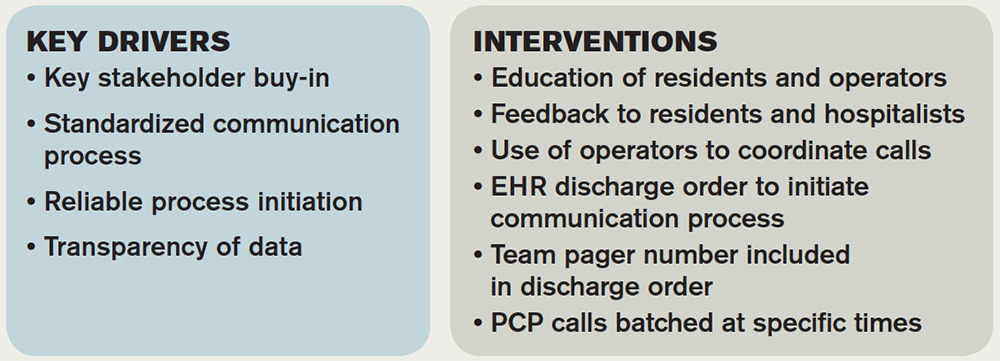
Discharging physicians, who were usually residents, were instructed to call the operator at the time of discharge. Operators would page the PCP, and PCPs were expected to return the page within 20 minutes. Discharging physicians were expected to return the call to the operator within two to four minutes. The EHR generated a message to the operator whenever a discharge order was placed for an HM patient, leading the operator to page the discharging physician to initiate the call.
Adaptations after project initiation included:
- Reassigning primary responsibility for discharge phone calls to the daily on-call resident, if the discharging physician was not available.
- Establishing a non-changing pager number on the automated discharge notification that would always reach the appropriate team member.
- Batching discharge phone calls at times of increased resident availability to minimize hold times for PCPs and work interruptions for discharging physicians.
Weekly failure data was generated and reviewed by the improvement team, and a call record was linked to the patient’s medical record. Team-specific and overall results for HM teams were posted weekly on a run-chart. The primary outcome measure was the percentage of completed calls between PCP and HM physician within 24 hours of discharge.
Over the approximately 32-month study period, the percentage of calls initiated improved from 50% to 97% after four interventions. After one year, data was collected to assess percentage of calls completed, a number that rose from 80% in the first eight weeks to a median of 93%, which was sustained for 18 months.
Bottom line: Utilizing improvement methods and reliability science, a process of improving verbal handoffs between hospital-based physicians and PCPs within 24 hours after discharge led to a sustained improvement, to above 90%, in successful verbal handoffs.
Citation: Mussman GM, Vossmeyer MT, Brady PW, Warrick DM, Simmons JM, White CM. Improving the reliability of verbal communication between primary care physicians and pediatric hospitalists at hospital discharge [published online ahead of print May 29, 2015]. J Hosp Med. doi: 10.1002/jhm.2392.

Clinical Shorts
MAJORITY OF NONOBSTRUCTING ASYMPTOMATIC RENAL STONES REMAIN ASYMPTOMATIC OVER TIME
Retrospective trial of active surveillance of asymptomatic nonobstructing renal calculi demonstrated that 28% of stones became symptomatic, with 17% requiring surgical intervention and 2% causing asymptomatic hydronephrosis over three years.
Citation: Dropkin BM, Moses RA, Sharma D, Pais VM Jr. The natural history of nonobstructing asymptomatic renal stones managed with active surveillance. J Urol. 2015;193(4):1265-1269.
CPR USE IS HIGH, YET OUTCOMES ARE POOR IN HEMODIALYSIS PATIENTS
In a national cohort of hemodialysis patients, receipt of in-hospital CPR was significantly higher (6.3% vs. 0.3%) than the general population, but post-discharge survival was substantially shorter (33 vs. five months).
Citation: Wong SY, Kreuter W, Curtis JR, Hall YN, O’Hare AM. Trends in in-hospital cardiopulmonary resuscitation and survival in adults receiving maintenance dialysis. JAMA Intern Med. 2015;175(6):1028-1035. doi:10.1001/jamainternmed.2015.0406.
ULTRASOUND GUIDANCE INCREASES RATE OF SUCCESSFUL FIRST ATTEMPT RADIAL ARTERY CANNULATION
Randomized controlled trial of 749 anesthesia trainees showed that ultrasound guidance increased rate of first attempt radial artery cannulation by 14% when compared to Doppler and palpation (95% CI 5-22%).
Citation: Ueda K, Bayman EO, Johnson C, Odum NJ, Lee JJ. A randomised controlled trial of radial artery cannulation guided by Doppler vs palpation vs ultrasound [published online ahead of print April 8, 2015]. Anaesthesia. doi: 10.1111/anae.13062.
NO DIFFERENCE BETWEEN EPIDURAL STEROID INJECTIONS AND GABAPENTIN FOR TREATMENT OF LUMBOSACRAL RADICULAR PAIN
Multicenter, randomized study found no difference in lumbosacral radicular pain at one and three months in patients treated with epidural steroid injection versus gabapentin.
Citation: Cohen SP, Hanling S, Bicket MC, et al. Epidural steroid injections compared with gabapentin for lumbosacral radicular pain: multicenter randomized double blind comparative efficacy study. BMJ. 2015;350:h1748 doi: 10.1136/bmj.h1748.
References
- Smith K. Effective communication with primary care providers. Pediatr Clin North Am. 2014;61(4):671-679.
- Coghlin DT, Leyenaar JK, Shen M, et al. Pediatric discharge content: a multisite assessment of physician preferences and experiences. Hosp Pediatr. 2014;4(1):9-15.
- Ruth JL, Geskey JM, Shaffer ML, Bramley HP, Paul IM. Evaluating communication between pediatric primary care physicians and hospitalists. Clin Pediatr (Phila). 2011;50(10):923-928.
- Leyenaar JK, Bergert L, Mallory LA, et al. Pediatric primary care providers’ perspectives regarding hospital discharge communication: a mixed methods analysis. Acad Pediatr. 2015;15(1):61-68.
- Bell CM, Schnipper JL, Auerbach AD, et al. Association of communication between hospital-based physicians and primary care providers with patient outcomes. J Gen Intern Med. 2009;24(3):381-386.
Clinical question: Can a standardized discharge communication process, coupled with an electronic health record (EHR) system, improve the proportion of completed verbal handoffs from in-hospital physicians to PCPs within 24 hours of patient discharge?
Background: Discharge from the hospital setting is known to be a transition of care fraught with patient safety risks, with more than half of discharged patients experiencing at least one error.1 Previous studies identified core elements that pediatric hospitalists and PCPs consider essential in discharge communication, which included:
- Pending laboratory or test results;
- Follow-up appointments;
- Discharge medications;
- Admission and discharge diagnoses;
- Dates of admission and discharge; and
- Suggested management plan.2
Rates of transmission and receipt of information have been found to be suboptimal after hospital discharge, and PCPs have been found to be less satisfied than hospitalists with communication.2,3 Additionally, PCPs and hospitalists have been found to have incongruent views on who should be responsible for pending labs, adverse events, or status changes, differences which can have safety implications.3 PCPs who refer to general hospitals have been found to report superior completeness of discharge communication compared to freestanding children’s hospitals, where resident physicians are generally responsible for discharge summary completion.4 Standardizing and promoting a process of verbal handoff after hospital discharge may address some of these safety concerns, although a relationship has not been established between aspects of discharge communication and associated adverse clinical outcomes.5
Study design: Quality improvement study using improvement science methods and run charts.
Setting: An urban, 598-bed, freestanding children’s hospital.
Synopsis: A 24/7 telephone operator service had been established at the investigators’ institution that was designed to facilitate communication between providers inside and outside the institution. At baseline, only 52% of hospital medicine (HM) provider discharges had a record of a discharge day call initiated to the PCP. A project team consisting of hospitalists, a chief resident, operator service administrators, and IT analysts identified system issues that led to unsuccessful communication, which facilitated identification of key drivers of improving communication and associated interventions (see Table 1).
Discharging physicians, who were usually residents, were instructed to call the operator at the time of discharge. Operators would page the PCP, and PCPs were expected to return the page within 20 minutes. Discharging physicians were expected to return the call to the operator within two to four minutes. The EHR generated a message to the operator whenever a discharge order was placed for an HM patient, leading the operator to page the discharging physician to initiate the call.
Adaptations after project initiation included:
- Reassigning primary responsibility for discharge phone calls to the daily on-call resident, if the discharging physician was not available.
- Establishing a non-changing pager number on the automated discharge notification that would always reach the appropriate team member.
- Batching discharge phone calls at times of increased resident availability to minimize hold times for PCPs and work interruptions for discharging physicians.
Weekly failure data was generated and reviewed by the improvement team, and a call record was linked to the patient’s medical record. Team-specific and overall results for HM teams were posted weekly on a run-chart. The primary outcome measure was the percentage of completed calls between PCP and HM physician within 24 hours of discharge.
Over the approximately 32-month study period, the percentage of calls initiated improved from 50% to 97% after four interventions. After one year, data was collected to assess percentage of calls completed, a number that rose from 80% in the first eight weeks to a median of 93%, which was sustained for 18 months.
Bottom line: Utilizing improvement methods and reliability science, a process of improving verbal handoffs between hospital-based physicians and PCPs within 24 hours after discharge led to a sustained improvement, to above 90%, in successful verbal handoffs.
Citation: Mussman GM, Vossmeyer MT, Brady PW, Warrick DM, Simmons JM, White CM. Improving the reliability of verbal communication between primary care physicians and pediatric hospitalists at hospital discharge [published online ahead of print May 29, 2015]. J Hosp Med. doi: 10.1002/jhm.2392.
Clinical Shorts
MAJORITY OF NONOBSTRUCTING ASYMPTOMATIC RENAL STONES REMAIN ASYMPTOMATIC OVER TIME
Retrospective trial of active surveillance of asymptomatic nonobstructing renal calculi demonstrated that 28% of stones became symptomatic, with 17% requiring surgical intervention and 2% causing asymptomatic hydronephrosis over three years.
Citation: Dropkin BM, Moses RA, Sharma D, Pais VM Jr. The natural history of nonobstructing asymptomatic renal stones managed with active surveillance. J Urol. 2015;193(4):1265-1269.
CPR USE IS HIGH, YET OUTCOMES ARE POOR IN HEMODIALYSIS PATIENTS
In a national cohort of hemodialysis patients, receipt of in-hospital CPR was significantly higher (6.3% vs. 0.3%) than the general population, but post-discharge survival was substantially shorter (33 vs. five months).
Citation: Wong SY, Kreuter W, Curtis JR, Hall YN, O’Hare AM. Trends in in-hospital cardiopulmonary resuscitation and survival in adults receiving maintenance dialysis. JAMA Intern Med. 2015;175(6):1028-1035. doi:10.1001/jamainternmed.2015.0406.
ULTRASOUND GUIDANCE INCREASES RATE OF SUCCESSFUL FIRST ATTEMPT RADIAL ARTERY CANNULATION
Randomized controlled trial of 749 anesthesia trainees showed that ultrasound guidance increased rate of first attempt radial artery cannulation by 14% when compared to Doppler and palpation (95% CI 5-22%).
Citation: Ueda K, Bayman EO, Johnson C, Odum NJ, Lee JJ. A randomised controlled trial of radial artery cannulation guided by Doppler vs palpation vs ultrasound [published online ahead of print April 8, 2015]. Anaesthesia. doi: 10.1111/anae.13062.
NO DIFFERENCE BETWEEN EPIDURAL STEROID INJECTIONS AND GABAPENTIN FOR TREATMENT OF LUMBOSACRAL RADICULAR PAIN
Multicenter, randomized study found no difference in lumbosacral radicular pain at one and three months in patients treated with epidural steroid injection versus gabapentin.
Citation: Cohen SP, Hanling S, Bicket MC, et al. Epidural steroid injections compared with gabapentin for lumbosacral radicular pain: multicenter randomized double blind comparative efficacy study. BMJ. 2015;350:h1748 doi: 10.1136/bmj.h1748.
References
- Smith K. Effective communication with primary care providers. Pediatr Clin North Am. 2014;61(4):671-679.
- Coghlin DT, Leyenaar JK, Shen M, et al. Pediatric discharge content: a multisite assessment of physician preferences and experiences. Hosp Pediatr. 2014;4(1):9-15.
- Ruth JL, Geskey JM, Shaffer ML, Bramley HP, Paul IM. Evaluating communication between pediatric primary care physicians and hospitalists. Clin Pediatr (Phila). 2011;50(10):923-928.
- Leyenaar JK, Bergert L, Mallory LA, et al. Pediatric primary care providers’ perspectives regarding hospital discharge communication: a mixed methods analysis. Acad Pediatr. 2015;15(1):61-68.
- Bell CM, Schnipper JL, Auerbach AD, et al. Association of communication between hospital-based physicians and primary care providers with patient outcomes. J Gen Intern Med. 2009;24(3):381-386.
Clinical question: Can a standardized discharge communication process, coupled with an electronic health record (EHR) system, improve the proportion of completed verbal handoffs from in-hospital physicians to PCPs within 24 hours of patient discharge?
Background: Discharge from the hospital setting is known to be a transition of care fraught with patient safety risks, with more than half of discharged patients experiencing at least one error.1 Previous studies identified core elements that pediatric hospitalists and PCPs consider essential in discharge communication, which included:
- Pending laboratory or test results;
- Follow-up appointments;
- Discharge medications;
- Admission and discharge diagnoses;
- Dates of admission and discharge; and
- Suggested management plan.2
Rates of transmission and receipt of information have been found to be suboptimal after hospital discharge, and PCPs have been found to be less satisfied than hospitalists with communication.2,3 Additionally, PCPs and hospitalists have been found to have incongruent views on who should be responsible for pending labs, adverse events, or status changes, differences which can have safety implications.3 PCPs who refer to general hospitals have been found to report superior completeness of discharge communication compared to freestanding children’s hospitals, where resident physicians are generally responsible for discharge summary completion.4 Standardizing and promoting a process of verbal handoff after hospital discharge may address some of these safety concerns, although a relationship has not been established between aspects of discharge communication and associated adverse clinical outcomes.5
Study design: Quality improvement study using improvement science methods and run charts.
Setting: An urban, 598-bed, freestanding children’s hospital.
Synopsis: A 24/7 telephone operator service had been established at the investigators’ institution that was designed to facilitate communication between providers inside and outside the institution. At baseline, only 52% of hospital medicine (HM) provider discharges had a record of a discharge day call initiated to the PCP. A project team consisting of hospitalists, a chief resident, operator service administrators, and IT analysts identified system issues that led to unsuccessful communication, which facilitated identification of key drivers of improving communication and associated interventions (see Table 1).
Discharging physicians, who were usually residents, were instructed to call the operator at the time of discharge. Operators would page the PCP, and PCPs were expected to return the page within 20 minutes. Discharging physicians were expected to return the call to the operator within two to four minutes. The EHR generated a message to the operator whenever a discharge order was placed for an HM patient, leading the operator to page the discharging physician to initiate the call.
Adaptations after project initiation included:
- Reassigning primary responsibility for discharge phone calls to the daily on-call resident, if the discharging physician was not available.
- Establishing a non-changing pager number on the automated discharge notification that would always reach the appropriate team member.
- Batching discharge phone calls at times of increased resident availability to minimize hold times for PCPs and work interruptions for discharging physicians.
Weekly failure data was generated and reviewed by the improvement team, and a call record was linked to the patient’s medical record. Team-specific and overall results for HM teams were posted weekly on a run-chart. The primary outcome measure was the percentage of completed calls between PCP and HM physician within 24 hours of discharge.
Over the approximately 32-month study period, the percentage of calls initiated improved from 50% to 97% after four interventions. After one year, data was collected to assess percentage of calls completed, a number that rose from 80% in the first eight weeks to a median of 93%, which was sustained for 18 months.
Bottom line: Utilizing improvement methods and reliability science, a process of improving verbal handoffs between hospital-based physicians and PCPs within 24 hours after discharge led to a sustained improvement, to above 90%, in successful verbal handoffs.
Citation: Mussman GM, Vossmeyer MT, Brady PW, Warrick DM, Simmons JM, White CM. Improving the reliability of verbal communication between primary care physicians and pediatric hospitalists at hospital discharge [published online ahead of print May 29, 2015]. J Hosp Med. doi: 10.1002/jhm.2392.
Clinical Shorts
MAJORITY OF NONOBSTRUCTING ASYMPTOMATIC RENAL STONES REMAIN ASYMPTOMATIC OVER TIME
Retrospective trial of active surveillance of asymptomatic nonobstructing renal calculi demonstrated that 28% of stones became symptomatic, with 17% requiring surgical intervention and 2% causing asymptomatic hydronephrosis over three years.
Citation: Dropkin BM, Moses RA, Sharma D, Pais VM Jr. The natural history of nonobstructing asymptomatic renal stones managed with active surveillance. J Urol. 2015;193(4):1265-1269.
CPR USE IS HIGH, YET OUTCOMES ARE POOR IN HEMODIALYSIS PATIENTS
In a national cohort of hemodialysis patients, receipt of in-hospital CPR was significantly higher (6.3% vs. 0.3%) than the general population, but post-discharge survival was substantially shorter (33 vs. five months).
Citation: Wong SY, Kreuter W, Curtis JR, Hall YN, O’Hare AM. Trends in in-hospital cardiopulmonary resuscitation and survival in adults receiving maintenance dialysis. JAMA Intern Med. 2015;175(6):1028-1035. doi:10.1001/jamainternmed.2015.0406.
ULTRASOUND GUIDANCE INCREASES RATE OF SUCCESSFUL FIRST ATTEMPT RADIAL ARTERY CANNULATION
Randomized controlled trial of 749 anesthesia trainees showed that ultrasound guidance increased rate of first attempt radial artery cannulation by 14% when compared to Doppler and palpation (95% CI 5-22%).
Citation: Ueda K, Bayman EO, Johnson C, Odum NJ, Lee JJ. A randomised controlled trial of radial artery cannulation guided by Doppler vs palpation vs ultrasound [published online ahead of print April 8, 2015]. Anaesthesia. doi: 10.1111/anae.13062.
NO DIFFERENCE BETWEEN EPIDURAL STEROID INJECTIONS AND GABAPENTIN FOR TREATMENT OF LUMBOSACRAL RADICULAR PAIN
Multicenter, randomized study found no difference in lumbosacral radicular pain at one and three months in patients treated with epidural steroid injection versus gabapentin.
Citation: Cohen SP, Hanling S, Bicket MC, et al. Epidural steroid injections compared with gabapentin for lumbosacral radicular pain: multicenter randomized double blind comparative efficacy study. BMJ. 2015;350:h1748 doi: 10.1136/bmj.h1748.
References
- Smith K. Effective communication with primary care providers. Pediatr Clin North Am. 2014;61(4):671-679.
- Coghlin DT, Leyenaar JK, Shen M, et al. Pediatric discharge content: a multisite assessment of physician preferences and experiences. Hosp Pediatr. 2014;4(1):9-15.
- Ruth JL, Geskey JM, Shaffer ML, Bramley HP, Paul IM. Evaluating communication between pediatric primary care physicians and hospitalists. Clin Pediatr (Phila). 2011;50(10):923-928.
- Leyenaar JK, Bergert L, Mallory LA, et al. Pediatric primary care providers’ perspectives regarding hospital discharge communication: a mixed methods analysis. Acad Pediatr. 2015;15(1):61-68.
- Bell CM, Schnipper JL, Auerbach AD, et al. Association of communication between hospital-based physicians and primary care providers with patient outcomes. J Gen Intern Med. 2009;24(3):381-386.
Nomogram Predicts Post-Operative Readmission
Clinical question: Can a nomogram accurately predict a patient’s risk of post-operative 30-day readmission?
Background: Medicare and Medicaid have implemented penalties for hospitals with high readmission rates. While this does not yet apply to post-operative readmissions, there is concern that it soon will. Algorithms for predicting readmission have been developed for medical patients; however, to date, no such tool has been developed for post-operative patients.
Study design: Retrospective review and prospective validation of a predictive nomogram.
Setting: Single academic hospital.
Synopsis: Using the American College of Surgeons’ National Surgical Quality Improvement Program (ACS NSQIP) and hospital billing data, a retrospective analysis of 2,799 patients who had elective surgery between 2006 and 2011 was performed in order to develop a predictive nomogram for post-operative readmissions. Pre-operative, operative, and post-operative variables associated with readmission were evaluated, and the following variables were found to be independently associated with readmission:
- Bleeding disorder;
- Prolonged procedure length;
- In-hospital complications;
- Dependent functional status; and/or
- Higher care at discharge.
Using a linear regression model, a nomogram was developed that was prospectively validated in 255 patients from a single center. The nomogram accurately predicted the risk of post-operative readmission (C statistic=0.756) in the prospective analysis.
The nomogram has limited generalizability given the fact that it included patients from a single institution; it would benefit from external validation before widespread use.
Bottom line: The use of this predictive nomogram could aid in identifying patients at high risk of readmission.
Citation: Tevis SE, Weber SM, Kent KC, Kennedy GD. Nomogram to predict postoperative readmission in patients who undergo general surgery. JAMA Surg. 2015;150(6):505-510. doi: 10.1001/jamasurg.2014.4043.
Clinical question: Can a nomogram accurately predict a patient’s risk of post-operative 30-day readmission?
Background: Medicare and Medicaid have implemented penalties for hospitals with high readmission rates. While this does not yet apply to post-operative readmissions, there is concern that it soon will. Algorithms for predicting readmission have been developed for medical patients; however, to date, no such tool has been developed for post-operative patients.
Study design: Retrospective review and prospective validation of a predictive nomogram.
Setting: Single academic hospital.
Synopsis: Using the American College of Surgeons’ National Surgical Quality Improvement Program (ACS NSQIP) and hospital billing data, a retrospective analysis of 2,799 patients who had elective surgery between 2006 and 2011 was performed in order to develop a predictive nomogram for post-operative readmissions. Pre-operative, operative, and post-operative variables associated with readmission were evaluated, and the following variables were found to be independently associated with readmission:
- Bleeding disorder;
- Prolonged procedure length;
- In-hospital complications;
- Dependent functional status; and/or
- Higher care at discharge.
Using a linear regression model, a nomogram was developed that was prospectively validated in 255 patients from a single center. The nomogram accurately predicted the risk of post-operative readmission (C statistic=0.756) in the prospective analysis.
The nomogram has limited generalizability given the fact that it included patients from a single institution; it would benefit from external validation before widespread use.
Bottom line: The use of this predictive nomogram could aid in identifying patients at high risk of readmission.
Citation: Tevis SE, Weber SM, Kent KC, Kennedy GD. Nomogram to predict postoperative readmission in patients who undergo general surgery. JAMA Surg. 2015;150(6):505-510. doi: 10.1001/jamasurg.2014.4043.
Clinical question: Can a nomogram accurately predict a patient’s risk of post-operative 30-day readmission?
Background: Medicare and Medicaid have implemented penalties for hospitals with high readmission rates. While this does not yet apply to post-operative readmissions, there is concern that it soon will. Algorithms for predicting readmission have been developed for medical patients; however, to date, no such tool has been developed for post-operative patients.
Study design: Retrospective review and prospective validation of a predictive nomogram.
Setting: Single academic hospital.
Synopsis: Using the American College of Surgeons’ National Surgical Quality Improvement Program (ACS NSQIP) and hospital billing data, a retrospective analysis of 2,799 patients who had elective surgery between 2006 and 2011 was performed in order to develop a predictive nomogram for post-operative readmissions. Pre-operative, operative, and post-operative variables associated with readmission were evaluated, and the following variables were found to be independently associated with readmission:
- Bleeding disorder;
- Prolonged procedure length;
- In-hospital complications;
- Dependent functional status; and/or
- Higher care at discharge.
Using a linear regression model, a nomogram was developed that was prospectively validated in 255 patients from a single center. The nomogram accurately predicted the risk of post-operative readmission (C statistic=0.756) in the prospective analysis.
The nomogram has limited generalizability given the fact that it included patients from a single institution; it would benefit from external validation before widespread use.
Bottom line: The use of this predictive nomogram could aid in identifying patients at high risk of readmission.
Citation: Tevis SE, Weber SM, Kent KC, Kennedy GD. Nomogram to predict postoperative readmission in patients who undergo general surgery. JAMA Surg. 2015;150(6):505-510. doi: 10.1001/jamasurg.2014.4043.