User login
Doug Brunk is a San Diego-based award-winning reporter who began covering health care in 1991. Before joining the company, he wrote for the health sciences division of Columbia University and was an associate editor at Contemporary Long Term Care magazine when it won a Jesse H. Neal Award. His work has been syndicated by the Los Angeles Times and he is the author of two books related to the University of Kentucky Wildcats men's basketball program. Doug has a master’s degree in magazine journalism from the S.I. Newhouse School of Public Communications at Syracuse University. Follow him on Twitter @dougbrunk.
Low-Intensity Treadmill Exercise Benefits Walking in Parkinson’s Disease
Results from a randomized trial show that low-intensity treadmill exercise leads to more consistent improvements in the gait and mobility of patients with Parkinson’s disease than does high-intensity treadmill exercise or stretching and resistance exercise.
However, only patients who participated in stretching and resistance exercise experienced significant improvements in the motor component of the Unified Parkinson’s Disease Rating Scale (UPDRS).
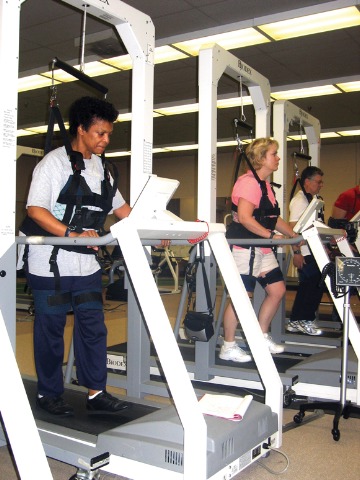
"There isn’t a neurologist who cares for patients with Parkinson’s that doesn’t have their patients ask them, ‘What should I do to help myself? What kind of exercise, if any, should I do?’ " Dr. Lisa M. Shulman said in an interview in advance of the annual meeting of the American Academy of Neurology, where the research was presented. "We haven’t had a good answer to that question for years. This study is a good start in terms of telling patients what they can do to help themselves. I’ve begun to tell my patients that they should do a combination of low-intensity treadmill exercise and stretching resistance training to get the range of benefits that we demonstrated in our study."
Dr. Shulman, a professor of neurology at the University of Maryland, Baltimore, and her associates enrolled 67 Parkinson’s patients who had trouble walking into one of three groups: high-intensity treadmill (30 minutes at 70%-80% heart rate reserve); low-intensity treadmill (50 minutes at 40%-50% heart rate reserve); or stretching and resistance exercises (two sets of 10 repetitions of leg presses, extensions, and curls performed on exercise machines). The study participants exercised three times a week for 3 months and were supervised by exercise physiologists at the Baltimore Veterans Affairs Medical Center.
Baseline pre- and posttraining measures included the 6-minute walk; 10-meter and 50-foot gait speeds; peak oxygen consumption; and the UPDRS, which evaluates disease symptoms such as tremor, rigidity, loss of dexterity, slowness, walking, and balance.

The mean age of patients was 66 years and 75% were male. Dr. Shulman reported that at the end of 3 months, all modes of exercise improved distance on the 6-minute walk, with significant improvements in the low-intensity treadmill group and in the stretching/resistance group, and a trend toward significance in the high-intensity treadmill group. The greatest improvement was seen in the low-intensity treadmill group, in which patients walked 11% further over 6 minutes, a distance equivalent to half a city block.
Both treadmill groups significantly improved their 10-meter fast gait, but the low-intensity treadmill group demonstrated greater improvement on the 50-foot fast gait. Both treadmill groups improved peak oxygen consumption.
Only patients in the stretching/resistance group experienced significant improvements in the motor component of the UPDRS, the key measure of Parkinsonian motor symptoms.
"The fact that the low-intensity treadmill group had more consistent benefit in terms of gait and mobility was surprising," Dr. Shulman said. "Our main interest was improvement in gait and mobility, because those are the most disabling symptoms of Parkinson’s disease. A key fact is that it wasn’t necessary to greatly increase the intensity of walking to achieve benefit. That means that more people with a greater range of disability can benefit from exercise in Parkinson’s disease."
The positive impact of stretching and resistance exercise was also surprising, she said. "People with Parkinson’s who have rigidity tend to develop a stooped posture; they tend to lose their range of motion and general mobility because they’re stiff and slow," Dr. Shulman said. "One possibility is that the stretching and strengthening exercises in that group relieved symptoms of loss of range of motion and stiffness over time."
She acknowledged certain limitations of the study, including the fact that outcomes were evaluated only at 90 days and that it was a single-blinded (not a double-blinded) analysis. "There isn’t any way to get around that, since patients in exercise trials are aware of their exercise training," she noted. "It’s ironic that all of our patients were hoping that they would be assigned to the high-intensity treadmill group. They all wanted to be in that group because it was clearly the most strenuous group. When they were assigned to the low-intensity group or to the stretching/resistance group, they were somewhat disappointed, yet those were precisely the groups that were most effective."
The study was funded by the Michael J. Fox Foundation for Parkinson’s Research, the VA Center of Excellence in Exercise and Robotics for Neurological Disorders, and the Baltimore VA Medical Center’s Geriatric Research, Education, and Clinical Center.
Dr. Shulman said that she had no relevant financial conflicts to disclose.
Results from a randomized trial show that low-intensity treadmill exercise leads to more consistent improvements in the gait and mobility of patients with Parkinson’s disease than does high-intensity treadmill exercise or stretching and resistance exercise.
However, only patients who participated in stretching and resistance exercise experienced significant improvements in the motor component of the Unified Parkinson’s Disease Rating Scale (UPDRS).
"There isn’t a neurologist who cares for patients with Parkinson’s that doesn’t have their patients ask them, ‘What should I do to help myself? What kind of exercise, if any, should I do?’ " Dr. Lisa M. Shulman said in an interview in advance of the annual meeting of the American Academy of Neurology, where the research was presented. "We haven’t had a good answer to that question for years. This study is a good start in terms of telling patients what they can do to help themselves. I’ve begun to tell my patients that they should do a combination of low-intensity treadmill exercise and stretching resistance training to get the range of benefits that we demonstrated in our study."
Dr. Shulman, a professor of neurology at the University of Maryland, Baltimore, and her associates enrolled 67 Parkinson’s patients who had trouble walking into one of three groups: high-intensity treadmill (30 minutes at 70%-80% heart rate reserve); low-intensity treadmill (50 minutes at 40%-50% heart rate reserve); or stretching and resistance exercises (two sets of 10 repetitions of leg presses, extensions, and curls performed on exercise machines). The study participants exercised three times a week for 3 months and were supervised by exercise physiologists at the Baltimore Veterans Affairs Medical Center.
Baseline pre- and posttraining measures included the 6-minute walk; 10-meter and 50-foot gait speeds; peak oxygen consumption; and the UPDRS, which evaluates disease symptoms such as tremor, rigidity, loss of dexterity, slowness, walking, and balance.
The mean age of patients was 66 years and 75% were male. Dr. Shulman reported that at the end of 3 months, all modes of exercise improved distance on the 6-minute walk, with significant improvements in the low-intensity treadmill group and in the stretching/resistance group, and a trend toward significance in the high-intensity treadmill group. The greatest improvement was seen in the low-intensity treadmill group, in which patients walked 11% further over 6 minutes, a distance equivalent to half a city block.
Both treadmill groups significantly improved their 10-meter fast gait, but the low-intensity treadmill group demonstrated greater improvement on the 50-foot fast gait. Both treadmill groups improved peak oxygen consumption.
Only patients in the stretching/resistance group experienced significant improvements in the motor component of the UPDRS, the key measure of Parkinsonian motor symptoms.
"The fact that the low-intensity treadmill group had more consistent benefit in terms of gait and mobility was surprising," Dr. Shulman said. "Our main interest was improvement in gait and mobility, because those are the most disabling symptoms of Parkinson’s disease. A key fact is that it wasn’t necessary to greatly increase the intensity of walking to achieve benefit. That means that more people with a greater range of disability can benefit from exercise in Parkinson’s disease."
The positive impact of stretching and resistance exercise was also surprising, she said. "People with Parkinson’s who have rigidity tend to develop a stooped posture; they tend to lose their range of motion and general mobility because they’re stiff and slow," Dr. Shulman said. "One possibility is that the stretching and strengthening exercises in that group relieved symptoms of loss of range of motion and stiffness over time."
She acknowledged certain limitations of the study, including the fact that outcomes were evaluated only at 90 days and that it was a single-blinded (not a double-blinded) analysis. "There isn’t any way to get around that, since patients in exercise trials are aware of their exercise training," she noted. "It’s ironic that all of our patients were hoping that they would be assigned to the high-intensity treadmill group. They all wanted to be in that group because it was clearly the most strenuous group. When they were assigned to the low-intensity group or to the stretching/resistance group, they were somewhat disappointed, yet those were precisely the groups that were most effective."
The study was funded by the Michael J. Fox Foundation for Parkinson’s Research, the VA Center of Excellence in Exercise and Robotics for Neurological Disorders, and the Baltimore VA Medical Center’s Geriatric Research, Education, and Clinical Center.
Dr. Shulman said that she had no relevant financial conflicts to disclose.
Results from a randomized trial show that low-intensity treadmill exercise leads to more consistent improvements in the gait and mobility of patients with Parkinson’s disease than does high-intensity treadmill exercise or stretching and resistance exercise.
However, only patients who participated in stretching and resistance exercise experienced significant improvements in the motor component of the Unified Parkinson’s Disease Rating Scale (UPDRS).
"There isn’t a neurologist who cares for patients with Parkinson’s that doesn’t have their patients ask them, ‘What should I do to help myself? What kind of exercise, if any, should I do?’ " Dr. Lisa M. Shulman said in an interview in advance of the annual meeting of the American Academy of Neurology, where the research was presented. "We haven’t had a good answer to that question for years. This study is a good start in terms of telling patients what they can do to help themselves. I’ve begun to tell my patients that they should do a combination of low-intensity treadmill exercise and stretching resistance training to get the range of benefits that we demonstrated in our study."
Dr. Shulman, a professor of neurology at the University of Maryland, Baltimore, and her associates enrolled 67 Parkinson’s patients who had trouble walking into one of three groups: high-intensity treadmill (30 minutes at 70%-80% heart rate reserve); low-intensity treadmill (50 minutes at 40%-50% heart rate reserve); or stretching and resistance exercises (two sets of 10 repetitions of leg presses, extensions, and curls performed on exercise machines). The study participants exercised three times a week for 3 months and were supervised by exercise physiologists at the Baltimore Veterans Affairs Medical Center.
Baseline pre- and posttraining measures included the 6-minute walk; 10-meter and 50-foot gait speeds; peak oxygen consumption; and the UPDRS, which evaluates disease symptoms such as tremor, rigidity, loss of dexterity, slowness, walking, and balance.
The mean age of patients was 66 years and 75% were male. Dr. Shulman reported that at the end of 3 months, all modes of exercise improved distance on the 6-minute walk, with significant improvements in the low-intensity treadmill group and in the stretching/resistance group, and a trend toward significance in the high-intensity treadmill group. The greatest improvement was seen in the low-intensity treadmill group, in which patients walked 11% further over 6 minutes, a distance equivalent to half a city block.
Both treadmill groups significantly improved their 10-meter fast gait, but the low-intensity treadmill group demonstrated greater improvement on the 50-foot fast gait. Both treadmill groups improved peak oxygen consumption.
Only patients in the stretching/resistance group experienced significant improvements in the motor component of the UPDRS, the key measure of Parkinsonian motor symptoms.
"The fact that the low-intensity treadmill group had more consistent benefit in terms of gait and mobility was surprising," Dr. Shulman said. "Our main interest was improvement in gait and mobility, because those are the most disabling symptoms of Parkinson’s disease. A key fact is that it wasn’t necessary to greatly increase the intensity of walking to achieve benefit. That means that more people with a greater range of disability can benefit from exercise in Parkinson’s disease."
The positive impact of stretching and resistance exercise was also surprising, she said. "People with Parkinson’s who have rigidity tend to develop a stooped posture; they tend to lose their range of motion and general mobility because they’re stiff and slow," Dr. Shulman said. "One possibility is that the stretching and strengthening exercises in that group relieved symptoms of loss of range of motion and stiffness over time."
She acknowledged certain limitations of the study, including the fact that outcomes were evaluated only at 90 days and that it was a single-blinded (not a double-blinded) analysis. "There isn’t any way to get around that, since patients in exercise trials are aware of their exercise training," she noted. "It’s ironic that all of our patients were hoping that they would be assigned to the high-intensity treadmill group. They all wanted to be in that group because it was clearly the most strenuous group. When they were assigned to the low-intensity group or to the stretching/resistance group, they were somewhat disappointed, yet those were precisely the groups that were most effective."
The study was funded by the Michael J. Fox Foundation for Parkinson’s Research, the VA Center of Excellence in Exercise and Robotics for Neurological Disorders, and the Baltimore VA Medical Center’s Geriatric Research, Education, and Clinical Center.
Dr. Shulman said that she had no relevant financial conflicts to disclose.
Major Finding: Patients with Parkinson’s disease who performed low-intensity treadmill exercise significantly improved their walking ability on several assessments more than did those who did high-intensity treadmill exercise or stretching and resistance exercise, including walking 11% further during a 6-minute walk test, a distance equivalent to half of a city block.
Data Source: A 3-month, randomized study of 67 Parkinson’s disease patients.
Disclosures: The study was funded by the Michael J. Fox Foundation for Parkinson’s Research, the VA Center of Excellence in Exercise and Robotics for Neurological Disorders, and the Baltimore VA Medical Center’s Geriatric Research, Education, and Clinical Center. Dr. Shulman said that she had no relevant financial conflicts.
Safinamide Plus Levodopa May Reduce Dyskinesia in Parkinson's
The investigational agent safinamide reduced the severity of dyskinesia among patients with mid- to late-stage Parkinson’s disease, according to results from a 2-year randomized trial.
"Pharmacologically, this makes sense, because safinamide, in addition to enhancing dopaminergic transmission, inhibits the stimulated release of glutamate," lead study consultant Dr. Ravi Anand said in an interview prior to the annual meeting of the American Academy of Neurology, where the research was presented. "Levodopa treatment is believed to cause glutamate release, but safinamide has been shown in animal experiments to inhibit that glutamate release. In addition, studies done in monkeys show that levodopa-induced dyskinesia can be blocked by safinamide."

Improvements in activities of daily living, quality of life, and depressive symptoms were also seen in patients who took safinamide at a dose of 100 mg/day, said Dr. Anand, a paid consultant for Bresso, Italy-based Newron Pharmaceuticals, which developed the drug before manufacturing and marketing rights were obtained by Merck Serono in 2006.
He and his associates randomized 669 patients in Europe and India with mid-to late-stage Parkinson’s disease in a phase III trial. During the 24 months of treatment, outcomes worsened among placebo-treated patients and improved in both safinamide groups, but the differences between the groups did not reach statistical significance.
A post hoc analysis of the 214 patients who had dyskinesia at baseline found that Dyskinesia Rating Scale scores among the group taking 100 mg/day of safinamide were significantly reduced by 24%, compared with placebo (P less than .05). The amount of "on" time with or without minor dyskinesia significantly increased in patients taking either 50 mg/day or 100 mg/day of safinamide (an increase of 0.67 and 0.83 hours), compared with those in the placebo group.
Significant improvements in "off" time, Clinical Global Impressions, Severity of Illness (CGI-S), GRID-Hamilton Depression Rating Scale (GRID-HAMD), and Parkinson Disease Questionnaire (PDQ-39) scores were also seen in the safinamide 100-mg/day group compared with placebo (P less than .05). Side effects were comparable among the three treatment groups. Late phase III trials of the drug are now underway.
"Dyskinesia is a terrible symptom," Dr. Anand said. "To be able to reduce that by even 5% or 10% provides great relief to the patient. The relief to the family members is also incredible."
Should it become an approved medication, the cost of safinamide is expected to be in the range of current medications such as Comtan (entacapone), Azilect (rasagiline), or Neupro (rotigotine) at $7-$10 per day, "nothing more than that, probably," Dr. Anand said.
A key limitation of the study, he said, is that only 214 of the patients had dyskinesia at baseline.
Newron and Merck Serono funded the study. Dr. Anand disclosed that he is also a paid consultant for Bioline, Roche, Pfizer, Abbott Laboratories, Takeda, and Johnson & Johnson.
The investigational agent safinamide reduced the severity of dyskinesia among patients with mid- to late-stage Parkinson’s disease, according to results from a 2-year randomized trial.
"Pharmacologically, this makes sense, because safinamide, in addition to enhancing dopaminergic transmission, inhibits the stimulated release of glutamate," lead study consultant Dr. Ravi Anand said in an interview prior to the annual meeting of the American Academy of Neurology, where the research was presented. "Levodopa treatment is believed to cause glutamate release, but safinamide has been shown in animal experiments to inhibit that glutamate release. In addition, studies done in monkeys show that levodopa-induced dyskinesia can be blocked by safinamide."
Improvements in activities of daily living, quality of life, and depressive symptoms were also seen in patients who took safinamide at a dose of 100 mg/day, said Dr. Anand, a paid consultant for Bresso, Italy-based Newron Pharmaceuticals, which developed the drug before manufacturing and marketing rights were obtained by Merck Serono in 2006.
He and his associates randomized 669 patients in Europe and India with mid-to late-stage Parkinson’s disease in a phase III trial. During the 24 months of treatment, outcomes worsened among placebo-treated patients and improved in both safinamide groups, but the differences between the groups did not reach statistical significance.
A post hoc analysis of the 214 patients who had dyskinesia at baseline found that Dyskinesia Rating Scale scores among the group taking 100 mg/day of safinamide were significantly reduced by 24%, compared with placebo (P less than .05). The amount of "on" time with or without minor dyskinesia significantly increased in patients taking either 50 mg/day or 100 mg/day of safinamide (an increase of 0.67 and 0.83 hours), compared with those in the placebo group.
Significant improvements in "off" time, Clinical Global Impressions, Severity of Illness (CGI-S), GRID-Hamilton Depression Rating Scale (GRID-HAMD), and Parkinson Disease Questionnaire (PDQ-39) scores were also seen in the safinamide 100-mg/day group compared with placebo (P less than .05). Side effects were comparable among the three treatment groups. Late phase III trials of the drug are now underway.
"Dyskinesia is a terrible symptom," Dr. Anand said. "To be able to reduce that by even 5% or 10% provides great relief to the patient. The relief to the family members is also incredible."
Should it become an approved medication, the cost of safinamide is expected to be in the range of current medications such as Comtan (entacapone), Azilect (rasagiline), or Neupro (rotigotine) at $7-$10 per day, "nothing more than that, probably," Dr. Anand said.
A key limitation of the study, he said, is that only 214 of the patients had dyskinesia at baseline.
Newron and Merck Serono funded the study. Dr. Anand disclosed that he is also a paid consultant for Bioline, Roche, Pfizer, Abbott Laboratories, Takeda, and Johnson & Johnson.
The investigational agent safinamide reduced the severity of dyskinesia among patients with mid- to late-stage Parkinson’s disease, according to results from a 2-year randomized trial.
"Pharmacologically, this makes sense, because safinamide, in addition to enhancing dopaminergic transmission, inhibits the stimulated release of glutamate," lead study consultant Dr. Ravi Anand said in an interview prior to the annual meeting of the American Academy of Neurology, where the research was presented. "Levodopa treatment is believed to cause glutamate release, but safinamide has been shown in animal experiments to inhibit that glutamate release. In addition, studies done in monkeys show that levodopa-induced dyskinesia can be blocked by safinamide."
Improvements in activities of daily living, quality of life, and depressive symptoms were also seen in patients who took safinamide at a dose of 100 mg/day, said Dr. Anand, a paid consultant for Bresso, Italy-based Newron Pharmaceuticals, which developed the drug before manufacturing and marketing rights were obtained by Merck Serono in 2006.
He and his associates randomized 669 patients in Europe and India with mid-to late-stage Parkinson’s disease in a phase III trial. During the 24 months of treatment, outcomes worsened among placebo-treated patients and improved in both safinamide groups, but the differences between the groups did not reach statistical significance.
A post hoc analysis of the 214 patients who had dyskinesia at baseline found that Dyskinesia Rating Scale scores among the group taking 100 mg/day of safinamide were significantly reduced by 24%, compared with placebo (P less than .05). The amount of "on" time with or without minor dyskinesia significantly increased in patients taking either 50 mg/day or 100 mg/day of safinamide (an increase of 0.67 and 0.83 hours), compared with those in the placebo group.
Significant improvements in "off" time, Clinical Global Impressions, Severity of Illness (CGI-S), GRID-Hamilton Depression Rating Scale (GRID-HAMD), and Parkinson Disease Questionnaire (PDQ-39) scores were also seen in the safinamide 100-mg/day group compared with placebo (P less than .05). Side effects were comparable among the three treatment groups. Late phase III trials of the drug are now underway.
"Dyskinesia is a terrible symptom," Dr. Anand said. "To be able to reduce that by even 5% or 10% provides great relief to the patient. The relief to the family members is also incredible."
Should it become an approved medication, the cost of safinamide is expected to be in the range of current medications such as Comtan (entacapone), Azilect (rasagiline), or Neupro (rotigotine) at $7-$10 per day, "nothing more than that, probably," Dr. Anand said.
A key limitation of the study, he said, is that only 214 of the patients had dyskinesia at baseline.
Newron and Merck Serono funded the study. Dr. Anand disclosed that he is also a paid consultant for Bioline, Roche, Pfizer, Abbott Laboratories, Takeda, and Johnson & Johnson.
Major Finding: Dyskinesia Rating Scale scores among Parkinson’s disease patients who received 100 mg/day of safinamide were significantly reduced by 24%, compared with placebo (P less than .05).
Data Source: A post hoc analysis of 214 patients who had dyskinesia at baseline and were randomized to receive safinamide at 50 or 100 mg/day or placebo as an adjunct to levodopa therapy.
Disclosures: Newron and Merck Serono funded the study. Dr. Anand disclosed that he is a paid consultant for Newron Pharmaceuticals, Bioline, Roche, Pfizer, Abbott Laboratories, Takeda, and Johnson & Johnson.
Safinamide Plus Levodopa May Reduce Dyskinesia in Parkinson's
The investigational agent safinamide reduced the severity of dyskinesia among patients with mid- to late-stage Parkinson’s disease, according to results from a 2-year randomized trial.
"Pharmacologically, this makes sense, because safinamide, in addition to enhancing dopaminergic transmission, inhibits the stimulated release of glutamate," lead study consultant Dr. Ravi Anand said in an interview prior to the annual meeting of the American Academy of Neurology, where the research was presented. "Levodopa treatment is believed to cause glutamate release, but safinamide has been shown in animal experiments to inhibit that glutamate release. In addition, studies done in monkeys show that levodopa-induced dyskinesia can be blocked by safinamide."

Improvements in activities of daily living, quality of life, and depressive symptoms were also seen in patients who took safinamide at a dose of 100 mg/day, said Dr. Anand, a paid consultant for Bresso, Italy-based Newron Pharmaceuticals, which developed the drug before manufacturing and marketing rights were obtained by Merck Serono in 2006.
He and his associates randomized 669 patients in Europe and India with mid-to late-stage Parkinson’s disease in a phase III trial. During the 24 months of treatment, outcomes worsened among placebo-treated patients and improved in both safinamide groups, but the differences between the groups did not reach statistical significance.
A post hoc analysis of the 214 patients who had dyskinesia at baseline found that Dyskinesia Rating Scale scores among the group taking 100 mg/day of safinamide were significantly reduced by 24%, compared with placebo (P less than .05). The amount of "on" time with or without minor dyskinesia significantly increased in patients taking either 50 mg/day or 100 mg/day of safinamide (an increase of 0.67 and 0.83 hours), compared with those in the placebo group.
Significant improvements in "off" time, Clinical Global Impressions, Severity of Illness (CGI-S), GRID-Hamilton Depression Rating Scale (GRID-HAMD), and Parkinson Disease Questionnaire (PDQ-39) scores were also seen in the safinamide 100-mg/day group compared with placebo (P less than .05). Side effects were comparable among the three treatment groups. Late phase III trials of the drug are now underway.
"Dyskinesia is a terrible symptom," Dr. Anand said. "To be able to reduce that by even 5% or 10% provides great relief to the patient. The relief to the family members is also incredible."
Should it become an approved medication, the cost of safinamide is expected to be in the range of current medications such as Comtan (entacapone), Azilect (rasagiline), or Neupro (rotigotine) at $7-$10 per day, "nothing more than that, probably," Dr. Anand said.
A key limitation of the study, he said, is that only 214 of the patients had dyskinesia at baseline.
Newron and Merck Serono funded the study. Dr. Anand disclosed that he is also a paid consultant for Bioline, Roche, Pfizer, Abbott Laboratories, Takeda, and Johnson & Johnson.
The investigational agent safinamide reduced the severity of dyskinesia among patients with mid- to late-stage Parkinson’s disease, according to results from a 2-year randomized trial.
"Pharmacologically, this makes sense, because safinamide, in addition to enhancing dopaminergic transmission, inhibits the stimulated release of glutamate," lead study consultant Dr. Ravi Anand said in an interview prior to the annual meeting of the American Academy of Neurology, where the research was presented. "Levodopa treatment is believed to cause glutamate release, but safinamide has been shown in animal experiments to inhibit that glutamate release. In addition, studies done in monkeys show that levodopa-induced dyskinesia can be blocked by safinamide."
Improvements in activities of daily living, quality of life, and depressive symptoms were also seen in patients who took safinamide at a dose of 100 mg/day, said Dr. Anand, a paid consultant for Bresso, Italy-based Newron Pharmaceuticals, which developed the drug before manufacturing and marketing rights were obtained by Merck Serono in 2006.
He and his associates randomized 669 patients in Europe and India with mid-to late-stage Parkinson’s disease in a phase III trial. During the 24 months of treatment, outcomes worsened among placebo-treated patients and improved in both safinamide groups, but the differences between the groups did not reach statistical significance.
A post hoc analysis of the 214 patients who had dyskinesia at baseline found that Dyskinesia Rating Scale scores among the group taking 100 mg/day of safinamide were significantly reduced by 24%, compared with placebo (P less than .05). The amount of "on" time with or without minor dyskinesia significantly increased in patients taking either 50 mg/day or 100 mg/day of safinamide (an increase of 0.67 and 0.83 hours), compared with those in the placebo group.
Significant improvements in "off" time, Clinical Global Impressions, Severity of Illness (CGI-S), GRID-Hamilton Depression Rating Scale (GRID-HAMD), and Parkinson Disease Questionnaire (PDQ-39) scores were also seen in the safinamide 100-mg/day group compared with placebo (P less than .05). Side effects were comparable among the three treatment groups. Late phase III trials of the drug are now underway.
"Dyskinesia is a terrible symptom," Dr. Anand said. "To be able to reduce that by even 5% or 10% provides great relief to the patient. The relief to the family members is also incredible."
Should it become an approved medication, the cost of safinamide is expected to be in the range of current medications such as Comtan (entacapone), Azilect (rasagiline), or Neupro (rotigotine) at $7-$10 per day, "nothing more than that, probably," Dr. Anand said.
A key limitation of the study, he said, is that only 214 of the patients had dyskinesia at baseline.
Newron and Merck Serono funded the study. Dr. Anand disclosed that he is also a paid consultant for Bioline, Roche, Pfizer, Abbott Laboratories, Takeda, and Johnson & Johnson.
The investigational agent safinamide reduced the severity of dyskinesia among patients with mid- to late-stage Parkinson’s disease, according to results from a 2-year randomized trial.
"Pharmacologically, this makes sense, because safinamide, in addition to enhancing dopaminergic transmission, inhibits the stimulated release of glutamate," lead study consultant Dr. Ravi Anand said in an interview prior to the annual meeting of the American Academy of Neurology, where the research was presented. "Levodopa treatment is believed to cause glutamate release, but safinamide has been shown in animal experiments to inhibit that glutamate release. In addition, studies done in monkeys show that levodopa-induced dyskinesia can be blocked by safinamide."
Improvements in activities of daily living, quality of life, and depressive symptoms were also seen in patients who took safinamide at a dose of 100 mg/day, said Dr. Anand, a paid consultant for Bresso, Italy-based Newron Pharmaceuticals, which developed the drug before manufacturing and marketing rights were obtained by Merck Serono in 2006.
He and his associates randomized 669 patients in Europe and India with mid-to late-stage Parkinson’s disease in a phase III trial. During the 24 months of treatment, outcomes worsened among placebo-treated patients and improved in both safinamide groups, but the differences between the groups did not reach statistical significance.
A post hoc analysis of the 214 patients who had dyskinesia at baseline found that Dyskinesia Rating Scale scores among the group taking 100 mg/day of safinamide were significantly reduced by 24%, compared with placebo (P less than .05). The amount of "on" time with or without minor dyskinesia significantly increased in patients taking either 50 mg/day or 100 mg/day of safinamide (an increase of 0.67 and 0.83 hours), compared with those in the placebo group.
Significant improvements in "off" time, Clinical Global Impressions, Severity of Illness (CGI-S), GRID-Hamilton Depression Rating Scale (GRID-HAMD), and Parkinson Disease Questionnaire (PDQ-39) scores were also seen in the safinamide 100-mg/day group compared with placebo (P less than .05). Side effects were comparable among the three treatment groups. Late phase III trials of the drug are now underway.
"Dyskinesia is a terrible symptom," Dr. Anand said. "To be able to reduce that by even 5% or 10% provides great relief to the patient. The relief to the family members is also incredible."
Should it become an approved medication, the cost of safinamide is expected to be in the range of current medications such as Comtan (entacapone), Azilect (rasagiline), or Neupro (rotigotine) at $7-$10 per day, "nothing more than that, probably," Dr. Anand said.
A key limitation of the study, he said, is that only 214 of the patients had dyskinesia at baseline.
Newron and Merck Serono funded the study. Dr. Anand disclosed that he is also a paid consultant for Bioline, Roche, Pfizer, Abbott Laboratories, Takeda, and Johnson & Johnson.
Major Finding: Dyskinesia Rating Scale scores among Parkinson’s disease patients who received 100 mg/day of safinamide were significantly reduced by 24%, compared with placebo (P less than .05).
Data Source: A post hoc analysis of 214 patients who had dyskinesia at baseline and were randomized to receive safinamide at 50 or 100 mg/day or placebo as an adjunct to levodopa therapy.
Disclosures: Newron and Merck Serono funded the study. Dr. Anand disclosed that he is a paid consultant for Newron Pharmaceuticals, Bioline, Roche, Pfizer, Abbott Laboratories, Takeda, and Johnson & Johnson.
Safinamide Plus Levodopa May Reduce Dyskinesia in Parkinson's
The investigational agent safinamide reduced the severity of dyskinesia among patients with mid- to late-stage Parkinson’s disease, according to results from a 2-year randomized trial.
"Pharmacologically, this makes sense, because safinamide, in addition to enhancing dopaminergic transmission, inhibits the stimulated release of glutamate," lead study consultant Dr. Ravi Anand said in an interview prior to the annual meeting of the American Academy of Neurology, where the research was presented. "Levodopa treatment is believed to cause glutamate release, but safinamide has been shown in animal experiments to inhibit that glutamate release. In addition, studies done in monkeys show that levodopa-induced dyskinesia can be blocked by safinamide."

Improvements in activities of daily living, quality of life, and depressive symptoms were also seen in patients who took safinamide at a dose of 100 mg/day, said Dr. Anand, a paid consultant for Bresso, Italy-based Newron Pharmaceuticals, which developed the drug before manufacturing and marketing rights were obtained by Merck Serono in 2006.
He and his associates randomized 669 patients in Europe and India with mid-to late-stage Parkinson’s disease in a phase III trial. During the 24 months of treatment, outcomes worsened among placebo-treated patients and improved in both safinamide groups, but the differences between the groups did not reach statistical significance.
A post hoc analysis of the 214 patients who had dyskinesia at baseline found that Dyskinesia Rating Scale scores among the group taking 100 mg/day of safinamide were significantly reduced by 24%, compared with placebo (P less than .05). The amount of "on" time with or without minor dyskinesia significantly increased in patients taking either 50 mg/day or 100 mg/day of safinamide (an increase of 0.67 and 0.83 hours), compared with those in the placebo group.
Significant improvements in "off" time, Clinical Global Impressions, Severity of Illness (CGI-S), GRID-Hamilton Depression Rating Scale (GRID-HAMD), and Parkinson Disease Questionnaire (PDQ-39) scores were also seen in the safinamide 100-mg/day group compared with placebo (P less than .05). Side effects were comparable among the three treatment groups. Late phase III trials of the drug are now underway.
"Dyskinesia is a terrible symptom," Dr. Anand said. "To be able to reduce that by even 5% or 10% provides great relief to the patient. The relief to the family members is also incredible."
Should it become an approved medication, the cost of safinamide is expected to be in the range of current medications such as Comtan (entacapone), Azilect (rasagiline), or Neupro (rotigotine) at $7-$10 per day, "nothing more than that, probably," Dr. Anand said.
A key limitation of the study, he said, is that only 214 of the patients had dyskinesia at baseline.
Newron and Merck Serono funded the study. Dr. Anand disclosed that he is also a paid consultant for Bioline, Roche, Pfizer, Abbott Laboratories, Takeda, and Johnson & Johnson.
The investigational agent safinamide reduced the severity of dyskinesia among patients with mid- to late-stage Parkinson’s disease, according to results from a 2-year randomized trial.
"Pharmacologically, this makes sense, because safinamide, in addition to enhancing dopaminergic transmission, inhibits the stimulated release of glutamate," lead study consultant Dr. Ravi Anand said in an interview prior to the annual meeting of the American Academy of Neurology, where the research was presented. "Levodopa treatment is believed to cause glutamate release, but safinamide has been shown in animal experiments to inhibit that glutamate release. In addition, studies done in monkeys show that levodopa-induced dyskinesia can be blocked by safinamide."
Improvements in activities of daily living, quality of life, and depressive symptoms were also seen in patients who took safinamide at a dose of 100 mg/day, said Dr. Anand, a paid consultant for Bresso, Italy-based Newron Pharmaceuticals, which developed the drug before manufacturing and marketing rights were obtained by Merck Serono in 2006.
He and his associates randomized 669 patients in Europe and India with mid-to late-stage Parkinson’s disease in a phase III trial. During the 24 months of treatment, outcomes worsened among placebo-treated patients and improved in both safinamide groups, but the differences between the groups did not reach statistical significance.
A post hoc analysis of the 214 patients who had dyskinesia at baseline found that Dyskinesia Rating Scale scores among the group taking 100 mg/day of safinamide were significantly reduced by 24%, compared with placebo (P less than .05). The amount of "on" time with or without minor dyskinesia significantly increased in patients taking either 50 mg/day or 100 mg/day of safinamide (an increase of 0.67 and 0.83 hours), compared with those in the placebo group.
Significant improvements in "off" time, Clinical Global Impressions, Severity of Illness (CGI-S), GRID-Hamilton Depression Rating Scale (GRID-HAMD), and Parkinson Disease Questionnaire (PDQ-39) scores were also seen in the safinamide 100-mg/day group compared with placebo (P less than .05). Side effects were comparable among the three treatment groups. Late phase III trials of the drug are now underway.
"Dyskinesia is a terrible symptom," Dr. Anand said. "To be able to reduce that by even 5% or 10% provides great relief to the patient. The relief to the family members is also incredible."
Should it become an approved medication, the cost of safinamide is expected to be in the range of current medications such as Comtan (entacapone), Azilect (rasagiline), or Neupro (rotigotine) at $7-$10 per day, "nothing more than that, probably," Dr. Anand said.
A key limitation of the study, he said, is that only 214 of the patients had dyskinesia at baseline.
Newron and Merck Serono funded the study. Dr. Anand disclosed that he is also a paid consultant for Bioline, Roche, Pfizer, Abbott Laboratories, Takeda, and Johnson & Johnson.
The investigational agent safinamide reduced the severity of dyskinesia among patients with mid- to late-stage Parkinson’s disease, according to results from a 2-year randomized trial.
"Pharmacologically, this makes sense, because safinamide, in addition to enhancing dopaminergic transmission, inhibits the stimulated release of glutamate," lead study consultant Dr. Ravi Anand said in an interview prior to the annual meeting of the American Academy of Neurology, where the research was presented. "Levodopa treatment is believed to cause glutamate release, but safinamide has been shown in animal experiments to inhibit that glutamate release. In addition, studies done in monkeys show that levodopa-induced dyskinesia can be blocked by safinamide."
Improvements in activities of daily living, quality of life, and depressive symptoms were also seen in patients who took safinamide at a dose of 100 mg/day, said Dr. Anand, a paid consultant for Bresso, Italy-based Newron Pharmaceuticals, which developed the drug before manufacturing and marketing rights were obtained by Merck Serono in 2006.
He and his associates randomized 669 patients in Europe and India with mid-to late-stage Parkinson’s disease in a phase III trial. During the 24 months of treatment, outcomes worsened among placebo-treated patients and improved in both safinamide groups, but the differences between the groups did not reach statistical significance.
A post hoc analysis of the 214 patients who had dyskinesia at baseline found that Dyskinesia Rating Scale scores among the group taking 100 mg/day of safinamide were significantly reduced by 24%, compared with placebo (P less than .05). The amount of "on" time with or without minor dyskinesia significantly increased in patients taking either 50 mg/day or 100 mg/day of safinamide (an increase of 0.67 and 0.83 hours), compared with those in the placebo group.
Significant improvements in "off" time, Clinical Global Impressions, Severity of Illness (CGI-S), GRID-Hamilton Depression Rating Scale (GRID-HAMD), and Parkinson Disease Questionnaire (PDQ-39) scores were also seen in the safinamide 100-mg/day group compared with placebo (P less than .05). Side effects were comparable among the three treatment groups. Late phase III trials of the drug are now underway.
"Dyskinesia is a terrible symptom," Dr. Anand said. "To be able to reduce that by even 5% or 10% provides great relief to the patient. The relief to the family members is also incredible."
Should it become an approved medication, the cost of safinamide is expected to be in the range of current medications such as Comtan (entacapone), Azilect (rasagiline), or Neupro (rotigotine) at $7-$10 per day, "nothing more than that, probably," Dr. Anand said.
A key limitation of the study, he said, is that only 214 of the patients had dyskinesia at baseline.
Newron and Merck Serono funded the study. Dr. Anand disclosed that he is also a paid consultant for Bioline, Roche, Pfizer, Abbott Laboratories, Takeda, and Johnson & Johnson.
Major Finding: Dyskinesia Rating Scale scores among Parkinson’s disease patients who received 100 mg/day of safinamide were significantly reduced by 24%, compared with placebo (P less than .05).
Data Source: A post hoc analysis of 214 patients who had dyskinesia at baseline and were randomized to receive safinamide at 50 or 100 mg/day or placebo as an adjunct to levodopa therapy.
Disclosures: Newron and Merck Serono funded the study. Dr. Anand disclosed that he is a paid consultant for Newron Pharmaceuticals, Bioline, Roche, Pfizer, Abbott Laboratories, Takeda, and Johnson & Johnson.
Guideline for Treating Diabetic Nerve Pain Unveiled
Most classes of medications that are used to treat painful diabetic neuropathy include drugs that have at best a moderate level of evidence to support their effectiveness or have insufficient evidence to support or refute their use, according to a new guideline published online April 11 in Neurology.
The guideline gives no higher levels of evidence of effectiveness than those in its assessments of studies of vitamins, alpha-lipoic acid, medications absorbed through the skin, and electrical nerve stimulation and other devices. The anticonvulsant drug pregabalin was the only treatment that had strong evidence in support of its effectiveness.

Painful diabetic neuropathy affects 16% of the estimated 25 million people with diabetes who live in the United States, yet "many of the patients don’t tell their doctors about their pain, and if they do, they don’t get well treated," lead author Dr. Vera Bril said in an interview in advance of the annual meeting of the American Academy of Neurology, where the guideline was presented.
A wide variety of purported treatments exist for this condition, she added, but "it’s confusing to grasp the entire published literature in this area to know what you should do if you want to use evidence-based medicine. It’s very difficult for an individual physician to judge all of these different papers independently and to determine how good the evidence is. In that way this guideline is a way to give a framework for physicians to use to be able to treat their patients successfully."
Efforts to develop the guideline began in 2007, when experts from the AAN, the American Association of Neuromuscular and Electrodiagnostic Medicine, and the American Academy of Physical Medicine and Rehabilitation convened to devise a strategy. The following year they began an exhaustive search of the topic in the medical literature, targeting articles that dealt with the treatment of painful diabetic neuropathy, described the intervention clearly, reported the completion rate of the study, and defined the outcome measures clearly. A total of 79 studies met those criteria.
The expert panel then made treatment recommendations based on a review of the articles, and rated each recommendation based on strength of evidence. For example, in the anticonvulsant category, the panel found strong evidence for pregabalin as an agent to reduce pain and improve physical function and quality of life (level A), moderate evidence for gabapentin and sodium valproate (level B), and insufficient evidence to support or refute the use of topiramate (level U).
In the antidepressants category, the panel found moderate evidence to support the use of amitriptyline, venlafaxine, and duloxetine (level B), weak evidence for adding venlafaxine to gabapentin for better response (level C), and insufficient evidence to support or refute the use of desipramine, imipramine, fluoxetine, or the combination of nortriptyline and fluphenazine (level U).
"It’s not just one drug or one approach to consider," emphasized Dr. Bril, professor and chair of neurology at the University of Toronto. "You have to tailor your choice to your patient and his or her clinical status."
In the opioids category, the panel found moderate evidence for the use of dextromethorphan, morphine sulphate, tramadol, and oxycodone (level B). "Opioids should be used carefully," she advised.
The panel found moderate evidence for the use of capsaicin and isosorbide dinitrate spray (level B), weak evidence for the Lidoderm patch (level C), and insufficient evidence to support or refute the usefulness of vitamins andalpha-lipoic acid (level U).
"The fact that we didn’t find evidence in some cases doesn’t mean a treatment won’t work, but that the studies were negative or didn’t show any evidence," Dr. Bril explained.
Moderate evidence was found to support the use of percutaneous electrical nerve stimulation (level B), but the studies were negative for electromagnetic field treatment, low-intensity laser treatment, and Reiki therapy.
Dr. Bril said that this field of medicine is hampered by a lack of rigorous trials. "There’s a lot of work that needs to be done," she said. "A lot of the studies look at pain relief but don’t look at other things that are important, like how the patients function and their quality of life. The studies aren’t long enough. This is a chronic disorder, and the studies here are usually brief. There’s a need for longer-term studies."
The guidelines are also scheduled to appear in the April 2011 edition of Muscle and Nerve as well as the April 2011 edition of PM&R.
Dr. Bril disclosed that she has received research support from Talecris Biotherapeutics, Eisai Inc., Pfizer Inc, Eli Lilly & Co., and Johnson & Johnson. Her 10 coauthors disclosed numerous conflicts of interest with pharmaceutical companies, including travel and speaker honoraria, research support, consulting fees, and advisory board roles.
This guideline is a great tool for busy clinicians to use, and it comes from an authoritative, respected source of neurology expertise. That should have some sway with patients and third-party payers that reimburse for prescription medications.
It’s difficult for physicians to individually assess the efficacy of different medicines and treatments for painful diabetic neuropathy, because the requirements of conducting a rigorous, evidence-based study are quite extensive. Not only are these studies very expensive, but they require a lot of time and many resources. Most physicians are not in a situation where they can even begin to consider that kind of research on their own.
|

Not only does the guideline provide the evidence for the agents that work, it also notes when there is insufficient evidence to support or refute the use of certain treatments, as in the case of a number of vitamins and alpha-lipoic acid. The guideline also notes that there is moderate evidence to support the use of low-intensity laser treatment. This is important, because companies are marketing low-intensity laser machines to consumers at a cost of up to several thousand dollars per unit. Overall, the guideline is easy to digest and is presented in an accessible format for clinicians who take care of patients with this common problem as well as patients affected by this common painful type of neuropathy.
Dr. Benn E. Smith is a neurologist who directs the sensory and electromyography laboratories in the department of neurology at the Mayo Clinic in Scottsdale, Ariz.
This guideline is a great tool for busy clinicians to use, and it comes from an authoritative, respected source of neurology expertise. That should have some sway with patients and third-party payers that reimburse for prescription medications.
It’s difficult for physicians to individually assess the efficacy of different medicines and treatments for painful diabetic neuropathy, because the requirements of conducting a rigorous, evidence-based study are quite extensive. Not only are these studies very expensive, but they require a lot of time and many resources. Most physicians are not in a situation where they can even begin to consider that kind of research on their own.
|
Not only does the guideline provide the evidence for the agents that work, it also notes when there is insufficient evidence to support or refute the use of certain treatments, as in the case of a number of vitamins and alpha-lipoic acid. The guideline also notes that there is moderate evidence to support the use of low-intensity laser treatment. This is important, because companies are marketing low-intensity laser machines to consumers at a cost of up to several thousand dollars per unit. Overall, the guideline is easy to digest and is presented in an accessible format for clinicians who take care of patients with this common problem as well as patients affected by this common painful type of neuropathy.
Dr. Benn E. Smith is a neurologist who directs the sensory and electromyography laboratories in the department of neurology at the Mayo Clinic in Scottsdale, Ariz.
This guideline is a great tool for busy clinicians to use, and it comes from an authoritative, respected source of neurology expertise. That should have some sway with patients and third-party payers that reimburse for prescription medications.
It’s difficult for physicians to individually assess the efficacy of different medicines and treatments for painful diabetic neuropathy, because the requirements of conducting a rigorous, evidence-based study are quite extensive. Not only are these studies very expensive, but they require a lot of time and many resources. Most physicians are not in a situation where they can even begin to consider that kind of research on their own.
|
Not only does the guideline provide the evidence for the agents that work, it also notes when there is insufficient evidence to support or refute the use of certain treatments, as in the case of a number of vitamins and alpha-lipoic acid. The guideline also notes that there is moderate evidence to support the use of low-intensity laser treatment. This is important, because companies are marketing low-intensity laser machines to consumers at a cost of up to several thousand dollars per unit. Overall, the guideline is easy to digest and is presented in an accessible format for clinicians who take care of patients with this common problem as well as patients affected by this common painful type of neuropathy.
Dr. Benn E. Smith is a neurologist who directs the sensory and electromyography laboratories in the department of neurology at the Mayo Clinic in Scottsdale, Ariz.
Most classes of medications that are used to treat painful diabetic neuropathy include drugs that have at best a moderate level of evidence to support their effectiveness or have insufficient evidence to support or refute their use, according to a new guideline published online April 11 in Neurology.
The guideline gives no higher levels of evidence of effectiveness than those in its assessments of studies of vitamins, alpha-lipoic acid, medications absorbed through the skin, and electrical nerve stimulation and other devices. The anticonvulsant drug pregabalin was the only treatment that had strong evidence in support of its effectiveness.
Painful diabetic neuropathy affects 16% of the estimated 25 million people with diabetes who live in the United States, yet "many of the patients don’t tell their doctors about their pain, and if they do, they don’t get well treated," lead author Dr. Vera Bril said in an interview in advance of the annual meeting of the American Academy of Neurology, where the guideline was presented.
A wide variety of purported treatments exist for this condition, she added, but "it’s confusing to grasp the entire published literature in this area to know what you should do if you want to use evidence-based medicine. It’s very difficult for an individual physician to judge all of these different papers independently and to determine how good the evidence is. In that way this guideline is a way to give a framework for physicians to use to be able to treat their patients successfully."
Efforts to develop the guideline began in 2007, when experts from the AAN, the American Association of Neuromuscular and Electrodiagnostic Medicine, and the American Academy of Physical Medicine and Rehabilitation convened to devise a strategy. The following year they began an exhaustive search of the topic in the medical literature, targeting articles that dealt with the treatment of painful diabetic neuropathy, described the intervention clearly, reported the completion rate of the study, and defined the outcome measures clearly. A total of 79 studies met those criteria.
The expert panel then made treatment recommendations based on a review of the articles, and rated each recommendation based on strength of evidence. For example, in the anticonvulsant category, the panel found strong evidence for pregabalin as an agent to reduce pain and improve physical function and quality of life (level A), moderate evidence for gabapentin and sodium valproate (level B), and insufficient evidence to support or refute the use of topiramate (level U).
In the antidepressants category, the panel found moderate evidence to support the use of amitriptyline, venlafaxine, and duloxetine (level B), weak evidence for adding venlafaxine to gabapentin for better response (level C), and insufficient evidence to support or refute the use of desipramine, imipramine, fluoxetine, or the combination of nortriptyline and fluphenazine (level U).
"It’s not just one drug or one approach to consider," emphasized Dr. Bril, professor and chair of neurology at the University of Toronto. "You have to tailor your choice to your patient and his or her clinical status."
In the opioids category, the panel found moderate evidence for the use of dextromethorphan, morphine sulphate, tramadol, and oxycodone (level B). "Opioids should be used carefully," she advised.
The panel found moderate evidence for the use of capsaicin and isosorbide dinitrate spray (level B), weak evidence for the Lidoderm patch (level C), and insufficient evidence to support or refute the usefulness of vitamins andalpha-lipoic acid (level U).
"The fact that we didn’t find evidence in some cases doesn’t mean a treatment won’t work, but that the studies were negative or didn’t show any evidence," Dr. Bril explained.
Moderate evidence was found to support the use of percutaneous electrical nerve stimulation (level B), but the studies were negative for electromagnetic field treatment, low-intensity laser treatment, and Reiki therapy.
Dr. Bril said that this field of medicine is hampered by a lack of rigorous trials. "There’s a lot of work that needs to be done," she said. "A lot of the studies look at pain relief but don’t look at other things that are important, like how the patients function and their quality of life. The studies aren’t long enough. This is a chronic disorder, and the studies here are usually brief. There’s a need for longer-term studies."
The guidelines are also scheduled to appear in the April 2011 edition of Muscle and Nerve as well as the April 2011 edition of PM&R.
Dr. Bril disclosed that she has received research support from Talecris Biotherapeutics, Eisai Inc., Pfizer Inc, Eli Lilly & Co., and Johnson & Johnson. Her 10 coauthors disclosed numerous conflicts of interest with pharmaceutical companies, including travel and speaker honoraria, research support, consulting fees, and advisory board roles.
Most classes of medications that are used to treat painful diabetic neuropathy include drugs that have at best a moderate level of evidence to support their effectiveness or have insufficient evidence to support or refute their use, according to a new guideline published online April 11 in Neurology.
The guideline gives no higher levels of evidence of effectiveness than those in its assessments of studies of vitamins, alpha-lipoic acid, medications absorbed through the skin, and electrical nerve stimulation and other devices. The anticonvulsant drug pregabalin was the only treatment that had strong evidence in support of its effectiveness.
Painful diabetic neuropathy affects 16% of the estimated 25 million people with diabetes who live in the United States, yet "many of the patients don’t tell their doctors about their pain, and if they do, they don’t get well treated," lead author Dr. Vera Bril said in an interview in advance of the annual meeting of the American Academy of Neurology, where the guideline was presented.
A wide variety of purported treatments exist for this condition, she added, but "it’s confusing to grasp the entire published literature in this area to know what you should do if you want to use evidence-based medicine. It’s very difficult for an individual physician to judge all of these different papers independently and to determine how good the evidence is. In that way this guideline is a way to give a framework for physicians to use to be able to treat their patients successfully."
Efforts to develop the guideline began in 2007, when experts from the AAN, the American Association of Neuromuscular and Electrodiagnostic Medicine, and the American Academy of Physical Medicine and Rehabilitation convened to devise a strategy. The following year they began an exhaustive search of the topic in the medical literature, targeting articles that dealt with the treatment of painful diabetic neuropathy, described the intervention clearly, reported the completion rate of the study, and defined the outcome measures clearly. A total of 79 studies met those criteria.
The expert panel then made treatment recommendations based on a review of the articles, and rated each recommendation based on strength of evidence. For example, in the anticonvulsant category, the panel found strong evidence for pregabalin as an agent to reduce pain and improve physical function and quality of life (level A), moderate evidence for gabapentin and sodium valproate (level B), and insufficient evidence to support or refute the use of topiramate (level U).
In the antidepressants category, the panel found moderate evidence to support the use of amitriptyline, venlafaxine, and duloxetine (level B), weak evidence for adding venlafaxine to gabapentin for better response (level C), and insufficient evidence to support or refute the use of desipramine, imipramine, fluoxetine, or the combination of nortriptyline and fluphenazine (level U).
"It’s not just one drug or one approach to consider," emphasized Dr. Bril, professor and chair of neurology at the University of Toronto. "You have to tailor your choice to your patient and his or her clinical status."
In the opioids category, the panel found moderate evidence for the use of dextromethorphan, morphine sulphate, tramadol, and oxycodone (level B). "Opioids should be used carefully," she advised.
The panel found moderate evidence for the use of capsaicin and isosorbide dinitrate spray (level B), weak evidence for the Lidoderm patch (level C), and insufficient evidence to support or refute the usefulness of vitamins andalpha-lipoic acid (level U).
"The fact that we didn’t find evidence in some cases doesn’t mean a treatment won’t work, but that the studies were negative or didn’t show any evidence," Dr. Bril explained.
Moderate evidence was found to support the use of percutaneous electrical nerve stimulation (level B), but the studies were negative for electromagnetic field treatment, low-intensity laser treatment, and Reiki therapy.
Dr. Bril said that this field of medicine is hampered by a lack of rigorous trials. "There’s a lot of work that needs to be done," she said. "A lot of the studies look at pain relief but don’t look at other things that are important, like how the patients function and their quality of life. The studies aren’t long enough. This is a chronic disorder, and the studies here are usually brief. There’s a need for longer-term studies."
The guidelines are also scheduled to appear in the April 2011 edition of Muscle and Nerve as well as the April 2011 edition of PM&R.
Dr. Bril disclosed that she has received research support from Talecris Biotherapeutics, Eisai Inc., Pfizer Inc, Eli Lilly & Co., and Johnson & Johnson. Her 10 coauthors disclosed numerous conflicts of interest with pharmaceutical companies, including travel and speaker honoraria, research support, consulting fees, and advisory board roles.
FROM NEUROLOGY
Guideline for Treating Diabetic Nerve Pain Unveiled
Most classes of medications that are used to treat painful diabetic neuropathy include drugs that have at best a moderate level of evidence to support their effectiveness or have insufficient evidence to support or refute their use, according to a new guideline published online April 11 in Neurology.
The guideline gives no higher levels of evidence of effectiveness than those in its assessments of studies of vitamins, alpha-lipoic acid, medications absorbed through the skin, and electrical nerve stimulation and other devices. The anticonvulsant drug pregabalin was the only treatment that had strong evidence in support of its effectiveness.
Painful diabetic neuropathy affects 16% of the estimated 25 million people with diabetes who live in the United States, yet "many of the patients don’t tell their doctors about their pain, and if they do, they don’t get well treated," lead author Dr. Vera Bril said in an interview in advance of the annual meeting of the American Academy of Neurology, where the guideline was presented.
A wide variety of purported treatments exist for this condition, she added, but "it’s confusing to grasp the entire published literature in this area to know what you should do if you want to use evidence-based medicine. It’s very difficult for an individual physician to judge all of these different papers independently and to determine how good the evidence is. In that way this guideline is a way to give a framework for physicians to use to be able to treat their patients successfully."
Efforts to develop the guideline began in 2007, when experts from the AAN, the American Association of Neuromuscular and Electrodiagnostic Medicine, and the American Academy of Physical Medicine and Rehabilitation convened to devise a strategy. The following year they began an exhaustive search of the topic in the medical literature, targeting articles that dealt with the treatment of painful diabetic neuropathy, described the intervention clearly, reported the completion rate of the study, and defined the outcome measures clearly. A total of 79 studies met those criteria.
The expert panel then made treatment recommendations based on a review of the articles, and rated each recommendation based on strength of evidence. For example, in the anticonvulsant category, the panel found strong evidence for pregabalin as an agent to reduce pain and improve physical function and quality of life (level A), moderate evidence for gabapentin and sodium valproate (level B), and insufficient evidence to support or refute the use of topiramate (level U).
In the antidepressants category, the panel found moderate evidence to support the use of amitriptyline, venlafaxine, and duloxetine (level B), weak evidence for adding venlafaxine to gabapentin for better response (level C), and insufficient evidence to support or refute the use of desipramine, imipramine, fluoxetine, or the combination of nortriptyline and fluphenazine (level U).
"It’s not just one drug or one approach to consider," emphasized Dr. Bril, professor and chair of neurology at the University of Toronto. "You have to tailor your choice to your patient and his or her clinical status."
In the opioids category, the panel found moderate evidence for the use of dextromethorphan, morphine sulphate, tramadol, and oxycodone (level B). "Opioids should be used carefully," she advised.
The panel found moderate evidence for the use of capsaicin and isosorbide dinitrate spray (level B), weak evidence for the Lidoderm patch (level C), and insufficient evidence to support or refute the usefulness of vitamins andalpha-lipoic acid (level U).
"The fact that we didn’t find evidence in some cases doesn’t mean a treatment won’t work, but that the studies were negative or didn’t show any evidence," Dr. Bril explained.
Moderate evidence was found to support the use of percutaneous electrical nerve stimulation (level B), but the studies were negative for electromagnetic field treatment, low-intensity laser treatment, and Reiki therapy.
Dr. Bril said that this field of medicine is hampered by a lack of rigorous trials. "There’s a lot of work that needs to be done," she said. "A lot of the studies look at pain relief but don’t look at other things that are important, like how the patients function and their quality of life. The studies aren’t long enough. This is a chronic disorder, and the studies here are usually brief. There’s a need for longer-term studies."
The guidelines are also scheduled to appear in the April 2011 edition of Muscle and Nerve as well as the April 2011 edition of PM&R.
Dr. Bril disclosed that she has received research support from Talecris Biotherapeutics, Eisai Inc., Pfizer Inc, Eli Lilly & Co., and Johnson & Johnson. Her 10 coauthors disclosed numerous conflicts of interest with pharmaceutical companies, including travel and speaker honoraria, research support, consulting fees, and advisory board roles.
This guideline is a great tool for busy clinicians to use, and it comes from an authoritative, respected source of neurology expertise. That should have some sway with patients and third-party payers that reimburse for prescription medications.
It’s difficult for physicians to individually assess the efficacy of different medicines and treatments for painful diabetic neuropathy, because the requirements of conducting a rigorous, evidence-based study are quite extensive. Not only are these studies very expensive, but they require a lot of time and many resources. Most physicians are not in a situation where they can even begin to consider that kind of research on their own.
|

Not only does the guideline provide the evidence for the agents that work, it also notes when there is insufficient evidence to support or refute the use of certain treatments, as in the case of a number of vitamins and alpha-lipoic acid. The guideline also notes that there is moderate evidence to support the use of low-intensity laser treatment. This is important, because companies are marketing low-intensity laser machines to consumers at a cost of up to several thousand dollars per unit. Overall, the guideline is easy to digest and is presented in an accessible format for clinicians who take care of patients with this common problem as well as patients affected by this common painful type of neuropathy.
Dr. Benn E. Smith is a neurologist who directs the sensory and electromyography laboratories in the department of neurology at the Mayo Clinic in Scottsdale, Ariz.
This guideline is a great tool for busy clinicians to use, and it comes from an authoritative, respected source of neurology expertise. That should have some sway with patients and third-party payers that reimburse for prescription medications.
It’s difficult for physicians to individually assess the efficacy of different medicines and treatments for painful diabetic neuropathy, because the requirements of conducting a rigorous, evidence-based study are quite extensive. Not only are these studies very expensive, but they require a lot of time and many resources. Most physicians are not in a situation where they can even begin to consider that kind of research on their own.
|
Not only does the guideline provide the evidence for the agents that work, it also notes when there is insufficient evidence to support or refute the use of certain treatments, as in the case of a number of vitamins and alpha-lipoic acid. The guideline also notes that there is moderate evidence to support the use of low-intensity laser treatment. This is important, because companies are marketing low-intensity laser machines to consumers at a cost of up to several thousand dollars per unit. Overall, the guideline is easy to digest and is presented in an accessible format for clinicians who take care of patients with this common problem as well as patients affected by this common painful type of neuropathy.
Dr. Benn E. Smith is a neurologist who directs the sensory and electromyography laboratories in the department of neurology at the Mayo Clinic in Scottsdale, Ariz.
This guideline is a great tool for busy clinicians to use, and it comes from an authoritative, respected source of neurology expertise. That should have some sway with patients and third-party payers that reimburse for prescription medications.
It’s difficult for physicians to individually assess the efficacy of different medicines and treatments for painful diabetic neuropathy, because the requirements of conducting a rigorous, evidence-based study are quite extensive. Not only are these studies very expensive, but they require a lot of time and many resources. Most physicians are not in a situation where they can even begin to consider that kind of research on their own.
|
Not only does the guideline provide the evidence for the agents that work, it also notes when there is insufficient evidence to support or refute the use of certain treatments, as in the case of a number of vitamins and alpha-lipoic acid. The guideline also notes that there is moderate evidence to support the use of low-intensity laser treatment. This is important, because companies are marketing low-intensity laser machines to consumers at a cost of up to several thousand dollars per unit. Overall, the guideline is easy to digest and is presented in an accessible format for clinicians who take care of patients with this common problem as well as patients affected by this common painful type of neuropathy.
Dr. Benn E. Smith is a neurologist who directs the sensory and electromyography laboratories in the department of neurology at the Mayo Clinic in Scottsdale, Ariz.
Most classes of medications that are used to treat painful diabetic neuropathy include drugs that have at best a moderate level of evidence to support their effectiveness or have insufficient evidence to support or refute their use, according to a new guideline published online April 11 in Neurology.
The guideline gives no higher levels of evidence of effectiveness than those in its assessments of studies of vitamins, alpha-lipoic acid, medications absorbed through the skin, and electrical nerve stimulation and other devices. The anticonvulsant drug pregabalin was the only treatment that had strong evidence in support of its effectiveness.
Painful diabetic neuropathy affects 16% of the estimated 25 million people with diabetes who live in the United States, yet "many of the patients don’t tell their doctors about their pain, and if they do, they don’t get well treated," lead author Dr. Vera Bril said in an interview in advance of the annual meeting of the American Academy of Neurology, where the guideline was presented.
A wide variety of purported treatments exist for this condition, she added, but "it’s confusing to grasp the entire published literature in this area to know what you should do if you want to use evidence-based medicine. It’s very difficult for an individual physician to judge all of these different papers independently and to determine how good the evidence is. In that way this guideline is a way to give a framework for physicians to use to be able to treat their patients successfully."
Efforts to develop the guideline began in 2007, when experts from the AAN, the American Association of Neuromuscular and Electrodiagnostic Medicine, and the American Academy of Physical Medicine and Rehabilitation convened to devise a strategy. The following year they began an exhaustive search of the topic in the medical literature, targeting articles that dealt with the treatment of painful diabetic neuropathy, described the intervention clearly, reported the completion rate of the study, and defined the outcome measures clearly. A total of 79 studies met those criteria.
The expert panel then made treatment recommendations based on a review of the articles, and rated each recommendation based on strength of evidence. For example, in the anticonvulsant category, the panel found strong evidence for pregabalin as an agent to reduce pain and improve physical function and quality of life (level A), moderate evidence for gabapentin and sodium valproate (level B), and insufficient evidence to support or refute the use of topiramate (level U).
In the antidepressants category, the panel found moderate evidence to support the use of amitriptyline, venlafaxine, and duloxetine (level B), weak evidence for adding venlafaxine to gabapentin for better response (level C), and insufficient evidence to support or refute the use of desipramine, imipramine, fluoxetine, or the combination of nortriptyline and fluphenazine (level U).
"It’s not just one drug or one approach to consider," emphasized Dr. Bril, professor and chair of neurology at the University of Toronto. "You have to tailor your choice to your patient and his or her clinical status."
In the opioids category, the panel found moderate evidence for the use of dextromethorphan, morphine sulphate, tramadol, and oxycodone (level B). "Opioids should be used carefully," she advised.
The panel found moderate evidence for the use of capsaicin and isosorbide dinitrate spray (level B), weak evidence for the Lidoderm patch (level C), and insufficient evidence to support or refute the usefulness of vitamins andalpha-lipoic acid (level U).
"The fact that we didn’t find evidence in some cases doesn’t mean a treatment won’t work, but that the studies were negative or didn’t show any evidence," Dr. Bril explained.
Moderate evidence was found to support the use of percutaneous electrical nerve stimulation (level B), but the studies were negative for electromagnetic field treatment, low-intensity laser treatment, and Reiki therapy.
Dr. Bril said that this field of medicine is hampered by a lack of rigorous trials. "There’s a lot of work that needs to be done," she said. "A lot of the studies look at pain relief but don’t look at other things that are important, like how the patients function and their quality of life. The studies aren’t long enough. This is a chronic disorder, and the studies here are usually brief. There’s a need for longer-term studies."
The guidelines are also scheduled to appear in the April 2011 edition of Muscle and Nerve as well as the April 2011 edition of PM&R.
Dr. Bril disclosed that she has received research support from Talecris Biotherapeutics, Eisai Inc., Pfizer Inc, Eli Lilly & Co., and Johnson & Johnson. Her 10 coauthors disclosed numerous conflicts of interest with pharmaceutical companies, including travel and speaker honoraria, research support, consulting fees, and advisory board roles.
Most classes of medications that are used to treat painful diabetic neuropathy include drugs that have at best a moderate level of evidence to support their effectiveness or have insufficient evidence to support or refute their use, according to a new guideline published online April 11 in Neurology.
The guideline gives no higher levels of evidence of effectiveness than those in its assessments of studies of vitamins, alpha-lipoic acid, medications absorbed through the skin, and electrical nerve stimulation and other devices. The anticonvulsant drug pregabalin was the only treatment that had strong evidence in support of its effectiveness.
Painful diabetic neuropathy affects 16% of the estimated 25 million people with diabetes who live in the United States, yet "many of the patients don’t tell their doctors about their pain, and if they do, they don’t get well treated," lead author Dr. Vera Bril said in an interview in advance of the annual meeting of the American Academy of Neurology, where the guideline was presented.
A wide variety of purported treatments exist for this condition, she added, but "it’s confusing to grasp the entire published literature in this area to know what you should do if you want to use evidence-based medicine. It’s very difficult for an individual physician to judge all of these different papers independently and to determine how good the evidence is. In that way this guideline is a way to give a framework for physicians to use to be able to treat their patients successfully."
Efforts to develop the guideline began in 2007, when experts from the AAN, the American Association of Neuromuscular and Electrodiagnostic Medicine, and the American Academy of Physical Medicine and Rehabilitation convened to devise a strategy. The following year they began an exhaustive search of the topic in the medical literature, targeting articles that dealt with the treatment of painful diabetic neuropathy, described the intervention clearly, reported the completion rate of the study, and defined the outcome measures clearly. A total of 79 studies met those criteria.
The expert panel then made treatment recommendations based on a review of the articles, and rated each recommendation based on strength of evidence. For example, in the anticonvulsant category, the panel found strong evidence for pregabalin as an agent to reduce pain and improve physical function and quality of life (level A), moderate evidence for gabapentin and sodium valproate (level B), and insufficient evidence to support or refute the use of topiramate (level U).
In the antidepressants category, the panel found moderate evidence to support the use of amitriptyline, venlafaxine, and duloxetine (level B), weak evidence for adding venlafaxine to gabapentin for better response (level C), and insufficient evidence to support or refute the use of desipramine, imipramine, fluoxetine, or the combination of nortriptyline and fluphenazine (level U).
"It’s not just one drug or one approach to consider," emphasized Dr. Bril, professor and chair of neurology at the University of Toronto. "You have to tailor your choice to your patient and his or her clinical status."
In the opioids category, the panel found moderate evidence for the use of dextromethorphan, morphine sulphate, tramadol, and oxycodone (level B). "Opioids should be used carefully," she advised.
The panel found moderate evidence for the use of capsaicin and isosorbide dinitrate spray (level B), weak evidence for the Lidoderm patch (level C), and insufficient evidence to support or refute the usefulness of vitamins andalpha-lipoic acid (level U).
"The fact that we didn’t find evidence in some cases doesn’t mean a treatment won’t work, but that the studies were negative or didn’t show any evidence," Dr. Bril explained.
Moderate evidence was found to support the use of percutaneous electrical nerve stimulation (level B), but the studies were negative for electromagnetic field treatment, low-intensity laser treatment, and Reiki therapy.
Dr. Bril said that this field of medicine is hampered by a lack of rigorous trials. "There’s a lot of work that needs to be done," she said. "A lot of the studies look at pain relief but don’t look at other things that are important, like how the patients function and their quality of life. The studies aren’t long enough. This is a chronic disorder, and the studies here are usually brief. There’s a need for longer-term studies."
The guidelines are also scheduled to appear in the April 2011 edition of Muscle and Nerve as well as the April 2011 edition of PM&R.
Dr. Bril disclosed that she has received research support from Talecris Biotherapeutics, Eisai Inc., Pfizer Inc, Eli Lilly & Co., and Johnson & Johnson. Her 10 coauthors disclosed numerous conflicts of interest with pharmaceutical companies, including travel and speaker honoraria, research support, consulting fees, and advisory board roles.
FROM NEUROLOGY
Guideline for Treating Diabetic Nerve Pain Unveiled
Most classes of medications that are used to treat painful diabetic neuropathy include drugs that have at best a moderate level of evidence to support their effectiveness or have insufficient evidence to support or refute their use, according to a new guideline published online April 11 in Neurology.
The guideline gives no higher levels of evidence of effectiveness than those in its assessments of studies of vitamins, alpha-lipoic acid, medications absorbed through the skin, and electrical nerve stimulation and other devices. The anticonvulsant drug pregabalin was the only treatment that had strong evidence in support of its effectiveness.
Painful diabetic neuropathy affects 16% of the estimated 25 million people with diabetes who live in the United States, yet "many of the patients don’t tell their doctors about their pain, and if they do, they don’t get well treated," lead author Dr. Vera Bril said in an interview in advance of the annual meeting of the American Academy of Neurology, where the guideline was presented.
A wide variety of purported treatments exist for this condition, she added, but "it’s confusing to grasp the entire published literature in this area to know what you should do if you want to use evidence-based medicine. It’s very difficult for an individual physician to judge all of these different papers independently and to determine how good the evidence is. In that way this guideline is a way to give a framework for physicians to use to be able to treat their patients successfully."
Efforts to develop the guideline began in 2007, when experts from the AAN, the American Association of Neuromuscular and Electrodiagnostic Medicine, and the American Academy of Physical Medicine and Rehabilitation convened to devise a strategy. The following year they began an exhaustive search of the topic in the medical literature, targeting articles that dealt with the treatment of painful diabetic neuropathy, described the intervention clearly, reported the completion rate of the study, and defined the outcome measures clearly. A total of 79 studies met those criteria.
The expert panel then made treatment recommendations based on a review of the articles, and rated each recommendation based on strength of evidence. For example, in the anticonvulsant category, the panel found strong evidence for pregabalin as an agent to reduce pain and improve physical function and quality of life (level A), moderate evidence for gabapentin and sodium valproate (level B), and insufficient evidence to support or refute the use of topiramate (level U).
In the antidepressants category, the panel found moderate evidence to support the use of amitriptyline, venlafaxine, and duloxetine (level B), weak evidence for adding venlafaxine to gabapentin for better response (level C), and insufficient evidence to support or refute the use of desipramine, imipramine, fluoxetine, or the combination of nortriptyline and fluphenazine (level U).
"It’s not just one drug or one approach to consider," emphasized Dr. Bril, professor and chair of neurology at the University of Toronto. "You have to tailor your choice to your patient and his or her clinical status."
In the opioids category, the panel found moderate evidence for the use of dextromethorphan, morphine sulphate, tramadol, and oxycodone (level B). "Opioids should be used carefully," she advised.
The panel found moderate evidence for the use of capsaicin and isosorbide dinitrate spray (level B), weak evidence for the Lidoderm patch (level C), and insufficient evidence to support or refute the usefulness of vitamins andalpha-lipoic acid (level U).
"The fact that we didn’t find evidence in some cases doesn’t mean a treatment won’t work, but that the studies were negative or didn’t show any evidence," Dr. Bril explained.
Moderate evidence was found to support the use of percutaneous electrical nerve stimulation (level B), but the studies were negative for electromagnetic field treatment, low-intensity laser treatment, and Reiki therapy.
Dr. Bril said that this field of medicine is hampered by a lack of rigorous trials. "There’s a lot of work that needs to be done," she said. "A lot of the studies look at pain relief but don’t look at other things that are important, like how the patients function and their quality of life. The studies aren’t long enough. This is a chronic disorder, and the studies here are usually brief. There’s a need for longer-term studies."
The guidelines are also scheduled to appear in the April 2011 edition of Muscle and Nerve as well as the April 2011 edition of PM&R.
Dr. Bril disclosed that she has received research support from Talecris Biotherapeutics, Eisai Inc., Pfizer Inc, Eli Lilly & Co., and Johnson & Johnson. Her 10 coauthors disclosed numerous conflicts of interest with pharmaceutical companies, including travel and speaker honoraria, research support, consulting fees, and advisory board roles.
This guideline is a great tool for busy clinicians to use, and it comes from an authoritative, respected source of neurology expertise. That should have some sway with patients and third-party payers that reimburse for prescription medications.
It’s difficult for physicians to individually assess the efficacy of different medicines and treatments for painful diabetic neuropathy, because the requirements of conducting a rigorous, evidence-based study are quite extensive. Not only are these studies very expensive, but they require a lot of time and many resources. Most physicians are not in a situation where they can even begin to consider that kind of research on their own.
|

Not only does the guideline provide the evidence for the agents that work, it also notes when there is insufficient evidence to support or refute the use of certain treatments, as in the case of a number of vitamins and alpha-lipoic acid. The guideline also notes that there is moderate evidence to support the use of low-intensity laser treatment. This is important, because companies are marketing low-intensity laser machines to consumers at a cost of up to several thousand dollars per unit. Overall, the guideline is easy to digest and is presented in an accessible format for clinicians who take care of patients with this common problem as well as patients affected by this common painful type of neuropathy.
Dr. Benn E. Smith is a neurologist who directs the sensory and electromyography laboratories in the department of neurology at the Mayo Clinic in Scottsdale, Ariz.
This guideline is a great tool for busy clinicians to use, and it comes from an authoritative, respected source of neurology expertise. That should have some sway with patients and third-party payers that reimburse for prescription medications.
It’s difficult for physicians to individually assess the efficacy of different medicines and treatments for painful diabetic neuropathy, because the requirements of conducting a rigorous, evidence-based study are quite extensive. Not only are these studies very expensive, but they require a lot of time and many resources. Most physicians are not in a situation where they can even begin to consider that kind of research on their own.
|
Not only does the guideline provide the evidence for the agents that work, it also notes when there is insufficient evidence to support or refute the use of certain treatments, as in the case of a number of vitamins and alpha-lipoic acid. The guideline also notes that there is moderate evidence to support the use of low-intensity laser treatment. This is important, because companies are marketing low-intensity laser machines to consumers at a cost of up to several thousand dollars per unit. Overall, the guideline is easy to digest and is presented in an accessible format for clinicians who take care of patients with this common problem as well as patients affected by this common painful type of neuropathy.
Dr. Benn E. Smith is a neurologist who directs the sensory and electromyography laboratories in the department of neurology at the Mayo Clinic in Scottsdale, Ariz.
This guideline is a great tool for busy clinicians to use, and it comes from an authoritative, respected source of neurology expertise. That should have some sway with patients and third-party payers that reimburse for prescription medications.
It’s difficult for physicians to individually assess the efficacy of different medicines and treatments for painful diabetic neuropathy, because the requirements of conducting a rigorous, evidence-based study are quite extensive. Not only are these studies very expensive, but they require a lot of time and many resources. Most physicians are not in a situation where they can even begin to consider that kind of research on their own.
|
Not only does the guideline provide the evidence for the agents that work, it also notes when there is insufficient evidence to support or refute the use of certain treatments, as in the case of a number of vitamins and alpha-lipoic acid. The guideline also notes that there is moderate evidence to support the use of low-intensity laser treatment. This is important, because companies are marketing low-intensity laser machines to consumers at a cost of up to several thousand dollars per unit. Overall, the guideline is easy to digest and is presented in an accessible format for clinicians who take care of patients with this common problem as well as patients affected by this common painful type of neuropathy.
Dr. Benn E. Smith is a neurologist who directs the sensory and electromyography laboratories in the department of neurology at the Mayo Clinic in Scottsdale, Ariz.
Most classes of medications that are used to treat painful diabetic neuropathy include drugs that have at best a moderate level of evidence to support their effectiveness or have insufficient evidence to support or refute their use, according to a new guideline published online April 11 in Neurology.
The guideline gives no higher levels of evidence of effectiveness than those in its assessments of studies of vitamins, alpha-lipoic acid, medications absorbed through the skin, and electrical nerve stimulation and other devices. The anticonvulsant drug pregabalin was the only treatment that had strong evidence in support of its effectiveness.
Painful diabetic neuropathy affects 16% of the estimated 25 million people with diabetes who live in the United States, yet "many of the patients don’t tell their doctors about their pain, and if they do, they don’t get well treated," lead author Dr. Vera Bril said in an interview in advance of the annual meeting of the American Academy of Neurology, where the guideline was presented.
A wide variety of purported treatments exist for this condition, she added, but "it’s confusing to grasp the entire published literature in this area to know what you should do if you want to use evidence-based medicine. It’s very difficult for an individual physician to judge all of these different papers independently and to determine how good the evidence is. In that way this guideline is a way to give a framework for physicians to use to be able to treat their patients successfully."
Efforts to develop the guideline began in 2007, when experts from the AAN, the American Association of Neuromuscular and Electrodiagnostic Medicine, and the American Academy of Physical Medicine and Rehabilitation convened to devise a strategy. The following year they began an exhaustive search of the topic in the medical literature, targeting articles that dealt with the treatment of painful diabetic neuropathy, described the intervention clearly, reported the completion rate of the study, and defined the outcome measures clearly. A total of 79 studies met those criteria.
The expert panel then made treatment recommendations based on a review of the articles, and rated each recommendation based on strength of evidence. For example, in the anticonvulsant category, the panel found strong evidence for pregabalin as an agent to reduce pain and improve physical function and quality of life (level A), moderate evidence for gabapentin and sodium valproate (level B), and insufficient evidence to support or refute the use of topiramate (level U).
In the antidepressants category, the panel found moderate evidence to support the use of amitriptyline, venlafaxine, and duloxetine (level B), weak evidence for adding venlafaxine to gabapentin for better response (level C), and insufficient evidence to support or refute the use of desipramine, imipramine, fluoxetine, or the combination of nortriptyline and fluphenazine (level U).
"It’s not just one drug or one approach to consider," emphasized Dr. Bril, professor and chair of neurology at the University of Toronto. "You have to tailor your choice to your patient and his or her clinical status."
In the opioids category, the panel found moderate evidence for the use of dextromethorphan, morphine sulphate, tramadol, and oxycodone (level B). "Opioids should be used carefully," she advised.
The panel found moderate evidence for the use of capsaicin and isosorbide dinitrate spray (level B), weak evidence for the Lidoderm patch (level C), and insufficient evidence to support or refute the usefulness of vitamins andalpha-lipoic acid (level U).
"The fact that we didn’t find evidence in some cases doesn’t mean a treatment won’t work, but that the studies were negative or didn’t show any evidence," Dr. Bril explained.
Moderate evidence was found to support the use of percutaneous electrical nerve stimulation (level B), but the studies were negative for electromagnetic field treatment, low-intensity laser treatment, and Reiki therapy.
Dr. Bril said that this field of medicine is hampered by a lack of rigorous trials. "There’s a lot of work that needs to be done," she said. "A lot of the studies look at pain relief but don’t look at other things that are important, like how the patients function and their quality of life. The studies aren’t long enough. This is a chronic disorder, and the studies here are usually brief. There’s a need for longer-term studies."
The guidelines are also scheduled to appear in the April 2011 edition of Muscle and Nerve as well as the April 2011 edition of PM&R.
Dr. Bril disclosed that she has received research support from Talecris Biotherapeutics, Eisai Inc., Pfizer Inc, Eli Lilly & Co., and Johnson & Johnson. Her 10 coauthors disclosed numerous conflicts of interest with pharmaceutical companies, including travel and speaker honoraria, research support, consulting fees, and advisory board roles.
Most classes of medications that are used to treat painful diabetic neuropathy include drugs that have at best a moderate level of evidence to support their effectiveness or have insufficient evidence to support or refute their use, according to a new guideline published online April 11 in Neurology.
The guideline gives no higher levels of evidence of effectiveness than those in its assessments of studies of vitamins, alpha-lipoic acid, medications absorbed through the skin, and electrical nerve stimulation and other devices. The anticonvulsant drug pregabalin was the only treatment that had strong evidence in support of its effectiveness.
Painful diabetic neuropathy affects 16% of the estimated 25 million people with diabetes who live in the United States, yet "many of the patients don’t tell their doctors about their pain, and if they do, they don’t get well treated," lead author Dr. Vera Bril said in an interview in advance of the annual meeting of the American Academy of Neurology, where the guideline was presented.
A wide variety of purported treatments exist for this condition, she added, but "it’s confusing to grasp the entire published literature in this area to know what you should do if you want to use evidence-based medicine. It’s very difficult for an individual physician to judge all of these different papers independently and to determine how good the evidence is. In that way this guideline is a way to give a framework for physicians to use to be able to treat their patients successfully."
Efforts to develop the guideline began in 2007, when experts from the AAN, the American Association of Neuromuscular and Electrodiagnostic Medicine, and the American Academy of Physical Medicine and Rehabilitation convened to devise a strategy. The following year they began an exhaustive search of the topic in the medical literature, targeting articles that dealt with the treatment of painful diabetic neuropathy, described the intervention clearly, reported the completion rate of the study, and defined the outcome measures clearly. A total of 79 studies met those criteria.
The expert panel then made treatment recommendations based on a review of the articles, and rated each recommendation based on strength of evidence. For example, in the anticonvulsant category, the panel found strong evidence for pregabalin as an agent to reduce pain and improve physical function and quality of life (level A), moderate evidence for gabapentin and sodium valproate (level B), and insufficient evidence to support or refute the use of topiramate (level U).
In the antidepressants category, the panel found moderate evidence to support the use of amitriptyline, venlafaxine, and duloxetine (level B), weak evidence for adding venlafaxine to gabapentin for better response (level C), and insufficient evidence to support or refute the use of desipramine, imipramine, fluoxetine, or the combination of nortriptyline and fluphenazine (level U).
"It’s not just one drug or one approach to consider," emphasized Dr. Bril, professor and chair of neurology at the University of Toronto. "You have to tailor your choice to your patient and his or her clinical status."
In the opioids category, the panel found moderate evidence for the use of dextromethorphan, morphine sulphate, tramadol, and oxycodone (level B). "Opioids should be used carefully," she advised.
The panel found moderate evidence for the use of capsaicin and isosorbide dinitrate spray (level B), weak evidence for the Lidoderm patch (level C), and insufficient evidence to support or refute the usefulness of vitamins andalpha-lipoic acid (level U).
"The fact that we didn’t find evidence in some cases doesn’t mean a treatment won’t work, but that the studies were negative or didn’t show any evidence," Dr. Bril explained.
Moderate evidence was found to support the use of percutaneous electrical nerve stimulation (level B), but the studies were negative for electromagnetic field treatment, low-intensity laser treatment, and Reiki therapy.
Dr. Bril said that this field of medicine is hampered by a lack of rigorous trials. "There’s a lot of work that needs to be done," she said. "A lot of the studies look at pain relief but don’t look at other things that are important, like how the patients function and their quality of life. The studies aren’t long enough. This is a chronic disorder, and the studies here are usually brief. There’s a need for longer-term studies."
The guidelines are also scheduled to appear in the April 2011 edition of Muscle and Nerve as well as the April 2011 edition of PM&R.
Dr. Bril disclosed that she has received research support from Talecris Biotherapeutics, Eisai Inc., Pfizer Inc, Eli Lilly & Co., and Johnson & Johnson. Her 10 coauthors disclosed numerous conflicts of interest with pharmaceutical companies, including travel and speaker honoraria, research support, consulting fees, and advisory board roles.
FROM NEUROLOGY
Hyaluronan May Be Marker of Airway Remodeling
SAN FRANCISCO – Increase in sputum hyaluronan may serve as a noninvasive biomarker of airway remodeling in patients with severe asthma, results from a small novel study demonstrated.
While previous studies have shown that hyaluronan and versican are increased in the extracellular matrix of patients with obstructive lung disease, researchers led by Dr. Andrew G. Ayars, a fellow in allergy and immunology at the University of Washington, Seattle, set out to evaluate levels of hyaluronan and versican in sputum supernatants of 17 prednisone-dependent asthmatics who were randomized to either an anti-interleukin-5 antibody (mepolizumab) or placebo for 16 weeks.
In their abstract, which was unveiled during a poster session at the annual meeting of the American Academy of Allergy, Asthma, and Immunology, the researchers stated that hyaluronan is a glycosaminoglycan, which "acts as a vital structural component in connective tissues and is important in cell migration, immune cell adhesion, activation, and intracellular signaling." They described versican as "a large extracellular matrix proteoglycan that is present in a variety of human tissues," noting that it binds to hyaluronan.
Seven patients were treated with mepolizumab (at a dose of 750 mg) and 10 were treated with placebo administered intravenously over a 30-minute period at weeks 2, 6, 10, 14, and 18. Patients underwent a predefined prednisone tapering schedule if they remained exacerbation free at follow-up visits. The researchers performed spirometry and used enzyme-linked immunosorbent assay (ELISA) to measure levels of sputum hyaluronan and versican before and after treatment.
Study participants had a mean age of 56 years in the mepolizumab group and 58 years in the placebo group, and men made up 44% of the mepolizumab group and 73% of the placebo group.
Dr. Ayars and his associates observed a significant increase in sputum hyaluronan in the placebo group following prednisone taper (P = .003). They also observed a significantly lower level of sputum hyaluronan after treatment with mepolizumab vs. treatment with placebo (P = .01).
A numerical, nonsignificant increase in sputum versican was seen in the placebo group, while a numerical, nonsignificant decrease was seen in the mepolizumab group.
Dr. Ayars acknowledged that the findings are preliminary, and said that a current study is underway to test the association in patients with mild asthma treated with 2-4 weeks of inhaled corticosteroids.
Dr. Ayars said that he had no relevant financial conflicts to disclose.
SAN FRANCISCO – Increase in sputum hyaluronan may serve as a noninvasive biomarker of airway remodeling in patients with severe asthma, results from a small novel study demonstrated.
While previous studies have shown that hyaluronan and versican are increased in the extracellular matrix of patients with obstructive lung disease, researchers led by Dr. Andrew G. Ayars, a fellow in allergy and immunology at the University of Washington, Seattle, set out to evaluate levels of hyaluronan and versican in sputum supernatants of 17 prednisone-dependent asthmatics who were randomized to either an anti-interleukin-5 antibody (mepolizumab) or placebo for 16 weeks.
In their abstract, which was unveiled during a poster session at the annual meeting of the American Academy of Allergy, Asthma, and Immunology, the researchers stated that hyaluronan is a glycosaminoglycan, which "acts as a vital structural component in connective tissues and is important in cell migration, immune cell adhesion, activation, and intracellular signaling." They described versican as "a large extracellular matrix proteoglycan that is present in a variety of human tissues," noting that it binds to hyaluronan.
Seven patients were treated with mepolizumab (at a dose of 750 mg) and 10 were treated with placebo administered intravenously over a 30-minute period at weeks 2, 6, 10, 14, and 18. Patients underwent a predefined prednisone tapering schedule if they remained exacerbation free at follow-up visits. The researchers performed spirometry and used enzyme-linked immunosorbent assay (ELISA) to measure levels of sputum hyaluronan and versican before and after treatment.
Study participants had a mean age of 56 years in the mepolizumab group and 58 years in the placebo group, and men made up 44% of the mepolizumab group and 73% of the placebo group.
Dr. Ayars and his associates observed a significant increase in sputum hyaluronan in the placebo group following prednisone taper (P = .003). They also observed a significantly lower level of sputum hyaluronan after treatment with mepolizumab vs. treatment with placebo (P = .01).
A numerical, nonsignificant increase in sputum versican was seen in the placebo group, while a numerical, nonsignificant decrease was seen in the mepolizumab group.
Dr. Ayars acknowledged that the findings are preliminary, and said that a current study is underway to test the association in patients with mild asthma treated with 2-4 weeks of inhaled corticosteroids.
Dr. Ayars said that he had no relevant financial conflicts to disclose.
SAN FRANCISCO – Increase in sputum hyaluronan may serve as a noninvasive biomarker of airway remodeling in patients with severe asthma, results from a small novel study demonstrated.
While previous studies have shown that hyaluronan and versican are increased in the extracellular matrix of patients with obstructive lung disease, researchers led by Dr. Andrew G. Ayars, a fellow in allergy and immunology at the University of Washington, Seattle, set out to evaluate levels of hyaluronan and versican in sputum supernatants of 17 prednisone-dependent asthmatics who were randomized to either an anti-interleukin-5 antibody (mepolizumab) or placebo for 16 weeks.
In their abstract, which was unveiled during a poster session at the annual meeting of the American Academy of Allergy, Asthma, and Immunology, the researchers stated that hyaluronan is a glycosaminoglycan, which "acts as a vital structural component in connective tissues and is important in cell migration, immune cell adhesion, activation, and intracellular signaling." They described versican as "a large extracellular matrix proteoglycan that is present in a variety of human tissues," noting that it binds to hyaluronan.
Seven patients were treated with mepolizumab (at a dose of 750 mg) and 10 were treated with placebo administered intravenously over a 30-minute period at weeks 2, 6, 10, 14, and 18. Patients underwent a predefined prednisone tapering schedule if they remained exacerbation free at follow-up visits. The researchers performed spirometry and used enzyme-linked immunosorbent assay (ELISA) to measure levels of sputum hyaluronan and versican before and after treatment.
Study participants had a mean age of 56 years in the mepolizumab group and 58 years in the placebo group, and men made up 44% of the mepolizumab group and 73% of the placebo group.
Dr. Ayars and his associates observed a significant increase in sputum hyaluronan in the placebo group following prednisone taper (P = .003). They also observed a significantly lower level of sputum hyaluronan after treatment with mepolizumab vs. treatment with placebo (P = .01).
A numerical, nonsignificant increase in sputum versican was seen in the placebo group, while a numerical, nonsignificant decrease was seen in the mepolizumab group.
Dr. Ayars acknowledged that the findings are preliminary, and said that a current study is underway to test the association in patients with mild asthma treated with 2-4 weeks of inhaled corticosteroids.
Dr. Ayars said that he had no relevant financial conflicts to disclose.
FROM THE ANNUAL MEETING OF THE AMERICAN ACADEMY OF ALLERGY, ASTHMA, AND IMMUNOLOGY
Major Finding: In patients with severe asthma who were randomized to either mepolizumab or placebo for 16 weeks, researchers observed a significant increase in sputum hyaluronan in the placebo group following prednisone taper (P = .003). They also observed a significantly lower level of sputum hyaluronan after treatment with mepolizumab vs. treatment with placebo (P = .01).
Data Source: A novel study of 17 prednisone-dependent asthmatics.
Disclosures: Dr. Ayars said that he had no relevant financial conflicts to disclose.
Hyaluronan May Be Marker of Airway Remodeling
SAN FRANCISCO – Increase in sputum hyaluronan may serve as a noninvasive biomarker of airway remodeling in patients with severe asthma, results from a small novel study demonstrated.
While previous studies have shown that hyaluronan and versican are increased in the extracellular matrix of patients with obstructive lung disease, researchers led by Dr. Andrew G. Ayars, a fellow in allergy and immunology at the University of Washington, Seattle, set out to evaluate levels of hyaluronan and versican in sputum supernatants of 17 prednisone-dependent asthmatics who were randomized to either an anti-interleukin-5 antibody (mepolizumab) or placebo for 16 weeks.
In their abstract, which was unveiled during a poster session at the annual meeting of the American Academy of Allergy, Asthma, and Immunology, the researchers stated that hyaluronan is a glycosaminoglycan, which "acts as a vital structural component in connective tissues and is important in cell migration, immune cell adhesion, activation, and intracellular signaling." They described versican as "a large extracellular matrix proteoglycan that is present in a variety of human tissues," noting that it binds to hyaluronan.
Seven patients were treated with mepolizumab (at a dose of 750 mg) and 10 were treated with placebo administered intravenously over a 30-minute period at weeks 2, 6, 10, 14, and 18. Patients underwent a predefined prednisone tapering schedule if they remained exacerbation free at follow-up visits. The researchers performed spirometry and used enzyme-linked immunosorbent assay (ELISA) to measure levels of sputum hyaluronan and versican before and after treatment.
Study participants had a mean age of 56 years in the mepolizumab group and 58 years in the placebo group, and men made up 44% of the mepolizumab group and 73% of the placebo group.
Dr. Ayars and his associates observed a significant increase in sputum hyaluronan in the placebo group following prednisone taper (P = .003). They also observed a significantly lower level of sputum hyaluronan after treatment with mepolizumab vs. treatment with placebo (P = .01).
A numerical, nonsignificant increase in sputum versican was seen in the placebo group, while a numerical, nonsignificant decrease was seen in the mepolizumab group.
Dr. Ayars acknowledged that the findings are preliminary, and said that a current study is underway to test the association in patients with mild asthma treated with 2-4 weeks of inhaled corticosteroids.
Dr. Ayars said that he had no relevant financial conflicts to disclose.
SAN FRANCISCO – Increase in sputum hyaluronan may serve as a noninvasive biomarker of airway remodeling in patients with severe asthma, results from a small novel study demonstrated.
While previous studies have shown that hyaluronan and versican are increased in the extracellular matrix of patients with obstructive lung disease, researchers led by Dr. Andrew G. Ayars, a fellow in allergy and immunology at the University of Washington, Seattle, set out to evaluate levels of hyaluronan and versican in sputum supernatants of 17 prednisone-dependent asthmatics who were randomized to either an anti-interleukin-5 antibody (mepolizumab) or placebo for 16 weeks.
In their abstract, which was unveiled during a poster session at the annual meeting of the American Academy of Allergy, Asthma, and Immunology, the researchers stated that hyaluronan is a glycosaminoglycan, which "acts as a vital structural component in connective tissues and is important in cell migration, immune cell adhesion, activation, and intracellular signaling." They described versican as "a large extracellular matrix proteoglycan that is present in a variety of human tissues," noting that it binds to hyaluronan.
Seven patients were treated with mepolizumab (at a dose of 750 mg) and 10 were treated with placebo administered intravenously over a 30-minute period at weeks 2, 6, 10, 14, and 18. Patients underwent a predefined prednisone tapering schedule if they remained exacerbation free at follow-up visits. The researchers performed spirometry and used enzyme-linked immunosorbent assay (ELISA) to measure levels of sputum hyaluronan and versican before and after treatment.
Study participants had a mean age of 56 years in the mepolizumab group and 58 years in the placebo group, and men made up 44% of the mepolizumab group and 73% of the placebo group.
Dr. Ayars and his associates observed a significant increase in sputum hyaluronan in the placebo group following prednisone taper (P = .003). They also observed a significantly lower level of sputum hyaluronan after treatment with mepolizumab vs. treatment with placebo (P = .01).
A numerical, nonsignificant increase in sputum versican was seen in the placebo group, while a numerical, nonsignificant decrease was seen in the mepolizumab group.
Dr. Ayars acknowledged that the findings are preliminary, and said that a current study is underway to test the association in patients with mild asthma treated with 2-4 weeks of inhaled corticosteroids.
Dr. Ayars said that he had no relevant financial conflicts to disclose.
SAN FRANCISCO – Increase in sputum hyaluronan may serve as a noninvasive biomarker of airway remodeling in patients with severe asthma, results from a small novel study demonstrated.
While previous studies have shown that hyaluronan and versican are increased in the extracellular matrix of patients with obstructive lung disease, researchers led by Dr. Andrew G. Ayars, a fellow in allergy and immunology at the University of Washington, Seattle, set out to evaluate levels of hyaluronan and versican in sputum supernatants of 17 prednisone-dependent asthmatics who were randomized to either an anti-interleukin-5 antibody (mepolizumab) or placebo for 16 weeks.
In their abstract, which was unveiled during a poster session at the annual meeting of the American Academy of Allergy, Asthma, and Immunology, the researchers stated that hyaluronan is a glycosaminoglycan, which "acts as a vital structural component in connective tissues and is important in cell migration, immune cell adhesion, activation, and intracellular signaling." They described versican as "a large extracellular matrix proteoglycan that is present in a variety of human tissues," noting that it binds to hyaluronan.
Seven patients were treated with mepolizumab (at a dose of 750 mg) and 10 were treated with placebo administered intravenously over a 30-minute period at weeks 2, 6, 10, 14, and 18. Patients underwent a predefined prednisone tapering schedule if they remained exacerbation free at follow-up visits. The researchers performed spirometry and used enzyme-linked immunosorbent assay (ELISA) to measure levels of sputum hyaluronan and versican before and after treatment.
Study participants had a mean age of 56 years in the mepolizumab group and 58 years in the placebo group, and men made up 44% of the mepolizumab group and 73% of the placebo group.
Dr. Ayars and his associates observed a significant increase in sputum hyaluronan in the placebo group following prednisone taper (P = .003). They also observed a significantly lower level of sputum hyaluronan after treatment with mepolizumab vs. treatment with placebo (P = .01).
A numerical, nonsignificant increase in sputum versican was seen in the placebo group, while a numerical, nonsignificant decrease was seen in the mepolizumab group.
Dr. Ayars acknowledged that the findings are preliminary, and said that a current study is underway to test the association in patients with mild asthma treated with 2-4 weeks of inhaled corticosteroids.
Dr. Ayars said that he had no relevant financial conflicts to disclose.
FROM THE ANNUAL MEETING OF THE AMERICAN ACADEMY OF ALLERGY, ASTHMA, AND IMMUNOLOGY
Major Finding: In patients with severe asthma who were randomized to either mepolizumab or placebo for 16 weeks, researchers observed a significant increase in sputum hyaluronan in the placebo group following prednisone taper (P = .003). They also observed a significantly lower level of sputum hyaluronan after treatment with mepolizumab vs. treatment with placebo (P = .01).
Data Source: A novel study of 17 prednisone-dependent asthmatics.
Disclosures: Dr. Ayars said that he had no relevant financial conflicts to disclose.
Proper Equipment Key for Handling Anaphylactic Events
SAN FRANCISCO – The best way to prepare for optimal delivery of care to anaphylaxis patients is to make sure you have the proper equipment on hand.
Suggested universal equipment includes a stethoscope and sphygmomanometer, epinephrine, oxygen, IV fluid, tourniquets, syringes, hypodermic needles, and large-bore needles, according to a 2010 practice parameter update developed by the American Academy of Allergy, Asthma, and Immunology; the American College of Allergy, Asthma, and Immunology; and the Joint Council of Allergy, Asthma, and Immunology.

"These should be available in all medical facilities and ready to use at the drop of a hat," Dr. Phillip Lieberman, a chief editor of the practice parameter, said at the annual meeting of the American Academy of Allergy, Asthma, and Immunology.
Depending on the availability of emergency support services, the parameter advises having on hand a one-way valve face mask, oxygen inlet port, diphenhydramine, corticosteroids for IV use, vasopressors, and atropine (J. Allergy Clin. Immunol. 2010;126:477-80). In addition, some clinicians may strongly consider having glucagon available, as well as a defibrillator and oral airway devices.
Prompt recognition of anaphylaxis signs and symptoms is crucial, said Dr. Lieberman of the departments of medicine and pediatrics at the University of Tennessee, Memphis.
"If there is any doubt, it is generally better to administer epinephrine, because a sin of omission in this case exceeds a sin of commission," he said. "The drug in general is safe to use and it very rarely causes any significant side effects."
The parameter also noted that "the more rapid the treatment, the better the outcome. Therefore, personnel in a medical office dealing directly with the patient’s medical care should be familiar with the manifestations of anaphylaxis and be able to recognize an event quickly."
Dr. Lieberman said this means that "you need to charge your medical personnel with the task of being able to recognize symptoms that are early suggestions of an anaphylactic event."
The parameter lists epinephrine and oxygen as the most important therapeutic agents to administer in anaphylaxis. It calls epinephrine "the drug of choice, and the appropriate dose should be administered promptly at the onset of apparent anaphylaxis. In general, treatment in order of importance is: epinephrine, patient position, oxygen, intravenous fluids, nebulized therapy, vasopressors, antihistamines, corticosteroids, and other agents."
Dr. Lieberman disclosed that he is a consultant or paid speaker for Dey, Sanofi-Aventis, Genentech, Ista, Merck-Schering, Teva, Novartis, Meda, and Alcon.
SAN FRANCISCO – The best way to prepare for optimal delivery of care to anaphylaxis patients is to make sure you have the proper equipment on hand.
Suggested universal equipment includes a stethoscope and sphygmomanometer, epinephrine, oxygen, IV fluid, tourniquets, syringes, hypodermic needles, and large-bore needles, according to a 2010 practice parameter update developed by the American Academy of Allergy, Asthma, and Immunology; the American College of Allergy, Asthma, and Immunology; and the Joint Council of Allergy, Asthma, and Immunology.
"These should be available in all medical facilities and ready to use at the drop of a hat," Dr. Phillip Lieberman, a chief editor of the practice parameter, said at the annual meeting of the American Academy of Allergy, Asthma, and Immunology.
Depending on the availability of emergency support services, the parameter advises having on hand a one-way valve face mask, oxygen inlet port, diphenhydramine, corticosteroids for IV use, vasopressors, and atropine (J. Allergy Clin. Immunol. 2010;126:477-80). In addition, some clinicians may strongly consider having glucagon available, as well as a defibrillator and oral airway devices.
Prompt recognition of anaphylaxis signs and symptoms is crucial, said Dr. Lieberman of the departments of medicine and pediatrics at the University of Tennessee, Memphis.
"If there is any doubt, it is generally better to administer epinephrine, because a sin of omission in this case exceeds a sin of commission," he said. "The drug in general is safe to use and it very rarely causes any significant side effects."
The parameter also noted that "the more rapid the treatment, the better the outcome. Therefore, personnel in a medical office dealing directly with the patient’s medical care should be familiar with the manifestations of anaphylaxis and be able to recognize an event quickly."
Dr. Lieberman said this means that "you need to charge your medical personnel with the task of being able to recognize symptoms that are early suggestions of an anaphylactic event."
The parameter lists epinephrine and oxygen as the most important therapeutic agents to administer in anaphylaxis. It calls epinephrine "the drug of choice, and the appropriate dose should be administered promptly at the onset of apparent anaphylaxis. In general, treatment in order of importance is: epinephrine, patient position, oxygen, intravenous fluids, nebulized therapy, vasopressors, antihistamines, corticosteroids, and other agents."
Dr. Lieberman disclosed that he is a consultant or paid speaker for Dey, Sanofi-Aventis, Genentech, Ista, Merck-Schering, Teva, Novartis, Meda, and Alcon.
SAN FRANCISCO – The best way to prepare for optimal delivery of care to anaphylaxis patients is to make sure you have the proper equipment on hand.
Suggested universal equipment includes a stethoscope and sphygmomanometer, epinephrine, oxygen, IV fluid, tourniquets, syringes, hypodermic needles, and large-bore needles, according to a 2010 practice parameter update developed by the American Academy of Allergy, Asthma, and Immunology; the American College of Allergy, Asthma, and Immunology; and the Joint Council of Allergy, Asthma, and Immunology.
"These should be available in all medical facilities and ready to use at the drop of a hat," Dr. Phillip Lieberman, a chief editor of the practice parameter, said at the annual meeting of the American Academy of Allergy, Asthma, and Immunology.
Depending on the availability of emergency support services, the parameter advises having on hand a one-way valve face mask, oxygen inlet port, diphenhydramine, corticosteroids for IV use, vasopressors, and atropine (J. Allergy Clin. Immunol. 2010;126:477-80). In addition, some clinicians may strongly consider having glucagon available, as well as a defibrillator and oral airway devices.
Prompt recognition of anaphylaxis signs and symptoms is crucial, said Dr. Lieberman of the departments of medicine and pediatrics at the University of Tennessee, Memphis.
"If there is any doubt, it is generally better to administer epinephrine, because a sin of omission in this case exceeds a sin of commission," he said. "The drug in general is safe to use and it very rarely causes any significant side effects."
The parameter also noted that "the more rapid the treatment, the better the outcome. Therefore, personnel in a medical office dealing directly with the patient’s medical care should be familiar with the manifestations of anaphylaxis and be able to recognize an event quickly."
Dr. Lieberman said this means that "you need to charge your medical personnel with the task of being able to recognize symptoms that are early suggestions of an anaphylactic event."
The parameter lists epinephrine and oxygen as the most important therapeutic agents to administer in anaphylaxis. It calls epinephrine "the drug of choice, and the appropriate dose should be administered promptly at the onset of apparent anaphylaxis. In general, treatment in order of importance is: epinephrine, patient position, oxygen, intravenous fluids, nebulized therapy, vasopressors, antihistamines, corticosteroids, and other agents."
Dr. Lieberman disclosed that he is a consultant or paid speaker for Dey, Sanofi-Aventis, Genentech, Ista, Merck-Schering, Teva, Novartis, Meda, and Alcon.
EXPERT ANALYSIS FROM THE ANNUAL MEETING OF THE AMERICAN ACADEMY OF ALLERGY, ASTHMA, AND IMMUNOLOGY