User login
New insight into blood vessel formation

Image by Louis Heiser
and Robert Ackland
Research published in Cell Reports has provided new insight into cellular movement during angiogenesis.
Blood vessel growth was previously thought to occur in the direction of the vessel tip, stretching in a manner that left the lead cells behind.
However, recent studies have suggested that both tip cells and trailing cells move at different speeds and in different directions, changing positions to extend the blood vessel into the surrounding matrix.
With the current study, researchers wanted to determine how to gain control of the complex cellular motion involved in angiogenesis. They approached the problem using a combination of biology, mathematical models, and computer simulations.
“We watched the movement of the vascular endothelial cells in real time, created a mathematical model of the movement, and then performed simulations on a computer,” said Koichi Nishiyama, MD, PhD, of Kumamoto University in Japan.
“We found that we could reproduce blood vessel growth and the motion of the entire cellular structure by using only very simple cell-autonomous mechanisms. The mechanisms, such as speed and direction of movement, of every single cell change stochastically. It’s really interesting.”
Dr Nishiyama and his colleagues attempted to increase the accuracy of their simulation by adding a new rule to the mathematical model. This rule reduced the movement of cells at the tip of the blood vessel as the distance between tip cells and subsequent cells increased.
The researchers also conducted an experiment using actual cells to confirm whether the predicted cellular movement of the simulation was a feasible biological phenomenon.
They performed an operation to widen the distance between the tip cells and subsequent cells using a laser. The results showed that the forward movement of the tip cells was stopped in the same manner predicted by the simulations.
“We found that complex cell motility, such as that seen during blood vessel growth, is a process in which coexisting cells successfully control themselves spontaneously and move in a coordinated manner through the influence of adjacent cells,” Dr Nishiyama said.
“The ability to directly control this phenomenon was made apparent in our study. These results will add to the understanding of the formation of not only blood vessels but also various tissues and the fundamental mechanisms of the origins of the organism.” 
Image by Louis Heiser
and Robert Ackland
Research published in Cell Reports has provided new insight into cellular movement during angiogenesis.
Blood vessel growth was previously thought to occur in the direction of the vessel tip, stretching in a manner that left the lead cells behind.
However, recent studies have suggested that both tip cells and trailing cells move at different speeds and in different directions, changing positions to extend the blood vessel into the surrounding matrix.
With the current study, researchers wanted to determine how to gain control of the complex cellular motion involved in angiogenesis. They approached the problem using a combination of biology, mathematical models, and computer simulations.
“We watched the movement of the vascular endothelial cells in real time, created a mathematical model of the movement, and then performed simulations on a computer,” said Koichi Nishiyama, MD, PhD, of Kumamoto University in Japan.
“We found that we could reproduce blood vessel growth and the motion of the entire cellular structure by using only very simple cell-autonomous mechanisms. The mechanisms, such as speed and direction of movement, of every single cell change stochastically. It’s really interesting.”
Dr Nishiyama and his colleagues attempted to increase the accuracy of their simulation by adding a new rule to the mathematical model. This rule reduced the movement of cells at the tip of the blood vessel as the distance between tip cells and subsequent cells increased.
The researchers also conducted an experiment using actual cells to confirm whether the predicted cellular movement of the simulation was a feasible biological phenomenon.
They performed an operation to widen the distance between the tip cells and subsequent cells using a laser. The results showed that the forward movement of the tip cells was stopped in the same manner predicted by the simulations.
“We found that complex cell motility, such as that seen during blood vessel growth, is a process in which coexisting cells successfully control themselves spontaneously and move in a coordinated manner through the influence of adjacent cells,” Dr Nishiyama said.
“The ability to directly control this phenomenon was made apparent in our study. These results will add to the understanding of the formation of not only blood vessels but also various tissues and the fundamental mechanisms of the origins of the organism.”
Image by Louis Heiser
and Robert Ackland
Research published in Cell Reports has provided new insight into cellular movement during angiogenesis.
Blood vessel growth was previously thought to occur in the direction of the vessel tip, stretching in a manner that left the lead cells behind.
However, recent studies have suggested that both tip cells and trailing cells move at different speeds and in different directions, changing positions to extend the blood vessel into the surrounding matrix.
With the current study, researchers wanted to determine how to gain control of the complex cellular motion involved in angiogenesis. They approached the problem using a combination of biology, mathematical models, and computer simulations.
“We watched the movement of the vascular endothelial cells in real time, created a mathematical model of the movement, and then performed simulations on a computer,” said Koichi Nishiyama, MD, PhD, of Kumamoto University in Japan.
“We found that we could reproduce blood vessel growth and the motion of the entire cellular structure by using only very simple cell-autonomous mechanisms. The mechanisms, such as speed and direction of movement, of every single cell change stochastically. It’s really interesting.”
Dr Nishiyama and his colleagues attempted to increase the accuracy of their simulation by adding a new rule to the mathematical model. This rule reduced the movement of cells at the tip of the blood vessel as the distance between tip cells and subsequent cells increased.
The researchers also conducted an experiment using actual cells to confirm whether the predicted cellular movement of the simulation was a feasible biological phenomenon.
They performed an operation to widen the distance between the tip cells and subsequent cells using a laser. The results showed that the forward movement of the tip cells was stopped in the same manner predicted by the simulations.
“We found that complex cell motility, such as that seen during blood vessel growth, is a process in which coexisting cells successfully control themselves spontaneously and move in a coordinated manner through the influence of adjacent cells,” Dr Nishiyama said.
“The ability to directly control this phenomenon was made apparent in our study. These results will add to the understanding of the formation of not only blood vessels but also various tissues and the fundamental mechanisms of the origins of the organism.”
AURKA inhibitors could prevent GVHD

Photo by Einar Fredriksen
A gene expression profiling study has suggested the aurora kinase A (AURKA) pathway may drive graft-vs-host disease (GVHD).
This indicates that AURKA inhibitors, which are readily available in the clinic, might prove useful as GVHD prophylaxis.
Scott Furlan, MD, of the Fred Hutchinson Cancer Research Center in Seattle, Washington, and his colleagues conducted this research and reported the results in Science Translational Medicine.
The researchers compared the transcriptome of T cells from monkeys with acute GVHD, both treated and untreated for the complication, to healthy controls.
Specifically, the team measured the expression profiles of CD3+ T cells from 5 cohorts of rhesus macaques:
- Allogeneic transplant recipients receiving no GHVD prophylaxis
- Allogeneic transplant recipients receiving sirolimus monotherapy
- Allogeneic transplant recipients receiving tacrolimus-methotrexate
- Autologous transplant recipients
- Healthy controls.
This comparison revealed pathways that were abnormally activated during GVHD in allogeneic transplant recipients receiving no prophylaxis. This included pathways involved in immune signaling, T-cell proliferation, and cell-cycle progression.
Within these pathways were potentially druggable targets that had never before been linked to GVHD.
The researchers said the most notable pathway was AURKA, which controls cell-cycle progression as well cell growth, differentiation, and survival.
When they analyzed tissue samples from transplant patients, the team found that T cells highly expressed AURKA during GVHD.
And in a mouse model of GVHD, a drug targeting AURKA (MLN8237) reduced the severity of GVHD and improved survival. The median survival time was 22.5 days in vehicle-treated controls and 40.5 days in mice that received MLN8237 (P<0.0001).
The researchers said these results suggest that AURKA inhibitors, many of which are commercially available or currently being tested in clinical trials, might help prevent GVHD.
Photo by Einar Fredriksen
A gene expression profiling study has suggested the aurora kinase A (AURKA) pathway may drive graft-vs-host disease (GVHD).
This indicates that AURKA inhibitors, which are readily available in the clinic, might prove useful as GVHD prophylaxis.
Scott Furlan, MD, of the Fred Hutchinson Cancer Research Center in Seattle, Washington, and his colleagues conducted this research and reported the results in Science Translational Medicine.
The researchers compared the transcriptome of T cells from monkeys with acute GVHD, both treated and untreated for the complication, to healthy controls.
Specifically, the team measured the expression profiles of CD3+ T cells from 5 cohorts of rhesus macaques:
- Allogeneic transplant recipients receiving no GHVD prophylaxis
- Allogeneic transplant recipients receiving sirolimus monotherapy
- Allogeneic transplant recipients receiving tacrolimus-methotrexate
- Autologous transplant recipients
- Healthy controls.
This comparison revealed pathways that were abnormally activated during GVHD in allogeneic transplant recipients receiving no prophylaxis. This included pathways involved in immune signaling, T-cell proliferation, and cell-cycle progression.
Within these pathways were potentially druggable targets that had never before been linked to GVHD.
The researchers said the most notable pathway was AURKA, which controls cell-cycle progression as well cell growth, differentiation, and survival.
When they analyzed tissue samples from transplant patients, the team found that T cells highly expressed AURKA during GVHD.
And in a mouse model of GVHD, a drug targeting AURKA (MLN8237) reduced the severity of GVHD and improved survival. The median survival time was 22.5 days in vehicle-treated controls and 40.5 days in mice that received MLN8237 (P<0.0001).
The researchers said these results suggest that AURKA inhibitors, many of which are commercially available or currently being tested in clinical trials, might help prevent GVHD.
Photo by Einar Fredriksen
A gene expression profiling study has suggested the aurora kinase A (AURKA) pathway may drive graft-vs-host disease (GVHD).
This indicates that AURKA inhibitors, which are readily available in the clinic, might prove useful as GVHD prophylaxis.
Scott Furlan, MD, of the Fred Hutchinson Cancer Research Center in Seattle, Washington, and his colleagues conducted this research and reported the results in Science Translational Medicine.
The researchers compared the transcriptome of T cells from monkeys with acute GVHD, both treated and untreated for the complication, to healthy controls.
Specifically, the team measured the expression profiles of CD3+ T cells from 5 cohorts of rhesus macaques:
- Allogeneic transplant recipients receiving no GHVD prophylaxis
- Allogeneic transplant recipients receiving sirolimus monotherapy
- Allogeneic transplant recipients receiving tacrolimus-methotrexate
- Autologous transplant recipients
- Healthy controls.
This comparison revealed pathways that were abnormally activated during GVHD in allogeneic transplant recipients receiving no prophylaxis. This included pathways involved in immune signaling, T-cell proliferation, and cell-cycle progression.
Within these pathways were potentially druggable targets that had never before been linked to GVHD.
The researchers said the most notable pathway was AURKA, which controls cell-cycle progression as well cell growth, differentiation, and survival.
When they analyzed tissue samples from transplant patients, the team found that T cells highly expressed AURKA during GVHD.
And in a mouse model of GVHD, a drug targeting AURKA (MLN8237) reduced the severity of GVHD and improved survival. The median survival time was 22.5 days in vehicle-treated controls and 40.5 days in mice that received MLN8237 (P<0.0001).
The researchers said these results suggest that AURKA inhibitors, many of which are commercially available or currently being tested in clinical trials, might help prevent GVHD.
FDA approves elotuzumab for MM
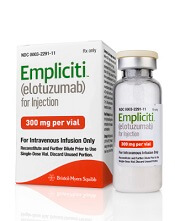
Photo courtesy of
Bristol-Myers Squibb
The US Food and Drug Administration (FDA) has approved elotuzumab (Empliciti) for use in combination with lenalidomide and dexamethasone to treat multiple myeloma (MM) patients who have received 1 to 3 prior therapies.
Elotuzumab is an immunostimulatory antibody that specifically targets signaling lymphocyte activation molecule family member 7 (SLAMF7), a cell-surface glycoprotein that is expressed on myeloma cells independent of cytogenetic abnormalities.
Elotuzumab is the first immunostimulatory antibody approved for MM.
Bristol-Myers Squibb said it expects to begin shipping elotuzumab this week. The drug will be available for injection for intravenous use in 300 mg and 400 mg vials.
Elotuzumab is currently under review by the European Medicines Agency and has been granted accelerated assessment.
The FDA previously granted elotuzumab breakthrough therapy designation, orphan drug designation, and priority review.
Bristol-Myers Squibb and AbbVie are co-developing elotuzumab, with Bristol-Myers Squibb solely responsible for commercial activities. For more details on the drug, see the full prescribing information.
ELOQUENT-2 trial
The FDA’s approval of elotuzumab is primarily based on data from the phase 3 ELOQUENT-2 trial, which were presented at ASCO 2015 and published in NEJM.
The trial included 646 MM patients who had received 1 to 3 prior therapies. Baseline patient demographics and disease characteristics were well balanced between treatment arms.
Patients were randomized 1:1 to receive either elotuzumab at 10 mg/kg in combination with lenalidomide and dexamethasone (len-dex) or len-dex alone in 4-week cycles until disease progression or unacceptable toxicity.
The minimum follow-up for all study subjects was 24 months. The co-primary endpoints were progression-free survival (PFS) and overall response rate.
The overall response rate was 78.5% in the elotuzumab arm and 65.5% in the len-dex arm (P=0.0002).
The median PFS was 19.4 months in the elotuzumab arm and 14.9 months in the len-dex arm (P=0.0004). At 1 year, the PFS was 68% in the elotuzumab arm and 57% in the len-dex arm. At 2 years, the PFS was 41% and 27%, respectively.
Serious adverse events occurred in 65.4% of patients in the elotuzumab arm and 56.5% in the len-dex arm. The most frequent serious adverse events in each arm, respectively, were pneumonia (15.4% vs 11%), pyrexia (6.9% vs 4.7%), respiratory tract infection (3.1% vs 1.3%), anemia (2.8% vs 1.9%), pulmonary embolism (3.1% vs 2.5%), and acute renal failure (2.5% vs 1.9%).
The most common adverse events in the elotuzumab arm and len-dex arm, respectively, were fatigue (61.6% vs 51.7%), diarrhea (46.9% vs 36.0%), pyrexia (37.4% vs 24.6%), constipation (35.5% vs 27.1%), cough (34.3% vs 18.9%), peripheral neuropathy (26.7% vs 20.8%), nasopharyngitis (24.5% vs 19.2%), upper respiratory tract infection (22.6% vs 17.4%), decreased appetite (20.8% vs 12.6%), and pneumonia (20.1% vs 14.2%).
Photo courtesy of
Bristol-Myers Squibb
The US Food and Drug Administration (FDA) has approved elotuzumab (Empliciti) for use in combination with lenalidomide and dexamethasone to treat multiple myeloma (MM) patients who have received 1 to 3 prior therapies.
Elotuzumab is an immunostimulatory antibody that specifically targets signaling lymphocyte activation molecule family member 7 (SLAMF7), a cell-surface glycoprotein that is expressed on myeloma cells independent of cytogenetic abnormalities.
Elotuzumab is the first immunostimulatory antibody approved for MM.
Bristol-Myers Squibb said it expects to begin shipping elotuzumab this week. The drug will be available for injection for intravenous use in 300 mg and 400 mg vials.
Elotuzumab is currently under review by the European Medicines Agency and has been granted accelerated assessment.
The FDA previously granted elotuzumab breakthrough therapy designation, orphan drug designation, and priority review.
Bristol-Myers Squibb and AbbVie are co-developing elotuzumab, with Bristol-Myers Squibb solely responsible for commercial activities. For more details on the drug, see the full prescribing information.
ELOQUENT-2 trial
The FDA’s approval of elotuzumab is primarily based on data from the phase 3 ELOQUENT-2 trial, which were presented at ASCO 2015 and published in NEJM.
The trial included 646 MM patients who had received 1 to 3 prior therapies. Baseline patient demographics and disease characteristics were well balanced between treatment arms.
Patients were randomized 1:1 to receive either elotuzumab at 10 mg/kg in combination with lenalidomide and dexamethasone (len-dex) or len-dex alone in 4-week cycles until disease progression or unacceptable toxicity.
The minimum follow-up for all study subjects was 24 months. The co-primary endpoints were progression-free survival (PFS) and overall response rate.
The overall response rate was 78.5% in the elotuzumab arm and 65.5% in the len-dex arm (P=0.0002).
The median PFS was 19.4 months in the elotuzumab arm and 14.9 months in the len-dex arm (P=0.0004). At 1 year, the PFS was 68% in the elotuzumab arm and 57% in the len-dex arm. At 2 years, the PFS was 41% and 27%, respectively.
Serious adverse events occurred in 65.4% of patients in the elotuzumab arm and 56.5% in the len-dex arm. The most frequent serious adverse events in each arm, respectively, were pneumonia (15.4% vs 11%), pyrexia (6.9% vs 4.7%), respiratory tract infection (3.1% vs 1.3%), anemia (2.8% vs 1.9%), pulmonary embolism (3.1% vs 2.5%), and acute renal failure (2.5% vs 1.9%).
The most common adverse events in the elotuzumab arm and len-dex arm, respectively, were fatigue (61.6% vs 51.7%), diarrhea (46.9% vs 36.0%), pyrexia (37.4% vs 24.6%), constipation (35.5% vs 27.1%), cough (34.3% vs 18.9%), peripheral neuropathy (26.7% vs 20.8%), nasopharyngitis (24.5% vs 19.2%), upper respiratory tract infection (22.6% vs 17.4%), decreased appetite (20.8% vs 12.6%), and pneumonia (20.1% vs 14.2%).
Photo courtesy of
Bristol-Myers Squibb
The US Food and Drug Administration (FDA) has approved elotuzumab (Empliciti) for use in combination with lenalidomide and dexamethasone to treat multiple myeloma (MM) patients who have received 1 to 3 prior therapies.
Elotuzumab is an immunostimulatory antibody that specifically targets signaling lymphocyte activation molecule family member 7 (SLAMF7), a cell-surface glycoprotein that is expressed on myeloma cells independent of cytogenetic abnormalities.
Elotuzumab is the first immunostimulatory antibody approved for MM.
Bristol-Myers Squibb said it expects to begin shipping elotuzumab this week. The drug will be available for injection for intravenous use in 300 mg and 400 mg vials.
Elotuzumab is currently under review by the European Medicines Agency and has been granted accelerated assessment.
The FDA previously granted elotuzumab breakthrough therapy designation, orphan drug designation, and priority review.
Bristol-Myers Squibb and AbbVie are co-developing elotuzumab, with Bristol-Myers Squibb solely responsible for commercial activities. For more details on the drug, see the full prescribing information.
ELOQUENT-2 trial
The FDA’s approval of elotuzumab is primarily based on data from the phase 3 ELOQUENT-2 trial, which were presented at ASCO 2015 and published in NEJM.
The trial included 646 MM patients who had received 1 to 3 prior therapies. Baseline patient demographics and disease characteristics were well balanced between treatment arms.
Patients were randomized 1:1 to receive either elotuzumab at 10 mg/kg in combination with lenalidomide and dexamethasone (len-dex) or len-dex alone in 4-week cycles until disease progression or unacceptable toxicity.
The minimum follow-up for all study subjects was 24 months. The co-primary endpoints were progression-free survival (PFS) and overall response rate.
The overall response rate was 78.5% in the elotuzumab arm and 65.5% in the len-dex arm (P=0.0002).
The median PFS was 19.4 months in the elotuzumab arm and 14.9 months in the len-dex arm (P=0.0004). At 1 year, the PFS was 68% in the elotuzumab arm and 57% in the len-dex arm. At 2 years, the PFS was 41% and 27%, respectively.
Serious adverse events occurred in 65.4% of patients in the elotuzumab arm and 56.5% in the len-dex arm. The most frequent serious adverse events in each arm, respectively, were pneumonia (15.4% vs 11%), pyrexia (6.9% vs 4.7%), respiratory tract infection (3.1% vs 1.3%), anemia (2.8% vs 1.9%), pulmonary embolism (3.1% vs 2.5%), and acute renal failure (2.5% vs 1.9%).
The most common adverse events in the elotuzumab arm and len-dex arm, respectively, were fatigue (61.6% vs 51.7%), diarrhea (46.9% vs 36.0%), pyrexia (37.4% vs 24.6%), constipation (35.5% vs 27.1%), cough (34.3% vs 18.9%), peripheral neuropathy (26.7% vs 20.8%), nasopharyngitis (24.5% vs 19.2%), upper respiratory tract infection (22.6% vs 17.4%), decreased appetite (20.8% vs 12.6%), and pneumonia (20.1% vs 14.2%).
Clinician computer use linked to patient satisfaction

Photo courtesy of NIH
In a small study, patients treated for chronic conditions at safety-net clinics reported lower satisfaction with their care when it involved “high computer use” by clinicians.
Patients were significantly less likely to rate their care as “excellent” if clinicians spent a great deal of time on the computer during visits—silently reviewing data or typing and failing to make consistent eye contact.
Neda Ratanawongsa, MD, of the University of California, San Francisco, and her colleagues conducted this research and described the results in a letter to JAMA Internal Medicine.
The researchers noted that safety-net clinics serve populations with limited health literacy and limited proficiency in English who may experience communication barriers that can contribute to disparities in care and health.
So the team wanted to assess clinician computer use and communication with patients treated for chronic disease in safety-net clinics. The study was conducted over 2 years at an academically affiliated public hospital with a basic electronic health record.
The study included 47 patients who spoke English or Spanish and received primary and subspecialty care. The researchers recorded 71 encounters among 47 patients and 39 clinicians.
Clinician computer use was quantified by the amount of computer data reviewed, typing or clicking the computer mouse, eye contact with patients, and noninteractive pauses.
Compared with patients in clinical encounters with low computer use, patients who had encounters with high computer use were less likely to rate their care as excellent—48% vs 83% (P=0.04).
And clinicians in encounters with high computer use were significantly more likely to engage in more negative rapport building (P<0.01).
The researchers said this study revealed “observable communication differences” according to clinicians’ computer use. They noted that social rapport building can increase patient satisfaction, but concurrent computer use may inhibit authentic engagement.
Photo courtesy of NIH
In a small study, patients treated for chronic conditions at safety-net clinics reported lower satisfaction with their care when it involved “high computer use” by clinicians.
Patients were significantly less likely to rate their care as “excellent” if clinicians spent a great deal of time on the computer during visits—silently reviewing data or typing and failing to make consistent eye contact.
Neda Ratanawongsa, MD, of the University of California, San Francisco, and her colleagues conducted this research and described the results in a letter to JAMA Internal Medicine.
The researchers noted that safety-net clinics serve populations with limited health literacy and limited proficiency in English who may experience communication barriers that can contribute to disparities in care and health.
So the team wanted to assess clinician computer use and communication with patients treated for chronic disease in safety-net clinics. The study was conducted over 2 years at an academically affiliated public hospital with a basic electronic health record.
The study included 47 patients who spoke English or Spanish and received primary and subspecialty care. The researchers recorded 71 encounters among 47 patients and 39 clinicians.
Clinician computer use was quantified by the amount of computer data reviewed, typing or clicking the computer mouse, eye contact with patients, and noninteractive pauses.
Compared with patients in clinical encounters with low computer use, patients who had encounters with high computer use were less likely to rate their care as excellent—48% vs 83% (P=0.04).
And clinicians in encounters with high computer use were significantly more likely to engage in more negative rapport building (P<0.01).
The researchers said this study revealed “observable communication differences” according to clinicians’ computer use. They noted that social rapport building can increase patient satisfaction, but concurrent computer use may inhibit authentic engagement.
Photo courtesy of NIH
In a small study, patients treated for chronic conditions at safety-net clinics reported lower satisfaction with their care when it involved “high computer use” by clinicians.
Patients were significantly less likely to rate their care as “excellent” if clinicians spent a great deal of time on the computer during visits—silently reviewing data or typing and failing to make consistent eye contact.
Neda Ratanawongsa, MD, of the University of California, San Francisco, and her colleagues conducted this research and described the results in a letter to JAMA Internal Medicine.
The researchers noted that safety-net clinics serve populations with limited health literacy and limited proficiency in English who may experience communication barriers that can contribute to disparities in care and health.
So the team wanted to assess clinician computer use and communication with patients treated for chronic disease in safety-net clinics. The study was conducted over 2 years at an academically affiliated public hospital with a basic electronic health record.
The study included 47 patients who spoke English or Spanish and received primary and subspecialty care. The researchers recorded 71 encounters among 47 patients and 39 clinicians.
Clinician computer use was quantified by the amount of computer data reviewed, typing or clicking the computer mouse, eye contact with patients, and noninteractive pauses.
Compared with patients in clinical encounters with low computer use, patients who had encounters with high computer use were less likely to rate their care as excellent—48% vs 83% (P=0.04).
And clinicians in encounters with high computer use were significantly more likely to engage in more negative rapport building (P<0.01).
The researchers said this study revealed “observable communication differences” according to clinicians’ computer use. They noted that social rapport building can increase patient satisfaction, but concurrent computer use may inhibit authentic engagement.
A different approach to AML treatment

Image by Tom Ellenberger
PARP inhibitors could prove useful for treating aggressive acute myeloid leukemia (AML), according to preclinical research published in Nature Medicine.
Experiments showed that AML driven by leukemia-associated transcription factors, including AML1-ETO and PML-RARα, was “extremely sensitive” to PARP inhibition.
Mixed-lineage leukemia (MLL) was initially resistant to treatment with PARP inhibitors, but inhibiting Hoxa9 changed that.
“PARP inhibitors could potentially offer a completely different approach to specifically target certain subtypes of acute myeloid leukemia,” said study author Chi Wai Eric So, PhD, of King’s College London in the UK.
He and his colleagues first tested the PARP inhibitor olaparib on primary mouse hematopoietic cells transformed by the leukemia-associated transcription factors AML1-ETO, PML-RARα, MLL-AF9, and E2A-PBX.
The drug suppressed the colony-forming ability of cells transformed by AML1-ETO or PML-RARα by about 90% but had little impact on MLL-AF9- or E2A-PBX-transformed cells. Olaparib also had minimal effects on normal bone marrow.
The investigators observed similar results in experiments with the PARP inhibitor veliparib.
They then tested PARP inhibitors in patient-derived leukemic cell lines carrying AML1-ETO (Kasumi), mutated PML-RARα that is resistant to standard all-trans retinoic acid treatment (NB4-LR2), or MLL-AF9 (THP1).
Similar to the previous experiments, PARP inhibition reduced the colony-forming ability of Kasumi and NB4-LR2 cells but not THP1 cells.
Next, the investigators transplanted the 3 cell lines into immunocompromised mice and treated the mice with olaparib. The drug delayed disease onset and prolonged survival in both the Kasumi and NB4-LR2 models but had no effect on disease onset or survival in the THP1 model.
Dr So and his colleagues said PARP inhibition was likely effective in AML driven by AML1-ETO and PML-RARα because of the suppressed expression of key homologous recombination-associated genes and the compromised DNA-damage response observed in these malignancies.
The team noted that PARP has proven critical in a variety of DNA repair processes, including as a sensor of single-strand breaks in base-excision repair, as a mediator for restarting stalled replication forks of homologous recombination-mediated double-strand break repair, and as a means of preventing the binding of Ku proteins to DNA ends in non-homologous end-joining pathways.
It therefore follows that MLL-driven AML was resistant to treatment with PARP inhibitors because DNA repair is not suppressed in this malignancy. The Hoxa9 protein activates other DNA damage repair pathways in these leukemia cells, keeping them alive.
So the investigators tested drugs that could (indirectly) inhibit Hoxa9—the GSK3 inhibitors LiCl and Li2CO3—in combination with olaparib. Both in vitro and in vivo, treatment with a GSK3 inhibitor and olaparib proved effective against MLL-driven AML.
“While this approach seems promising from these laboratory studies, it is still very early days,” said Matt Kaiser, PhD, head of research at Bloodwise, a charity that helped fund this study.
“We need to see how real patients respond to these drugs and how effective they are. PARP inhibitors such as olaparib are already being used to treat patients with other cancers and have been shown to be safe. This should speed up the time it takes for this potentially effective new treatment to enter clinical trials.”
Image by Tom Ellenberger
PARP inhibitors could prove useful for treating aggressive acute myeloid leukemia (AML), according to preclinical research published in Nature Medicine.
Experiments showed that AML driven by leukemia-associated transcription factors, including AML1-ETO and PML-RARα, was “extremely sensitive” to PARP inhibition.
Mixed-lineage leukemia (MLL) was initially resistant to treatment with PARP inhibitors, but inhibiting Hoxa9 changed that.
“PARP inhibitors could potentially offer a completely different approach to specifically target certain subtypes of acute myeloid leukemia,” said study author Chi Wai Eric So, PhD, of King’s College London in the UK.
He and his colleagues first tested the PARP inhibitor olaparib on primary mouse hematopoietic cells transformed by the leukemia-associated transcription factors AML1-ETO, PML-RARα, MLL-AF9, and E2A-PBX.
The drug suppressed the colony-forming ability of cells transformed by AML1-ETO or PML-RARα by about 90% but had little impact on MLL-AF9- or E2A-PBX-transformed cells. Olaparib also had minimal effects on normal bone marrow.
The investigators observed similar results in experiments with the PARP inhibitor veliparib.
They then tested PARP inhibitors in patient-derived leukemic cell lines carrying AML1-ETO (Kasumi), mutated PML-RARα that is resistant to standard all-trans retinoic acid treatment (NB4-LR2), or MLL-AF9 (THP1).
Similar to the previous experiments, PARP inhibition reduced the colony-forming ability of Kasumi and NB4-LR2 cells but not THP1 cells.
Next, the investigators transplanted the 3 cell lines into immunocompromised mice and treated the mice with olaparib. The drug delayed disease onset and prolonged survival in both the Kasumi and NB4-LR2 models but had no effect on disease onset or survival in the THP1 model.
Dr So and his colleagues said PARP inhibition was likely effective in AML driven by AML1-ETO and PML-RARα because of the suppressed expression of key homologous recombination-associated genes and the compromised DNA-damage response observed in these malignancies.
The team noted that PARP has proven critical in a variety of DNA repair processes, including as a sensor of single-strand breaks in base-excision repair, as a mediator for restarting stalled replication forks of homologous recombination-mediated double-strand break repair, and as a means of preventing the binding of Ku proteins to DNA ends in non-homologous end-joining pathways.
It therefore follows that MLL-driven AML was resistant to treatment with PARP inhibitors because DNA repair is not suppressed in this malignancy. The Hoxa9 protein activates other DNA damage repair pathways in these leukemia cells, keeping them alive.
So the investigators tested drugs that could (indirectly) inhibit Hoxa9—the GSK3 inhibitors LiCl and Li2CO3—in combination with olaparib. Both in vitro and in vivo, treatment with a GSK3 inhibitor and olaparib proved effective against MLL-driven AML.
“While this approach seems promising from these laboratory studies, it is still very early days,” said Matt Kaiser, PhD, head of research at Bloodwise, a charity that helped fund this study.
“We need to see how real patients respond to these drugs and how effective they are. PARP inhibitors such as olaparib are already being used to treat patients with other cancers and have been shown to be safe. This should speed up the time it takes for this potentially effective new treatment to enter clinical trials.”
Image by Tom Ellenberger
PARP inhibitors could prove useful for treating aggressive acute myeloid leukemia (AML), according to preclinical research published in Nature Medicine.
Experiments showed that AML driven by leukemia-associated transcription factors, including AML1-ETO and PML-RARα, was “extremely sensitive” to PARP inhibition.
Mixed-lineage leukemia (MLL) was initially resistant to treatment with PARP inhibitors, but inhibiting Hoxa9 changed that.
“PARP inhibitors could potentially offer a completely different approach to specifically target certain subtypes of acute myeloid leukemia,” said study author Chi Wai Eric So, PhD, of King’s College London in the UK.
He and his colleagues first tested the PARP inhibitor olaparib on primary mouse hematopoietic cells transformed by the leukemia-associated transcription factors AML1-ETO, PML-RARα, MLL-AF9, and E2A-PBX.
The drug suppressed the colony-forming ability of cells transformed by AML1-ETO or PML-RARα by about 90% but had little impact on MLL-AF9- or E2A-PBX-transformed cells. Olaparib also had minimal effects on normal bone marrow.
The investigators observed similar results in experiments with the PARP inhibitor veliparib.
They then tested PARP inhibitors in patient-derived leukemic cell lines carrying AML1-ETO (Kasumi), mutated PML-RARα that is resistant to standard all-trans retinoic acid treatment (NB4-LR2), or MLL-AF9 (THP1).
Similar to the previous experiments, PARP inhibition reduced the colony-forming ability of Kasumi and NB4-LR2 cells but not THP1 cells.
Next, the investigators transplanted the 3 cell lines into immunocompromised mice and treated the mice with olaparib. The drug delayed disease onset and prolonged survival in both the Kasumi and NB4-LR2 models but had no effect on disease onset or survival in the THP1 model.
Dr So and his colleagues said PARP inhibition was likely effective in AML driven by AML1-ETO and PML-RARα because of the suppressed expression of key homologous recombination-associated genes and the compromised DNA-damage response observed in these malignancies.
The team noted that PARP has proven critical in a variety of DNA repair processes, including as a sensor of single-strand breaks in base-excision repair, as a mediator for restarting stalled replication forks of homologous recombination-mediated double-strand break repair, and as a means of preventing the binding of Ku proteins to DNA ends in non-homologous end-joining pathways.
It therefore follows that MLL-driven AML was resistant to treatment with PARP inhibitors because DNA repair is not suppressed in this malignancy. The Hoxa9 protein activates other DNA damage repair pathways in these leukemia cells, keeping them alive.
So the investigators tested drugs that could (indirectly) inhibit Hoxa9—the GSK3 inhibitors LiCl and Li2CO3—in combination with olaparib. Both in vitro and in vivo, treatment with a GSK3 inhibitor and olaparib proved effective against MLL-driven AML.
“While this approach seems promising from these laboratory studies, it is still very early days,” said Matt Kaiser, PhD, head of research at Bloodwise, a charity that helped fund this study.
“We need to see how real patients respond to these drugs and how effective they are. PARP inhibitors such as olaparib are already being used to treat patients with other cancers and have been shown to be safe. This should speed up the time it takes for this potentially effective new treatment to enter clinical trials.”
EC approves reversal agent for dabigatran

to prevent thrombosis after
knee replacement surgery
© Boehringer Ingelheim
The European Commission (EC) has granted marketing authorization for idarucizumab (Praxbind), a humanized antibody fragment designed to reverse the anticoagulant effects of dabigatran etexilate (Pradaxa) in cases of emergency surgery/urgent procedures or in situations of life-threatening or uncontrolled bleeding.
The EC’s decision applies to the 28 countries of the European Union (EU) as well as Iceland, Lichtenstein, and Norway.
Idarucizumab is the first specific reversal agent for a non-vitamin K antagonist oral anticoagulant to be approved for use in the EU. The drug was approved in the US last month.
The EC’s decision to approve idarucizumab was based on results in healthy volunteers and an interim analysis of the phase 3 RE-VERSE AD trial.
In the study of healthy volunteers, the pharmacokinetic profile of idarucizumab met the requirement for rapid peak exposure and rapid elimination, with no effect on pharmacodynamic parameters. And researchers said the drug was well-tolerated.
In RE-VERSE AD, researchers evaluated idarucizumab in emergency settings. The drug normalized diluted thrombin time and ecarin clotting time in a majority of dabigatran-treated patients with uncontrolled or life-threatening bleeding complications and most patients who required emergency surgery or an invasive procedure.
The researchers said there were no safety concerns related to idarucizumab. However, 23% of patients in this trial experienced serious adverse events, 20% of patients died, and several patients had thrombotic or bleeding events.
Boehringer Ingelheim, the company developing idarucizumab, said it is committed to making the drug available as widely as possible and will launch idarucizumab in European countries as soon as national requirements allow.
Boehringer Ingelheim is also the maker of dabigatran, which is currently approved in the EU for the following indications:
- Prevention of stroke and systemic embolism in patients with non-valvular atrial fibrillation and a risk factor for stroke
- Primary prevention of venous thromboembolic events in patients undergoing elective total hip replacement surgery or total knee replacement surgery
- Treatment of deep vein thrombosis and pulmonary embolism and the prevention of recurrent deep vein thrombosis and pulmonary embolism in adults.
to prevent thrombosis after
knee replacement surgery
© Boehringer Ingelheim
The European Commission (EC) has granted marketing authorization for idarucizumab (Praxbind), a humanized antibody fragment designed to reverse the anticoagulant effects of dabigatran etexilate (Pradaxa) in cases of emergency surgery/urgent procedures or in situations of life-threatening or uncontrolled bleeding.
The EC’s decision applies to the 28 countries of the European Union (EU) as well as Iceland, Lichtenstein, and Norway.
Idarucizumab is the first specific reversal agent for a non-vitamin K antagonist oral anticoagulant to be approved for use in the EU. The drug was approved in the US last month.
The EC’s decision to approve idarucizumab was based on results in healthy volunteers and an interim analysis of the phase 3 RE-VERSE AD trial.
In the study of healthy volunteers, the pharmacokinetic profile of idarucizumab met the requirement for rapid peak exposure and rapid elimination, with no effect on pharmacodynamic parameters. And researchers said the drug was well-tolerated.
In RE-VERSE AD, researchers evaluated idarucizumab in emergency settings. The drug normalized diluted thrombin time and ecarin clotting time in a majority of dabigatran-treated patients with uncontrolled or life-threatening bleeding complications and most patients who required emergency surgery or an invasive procedure.
The researchers said there were no safety concerns related to idarucizumab. However, 23% of patients in this trial experienced serious adverse events, 20% of patients died, and several patients had thrombotic or bleeding events.
Boehringer Ingelheim, the company developing idarucizumab, said it is committed to making the drug available as widely as possible and will launch idarucizumab in European countries as soon as national requirements allow.
Boehringer Ingelheim is also the maker of dabigatran, which is currently approved in the EU for the following indications:
- Prevention of stroke and systemic embolism in patients with non-valvular atrial fibrillation and a risk factor for stroke
- Primary prevention of venous thromboembolic events in patients undergoing elective total hip replacement surgery or total knee replacement surgery
- Treatment of deep vein thrombosis and pulmonary embolism and the prevention of recurrent deep vein thrombosis and pulmonary embolism in adults.
to prevent thrombosis after
knee replacement surgery
© Boehringer Ingelheim
The European Commission (EC) has granted marketing authorization for idarucizumab (Praxbind), a humanized antibody fragment designed to reverse the anticoagulant effects of dabigatran etexilate (Pradaxa) in cases of emergency surgery/urgent procedures or in situations of life-threatening or uncontrolled bleeding.
The EC’s decision applies to the 28 countries of the European Union (EU) as well as Iceland, Lichtenstein, and Norway.
Idarucizumab is the first specific reversal agent for a non-vitamin K antagonist oral anticoagulant to be approved for use in the EU. The drug was approved in the US last month.
The EC’s decision to approve idarucizumab was based on results in healthy volunteers and an interim analysis of the phase 3 RE-VERSE AD trial.
In the study of healthy volunteers, the pharmacokinetic profile of idarucizumab met the requirement for rapid peak exposure and rapid elimination, with no effect on pharmacodynamic parameters. And researchers said the drug was well-tolerated.
In RE-VERSE AD, researchers evaluated idarucizumab in emergency settings. The drug normalized diluted thrombin time and ecarin clotting time in a majority of dabigatran-treated patients with uncontrolled or life-threatening bleeding complications and most patients who required emergency surgery or an invasive procedure.
The researchers said there were no safety concerns related to idarucizumab. However, 23% of patients in this trial experienced serious adverse events, 20% of patients died, and several patients had thrombotic or bleeding events.
Boehringer Ingelheim, the company developing idarucizumab, said it is committed to making the drug available as widely as possible and will launch idarucizumab in European countries as soon as national requirements allow.
Boehringer Ingelheim is also the maker of dabigatran, which is currently approved in the EU for the following indications:
- Prevention of stroke and systemic embolism in patients with non-valvular atrial fibrillation and a risk factor for stroke
- Primary prevention of venous thromboembolic events in patients undergoing elective total hip replacement surgery or total knee replacement surgery
- Treatment of deep vein thrombosis and pulmonary embolism and the prevention of recurrent deep vein thrombosis and pulmonary embolism in adults.
Prognostic test for MM granted CE-IVD mark
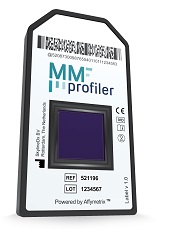
Photo courtesy of SkylineDx
The MMprofiler™, a test used to risk-stratify patients with multiple myeloma (MM), has received the CE-IVD mark.
The CE-IVD mark indicates that an in vitro device complies with the European In Vitro Diagnostics Directive and may be legally commercialized and distributed in the European Union.
The MMprofiler classifies patients into high- or standard-risk groups based on the activity of 92 genes considered to be related to MM.
In a 2012 Leukemia paper, researchers described a gene-expression signature, now known as SKY92, that maps the activity of the 92 genes. MM patients who were defined as high-risk by the SKY92 gene signature (called “the EMC92 gene signature” in the paper) had inferior overall survival.
Subsequent studies, including one recently published in Blood, have shown that patients whose plasma cells are SKY92-positive have, on average, 4-times shorter survival and relapse more quickly after treatment than patients whose cells are SKY92-negative.
The intention of the MMprofiler is to classify MM patients according to the SKY92 gene signature and help healthcare professionals select appropriate treatment on the basis of existing guidelines. Healthcare professionals may also decide to monitor patients differently according to their risk group.
The MMprofiler is a product of SkylineDx. The test is run on the company’s proprietary Profiler™ platform, which makes centralized data analysis possible for labs that have the necessary equipment.
To run the MMprofiler test, labs must install a software module on their Affymetrix DX2 Gene scanning equipment and establish a secured gateway connection with the Profiler platform. Then, the lab can process a patient sample and generate the raw genetic data.
The patient’s bone marrow sample is purified, processed, applied to a biochip, and analyzed in the scanner. This is how the MMprofiler determines the active properties of the various genes in the plasma cells of each patient.
The data is then processed via the software system, which reveals the genetic subtype of the plasma cells. Knowing the SKY92 genetic subtype can help healthcare professionals distinguish between high-risk and standard-risk patients.
For more information on the test, visit www.mmprofiler.com.
Photo courtesy of SkylineDx
The MMprofiler™, a test used to risk-stratify patients with multiple myeloma (MM), has received the CE-IVD mark.
The CE-IVD mark indicates that an in vitro device complies with the European In Vitro Diagnostics Directive and may be legally commercialized and distributed in the European Union.
The MMprofiler classifies patients into high- or standard-risk groups based on the activity of 92 genes considered to be related to MM.
In a 2012 Leukemia paper, researchers described a gene-expression signature, now known as SKY92, that maps the activity of the 92 genes. MM patients who were defined as high-risk by the SKY92 gene signature (called “the EMC92 gene signature” in the paper) had inferior overall survival.
Subsequent studies, including one recently published in Blood, have shown that patients whose plasma cells are SKY92-positive have, on average, 4-times shorter survival and relapse more quickly after treatment than patients whose cells are SKY92-negative.
The intention of the MMprofiler is to classify MM patients according to the SKY92 gene signature and help healthcare professionals select appropriate treatment on the basis of existing guidelines. Healthcare professionals may also decide to monitor patients differently according to their risk group.
The MMprofiler is a product of SkylineDx. The test is run on the company’s proprietary Profiler™ platform, which makes centralized data analysis possible for labs that have the necessary equipment.
To run the MMprofiler test, labs must install a software module on their Affymetrix DX2 Gene scanning equipment and establish a secured gateway connection with the Profiler platform. Then, the lab can process a patient sample and generate the raw genetic data.
The patient’s bone marrow sample is purified, processed, applied to a biochip, and analyzed in the scanner. This is how the MMprofiler determines the active properties of the various genes in the plasma cells of each patient.
The data is then processed via the software system, which reveals the genetic subtype of the plasma cells. Knowing the SKY92 genetic subtype can help healthcare professionals distinguish between high-risk and standard-risk patients.
For more information on the test, visit www.mmprofiler.com.
Photo courtesy of SkylineDx
The MMprofiler™, a test used to risk-stratify patients with multiple myeloma (MM), has received the CE-IVD mark.
The CE-IVD mark indicates that an in vitro device complies with the European In Vitro Diagnostics Directive and may be legally commercialized and distributed in the European Union.
The MMprofiler classifies patients into high- or standard-risk groups based on the activity of 92 genes considered to be related to MM.
In a 2012 Leukemia paper, researchers described a gene-expression signature, now known as SKY92, that maps the activity of the 92 genes. MM patients who were defined as high-risk by the SKY92 gene signature (called “the EMC92 gene signature” in the paper) had inferior overall survival.
Subsequent studies, including one recently published in Blood, have shown that patients whose plasma cells are SKY92-positive have, on average, 4-times shorter survival and relapse more quickly after treatment than patients whose cells are SKY92-negative.
The intention of the MMprofiler is to classify MM patients according to the SKY92 gene signature and help healthcare professionals select appropriate treatment on the basis of existing guidelines. Healthcare professionals may also decide to monitor patients differently according to their risk group.
The MMprofiler is a product of SkylineDx. The test is run on the company’s proprietary Profiler™ platform, which makes centralized data analysis possible for labs that have the necessary equipment.
To run the MMprofiler test, labs must install a software module on their Affymetrix DX2 Gene scanning equipment and establish a secured gateway connection with the Profiler platform. Then, the lab can process a patient sample and generate the raw genetic data.
The patient’s bone marrow sample is purified, processed, applied to a biochip, and analyzed in the scanner. This is how the MMprofiler determines the active properties of the various genes in the plasma cells of each patient.
The data is then processed via the software system, which reveals the genetic subtype of the plasma cells. Knowing the SKY92 genetic subtype can help healthcare professionals distinguish between high-risk and standard-risk patients.
For more information on the test, visit www.mmprofiler.com.
EC grants conditional approval for blinatumomab
and solution for infusion
Photo courtesy of Amgen
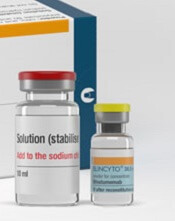
The European Commission (EC) has granted conditional marketing authorization for blinatumomab (Blincyto) to treat adults with Philadelphia chromosome-negative (Ph-) relapsed or refractory B-precursor acute lymphoblastic leukemia (ALL).
This applies to the 28 member countries of the European Union as well as Iceland, Lichtenstein, and Norway.
Conditional marketing authorizations are valid for 1 year, on a renewable basis. The holder is required to complete ongoing studies or conduct new studies with the goal of confirming that a drug’s benefit-risk balance is positive.
Conditional marketing authorization is converted to a full authorization once these commitments have been fulfilled.
The EC granted conditional marketing authorization for blinatumomab based on a pair of phase 2 trials—Study ‘211 and Study ‘206.
Study ‘211
Results of Study ‘211 were presented at EHA 2014. The trial included 189 patients with Ph- relapsed or refractory B-precursor ALL.
The primary endpoint was complete remission or complete remission with partial hematologic recovery (CR/CRh). About 43% of patients achieved this endpoint within 2 cycles of therapy.
According to researchers, the most serious adverse events in this study were infection (31.7%), neurologic events (16.4%), neutropenia/febrile neutropenia (15.3%), cytokine release syndrome (CRS, 0.5%), and tumor lysis syndrome (0.5%).
Study ‘206
Results of Study ‘206 were presented at ASCO 2012. The trial included 36 patients with relapsed or refractory B-precursor ALL.
In this trial, the CR/CRh rate was 69.4% (25/36), with 15 patients achieving a CR (41.7%), and 10 patients achieving CRh (27.8%).
The “medically important” adverse events in this study, according to researchers, were CRS (n=3), central nervous system (CNS) events (3 seizures and 3 cases of encephalopathy), and fungal infection resulting in death (n=1).
However, the researchers found they could prevent CRS with dexamethasone. In addition, the CNS events were reversible, and blinatumomab could be reintroduced in 4 of the 6 patients with CNS events.
About blinatumomab
Blinatumomab is a bispecific T-cell engager (BiTE®) antibody construct that binds to CD19 on the surface of B cells and CD3 on the surface of T cells.
BiTE antibody constructs are intended to help the immune system detect and target malignant cells. The modified antibodies are designed to engage 2 different targets simultaneously, thereby juxtaposing T cells to cancer cells.
BiTE antibody constructs help place the T cells within reach of the targeted cells, with the intent of allowing T cells to inject toxins and trigger apoptosis in the cancer cells.
Blinatumomab was granted orphan drug designation by the European Medicines Agency in 2009 for the treatment of ALL.
The drug was granted breakthrough therapy designation and priority review by the US Food and Drug Administration.
Blinatumomab has conditional approval in the US to treat patients with relapsed or refractory Ph- B-precursor ALL. Continued approval for this indication may be contingent upon verification of clinical benefit in subsequent trials.
Blinatumomab is being developed by Amgen.
and solution for infusion
Photo courtesy of Amgen
The European Commission (EC) has granted conditional marketing authorization for blinatumomab (Blincyto) to treat adults with Philadelphia chromosome-negative (Ph-) relapsed or refractory B-precursor acute lymphoblastic leukemia (ALL).
This applies to the 28 member countries of the European Union as well as Iceland, Lichtenstein, and Norway.
Conditional marketing authorizations are valid for 1 year, on a renewable basis. The holder is required to complete ongoing studies or conduct new studies with the goal of confirming that a drug’s benefit-risk balance is positive.
Conditional marketing authorization is converted to a full authorization once these commitments have been fulfilled.
The EC granted conditional marketing authorization for blinatumomab based on a pair of phase 2 trials—Study ‘211 and Study ‘206.
Study ‘211
Results of Study ‘211 were presented at EHA 2014. The trial included 189 patients with Ph- relapsed or refractory B-precursor ALL.
The primary endpoint was complete remission or complete remission with partial hematologic recovery (CR/CRh). About 43% of patients achieved this endpoint within 2 cycles of therapy.
According to researchers, the most serious adverse events in this study were infection (31.7%), neurologic events (16.4%), neutropenia/febrile neutropenia (15.3%), cytokine release syndrome (CRS, 0.5%), and tumor lysis syndrome (0.5%).
Study ‘206
Results of Study ‘206 were presented at ASCO 2012. The trial included 36 patients with relapsed or refractory B-precursor ALL.
In this trial, the CR/CRh rate was 69.4% (25/36), with 15 patients achieving a CR (41.7%), and 10 patients achieving CRh (27.8%).
The “medically important” adverse events in this study, according to researchers, were CRS (n=3), central nervous system (CNS) events (3 seizures and 3 cases of encephalopathy), and fungal infection resulting in death (n=1).
However, the researchers found they could prevent CRS with dexamethasone. In addition, the CNS events were reversible, and blinatumomab could be reintroduced in 4 of the 6 patients with CNS events.
About blinatumomab
Blinatumomab is a bispecific T-cell engager (BiTE®) antibody construct that binds to CD19 on the surface of B cells and CD3 on the surface of T cells.
BiTE antibody constructs are intended to help the immune system detect and target malignant cells. The modified antibodies are designed to engage 2 different targets simultaneously, thereby juxtaposing T cells to cancer cells.
BiTE antibody constructs help place the T cells within reach of the targeted cells, with the intent of allowing T cells to inject toxins and trigger apoptosis in the cancer cells.
Blinatumomab was granted orphan drug designation by the European Medicines Agency in 2009 for the treatment of ALL.
The drug was granted breakthrough therapy designation and priority review by the US Food and Drug Administration.
Blinatumomab has conditional approval in the US to treat patients with relapsed or refractory Ph- B-precursor ALL. Continued approval for this indication may be contingent upon verification of clinical benefit in subsequent trials.
Blinatumomab is being developed by Amgen.
and solution for infusion
Photo courtesy of Amgen
The European Commission (EC) has granted conditional marketing authorization for blinatumomab (Blincyto) to treat adults with Philadelphia chromosome-negative (Ph-) relapsed or refractory B-precursor acute lymphoblastic leukemia (ALL).
This applies to the 28 member countries of the European Union as well as Iceland, Lichtenstein, and Norway.
Conditional marketing authorizations are valid for 1 year, on a renewable basis. The holder is required to complete ongoing studies or conduct new studies with the goal of confirming that a drug’s benefit-risk balance is positive.
Conditional marketing authorization is converted to a full authorization once these commitments have been fulfilled.
The EC granted conditional marketing authorization for blinatumomab based on a pair of phase 2 trials—Study ‘211 and Study ‘206.
Study ‘211
Results of Study ‘211 were presented at EHA 2014. The trial included 189 patients with Ph- relapsed or refractory B-precursor ALL.
The primary endpoint was complete remission or complete remission with partial hematologic recovery (CR/CRh). About 43% of patients achieved this endpoint within 2 cycles of therapy.
According to researchers, the most serious adverse events in this study were infection (31.7%), neurologic events (16.4%), neutropenia/febrile neutropenia (15.3%), cytokine release syndrome (CRS, 0.5%), and tumor lysis syndrome (0.5%).
Study ‘206
Results of Study ‘206 were presented at ASCO 2012. The trial included 36 patients with relapsed or refractory B-precursor ALL.
In this trial, the CR/CRh rate was 69.4% (25/36), with 15 patients achieving a CR (41.7%), and 10 patients achieving CRh (27.8%).
The “medically important” adverse events in this study, according to researchers, were CRS (n=3), central nervous system (CNS) events (3 seizures and 3 cases of encephalopathy), and fungal infection resulting in death (n=1).
However, the researchers found they could prevent CRS with dexamethasone. In addition, the CNS events were reversible, and blinatumomab could be reintroduced in 4 of the 6 patients with CNS events.
About blinatumomab
Blinatumomab is a bispecific T-cell engager (BiTE®) antibody construct that binds to CD19 on the surface of B cells and CD3 on the surface of T cells.
BiTE antibody constructs are intended to help the immune system detect and target malignant cells. The modified antibodies are designed to engage 2 different targets simultaneously, thereby juxtaposing T cells to cancer cells.
BiTE antibody constructs help place the T cells within reach of the targeted cells, with the intent of allowing T cells to inject toxins and trigger apoptosis in the cancer cells.
Blinatumomab was granted orphan drug designation by the European Medicines Agency in 2009 for the treatment of ALL.
The drug was granted breakthrough therapy designation and priority review by the US Food and Drug Administration.
Blinatumomab has conditional approval in the US to treat patients with relapsed or refractory Ph- B-precursor ALL. Continued approval for this indication may be contingent upon verification of clinical benefit in subsequent trials.
Blinatumomab is being developed by Amgen.
EC approves drug for hemophilia A

The European Commission (EC) has approved the recombinant factor VIII Fc fusion protein efmoroctocog alfa (Elocta) to treat patients with hemophilia A in the European Union (EU) as well as Iceland, Liechtenstein, and Norway.
Efmoroctocog alfa is indicated for both on-demand and prophylactic treatment of hemophilia A in patients of all ages.
Research has shown that efmoroctocog alfa has an extended half-life compared to recombinant factor VIII.
Efmoroctocog alfa will be the first hemophilia A treatment in the EU to offer prolonged protection against bleeding episodes with prophylactic injections every 3 to 5 days.
The product is expected to launch in initial EU countries in early 2016.
The EC’s approval of efmoroctocog alfa was based on data from 2 phase 3 studies: A-LONG and Kids A-LONG.
A-LONG
The A-LONG study included 165 previously treated males 12 years of age and older with severe hemophilia A. Researchers evaluated individualized and weekly prophylaxis to reduce or prevent bleeding episodes and on-demand dosing to treat bleeding episodes.
Prophylaxis with efmoroctocog alfa resulted in low annualized bleeding rates, and a majority of bleeding episodes were controlled with a single injection of efmoroctocog alfa.
None of the patients developed neutralizing antibodies, efmoroctocog alfa was considered well-tolerated, and the product had a prolonged half-life when compared with recombinant factor VIII.
Kids A-LONG
The Kids A-LONG study included 71 boys (younger than 12) with severe hemophilia A who had at least 50 prior exposure days to factor VIII therapies.
The children saw their median annualized bleeding rate decrease with efmoroctocog alfa, and close to half of the children did not have any bleeding episodes while they were receiving efmoroctocog alfa.
None of the patients developed inhibitors, and researchers said adverse events were typical of a pediatric hemophilia population.
ASPIRE
Participants in both the A-LONG and Kids A-LONG trials were able to enroll in ASPIRE, a phase 3 extension study evaluating the long-term safety and efficacy of efmoroctocog alfa.
Interim results of ASPIRE suggested that extended treatment with efmoroctocog alfa was largely safe and effective.
About efmoroctocog alfa
Efmoroctocog alfa was developed by fusing B-domain deleted factor VIII to the Fc portion of immunoglobulin G subclass 1. It is believed that this enables efmoroctocog alfa to utilize a naturally occurring pathway to prolong the time the therapy remains in the body.
Sobi and Biogen are collaborators in the development and commercialization of efmoroctocog alfa for hemophilia A.
Last year, Sobi exercised its opt-in right to assumeefmoroctocog alfa’s final development and commercialization in pre-specified territories, which includes Europe, North Africa, Russia, and certain countries in the Middle East.
Biogen leads development and manufacturing of the product and holds commercialization rights in North America and all other regions in the world outside of the Sobi territories.
Elocta is the trade name for efmoroctocog alfa in Sobi’s territory. The product is approved under the name Eloctate (Antihemophilic Factor [Recombinant], Fc Fusion Protein) in the US, Canada, Australia, New Zealand, and Japan.
The European Commission (EC) has approved the recombinant factor VIII Fc fusion protein efmoroctocog alfa (Elocta) to treat patients with hemophilia A in the European Union (EU) as well as Iceland, Liechtenstein, and Norway.
Efmoroctocog alfa is indicated for both on-demand and prophylactic treatment of hemophilia A in patients of all ages.
Research has shown that efmoroctocog alfa has an extended half-life compared to recombinant factor VIII.
Efmoroctocog alfa will be the first hemophilia A treatment in the EU to offer prolonged protection against bleeding episodes with prophylactic injections every 3 to 5 days.
The product is expected to launch in initial EU countries in early 2016.
The EC’s approval of efmoroctocog alfa was based on data from 2 phase 3 studies: A-LONG and Kids A-LONG.
A-LONG
The A-LONG study included 165 previously treated males 12 years of age and older with severe hemophilia A. Researchers evaluated individualized and weekly prophylaxis to reduce or prevent bleeding episodes and on-demand dosing to treat bleeding episodes.
Prophylaxis with efmoroctocog alfa resulted in low annualized bleeding rates, and a majority of bleeding episodes were controlled with a single injection of efmoroctocog alfa.
None of the patients developed neutralizing antibodies, efmoroctocog alfa was considered well-tolerated, and the product had a prolonged half-life when compared with recombinant factor VIII.
Kids A-LONG
The Kids A-LONG study included 71 boys (younger than 12) with severe hemophilia A who had at least 50 prior exposure days to factor VIII therapies.
The children saw their median annualized bleeding rate decrease with efmoroctocog alfa, and close to half of the children did not have any bleeding episodes while they were receiving efmoroctocog alfa.
None of the patients developed inhibitors, and researchers said adverse events were typical of a pediatric hemophilia population.
ASPIRE
Participants in both the A-LONG and Kids A-LONG trials were able to enroll in ASPIRE, a phase 3 extension study evaluating the long-term safety and efficacy of efmoroctocog alfa.
Interim results of ASPIRE suggested that extended treatment with efmoroctocog alfa was largely safe and effective.
About efmoroctocog alfa
Efmoroctocog alfa was developed by fusing B-domain deleted factor VIII to the Fc portion of immunoglobulin G subclass 1. It is believed that this enables efmoroctocog alfa to utilize a naturally occurring pathway to prolong the time the therapy remains in the body.
Sobi and Biogen are collaborators in the development and commercialization of efmoroctocog alfa for hemophilia A.
Last year, Sobi exercised its opt-in right to assumeefmoroctocog alfa’s final development and commercialization in pre-specified territories, which includes Europe, North Africa, Russia, and certain countries in the Middle East.
Biogen leads development and manufacturing of the product and holds commercialization rights in North America and all other regions in the world outside of the Sobi territories.
Elocta is the trade name for efmoroctocog alfa in Sobi’s territory. The product is approved under the name Eloctate (Antihemophilic Factor [Recombinant], Fc Fusion Protein) in the US, Canada, Australia, New Zealand, and Japan.
The European Commission (EC) has approved the recombinant factor VIII Fc fusion protein efmoroctocog alfa (Elocta) to treat patients with hemophilia A in the European Union (EU) as well as Iceland, Liechtenstein, and Norway.
Efmoroctocog alfa is indicated for both on-demand and prophylactic treatment of hemophilia A in patients of all ages.
Research has shown that efmoroctocog alfa has an extended half-life compared to recombinant factor VIII.
Efmoroctocog alfa will be the first hemophilia A treatment in the EU to offer prolonged protection against bleeding episodes with prophylactic injections every 3 to 5 days.
The product is expected to launch in initial EU countries in early 2016.
The EC’s approval of efmoroctocog alfa was based on data from 2 phase 3 studies: A-LONG and Kids A-LONG.
A-LONG
The A-LONG study included 165 previously treated males 12 years of age and older with severe hemophilia A. Researchers evaluated individualized and weekly prophylaxis to reduce or prevent bleeding episodes and on-demand dosing to treat bleeding episodes.
Prophylaxis with efmoroctocog alfa resulted in low annualized bleeding rates, and a majority of bleeding episodes were controlled with a single injection of efmoroctocog alfa.
None of the patients developed neutralizing antibodies, efmoroctocog alfa was considered well-tolerated, and the product had a prolonged half-life when compared with recombinant factor VIII.
Kids A-LONG
The Kids A-LONG study included 71 boys (younger than 12) with severe hemophilia A who had at least 50 prior exposure days to factor VIII therapies.
The children saw their median annualized bleeding rate decrease with efmoroctocog alfa, and close to half of the children did not have any bleeding episodes while they were receiving efmoroctocog alfa.
None of the patients developed inhibitors, and researchers said adverse events were typical of a pediatric hemophilia population.
ASPIRE
Participants in both the A-LONG and Kids A-LONG trials were able to enroll in ASPIRE, a phase 3 extension study evaluating the long-term safety and efficacy of efmoroctocog alfa.
Interim results of ASPIRE suggested that extended treatment with efmoroctocog alfa was largely safe and effective.
About efmoroctocog alfa
Efmoroctocog alfa was developed by fusing B-domain deleted factor VIII to the Fc portion of immunoglobulin G subclass 1. It is believed that this enables efmoroctocog alfa to utilize a naturally occurring pathway to prolong the time the therapy remains in the body.
Sobi and Biogen are collaborators in the development and commercialization of efmoroctocog alfa for hemophilia A.
Last year, Sobi exercised its opt-in right to assumeefmoroctocog alfa’s final development and commercialization in pre-specified territories, which includes Europe, North Africa, Russia, and certain countries in the Middle East.
Biogen leads development and manufacturing of the product and holds commercialization rights in North America and all other regions in the world outside of the Sobi territories.
Elocta is the trade name for efmoroctocog alfa in Sobi’s territory. The product is approved under the name Eloctate (Antihemophilic Factor [Recombinant], Fc Fusion Protein) in the US, Canada, Australia, New Zealand, and Japan.
Trial of ofatumumab in FL stopped early

Photo courtesy of GSK
Genmab A/S said it is stopping a phase 3 trial of ofatumumab in follicular lymphoma (FL) after a planned interim analysis suggested the drug was unlikely to demonstrate superiority over rituximab.
The trial was designed to compare these 2 drugs as single-agent treatment in FL patients who had relapsed at least 6 months after completing treatment with a rituximab-containing regimen.
An interim analysis performed by an independent data monitoring committee indicated that, if the trial was to be completed as planned, it was unlikely that ofatumumab would improve progression-free survival (PFS) when compared to rituximab.
Genmab noted that this analysis did not reveal any new safety signals associated with ofatumumab, and no other ongoing trials of ofatumumab will be affected by the results of this analysis.
“The outcome of the interim analysis in this study is disappointing, as we had hoped to see superiority of ofatumumab,” said Jan van de Winkel, PhD, chief executive officer of Genmab. “The data from the study will now be prepared so that it can be presented at a future scientific conference.”
The goal of the study was to randomize up to 516 patients to receive ofatumumab (at 1000 mg) or rituximab (at 375 mg/m2) by intravenous infusion for 4 weekly doses.
Patients who had stable or responsive disease would then receive single infusions of ofatumumab or rituximab every 2 months for 4 additional doses—a total of 8 doses over 9 months. The primary endpoint of the study was PFS.
Past disappointments
This is not the first time ofatumumab has fallen short of expectations. Last year, the drug failed to meet the primary endpoint in two phase 3 trials.
In the OMB114242 trial, ofatumumab failed to improve PFS when compared to physicians’ choice in patients with bulky, fludarabine-refractory chronic lymphocytic leukemia (CLL).
In the ORCHARRD trial, ofatumumab plus chemotherapy failed to improve PFS when compared to rituximab plus chemotherapy in patients with relapsed or refractory diffuse large B-cell lymphoma.
About ofatumumab
Ofatumumab is a human monoclonal antibody designed to target the CD20 molecule found on the surface of CLL cells and normal B lymphocytes.
In the US, ofatumumab is approved for use in combination with chlorambucil to treat previously untreated patients with CLL for whom fludarabine-based therapy is considered inappropriate.
In the European Union (EU), ofatumumab is approved for use in combination with chlorambucil or bendamustine to treat patients with CLL who have not received prior therapy and who are not eligible for fludarabine-based therapy.
In more than 50 countries worldwide, including the US and EU member countries, ofatumumab is approved as monotherapy for the treatment of patients with CLL who are refractory after prior treatment with fludarabine and alemtuzumab.
Ofatumumab is marketed as Arzerra under a collaboration agreement between Genmab and Novartis (formerly GSK).
Photo courtesy of GSK
Genmab A/S said it is stopping a phase 3 trial of ofatumumab in follicular lymphoma (FL) after a planned interim analysis suggested the drug was unlikely to demonstrate superiority over rituximab.
The trial was designed to compare these 2 drugs as single-agent treatment in FL patients who had relapsed at least 6 months after completing treatment with a rituximab-containing regimen.
An interim analysis performed by an independent data monitoring committee indicated that, if the trial was to be completed as planned, it was unlikely that ofatumumab would improve progression-free survival (PFS) when compared to rituximab.
Genmab noted that this analysis did not reveal any new safety signals associated with ofatumumab, and no other ongoing trials of ofatumumab will be affected by the results of this analysis.
“The outcome of the interim analysis in this study is disappointing, as we had hoped to see superiority of ofatumumab,” said Jan van de Winkel, PhD, chief executive officer of Genmab. “The data from the study will now be prepared so that it can be presented at a future scientific conference.”
The goal of the study was to randomize up to 516 patients to receive ofatumumab (at 1000 mg) or rituximab (at 375 mg/m2) by intravenous infusion for 4 weekly doses.
Patients who had stable or responsive disease would then receive single infusions of ofatumumab or rituximab every 2 months for 4 additional doses—a total of 8 doses over 9 months. The primary endpoint of the study was PFS.
Past disappointments
This is not the first time ofatumumab has fallen short of expectations. Last year, the drug failed to meet the primary endpoint in two phase 3 trials.
In the OMB114242 trial, ofatumumab failed to improve PFS when compared to physicians’ choice in patients with bulky, fludarabine-refractory chronic lymphocytic leukemia (CLL).
In the ORCHARRD trial, ofatumumab plus chemotherapy failed to improve PFS when compared to rituximab plus chemotherapy in patients with relapsed or refractory diffuse large B-cell lymphoma.
About ofatumumab
Ofatumumab is a human monoclonal antibody designed to target the CD20 molecule found on the surface of CLL cells and normal B lymphocytes.
In the US, ofatumumab is approved for use in combination with chlorambucil to treat previously untreated patients with CLL for whom fludarabine-based therapy is considered inappropriate.
In the European Union (EU), ofatumumab is approved for use in combination with chlorambucil or bendamustine to treat patients with CLL who have not received prior therapy and who are not eligible for fludarabine-based therapy.
In more than 50 countries worldwide, including the US and EU member countries, ofatumumab is approved as monotherapy for the treatment of patients with CLL who are refractory after prior treatment with fludarabine and alemtuzumab.
Ofatumumab is marketed as Arzerra under a collaboration agreement between Genmab and Novartis (formerly GSK).
Photo courtesy of GSK
Genmab A/S said it is stopping a phase 3 trial of ofatumumab in follicular lymphoma (FL) after a planned interim analysis suggested the drug was unlikely to demonstrate superiority over rituximab.
The trial was designed to compare these 2 drugs as single-agent treatment in FL patients who had relapsed at least 6 months after completing treatment with a rituximab-containing regimen.
An interim analysis performed by an independent data monitoring committee indicated that, if the trial was to be completed as planned, it was unlikely that ofatumumab would improve progression-free survival (PFS) when compared to rituximab.
Genmab noted that this analysis did not reveal any new safety signals associated with ofatumumab, and no other ongoing trials of ofatumumab will be affected by the results of this analysis.
“The outcome of the interim analysis in this study is disappointing, as we had hoped to see superiority of ofatumumab,” said Jan van de Winkel, PhD, chief executive officer of Genmab. “The data from the study will now be prepared so that it can be presented at a future scientific conference.”
The goal of the study was to randomize up to 516 patients to receive ofatumumab (at 1000 mg) or rituximab (at 375 mg/m2) by intravenous infusion for 4 weekly doses.
Patients who had stable or responsive disease would then receive single infusions of ofatumumab or rituximab every 2 months for 4 additional doses—a total of 8 doses over 9 months. The primary endpoint of the study was PFS.
Past disappointments
This is not the first time ofatumumab has fallen short of expectations. Last year, the drug failed to meet the primary endpoint in two phase 3 trials.
In the OMB114242 trial, ofatumumab failed to improve PFS when compared to physicians’ choice in patients with bulky, fludarabine-refractory chronic lymphocytic leukemia (CLL).
In the ORCHARRD trial, ofatumumab plus chemotherapy failed to improve PFS when compared to rituximab plus chemotherapy in patients with relapsed or refractory diffuse large B-cell lymphoma.
About ofatumumab
Ofatumumab is a human monoclonal antibody designed to target the CD20 molecule found on the surface of CLL cells and normal B lymphocytes.
In the US, ofatumumab is approved for use in combination with chlorambucil to treat previously untreated patients with CLL for whom fludarabine-based therapy is considered inappropriate.
In the European Union (EU), ofatumumab is approved for use in combination with chlorambucil or bendamustine to treat patients with CLL who have not received prior therapy and who are not eligible for fludarabine-based therapy.
In more than 50 countries worldwide, including the US and EU member countries, ofatumumab is approved as monotherapy for the treatment of patients with CLL who are refractory after prior treatment with fludarabine and alemtuzumab.
Ofatumumab is marketed as Arzerra under a collaboration agreement between Genmab and Novartis (formerly GSK).