User login
Operative Time Plays a Big Role in Hysterectomy Cost
LAS VEGAS – Vaginal hysterectomy was the least costly approach in one tertiary hospital’s experience with over a thousand cases.

Operative time was the greatest contributor to overall cost among 1,067 consecutive hysterectomy procedures performed in 2009 at Brigham and Women’s Hospital, an urban academic tertiary care center. The analysis examined operative and overall costs for abdominal, laparoscopic, vaginal, and robotic procedures, including about 150 performed for ovarian cancer, said Dr. Kelly N. Wright, a fellow at the hospital and Harvard Medical School, both in Boston.
Of the 1,067 total hysterectomies, 36% were abdominal, 13% vaginal, 45% laparoscopic, and 6% robotic. Operating time was the longest for robotic (267 minutes) and shortest for vaginal hysterectomy (155 minutes). Intraoperative complications were most common for abdominal (8.8%) and least common with robotic hysterectomy (just 0.4%). Complication rates did not vary significantly among the three minimally invasive methods, Dr. Wright said at the annual meeting of the AAGL.
Operative time was strongly correlated with operative cost, with robotic hysterectomy being the most expensive ($46,065) and vaginal the least ($26,619). In all, operative time accounted for 96% of the variation in operative costs, and charges based on operative time were up to 190-fold greater than were operative charges from equipment costs.
Other patient characteristics that significantly influenced operative time were body mass index, adhesions, and cancer indications, whereas uterine weight and age did not influence operative time.
A "cost minimization analysis" was done using cost to society, which included inpatient stay, lost wages, and time to recovery, in addition to the operative costs. This time, abdominal hysterectomy was the most costly ($58,959) because of the significantly greater length of stay (3.6 days vs. 1.2-1.3 days for the other methods). Vaginal hysterectomy was again the least expensive at $34,933.
But the cost of laparoscopic hysterectomy approached that of vaginal when it was performed in less than 140 minutes, and laparoscopic hysterectomy always was less costly than either abdominal or robotic, Dr. Wright pointed out.
Conversion of all the abdominal hysterectomies done at Brigham and Women’s Hospital in 2009 to laparoscopic would have saved over $7.8 billion, and conversion to robotic, over $1.9 billion. On the other hand, if all the laparoscopic procedures had been done robotically, $934 million would have been lost.
"There is room for savings in the health care system when we appropriately select the correct method of hysterectomy," she concluded.
Dr. Wright said that she had no financial disclosures.
LAS VEGAS – Vaginal hysterectomy was the least costly approach in one tertiary hospital’s experience with over a thousand cases.
Operative time was the greatest contributor to overall cost among 1,067 consecutive hysterectomy procedures performed in 2009 at Brigham and Women’s Hospital, an urban academic tertiary care center. The analysis examined operative and overall costs for abdominal, laparoscopic, vaginal, and robotic procedures, including about 150 performed for ovarian cancer, said Dr. Kelly N. Wright, a fellow at the hospital and Harvard Medical School, both in Boston.
Of the 1,067 total hysterectomies, 36% were abdominal, 13% vaginal, 45% laparoscopic, and 6% robotic. Operating time was the longest for robotic (267 minutes) and shortest for vaginal hysterectomy (155 minutes). Intraoperative complications were most common for abdominal (8.8%) and least common with robotic hysterectomy (just 0.4%). Complication rates did not vary significantly among the three minimally invasive methods, Dr. Wright said at the annual meeting of the AAGL.
Operative time was strongly correlated with operative cost, with robotic hysterectomy being the most expensive ($46,065) and vaginal the least ($26,619). In all, operative time accounted for 96% of the variation in operative costs, and charges based on operative time were up to 190-fold greater than were operative charges from equipment costs.
Other patient characteristics that significantly influenced operative time were body mass index, adhesions, and cancer indications, whereas uterine weight and age did not influence operative time.
A "cost minimization analysis" was done using cost to society, which included inpatient stay, lost wages, and time to recovery, in addition to the operative costs. This time, abdominal hysterectomy was the most costly ($58,959) because of the significantly greater length of stay (3.6 days vs. 1.2-1.3 days for the other methods). Vaginal hysterectomy was again the least expensive at $34,933.
But the cost of laparoscopic hysterectomy approached that of vaginal when it was performed in less than 140 minutes, and laparoscopic hysterectomy always was less costly than either abdominal or robotic, Dr. Wright pointed out.
Conversion of all the abdominal hysterectomies done at Brigham and Women’s Hospital in 2009 to laparoscopic would have saved over $7.8 billion, and conversion to robotic, over $1.9 billion. On the other hand, if all the laparoscopic procedures had been done robotically, $934 million would have been lost.
"There is room for savings in the health care system when we appropriately select the correct method of hysterectomy," she concluded.
Dr. Wright said that she had no financial disclosures.
LAS VEGAS – Vaginal hysterectomy was the least costly approach in one tertiary hospital’s experience with over a thousand cases.
Operative time was the greatest contributor to overall cost among 1,067 consecutive hysterectomy procedures performed in 2009 at Brigham and Women’s Hospital, an urban academic tertiary care center. The analysis examined operative and overall costs for abdominal, laparoscopic, vaginal, and robotic procedures, including about 150 performed for ovarian cancer, said Dr. Kelly N. Wright, a fellow at the hospital and Harvard Medical School, both in Boston.
Of the 1,067 total hysterectomies, 36% were abdominal, 13% vaginal, 45% laparoscopic, and 6% robotic. Operating time was the longest for robotic (267 minutes) and shortest for vaginal hysterectomy (155 minutes). Intraoperative complications were most common for abdominal (8.8%) and least common with robotic hysterectomy (just 0.4%). Complication rates did not vary significantly among the three minimally invasive methods, Dr. Wright said at the annual meeting of the AAGL.
Operative time was strongly correlated with operative cost, with robotic hysterectomy being the most expensive ($46,065) and vaginal the least ($26,619). In all, operative time accounted for 96% of the variation in operative costs, and charges based on operative time were up to 190-fold greater than were operative charges from equipment costs.
Other patient characteristics that significantly influenced operative time were body mass index, adhesions, and cancer indications, whereas uterine weight and age did not influence operative time.
A "cost minimization analysis" was done using cost to society, which included inpatient stay, lost wages, and time to recovery, in addition to the operative costs. This time, abdominal hysterectomy was the most costly ($58,959) because of the significantly greater length of stay (3.6 days vs. 1.2-1.3 days for the other methods). Vaginal hysterectomy was again the least expensive at $34,933.
But the cost of laparoscopic hysterectomy approached that of vaginal when it was performed in less than 140 minutes, and laparoscopic hysterectomy always was less costly than either abdominal or robotic, Dr. Wright pointed out.
Conversion of all the abdominal hysterectomies done at Brigham and Women’s Hospital in 2009 to laparoscopic would have saved over $7.8 billion, and conversion to robotic, over $1.9 billion. On the other hand, if all the laparoscopic procedures had been done robotically, $934 million would have been lost.
"There is room for savings in the health care system when we appropriately select the correct method of hysterectomy," she concluded.
Dr. Wright said that she had no financial disclosures.
Major Finding: Operative time was strongly correlated with operative cost, with robotic hysterectomy being the most expensive at $46,065 and vaginal the least expensive at $26,619.
Data Source: A retrospective cohort analysis of 1,067 consecutive hysterectomies performed at a single institution
Disclosures: Dr. Wright said she had no financial disclosures.
Robotic Hysterectomy Results Comparable to Other Approaches
LAS VEGAS – Robotic-assisted total laparoscopic hysterectomy produced comparable outcomes to other minimally invasive methods of hysterectomy without increasing the risk for conversion or complications in a retrospective chart analysis of nearly 300 women.

The data suggested that robotic hysterectomy (RH) may even be associated with a slightly lower risk for blood loss and minor complications, and may be particularly useful in patients with large uterine size or a high body mass index. "Thus, the robot provides an additional tool, allowing a minimally invasive approach to hysterectomies in cases when a surgeon may be tempted to resort to an abdominal approach," said Dr. Mona E. Orady of the Henry Ford Health System, Detroit.
The study population included 297 women who underwent any form of minimally invasive hysterectomy between January 2006 and May 2010 at one of two Henry Ford campuses. Emergent and supracervical hysterectomies were excluded, as were hysterectomies performed for malignancy or concomitantly with urogynecologic procedures.
In all, 135 patients underwent RH procedures and 162 had nonrobotic minimally invasive procedures, including total laparoscopic hysterectomy (TLH), vaginal hysterectomy (VH), or laparoscopic-assisted vaginal hysterectomy (LAVH). The two groups did not differ in age (mean, 45 years), and about two-thirds of each group were black. Body mass index was comparable in the two groups, with fewer than 25% of all patients being at or below normal weight.
However, patients in the robotic group did have significantly larger uteri (mean, 262 g), compared with 197 g for the nonrobotic group, Dr. Orady reported at the annual meeting of the AAGL.
Procedure duration was significantly increased with RH, by a median of 25 minutes longer than the other minimally invasive procedures combined. However, the difference in duration between RH and conventional TLH did not differ significantly (169 vs. 194 minutes). The main difference was in comparison with VH, which had a median of just 98.5 minutes.
Estimated blood loss was significantly less for RH (median, just 50 mL), compared with all of the nonrobotic hysterectomy procedures (150 mL for both TLH and VH; 250 mL for LAVH). This coincided with drops in hemoglobin, "thus confirming that the findings are real and not just perceived," she noted.
Overall length of stay was a median of 1 day for the robotic group and all other minimally invasive groups except LAVH, which had a median stay of 2 days.
Major complication rates (defined as any visceral injury or complication that caused increased hospital stay, readmission, or reoperation) were nearly the same between RH and the other minimally invasive procedures at 11.1% and 10.5%, respectively. However, there were significantly fewer minor complications with RH, compared with the other procedures (8.9% vs. 21.6%), and those consisted primarily of vaginal cuff granulation, cellulitis, or bleeding.
Interestingly, vaginal cuff issues are often attributed to robotic procedures in the literature, Dr. Orady commented.
All attempted robotic TLH procedures were completed, even among obese patients and those with very large uteri. In contrast, three conversions to abdominal procedures occurred with the other minimally invasive procedures: One was secondary to a hemorrhage in a patient with a 780-g uterus, another resulted from an inability to gain intraperitoneal access and visualization in a patient with a BMI of 53 kg/m2, and a third involved an inability to remove a 280-g uterus vaginally.
"The data suggest that the robotic approach may allow surgeons to overcome conversions associated with obesity or extremely large uteri, but further data are required," Dr. Orady concluded.
Dr. Orady stated that she had no financial disclosures.
LAS VEGAS – Robotic-assisted total laparoscopic hysterectomy produced comparable outcomes to other minimally invasive methods of hysterectomy without increasing the risk for conversion or complications in a retrospective chart analysis of nearly 300 women.
The data suggested that robotic hysterectomy (RH) may even be associated with a slightly lower risk for blood loss and minor complications, and may be particularly useful in patients with large uterine size or a high body mass index. "Thus, the robot provides an additional tool, allowing a minimally invasive approach to hysterectomies in cases when a surgeon may be tempted to resort to an abdominal approach," said Dr. Mona E. Orady of the Henry Ford Health System, Detroit.
The study population included 297 women who underwent any form of minimally invasive hysterectomy between January 2006 and May 2010 at one of two Henry Ford campuses. Emergent and supracervical hysterectomies were excluded, as were hysterectomies performed for malignancy or concomitantly with urogynecologic procedures.
In all, 135 patients underwent RH procedures and 162 had nonrobotic minimally invasive procedures, including total laparoscopic hysterectomy (TLH), vaginal hysterectomy (VH), or laparoscopic-assisted vaginal hysterectomy (LAVH). The two groups did not differ in age (mean, 45 years), and about two-thirds of each group were black. Body mass index was comparable in the two groups, with fewer than 25% of all patients being at or below normal weight.
However, patients in the robotic group did have significantly larger uteri (mean, 262 g), compared with 197 g for the nonrobotic group, Dr. Orady reported at the annual meeting of the AAGL.
Procedure duration was significantly increased with RH, by a median of 25 minutes longer than the other minimally invasive procedures combined. However, the difference in duration between RH and conventional TLH did not differ significantly (169 vs. 194 minutes). The main difference was in comparison with VH, which had a median of just 98.5 minutes.
Estimated blood loss was significantly less for RH (median, just 50 mL), compared with all of the nonrobotic hysterectomy procedures (150 mL for both TLH and VH; 250 mL for LAVH). This coincided with drops in hemoglobin, "thus confirming that the findings are real and not just perceived," she noted.
Overall length of stay was a median of 1 day for the robotic group and all other minimally invasive groups except LAVH, which had a median stay of 2 days.
Major complication rates (defined as any visceral injury or complication that caused increased hospital stay, readmission, or reoperation) were nearly the same between RH and the other minimally invasive procedures at 11.1% and 10.5%, respectively. However, there were significantly fewer minor complications with RH, compared with the other procedures (8.9% vs. 21.6%), and those consisted primarily of vaginal cuff granulation, cellulitis, or bleeding.
Interestingly, vaginal cuff issues are often attributed to robotic procedures in the literature, Dr. Orady commented.
All attempted robotic TLH procedures were completed, even among obese patients and those with very large uteri. In contrast, three conversions to abdominal procedures occurred with the other minimally invasive procedures: One was secondary to a hemorrhage in a patient with a 780-g uterus, another resulted from an inability to gain intraperitoneal access and visualization in a patient with a BMI of 53 kg/m2, and a third involved an inability to remove a 280-g uterus vaginally.
"The data suggest that the robotic approach may allow surgeons to overcome conversions associated with obesity or extremely large uteri, but further data are required," Dr. Orady concluded.
Dr. Orady stated that she had no financial disclosures.
LAS VEGAS – Robotic-assisted total laparoscopic hysterectomy produced comparable outcomes to other minimally invasive methods of hysterectomy without increasing the risk for conversion or complications in a retrospective chart analysis of nearly 300 women.
The data suggested that robotic hysterectomy (RH) may even be associated with a slightly lower risk for blood loss and minor complications, and may be particularly useful in patients with large uterine size or a high body mass index. "Thus, the robot provides an additional tool, allowing a minimally invasive approach to hysterectomies in cases when a surgeon may be tempted to resort to an abdominal approach," said Dr. Mona E. Orady of the Henry Ford Health System, Detroit.
The study population included 297 women who underwent any form of minimally invasive hysterectomy between January 2006 and May 2010 at one of two Henry Ford campuses. Emergent and supracervical hysterectomies were excluded, as were hysterectomies performed for malignancy or concomitantly with urogynecologic procedures.
In all, 135 patients underwent RH procedures and 162 had nonrobotic minimally invasive procedures, including total laparoscopic hysterectomy (TLH), vaginal hysterectomy (VH), or laparoscopic-assisted vaginal hysterectomy (LAVH). The two groups did not differ in age (mean, 45 years), and about two-thirds of each group were black. Body mass index was comparable in the two groups, with fewer than 25% of all patients being at or below normal weight.
However, patients in the robotic group did have significantly larger uteri (mean, 262 g), compared with 197 g for the nonrobotic group, Dr. Orady reported at the annual meeting of the AAGL.
Procedure duration was significantly increased with RH, by a median of 25 minutes longer than the other minimally invasive procedures combined. However, the difference in duration between RH and conventional TLH did not differ significantly (169 vs. 194 minutes). The main difference was in comparison with VH, which had a median of just 98.5 minutes.
Estimated blood loss was significantly less for RH (median, just 50 mL), compared with all of the nonrobotic hysterectomy procedures (150 mL for both TLH and VH; 250 mL for LAVH). This coincided with drops in hemoglobin, "thus confirming that the findings are real and not just perceived," she noted.
Overall length of stay was a median of 1 day for the robotic group and all other minimally invasive groups except LAVH, which had a median stay of 2 days.
Major complication rates (defined as any visceral injury or complication that caused increased hospital stay, readmission, or reoperation) were nearly the same between RH and the other minimally invasive procedures at 11.1% and 10.5%, respectively. However, there were significantly fewer minor complications with RH, compared with the other procedures (8.9% vs. 21.6%), and those consisted primarily of vaginal cuff granulation, cellulitis, or bleeding.
Interestingly, vaginal cuff issues are often attributed to robotic procedures in the literature, Dr. Orady commented.
All attempted robotic TLH procedures were completed, even among obese patients and those with very large uteri. In contrast, three conversions to abdominal procedures occurred with the other minimally invasive procedures: One was secondary to a hemorrhage in a patient with a 780-g uterus, another resulted from an inability to gain intraperitoneal access and visualization in a patient with a BMI of 53 kg/m2, and a third involved an inability to remove a 280-g uterus vaginally.
"The data suggest that the robotic approach may allow surgeons to overcome conversions associated with obesity or extremely large uteri, but further data are required," Dr. Orady concluded.
Dr. Orady stated that she had no financial disclosures.
Robotic Hysterectomy Results Comparable to Other Approaches
LAS VEGAS – Robotic-assisted total laparoscopic hysterectomy produced comparable outcomes to other minimally invasive methods of hysterectomy without increasing the risk for conversion or complications in a retrospective chart analysis of nearly 300 women.
The data suggested that robotic hysterectomy (RH) may even be associated with a slightly lower risk for blood loss and minor complications, and may be particularly useful in patients with large uterine size or a high body mass index. "Thus, the robot provides an additional tool, allowing a minimally invasive approach to hysterectomies in cases when a surgeon may be tempted to resort to an abdominal approach," said Dr. Mona E. Orady of the Henry Ford Health System, Detroit.
The study population included 297 women who underwent any form of minimally invasive hysterectomy between January 2006 and May 2010 at one of two Henry Ford campuses. Emergent and supracervical hysterectomies were excluded, as were hysterectomies performed for malignancy or concomitantly with urogynecologic procedures.
In all, 135 patients underwent RH procedures and 162 had nonrobotic minimally invasive procedures, including total laparoscopic hysterectomy (TLH), vaginal hysterectomy (VH), or laparoscopic-assisted vaginal hysterectomy (LAVH). The two groups did not differ in age (mean, 45 years), and about two-thirds of each group were black. Body mass index was comparable in the two groups, with fewer than 25% of all patients being at or below normal weight.
However, patients in the robotic group did have significantly larger uteri (mean, 262 g), compared with 197 g for the nonrobotic group, Dr. Orady reported at the annual meeting of the AAGL.
Procedure duration was significantly increased with RH, by a median of 25 minutes longer than the other minimally invasive procedures combined. However, the difference in duration between RH and conventional TLH did not differ significantly (169 vs. 194 minutes). The main difference was in comparison with VH, which had a median of just 98.5 minutes.
Estimated blood loss was significantly less for RH (median, just 50 mL), compared with all of the nonrobotic hysterectomy procedures (150 mL for both TLH and VH; 250 mL for LAVH). This coincided with drops in hemoglobin, "thus confirming that the findings are real and not just perceived," she noted.
Overall length of stay was a median of 1 day for the robotic group and all other minimally invasive groups except LAVH, which had a median stay of 2 days.
Major complication rates (defined as any visceral injury or complication that caused increased hospital stay, readmission, or reoperation) were nearly the same between RH and the other minimally invasive procedures at 11.1% and 10.5%, respectively. However, there were significantly fewer minor complications with RH, compared with the other procedures (8.9% vs. 21.6%), and those consisted primarily of vaginal cuff granulation, cellulitis, or bleeding.
Interestingly, vaginal cuff issues are often attributed to robotic procedures in the literature, Dr. Orady commented.
All attempted robotic TLH procedures were completed, even among obese patients and those with very large uteri. In contrast, three conversions to abdominal procedures occurred with the other minimally invasive procedures: One was secondary to a hemorrhage in a patient with a 780-g uterus, another resulted from an inability to gain intraperitoneal access and visualization in a patient with a BMI of 53 kg/m2, and a third involved an inability to remove a 280-g uterus vaginally.
"The data suggest that the robotic approach may allow surgeons to overcome conversions associated with obesity or extremely large uteri, but further data are required," Dr. Orady concluded.
Dr. Orady stated that she had no financial disclosures.
LAS VEGAS – Robotic-assisted total laparoscopic hysterectomy produced comparable outcomes to other minimally invasive methods of hysterectomy without increasing the risk for conversion or complications in a retrospective chart analysis of nearly 300 women.
The data suggested that robotic hysterectomy (RH) may even be associated with a slightly lower risk for blood loss and minor complications, and may be particularly useful in patients with large uterine size or a high body mass index. "Thus, the robot provides an additional tool, allowing a minimally invasive approach to hysterectomies in cases when a surgeon may be tempted to resort to an abdominal approach," said Dr. Mona E. Orady of the Henry Ford Health System, Detroit.
The study population included 297 women who underwent any form of minimally invasive hysterectomy between January 2006 and May 2010 at one of two Henry Ford campuses. Emergent and supracervical hysterectomies were excluded, as were hysterectomies performed for malignancy or concomitantly with urogynecologic procedures.
In all, 135 patients underwent RH procedures and 162 had nonrobotic minimally invasive procedures, including total laparoscopic hysterectomy (TLH), vaginal hysterectomy (VH), or laparoscopic-assisted vaginal hysterectomy (LAVH). The two groups did not differ in age (mean, 45 years), and about two-thirds of each group were black. Body mass index was comparable in the two groups, with fewer than 25% of all patients being at or below normal weight.
However, patients in the robotic group did have significantly larger uteri (mean, 262 g), compared with 197 g for the nonrobotic group, Dr. Orady reported at the annual meeting of the AAGL.
Procedure duration was significantly increased with RH, by a median of 25 minutes longer than the other minimally invasive procedures combined. However, the difference in duration between RH and conventional TLH did not differ significantly (169 vs. 194 minutes). The main difference was in comparison with VH, which had a median of just 98.5 minutes.
Estimated blood loss was significantly less for RH (median, just 50 mL), compared with all of the nonrobotic hysterectomy procedures (150 mL for both TLH and VH; 250 mL for LAVH). This coincided with drops in hemoglobin, "thus confirming that the findings are real and not just perceived," she noted.
Overall length of stay was a median of 1 day for the robotic group and all other minimally invasive groups except LAVH, which had a median stay of 2 days.
Major complication rates (defined as any visceral injury or complication that caused increased hospital stay, readmission, or reoperation) were nearly the same between RH and the other minimally invasive procedures at 11.1% and 10.5%, respectively. However, there were significantly fewer minor complications with RH, compared with the other procedures (8.9% vs. 21.6%), and those consisted primarily of vaginal cuff granulation, cellulitis, or bleeding.
Interestingly, vaginal cuff issues are often attributed to robotic procedures in the literature, Dr. Orady commented.
All attempted robotic TLH procedures were completed, even among obese patients and those with very large uteri. In contrast, three conversions to abdominal procedures occurred with the other minimally invasive procedures: One was secondary to a hemorrhage in a patient with a 780-g uterus, another resulted from an inability to gain intraperitoneal access and visualization in a patient with a BMI of 53 kg/m2, and a third involved an inability to remove a 280-g uterus vaginally.
"The data suggest that the robotic approach may allow surgeons to overcome conversions associated with obesity or extremely large uteri, but further data are required," Dr. Orady concluded.
Dr. Orady stated that she had no financial disclosures.
LAS VEGAS – Robotic-assisted total laparoscopic hysterectomy produced comparable outcomes to other minimally invasive methods of hysterectomy without increasing the risk for conversion or complications in a retrospective chart analysis of nearly 300 women.
The data suggested that robotic hysterectomy (RH) may even be associated with a slightly lower risk for blood loss and minor complications, and may be particularly useful in patients with large uterine size or a high body mass index. "Thus, the robot provides an additional tool, allowing a minimally invasive approach to hysterectomies in cases when a surgeon may be tempted to resort to an abdominal approach," said Dr. Mona E. Orady of the Henry Ford Health System, Detroit.
The study population included 297 women who underwent any form of minimally invasive hysterectomy between January 2006 and May 2010 at one of two Henry Ford campuses. Emergent and supracervical hysterectomies were excluded, as were hysterectomies performed for malignancy or concomitantly with urogynecologic procedures.
In all, 135 patients underwent RH procedures and 162 had nonrobotic minimally invasive procedures, including total laparoscopic hysterectomy (TLH), vaginal hysterectomy (VH), or laparoscopic-assisted vaginal hysterectomy (LAVH). The two groups did not differ in age (mean, 45 years), and about two-thirds of each group were black. Body mass index was comparable in the two groups, with fewer than 25% of all patients being at or below normal weight.
However, patients in the robotic group did have significantly larger uteri (mean, 262 g), compared with 197 g for the nonrobotic group, Dr. Orady reported at the annual meeting of the AAGL.
Procedure duration was significantly increased with RH, by a median of 25 minutes longer than the other minimally invasive procedures combined. However, the difference in duration between RH and conventional TLH did not differ significantly (169 vs. 194 minutes). The main difference was in comparison with VH, which had a median of just 98.5 minutes.
Estimated blood loss was significantly less for RH (median, just 50 mL), compared with all of the nonrobotic hysterectomy procedures (150 mL for both TLH and VH; 250 mL for LAVH). This coincided with drops in hemoglobin, "thus confirming that the findings are real and not just perceived," she noted.
Overall length of stay was a median of 1 day for the robotic group and all other minimally invasive groups except LAVH, which had a median stay of 2 days.
Major complication rates (defined as any visceral injury or complication that caused increased hospital stay, readmission, or reoperation) were nearly the same between RH and the other minimally invasive procedures at 11.1% and 10.5%, respectively. However, there were significantly fewer minor complications with RH, compared with the other procedures (8.9% vs. 21.6%), and those consisted primarily of vaginal cuff granulation, cellulitis, or bleeding.
Interestingly, vaginal cuff issues are often attributed to robotic procedures in the literature, Dr. Orady commented.
All attempted robotic TLH procedures were completed, even among obese patients and those with very large uteri. In contrast, three conversions to abdominal procedures occurred with the other minimally invasive procedures: One was secondary to a hemorrhage in a patient with a 780-g uterus, another resulted from an inability to gain intraperitoneal access and visualization in a patient with a BMI of 53 kg/m2, and a third involved an inability to remove a 280-g uterus vaginally.
"The data suggest that the robotic approach may allow surgeons to overcome conversions associated with obesity or extremely large uteri, but further data are required," Dr. Orady concluded.
Dr. Orady stated that she had no financial disclosures.
Major Finding: Procedure duration was significantly increased with RH, by a median of 25 minutes longer than the other minimally invasive procedures combined. However, the difference in duration between RH and conventional TLH did not differ significantly (169 vs. 194 minutes). The main difference was in comparison with VH, with a median of just 98.5 minutes.
Data Source: A retrospective cohort analysis of 297 women undergoing minimally invasive total hysterectomies.
Disclosures: Dr. Orady stated that she had no financial disclosures.
Minimally Invasive Approaches Urged for Hysterectomies for Benign Disease
Minimally invasive approaches should be the "procedures of choice" for nearly all women undergoing hysterectomy to treat benign uterine disease, according to a new position statement from AAGL.
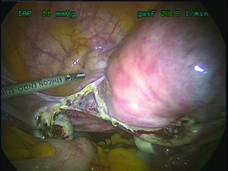
Currently, more than two-thirds of the 600,000 hysterectomies performed annually in the United States are done through an abdominal incision, despite the availability of less-invasive vaginal and laparoscopic approaches, which are associated with reduced morbidity, faster recovery, and lower cost. The AAGL Advancing Minimally Invasive Gynecology Worldwide (formerly known as the American Association of Gynecologic Laparoscopists) has now issued a strongly worded statement advising that abdominal hysterectomies be limited to only a few specific, defined circumstances.
"When hysterectomy is necessary, the demonstrated safety, efficacy, and cost-effectiveness of vaginal hysterectomy (VH) and laparoscopic hysterectomy (LH) mandate that they be the procedures of choice. When hysterectomy is performed without laparotomy, early institutional discharge is feasible and safe, in many cases within the first 24 hours," the AAGL said in the statement, posted online in November and due to be published in the January issue of the Journal of Minimally Invasive Gynecology.
The statement went on to advise that, "Surgeons without the requisite training and skills required for the safe performance of VH or LH should enlist the aid of colleagues who do or should refer patients requiring hysterectomy to such individuals for their surgical care."
The short list of contraindications given for LH include medical conditions in which the risk of either general anesthesia or increased peritoneal pressure are deemed unacceptable, or where morcellation may be required or uterine malignancy is known or suspected. For both VH and LH, the only contraindications are when there is no access to an experienced surgeon or the necessary facilities, or where the anatomy is so distorted that neither a laparoscopic nor vaginal approach is deemed safe.
Other clinical situations such as obesity or previous cesarean section should not be considered contraindications to minimally invasive procedures, AAGL said. Obesity may be associated with longer operative times but otherwise does not impair safety or efficacy of minimally invasive procedures, and the risks of inadvertent cystotomy and other complications with LH in women with previous Cesarean section is low (J. Minim. Invasive Gynecol. 2010;17:186-91).
The statement is aimed at several constituencies, AAGL executive vice president and medical director Dr. Franklin Loffer said in an interview. "We want patients to know, insurance companies to pay attention, and we want doctors to either learn how to do the procedures, get someone to help them, or just refer. I don’t think it’s justified doing an abdominal hysterectomy simply because you can’t do anything else. That’s not in the patient’s benefit."
He added, "We wish to point out that our specialty needs to do a better job of educating people to do these procedures."
In calling for a dramatic reduction in the number of abdominal hysterectomies, the AAGL position is in line with that of the American College of Obstetricians and Gynecologists, issued in a committee opinion paper "Choosing the Route of Hysterectomy for Benign Disease" in November 2009 (#444). But ACOG differed from AAGL in that it deemed the vaginal approach as the procedure of choice, with the laparoscopic approach second and abdominal approach as a last resort. Also, ACOG did not recommend referring patients to specialists as AAGL did.
According to Dr. Cheryl B. Iglesia, chair of the ACOG Committee on Gynecologic Practice, which wrote the opinion paper, "We do agree that for the most part hysterectomy should be done minimally invasively, and the least invasive [approach] is vaginal over laparoscopic. It’s associated with less operator time, less pain, less cost, and less potential injury. But, there are some technical skills to be developed," she said in an interview.
As for the referral issue, "We have lots of constituents, and we have to look at what’s practical. If you’re the only doctor in a big rural setting for 300 miles, you’re going to do whatever is safest in your hands. We try to be very practical at ACOG," said Dr. Iglesia, who is section director for female pelvic medicine and reconstructive surgery at Washington Hospital Center and is also in the ob.gyn. department at Georgetown University, Washington.
Dr. Loffer noted that the ACOG evidence base included a Cochrane review (Cochrane Database Syst. Rev. 2009 [doi:10.1002/14651858.CD003677.pub4]) containing data from the earliest laparoscopic procedures when there were more complications as surgeons acquired the skills, and that now the complication rates are approximately equal to that of vaginal hysterectomy. But, he said with regard to the two organizations’ positions in general, "I don’t think we’re that far apart."
Indeed, both AAGL and ACOG – as well as the American Board of Obstetrics and Gynecology – are exploring ways to improve training at the residency level, where currently the amount of exposure to minimally invasive hysterectomy procedures varies considerably from one program to the next, and is often quite low. This contrasts with general surgery, where completion of a didactic and clinical program "Fundamentals of Laparoscopic Surgery" is now a requirement of residency training.
"Developing something similar for gynecology is one of the AAGL’s current initiatives," Dr. Loffer said.
Movement also could come from the payer side. AAGL has had discussions with private insurers expressing interest in such approaches as "incentivizing" patients via lower co-pay to choose surgeons who do minimally invasive procedures. The AAGL provides a registry of qualified surgeons, the Council of Gynecologic Endoscopy, but it is relatively recent.

Dr. Iglesia noted that on the Medicare side, a recent change in the hysterectomy CPT codes giving a greater relative value unit for removal of uteri greater than 250 grams either vaginally or laparoscopically means higher payment. "That should incentivize a bit. ... They are trying."
According to the AAGL statement, the 66% abdominal hysterectomy rate in the United States contrasts dramatically with some European countries in which the proportion is less than 25%. Some insight to the attitudes of American practitioners can be found in the results of an online/paper survey conducted by Dr. Jon I. Einarsson of Brigham and Women’s Hospital, Boston, and his associates (J. Minim. Invasive Gynecol. 2010;17:167-75).
Of the 1,500 randomly sampled practicing obstetrician-gynecologists surveyed, 376 responded. Among those, the most commonly performed hysterectomy procedure in the previous year was AH (84%), followed by VH (76%). But when asked to rank which hysterectomy approach they would prefer for themselves or their partner, 56% ranked VH as their first choice and 41% ranked LH as their first choice, with only 8% opting for AH.
When asked about barriers to performing minimally invasive procedures, the most common ones reported for VH included technical difficulty, potential for complications, and personal caseload. For LH, respondents cited lack of training, technical difficulty, personal surgical experience, and operating time as barriers.
Nonetheless, when asked about their ideal goal for mode of access, the respondents felt on average that minimally invasive techniques should comprise 79% of all hysterectomy procedures.
Not surprisingly, the survey also revealed that gynecologic surgeons who had a high surgical volume were more likely to feel comfortable offering a minimally invasive hysterectomy to their patients. "This suggests that more emphasis needs to be placed on training opportunities ... given the desire among practicing gynecologists to change their surgical mode of access," Dr. Einarsson and his associates concluded.
Dr. Loffer declared that he owns stock in Johnson & Johnson and Interlace Medical Inc. Dr. Iglesia, and Dr. Einarsson and his coauthors all stated that they had no disclosures.
Minimally invasive approaches should be the "procedures of choice" for nearly all women undergoing hysterectomy to treat benign uterine disease, according to a new position statement from AAGL.
Currently, more than two-thirds of the 600,000 hysterectomies performed annually in the United States are done through an abdominal incision, despite the availability of less-invasive vaginal and laparoscopic approaches, which are associated with reduced morbidity, faster recovery, and lower cost. The AAGL Advancing Minimally Invasive Gynecology Worldwide (formerly known as the American Association of Gynecologic Laparoscopists) has now issued a strongly worded statement advising that abdominal hysterectomies be limited to only a few specific, defined circumstances.
"When hysterectomy is necessary, the demonstrated safety, efficacy, and cost-effectiveness of vaginal hysterectomy (VH) and laparoscopic hysterectomy (LH) mandate that they be the procedures of choice. When hysterectomy is performed without laparotomy, early institutional discharge is feasible and safe, in many cases within the first 24 hours," the AAGL said in the statement, posted online in November and due to be published in the January issue of the Journal of Minimally Invasive Gynecology.
The statement went on to advise that, "Surgeons without the requisite training and skills required for the safe performance of VH or LH should enlist the aid of colleagues who do or should refer patients requiring hysterectomy to such individuals for their surgical care."
The short list of contraindications given for LH include medical conditions in which the risk of either general anesthesia or increased peritoneal pressure are deemed unacceptable, or where morcellation may be required or uterine malignancy is known or suspected. For both VH and LH, the only contraindications are when there is no access to an experienced surgeon or the necessary facilities, or where the anatomy is so distorted that neither a laparoscopic nor vaginal approach is deemed safe.
Other clinical situations such as obesity or previous cesarean section should not be considered contraindications to minimally invasive procedures, AAGL said. Obesity may be associated with longer operative times but otherwise does not impair safety or efficacy of minimally invasive procedures, and the risks of inadvertent cystotomy and other complications with LH in women with previous Cesarean section is low (J. Minim. Invasive Gynecol. 2010;17:186-91).
The statement is aimed at several constituencies, AAGL executive vice president and medical director Dr. Franklin Loffer said in an interview. "We want patients to know, insurance companies to pay attention, and we want doctors to either learn how to do the procedures, get someone to help them, or just refer. I don’t think it’s justified doing an abdominal hysterectomy simply because you can’t do anything else. That’s not in the patient’s benefit."
He added, "We wish to point out that our specialty needs to do a better job of educating people to do these procedures."
In calling for a dramatic reduction in the number of abdominal hysterectomies, the AAGL position is in line with that of the American College of Obstetricians and Gynecologists, issued in a committee opinion paper "Choosing the Route of Hysterectomy for Benign Disease" in November 2009 (#444). But ACOG differed from AAGL in that it deemed the vaginal approach as the procedure of choice, with the laparoscopic approach second and abdominal approach as a last resort. Also, ACOG did not recommend referring patients to specialists as AAGL did.
According to Dr. Cheryl B. Iglesia, chair of the ACOG Committee on Gynecologic Practice, which wrote the opinion paper, "We do agree that for the most part hysterectomy should be done minimally invasively, and the least invasive [approach] is vaginal over laparoscopic. It’s associated with less operator time, less pain, less cost, and less potential injury. But, there are some technical skills to be developed," she said in an interview.
As for the referral issue, "We have lots of constituents, and we have to look at what’s practical. If you’re the only doctor in a big rural setting for 300 miles, you’re going to do whatever is safest in your hands. We try to be very practical at ACOG," said Dr. Iglesia, who is section director for female pelvic medicine and reconstructive surgery at Washington Hospital Center and is also in the ob.gyn. department at Georgetown University, Washington.
Dr. Loffer noted that the ACOG evidence base included a Cochrane review (Cochrane Database Syst. Rev. 2009 [doi:10.1002/14651858.CD003677.pub4]) containing data from the earliest laparoscopic procedures when there were more complications as surgeons acquired the skills, and that now the complication rates are approximately equal to that of vaginal hysterectomy. But, he said with regard to the two organizations’ positions in general, "I don’t think we’re that far apart."
Indeed, both AAGL and ACOG – as well as the American Board of Obstetrics and Gynecology – are exploring ways to improve training at the residency level, where currently the amount of exposure to minimally invasive hysterectomy procedures varies considerably from one program to the next, and is often quite low. This contrasts with general surgery, where completion of a didactic and clinical program "Fundamentals of Laparoscopic Surgery" is now a requirement of residency training.
"Developing something similar for gynecology is one of the AAGL’s current initiatives," Dr. Loffer said.
Movement also could come from the payer side. AAGL has had discussions with private insurers expressing interest in such approaches as "incentivizing" patients via lower co-pay to choose surgeons who do minimally invasive procedures. The AAGL provides a registry of qualified surgeons, the Council of Gynecologic Endoscopy, but it is relatively recent.
Dr. Iglesia noted that on the Medicare side, a recent change in the hysterectomy CPT codes giving a greater relative value unit for removal of uteri greater than 250 grams either vaginally or laparoscopically means higher payment. "That should incentivize a bit. ... They are trying."
According to the AAGL statement, the 66% abdominal hysterectomy rate in the United States contrasts dramatically with some European countries in which the proportion is less than 25%. Some insight to the attitudes of American practitioners can be found in the results of an online/paper survey conducted by Dr. Jon I. Einarsson of Brigham and Women’s Hospital, Boston, and his associates (J. Minim. Invasive Gynecol. 2010;17:167-75).
Of the 1,500 randomly sampled practicing obstetrician-gynecologists surveyed, 376 responded. Among those, the most commonly performed hysterectomy procedure in the previous year was AH (84%), followed by VH (76%). But when asked to rank which hysterectomy approach they would prefer for themselves or their partner, 56% ranked VH as their first choice and 41% ranked LH as their first choice, with only 8% opting for AH.
When asked about barriers to performing minimally invasive procedures, the most common ones reported for VH included technical difficulty, potential for complications, and personal caseload. For LH, respondents cited lack of training, technical difficulty, personal surgical experience, and operating time as barriers.
Nonetheless, when asked about their ideal goal for mode of access, the respondents felt on average that minimally invasive techniques should comprise 79% of all hysterectomy procedures.
Not surprisingly, the survey also revealed that gynecologic surgeons who had a high surgical volume were more likely to feel comfortable offering a minimally invasive hysterectomy to their patients. "This suggests that more emphasis needs to be placed on training opportunities ... given the desire among practicing gynecologists to change their surgical mode of access," Dr. Einarsson and his associates concluded.
Dr. Loffer declared that he owns stock in Johnson & Johnson and Interlace Medical Inc. Dr. Iglesia, and Dr. Einarsson and his coauthors all stated that they had no disclosures.
Minimally invasive approaches should be the "procedures of choice" for nearly all women undergoing hysterectomy to treat benign uterine disease, according to a new position statement from AAGL.
Currently, more than two-thirds of the 600,000 hysterectomies performed annually in the United States are done through an abdominal incision, despite the availability of less-invasive vaginal and laparoscopic approaches, which are associated with reduced morbidity, faster recovery, and lower cost. The AAGL Advancing Minimally Invasive Gynecology Worldwide (formerly known as the American Association of Gynecologic Laparoscopists) has now issued a strongly worded statement advising that abdominal hysterectomies be limited to only a few specific, defined circumstances.
"When hysterectomy is necessary, the demonstrated safety, efficacy, and cost-effectiveness of vaginal hysterectomy (VH) and laparoscopic hysterectomy (LH) mandate that they be the procedures of choice. When hysterectomy is performed without laparotomy, early institutional discharge is feasible and safe, in many cases within the first 24 hours," the AAGL said in the statement, posted online in November and due to be published in the January issue of the Journal of Minimally Invasive Gynecology.
The statement went on to advise that, "Surgeons without the requisite training and skills required for the safe performance of VH or LH should enlist the aid of colleagues who do or should refer patients requiring hysterectomy to such individuals for their surgical care."
The short list of contraindications given for LH include medical conditions in which the risk of either general anesthesia or increased peritoneal pressure are deemed unacceptable, or where morcellation may be required or uterine malignancy is known or suspected. For both VH and LH, the only contraindications are when there is no access to an experienced surgeon or the necessary facilities, or where the anatomy is so distorted that neither a laparoscopic nor vaginal approach is deemed safe.
Other clinical situations such as obesity or previous cesarean section should not be considered contraindications to minimally invasive procedures, AAGL said. Obesity may be associated with longer operative times but otherwise does not impair safety or efficacy of minimally invasive procedures, and the risks of inadvertent cystotomy and other complications with LH in women with previous Cesarean section is low (J. Minim. Invasive Gynecol. 2010;17:186-91).
The statement is aimed at several constituencies, AAGL executive vice president and medical director Dr. Franklin Loffer said in an interview. "We want patients to know, insurance companies to pay attention, and we want doctors to either learn how to do the procedures, get someone to help them, or just refer. I don’t think it’s justified doing an abdominal hysterectomy simply because you can’t do anything else. That’s not in the patient’s benefit."
He added, "We wish to point out that our specialty needs to do a better job of educating people to do these procedures."
In calling for a dramatic reduction in the number of abdominal hysterectomies, the AAGL position is in line with that of the American College of Obstetricians and Gynecologists, issued in a committee opinion paper "Choosing the Route of Hysterectomy for Benign Disease" in November 2009 (#444). But ACOG differed from AAGL in that it deemed the vaginal approach as the procedure of choice, with the laparoscopic approach second and abdominal approach as a last resort. Also, ACOG did not recommend referring patients to specialists as AAGL did.
According to Dr. Cheryl B. Iglesia, chair of the ACOG Committee on Gynecologic Practice, which wrote the opinion paper, "We do agree that for the most part hysterectomy should be done minimally invasively, and the least invasive [approach] is vaginal over laparoscopic. It’s associated with less operator time, less pain, less cost, and less potential injury. But, there are some technical skills to be developed," she said in an interview.
As for the referral issue, "We have lots of constituents, and we have to look at what’s practical. If you’re the only doctor in a big rural setting for 300 miles, you’re going to do whatever is safest in your hands. We try to be very practical at ACOG," said Dr. Iglesia, who is section director for female pelvic medicine and reconstructive surgery at Washington Hospital Center and is also in the ob.gyn. department at Georgetown University, Washington.
Dr. Loffer noted that the ACOG evidence base included a Cochrane review (Cochrane Database Syst. Rev. 2009 [doi:10.1002/14651858.CD003677.pub4]) containing data from the earliest laparoscopic procedures when there were more complications as surgeons acquired the skills, and that now the complication rates are approximately equal to that of vaginal hysterectomy. But, he said with regard to the two organizations’ positions in general, "I don’t think we’re that far apart."
Indeed, both AAGL and ACOG – as well as the American Board of Obstetrics and Gynecology – are exploring ways to improve training at the residency level, where currently the amount of exposure to minimally invasive hysterectomy procedures varies considerably from one program to the next, and is often quite low. This contrasts with general surgery, where completion of a didactic and clinical program "Fundamentals of Laparoscopic Surgery" is now a requirement of residency training.
"Developing something similar for gynecology is one of the AAGL’s current initiatives," Dr. Loffer said.
Movement also could come from the payer side. AAGL has had discussions with private insurers expressing interest in such approaches as "incentivizing" patients via lower co-pay to choose surgeons who do minimally invasive procedures. The AAGL provides a registry of qualified surgeons, the Council of Gynecologic Endoscopy, but it is relatively recent.
Dr. Iglesia noted that on the Medicare side, a recent change in the hysterectomy CPT codes giving a greater relative value unit for removal of uteri greater than 250 grams either vaginally or laparoscopically means higher payment. "That should incentivize a bit. ... They are trying."
According to the AAGL statement, the 66% abdominal hysterectomy rate in the United States contrasts dramatically with some European countries in which the proportion is less than 25%. Some insight to the attitudes of American practitioners can be found in the results of an online/paper survey conducted by Dr. Jon I. Einarsson of Brigham and Women’s Hospital, Boston, and his associates (J. Minim. Invasive Gynecol. 2010;17:167-75).
Of the 1,500 randomly sampled practicing obstetrician-gynecologists surveyed, 376 responded. Among those, the most commonly performed hysterectomy procedure in the previous year was AH (84%), followed by VH (76%). But when asked to rank which hysterectomy approach they would prefer for themselves or their partner, 56% ranked VH as their first choice and 41% ranked LH as their first choice, with only 8% opting for AH.
When asked about barriers to performing minimally invasive procedures, the most common ones reported for VH included technical difficulty, potential for complications, and personal caseload. For LH, respondents cited lack of training, technical difficulty, personal surgical experience, and operating time as barriers.
Nonetheless, when asked about their ideal goal for mode of access, the respondents felt on average that minimally invasive techniques should comprise 79% of all hysterectomy procedures.
Not surprisingly, the survey also revealed that gynecologic surgeons who had a high surgical volume were more likely to feel comfortable offering a minimally invasive hysterectomy to their patients. "This suggests that more emphasis needs to be placed on training opportunities ... given the desire among practicing gynecologists to change their surgical mode of access," Dr. Einarsson and his associates concluded.
Dr. Loffer declared that he owns stock in Johnson & Johnson and Interlace Medical Inc. Dr. Iglesia, and Dr. Einarsson and his coauthors all stated that they had no disclosures.
Minimally Invasive Approaches Urged for Hysterectomies for Benign Disease
Minimally invasive approaches should be the "procedures of choice" for nearly all women undergoing hysterectomy to treat benign uterine disease, according to a new position statement from AAGL.
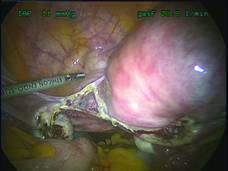
Currently, more than two-thirds of the 600,000 hysterectomies performed annually in the United States are done through an abdominal incision, despite the availability of less-invasive vaginal and laparoscopic approaches, which are associated with reduced morbidity, faster recovery, and lower cost. The AAGL Advancing Minimally Invasive Gynecology Worldwide (formerly known as the American Association of Gynecologic Laparoscopists) has now issued a strongly worded statement advising that abdominal hysterectomies be limited to only a few specific, defined circumstances.
"When hysterectomy is necessary, the demonstrated safety, efficacy, and cost-effectiveness of vaginal hysterectomy (VH) and laparoscopic hysterectomy (LH) mandate that they be the procedures of choice. When hysterectomy is performed without laparotomy, early institutional discharge is feasible and safe, in many cases within the first 24 hours," the AAGL said in the statement, posted online in November and due to be published in the January issue of the Journal of Minimally Invasive Gynecology.
The statement went on to advise that, "Surgeons without the requisite training and skills required for the safe performance of VH or LH should enlist the aid of colleagues who do or should refer patients requiring hysterectomy to such individuals for their surgical care."
The short list of contraindications given for LH include medical conditions in which the risk of either general anesthesia or increased peritoneal pressure are deemed unacceptable, or where morcellation may be required or uterine malignancy is known or suspected. For both VH and LH, the only contraindications are when there is no access to an experienced surgeon or the necessary facilities, or where the anatomy is so distorted that neither a laparoscopic nor vaginal approach is deemed safe.
Other clinical situations such as obesity or previous cesarean section should not be considered contraindications to minimally invasive procedures, AAGL said. Obesity may be associated with longer operative times but otherwise does not impair safety or efficacy of minimally invasive procedures, and the risks of inadvertent cystotomy and other complications with LH in women with previous Cesarean section is low (J. Minim. Invasive Gynecol. 2010;17:186-91).
The statement is aimed at several constituencies, AAGL executive vice president and medical director Dr. Franklin Loffer said in an interview. "We want patients to know, insurance companies to pay attention, and we want doctors to either learn how to do the procedures, get someone to help them, or just refer. I don’t think it’s justified doing an abdominal hysterectomy simply because you can’t do anything else. That’s not in the patient’s benefit."
He added, "We wish to point out that our specialty needs to do a better job of educating people to do these procedures."
In calling for a dramatic reduction in the number of abdominal hysterectomies, the AAGL position is in line with that of the American College of Obstetricians and Gynecologists, issued in a committee opinion paper "Choosing the Route of Hysterectomy for Benign Disease" in November 2009 (#444). But ACOG differed from AAGL in that it deemed the vaginal approach as the procedure of choice, with the laparoscopic approach second and abdominal approach as a last resort. Also, ACOG did not recommend referring patients to specialists as AAGL did.
According to Dr. Cheryl B. Iglesia, chair of the ACOG Committee on Gynecologic Practice, which wrote the opinion paper, "We do agree that for the most part hysterectomy should be done minimally invasively, and the least invasive [approach] is vaginal over laparoscopic. It’s associated with less operator time, less pain, less cost, and less potential injury. But, there are some technical skills to be developed," she said in an interview.
As for the referral issue, "We have lots of constituents, and we have to look at what’s practical. If you’re the only doctor in a big rural setting for 300 miles, you’re going to do whatever is safest in your hands. We try to be very practical at ACOG," said Dr. Iglesia, who is section director for female pelvic medicine and reconstructive surgery at Washington Hospital Center and is also in the ob.gyn. department at Georgetown University, Washington.
Dr. Loffer noted that the ACOG evidence base included a Cochrane review (Cochrane Database Syst. Rev. 2009 [doi:10.1002/14651858.CD003677.pub4]) containing data from the earliest laparoscopic procedures when there were more complications as surgeons acquired the skills, and that now the complication rates are approximately equal to that of vaginal hysterectomy. But, he said with regard to the two organizations’ positions in general, "I don’t think we’re that far apart."
Indeed, both AAGL and ACOG – as well as the American Board of Obstetrics and Gynecology – are exploring ways to improve training at the residency level, where currently the amount of exposure to minimally invasive hysterectomy procedures varies considerably from one program to the next, and is often quite low. This contrasts with general surgery, where completion of a didactic and clinical program "Fundamentals of Laparoscopic Surgery" is now a requirement of residency training.
"Developing something similar for gynecology is one of the AAGL’s current initiatives," Dr. Loffer said.
Movement also could come from the payer side. AAGL has had discussions with private insurers expressing interest in such approaches as "incentivizing" patients via lower co-pay to choose surgeons who do minimally invasive procedures. The AAGL provides a registry of qualified surgeons, the Council of Gynecologic Endoscopy, but it is relatively recent.
Dr. Iglesia noted that on the Medicare side, a recent change in the hysterectomy CPT codes giving a greater relative value unit for removal of uteri greater than 250 grams either vaginally or laparoscopically means higher payment. "That should incentivize a bit. ... They are trying."
According to the AAGL statement, the 66% abdominal hysterectomy rate in the United States contrasts dramatically with some European countries in which the proportion is less than 25%. Some insight to the attitudes of American practitioners can be found in the results of an online/paper survey conducted by Dr. Jon I. Einarsson of Brigham and Women’s Hospital, Boston, and his associates (J. Minim. Invasive Gynecol. 2010;17:167-75).
Of the 1,500 randomly sampled practicing obstetrician-gynecologists surveyed, 376 responded. Among those, the most commonly performed hysterectomy procedure in the previous year was AH (84%), followed by VH (76%). But when asked to rank which hysterectomy approach they would prefer for themselves or their partner, 56% ranked VH as their first choice and 41% ranked LH as their first choice, with only 8% opting for AH.
When asked about barriers to performing minimally invasive procedures, the most common ones reported for VH included technical difficulty, potential for complications, and personal caseload. For LH, respondents cited lack of training, technical difficulty, personal surgical experience, and operating time as barriers.
Nonetheless, when asked about their ideal goal for mode of access, the respondents felt on average that minimally invasive techniques should comprise 79% of all hysterectomy procedures.
Not surprisingly, the survey also revealed that gynecologic surgeons who had a high surgical volume were more likely to feel comfortable offering a minimally invasive hysterectomy to their patients. "This suggests that more emphasis needs to be placed on training opportunities ... given the desire among practicing gynecologists to change their surgical mode of access," Dr. Einarsson and his associates concluded.
Dr. Loffer declared that he owns stock in Johnson & Johnson and Interlace Medical Inc. Dr. Iglesia, and Dr. Einarsson and his coauthors all stated that they had no disclosures.
Minimally invasive approaches should be the "procedures of choice" for nearly all women undergoing hysterectomy to treat benign uterine disease, according to a new position statement from AAGL.
Currently, more than two-thirds of the 600,000 hysterectomies performed annually in the United States are done through an abdominal incision, despite the availability of less-invasive vaginal and laparoscopic approaches, which are associated with reduced morbidity, faster recovery, and lower cost. The AAGL Advancing Minimally Invasive Gynecology Worldwide (formerly known as the American Association of Gynecologic Laparoscopists) has now issued a strongly worded statement advising that abdominal hysterectomies be limited to only a few specific, defined circumstances.
"When hysterectomy is necessary, the demonstrated safety, efficacy, and cost-effectiveness of vaginal hysterectomy (VH) and laparoscopic hysterectomy (LH) mandate that they be the procedures of choice. When hysterectomy is performed without laparotomy, early institutional discharge is feasible and safe, in many cases within the first 24 hours," the AAGL said in the statement, posted online in November and due to be published in the January issue of the Journal of Minimally Invasive Gynecology.
The statement went on to advise that, "Surgeons without the requisite training and skills required for the safe performance of VH or LH should enlist the aid of colleagues who do or should refer patients requiring hysterectomy to such individuals for their surgical care."
The short list of contraindications given for LH include medical conditions in which the risk of either general anesthesia or increased peritoneal pressure are deemed unacceptable, or where morcellation may be required or uterine malignancy is known or suspected. For both VH and LH, the only contraindications are when there is no access to an experienced surgeon or the necessary facilities, or where the anatomy is so distorted that neither a laparoscopic nor vaginal approach is deemed safe.
Other clinical situations such as obesity or previous cesarean section should not be considered contraindications to minimally invasive procedures, AAGL said. Obesity may be associated with longer operative times but otherwise does not impair safety or efficacy of minimally invasive procedures, and the risks of inadvertent cystotomy and other complications with LH in women with previous Cesarean section is low (J. Minim. Invasive Gynecol. 2010;17:186-91).
The statement is aimed at several constituencies, AAGL executive vice president and medical director Dr. Franklin Loffer said in an interview. "We want patients to know, insurance companies to pay attention, and we want doctors to either learn how to do the procedures, get someone to help them, or just refer. I don’t think it’s justified doing an abdominal hysterectomy simply because you can’t do anything else. That’s not in the patient’s benefit."
He added, "We wish to point out that our specialty needs to do a better job of educating people to do these procedures."
In calling for a dramatic reduction in the number of abdominal hysterectomies, the AAGL position is in line with that of the American College of Obstetricians and Gynecologists, issued in a committee opinion paper "Choosing the Route of Hysterectomy for Benign Disease" in November 2009 (#444). But ACOG differed from AAGL in that it deemed the vaginal approach as the procedure of choice, with the laparoscopic approach second and abdominal approach as a last resort. Also, ACOG did not recommend referring patients to specialists as AAGL did.
According to Dr. Cheryl B. Iglesia, chair of the ACOG Committee on Gynecologic Practice, which wrote the opinion paper, "We do agree that for the most part hysterectomy should be done minimally invasively, and the least invasive [approach] is vaginal over laparoscopic. It’s associated with less operator time, less pain, less cost, and less potential injury. But, there are some technical skills to be developed," she said in an interview.
As for the referral issue, "We have lots of constituents, and we have to look at what’s practical. If you’re the only doctor in a big rural setting for 300 miles, you’re going to do whatever is safest in your hands. We try to be very practical at ACOG," said Dr. Iglesia, who is section director for female pelvic medicine and reconstructive surgery at Washington Hospital Center and is also in the ob.gyn. department at Georgetown University, Washington.
Dr. Loffer noted that the ACOG evidence base included a Cochrane review (Cochrane Database Syst. Rev. 2009 [doi:10.1002/14651858.CD003677.pub4]) containing data from the earliest laparoscopic procedures when there were more complications as surgeons acquired the skills, and that now the complication rates are approximately equal to that of vaginal hysterectomy. But, he said with regard to the two organizations’ positions in general, "I don’t think we’re that far apart."
Indeed, both AAGL and ACOG – as well as the American Board of Obstetrics and Gynecology – are exploring ways to improve training at the residency level, where currently the amount of exposure to minimally invasive hysterectomy procedures varies considerably from one program to the next, and is often quite low. This contrasts with general surgery, where completion of a didactic and clinical program "Fundamentals of Laparoscopic Surgery" is now a requirement of residency training.
"Developing something similar for gynecology is one of the AAGL’s current initiatives," Dr. Loffer said.
Movement also could come from the payer side. AAGL has had discussions with private insurers expressing interest in such approaches as "incentivizing" patients via lower co-pay to choose surgeons who do minimally invasive procedures. The AAGL provides a registry of qualified surgeons, the Council of Gynecologic Endoscopy, but it is relatively recent.
Dr. Iglesia noted that on the Medicare side, a recent change in the hysterectomy CPT codes giving a greater relative value unit for removal of uteri greater than 250 grams either vaginally or laparoscopically means higher payment. "That should incentivize a bit. ... They are trying."
According to the AAGL statement, the 66% abdominal hysterectomy rate in the United States contrasts dramatically with some European countries in which the proportion is less than 25%. Some insight to the attitudes of American practitioners can be found in the results of an online/paper survey conducted by Dr. Jon I. Einarsson of Brigham and Women’s Hospital, Boston, and his associates (J. Minim. Invasive Gynecol. 2010;17:167-75).
Of the 1,500 randomly sampled practicing obstetrician-gynecologists surveyed, 376 responded. Among those, the most commonly performed hysterectomy procedure in the previous year was AH (84%), followed by VH (76%). But when asked to rank which hysterectomy approach they would prefer for themselves or their partner, 56% ranked VH as their first choice and 41% ranked LH as their first choice, with only 8% opting for AH.
When asked about barriers to performing minimally invasive procedures, the most common ones reported for VH included technical difficulty, potential for complications, and personal caseload. For LH, respondents cited lack of training, technical difficulty, personal surgical experience, and operating time as barriers.
Nonetheless, when asked about their ideal goal for mode of access, the respondents felt on average that minimally invasive techniques should comprise 79% of all hysterectomy procedures.
Not surprisingly, the survey also revealed that gynecologic surgeons who had a high surgical volume were more likely to feel comfortable offering a minimally invasive hysterectomy to their patients. "This suggests that more emphasis needs to be placed on training opportunities ... given the desire among practicing gynecologists to change their surgical mode of access," Dr. Einarsson and his associates concluded.
Dr. Loffer declared that he owns stock in Johnson & Johnson and Interlace Medical Inc. Dr. Iglesia, and Dr. Einarsson and his coauthors all stated that they had no disclosures.
Minimally invasive approaches should be the "procedures of choice" for nearly all women undergoing hysterectomy to treat benign uterine disease, according to a new position statement from AAGL.
Currently, more than two-thirds of the 600,000 hysterectomies performed annually in the United States are done through an abdominal incision, despite the availability of less-invasive vaginal and laparoscopic approaches, which are associated with reduced morbidity, faster recovery, and lower cost. The AAGL Advancing Minimally Invasive Gynecology Worldwide (formerly known as the American Association of Gynecologic Laparoscopists) has now issued a strongly worded statement advising that abdominal hysterectomies be limited to only a few specific, defined circumstances.
"When hysterectomy is necessary, the demonstrated safety, efficacy, and cost-effectiveness of vaginal hysterectomy (VH) and laparoscopic hysterectomy (LH) mandate that they be the procedures of choice. When hysterectomy is performed without laparotomy, early institutional discharge is feasible and safe, in many cases within the first 24 hours," the AAGL said in the statement, posted online in November and due to be published in the January issue of the Journal of Minimally Invasive Gynecology.
The statement went on to advise that, "Surgeons without the requisite training and skills required for the safe performance of VH or LH should enlist the aid of colleagues who do or should refer patients requiring hysterectomy to such individuals for their surgical care."
The short list of contraindications given for LH include medical conditions in which the risk of either general anesthesia or increased peritoneal pressure are deemed unacceptable, or where morcellation may be required or uterine malignancy is known or suspected. For both VH and LH, the only contraindications are when there is no access to an experienced surgeon or the necessary facilities, or where the anatomy is so distorted that neither a laparoscopic nor vaginal approach is deemed safe.
Other clinical situations such as obesity or previous cesarean section should not be considered contraindications to minimally invasive procedures, AAGL said. Obesity may be associated with longer operative times but otherwise does not impair safety or efficacy of minimally invasive procedures, and the risks of inadvertent cystotomy and other complications with LH in women with previous Cesarean section is low (J. Minim. Invasive Gynecol. 2010;17:186-91).
The statement is aimed at several constituencies, AAGL executive vice president and medical director Dr. Franklin Loffer said in an interview. "We want patients to know, insurance companies to pay attention, and we want doctors to either learn how to do the procedures, get someone to help them, or just refer. I don’t think it’s justified doing an abdominal hysterectomy simply because you can’t do anything else. That’s not in the patient’s benefit."
He added, "We wish to point out that our specialty needs to do a better job of educating people to do these procedures."
In calling for a dramatic reduction in the number of abdominal hysterectomies, the AAGL position is in line with that of the American College of Obstetricians and Gynecologists, issued in a committee opinion paper "Choosing the Route of Hysterectomy for Benign Disease" in November 2009 (#444). But ACOG differed from AAGL in that it deemed the vaginal approach as the procedure of choice, with the laparoscopic approach second and abdominal approach as a last resort. Also, ACOG did not recommend referring patients to specialists as AAGL did.
According to Dr. Cheryl B. Iglesia, chair of the ACOG Committee on Gynecologic Practice, which wrote the opinion paper, "We do agree that for the most part hysterectomy should be done minimally invasively, and the least invasive [approach] is vaginal over laparoscopic. It’s associated with less operator time, less pain, less cost, and less potential injury. But, there are some technical skills to be developed," she said in an interview.
As for the referral issue, "We have lots of constituents, and we have to look at what’s practical. If you’re the only doctor in a big rural setting for 300 miles, you’re going to do whatever is safest in your hands. We try to be very practical at ACOG," said Dr. Iglesia, who is section director for female pelvic medicine and reconstructive surgery at Washington Hospital Center and is also in the ob.gyn. department at Georgetown University, Washington.
Dr. Loffer noted that the ACOG evidence base included a Cochrane review (Cochrane Database Syst. Rev. 2009 [doi:10.1002/14651858.CD003677.pub4]) containing data from the earliest laparoscopic procedures when there were more complications as surgeons acquired the skills, and that now the complication rates are approximately equal to that of vaginal hysterectomy. But, he said with regard to the two organizations’ positions in general, "I don’t think we’re that far apart."
Indeed, both AAGL and ACOG – as well as the American Board of Obstetrics and Gynecology – are exploring ways to improve training at the residency level, where currently the amount of exposure to minimally invasive hysterectomy procedures varies considerably from one program to the next, and is often quite low. This contrasts with general surgery, where completion of a didactic and clinical program "Fundamentals of Laparoscopic Surgery" is now a requirement of residency training.
"Developing something similar for gynecology is one of the AAGL’s current initiatives," Dr. Loffer said.
Movement also could come from the payer side. AAGL has had discussions with private insurers expressing interest in such approaches as "incentivizing" patients via lower co-pay to choose surgeons who do minimally invasive procedures. The AAGL provides a registry of qualified surgeons, the Council of Gynecologic Endoscopy, but it is relatively recent.
Dr. Iglesia noted that on the Medicare side, a recent change in the hysterectomy CPT codes giving a greater relative value unit for removal of uteri greater than 250 grams either vaginally or laparoscopically means higher payment. "That should incentivize a bit. ... They are trying."
According to the AAGL statement, the 66% abdominal hysterectomy rate in the United States contrasts dramatically with some European countries in which the proportion is less than 25%. Some insight to the attitudes of American practitioners can be found in the results of an online/paper survey conducted by Dr. Jon I. Einarsson of Brigham and Women’s Hospital, Boston, and his associates (J. Minim. Invasive Gynecol. 2010;17:167-75).
Of the 1,500 randomly sampled practicing obstetrician-gynecologists surveyed, 376 responded. Among those, the most commonly performed hysterectomy procedure in the previous year was AH (84%), followed by VH (76%). But when asked to rank which hysterectomy approach they would prefer for themselves or their partner, 56% ranked VH as their first choice and 41% ranked LH as their first choice, with only 8% opting for AH.
When asked about barriers to performing minimally invasive procedures, the most common ones reported for VH included technical difficulty, potential for complications, and personal caseload. For LH, respondents cited lack of training, technical difficulty, personal surgical experience, and operating time as barriers.
Nonetheless, when asked about their ideal goal for mode of access, the respondents felt on average that minimally invasive techniques should comprise 79% of all hysterectomy procedures.
Not surprisingly, the survey also revealed that gynecologic surgeons who had a high surgical volume were more likely to feel comfortable offering a minimally invasive hysterectomy to their patients. "This suggests that more emphasis needs to be placed on training opportunities ... given the desire among practicing gynecologists to change their surgical mode of access," Dr. Einarsson and his associates concluded.
Dr. Loffer declared that he owns stock in Johnson & Johnson and Interlace Medical Inc. Dr. Iglesia, and Dr. Einarsson and his coauthors all stated that they had no disclosures.
Intensive Control Curbed Renal Events
Major Finding: Renal events were reduced by 11% among those randomized to intensive therapy aiming for an HbA1c of less than 6.5%, compared with those receiving standard glucose control.
Data Source: The ADVANCE study, which randomized 11,140 patients with type 2 diabetes.
Disclosures: The study received funding from the National Health and Medical Research Council of Australia and from Servier, the maker of Preterax and Diamicron MR. Dr. Zoungas disclosed that she has received honoraria from Servier.
STOCKHOLM — An intensive glucose control regimen aiming for a hemoglobin A1c level of 6.5% or lower significantly reduced the incidence of renal events in patients with established type 2 diabetes, according to findings from a large Australian study.
The total number of renal events in 5,571 patients randomized to intensive treatment was reduced by 11% (26.9% vs. 30%), compared with 5,569 patients who followed a standard glucose control regimen, Dr. Sophia Zoungas said at the meeting.
The data come from the glucose-lowering arm of the multination ADVANCE (Action in Diabetes and Vascular Disease: Preterax and Diamicron-MR Controlled Evaluation) study, which examined the effects of both blood pressure lowering with perindopril/indapamide and glucose-lowering gliclazide MR in a total of 11,140 patients. Primary trial findings were reported in 2007 and 2008 (www.advance-trial.com
The current analysis evaluated the incidence of renal events at a median follow-up of 5 years, when the mean HbA1c level achieved was 6.5% in the intensive treatment arm and 7.3% in the standard control group, reported Dr. Zoungas, who is head of the diabetes research program at the George Institute for Global Health, Sydney.
The incidence of new microalbuminuria, defined as a urine albumin-to-creatinine ratio (UACR) of 30-300 g/mg, was reduced by 9% with intensive therapy, occurring in 23.7% of patients in that group compared with 25.7% of the standard treatment group. New-onset macroalbuminuria (UACR greater than 300 g/mg) was reduced by 30% (2.9% vs. 4.1%). New or worsening nephropathy, defined as progression of albuminuria by at least one stage (from normoalbuminuria to either micro- or macroalbuminuria) was 21% lower with intensive therapy (4.1% vs. 5.2%), and end-stage renal disease was reduced by 36% (0.4% vs. 0.6%).
All of the differences were statistically significant except for those involving end-stage renal disease, which nonetheless showed a “small but important trend,” said Dr. Zoungas, also of Monash University, Clayton, Australia.
Among 3,261 patients who had albuminuria at baseline, regression by at least one stage occurred in 61.8% of the intensive treatment group, compared with 55.8% of the standard group, for a hazard ratio of 1.15. Regression to normoalbuminuria occurred in 56.8% vs. 49.7%, with a hazard ratio of 1.2. Both were highly statistically significant, she said.
Renal benefit was seen even in those patients who had HbA1c levels less than 7% at baseline. “We could not identify an HbA1c threshold below which renal benefit was lost,” Dr. Zoungas said.
Major Finding: Renal events were reduced by 11% among those randomized to intensive therapy aiming for an HbA1c of less than 6.5%, compared with those receiving standard glucose control.
Data Source: The ADVANCE study, which randomized 11,140 patients with type 2 diabetes.
Disclosures: The study received funding from the National Health and Medical Research Council of Australia and from Servier, the maker of Preterax and Diamicron MR. Dr. Zoungas disclosed that she has received honoraria from Servier.
STOCKHOLM — An intensive glucose control regimen aiming for a hemoglobin A1c level of 6.5% or lower significantly reduced the incidence of renal events in patients with established type 2 diabetes, according to findings from a large Australian study.
The total number of renal events in 5,571 patients randomized to intensive treatment was reduced by 11% (26.9% vs. 30%), compared with 5,569 patients who followed a standard glucose control regimen, Dr. Sophia Zoungas said at the meeting.
The data come from the glucose-lowering arm of the multination ADVANCE (Action in Diabetes and Vascular Disease: Preterax and Diamicron-MR Controlled Evaluation) study, which examined the effects of both blood pressure lowering with perindopril/indapamide and glucose-lowering gliclazide MR in a total of 11,140 patients. Primary trial findings were reported in 2007 and 2008 (www.advance-trial.com
The current analysis evaluated the incidence of renal events at a median follow-up of 5 years, when the mean HbA1c level achieved was 6.5% in the intensive treatment arm and 7.3% in the standard control group, reported Dr. Zoungas, who is head of the diabetes research program at the George Institute for Global Health, Sydney.
The incidence of new microalbuminuria, defined as a urine albumin-to-creatinine ratio (UACR) of 30-300 g/mg, was reduced by 9% with intensive therapy, occurring in 23.7% of patients in that group compared with 25.7% of the standard treatment group. New-onset macroalbuminuria (UACR greater than 300 g/mg) was reduced by 30% (2.9% vs. 4.1%). New or worsening nephropathy, defined as progression of albuminuria by at least one stage (from normoalbuminuria to either micro- or macroalbuminuria) was 21% lower with intensive therapy (4.1% vs. 5.2%), and end-stage renal disease was reduced by 36% (0.4% vs. 0.6%).
All of the differences were statistically significant except for those involving end-stage renal disease, which nonetheless showed a “small but important trend,” said Dr. Zoungas, also of Monash University, Clayton, Australia.
Among 3,261 patients who had albuminuria at baseline, regression by at least one stage occurred in 61.8% of the intensive treatment group, compared with 55.8% of the standard group, for a hazard ratio of 1.15. Regression to normoalbuminuria occurred in 56.8% vs. 49.7%, with a hazard ratio of 1.2. Both were highly statistically significant, she said.
Renal benefit was seen even in those patients who had HbA1c levels less than 7% at baseline. “We could not identify an HbA1c threshold below which renal benefit was lost,” Dr. Zoungas said.
Major Finding: Renal events were reduced by 11% among those randomized to intensive therapy aiming for an HbA1c of less than 6.5%, compared with those receiving standard glucose control.
Data Source: The ADVANCE study, which randomized 11,140 patients with type 2 diabetes.
Disclosures: The study received funding from the National Health and Medical Research Council of Australia and from Servier, the maker of Preterax and Diamicron MR. Dr. Zoungas disclosed that she has received honoraria from Servier.
STOCKHOLM — An intensive glucose control regimen aiming for a hemoglobin A1c level of 6.5% or lower significantly reduced the incidence of renal events in patients with established type 2 diabetes, according to findings from a large Australian study.
The total number of renal events in 5,571 patients randomized to intensive treatment was reduced by 11% (26.9% vs. 30%), compared with 5,569 patients who followed a standard glucose control regimen, Dr. Sophia Zoungas said at the meeting.
The data come from the glucose-lowering arm of the multination ADVANCE (Action in Diabetes and Vascular Disease: Preterax and Diamicron-MR Controlled Evaluation) study, which examined the effects of both blood pressure lowering with perindopril/indapamide and glucose-lowering gliclazide MR in a total of 11,140 patients. Primary trial findings were reported in 2007 and 2008 (www.advance-trial.com
The current analysis evaluated the incidence of renal events at a median follow-up of 5 years, when the mean HbA1c level achieved was 6.5% in the intensive treatment arm and 7.3% in the standard control group, reported Dr. Zoungas, who is head of the diabetes research program at the George Institute for Global Health, Sydney.
The incidence of new microalbuminuria, defined as a urine albumin-to-creatinine ratio (UACR) of 30-300 g/mg, was reduced by 9% with intensive therapy, occurring in 23.7% of patients in that group compared with 25.7% of the standard treatment group. New-onset macroalbuminuria (UACR greater than 300 g/mg) was reduced by 30% (2.9% vs. 4.1%). New or worsening nephropathy, defined as progression of albuminuria by at least one stage (from normoalbuminuria to either micro- or macroalbuminuria) was 21% lower with intensive therapy (4.1% vs. 5.2%), and end-stage renal disease was reduced by 36% (0.4% vs. 0.6%).
All of the differences were statistically significant except for those involving end-stage renal disease, which nonetheless showed a “small but important trend,” said Dr. Zoungas, also of Monash University, Clayton, Australia.
Among 3,261 patients who had albuminuria at baseline, regression by at least one stage occurred in 61.8% of the intensive treatment group, compared with 55.8% of the standard group, for a hazard ratio of 1.15. Regression to normoalbuminuria occurred in 56.8% vs. 49.7%, with a hazard ratio of 1.2. Both were highly statistically significant, she said.
Renal benefit was seen even in those patients who had HbA1c levels less than 7% at baseline. “We could not identify an HbA1c threshold below which renal benefit was lost,” Dr. Zoungas said.
From the Annual Meeting of the European Association for the Study of Diabetes
Improving the Diagnostic Accuracy of HbA1c
Major Finding: A rule-out value of 5.8% or below and a rule-in value of 6.8% or above reduced the size of the “impaired HbA1c” category from 55% to 28% of the cohort.
Data Source: A study of 8,696 adults identified from two systematic screening programs during 2002-2008.
Disclosures: Dr. Mostafa stated that he had no relevant financial disclosures.
STOCKHOLM — Use of a “rule-in” hemoglobin A1c cut point of 6.8% and a “rule-out” value of 5.8%, with glucose testing for individuals who fall in the middle of the diagnostic cutoff, was more accurate in diagnosing type 2 diabetes than was a single cutoff value of 6.5%.
The finding from a multiethnic cohort study of 8,696 previously undiagnosed primary care patients addresses some of the concerns about false-positive and false-negative diagnoses associated with using a single measure of HbA1c. Multiple studies have shown that the 6.5% cutoff can conflict with the results of an oral glucose tolerance test (OGTT), said Dr. Samiul A. Mostafa, a clinical research fellow in the diabetes research unit of the University of Leicester (England).
Last year, an international expert committee recommended the use of HbA1c for diagnosing diabetes, with a cutoff of 6.5% or above following a repeat confirmatory HbA1c test. In January, the American Diabetes Association endorsed that recommendation. The EASD and the World Health Organization are expected to issue similar statements soon.
The study participants were identified from two systematic screening programs during 2002-2008. Three-quarters (75%) were white Europeans and 23% were South Asians. The mean HbA1c for the entire cohort was 5.7%. All underwent an OGTT and also had their HbA1c levels measured. With the WHO criteria (a 2-hour plasma glucose level of 200 mg/dL or above, following a 75-g glucose load), the OGTT detected 291 persons (3.3% of 8,696 study participants) with type 2 diabetes.
Among the white Europeans, use of the 6.5% HbA1c cutoff had a sensitivity of 62% and a positive predictive value of 45%. The investigators compared those values with a rule-out cutoff of 5.5% and a rule-in cutoff of 7.0%, with a confirmatory OGTT used for those falling in between (Diabetes Care 2010;33:817-9).
That method gave an improved sensitivity of 98% and positive predictive value of 76% in the white European group. With either method, specificity and negative predictive values were close to 100%. For the South Asians, the 6.5% cutoff gave a sensitivity of 79% and positive predictive value of 36%, both of which improved to 99% and 68%, respectively, with the two–cut-point criteria. Again, specificity and negative predictive values were strong with either method, Dr. Mostafa reported.
“Impaired HbA1c,” the term used for the values between the two cutoffs (5.6%-6.9%), was found in 59% of the total cohort, who thus required confirmatory tests. Noting that those in the impaired HbA1c group (55% of the total cohort) had A1c values between 5.6% and 6.4%, they tried various cut points and arrived at a rule-out value of 5.8% or below and a rule-in value of 6.8% or above. That left 28% of the total cohort in the “impaired HbA1c” category when defined as an A1c of 5.9%-6.7%.
“We believe [a rule-out value of 5.8% and a rule-in value of 6.8%] would be a more feasible strategy to implement in clinical practice,” Dr. Mostafa said.
These cutoffs gave sensitivities of 92% for white Europeans and 98% for South Asians, and positive predictive values of 70% and 54%, respectively, while maintaining the nearly 100% specificity and negative predictive values for both groups. Despite the slight reductions in positive predictive values, “overall, we feel using the cut points of 5.8% and 6.8% is still diagnostically accurate, with the major advantage that only a quarter of the population would have to return for a subsequent test,” he said.
In a final analysis, the investigators looked at mean HbA1c values in various undiagnosed populations. Compared with the U.K. cohort's mean of 5.7%, the Australian cohort had a mean of 5.1%, which resulted in 24% falling into their 5.6%-6.9% “impaired HbA1c” category. That led to the hypothesis that broader cut points are acceptable when mean HbA1c is relatively low, but a tighter range is required when mean HbA1c is higher.
View on the News
Glucose Testing Should Continue to Play a Role in Diagnosing Diabetes
This study assesses a strategy that I think is quite reasonable, and was suggested in the American Association of Clinical Endocrinologists' position statement a number of months ago.
One must recognize that a “negative” hemoglobin A1c level (below 6.5%) misses from one-third to one-half of those with diabetes by glucose tolerance test criteria, whereas a “positive” value (6.5% or greater) may not be the result of diabetes in persons who have greater degrees of hemoglobin glycation. Because high glycation is present in blacks, older populations, and people with iron deficiency, and also is a common variant in the overall population, I would even suggest that blood glucose confirmation – although not necessarily with glucose tolerance testing – should be done in all persons with high HbA1c, regardless of the level.
Similarly, there are people whose degree of hemoglobin glycation is lower than average. Thus, if there is clinical reason to look for diabetes, it is reasonable to perform glucose tolerance testing even with rather low A1c levels.
Given this inherent variability in glycation, just as the 6.5% diagnostic cutoff is incorrect for many persons whose diabetes status is being ascertained, the use of a specific HbA1c goal of, say, 6.5% or 7.0%, may not be appropriate for all patients with known diabetes.
Again, assessment of actual blood glucose levels is crucial in the management of diabetes.
ZACHARY T. BLOOMGARDEN, M.D., of the Mount Sinai School of Medicine in New York, is on the speakers bureau for Merck, Novo Nordisk, and GlaxoSmithKline; serves on an advisory panel for Merck, Bristol-Myers Squibb, AstraZeneca, Boehringer Ingelheim, and Biodel; is a consultant for Merck, Novartis, Dainippon Sumitomo Pharma America, and Forest Laboratories; and is a stock shareholder of Covidien, C.R. Bard, Novartis, Roche, and Stryker Corp.

Vitals
Major Finding: A rule-out value of 5.8% or below and a rule-in value of 6.8% or above reduced the size of the “impaired HbA1c” category from 55% to 28% of the cohort.
Data Source: A study of 8,696 adults identified from two systematic screening programs during 2002-2008.
Disclosures: Dr. Mostafa stated that he had no relevant financial disclosures.
STOCKHOLM — Use of a “rule-in” hemoglobin A1c cut point of 6.8% and a “rule-out” value of 5.8%, with glucose testing for individuals who fall in the middle of the diagnostic cutoff, was more accurate in diagnosing type 2 diabetes than was a single cutoff value of 6.5%.
The finding from a multiethnic cohort study of 8,696 previously undiagnosed primary care patients addresses some of the concerns about false-positive and false-negative diagnoses associated with using a single measure of HbA1c. Multiple studies have shown that the 6.5% cutoff can conflict with the results of an oral glucose tolerance test (OGTT), said Dr. Samiul A. Mostafa, a clinical research fellow in the diabetes research unit of the University of Leicester (England).
Last year, an international expert committee recommended the use of HbA1c for diagnosing diabetes, with a cutoff of 6.5% or above following a repeat confirmatory HbA1c test. In January, the American Diabetes Association endorsed that recommendation. The EASD and the World Health Organization are expected to issue similar statements soon.
The study participants were identified from two systematic screening programs during 2002-2008. Three-quarters (75%) were white Europeans and 23% were South Asians. The mean HbA1c for the entire cohort was 5.7%. All underwent an OGTT and also had their HbA1c levels measured. With the WHO criteria (a 2-hour plasma glucose level of 200 mg/dL or above, following a 75-g glucose load), the OGTT detected 291 persons (3.3% of 8,696 study participants) with type 2 diabetes.
Among the white Europeans, use of the 6.5% HbA1c cutoff had a sensitivity of 62% and a positive predictive value of 45%. The investigators compared those values with a rule-out cutoff of 5.5% and a rule-in cutoff of 7.0%, with a confirmatory OGTT used for those falling in between (Diabetes Care 2010;33:817-9).
That method gave an improved sensitivity of 98% and positive predictive value of 76% in the white European group. With either method, specificity and negative predictive values were close to 100%. For the South Asians, the 6.5% cutoff gave a sensitivity of 79% and positive predictive value of 36%, both of which improved to 99% and 68%, respectively, with the two–cut-point criteria. Again, specificity and negative predictive values were strong with either method, Dr. Mostafa reported.
“Impaired HbA1c,” the term used for the values between the two cutoffs (5.6%-6.9%), was found in 59% of the total cohort, who thus required confirmatory tests. Noting that those in the impaired HbA1c group (55% of the total cohort) had A1c values between 5.6% and 6.4%, they tried various cut points and arrived at a rule-out value of 5.8% or below and a rule-in value of 6.8% or above. That left 28% of the total cohort in the “impaired HbA1c” category when defined as an A1c of 5.9%-6.7%.
“We believe [a rule-out value of 5.8% and a rule-in value of 6.8%] would be a more feasible strategy to implement in clinical practice,” Dr. Mostafa said.
These cutoffs gave sensitivities of 92% for white Europeans and 98% for South Asians, and positive predictive values of 70% and 54%, respectively, while maintaining the nearly 100% specificity and negative predictive values for both groups. Despite the slight reductions in positive predictive values, “overall, we feel using the cut points of 5.8% and 6.8% is still diagnostically accurate, with the major advantage that only a quarter of the population would have to return for a subsequent test,” he said.
In a final analysis, the investigators looked at mean HbA1c values in various undiagnosed populations. Compared with the U.K. cohort's mean of 5.7%, the Australian cohort had a mean of 5.1%, which resulted in 24% falling into their 5.6%-6.9% “impaired HbA1c” category. That led to the hypothesis that broader cut points are acceptable when mean HbA1c is relatively low, but a tighter range is required when mean HbA1c is higher.
View on the News
Glucose Testing Should Continue to Play a Role in Diagnosing Diabetes
This study assesses a strategy that I think is quite reasonable, and was suggested in the American Association of Clinical Endocrinologists' position statement a number of months ago.
One must recognize that a “negative” hemoglobin A1c level (below 6.5%) misses from one-third to one-half of those with diabetes by glucose tolerance test criteria, whereas a “positive” value (6.5% or greater) may not be the result of diabetes in persons who have greater degrees of hemoglobin glycation. Because high glycation is present in blacks, older populations, and people with iron deficiency, and also is a common variant in the overall population, I would even suggest that blood glucose confirmation – although not necessarily with glucose tolerance testing – should be done in all persons with high HbA1c, regardless of the level.
Similarly, there are people whose degree of hemoglobin glycation is lower than average. Thus, if there is clinical reason to look for diabetes, it is reasonable to perform glucose tolerance testing even with rather low A1c levels.
Given this inherent variability in glycation, just as the 6.5% diagnostic cutoff is incorrect for many persons whose diabetes status is being ascertained, the use of a specific HbA1c goal of, say, 6.5% or 7.0%, may not be appropriate for all patients with known diabetes.
Again, assessment of actual blood glucose levels is crucial in the management of diabetes.
ZACHARY T. BLOOMGARDEN, M.D., of the Mount Sinai School of Medicine in New York, is on the speakers bureau for Merck, Novo Nordisk, and GlaxoSmithKline; serves on an advisory panel for Merck, Bristol-Myers Squibb, AstraZeneca, Boehringer Ingelheim, and Biodel; is a consultant for Merck, Novartis, Dainippon Sumitomo Pharma America, and Forest Laboratories; and is a stock shareholder of Covidien, C.R. Bard, Novartis, Roche, and Stryker Corp.
Vitals
Major Finding: A rule-out value of 5.8% or below and a rule-in value of 6.8% or above reduced the size of the “impaired HbA1c” category from 55% to 28% of the cohort.
Data Source: A study of 8,696 adults identified from two systematic screening programs during 2002-2008.
Disclosures: Dr. Mostafa stated that he had no relevant financial disclosures.
STOCKHOLM — Use of a “rule-in” hemoglobin A1c cut point of 6.8% and a “rule-out” value of 5.8%, with glucose testing for individuals who fall in the middle of the diagnostic cutoff, was more accurate in diagnosing type 2 diabetes than was a single cutoff value of 6.5%.
The finding from a multiethnic cohort study of 8,696 previously undiagnosed primary care patients addresses some of the concerns about false-positive and false-negative diagnoses associated with using a single measure of HbA1c. Multiple studies have shown that the 6.5% cutoff can conflict with the results of an oral glucose tolerance test (OGTT), said Dr. Samiul A. Mostafa, a clinical research fellow in the diabetes research unit of the University of Leicester (England).
Last year, an international expert committee recommended the use of HbA1c for diagnosing diabetes, with a cutoff of 6.5% or above following a repeat confirmatory HbA1c test. In January, the American Diabetes Association endorsed that recommendation. The EASD and the World Health Organization are expected to issue similar statements soon.
The study participants were identified from two systematic screening programs during 2002-2008. Three-quarters (75%) were white Europeans and 23% were South Asians. The mean HbA1c for the entire cohort was 5.7%. All underwent an OGTT and also had their HbA1c levels measured. With the WHO criteria (a 2-hour plasma glucose level of 200 mg/dL or above, following a 75-g glucose load), the OGTT detected 291 persons (3.3% of 8,696 study participants) with type 2 diabetes.
Among the white Europeans, use of the 6.5% HbA1c cutoff had a sensitivity of 62% and a positive predictive value of 45%. The investigators compared those values with a rule-out cutoff of 5.5% and a rule-in cutoff of 7.0%, with a confirmatory OGTT used for those falling in between (Diabetes Care 2010;33:817-9).
That method gave an improved sensitivity of 98% and positive predictive value of 76% in the white European group. With either method, specificity and negative predictive values were close to 100%. For the South Asians, the 6.5% cutoff gave a sensitivity of 79% and positive predictive value of 36%, both of which improved to 99% and 68%, respectively, with the two–cut-point criteria. Again, specificity and negative predictive values were strong with either method, Dr. Mostafa reported.
“Impaired HbA1c,” the term used for the values between the two cutoffs (5.6%-6.9%), was found in 59% of the total cohort, who thus required confirmatory tests. Noting that those in the impaired HbA1c group (55% of the total cohort) had A1c values between 5.6% and 6.4%, they tried various cut points and arrived at a rule-out value of 5.8% or below and a rule-in value of 6.8% or above. That left 28% of the total cohort in the “impaired HbA1c” category when defined as an A1c of 5.9%-6.7%.
“We believe [a rule-out value of 5.8% and a rule-in value of 6.8%] would be a more feasible strategy to implement in clinical practice,” Dr. Mostafa said.
These cutoffs gave sensitivities of 92% for white Europeans and 98% for South Asians, and positive predictive values of 70% and 54%, respectively, while maintaining the nearly 100% specificity and negative predictive values for both groups. Despite the slight reductions in positive predictive values, “overall, we feel using the cut points of 5.8% and 6.8% is still diagnostically accurate, with the major advantage that only a quarter of the population would have to return for a subsequent test,” he said.
In a final analysis, the investigators looked at mean HbA1c values in various undiagnosed populations. Compared with the U.K. cohort's mean of 5.7%, the Australian cohort had a mean of 5.1%, which resulted in 24% falling into their 5.6%-6.9% “impaired HbA1c” category. That led to the hypothesis that broader cut points are acceptable when mean HbA1c is relatively low, but a tighter range is required when mean HbA1c is higher.
View on the News
Glucose Testing Should Continue to Play a Role in Diagnosing Diabetes
This study assesses a strategy that I think is quite reasonable, and was suggested in the American Association of Clinical Endocrinologists' position statement a number of months ago.
One must recognize that a “negative” hemoglobin A1c level (below 6.5%) misses from one-third to one-half of those with diabetes by glucose tolerance test criteria, whereas a “positive” value (6.5% or greater) may not be the result of diabetes in persons who have greater degrees of hemoglobin glycation. Because high glycation is present in blacks, older populations, and people with iron deficiency, and also is a common variant in the overall population, I would even suggest that blood glucose confirmation – although not necessarily with glucose tolerance testing – should be done in all persons with high HbA1c, regardless of the level.
Similarly, there are people whose degree of hemoglobin glycation is lower than average. Thus, if there is clinical reason to look for diabetes, it is reasonable to perform glucose tolerance testing even with rather low A1c levels.
Given this inherent variability in glycation, just as the 6.5% diagnostic cutoff is incorrect for many persons whose diabetes status is being ascertained, the use of a specific HbA1c goal of, say, 6.5% or 7.0%, may not be appropriate for all patients with known diabetes.
Again, assessment of actual blood glucose levels is crucial in the management of diabetes.
ZACHARY T. BLOOMGARDEN, M.D., of the Mount Sinai School of Medicine in New York, is on the speakers bureau for Merck, Novo Nordisk, and GlaxoSmithKline; serves on an advisory panel for Merck, Bristol-Myers Squibb, AstraZeneca, Boehringer Ingelheim, and Biodel; is a consultant for Merck, Novartis, Dainippon Sumitomo Pharma America, and Forest Laboratories; and is a stock shareholder of Covidien, C.R. Bard, Novartis, Roche, and Stryker Corp.
Vitals
From the Annual Meeting of the European Association for the Study of Diabetes
Go Minimally Invasive for Most Hysterectomies : Taking a vaginal or laparoscopic approach is best, except in a few specific, defined circumstances.
Minimally invasive approaches should be the “procedures of choice” for nearly all women undergoing hysterectomy to treat benign uterine disease, according to a new position statement from AAGL.
Currently, more than two-thirds of the 600,000 hysterectomies performed annually in the United States are done through an abdominal incision, despite the availability of less-invasive vaginal and laparoscopic approaches, which are associated with reduced morbidity, faster recovery, and lower cost.
The AAGL Advancing Minimally Invasive Gynecology Worldwide (formerly known as the American Association of Gynecologic Laparoscopists) has now issued a strongly worded statement advising that abdominal hysterectomies be limited to only a few specific, defined circumstances.
“When hysterectomy is necessary, the demonstrated safety, efficacy, and cost-effectiveness of vaginal hysterectomy (VH) and laparoscopic hysterectomy (LH) mandate that they be the procedures of choice.
“When hysterectomy is performed without laparotomy, early institutional discharge is feasible and safe, in many cases within the first 24 hours,” the AAGL said in the statement, posted online in November and due to be published in the January issue of the Journal of Minimally Invasive Gynecology.
The statement went on to advise that, “Surgeons without the requisite training and skills required for the safe performance of VH or LH should enlist the aid of colleagues who do or should refer patients requiring hysterectomy to such individuals for their surgical care.”
The short list of contraindications given for LH include medical conditions in which the risk of either general anesthesia or increased peritoneal pressure are deemed unacceptable, or where morcellation may be required or uterine malignancy is known or suspected. For both VH and LH, the only contraindications are when there is no access to an experienced surgeon or the necessary facilities, or where the anatomy is so distorted that neither a laparoscopic nor vaginal approach is deemed safe.
Other clinical situations such as obesity or previous cesarean section should not be considered contraindications to minimally invasive procedures, AAGL said. Obesity may be associated with longer operative times but otherwise does not impair safety or efficacy of minimally invasive procedures, and the risks of inadvertent cystotomy and other complications with LH in women with previous Cesarean section is low (J. Minim. Invasive Gynecol. 2010;17:186-91).
The statement is aimed at several constituencies, AAGL executive vice president and medical director Dr. Franklin Loffer said in an interview. “We want patients to know, insurance companies to pay attention, and we want doctors to either learn how to do the procedures, get someone to help them, or just refer. I don't think it's justified doing an abdominal hysterectomy simply because you can't do anything else. That's not in the patient's benefit.”
He added, “We wish to point out that our specialty needs to do a better job of educating people to do these procedures.”
In calling for a dramatic reduction in the number of abdominal hysterectomies, the AAGL position is in line with that of the American College of Obstetricians and Gynecologists, issued in a committee opinion paper “Choosing the Route of Hysterectomy for Benign Disease” in November 2009 (#444). But ACOG differed from AAGL in that it deemed the vaginal approach as the procedure of choice, with the laparoscopic approach second and abdominal approach as a last resort. Also, ACOG did not recommend referring patients to specialists as AAGL did.
According to Dr. Cheryl B. Iglesia, chair of the ACOG Committee on Gynecologic Practice, which wrote the opinion paper, “We do agree that for the most part hysterectomy should be done minimally invasively, and the least invasive [approach] is vaginal over laparoscopic. It's associated with less operator time, less pain, less cost, and less potential injury. But, there are some technical skills to be developed,” she said in an interview.
As for the referral issue, “We have lots of constituents, and we have to look at what's practical. If you're the only doctor in a big rural setting for 300 miles, you're going to do whatever is safest in your hands. We try to be very practical at ACOG,” said Dr. Iglesia, who is section director for female pelvic medicine and reconstructive surgery at Washington Hospital Center and is in the ob.gyn. department at Georgetown University, Washington.
Dr. Loffer noted that the ACOG evidence base included a Cochrane review (Cochrane Database Syst. Rev. 2009 [doi: 10.1002/14651858.CD003677.pub4]) containing data from the earliest laparoscopic procedures when there were more complications as surgeons acquired the skills and that now the complication rates are approximately equal to that of vaginal hysterectomy. But, he said with regard to the two organizations' positions in general, “I don't think we're that far apart.”
Indeed, both AAGL and ACOG – as well as the American Board of Obstetrics and Gynecology – are exploring ways to improve training at the residency level, where currently the amount of exposure to minimally invasive hysterectomy procedures varies considerably from one program to the next, and is often quite low. This contrasts with general surgery, where completion of a didactic and clinical program “Fundamentals of Laparoscopic Surgery” is now a requirement of residency training.
“Developing something similar for gynecology is one of the AAGL's current initiatives,” Dr. Loffer said.
Movement also could come from the payer side. AAGL has had discussions with private insurers expressing interest in such approaches as “incentivizing” patients via lower co-pay to choose surgeons who do minimally invasive procedures. The AAGL provides a registry of qualified surgeons, the Council of Gynecologic Endoscopy (www.aagl.org/CGE
Dr. Iglesia noted that on the Medicare side, a recent change in the hysterectomy CPT codes giving a greater relative value unit for removal of uteri greater than 250 grams either vaginally or laparoscopically means higher payment. “That should incentivize a bit. … They are trying.”
According to the AAGL statement, the 66% abdominal hysterectomy rate in the United States contrasts dramatically with some European countries in which the proportion is less than 25%. Some insight to the attitudes of American practitioners can be found in the results of an online/paper survey conducted by Dr. Jon I. Einarsson of Brigham and Women's Hospital, Boston, and his associates (J. Minim. Invasive Gynecol. 2010;17:167-75).
Of the 1,500 randomly sampled practicing obstetrician-gynecologists surveyed, 376 responded. Among those, the most commonly performed hysterectomy procedure in the previous year was AH (84%), followed by VH (76%). But when asked to rank which hysterectomy approach they would prefer for themselves or their partner, 56% ranked VH as their first choice and 41% ranked LH as their first choice, with only 8% opting for AH.
When asked about barriers to performing minimally invasive procedures, the most common ones reported for VH included technical difficulty, potential for complications, and personal caseload. For LH, respondents cited lack of training, technical difficulty, personal surgical experience, and operating time as barriers.
Nonetheless, when asked about their ideal goal for mode of access, the respondents felt on average that minimally invasive techniques should comprise 79% of all hysterectomy procedures.
Not surprisingly, the survey also revealed that gynecologic surgeons who had a high surgical volume were more likely to feel comfortable offering a minimally invasive hysterectomy to their patients.
“This suggests that more emphasis needs to be placed on training opportunities … given the desire among practicing gynecologists to change their surgical mode of access,” Dr. Einarsson and his associates concluded.
Dr. Loffer declared that he owns stock in Johnson & Johnson and Interlace Medical. Dr. Iglesia, and Dr. Einarsson and his coauthors all stated that they had no disclosures.

'Our specialty needs to do a better job educating people to do these procedures.'
Source DR. LOFFER

Physicians should learn to either do minimally invasive hysterectomies, get someone to help them, or just refer, according to Dr. Franklin Loffer.
Source Courtesy Dr. Jon I. Einarsson

The vaginal approach is associated with less operator time, less pain, less cost, and less potential injury.
Source DR. IGLESIA
Minimally invasive approaches should be the “procedures of choice” for nearly all women undergoing hysterectomy to treat benign uterine disease, according to a new position statement from AAGL.
Currently, more than two-thirds of the 600,000 hysterectomies performed annually in the United States are done through an abdominal incision, despite the availability of less-invasive vaginal and laparoscopic approaches, which are associated with reduced morbidity, faster recovery, and lower cost.
The AAGL Advancing Minimally Invasive Gynecology Worldwide (formerly known as the American Association of Gynecologic Laparoscopists) has now issued a strongly worded statement advising that abdominal hysterectomies be limited to only a few specific, defined circumstances.
“When hysterectomy is necessary, the demonstrated safety, efficacy, and cost-effectiveness of vaginal hysterectomy (VH) and laparoscopic hysterectomy (LH) mandate that they be the procedures of choice.
“When hysterectomy is performed without laparotomy, early institutional discharge is feasible and safe, in many cases within the first 24 hours,” the AAGL said in the statement, posted online in November and due to be published in the January issue of the Journal of Minimally Invasive Gynecology.
The statement went on to advise that, “Surgeons without the requisite training and skills required for the safe performance of VH or LH should enlist the aid of colleagues who do or should refer patients requiring hysterectomy to such individuals for their surgical care.”
The short list of contraindications given for LH include medical conditions in which the risk of either general anesthesia or increased peritoneal pressure are deemed unacceptable, or where morcellation may be required or uterine malignancy is known or suspected. For both VH and LH, the only contraindications are when there is no access to an experienced surgeon or the necessary facilities, or where the anatomy is so distorted that neither a laparoscopic nor vaginal approach is deemed safe.
Other clinical situations such as obesity or previous cesarean section should not be considered contraindications to minimally invasive procedures, AAGL said. Obesity may be associated with longer operative times but otherwise does not impair safety or efficacy of minimally invasive procedures, and the risks of inadvertent cystotomy and other complications with LH in women with previous Cesarean section is low (J. Minim. Invasive Gynecol. 2010;17:186-91).
The statement is aimed at several constituencies, AAGL executive vice president and medical director Dr. Franklin Loffer said in an interview. “We want patients to know, insurance companies to pay attention, and we want doctors to either learn how to do the procedures, get someone to help them, or just refer. I don't think it's justified doing an abdominal hysterectomy simply because you can't do anything else. That's not in the patient's benefit.”
He added, “We wish to point out that our specialty needs to do a better job of educating people to do these procedures.”
In calling for a dramatic reduction in the number of abdominal hysterectomies, the AAGL position is in line with that of the American College of Obstetricians and Gynecologists, issued in a committee opinion paper “Choosing the Route of Hysterectomy for Benign Disease” in November 2009 (#444). But ACOG differed from AAGL in that it deemed the vaginal approach as the procedure of choice, with the laparoscopic approach second and abdominal approach as a last resort. Also, ACOG did not recommend referring patients to specialists as AAGL did.
According to Dr. Cheryl B. Iglesia, chair of the ACOG Committee on Gynecologic Practice, which wrote the opinion paper, “We do agree that for the most part hysterectomy should be done minimally invasively, and the least invasive [approach] is vaginal over laparoscopic. It's associated with less operator time, less pain, less cost, and less potential injury. But, there are some technical skills to be developed,” she said in an interview.
As for the referral issue, “We have lots of constituents, and we have to look at what's practical. If you're the only doctor in a big rural setting for 300 miles, you're going to do whatever is safest in your hands. We try to be very practical at ACOG,” said Dr. Iglesia, who is section director for female pelvic medicine and reconstructive surgery at Washington Hospital Center and is in the ob.gyn. department at Georgetown University, Washington.
Dr. Loffer noted that the ACOG evidence base included a Cochrane review (Cochrane Database Syst. Rev. 2009 [doi: 10.1002/14651858.CD003677.pub4]) containing data from the earliest laparoscopic procedures when there were more complications as surgeons acquired the skills and that now the complication rates are approximately equal to that of vaginal hysterectomy. But, he said with regard to the two organizations' positions in general, “I don't think we're that far apart.”
Indeed, both AAGL and ACOG – as well as the American Board of Obstetrics and Gynecology – are exploring ways to improve training at the residency level, where currently the amount of exposure to minimally invasive hysterectomy procedures varies considerably from one program to the next, and is often quite low. This contrasts with general surgery, where completion of a didactic and clinical program “Fundamentals of Laparoscopic Surgery” is now a requirement of residency training.
“Developing something similar for gynecology is one of the AAGL's current initiatives,” Dr. Loffer said.
Movement also could come from the payer side. AAGL has had discussions with private insurers expressing interest in such approaches as “incentivizing” patients via lower co-pay to choose surgeons who do minimally invasive procedures. The AAGL provides a registry of qualified surgeons, the Council of Gynecologic Endoscopy (www.aagl.org/CGE
Dr. Iglesia noted that on the Medicare side, a recent change in the hysterectomy CPT codes giving a greater relative value unit for removal of uteri greater than 250 grams either vaginally or laparoscopically means higher payment. “That should incentivize a bit. … They are trying.”
According to the AAGL statement, the 66% abdominal hysterectomy rate in the United States contrasts dramatically with some European countries in which the proportion is less than 25%. Some insight to the attitudes of American practitioners can be found in the results of an online/paper survey conducted by Dr. Jon I. Einarsson of Brigham and Women's Hospital, Boston, and his associates (J. Minim. Invasive Gynecol. 2010;17:167-75).
Of the 1,500 randomly sampled practicing obstetrician-gynecologists surveyed, 376 responded. Among those, the most commonly performed hysterectomy procedure in the previous year was AH (84%), followed by VH (76%). But when asked to rank which hysterectomy approach they would prefer for themselves or their partner, 56% ranked VH as their first choice and 41% ranked LH as their first choice, with only 8% opting for AH.
When asked about barriers to performing minimally invasive procedures, the most common ones reported for VH included technical difficulty, potential for complications, and personal caseload. For LH, respondents cited lack of training, technical difficulty, personal surgical experience, and operating time as barriers.
Nonetheless, when asked about their ideal goal for mode of access, the respondents felt on average that minimally invasive techniques should comprise 79% of all hysterectomy procedures.
Not surprisingly, the survey also revealed that gynecologic surgeons who had a high surgical volume were more likely to feel comfortable offering a minimally invasive hysterectomy to their patients.
“This suggests that more emphasis needs to be placed on training opportunities … given the desire among practicing gynecologists to change their surgical mode of access,” Dr. Einarsson and his associates concluded.
Dr. Loffer declared that he owns stock in Johnson & Johnson and Interlace Medical. Dr. Iglesia, and Dr. Einarsson and his coauthors all stated that they had no disclosures.
'Our specialty needs to do a better job educating people to do these procedures.'
Source DR. LOFFER
Physicians should learn to either do minimally invasive hysterectomies, get someone to help them, or just refer, according to Dr. Franklin Loffer.
Source Courtesy Dr. Jon I. Einarsson
The vaginal approach is associated with less operator time, less pain, less cost, and less potential injury.
Source DR. IGLESIA
Minimally invasive approaches should be the “procedures of choice” for nearly all women undergoing hysterectomy to treat benign uterine disease, according to a new position statement from AAGL.
Currently, more than two-thirds of the 600,000 hysterectomies performed annually in the United States are done through an abdominal incision, despite the availability of less-invasive vaginal and laparoscopic approaches, which are associated with reduced morbidity, faster recovery, and lower cost.
The AAGL Advancing Minimally Invasive Gynecology Worldwide (formerly known as the American Association of Gynecologic Laparoscopists) has now issued a strongly worded statement advising that abdominal hysterectomies be limited to only a few specific, defined circumstances.
“When hysterectomy is necessary, the demonstrated safety, efficacy, and cost-effectiveness of vaginal hysterectomy (VH) and laparoscopic hysterectomy (LH) mandate that they be the procedures of choice.
“When hysterectomy is performed without laparotomy, early institutional discharge is feasible and safe, in many cases within the first 24 hours,” the AAGL said in the statement, posted online in November and due to be published in the January issue of the Journal of Minimally Invasive Gynecology.
The statement went on to advise that, “Surgeons without the requisite training and skills required for the safe performance of VH or LH should enlist the aid of colleagues who do or should refer patients requiring hysterectomy to such individuals for their surgical care.”
The short list of contraindications given for LH include medical conditions in which the risk of either general anesthesia or increased peritoneal pressure are deemed unacceptable, or where morcellation may be required or uterine malignancy is known or suspected. For both VH and LH, the only contraindications are when there is no access to an experienced surgeon or the necessary facilities, or where the anatomy is so distorted that neither a laparoscopic nor vaginal approach is deemed safe.
Other clinical situations such as obesity or previous cesarean section should not be considered contraindications to minimally invasive procedures, AAGL said. Obesity may be associated with longer operative times but otherwise does not impair safety or efficacy of minimally invasive procedures, and the risks of inadvertent cystotomy and other complications with LH in women with previous Cesarean section is low (J. Minim. Invasive Gynecol. 2010;17:186-91).
The statement is aimed at several constituencies, AAGL executive vice president and medical director Dr. Franklin Loffer said in an interview. “We want patients to know, insurance companies to pay attention, and we want doctors to either learn how to do the procedures, get someone to help them, or just refer. I don't think it's justified doing an abdominal hysterectomy simply because you can't do anything else. That's not in the patient's benefit.”
He added, “We wish to point out that our specialty needs to do a better job of educating people to do these procedures.”
In calling for a dramatic reduction in the number of abdominal hysterectomies, the AAGL position is in line with that of the American College of Obstetricians and Gynecologists, issued in a committee opinion paper “Choosing the Route of Hysterectomy for Benign Disease” in November 2009 (#444). But ACOG differed from AAGL in that it deemed the vaginal approach as the procedure of choice, with the laparoscopic approach second and abdominal approach as a last resort. Also, ACOG did not recommend referring patients to specialists as AAGL did.
According to Dr. Cheryl B. Iglesia, chair of the ACOG Committee on Gynecologic Practice, which wrote the opinion paper, “We do agree that for the most part hysterectomy should be done minimally invasively, and the least invasive [approach] is vaginal over laparoscopic. It's associated with less operator time, less pain, less cost, and less potential injury. But, there are some technical skills to be developed,” she said in an interview.
As for the referral issue, “We have lots of constituents, and we have to look at what's practical. If you're the only doctor in a big rural setting for 300 miles, you're going to do whatever is safest in your hands. We try to be very practical at ACOG,” said Dr. Iglesia, who is section director for female pelvic medicine and reconstructive surgery at Washington Hospital Center and is in the ob.gyn. department at Georgetown University, Washington.
Dr. Loffer noted that the ACOG evidence base included a Cochrane review (Cochrane Database Syst. Rev. 2009 [doi: 10.1002/14651858.CD003677.pub4]) containing data from the earliest laparoscopic procedures when there were more complications as surgeons acquired the skills and that now the complication rates are approximately equal to that of vaginal hysterectomy. But, he said with regard to the two organizations' positions in general, “I don't think we're that far apart.”
Indeed, both AAGL and ACOG – as well as the American Board of Obstetrics and Gynecology – are exploring ways to improve training at the residency level, where currently the amount of exposure to minimally invasive hysterectomy procedures varies considerably from one program to the next, and is often quite low. This contrasts with general surgery, where completion of a didactic and clinical program “Fundamentals of Laparoscopic Surgery” is now a requirement of residency training.
“Developing something similar for gynecology is one of the AAGL's current initiatives,” Dr. Loffer said.
Movement also could come from the payer side. AAGL has had discussions with private insurers expressing interest in such approaches as “incentivizing” patients via lower co-pay to choose surgeons who do minimally invasive procedures. The AAGL provides a registry of qualified surgeons, the Council of Gynecologic Endoscopy (www.aagl.org/CGE
Dr. Iglesia noted that on the Medicare side, a recent change in the hysterectomy CPT codes giving a greater relative value unit for removal of uteri greater than 250 grams either vaginally or laparoscopically means higher payment. “That should incentivize a bit. … They are trying.”
According to the AAGL statement, the 66% abdominal hysterectomy rate in the United States contrasts dramatically with some European countries in which the proportion is less than 25%. Some insight to the attitudes of American practitioners can be found in the results of an online/paper survey conducted by Dr. Jon I. Einarsson of Brigham and Women's Hospital, Boston, and his associates (J. Minim. Invasive Gynecol. 2010;17:167-75).
Of the 1,500 randomly sampled practicing obstetrician-gynecologists surveyed, 376 responded. Among those, the most commonly performed hysterectomy procedure in the previous year was AH (84%), followed by VH (76%). But when asked to rank which hysterectomy approach they would prefer for themselves or their partner, 56% ranked VH as their first choice and 41% ranked LH as their first choice, with only 8% opting for AH.
When asked about barriers to performing minimally invasive procedures, the most common ones reported for VH included technical difficulty, potential for complications, and personal caseload. For LH, respondents cited lack of training, technical difficulty, personal surgical experience, and operating time as barriers.
Nonetheless, when asked about their ideal goal for mode of access, the respondents felt on average that minimally invasive techniques should comprise 79% of all hysterectomy procedures.
Not surprisingly, the survey also revealed that gynecologic surgeons who had a high surgical volume were more likely to feel comfortable offering a minimally invasive hysterectomy to their patients.
“This suggests that more emphasis needs to be placed on training opportunities … given the desire among practicing gynecologists to change their surgical mode of access,” Dr. Einarsson and his associates concluded.
Dr. Loffer declared that he owns stock in Johnson & Johnson and Interlace Medical. Dr. Iglesia, and Dr. Einarsson and his coauthors all stated that they had no disclosures.
'Our specialty needs to do a better job educating people to do these procedures.'
Source DR. LOFFER
Physicians should learn to either do minimally invasive hysterectomies, get someone to help them, or just refer, according to Dr. Franklin Loffer.
Source Courtesy Dr. Jon I. Einarsson
The vaginal approach is associated with less operator time, less pain, less cost, and less potential injury.
Source DR. IGLESIA
Diabetes Portends Higher Pancreatitis Risk
Stockholm — Both the prevalence and the incidence of pancreatitis were significantly greater among adults with diabetes than in those without, in an analysis of a U.K. database comprising more than 2 million general practice adult patients.
Rates of pancreatitis have been rising in the United Kingdom in recent years, along with increases in obesity and related conditions, including gallstones and hyperlipidemia.
Previous studies have identified a link between type 2 diabetes, antihyperglycemic medications, and pancreatitis, but these investigations have mainly utilized small population sizes and have not stratified patients by age and sex, Dr. Hamidreza Mani, an endocrinologist at the University of Leicester (England), said at the meeting.
Dr. Mani and his associates used the U.K. General Practice Research Database, one of the largest patient databases in the world, comprising 2.34 million adults. Of those, the investigators identified 75,322 patients with a history of type 2 diabetes. Among those, 574 (0.76%) also had a history of pancreatitis, compared with just 0.17% of the 2.2 million without diabetes, according to Dr. Mani and his colleagues.
This gave a crude hazard ratio of 4.5 for those with diabetes, compared with those without diabetes. After the researchers adjusted the data for age and sex, the odds ratio for a history of pancreatitis in those with diabetes, compared with those without, was 3.1, which was highly statistically significant, Dr. Mane said.
In all, 74,748 diabetes patients who were not found to have prevalent pancreatitis were followed forward for a mean of 3.1 years beyond a specified index date. Controls were followed for a mean of 3.2 years. There were 134 incident cases of diabetes among the diabetic patients and 1,975 among the controls, giving crude incidence rates of 58 and 27 per 100,000 population, respectively.
After adjustment again for age and sex, the relative risk of acute pancreatitis that was associated with diabetes was 1.47.
Striking age and sex differences were found. By sex overall, the incidence of pancreatitis among women with diabetes, compared with those without, was 1.95, whereas that ratio for men was 2.23.
Among women with diabetes who were 8-39 years old, the incidence of pancreatitis was nearly sixfold, compared with those without diabetes, whereas the rate among women with diabetes aged 50-59 years was actually a bit less than among those without (hazard ratio 0.86).
Among the men, Dr. Mani and his colleagues found that the greatest incidence of pancreatitis occurred in the 50- to 59-year age range, with a hazard ratio of 2.9, compared with men without diabetes.
In diabetic men older than 80 years of age, the incidence of pancreatitis dropped to just half that of nondiabetic men (HR 0.53).
The reason for the difference between men and women in the incidence of pancreatitis is unclear. Hormonal and other physiologic differences may account for some of ihe difference, but not for the sixfold increase among young women, heDr. Mani commented.
The overall pancreatitis incidence of 27.4 per 100,000 among patients with diabetes in this database is far greater than the 10 per 100,000 U.K. incidence that was reported in 1998, he noted.
Dr. Mani stated that he had no disclosures.
Stockholm — Both the prevalence and the incidence of pancreatitis were significantly greater among adults with diabetes than in those without, in an analysis of a U.K. database comprising more than 2 million general practice adult patients.
Rates of pancreatitis have been rising in the United Kingdom in recent years, along with increases in obesity and related conditions, including gallstones and hyperlipidemia.
Previous studies have identified a link between type 2 diabetes, antihyperglycemic medications, and pancreatitis, but these investigations have mainly utilized small population sizes and have not stratified patients by age and sex, Dr. Hamidreza Mani, an endocrinologist at the University of Leicester (England), said at the meeting.
Dr. Mani and his associates used the U.K. General Practice Research Database, one of the largest patient databases in the world, comprising 2.34 million adults. Of those, the investigators identified 75,322 patients with a history of type 2 diabetes. Among those, 574 (0.76%) also had a history of pancreatitis, compared with just 0.17% of the 2.2 million without diabetes, according to Dr. Mani and his colleagues.
This gave a crude hazard ratio of 4.5 for those with diabetes, compared with those without diabetes. After the researchers adjusted the data for age and sex, the odds ratio for a history of pancreatitis in those with diabetes, compared with those without, was 3.1, which was highly statistically significant, Dr. Mane said.
In all, 74,748 diabetes patients who were not found to have prevalent pancreatitis were followed forward for a mean of 3.1 years beyond a specified index date. Controls were followed for a mean of 3.2 years. There were 134 incident cases of diabetes among the diabetic patients and 1,975 among the controls, giving crude incidence rates of 58 and 27 per 100,000 population, respectively.
After adjustment again for age and sex, the relative risk of acute pancreatitis that was associated with diabetes was 1.47.
Striking age and sex differences were found. By sex overall, the incidence of pancreatitis among women with diabetes, compared with those without, was 1.95, whereas that ratio for men was 2.23.
Among women with diabetes who were 8-39 years old, the incidence of pancreatitis was nearly sixfold, compared with those without diabetes, whereas the rate among women with diabetes aged 50-59 years was actually a bit less than among those without (hazard ratio 0.86).
Among the men, Dr. Mani and his colleagues found that the greatest incidence of pancreatitis occurred in the 50- to 59-year age range, with a hazard ratio of 2.9, compared with men without diabetes.
In diabetic men older than 80 years of age, the incidence of pancreatitis dropped to just half that of nondiabetic men (HR 0.53).
The reason for the difference between men and women in the incidence of pancreatitis is unclear. Hormonal and other physiologic differences may account for some of ihe difference, but not for the sixfold increase among young women, heDr. Mani commented.
The overall pancreatitis incidence of 27.4 per 100,000 among patients with diabetes in this database is far greater than the 10 per 100,000 U.K. incidence that was reported in 1998, he noted.
Dr. Mani stated that he had no disclosures.
Stockholm — Both the prevalence and the incidence of pancreatitis were significantly greater among adults with diabetes than in those without, in an analysis of a U.K. database comprising more than 2 million general practice adult patients.
Rates of pancreatitis have been rising in the United Kingdom in recent years, along with increases in obesity and related conditions, including gallstones and hyperlipidemia.
Previous studies have identified a link between type 2 diabetes, antihyperglycemic medications, and pancreatitis, but these investigations have mainly utilized small population sizes and have not stratified patients by age and sex, Dr. Hamidreza Mani, an endocrinologist at the University of Leicester (England), said at the meeting.
Dr. Mani and his associates used the U.K. General Practice Research Database, one of the largest patient databases in the world, comprising 2.34 million adults. Of those, the investigators identified 75,322 patients with a history of type 2 diabetes. Among those, 574 (0.76%) also had a history of pancreatitis, compared with just 0.17% of the 2.2 million without diabetes, according to Dr. Mani and his colleagues.
This gave a crude hazard ratio of 4.5 for those with diabetes, compared with those without diabetes. After the researchers adjusted the data for age and sex, the odds ratio for a history of pancreatitis in those with diabetes, compared with those without, was 3.1, which was highly statistically significant, Dr. Mane said.
In all, 74,748 diabetes patients who were not found to have prevalent pancreatitis were followed forward for a mean of 3.1 years beyond a specified index date. Controls were followed for a mean of 3.2 years. There were 134 incident cases of diabetes among the diabetic patients and 1,975 among the controls, giving crude incidence rates of 58 and 27 per 100,000 population, respectively.
After adjustment again for age and sex, the relative risk of acute pancreatitis that was associated with diabetes was 1.47.
Striking age and sex differences were found. By sex overall, the incidence of pancreatitis among women with diabetes, compared with those without, was 1.95, whereas that ratio for men was 2.23.
Among women with diabetes who were 8-39 years old, the incidence of pancreatitis was nearly sixfold, compared with those without diabetes, whereas the rate among women with diabetes aged 50-59 years was actually a bit less than among those without (hazard ratio 0.86).
Among the men, Dr. Mani and his colleagues found that the greatest incidence of pancreatitis occurred in the 50- to 59-year age range, with a hazard ratio of 2.9, compared with men without diabetes.
In diabetic men older than 80 years of age, the incidence of pancreatitis dropped to just half that of nondiabetic men (HR 0.53).
The reason for the difference between men and women in the incidence of pancreatitis is unclear. Hormonal and other physiologic differences may account for some of ihe difference, but not for the sixfold increase among young women, heDr. Mani commented.
The overall pancreatitis incidence of 27.4 per 100,000 among patients with diabetes in this database is far greater than the 10 per 100,000 U.K. incidence that was reported in 1998, he noted.
Dr. Mani stated that he had no disclosures.
Adult Immunization Rates Increased Slightly in 2008–2009
Adult immunization rates in the United States are improving but very slowly, according to new data from the Centers for Disease Control and Prevention.
Overall, the 2009 National Health Interview Survey of 88,446 adults showed that adult immunization rates for influenza, hepatitis B, pertussis, and shingles increased by small proportions, compared with the previous year, while pneumococcal disease coverage dropped slightly. Moreover, large racial disparities persisted for influenza immunization, with lower proportions of African Americans and Hispanics receiving the vaccine than whites.
“We have wonderful vaccination rates in young children … but there are lower vaccination rates in adults, and they show us that maybe we're starting to take vaccines and immunity for granted. This is one area where we cannot rest on our laurels. Our accomplishments will be undone if we don't maintain our immunity as adults,” Dr. Susan J. Rehm, medical director of the National Foundation for Infectious Diseases (NFID), said in a press briefing.
The NFID, which cosponsored the briefing with the CDC, also released the findings from its survey of 300 primary care physicians and 1,013 American consumers aged 18 years and older, which showed a distinct communication disconnect: Whereas 90% of the physicians said they discuss vaccines with their patients, 47% of the patients couldn't recall ever discussing vaccines other than influenza with their doctors, and one-fifth couldn't recall discussing any vaccines.
However, nearly 9 in 10 patients said that a strong recommendation from a physician would be a very likely motivator for them to get vaccinated. “Overall I think these findings are in a way encouraging. Although we have this disconnect, we have a solvable problem, and that is communication. Patients need to hear the recommendation from their provider, and it needs to be clear,” said Dr. Rehm of the Cleveland Clinic.
Since adults typically visit the doctor for an acute problem and not for routine medical care, “every adult visit needs to be an immunization visit,” she said.
Dr. Melinda Wharton, deputy director of the CDC's National Center for Immunization and Respiratory Diseases, reviewed the data from the 2009 NHIS. For influenza vaccine, there was an overall 2.3–percentage point increase among adults aged 19-49 years during the 2008-2009 season, compared with 2007-2008. While the increase was even greater for African Americans, 3.6 percentage points, their overall influenza immunization rate was just 16.5%, compared with 21.6% among whites. The percentage among Hispanics in that age group was 14.5%, up by just 1.5 percentage points.
For ever-receipt of pneumococcal vaccine among those for whom it is recommended, coverage among adults aged 19-64 years in 2009 was 17.5%, a drop of 7.4 percentage points since 2008. This is likely due in part to the recent addition of smokers and asthma patients to the high-risk list, Dr. Wharton said, noting that coverage among adults aged 65 years and older remained stable, at about 61%.
Immunization against hepatitis B among those at risk increased to the greatest degree among African Americans, rose by 13.6 percentage points to 43.6%, similar to the 43.2% among whites. Herpes zoster vaccine, on the other hand, increased by just 3.3 percentage points, from 6.7% of adults aged 60 years and older in 2008 to 10.0% in 2009. In 2009, the proportion of women aged 19-26 years who received human papillomavirus vaccination was just 17.1%, up by 6.6 percentage points from 10.5% in 2008.
Data for pertussis is reported via tetanus coverage. In 2005, the CDC recommended that the then-newly licensed adult/adolescent formula tetanus-diphtheria-pertussis vaccine (Tdap) replace a single dose of Td vaccine for individuals aged 10-64 years. Of adults aged 19-64 years who received a tetanus vaccine since 2005 and knew which kind of vaccine they had received, only 50.8% reported receiving Tdap.
The NHIS data also included health care provider immunization rates, which showed an overall 7.1–percentage point increase in influenza immunization from 2007 to 2008 to 52.9% in 2008-2009, a 1.6–percentage point increase in the proportion of tetanus vaccination during 2005-2009 given as Tdap, to 58.3% in 2009, and a slight 0.5 percentage point rise in ever-receipt of three doses of hepatitis B vaccine, reaching 64.7% in 2009.
Dr. Rehm noted that 57% of physicians reported in the NFID survey that they didn't have adequate time to discuss vaccination during hurried office visits. But, she said, “The immunization discussion doesn't need to be long. It needs to be concise and clear. When I talk with my patients, I don't say 'I think you should consider the vaccine,' and so on. I simply say I recommend that you receive this vaccine.' Data show that patients are quite receptive to that.”
The NFID now has a Web site for patients that is dedicated to adult vaccination (www.adultvaccination.com
Dr. Rehm has served as a speaker for Sanofi-Pasteur and Genentech, as a speaker and principal adviser for a research study for Cubist Pharmaceuticals Inc., and as an advisory committee member for Pfizer Inc. and Merck & Co. Dr. Wharton is an employee of CDC with no financial disclosures.
Adult immunization rates in the United States are improving but very slowly, according to new data from the Centers for Disease Control and Prevention.
Overall, the 2009 National Health Interview Survey of 88,446 adults showed that adult immunization rates for influenza, hepatitis B, pertussis, and shingles increased by small proportions, compared with the previous year, while pneumococcal disease coverage dropped slightly. Moreover, large racial disparities persisted for influenza immunization, with lower proportions of African Americans and Hispanics receiving the vaccine than whites.
“We have wonderful vaccination rates in young children … but there are lower vaccination rates in adults, and they show us that maybe we're starting to take vaccines and immunity for granted. This is one area where we cannot rest on our laurels. Our accomplishments will be undone if we don't maintain our immunity as adults,” Dr. Susan J. Rehm, medical director of the National Foundation for Infectious Diseases (NFID), said in a press briefing.
The NFID, which cosponsored the briefing with the CDC, also released the findings from its survey of 300 primary care physicians and 1,013 American consumers aged 18 years and older, which showed a distinct communication disconnect: Whereas 90% of the physicians said they discuss vaccines with their patients, 47% of the patients couldn't recall ever discussing vaccines other than influenza with their doctors, and one-fifth couldn't recall discussing any vaccines.
However, nearly 9 in 10 patients said that a strong recommendation from a physician would be a very likely motivator for them to get vaccinated. “Overall I think these findings are in a way encouraging. Although we have this disconnect, we have a solvable problem, and that is communication. Patients need to hear the recommendation from their provider, and it needs to be clear,” said Dr. Rehm of the Cleveland Clinic.
Since adults typically visit the doctor for an acute problem and not for routine medical care, “every adult visit needs to be an immunization visit,” she said.
Dr. Melinda Wharton, deputy director of the CDC's National Center for Immunization and Respiratory Diseases, reviewed the data from the 2009 NHIS. For influenza vaccine, there was an overall 2.3–percentage point increase among adults aged 19-49 years during the 2008-2009 season, compared with 2007-2008. While the increase was even greater for African Americans, 3.6 percentage points, their overall influenza immunization rate was just 16.5%, compared with 21.6% among whites. The percentage among Hispanics in that age group was 14.5%, up by just 1.5 percentage points.
For ever-receipt of pneumococcal vaccine among those for whom it is recommended, coverage among adults aged 19-64 years in 2009 was 17.5%, a drop of 7.4 percentage points since 2008. This is likely due in part to the recent addition of smokers and asthma patients to the high-risk list, Dr. Wharton said, noting that coverage among adults aged 65 years and older remained stable, at about 61%.
Immunization against hepatitis B among those at risk increased to the greatest degree among African Americans, rose by 13.6 percentage points to 43.6%, similar to the 43.2% among whites. Herpes zoster vaccine, on the other hand, increased by just 3.3 percentage points, from 6.7% of adults aged 60 years and older in 2008 to 10.0% in 2009. In 2009, the proportion of women aged 19-26 years who received human papillomavirus vaccination was just 17.1%, up by 6.6 percentage points from 10.5% in 2008.
Data for pertussis is reported via tetanus coverage. In 2005, the CDC recommended that the then-newly licensed adult/adolescent formula tetanus-diphtheria-pertussis vaccine (Tdap) replace a single dose of Td vaccine for individuals aged 10-64 years. Of adults aged 19-64 years who received a tetanus vaccine since 2005 and knew which kind of vaccine they had received, only 50.8% reported receiving Tdap.
The NHIS data also included health care provider immunization rates, which showed an overall 7.1–percentage point increase in influenza immunization from 2007 to 2008 to 52.9% in 2008-2009, a 1.6–percentage point increase in the proportion of tetanus vaccination during 2005-2009 given as Tdap, to 58.3% in 2009, and a slight 0.5 percentage point rise in ever-receipt of three doses of hepatitis B vaccine, reaching 64.7% in 2009.
Dr. Rehm noted that 57% of physicians reported in the NFID survey that they didn't have adequate time to discuss vaccination during hurried office visits. But, she said, “The immunization discussion doesn't need to be long. It needs to be concise and clear. When I talk with my patients, I don't say 'I think you should consider the vaccine,' and so on. I simply say I recommend that you receive this vaccine.' Data show that patients are quite receptive to that.”
The NFID now has a Web site for patients that is dedicated to adult vaccination (www.adultvaccination.com
Dr. Rehm has served as a speaker for Sanofi-Pasteur and Genentech, as a speaker and principal adviser for a research study for Cubist Pharmaceuticals Inc., and as an advisory committee member for Pfizer Inc. and Merck & Co. Dr. Wharton is an employee of CDC with no financial disclosures.
Adult immunization rates in the United States are improving but very slowly, according to new data from the Centers for Disease Control and Prevention.
Overall, the 2009 National Health Interview Survey of 88,446 adults showed that adult immunization rates for influenza, hepatitis B, pertussis, and shingles increased by small proportions, compared with the previous year, while pneumococcal disease coverage dropped slightly. Moreover, large racial disparities persisted for influenza immunization, with lower proportions of African Americans and Hispanics receiving the vaccine than whites.
“We have wonderful vaccination rates in young children … but there are lower vaccination rates in adults, and they show us that maybe we're starting to take vaccines and immunity for granted. This is one area where we cannot rest on our laurels. Our accomplishments will be undone if we don't maintain our immunity as adults,” Dr. Susan J. Rehm, medical director of the National Foundation for Infectious Diseases (NFID), said in a press briefing.
The NFID, which cosponsored the briefing with the CDC, also released the findings from its survey of 300 primary care physicians and 1,013 American consumers aged 18 years and older, which showed a distinct communication disconnect: Whereas 90% of the physicians said they discuss vaccines with their patients, 47% of the patients couldn't recall ever discussing vaccines other than influenza with their doctors, and one-fifth couldn't recall discussing any vaccines.
However, nearly 9 in 10 patients said that a strong recommendation from a physician would be a very likely motivator for them to get vaccinated. “Overall I think these findings are in a way encouraging. Although we have this disconnect, we have a solvable problem, and that is communication. Patients need to hear the recommendation from their provider, and it needs to be clear,” said Dr. Rehm of the Cleveland Clinic.
Since adults typically visit the doctor for an acute problem and not for routine medical care, “every adult visit needs to be an immunization visit,” she said.
Dr. Melinda Wharton, deputy director of the CDC's National Center for Immunization and Respiratory Diseases, reviewed the data from the 2009 NHIS. For influenza vaccine, there was an overall 2.3–percentage point increase among adults aged 19-49 years during the 2008-2009 season, compared with 2007-2008. While the increase was even greater for African Americans, 3.6 percentage points, their overall influenza immunization rate was just 16.5%, compared with 21.6% among whites. The percentage among Hispanics in that age group was 14.5%, up by just 1.5 percentage points.
For ever-receipt of pneumococcal vaccine among those for whom it is recommended, coverage among adults aged 19-64 years in 2009 was 17.5%, a drop of 7.4 percentage points since 2008. This is likely due in part to the recent addition of smokers and asthma patients to the high-risk list, Dr. Wharton said, noting that coverage among adults aged 65 years and older remained stable, at about 61%.
Immunization against hepatitis B among those at risk increased to the greatest degree among African Americans, rose by 13.6 percentage points to 43.6%, similar to the 43.2% among whites. Herpes zoster vaccine, on the other hand, increased by just 3.3 percentage points, from 6.7% of adults aged 60 years and older in 2008 to 10.0% in 2009. In 2009, the proportion of women aged 19-26 years who received human papillomavirus vaccination was just 17.1%, up by 6.6 percentage points from 10.5% in 2008.
Data for pertussis is reported via tetanus coverage. In 2005, the CDC recommended that the then-newly licensed adult/adolescent formula tetanus-diphtheria-pertussis vaccine (Tdap) replace a single dose of Td vaccine for individuals aged 10-64 years. Of adults aged 19-64 years who received a tetanus vaccine since 2005 and knew which kind of vaccine they had received, only 50.8% reported receiving Tdap.
The NHIS data also included health care provider immunization rates, which showed an overall 7.1–percentage point increase in influenza immunization from 2007 to 2008 to 52.9% in 2008-2009, a 1.6–percentage point increase in the proportion of tetanus vaccination during 2005-2009 given as Tdap, to 58.3% in 2009, and a slight 0.5 percentage point rise in ever-receipt of three doses of hepatitis B vaccine, reaching 64.7% in 2009.
Dr. Rehm noted that 57% of physicians reported in the NFID survey that they didn't have adequate time to discuss vaccination during hurried office visits. But, she said, “The immunization discussion doesn't need to be long. It needs to be concise and clear. When I talk with my patients, I don't say 'I think you should consider the vaccine,' and so on. I simply say I recommend that you receive this vaccine.' Data show that patients are quite receptive to that.”
The NFID now has a Web site for patients that is dedicated to adult vaccination (www.adultvaccination.com
Dr. Rehm has served as a speaker for Sanofi-Pasteur and Genentech, as a speaker and principal adviser for a research study for Cubist Pharmaceuticals Inc., and as an advisory committee member for Pfizer Inc. and Merck & Co. Dr. Wharton is an employee of CDC with no financial disclosures.