User login
For Dr. Stephen K. Liu, a clinical hospitalist at the Dartmouth-Hitchcock Medical Center in Lebanon, N.H., prevention has always been a passion.
During his residency, Dr. Liu began a program to provide smoking-cessation counseling and outpatient referrals for hospitalized patients while he worked with a team focused on improving inpatient care for community-acquired pneumonia patients. Now, as medical director for the inpatient medicine unit, he is looking at whether a specialized team of elder care providers can increase the likelihood that geriatric patients will be discharged to home rather than to a skilled nursing facility by preventing deconditioning during their hospital stay and improving communication among providers.
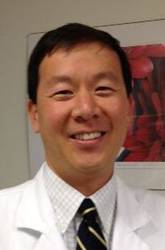
Last December, Dr. Liu was named as one of 73 "Innovation Advisors" in the newly created Center for Medicare and Medicaid Innovation (CMMI). The advisors, who were selected from among more than 900 applicants, are each working on a local quality improvement project and are receiving special training from the CMMI. During his tenure as an innovation advisor, Dr. Liu will be analyzing the progress of his elder care initiative with the goal of expanding it throughout the Dartmouth-Hitchcock Medical Center.
In an interview, Dr. Liu discussed his quality improvement project and his role as an innovation advisor.
QUESTION: Why did you decide to look at this specific population of patients?
Dr. Liu: Patients who come to the hospital from home generally don’t want to go to a nursing home after discharge. I’ve often seen this huge discordance between patients who want to go home and providers in the hospital who tell them that they need to go to a skilled nursing facility (SNF). That made me wonder how many of these transfers to the nursing home could we prevent if we could reduce deconditioning while patients are hospitalized, and if we could better understand a patient’s home environment. If we are able to assess patients’ functional status and home needs while they are hospitalized, we can connect them to resources [to] help them achieve their goal of staying at home and ultimately avoid SNF stays after discharge.
QUESTION: How are you doing so far, specifically in increasing the number of transitions to home?
Dr. Liu: We compared medicine patients older than age 70 who were discharged from our medicine unit vs. medicine patients who were discharged from other units, and so far we’ve seen that more patients were being discharged to home from our inpatient medicine unit who underwent screening and treatment from the elder care team, ranging from around 5% to 10% more patients each month going home, compared with other units. However, we’re still early on in our improvement process. Right now we have the elder care team assessing patients for the potential for functional decline on admission and working with patients to prevent deconditioning on a daily basis.
I think the bigger piece will be thinking about the shared decision-making process around whether patients go home or to an SNF. We’re trying to improve that process and are developing criteria for that decision and communicating it across the treatment teams.
QUESTION: What challenges are you encountering so far?
Dr. Liu: Our biggest discovery in undergoing this improvement work has been that reducing the deconditioning of patients in the hospital is just one driver. The bigger driver may be that the providers and physicians who are making the decision to refer patients to skilled nursing facilities often don’t know a patient’s home situation and functional status. The information needed to make that decision isn’t always apparent because it isn’t in the medical record.
One challenge we face is that as physicians we see patients for 30 minutes in the morning and they’re always in bed. That’s all that we know about their mobility and strength. We’re focusing on the acute medical issue and not on their functional status and living situation.
Another challenge is the ability to adapt the plan for changes in a patient’s status. We’ve had a couple of cases where patients recovered during the hospitalization and improved their strength and conditioning to the point where they probably could have gone home, but the decision had already been made that they should go to an SNF, and they end up being transferred to an SNF.
QUESTION: How are the results of your project going to be used by the Center for Medicare and Medicaid Innovation?
Dr. Liu: CMMI is hoping to take the results from all the innovation advisors’ improvement projects and scale them up to a larger population if they are successful. They are also hoping that we will serve as local advisors for other CMMI initiatives.
QUESTION: Why did you apply to be an innovation advisor?
Dr. Liu: I was interested in learning a lot more about the effects of cost and payment policies to improve health care systems. I saw the innovation advisors program as an opportunity to join a community of like-minded health care providers who are interested in improving care. It was also a chance to take our elder care program to the next level by examining process and outcome measures, and – if successful – potentially spreading the program to the rest of the hospital.
Take us to your leader. Nominate a hospitalist whose work inspires you. E-mail suggestions to [email protected]. Read previous columns at ehospitalistnews.com.
For Dr. Stephen K. Liu, a clinical hospitalist at the Dartmouth-Hitchcock Medical Center in Lebanon, N.H., prevention has always been a passion.
During his residency, Dr. Liu began a program to provide smoking-cessation counseling and outpatient referrals for hospitalized patients while he worked with a team focused on improving inpatient care for community-acquired pneumonia patients. Now, as medical director for the inpatient medicine unit, he is looking at whether a specialized team of elder care providers can increase the likelihood that geriatric patients will be discharged to home rather than to a skilled nursing facility by preventing deconditioning during their hospital stay and improving communication among providers.
Last December, Dr. Liu was named as one of 73 "Innovation Advisors" in the newly created Center for Medicare and Medicaid Innovation (CMMI). The advisors, who were selected from among more than 900 applicants, are each working on a local quality improvement project and are receiving special training from the CMMI. During his tenure as an innovation advisor, Dr. Liu will be analyzing the progress of his elder care initiative with the goal of expanding it throughout the Dartmouth-Hitchcock Medical Center.
In an interview, Dr. Liu discussed his quality improvement project and his role as an innovation advisor.
QUESTION: Why did you decide to look at this specific population of patients?
Dr. Liu: Patients who come to the hospital from home generally don’t want to go to a nursing home after discharge. I’ve often seen this huge discordance between patients who want to go home and providers in the hospital who tell them that they need to go to a skilled nursing facility (SNF). That made me wonder how many of these transfers to the nursing home could we prevent if we could reduce deconditioning while patients are hospitalized, and if we could better understand a patient’s home environment. If we are able to assess patients’ functional status and home needs while they are hospitalized, we can connect them to resources [to] help them achieve their goal of staying at home and ultimately avoid SNF stays after discharge.
QUESTION: How are you doing so far, specifically in increasing the number of transitions to home?
Dr. Liu: We compared medicine patients older than age 70 who were discharged from our medicine unit vs. medicine patients who were discharged from other units, and so far we’ve seen that more patients were being discharged to home from our inpatient medicine unit who underwent screening and treatment from the elder care team, ranging from around 5% to 10% more patients each month going home, compared with other units. However, we’re still early on in our improvement process. Right now we have the elder care team assessing patients for the potential for functional decline on admission and working with patients to prevent deconditioning on a daily basis.
I think the bigger piece will be thinking about the shared decision-making process around whether patients go home or to an SNF. We’re trying to improve that process and are developing criteria for that decision and communicating it across the treatment teams.
QUESTION: What challenges are you encountering so far?
Dr. Liu: Our biggest discovery in undergoing this improvement work has been that reducing the deconditioning of patients in the hospital is just one driver. The bigger driver may be that the providers and physicians who are making the decision to refer patients to skilled nursing facilities often don’t know a patient’s home situation and functional status. The information needed to make that decision isn’t always apparent because it isn’t in the medical record.
One challenge we face is that as physicians we see patients for 30 minutes in the morning and they’re always in bed. That’s all that we know about their mobility and strength. We’re focusing on the acute medical issue and not on their functional status and living situation.
Another challenge is the ability to adapt the plan for changes in a patient’s status. We’ve had a couple of cases where patients recovered during the hospitalization and improved their strength and conditioning to the point where they probably could have gone home, but the decision had already been made that they should go to an SNF, and they end up being transferred to an SNF.
QUESTION: How are the results of your project going to be used by the Center for Medicare and Medicaid Innovation?
Dr. Liu: CMMI is hoping to take the results from all the innovation advisors’ improvement projects and scale them up to a larger population if they are successful. They are also hoping that we will serve as local advisors for other CMMI initiatives.
QUESTION: Why did you apply to be an innovation advisor?
Dr. Liu: I was interested in learning a lot more about the effects of cost and payment policies to improve health care systems. I saw the innovation advisors program as an opportunity to join a community of like-minded health care providers who are interested in improving care. It was also a chance to take our elder care program to the next level by examining process and outcome measures, and – if successful – potentially spreading the program to the rest of the hospital.
Take us to your leader. Nominate a hospitalist whose work inspires you. E-mail suggestions to [email protected]. Read previous columns at ehospitalistnews.com.
For Dr. Stephen K. Liu, a clinical hospitalist at the Dartmouth-Hitchcock Medical Center in Lebanon, N.H., prevention has always been a passion.
During his residency, Dr. Liu began a program to provide smoking-cessation counseling and outpatient referrals for hospitalized patients while he worked with a team focused on improving inpatient care for community-acquired pneumonia patients. Now, as medical director for the inpatient medicine unit, he is looking at whether a specialized team of elder care providers can increase the likelihood that geriatric patients will be discharged to home rather than to a skilled nursing facility by preventing deconditioning during their hospital stay and improving communication among providers.
Last December, Dr. Liu was named as one of 73 "Innovation Advisors" in the newly created Center for Medicare and Medicaid Innovation (CMMI). The advisors, who were selected from among more than 900 applicants, are each working on a local quality improvement project and are receiving special training from the CMMI. During his tenure as an innovation advisor, Dr. Liu will be analyzing the progress of his elder care initiative with the goal of expanding it throughout the Dartmouth-Hitchcock Medical Center.
In an interview, Dr. Liu discussed his quality improvement project and his role as an innovation advisor.
QUESTION: Why did you decide to look at this specific population of patients?
Dr. Liu: Patients who come to the hospital from home generally don’t want to go to a nursing home after discharge. I’ve often seen this huge discordance between patients who want to go home and providers in the hospital who tell them that they need to go to a skilled nursing facility (SNF). That made me wonder how many of these transfers to the nursing home could we prevent if we could reduce deconditioning while patients are hospitalized, and if we could better understand a patient’s home environment. If we are able to assess patients’ functional status and home needs while they are hospitalized, we can connect them to resources [to] help them achieve their goal of staying at home and ultimately avoid SNF stays after discharge.
QUESTION: How are you doing so far, specifically in increasing the number of transitions to home?
Dr. Liu: We compared medicine patients older than age 70 who were discharged from our medicine unit vs. medicine patients who were discharged from other units, and so far we’ve seen that more patients were being discharged to home from our inpatient medicine unit who underwent screening and treatment from the elder care team, ranging from around 5% to 10% more patients each month going home, compared with other units. However, we’re still early on in our improvement process. Right now we have the elder care team assessing patients for the potential for functional decline on admission and working with patients to prevent deconditioning on a daily basis.
I think the bigger piece will be thinking about the shared decision-making process around whether patients go home or to an SNF. We’re trying to improve that process and are developing criteria for that decision and communicating it across the treatment teams.
QUESTION: What challenges are you encountering so far?
Dr. Liu: Our biggest discovery in undergoing this improvement work has been that reducing the deconditioning of patients in the hospital is just one driver. The bigger driver may be that the providers and physicians who are making the decision to refer patients to skilled nursing facilities often don’t know a patient’s home situation and functional status. The information needed to make that decision isn’t always apparent because it isn’t in the medical record.
One challenge we face is that as physicians we see patients for 30 minutes in the morning and they’re always in bed. That’s all that we know about their mobility and strength. We’re focusing on the acute medical issue and not on their functional status and living situation.
Another challenge is the ability to adapt the plan for changes in a patient’s status. We’ve had a couple of cases where patients recovered during the hospitalization and improved their strength and conditioning to the point where they probably could have gone home, but the decision had already been made that they should go to an SNF, and they end up being transferred to an SNF.
QUESTION: How are the results of your project going to be used by the Center for Medicare and Medicaid Innovation?
Dr. Liu: CMMI is hoping to take the results from all the innovation advisors’ improvement projects and scale them up to a larger population if they are successful. They are also hoping that we will serve as local advisors for other CMMI initiatives.
QUESTION: Why did you apply to be an innovation advisor?
Dr. Liu: I was interested in learning a lot more about the effects of cost and payment policies to improve health care systems. I saw the innovation advisors program as an opportunity to join a community of like-minded health care providers who are interested in improving care. It was also a chance to take our elder care program to the next level by examining process and outcome measures, and – if successful – potentially spreading the program to the rest of the hospital.
Take us to your leader. Nominate a hospitalist whose work inspires you. E-mail suggestions to [email protected]. Read previous columns at ehospitalistnews.com.