User login
PARIS – Screening pregnant women for hypothyroidism, and treating them early in pregnancy, doesn’t seem to improve the intellectual development of their children.
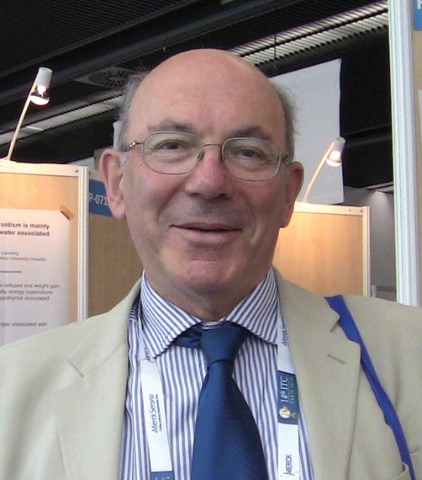
The preliminary results of the CATS (Controlled Antenatal Thyroid Screening) trial, presented Sept. 15 at the International Thyroid Congress, found no differences in the intellectual development of 3-year-olds whose hypothyroid mothers took levothyroxine during pregnancy and those who did not take the hormone. Thus, said primary investigator Dr. John Lazarus, CATS will not settle the argument that has plagued endocrinologists for more than decade.
“At the moment, I think we have data that argues against population-based screening and treatment for these women,” he said in an interview. “This leaves the decision of whether to screen and treat up to the individual physician. The Endocrine Society guidelines, so far, say that testing should only be done in early pregnancy if there is some significant risk factor. But other studies show that if you adopt this method, you miss a significant number of women who should be treated. So I think the debate will rumble on.”
CATS is the first large-scale randomized controlled trial to tackle the issue, which was first examined in 1999, with a retrospective study of serum thyrotropin samples collected from 25,216 women during 1987-1990. Only 62 of the group were found to have subclinical hypothyroidism at their first prenatal visit. Between 7 and 9 years after they gave birth, their children underwent neuropsychological testing and the results were compared to a control group of 124 children. The full-scale IQ scores of the children of hypothyroid mothers averaged 7 points lower than those of the control children: 15% had a score of 85 or less, compared with 5% of the control children (N. Engl. J. Med. 1999;341:549-55).
Because the study was retrospective, Dr. Lazarus, a professor of clinical endocrinology at the University Hospital Wales and Cardiff University, said it could not draw any direct conclusion about causation. CATS was launched in 2002 to find the answer.
He presented preliminary data on the CATS study population comprising nearly 22,000 women with singleton pregnancies whose blood was tested for free thyroxine (T4) and thyroid stimulating hormone before 16 weeks’ gestation. Before being tested, the sera were randomized to either screening (10,923) or control (10,198). Women in the screening group with low T4 and/or high TSH were given 150 mcg/day levothyroxine, and those in the control group with these results were given the drug after delivery.
Among the screening group, 4.7% were found to be hypothyroid and received treatment. Among the control group, 3.6% were found to be hypothyroid, a statistically nonsignificant difference.
When the children of these women were aged 38-40 months, they underwent intellectual testing with the Wechsler Preschool and Primary Scale of Intelligence III. A psychologist blinded to the children’s status conducted the tests at the children’s homes. Dr. Lazarus presented data on 404 children in the control group and 390 in the screening group.
In the intention-to-treat analysis, the investigators found no difference in the mean IQ scores of children randomized to screening or no screening (100 vs. 99). Nor was there a significant between-group difference in the percentage of children with an IQ of less than 85 (11.5% in the screening group vs. 15.6% in the control group).
A subgroup analysis found a different result, however. The investigators examined results only among women whose consecutive blood levels showed that they were compliant with their medication. In this analysis, the mean IQ was still similar (100 vs. 100), but the percentage of those with an IQ below 85 became significantly different (9.5% screening group vs. 15.6% control group).
Dr. Lazarus cautioned against using this finding as a case for population screening, however. “By looking at it that way, we are no longer looking at a randomized group, so this is why these are very preliminary data,” he said. “This is a secondary analysis, and in randomized controlled trials, those are always subject to criticism.”
More data and analyses will be forthcoming over the next year, he said. But if the results are similar, “The trial won’t show a benefit to the intellect of the child of generalized maternal screening for hypothyroidism in pregnancy.”
Disclosures: The trial was funded by the U.K. Wellcome Trust. Dr. Lazarus had no financial conflicts to declare.
PARIS – Screening pregnant women for hypothyroidism, and treating them early in pregnancy, doesn’t seem to improve the intellectual development of their children.
The preliminary results of the CATS (Controlled Antenatal Thyroid Screening) trial, presented Sept. 15 at the International Thyroid Congress, found no differences in the intellectual development of 3-year-olds whose hypothyroid mothers took levothyroxine during pregnancy and those who did not take the hormone. Thus, said primary investigator Dr. John Lazarus, CATS will not settle the argument that has plagued endocrinologists for more than decade.
“At the moment, I think we have data that argues against population-based screening and treatment for these women,” he said in an interview. “This leaves the decision of whether to screen and treat up to the individual physician. The Endocrine Society guidelines, so far, say that testing should only be done in early pregnancy if there is some significant risk factor. But other studies show that if you adopt this method, you miss a significant number of women who should be treated. So I think the debate will rumble on.”
CATS is the first large-scale randomized controlled trial to tackle the issue, which was first examined in 1999, with a retrospective study of serum thyrotropin samples collected from 25,216 women during 1987-1990. Only 62 of the group were found to have subclinical hypothyroidism at their first prenatal visit. Between 7 and 9 years after they gave birth, their children underwent neuropsychological testing and the results were compared to a control group of 124 children. The full-scale IQ scores of the children of hypothyroid mothers averaged 7 points lower than those of the control children: 15% had a score of 85 or less, compared with 5% of the control children (N. Engl. J. Med. 1999;341:549-55).
Because the study was retrospective, Dr. Lazarus, a professor of clinical endocrinology at the University Hospital Wales and Cardiff University, said it could not draw any direct conclusion about causation. CATS was launched in 2002 to find the answer.
He presented preliminary data on the CATS study population comprising nearly 22,000 women with singleton pregnancies whose blood was tested for free thyroxine (T4) and thyroid stimulating hormone before 16 weeks’ gestation. Before being tested, the sera were randomized to either screening (10,923) or control (10,198). Women in the screening group with low T4 and/or high TSH were given 150 mcg/day levothyroxine, and those in the control group with these results were given the drug after delivery.
Among the screening group, 4.7% were found to be hypothyroid and received treatment. Among the control group, 3.6% were found to be hypothyroid, a statistically nonsignificant difference.
When the children of these women were aged 38-40 months, they underwent intellectual testing with the Wechsler Preschool and Primary Scale of Intelligence III. A psychologist blinded to the children’s status conducted the tests at the children’s homes. Dr. Lazarus presented data on 404 children in the control group and 390 in the screening group.
In the intention-to-treat analysis, the investigators found no difference in the mean IQ scores of children randomized to screening or no screening (100 vs. 99). Nor was there a significant between-group difference in the percentage of children with an IQ of less than 85 (11.5% in the screening group vs. 15.6% in the control group).
A subgroup analysis found a different result, however. The investigators examined results only among women whose consecutive blood levels showed that they were compliant with their medication. In this analysis, the mean IQ was still similar (100 vs. 100), but the percentage of those with an IQ below 85 became significantly different (9.5% screening group vs. 15.6% control group).
Dr. Lazarus cautioned against using this finding as a case for population screening, however. “By looking at it that way, we are no longer looking at a randomized group, so this is why these are very preliminary data,” he said. “This is a secondary analysis, and in randomized controlled trials, those are always subject to criticism.”
More data and analyses will be forthcoming over the next year, he said. But if the results are similar, “The trial won’t show a benefit to the intellect of the child of generalized maternal screening for hypothyroidism in pregnancy.”
Disclosures: The trial was funded by the U.K. Wellcome Trust. Dr. Lazarus had no financial conflicts to declare.
PARIS – Screening pregnant women for hypothyroidism, and treating them early in pregnancy, doesn’t seem to improve the intellectual development of their children.
The preliminary results of the CATS (Controlled Antenatal Thyroid Screening) trial, presented Sept. 15 at the International Thyroid Congress, found no differences in the intellectual development of 3-year-olds whose hypothyroid mothers took levothyroxine during pregnancy and those who did not take the hormone. Thus, said primary investigator Dr. John Lazarus, CATS will not settle the argument that has plagued endocrinologists for more than decade.
“At the moment, I think we have data that argues against population-based screening and treatment for these women,” he said in an interview. “This leaves the decision of whether to screen and treat up to the individual physician. The Endocrine Society guidelines, so far, say that testing should only be done in early pregnancy if there is some significant risk factor. But other studies show that if you adopt this method, you miss a significant number of women who should be treated. So I think the debate will rumble on.”
CATS is the first large-scale randomized controlled trial to tackle the issue, which was first examined in 1999, with a retrospective study of serum thyrotropin samples collected from 25,216 women during 1987-1990. Only 62 of the group were found to have subclinical hypothyroidism at their first prenatal visit. Between 7 and 9 years after they gave birth, their children underwent neuropsychological testing and the results were compared to a control group of 124 children. The full-scale IQ scores of the children of hypothyroid mothers averaged 7 points lower than those of the control children: 15% had a score of 85 or less, compared with 5% of the control children (N. Engl. J. Med. 1999;341:549-55).
Because the study was retrospective, Dr. Lazarus, a professor of clinical endocrinology at the University Hospital Wales and Cardiff University, said it could not draw any direct conclusion about causation. CATS was launched in 2002 to find the answer.
He presented preliminary data on the CATS study population comprising nearly 22,000 women with singleton pregnancies whose blood was tested for free thyroxine (T4) and thyroid stimulating hormone before 16 weeks’ gestation. Before being tested, the sera were randomized to either screening (10,923) or control (10,198). Women in the screening group with low T4 and/or high TSH were given 150 mcg/day levothyroxine, and those in the control group with these results were given the drug after delivery.
Among the screening group, 4.7% were found to be hypothyroid and received treatment. Among the control group, 3.6% were found to be hypothyroid, a statistically nonsignificant difference.
When the children of these women were aged 38-40 months, they underwent intellectual testing with the Wechsler Preschool and Primary Scale of Intelligence III. A psychologist blinded to the children’s status conducted the tests at the children’s homes. Dr. Lazarus presented data on 404 children in the control group and 390 in the screening group.
In the intention-to-treat analysis, the investigators found no difference in the mean IQ scores of children randomized to screening or no screening (100 vs. 99). Nor was there a significant between-group difference in the percentage of children with an IQ of less than 85 (11.5% in the screening group vs. 15.6% in the control group).
A subgroup analysis found a different result, however. The investigators examined results only among women whose consecutive blood levels showed that they were compliant with their medication. In this analysis, the mean IQ was still similar (100 vs. 100), but the percentage of those with an IQ below 85 became significantly different (9.5% screening group vs. 15.6% control group).
Dr. Lazarus cautioned against using this finding as a case for population screening, however. “By looking at it that way, we are no longer looking at a randomized group, so this is why these are very preliminary data,” he said. “This is a secondary analysis, and in randomized controlled trials, those are always subject to criticism.”
More data and analyses will be forthcoming over the next year, he said. But if the results are similar, “The trial won’t show a benefit to the intellect of the child of generalized maternal screening for hypothyroidism in pregnancy.”
Disclosures: The trial was funded by the U.K. Wellcome Trust. Dr. Lazarus had no financial conflicts to declare.
From the International Thyroid Congress
Major Finding: Generalized screening and treatment of pregnant women for hypothyroidism does not improve intellectual outcomes for their offspring.
Data Source: CATS randomized almost 22,000 pregnant women to screening and treatment for hypothyroidism or no screening. At age 3, the children of treated women were intellectually comparable to those of nontreated women
Disclosures: The trial was funded by the U.K. Wellcome Trust. Dr. Lazarus had no financial conflicts to declare.