User login
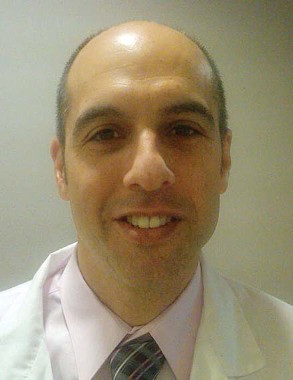
When the advantages of using low-molecular-weight heparin became clear in the 1990s, Dr. Andrew S. Dunn developed a plan to allow patients with deep vein thrombosis to be treated safely outside the hospital.
The program, which was implemented at Mount Sinai Medical Center in New York, made it possible for patients to leave the hospital early but still be closely followed at home. And from that point on, much of Dr. Dunn’s research career was devoted to ensuring the safe use of anticoagulants.
Dr. Dunn, who is the chief of the division of hospital medicine at Mount Sinai, has published research on a range of topics from the perioperative management of warfarin to the prevention of DVT in the hospital. He also worked on the last two versions of the American College of Chest Physicians’ guidelines on anticoagulation and thrombosis (Chest 2012 Feb. [doi:10.1378/chest.1412S1]).
In an interview, Dr. Dunn discussed the progress made by hospitals in the safe use of anticoagulants, and how hospitalists can play a role.
QUESTION: It’s been nearly 4 years since the Joint Commission issued a sentinel event alert on anticoagulants. Do you think hospitals are doing a better job managing these medications today?
Dr. Dunn: I think hospitals are much more aware of the problem, and are clearly focusing their efforts to comply with the Joint Commission standards and to improve patient care. I have not seen data that actually show that events have gone down nationally. Any list of high-risk medications still has anticoagulants in the top two, along with narcotics, so this still remains a major safety issue.
QUESTION: What specific steps have you taken at Mount Sinai to improve the safety of anticoagulant use?
Dr. Dunn: We promote evidence-based practice and use the guidelines from the American College of Chest Physicians as a resource in developing our own internal policy and safety procedures. We also use our electronic medical record to promote more standardized, evidence-based practice. For instance, when you order an anticoagulant, such as a low-molecular-weight heparin, the EMR displays the patient’s weight because you need accurate, weight-based dosing to prescribe the medication safely. Our EMR calculates the dosage based on the weight and also shows the hemoglobin, platelet counts, and coagulation profile at the time of ordering. So that takes a lot of the human factors out of the dosing process and reduces errors. We have also enhanced our patient-education efforts with more robust teaching at the time of discharge, and we have developed some take-home materials for patients. Some of the interventions we’ve implemented are pharmacy specific, such as limiting the number of heparin concentrations available.
QUESTION: Are these efforts paying off? Have you measured your success so far?
Dr. Dunn: We know that the process elements are getting better, including VTE prophylaxis rates and patient education documentation. In terms of clinical outcomes, it’s harder to say. We measure our venous thrombosis rates and they are low, but we haven’t tracked specific safety outcomes over time, such as heparin-related bleeding, as yet. Our pharmacy tracks medication errors and adverse events for anticoagulants and other drugs, and we do evaluations when we see trends.
QUESTION: You chair Mount Sinai’s Anticoagulation Safety and VTE Prevention Committee. What are you working on right now?
Dr. Dunn: Right now, we’re developing an initiative to improve transitions. This is particularly relevant to anticoagulants because if you send someone home on warfarin and they are not yet in the appropriate therapeutic range, you have to be sure that the outpatient physician knows that they are warfarin, knows to check their INR [international normalized ratio], and determines whether they are on a bridging agent such as low-molecular-weight heparin. We’re working on a way to make that a more standard process, because right now it’s pretty haphazard and dangerous. For us, if the patient is not in a therapeutic range, they should have an INR within 2 days. We’ve made that clearer for our physicians, and now we’re trying to integrate that policy into our EMR. It’s one thing to make it a hospital policy and send out an email, but it’s completely different to integrate it into the day-to-day workflow.
QUESTION: What do you see as the best role for hospitalists in improving the safe use of anticoagulants?
Dr. Dunn: The most important thing is to help identify the vulnerabilities in the hospital. Hospitalists are working with the medicines and the patients in the field, and can see where the potential for errors are and where the near misses are happening. So don’t wait for a sentinel event. If the hospitalist can see that there’s the potential for complications – whether it’s not knowing the weight when dosing an anticoagulant, or not being able to determine if there are any drug interactions – the hospitalist should be seeing that and bringing it to the attention of the hospital leadership, or leading initiatives to enhance safety.
Take us to your leader. Nominate a hospitalist whose work inspires you. E-mail suggestions to [email protected]. Read previous columns at ehospitalistnews.com.
When the advantages of using low-molecular-weight heparin became clear in the 1990s, Dr. Andrew S. Dunn developed a plan to allow patients with deep vein thrombosis to be treated safely outside the hospital.
The program, which was implemented at Mount Sinai Medical Center in New York, made it possible for patients to leave the hospital early but still be closely followed at home. And from that point on, much of Dr. Dunn’s research career was devoted to ensuring the safe use of anticoagulants.
Dr. Dunn, who is the chief of the division of hospital medicine at Mount Sinai, has published research on a range of topics from the perioperative management of warfarin to the prevention of DVT in the hospital. He also worked on the last two versions of the American College of Chest Physicians’ guidelines on anticoagulation and thrombosis (Chest 2012 Feb. [doi:10.1378/chest.1412S1]).
In an interview, Dr. Dunn discussed the progress made by hospitals in the safe use of anticoagulants, and how hospitalists can play a role.
QUESTION: It’s been nearly 4 years since the Joint Commission issued a sentinel event alert on anticoagulants. Do you think hospitals are doing a better job managing these medications today?
Dr. Dunn: I think hospitals are much more aware of the problem, and are clearly focusing their efforts to comply with the Joint Commission standards and to improve patient care. I have not seen data that actually show that events have gone down nationally. Any list of high-risk medications still has anticoagulants in the top two, along with narcotics, so this still remains a major safety issue.
QUESTION: What specific steps have you taken at Mount Sinai to improve the safety of anticoagulant use?
Dr. Dunn: We promote evidence-based practice and use the guidelines from the American College of Chest Physicians as a resource in developing our own internal policy and safety procedures. We also use our electronic medical record to promote more standardized, evidence-based practice. For instance, when you order an anticoagulant, such as a low-molecular-weight heparin, the EMR displays the patient’s weight because you need accurate, weight-based dosing to prescribe the medication safely. Our EMR calculates the dosage based on the weight and also shows the hemoglobin, platelet counts, and coagulation profile at the time of ordering. So that takes a lot of the human factors out of the dosing process and reduces errors. We have also enhanced our patient-education efforts with more robust teaching at the time of discharge, and we have developed some take-home materials for patients. Some of the interventions we’ve implemented are pharmacy specific, such as limiting the number of heparin concentrations available.
QUESTION: Are these efforts paying off? Have you measured your success so far?
Dr. Dunn: We know that the process elements are getting better, including VTE prophylaxis rates and patient education documentation. In terms of clinical outcomes, it’s harder to say. We measure our venous thrombosis rates and they are low, but we haven’t tracked specific safety outcomes over time, such as heparin-related bleeding, as yet. Our pharmacy tracks medication errors and adverse events for anticoagulants and other drugs, and we do evaluations when we see trends.
QUESTION: You chair Mount Sinai’s Anticoagulation Safety and VTE Prevention Committee. What are you working on right now?
Dr. Dunn: Right now, we’re developing an initiative to improve transitions. This is particularly relevant to anticoagulants because if you send someone home on warfarin and they are not yet in the appropriate therapeutic range, you have to be sure that the outpatient physician knows that they are warfarin, knows to check their INR [international normalized ratio], and determines whether they are on a bridging agent such as low-molecular-weight heparin. We’re working on a way to make that a more standard process, because right now it’s pretty haphazard and dangerous. For us, if the patient is not in a therapeutic range, they should have an INR within 2 days. We’ve made that clearer for our physicians, and now we’re trying to integrate that policy into our EMR. It’s one thing to make it a hospital policy and send out an email, but it’s completely different to integrate it into the day-to-day workflow.
QUESTION: What do you see as the best role for hospitalists in improving the safe use of anticoagulants?
Dr. Dunn: The most important thing is to help identify the vulnerabilities in the hospital. Hospitalists are working with the medicines and the patients in the field, and can see where the potential for errors are and where the near misses are happening. So don’t wait for a sentinel event. If the hospitalist can see that there’s the potential for complications – whether it’s not knowing the weight when dosing an anticoagulant, or not being able to determine if there are any drug interactions – the hospitalist should be seeing that and bringing it to the attention of the hospital leadership, or leading initiatives to enhance safety.
Take us to your leader. Nominate a hospitalist whose work inspires you. E-mail suggestions to [email protected]. Read previous columns at ehospitalistnews.com.
When the advantages of using low-molecular-weight heparin became clear in the 1990s, Dr. Andrew S. Dunn developed a plan to allow patients with deep vein thrombosis to be treated safely outside the hospital.
The program, which was implemented at Mount Sinai Medical Center in New York, made it possible for patients to leave the hospital early but still be closely followed at home. And from that point on, much of Dr. Dunn’s research career was devoted to ensuring the safe use of anticoagulants.
Dr. Dunn, who is the chief of the division of hospital medicine at Mount Sinai, has published research on a range of topics from the perioperative management of warfarin to the prevention of DVT in the hospital. He also worked on the last two versions of the American College of Chest Physicians’ guidelines on anticoagulation and thrombosis (Chest 2012 Feb. [doi:10.1378/chest.1412S1]).
In an interview, Dr. Dunn discussed the progress made by hospitals in the safe use of anticoagulants, and how hospitalists can play a role.
QUESTION: It’s been nearly 4 years since the Joint Commission issued a sentinel event alert on anticoagulants. Do you think hospitals are doing a better job managing these medications today?
Dr. Dunn: I think hospitals are much more aware of the problem, and are clearly focusing their efforts to comply with the Joint Commission standards and to improve patient care. I have not seen data that actually show that events have gone down nationally. Any list of high-risk medications still has anticoagulants in the top two, along with narcotics, so this still remains a major safety issue.
QUESTION: What specific steps have you taken at Mount Sinai to improve the safety of anticoagulant use?
Dr. Dunn: We promote evidence-based practice and use the guidelines from the American College of Chest Physicians as a resource in developing our own internal policy and safety procedures. We also use our electronic medical record to promote more standardized, evidence-based practice. For instance, when you order an anticoagulant, such as a low-molecular-weight heparin, the EMR displays the patient’s weight because you need accurate, weight-based dosing to prescribe the medication safely. Our EMR calculates the dosage based on the weight and also shows the hemoglobin, platelet counts, and coagulation profile at the time of ordering. So that takes a lot of the human factors out of the dosing process and reduces errors. We have also enhanced our patient-education efforts with more robust teaching at the time of discharge, and we have developed some take-home materials for patients. Some of the interventions we’ve implemented are pharmacy specific, such as limiting the number of heparin concentrations available.
QUESTION: Are these efforts paying off? Have you measured your success so far?
Dr. Dunn: We know that the process elements are getting better, including VTE prophylaxis rates and patient education documentation. In terms of clinical outcomes, it’s harder to say. We measure our venous thrombosis rates and they are low, but we haven’t tracked specific safety outcomes over time, such as heparin-related bleeding, as yet. Our pharmacy tracks medication errors and adverse events for anticoagulants and other drugs, and we do evaluations when we see trends.
QUESTION: You chair Mount Sinai’s Anticoagulation Safety and VTE Prevention Committee. What are you working on right now?
Dr. Dunn: Right now, we’re developing an initiative to improve transitions. This is particularly relevant to anticoagulants because if you send someone home on warfarin and they are not yet in the appropriate therapeutic range, you have to be sure that the outpatient physician knows that they are warfarin, knows to check their INR [international normalized ratio], and determines whether they are on a bridging agent such as low-molecular-weight heparin. We’re working on a way to make that a more standard process, because right now it’s pretty haphazard and dangerous. For us, if the patient is not in a therapeutic range, they should have an INR within 2 days. We’ve made that clearer for our physicians, and now we’re trying to integrate that policy into our EMR. It’s one thing to make it a hospital policy and send out an email, but it’s completely different to integrate it into the day-to-day workflow.
QUESTION: What do you see as the best role for hospitalists in improving the safe use of anticoagulants?
Dr. Dunn: The most important thing is to help identify the vulnerabilities in the hospital. Hospitalists are working with the medicines and the patients in the field, and can see where the potential for errors are and where the near misses are happening. So don’t wait for a sentinel event. If the hospitalist can see that there’s the potential for complications – whether it’s not knowing the weight when dosing an anticoagulant, or not being able to determine if there are any drug interactions – the hospitalist should be seeing that and bringing it to the attention of the hospital leadership, or leading initiatives to enhance safety.
Take us to your leader. Nominate a hospitalist whose work inspires you. E-mail suggestions to [email protected]. Read previous columns at ehospitalistnews.com.