User login
The incidence of pneumococcal pneumonia in young children is significantly associated with seasonal peaks of respiratory syncytial and influenza viruses, although this relationship has been attenuated by introduction of the 7-valent pneumococcal conjugate vaccine, new data suggest.
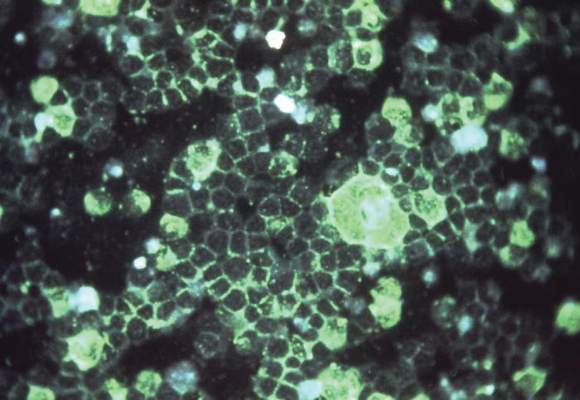
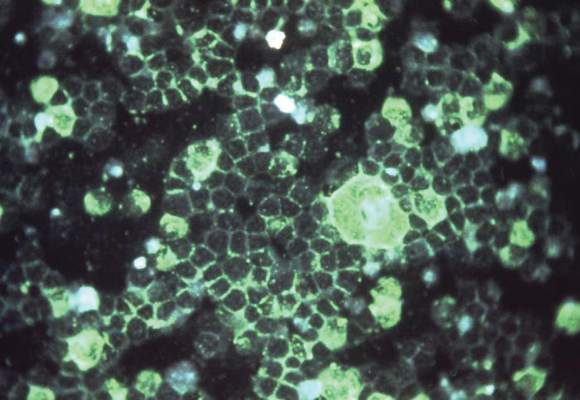
Analysis of data from the State Inpatient Databases from 1992 to 2009 showed a distinct spatiotemporal association between respiratory syncytial virus (RSV) and pneumococcal pneumonia peaks; RSV peaks were linked to a significant 20.3% increase in pneumococcal pneumonia incidence in children aged under 1 year, and a 10.1% increase in children aged 1-2 years.
Influenza peaks were associated with a smaller effect, with a 3.2% overall increase in pneumococcal pneumonia in children aged 1-2 years.
The introduction of the 7-valent pneumococcal conjugate vaccine was accompanied by an 18% drop in RSV-coded hospitalizations in children aged less than 1 year when the 3 years after introduction of the vaccine were compared with the 3 years prior to its introduction, according to a study published online Jan. 6 inPLOS Medicine(2014 [doi:10.1371/journal.pmed.1001776]).
“These results, obtained from population-based epidemiological data, suggest that RSV might increase the risk for pneumococcal infections and that a subset of hospitalized RSV cases might have a mixed viral-bacterial etiology,” wrote Dr. Daniel M. Weinberger of the Yale School of Public Health, New Haven, Conn., and his colleagues.
The study was partly supported by the U.S. National Institutes of Health, the Yale University School of Medicine, the Yale Center for Clinical Investigation, the Bill & Melinda Gates Foundation, RAPIDD (Research and Policy for Infectious Disease Dynamic), and the Fogarty International Center. Three authors declared unrelated research support from Pfizer and Merck, and one author is a member of the PLOS Medicine editorial board.
The incidence of pneumococcal pneumonia in young children is significantly associated with seasonal peaks of respiratory syncytial and influenza viruses, although this relationship has been attenuated by introduction of the 7-valent pneumococcal conjugate vaccine, new data suggest.
Analysis of data from the State Inpatient Databases from 1992 to 2009 showed a distinct spatiotemporal association between respiratory syncytial virus (RSV) and pneumococcal pneumonia peaks; RSV peaks were linked to a significant 20.3% increase in pneumococcal pneumonia incidence in children aged under 1 year, and a 10.1% increase in children aged 1-2 years.
Influenza peaks were associated with a smaller effect, with a 3.2% overall increase in pneumococcal pneumonia in children aged 1-2 years.
The introduction of the 7-valent pneumococcal conjugate vaccine was accompanied by an 18% drop in RSV-coded hospitalizations in children aged less than 1 year when the 3 years after introduction of the vaccine were compared with the 3 years prior to its introduction, according to a study published online Jan. 6 inPLOS Medicine(2014 [doi:10.1371/journal.pmed.1001776]).
“These results, obtained from population-based epidemiological data, suggest that RSV might increase the risk for pneumococcal infections and that a subset of hospitalized RSV cases might have a mixed viral-bacterial etiology,” wrote Dr. Daniel M. Weinberger of the Yale School of Public Health, New Haven, Conn., and his colleagues.
The study was partly supported by the U.S. National Institutes of Health, the Yale University School of Medicine, the Yale Center for Clinical Investigation, the Bill & Melinda Gates Foundation, RAPIDD (Research and Policy for Infectious Disease Dynamic), and the Fogarty International Center. Three authors declared unrelated research support from Pfizer and Merck, and one author is a member of the PLOS Medicine editorial board.
The incidence of pneumococcal pneumonia in young children is significantly associated with seasonal peaks of respiratory syncytial and influenza viruses, although this relationship has been attenuated by introduction of the 7-valent pneumococcal conjugate vaccine, new data suggest.
Analysis of data from the State Inpatient Databases from 1992 to 2009 showed a distinct spatiotemporal association between respiratory syncytial virus (RSV) and pneumococcal pneumonia peaks; RSV peaks were linked to a significant 20.3% increase in pneumococcal pneumonia incidence in children aged under 1 year, and a 10.1% increase in children aged 1-2 years.
Influenza peaks were associated with a smaller effect, with a 3.2% overall increase in pneumococcal pneumonia in children aged 1-2 years.
The introduction of the 7-valent pneumococcal conjugate vaccine was accompanied by an 18% drop in RSV-coded hospitalizations in children aged less than 1 year when the 3 years after introduction of the vaccine were compared with the 3 years prior to its introduction, according to a study published online Jan. 6 inPLOS Medicine(2014 [doi:10.1371/journal.pmed.1001776]).
“These results, obtained from population-based epidemiological data, suggest that RSV might increase the risk for pneumococcal infections and that a subset of hospitalized RSV cases might have a mixed viral-bacterial etiology,” wrote Dr. Daniel M. Weinberger of the Yale School of Public Health, New Haven, Conn., and his colleagues.
The study was partly supported by the U.S. National Institutes of Health, the Yale University School of Medicine, the Yale Center for Clinical Investigation, the Bill & Melinda Gates Foundation, RAPIDD (Research and Policy for Infectious Disease Dynamic), and the Fogarty International Center. Three authors declared unrelated research support from Pfizer and Merck, and one author is a member of the PLOS Medicine editorial board.
FROM PLOS MEDICINE
Key clinical point: The incidence of pneumococcal pneumonia in young children is associated with seasonal peaks of respiratory syncytial and influenza viruses.
Major finding: RSV peaks were linked to a significant 20.3% increase in pneumococcal pneumonia incidence in children aged under 1 year, and 10.1% increase in children aged 1-2 years.
Data source: Analysis of data from the State Inpatient Databases from 1992-2009.
Disclosures: The study was partly supported by the U.S. National Institutes of Health, the Yale University School of Medicine, the Yale Center for Clinical Investigation, the Bill & Melinda Gates Foundation, RAPIDD (Research and Policy for Infectious Disease Dynamic), and the Fogarty International Center. Three authors declared unrelated research support from Pfizer and Merck, and one author is a member of the PLOS Medicine editorial board.