User login
MADRID - Targeted therapy - the glamour area of cancer research in recent years - has arrived at the doorstep of nonmelanoma skin cancer in a big way.
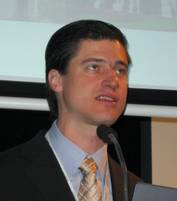
"There are at least 24 open trials of targeted therapies for nonmelanoma skin cancer listed now at www.clinicaltrials.gov," Dr. Gunther Hofbauer noted at the 13th World Congress on Cancers of the Skin, sponsored by the Skin Cancer Foundation.
The mainstays of targeted cancer therapy are monoclonal antibodies and oral small molecules directed at specific enzyme pathways and receptors identified as important in carcinogenesis or tumor growth. These agents are designed to be considerably less toxic than standard chemotherapy.
Dr. Hofbauer, a dermatologist at the University of Zurich, highlighted a handful of the most promising investigational targeted agents for treatment and chemoprevention of nonmelanoma skin cancer. These include hedgehog inhibitors, cyclooxygenase inhibitors, and alpha-difluoromethylornithine for basal cell carcinoma (BCC), and epidermal growth factor receptor inhibitors for squamous cell carcinoma (SCC).
Furthest along in the developmental pipeline are the hedgehog inhibitors.
Most BCCs have mutations in the hedgehog signaling pathway, leading to activation of the smoothened homologue, with resultant promotion of tumor growth. The oral smoothened homologue inhibitor GDC-0449 being developed by Genentech selectively inhibits the hedgehog pathway, making it of particular interest as a potential targeted therapy for BCC and a number of other malignancies, including medulloblastoma, colon cancer, and pancreatic cancer, he explained.
Last year, American investigators reported a phase I study in which 33 patients with unresectable metastastic or locally advanced BCC were treated with GDC-0449. Sixteen had partial and 2 had complete responses by the standardized Response Evaluation Criteria in Solid Tumors (RECIST). Eleven others had stable disease during the 10-month study, while 4 had progressive disease (N. Engl. J. Med. 2009;361:1,164-72).
"In general, it looks like the longer people are on this drug, the more profit they have--and the profit seems to be sustained," Dr. Hofbauer observed.
BCCs are known to secrete prostaglandin E2, which acts upon stromal cells in the cancer's vicinity to promote tumor growth. Reasoning that this process might be amenable to pharmacologic inhibition of cyclooxygenase enzymes in the skin, investigators at the Children's Hospital of Oakland (Calif.) Research Institute conducted a 3-year, double-blind, randomized clinical trial of oral celecoxib versus placebo in 60 patients with the basal cell nevus syndrome.
Celecoxib showed considerable promise in the patients with less severe disease. That is, among the 36 patients with less than 15 BCCs at baseline, those randomized to celecoxib had a 20% increase per year in BCC burden or extent, significantly less than the 50% annual increase in burden in controls. In the 24 patients with 15 or more BCCs at baseline, however, celecoxib wasn't significantly better than placebo (Cancer Prev. Res. 2010;3:25-34).
This is an exciting development involving a low-risk chemopreventive agent for use in patients genetically predisposed to multiple BCCs, in Dr. Hofbauer's view.
Animal studies have shown that inhibition of ornithine decarboxylase by alpha-difluoromethylornithine (DFMO) diminishes tissue concentrations of the neoplasia-promoting polyamines spermidine and putrescine. These observations led to a phase III randomized, double-blind, placebo-controlled study of NMSC prevention via DFMO at 500 mg/m2 per day for 4-5 years.
The trial, led by investigators at the University of Wisconsin Cancer Center, Madison, involved 291 subjects with a mean age of 61 years and an average of 4.5 previous NMSCs.
After 1,200 patient-years of follow-up, there were 260 new nonmelanoma skin cancers in the DFMO group and 363 in controls, a nonsignificant difference (P = .069). Upon closer examination, however, the investigators noted that while DFMO had no impact on the incidence of new SCCs, it did have a significant inhibitory effect on new BCCs. There were 163 in the DFMO group, compared with 243 in controls. This translated into an event rate of 0.28 new BCCs per patient per year in the DFMO group, compared with 0.40 per patient per year with placebo (P =.03).
Compliance with DFMO was deemed excellent, at greater than 90%. The chief side effect was mild ototoxicity identified in serial audiometric examinations (Cancer Prev. Res. 2010;3:35-47).
Mutations or amplification of the epidermal growth factor receptor (EGFR) have been linked to cancers of the breast, colon, lung, and cervix, as well as to melanoma and SCC. Most keratinocytes express EGFR, and this expression is greatest in the keratinocytes located in hair follicle epithelium and the basal and suprabasal portions of the epidermis, which is where the action is in SCC.
For this reason, agents that specifically target the EGFR/mitogen-activated protein kinase signaling pathway are under scrutiny as potential treatments for SCC. A fair number of such agents are already approved for the treatment of other malignancies, including the monoclonal antibodies panitumumab (Vectibix) and cetuximab (Erbitux) and the small molecules gefitinib (Iressa) and erlotinib (Tarceva). Many more are in the pipeline.
Leading the way for SCC is cetuximab, which has been approved by the Food and Drug Administration as single-agent therapy for recurrent or metastatic disease and in combination with radiation therapy for locally advanced SCC of the head and neck.
But targeted therapy has its shortcomings, Dr. Hofbauer stressed. "These molecules are not as specific or targeted as we'd like them to be. That can lead to untoward outcomes," he noted.
Dr. Hofbauer cited as an example sorafenib (Nexavar), an oral inhibitor of multiple tyrosine protein kinases. Sorafenib is approved for the treatment of advanced renal cell carcinoma and advanced hepatocellular carcinoma. But in addition to its better-known dermatologic side effects, such as hand-foot syndrome, sorafenib also apparently induces SCC or inflammation of actinic keratosis in about 7% of treated patients (Clin. Genitourin. Cancer 2009;7:20-3). The likely mechanism involves impairment of skin immunosurveillance due to reduced dendritic cell function and a diminished primary immune response, he said.
Dr. Hofbauer reported having no conflicts of interest.
MADRID - Targeted therapy - the glamour area of cancer research in recent years - has arrived at the doorstep of nonmelanoma skin cancer in a big way.
"There are at least 24 open trials of targeted therapies for nonmelanoma skin cancer listed now at www.clinicaltrials.gov," Dr. Gunther Hofbauer noted at the 13th World Congress on Cancers of the Skin, sponsored by the Skin Cancer Foundation.
The mainstays of targeted cancer therapy are monoclonal antibodies and oral small molecules directed at specific enzyme pathways and receptors identified as important in carcinogenesis or tumor growth. These agents are designed to be considerably less toxic than standard chemotherapy.
Dr. Hofbauer, a dermatologist at the University of Zurich, highlighted a handful of the most promising investigational targeted agents for treatment and chemoprevention of nonmelanoma skin cancer. These include hedgehog inhibitors, cyclooxygenase inhibitors, and alpha-difluoromethylornithine for basal cell carcinoma (BCC), and epidermal growth factor receptor inhibitors for squamous cell carcinoma (SCC).
Furthest along in the developmental pipeline are the hedgehog inhibitors.
Most BCCs have mutations in the hedgehog signaling pathway, leading to activation of the smoothened homologue, with resultant promotion of tumor growth. The oral smoothened homologue inhibitor GDC-0449 being developed by Genentech selectively inhibits the hedgehog pathway, making it of particular interest as a potential targeted therapy for BCC and a number of other malignancies, including medulloblastoma, colon cancer, and pancreatic cancer, he explained.
Last year, American investigators reported a phase I study in which 33 patients with unresectable metastastic or locally advanced BCC were treated with GDC-0449. Sixteen had partial and 2 had complete responses by the standardized Response Evaluation Criteria in Solid Tumors (RECIST). Eleven others had stable disease during the 10-month study, while 4 had progressive disease (N. Engl. J. Med. 2009;361:1,164-72).
"In general, it looks like the longer people are on this drug, the more profit they have--and the profit seems to be sustained," Dr. Hofbauer observed.
BCCs are known to secrete prostaglandin E2, which acts upon stromal cells in the cancer's vicinity to promote tumor growth. Reasoning that this process might be amenable to pharmacologic inhibition of cyclooxygenase enzymes in the skin, investigators at the Children's Hospital of Oakland (Calif.) Research Institute conducted a 3-year, double-blind, randomized clinical trial of oral celecoxib versus placebo in 60 patients with the basal cell nevus syndrome.
Celecoxib showed considerable promise in the patients with less severe disease. That is, among the 36 patients with less than 15 BCCs at baseline, those randomized to celecoxib had a 20% increase per year in BCC burden or extent, significantly less than the 50% annual increase in burden in controls. In the 24 patients with 15 or more BCCs at baseline, however, celecoxib wasn't significantly better than placebo (Cancer Prev. Res. 2010;3:25-34).
This is an exciting development involving a low-risk chemopreventive agent for use in patients genetically predisposed to multiple BCCs, in Dr. Hofbauer's view.
Animal studies have shown that inhibition of ornithine decarboxylase by alpha-difluoromethylornithine (DFMO) diminishes tissue concentrations of the neoplasia-promoting polyamines spermidine and putrescine. These observations led to a phase III randomized, double-blind, placebo-controlled study of NMSC prevention via DFMO at 500 mg/m2 per day for 4-5 years.
The trial, led by investigators at the University of Wisconsin Cancer Center, Madison, involved 291 subjects with a mean age of 61 years and an average of 4.5 previous NMSCs.
After 1,200 patient-years of follow-up, there were 260 new nonmelanoma skin cancers in the DFMO group and 363 in controls, a nonsignificant difference (P = .069). Upon closer examination, however, the investigators noted that while DFMO had no impact on the incidence of new SCCs, it did have a significant inhibitory effect on new BCCs. There were 163 in the DFMO group, compared with 243 in controls. This translated into an event rate of 0.28 new BCCs per patient per year in the DFMO group, compared with 0.40 per patient per year with placebo (P =.03).
Compliance with DFMO was deemed excellent, at greater than 90%. The chief side effect was mild ototoxicity identified in serial audiometric examinations (Cancer Prev. Res. 2010;3:35-47).
Mutations or amplification of the epidermal growth factor receptor (EGFR) have been linked to cancers of the breast, colon, lung, and cervix, as well as to melanoma and SCC. Most keratinocytes express EGFR, and this expression is greatest in the keratinocytes located in hair follicle epithelium and the basal and suprabasal portions of the epidermis, which is where the action is in SCC.
For this reason, agents that specifically target the EGFR/mitogen-activated protein kinase signaling pathway are under scrutiny as potential treatments for SCC. A fair number of such agents are already approved for the treatment of other malignancies, including the monoclonal antibodies panitumumab (Vectibix) and cetuximab (Erbitux) and the small molecules gefitinib (Iressa) and erlotinib (Tarceva). Many more are in the pipeline.
Leading the way for SCC is cetuximab, which has been approved by the Food and Drug Administration as single-agent therapy for recurrent or metastatic disease and in combination with radiation therapy for locally advanced SCC of the head and neck.
But targeted therapy has its shortcomings, Dr. Hofbauer stressed. "These molecules are not as specific or targeted as we'd like them to be. That can lead to untoward outcomes," he noted.
Dr. Hofbauer cited as an example sorafenib (Nexavar), an oral inhibitor of multiple tyrosine protein kinases. Sorafenib is approved for the treatment of advanced renal cell carcinoma and advanced hepatocellular carcinoma. But in addition to its better-known dermatologic side effects, such as hand-foot syndrome, sorafenib also apparently induces SCC or inflammation of actinic keratosis in about 7% of treated patients (Clin. Genitourin. Cancer 2009;7:20-3). The likely mechanism involves impairment of skin immunosurveillance due to reduced dendritic cell function and a diminished primary immune response, he said.
Dr. Hofbauer reported having no conflicts of interest.
MADRID - Targeted therapy - the glamour area of cancer research in recent years - has arrived at the doorstep of nonmelanoma skin cancer in a big way.
"There are at least 24 open trials of targeted therapies for nonmelanoma skin cancer listed now at www.clinicaltrials.gov," Dr. Gunther Hofbauer noted at the 13th World Congress on Cancers of the Skin, sponsored by the Skin Cancer Foundation.
The mainstays of targeted cancer therapy are monoclonal antibodies and oral small molecules directed at specific enzyme pathways and receptors identified as important in carcinogenesis or tumor growth. These agents are designed to be considerably less toxic than standard chemotherapy.
Dr. Hofbauer, a dermatologist at the University of Zurich, highlighted a handful of the most promising investigational targeted agents for treatment and chemoprevention of nonmelanoma skin cancer. These include hedgehog inhibitors, cyclooxygenase inhibitors, and alpha-difluoromethylornithine for basal cell carcinoma (BCC), and epidermal growth factor receptor inhibitors for squamous cell carcinoma (SCC).
Furthest along in the developmental pipeline are the hedgehog inhibitors.
Most BCCs have mutations in the hedgehog signaling pathway, leading to activation of the smoothened homologue, with resultant promotion of tumor growth. The oral smoothened homologue inhibitor GDC-0449 being developed by Genentech selectively inhibits the hedgehog pathway, making it of particular interest as a potential targeted therapy for BCC and a number of other malignancies, including medulloblastoma, colon cancer, and pancreatic cancer, he explained.
Last year, American investigators reported a phase I study in which 33 patients with unresectable metastastic or locally advanced BCC were treated with GDC-0449. Sixteen had partial and 2 had complete responses by the standardized Response Evaluation Criteria in Solid Tumors (RECIST). Eleven others had stable disease during the 10-month study, while 4 had progressive disease (N. Engl. J. Med. 2009;361:1,164-72).
"In general, it looks like the longer people are on this drug, the more profit they have--and the profit seems to be sustained," Dr. Hofbauer observed.
BCCs are known to secrete prostaglandin E2, which acts upon stromal cells in the cancer's vicinity to promote tumor growth. Reasoning that this process might be amenable to pharmacologic inhibition of cyclooxygenase enzymes in the skin, investigators at the Children's Hospital of Oakland (Calif.) Research Institute conducted a 3-year, double-blind, randomized clinical trial of oral celecoxib versus placebo in 60 patients with the basal cell nevus syndrome.
Celecoxib showed considerable promise in the patients with less severe disease. That is, among the 36 patients with less than 15 BCCs at baseline, those randomized to celecoxib had a 20% increase per year in BCC burden or extent, significantly less than the 50% annual increase in burden in controls. In the 24 patients with 15 or more BCCs at baseline, however, celecoxib wasn't significantly better than placebo (Cancer Prev. Res. 2010;3:25-34).
This is an exciting development involving a low-risk chemopreventive agent for use in patients genetically predisposed to multiple BCCs, in Dr. Hofbauer's view.
Animal studies have shown that inhibition of ornithine decarboxylase by alpha-difluoromethylornithine (DFMO) diminishes tissue concentrations of the neoplasia-promoting polyamines spermidine and putrescine. These observations led to a phase III randomized, double-blind, placebo-controlled study of NMSC prevention via DFMO at 500 mg/m2 per day for 4-5 years.
The trial, led by investigators at the University of Wisconsin Cancer Center, Madison, involved 291 subjects with a mean age of 61 years and an average of 4.5 previous NMSCs.
After 1,200 patient-years of follow-up, there were 260 new nonmelanoma skin cancers in the DFMO group and 363 in controls, a nonsignificant difference (P = .069). Upon closer examination, however, the investigators noted that while DFMO had no impact on the incidence of new SCCs, it did have a significant inhibitory effect on new BCCs. There were 163 in the DFMO group, compared with 243 in controls. This translated into an event rate of 0.28 new BCCs per patient per year in the DFMO group, compared with 0.40 per patient per year with placebo (P =.03).
Compliance with DFMO was deemed excellent, at greater than 90%. The chief side effect was mild ototoxicity identified in serial audiometric examinations (Cancer Prev. Res. 2010;3:35-47).
Mutations or amplification of the epidermal growth factor receptor (EGFR) have been linked to cancers of the breast, colon, lung, and cervix, as well as to melanoma and SCC. Most keratinocytes express EGFR, and this expression is greatest in the keratinocytes located in hair follicle epithelium and the basal and suprabasal portions of the epidermis, which is where the action is in SCC.
For this reason, agents that specifically target the EGFR/mitogen-activated protein kinase signaling pathway are under scrutiny as potential treatments for SCC. A fair number of such agents are already approved for the treatment of other malignancies, including the monoclonal antibodies panitumumab (Vectibix) and cetuximab (Erbitux) and the small molecules gefitinib (Iressa) and erlotinib (Tarceva). Many more are in the pipeline.
Leading the way for SCC is cetuximab, which has been approved by the Food and Drug Administration as single-agent therapy for recurrent or metastatic disease and in combination with radiation therapy for locally advanced SCC of the head and neck.
But targeted therapy has its shortcomings, Dr. Hofbauer stressed. "These molecules are not as specific or targeted as we'd like them to be. That can lead to untoward outcomes," he noted.
Dr. Hofbauer cited as an example sorafenib (Nexavar), an oral inhibitor of multiple tyrosine protein kinases. Sorafenib is approved for the treatment of advanced renal cell carcinoma and advanced hepatocellular carcinoma. But in addition to its better-known dermatologic side effects, such as hand-foot syndrome, sorafenib also apparently induces SCC or inflammation of actinic keratosis in about 7% of treated patients (Clin. Genitourin. Cancer 2009;7:20-3). The likely mechanism involves impairment of skin immunosurveillance due to reduced dendritic cell function and a diminished primary immune response, he said.
Dr. Hofbauer reported having no conflicts of interest.