User login
Disconnect in use of academic screening tool and everyday practice
While doing some catch-up reading, I recently came across an article about the Ottawa screening tool for subarachnoid hemorrhage. It noted clinical factors that best predicted a bleed were as follows:
• Age 40 years or older.
• Neck pain or stiffness.
• Witnessed loss of consciousness.
• Onset during exertion.
• Thunderclap onset of headache.
• Limited neck flexion. (I’m not sure why this was separated from the second factor.)
In the validation cohort that the investigators used to devise the rule, these factors resulted in 100% sensitivity and 15% specificity for subarachnoid bleed, which increased to an overall sensitivity of 99.2% and a specificity of 99.6% when the derivation cohort and the validation cohort were combined
This is, admittedly, interesting, and certainly of value in a situation where imaging isn’t immediately available. But, realistically, how often does that happen in a modern ER?
Not to put down the research, but in everyday practice no one is going to rely on a basic guideline of this sort. Will it change the number of CT scans or lumbar punctures done? Probably not. The risk of missing a bleed is so potentially serious that CT scans are routinely done for most headache symptoms. "Well, the Ottawa SAH rule said ..." is unlikely to protect you in court.
So why do people keep coming up with scales of this sort? Part of it, I suspect is the disconnect between academic centers (where most of these are created) and front-line medicine. There’s also likely an element of "publish or perish," in which fellows have to come up with things like this.
But, realistically, do they change the way nonacademic medicine (which is most of it) is practiced? Probably not.
Dr. Block has a solo neurology practice in Scottsdale, Ariz.
While doing some catch-up reading, I recently came across an article about the Ottawa screening tool for subarachnoid hemorrhage. It noted clinical factors that best predicted a bleed were as follows:
• Age 40 years or older.
• Neck pain or stiffness.
• Witnessed loss of consciousness.
• Onset during exertion.
• Thunderclap onset of headache.
• Limited neck flexion. (I’m not sure why this was separated from the second factor.)
In the validation cohort that the investigators used to devise the rule, these factors resulted in 100% sensitivity and 15% specificity for subarachnoid bleed, which increased to an overall sensitivity of 99.2% and a specificity of 99.6% when the derivation cohort and the validation cohort were combined
This is, admittedly, interesting, and certainly of value in a situation where imaging isn’t immediately available. But, realistically, how often does that happen in a modern ER?
Not to put down the research, but in everyday practice no one is going to rely on a basic guideline of this sort. Will it change the number of CT scans or lumbar punctures done? Probably not. The risk of missing a bleed is so potentially serious that CT scans are routinely done for most headache symptoms. "Well, the Ottawa SAH rule said ..." is unlikely to protect you in court.
So why do people keep coming up with scales of this sort? Part of it, I suspect is the disconnect between academic centers (where most of these are created) and front-line medicine. There’s also likely an element of "publish or perish," in which fellows have to come up with things like this.
But, realistically, do they change the way nonacademic medicine (which is most of it) is practiced? Probably not.
Dr. Block has a solo neurology practice in Scottsdale, Ariz.
While doing some catch-up reading, I recently came across an article about the Ottawa screening tool for subarachnoid hemorrhage. It noted clinical factors that best predicted a bleed were as follows:
• Age 40 years or older.
• Neck pain or stiffness.
• Witnessed loss of consciousness.
• Onset during exertion.
• Thunderclap onset of headache.
• Limited neck flexion. (I’m not sure why this was separated from the second factor.)
In the validation cohort that the investigators used to devise the rule, these factors resulted in 100% sensitivity and 15% specificity for subarachnoid bleed, which increased to an overall sensitivity of 99.2% and a specificity of 99.6% when the derivation cohort and the validation cohort were combined
This is, admittedly, interesting, and certainly of value in a situation where imaging isn’t immediately available. But, realistically, how often does that happen in a modern ER?
Not to put down the research, but in everyday practice no one is going to rely on a basic guideline of this sort. Will it change the number of CT scans or lumbar punctures done? Probably not. The risk of missing a bleed is so potentially serious that CT scans are routinely done for most headache symptoms. "Well, the Ottawa SAH rule said ..." is unlikely to protect you in court.
So why do people keep coming up with scales of this sort? Part of it, I suspect is the disconnect between academic centers (where most of these are created) and front-line medicine. There’s also likely an element of "publish or perish," in which fellows have to come up with things like this.
But, realistically, do they change the way nonacademic medicine (which is most of it) is practiced? Probably not.
Dr. Block has a solo neurology practice in Scottsdale, Ariz.
Office hours: subject to change
My office hours are possibly the most laid back in medicine. In a field like medicine, I try not to worry about such things.
I’ve intentionally never put regular hours on my office door or phone message, because in my small office they’re subject to change. If my secretary is tied up in traffic, the phone may not get rolled on time. But, as a general rule, we open between 8:45 and 9:00.
Once the starting gun goes off, I work straight through. No lunch break (sorry, drug reps). I’ve never been a lunch person, and would rather use the time for seeing people who need me. I see patients nonstop, squeezing in phone calls, refills, and test results in the cracks, and I try very hard to stay on time.
The day ends as quickly as it starts. As soon as the last patient is done, we’re done. Whether it’s at 4:00 (the usual time), 3:15, or (rarely) 2:00, we close. The phones are rolled, the lights out, and my secretary and I walk down to our cars.
I’m sure some feel we should be answering our phones until a specific time, but I don’t. I want to go pick up my kids. My secretary has a long drive home, and the sooner she hits the freeway, the better. If there are emergencies, patients will still be able to reach me. If they’re not having emergencies, they can call back when we reopen the next day. I’ll finish up the dictations when I come in early the next morning.
A medical practice is pretty stressful. There’s nothing wrong with calling it a day as soon as you can. And I do.
Dr. Block has a solo neurology practice in Scottsdale, Ariz.
My office hours are possibly the most laid back in medicine. In a field like medicine, I try not to worry about such things.
I’ve intentionally never put regular hours on my office door or phone message, because in my small office they’re subject to change. If my secretary is tied up in traffic, the phone may not get rolled on time. But, as a general rule, we open between 8:45 and 9:00.
Once the starting gun goes off, I work straight through. No lunch break (sorry, drug reps). I’ve never been a lunch person, and would rather use the time for seeing people who need me. I see patients nonstop, squeezing in phone calls, refills, and test results in the cracks, and I try very hard to stay on time.
The day ends as quickly as it starts. As soon as the last patient is done, we’re done. Whether it’s at 4:00 (the usual time), 3:15, or (rarely) 2:00, we close. The phones are rolled, the lights out, and my secretary and I walk down to our cars.
I’m sure some feel we should be answering our phones until a specific time, but I don’t. I want to go pick up my kids. My secretary has a long drive home, and the sooner she hits the freeway, the better. If there are emergencies, patients will still be able to reach me. If they’re not having emergencies, they can call back when we reopen the next day. I’ll finish up the dictations when I come in early the next morning.
A medical practice is pretty stressful. There’s nothing wrong with calling it a day as soon as you can. And I do.
Dr. Block has a solo neurology practice in Scottsdale, Ariz.
My office hours are possibly the most laid back in medicine. In a field like medicine, I try not to worry about such things.
I’ve intentionally never put regular hours on my office door or phone message, because in my small office they’re subject to change. If my secretary is tied up in traffic, the phone may not get rolled on time. But, as a general rule, we open between 8:45 and 9:00.
Once the starting gun goes off, I work straight through. No lunch break (sorry, drug reps). I’ve never been a lunch person, and would rather use the time for seeing people who need me. I see patients nonstop, squeezing in phone calls, refills, and test results in the cracks, and I try very hard to stay on time.
The day ends as quickly as it starts. As soon as the last patient is done, we’re done. Whether it’s at 4:00 (the usual time), 3:15, or (rarely) 2:00, we close. The phones are rolled, the lights out, and my secretary and I walk down to our cars.
I’m sure some feel we should be answering our phones until a specific time, but I don’t. I want to go pick up my kids. My secretary has a long drive home, and the sooner she hits the freeway, the better. If there are emergencies, patients will still be able to reach me. If they’re not having emergencies, they can call back when we reopen the next day. I’ll finish up the dictations when I come in early the next morning.
A medical practice is pretty stressful. There’s nothing wrong with calling it a day as soon as you can. And I do.
Dr. Block has a solo neurology practice in Scottsdale, Ariz.
Getting a head start on the day
I like to start early. How early? Usually I get up around 4:00 a.m.
Years ago I did this so I’d have time to round at the hospital. My inpatient days are (mostly) behind me now, but after years of my alarm clock waking me at 4:00, my internal alarm has long since taken over. It wakes me within 5 minutes of 4:00 every weekday, and I no longer set my clock (let’s hear it for the suprachiasmatic nucleus).
Does this bother me? Not at all. It gives me a degree of peace in my day. I drive the 2 miles to my office on empty roads. My office is quiet. I can play music on my computer without bothering anyone. I make tea.
It gives me time to finish the previous day’s dictations and paperwork. In a modern medical practice there’s always something to do: notes to dictate, forms to complete, refills to authorize, test results to review and make decisions on, and outside records to read. So I sit at my desk, listen to music, drink tea, and catch up.
Even when that’s all done, there’s still stuff to do, such as refreshing myself on test results and my notes on patients coming in that day, ordering office supplies, and reading through the occasional legal case.
I don’t mind this. It beats coming in 5 minutes before the first patient to find that my secretary has three urgent messages for me, there’s nine prescription refills to do, and an established patient just walked in to say he felt weak on the left.
Getting up early doesn’t solve the day’s problems, but getting a head start on them helps. It also lets me leave the office when my last patient is done to do more important things, like picking up my kids after school and going to their activities.
Dr. Block has a solo neurology practice in Scottsdale, Ariz.
I like to start early. How early? Usually I get up around 4:00 a.m.
Years ago I did this so I’d have time to round at the hospital. My inpatient days are (mostly) behind me now, but after years of my alarm clock waking me at 4:00, my internal alarm has long since taken over. It wakes me within 5 minutes of 4:00 every weekday, and I no longer set my clock (let’s hear it for the suprachiasmatic nucleus).
Does this bother me? Not at all. It gives me a degree of peace in my day. I drive the 2 miles to my office on empty roads. My office is quiet. I can play music on my computer without bothering anyone. I make tea.
It gives me time to finish the previous day’s dictations and paperwork. In a modern medical practice there’s always something to do: notes to dictate, forms to complete, refills to authorize, test results to review and make decisions on, and outside records to read. So I sit at my desk, listen to music, drink tea, and catch up.
Even when that’s all done, there’s still stuff to do, such as refreshing myself on test results and my notes on patients coming in that day, ordering office supplies, and reading through the occasional legal case.
I don’t mind this. It beats coming in 5 minutes before the first patient to find that my secretary has three urgent messages for me, there’s nine prescription refills to do, and an established patient just walked in to say he felt weak on the left.
Getting up early doesn’t solve the day’s problems, but getting a head start on them helps. It also lets me leave the office when my last patient is done to do more important things, like picking up my kids after school and going to their activities.
Dr. Block has a solo neurology practice in Scottsdale, Ariz.
I like to start early. How early? Usually I get up around 4:00 a.m.
Years ago I did this so I’d have time to round at the hospital. My inpatient days are (mostly) behind me now, but after years of my alarm clock waking me at 4:00, my internal alarm has long since taken over. It wakes me within 5 minutes of 4:00 every weekday, and I no longer set my clock (let’s hear it for the suprachiasmatic nucleus).
Does this bother me? Not at all. It gives me a degree of peace in my day. I drive the 2 miles to my office on empty roads. My office is quiet. I can play music on my computer without bothering anyone. I make tea.
It gives me time to finish the previous day’s dictations and paperwork. In a modern medical practice there’s always something to do: notes to dictate, forms to complete, refills to authorize, test results to review and make decisions on, and outside records to read. So I sit at my desk, listen to music, drink tea, and catch up.
Even when that’s all done, there’s still stuff to do, such as refreshing myself on test results and my notes on patients coming in that day, ordering office supplies, and reading through the occasional legal case.
I don’t mind this. It beats coming in 5 minutes before the first patient to find that my secretary has three urgent messages for me, there’s nine prescription refills to do, and an established patient just walked in to say he felt weak on the left.
Getting up early doesn’t solve the day’s problems, but getting a head start on them helps. It also lets me leave the office when my last patient is done to do more important things, like picking up my kids after school and going to their activities.
Dr. Block has a solo neurology practice in Scottsdale, Ariz.
Botox no longer worth the headaches
Over the past holidays I spent a few hours tinkering with my office website. My goal was to completely remove the word "Botox" from it.
In 2009, I decided to start using Botox for migraine. I took a few classes, and Dr. David Dodick down the street was kind enough to let me watch him for an afternoon. I figured it was something else I could offer my patients and help with office revenue.

So, for 2-3 years, I did it. It never became a huge part of my practice – I did two to three cases a month – but I had some patients who it helped. I never looked into the other uses for Botox because my practice is small and I try to keep things simple. And now, I’m done with it.
In the last 2 years, the process of getting it approved became increasingly difficult. Insurance companies put up more and more restrictions to a point that it became near impossible to get it covered. Between the paperwork and rising costs, I had more and more patients deciding to stop.
In 2013, I hit the wall. A lady who’d met every single one of her insurer’s criteria for it had a claim turned down after she’d already had the treatment. By that time, the specialty pharmacy had already shipped the bottle to me, so I’d used it. The insurance claimed the specialty pharmacy hadn’t been authorized to ship it, and that they should have to pay for the error. The pharmacy said that the insurance company had okayed sending me the bottle, and so it was their bill. So guess who had to eat the $1,500 cost for the bottle and procedure? The patient (who’s a grade school teacher) and me.
A few months later, after submitting the usual boatload of paperwork, I received a written authorization to order Botox for a patient. So I dialed up Allergan to get a bottle.
The next morning my fax machine had a paper that came in overnight from the insurance company rescinding the previous authorization. It said that, after further review, the company felt the patient didn’t qualify for Botox and was changing its mind.
In a small practice, you can’t afford to get stiffed for $1,500 too often. Fortunately, Allergan was understanding and was able to cancel the delivery and have it returned.
At that point, enough was enough. The little bit of extra money I’d made doing Botox was no longer worth the headaches (pardon the expression) of dealing with insurance companies. I could go along with the previous rules: If I got the authorization, I could do it. Now, even that was worthless.
The few Botox patients I still had were disappointed, but they understood and moved to other practices. We continued to get occasional phone calls because it was on my website, so I used a few hours over the holidays to delete the information.
I don’t think Botox is a great migraine treatment, nor do I think it’s a bad one. Like anything else I have to offer, it has pros and cons, but the insurance headaches now outweigh any benefit it has to a small practice. I don’t miss it.
Dr. Block has a solo neurology practice in Scottsdale, Ariz.
Over the past holidays I spent a few hours tinkering with my office website. My goal was to completely remove the word "Botox" from it.
In 2009, I decided to start using Botox for migraine. I took a few classes, and Dr. David Dodick down the street was kind enough to let me watch him for an afternoon. I figured it was something else I could offer my patients and help with office revenue.
So, for 2-3 years, I did it. It never became a huge part of my practice – I did two to three cases a month – but I had some patients who it helped. I never looked into the other uses for Botox because my practice is small and I try to keep things simple. And now, I’m done with it.
In the last 2 years, the process of getting it approved became increasingly difficult. Insurance companies put up more and more restrictions to a point that it became near impossible to get it covered. Between the paperwork and rising costs, I had more and more patients deciding to stop.
In 2013, I hit the wall. A lady who’d met every single one of her insurer’s criteria for it had a claim turned down after she’d already had the treatment. By that time, the specialty pharmacy had already shipped the bottle to me, so I’d used it. The insurance claimed the specialty pharmacy hadn’t been authorized to ship it, and that they should have to pay for the error. The pharmacy said that the insurance company had okayed sending me the bottle, and so it was their bill. So guess who had to eat the $1,500 cost for the bottle and procedure? The patient (who’s a grade school teacher) and me.
A few months later, after submitting the usual boatload of paperwork, I received a written authorization to order Botox for a patient. So I dialed up Allergan to get a bottle.
The next morning my fax machine had a paper that came in overnight from the insurance company rescinding the previous authorization. It said that, after further review, the company felt the patient didn’t qualify for Botox and was changing its mind.
In a small practice, you can’t afford to get stiffed for $1,500 too often. Fortunately, Allergan was understanding and was able to cancel the delivery and have it returned.
At that point, enough was enough. The little bit of extra money I’d made doing Botox was no longer worth the headaches (pardon the expression) of dealing with insurance companies. I could go along with the previous rules: If I got the authorization, I could do it. Now, even that was worthless.
The few Botox patients I still had were disappointed, but they understood and moved to other practices. We continued to get occasional phone calls because it was on my website, so I used a few hours over the holidays to delete the information.
I don’t think Botox is a great migraine treatment, nor do I think it’s a bad one. Like anything else I have to offer, it has pros and cons, but the insurance headaches now outweigh any benefit it has to a small practice. I don’t miss it.
Dr. Block has a solo neurology practice in Scottsdale, Ariz.
Over the past holidays I spent a few hours tinkering with my office website. My goal was to completely remove the word "Botox" from it.
In 2009, I decided to start using Botox for migraine. I took a few classes, and Dr. David Dodick down the street was kind enough to let me watch him for an afternoon. I figured it was something else I could offer my patients and help with office revenue.
So, for 2-3 years, I did it. It never became a huge part of my practice – I did two to three cases a month – but I had some patients who it helped. I never looked into the other uses for Botox because my practice is small and I try to keep things simple. And now, I’m done with it.
In the last 2 years, the process of getting it approved became increasingly difficult. Insurance companies put up more and more restrictions to a point that it became near impossible to get it covered. Between the paperwork and rising costs, I had more and more patients deciding to stop.
In 2013, I hit the wall. A lady who’d met every single one of her insurer’s criteria for it had a claim turned down after she’d already had the treatment. By that time, the specialty pharmacy had already shipped the bottle to me, so I’d used it. The insurance claimed the specialty pharmacy hadn’t been authorized to ship it, and that they should have to pay for the error. The pharmacy said that the insurance company had okayed sending me the bottle, and so it was their bill. So guess who had to eat the $1,500 cost for the bottle and procedure? The patient (who’s a grade school teacher) and me.
A few months later, after submitting the usual boatload of paperwork, I received a written authorization to order Botox for a patient. So I dialed up Allergan to get a bottle.
The next morning my fax machine had a paper that came in overnight from the insurance company rescinding the previous authorization. It said that, after further review, the company felt the patient didn’t qualify for Botox and was changing its mind.
In a small practice, you can’t afford to get stiffed for $1,500 too often. Fortunately, Allergan was understanding and was able to cancel the delivery and have it returned.
At that point, enough was enough. The little bit of extra money I’d made doing Botox was no longer worth the headaches (pardon the expression) of dealing with insurance companies. I could go along with the previous rules: If I got the authorization, I could do it. Now, even that was worthless.
The few Botox patients I still had were disappointed, but they understood and moved to other practices. We continued to get occasional phone calls because it was on my website, so I used a few hours over the holidays to delete the information.
I don’t think Botox is a great migraine treatment, nor do I think it’s a bad one. Like anything else I have to offer, it has pros and cons, but the insurance headaches now outweigh any benefit it has to a small practice. I don’t miss it.
Dr. Block has a solo neurology practice in Scottsdale, Ariz.
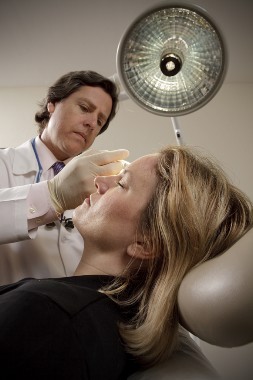
No help given means no charge given
Recently, Ben Stein wrote a column about his visit to a dermatologist, who was, apparently, planning on billing a full new patient charge when all the appointment consisted of was him telling Mr. Stein that he didn’t treat his condition and suggesting he go elsewhere.
Have I ever had visits like that? Sure, a few times a year someone will wander in under the impression I’m a pain specialist, or a neurosurgeon, or whatever. This usually comes out pretty quickly, and when it happens I point them in the right direction and tear up the bill and paperwork. I also dictate a brief note as to what happened, why the visit was ended, and specifically state, "There was no charge for this visit."
Could I bill for it? Of course. Should I? No.
Yes, I know some out there disagree. After all, I did reserve time for this person, and now I lose money on it. My counter is that the same thing happens if a patient gets called into work at the last minute, wakes up violently ill that morning, or has a flat tire on the way to my office. I don’t charge them, either. It’s not right, and I can always use the time to catch up on something else.
I agree – to an extent – with Mr. Stein that there is a "moral-ethical-criminal problem" in modern medical care. He notes that the majority of doctors he’s been to have been fine, but, as in any other field, it only takes a few bad ones to tarnish us all.
All of us likely know a doctor who commits some degree of fraud: overcharging for simple visits, submitting bills on patients he/she never saw, or submitting claims for tests that weren’t done. Obviously, these people shouldn’t be in practice. As Mr. Stein says, they use their license to heal as one to steal.
Sadly, these people don’t see anything wrong with what they’re doing, either. To them it’s just business as usual to submit a level 5 bill for a 10-minute visit, rationalizing it as having to make a living or convincing themselves it was really a 40-minute visit, or whatever. I have no sympathy for them when they get caught.
I still try to be fair, and believe most doctors do, too. Mr. Stein concedes the same point at the end. Unfortunately, as with corrupt politicians, judges, or teachers, it doesn’t take much to hurt the reputation of many.
Dr. Block has a solo neurology practice in Scottsdale, Ariz.
Recently, Ben Stein wrote a column about his visit to a dermatologist, who was, apparently, planning on billing a full new patient charge when all the appointment consisted of was him telling Mr. Stein that he didn’t treat his condition and suggesting he go elsewhere.
Have I ever had visits like that? Sure, a few times a year someone will wander in under the impression I’m a pain specialist, or a neurosurgeon, or whatever. This usually comes out pretty quickly, and when it happens I point them in the right direction and tear up the bill and paperwork. I also dictate a brief note as to what happened, why the visit was ended, and specifically state, "There was no charge for this visit."
Could I bill for it? Of course. Should I? No.
Yes, I know some out there disagree. After all, I did reserve time for this person, and now I lose money on it. My counter is that the same thing happens if a patient gets called into work at the last minute, wakes up violently ill that morning, or has a flat tire on the way to my office. I don’t charge them, either. It’s not right, and I can always use the time to catch up on something else.
I agree – to an extent – with Mr. Stein that there is a "moral-ethical-criminal problem" in modern medical care. He notes that the majority of doctors he’s been to have been fine, but, as in any other field, it only takes a few bad ones to tarnish us all.
All of us likely know a doctor who commits some degree of fraud: overcharging for simple visits, submitting bills on patients he/she never saw, or submitting claims for tests that weren’t done. Obviously, these people shouldn’t be in practice. As Mr. Stein says, they use their license to heal as one to steal.
Sadly, these people don’t see anything wrong with what they’re doing, either. To them it’s just business as usual to submit a level 5 bill for a 10-minute visit, rationalizing it as having to make a living or convincing themselves it was really a 40-minute visit, or whatever. I have no sympathy for them when they get caught.
I still try to be fair, and believe most doctors do, too. Mr. Stein concedes the same point at the end. Unfortunately, as with corrupt politicians, judges, or teachers, it doesn’t take much to hurt the reputation of many.
Dr. Block has a solo neurology practice in Scottsdale, Ariz.
Recently, Ben Stein wrote a column about his visit to a dermatologist, who was, apparently, planning on billing a full new patient charge when all the appointment consisted of was him telling Mr. Stein that he didn’t treat his condition and suggesting he go elsewhere.
Have I ever had visits like that? Sure, a few times a year someone will wander in under the impression I’m a pain specialist, or a neurosurgeon, or whatever. This usually comes out pretty quickly, and when it happens I point them in the right direction and tear up the bill and paperwork. I also dictate a brief note as to what happened, why the visit was ended, and specifically state, "There was no charge for this visit."
Could I bill for it? Of course. Should I? No.
Yes, I know some out there disagree. After all, I did reserve time for this person, and now I lose money on it. My counter is that the same thing happens if a patient gets called into work at the last minute, wakes up violently ill that morning, or has a flat tire on the way to my office. I don’t charge them, either. It’s not right, and I can always use the time to catch up on something else.
I agree – to an extent – with Mr. Stein that there is a "moral-ethical-criminal problem" in modern medical care. He notes that the majority of doctors he’s been to have been fine, but, as in any other field, it only takes a few bad ones to tarnish us all.
All of us likely know a doctor who commits some degree of fraud: overcharging for simple visits, submitting bills on patients he/she never saw, or submitting claims for tests that weren’t done. Obviously, these people shouldn’t be in practice. As Mr. Stein says, they use their license to heal as one to steal.
Sadly, these people don’t see anything wrong with what they’re doing, either. To them it’s just business as usual to submit a level 5 bill for a 10-minute visit, rationalizing it as having to make a living or convincing themselves it was really a 40-minute visit, or whatever. I have no sympathy for them when they get caught.
I still try to be fair, and believe most doctors do, too. Mr. Stein concedes the same point at the end. Unfortunately, as with corrupt politicians, judges, or teachers, it doesn’t take much to hurt the reputation of many.
Dr. Block has a solo neurology practice in Scottsdale, Ariz.
Slow taper: a common way to end a career as a doctor
Do you think about retiring? Of course you do. It’s a goal we all think about years in advance.
In my experience, doctors often have a hard time doing it completely – not for financial reasons, but personal ones. Most of us became doctors because at some point we genuinely liked this sort of thing. (Was "to help people" somewhere on your personal statement? I thought so.) We spend 4-5 years in college to get into medical school, study obsessively through 4 years of medical school, spend anywhere from 3-7 additional years (or more) in training, and then go into practice. By the time we reach retirement age, who we are is so tightly ingrained with what we do that it’s hard to just walk away and separate them.
So, many of us don’t stop. We handle the end of our careers like we handle steroids: a slow, gradual taper. We decrease office hours over time, then shutter a practice, then locum tenens here and there, and finally spend maybe one-half day per week at a VA or community clinic.
My dad was a lawyer, and he was the same way. His office went from a big suite to a subleased room to a post office box. At the end of his life, his practice was down to 1-2 people whose wills or trusts he was still overseeing, but he never gave up his license or considered himself retired. Based on other attorneys I’ve met, I’d say that’s typical. I recently met a financial planner of roughly my age who told me she felt the same way. She thought she might decrease hours, but not shut down right away.
I guess this is a good thing. We all have to work, so it’s good to have a job you enjoy, even if it makes it hard to let go.
Dr. Block has a solo neurology practice in Scottsdale, Ariz.
Do you think about retiring? Of course you do. It’s a goal we all think about years in advance.
In my experience, doctors often have a hard time doing it completely – not for financial reasons, but personal ones. Most of us became doctors because at some point we genuinely liked this sort of thing. (Was "to help people" somewhere on your personal statement? I thought so.) We spend 4-5 years in college to get into medical school, study obsessively through 4 years of medical school, spend anywhere from 3-7 additional years (or more) in training, and then go into practice. By the time we reach retirement age, who we are is so tightly ingrained with what we do that it’s hard to just walk away and separate them.
So, many of us don’t stop. We handle the end of our careers like we handle steroids: a slow, gradual taper. We decrease office hours over time, then shutter a practice, then locum tenens here and there, and finally spend maybe one-half day per week at a VA or community clinic.
My dad was a lawyer, and he was the same way. His office went from a big suite to a subleased room to a post office box. At the end of his life, his practice was down to 1-2 people whose wills or trusts he was still overseeing, but he never gave up his license or considered himself retired. Based on other attorneys I’ve met, I’d say that’s typical. I recently met a financial planner of roughly my age who told me she felt the same way. She thought she might decrease hours, but not shut down right away.
I guess this is a good thing. We all have to work, so it’s good to have a job you enjoy, even if it makes it hard to let go.
Dr. Block has a solo neurology practice in Scottsdale, Ariz.
Do you think about retiring? Of course you do. It’s a goal we all think about years in advance.
In my experience, doctors often have a hard time doing it completely – not for financial reasons, but personal ones. Most of us became doctors because at some point we genuinely liked this sort of thing. (Was "to help people" somewhere on your personal statement? I thought so.) We spend 4-5 years in college to get into medical school, study obsessively through 4 years of medical school, spend anywhere from 3-7 additional years (or more) in training, and then go into practice. By the time we reach retirement age, who we are is so tightly ingrained with what we do that it’s hard to just walk away and separate them.
So, many of us don’t stop. We handle the end of our careers like we handle steroids: a slow, gradual taper. We decrease office hours over time, then shutter a practice, then locum tenens here and there, and finally spend maybe one-half day per week at a VA or community clinic.
My dad was a lawyer, and he was the same way. His office went from a big suite to a subleased room to a post office box. At the end of his life, his practice was down to 1-2 people whose wills or trusts he was still overseeing, but he never gave up his license or considered himself retired. Based on other attorneys I’ve met, I’d say that’s typical. I recently met a financial planner of roughly my age who told me she felt the same way. She thought she might decrease hours, but not shut down right away.
I guess this is a good thing. We all have to work, so it’s good to have a job you enjoy, even if it makes it hard to let go.
Dr. Block has a solo neurology practice in Scottsdale, Ariz.
Practicing outside my field
I think all of us get requests to practice outside our fields. Personally, I always say no.
Like the majority of neurologists out there, I’m not certified in internal medicine. (Why neurology is a residency, and not a fellowship, is due to historical reasons). And I don’t want to practice general medicine.
Of course, that doesn’t stop people from asking. So I get requests for antibiotics to treat sinus infections: "Oh, why not? You’re a doctor, aren’t you?"
There are also more unusual requests for cardiac medications ("Amiodarone?" NO!) or insulin ("But you’re treating my neuropathy – isn’t that part of it?").
Sometimes people ask out of sheer ignorance, figuring a doctor is a doctor. Other times it’s them trying to save time/copay money by hitting me up to do it, hoping that I won’t tell them they need to go see their internist or other specialist (even though that’s exactly what I tell them to do). "But I just KNOW I have a (whatever) infection. Can’t you just call in some (antibiotic du jour)? It’s what always works." Nope.
Most people take my refusal in good stride and understand. Others are angry that I’m going to make them spend money and time on an internist visit. And, rarely, some even leave my practice on the grounds that I’m "not taking care of them."
I like being a neurologist. Stepping outside my little circle can lead to a slippery slope, and the farther you go the more likely it can become a legal issue. If I do it once, people will keep asking, and I don’t want to play that game. I know what I’m good at, and I don’t pretend to be anything else.
Dr. Block has a solo neurology practice in Scottsdale, Ariz.
I think all of us get requests to practice outside our fields. Personally, I always say no.
Like the majority of neurologists out there, I’m not certified in internal medicine. (Why neurology is a residency, and not a fellowship, is due to historical reasons). And I don’t want to practice general medicine.
Of course, that doesn’t stop people from asking. So I get requests for antibiotics to treat sinus infections: "Oh, why not? You’re a doctor, aren’t you?"
There are also more unusual requests for cardiac medications ("Amiodarone?" NO!) or insulin ("But you’re treating my neuropathy – isn’t that part of it?").
Sometimes people ask out of sheer ignorance, figuring a doctor is a doctor. Other times it’s them trying to save time/copay money by hitting me up to do it, hoping that I won’t tell them they need to go see their internist or other specialist (even though that’s exactly what I tell them to do). "But I just KNOW I have a (whatever) infection. Can’t you just call in some (antibiotic du jour)? It’s what always works." Nope.
Most people take my refusal in good stride and understand. Others are angry that I’m going to make them spend money and time on an internist visit. And, rarely, some even leave my practice on the grounds that I’m "not taking care of them."
I like being a neurologist. Stepping outside my little circle can lead to a slippery slope, and the farther you go the more likely it can become a legal issue. If I do it once, people will keep asking, and I don’t want to play that game. I know what I’m good at, and I don’t pretend to be anything else.
Dr. Block has a solo neurology practice in Scottsdale, Ariz.
I think all of us get requests to practice outside our fields. Personally, I always say no.
Like the majority of neurologists out there, I’m not certified in internal medicine. (Why neurology is a residency, and not a fellowship, is due to historical reasons). And I don’t want to practice general medicine.
Of course, that doesn’t stop people from asking. So I get requests for antibiotics to treat sinus infections: "Oh, why not? You’re a doctor, aren’t you?"
There are also more unusual requests for cardiac medications ("Amiodarone?" NO!) or insulin ("But you’re treating my neuropathy – isn’t that part of it?").
Sometimes people ask out of sheer ignorance, figuring a doctor is a doctor. Other times it’s them trying to save time/copay money by hitting me up to do it, hoping that I won’t tell them they need to go see their internist or other specialist (even though that’s exactly what I tell them to do). "But I just KNOW I have a (whatever) infection. Can’t you just call in some (antibiotic du jour)? It’s what always works." Nope.
Most people take my refusal in good stride and understand. Others are angry that I’m going to make them spend money and time on an internist visit. And, rarely, some even leave my practice on the grounds that I’m "not taking care of them."
I like being a neurologist. Stepping outside my little circle can lead to a slippery slope, and the farther you go the more likely it can become a legal issue. If I do it once, people will keep asking, and I don’t want to play that game. I know what I’m good at, and I don’t pretend to be anything else.
Dr. Block has a solo neurology practice in Scottsdale, Ariz.
More medical students but not more residency slots
"Waiter!"
The stereotype of a waiter/waitress as a struggling actor or college student is pretty old. But what if someday it becomes struggling doctors?
I’m not sure that’s too far fetched, either. Medical schools across the country are opening new campuses and expanding, hoping to generate the number of physicians that predictions say will be needed to treat the aging American population (which, I guess, includes me).
But training is another story. The 2% sequestration cuts we’ve had for almost a year include funding for residencies. For neurology, there’s been an additional 5% cut for the National Institute of Neurological Disorders and Stroke. And, of course, more cuts are predicted to come. The long-dead stereotype of the wealthy doctor who works 30 hours a week and spends the rest of his time at the golf course or house in the Caribbean is still so ingrained into the American consciousness that politicians on both sides love to promote it.
The result of these cuts is that while more people may come out of medical school, there will be no residency slots for them. Training program sizes are currently frozen or shrinking. The open slots for any field will go to the top of the class, leaving a large number of new doctors $200,000 in debt and ... waiting tables.
Even when I was in school (the Miocene era) there were a few people who did the "scramble" after match day, frantically trying to find a program with open slots. In my class of 120, I think there were 5. But imagine if the scramble involves a third of a class or more. Realistically, unless things change, there just won’t be enough slots for most of them.
Medical school doesn’t prepare you to practice real medicine. While you may be a doctor, you still don’t have the knowledge or experience from residency. Trying to practice straight out of school is likely going to get someone killed. And I can’t imagine a malpractice company willing to insure you.
Some will take on further debt and go to law school. Others will find work with insurance companies, denying MRIs. Some may even head overseas to countries with less-rigorous licensing requirements. And some of you may meet in a restaurant, hoping for the big call to say there’s a residency opening.
Dr. Block has a solo neurology practice in Scottsdale, Ariz.
"Waiter!"
The stereotype of a waiter/waitress as a struggling actor or college student is pretty old. But what if someday it becomes struggling doctors?
I’m not sure that’s too far fetched, either. Medical schools across the country are opening new campuses and expanding, hoping to generate the number of physicians that predictions say will be needed to treat the aging American population (which, I guess, includes me).
But training is another story. The 2% sequestration cuts we’ve had for almost a year include funding for residencies. For neurology, there’s been an additional 5% cut for the National Institute of Neurological Disorders and Stroke. And, of course, more cuts are predicted to come. The long-dead stereotype of the wealthy doctor who works 30 hours a week and spends the rest of his time at the golf course or house in the Caribbean is still so ingrained into the American consciousness that politicians on both sides love to promote it.
The result of these cuts is that while more people may come out of medical school, there will be no residency slots for them. Training program sizes are currently frozen or shrinking. The open slots for any field will go to the top of the class, leaving a large number of new doctors $200,000 in debt and ... waiting tables.
Even when I was in school (the Miocene era) there were a few people who did the "scramble" after match day, frantically trying to find a program with open slots. In my class of 120, I think there were 5. But imagine if the scramble involves a third of a class or more. Realistically, unless things change, there just won’t be enough slots for most of them.
Medical school doesn’t prepare you to practice real medicine. While you may be a doctor, you still don’t have the knowledge or experience from residency. Trying to practice straight out of school is likely going to get someone killed. And I can’t imagine a malpractice company willing to insure you.
Some will take on further debt and go to law school. Others will find work with insurance companies, denying MRIs. Some may even head overseas to countries with less-rigorous licensing requirements. And some of you may meet in a restaurant, hoping for the big call to say there’s a residency opening.
Dr. Block has a solo neurology practice in Scottsdale, Ariz.
"Waiter!"
The stereotype of a waiter/waitress as a struggling actor or college student is pretty old. But what if someday it becomes struggling doctors?
I’m not sure that’s too far fetched, either. Medical schools across the country are opening new campuses and expanding, hoping to generate the number of physicians that predictions say will be needed to treat the aging American population (which, I guess, includes me).
But training is another story. The 2% sequestration cuts we’ve had for almost a year include funding for residencies. For neurology, there’s been an additional 5% cut for the National Institute of Neurological Disorders and Stroke. And, of course, more cuts are predicted to come. The long-dead stereotype of the wealthy doctor who works 30 hours a week and spends the rest of his time at the golf course or house in the Caribbean is still so ingrained into the American consciousness that politicians on both sides love to promote it.
The result of these cuts is that while more people may come out of medical school, there will be no residency slots for them. Training program sizes are currently frozen or shrinking. The open slots for any field will go to the top of the class, leaving a large number of new doctors $200,000 in debt and ... waiting tables.
Even when I was in school (the Miocene era) there were a few people who did the "scramble" after match day, frantically trying to find a program with open slots. In my class of 120, I think there were 5. But imagine if the scramble involves a third of a class or more. Realistically, unless things change, there just won’t be enough slots for most of them.
Medical school doesn’t prepare you to practice real medicine. While you may be a doctor, you still don’t have the knowledge or experience from residency. Trying to practice straight out of school is likely going to get someone killed. And I can’t imagine a malpractice company willing to insure you.
Some will take on further debt and go to law school. Others will find work with insurance companies, denying MRIs. Some may even head overseas to countries with less-rigorous licensing requirements. And some of you may meet in a restaurant, hoping for the big call to say there’s a residency opening.
Dr. Block has a solo neurology practice in Scottsdale, Ariz.
Are the rumored neurologic side effects of vaccines today’s bigfoot?
In summer 1975, my mom dropped me and my sister off to see "Bigfoot: The Mysterious Monster." The movie was presented as a documentary to convince you bigfoot was real, even if it meant exaggerating facts and re-enactments and pretty much ignoring the truth. At the age of 10, I believed it, and spent the next several nights wide awake and convinced bigfoot was coming to get me in modern suburbia.
In modern medicine, the rumored side effects of vaccines are the equivalent of bigfoot. Earlier this year, the journal Clinical Infectious Diseases reported that over a 13-year period, vaccines of any kind didn’t cause Guillain-Barré syndrome. But a quick search of Google finds plenty of sites claiming the opposite.
Vaccines and autism are the most fabled example. Despite overwhelming data showing otherwise, this myth persists in modern culture. Buoyed not by scientists and doctors, but by celebrities (yes, Jenny, I’m talking about you) and politics (yes, Rep. Bachmann). Years ago things like this would have been confined to a small group, but not today. The Internet allows rumors to become accepted as facts and gives voice and credibility to those who previously carried signs on street corners. Anyone these days can make an official-looking website and populate it with "facts" that have no basis in reality. And people who use Dr. Google stumble on them, and figure that if it’s on the Internet, it must be real.
As someone who’s spent many years learning to be a doctor, it’s frustrating how many people will ignore my advice, yet listen to that given by a B-list actress or the cashier at the grocery store. And those people aren’t at risk of being sued for it, either.
I am, by nature, a cryptid geek. I would love to someday learn that bigfoot or the Loch Ness monster really exists. But in reality, I don’t believe they do. And, like the boogeyman, the vaccine mythology needs to be seen everywhere as the myth that it is.
Dr. Block has a solo neurology practice in Scottsdale, Ariz.
In summer 1975, my mom dropped me and my sister off to see "Bigfoot: The Mysterious Monster." The movie was presented as a documentary to convince you bigfoot was real, even if it meant exaggerating facts and re-enactments and pretty much ignoring the truth. At the age of 10, I believed it, and spent the next several nights wide awake and convinced bigfoot was coming to get me in modern suburbia.
In modern medicine, the rumored side effects of vaccines are the equivalent of bigfoot. Earlier this year, the journal Clinical Infectious Diseases reported that over a 13-year period, vaccines of any kind didn’t cause Guillain-Barré syndrome. But a quick search of Google finds plenty of sites claiming the opposite.
Vaccines and autism are the most fabled example. Despite overwhelming data showing otherwise, this myth persists in modern culture. Buoyed not by scientists and doctors, but by celebrities (yes, Jenny, I’m talking about you) and politics (yes, Rep. Bachmann). Years ago things like this would have been confined to a small group, but not today. The Internet allows rumors to become accepted as facts and gives voice and credibility to those who previously carried signs on street corners. Anyone these days can make an official-looking website and populate it with "facts" that have no basis in reality. And people who use Dr. Google stumble on them, and figure that if it’s on the Internet, it must be real.
As someone who’s spent many years learning to be a doctor, it’s frustrating how many people will ignore my advice, yet listen to that given by a B-list actress or the cashier at the grocery store. And those people aren’t at risk of being sued for it, either.
I am, by nature, a cryptid geek. I would love to someday learn that bigfoot or the Loch Ness monster really exists. But in reality, I don’t believe they do. And, like the boogeyman, the vaccine mythology needs to be seen everywhere as the myth that it is.
Dr. Block has a solo neurology practice in Scottsdale, Ariz.
In summer 1975, my mom dropped me and my sister off to see "Bigfoot: The Mysterious Monster." The movie was presented as a documentary to convince you bigfoot was real, even if it meant exaggerating facts and re-enactments and pretty much ignoring the truth. At the age of 10, I believed it, and spent the next several nights wide awake and convinced bigfoot was coming to get me in modern suburbia.
In modern medicine, the rumored side effects of vaccines are the equivalent of bigfoot. Earlier this year, the journal Clinical Infectious Diseases reported that over a 13-year period, vaccines of any kind didn’t cause Guillain-Barré syndrome. But a quick search of Google finds plenty of sites claiming the opposite.
Vaccines and autism are the most fabled example. Despite overwhelming data showing otherwise, this myth persists in modern culture. Buoyed not by scientists and doctors, but by celebrities (yes, Jenny, I’m talking about you) and politics (yes, Rep. Bachmann). Years ago things like this would have been confined to a small group, but not today. The Internet allows rumors to become accepted as facts and gives voice and credibility to those who previously carried signs on street corners. Anyone these days can make an official-looking website and populate it with "facts" that have no basis in reality. And people who use Dr. Google stumble on them, and figure that if it’s on the Internet, it must be real.
As someone who’s spent many years learning to be a doctor, it’s frustrating how many people will ignore my advice, yet listen to that given by a B-list actress or the cashier at the grocery store. And those people aren’t at risk of being sued for it, either.
I am, by nature, a cryptid geek. I would love to someday learn that bigfoot or the Loch Ness monster really exists. But in reality, I don’t believe they do. And, like the boogeyman, the vaccine mythology needs to be seen everywhere as the myth that it is.
Dr. Block has a solo neurology practice in Scottsdale, Ariz.
Costs, time away make it difficult for solo doctors to attend conferences
I don’t do conferences. I don’t care how much continuing medical education credit I get or how exotic the location is. I just don’t care.
I get ads for them all the time, too: head trauma, stroke review, modern headache management, epilepsy 2013, and so on. I do my reading at home and cram CME in where I can.
Solo practice is an "eat what you kill" world. If I’m not seeing patients, I’m not getting paid. So I have a very strong incentive not to leave my office. If I’m going to take time off and spend money to travel, I want to enjoy it with my family, not cooped up in a conference room with other neurologists. Besides, like most doctors, I’m conditioned to nod off as soon as the slides start.
I’m not into networking, either. I’m in solo practice to avoid other neurologists. Why on Earth would I want to spend money to hang out with a group of them? I don’t need call coverage or anyone to collaborate with on research or to argue with (I have my kids for that).
Also, travel isn’t cheap. Going to the American Academy of Neurology meeting next April? Registration is a few hundred bucks. More if you actually want to attend many of the education classes. Of course, I’m in Arizona, and the meeting is in Philly. So I have to factor in plane fare, then a hotel room for 3-7 nights (depending on how long I stay), meals, taxis ... It adds up fast. Unless you’ve got an institution paying, it can be steep. On top of it all (at least in my world), the costs include how much I’m NOT earning from being out of the office.
The fact that it’s a business tax deduction doesn’t matter to me. In solo practice, I am the business. Anything spent, regardless of tax status, still comes out of my salary when it’s all over.
So I stay at my office and limit travel to being with my family. After all, they are whom I really work for.
Dr. Block has a solo neurology practice in Scottsdale, Ariz.
I don’t do conferences. I don’t care how much continuing medical education credit I get or how exotic the location is. I just don’t care.
I get ads for them all the time, too: head trauma, stroke review, modern headache management, epilepsy 2013, and so on. I do my reading at home and cram CME in where I can.
Solo practice is an "eat what you kill" world. If I’m not seeing patients, I’m not getting paid. So I have a very strong incentive not to leave my office. If I’m going to take time off and spend money to travel, I want to enjoy it with my family, not cooped up in a conference room with other neurologists. Besides, like most doctors, I’m conditioned to nod off as soon as the slides start.
I’m not into networking, either. I’m in solo practice to avoid other neurologists. Why on Earth would I want to spend money to hang out with a group of them? I don’t need call coverage or anyone to collaborate with on research or to argue with (I have my kids for that).
Also, travel isn’t cheap. Going to the American Academy of Neurology meeting next April? Registration is a few hundred bucks. More if you actually want to attend many of the education classes. Of course, I’m in Arizona, and the meeting is in Philly. So I have to factor in plane fare, then a hotel room for 3-7 nights (depending on how long I stay), meals, taxis ... It adds up fast. Unless you’ve got an institution paying, it can be steep. On top of it all (at least in my world), the costs include how much I’m NOT earning from being out of the office.
The fact that it’s a business tax deduction doesn’t matter to me. In solo practice, I am the business. Anything spent, regardless of tax status, still comes out of my salary when it’s all over.
So I stay at my office and limit travel to being with my family. After all, they are whom I really work for.
Dr. Block has a solo neurology practice in Scottsdale, Ariz.
I don’t do conferences. I don’t care how much continuing medical education credit I get or how exotic the location is. I just don’t care.
I get ads for them all the time, too: head trauma, stroke review, modern headache management, epilepsy 2013, and so on. I do my reading at home and cram CME in where I can.
Solo practice is an "eat what you kill" world. If I’m not seeing patients, I’m not getting paid. So I have a very strong incentive not to leave my office. If I’m going to take time off and spend money to travel, I want to enjoy it with my family, not cooped up in a conference room with other neurologists. Besides, like most doctors, I’m conditioned to nod off as soon as the slides start.
I’m not into networking, either. I’m in solo practice to avoid other neurologists. Why on Earth would I want to spend money to hang out with a group of them? I don’t need call coverage or anyone to collaborate with on research or to argue with (I have my kids for that).
Also, travel isn’t cheap. Going to the American Academy of Neurology meeting next April? Registration is a few hundred bucks. More if you actually want to attend many of the education classes. Of course, I’m in Arizona, and the meeting is in Philly. So I have to factor in plane fare, then a hotel room for 3-7 nights (depending on how long I stay), meals, taxis ... It adds up fast. Unless you’ve got an institution paying, it can be steep. On top of it all (at least in my world), the costs include how much I’m NOT earning from being out of the office.
The fact that it’s a business tax deduction doesn’t matter to me. In solo practice, I am the business. Anything spent, regardless of tax status, still comes out of my salary when it’s all over.
So I stay at my office and limit travel to being with my family. After all, they are whom I really work for.
Dr. Block has a solo neurology practice in Scottsdale, Ariz.