User login
Use Whiteboards to Enhance Patient-Provider Communication
Editor’s note: “Everything We Say and Do” is an informational series developed by SHM’s Patient Experience Committee to provide readers with thoughtful and actionable communication tactics that have great potential to positively impact patients’ experience of care. Each article will focus on how the contributor applies one or more of the “key communication” tactics in practice to maintain provider accountability for “everything we say and do that affects our patients’ thoughts, feelings, and well-being.”
View a chart outlining key communication tactics
What I Say and Do
With my team, I use whiteboards as a tool to enhance communication: 1) I introduce myself and my team members, then write our names on the whiteboard paired with an explanation of my role as the attending physician for the hospital medicine service; 2) on a daily basis, I ask the patient and family/support what their primary concerns and goals are and write those on the whiteboard; and 3) I invite the patient and family/support to use the whiteboard to write additional concerns or questions as they arise.
Why I Do It
Hospitals are confusing places. One of our key roles as hospitalists is to coordinate and clarify all of the moving pieces and to communicate clearly to patients and their family that there is someone doing that work on their behalf. The whiteboard can help to accomplish that and to visually indicate “reflective listening.” If I ask patients what their concerns and goals are on a daily basis, I can better address them, and writing those on the whiteboard is a way to visually let patients know I have heard them—and heard them accurately. Finally, as we know from experience at our institution, when patients are invited to write on the whiteboard, they are likely to do so and will often write important information that hasn’t come up during routine rounding.
How I Do It
The key to effectiveness is to build whiteboard use into the clinical workflow and patient conversation rather than create an extra task to complete. I have developed a routine using the whiteboard that is more or less the same for every patient.
Also, whiteboard design can influence the use of the whiteboard as a communication tool. I favor designs that have few prescriptive boxes and more space for writing. I have found whiteboards labeled with a “What are your goals?” section to be helpful.
Patrick Kneeland, MD, is medical director for patient and provider experience and director of the Excellence in Communication Curriculum, University of Colorado Hospital and Clinics.
Editor’s note: “Everything We Say and Do” is an informational series developed by SHM’s Patient Experience Committee to provide readers with thoughtful and actionable communication tactics that have great potential to positively impact patients’ experience of care. Each article will focus on how the contributor applies one or more of the “key communication” tactics in practice to maintain provider accountability for “everything we say and do that affects our patients’ thoughts, feelings, and well-being.”
View a chart outlining key communication tactics
What I Say and Do
With my team, I use whiteboards as a tool to enhance communication: 1) I introduce myself and my team members, then write our names on the whiteboard paired with an explanation of my role as the attending physician for the hospital medicine service; 2) on a daily basis, I ask the patient and family/support what their primary concerns and goals are and write those on the whiteboard; and 3) I invite the patient and family/support to use the whiteboard to write additional concerns or questions as they arise.
Why I Do It
Hospitals are confusing places. One of our key roles as hospitalists is to coordinate and clarify all of the moving pieces and to communicate clearly to patients and their family that there is someone doing that work on their behalf. The whiteboard can help to accomplish that and to visually indicate “reflective listening.” If I ask patients what their concerns and goals are on a daily basis, I can better address them, and writing those on the whiteboard is a way to visually let patients know I have heard them—and heard them accurately. Finally, as we know from experience at our institution, when patients are invited to write on the whiteboard, they are likely to do so and will often write important information that hasn’t come up during routine rounding.
How I Do It
The key to effectiveness is to build whiteboard use into the clinical workflow and patient conversation rather than create an extra task to complete. I have developed a routine using the whiteboard that is more or less the same for every patient.
Also, whiteboard design can influence the use of the whiteboard as a communication tool. I favor designs that have few prescriptive boxes and more space for writing. I have found whiteboards labeled with a “What are your goals?” section to be helpful.
Patrick Kneeland, MD, is medical director for patient and provider experience and director of the Excellence in Communication Curriculum, University of Colorado Hospital and Clinics.
Editor’s note: “Everything We Say and Do” is an informational series developed by SHM’s Patient Experience Committee to provide readers with thoughtful and actionable communication tactics that have great potential to positively impact patients’ experience of care. Each article will focus on how the contributor applies one or more of the “key communication” tactics in practice to maintain provider accountability for “everything we say and do that affects our patients’ thoughts, feelings, and well-being.”
View a chart outlining key communication tactics
What I Say and Do
With my team, I use whiteboards as a tool to enhance communication: 1) I introduce myself and my team members, then write our names on the whiteboard paired with an explanation of my role as the attending physician for the hospital medicine service; 2) on a daily basis, I ask the patient and family/support what their primary concerns and goals are and write those on the whiteboard; and 3) I invite the patient and family/support to use the whiteboard to write additional concerns or questions as they arise.
Why I Do It
Hospitals are confusing places. One of our key roles as hospitalists is to coordinate and clarify all of the moving pieces and to communicate clearly to patients and their family that there is someone doing that work on their behalf. The whiteboard can help to accomplish that and to visually indicate “reflective listening.” If I ask patients what their concerns and goals are on a daily basis, I can better address them, and writing those on the whiteboard is a way to visually let patients know I have heard them—and heard them accurately. Finally, as we know from experience at our institution, when patients are invited to write on the whiteboard, they are likely to do so and will often write important information that hasn’t come up during routine rounding.
How I Do It
The key to effectiveness is to build whiteboard use into the clinical workflow and patient conversation rather than create an extra task to complete. I have developed a routine using the whiteboard that is more or less the same for every patient.
Also, whiteboard design can influence the use of the whiteboard as a communication tool. I favor designs that have few prescriptive boxes and more space for writing. I have found whiteboards labeled with a “What are your goals?” section to be helpful.
Patrick Kneeland, MD, is medical director for patient and provider experience and director of the Excellence in Communication Curriculum, University of Colorado Hospital and Clinics.
New SHM Members – November 2016
F. W. Erdman, Alabama
S. Baquai, MD, California
J. Bullock, California
A. Chong, MD, California
J. Decolongon, California
J. Do, MD, California
T. Farmer, ACNP, California
T. Holden, MD, California
M. Khare, California
P. Lally, MD, California
B. Lee, MD, California
J. Lee, MD, California
A. Mannan, MD, California
N. Pandher, California
E. Park, CaliforniaB. Patel, USA, California
N. Patel, California
S. Singh, MD, California
M. Vakili, California
A. Zandpour, AHIP, California
L. Chong, MD, FACP, Connecticut
G. Cudjoe, MBBS, Connecticut
S. Gazi, MD, Connecticut
S. Pattisapu, Connecticut
M. Rai, Connecticut
S. Roshan, MD, Connecticut
A. Seye, MD, Connecticut
L. Zheng, Connecticut
S. Raghavan, MD, PhD, Colorado
M. Altieri, MHSc, PA-C, Florida
M. Bishai, DO, Florida
B. Burns, Florida
A. Chan, MD, Florida
M. Cuk, Florida
S. Epps, DO, Florida
N. Fedotova, PhD, Florida
A. Lee, MD, Florida
M. Ruiz, Florida
D. Britt, Georgia
W. Futch, Georgia
B. Kruszewski, Georgia
I. Lowell, MD, MBA, Georgia
Y. Patel, MD, Georgia
G. Polk-Seldon, FNP, Georgia
T. Truong, MD, Georgia
J. Walker, DO, Georgia
S. Wang, MBA, Georgia
S. Del Mundo, Hawaii
T. Hiura, MD, Hawaii
D. Orchard, Idaho
S. Pontickio, MD, Idaho
R. Antoine, MD, Illinois
A. Baid, Illinois
C. Boyle, MD, Illinois
M. Delibasic, MD, Illinois
J. Gemson, Illinois
J. Mechurova, MD, Illinois
T. Morales, Illinois
H. Omar, Illinois
B. Pathak, MD, Illinois
S. Rao, MD, Illinois
Z. Ritchey, Illinois
A. Veerabahu, Illinois
T. Barley, MD, Indiana
M. Meyer, ACNP, MSN, Indiana
D. Ross, MA, Indiana
K. Sorg, MD, Indiana
A. Evans, Iowa
R. Miller, MD, Louisiana
D. Pollet, MD, Louisiana
J. Goldberg, MD, Maine
S. Gutierrez, MD, Maine
K. Osborne, FNP, Maine
V. Pramanik, MD, Maine
C. Sherpa, Maine
H. Abinader, Maryland
I. Pena, Maryland
D. Press, MD, Maryland
D. Soffer, Maryland
J. Bennett, FAAP, Massachusetts
N. Howe, ACNP, Massachusetts
J. Hudspeth, MD, Massachusetts
I. Ismail, MD, Massachusetts
B. Lall, MD, Massachusetts
M. Lawler, MD, Massachusetts
E. O’Fallon, MD, Massachusetts
J. Ringwala, Massachusetts
M. Soe, MD, Massachusetts
E. Sweatt, MD, Massachusetts
M. Trivedi, Massachusetts
E. Chappe, MD, Michigan
A. Goyal, MD, Michigan
E. Hunter, DO, Michigan
S. Malewskim ACNP, MSN, RN, Michigan
W. Ladner, Minnesota
J. Purdy, Minnesota
T. VanLith, PA-C, Minnesota
P. Acharya, MBBS, Mississippi
A. Ladd, CNP, Mississippi
S. Morris, DO, MBA, Mississippi
R. Walters, DO, Mississippi
R. Allen, DO, Missouri
L. Andrea, MissouriA. Arnaud, Missouri
M. Board, Missouri
S. Njagi, MD, FAAFP, MBchB, Missouri
J. Patel, Missouri
A. Roman, MD, Missouri
R. Singh, Missouri
F. Wang, Missouri
S. Byington, MD, Montana
T. Lloyd, Montana
B. Bulian, MD, Nebraska
S. Adagi, New Jersey
C. Cristescu, MeD, New Jersey
A. Malhotra, MD, New Jersey
K. Patel, DO, New Jersey
S. Terner, MD, New Jersey
H. Alqam, New Mexico
A. Attreya, DO, New Mexico
K. Avila, New Mexico
K. Chan, New Mexico
S. Montano, New Mexico
C. Morales, New Mexico
A. Stecker, New Mexico
D. Varela, New Mexico
M. Ahmed, MD, New York
G. Apergis, MD, New York
J. Dekhtyar, MD, New York
J. Dillon, New York
N. Jaglall, MD, New YorkL. Kruzhkov, New York
R. Malhan, MD, New York
J. Mathew, New YorkV. Miro, New York
B. Gautam, North Carolina
K. Gold, MD, North Carolina P. Greene, MD, North Carolina
S. Grotzke, North Carolina
S. Hester, MD, North Carolina
P. Le, MD, North Carolina
J. McClung, MD, North Carolina
J. Ramsey, MD, North Carolina
J. Sullivan, DO, North Carolina
C. Chadwell, Ohio
R. Dash, MD, Ohio
E. Ofungwu, USAR, Ohio
R. Raj, MD, Ohio
I. Rawal, Ohio
N. Beach, DO, Oregon
M. Christensen, ACNP, Oregon
K. Haugen, MD, Oregon
J. Luty, MD, Oregon
K. Andersen, Pennsylvania
O. Ball, MD, Pennsylvania
S. Harris, DO, Pennsylvania
R. Koubek, Pennsylvania
B. Krug, MHA, Pennsylvania
A. Levin, MD, Pennsylvania
A. Marwah, Pennsylvania
D. McAllister, FNP, Pennsylvania
C. Sakosky, FNP, Pennsylvania
J. Steffl, PA-C, Pennsylvania
A. Sukits, MS, PA-C, Pennsylvania
S. Clemens, Rhode Island
C. Drasny, MD, South Carolina
J. Harris, MD, South Carolina
D. Head, MD, South Carolina
S. Johnson, South Carolina
A. Evjen, MD, South Dakota
P. Pate, Tennessee
J. Patterson, ACNP-BC, MSN, Tennessee
A. Seth, MD, Tennessee
P. Boeckmann, FACHE, Texas
M. Gupta, Texas
J. Jain, MD, Texas
K. Roberts, Texas
C. Romero, MD, PhD, Texas
D. Buzanoski, MD, Utah
N. Whitaker, FACP, Utah
E. Greenberger, MD, Vermont
R. McEntee, MD, Vermont
C. Rickman, FACP, Vermont
W. Austin, MSHA, Virginia
E. Orshansky, MD, Virginia
G. Psarros, MD, Virginia
N. Trivedi, Virginia
E. Addison, Washington
J. Gifford, PA-C, Washington
V. Johnson, ARNP, CFNP, MHSc, Washington
C. Wang, MD, Washington
M. Brown, West Virginia
V. Raina, MD, Wisconsin
F. Germa, MD, CCP(EM), FCEP (C), Canada
J. Podavin, Canada
K. Slatkovsky, Canada
M. Kitamura, Japan
M. Rafei, Oman
F. W. Erdman, Alabama
S. Baquai, MD, California
J. Bullock, California
A. Chong, MD, California
J. Decolongon, California
J. Do, MD, California
T. Farmer, ACNP, California
T. Holden, MD, California
M. Khare, California
P. Lally, MD, California
B. Lee, MD, California
J. Lee, MD, California
A. Mannan, MD, California
N. Pandher, California
E. Park, CaliforniaB. Patel, USA, California
N. Patel, California
S. Singh, MD, California
M. Vakili, California
A. Zandpour, AHIP, California
L. Chong, MD, FACP, Connecticut
G. Cudjoe, MBBS, Connecticut
S. Gazi, MD, Connecticut
S. Pattisapu, Connecticut
M. Rai, Connecticut
S. Roshan, MD, Connecticut
A. Seye, MD, Connecticut
L. Zheng, Connecticut
S. Raghavan, MD, PhD, Colorado
M. Altieri, MHSc, PA-C, Florida
M. Bishai, DO, Florida
B. Burns, Florida
A. Chan, MD, Florida
M. Cuk, Florida
S. Epps, DO, Florida
N. Fedotova, PhD, Florida
A. Lee, MD, Florida
M. Ruiz, Florida
D. Britt, Georgia
W. Futch, Georgia
B. Kruszewski, Georgia
I. Lowell, MD, MBA, Georgia
Y. Patel, MD, Georgia
G. Polk-Seldon, FNP, Georgia
T. Truong, MD, Georgia
J. Walker, DO, Georgia
S. Wang, MBA, Georgia
S. Del Mundo, Hawaii
T. Hiura, MD, Hawaii
D. Orchard, Idaho
S. Pontickio, MD, Idaho
R. Antoine, MD, Illinois
A. Baid, Illinois
C. Boyle, MD, Illinois
M. Delibasic, MD, Illinois
J. Gemson, Illinois
J. Mechurova, MD, Illinois
T. Morales, Illinois
H. Omar, Illinois
B. Pathak, MD, Illinois
S. Rao, MD, Illinois
Z. Ritchey, Illinois
A. Veerabahu, Illinois
T. Barley, MD, Indiana
M. Meyer, ACNP, MSN, Indiana
D. Ross, MA, Indiana
K. Sorg, MD, Indiana
A. Evans, Iowa
R. Miller, MD, Louisiana
D. Pollet, MD, Louisiana
J. Goldberg, MD, Maine
S. Gutierrez, MD, Maine
K. Osborne, FNP, Maine
V. Pramanik, MD, Maine
C. Sherpa, Maine
H. Abinader, Maryland
I. Pena, Maryland
D. Press, MD, Maryland
D. Soffer, Maryland
J. Bennett, FAAP, Massachusetts
N. Howe, ACNP, Massachusetts
J. Hudspeth, MD, Massachusetts
I. Ismail, MD, Massachusetts
B. Lall, MD, Massachusetts
M. Lawler, MD, Massachusetts
E. O’Fallon, MD, Massachusetts
J. Ringwala, Massachusetts
M. Soe, MD, Massachusetts
E. Sweatt, MD, Massachusetts
M. Trivedi, Massachusetts
E. Chappe, MD, Michigan
A. Goyal, MD, Michigan
E. Hunter, DO, Michigan
S. Malewskim ACNP, MSN, RN, Michigan
W. Ladner, Minnesota
J. Purdy, Minnesota
T. VanLith, PA-C, Minnesota
P. Acharya, MBBS, Mississippi
A. Ladd, CNP, Mississippi
S. Morris, DO, MBA, Mississippi
R. Walters, DO, Mississippi
R. Allen, DO, Missouri
L. Andrea, MissouriA. Arnaud, Missouri
M. Board, Missouri
S. Njagi, MD, FAAFP, MBchB, Missouri
J. Patel, Missouri
A. Roman, MD, Missouri
R. Singh, Missouri
F. Wang, Missouri
S. Byington, MD, Montana
T. Lloyd, Montana
B. Bulian, MD, Nebraska
S. Adagi, New Jersey
C. Cristescu, MeD, New Jersey
A. Malhotra, MD, New Jersey
K. Patel, DO, New Jersey
S. Terner, MD, New Jersey
H. Alqam, New Mexico
A. Attreya, DO, New Mexico
K. Avila, New Mexico
K. Chan, New Mexico
S. Montano, New Mexico
C. Morales, New Mexico
A. Stecker, New Mexico
D. Varela, New Mexico
M. Ahmed, MD, New York
G. Apergis, MD, New York
J. Dekhtyar, MD, New York
J. Dillon, New York
N. Jaglall, MD, New YorkL. Kruzhkov, New York
R. Malhan, MD, New York
J. Mathew, New YorkV. Miro, New York
B. Gautam, North Carolina
K. Gold, MD, North Carolina P. Greene, MD, North Carolina
S. Grotzke, North Carolina
S. Hester, MD, North Carolina
P. Le, MD, North Carolina
J. McClung, MD, North Carolina
J. Ramsey, MD, North Carolina
J. Sullivan, DO, North Carolina
C. Chadwell, Ohio
R. Dash, MD, Ohio
E. Ofungwu, USAR, Ohio
R. Raj, MD, Ohio
I. Rawal, Ohio
N. Beach, DO, Oregon
M. Christensen, ACNP, Oregon
K. Haugen, MD, Oregon
J. Luty, MD, Oregon
K. Andersen, Pennsylvania
O. Ball, MD, Pennsylvania
S. Harris, DO, Pennsylvania
R. Koubek, Pennsylvania
B. Krug, MHA, Pennsylvania
A. Levin, MD, Pennsylvania
A. Marwah, Pennsylvania
D. McAllister, FNP, Pennsylvania
C. Sakosky, FNP, Pennsylvania
J. Steffl, PA-C, Pennsylvania
A. Sukits, MS, PA-C, Pennsylvania
S. Clemens, Rhode Island
C. Drasny, MD, South Carolina
J. Harris, MD, South Carolina
D. Head, MD, South Carolina
S. Johnson, South Carolina
A. Evjen, MD, South Dakota
P. Pate, Tennessee
J. Patterson, ACNP-BC, MSN, Tennessee
A. Seth, MD, Tennessee
P. Boeckmann, FACHE, Texas
M. Gupta, Texas
J. Jain, MD, Texas
K. Roberts, Texas
C. Romero, MD, PhD, Texas
D. Buzanoski, MD, Utah
N. Whitaker, FACP, Utah
E. Greenberger, MD, Vermont
R. McEntee, MD, Vermont
C. Rickman, FACP, Vermont
W. Austin, MSHA, Virginia
E. Orshansky, MD, Virginia
G. Psarros, MD, Virginia
N. Trivedi, Virginia
E. Addison, Washington
J. Gifford, PA-C, Washington
V. Johnson, ARNP, CFNP, MHSc, Washington
C. Wang, MD, Washington
M. Brown, West Virginia
V. Raina, MD, Wisconsin
F. Germa, MD, CCP(EM), FCEP (C), Canada
J. Podavin, Canada
K. Slatkovsky, Canada
M. Kitamura, Japan
M. Rafei, Oman
F. W. Erdman, Alabama
S. Baquai, MD, California
J. Bullock, California
A. Chong, MD, California
J. Decolongon, California
J. Do, MD, California
T. Farmer, ACNP, California
T. Holden, MD, California
M. Khare, California
P. Lally, MD, California
B. Lee, MD, California
J. Lee, MD, California
A. Mannan, MD, California
N. Pandher, California
E. Park, CaliforniaB. Patel, USA, California
N. Patel, California
S. Singh, MD, California
M. Vakili, California
A. Zandpour, AHIP, California
L. Chong, MD, FACP, Connecticut
G. Cudjoe, MBBS, Connecticut
S. Gazi, MD, Connecticut
S. Pattisapu, Connecticut
M. Rai, Connecticut
S. Roshan, MD, Connecticut
A. Seye, MD, Connecticut
L. Zheng, Connecticut
S. Raghavan, MD, PhD, Colorado
M. Altieri, MHSc, PA-C, Florida
M. Bishai, DO, Florida
B. Burns, Florida
A. Chan, MD, Florida
M. Cuk, Florida
S. Epps, DO, Florida
N. Fedotova, PhD, Florida
A. Lee, MD, Florida
M. Ruiz, Florida
D. Britt, Georgia
W. Futch, Georgia
B. Kruszewski, Georgia
I. Lowell, MD, MBA, Georgia
Y. Patel, MD, Georgia
G. Polk-Seldon, FNP, Georgia
T. Truong, MD, Georgia
J. Walker, DO, Georgia
S. Wang, MBA, Georgia
S. Del Mundo, Hawaii
T. Hiura, MD, Hawaii
D. Orchard, Idaho
S. Pontickio, MD, Idaho
R. Antoine, MD, Illinois
A. Baid, Illinois
C. Boyle, MD, Illinois
M. Delibasic, MD, Illinois
J. Gemson, Illinois
J. Mechurova, MD, Illinois
T. Morales, Illinois
H. Omar, Illinois
B. Pathak, MD, Illinois
S. Rao, MD, Illinois
Z. Ritchey, Illinois
A. Veerabahu, Illinois
T. Barley, MD, Indiana
M. Meyer, ACNP, MSN, Indiana
D. Ross, MA, Indiana
K. Sorg, MD, Indiana
A. Evans, Iowa
R. Miller, MD, Louisiana
D. Pollet, MD, Louisiana
J. Goldberg, MD, Maine
S. Gutierrez, MD, Maine
K. Osborne, FNP, Maine
V. Pramanik, MD, Maine
C. Sherpa, Maine
H. Abinader, Maryland
I. Pena, Maryland
D. Press, MD, Maryland
D. Soffer, Maryland
J. Bennett, FAAP, Massachusetts
N. Howe, ACNP, Massachusetts
J. Hudspeth, MD, Massachusetts
I. Ismail, MD, Massachusetts
B. Lall, MD, Massachusetts
M. Lawler, MD, Massachusetts
E. O’Fallon, MD, Massachusetts
J. Ringwala, Massachusetts
M. Soe, MD, Massachusetts
E. Sweatt, MD, Massachusetts
M. Trivedi, Massachusetts
E. Chappe, MD, Michigan
A. Goyal, MD, Michigan
E. Hunter, DO, Michigan
S. Malewskim ACNP, MSN, RN, Michigan
W. Ladner, Minnesota
J. Purdy, Minnesota
T. VanLith, PA-C, Minnesota
P. Acharya, MBBS, Mississippi
A. Ladd, CNP, Mississippi
S. Morris, DO, MBA, Mississippi
R. Walters, DO, Mississippi
R. Allen, DO, Missouri
L. Andrea, MissouriA. Arnaud, Missouri
M. Board, Missouri
S. Njagi, MD, FAAFP, MBchB, Missouri
J. Patel, Missouri
A. Roman, MD, Missouri
R. Singh, Missouri
F. Wang, Missouri
S. Byington, MD, Montana
T. Lloyd, Montana
B. Bulian, MD, Nebraska
S. Adagi, New Jersey
C. Cristescu, MeD, New Jersey
A. Malhotra, MD, New Jersey
K. Patel, DO, New Jersey
S. Terner, MD, New Jersey
H. Alqam, New Mexico
A. Attreya, DO, New Mexico
K. Avila, New Mexico
K. Chan, New Mexico
S. Montano, New Mexico
C. Morales, New Mexico
A. Stecker, New Mexico
D. Varela, New Mexico
M. Ahmed, MD, New York
G. Apergis, MD, New York
J. Dekhtyar, MD, New York
J. Dillon, New York
N. Jaglall, MD, New YorkL. Kruzhkov, New York
R. Malhan, MD, New York
J. Mathew, New YorkV. Miro, New York
B. Gautam, North Carolina
K. Gold, MD, North Carolina P. Greene, MD, North Carolina
S. Grotzke, North Carolina
S. Hester, MD, North Carolina
P. Le, MD, North Carolina
J. McClung, MD, North Carolina
J. Ramsey, MD, North Carolina
J. Sullivan, DO, North Carolina
C. Chadwell, Ohio
R. Dash, MD, Ohio
E. Ofungwu, USAR, Ohio
R. Raj, MD, Ohio
I. Rawal, Ohio
N. Beach, DO, Oregon
M. Christensen, ACNP, Oregon
K. Haugen, MD, Oregon
J. Luty, MD, Oregon
K. Andersen, Pennsylvania
O. Ball, MD, Pennsylvania
S. Harris, DO, Pennsylvania
R. Koubek, Pennsylvania
B. Krug, MHA, Pennsylvania
A. Levin, MD, Pennsylvania
A. Marwah, Pennsylvania
D. McAllister, FNP, Pennsylvania
C. Sakosky, FNP, Pennsylvania
J. Steffl, PA-C, Pennsylvania
A. Sukits, MS, PA-C, Pennsylvania
S. Clemens, Rhode Island
C. Drasny, MD, South Carolina
J. Harris, MD, South Carolina
D. Head, MD, South Carolina
S. Johnson, South Carolina
A. Evjen, MD, South Dakota
P. Pate, Tennessee
J. Patterson, ACNP-BC, MSN, Tennessee
A. Seth, MD, Tennessee
P. Boeckmann, FACHE, Texas
M. Gupta, Texas
J. Jain, MD, Texas
K. Roberts, Texas
C. Romero, MD, PhD, Texas
D. Buzanoski, MD, Utah
N. Whitaker, FACP, Utah
E. Greenberger, MD, Vermont
R. McEntee, MD, Vermont
C. Rickman, FACP, Vermont
W. Austin, MSHA, Virginia
E. Orshansky, MD, Virginia
G. Psarros, MD, Virginia
N. Trivedi, Virginia
E. Addison, Washington
J. Gifford, PA-C, Washington
V. Johnson, ARNP, CFNP, MHSc, Washington
C. Wang, MD, Washington
M. Brown, West Virginia
V. Raina, MD, Wisconsin
F. Germa, MD, CCP(EM), FCEP (C), Canada
J. Podavin, Canada
K. Slatkovsky, Canada
M. Kitamura, Japan
M. Rafei, Oman
Why Aren’t Doctors Following Guidelines?

One recent paper in Clinical Pediatrics, for example, chronicled low adherence to the 2011 National Heart, Lung, and Blood Institute lipid screening guidelines in primary-care settings.1 Another cautioned providers to “mind the (implementation) gap” in venous thromboembolism prevention guidelines for medical inpatients.2 A third found that lower adherence to guidelines issued by the American College of Cardiology/American Heart Association for acute coronary syndrome patients was significantly associated with higher bleeding and mortality rates.3

Both clinical trials and real-world studies have demonstrated that when guidelines are applied, patients do better, says William Lewis, MD, professor of medicine at Case Western Reserve University and director of the Heart & Vascular Center at MetroHealth in Cleveland. So why aren’t they followed more consistently?
Experts in both HM and other disciplines cite multiple obstacles. Lack of evidence, conflicting evidence, or lack of awareness about evidence can all conspire against the main goal of helping providers deliver consistent high-value care, says Christopher Moriates, MD, assistant clinical professor in the Division of Hospital Medicine at the University of California, San Francisco.
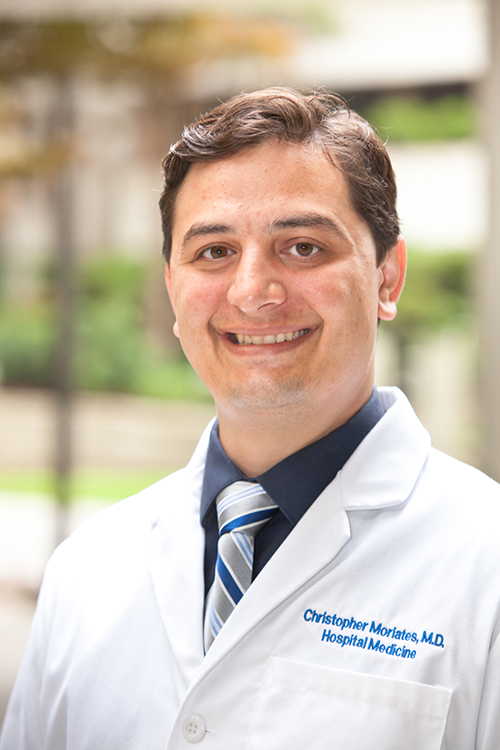
“In our day-to-day lives as hospitalists, for the vast majority probably of what we do there’s no clear guideline or there’s a guideline that doesn’t necessarily apply to the patient standing in front of me,” he says.
Even when a guideline is clear and relevant, other doctors say inadequate dissemination and implementation can still derail quality improvement efforts.
“A lot of what we do as physicians is what we learned in residency, and to incorporate the new data is difficult,” says Leonard Feldman, MD, SFHM, a hospitalist and associate professor of internal medicine and pediatrics at Johns Hopkins School of Medicine in Baltimore.
Dr. Feldman believes many doctors have yet to integrate recently revised hypertension and cholesterol guidelines into their practice, for example. Some guidelines have proven more complex or controversial, limiting their adoption.
“I know I struggle to keep up with all of the guidelines, and I’m in a big academic center where people are talking about them all the time, and I’m working with residents who are talking about them all the time,” Dr. Feldman says.
Despite the remaining gaps, however, many researchers agree that momentum has built steadily over the past two decades toward a more systematic approach to creating solid evidence-based guidelines and integrating them into real-world decision making.
Emphasis on Evidence and Transparency

The term “evidence-based medicine” was coined in 1990 by Gordon Guyatt, MD, MSc, FRCPC, distinguished professor of medicine and clinical epidemiology at McMaster University in Hamilton, Ontario. It’s played an active role in formulating guidelines for multiple organizations. The guideline-writing process, Dr. Guyatt says, once consisted of little more than self-selected clinicians sitting around a table.
“It used to be that a bunch of experts got together and decided and made the recommendations with very little in the way of a systematic process and certainly not evidence based,” he says.
Cincinnati Children’s Hospital Medical Center was among the pioneers pushing for a more systematic approach; the hospital began working on its own guidelines in 1995 and published the first of many the following year.
“We started evidence-based guidelines when the docs were still saying, ‘This is cookbook medicine. I don’t know if I want to do this or not,’” says Wendy Gerhardt, MSN, director of evidence-based decision making in the James M. Anderson Center for Health Systems Excellence at Cincinnati Children’s.
Some doctors also argued that clinical guidelines would stifle innovation, cramp their individual style, or intrude on their relationships with patients. Despite some lingering misgivings among clinicians, however, the process has gained considerable support. In 2000, an organization called the GRADE Working Group (Grading of Recommendations, Assessment, Development and Evaluation) began developing a new approach to raise the quality of evidence and strength of recommendations.
The group’s work led to a 2004 article in BMJ, and the journal subsequently published a six-part series about GRADE for clinicians.4 More recently, the Journal of Clinical Epidemiology also delved into the issue with a 15-part series detailing the GRADE methodology.5 Together, Dr. Guyatt says, the articles have become a go-to guide for guidelines and have helped solidify the focus on evidence.
Cincinnati Children’s and other institutions also have developed tools, and the Institute of Medicine has published guideline-writing standards.
“So it’s easier than it’s ever been to know whether or not you have a decent guideline in your hand,” Gerhardt says.
Likewise, medical organizations are more clearly explaining how they came up with different kinds of guidelines. Evidence-based and consensus guidelines aren’t necessarily mutually exclusive, though consensus building is often used in the absence of high-quality evidence. Some organizations have limited the pool of evidence for guidelines to randomized controlled trial data.
“Unfortunately, for us in the real world, we actually have to make decisions even when there’s not enough data,” Dr. Feldman says.
Sometimes, the best available evidence may be observational studies, and some committees still try to reach a consensus based on that evidence and on the panelists’ professional opinions.
Dr. Guyatt agrees that it’s “absolutely not” true that evidence-based guidelines require randomized controlled trials. “What you need for any recommendation is a thorough review and summary of the best available evidence,” he says.
As part of each final document, Cincinnati Children’s details how it created the guideline, when the literature searches occurred, how the committee reached a consensus, and which panelists participated in the deliberations. The information, Gerhardt says, allows anyone else to “make some sensible decisions about whether or not it’s a guideline you want to use.”
Guideline-crafting institutions are also focusing more on the proper makeup of their panels. In general, Dr. Guyatt says, a panel with more than 10 people can be unwieldy. Guidelines that include many specific recommendations, however, may require multiple subsections, each with its own committee.
Dr. Guyatt is careful to note that, like many other experts, he has multiple potential conflicts of interest, such as working on the anti-thrombotic guidelines issued by the American College of Chest Physicians. Committees, he says, have become increasingly aware of how properly handling conflicts (financial or otherwise) can be critical in building and maintaining trust among clinicians and patients. One technique is to ensure that a diversity of opinions is reflected among a committee whose experts have various conflicts. If one expert’s company makes drug A, for example, then the committee also includes experts involved with drugs B or C. As an alternative, some committees have explicitly barred anyone with a conflict of interest from participating at all.
But experts often provide crucial input, Dr. Guyatt says, and several committees have adopted variations of a middle-ground approach. In an approach that he favors, all guideline-formulating panelists are conflict-free but begin their work by meeting with a separate group of experts who may have some conflicts but can help point out the main issues. The panelists then deliberate and write a draft of the recommendations, after which they meet again with the experts to receive feedback before finalizing the draft.
In a related approach, experts sit on the panel and discuss the evidence, but those with conflicts recuse themselves before the group votes on any recommendations. Delineating between discussions of the evidence and discussions of recommendations can be tricky, though, increasing the risk that a conflict of interest may influence the outcome. Even so, Dr. Guyatt says the model is still preferable to other alternatives.
Getting the Word Out
Once guidelines have been crafted and vetted, how can hospitalists get up to speed on them? Dr. Feldman’s favorite go-to source is Guideline.gov, a national guideline clearinghouse that he calls one of the best compendiums of available information. Especially helpful, he adds, are details such as how the guidelines were created.
To help maximize his time, he also uses tools like NEJM Journal Watch, which sends daily emails on noteworthy articles and weekend roundups of the most important studies.
“It is a way of at least trying to keep up with what’s going on,” he says. Similarly, he adds, ACP Journal Club provides summaries of important new articles, The Hospitalist can help highlight important guidelines that affect HM, and CME meetings or online modules like SHMconsults.com can help doctors keep pace.
For the past decade, Dr. Guyatt has worked with another popular tool, a guideline-disseminating service called UpToDate. Many alternatives exist, such as DynaMed Plus.
“I think you just need to pick away,” Dr. Feldman says. “You need to decide that as a physician, as a lifelong learner, that you are going to do something that is going to keep you up-to-date. There are many ways of doing it. You just have to decide what you’re going to do and commit to it.”

Researchers are helping out by studying how to present new guidelines in ways that engage doctors and improve patient outcomes. Another trend is to make guidelines routinely accessible not only in electronic medical records but also on tablets and smartphones. Lisa Shieh, MD, PhD, FHM, a hospitalist and clinical professor of medicine at Stanford University Medical Center, has studied how best-practice alerts, or BPAs, impact adherence to guidelines covering the appropriate use of blood products. Dr. Shieh, who splits her time between quality improvement and hospital medicine, says getting new information and guidelines into clinicians’ hands can be a logistical challenge.
“At Stanford, we had a huge official campaign around the guidelines, and that did make some impact, but it wasn’t huge in improving appropriate blood use,” she says. When the medial center set up a BPA through the electronic medical record system, however, both overall and inappropriate blood use declined significantly. In fact, the percentage of providers ordering blood products for patients with a hemoglobin count above 8 g/dL dropped from 60% to 25%.6
One difference maker, Dr. Shieh says, was providing education at the moment a doctor actually ordered blood. To avoid alert fatigue, the “smart BPA” fires only if a doctor tries to order blood and the patient’s hemoglobin is greater than 7 or 8 g/dL, depending on the diagnosis. If the doctor still wants to transfuse, the system requests a clinical indication for the exception.
Despite the clear improvement in appropriate use, the team wanted to understand why 25% of providers were still ordering blood products for patients with a hemoglobin count greater than 8 despite the triggered BPA and whether additional interventions could yield further improvements. Through their study, the researchers documented several reasons for the continued ordering. In some cases, the system failed to properly document actual or potential bleeding as an indicator. In other cases, the ordering reflected a lack of consensus on the guidelines in fields like hematology and oncology.
One of the most intriguing reasons, though, was that residents often did the ordering at the behest of an attending who might have never seen the BPA.
“It’s not actually reaching the audience making the decision; it might be reaching the audience that’s just carrying out the order,” Dr. Shieh says.
The insight, she says, may provide an opportunity to talk with attending physicians who may not have completely bought into the guidelines and to involve the entire team in the decision-making process.
Hospitalists, she says, can play a vital role in guideline development and implementation, especially for strategies that include BPAs.
“I think they’re the perfect group to help use this technology wisely because they are at the front lines taking care of patients so they’ll know the best workflow of when these alerts fire and maybe which ones happen the most often,” Dr. Shieh says. “I think this is a fantastic opportunity to get more hospitalists involved in designing these alerts and collaborating with the IT folks.”
Even with widespread buy-in from providers, guidelines may not reach their full potential without a careful consideration of patients’ values and concerns. Experts say joint deliberations and discussions are especially important for guidelines that are complicated, controversial, or carrying potential risks that must be weighed against the benefits.
Some of the conversations are easy, with well-defined risks and benefits and clear patient preferences, but others must traverse vast tracts of gray area. Fortunately, Dr. Feldman says, more tools also are becoming available for this kind of shared decision making. Some use pictorial representations to help patients understand the potential outcomes of alternative courses of action or inaction.
“Sometimes, that pictorial representation is worth the 1,000 words that we wouldn’t be able to adequately describe otherwise,” he says.
Similarly, Cincinnati Children’s has developed tools to help to ease the shared decision-making process.
“We look where there’s equivocal evidence or no evidence and have developed tools that help the clinician have that conversation with the family and then have them informed enough that they can actually weigh in on what they want,” Gerhardt says. One end product is a card or trifold pamphlet that might help parents understand the benefits and side effects of alternate strategies.
“Typically, in medicine, we’re used to telling people what needs to be done,” she says. “So shared decision making is kind of a different thing for clinicians to engage in.” TH
Bryn Nelson, PhD, is a freelance writer in Seattle.
References
- Valle CW, Binns HJ, Quadri-Sheriff M, Benuck I, Patel A. Physicians’ lack of adherence to National Heart, Lung, and Blood Institute guidelines for pediatric lipid screening. Clin Pediatr. 2015;54(12):1200-1205.
- Maynard G, Jenkins IH, Merli GJ. Venous thromboembolism prevention guidelines for medical inpatients: mind the (implementation) gap. J Hosp Med. 2013;8(10):582-588.
- Mehta RH, Chen AY, Alexander KP, Ohman EM, Roe MT, Peterson ED. Doing the right things and doing them the right way: association between hospital guideline adherence, dosing safety, and outcomes among patients with acute coronary syndrome. Circulation. 2015;131(11):980-987.
- GRADE Working Group. Grading quality of evidence and strength of recommendations. BMJ. 2004;328:1490
- Andrews JC, Schünemann HJ, Oxman AD, et al. GRADE guidelines: 15. Going from evidence to recommendation—determinants of a recommendation’s direction and strength. J Clin Epidemiol. 2013;66(7):726-735.
- 6. Chen JH, Fang DZ, Tim Goodnough L, Evans KH, Lee Porter M, Shieh L. Why providers transfuse blood products outside recommended guidelines in spite of integrated electronic best practice alerts. J Hosp Med. 2015;10(1):1-7.
One recent paper in Clinical Pediatrics, for example, chronicled low adherence to the 2011 National Heart, Lung, and Blood Institute lipid screening guidelines in primary-care settings.1 Another cautioned providers to “mind the (implementation) gap” in venous thromboembolism prevention guidelines for medical inpatients.2 A third found that lower adherence to guidelines issued by the American College of Cardiology/American Heart Association for acute coronary syndrome patients was significantly associated with higher bleeding and mortality rates.3
Both clinical trials and real-world studies have demonstrated that when guidelines are applied, patients do better, says William Lewis, MD, professor of medicine at Case Western Reserve University and director of the Heart & Vascular Center at MetroHealth in Cleveland. So why aren’t they followed more consistently?
Experts in both HM and other disciplines cite multiple obstacles. Lack of evidence, conflicting evidence, or lack of awareness about evidence can all conspire against the main goal of helping providers deliver consistent high-value care, says Christopher Moriates, MD, assistant clinical professor in the Division of Hospital Medicine at the University of California, San Francisco.
“In our day-to-day lives as hospitalists, for the vast majority probably of what we do there’s no clear guideline or there’s a guideline that doesn’t necessarily apply to the patient standing in front of me,” he says.
Even when a guideline is clear and relevant, other doctors say inadequate dissemination and implementation can still derail quality improvement efforts.
“A lot of what we do as physicians is what we learned in residency, and to incorporate the new data is difficult,” says Leonard Feldman, MD, SFHM, a hospitalist and associate professor of internal medicine and pediatrics at Johns Hopkins School of Medicine in Baltimore.
Dr. Feldman believes many doctors have yet to integrate recently revised hypertension and cholesterol guidelines into their practice, for example. Some guidelines have proven more complex or controversial, limiting their adoption.
“I know I struggle to keep up with all of the guidelines, and I’m in a big academic center where people are talking about them all the time, and I’m working with residents who are talking about them all the time,” Dr. Feldman says.
Despite the remaining gaps, however, many researchers agree that momentum has built steadily over the past two decades toward a more systematic approach to creating solid evidence-based guidelines and integrating them into real-world decision making.
Emphasis on Evidence and Transparency
The term “evidence-based medicine” was coined in 1990 by Gordon Guyatt, MD, MSc, FRCPC, distinguished professor of medicine and clinical epidemiology at McMaster University in Hamilton, Ontario. It’s played an active role in formulating guidelines for multiple organizations. The guideline-writing process, Dr. Guyatt says, once consisted of little more than self-selected clinicians sitting around a table.
“It used to be that a bunch of experts got together and decided and made the recommendations with very little in the way of a systematic process and certainly not evidence based,” he says.
Cincinnati Children’s Hospital Medical Center was among the pioneers pushing for a more systematic approach; the hospital began working on its own guidelines in 1995 and published the first of many the following year.
“We started evidence-based guidelines when the docs were still saying, ‘This is cookbook medicine. I don’t know if I want to do this or not,’” says Wendy Gerhardt, MSN, director of evidence-based decision making in the James M. Anderson Center for Health Systems Excellence at Cincinnati Children’s.
Some doctors also argued that clinical guidelines would stifle innovation, cramp their individual style, or intrude on their relationships with patients. Despite some lingering misgivings among clinicians, however, the process has gained considerable support. In 2000, an organization called the GRADE Working Group (Grading of Recommendations, Assessment, Development and Evaluation) began developing a new approach to raise the quality of evidence and strength of recommendations.
The group’s work led to a 2004 article in BMJ, and the journal subsequently published a six-part series about GRADE for clinicians.4 More recently, the Journal of Clinical Epidemiology also delved into the issue with a 15-part series detailing the GRADE methodology.5 Together, Dr. Guyatt says, the articles have become a go-to guide for guidelines and have helped solidify the focus on evidence.
Cincinnati Children’s and other institutions also have developed tools, and the Institute of Medicine has published guideline-writing standards.
“So it’s easier than it’s ever been to know whether or not you have a decent guideline in your hand,” Gerhardt says.
Likewise, medical organizations are more clearly explaining how they came up with different kinds of guidelines. Evidence-based and consensus guidelines aren’t necessarily mutually exclusive, though consensus building is often used in the absence of high-quality evidence. Some organizations have limited the pool of evidence for guidelines to randomized controlled trial data.
“Unfortunately, for us in the real world, we actually have to make decisions even when there’s not enough data,” Dr. Feldman says.
Sometimes, the best available evidence may be observational studies, and some committees still try to reach a consensus based on that evidence and on the panelists’ professional opinions.
Dr. Guyatt agrees that it’s “absolutely not” true that evidence-based guidelines require randomized controlled trials. “What you need for any recommendation is a thorough review and summary of the best available evidence,” he says.
As part of each final document, Cincinnati Children’s details how it created the guideline, when the literature searches occurred, how the committee reached a consensus, and which panelists participated in the deliberations. The information, Gerhardt says, allows anyone else to “make some sensible decisions about whether or not it’s a guideline you want to use.”
Guideline-crafting institutions are also focusing more on the proper makeup of their panels. In general, Dr. Guyatt says, a panel with more than 10 people can be unwieldy. Guidelines that include many specific recommendations, however, may require multiple subsections, each with its own committee.
Dr. Guyatt is careful to note that, like many other experts, he has multiple potential conflicts of interest, such as working on the anti-thrombotic guidelines issued by the American College of Chest Physicians. Committees, he says, have become increasingly aware of how properly handling conflicts (financial or otherwise) can be critical in building and maintaining trust among clinicians and patients. One technique is to ensure that a diversity of opinions is reflected among a committee whose experts have various conflicts. If one expert’s company makes drug A, for example, then the committee also includes experts involved with drugs B or C. As an alternative, some committees have explicitly barred anyone with a conflict of interest from participating at all.
But experts often provide crucial input, Dr. Guyatt says, and several committees have adopted variations of a middle-ground approach. In an approach that he favors, all guideline-formulating panelists are conflict-free but begin their work by meeting with a separate group of experts who may have some conflicts but can help point out the main issues. The panelists then deliberate and write a draft of the recommendations, after which they meet again with the experts to receive feedback before finalizing the draft.
In a related approach, experts sit on the panel and discuss the evidence, but those with conflicts recuse themselves before the group votes on any recommendations. Delineating between discussions of the evidence and discussions of recommendations can be tricky, though, increasing the risk that a conflict of interest may influence the outcome. Even so, Dr. Guyatt says the model is still preferable to other alternatives.
Getting the Word Out
Once guidelines have been crafted and vetted, how can hospitalists get up to speed on them? Dr. Feldman’s favorite go-to source is Guideline.gov, a national guideline clearinghouse that he calls one of the best compendiums of available information. Especially helpful, he adds, are details such as how the guidelines were created.
To help maximize his time, he also uses tools like NEJM Journal Watch, which sends daily emails on noteworthy articles and weekend roundups of the most important studies.
“It is a way of at least trying to keep up with what’s going on,” he says. Similarly, he adds, ACP Journal Club provides summaries of important new articles, The Hospitalist can help highlight important guidelines that affect HM, and CME meetings or online modules like SHMconsults.com can help doctors keep pace.
For the past decade, Dr. Guyatt has worked with another popular tool, a guideline-disseminating service called UpToDate. Many alternatives exist, such as DynaMed Plus.
“I think you just need to pick away,” Dr. Feldman says. “You need to decide that as a physician, as a lifelong learner, that you are going to do something that is going to keep you up-to-date. There are many ways of doing it. You just have to decide what you’re going to do and commit to it.”
Researchers are helping out by studying how to present new guidelines in ways that engage doctors and improve patient outcomes. Another trend is to make guidelines routinely accessible not only in electronic medical records but also on tablets and smartphones. Lisa Shieh, MD, PhD, FHM, a hospitalist and clinical professor of medicine at Stanford University Medical Center, has studied how best-practice alerts, or BPAs, impact adherence to guidelines covering the appropriate use of blood products. Dr. Shieh, who splits her time between quality improvement and hospital medicine, says getting new information and guidelines into clinicians’ hands can be a logistical challenge.
“At Stanford, we had a huge official campaign around the guidelines, and that did make some impact, but it wasn’t huge in improving appropriate blood use,” she says. When the medial center set up a BPA through the electronic medical record system, however, both overall and inappropriate blood use declined significantly. In fact, the percentage of providers ordering blood products for patients with a hemoglobin count above 8 g/dL dropped from 60% to 25%.6
One difference maker, Dr. Shieh says, was providing education at the moment a doctor actually ordered blood. To avoid alert fatigue, the “smart BPA” fires only if a doctor tries to order blood and the patient’s hemoglobin is greater than 7 or 8 g/dL, depending on the diagnosis. If the doctor still wants to transfuse, the system requests a clinical indication for the exception.
Despite the clear improvement in appropriate use, the team wanted to understand why 25% of providers were still ordering blood products for patients with a hemoglobin count greater than 8 despite the triggered BPA and whether additional interventions could yield further improvements. Through their study, the researchers documented several reasons for the continued ordering. In some cases, the system failed to properly document actual or potential bleeding as an indicator. In other cases, the ordering reflected a lack of consensus on the guidelines in fields like hematology and oncology.
One of the most intriguing reasons, though, was that residents often did the ordering at the behest of an attending who might have never seen the BPA.
“It’s not actually reaching the audience making the decision; it might be reaching the audience that’s just carrying out the order,” Dr. Shieh says.
The insight, she says, may provide an opportunity to talk with attending physicians who may not have completely bought into the guidelines and to involve the entire team in the decision-making process.
Hospitalists, she says, can play a vital role in guideline development and implementation, especially for strategies that include BPAs.
“I think they’re the perfect group to help use this technology wisely because they are at the front lines taking care of patients so they’ll know the best workflow of when these alerts fire and maybe which ones happen the most often,” Dr. Shieh says. “I think this is a fantastic opportunity to get more hospitalists involved in designing these alerts and collaborating with the IT folks.”
Even with widespread buy-in from providers, guidelines may not reach their full potential without a careful consideration of patients’ values and concerns. Experts say joint deliberations and discussions are especially important for guidelines that are complicated, controversial, or carrying potential risks that must be weighed against the benefits.
Some of the conversations are easy, with well-defined risks and benefits and clear patient preferences, but others must traverse vast tracts of gray area. Fortunately, Dr. Feldman says, more tools also are becoming available for this kind of shared decision making. Some use pictorial representations to help patients understand the potential outcomes of alternative courses of action or inaction.
“Sometimes, that pictorial representation is worth the 1,000 words that we wouldn’t be able to adequately describe otherwise,” he says.
Similarly, Cincinnati Children’s has developed tools to help to ease the shared decision-making process.
“We look where there’s equivocal evidence or no evidence and have developed tools that help the clinician have that conversation with the family and then have them informed enough that they can actually weigh in on what they want,” Gerhardt says. One end product is a card or trifold pamphlet that might help parents understand the benefits and side effects of alternate strategies.
“Typically, in medicine, we’re used to telling people what needs to be done,” she says. “So shared decision making is kind of a different thing for clinicians to engage in.” TH
Bryn Nelson, PhD, is a freelance writer in Seattle.
References
- Valle CW, Binns HJ, Quadri-Sheriff M, Benuck I, Patel A. Physicians’ lack of adherence to National Heart, Lung, and Blood Institute guidelines for pediatric lipid screening. Clin Pediatr. 2015;54(12):1200-1205.
- Maynard G, Jenkins IH, Merli GJ. Venous thromboembolism prevention guidelines for medical inpatients: mind the (implementation) gap. J Hosp Med. 2013;8(10):582-588.
- Mehta RH, Chen AY, Alexander KP, Ohman EM, Roe MT, Peterson ED. Doing the right things and doing them the right way: association between hospital guideline adherence, dosing safety, and outcomes among patients with acute coronary syndrome. Circulation. 2015;131(11):980-987.
- GRADE Working Group. Grading quality of evidence and strength of recommendations. BMJ. 2004;328:1490
- Andrews JC, Schünemann HJ, Oxman AD, et al. GRADE guidelines: 15. Going from evidence to recommendation—determinants of a recommendation’s direction and strength. J Clin Epidemiol. 2013;66(7):726-735.
- 6. Chen JH, Fang DZ, Tim Goodnough L, Evans KH, Lee Porter M, Shieh L. Why providers transfuse blood products outside recommended guidelines in spite of integrated electronic best practice alerts. J Hosp Med. 2015;10(1):1-7.
One recent paper in Clinical Pediatrics, for example, chronicled low adherence to the 2011 National Heart, Lung, and Blood Institute lipid screening guidelines in primary-care settings.1 Another cautioned providers to “mind the (implementation) gap” in venous thromboembolism prevention guidelines for medical inpatients.2 A third found that lower adherence to guidelines issued by the American College of Cardiology/American Heart Association for acute coronary syndrome patients was significantly associated with higher bleeding and mortality rates.3
Both clinical trials and real-world studies have demonstrated that when guidelines are applied, patients do better, says William Lewis, MD, professor of medicine at Case Western Reserve University and director of the Heart & Vascular Center at MetroHealth in Cleveland. So why aren’t they followed more consistently?
Experts in both HM and other disciplines cite multiple obstacles. Lack of evidence, conflicting evidence, or lack of awareness about evidence can all conspire against the main goal of helping providers deliver consistent high-value care, says Christopher Moriates, MD, assistant clinical professor in the Division of Hospital Medicine at the University of California, San Francisco.
“In our day-to-day lives as hospitalists, for the vast majority probably of what we do there’s no clear guideline or there’s a guideline that doesn’t necessarily apply to the patient standing in front of me,” he says.
Even when a guideline is clear and relevant, other doctors say inadequate dissemination and implementation can still derail quality improvement efforts.
“A lot of what we do as physicians is what we learned in residency, and to incorporate the new data is difficult,” says Leonard Feldman, MD, SFHM, a hospitalist and associate professor of internal medicine and pediatrics at Johns Hopkins School of Medicine in Baltimore.
Dr. Feldman believes many doctors have yet to integrate recently revised hypertension and cholesterol guidelines into their practice, for example. Some guidelines have proven more complex or controversial, limiting their adoption.
“I know I struggle to keep up with all of the guidelines, and I’m in a big academic center where people are talking about them all the time, and I’m working with residents who are talking about them all the time,” Dr. Feldman says.
Despite the remaining gaps, however, many researchers agree that momentum has built steadily over the past two decades toward a more systematic approach to creating solid evidence-based guidelines and integrating them into real-world decision making.
Emphasis on Evidence and Transparency
The term “evidence-based medicine” was coined in 1990 by Gordon Guyatt, MD, MSc, FRCPC, distinguished professor of medicine and clinical epidemiology at McMaster University in Hamilton, Ontario. It’s played an active role in formulating guidelines for multiple organizations. The guideline-writing process, Dr. Guyatt says, once consisted of little more than self-selected clinicians sitting around a table.
“It used to be that a bunch of experts got together and decided and made the recommendations with very little in the way of a systematic process and certainly not evidence based,” he says.
Cincinnati Children’s Hospital Medical Center was among the pioneers pushing for a more systematic approach; the hospital began working on its own guidelines in 1995 and published the first of many the following year.
“We started evidence-based guidelines when the docs were still saying, ‘This is cookbook medicine. I don’t know if I want to do this or not,’” says Wendy Gerhardt, MSN, director of evidence-based decision making in the James M. Anderson Center for Health Systems Excellence at Cincinnati Children’s.
Some doctors also argued that clinical guidelines would stifle innovation, cramp their individual style, or intrude on their relationships with patients. Despite some lingering misgivings among clinicians, however, the process has gained considerable support. In 2000, an organization called the GRADE Working Group (Grading of Recommendations, Assessment, Development and Evaluation) began developing a new approach to raise the quality of evidence and strength of recommendations.
The group’s work led to a 2004 article in BMJ, and the journal subsequently published a six-part series about GRADE for clinicians.4 More recently, the Journal of Clinical Epidemiology also delved into the issue with a 15-part series detailing the GRADE methodology.5 Together, Dr. Guyatt says, the articles have become a go-to guide for guidelines and have helped solidify the focus on evidence.
Cincinnati Children’s and other institutions also have developed tools, and the Institute of Medicine has published guideline-writing standards.
“So it’s easier than it’s ever been to know whether or not you have a decent guideline in your hand,” Gerhardt says.
Likewise, medical organizations are more clearly explaining how they came up with different kinds of guidelines. Evidence-based and consensus guidelines aren’t necessarily mutually exclusive, though consensus building is often used in the absence of high-quality evidence. Some organizations have limited the pool of evidence for guidelines to randomized controlled trial data.
“Unfortunately, for us in the real world, we actually have to make decisions even when there’s not enough data,” Dr. Feldman says.
Sometimes, the best available evidence may be observational studies, and some committees still try to reach a consensus based on that evidence and on the panelists’ professional opinions.
Dr. Guyatt agrees that it’s “absolutely not” true that evidence-based guidelines require randomized controlled trials. “What you need for any recommendation is a thorough review and summary of the best available evidence,” he says.
As part of each final document, Cincinnati Children’s details how it created the guideline, when the literature searches occurred, how the committee reached a consensus, and which panelists participated in the deliberations. The information, Gerhardt says, allows anyone else to “make some sensible decisions about whether or not it’s a guideline you want to use.”
Guideline-crafting institutions are also focusing more on the proper makeup of their panels. In general, Dr. Guyatt says, a panel with more than 10 people can be unwieldy. Guidelines that include many specific recommendations, however, may require multiple subsections, each with its own committee.
Dr. Guyatt is careful to note that, like many other experts, he has multiple potential conflicts of interest, such as working on the anti-thrombotic guidelines issued by the American College of Chest Physicians. Committees, he says, have become increasingly aware of how properly handling conflicts (financial or otherwise) can be critical in building and maintaining trust among clinicians and patients. One technique is to ensure that a diversity of opinions is reflected among a committee whose experts have various conflicts. If one expert’s company makes drug A, for example, then the committee also includes experts involved with drugs B or C. As an alternative, some committees have explicitly barred anyone with a conflict of interest from participating at all.
But experts often provide crucial input, Dr. Guyatt says, and several committees have adopted variations of a middle-ground approach. In an approach that he favors, all guideline-formulating panelists are conflict-free but begin their work by meeting with a separate group of experts who may have some conflicts but can help point out the main issues. The panelists then deliberate and write a draft of the recommendations, after which they meet again with the experts to receive feedback before finalizing the draft.
In a related approach, experts sit on the panel and discuss the evidence, but those with conflicts recuse themselves before the group votes on any recommendations. Delineating between discussions of the evidence and discussions of recommendations can be tricky, though, increasing the risk that a conflict of interest may influence the outcome. Even so, Dr. Guyatt says the model is still preferable to other alternatives.
Getting the Word Out
Once guidelines have been crafted and vetted, how can hospitalists get up to speed on them? Dr. Feldman’s favorite go-to source is Guideline.gov, a national guideline clearinghouse that he calls one of the best compendiums of available information. Especially helpful, he adds, are details such as how the guidelines were created.
To help maximize his time, he also uses tools like NEJM Journal Watch, which sends daily emails on noteworthy articles and weekend roundups of the most important studies.
“It is a way of at least trying to keep up with what’s going on,” he says. Similarly, he adds, ACP Journal Club provides summaries of important new articles, The Hospitalist can help highlight important guidelines that affect HM, and CME meetings or online modules like SHMconsults.com can help doctors keep pace.
For the past decade, Dr. Guyatt has worked with another popular tool, a guideline-disseminating service called UpToDate. Many alternatives exist, such as DynaMed Plus.
“I think you just need to pick away,” Dr. Feldman says. “You need to decide that as a physician, as a lifelong learner, that you are going to do something that is going to keep you up-to-date. There are many ways of doing it. You just have to decide what you’re going to do and commit to it.”
Researchers are helping out by studying how to present new guidelines in ways that engage doctors and improve patient outcomes. Another trend is to make guidelines routinely accessible not only in electronic medical records but also on tablets and smartphones. Lisa Shieh, MD, PhD, FHM, a hospitalist and clinical professor of medicine at Stanford University Medical Center, has studied how best-practice alerts, or BPAs, impact adherence to guidelines covering the appropriate use of blood products. Dr. Shieh, who splits her time between quality improvement and hospital medicine, says getting new information and guidelines into clinicians’ hands can be a logistical challenge.
“At Stanford, we had a huge official campaign around the guidelines, and that did make some impact, but it wasn’t huge in improving appropriate blood use,” she says. When the medial center set up a BPA through the electronic medical record system, however, both overall and inappropriate blood use declined significantly. In fact, the percentage of providers ordering blood products for patients with a hemoglobin count above 8 g/dL dropped from 60% to 25%.6
One difference maker, Dr. Shieh says, was providing education at the moment a doctor actually ordered blood. To avoid alert fatigue, the “smart BPA” fires only if a doctor tries to order blood and the patient’s hemoglobin is greater than 7 or 8 g/dL, depending on the diagnosis. If the doctor still wants to transfuse, the system requests a clinical indication for the exception.
Despite the clear improvement in appropriate use, the team wanted to understand why 25% of providers were still ordering blood products for patients with a hemoglobin count greater than 8 despite the triggered BPA and whether additional interventions could yield further improvements. Through their study, the researchers documented several reasons for the continued ordering. In some cases, the system failed to properly document actual or potential bleeding as an indicator. In other cases, the ordering reflected a lack of consensus on the guidelines in fields like hematology and oncology.
One of the most intriguing reasons, though, was that residents often did the ordering at the behest of an attending who might have never seen the BPA.
“It’s not actually reaching the audience making the decision; it might be reaching the audience that’s just carrying out the order,” Dr. Shieh says.
The insight, she says, may provide an opportunity to talk with attending physicians who may not have completely bought into the guidelines and to involve the entire team in the decision-making process.
Hospitalists, she says, can play a vital role in guideline development and implementation, especially for strategies that include BPAs.
“I think they’re the perfect group to help use this technology wisely because they are at the front lines taking care of patients so they’ll know the best workflow of when these alerts fire and maybe which ones happen the most often,” Dr. Shieh says. “I think this is a fantastic opportunity to get more hospitalists involved in designing these alerts and collaborating with the IT folks.”
Even with widespread buy-in from providers, guidelines may not reach their full potential without a careful consideration of patients’ values and concerns. Experts say joint deliberations and discussions are especially important for guidelines that are complicated, controversial, or carrying potential risks that must be weighed against the benefits.
Some of the conversations are easy, with well-defined risks and benefits and clear patient preferences, but others must traverse vast tracts of gray area. Fortunately, Dr. Feldman says, more tools also are becoming available for this kind of shared decision making. Some use pictorial representations to help patients understand the potential outcomes of alternative courses of action or inaction.
“Sometimes, that pictorial representation is worth the 1,000 words that we wouldn’t be able to adequately describe otherwise,” he says.
Similarly, Cincinnati Children’s has developed tools to help to ease the shared decision-making process.
“We look where there’s equivocal evidence or no evidence and have developed tools that help the clinician have that conversation with the family and then have them informed enough that they can actually weigh in on what they want,” Gerhardt says. One end product is a card or trifold pamphlet that might help parents understand the benefits and side effects of alternate strategies.
“Typically, in medicine, we’re used to telling people what needs to be done,” she says. “So shared decision making is kind of a different thing for clinicians to engage in.” TH
Bryn Nelson, PhD, is a freelance writer in Seattle.
References
- Valle CW, Binns HJ, Quadri-Sheriff M, Benuck I, Patel A. Physicians’ lack of adherence to National Heart, Lung, and Blood Institute guidelines for pediatric lipid screening. Clin Pediatr. 2015;54(12):1200-1205.
- Maynard G, Jenkins IH, Merli GJ. Venous thromboembolism prevention guidelines for medical inpatients: mind the (implementation) gap. J Hosp Med. 2013;8(10):582-588.
- Mehta RH, Chen AY, Alexander KP, Ohman EM, Roe MT, Peterson ED. Doing the right things and doing them the right way: association between hospital guideline adherence, dosing safety, and outcomes among patients with acute coronary syndrome. Circulation. 2015;131(11):980-987.
- GRADE Working Group. Grading quality of evidence and strength of recommendations. BMJ. 2004;328:1490
- Andrews JC, Schünemann HJ, Oxman AD, et al. GRADE guidelines: 15. Going from evidence to recommendation—determinants of a recommendation’s direction and strength. J Clin Epidemiol. 2013;66(7):726-735.
- 6. Chen JH, Fang DZ, Tim Goodnough L, Evans KH, Lee Porter M, Shieh L. Why providers transfuse blood products outside recommended guidelines in spite of integrated electronic best practice alerts. J Hosp Med. 2015;10(1):1-7.

Test Your Knowledge: Likelihood Ratios for Differentiating Cirrhotic vs. Non-Cirrhotic Liver Disease
[WpProQuiz 15] [WpProQuiz_toplist 15]
[WpProQuiz 15] [WpProQuiz_toplist 15]
[WpProQuiz 15] [WpProQuiz_toplist 15]
A Quick Lesson on Bundled Payments
The Centers for Medicare & Medicaid Services (CMS) has too many new payment models for a practicing doctor to keep up with them all. But there are three that I think are most important for hospitalists to know something about: hospital value-based purchasing, MACRA-related models, and bundled payments. Here, I’ll focus on the latter, which unlike the first two, influences payment to both hospitals and physicians (as well as other providers).
Bundles for Different Diagnoses
Bundled payment programs are the most visible of CMS’s episode payment models (EPMs). There are currently voluntary bundle models (called Bundled Payments for Care Improvement, or BPCI) across many different diagnoses. And in some locales, there is a mandatory bundle program for hip and knee replacements that began in March 2016 (called Comprehensive Care for Joint Replacement, or CCJR or just CJR).
These programs are set to expand significantly in the next few years. The Surgical Hip and Femur Fracture Treatment (SHFFT) becomes active in 2017 in some locales. It will essentially add hip and femur fractures requiring surgery to the existing CJR program. New bundles for acute myocardial infarction, either managed medically or with percutaneous coronary intervention (PCI), and coronary bypass surgery will become mandatory in some parts of the country beginning July 2017.
How the Programs Work
CMS totals all Medicare dollars paid per patient historically for the relevant bundle. This includes payments to the hospital (e.g., the DRG payment) and all fees paid to physicians, therapists, visiting nurses, skilled nursing facilities, etc., from the time of hospital admission through 90 days after discharge. It then sets a target spend (or price) for that diagnosis that is about 3% below the historical average. Because it is based on the past track record of a hospital and its market (or region), the price will vary from place to place.
If, going forward, the Medicare spend for each patient is below the target, CMS pays that amount to the hospital. But if the spend is above the target, the hospital pays some or all of that amount to CMS. Presumably, hospitals will have negotiated with others, such as physicians, how such an “upside” or penalty payment will be divided between them.
It’s worth noting that all parties continue to bill, and are paid by Medicare, via the same fee-for-service arrangements currently in place. It is only at the time of a “true up” that an upside is paid or penalty assessed. And hospitals are eligible for upside payments only if they perform above a threshold on a few quality and patient satisfaction metrics.
The details of these programs are incredibly complicated, and I’m intentionally providing a very simple description of them here. I think that nearly all practicing clinicians should not try to learn and keep up with all of the precise details. They change often! Instead, it’s best to focus on the big picture only and rely on others at the hospital to keep track of the details.
Ways to Lower the Spend
These programs are intended to provide a significant financial incentive to find lower-cost ways to care for patients while still ensuring good care. Any successful effort to lower the cost should start by analyzing just what Medicare spends on each element of care over the more than 90 days each patient is in the bundle. For example, for hip and knee replacement patients, nearly half of the spend goes toward post-hospital services such as a skilled nursing facility and home nursing visits. So the best opportunity to reduce the spend may be to reduce utilization of these services where appropriate.
For patients in the bundles for coronary artery bypass grafting and acute myocardial infarction treated with PCI, only about 10% of the total spend goes to post-hospital services. For these, it might be more effective to focus cost reductions on other things.
Each organization will need to make its own decisions regarding where to focus cost-reduction efforts across the bundle. For many of us, that will mean moving away from a focus on traditional hospitalist-related cost-containment efforts like length of stay or pharmacy costs and instead looking at the bigger picture, including use of post-hospital services.
Some Things to Watch
I expect there will be a number of side effects of these payment models that hospitalists will care about. Doctors in different specialties, for example, might change their minds about whether they want to serve as attending physicians for “bundle patients.” One scenario is that if orthopedists have an opportunity to realize a significant financial upside, they may prefer to serve as attendings for hip fracture patients rather than leaving to hospitalists financially important decisions such as whether patients are discharged to a skilled nursing facility or home. We’ll just have to see how that plays out and be prepared to advocate for our position if different from other specialties.
Successful performance in bundles requires effective coordination of care across settings, and I’m hopeful this will benefit patients. Hospitals and skilled nursing facilities, for example, will need to work together more effectively to curb unnecessary days in the facilities and to reduce readmissions. Many hospitals have already begun developing a preferred network of skilled nursing facilities for referrals that is based on demonstrating good care and low returns to the hospital. Your hospital has probably already started doing this work even if you haven’t heard about it yet.
For me, one of the most concerning outcomes of bundles is the negotiations between providers regarding how an upside or penalty is to be shared among them. I suspect this won’t be contentious initially, but as the dollars at stake grow, it could lead to increasingly stressful negotiations and relationships.
And, lastly, like any payment model, bundles are “gameable,” especially bundles for medical diagnoses such as congestive heart failure or pneumonia, which can be gamed by lowering the threshold for admitting less-sick patients to inpatient status. The spend for these patients, who are less likely to require expensive post-hospital services or be readmitted, will lower the average spend in the bundle, increasing the chance of an upside payment for the providers. TH

The Centers for Medicare & Medicaid Services (CMS) has too many new payment models for a practicing doctor to keep up with them all. But there are three that I think are most important for hospitalists to know something about: hospital value-based purchasing, MACRA-related models, and bundled payments. Here, I’ll focus on the latter, which unlike the first two, influences payment to both hospitals and physicians (as well as other providers).
Bundles for Different Diagnoses
Bundled payment programs are the most visible of CMS’s episode payment models (EPMs). There are currently voluntary bundle models (called Bundled Payments for Care Improvement, or BPCI) across many different diagnoses. And in some locales, there is a mandatory bundle program for hip and knee replacements that began in March 2016 (called Comprehensive Care for Joint Replacement, or CCJR or just CJR).
These programs are set to expand significantly in the next few years. The Surgical Hip and Femur Fracture Treatment (SHFFT) becomes active in 2017 in some locales. It will essentially add hip and femur fractures requiring surgery to the existing CJR program. New bundles for acute myocardial infarction, either managed medically or with percutaneous coronary intervention (PCI), and coronary bypass surgery will become mandatory in some parts of the country beginning July 2017.
How the Programs Work
CMS totals all Medicare dollars paid per patient historically for the relevant bundle. This includes payments to the hospital (e.g., the DRG payment) and all fees paid to physicians, therapists, visiting nurses, skilled nursing facilities, etc., from the time of hospital admission through 90 days after discharge. It then sets a target spend (or price) for that diagnosis that is about 3% below the historical average. Because it is based on the past track record of a hospital and its market (or region), the price will vary from place to place.
If, going forward, the Medicare spend for each patient is below the target, CMS pays that amount to the hospital. But if the spend is above the target, the hospital pays some or all of that amount to CMS. Presumably, hospitals will have negotiated with others, such as physicians, how such an “upside” or penalty payment will be divided between them.
It’s worth noting that all parties continue to bill, and are paid by Medicare, via the same fee-for-service arrangements currently in place. It is only at the time of a “true up” that an upside is paid or penalty assessed. And hospitals are eligible for upside payments only if they perform above a threshold on a few quality and patient satisfaction metrics.
The details of these programs are incredibly complicated, and I’m intentionally providing a very simple description of them here. I think that nearly all practicing clinicians should not try to learn and keep up with all of the precise details. They change often! Instead, it’s best to focus on the big picture only and rely on others at the hospital to keep track of the details.
Ways to Lower the Spend
These programs are intended to provide a significant financial incentive to find lower-cost ways to care for patients while still ensuring good care. Any successful effort to lower the cost should start by analyzing just what Medicare spends on each element of care over the more than 90 days each patient is in the bundle. For example, for hip and knee replacement patients, nearly half of the spend goes toward post-hospital services such as a skilled nursing facility and home nursing visits. So the best opportunity to reduce the spend may be to reduce utilization of these services where appropriate.
For patients in the bundles for coronary artery bypass grafting and acute myocardial infarction treated with PCI, only about 10% of the total spend goes to post-hospital services. For these, it might be more effective to focus cost reductions on other things.
Each organization will need to make its own decisions regarding where to focus cost-reduction efforts across the bundle. For many of us, that will mean moving away from a focus on traditional hospitalist-related cost-containment efforts like length of stay or pharmacy costs and instead looking at the bigger picture, including use of post-hospital services.
Some Things to Watch
I expect there will be a number of side effects of these payment models that hospitalists will care about. Doctors in different specialties, for example, might change their minds about whether they want to serve as attending physicians for “bundle patients.” One scenario is that if orthopedists have an opportunity to realize a significant financial upside, they may prefer to serve as attendings for hip fracture patients rather than leaving to hospitalists financially important decisions such as whether patients are discharged to a skilled nursing facility or home. We’ll just have to see how that plays out and be prepared to advocate for our position if different from other specialties.
Successful performance in bundles requires effective coordination of care across settings, and I’m hopeful this will benefit patients. Hospitals and skilled nursing facilities, for example, will need to work together more effectively to curb unnecessary days in the facilities and to reduce readmissions. Many hospitals have already begun developing a preferred network of skilled nursing facilities for referrals that is based on demonstrating good care and low returns to the hospital. Your hospital has probably already started doing this work even if you haven’t heard about it yet.
For me, one of the most concerning outcomes of bundles is the negotiations between providers regarding how an upside or penalty is to be shared among them. I suspect this won’t be contentious initially, but as the dollars at stake grow, it could lead to increasingly stressful negotiations and relationships.
And, lastly, like any payment model, bundles are “gameable,” especially bundles for medical diagnoses such as congestive heart failure or pneumonia, which can be gamed by lowering the threshold for admitting less-sick patients to inpatient status. The spend for these patients, who are less likely to require expensive post-hospital services or be readmitted, will lower the average spend in the bundle, increasing the chance of an upside payment for the providers. TH
The Centers for Medicare & Medicaid Services (CMS) has too many new payment models for a practicing doctor to keep up with them all. But there are three that I think are most important for hospitalists to know something about: hospital value-based purchasing, MACRA-related models, and bundled payments. Here, I’ll focus on the latter, which unlike the first two, influences payment to both hospitals and physicians (as well as other providers).
Bundles for Different Diagnoses
Bundled payment programs are the most visible of CMS’s episode payment models (EPMs). There are currently voluntary bundle models (called Bundled Payments for Care Improvement, or BPCI) across many different diagnoses. And in some locales, there is a mandatory bundle program for hip and knee replacements that began in March 2016 (called Comprehensive Care for Joint Replacement, or CCJR or just CJR).
These programs are set to expand significantly in the next few years. The Surgical Hip and Femur Fracture Treatment (SHFFT) becomes active in 2017 in some locales. It will essentially add hip and femur fractures requiring surgery to the existing CJR program. New bundles for acute myocardial infarction, either managed medically or with percutaneous coronary intervention (PCI), and coronary bypass surgery will become mandatory in some parts of the country beginning July 2017.
How the Programs Work
CMS totals all Medicare dollars paid per patient historically for the relevant bundle. This includes payments to the hospital (e.g., the DRG payment) and all fees paid to physicians, therapists, visiting nurses, skilled nursing facilities, etc., from the time of hospital admission through 90 days after discharge. It then sets a target spend (or price) for that diagnosis that is about 3% below the historical average. Because it is based on the past track record of a hospital and its market (or region), the price will vary from place to place.
If, going forward, the Medicare spend for each patient is below the target, CMS pays that amount to the hospital. But if the spend is above the target, the hospital pays some or all of that amount to CMS. Presumably, hospitals will have negotiated with others, such as physicians, how such an “upside” or penalty payment will be divided between them.
It’s worth noting that all parties continue to bill, and are paid by Medicare, via the same fee-for-service arrangements currently in place. It is only at the time of a “true up” that an upside is paid or penalty assessed. And hospitals are eligible for upside payments only if they perform above a threshold on a few quality and patient satisfaction metrics.
The details of these programs are incredibly complicated, and I’m intentionally providing a very simple description of them here. I think that nearly all practicing clinicians should not try to learn and keep up with all of the precise details. They change often! Instead, it’s best to focus on the big picture only and rely on others at the hospital to keep track of the details.
Ways to Lower the Spend
These programs are intended to provide a significant financial incentive to find lower-cost ways to care for patients while still ensuring good care. Any successful effort to lower the cost should start by analyzing just what Medicare spends on each element of care over the more than 90 days each patient is in the bundle. For example, for hip and knee replacement patients, nearly half of the spend goes toward post-hospital services such as a skilled nursing facility and home nursing visits. So the best opportunity to reduce the spend may be to reduce utilization of these services where appropriate.
For patients in the bundles for coronary artery bypass grafting and acute myocardial infarction treated with PCI, only about 10% of the total spend goes to post-hospital services. For these, it might be more effective to focus cost reductions on other things.
Each organization will need to make its own decisions regarding where to focus cost-reduction efforts across the bundle. For many of us, that will mean moving away from a focus on traditional hospitalist-related cost-containment efforts like length of stay or pharmacy costs and instead looking at the bigger picture, including use of post-hospital services.
Some Things to Watch
I expect there will be a number of side effects of these payment models that hospitalists will care about. Doctors in different specialties, for example, might change their minds about whether they want to serve as attending physicians for “bundle patients.” One scenario is that if orthopedists have an opportunity to realize a significant financial upside, they may prefer to serve as attendings for hip fracture patients rather than leaving to hospitalists financially important decisions such as whether patients are discharged to a skilled nursing facility or home. We’ll just have to see how that plays out and be prepared to advocate for our position if different from other specialties.
Successful performance in bundles requires effective coordination of care across settings, and I’m hopeful this will benefit patients. Hospitals and skilled nursing facilities, for example, will need to work together more effectively to curb unnecessary days in the facilities and to reduce readmissions. Many hospitals have already begun developing a preferred network of skilled nursing facilities for referrals that is based on demonstrating good care and low returns to the hospital. Your hospital has probably already started doing this work even if you haven’t heard about it yet.
For me, one of the most concerning outcomes of bundles is the negotiations between providers regarding how an upside or penalty is to be shared among them. I suspect this won’t be contentious initially, but as the dollars at stake grow, it could lead to increasingly stressful negotiations and relationships.
And, lastly, like any payment model, bundles are “gameable,” especially bundles for medical diagnoses such as congestive heart failure or pneumonia, which can be gamed by lowering the threshold for admitting less-sick patients to inpatient status. The spend for these patients, who are less likely to require expensive post-hospital services or be readmitted, will lower the average spend in the bundle, increasing the chance of an upside payment for the providers. TH
Trading Her Stethoscope for a Script Helps Hospitalist Rana Tan, MD, Find Balance
When Rana Tan, MD, was a young child, she often played with dolls, dressing them up and inventing stories about them. Teachers would comment to Dr. Tan’s parents about her creativity and that she belonged on stage or behind the scenes, writing plays or movies. But her parents discouraged any profession relating to the arts, wanting a more respectable career for their daughter.

To some, there is nothing more respectable than medicine. After graduating medical school at the University California, Davis in 1990, Dr. Tan spent the next four years at Mercy Hospital in San Diego, completing a one-year internship, two years of residency, and another year of chief residency. Then from 1994 to 1997, she pursued a pulmonary and critical-care fellowship at the Medical College of Wisconsin.
After training for seven years, Dr. Tan worked in private practice in Bremerton, Wash., practicing pulmonary and critical-care medicine for the next eight years, and then joined Sound Physicians as a hospitalist in 2005 at Harrison Medical Center in Bremerton. Since 2010, she has served as its chief hospitalist.
Despite all of her education and training, Dr. Tan never forgot about her dolls or how much fun she had creating their life stories.
For years, much of her creativity had been bottled up and was ready to be unleashed. But how? The answer sat a few blocks away from Harrison: the Bremerton Community Theater. For the past 17 years, Dr. Tan has volunteered for the theater by performing in numerous plays, creating costumes and set designs, and directing more than a dozen plays for the youth theater program.
“As much as I enjoy my career, I don’t know if I could just do medicine,” says Dr. Tan, adding that acting demands her to explore a wide variety of emotions, which enables her to better understand and connect with her patients. “I’m incredibly fortunate that we have a community theater down the street and am afforded the opportunity to do all sorts of things that keep me balanced.”
Curtains Up
Back in 1999, Dr. Tan auditioned for Come Back to the Five and Dime, Jimmy Dean, Jimmy Dean, a 1976 play by Ed Graczyk about the reunion of childhood friends in drought-stricken Texas.

“This community theater had a very strong clique of people who acted in everything,” she says, adding that the same directors tapped the same actors for various roles. “It was very difficult to break in. I was very lucky that I was cast as Joanne in this play.”
Over the next two years, she repeatedly auditioned for various plays, but she never got so much as a thank you, let alone a callback. It seemed her acting career was over before it even started. But luck was on her side. She received an audition notice from a local director who had not volunteered at the theater for some time and didn’t have a preset agenda for casting.
“I got one of the lead parts in Rumors,” she says, referring to a Neil Simon play. “Then I was cast in more and more plays.”
Of all the roles she has performed, two are most memorable: Kate Keller in Arthur Miller’s All My Sons and Sister Aloysius in John Patrick Shanley’s Doubt: A Parable.
Dr. Tan explains that both roles spoke to her in different ways. Even though she never personally experienced the plights of the characters, she understood them, related to them, and became them on stage.
“I’m very grateful for having these two theater experiences,” she says.
Like many community theaters, Bremerton is staffed by volunteers. Out of necessity, Dr. Tan was asked to help with set design and also costuming. To boost interest in the arts and ticket sales, the theater also established a club for children between ages 6 and 18. It produced one show, but the youth program wasn’t well-organized and soon fizzled. Simultaneously, Dr. Tan wrote an adaption of Little Red Riding Hood, which revived the program and was chosen for the summer play in 2007.
Since then, she has directed 15 more plays, including Sleeping Beauty, The Little Mermaid, and A Seussified Christmas Carol. She says her favorite, however, was a spoof on the Law & Order television show called Law & Order: Fairy Tale Unit.
Confidence and Coyotes
Each play at the community theater may involve up to 50 cast members, including children.

“We have children who are incredibly shy, you can’t hear them on stage, and they run to sit next to their parents,” she says. “Sometimes, by the end of the audition process, their voices are stronger and they’re more confident because we audition in groups. By the end of the rehearsal process, they’re not clinging to their parents anymore.”
As a director, she has never yelled or raised her voice to any child actor. When she needs children to be quiet to listen to her rules or instructions, she uses a hand signal called “Quiet Coyote.” (Touch your thumb to your third and fourth fingers and raise your index finger and pinkie to resemble a coyote’s head.) She says they immediately stop talking and start listening.
One of her favorite youth theater memories happened several years ago, when one parent said that her six-year-old daughter wanted to dress up as Dr. Tan for Halloween by styling her hair in a bun, wearing glasses, and carrying a clipboard.
“Even though I may be exhausted at the end of the day, I still head straight to the theater,” Dr. Tan says, adding that her husband, Eric Spencer, a professional actor, is the theater’s technical director.
“Every heaviness that I have on my shoulders from the hospital is now gone. It resets me and puts me in a different place. For that, I will always be grateful.” TH
Carol Patton is a freelance writer in Las Vegas.
When Rana Tan, MD, was a young child, she often played with dolls, dressing them up and inventing stories about them. Teachers would comment to Dr. Tan’s parents about her creativity and that she belonged on stage or behind the scenes, writing plays or movies. But her parents discouraged any profession relating to the arts, wanting a more respectable career for their daughter.
To some, there is nothing more respectable than medicine. After graduating medical school at the University California, Davis in 1990, Dr. Tan spent the next four years at Mercy Hospital in San Diego, completing a one-year internship, two years of residency, and another year of chief residency. Then from 1994 to 1997, she pursued a pulmonary and critical-care fellowship at the Medical College of Wisconsin.
After training for seven years, Dr. Tan worked in private practice in Bremerton, Wash., practicing pulmonary and critical-care medicine for the next eight years, and then joined Sound Physicians as a hospitalist in 2005 at Harrison Medical Center in Bremerton. Since 2010, she has served as its chief hospitalist.
Despite all of her education and training, Dr. Tan never forgot about her dolls or how much fun she had creating their life stories.
For years, much of her creativity had been bottled up and was ready to be unleashed. But how? The answer sat a few blocks away from Harrison: the Bremerton Community Theater. For the past 17 years, Dr. Tan has volunteered for the theater by performing in numerous plays, creating costumes and set designs, and directing more than a dozen plays for the youth theater program.
“As much as I enjoy my career, I don’t know if I could just do medicine,” says Dr. Tan, adding that acting demands her to explore a wide variety of emotions, which enables her to better understand and connect with her patients. “I’m incredibly fortunate that we have a community theater down the street and am afforded the opportunity to do all sorts of things that keep me balanced.”
Curtains Up
Back in 1999, Dr. Tan auditioned for Come Back to the Five and Dime, Jimmy Dean, Jimmy Dean, a 1976 play by Ed Graczyk about the reunion of childhood friends in drought-stricken Texas.
“This community theater had a very strong clique of people who acted in everything,” she says, adding that the same directors tapped the same actors for various roles. “It was very difficult to break in. I was very lucky that I was cast as Joanne in this play.”
Over the next two years, she repeatedly auditioned for various plays, but she never got so much as a thank you, let alone a callback. It seemed her acting career was over before it even started. But luck was on her side. She received an audition notice from a local director who had not volunteered at the theater for some time and didn’t have a preset agenda for casting.
“I got one of the lead parts in Rumors,” she says, referring to a Neil Simon play. “Then I was cast in more and more plays.”
Of all the roles she has performed, two are most memorable: Kate Keller in Arthur Miller’s All My Sons and Sister Aloysius in John Patrick Shanley’s Doubt: A Parable.
Dr. Tan explains that both roles spoke to her in different ways. Even though she never personally experienced the plights of the characters, she understood them, related to them, and became them on stage.
“I’m very grateful for having these two theater experiences,” she says.
Like many community theaters, Bremerton is staffed by volunteers. Out of necessity, Dr. Tan was asked to help with set design and also costuming. To boost interest in the arts and ticket sales, the theater also established a club for children between ages 6 and 18. It produced one show, but the youth program wasn’t well-organized and soon fizzled. Simultaneously, Dr. Tan wrote an adaption of Little Red Riding Hood, which revived the program and was chosen for the summer play in 2007.
Since then, she has directed 15 more plays, including Sleeping Beauty, The Little Mermaid, and A Seussified Christmas Carol. She says her favorite, however, was a spoof on the Law & Order television show called Law & Order: Fairy Tale Unit.
Confidence and Coyotes
Each play at the community theater may involve up to 50 cast members, including children.
“We have children who are incredibly shy, you can’t hear them on stage, and they run to sit next to their parents,” she says. “Sometimes, by the end of the audition process, their voices are stronger and they’re more confident because we audition in groups. By the end of the rehearsal process, they’re not clinging to their parents anymore.”
As a director, she has never yelled or raised her voice to any child actor. When she needs children to be quiet to listen to her rules or instructions, she uses a hand signal called “Quiet Coyote.” (Touch your thumb to your third and fourth fingers and raise your index finger and pinkie to resemble a coyote’s head.) She says they immediately stop talking and start listening.
One of her favorite youth theater memories happened several years ago, when one parent said that her six-year-old daughter wanted to dress up as Dr. Tan for Halloween by styling her hair in a bun, wearing glasses, and carrying a clipboard.
“Even though I may be exhausted at the end of the day, I still head straight to the theater,” Dr. Tan says, adding that her husband, Eric Spencer, a professional actor, is the theater’s technical director.
“Every heaviness that I have on my shoulders from the hospital is now gone. It resets me and puts me in a different place. For that, I will always be grateful.” TH
Carol Patton is a freelance writer in Las Vegas.
When Rana Tan, MD, was a young child, she often played with dolls, dressing them up and inventing stories about them. Teachers would comment to Dr. Tan’s parents about her creativity and that she belonged on stage or behind the scenes, writing plays or movies. But her parents discouraged any profession relating to the arts, wanting a more respectable career for their daughter.
To some, there is nothing more respectable than medicine. After graduating medical school at the University California, Davis in 1990, Dr. Tan spent the next four years at Mercy Hospital in San Diego, completing a one-year internship, two years of residency, and another year of chief residency. Then from 1994 to 1997, she pursued a pulmonary and critical-care fellowship at the Medical College of Wisconsin.
After training for seven years, Dr. Tan worked in private practice in Bremerton, Wash., practicing pulmonary and critical-care medicine for the next eight years, and then joined Sound Physicians as a hospitalist in 2005 at Harrison Medical Center in Bremerton. Since 2010, she has served as its chief hospitalist.
Despite all of her education and training, Dr. Tan never forgot about her dolls or how much fun she had creating their life stories.
For years, much of her creativity had been bottled up and was ready to be unleashed. But how? The answer sat a few blocks away from Harrison: the Bremerton Community Theater. For the past 17 years, Dr. Tan has volunteered for the theater by performing in numerous plays, creating costumes and set designs, and directing more than a dozen plays for the youth theater program.
“As much as I enjoy my career, I don’t know if I could just do medicine,” says Dr. Tan, adding that acting demands her to explore a wide variety of emotions, which enables her to better understand and connect with her patients. “I’m incredibly fortunate that we have a community theater down the street and am afforded the opportunity to do all sorts of things that keep me balanced.”
Curtains Up
Back in 1999, Dr. Tan auditioned for Come Back to the Five and Dime, Jimmy Dean, Jimmy Dean, a 1976 play by Ed Graczyk about the reunion of childhood friends in drought-stricken Texas.
“This community theater had a very strong clique of people who acted in everything,” she says, adding that the same directors tapped the same actors for various roles. “It was very difficult to break in. I was very lucky that I was cast as Joanne in this play.”
Over the next two years, she repeatedly auditioned for various plays, but she never got so much as a thank you, let alone a callback. It seemed her acting career was over before it even started. But luck was on her side. She received an audition notice from a local director who had not volunteered at the theater for some time and didn’t have a preset agenda for casting.
“I got one of the lead parts in Rumors,” she says, referring to a Neil Simon play. “Then I was cast in more and more plays.”
Of all the roles she has performed, two are most memorable: Kate Keller in Arthur Miller’s All My Sons and Sister Aloysius in John Patrick Shanley’s Doubt: A Parable.
Dr. Tan explains that both roles spoke to her in different ways. Even though she never personally experienced the plights of the characters, she understood them, related to them, and became them on stage.
“I’m very grateful for having these two theater experiences,” she says.
Like many community theaters, Bremerton is staffed by volunteers. Out of necessity, Dr. Tan was asked to help with set design and also costuming. To boost interest in the arts and ticket sales, the theater also established a club for children between ages 6 and 18. It produced one show, but the youth program wasn’t well-organized and soon fizzled. Simultaneously, Dr. Tan wrote an adaption of Little Red Riding Hood, which revived the program and was chosen for the summer play in 2007.
Since then, she has directed 15 more plays, including Sleeping Beauty, The Little Mermaid, and A Seussified Christmas Carol. She says her favorite, however, was a spoof on the Law & Order television show called Law & Order: Fairy Tale Unit.
Confidence and Coyotes
Each play at the community theater may involve up to 50 cast members, including children.
“We have children who are incredibly shy, you can’t hear them on stage, and they run to sit next to their parents,” she says. “Sometimes, by the end of the audition process, their voices are stronger and they’re more confident because we audition in groups. By the end of the rehearsal process, they’re not clinging to their parents anymore.”
As a director, she has never yelled or raised her voice to any child actor. When she needs children to be quiet to listen to her rules or instructions, she uses a hand signal called “Quiet Coyote.” (Touch your thumb to your third and fourth fingers and raise your index finger and pinkie to resemble a coyote’s head.) She says they immediately stop talking and start listening.
One of her favorite youth theater memories happened several years ago, when one parent said that her six-year-old daughter wanted to dress up as Dr. Tan for Halloween by styling her hair in a bun, wearing glasses, and carrying a clipboard.
“Even though I may be exhausted at the end of the day, I still head straight to the theater,” Dr. Tan says, adding that her husband, Eric Spencer, a professional actor, is the theater’s technical director.
“Every heaviness that I have on my shoulders from the hospital is now gone. It resets me and puts me in a different place. For that, I will always be grateful.” TH
Carol Patton is a freelance writer in Las Vegas.
How Finding Mentorship Made Me Love Being a Hospitalist Again
I almost quit my job during my third year as a hospitalist. When I began my first hospitalist job out of residency, I was going to be “just a doctor” forever. After all, being at the bedside, holding my patients’ hands, making them feel better one by one was the reason I went into medicine.

Fast-forward three years. I was now a mom and still “just a doctor,” still holding my patients’ hands. Yet, somehow, it was just not enough. I pondered for a year, at times pessimistically, about my hospitalist future: the endless overnight shifts, the weekends away from family, the “spent” feeling after seven days on service. I needed to do something else. I, and many other hospitalist colleagues, went through this phase. I call this “the three-year itch.”
Fast-forward some more, I am a little better at knowing why the three-year itch occurred. For a lifelong hospitalist, it is a major milestone. It is the moment when you realize you are in love with the field of hospital medicine, want to continue for a long time, but also have this scary revelation that you cannot sustain the current status. I suppose this milestone is a natural occurrence, hardwired in our hospitalist-innovator, hospitalist-writer, hospitalist-mom, hospitalist–IT guy, hospitalist–palliative care physician, hospitalist–soon-to-be chief medical officer mind. While hospitalist groups attempt to improve job satisfaction and sustainability by hiring more nocturnists, increasing compensation, designing flexible schedules for moms, etc., I argue that, for many of us, mentoring is paramount in maintaining job satisfaction and sustainability.
Mentoring Essential

Early-career hospitalist mentoring is essential during the first three years of practice as it ensures a smooth transition and assimilation into hospital medicine. While I was surrounded by accomplished hospitalists early in my career, I never realized how essential it was for me to establish a connection with one of them until I was “attacked” by the itch. What exactly does the three-year itch involve? A Hinami et al study plotted job fit against years in current practice. An inflection point at two years of practice became apparent. These first two years, called the “assimilation period,” are when “rapid learning and attrition took place.” Perhaps some of the observed phenomenon are to be expected and unavoidable. However, providing mentorship resources during this vulnerable period would potentially decrease attrition.
I did not quit my job, but I knew I needed to find direction for myself. I spent countless hours on emails, meetings, and, yes, moping around about my future. I wished so often back then that I had a mentor to guide me. My lack of mentorship was not unique. In a survey of 222 pediatric hospitalists, only 44% said they have “adequate mentorship in their careers.”
For more than a year, I was asking the wrong question: What makes a career in hospital medicine satisfying? The Society of Hospital Medicine Career Satisfaction Task Force paper delineated 13 factors, including optimal workload, substantial pay, control over personal time, and collegiality with other physicians, that contribute to job satisfaction for hospitalists. While there are common trends, factors that affect job satisfaction are highly variable across practice models. How do you reconcile the weight of at least 13 factors that contribute to your happiness at work? Having a mentor to brainstorm ideas about job satisfaction for me would have focused my energy productively early on and, more important, could have led to more career satisfaction.
Finding a Mentor
Finding a mentor takes a lot hard work. It takes boldness, creativity, perseverance, and a bit of luck. My quest to find a mentor started at the hospital’s cafeteria with senior hospitalists. It then led me to a few meetings in the C-suite and the chiefs’ offices. I asked MDs, nurses, and quality officers the same question: “How did you get to where you are?” I emailed everyone and met with many. I suppose I was bold (and some may say ambitious), but for me, it was out of necessity. I was pleasantly surprised at the time generously given to me. The willingness to listen was bestowed even by random strangers whom I had never met. I remember very well the day I decided to email the most “famous” hospitalists in the Boston area. I heard back from all except one. I ended up having coffee on a crisp winter morning at a famous hospitalist’s house in the Boston suburbs. I almost trucked in the textbook she had written for an autograph! My path also led me to an hour-and-a-half conversation in a light-filled office in downtown Boston. Leaving at 6:30 p.m., I remember being giddy. I did not find a mentor that very specific day, but I found direction and purpose, which are what I had been looking for.
Sometimes you just have to do it yourself—build your own mentorship program from scratch. I did it at my own institution. There is a paucity of literature on this subject matter. This problem intensifies manyfold for community hospitals like mine. I was never sure of the right way to start a program. Do I start by identifying senior faculty mentors for the group, providing a list of available mentors for interested hospitalists to choose from, or creating a peer mentor network? I was certain though that doing something, even if not as well from the onset, was an improvement. This is where luck matters: I am lucky to be practicing among the most intelligent, ambitious, like-minded colleagues. We have different priorities, and each of us is blazing a separate career path. Yet I sense that we have one thing in common: We are energized and want productive careers in hospital medicine.
Starting a new program also requires leadership support. I fortunately have had unrelenting support at my hospital. Support from leadership comes in various forms: funds set aside for administrative support, assistance in networking to identify potential mentors, expertise (such as in writing and publishing), feedback on the proposed program structure. At the end of the day though, sometimes you just need to start.
While experienced mentors are desperately needed for academic hospitalist groups, a bigger need for mentors exists at community hospitals like mine compared to academic hospitals. Community hospital programs are typically smaller and more recently established, and hence, the pool of experienced and senior hospitalists typically is limited. In tertiary-care settings, mentors are needed to ensure scholarly productivity and promotion, while mentors are needed in community hospitals to ensure career satisfaction and job sustainability. Two years ago, I conducted a professional development survey of my colleagues. Of the 20 hospitalists (70% response rate) who responded, 19 (95%) answered yes to the question, “Are you professionally satisfied with your current hospitalist job?” This tracks well with the 92% of pediatric hospitalists who reported that they are “pleased with their work.” Yet burnout rate was reported to be 29.9% in 20119 and 52.3% more recently.
Why is there such a discrepancy? I think one of the clues lies in the fact that 85% of my colleagues are thinking of pursuing an interest in addition to practicing clinical hospital medicine in the next 10 years. I want to be clear that my fellow hospitalists and I are not looking to leave clinical medicine. We love it. Most of us envision our professional lives in clinical medicine. Yet we need to fulfill our “diastoles.” We also believe in the intertwined nature of a hospitalist’s life and that of a quality officer, a palliative care physician, a billing and compliance officer, etc. We know that as hospitalists, we are well-positioned to improve the care of our patients even when we are not at the bedside. As community hospital hospitalists, we are the grass-roots hospitalists with tremendous potential to impact the care of patients and the future of hospital medicine. We, as much as academic hospitalists, need a mentoring hand for our professional development.
I am “itching” now, six years after finishing residency. There are many days where the “What now?” phrase echoes in my head. Yet with the mentors who I have found, I know that I will have ready listeners when the restless voice gets loud. What troubles me is that many of the 44,000 hospitalists nationwide are suffering through the restlessness without mentors to guide them. The current call to bolster mentorship resources at academic centers, while important, is not enough. Attention, discussion, research, and definitely resources should be allocated to the development of mentorship programs for community hospitals like mine. Of course, I am interested in academic promotions, grants, and FTE support, but the journey of finding mentorship has been most significant in that it led me back my core value: I still want to be “just a doctor” forever. I just know a little more about what type of doctor I want to be. Mentorship is vital to our professional development, job satisfaction, and sustainability as community hospitalists.
References
- Hinami K, Whelan CT, Miller JA, Wolosin RJ, Wetterneck TB. Person-job fit: an exploratory cross-sectional analysis of hospitalists. J Hosp Med. 2013;8(2):96-101.
- Pane LA, Davis AB, Ottolini MC. Career satisfaction and the role of mentorship: a survey of pediatric hospitalists. Hosp Pediatr. 2012;2(3):141-148.
- Hinami K, Whelan CT, Miller JA, Wolosin RJ, Wetterneck TB; Society of Hospital Medicine Career Satisfaction Task Force. Job characteristics, satisfaction, and burnout across hospitalist practice models. J Hosp Med. 2012;7(5):402-410.
- Howell E, Kravet S, Kisuule F, Wright SM. An innovative approach to supporting hospitalist physicians towards academic success. J Hosp Med. 2008;3(4):314-318.
- Tietjen P, Griner PF. Mentoring of physicians at a community-based health system: preliminary findings. J Hosp Med. 2013;8(11):642-643.
- Varkey P, Jatoi A, Williams A, et al. The positive impact of a facilitated peer mentoring program on academic skills of women faculty. BMC Med Educ. 2012;12:14.
- Johnson KS, Hastings SN, Purser JL, Whitson HE. The Junior Faculty Laboratory: an innovative model of peer mentoring. Acad Med. 2011;86(12):1577-1582.
- Reid MB, Misky GJ, Harrison RA, Sharpe B, Auerbach A, Glasheen JJ. Mentorship, productivity, and promotion among academic hospitalists. J Gen Intern Med. 2012;27(1):23-27.
- Hinami K, Whelan CT, Wolosin RJ, Miller JA, Wetterneck TB. Worklife and satisfaction of hospitalists: toward flourishing careers. J Gen Intern Med. 2012;27(1):28-36.
- Roberts DL, Shanafelt TD, Dyrbye LN, West CP. A national comparison of burnout and work-life balance among internal medicine hospitalists and outpatient general internists. J Hosp Med. 2014;9(3):176-181.
- Arora V, Fang MC, Kripalani S, Amin AN. Preparing for "diastole": advanced training opportunities for academic hospitalists. J Hosp Med. 2006;1(6):368-377.
I almost quit my job during my third year as a hospitalist. When I began my first hospitalist job out of residency, I was going to be “just a doctor” forever. After all, being at the bedside, holding my patients’ hands, making them feel better one by one was the reason I went into medicine.
Fast-forward three years. I was now a mom and still “just a doctor,” still holding my patients’ hands. Yet, somehow, it was just not enough. I pondered for a year, at times pessimistically, about my hospitalist future: the endless overnight shifts, the weekends away from family, the “spent” feeling after seven days on service. I needed to do something else. I, and many other hospitalist colleagues, went through this phase. I call this “the three-year itch.”
Fast-forward some more, I am a little better at knowing why the three-year itch occurred. For a lifelong hospitalist, it is a major milestone. It is the moment when you realize you are in love with the field of hospital medicine, want to continue for a long time, but also have this scary revelation that you cannot sustain the current status. I suppose this milestone is a natural occurrence, hardwired in our hospitalist-innovator, hospitalist-writer, hospitalist-mom, hospitalist–IT guy, hospitalist–palliative care physician, hospitalist–soon-to-be chief medical officer mind. While hospitalist groups attempt to improve job satisfaction and sustainability by hiring more nocturnists, increasing compensation, designing flexible schedules for moms, etc., I argue that, for many of us, mentoring is paramount in maintaining job satisfaction and sustainability.
Mentoring Essential
Early-career hospitalist mentoring is essential during the first three years of practice as it ensures a smooth transition and assimilation into hospital medicine. While I was surrounded by accomplished hospitalists early in my career, I never realized how essential it was for me to establish a connection with one of them until I was “attacked” by the itch. What exactly does the three-year itch involve? A Hinami et al study plotted job fit against years in current practice. An inflection point at two years of practice became apparent. These first two years, called the “assimilation period,” are when “rapid learning and attrition took place.” Perhaps some of the observed phenomenon are to be expected and unavoidable. However, providing mentorship resources during this vulnerable period would potentially decrease attrition.
I did not quit my job, but I knew I needed to find direction for myself. I spent countless hours on emails, meetings, and, yes, moping around about my future. I wished so often back then that I had a mentor to guide me. My lack of mentorship was not unique. In a survey of 222 pediatric hospitalists, only 44% said they have “adequate mentorship in their careers.”
For more than a year, I was asking the wrong question: What makes a career in hospital medicine satisfying? The Society of Hospital Medicine Career Satisfaction Task Force paper delineated 13 factors, including optimal workload, substantial pay, control over personal time, and collegiality with other physicians, that contribute to job satisfaction for hospitalists. While there are common trends, factors that affect job satisfaction are highly variable across practice models. How do you reconcile the weight of at least 13 factors that contribute to your happiness at work? Having a mentor to brainstorm ideas about job satisfaction for me would have focused my energy productively early on and, more important, could have led to more career satisfaction.
Finding a Mentor
Finding a mentor takes a lot hard work. It takes boldness, creativity, perseverance, and a bit of luck. My quest to find a mentor started at the hospital’s cafeteria with senior hospitalists. It then led me to a few meetings in the C-suite and the chiefs’ offices. I asked MDs, nurses, and quality officers the same question: “How did you get to where you are?” I emailed everyone and met with many. I suppose I was bold (and some may say ambitious), but for me, it was out of necessity. I was pleasantly surprised at the time generously given to me. The willingness to listen was bestowed even by random strangers whom I had never met. I remember very well the day I decided to email the most “famous” hospitalists in the Boston area. I heard back from all except one. I ended up having coffee on a crisp winter morning at a famous hospitalist’s house in the Boston suburbs. I almost trucked in the textbook she had written for an autograph! My path also led me to an hour-and-a-half conversation in a light-filled office in downtown Boston. Leaving at 6:30 p.m., I remember being giddy. I did not find a mentor that very specific day, but I found direction and purpose, which are what I had been looking for.
Sometimes you just have to do it yourself—build your own mentorship program from scratch. I did it at my own institution. There is a paucity of literature on this subject matter. This problem intensifies manyfold for community hospitals like mine. I was never sure of the right way to start a program. Do I start by identifying senior faculty mentors for the group, providing a list of available mentors for interested hospitalists to choose from, or creating a peer mentor network? I was certain though that doing something, even if not as well from the onset, was an improvement. This is where luck matters: I am lucky to be practicing among the most intelligent, ambitious, like-minded colleagues. We have different priorities, and each of us is blazing a separate career path. Yet I sense that we have one thing in common: We are energized and want productive careers in hospital medicine.
Starting a new program also requires leadership support. I fortunately have had unrelenting support at my hospital. Support from leadership comes in various forms: funds set aside for administrative support, assistance in networking to identify potential mentors, expertise (such as in writing and publishing), feedback on the proposed program structure. At the end of the day though, sometimes you just need to start.
While experienced mentors are desperately needed for academic hospitalist groups, a bigger need for mentors exists at community hospitals like mine compared to academic hospitals. Community hospital programs are typically smaller and more recently established, and hence, the pool of experienced and senior hospitalists typically is limited. In tertiary-care settings, mentors are needed to ensure scholarly productivity and promotion, while mentors are needed in community hospitals to ensure career satisfaction and job sustainability. Two years ago, I conducted a professional development survey of my colleagues. Of the 20 hospitalists (70% response rate) who responded, 19 (95%) answered yes to the question, “Are you professionally satisfied with your current hospitalist job?” This tracks well with the 92% of pediatric hospitalists who reported that they are “pleased with their work.” Yet burnout rate was reported to be 29.9% in 20119 and 52.3% more recently.
Why is there such a discrepancy? I think one of the clues lies in the fact that 85% of my colleagues are thinking of pursuing an interest in addition to practicing clinical hospital medicine in the next 10 years. I want to be clear that my fellow hospitalists and I are not looking to leave clinical medicine. We love it. Most of us envision our professional lives in clinical medicine. Yet we need to fulfill our “diastoles.” We also believe in the intertwined nature of a hospitalist’s life and that of a quality officer, a palliative care physician, a billing and compliance officer, etc. We know that as hospitalists, we are well-positioned to improve the care of our patients even when we are not at the bedside. As community hospital hospitalists, we are the grass-roots hospitalists with tremendous potential to impact the care of patients and the future of hospital medicine. We, as much as academic hospitalists, need a mentoring hand for our professional development.
I am “itching” now, six years after finishing residency. There are many days where the “What now?” phrase echoes in my head. Yet with the mentors who I have found, I know that I will have ready listeners when the restless voice gets loud. What troubles me is that many of the 44,000 hospitalists nationwide are suffering through the restlessness without mentors to guide them. The current call to bolster mentorship resources at academic centers, while important, is not enough. Attention, discussion, research, and definitely resources should be allocated to the development of mentorship programs for community hospitals like mine. Of course, I am interested in academic promotions, grants, and FTE support, but the journey of finding mentorship has been most significant in that it led me back my core value: I still want to be “just a doctor” forever. I just know a little more about what type of doctor I want to be. Mentorship is vital to our professional development, job satisfaction, and sustainability as community hospitalists.
References
- Hinami K, Whelan CT, Miller JA, Wolosin RJ, Wetterneck TB. Person-job fit: an exploratory cross-sectional analysis of hospitalists. J Hosp Med. 2013;8(2):96-101.
- Pane LA, Davis AB, Ottolini MC. Career satisfaction and the role of mentorship: a survey of pediatric hospitalists. Hosp Pediatr. 2012;2(3):141-148.
- Hinami K, Whelan CT, Miller JA, Wolosin RJ, Wetterneck TB; Society of Hospital Medicine Career Satisfaction Task Force. Job characteristics, satisfaction, and burnout across hospitalist practice models. J Hosp Med. 2012;7(5):402-410.
- Howell E, Kravet S, Kisuule F, Wright SM. An innovative approach to supporting hospitalist physicians towards academic success. J Hosp Med. 2008;3(4):314-318.
- Tietjen P, Griner PF. Mentoring of physicians at a community-based health system: preliminary findings. J Hosp Med. 2013;8(11):642-643.
- Varkey P, Jatoi A, Williams A, et al. The positive impact of a facilitated peer mentoring program on academic skills of women faculty. BMC Med Educ. 2012;12:14.
- Johnson KS, Hastings SN, Purser JL, Whitson HE. The Junior Faculty Laboratory: an innovative model of peer mentoring. Acad Med. 2011;86(12):1577-1582.
- Reid MB, Misky GJ, Harrison RA, Sharpe B, Auerbach A, Glasheen JJ. Mentorship, productivity, and promotion among academic hospitalists. J Gen Intern Med. 2012;27(1):23-27.
- Hinami K, Whelan CT, Wolosin RJ, Miller JA, Wetterneck TB. Worklife and satisfaction of hospitalists: toward flourishing careers. J Gen Intern Med. 2012;27(1):28-36.
- Roberts DL, Shanafelt TD, Dyrbye LN, West CP. A national comparison of burnout and work-life balance among internal medicine hospitalists and outpatient general internists. J Hosp Med. 2014;9(3):176-181.
- Arora V, Fang MC, Kripalani S, Amin AN. Preparing for "diastole": advanced training opportunities for academic hospitalists. J Hosp Med. 2006;1(6):368-377.
I almost quit my job during my third year as a hospitalist. When I began my first hospitalist job out of residency, I was going to be “just a doctor” forever. After all, being at the bedside, holding my patients’ hands, making them feel better one by one was the reason I went into medicine.
Fast-forward three years. I was now a mom and still “just a doctor,” still holding my patients’ hands. Yet, somehow, it was just not enough. I pondered for a year, at times pessimistically, about my hospitalist future: the endless overnight shifts, the weekends away from family, the “spent” feeling after seven days on service. I needed to do something else. I, and many other hospitalist colleagues, went through this phase. I call this “the three-year itch.”
Fast-forward some more, I am a little better at knowing why the three-year itch occurred. For a lifelong hospitalist, it is a major milestone. It is the moment when you realize you are in love with the field of hospital medicine, want to continue for a long time, but also have this scary revelation that you cannot sustain the current status. I suppose this milestone is a natural occurrence, hardwired in our hospitalist-innovator, hospitalist-writer, hospitalist-mom, hospitalist–IT guy, hospitalist–palliative care physician, hospitalist–soon-to-be chief medical officer mind. While hospitalist groups attempt to improve job satisfaction and sustainability by hiring more nocturnists, increasing compensation, designing flexible schedules for moms, etc., I argue that, for many of us, mentoring is paramount in maintaining job satisfaction and sustainability.
Mentoring Essential
Early-career hospitalist mentoring is essential during the first three years of practice as it ensures a smooth transition and assimilation into hospital medicine. While I was surrounded by accomplished hospitalists early in my career, I never realized how essential it was for me to establish a connection with one of them until I was “attacked” by the itch. What exactly does the three-year itch involve? A Hinami et al study plotted job fit against years in current practice. An inflection point at two years of practice became apparent. These first two years, called the “assimilation period,” are when “rapid learning and attrition took place.” Perhaps some of the observed phenomenon are to be expected and unavoidable. However, providing mentorship resources during this vulnerable period would potentially decrease attrition.
I did not quit my job, but I knew I needed to find direction for myself. I spent countless hours on emails, meetings, and, yes, moping around about my future. I wished so often back then that I had a mentor to guide me. My lack of mentorship was not unique. In a survey of 222 pediatric hospitalists, only 44% said they have “adequate mentorship in their careers.”
For more than a year, I was asking the wrong question: What makes a career in hospital medicine satisfying? The Society of Hospital Medicine Career Satisfaction Task Force paper delineated 13 factors, including optimal workload, substantial pay, control over personal time, and collegiality with other physicians, that contribute to job satisfaction for hospitalists. While there are common trends, factors that affect job satisfaction are highly variable across practice models. How do you reconcile the weight of at least 13 factors that contribute to your happiness at work? Having a mentor to brainstorm ideas about job satisfaction for me would have focused my energy productively early on and, more important, could have led to more career satisfaction.
Finding a Mentor
Finding a mentor takes a lot hard work. It takes boldness, creativity, perseverance, and a bit of luck. My quest to find a mentor started at the hospital’s cafeteria with senior hospitalists. It then led me to a few meetings in the C-suite and the chiefs’ offices. I asked MDs, nurses, and quality officers the same question: “How did you get to where you are?” I emailed everyone and met with many. I suppose I was bold (and some may say ambitious), but for me, it was out of necessity. I was pleasantly surprised at the time generously given to me. The willingness to listen was bestowed even by random strangers whom I had never met. I remember very well the day I decided to email the most “famous” hospitalists in the Boston area. I heard back from all except one. I ended up having coffee on a crisp winter morning at a famous hospitalist’s house in the Boston suburbs. I almost trucked in the textbook she had written for an autograph! My path also led me to an hour-and-a-half conversation in a light-filled office in downtown Boston. Leaving at 6:30 p.m., I remember being giddy. I did not find a mentor that very specific day, but I found direction and purpose, which are what I had been looking for.
Sometimes you just have to do it yourself—build your own mentorship program from scratch. I did it at my own institution. There is a paucity of literature on this subject matter. This problem intensifies manyfold for community hospitals like mine. I was never sure of the right way to start a program. Do I start by identifying senior faculty mentors for the group, providing a list of available mentors for interested hospitalists to choose from, or creating a peer mentor network? I was certain though that doing something, even if not as well from the onset, was an improvement. This is where luck matters: I am lucky to be practicing among the most intelligent, ambitious, like-minded colleagues. We have different priorities, and each of us is blazing a separate career path. Yet I sense that we have one thing in common: We are energized and want productive careers in hospital medicine.
Starting a new program also requires leadership support. I fortunately have had unrelenting support at my hospital. Support from leadership comes in various forms: funds set aside for administrative support, assistance in networking to identify potential mentors, expertise (such as in writing and publishing), feedback on the proposed program structure. At the end of the day though, sometimes you just need to start.
While experienced mentors are desperately needed for academic hospitalist groups, a bigger need for mentors exists at community hospitals like mine compared to academic hospitals. Community hospital programs are typically smaller and more recently established, and hence, the pool of experienced and senior hospitalists typically is limited. In tertiary-care settings, mentors are needed to ensure scholarly productivity and promotion, while mentors are needed in community hospitals to ensure career satisfaction and job sustainability. Two years ago, I conducted a professional development survey of my colleagues. Of the 20 hospitalists (70% response rate) who responded, 19 (95%) answered yes to the question, “Are you professionally satisfied with your current hospitalist job?” This tracks well with the 92% of pediatric hospitalists who reported that they are “pleased with their work.” Yet burnout rate was reported to be 29.9% in 20119 and 52.3% more recently.
Why is there such a discrepancy? I think one of the clues lies in the fact that 85% of my colleagues are thinking of pursuing an interest in addition to practicing clinical hospital medicine in the next 10 years. I want to be clear that my fellow hospitalists and I are not looking to leave clinical medicine. We love it. Most of us envision our professional lives in clinical medicine. Yet we need to fulfill our “diastoles.” We also believe in the intertwined nature of a hospitalist’s life and that of a quality officer, a palliative care physician, a billing and compliance officer, etc. We know that as hospitalists, we are well-positioned to improve the care of our patients even when we are not at the bedside. As community hospital hospitalists, we are the grass-roots hospitalists with tremendous potential to impact the care of patients and the future of hospital medicine. We, as much as academic hospitalists, need a mentoring hand for our professional development.
I am “itching” now, six years after finishing residency. There are many days where the “What now?” phrase echoes in my head. Yet with the mentors who I have found, I know that I will have ready listeners when the restless voice gets loud. What troubles me is that many of the 44,000 hospitalists nationwide are suffering through the restlessness without mentors to guide them. The current call to bolster mentorship resources at academic centers, while important, is not enough. Attention, discussion, research, and definitely resources should be allocated to the development of mentorship programs for community hospitals like mine. Of course, I am interested in academic promotions, grants, and FTE support, but the journey of finding mentorship has been most significant in that it led me back my core value: I still want to be “just a doctor” forever. I just know a little more about what type of doctor I want to be. Mentorship is vital to our professional development, job satisfaction, and sustainability as community hospitalists.
References
- Hinami K, Whelan CT, Miller JA, Wolosin RJ, Wetterneck TB. Person-job fit: an exploratory cross-sectional analysis of hospitalists. J Hosp Med. 2013;8(2):96-101.
- Pane LA, Davis AB, Ottolini MC. Career satisfaction and the role of mentorship: a survey of pediatric hospitalists. Hosp Pediatr. 2012;2(3):141-148.
- Hinami K, Whelan CT, Miller JA, Wolosin RJ, Wetterneck TB; Society of Hospital Medicine Career Satisfaction Task Force. Job characteristics, satisfaction, and burnout across hospitalist practice models. J Hosp Med. 2012;7(5):402-410.
- Howell E, Kravet S, Kisuule F, Wright SM. An innovative approach to supporting hospitalist physicians towards academic success. J Hosp Med. 2008;3(4):314-318.
- Tietjen P, Griner PF. Mentoring of physicians at a community-based health system: preliminary findings. J Hosp Med. 2013;8(11):642-643.
- Varkey P, Jatoi A, Williams A, et al. The positive impact of a facilitated peer mentoring program on academic skills of women faculty. BMC Med Educ. 2012;12:14.
- Johnson KS, Hastings SN, Purser JL, Whitson HE. The Junior Faculty Laboratory: an innovative model of peer mentoring. Acad Med. 2011;86(12):1577-1582.
- Reid MB, Misky GJ, Harrison RA, Sharpe B, Auerbach A, Glasheen JJ. Mentorship, productivity, and promotion among academic hospitalists. J Gen Intern Med. 2012;27(1):23-27.
- Hinami K, Whelan CT, Wolosin RJ, Miller JA, Wetterneck TB. Worklife and satisfaction of hospitalists: toward flourishing careers. J Gen Intern Med. 2012;27(1):28-36.
- Roberts DL, Shanafelt TD, Dyrbye LN, West CP. A national comparison of burnout and work-life balance among internal medicine hospitalists and outpatient general internists. J Hosp Med. 2014;9(3):176-181.
- Arora V, Fang MC, Kripalani S, Amin AN. Preparing for "diastole": advanced training opportunities for academic hospitalists. J Hosp Med. 2006;1(6):368-377.
What to Know about CMS’s New Emergency Preparedness Requirements
Are you ready?

The Centers for Medicare & Medicaid Services (CMS) recently released new emergency preparedness requirements to ensure that providers and suppliers are duly prepared to adequately serve their community during disasters or emergencies. These requirements were stimulated by unexpected and catastrophic events, such as the September 11 terrorist attacks, the 2009 H1N1 pandemic, and innumerable natural disasters (tornados, floods, and hurricanes, to name a few). The CMS final rule issued “requirements that establish a comprehensive, consistent, flexible, and dynamic regulatory approach to emergency preparedness and response that incorporates the lessons learned from the past, combined with the proven best practices of the present.” In the rule, CMS outlines three essential guiding principles that any healthcare facility or supplier would need to preserve in the event of a disaster:
- Safeguard human resources.
- Maintain business continuity.
- Protect physical resources.
4 Ways to Be Prepared
What does having a comprehensive disaster preparedness program mean for hospitalists, regardless of site of practice? CMS recommends having four key elements for an adequate program:
1. Perform a risk assessment that focuses on the capacities and capabilities that are critical for a full spectrum of types of emergencies or disasters. This risk assessment should take into consideration the type and location of the facility as well as the disasters that are most likely to occur in its area. It should include at a minimum “care-related emergencies; equipment and power failures; interruptions in communications, including cyber attacks; loss of a portion or all of a facility; and interruptions in the normal supply of essentials, such as water and food.”
2. Develop and implement policies and procedures that support the emergency plan. Hospitalists should know about organizational policies and procedures that support the implementation of the emergency plan and how their team is factored into that plan.
3. Develop and maintain a communication plan that also complies with state and federal law. All the preparations in the world can be crippled without a robust and clear communication plan. The facility must have primary and backup mechanisms to contact providers, staff, and personnel in a timely fashion; this should include mechanisms to repeatedly update providers as the event evolves so that everyone knows what they are supposed to be doing and when.
4. Develop and maintain a training and testing program for all personnel. This includes onboarding and annual refreshers, including drills and exercises that test the plan and identify any gaps in performance. Hospitalists will undoubtedly be key members in developing, implementing, and receiving such critical training.
Expectations
There isn’t a single U.S. healthcare facility or provider that will not be affected by these provisions. An estimated 72,000 healthcare providers and suppliers (from nursing homes to dialysis facilities to home health agencies) will be expected to comply with these requirements within about a year.
In addition to hospitals, CMS also extended the requirements to many types of facilities and suppliers so that such providers can more likely stay open and provide care during disasters and emergencies, or at least can resume operations as soon as possible, to provide the very best ongoing care to the affected community. In most of these scenarios, the need for complex and varied care goes up, not down, further exacerbating gaps in basic care if ambulatory facilities and home care providers are unavailable.
CMS does acknowledge that these requirements will be more difficult to execute in facilities that previously did not have requirements or in smaller facilities with more limited resources. It also acknowledges that the cost of implementation could reach up to $279 million, which some argue is actually an underestimation. Despite these challenges, it is hard to argue against basic disaster preparedness for any healthcare facility or provider as a standard and positive business practice. While most acute-care hospitals have long had disaster preparedness plans and programs, gaps in these programs have become readily apparent during natural disasters such as Hurricane Katrina and Superstorm Sandy. CMS also stresses the need for a community approach to planning and implementation and that there is no reason during planning, or during an actual event, that facilities should operate in isolation but rather train and respond together as a community.
As hospitalists, regardless of site of practice, we should all be involved in at least understanding, if not developing and implementing, these basic requirements in our facilities. It is without a doubt that hospitalists will be a core group of physicians who will be called upon to serve within or outside healthcare facilities in the event of a disaster or emergency. In fact, in most recent disasters, we already have. It is better, of course, to be prepared and ready to serve than unprepared and regretful.
Reference
- The Centers for Medicare and Medicaid Services. Medicare and Medicaid Programs; Emergency Preparedness Requirements for Medicare and Medicaid Participating Providers and Suppliers. Federal Register website. Accessed October 6, 2016.

Are you ready?
The Centers for Medicare & Medicaid Services (CMS) recently released new emergency preparedness requirements to ensure that providers and suppliers are duly prepared to adequately serve their community during disasters or emergencies. These requirements were stimulated by unexpected and catastrophic events, such as the September 11 terrorist attacks, the 2009 H1N1 pandemic, and innumerable natural disasters (tornados, floods, and hurricanes, to name a few). The CMS final rule issued “requirements that establish a comprehensive, consistent, flexible, and dynamic regulatory approach to emergency preparedness and response that incorporates the lessons learned from the past, combined with the proven best practices of the present.” In the rule, CMS outlines three essential guiding principles that any healthcare facility or supplier would need to preserve in the event of a disaster:
- Safeguard human resources.
- Maintain business continuity.
- Protect physical resources.
4 Ways to Be Prepared
What does having a comprehensive disaster preparedness program mean for hospitalists, regardless of site of practice? CMS recommends having four key elements for an adequate program:
1. Perform a risk assessment that focuses on the capacities and capabilities that are critical for a full spectrum of types of emergencies or disasters. This risk assessment should take into consideration the type and location of the facility as well as the disasters that are most likely to occur in its area. It should include at a minimum “care-related emergencies; equipment and power failures; interruptions in communications, including cyber attacks; loss of a portion or all of a facility; and interruptions in the normal supply of essentials, such as water and food.”
2. Develop and implement policies and procedures that support the emergency plan. Hospitalists should know about organizational policies and procedures that support the implementation of the emergency plan and how their team is factored into that plan.
3. Develop and maintain a communication plan that also complies with state and federal law. All the preparations in the world can be crippled without a robust and clear communication plan. The facility must have primary and backup mechanisms to contact providers, staff, and personnel in a timely fashion; this should include mechanisms to repeatedly update providers as the event evolves so that everyone knows what they are supposed to be doing and when.
4. Develop and maintain a training and testing program for all personnel. This includes onboarding and annual refreshers, including drills and exercises that test the plan and identify any gaps in performance. Hospitalists will undoubtedly be key members in developing, implementing, and receiving such critical training.
Expectations
There isn’t a single U.S. healthcare facility or provider that will not be affected by these provisions. An estimated 72,000 healthcare providers and suppliers (from nursing homes to dialysis facilities to home health agencies) will be expected to comply with these requirements within about a year.
In addition to hospitals, CMS also extended the requirements to many types of facilities and suppliers so that such providers can more likely stay open and provide care during disasters and emergencies, or at least can resume operations as soon as possible, to provide the very best ongoing care to the affected community. In most of these scenarios, the need for complex and varied care goes up, not down, further exacerbating gaps in basic care if ambulatory facilities and home care providers are unavailable.
CMS does acknowledge that these requirements will be more difficult to execute in facilities that previously did not have requirements or in smaller facilities with more limited resources. It also acknowledges that the cost of implementation could reach up to $279 million, which some argue is actually an underestimation. Despite these challenges, it is hard to argue against basic disaster preparedness for any healthcare facility or provider as a standard and positive business practice. While most acute-care hospitals have long had disaster preparedness plans and programs, gaps in these programs have become readily apparent during natural disasters such as Hurricane Katrina and Superstorm Sandy. CMS also stresses the need for a community approach to planning and implementation and that there is no reason during planning, or during an actual event, that facilities should operate in isolation but rather train and respond together as a community.
As hospitalists, regardless of site of practice, we should all be involved in at least understanding, if not developing and implementing, these basic requirements in our facilities. It is without a doubt that hospitalists will be a core group of physicians who will be called upon to serve within or outside healthcare facilities in the event of a disaster or emergency. In fact, in most recent disasters, we already have. It is better, of course, to be prepared and ready to serve than unprepared and regretful.
Reference
- The Centers for Medicare and Medicaid Services. Medicare and Medicaid Programs; Emergency Preparedness Requirements for Medicare and Medicaid Participating Providers and Suppliers. Federal Register website. Accessed October 6, 2016.
Are you ready?
The Centers for Medicare & Medicaid Services (CMS) recently released new emergency preparedness requirements to ensure that providers and suppliers are duly prepared to adequately serve their community during disasters or emergencies. These requirements were stimulated by unexpected and catastrophic events, such as the September 11 terrorist attacks, the 2009 H1N1 pandemic, and innumerable natural disasters (tornados, floods, and hurricanes, to name a few). The CMS final rule issued “requirements that establish a comprehensive, consistent, flexible, and dynamic regulatory approach to emergency preparedness and response that incorporates the lessons learned from the past, combined with the proven best practices of the present.” In the rule, CMS outlines three essential guiding principles that any healthcare facility or supplier would need to preserve in the event of a disaster:
- Safeguard human resources.
- Maintain business continuity.
- Protect physical resources.
4 Ways to Be Prepared
What does having a comprehensive disaster preparedness program mean for hospitalists, regardless of site of practice? CMS recommends having four key elements for an adequate program:
1. Perform a risk assessment that focuses on the capacities and capabilities that are critical for a full spectrum of types of emergencies or disasters. This risk assessment should take into consideration the type and location of the facility as well as the disasters that are most likely to occur in its area. It should include at a minimum “care-related emergencies; equipment and power failures; interruptions in communications, including cyber attacks; loss of a portion or all of a facility; and interruptions in the normal supply of essentials, such as water and food.”
2. Develop and implement policies and procedures that support the emergency plan. Hospitalists should know about organizational policies and procedures that support the implementation of the emergency plan and how their team is factored into that plan.
3. Develop and maintain a communication plan that also complies with state and federal law. All the preparations in the world can be crippled without a robust and clear communication plan. The facility must have primary and backup mechanisms to contact providers, staff, and personnel in a timely fashion; this should include mechanisms to repeatedly update providers as the event evolves so that everyone knows what they are supposed to be doing and when.
4. Develop and maintain a training and testing program for all personnel. This includes onboarding and annual refreshers, including drills and exercises that test the plan and identify any gaps in performance. Hospitalists will undoubtedly be key members in developing, implementing, and receiving such critical training.
Expectations
There isn’t a single U.S. healthcare facility or provider that will not be affected by these provisions. An estimated 72,000 healthcare providers and suppliers (from nursing homes to dialysis facilities to home health agencies) will be expected to comply with these requirements within about a year.
In addition to hospitals, CMS also extended the requirements to many types of facilities and suppliers so that such providers can more likely stay open and provide care during disasters and emergencies, or at least can resume operations as soon as possible, to provide the very best ongoing care to the affected community. In most of these scenarios, the need for complex and varied care goes up, not down, further exacerbating gaps in basic care if ambulatory facilities and home care providers are unavailable.
CMS does acknowledge that these requirements will be more difficult to execute in facilities that previously did not have requirements or in smaller facilities with more limited resources. It also acknowledges that the cost of implementation could reach up to $279 million, which some argue is actually an underestimation. Despite these challenges, it is hard to argue against basic disaster preparedness for any healthcare facility or provider as a standard and positive business practice. While most acute-care hospitals have long had disaster preparedness plans and programs, gaps in these programs have become readily apparent during natural disasters such as Hurricane Katrina and Superstorm Sandy. CMS also stresses the need for a community approach to planning and implementation and that there is no reason during planning, or during an actual event, that facilities should operate in isolation but rather train and respond together as a community.
As hospitalists, regardless of site of practice, we should all be involved in at least understanding, if not developing and implementing, these basic requirements in our facilities. It is without a doubt that hospitalists will be a core group of physicians who will be called upon to serve within or outside healthcare facilities in the event of a disaster or emergency. In fact, in most recent disasters, we already have. It is better, of course, to be prepared and ready to serve than unprepared and regretful.
Reference
- The Centers for Medicare and Medicaid Services. Medicare and Medicaid Programs; Emergency Preparedness Requirements for Medicare and Medicaid Participating Providers and Suppliers. Federal Register website. Accessed October 6, 2016.
10 Things Hospitalists Need to Know about Palliative Care

In fact, according to the 2015 Palliative Care Report Card from the Center to Advance Palliative Care (CAPC), 67 percent of hospitals with 50 or more beds had a designated palliative care program.1
While core palliative care skills can be performed by frontline clinicians including hospitalists, specialty palliative care consults are the ones who are called in for complicated cases. The Hospitalist asked several palliative care experts for advice on how to clarify definitions, distinctions, and roles. This is what they told us:
Palliative care is not synonymous with end-of-life care.
Palliative care advocates call this the biggest misconception they struggle to overcome, with the potential to inhibit its contributions to patient care in the hospital. Palliative care, they say, is for any patient with a serious illness who is struggling to cope with the fallout from that illness in their lives.
“Our biggest impact can come earlier in the illness,” says Jeanie Youngwerth, MD, director of the University of Colorado Hospital’s Palliative Care Consult Service in Aurora. “We help people do the best they can for as long as they can. If you’re even considering a palliative-care consult, then do it sooner rather than later.”
Palliative care can offer more than just help with difficult conversations, adds Daniel Fischberg, MD, PhD, FAAHPM, medical director of the Pain and Palliative Care Department at The Queen’s Medical Center in Honolulu. For example, the palliative-care team can work with patients to clarify their expectations and goals for care, plan for what comes next, and address troubling symptoms—whether physical or emotional, Dr. Fischberg says.
“We can really help patients and families who are facing unique and challenging needs,” he says.
The experts also say that palliative care is not synonymous with hospice care, which is a comprehensive service that provides specialized terminal care for patients with a prognosis of six months or fewer to live. Both, however, share many of the same principles and techniques of symptom management and psycho-social-spiritual support. But some patients and families may associate a palliative-care referral with hospice care or have other misconceptions and fears about it. Hospitalists are challenged to provide a consistent message clarifying that palliative care can be helpful for seriously ill patients regardless of prognosis or other medical treatments they’re receiving.
“It’s human nature not to want to deal with our mortality, and any word that gets associated with death and dying can turn people off,” says Joseph Rotella, MD, chief medical officer of the American Academy of Hospice and Palliative Medicine (AAHPM). “The best way to prevent this is to define it in terms of patient and family needs: ‘Let’s bring in our comfort specialists.’ Doctors should not apologize when referring to a service that has proven its value. We should be happy to recommend it often and early.”
Patients with serious illness can benefit from palliative care.
CAPC defines palliative care as “specialized medical care for people with serious illnesses.” It focuses on providing patients with relief from the symptoms and stress of a serious illness, regardless of their diagnosis, at any age and at any stage of a serious illness. This service is provided by a specially trained interdisciplinary palliative-care team of doctors, nurses, and other specialists who work together with patients’ other doctors. Their goal is to improve quality of life for both patients and their families with an extra layer of support.
Palliative care is also a medical specialty that involves specialty training, including year-long hospice and palliative medicine (HPM) fellowships now offered at 112 sites accredited by the Accreditation Council for Graduate Medical Education. Subspecialty board certification is also available through 10 collaborating medical specialty boards within the American Board of Medical Specialties as well as by the American Osteopathic Association. Palliative-care programs are now certified by The Joint Commission, with similar recognition under development by the Community Health Accreditation Partner.
Palliative care is intended for patients facing challenges.
Palliative care is intended for patients who might be expected to face stresses and challenges in any area of their lives as a result of serious illness. This may include, for example, patients who experience frequent emergency department visits, hospital readmissions, or prolonged ICU stays, as well as cancer patients who are admitted to the hospital solely to address out-of-control symptoms resulting from their disease and its treatment.
“We can help with the burdens of any challenging symptoms,” Dr. Fischberg says.
Other examples of appropriate palliative-care referrals are when next steps for patients’ treatment are not clear, when there are questions about patients’ real goals of care, and when unmet needs such as unrelieved symptoms have put their families in a state of distress, whether physical, emotional, social, or spiritual. Patients may need guidance about weighing their care options.
Palliative care is also available for children and their families.
The philosophy and organization of palliative care for delivering compassionate care for children with chronic, complex, or life-threatening conditions are much the same as for adults. In 2013, the American Academy of Pediatrics issued a Pediatric Palliative Care and Hospice Care policy statement,2 which outlined core commitments in such areas as respecting and partnering with patients and families and pursuing care that is high-quality, readily accessible, and equitable.
As with adults, a referral for palliative care typically is most helpful for the more complex cases, says Joanne Wolfe, MD, MPH, director of Pediatric Palliative Care at Boston Children’s Hospital. The palliative care team can offer emotional support to the parents of children with complex illnesses and help them understand confusing treatment options. The children, too, need a sounding board.
“If I were teaching a group of hospitalists, I would emphasize foundational principles of palliative care, starting with relationship and understanding patients’ and families’ goals of care,” Dr. Wolfe says. If the family is struggling to cope with the illness and the hospitalist doesn’t have good answers, that’s when to call palliative care, she adds.
Palliative care’s role is not to talk patients and their families out of treatments.
The palliative-care team tries to enter cases without an agenda, Dr. Fischberg says, rather than aiming to get patients to stop treatments or agree to a do-not-resuscitate (DNR) order.
“We’re interested in what the hospitalist thinks about what best care for this patient looks like but also in eliciting the patient’s values and preferences,” he says.
Palliative-care professionals are skilled at delicately communicating bad news and helping patients and families clarify what their goals of care really are, says Robert Crook, MD, FACP, associate medical director of Mount Carmel Hospice and Palliative Care in Columbus, Ohio.
“It’s more about helping to improve communication between the primary-care team and the patient and family—not talking somebody out of something but helping them understand each other better,” Dr. Crook says.
Palliative care can reduce costs of care on average, but it does not achieve this by rationing care or denying treatments.
“We’re not there to cut costs or to get patients discharged sooner or to steer them away from costly treatments,” explains Dr. Rotella. “The last thing a palliative-care team wants is to be viewed as a care rationer. But if the patient understands what’s really going on, they often won’t want treatments that don’t help. So, in that way, we are part of the solution.”
Dr. Rotella calls this cost-effectiveness a side effect of palliative care, when patients are empowered to make decisions about their own care. “That’s where you achieve the triple aim,” he says. “They feel better about it because they are in the driver’s seat. If a patient wants a treatment consistent with their values, we will advocate for it.”
One study found that patients at eight U.S. hospitals who received palliative care incurred significantly lower hospital costs than a matched group receiving usual care, with an average reduction in direct hospital costs of almost $1,700 for patients discharged alive and almost $5,000 per admission for patients who died in the hospital.3 Another study found that early palliative care interventions for cancer patients led to significant improvements in both quality of life and mood compared with patients receiving standard care, with less cost and fewer aggressive treatments at the end of life but longer survival.4
One of the main tools of the palliative care team is the family meeting.
Family meetings are scheduled to allow as many family members as possible to attend, and the primary-care team and relevant specialists typically are also invited. Many palliative-care teams use a standardized format that involves introductions, clarification of each participant’s understanding of the patient’s prognosis, and an effort to reconcile the patient’s hopes and values with medical realities and possibilities, Dr. Fischberg explains.
“That is such a critical component of our care, where we make sure the patient and family are fully informed and foster shared decision making that results in patients being more comfortable with care that better matches what they want,” says Dr. Rotella.
The palliative-care team typically becomes involved via a consultation request from a patient’s attending physician.
“A big part of our job is doing our homework,” Dr. Youngwerth says. “We’ll talk to the team about what’s going on. We want to get as much information as possible about the patient, about prognosis, about the perspectives of people caring for them. Don’t be surprised if the palliative-care team contacts you to get your input on the prognosis and other medical details in order to best inform their discussion with the patient and family.”
Then the palliative-care team will follow consult protocol in reporting back to the primary medical team.
Palliative-care teams can assist busy hospitalists with difficult patient conversations.
“When I’m on the hospitalist service, I’ll pull in the palliative-care team,” Dr. Youngwerth explains. “It’s not that I don’t have the skills; I don’t have the time.”
Conversations aimed at clarifying goals of care can take 90 minutes or more, but the palliative-care team will take as much time as needed to achieve clarification.
It’s important that hospitalists remain involved in these cases, says Christian Sinclair, MD, assistant professor in the division of palliative medicine at the University of Kansas Medical Center in Kansas City and president-elect of AAHPM.
“Just because you have access to palliative-care services, don’t miss the chance to enhance your own communication skills and your ability to address these issues head on,” Dr. Sinclair says.
American Academy of Hospice and Palliative Medicine is a participant in Choosing Wisely.
The Choosing Wisely program, initiated by the American Board of Internal Medicine Foundation, invites medical societies to identify five treatments that should be questioned by physicians and patients based on lack of supporting evidence in the research base. The Society of Hospital Medicine is also a participant in this initiative.
For AAHPM, one of its recommendations was: “Don’t delay palliative care for a patient with serious illness who has a physical, psychological, social, or spiritual distress because they are pursuing disease-directed treatment.” Other Choosing Wisely suggestions include not recommending feeding tubes for patients with advanced dementia, not leaving implantable cardioverter defibrillators (ICDs) activated when these are not consistent with patient/family goals of care, and not recommending more than a single fraction of palliative radiation for an uncomplicated painful bone metastasis.
Different palliative-care programs provide different services.
It is important for hospitalists to learn their local palliative-care programs and what they emphasize and are able to offer—or not, says Dr. Sinclair.
“There are so many different models,” he says. “Spend some time reaching out to them, outside of actual consults, and find out what their comfort level is on various issues. Hospitalists and palliative-care teams should get to know each other better.”
Access to palliative care and the comprehensiveness of the team and services can vary between hospitals, while access to community-based palliative care outside of the hospital is even more variable.
“Palliative-care teams often have a better sense of our partners in the community and access to community-based palliative care,” Dr. Fischberg says.
References
- Morrison RS, Meier DE. America’s Care of Serious Illness: 2015 State-by-State Report Card on Access to Palliative Care in Our Nation’s Hospitals. New York, NY: Center to Advance Palliative Care; 2015.
- American Academy of Pediatrics. Policy statement: pediatric palliative care and hospice care commitments, guidelines, and recommendations. Pediatr. 2013;132(5):966-972.
- Morrison RS, Penrod JD, Cassel JB, et al. Cost savings associated with US hospital palliative care consultation programs. Arch Intern Med. 2008;168(16):1783-1790.
- Temel JS, Greer JA, Muzikansky et al. Early palliative care for patients with metastatic non-small-cell lung cancer. N Engl J Med. 2010;363(8):733-742.
In fact, according to the 2015 Palliative Care Report Card from the Center to Advance Palliative Care (CAPC), 67 percent of hospitals with 50 or more beds had a designated palliative care program.1
While core palliative care skills can be performed by frontline clinicians including hospitalists, specialty palliative care consults are the ones who are called in for complicated cases. The Hospitalist asked several palliative care experts for advice on how to clarify definitions, distinctions, and roles. This is what they told us:
Palliative care is not synonymous with end-of-life care.
Palliative care advocates call this the biggest misconception they struggle to overcome, with the potential to inhibit its contributions to patient care in the hospital. Palliative care, they say, is for any patient with a serious illness who is struggling to cope with the fallout from that illness in their lives.
“Our biggest impact can come earlier in the illness,” says Jeanie Youngwerth, MD, director of the University of Colorado Hospital’s Palliative Care Consult Service in Aurora. “We help people do the best they can for as long as they can. If you’re even considering a palliative-care consult, then do it sooner rather than later.”
Palliative care can offer more than just help with difficult conversations, adds Daniel Fischberg, MD, PhD, FAAHPM, medical director of the Pain and Palliative Care Department at The Queen’s Medical Center in Honolulu. For example, the palliative-care team can work with patients to clarify their expectations and goals for care, plan for what comes next, and address troubling symptoms—whether physical or emotional, Dr. Fischberg says.
“We can really help patients and families who are facing unique and challenging needs,” he says.
The experts also say that palliative care is not synonymous with hospice care, which is a comprehensive service that provides specialized terminal care for patients with a prognosis of six months or fewer to live. Both, however, share many of the same principles and techniques of symptom management and psycho-social-spiritual support. But some patients and families may associate a palliative-care referral with hospice care or have other misconceptions and fears about it. Hospitalists are challenged to provide a consistent message clarifying that palliative care can be helpful for seriously ill patients regardless of prognosis or other medical treatments they’re receiving.
“It’s human nature not to want to deal with our mortality, and any word that gets associated with death and dying can turn people off,” says Joseph Rotella, MD, chief medical officer of the American Academy of Hospice and Palliative Medicine (AAHPM). “The best way to prevent this is to define it in terms of patient and family needs: ‘Let’s bring in our comfort specialists.’ Doctors should not apologize when referring to a service that has proven its value. We should be happy to recommend it often and early.”
Patients with serious illness can benefit from palliative care.
CAPC defines palliative care as “specialized medical care for people with serious illnesses.” It focuses on providing patients with relief from the symptoms and stress of a serious illness, regardless of their diagnosis, at any age and at any stage of a serious illness. This service is provided by a specially trained interdisciplinary palliative-care team of doctors, nurses, and other specialists who work together with patients’ other doctors. Their goal is to improve quality of life for both patients and their families with an extra layer of support.
Palliative care is also a medical specialty that involves specialty training, including year-long hospice and palliative medicine (HPM) fellowships now offered at 112 sites accredited by the Accreditation Council for Graduate Medical Education. Subspecialty board certification is also available through 10 collaborating medical specialty boards within the American Board of Medical Specialties as well as by the American Osteopathic Association. Palliative-care programs are now certified by The Joint Commission, with similar recognition under development by the Community Health Accreditation Partner.
Palliative care is intended for patients facing challenges.
Palliative care is intended for patients who might be expected to face stresses and challenges in any area of their lives as a result of serious illness. This may include, for example, patients who experience frequent emergency department visits, hospital readmissions, or prolonged ICU stays, as well as cancer patients who are admitted to the hospital solely to address out-of-control symptoms resulting from their disease and its treatment.
“We can help with the burdens of any challenging symptoms,” Dr. Fischberg says.
Other examples of appropriate palliative-care referrals are when next steps for patients’ treatment are not clear, when there are questions about patients’ real goals of care, and when unmet needs such as unrelieved symptoms have put their families in a state of distress, whether physical, emotional, social, or spiritual. Patients may need guidance about weighing their care options.
Palliative care is also available for children and their families.
The philosophy and organization of palliative care for delivering compassionate care for children with chronic, complex, or life-threatening conditions are much the same as for adults. In 2013, the American Academy of Pediatrics issued a Pediatric Palliative Care and Hospice Care policy statement,2 which outlined core commitments in such areas as respecting and partnering with patients and families and pursuing care that is high-quality, readily accessible, and equitable.
As with adults, a referral for palliative care typically is most helpful for the more complex cases, says Joanne Wolfe, MD, MPH, director of Pediatric Palliative Care at Boston Children’s Hospital. The palliative care team can offer emotional support to the parents of children with complex illnesses and help them understand confusing treatment options. The children, too, need a sounding board.
“If I were teaching a group of hospitalists, I would emphasize foundational principles of palliative care, starting with relationship and understanding patients’ and families’ goals of care,” Dr. Wolfe says. If the family is struggling to cope with the illness and the hospitalist doesn’t have good answers, that’s when to call palliative care, she adds.
Palliative care’s role is not to talk patients and their families out of treatments.
The palliative-care team tries to enter cases without an agenda, Dr. Fischberg says, rather than aiming to get patients to stop treatments or agree to a do-not-resuscitate (DNR) order.
“We’re interested in what the hospitalist thinks about what best care for this patient looks like but also in eliciting the patient’s values and preferences,” he says.
Palliative-care professionals are skilled at delicately communicating bad news and helping patients and families clarify what their goals of care really are, says Robert Crook, MD, FACP, associate medical director of Mount Carmel Hospice and Palliative Care in Columbus, Ohio.
“It’s more about helping to improve communication between the primary-care team and the patient and family—not talking somebody out of something but helping them understand each other better,” Dr. Crook says.
Palliative care can reduce costs of care on average, but it does not achieve this by rationing care or denying treatments.
“We’re not there to cut costs or to get patients discharged sooner or to steer them away from costly treatments,” explains Dr. Rotella. “The last thing a palliative-care team wants is to be viewed as a care rationer. But if the patient understands what’s really going on, they often won’t want treatments that don’t help. So, in that way, we are part of the solution.”
Dr. Rotella calls this cost-effectiveness a side effect of palliative care, when patients are empowered to make decisions about their own care. “That’s where you achieve the triple aim,” he says. “They feel better about it because they are in the driver’s seat. If a patient wants a treatment consistent with their values, we will advocate for it.”
One study found that patients at eight U.S. hospitals who received palliative care incurred significantly lower hospital costs than a matched group receiving usual care, with an average reduction in direct hospital costs of almost $1,700 for patients discharged alive and almost $5,000 per admission for patients who died in the hospital.3 Another study found that early palliative care interventions for cancer patients led to significant improvements in both quality of life and mood compared with patients receiving standard care, with less cost and fewer aggressive treatments at the end of life but longer survival.4
One of the main tools of the palliative care team is the family meeting.
Family meetings are scheduled to allow as many family members as possible to attend, and the primary-care team and relevant specialists typically are also invited. Many palliative-care teams use a standardized format that involves introductions, clarification of each participant’s understanding of the patient’s prognosis, and an effort to reconcile the patient’s hopes and values with medical realities and possibilities, Dr. Fischberg explains.
“That is such a critical component of our care, where we make sure the patient and family are fully informed and foster shared decision making that results in patients being more comfortable with care that better matches what they want,” says Dr. Rotella.
The palliative-care team typically becomes involved via a consultation request from a patient’s attending physician.
“A big part of our job is doing our homework,” Dr. Youngwerth says. “We’ll talk to the team about what’s going on. We want to get as much information as possible about the patient, about prognosis, about the perspectives of people caring for them. Don’t be surprised if the palliative-care team contacts you to get your input on the prognosis and other medical details in order to best inform their discussion with the patient and family.”
Then the palliative-care team will follow consult protocol in reporting back to the primary medical team.
Palliative-care teams can assist busy hospitalists with difficult patient conversations.
“When I’m on the hospitalist service, I’ll pull in the palliative-care team,” Dr. Youngwerth explains. “It’s not that I don’t have the skills; I don’t have the time.”
Conversations aimed at clarifying goals of care can take 90 minutes or more, but the palliative-care team will take as much time as needed to achieve clarification.
It’s important that hospitalists remain involved in these cases, says Christian Sinclair, MD, assistant professor in the division of palliative medicine at the University of Kansas Medical Center in Kansas City and president-elect of AAHPM.
“Just because you have access to palliative-care services, don’t miss the chance to enhance your own communication skills and your ability to address these issues head on,” Dr. Sinclair says.
American Academy of Hospice and Palliative Medicine is a participant in Choosing Wisely.
The Choosing Wisely program, initiated by the American Board of Internal Medicine Foundation, invites medical societies to identify five treatments that should be questioned by physicians and patients based on lack of supporting evidence in the research base. The Society of Hospital Medicine is also a participant in this initiative.
For AAHPM, one of its recommendations was: “Don’t delay palliative care for a patient with serious illness who has a physical, psychological, social, or spiritual distress because they are pursuing disease-directed treatment.” Other Choosing Wisely suggestions include not recommending feeding tubes for patients with advanced dementia, not leaving implantable cardioverter defibrillators (ICDs) activated when these are not consistent with patient/family goals of care, and not recommending more than a single fraction of palliative radiation for an uncomplicated painful bone metastasis.
Different palliative-care programs provide different services.
It is important for hospitalists to learn their local palliative-care programs and what they emphasize and are able to offer—or not, says Dr. Sinclair.
“There are so many different models,” he says. “Spend some time reaching out to them, outside of actual consults, and find out what their comfort level is on various issues. Hospitalists and palliative-care teams should get to know each other better.”
Access to palliative care and the comprehensiveness of the team and services can vary between hospitals, while access to community-based palliative care outside of the hospital is even more variable.
“Palliative-care teams often have a better sense of our partners in the community and access to community-based palliative care,” Dr. Fischberg says.
References
- Morrison RS, Meier DE. America’s Care of Serious Illness: 2015 State-by-State Report Card on Access to Palliative Care in Our Nation’s Hospitals. New York, NY: Center to Advance Palliative Care; 2015.
- American Academy of Pediatrics. Policy statement: pediatric palliative care and hospice care commitments, guidelines, and recommendations. Pediatr. 2013;132(5):966-972.
- Morrison RS, Penrod JD, Cassel JB, et al. Cost savings associated with US hospital palliative care consultation programs. Arch Intern Med. 2008;168(16):1783-1790.
- Temel JS, Greer JA, Muzikansky et al. Early palliative care for patients with metastatic non-small-cell lung cancer. N Engl J Med. 2010;363(8):733-742.
In fact, according to the 2015 Palliative Care Report Card from the Center to Advance Palliative Care (CAPC), 67 percent of hospitals with 50 or more beds had a designated palliative care program.1
While core palliative care skills can be performed by frontline clinicians including hospitalists, specialty palliative care consults are the ones who are called in for complicated cases. The Hospitalist asked several palliative care experts for advice on how to clarify definitions, distinctions, and roles. This is what they told us:
Palliative care is not synonymous with end-of-life care.
Palliative care advocates call this the biggest misconception they struggle to overcome, with the potential to inhibit its contributions to patient care in the hospital. Palliative care, they say, is for any patient with a serious illness who is struggling to cope with the fallout from that illness in their lives.
“Our biggest impact can come earlier in the illness,” says Jeanie Youngwerth, MD, director of the University of Colorado Hospital’s Palliative Care Consult Service in Aurora. “We help people do the best they can for as long as they can. If you’re even considering a palliative-care consult, then do it sooner rather than later.”
Palliative care can offer more than just help with difficult conversations, adds Daniel Fischberg, MD, PhD, FAAHPM, medical director of the Pain and Palliative Care Department at The Queen’s Medical Center in Honolulu. For example, the palliative-care team can work with patients to clarify their expectations and goals for care, plan for what comes next, and address troubling symptoms—whether physical or emotional, Dr. Fischberg says.
“We can really help patients and families who are facing unique and challenging needs,” he says.
The experts also say that palliative care is not synonymous with hospice care, which is a comprehensive service that provides specialized terminal care for patients with a prognosis of six months or fewer to live. Both, however, share many of the same principles and techniques of symptom management and psycho-social-spiritual support. But some patients and families may associate a palliative-care referral with hospice care or have other misconceptions and fears about it. Hospitalists are challenged to provide a consistent message clarifying that palliative care can be helpful for seriously ill patients regardless of prognosis or other medical treatments they’re receiving.
“It’s human nature not to want to deal with our mortality, and any word that gets associated with death and dying can turn people off,” says Joseph Rotella, MD, chief medical officer of the American Academy of Hospice and Palliative Medicine (AAHPM). “The best way to prevent this is to define it in terms of patient and family needs: ‘Let’s bring in our comfort specialists.’ Doctors should not apologize when referring to a service that has proven its value. We should be happy to recommend it often and early.”
Patients with serious illness can benefit from palliative care.
CAPC defines palliative care as “specialized medical care for people with serious illnesses.” It focuses on providing patients with relief from the symptoms and stress of a serious illness, regardless of their diagnosis, at any age and at any stage of a serious illness. This service is provided by a specially trained interdisciplinary palliative-care team of doctors, nurses, and other specialists who work together with patients’ other doctors. Their goal is to improve quality of life for both patients and their families with an extra layer of support.
Palliative care is also a medical specialty that involves specialty training, including year-long hospice and palliative medicine (HPM) fellowships now offered at 112 sites accredited by the Accreditation Council for Graduate Medical Education. Subspecialty board certification is also available through 10 collaborating medical specialty boards within the American Board of Medical Specialties as well as by the American Osteopathic Association. Palliative-care programs are now certified by The Joint Commission, with similar recognition under development by the Community Health Accreditation Partner.
Palliative care is intended for patients facing challenges.
Palliative care is intended for patients who might be expected to face stresses and challenges in any area of their lives as a result of serious illness. This may include, for example, patients who experience frequent emergency department visits, hospital readmissions, or prolonged ICU stays, as well as cancer patients who are admitted to the hospital solely to address out-of-control symptoms resulting from their disease and its treatment.
“We can help with the burdens of any challenging symptoms,” Dr. Fischberg says.
Other examples of appropriate palliative-care referrals are when next steps for patients’ treatment are not clear, when there are questions about patients’ real goals of care, and when unmet needs such as unrelieved symptoms have put their families in a state of distress, whether physical, emotional, social, or spiritual. Patients may need guidance about weighing their care options.
Palliative care is also available for children and their families.
The philosophy and organization of palliative care for delivering compassionate care for children with chronic, complex, or life-threatening conditions are much the same as for adults. In 2013, the American Academy of Pediatrics issued a Pediatric Palliative Care and Hospice Care policy statement,2 which outlined core commitments in such areas as respecting and partnering with patients and families and pursuing care that is high-quality, readily accessible, and equitable.
As with adults, a referral for palliative care typically is most helpful for the more complex cases, says Joanne Wolfe, MD, MPH, director of Pediatric Palliative Care at Boston Children’s Hospital. The palliative care team can offer emotional support to the parents of children with complex illnesses and help them understand confusing treatment options. The children, too, need a sounding board.
“If I were teaching a group of hospitalists, I would emphasize foundational principles of palliative care, starting with relationship and understanding patients’ and families’ goals of care,” Dr. Wolfe says. If the family is struggling to cope with the illness and the hospitalist doesn’t have good answers, that’s when to call palliative care, she adds.
Palliative care’s role is not to talk patients and their families out of treatments.
The palliative-care team tries to enter cases without an agenda, Dr. Fischberg says, rather than aiming to get patients to stop treatments or agree to a do-not-resuscitate (DNR) order.
“We’re interested in what the hospitalist thinks about what best care for this patient looks like but also in eliciting the patient’s values and preferences,” he says.
Palliative-care professionals are skilled at delicately communicating bad news and helping patients and families clarify what their goals of care really are, says Robert Crook, MD, FACP, associate medical director of Mount Carmel Hospice and Palliative Care in Columbus, Ohio.
“It’s more about helping to improve communication between the primary-care team and the patient and family—not talking somebody out of something but helping them understand each other better,” Dr. Crook says.
Palliative care can reduce costs of care on average, but it does not achieve this by rationing care or denying treatments.
“We’re not there to cut costs or to get patients discharged sooner or to steer them away from costly treatments,” explains Dr. Rotella. “The last thing a palliative-care team wants is to be viewed as a care rationer. But if the patient understands what’s really going on, they often won’t want treatments that don’t help. So, in that way, we are part of the solution.”
Dr. Rotella calls this cost-effectiveness a side effect of palliative care, when patients are empowered to make decisions about their own care. “That’s where you achieve the triple aim,” he says. “They feel better about it because they are in the driver’s seat. If a patient wants a treatment consistent with their values, we will advocate for it.”
One study found that patients at eight U.S. hospitals who received palliative care incurred significantly lower hospital costs than a matched group receiving usual care, with an average reduction in direct hospital costs of almost $1,700 for patients discharged alive and almost $5,000 per admission for patients who died in the hospital.3 Another study found that early palliative care interventions for cancer patients led to significant improvements in both quality of life and mood compared with patients receiving standard care, with less cost and fewer aggressive treatments at the end of life but longer survival.4
One of the main tools of the palliative care team is the family meeting.
Family meetings are scheduled to allow as many family members as possible to attend, and the primary-care team and relevant specialists typically are also invited. Many palliative-care teams use a standardized format that involves introductions, clarification of each participant’s understanding of the patient’s prognosis, and an effort to reconcile the patient’s hopes and values with medical realities and possibilities, Dr. Fischberg explains.
“That is such a critical component of our care, where we make sure the patient and family are fully informed and foster shared decision making that results in patients being more comfortable with care that better matches what they want,” says Dr. Rotella.
The palliative-care team typically becomes involved via a consultation request from a patient’s attending physician.
“A big part of our job is doing our homework,” Dr. Youngwerth says. “We’ll talk to the team about what’s going on. We want to get as much information as possible about the patient, about prognosis, about the perspectives of people caring for them. Don’t be surprised if the palliative-care team contacts you to get your input on the prognosis and other medical details in order to best inform their discussion with the patient and family.”
Then the palliative-care team will follow consult protocol in reporting back to the primary medical team.
Palliative-care teams can assist busy hospitalists with difficult patient conversations.
“When I’m on the hospitalist service, I’ll pull in the palliative-care team,” Dr. Youngwerth explains. “It’s not that I don’t have the skills; I don’t have the time.”
Conversations aimed at clarifying goals of care can take 90 minutes or more, but the palliative-care team will take as much time as needed to achieve clarification.
It’s important that hospitalists remain involved in these cases, says Christian Sinclair, MD, assistant professor in the division of palliative medicine at the University of Kansas Medical Center in Kansas City and president-elect of AAHPM.
“Just because you have access to palliative-care services, don’t miss the chance to enhance your own communication skills and your ability to address these issues head on,” Dr. Sinclair says.
American Academy of Hospice and Palliative Medicine is a participant in Choosing Wisely.
The Choosing Wisely program, initiated by the American Board of Internal Medicine Foundation, invites medical societies to identify five treatments that should be questioned by physicians and patients based on lack of supporting evidence in the research base. The Society of Hospital Medicine is also a participant in this initiative.
For AAHPM, one of its recommendations was: “Don’t delay palliative care for a patient with serious illness who has a physical, psychological, social, or spiritual distress because they are pursuing disease-directed treatment.” Other Choosing Wisely suggestions include not recommending feeding tubes for patients with advanced dementia, not leaving implantable cardioverter defibrillators (ICDs) activated when these are not consistent with patient/family goals of care, and not recommending more than a single fraction of palliative radiation for an uncomplicated painful bone metastasis.
Different palliative-care programs provide different services.
It is important for hospitalists to learn their local palliative-care programs and what they emphasize and are able to offer—or not, says Dr. Sinclair.
“There are so many different models,” he says. “Spend some time reaching out to them, outside of actual consults, and find out what their comfort level is on various issues. Hospitalists and palliative-care teams should get to know each other better.”
Access to palliative care and the comprehensiveness of the team and services can vary between hospitals, while access to community-based palliative care outside of the hospital is even more variable.
“Palliative-care teams often have a better sense of our partners in the community and access to community-based palliative care,” Dr. Fischberg says.
References
- Morrison RS, Meier DE. America’s Care of Serious Illness: 2015 State-by-State Report Card on Access to Palliative Care in Our Nation’s Hospitals. New York, NY: Center to Advance Palliative Care; 2015.
- American Academy of Pediatrics. Policy statement: pediatric palliative care and hospice care commitments, guidelines, and recommendations. Pediatr. 2013;132(5):966-972.
- Morrison RS, Penrod JD, Cassel JB, et al. Cost savings associated with US hospital palliative care consultation programs. Arch Intern Med. 2008;168(16):1783-1790.
- Temel JS, Greer JA, Muzikansky et al. Early palliative care for patients with metastatic non-small-cell lung cancer. N Engl J Med. 2010;363(8):733-742.

Big Health Policy Implications Loom with 2016 Election
Editor's Note: Listen to Robert Blendon talk more about the health policy implications of the 2016 election.

One thing is certain: The outcome of this year’s election will usher in profound change for the American healthcare system. It also means a great deal of uncertainty for physicians, hospital systems, insurers, patients, and healthcare providers more broadly for weeks, months, or even years to come.
The Policy Proposals
Democratic presidential nominee Hillary Clinton has vowed to keep, strengthen, and “fix” the ACA, with proposals that include allowing people to begin buying into Medicare at age 55 and eliminating the Cadillac tax, plus a vow to defend access to reproductive healthcare. Republican nominee Donald Trump has the seven-point “Healthcare Reform to Make America Great Again,” which has as its first pillar to “completely replace Obamacare.”
While Clinton’s platform is highly detailed, Trump has offered few specifics with regard to its replacement, “just a set of general principles,” says Robert Blendon, the Richard L. Menschel Professor of Public Health at Harvard T.H. Chan School of Public Health (HSPH) and a professor of health policy and political analysis at HSPH and the Harvard Kennedy School of Government. “His supporters are just not focused on what the healthcare bill of the future would look like,” he adds.
Under majority Republican leadership, “it’s absolutely clear,” Blendon says, that the party would attempt to repeal the ACA. That would mean millions of people could lose insurance coverage or face higher levels of cost-sharing, benefits would be less comprehensive, and government regulation would decrease, leading to fewer directives for physicians and providers, he says.
A Democratic sweep of the executive and legislative branches would likely bring more funding for the National Institutes of Health and the Centers for Disease Control and Prevention. It might also lead to the introduction of a government alternative insurance plan that would compete with private insurance for those under age 65, Blendon explains.
“There’d be more money spent, but there’d be much more government regulation, including discussions of Medicare price limits on certain types of drugs,” he says.
Healthcare, though, has been caught in the middle of a host of broader issues, Blendon says.
“Put very simply, you almost have three parties that are running,” he says. “You have Democratic, which is [the] more liberal-moderate party, which is basically running on a health platform that is continuing Obama’s eight years but enlarging it in a number of areas. You have the party of the Republicans strictly in the Congress, which are running as a conservative party, which is to get rid of part of the ACA, to slow Medicare costs, and very concerned with a tax cut broadly and restraining federal optional expenditures in the future.
“The third is Mr. Trump, but it’s not widely understood unless you follow European political situations a lot,” Blendon says. “Mr. Trump is actually running what would be called in Europe a nationalist party. Their issues are a bit different.”
Key components of Trump’s seven-point healthcare plan embrace some historical or current Republican policy ideas. These include using tax-free health savings accounts, allowing tax deductions for insurance premiums, and providing Medicaid block grants to states (though he has vowed not to cut overall Medicaid spending).
But Trump also breaks with the party, promising not to alter Medicare, proposing, like Clinton, to allow Medicare to negotiate pharmaceutical drug prices, and considering the idea of allowing pharmaceuticals to be imported from overseas, also like his Democratic opponent.
“I believe on the healthcare issue, he will be somewhat deferential to what the Republican leaders want their healthcare bill to look like in the future … not necessarily because that’s his particular choice but because he has a whole other agenda, which he says over and over is really important to him, and he needs the Republican leadership [to support it],” Blendon says.
How Will Things Get Done?
According to a Brookings Institution policy document published earlier this year, anyone proposing healthcare policy changes will confront “a daunting negotiation with powerful stakeholders to defend and enhance their varied interests” following the 2016 election.1
Three possible scenarios include a full Democratic president and Congress, a full Republican president and Congress, or a split presidency and Congress (including the two houses going each to the other party).
“If there is a split in the House and Senate, will things get done?” says Bradley Flansbaum, DO, MPH, MHM, a member of SHM’s Public Policy Committee. “Democrats don’t want to indicate the law has flaws and needs fixes. That admission invites the GOP to say, ‘See, it’s broken.’ Conversely, if Republicans do try to work with anyone on the other side of the aisle, they will be branded a pariah.”
One hospitalist sees Congress as the main force behind whether the ACA is kept intact.
“Congress holds the purse strings and has the control to chip away at the financial underpinnings until those toothpicks that hold up the Obamacare elephant break and it comes crashing down,” says Joshua Lenchus, DO, RPh, FACP, SFHM, a hospitalist at the University of Miami/Jackson Memorial Hospital in Florida and a member of SHM’s Public Policy Committee.
ACA Fixes?
One option Clinton has proposed is a federally administered public alternative to private insurers in the ACA marketplace, particularly as more companies leave exchanges across the country. Blendon says there is some concern over the idea’s viability since, while it could help keep pricing competitive, it might just “attract some of the sickest people because they’ll feel it provides more financial security.”
“A very high priority for a Clinton administration and a Democratic Congress [is] to get in there with a rescue team, and this is an issue of providing wraparound protection for [insurance] companies that basically end up with either older or sicker people than they had at all anticipated and some sort of a financial cushion to carry them into other years,” Blendon says.
In its policy paper, the Brookings Institution says any serious Republican idea to repeal the ACA should offer an alternative to replace the healthcare bill’s spending reductions, particularly since the Congressional Budget Office estimates repeal of the ACA would increase direct Medicare spending by $802 billion over the next decade, possibly accelerating the depletion of the program’s trust fund.1
“I think what would happen would be some amount of what the Republican leadership has talked about, some sort of a partial alternative to the ACA, and it would cover less people and less benefits, but there would be an absolute plan that they would try to have in place,” Blendon says.
But only time will tell how the election will affect hospitalists in their day-to-day work.
“Unfortunately, we’re still not at a stage that you could say to somebody, ‘This is what the next five years are going to look like; that’s how you should think about what your hospital and practice should be thinking,’” Blendon says. “You’re much more stuck with, ‘There is uncertainty here.’” TH
Kelly April Tyrrell is a freelance writer in Madison, Wis.
Reference
- Rivlin AM, Reischauer RD. Health policy issues and the 2016 presidential election. Brookings Institution website. Accessed August 31, 2016.
For Health Policy, State Races Matter, Too, in 2016

Most significant in individual states is whether to expand Medicaid. As of September 2016, 19 states had still not expanded the federal entitlement to people with incomes 138 percent above the federal poverty level.
“On a statewide level, the obvious issue of main concern to hospitalists will be Medicaid expansion,” says Joshua Lenchus, DO, RPh, FACP, SFHM, a hospitalist at the University of Miami/Jackson Memorial Hospital in Florida and a member of SHM’s Public Policy Committee. “I think as state-level elections unfold, the makeup of state legislatures will impact whether expansion happens or not.”
If Clinton is elected, states with Democratic governors are likely to expand Medicaid if they have not already done so, says Robert Blendon, the Richard L. Menschel Professor of Public Health at Harvard T.H. Chan School of Public Health (HSPH) and a professor of health policy and political analysis at HSPH and the Harvard Kennedy School of Government. He suspects conservative Republican governors might hold out longer.
“In the states that haven’t expanded Medicaid, the election of the governor and the legislature matters a great deal because if Clinton wins that means that we’re not going to repeal the [ACA], you’re not holding the line for the new Republican plan, it’s not going to be repealed in the next four years, and the question is, does your state deny the funds for the coverage and income it gets over a matter of principle?” says Blendon.
Dr. Lenchus says issues like scope-of-practice changes could impact policies for physicians in individual states as well, such that, in some states, discharge summaries following a hospital visit could be sent to nurse practitioners or physicians assistants instead of family physicians.
Bigger changes could also be on the horizon as a little-mentioned provision of the ACA, called Section 1332, becomes a possibility in 2017 if the law survives. It allows individual states to apply for waivers to eschew all or parts of the ACA in favor of plausible attempts to create customized state-level health reform.
In Colorado, this appears as a referendum in the upcoming election for universal healthcare, called ColoradoCare. In Hawaii, it is an expansion of its four-decade-old Hawaii Prepaid Health Care Act, based on employer-provided insurance combined with subsidies and limits on premium costs. Waivers must be approved by the U.S. Department of Health & Human Services and the U.S. Department of the Treasury.
Blendon believes a public option to private health insurance is most likely at the state level rather than at the federal government level under a Section 1332 waiver.
“I would expect that some number of states, particularly without enough plans coverage [as some companies leave the ACA marketplace], would argue that the states should offer a plan, which would be run by the state government and subsidized,” says Blendon.
–Kelly April Terrell
Editor's Note: Listen to Robert Blendon talk more about the health policy implications of the 2016 election.
One thing is certain: The outcome of this year’s election will usher in profound change for the American healthcare system. It also means a great deal of uncertainty for physicians, hospital systems, insurers, patients, and healthcare providers more broadly for weeks, months, or even years to come.
The Policy Proposals
Democratic presidential nominee Hillary Clinton has vowed to keep, strengthen, and “fix” the ACA, with proposals that include allowing people to begin buying into Medicare at age 55 and eliminating the Cadillac tax, plus a vow to defend access to reproductive healthcare. Republican nominee Donald Trump has the seven-point “Healthcare Reform to Make America Great Again,” which has as its first pillar to “completely replace Obamacare.”
While Clinton’s platform is highly detailed, Trump has offered few specifics with regard to its replacement, “just a set of general principles,” says Robert Blendon, the Richard L. Menschel Professor of Public Health at Harvard T.H. Chan School of Public Health (HSPH) and a professor of health policy and political analysis at HSPH and the Harvard Kennedy School of Government. “His supporters are just not focused on what the healthcare bill of the future would look like,” he adds.
Under majority Republican leadership, “it’s absolutely clear,” Blendon says, that the party would attempt to repeal the ACA. That would mean millions of people could lose insurance coverage or face higher levels of cost-sharing, benefits would be less comprehensive, and government regulation would decrease, leading to fewer directives for physicians and providers, he says.
A Democratic sweep of the executive and legislative branches would likely bring more funding for the National Institutes of Health and the Centers for Disease Control and Prevention. It might also lead to the introduction of a government alternative insurance plan that would compete with private insurance for those under age 65, Blendon explains.
“There’d be more money spent, but there’d be much more government regulation, including discussions of Medicare price limits on certain types of drugs,” he says.
Healthcare, though, has been caught in the middle of a host of broader issues, Blendon says.
“Put very simply, you almost have three parties that are running,” he says. “You have Democratic, which is [the] more liberal-moderate party, which is basically running on a health platform that is continuing Obama’s eight years but enlarging it in a number of areas. You have the party of the Republicans strictly in the Congress, which are running as a conservative party, which is to get rid of part of the ACA, to slow Medicare costs, and very concerned with a tax cut broadly and restraining federal optional expenditures in the future.
“The third is Mr. Trump, but it’s not widely understood unless you follow European political situations a lot,” Blendon says. “Mr. Trump is actually running what would be called in Europe a nationalist party. Their issues are a bit different.”
Key components of Trump’s seven-point healthcare plan embrace some historical or current Republican policy ideas. These include using tax-free health savings accounts, allowing tax deductions for insurance premiums, and providing Medicaid block grants to states (though he has vowed not to cut overall Medicaid spending).
But Trump also breaks with the party, promising not to alter Medicare, proposing, like Clinton, to allow Medicare to negotiate pharmaceutical drug prices, and considering the idea of allowing pharmaceuticals to be imported from overseas, also like his Democratic opponent.
“I believe on the healthcare issue, he will be somewhat deferential to what the Republican leaders want their healthcare bill to look like in the future … not necessarily because that’s his particular choice but because he has a whole other agenda, which he says over and over is really important to him, and he needs the Republican leadership [to support it],” Blendon says.
How Will Things Get Done?
According to a Brookings Institution policy document published earlier this year, anyone proposing healthcare policy changes will confront “a daunting negotiation with powerful stakeholders to defend and enhance their varied interests” following the 2016 election.1
Three possible scenarios include a full Democratic president and Congress, a full Republican president and Congress, or a split presidency and Congress (including the two houses going each to the other party).
“If there is a split in the House and Senate, will things get done?” says Bradley Flansbaum, DO, MPH, MHM, a member of SHM’s Public Policy Committee. “Democrats don’t want to indicate the law has flaws and needs fixes. That admission invites the GOP to say, ‘See, it’s broken.’ Conversely, if Republicans do try to work with anyone on the other side of the aisle, they will be branded a pariah.”
One hospitalist sees Congress as the main force behind whether the ACA is kept intact.
“Congress holds the purse strings and has the control to chip away at the financial underpinnings until those toothpicks that hold up the Obamacare elephant break and it comes crashing down,” says Joshua Lenchus, DO, RPh, FACP, SFHM, a hospitalist at the University of Miami/Jackson Memorial Hospital in Florida and a member of SHM’s Public Policy Committee.
ACA Fixes?
One option Clinton has proposed is a federally administered public alternative to private insurers in the ACA marketplace, particularly as more companies leave exchanges across the country. Blendon says there is some concern over the idea’s viability since, while it could help keep pricing competitive, it might just “attract some of the sickest people because they’ll feel it provides more financial security.”
“A very high priority for a Clinton administration and a Democratic Congress [is] to get in there with a rescue team, and this is an issue of providing wraparound protection for [insurance] companies that basically end up with either older or sicker people than they had at all anticipated and some sort of a financial cushion to carry them into other years,” Blendon says.
In its policy paper, the Brookings Institution says any serious Republican idea to repeal the ACA should offer an alternative to replace the healthcare bill’s spending reductions, particularly since the Congressional Budget Office estimates repeal of the ACA would increase direct Medicare spending by $802 billion over the next decade, possibly accelerating the depletion of the program’s trust fund.1
“I think what would happen would be some amount of what the Republican leadership has talked about, some sort of a partial alternative to the ACA, and it would cover less people and less benefits, but there would be an absolute plan that they would try to have in place,” Blendon says.
But only time will tell how the election will affect hospitalists in their day-to-day work.
“Unfortunately, we’re still not at a stage that you could say to somebody, ‘This is what the next five years are going to look like; that’s how you should think about what your hospital and practice should be thinking,’” Blendon says. “You’re much more stuck with, ‘There is uncertainty here.’” TH
Kelly April Tyrrell is a freelance writer in Madison, Wis.
Reference
- Rivlin AM, Reischauer RD. Health policy issues and the 2016 presidential election. Brookings Institution website. Accessed August 31, 2016.
For Health Policy, State Races Matter, Too, in 2016
Most significant in individual states is whether to expand Medicaid. As of September 2016, 19 states had still not expanded the federal entitlement to people with incomes 138 percent above the federal poverty level.
“On a statewide level, the obvious issue of main concern to hospitalists will be Medicaid expansion,” says Joshua Lenchus, DO, RPh, FACP, SFHM, a hospitalist at the University of Miami/Jackson Memorial Hospital in Florida and a member of SHM’s Public Policy Committee. “I think as state-level elections unfold, the makeup of state legislatures will impact whether expansion happens or not.”
If Clinton is elected, states with Democratic governors are likely to expand Medicaid if they have not already done so, says Robert Blendon, the Richard L. Menschel Professor of Public Health at Harvard T.H. Chan School of Public Health (HSPH) and a professor of health policy and political analysis at HSPH and the Harvard Kennedy School of Government. He suspects conservative Republican governors might hold out longer.
“In the states that haven’t expanded Medicaid, the election of the governor and the legislature matters a great deal because if Clinton wins that means that we’re not going to repeal the [ACA], you’re not holding the line for the new Republican plan, it’s not going to be repealed in the next four years, and the question is, does your state deny the funds for the coverage and income it gets over a matter of principle?” says Blendon.
Dr. Lenchus says issues like scope-of-practice changes could impact policies for physicians in individual states as well, such that, in some states, discharge summaries following a hospital visit could be sent to nurse practitioners or physicians assistants instead of family physicians.
Bigger changes could also be on the horizon as a little-mentioned provision of the ACA, called Section 1332, becomes a possibility in 2017 if the law survives. It allows individual states to apply for waivers to eschew all or parts of the ACA in favor of plausible attempts to create customized state-level health reform.
In Colorado, this appears as a referendum in the upcoming election for universal healthcare, called ColoradoCare. In Hawaii, it is an expansion of its four-decade-old Hawaii Prepaid Health Care Act, based on employer-provided insurance combined with subsidies and limits on premium costs. Waivers must be approved by the U.S. Department of Health & Human Services and the U.S. Department of the Treasury.
Blendon believes a public option to private health insurance is most likely at the state level rather than at the federal government level under a Section 1332 waiver.
“I would expect that some number of states, particularly without enough plans coverage [as some companies leave the ACA marketplace], would argue that the states should offer a plan, which would be run by the state government and subsidized,” says Blendon.
–Kelly April Terrell
Editor's Note: Listen to Robert Blendon talk more about the health policy implications of the 2016 election.
One thing is certain: The outcome of this year’s election will usher in profound change for the American healthcare system. It also means a great deal of uncertainty for physicians, hospital systems, insurers, patients, and healthcare providers more broadly for weeks, months, or even years to come.
The Policy Proposals
Democratic presidential nominee Hillary Clinton has vowed to keep, strengthen, and “fix” the ACA, with proposals that include allowing people to begin buying into Medicare at age 55 and eliminating the Cadillac tax, plus a vow to defend access to reproductive healthcare. Republican nominee Donald Trump has the seven-point “Healthcare Reform to Make America Great Again,” which has as its first pillar to “completely replace Obamacare.”
While Clinton’s platform is highly detailed, Trump has offered few specifics with regard to its replacement, “just a set of general principles,” says Robert Blendon, the Richard L. Menschel Professor of Public Health at Harvard T.H. Chan School of Public Health (HSPH) and a professor of health policy and political analysis at HSPH and the Harvard Kennedy School of Government. “His supporters are just not focused on what the healthcare bill of the future would look like,” he adds.
Under majority Republican leadership, “it’s absolutely clear,” Blendon says, that the party would attempt to repeal the ACA. That would mean millions of people could lose insurance coverage or face higher levels of cost-sharing, benefits would be less comprehensive, and government regulation would decrease, leading to fewer directives for physicians and providers, he says.
A Democratic sweep of the executive and legislative branches would likely bring more funding for the National Institutes of Health and the Centers for Disease Control and Prevention. It might also lead to the introduction of a government alternative insurance plan that would compete with private insurance for those under age 65, Blendon explains.
“There’d be more money spent, but there’d be much more government regulation, including discussions of Medicare price limits on certain types of drugs,” he says.
Healthcare, though, has been caught in the middle of a host of broader issues, Blendon says.
“Put very simply, you almost have three parties that are running,” he says. “You have Democratic, which is [the] more liberal-moderate party, which is basically running on a health platform that is continuing Obama’s eight years but enlarging it in a number of areas. You have the party of the Republicans strictly in the Congress, which are running as a conservative party, which is to get rid of part of the ACA, to slow Medicare costs, and very concerned with a tax cut broadly and restraining federal optional expenditures in the future.
“The third is Mr. Trump, but it’s not widely understood unless you follow European political situations a lot,” Blendon says. “Mr. Trump is actually running what would be called in Europe a nationalist party. Their issues are a bit different.”
Key components of Trump’s seven-point healthcare plan embrace some historical or current Republican policy ideas. These include using tax-free health savings accounts, allowing tax deductions for insurance premiums, and providing Medicaid block grants to states (though he has vowed not to cut overall Medicaid spending).
But Trump also breaks with the party, promising not to alter Medicare, proposing, like Clinton, to allow Medicare to negotiate pharmaceutical drug prices, and considering the idea of allowing pharmaceuticals to be imported from overseas, also like his Democratic opponent.
“I believe on the healthcare issue, he will be somewhat deferential to what the Republican leaders want their healthcare bill to look like in the future … not necessarily because that’s his particular choice but because he has a whole other agenda, which he says over and over is really important to him, and he needs the Republican leadership [to support it],” Blendon says.
How Will Things Get Done?
According to a Brookings Institution policy document published earlier this year, anyone proposing healthcare policy changes will confront “a daunting negotiation with powerful stakeholders to defend and enhance their varied interests” following the 2016 election.1
Three possible scenarios include a full Democratic president and Congress, a full Republican president and Congress, or a split presidency and Congress (including the two houses going each to the other party).
“If there is a split in the House and Senate, will things get done?” says Bradley Flansbaum, DO, MPH, MHM, a member of SHM’s Public Policy Committee. “Democrats don’t want to indicate the law has flaws and needs fixes. That admission invites the GOP to say, ‘See, it’s broken.’ Conversely, if Republicans do try to work with anyone on the other side of the aisle, they will be branded a pariah.”
One hospitalist sees Congress as the main force behind whether the ACA is kept intact.
“Congress holds the purse strings and has the control to chip away at the financial underpinnings until those toothpicks that hold up the Obamacare elephant break and it comes crashing down,” says Joshua Lenchus, DO, RPh, FACP, SFHM, a hospitalist at the University of Miami/Jackson Memorial Hospital in Florida and a member of SHM’s Public Policy Committee.
ACA Fixes?
One option Clinton has proposed is a federally administered public alternative to private insurers in the ACA marketplace, particularly as more companies leave exchanges across the country. Blendon says there is some concern over the idea’s viability since, while it could help keep pricing competitive, it might just “attract some of the sickest people because they’ll feel it provides more financial security.”
“A very high priority for a Clinton administration and a Democratic Congress [is] to get in there with a rescue team, and this is an issue of providing wraparound protection for [insurance] companies that basically end up with either older or sicker people than they had at all anticipated and some sort of a financial cushion to carry them into other years,” Blendon says.
In its policy paper, the Brookings Institution says any serious Republican idea to repeal the ACA should offer an alternative to replace the healthcare bill’s spending reductions, particularly since the Congressional Budget Office estimates repeal of the ACA would increase direct Medicare spending by $802 billion over the next decade, possibly accelerating the depletion of the program’s trust fund.1
“I think what would happen would be some amount of what the Republican leadership has talked about, some sort of a partial alternative to the ACA, and it would cover less people and less benefits, but there would be an absolute plan that they would try to have in place,” Blendon says.
But only time will tell how the election will affect hospitalists in their day-to-day work.
“Unfortunately, we’re still not at a stage that you could say to somebody, ‘This is what the next five years are going to look like; that’s how you should think about what your hospital and practice should be thinking,’” Blendon says. “You’re much more stuck with, ‘There is uncertainty here.’” TH
Kelly April Tyrrell is a freelance writer in Madison, Wis.
Reference
- Rivlin AM, Reischauer RD. Health policy issues and the 2016 presidential election. Brookings Institution website. Accessed August 31, 2016.
For Health Policy, State Races Matter, Too, in 2016
Most significant in individual states is whether to expand Medicaid. As of September 2016, 19 states had still not expanded the federal entitlement to people with incomes 138 percent above the federal poverty level.
“On a statewide level, the obvious issue of main concern to hospitalists will be Medicaid expansion,” says Joshua Lenchus, DO, RPh, FACP, SFHM, a hospitalist at the University of Miami/Jackson Memorial Hospital in Florida and a member of SHM’s Public Policy Committee. “I think as state-level elections unfold, the makeup of state legislatures will impact whether expansion happens or not.”
If Clinton is elected, states with Democratic governors are likely to expand Medicaid if they have not already done so, says Robert Blendon, the Richard L. Menschel Professor of Public Health at Harvard T.H. Chan School of Public Health (HSPH) and a professor of health policy and political analysis at HSPH and the Harvard Kennedy School of Government. He suspects conservative Republican governors might hold out longer.
“In the states that haven’t expanded Medicaid, the election of the governor and the legislature matters a great deal because if Clinton wins that means that we’re not going to repeal the [ACA], you’re not holding the line for the new Republican plan, it’s not going to be repealed in the next four years, and the question is, does your state deny the funds for the coverage and income it gets over a matter of principle?” says Blendon.
Dr. Lenchus says issues like scope-of-practice changes could impact policies for physicians in individual states as well, such that, in some states, discharge summaries following a hospital visit could be sent to nurse practitioners or physicians assistants instead of family physicians.
Bigger changes could also be on the horizon as a little-mentioned provision of the ACA, called Section 1332, becomes a possibility in 2017 if the law survives. It allows individual states to apply for waivers to eschew all or parts of the ACA in favor of plausible attempts to create customized state-level health reform.
In Colorado, this appears as a referendum in the upcoming election for universal healthcare, called ColoradoCare. In Hawaii, it is an expansion of its four-decade-old Hawaii Prepaid Health Care Act, based on employer-provided insurance combined with subsidies and limits on premium costs. Waivers must be approved by the U.S. Department of Health & Human Services and the U.S. Department of the Treasury.
Blendon believes a public option to private health insurance is most likely at the state level rather than at the federal government level under a Section 1332 waiver.
“I would expect that some number of states, particularly without enough plans coverage [as some companies leave the ACA marketplace], would argue that the states should offer a plan, which would be run by the state government and subsidized,” says Blendon.
–Kelly April Terrell