User login
Medicaid is Likely to Benefit Low-income Adults in the U.S. Under the Affordable Care Act
NEW YORK (Reuters Health) - Low-income adults in the U.S. likely benefited if their states expanded Medicaid in 2014 under the Affordable Care Act, suggests a new study.
Researchers found increased rates of insurance coverage, healthcare use, and chronic disease diagnoses among low-income adults in states that expanded access to the government-funded health insurance program.
"It looks like there is better medical care for these adults," said lead author Dr. Laura Wherry, of the David Geffen School of Medicine at the University of California, Los Angeles.
A key provision of the Affordable Care Act (ACA), sometimes referred to as Obamacare, was to force states to expand their Medicaid programs by 2014. But with a Supreme Court decision allowing states to opt out of the expansion, only 26 states actually expanded their Medicaid programs.
For the new study, the researchers analyzed 2010-2014 survey data collected from low-income U.S. adults ages 19 to 64.
In the pre-expansion era, from 2010-2013, about 33% had no insurance in states that ultimately expanded Medicaid, compared to about 42% in states that opted out of expansion, according to an article online April 18 in Annals of Internal Medicine.
In 2014, those rates fell to about 18% in states that expanded Medicaid andabout 34% in states that didn't.
Overall, the uninsured rate fell by about 7 percentage points more in states that expanded Medicaid than in those that didn't.
States with expanded Medicaid coverage also had a larger increase in the proportion of people who thought their insurance coverage improved over the previous year.
Additionally, there was evidence that people in states with expanded Medicaid programs were using their coverage, because they had larger increases in interactions with general physicians and overnight hospital stays.
There were also more diagnoses of diabetes and high cholesterol in states with expanded Medicaid programs.
Gaining insurance likely leads to more screening for these conditions, and more diagnoses may lead to early treatment and important downstream health effects, Dr. Jeffrey Kullgren wrote in an editorial.
The new study shows what's happening in states that expand Medicaid and "what is foregone by states that reject the ACA's opportunity to expand Medicaid," write Kullgren, of the University of Michigan Medical School and the Veterans Affairs Ann Arbor Health System.
While the new study did not show that people felt healthier in expanded-Medicaid states, Dr. Wherry said it may be too early to see changes in that measure.
"I think long-term follow up will be very important," she said. The results help confirm the value of the ACA for people who obtain this coverage, said Dr. John McDonough, who worked on the ACA but was not involved with the new study.
He said the new findings likely won't convince reluctant states to expand their Medicaid programs, however.
"It's not about evidence at this point," said Dr. McDonough, who is a professor at the Harvard T.H. Chan School of Public Health in Boston. "It's about a political fear over Obamacare that at this point is not influenceable by meaningful evidence."
The authors reported no funding or disclosures.
NEW YORK (Reuters Health) - Low-income adults in the U.S. likely benefited if their states expanded Medicaid in 2014 under the Affordable Care Act, suggests a new study.
Researchers found increased rates of insurance coverage, healthcare use, and chronic disease diagnoses among low-income adults in states that expanded access to the government-funded health insurance program.
"It looks like there is better medical care for these adults," said lead author Dr. Laura Wherry, of the David Geffen School of Medicine at the University of California, Los Angeles.
A key provision of the Affordable Care Act (ACA), sometimes referred to as Obamacare, was to force states to expand their Medicaid programs by 2014. But with a Supreme Court decision allowing states to opt out of the expansion, only 26 states actually expanded their Medicaid programs.
For the new study, the researchers analyzed 2010-2014 survey data collected from low-income U.S. adults ages 19 to 64.
In the pre-expansion era, from 2010-2013, about 33% had no insurance in states that ultimately expanded Medicaid, compared to about 42% in states that opted out of expansion, according to an article online April 18 in Annals of Internal Medicine.
In 2014, those rates fell to about 18% in states that expanded Medicaid andabout 34% in states that didn't.
Overall, the uninsured rate fell by about 7 percentage points more in states that expanded Medicaid than in those that didn't.
States with expanded Medicaid coverage also had a larger increase in the proportion of people who thought their insurance coverage improved over the previous year.
Additionally, there was evidence that people in states with expanded Medicaid programs were using their coverage, because they had larger increases in interactions with general physicians and overnight hospital stays.
There were also more diagnoses of diabetes and high cholesterol in states with expanded Medicaid programs.
Gaining insurance likely leads to more screening for these conditions, and more diagnoses may lead to early treatment and important downstream health effects, Dr. Jeffrey Kullgren wrote in an editorial.
The new study shows what's happening in states that expand Medicaid and "what is foregone by states that reject the ACA's opportunity to expand Medicaid," write Kullgren, of the University of Michigan Medical School and the Veterans Affairs Ann Arbor Health System.
While the new study did not show that people felt healthier in expanded-Medicaid states, Dr. Wherry said it may be too early to see changes in that measure.
"I think long-term follow up will be very important," she said. The results help confirm the value of the ACA for people who obtain this coverage, said Dr. John McDonough, who worked on the ACA but was not involved with the new study.
He said the new findings likely won't convince reluctant states to expand their Medicaid programs, however.
"It's not about evidence at this point," said Dr. McDonough, who is a professor at the Harvard T.H. Chan School of Public Health in Boston. "It's about a political fear over Obamacare that at this point is not influenceable by meaningful evidence."
The authors reported no funding or disclosures.
NEW YORK (Reuters Health) - Low-income adults in the U.S. likely benefited if their states expanded Medicaid in 2014 under the Affordable Care Act, suggests a new study.
Researchers found increased rates of insurance coverage, healthcare use, and chronic disease diagnoses among low-income adults in states that expanded access to the government-funded health insurance program.
"It looks like there is better medical care for these adults," said lead author Dr. Laura Wherry, of the David Geffen School of Medicine at the University of California, Los Angeles.
A key provision of the Affordable Care Act (ACA), sometimes referred to as Obamacare, was to force states to expand their Medicaid programs by 2014. But with a Supreme Court decision allowing states to opt out of the expansion, only 26 states actually expanded their Medicaid programs.
For the new study, the researchers analyzed 2010-2014 survey data collected from low-income U.S. adults ages 19 to 64.
In the pre-expansion era, from 2010-2013, about 33% had no insurance in states that ultimately expanded Medicaid, compared to about 42% in states that opted out of expansion, according to an article online April 18 in Annals of Internal Medicine.
In 2014, those rates fell to about 18% in states that expanded Medicaid andabout 34% in states that didn't.
Overall, the uninsured rate fell by about 7 percentage points more in states that expanded Medicaid than in those that didn't.
States with expanded Medicaid coverage also had a larger increase in the proportion of people who thought their insurance coverage improved over the previous year.
Additionally, there was evidence that people in states with expanded Medicaid programs were using their coverage, because they had larger increases in interactions with general physicians and overnight hospital stays.
There were also more diagnoses of diabetes and high cholesterol in states with expanded Medicaid programs.
Gaining insurance likely leads to more screening for these conditions, and more diagnoses may lead to early treatment and important downstream health effects, Dr. Jeffrey Kullgren wrote in an editorial.
The new study shows what's happening in states that expand Medicaid and "what is foregone by states that reject the ACA's opportunity to expand Medicaid," write Kullgren, of the University of Michigan Medical School and the Veterans Affairs Ann Arbor Health System.
While the new study did not show that people felt healthier in expanded-Medicaid states, Dr. Wherry said it may be too early to see changes in that measure.
"I think long-term follow up will be very important," she said. The results help confirm the value of the ACA for people who obtain this coverage, said Dr. John McDonough, who worked on the ACA but was not involved with the new study.
He said the new findings likely won't convince reluctant states to expand their Medicaid programs, however.
"It's not about evidence at this point," said Dr. McDonough, who is a professor at the Harvard T.H. Chan School of Public Health in Boston. "It's about a political fear over Obamacare that at this point is not influenceable by meaningful evidence."
The authors reported no funding or disclosures.
SHM Launches Enhanced SHM Learning Portal

You asked, we listened: Introducing the enhanced SHM Learning Portal!
The SHM Learning Portal, the online learning home for hospitalists with all eLearning initiatives in one place, just launched a brand-new responsive design in March 2016. Feedback gathered by the Learning Portal team in the summer and fall of 2015 was used to develop a more user-friendly design aimed at reducing the time it takes to discover and access a growing catalog of educational content.

Mobile enhancements now allow for easy access and navigation on the go. Check out the new design for yourself at www.shmlearningportal.org.
You asked, we listened: Introducing the enhanced SHM Learning Portal!
The SHM Learning Portal, the online learning home for hospitalists with all eLearning initiatives in one place, just launched a brand-new responsive design in March 2016. Feedback gathered by the Learning Portal team in the summer and fall of 2015 was used to develop a more user-friendly design aimed at reducing the time it takes to discover and access a growing catalog of educational content.
Mobile enhancements now allow for easy access and navigation on the go. Check out the new design for yourself at www.shmlearningportal.org.
You asked, we listened: Introducing the enhanced SHM Learning Portal!
The SHM Learning Portal, the online learning home for hospitalists with all eLearning initiatives in one place, just launched a brand-new responsive design in March 2016. Feedback gathered by the Learning Portal team in the summer and fall of 2015 was used to develop a more user-friendly design aimed at reducing the time it takes to discover and access a growing catalog of educational content.
Mobile enhancements now allow for easy access and navigation on the go. Check out the new design for yourself at www.shmlearningportal.org.

Survey Helps Assess Engagement of Your Hospital Medicine Group
Engaged hospitalists drive quality care, and SHM has the tools to help you assess the level of engagement of hospitalists in your hospital medicine group. SHM offered a Hospitalist Engagement Benchmarking Service in 2015 and analyzed engagement of approximately 1,500 hospitalists. The survey can help open conversations about everything from relationships with the C-suite to sustaining teamwork.
Help ensure hospitalists are engaged in your hospital medicine group by registering now for the next cohort of the Hospitalist Engagement Benchmarking Service at www.hospitalmedicine.org/engage.
Engaged hospitalists drive quality care, and SHM has the tools to help you assess the level of engagement of hospitalists in your hospital medicine group. SHM offered a Hospitalist Engagement Benchmarking Service in 2015 and analyzed engagement of approximately 1,500 hospitalists. The survey can help open conversations about everything from relationships with the C-suite to sustaining teamwork.
Help ensure hospitalists are engaged in your hospital medicine group by registering now for the next cohort of the Hospitalist Engagement Benchmarking Service at www.hospitalmedicine.org/engage.
Engaged hospitalists drive quality care, and SHM has the tools to help you assess the level of engagement of hospitalists in your hospital medicine group. SHM offered a Hospitalist Engagement Benchmarking Service in 2015 and analyzed engagement of approximately 1,500 hospitalists. The survey can help open conversations about everything from relationships with the C-suite to sustaining teamwork.
Help ensure hospitalists are engaged in your hospital medicine group by registering now for the next cohort of the Hospitalist Engagement Benchmarking Service at www.hospitalmedicine.org/engage.
Anticipating Growth in Medical Costs, U.S Health Insurers Will Receive Higher Government Payments in 2017
NEW YORK (Reuters) - U.S. health insurers that provide Medicare Advantage plans to elderly and disabled Americans will receive government payments in 2017 that are 0.85 percent higher on average than in 2016, reflecting small anticipated growth in medical costs, the U.S. Department of Health and Human Services said on Monday.
Health and Human Services' final plan to raise payments is a bit lower than the 1.35 percent increase the agency had proposed in February. It said the lower figure reflects revisions to medical services cost calculations.
In addition, the agency said it planned to introduce a two-year transition period to implement reductions in payments to insurers that offer employer-sponsored prescription drug plans for retirees. After it proposed the cuts to 2017 payments in February, insurers and other lobbying groups said the agency was too aggressive.
Insurers including UnitedHealth Group Inc, Aetna Inc and Anthem Inc manage health benefits for more than 17 million Americans enrolled in Medicare Advantage plans.
The other more than 30 million people eligible for Medicare coverage are part of the government-run fee-for-service program.
Each year the government sets out how it will reimburse insurers for the healthcare services their members use. Payments vary by region, the quality rating earned by the plan, and the relative health of the members.
NEW YORK (Reuters) - U.S. health insurers that provide Medicare Advantage plans to elderly and disabled Americans will receive government payments in 2017 that are 0.85 percent higher on average than in 2016, reflecting small anticipated growth in medical costs, the U.S. Department of Health and Human Services said on Monday.
Health and Human Services' final plan to raise payments is a bit lower than the 1.35 percent increase the agency had proposed in February. It said the lower figure reflects revisions to medical services cost calculations.
In addition, the agency said it planned to introduce a two-year transition period to implement reductions in payments to insurers that offer employer-sponsored prescription drug plans for retirees. After it proposed the cuts to 2017 payments in February, insurers and other lobbying groups said the agency was too aggressive.
Insurers including UnitedHealth Group Inc, Aetna Inc and Anthem Inc manage health benefits for more than 17 million Americans enrolled in Medicare Advantage plans.
The other more than 30 million people eligible for Medicare coverage are part of the government-run fee-for-service program.
Each year the government sets out how it will reimburse insurers for the healthcare services their members use. Payments vary by region, the quality rating earned by the plan, and the relative health of the members.
NEW YORK (Reuters) - U.S. health insurers that provide Medicare Advantage plans to elderly and disabled Americans will receive government payments in 2017 that are 0.85 percent higher on average than in 2016, reflecting small anticipated growth in medical costs, the U.S. Department of Health and Human Services said on Monday.
Health and Human Services' final plan to raise payments is a bit lower than the 1.35 percent increase the agency had proposed in February. It said the lower figure reflects revisions to medical services cost calculations.
In addition, the agency said it planned to introduce a two-year transition period to implement reductions in payments to insurers that offer employer-sponsored prescription drug plans for retirees. After it proposed the cuts to 2017 payments in February, insurers and other lobbying groups said the agency was too aggressive.
Insurers including UnitedHealth Group Inc, Aetna Inc and Anthem Inc manage health benefits for more than 17 million Americans enrolled in Medicare Advantage plans.
The other more than 30 million people eligible for Medicare coverage are part of the government-run fee-for-service program.
Each year the government sets out how it will reimburse insurers for the healthcare services their members use. Payments vary by region, the quality rating earned by the plan, and the relative health of the members.
U.S. Surgeon General Encourages Hospitalists to Remain Hopeful, Motivated
Hopefully, many of you were able to attend the Society of Hospital Medicine’s annual meeting this year in San Diego. (I know at least 4,000 of you made it!) Each year, the annual meeting is a time of catching up with hospitalists from around the country (many of whom I only see once a year) and catching up on what is going on in the medical industry.

This year was not particularly unique in that many sessions focused on the myriad challenges we should expect to see in the medical industry in the coming years. There was much discussion about future payment models; although there is ongoing ambiguity about exactly how these models are going to be operationalized, there is certainly no ambiguity that the Centers for Medicare & Medicaid Services (CMS) is hard driving the amount of payments that will be tied to some form of alternative payment model (50% by 2018).
We also heard about ongoing challenges in quality and safety, where a stunning number of patients continue to suffer preventable harm on a daily basis within our hospital walls. And we heard much about the ongoing and mounting opiate abuse epidemic. All of these are monumentally difficult challenges that remain unsolved and without a clear path forward to resolution.
Contrast that with the message from the U.S. Surgeon General during the opening plenary of the annual meeting. Vivek Murthy, MD, was named Surgeon General at a time in the U.S. when all of the above challenges are being added to the abounding issues of chronic disease, mental illness, and extraordinary healthcare costs. He is the highest leader in the nation ordained with trying to improve the health of all Americans at a time when we have never been unhealthier. But despite these monumental challenges, his message was not about the average American body mass index (BMI), smoking status, or heroin addiction. Much different, his message was chock full of amazing stories of community engagement and resilience, focused on innovation and fresh thinking, and about creative problem-solving despite lean and unforgiving budgets.
What Dr. Murthy offered were endless stories of hope and goodness, which he was able to find in each and every city he has visited in his short time as the nation’s “top doc.”
During his tenure, he has visited innumerable communities and engaged with locals in listening sessions. His takeaway from these sessions is “you wouldn’t believe how much good is out there.” One of his many stories was of a hospital and a YMCA that joined forces to improve the health and well-being of the hospital patients, employees, and entire community. This was at a time when both were struggling with lean budgets and stagnant progress in healthy living.
This pragmatic optimism reminds me a bit of one of my life mentors, my Aunt Karen. She is extremely realistic and grounded and knows in great detail the trials and tribulations of being alive for 66 years (including being a 10-year survivor of recurrent ovarian rhabdomyosarcoma). What Aunt Karen does that is so uniquely different than anyone else I know is that she creates goodness. I did not fully understand this until a few years ago, but I noticed that she goes out of her way to create extreme goodness out of extreme ordinariness. I have often joked that she purposely befriends pregnant women just to have an excuse to host a baby shower. She goes overboard to make any and every excuse to celebrate relatively ordinary life milestones (anniversaries, Valentine’s Day, St. Patrick’s Day). In her words, “you have to have a buffer for the funerals.”
Flip Your Switch
And so while Dr. Murthy and Aunt Karen have little else in common, they do share the priceless ability to help others see the goodness in everything around them even when surrounded by remarkable challenges and uncertainty. What a unique gift they have.
But are there simple ways we can all incorporate such goodness into our lives and start to routinely build in these buffers?
In your own personal life and work life, what are your buffers? How could you routinely and repeatedly “find the good” in all things around you?
A few months ago, I started searching for what I call “inbox buffers” as I noticed my email inbox was routinely chock full of requests for time, advice, or resources (all of which can be limited). I found a daily email called “The Daily Good.” It comes into my inbox early each morning and typically covers a human-interest story that is short, interesting, and inspiring. I have found these help me reset my mindset and attitude toward one that is more resilient and forgiving; in other words, it helps me find the good even within the crevices of a cranky email inbox. I have many other buffers, but I cite this one as it is simple, easy, free, predictable, dependable, and routinely inspiring!
So in this time when hospitalists are facing monumental change, unpredictable conflict, and unending challenges, we all need to purposely and repeatedly build in buffers to keep us hopeful and motivated and to seamlessly and routinely find the good in all we do. TH
Hopefully, many of you were able to attend the Society of Hospital Medicine’s annual meeting this year in San Diego. (I know at least 4,000 of you made it!) Each year, the annual meeting is a time of catching up with hospitalists from around the country (many of whom I only see once a year) and catching up on what is going on in the medical industry.
This year was not particularly unique in that many sessions focused on the myriad challenges we should expect to see in the medical industry in the coming years. There was much discussion about future payment models; although there is ongoing ambiguity about exactly how these models are going to be operationalized, there is certainly no ambiguity that the Centers for Medicare & Medicaid Services (CMS) is hard driving the amount of payments that will be tied to some form of alternative payment model (50% by 2018).
We also heard about ongoing challenges in quality and safety, where a stunning number of patients continue to suffer preventable harm on a daily basis within our hospital walls. And we heard much about the ongoing and mounting opiate abuse epidemic. All of these are monumentally difficult challenges that remain unsolved and without a clear path forward to resolution.
Contrast that with the message from the U.S. Surgeon General during the opening plenary of the annual meeting. Vivek Murthy, MD, was named Surgeon General at a time in the U.S. when all of the above challenges are being added to the abounding issues of chronic disease, mental illness, and extraordinary healthcare costs. He is the highest leader in the nation ordained with trying to improve the health of all Americans at a time when we have never been unhealthier. But despite these monumental challenges, his message was not about the average American body mass index (BMI), smoking status, or heroin addiction. Much different, his message was chock full of amazing stories of community engagement and resilience, focused on innovation and fresh thinking, and about creative problem-solving despite lean and unforgiving budgets.
What Dr. Murthy offered were endless stories of hope and goodness, which he was able to find in each and every city he has visited in his short time as the nation’s “top doc.”
During his tenure, he has visited innumerable communities and engaged with locals in listening sessions. His takeaway from these sessions is “you wouldn’t believe how much good is out there.” One of his many stories was of a hospital and a YMCA that joined forces to improve the health and well-being of the hospital patients, employees, and entire community. This was at a time when both were struggling with lean budgets and stagnant progress in healthy living.
This pragmatic optimism reminds me a bit of one of my life mentors, my Aunt Karen. She is extremely realistic and grounded and knows in great detail the trials and tribulations of being alive for 66 years (including being a 10-year survivor of recurrent ovarian rhabdomyosarcoma). What Aunt Karen does that is so uniquely different than anyone else I know is that she creates goodness. I did not fully understand this until a few years ago, but I noticed that she goes out of her way to create extreme goodness out of extreme ordinariness. I have often joked that she purposely befriends pregnant women just to have an excuse to host a baby shower. She goes overboard to make any and every excuse to celebrate relatively ordinary life milestones (anniversaries, Valentine’s Day, St. Patrick’s Day). In her words, “you have to have a buffer for the funerals.”
Flip Your Switch
And so while Dr. Murthy and Aunt Karen have little else in common, they do share the priceless ability to help others see the goodness in everything around them even when surrounded by remarkable challenges and uncertainty. What a unique gift they have.
But are there simple ways we can all incorporate such goodness into our lives and start to routinely build in these buffers?
In your own personal life and work life, what are your buffers? How could you routinely and repeatedly “find the good” in all things around you?
A few months ago, I started searching for what I call “inbox buffers” as I noticed my email inbox was routinely chock full of requests for time, advice, or resources (all of which can be limited). I found a daily email called “The Daily Good.” It comes into my inbox early each morning and typically covers a human-interest story that is short, interesting, and inspiring. I have found these help me reset my mindset and attitude toward one that is more resilient and forgiving; in other words, it helps me find the good even within the crevices of a cranky email inbox. I have many other buffers, but I cite this one as it is simple, easy, free, predictable, dependable, and routinely inspiring!
So in this time when hospitalists are facing monumental change, unpredictable conflict, and unending challenges, we all need to purposely and repeatedly build in buffers to keep us hopeful and motivated and to seamlessly and routinely find the good in all we do. TH
Hopefully, many of you were able to attend the Society of Hospital Medicine’s annual meeting this year in San Diego. (I know at least 4,000 of you made it!) Each year, the annual meeting is a time of catching up with hospitalists from around the country (many of whom I only see once a year) and catching up on what is going on in the medical industry.
This year was not particularly unique in that many sessions focused on the myriad challenges we should expect to see in the medical industry in the coming years. There was much discussion about future payment models; although there is ongoing ambiguity about exactly how these models are going to be operationalized, there is certainly no ambiguity that the Centers for Medicare & Medicaid Services (CMS) is hard driving the amount of payments that will be tied to some form of alternative payment model (50% by 2018).
We also heard about ongoing challenges in quality and safety, where a stunning number of patients continue to suffer preventable harm on a daily basis within our hospital walls. And we heard much about the ongoing and mounting opiate abuse epidemic. All of these are monumentally difficult challenges that remain unsolved and without a clear path forward to resolution.
Contrast that with the message from the U.S. Surgeon General during the opening plenary of the annual meeting. Vivek Murthy, MD, was named Surgeon General at a time in the U.S. when all of the above challenges are being added to the abounding issues of chronic disease, mental illness, and extraordinary healthcare costs. He is the highest leader in the nation ordained with trying to improve the health of all Americans at a time when we have never been unhealthier. But despite these monumental challenges, his message was not about the average American body mass index (BMI), smoking status, or heroin addiction. Much different, his message was chock full of amazing stories of community engagement and resilience, focused on innovation and fresh thinking, and about creative problem-solving despite lean and unforgiving budgets.
What Dr. Murthy offered were endless stories of hope and goodness, which he was able to find in each and every city he has visited in his short time as the nation’s “top doc.”
During his tenure, he has visited innumerable communities and engaged with locals in listening sessions. His takeaway from these sessions is “you wouldn’t believe how much good is out there.” One of his many stories was of a hospital and a YMCA that joined forces to improve the health and well-being of the hospital patients, employees, and entire community. This was at a time when both were struggling with lean budgets and stagnant progress in healthy living.
This pragmatic optimism reminds me a bit of one of my life mentors, my Aunt Karen. She is extremely realistic and grounded and knows in great detail the trials and tribulations of being alive for 66 years (including being a 10-year survivor of recurrent ovarian rhabdomyosarcoma). What Aunt Karen does that is so uniquely different than anyone else I know is that she creates goodness. I did not fully understand this until a few years ago, but I noticed that she goes out of her way to create extreme goodness out of extreme ordinariness. I have often joked that she purposely befriends pregnant women just to have an excuse to host a baby shower. She goes overboard to make any and every excuse to celebrate relatively ordinary life milestones (anniversaries, Valentine’s Day, St. Patrick’s Day). In her words, “you have to have a buffer for the funerals.”
Flip Your Switch
And so while Dr. Murthy and Aunt Karen have little else in common, they do share the priceless ability to help others see the goodness in everything around them even when surrounded by remarkable challenges and uncertainty. What a unique gift they have.
But are there simple ways we can all incorporate such goodness into our lives and start to routinely build in these buffers?
In your own personal life and work life, what are your buffers? How could you routinely and repeatedly “find the good” in all things around you?
A few months ago, I started searching for what I call “inbox buffers” as I noticed my email inbox was routinely chock full of requests for time, advice, or resources (all of which can be limited). I found a daily email called “The Daily Good.” It comes into my inbox early each morning and typically covers a human-interest story that is short, interesting, and inspiring. I have found these help me reset my mindset and attitude toward one that is more resilient and forgiving; in other words, it helps me find the good even within the crevices of a cranky email inbox. I have many other buffers, but I cite this one as it is simple, easy, free, predictable, dependable, and routinely inspiring!
So in this time when hospitalists are facing monumental change, unpredictable conflict, and unending challenges, we all need to purposely and repeatedly build in buffers to keep us hopeful and motivated and to seamlessly and routinely find the good in all we do. TH
Climate Change is Expected to Boost the Number of Annual Premature U.S Deaths
WASHINGTON (Reuters) - Climate change can be expected to boost the number of annual premature U.S. deaths from heat waves in coming decades and to increase mental health problems from extreme weather like hurricanes and floods, a U.S. study said on Monday.
"I don't know that we've seen something like this before, where we have a force that has such a multitude of effects," Surgeon General Vivek Murthy told reporters at the White House about the study. "There's not one single source that we can target with climate change, there are multiple paths that we have to address."
Heat waves were estimated to cause 670 to 1,300 U.S. deaths annually in recent years. Premature U.S. deaths from heat waves can be expected to rise more than 27,000 per year by 2100, from a 1990 baseline, one scenario in the study said. The rise outpaced projected decreases in deaths from extreme cold.
Extreme heat can cause more forest fires and increase pollen counts and the resulting poor air quality threatens people with asthma and other lung conditions. The report said poor air quality will likely lead to hundreds of thousands of premature deaths, hospital visits, and acute respiratory illness each year by 2030.
Climate change also threatens mental health, the study found. Post traumatic stress disorder, depression, and general anxiety can all result in places that suffer extreme weather linked to climate change, such as hurricanes and floods. More study needs to be done on assessing the risks to mental health, it said.
The peer-reviewed study by eight federal agencies can be found at: https://health2016.globalchange.gov/
Cases of mosquito and tick-borne diseases can also be expected to increase, though the study, completed over three years, did not look at whether locally-transmitted Zika virus cases would be more likely to hit the U.S.
President Barack Obama's administration has taken steps to cut carbon emissions by speeding a switch from coal and oil to cleaner energy sources. In February, the Supreme Court dealt a blow to the White House's climate ambitions by putting a hold on Obama's plan to cut emissions from power plants. Administration officials say the plan is on safe legal footing.John Holdren, Obama's senior science adviser, said steps the world agreed to in Paris last year to curb emissions through 2030 can help fight the risks to health.
"We will need a big encore after 2030 . . . in order to avoid the bulk of the worst impacts described in this report,"he said.
WASHINGTON (Reuters) - Climate change can be expected to boost the number of annual premature U.S. deaths from heat waves in coming decades and to increase mental health problems from extreme weather like hurricanes and floods, a U.S. study said on Monday.
"I don't know that we've seen something like this before, where we have a force that has such a multitude of effects," Surgeon General Vivek Murthy told reporters at the White House about the study. "There's not one single source that we can target with climate change, there are multiple paths that we have to address."
Heat waves were estimated to cause 670 to 1,300 U.S. deaths annually in recent years. Premature U.S. deaths from heat waves can be expected to rise more than 27,000 per year by 2100, from a 1990 baseline, one scenario in the study said. The rise outpaced projected decreases in deaths from extreme cold.
Extreme heat can cause more forest fires and increase pollen counts and the resulting poor air quality threatens people with asthma and other lung conditions. The report said poor air quality will likely lead to hundreds of thousands of premature deaths, hospital visits, and acute respiratory illness each year by 2030.
Climate change also threatens mental health, the study found. Post traumatic stress disorder, depression, and general anxiety can all result in places that suffer extreme weather linked to climate change, such as hurricanes and floods. More study needs to be done on assessing the risks to mental health, it said.
The peer-reviewed study by eight federal agencies can be found at: https://health2016.globalchange.gov/
Cases of mosquito and tick-borne diseases can also be expected to increase, though the study, completed over three years, did not look at whether locally-transmitted Zika virus cases would be more likely to hit the U.S.
President Barack Obama's administration has taken steps to cut carbon emissions by speeding a switch from coal and oil to cleaner energy sources. In February, the Supreme Court dealt a blow to the White House's climate ambitions by putting a hold on Obama's plan to cut emissions from power plants. Administration officials say the plan is on safe legal footing.John Holdren, Obama's senior science adviser, said steps the world agreed to in Paris last year to curb emissions through 2030 can help fight the risks to health.
"We will need a big encore after 2030 . . . in order to avoid the bulk of the worst impacts described in this report,"he said.
WASHINGTON (Reuters) - Climate change can be expected to boost the number of annual premature U.S. deaths from heat waves in coming decades and to increase mental health problems from extreme weather like hurricanes and floods, a U.S. study said on Monday.
"I don't know that we've seen something like this before, where we have a force that has such a multitude of effects," Surgeon General Vivek Murthy told reporters at the White House about the study. "There's not one single source that we can target with climate change, there are multiple paths that we have to address."
Heat waves were estimated to cause 670 to 1,300 U.S. deaths annually in recent years. Premature U.S. deaths from heat waves can be expected to rise more than 27,000 per year by 2100, from a 1990 baseline, one scenario in the study said. The rise outpaced projected decreases in deaths from extreme cold.
Extreme heat can cause more forest fires and increase pollen counts and the resulting poor air quality threatens people with asthma and other lung conditions. The report said poor air quality will likely lead to hundreds of thousands of premature deaths, hospital visits, and acute respiratory illness each year by 2030.
Climate change also threatens mental health, the study found. Post traumatic stress disorder, depression, and general anxiety can all result in places that suffer extreme weather linked to climate change, such as hurricanes and floods. More study needs to be done on assessing the risks to mental health, it said.
The peer-reviewed study by eight federal agencies can be found at: https://health2016.globalchange.gov/
Cases of mosquito and tick-borne diseases can also be expected to increase, though the study, completed over three years, did not look at whether locally-transmitted Zika virus cases would be more likely to hit the U.S.
President Barack Obama's administration has taken steps to cut carbon emissions by speeding a switch from coal and oil to cleaner energy sources. In February, the Supreme Court dealt a blow to the White House's climate ambitions by putting a hold on Obama's plan to cut emissions from power plants. Administration officials say the plan is on safe legal footing.John Holdren, Obama's senior science adviser, said steps the world agreed to in Paris last year to curb emissions through 2030 can help fight the risks to health.
"We will need a big encore after 2030 . . . in order to avoid the bulk of the worst impacts described in this report,"he said.
Centers for Medicare & Medicaid Services (CMS) Eliminates Two-Midnight Rule's Inpatient Payment Cuts: Report
According to the report, CMS estimated the two-midnight policy would increase Medicare spending by ~$220 million due to expected increases in admissions. Hospitals also will see a one-time increase of 0.6% in fiscal 2017, making up for the 0.2% reduction to the rates the last three years.
According to the report, CMS estimated the two-midnight policy would increase Medicare spending by ~$220 million due to expected increases in admissions. Hospitals also will see a one-time increase of 0.6% in fiscal 2017, making up for the 0.2% reduction to the rates the last three years.
According to the report, CMS estimated the two-midnight policy would increase Medicare spending by ~$220 million due to expected increases in admissions. Hospitals also will see a one-time increase of 0.6% in fiscal 2017, making up for the 0.2% reduction to the rates the last three years.
SHM Welcomes Member No. 15,000

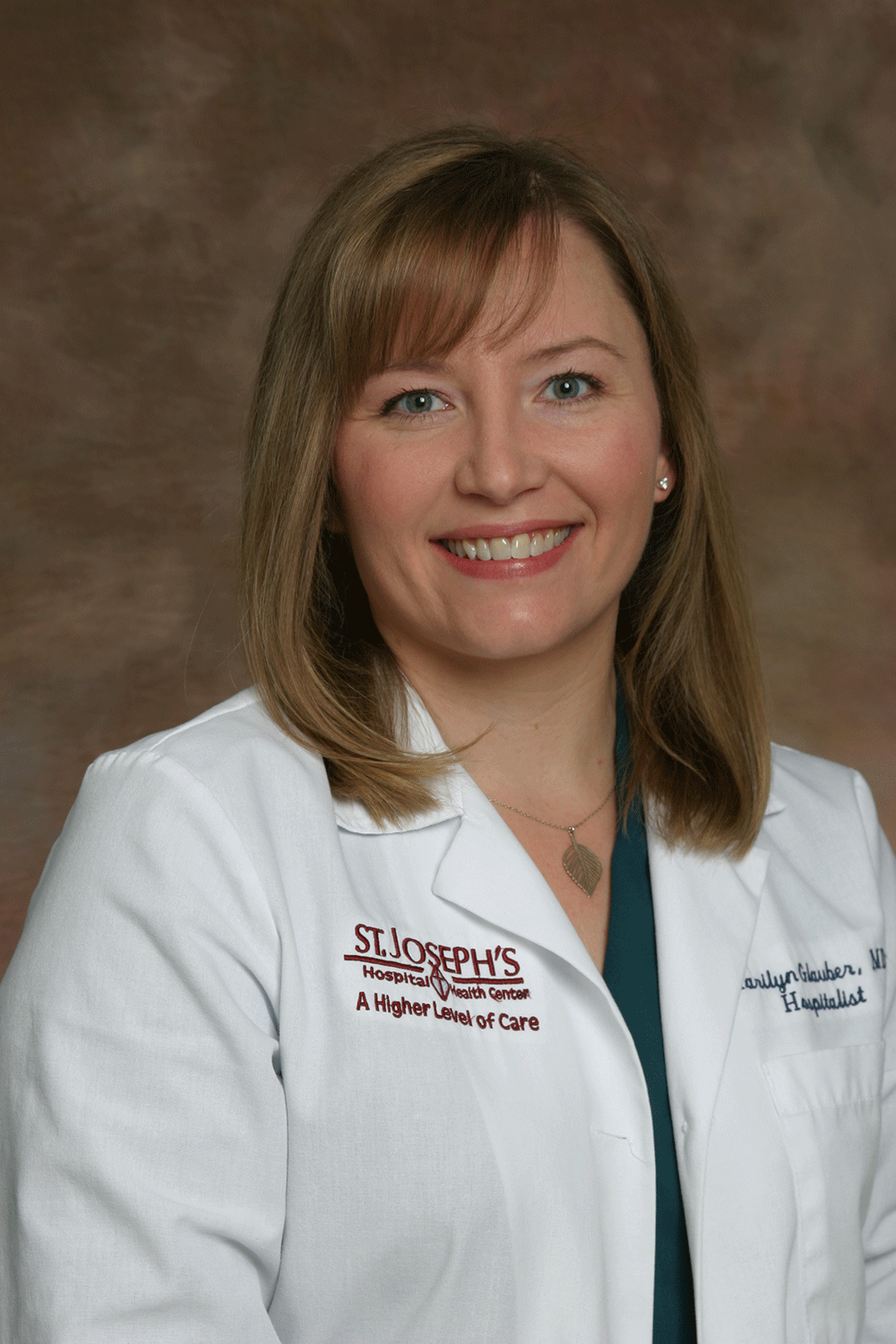
Now with 15,000 members and growing, SHM continues to change the face of medicine—one patient at a time. We recently spoke with Dr. Glauber about her path to hospital medicine and why she believes in its continued growth and success during these times of unprecedented change.
Question: What steered you toward a career in hospital medicine?
Answer: Believe it or not, I did not enter medical school at New York Medical College with dreams of becoming a hospitalist. I first became aware of hospital medicine as a career path during my internal medicine residency at Loyola University School of Medicine in Maywood, Ill. I had some great hospitalist mentors during residency who clearly enjoyed their careers.
As I completed my training, hospital medicine was the clear choice for me. I wanted to manage patients with a variety of diagnoses and wasn’t ready to limit myself to any one subspecialty. I had always found diagnosis and management of acutely ill hospitalized patients to be the most interesting part of medicine, and I thoroughly enjoy working in the hospital environment. The field of hospital medicine was rapidly evolving, and I was curious to see where I could go with it. After four years, I can say with confidence that it has been a great experience.
Q: What do you see as the most rewarding part of your job?
A: Although my experiences practicing hospital medicine have been rewarding in a variety of ways, in the end, it’s pretty simple: I get satisfaction from helping my patients heal and helping them through the experience of hospitalization. It may take days, or it may take months to accomplish, and it is often the result of a cumulative effort of numerous hospitalists, consultants, and the entire hospital staff. But the reward for me is seeing my patient sitting in a chair, dressed in their street clothes, and waiting for their ride to come pick them up.
Q: Why do you think hospital medicine is the fastest-growing specialty in medicine? How can this momentum be sustained moving forward?
A: The growth of hospital medicine reflects the changing landscape of medicine nationwide. Hospitalist jobs are available because hospitals recognize the benefits of having us on hand to provide efficient and quality care to the patients. In terms of career choices, it is appealing to those coming straight out of residency, more experienced physicians practicing outpatient medicine, and even subspecialists who are looking for a career change. It is a satisfying and interesting job, which by nature benefits from unconventional work schedules. I think this flexibility is a big draw as well, in addition to the rewarding career.
Q: Why were you intrigued to join SHM and also attend Hospital Medicine 2016 (HM16)?
A: I think joining SHM is probably long overdue! I have been practicing for four years and feel that it’s time to take stock of my strengths and weaknesses as a hospitalist and try to improve. Through SHM, I can stay up to date on relevant medical topics, including everything from antibiotic resistance to glycemic control, as well as learn how to be a better hospitalist through the experience and research of colleagues. Attending HM16 seemed like a great way to get started, learn some new things, and network with hospitalists around the country.
Q: As a new member to SHM, what do you hope to gain from your membership?
A: I hope to hone my skills as a hospitalist and keep my finger on the pulse of hospital medicine. Keeping abreast of recent developments in medical knowledge and patient management is crucial to providing excellent patient care. There are also many other aspects of our day-to-day practice—for example, documentation and billing—that we weren’t taught how to manage in medical school. By joining SHM, I expect to benefit from the advice and experience of other hospitalists to improve my performance in these areas—and probably more I’ll learn about along the way.
Brett Radler is SHM’s communications coordinator.
Now with 15,000 members and growing, SHM continues to change the face of medicine—one patient at a time. We recently spoke with Dr. Glauber about her path to hospital medicine and why she believes in its continued growth and success during these times of unprecedented change.
Question: What steered you toward a career in hospital medicine?
Answer: Believe it or not, I did not enter medical school at New York Medical College with dreams of becoming a hospitalist. I first became aware of hospital medicine as a career path during my internal medicine residency at Loyola University School of Medicine in Maywood, Ill. I had some great hospitalist mentors during residency who clearly enjoyed their careers.
As I completed my training, hospital medicine was the clear choice for me. I wanted to manage patients with a variety of diagnoses and wasn’t ready to limit myself to any one subspecialty. I had always found diagnosis and management of acutely ill hospitalized patients to be the most interesting part of medicine, and I thoroughly enjoy working in the hospital environment. The field of hospital medicine was rapidly evolving, and I was curious to see where I could go with it. After four years, I can say with confidence that it has been a great experience.
Q: What do you see as the most rewarding part of your job?
A: Although my experiences practicing hospital medicine have been rewarding in a variety of ways, in the end, it’s pretty simple: I get satisfaction from helping my patients heal and helping them through the experience of hospitalization. It may take days, or it may take months to accomplish, and it is often the result of a cumulative effort of numerous hospitalists, consultants, and the entire hospital staff. But the reward for me is seeing my patient sitting in a chair, dressed in their street clothes, and waiting for their ride to come pick them up.
Q: Why do you think hospital medicine is the fastest-growing specialty in medicine? How can this momentum be sustained moving forward?
A: The growth of hospital medicine reflects the changing landscape of medicine nationwide. Hospitalist jobs are available because hospitals recognize the benefits of having us on hand to provide efficient and quality care to the patients. In terms of career choices, it is appealing to those coming straight out of residency, more experienced physicians practicing outpatient medicine, and even subspecialists who are looking for a career change. It is a satisfying and interesting job, which by nature benefits from unconventional work schedules. I think this flexibility is a big draw as well, in addition to the rewarding career.
Q: Why were you intrigued to join SHM and also attend Hospital Medicine 2016 (HM16)?
A: I think joining SHM is probably long overdue! I have been practicing for four years and feel that it’s time to take stock of my strengths and weaknesses as a hospitalist and try to improve. Through SHM, I can stay up to date on relevant medical topics, including everything from antibiotic resistance to glycemic control, as well as learn how to be a better hospitalist through the experience and research of colleagues. Attending HM16 seemed like a great way to get started, learn some new things, and network with hospitalists around the country.
Q: As a new member to SHM, what do you hope to gain from your membership?
A: I hope to hone my skills as a hospitalist and keep my finger on the pulse of hospital medicine. Keeping abreast of recent developments in medical knowledge and patient management is crucial to providing excellent patient care. There are also many other aspects of our day-to-day practice—for example, documentation and billing—that we weren’t taught how to manage in medical school. By joining SHM, I expect to benefit from the advice and experience of other hospitalists to improve my performance in these areas—and probably more I’ll learn about along the way.
Brett Radler is SHM’s communications coordinator.
Now with 15,000 members and growing, SHM continues to change the face of medicine—one patient at a time. We recently spoke with Dr. Glauber about her path to hospital medicine and why she believes in its continued growth and success during these times of unprecedented change.
Question: What steered you toward a career in hospital medicine?
Answer: Believe it or not, I did not enter medical school at New York Medical College with dreams of becoming a hospitalist. I first became aware of hospital medicine as a career path during my internal medicine residency at Loyola University School of Medicine in Maywood, Ill. I had some great hospitalist mentors during residency who clearly enjoyed their careers.
As I completed my training, hospital medicine was the clear choice for me. I wanted to manage patients with a variety of diagnoses and wasn’t ready to limit myself to any one subspecialty. I had always found diagnosis and management of acutely ill hospitalized patients to be the most interesting part of medicine, and I thoroughly enjoy working in the hospital environment. The field of hospital medicine was rapidly evolving, and I was curious to see where I could go with it. After four years, I can say with confidence that it has been a great experience.
Q: What do you see as the most rewarding part of your job?
A: Although my experiences practicing hospital medicine have been rewarding in a variety of ways, in the end, it’s pretty simple: I get satisfaction from helping my patients heal and helping them through the experience of hospitalization. It may take days, or it may take months to accomplish, and it is often the result of a cumulative effort of numerous hospitalists, consultants, and the entire hospital staff. But the reward for me is seeing my patient sitting in a chair, dressed in their street clothes, and waiting for their ride to come pick them up.
Q: Why do you think hospital medicine is the fastest-growing specialty in medicine? How can this momentum be sustained moving forward?
A: The growth of hospital medicine reflects the changing landscape of medicine nationwide. Hospitalist jobs are available because hospitals recognize the benefits of having us on hand to provide efficient and quality care to the patients. In terms of career choices, it is appealing to those coming straight out of residency, more experienced physicians practicing outpatient medicine, and even subspecialists who are looking for a career change. It is a satisfying and interesting job, which by nature benefits from unconventional work schedules. I think this flexibility is a big draw as well, in addition to the rewarding career.
Q: Why were you intrigued to join SHM and also attend Hospital Medicine 2016 (HM16)?
A: I think joining SHM is probably long overdue! I have been practicing for four years and feel that it’s time to take stock of my strengths and weaknesses as a hospitalist and try to improve. Through SHM, I can stay up to date on relevant medical topics, including everything from antibiotic resistance to glycemic control, as well as learn how to be a better hospitalist through the experience and research of colleagues. Attending HM16 seemed like a great way to get started, learn some new things, and network with hospitalists around the country.
Q: As a new member to SHM, what do you hope to gain from your membership?
A: I hope to hone my skills as a hospitalist and keep my finger on the pulse of hospital medicine. Keeping abreast of recent developments in medical knowledge and patient management is crucial to providing excellent patient care. There are also many other aspects of our day-to-day practice—for example, documentation and billing—that we weren’t taught how to manage in medical school. By joining SHM, I expect to benefit from the advice and experience of other hospitalists to improve my performance in these areas—and probably more I’ll learn about along the way.
Brett Radler is SHM’s communications coordinator.

New SHM Members – May 2016
N. Abel, MD, Alabama
A. Aboutalib, California
A. Afzal, MD, FACP, California
J. Allison, California
K. Anand, MD, California
K. Andruchow, APN, California
A. Anter, DO, California
M. Aresery, MD, California
L. Atkins, MD, California
N. Bassi, MD, PhD, California
H. Briggs, MD, PhD, California
E. Burgh, California
C. Caulfield, MD, California
P. C. Mohan, MD, California
D. Chau, MD, California
D. DeVere, MD, California
O. Dimitrijevic, MD, Colorado
P. Dodson, MD, Delaware
A. Domaoal, Florida
J. Dzundza, MD, Florida
A. Ellis, FNP, Florida
R. Erickson, Florida
A. Falescky, MD, Florida
W. Folad, MD, Georgia
K. Forb, Georgia
B. Fromkin, APN, Idaho
N. Gabriel, MD, Idaho
K. Gausewitz, Illinois
B. George, MD, Illinois
G. Goldman, MD, Kansas
A. Gonzalez, Kansas
G. Goyal, Kansas
W. Griffo, MD, Kentucky
D. Grygla, DO, MPH, FAAFP, Louisiana
B. Hammond, Louisiana
H. Haque, Louisiana
G. Harris, MD, Massachusetts
J. Harris, DO, Massachusetts
J. Hasan-Jones, FACHE, Massachusetts
L. Hsu, MD, Michigan
C. Janish, Michigan
S. Jindal, MD, Michigan
M. Johl, Minnesota
T. John, Missouri
D. Julka, MD, Missouri
O. Kamalu, MD, North Carolina
N. Kapadia, MD, New Jersey
K. Kaye, New Jersey
M. Keating, New Jersey
L. Kendall, New Jersey
M. L. Kerlin, New Jersey
T. Khan, New Jersey
A. Kim, APN, New Jersey
R. Klett, New Jersey
K. Knox, New Jersey
M. Kraynyak, MD, New Jersey
C. Larion, ACNP, New Jersey
D. Leforce, New Jersey
C. Leon, New Jersey
X. Li, MD, New Jersey
C. Maturo, DO, New Jersey
L. McGann, New York
R. Mercado Garcia, New York
J. Mikulca, PharmD, New York
M. Minock, APN, New York
Z. Moyenda, MD, MBA, New York
G. Nanna, USA, New York
I. Nasir, New York
D. Nestler, APN, New York
H. Nurse Bey, MD, New York
B. Oran, New York
N. Patel, MD, New York
V. Paulson, MD, New York
R. Porter, PA, Ohio
P. Prabhakar, Ohio
R. Quansah, MD, Ohio
F. Qureshi, MD, Ohio
M. Rahman, Ohio
R. Rajeshwar, Ohio
E. Randal, Ohio
A. Ray, Ohio
R. Regidor, Oklahoma
R. Reyes, MD, Oregon
T. Richardson, NP, Oregon
L. Rivera-Crespo, Oregon
T. Rothwell, PA, Oregon
E. Sacolick, MD, Pennsylvania
D. Sakai, Pennsylvania
M. Sapon-Amoah, FNP, Pennsylvania
M. M. Scoulos-Hanson, Pennsylvania
K. Seger, Pennsylvania
K. Shah, MD, Pennsylvania
S. Shah, MD, Pennsylvania
K. Shaukat, MD, Pennsylvania
J. Shipe-Spotloe, MS, PA-C, Pennsylvania
S. Sim, South Carolina
M. N. Simon, MD, MMM, CPE, South Carolina
A. Singh, South Carolina
S. Singh-Patel, DO, South Carolina
A. Srikanth, MBBS, South Carolina
R. Stanhiser, MD, Tennessee
J. Steinberg, MD, PhD, ACLS, Texas
L. Taylor, PA-C, Texas
E. Taylor, MD, Texas
L. Theaker, Texas
M. Thieman, Texas
J. Tong, Texas
L. Tuazon, MD, FACP, Texas
S. Tummalapalli, Utah
A. Ufferman, MD, Washington
N. Van Groningen, Washington
D. Vaughn, MD, Washington
K. Vo, Washington
T. Washko, MD, Wisconson
T. Waters, DO, West Virginia
L. Weisberger, USA, West Virginia
K. Welch, West Virginia
A. Whitehead, West Virginia
A. Yoon, MD, West Virginia
M. A. Yu, West Virginia
A. Yuen, DO, West Virginia
N. Abel, MD, Alabama
A. Aboutalib, California
A. Afzal, MD, FACP, California
J. Allison, California
K. Anand, MD, California
K. Andruchow, APN, California
A. Anter, DO, California
M. Aresery, MD, California
L. Atkins, MD, California
N. Bassi, MD, PhD, California
H. Briggs, MD, PhD, California
E. Burgh, California
C. Caulfield, MD, California
P. C. Mohan, MD, California
D. Chau, MD, California
D. DeVere, MD, California
O. Dimitrijevic, MD, Colorado
P. Dodson, MD, Delaware
A. Domaoal, Florida
J. Dzundza, MD, Florida
A. Ellis, FNP, Florida
R. Erickson, Florida
A. Falescky, MD, Florida
W. Folad, MD, Georgia
K. Forb, Georgia
B. Fromkin, APN, Idaho
N. Gabriel, MD, Idaho
K. Gausewitz, Illinois
B. George, MD, Illinois
G. Goldman, MD, Kansas
A. Gonzalez, Kansas
G. Goyal, Kansas
W. Griffo, MD, Kentucky
D. Grygla, DO, MPH, FAAFP, Louisiana
B. Hammond, Louisiana
H. Haque, Louisiana
G. Harris, MD, Massachusetts
J. Harris, DO, Massachusetts
J. Hasan-Jones, FACHE, Massachusetts
L. Hsu, MD, Michigan
C. Janish, Michigan
S. Jindal, MD, Michigan
M. Johl, Minnesota
T. John, Missouri
D. Julka, MD, Missouri
O. Kamalu, MD, North Carolina
N. Kapadia, MD, New Jersey
K. Kaye, New Jersey
M. Keating, New Jersey
L. Kendall, New Jersey
M. L. Kerlin, New Jersey
T. Khan, New Jersey
A. Kim, APN, New Jersey
R. Klett, New Jersey
K. Knox, New Jersey
M. Kraynyak, MD, New Jersey
C. Larion, ACNP, New Jersey
D. Leforce, New Jersey
C. Leon, New Jersey
X. Li, MD, New Jersey
C. Maturo, DO, New Jersey
L. McGann, New York
R. Mercado Garcia, New York
J. Mikulca, PharmD, New York
M. Minock, APN, New York
Z. Moyenda, MD, MBA, New York
G. Nanna, USA, New York
I. Nasir, New York
D. Nestler, APN, New York
H. Nurse Bey, MD, New York
B. Oran, New York
N. Patel, MD, New York
V. Paulson, MD, New York
R. Porter, PA, Ohio
P. Prabhakar, Ohio
R. Quansah, MD, Ohio
F. Qureshi, MD, Ohio
M. Rahman, Ohio
R. Rajeshwar, Ohio
E. Randal, Ohio
A. Ray, Ohio
R. Regidor, Oklahoma
R. Reyes, MD, Oregon
T. Richardson, NP, Oregon
L. Rivera-Crespo, Oregon
T. Rothwell, PA, Oregon
E. Sacolick, MD, Pennsylvania
D. Sakai, Pennsylvania
M. Sapon-Amoah, FNP, Pennsylvania
M. M. Scoulos-Hanson, Pennsylvania
K. Seger, Pennsylvania
K. Shah, MD, Pennsylvania
S. Shah, MD, Pennsylvania
K. Shaukat, MD, Pennsylvania
J. Shipe-Spotloe, MS, PA-C, Pennsylvania
S. Sim, South Carolina
M. N. Simon, MD, MMM, CPE, South Carolina
A. Singh, South Carolina
S. Singh-Patel, DO, South Carolina
A. Srikanth, MBBS, South Carolina
R. Stanhiser, MD, Tennessee
J. Steinberg, MD, PhD, ACLS, Texas
L. Taylor, PA-C, Texas
E. Taylor, MD, Texas
L. Theaker, Texas
M. Thieman, Texas
J. Tong, Texas
L. Tuazon, MD, FACP, Texas
S. Tummalapalli, Utah
A. Ufferman, MD, Washington
N. Van Groningen, Washington
D. Vaughn, MD, Washington
K. Vo, Washington
T. Washko, MD, Wisconson
T. Waters, DO, West Virginia
L. Weisberger, USA, West Virginia
K. Welch, West Virginia
A. Whitehead, West Virginia
A. Yoon, MD, West Virginia
M. A. Yu, West Virginia
A. Yuen, DO, West Virginia
N. Abel, MD, Alabama
A. Aboutalib, California
A. Afzal, MD, FACP, California
J. Allison, California
K. Anand, MD, California
K. Andruchow, APN, California
A. Anter, DO, California
M. Aresery, MD, California
L. Atkins, MD, California
N. Bassi, MD, PhD, California
H. Briggs, MD, PhD, California
E. Burgh, California
C. Caulfield, MD, California
P. C. Mohan, MD, California
D. Chau, MD, California
D. DeVere, MD, California
O. Dimitrijevic, MD, Colorado
P. Dodson, MD, Delaware
A. Domaoal, Florida
J. Dzundza, MD, Florida
A. Ellis, FNP, Florida
R. Erickson, Florida
A. Falescky, MD, Florida
W. Folad, MD, Georgia
K. Forb, Georgia
B. Fromkin, APN, Idaho
N. Gabriel, MD, Idaho
K. Gausewitz, Illinois
B. George, MD, Illinois
G. Goldman, MD, Kansas
A. Gonzalez, Kansas
G. Goyal, Kansas
W. Griffo, MD, Kentucky
D. Grygla, DO, MPH, FAAFP, Louisiana
B. Hammond, Louisiana
H. Haque, Louisiana
G. Harris, MD, Massachusetts
J. Harris, DO, Massachusetts
J. Hasan-Jones, FACHE, Massachusetts
L. Hsu, MD, Michigan
C. Janish, Michigan
S. Jindal, MD, Michigan
M. Johl, Minnesota
T. John, Missouri
D. Julka, MD, Missouri
O. Kamalu, MD, North Carolina
N. Kapadia, MD, New Jersey
K. Kaye, New Jersey
M. Keating, New Jersey
L. Kendall, New Jersey
M. L. Kerlin, New Jersey
T. Khan, New Jersey
A. Kim, APN, New Jersey
R. Klett, New Jersey
K. Knox, New Jersey
M. Kraynyak, MD, New Jersey
C. Larion, ACNP, New Jersey
D. Leforce, New Jersey
C. Leon, New Jersey
X. Li, MD, New Jersey
C. Maturo, DO, New Jersey
L. McGann, New York
R. Mercado Garcia, New York
J. Mikulca, PharmD, New York
M. Minock, APN, New York
Z. Moyenda, MD, MBA, New York
G. Nanna, USA, New York
I. Nasir, New York
D. Nestler, APN, New York
H. Nurse Bey, MD, New York
B. Oran, New York
N. Patel, MD, New York
V. Paulson, MD, New York
R. Porter, PA, Ohio
P. Prabhakar, Ohio
R. Quansah, MD, Ohio
F. Qureshi, MD, Ohio
M. Rahman, Ohio
R. Rajeshwar, Ohio
E. Randal, Ohio
A. Ray, Ohio
R. Regidor, Oklahoma
R. Reyes, MD, Oregon
T. Richardson, NP, Oregon
L. Rivera-Crespo, Oregon
T. Rothwell, PA, Oregon
E. Sacolick, MD, Pennsylvania
D. Sakai, Pennsylvania
M. Sapon-Amoah, FNP, Pennsylvania
M. M. Scoulos-Hanson, Pennsylvania
K. Seger, Pennsylvania
K. Shah, MD, Pennsylvania
S. Shah, MD, Pennsylvania
K. Shaukat, MD, Pennsylvania
J. Shipe-Spotloe, MS, PA-C, Pennsylvania
S. Sim, South Carolina
M. N. Simon, MD, MMM, CPE, South Carolina
A. Singh, South Carolina
S. Singh-Patel, DO, South Carolina
A. Srikanth, MBBS, South Carolina
R. Stanhiser, MD, Tennessee
J. Steinberg, MD, PhD, ACLS, Texas
L. Taylor, PA-C, Texas
E. Taylor, MD, Texas
L. Theaker, Texas
M. Thieman, Texas
J. Tong, Texas
L. Tuazon, MD, FACP, Texas
S. Tummalapalli, Utah
A. Ufferman, MD, Washington
N. Van Groningen, Washington
D. Vaughn, MD, Washington
K. Vo, Washington
T. Washko, MD, Wisconson
T. Waters, DO, West Virginia
L. Weisberger, USA, West Virginia
K. Welch, West Virginia
A. Whitehead, West Virginia
A. Yoon, MD, West Virginia
M. A. Yu, West Virginia
A. Yuen, DO, West Virginia
Virtual MDs are No Match for the Real Thing When it Comes to Urgent Medical Problems
(Reuters Health) - When it comes to urgent medical problems like ankle injuries or suspected strep, virtual MDs may be no match for the real thing, a new U.S. study suggests.
Researchers enlisted 67 volunteers to test out how well eight popular virtual visit companies diagnosed these problems and four other common medical issues - sore throat, sinus infection, low back pain, and urinary tract infection.
About one in four patients got the wrong diagnosis or none at all from the virtual visits, the study found. What's more, virtual doctors followed standard protocols for diagnosing and treating these problems only 54% of the time.
"One of the more surprising findings of the study was the universally low rate of testing when it was needed," said lead researcher Dr. Adam Schoenfeld, of the University of California, San Francisco.
"We don't know why, but it may reflect the challenges of ordering or following up on tests performed near where the patient lives but far from where the doctor is, or concern about the costs to the patient of additional testing," Schoenfeld added by email.
Virtual visits using videoconferences, phone calls and web chats are becoming a more common way for patients to seek urgent care because it can save the inconvenience of a clinic visit or provide access to care when people can't get an appointment with their regular doctor.
Some insurers are starting to pay for virtual visits in certain situations, making this option more viable for patients who worry about costs.
For the current study, Schoenfeld and colleagues trained volunteers to act as if they had common acute medical problems and then sent them to virtual doctors provided by companies including Ameridoc, Amwell, Consult a Doctor, Doctor on Demand, MDAligne, MDLIVE, MeMD and NowClinic.
Altogether, the volunteers completed 599 virtual visits in 2013 and 2014.
The companies varied in how well they followed treatment guidelines, with standard care given anywhere from 34 to 66% of the time across the eight websites, the researchers report in JAMA Internal Medicine April 4.
Mode of communication - such as web chat or videoconference - didn't appear to influence how often treatment guidelines were
followed.
Virtual doctors got complete histories and did thorough exams anywhere from 52% to 82% of the time. Virtual visits resulted in correct diagnoses anywhere from 65% to 94% of the time.
Often, virtual doctors failed to order urine tests needed to assess urinary tract infections, or to request images needed to diagnoses ankle pain, for example, and antibiotics were often prescribed inappropriately.
One limitation of the study is that the researchers only looked at virtual visits, so they couldn't compare these online doctors' visits to what might have happened with in-person clinical exams.
Still, it's possible that at least some of the variation in quality of care was the result of the remote visits, said Dr. Jeffrey Linder, a researcher at Brigham and Women's Hospital and Harvard Medical School who co-authored an editorial accompanying the study.
"There is a built-in barrier to getting testing, which led to worse care for ankle pain and recurrent urinary tract infections - for which the doctors should have ordered a test - and better care for low back pain - for which doctors should not have ordered a test," Linder said by email.
In an ideal world, patients would be able to have occasional virtual visits with their primary care providers, who know their medical histories, said Dr. David Levine, co-author of the editorial and also a researcher at Brigham and Women's and Harvard.
Although virtual urgent care and in-person urgent care have not been compared head-to-head, virtual urgent care has its downsides - indirect physical exam, difficult access to testing, and unclear follow-up," Levine said by email. "While the quality of care is not perfect anywhere, a patient's primary care doctor should be a person's first point of contact."
(Reuters Health) - When it comes to urgent medical problems like ankle injuries or suspected strep, virtual MDs may be no match for the real thing, a new U.S. study suggests.
Researchers enlisted 67 volunteers to test out how well eight popular virtual visit companies diagnosed these problems and four other common medical issues - sore throat, sinus infection, low back pain, and urinary tract infection.
About one in four patients got the wrong diagnosis or none at all from the virtual visits, the study found. What's more, virtual doctors followed standard protocols for diagnosing and treating these problems only 54% of the time.
"One of the more surprising findings of the study was the universally low rate of testing when it was needed," said lead researcher Dr. Adam Schoenfeld, of the University of California, San Francisco.
"We don't know why, but it may reflect the challenges of ordering or following up on tests performed near where the patient lives but far from where the doctor is, or concern about the costs to the patient of additional testing," Schoenfeld added by email.
Virtual visits using videoconferences, phone calls and web chats are becoming a more common way for patients to seek urgent care because it can save the inconvenience of a clinic visit or provide access to care when people can't get an appointment with their regular doctor.
Some insurers are starting to pay for virtual visits in certain situations, making this option more viable for patients who worry about costs.
For the current study, Schoenfeld and colleagues trained volunteers to act as if they had common acute medical problems and then sent them to virtual doctors provided by companies including Ameridoc, Amwell, Consult a Doctor, Doctor on Demand, MDAligne, MDLIVE, MeMD and NowClinic.
Altogether, the volunteers completed 599 virtual visits in 2013 and 2014.
The companies varied in how well they followed treatment guidelines, with standard care given anywhere from 34 to 66% of the time across the eight websites, the researchers report in JAMA Internal Medicine April 4.
Mode of communication - such as web chat or videoconference - didn't appear to influence how often treatment guidelines were
followed.
Virtual doctors got complete histories and did thorough exams anywhere from 52% to 82% of the time. Virtual visits resulted in correct diagnoses anywhere from 65% to 94% of the time.
Often, virtual doctors failed to order urine tests needed to assess urinary tract infections, or to request images needed to diagnoses ankle pain, for example, and antibiotics were often prescribed inappropriately.
One limitation of the study is that the researchers only looked at virtual visits, so they couldn't compare these online doctors' visits to what might have happened with in-person clinical exams.
Still, it's possible that at least some of the variation in quality of care was the result of the remote visits, said Dr. Jeffrey Linder, a researcher at Brigham and Women's Hospital and Harvard Medical School who co-authored an editorial accompanying the study.
"There is a built-in barrier to getting testing, which led to worse care for ankle pain and recurrent urinary tract infections - for which the doctors should have ordered a test - and better care for low back pain - for which doctors should not have ordered a test," Linder said by email.
In an ideal world, patients would be able to have occasional virtual visits with their primary care providers, who know their medical histories, said Dr. David Levine, co-author of the editorial and also a researcher at Brigham and Women's and Harvard.
Although virtual urgent care and in-person urgent care have not been compared head-to-head, virtual urgent care has its downsides - indirect physical exam, difficult access to testing, and unclear follow-up," Levine said by email. "While the quality of care is not perfect anywhere, a patient's primary care doctor should be a person's first point of contact."
(Reuters Health) - When it comes to urgent medical problems like ankle injuries or suspected strep, virtual MDs may be no match for the real thing, a new U.S. study suggests.
Researchers enlisted 67 volunteers to test out how well eight popular virtual visit companies diagnosed these problems and four other common medical issues - sore throat, sinus infection, low back pain, and urinary tract infection.
About one in four patients got the wrong diagnosis or none at all from the virtual visits, the study found. What's more, virtual doctors followed standard protocols for diagnosing and treating these problems only 54% of the time.
"One of the more surprising findings of the study was the universally low rate of testing when it was needed," said lead researcher Dr. Adam Schoenfeld, of the University of California, San Francisco.
"We don't know why, but it may reflect the challenges of ordering or following up on tests performed near where the patient lives but far from where the doctor is, or concern about the costs to the patient of additional testing," Schoenfeld added by email.
Virtual visits using videoconferences, phone calls and web chats are becoming a more common way for patients to seek urgent care because it can save the inconvenience of a clinic visit or provide access to care when people can't get an appointment with their regular doctor.
Some insurers are starting to pay for virtual visits in certain situations, making this option more viable for patients who worry about costs.
For the current study, Schoenfeld and colleagues trained volunteers to act as if they had common acute medical problems and then sent them to virtual doctors provided by companies including Ameridoc, Amwell, Consult a Doctor, Doctor on Demand, MDAligne, MDLIVE, MeMD and NowClinic.
Altogether, the volunteers completed 599 virtual visits in 2013 and 2014.
The companies varied in how well they followed treatment guidelines, with standard care given anywhere from 34 to 66% of the time across the eight websites, the researchers report in JAMA Internal Medicine April 4.
Mode of communication - such as web chat or videoconference - didn't appear to influence how often treatment guidelines were
followed.
Virtual doctors got complete histories and did thorough exams anywhere from 52% to 82% of the time. Virtual visits resulted in correct diagnoses anywhere from 65% to 94% of the time.
Often, virtual doctors failed to order urine tests needed to assess urinary tract infections, or to request images needed to diagnoses ankle pain, for example, and antibiotics were often prescribed inappropriately.
One limitation of the study is that the researchers only looked at virtual visits, so they couldn't compare these online doctors' visits to what might have happened with in-person clinical exams.
Still, it's possible that at least some of the variation in quality of care was the result of the remote visits, said Dr. Jeffrey Linder, a researcher at Brigham and Women's Hospital and Harvard Medical School who co-authored an editorial accompanying the study.
"There is a built-in barrier to getting testing, which led to worse care for ankle pain and recurrent urinary tract infections - for which the doctors should have ordered a test - and better care for low back pain - for which doctors should not have ordered a test," Linder said by email.
In an ideal world, patients would be able to have occasional virtual visits with their primary care providers, who know their medical histories, said Dr. David Levine, co-author of the editorial and also a researcher at Brigham and Women's and Harvard.
Although virtual urgent care and in-person urgent care have not been compared head-to-head, virtual urgent care has its downsides - indirect physical exam, difficult access to testing, and unclear follow-up," Levine said by email. "While the quality of care is not perfect anywhere, a patient's primary care doctor should be a person's first point of contact."