User login
HM16 AUDIO: U.S. Surgeon General Vivek Murthy, MD, MBA, Discusses Hospital Medicine's Role in Public Health
U.S. Surgeon General Vivek Murthy, MD, MBA, talks about the role hospitalists can play in public health.
U.S. Surgeon General Vivek Murthy, MD, MBA, talks about the role hospitalists can play in public health.
U.S. Surgeon General Vivek Murthy, MD, MBA, talks about the role hospitalists can play in public health.
HM16 AUDIO: Alyssa Stephany, MD, Talks about the HM16 RIV Scientific Abstract Competition
Alyssa Stephany, MD, then assistant professor at Duke and now section chief of pediatric hospital medicine at Children’s Hospital of Wisconsin, talks about the evolution in training stemming from her experience in the HM16 RIV competition. This year, she oversaw a study for which resident
Jennifer Ladd, MD, won an award for pediatric clinical vignette.
Alyssa Stephany, MD, then assistant professor at Duke and now section chief of pediatric hospital medicine at Children’s Hospital of Wisconsin, talks about the evolution in training stemming from her experience in the HM16 RIV competition. This year, she oversaw a study for which resident
Jennifer Ladd, MD, won an award for pediatric clinical vignette.
Alyssa Stephany, MD, then assistant professor at Duke and now section chief of pediatric hospital medicine at Children’s Hospital of Wisconsin, talks about the evolution in training stemming from her experience in the HM16 RIV competition. This year, she oversaw a study for which resident
Jennifer Ladd, MD, won an award for pediatric clinical vignette.
HM16 AUDIO: Vineet Chopra, MD, MSc, Chats up His Research on Costs and Complications with PICC Line Usage
RIV winner Vineet Chopra, MD, MSc, assistant professor at the University of Michigan in Ann Arbor, talks about his research on the costs and complications associated with PICC line use.
RIV winner Vineet Chopra, MD, MSc, assistant professor at the University of Michigan in Ann Arbor, talks about his research on the costs and complications associated with PICC line use.
RIV winner Vineet Chopra, MD, MSc, assistant professor at the University of Michigan in Ann Arbor, talks about his research on the costs and complications associated with PICC line use.
HM16 AUDIO: Jordan Romano Discusses Getting Published, Hospitalist Burnout
Jordan Romano, DO, a hospitalist at Massachusetts General Hospital, talks about lessons gleaned at HM16 on the importance of taking small steps toward your goals of getting published and how burnout can be relative.
Jordan Romano, DO, a hospitalist at Massachusetts General Hospital, talks about lessons gleaned at HM16 on the importance of taking small steps toward your goals of getting published and how burnout can be relative.
Jordan Romano, DO, a hospitalist at Massachusetts General Hospital, talks about lessons gleaned at HM16 on the importance of taking small steps toward your goals of getting published and how burnout can be relative.
Annual Meeting Highlights Latest Research, Project Completion
One of the things that Jennifer Feighner, MD, cheerfully came away with at HM16 was how to better complete a task that is distinctly uncheerful but also important to any high-performing hospital: how to collect the data of the dead.
The quality improvement session “Reducing Inpatient Mortality: A Standardized Approach to Identify Preventable Deaths” demonstrated still evolving but, so far, well-performing projects that have been rolled out at Brigham and Women’s Hospital and the Duke University Health System.
“I was struck by the methodology for getting input from multiple providers and the nursing staff,” said Dr. Feighner, director of hospital medicine at Marcus Daly Memorial Hospital in Hamilton, Mont.
As the role of the hospitalist as agent of change and improvement continues to grow, the topic of quality improvement (QI) maintained a high profile at the annual meeting, with talks on the latest literature, sustaining motivation to complete projects, and dealing with issues such as handoffs and frequent fliers.
In the mortality review session, presenters set out to give details that could be a model to be used elsewhere. At Brigham and Women’s, all of the frontline clinicians are asked by email to fill out a report when a death occurs in any case with which they’ve been involved, with the Web-based reports to be completed within 48 to 72 hours of the death.
The number of deaths, the report completion rate, death “preventability,” and issues that arose for the patient during hospitalization are some of the data that are tracked. So far, the system has identified such themes as “alarm fatigue,” high oxygen requirements on non-intensive-care floors, handoffs, and transfers from other hospitals, said Kiran Gupta, MD, MPH, who completed her residency at Brigham and is now assistant professor of clinical medicine at the University of California San Francisco.
At Duke, where the mortality review system improvements have been led by Jonathan Bae, MD, assistant professor of medicine, self-nicknamed “Dr. Death,” inpatient deaths undergo a similarly comprehensive review, with an enhanced end-of-life section to cover issues particular to those cases and flags for cases that need independent review.
Dr. Gupta and Dr. Bae emphasized the confidentiality of the reviews and that they are non-discoverable in the event of litigation, which they hope give clinicians the freedom to fully report their observations.
Dr. Feighner said that her 23-bed hospital is far smaller than either Brigham or Duke, of course, but that the overall ideas can translate.
“I am the medical director of our hospitalist program, and our chief of staff and I’ve created a peer-review medical staff quality improvement committee,” she said. “So this obviously has a lot of interest to me.”
With only 4.2 full-time equivalents (FTEs) in her department, she said changes would be even easier to put into place.
“I think that will be really helpful for our peer-review committee and our quality and safety committee. I could see how we could take this and kind of revise it a little bit,” she said. “When you’re in charge of that few people, it’s easy to get processes implemented. We are more limited in monetary resources, but we make up for that in manpower-to-problem ratio, I guess.”
In another session, Jordan Messler, MD, SFHM, a hospitalist and former medical director of the hospitalist group at Morton Plant Hospital in Clearwater, Fla., confronted the startling statistic that 80% of initiatives in hospitals never meet their objectives. Hurdles such as burnout and disengagement, he said, often stand in the way of successful QI projects.
He emphasized the importance of intrinsic motivation (a sense of ownership and passion for the work) over extrinsic motivation (a fear of reprisal if something isn’t done). A step as simple as assigning a title (e.g., “head of readmissions”) can be a motivator, he said. But he also emphasized that project ideas need to be timed correctly and the ideas should ideally come from the physicians leading them.
Robert Clothier, RN, a practice manager for the hospitalist group at ThedaCare in Wisconsin, said he was struck by the lessons gleaned in a workshop on the I-PASS system of handoffs—a standardized system with a handoff sheet, studied prospectively, in which medical errors decreased by 23% and preventable adverse events fell by 30%.1 The system was created in pediatric departments but was deliberately made to be translatable to other settings.
“Instead of focusing on the outcome of the quality of the handoff, they focus on the quality of the feedback sessions,” Clothier said. “So it’s not the person giving the handoff or receiving the handoff that actually assesses it. It’s just the person who’s sitting there watching.”
He said the workshop underscored the importance of standardization, a concept with which he was familiar but which now seemed particularly vital.
“If you do the process and everybody does it the same, then it’s not only the person that’s giving the information who can do it in a very standardized way but the person who’s listening already knows what they’re going to be listening for so they hear it more clearly because they don’t have to discern what’s coming next,” Clothier said. “They already know what’s coming next.” TH
Reference
1. Starmer AJ, Spector ND, Srivastava R, et al. Changes in medical errors after implementation of a handoff program. N Engl J Med. 2014;371:1803-1812.
One of the things that Jennifer Feighner, MD, cheerfully came away with at HM16 was how to better complete a task that is distinctly uncheerful but also important to any high-performing hospital: how to collect the data of the dead.
The quality improvement session “Reducing Inpatient Mortality: A Standardized Approach to Identify Preventable Deaths” demonstrated still evolving but, so far, well-performing projects that have been rolled out at Brigham and Women’s Hospital and the Duke University Health System.
“I was struck by the methodology for getting input from multiple providers and the nursing staff,” said Dr. Feighner, director of hospital medicine at Marcus Daly Memorial Hospital in Hamilton, Mont.
As the role of the hospitalist as agent of change and improvement continues to grow, the topic of quality improvement (QI) maintained a high profile at the annual meeting, with talks on the latest literature, sustaining motivation to complete projects, and dealing with issues such as handoffs and frequent fliers.
In the mortality review session, presenters set out to give details that could be a model to be used elsewhere. At Brigham and Women’s, all of the frontline clinicians are asked by email to fill out a report when a death occurs in any case with which they’ve been involved, with the Web-based reports to be completed within 48 to 72 hours of the death.
The number of deaths, the report completion rate, death “preventability,” and issues that arose for the patient during hospitalization are some of the data that are tracked. So far, the system has identified such themes as “alarm fatigue,” high oxygen requirements on non-intensive-care floors, handoffs, and transfers from other hospitals, said Kiran Gupta, MD, MPH, who completed her residency at Brigham and is now assistant professor of clinical medicine at the University of California San Francisco.
At Duke, where the mortality review system improvements have been led by Jonathan Bae, MD, assistant professor of medicine, self-nicknamed “Dr. Death,” inpatient deaths undergo a similarly comprehensive review, with an enhanced end-of-life section to cover issues particular to those cases and flags for cases that need independent review.
Dr. Gupta and Dr. Bae emphasized the confidentiality of the reviews and that they are non-discoverable in the event of litigation, which they hope give clinicians the freedom to fully report their observations.
Dr. Feighner said that her 23-bed hospital is far smaller than either Brigham or Duke, of course, but that the overall ideas can translate.
“I am the medical director of our hospitalist program, and our chief of staff and I’ve created a peer-review medical staff quality improvement committee,” she said. “So this obviously has a lot of interest to me.”
With only 4.2 full-time equivalents (FTEs) in her department, she said changes would be even easier to put into place.
“I think that will be really helpful for our peer-review committee and our quality and safety committee. I could see how we could take this and kind of revise it a little bit,” she said. “When you’re in charge of that few people, it’s easy to get processes implemented. We are more limited in monetary resources, but we make up for that in manpower-to-problem ratio, I guess.”
In another session, Jordan Messler, MD, SFHM, a hospitalist and former medical director of the hospitalist group at Morton Plant Hospital in Clearwater, Fla., confronted the startling statistic that 80% of initiatives in hospitals never meet their objectives. Hurdles such as burnout and disengagement, he said, often stand in the way of successful QI projects.
He emphasized the importance of intrinsic motivation (a sense of ownership and passion for the work) over extrinsic motivation (a fear of reprisal if something isn’t done). A step as simple as assigning a title (e.g., “head of readmissions”) can be a motivator, he said. But he also emphasized that project ideas need to be timed correctly and the ideas should ideally come from the physicians leading them.
Robert Clothier, RN, a practice manager for the hospitalist group at ThedaCare in Wisconsin, said he was struck by the lessons gleaned in a workshop on the I-PASS system of handoffs—a standardized system with a handoff sheet, studied prospectively, in which medical errors decreased by 23% and preventable adverse events fell by 30%.1 The system was created in pediatric departments but was deliberately made to be translatable to other settings.
“Instead of focusing on the outcome of the quality of the handoff, they focus on the quality of the feedback sessions,” Clothier said. “So it’s not the person giving the handoff or receiving the handoff that actually assesses it. It’s just the person who’s sitting there watching.”
He said the workshop underscored the importance of standardization, a concept with which he was familiar but which now seemed particularly vital.
“If you do the process and everybody does it the same, then it’s not only the person that’s giving the information who can do it in a very standardized way but the person who’s listening already knows what they’re going to be listening for so they hear it more clearly because they don’t have to discern what’s coming next,” Clothier said. “They already know what’s coming next.” TH
Reference
1. Starmer AJ, Spector ND, Srivastava R, et al. Changes in medical errors after implementation of a handoff program. N Engl J Med. 2014;371:1803-1812.
One of the things that Jennifer Feighner, MD, cheerfully came away with at HM16 was how to better complete a task that is distinctly uncheerful but also important to any high-performing hospital: how to collect the data of the dead.
The quality improvement session “Reducing Inpatient Mortality: A Standardized Approach to Identify Preventable Deaths” demonstrated still evolving but, so far, well-performing projects that have been rolled out at Brigham and Women’s Hospital and the Duke University Health System.
“I was struck by the methodology for getting input from multiple providers and the nursing staff,” said Dr. Feighner, director of hospital medicine at Marcus Daly Memorial Hospital in Hamilton, Mont.
As the role of the hospitalist as agent of change and improvement continues to grow, the topic of quality improvement (QI) maintained a high profile at the annual meeting, with talks on the latest literature, sustaining motivation to complete projects, and dealing with issues such as handoffs and frequent fliers.
In the mortality review session, presenters set out to give details that could be a model to be used elsewhere. At Brigham and Women’s, all of the frontline clinicians are asked by email to fill out a report when a death occurs in any case with which they’ve been involved, with the Web-based reports to be completed within 48 to 72 hours of the death.
The number of deaths, the report completion rate, death “preventability,” and issues that arose for the patient during hospitalization are some of the data that are tracked. So far, the system has identified such themes as “alarm fatigue,” high oxygen requirements on non-intensive-care floors, handoffs, and transfers from other hospitals, said Kiran Gupta, MD, MPH, who completed her residency at Brigham and is now assistant professor of clinical medicine at the University of California San Francisco.
At Duke, where the mortality review system improvements have been led by Jonathan Bae, MD, assistant professor of medicine, self-nicknamed “Dr. Death,” inpatient deaths undergo a similarly comprehensive review, with an enhanced end-of-life section to cover issues particular to those cases and flags for cases that need independent review.
Dr. Gupta and Dr. Bae emphasized the confidentiality of the reviews and that they are non-discoverable in the event of litigation, which they hope give clinicians the freedom to fully report their observations.
Dr. Feighner said that her 23-bed hospital is far smaller than either Brigham or Duke, of course, but that the overall ideas can translate.
“I am the medical director of our hospitalist program, and our chief of staff and I’ve created a peer-review medical staff quality improvement committee,” she said. “So this obviously has a lot of interest to me.”
With only 4.2 full-time equivalents (FTEs) in her department, she said changes would be even easier to put into place.
“I think that will be really helpful for our peer-review committee and our quality and safety committee. I could see how we could take this and kind of revise it a little bit,” she said. “When you’re in charge of that few people, it’s easy to get processes implemented. We are more limited in monetary resources, but we make up for that in manpower-to-problem ratio, I guess.”
In another session, Jordan Messler, MD, SFHM, a hospitalist and former medical director of the hospitalist group at Morton Plant Hospital in Clearwater, Fla., confronted the startling statistic that 80% of initiatives in hospitals never meet their objectives. Hurdles such as burnout and disengagement, he said, often stand in the way of successful QI projects.
He emphasized the importance of intrinsic motivation (a sense of ownership and passion for the work) over extrinsic motivation (a fear of reprisal if something isn’t done). A step as simple as assigning a title (e.g., “head of readmissions”) can be a motivator, he said. But he also emphasized that project ideas need to be timed correctly and the ideas should ideally come from the physicians leading them.
Robert Clothier, RN, a practice manager for the hospitalist group at ThedaCare in Wisconsin, said he was struck by the lessons gleaned in a workshop on the I-PASS system of handoffs—a standardized system with a handoff sheet, studied prospectively, in which medical errors decreased by 23% and preventable adverse events fell by 30%.1 The system was created in pediatric departments but was deliberately made to be translatable to other settings.
“Instead of focusing on the outcome of the quality of the handoff, they focus on the quality of the feedback sessions,” Clothier said. “So it’s not the person giving the handoff or receiving the handoff that actually assesses it. It’s just the person who’s sitting there watching.”
He said the workshop underscored the importance of standardization, a concept with which he was familiar but which now seemed particularly vital.
“If you do the process and everybody does it the same, then it’s not only the person that’s giving the information who can do it in a very standardized way but the person who’s listening already knows what they’re going to be listening for so they hear it more clearly because they don’t have to discern what’s coming next,” Clothier said. “They already know what’s coming next.” TH
Reference
1. Starmer AJ, Spector ND, Srivastava R, et al. Changes in medical errors after implementation of a handoff program. N Engl J Med. 2014;371:1803-1812.
Study Suggests that Elderly Patients with Hip Fractures get Better Care at Smaller Hospitals
(Reuters Health) - Elderly patients with hip fractures may get better care at smaller hospitals, a new study suggests. Seniors with hip fractures waited longer for surgery and were more likely to be rehospitalized if they were treated at a major trauma center than if they went to a smaller emergency room, researchers found.
Seniors in level 1 trauma centers were also more likely to develop blood clots in their legs, compared to their peers who were treated in settings designed for less serious injuries, the researchers reported March 11 in the journal Medical Care.
Level 1 trauma centers have the resources to treat very serious injuries, said lead author Dr. David Metcalfe of Brigham and Women's Hospital in Boston.
"However, because they care for the most complex patients, these hospitals are often very busy. There is therefore a risk that some groups of patients might be disadvantaged or 'lost' in the system," Metcalfe told Reuters Health by email.
For example, patients with multiple injuries or bones breaking through skin may be treated before seniors with hip fractures.
Each year in the U.S. alone, more than 250,000 people aged 65 and older are hospitalized for hip fractures, according to the Centers for Disease Control and Prevention.
The study team used statewide data from California on 91,401 seniors hospitalized between 2007 and 2011. All were over age 65 and had surgery for hip fractures.
Overall, 6% were treated at a level 1 trauma center, 18% at a level 2 trauma center and 70% in a non-trauma center.
On average, patients stayed in the hospital for five days and waited one day for surgery.
Patients in level 1 trauma centers stayed for one day longer than those in the other settings and waited nearly eight hours longer for surgery.
Seniors treated at level 1 centers were 62% more likely to be readmitted to the hospital within a month of their surgery than seniors treated in level 2 or non-trauma settings.Seniors were also 32% more likely to develop blood clots in their legs at level 1 centers.
Patients at level 2 trauma centers had the same outcomes as those at non-trauma centers, the authors found. There was no difference between any of the groups in risk of death, bed sores, or pneumonia, however.
"We now know that it is important to treat patients with hip fractures as quickly as possible," said Metcalfe, noting that older adults who wait too long for treatment may be at risk for bed sores, blood clots, and lung infections.
"The concern is that this delay will lead to increasing length of stay in hospital as well as increased complications for the patients because they spend longer in bed waiting for surgery," said Dr. Chris Gooding, a surgeon at Addenbrookes Hospital, a level 1 trauma center in Cambridge, UK. Gooding was not involved in the study.
"This is an important subject as in developed countries we have an aging population and as a result we are seeing increasing numbers of patients with hip fractures," Gooding told Reuters Health by email.
At the same time, Gooding noted, there are also a growing number of level 1 trauma centers.
"One of the best ways to help these patients is to get their operation done quickly so that they can start walking again and return to their own homes as soon as possible," Metcalfe advised.
(Reuters Health) - Elderly patients with hip fractures may get better care at smaller hospitals, a new study suggests. Seniors with hip fractures waited longer for surgery and were more likely to be rehospitalized if they were treated at a major trauma center than if they went to a smaller emergency room, researchers found.
Seniors in level 1 trauma centers were also more likely to develop blood clots in their legs, compared to their peers who were treated in settings designed for less serious injuries, the researchers reported March 11 in the journal Medical Care.
Level 1 trauma centers have the resources to treat very serious injuries, said lead author Dr. David Metcalfe of Brigham and Women's Hospital in Boston.
"However, because they care for the most complex patients, these hospitals are often very busy. There is therefore a risk that some groups of patients might be disadvantaged or 'lost' in the system," Metcalfe told Reuters Health by email.
For example, patients with multiple injuries or bones breaking through skin may be treated before seniors with hip fractures.
Each year in the U.S. alone, more than 250,000 people aged 65 and older are hospitalized for hip fractures, according to the Centers for Disease Control and Prevention.
The study team used statewide data from California on 91,401 seniors hospitalized between 2007 and 2011. All were over age 65 and had surgery for hip fractures.
Overall, 6% were treated at a level 1 trauma center, 18% at a level 2 trauma center and 70% in a non-trauma center.
On average, patients stayed in the hospital for five days and waited one day for surgery.
Patients in level 1 trauma centers stayed for one day longer than those in the other settings and waited nearly eight hours longer for surgery.
Seniors treated at level 1 centers were 62% more likely to be readmitted to the hospital within a month of their surgery than seniors treated in level 2 or non-trauma settings.Seniors were also 32% more likely to develop blood clots in their legs at level 1 centers.
Patients at level 2 trauma centers had the same outcomes as those at non-trauma centers, the authors found. There was no difference between any of the groups in risk of death, bed sores, or pneumonia, however.
"We now know that it is important to treat patients with hip fractures as quickly as possible," said Metcalfe, noting that older adults who wait too long for treatment may be at risk for bed sores, blood clots, and lung infections.
"The concern is that this delay will lead to increasing length of stay in hospital as well as increased complications for the patients because they spend longer in bed waiting for surgery," said Dr. Chris Gooding, a surgeon at Addenbrookes Hospital, a level 1 trauma center in Cambridge, UK. Gooding was not involved in the study.
"This is an important subject as in developed countries we have an aging population and as a result we are seeing increasing numbers of patients with hip fractures," Gooding told Reuters Health by email.
At the same time, Gooding noted, there are also a growing number of level 1 trauma centers.
"One of the best ways to help these patients is to get their operation done quickly so that they can start walking again and return to their own homes as soon as possible," Metcalfe advised.
(Reuters Health) - Elderly patients with hip fractures may get better care at smaller hospitals, a new study suggests. Seniors with hip fractures waited longer for surgery and were more likely to be rehospitalized if they were treated at a major trauma center than if they went to a smaller emergency room, researchers found.
Seniors in level 1 trauma centers were also more likely to develop blood clots in their legs, compared to their peers who were treated in settings designed for less serious injuries, the researchers reported March 11 in the journal Medical Care.
Level 1 trauma centers have the resources to treat very serious injuries, said lead author Dr. David Metcalfe of Brigham and Women's Hospital in Boston.
"However, because they care for the most complex patients, these hospitals are often very busy. There is therefore a risk that some groups of patients might be disadvantaged or 'lost' in the system," Metcalfe told Reuters Health by email.
For example, patients with multiple injuries or bones breaking through skin may be treated before seniors with hip fractures.
Each year in the U.S. alone, more than 250,000 people aged 65 and older are hospitalized for hip fractures, according to the Centers for Disease Control and Prevention.
The study team used statewide data from California on 91,401 seniors hospitalized between 2007 and 2011. All were over age 65 and had surgery for hip fractures.
Overall, 6% were treated at a level 1 trauma center, 18% at a level 2 trauma center and 70% in a non-trauma center.
On average, patients stayed in the hospital for five days and waited one day for surgery.
Patients in level 1 trauma centers stayed for one day longer than those in the other settings and waited nearly eight hours longer for surgery.
Seniors treated at level 1 centers were 62% more likely to be readmitted to the hospital within a month of their surgery than seniors treated in level 2 or non-trauma settings.Seniors were also 32% more likely to develop blood clots in their legs at level 1 centers.
Patients at level 2 trauma centers had the same outcomes as those at non-trauma centers, the authors found. There was no difference between any of the groups in risk of death, bed sores, or pneumonia, however.
"We now know that it is important to treat patients with hip fractures as quickly as possible," said Metcalfe, noting that older adults who wait too long for treatment may be at risk for bed sores, blood clots, and lung infections.
"The concern is that this delay will lead to increasing length of stay in hospital as well as increased complications for the patients because they spend longer in bed waiting for surgery," said Dr. Chris Gooding, a surgeon at Addenbrookes Hospital, a level 1 trauma center in Cambridge, UK. Gooding was not involved in the study.
"This is an important subject as in developed countries we have an aging population and as a result we are seeing increasing numbers of patients with hip fractures," Gooding told Reuters Health by email.
At the same time, Gooding noted, there are also a growing number of level 1 trauma centers.
"One of the best ways to help these patients is to get their operation done quickly so that they can start walking again and return to their own homes as soon as possible," Metcalfe advised.
Policy Experts Urge Hospitalists to Get Involved, Share Knowledge
SAN DIEGO — Think beyond your four walls, speakers told hospitalists at HM16. When it comes to public health and public policy, with your experience and knowledge, your input is simply too valuable not to share, they said.
During several sessions at the SHM annual meeting, hospitalists were urged to understand that they could influence the world of healthcare beyond their own patients and their own centers.
“You have more power than you realize,” U.S. Surgeon General Vivek Murthy, MD, MBA, told hospitalists in his opening address. As a hospitalist at Brigham and Women’s Hospital in Boston, Dr. Murthy created the nonprofit organization Doctors for America, which promotes affordable, high-quality healthcare for all Americans.
A member of Congress, he said, once told him that a call from a doctor is listed as “a notable event” and 10 calls from doctors in a day is “a full-blown crisis.” “I’m often struck by how infrequently elected leaders hear from doctors,” Dr. Murthy added. “I’m also struck by how many good ideas I hear from doctors.”
Dr. Murthy suggested that as the HM movement grows, hospitalists should ask themselves questions around issues of leadership, change, and public health.
“Can hospitalists leverage their leadership in the hospital to not only improve systems but also create a culture that supports healing in health?” Dr. Murthy asked. “Can hospitalists be as powerful a force for change outside the hospital as they are inside the hospital, recognizing that critical drivers of illness like nutrition, safety, and physical activity are most often grounded in the community rather than the clinic? As people who often mentor trainees and younger physicians, can we inspire the next generation of physicians with a broader vision of medicine, one where physicians’ sacred duty is to safeguard the health of their community by treating illness but also by preventing it?”
Achieving such goals might be a tall order. When asked about how influential they feel in the world of public health, some hospitalists said they feel they can have some impact in their daily work but, beyond the hospital, not so much.
“I don’t feel very empowered,” said Janna Gelderman-Moffett, DO, a locum tenens physician in Boulder City, Colo. She added, though, that she is “frustrated with how medicine is portrayed.”
Robert Wachter, MD, MHM, chief of the division of hospital medicine at the University of California, San Francisco Medical Center, who coined the term “hospitalist” 20 years ago, told hospitalists at HM16 that it’s “crucial” for them to take on new roles. But he also waved a caution flag: too much and you may go too far afield.
“We have to be careful about scope creep,” Dr. Wachter said. “And as much as I enjoyed the Surgeon General’s comments, I think we’ve got to be thoughtful about taking on [too much responsibility]. I have people in my group who do a lot of work, for example, in population health. That’s part of their job, but I’m not sure that’s our job, to fix the world of prevention outside of the hospital and SNF. If we begin becoming something for everybody, I think we’ll lose the special focus that made us successful.”
Ron Greeno, MD, FCCP, MHM, chief strategy officer for IPC Healthcare in North Hollywood, Calif., chair of SHM’s Public Policy Committee, and an SHM board member, said the society and hospitalists are “specially suited” to give input to help shape the details of the Medicare Access and CHIP Reauthorization Act of 2015 (MACRA), which replaced the repealed Sustainable Growth Rate (SGR) formula.
With MACRA, SGR’s threat of broader Medicare payment cuts is eliminated, but it increases the scope of quality measurement, including resource use and clinical-improvement practices. It also uses incentives to push providers toward risk-based models.
With many of MACRA’s specifics now left to the rule-making process, it’s still largely “a creature devoid of form,” Dr. Greeno said. Hospitalists and SHM can make a difference largely because of their roles within systems, he said. “We are trying to actually make things better,” he added. “We’re always looking for a better way to do things.”
Joining SHM’s Grassroots Network, which can involve something as simple as sending a pre-written letter to Washington, D.C.–based legislators, can be a big help. “You know what?” Dr. Greeno said. “This stuff actually has an impact.”
Tresa McNeal, MD, a hospitalist at Baylor Scott & White Health, a not-for-profit healthcare system serving Texas communities, said she was motivated by the speakers’ remarks.
“It’s really good to know that we have people representing us from SHM to [not only] help us learn about these issues but also represent us,” Dr. McNeal said. “I think it makes me want to be part of the grassroots initiative, just realizing that there’s power in numbers.” TH
Thomas R. Collins is a freelance writer in South Florida.
SAN DIEGO — Think beyond your four walls, speakers told hospitalists at HM16. When it comes to public health and public policy, with your experience and knowledge, your input is simply too valuable not to share, they said.
During several sessions at the SHM annual meeting, hospitalists were urged to understand that they could influence the world of healthcare beyond their own patients and their own centers.
“You have more power than you realize,” U.S. Surgeon General Vivek Murthy, MD, MBA, told hospitalists in his opening address. As a hospitalist at Brigham and Women’s Hospital in Boston, Dr. Murthy created the nonprofit organization Doctors for America, which promotes affordable, high-quality healthcare for all Americans.
A member of Congress, he said, once told him that a call from a doctor is listed as “a notable event” and 10 calls from doctors in a day is “a full-blown crisis.” “I’m often struck by how infrequently elected leaders hear from doctors,” Dr. Murthy added. “I’m also struck by how many good ideas I hear from doctors.”
Dr. Murthy suggested that as the HM movement grows, hospitalists should ask themselves questions around issues of leadership, change, and public health.
“Can hospitalists leverage their leadership in the hospital to not only improve systems but also create a culture that supports healing in health?” Dr. Murthy asked. “Can hospitalists be as powerful a force for change outside the hospital as they are inside the hospital, recognizing that critical drivers of illness like nutrition, safety, and physical activity are most often grounded in the community rather than the clinic? As people who often mentor trainees and younger physicians, can we inspire the next generation of physicians with a broader vision of medicine, one where physicians’ sacred duty is to safeguard the health of their community by treating illness but also by preventing it?”
Achieving such goals might be a tall order. When asked about how influential they feel in the world of public health, some hospitalists said they feel they can have some impact in their daily work but, beyond the hospital, not so much.
“I don’t feel very empowered,” said Janna Gelderman-Moffett, DO, a locum tenens physician in Boulder City, Colo. She added, though, that she is “frustrated with how medicine is portrayed.”
Robert Wachter, MD, MHM, chief of the division of hospital medicine at the University of California, San Francisco Medical Center, who coined the term “hospitalist” 20 years ago, told hospitalists at HM16 that it’s “crucial” for them to take on new roles. But he also waved a caution flag: too much and you may go too far afield.
“We have to be careful about scope creep,” Dr. Wachter said. “And as much as I enjoyed the Surgeon General’s comments, I think we’ve got to be thoughtful about taking on [too much responsibility]. I have people in my group who do a lot of work, for example, in population health. That’s part of their job, but I’m not sure that’s our job, to fix the world of prevention outside of the hospital and SNF. If we begin becoming something for everybody, I think we’ll lose the special focus that made us successful.”
Ron Greeno, MD, FCCP, MHM, chief strategy officer for IPC Healthcare in North Hollywood, Calif., chair of SHM’s Public Policy Committee, and an SHM board member, said the society and hospitalists are “specially suited” to give input to help shape the details of the Medicare Access and CHIP Reauthorization Act of 2015 (MACRA), which replaced the repealed Sustainable Growth Rate (SGR) formula.
With MACRA, SGR’s threat of broader Medicare payment cuts is eliminated, but it increases the scope of quality measurement, including resource use and clinical-improvement practices. It also uses incentives to push providers toward risk-based models.
With many of MACRA’s specifics now left to the rule-making process, it’s still largely “a creature devoid of form,” Dr. Greeno said. Hospitalists and SHM can make a difference largely because of their roles within systems, he said. “We are trying to actually make things better,” he added. “We’re always looking for a better way to do things.”
Joining SHM’s Grassroots Network, which can involve something as simple as sending a pre-written letter to Washington, D.C.–based legislators, can be a big help. “You know what?” Dr. Greeno said. “This stuff actually has an impact.”
Tresa McNeal, MD, a hospitalist at Baylor Scott & White Health, a not-for-profit healthcare system serving Texas communities, said she was motivated by the speakers’ remarks.
“It’s really good to know that we have people representing us from SHM to [not only] help us learn about these issues but also represent us,” Dr. McNeal said. “I think it makes me want to be part of the grassroots initiative, just realizing that there’s power in numbers.” TH
Thomas R. Collins is a freelance writer in South Florida.
SAN DIEGO — Think beyond your four walls, speakers told hospitalists at HM16. When it comes to public health and public policy, with your experience and knowledge, your input is simply too valuable not to share, they said.
During several sessions at the SHM annual meeting, hospitalists were urged to understand that they could influence the world of healthcare beyond their own patients and their own centers.
“You have more power than you realize,” U.S. Surgeon General Vivek Murthy, MD, MBA, told hospitalists in his opening address. As a hospitalist at Brigham and Women’s Hospital in Boston, Dr. Murthy created the nonprofit organization Doctors for America, which promotes affordable, high-quality healthcare for all Americans.
A member of Congress, he said, once told him that a call from a doctor is listed as “a notable event” and 10 calls from doctors in a day is “a full-blown crisis.” “I’m often struck by how infrequently elected leaders hear from doctors,” Dr. Murthy added. “I’m also struck by how many good ideas I hear from doctors.”
Dr. Murthy suggested that as the HM movement grows, hospitalists should ask themselves questions around issues of leadership, change, and public health.
“Can hospitalists leverage their leadership in the hospital to not only improve systems but also create a culture that supports healing in health?” Dr. Murthy asked. “Can hospitalists be as powerful a force for change outside the hospital as they are inside the hospital, recognizing that critical drivers of illness like nutrition, safety, and physical activity are most often grounded in the community rather than the clinic? As people who often mentor trainees and younger physicians, can we inspire the next generation of physicians with a broader vision of medicine, one where physicians’ sacred duty is to safeguard the health of their community by treating illness but also by preventing it?”
Achieving such goals might be a tall order. When asked about how influential they feel in the world of public health, some hospitalists said they feel they can have some impact in their daily work but, beyond the hospital, not so much.
“I don’t feel very empowered,” said Janna Gelderman-Moffett, DO, a locum tenens physician in Boulder City, Colo. She added, though, that she is “frustrated with how medicine is portrayed.”
Robert Wachter, MD, MHM, chief of the division of hospital medicine at the University of California, San Francisco Medical Center, who coined the term “hospitalist” 20 years ago, told hospitalists at HM16 that it’s “crucial” for them to take on new roles. But he also waved a caution flag: too much and you may go too far afield.
“We have to be careful about scope creep,” Dr. Wachter said. “And as much as I enjoyed the Surgeon General’s comments, I think we’ve got to be thoughtful about taking on [too much responsibility]. I have people in my group who do a lot of work, for example, in population health. That’s part of their job, but I’m not sure that’s our job, to fix the world of prevention outside of the hospital and SNF. If we begin becoming something for everybody, I think we’ll lose the special focus that made us successful.”
Ron Greeno, MD, FCCP, MHM, chief strategy officer for IPC Healthcare in North Hollywood, Calif., chair of SHM’s Public Policy Committee, and an SHM board member, said the society and hospitalists are “specially suited” to give input to help shape the details of the Medicare Access and CHIP Reauthorization Act of 2015 (MACRA), which replaced the repealed Sustainable Growth Rate (SGR) formula.
With MACRA, SGR’s threat of broader Medicare payment cuts is eliminated, but it increases the scope of quality measurement, including resource use and clinical-improvement practices. It also uses incentives to push providers toward risk-based models.
With many of MACRA’s specifics now left to the rule-making process, it’s still largely “a creature devoid of form,” Dr. Greeno said. Hospitalists and SHM can make a difference largely because of their roles within systems, he said. “We are trying to actually make things better,” he added. “We’re always looking for a better way to do things.”
Joining SHM’s Grassroots Network, which can involve something as simple as sending a pre-written letter to Washington, D.C.–based legislators, can be a big help. “You know what?” Dr. Greeno said. “This stuff actually has an impact.”
Tresa McNeal, MD, a hospitalist at Baylor Scott & White Health, a not-for-profit healthcare system serving Texas communities, said she was motivated by the speakers’ remarks.
“It’s really good to know that we have people representing us from SHM to [not only] help us learn about these issues but also represent us,” Dr. McNeal said. “I think it makes me want to be part of the grassroots initiative, just realizing that there’s power in numbers.” TH
Thomas R. Collins is a freelance writer in South Florida.
Society of Hospital Medicine Awards 3 Master in Hospital Medicine Designation
SAN DIEGO—Add three more names to the short list of individuals who’ve reached the peak of the specialty. The Master in Hospital Medicine (MHM) designation, introduced in 2010, honors “highly accomplished individuals” who have made major contributions to HM. Twenty-one people have now attained the designation.
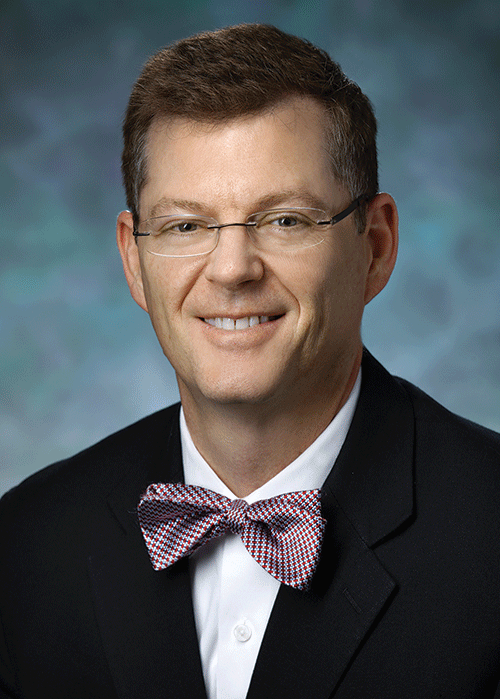
Because Eric Howell, MD, MHM, is an introvert by personality and an engineer by training, he knows full well perfection doesn’t exist. But he tries, as evidenced by a résumé that includes being a past SHM president, current SHM board member, perennial faculty member at the society’s annual meeting, and award-winning professor.
“You’re constantly trying to achieve mastery, but no one ever really reaches it,” says Dr. Howell, director of the collaborative inpatient medicine service (CIMS) at Johns Hopkins Bayview Medical Center in Baltimore and chief of its Division of Hospital Medicine. “It’s just good to know that at least I’m viewed by others as being worthy … at least I’m on the right track.
“It’s hard as you become more experienced to find ways to assess your performance, and so getting an award like a Masters is incredibly rewarding because it verifies that your colleagues feel like your work to improve is valid and [has] paid off.”
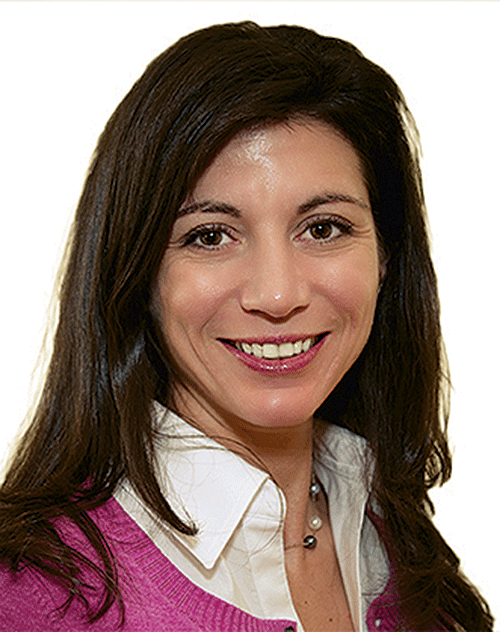
Tina Budnitz, MPH, MHM, doesn’t see her MHM honorarium as hers alone. Sure, the designation is a nod to accomplishments made over 14 years in multiple leadership roles, including as SHM’s chief strategy and development officer. She helped the nascent specialty craft the “Core Competencies in Hospital Medicine,” design the leadership academies, and launch the now well-established Project BOOST. She developed SHM’s mentored implementation program and the SHM strategic communications plan to help guide the society into 2020.
“As the first non-physician to get this award, I am humbled and honored,” she says. “But what’s most important is the statement being made by SHM that hospital medicine will be propelled forward through the contributions of many professionals including, but not only, physicians. That’s such an important message that I want people to hear.”
Budnitz says SHM is not just a group of individuals.
“The entire team is needed to improve healthcare,” she says.
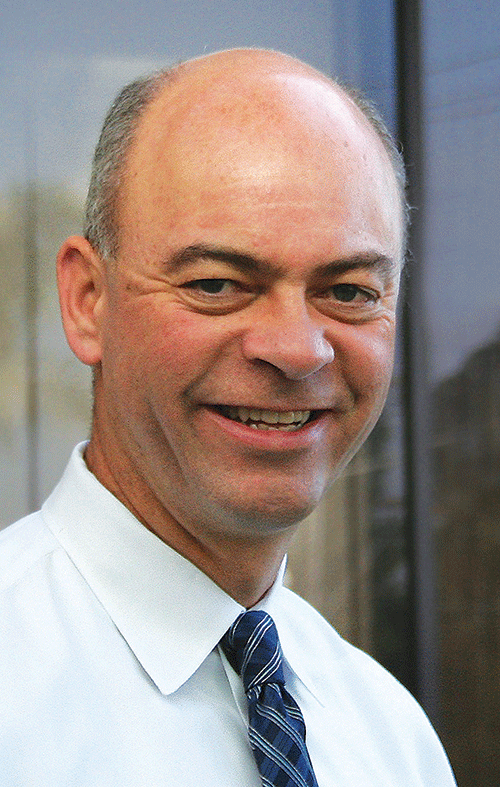
Gregory Maynard, MD, MSc, MHM, has been a clinician, educator, and quality improvement (QI) pioneer. He helped build and lead mentored-implementation programs to improve transitions of care, upgrade glycemic controls, and prevent venous thromboembolism (VTE).
And now, as chief quality officer at the University of California Davis Medical Center in Sacramento, he is a master.
So why does he still feel like the student and not the teacher?
“What I probably feel best about in hospital medicine is the collaborative approach to mentored implementation, these coaching models to educate broad groups,” he says. “When I’ve had an opportunity to try to work with other hospitalists and mentor them in terms of how to survive as a hospital medicine program or how to attack a problem in quality, be it VTE or something else … they end up teaching me a lot and mentoring me in return.” TH
Richard Quinn is a freelance writer in New Jersey.
SAN DIEGO—Add three more names to the short list of individuals who’ve reached the peak of the specialty. The Master in Hospital Medicine (MHM) designation, introduced in 2010, honors “highly accomplished individuals” who have made major contributions to HM. Twenty-one people have now attained the designation.
Because Eric Howell, MD, MHM, is an introvert by personality and an engineer by training, he knows full well perfection doesn’t exist. But he tries, as evidenced by a résumé that includes being a past SHM president, current SHM board member, perennial faculty member at the society’s annual meeting, and award-winning professor.
“You’re constantly trying to achieve mastery, but no one ever really reaches it,” says Dr. Howell, director of the collaborative inpatient medicine service (CIMS) at Johns Hopkins Bayview Medical Center in Baltimore and chief of its Division of Hospital Medicine. “It’s just good to know that at least I’m viewed by others as being worthy … at least I’m on the right track.
“It’s hard as you become more experienced to find ways to assess your performance, and so getting an award like a Masters is incredibly rewarding because it verifies that your colleagues feel like your work to improve is valid and [has] paid off.”
Tina Budnitz, MPH, MHM, doesn’t see her MHM honorarium as hers alone. Sure, the designation is a nod to accomplishments made over 14 years in multiple leadership roles, including as SHM’s chief strategy and development officer. She helped the nascent specialty craft the “Core Competencies in Hospital Medicine,” design the leadership academies, and launch the now well-established Project BOOST. She developed SHM’s mentored implementation program and the SHM strategic communications plan to help guide the society into 2020.
“As the first non-physician to get this award, I am humbled and honored,” she says. “But what’s most important is the statement being made by SHM that hospital medicine will be propelled forward through the contributions of many professionals including, but not only, physicians. That’s such an important message that I want people to hear.”
Budnitz says SHM is not just a group of individuals.
“The entire team is needed to improve healthcare,” she says.
Gregory Maynard, MD, MSc, MHM, has been a clinician, educator, and quality improvement (QI) pioneer. He helped build and lead mentored-implementation programs to improve transitions of care, upgrade glycemic controls, and prevent venous thromboembolism (VTE).
And now, as chief quality officer at the University of California Davis Medical Center in Sacramento, he is a master.
So why does he still feel like the student and not the teacher?
“What I probably feel best about in hospital medicine is the collaborative approach to mentored implementation, these coaching models to educate broad groups,” he says. “When I’ve had an opportunity to try to work with other hospitalists and mentor them in terms of how to survive as a hospital medicine program or how to attack a problem in quality, be it VTE or something else … they end up teaching me a lot and mentoring me in return.” TH
Richard Quinn is a freelance writer in New Jersey.
SAN DIEGO—Add three more names to the short list of individuals who’ve reached the peak of the specialty. The Master in Hospital Medicine (MHM) designation, introduced in 2010, honors “highly accomplished individuals” who have made major contributions to HM. Twenty-one people have now attained the designation.
Because Eric Howell, MD, MHM, is an introvert by personality and an engineer by training, he knows full well perfection doesn’t exist. But he tries, as evidenced by a résumé that includes being a past SHM president, current SHM board member, perennial faculty member at the society’s annual meeting, and award-winning professor.
“You’re constantly trying to achieve mastery, but no one ever really reaches it,” says Dr. Howell, director of the collaborative inpatient medicine service (CIMS) at Johns Hopkins Bayview Medical Center in Baltimore and chief of its Division of Hospital Medicine. “It’s just good to know that at least I’m viewed by others as being worthy … at least I’m on the right track.
“It’s hard as you become more experienced to find ways to assess your performance, and so getting an award like a Masters is incredibly rewarding because it verifies that your colleagues feel like your work to improve is valid and [has] paid off.”
Tina Budnitz, MPH, MHM, doesn’t see her MHM honorarium as hers alone. Sure, the designation is a nod to accomplishments made over 14 years in multiple leadership roles, including as SHM’s chief strategy and development officer. She helped the nascent specialty craft the “Core Competencies in Hospital Medicine,” design the leadership academies, and launch the now well-established Project BOOST. She developed SHM’s mentored implementation program and the SHM strategic communications plan to help guide the society into 2020.
“As the first non-physician to get this award, I am humbled and honored,” she says. “But what’s most important is the statement being made by SHM that hospital medicine will be propelled forward through the contributions of many professionals including, but not only, physicians. That’s such an important message that I want people to hear.”
Budnitz says SHM is not just a group of individuals.
“The entire team is needed to improve healthcare,” she says.
Gregory Maynard, MD, MSc, MHM, has been a clinician, educator, and quality improvement (QI) pioneer. He helped build and lead mentored-implementation programs to improve transitions of care, upgrade glycemic controls, and prevent venous thromboembolism (VTE).
And now, as chief quality officer at the University of California Davis Medical Center in Sacramento, he is a master.
So why does he still feel like the student and not the teacher?
“What I probably feel best about in hospital medicine is the collaborative approach to mentored implementation, these coaching models to educate broad groups,” he says. “When I’ve had an opportunity to try to work with other hospitalists and mentor them in terms of how to survive as a hospital medicine program or how to attack a problem in quality, be it VTE or something else … they end up teaching me a lot and mentoring me in return.” TH
Richard Quinn is a freelance writer in New Jersey.
Health Information Technology Ramps Up Its Presence
SAN DIEGO — To talk to Nancy Allen, MD, a locum tenens physician who works in Portland, Me., is to get a sense of that head-spinning sensation you can have in the digital age. For hospitalists, it’s an endless stream of patients, diagnoses, documentation, and performance metrics. Following an HM16 session here, it’s also an endless litany of ways to try to make all of it more manageable.
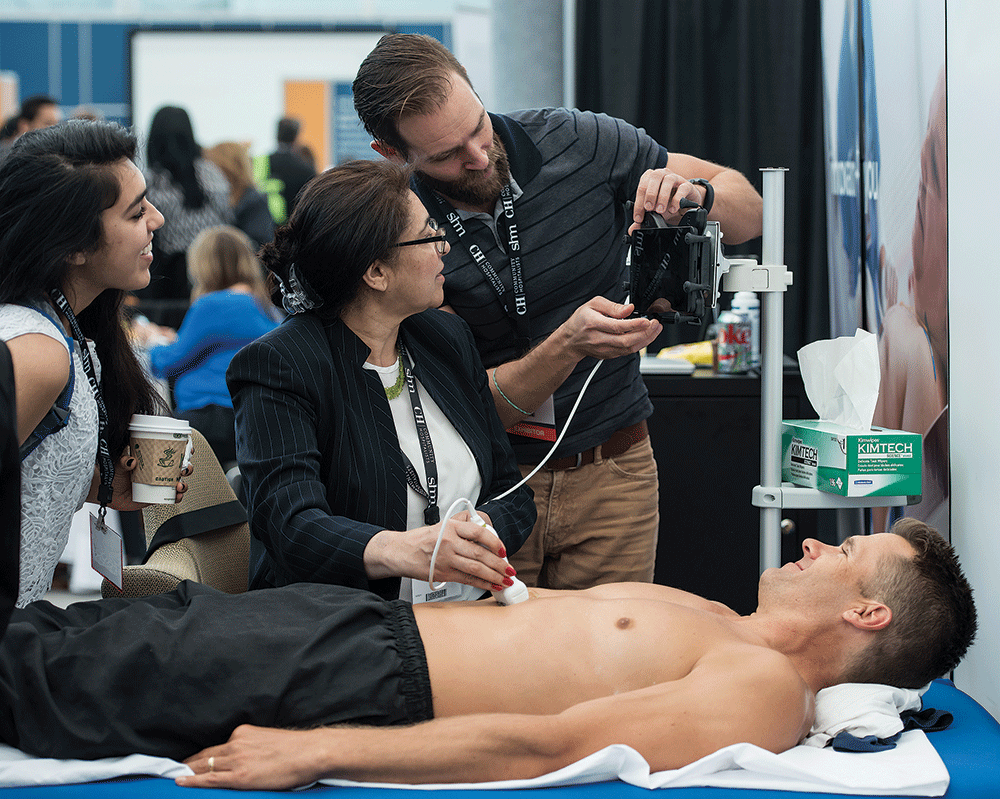
Looking for on-the-job shortcuts, Dr. Allen attended the session “There Is an App for That, 2016: Update in Hospital Medicine Mobile Applications.”
“You always feel like there’s too much information,” she said. “I do 14-hour days. To add anything that takes time is crippling.”
The session was helpful, she said, with eye-opening presentations on apps Dr. Allen never knew existed. Most important, the recommendations came with the seal of approval of practicing hospitalists. But even the information presented in the session felt perhaps too much, she said.
“They seemed really doable,” Dr. Allen said. “But I felt like by the end, I’m overwhelmed.”
Health information technology (IT) had its own educational track for the first time at the annual meeting, with offerings on using technology for better documentation, social media, and clinical informatics.
In the apps session, presenters Bradley Benson, MD, professor of internal medicine and pediatrics at the University of Minnesota, and J. Richard Pittman Jr., MD, assistant professor of medicine at Emory University, cautioned that FDA regulation of mobile apps will be getting more stringent. They encouraged physicians to stay ahead of the game, using apps that are based on sound research so that they don’t begin to rely on apps that will eventually no longer be options.
Their recommendations were based on personal experience, some admittedly biased published reviews, objective criterion-referenced reviews, and peer-reviewed study data.
Dr. Allen said she was especially interested in MedCalX, an app designed for physicians and featuring medical formulas, scores, and classifications. She also liked that the presenters gave a lesson, short but complete, on how to get a Web-based app that you find on a browser to appear as an icon on your phone, just like any other app.
Presenter recommendations ranged from the nifty (GoodRx allows you to type in a medication and map both local pharmacies and what they charge for the drug) to those that help with basic life and job logistics (Evernote makes it easy to file away emails, attachments, and images). Evernote is the app Dr. Pittman said he’d keep if he could only use one.
As dizzying as it was, the session seemed to lift Dr. Allen’s hopes that she’d be able to incorporate apps more into her work.
“You have to make a decision on the fly a lot of the time,” she said. “You have to do it in real time. … In theory, apps should be able to do that.”
Teri Dyess, MD, director of hospital medicine at St. Dominic Hospital in Jackson, Miss., said that the “Optimizing IT for Documentation and Handoffs” session underscored a problem she has noticed in her department: doctors cutting and pasting too much information in their progress notes. That includes CT reports, labs, pretty much everything, she said.
“It’s just one long note,” she said, adding some notes “get out of hand.” Now, she has information—and reinforcement of her own concerns—that she can take back to her center.
Presenters said that physicians should remember that notes primarily serve the needs of patients and providers and should focus on quality and clarity rather than excessive detail. They recommended the “APSO” format, with the assessment and plan at the beginning, then the subjective history next, then the objective info such as vital signs and physical exam details. Studies have found this tends to work better than the “SOAP” method, with subjective history first.
Katherine Chretien, MD, chief of the hospitalist section at the Washington, D.C., VA Medical Center, described the growing use of crowd-sourcing and social media in medicine, by both physicians and patients. More than half of patients, a survey found, said that they are comfortable or very comfortable with their doctor seeking advice online. And about half of hospitals have a presence on Facebook, Twitter, Yelp, and Foursquare.
With the growing use of social media, though, comes the importance of knowing etiquette and being aware of the legal pitfalls, Dr. Chretien said. Posting specifics, even without names, about a case might violate patient privacy laws simply because the date of the post might give away too much information, she warned. Mixing the personal and the professional is not advised.
Peter Balingit, MD, a hospitalist at Olive View-UCLA Medical Center who said he doesn’t use social media for his work, said the session raised his confidence, and he might start a Facebook page or begin interacting through a patient portal.
“After hearing this, I think I’m more comfortable trying to develop more of an online presence,” he said. “My biggest fear is trying to keep my personal life and my professional life separate.” TH
SAN DIEGO — To talk to Nancy Allen, MD, a locum tenens physician who works in Portland, Me., is to get a sense of that head-spinning sensation you can have in the digital age. For hospitalists, it’s an endless stream of patients, diagnoses, documentation, and performance metrics. Following an HM16 session here, it’s also an endless litany of ways to try to make all of it more manageable.
Looking for on-the-job shortcuts, Dr. Allen attended the session “There Is an App for That, 2016: Update in Hospital Medicine Mobile Applications.”
“You always feel like there’s too much information,” she said. “I do 14-hour days. To add anything that takes time is crippling.”
The session was helpful, she said, with eye-opening presentations on apps Dr. Allen never knew existed. Most important, the recommendations came with the seal of approval of practicing hospitalists. But even the information presented in the session felt perhaps too much, she said.
“They seemed really doable,” Dr. Allen said. “But I felt like by the end, I’m overwhelmed.”
Health information technology (IT) had its own educational track for the first time at the annual meeting, with offerings on using technology for better documentation, social media, and clinical informatics.
In the apps session, presenters Bradley Benson, MD, professor of internal medicine and pediatrics at the University of Minnesota, and J. Richard Pittman Jr., MD, assistant professor of medicine at Emory University, cautioned that FDA regulation of mobile apps will be getting more stringent. They encouraged physicians to stay ahead of the game, using apps that are based on sound research so that they don’t begin to rely on apps that will eventually no longer be options.
Their recommendations were based on personal experience, some admittedly biased published reviews, objective criterion-referenced reviews, and peer-reviewed study data.
Dr. Allen said she was especially interested in MedCalX, an app designed for physicians and featuring medical formulas, scores, and classifications. She also liked that the presenters gave a lesson, short but complete, on how to get a Web-based app that you find on a browser to appear as an icon on your phone, just like any other app.
Presenter recommendations ranged from the nifty (GoodRx allows you to type in a medication and map both local pharmacies and what they charge for the drug) to those that help with basic life and job logistics (Evernote makes it easy to file away emails, attachments, and images). Evernote is the app Dr. Pittman said he’d keep if he could only use one.
As dizzying as it was, the session seemed to lift Dr. Allen’s hopes that she’d be able to incorporate apps more into her work.
“You have to make a decision on the fly a lot of the time,” she said. “You have to do it in real time. … In theory, apps should be able to do that.”
Teri Dyess, MD, director of hospital medicine at St. Dominic Hospital in Jackson, Miss., said that the “Optimizing IT for Documentation and Handoffs” session underscored a problem she has noticed in her department: doctors cutting and pasting too much information in their progress notes. That includes CT reports, labs, pretty much everything, she said.
“It’s just one long note,” she said, adding some notes “get out of hand.” Now, she has information—and reinforcement of her own concerns—that she can take back to her center.
Presenters said that physicians should remember that notes primarily serve the needs of patients and providers and should focus on quality and clarity rather than excessive detail. They recommended the “APSO” format, with the assessment and plan at the beginning, then the subjective history next, then the objective info such as vital signs and physical exam details. Studies have found this tends to work better than the “SOAP” method, with subjective history first.
Katherine Chretien, MD, chief of the hospitalist section at the Washington, D.C., VA Medical Center, described the growing use of crowd-sourcing and social media in medicine, by both physicians and patients. More than half of patients, a survey found, said that they are comfortable or very comfortable with their doctor seeking advice online. And about half of hospitals have a presence on Facebook, Twitter, Yelp, and Foursquare.
With the growing use of social media, though, comes the importance of knowing etiquette and being aware of the legal pitfalls, Dr. Chretien said. Posting specifics, even without names, about a case might violate patient privacy laws simply because the date of the post might give away too much information, she warned. Mixing the personal and the professional is not advised.
Peter Balingit, MD, a hospitalist at Olive View-UCLA Medical Center who said he doesn’t use social media for his work, said the session raised his confidence, and he might start a Facebook page or begin interacting through a patient portal.
“After hearing this, I think I’m more comfortable trying to develop more of an online presence,” he said. “My biggest fear is trying to keep my personal life and my professional life separate.” TH
SAN DIEGO — To talk to Nancy Allen, MD, a locum tenens physician who works in Portland, Me., is to get a sense of that head-spinning sensation you can have in the digital age. For hospitalists, it’s an endless stream of patients, diagnoses, documentation, and performance metrics. Following an HM16 session here, it’s also an endless litany of ways to try to make all of it more manageable.
Looking for on-the-job shortcuts, Dr. Allen attended the session “There Is an App for That, 2016: Update in Hospital Medicine Mobile Applications.”
“You always feel like there’s too much information,” she said. “I do 14-hour days. To add anything that takes time is crippling.”
The session was helpful, she said, with eye-opening presentations on apps Dr. Allen never knew existed. Most important, the recommendations came with the seal of approval of practicing hospitalists. But even the information presented in the session felt perhaps too much, she said.
“They seemed really doable,” Dr. Allen said. “But I felt like by the end, I’m overwhelmed.”
Health information technology (IT) had its own educational track for the first time at the annual meeting, with offerings on using technology for better documentation, social media, and clinical informatics.
In the apps session, presenters Bradley Benson, MD, professor of internal medicine and pediatrics at the University of Minnesota, and J. Richard Pittman Jr., MD, assistant professor of medicine at Emory University, cautioned that FDA regulation of mobile apps will be getting more stringent. They encouraged physicians to stay ahead of the game, using apps that are based on sound research so that they don’t begin to rely on apps that will eventually no longer be options.
Their recommendations were based on personal experience, some admittedly biased published reviews, objective criterion-referenced reviews, and peer-reviewed study data.
Dr. Allen said she was especially interested in MedCalX, an app designed for physicians and featuring medical formulas, scores, and classifications. She also liked that the presenters gave a lesson, short but complete, on how to get a Web-based app that you find on a browser to appear as an icon on your phone, just like any other app.
Presenter recommendations ranged from the nifty (GoodRx allows you to type in a medication and map both local pharmacies and what they charge for the drug) to those that help with basic life and job logistics (Evernote makes it easy to file away emails, attachments, and images). Evernote is the app Dr. Pittman said he’d keep if he could only use one.
As dizzying as it was, the session seemed to lift Dr. Allen’s hopes that she’d be able to incorporate apps more into her work.
“You have to make a decision on the fly a lot of the time,” she said. “You have to do it in real time. … In theory, apps should be able to do that.”
Teri Dyess, MD, director of hospital medicine at St. Dominic Hospital in Jackson, Miss., said that the “Optimizing IT for Documentation and Handoffs” session underscored a problem she has noticed in her department: doctors cutting and pasting too much information in their progress notes. That includes CT reports, labs, pretty much everything, she said.
“It’s just one long note,” she said, adding some notes “get out of hand.” Now, she has information—and reinforcement of her own concerns—that she can take back to her center.
Presenters said that physicians should remember that notes primarily serve the needs of patients and providers and should focus on quality and clarity rather than excessive detail. They recommended the “APSO” format, with the assessment and plan at the beginning, then the subjective history next, then the objective info such as vital signs and physical exam details. Studies have found this tends to work better than the “SOAP” method, with subjective history first.
Katherine Chretien, MD, chief of the hospitalist section at the Washington, D.C., VA Medical Center, described the growing use of crowd-sourcing and social media in medicine, by both physicians and patients. More than half of patients, a survey found, said that they are comfortable or very comfortable with their doctor seeking advice online. And about half of hospitals have a presence on Facebook, Twitter, Yelp, and Foursquare.
With the growing use of social media, though, comes the importance of knowing etiquette and being aware of the legal pitfalls, Dr. Chretien said. Posting specifics, even without names, about a case might violate patient privacy laws simply because the date of the post might give away too much information, she warned. Mixing the personal and the professional is not advised.
Peter Balingit, MD, a hospitalist at Olive View-UCLA Medical Center who said he doesn’t use social media for his work, said the session raised his confidence, and he might start a Facebook page or begin interacting through a patient portal.
“After hearing this, I think I’m more comfortable trying to develop more of an online presence,” he said. “My biggest fear is trying to keep my personal life and my professional life separate.” TH
New Ideas Showcased in Research at RIV Competition
Standing adjacent Poster 391 in a loud, crowded meeting hall, Monika Wells, MD, MPH, a resident in internal medicine at Virginia Mason Medical Center in Seattle, chatted with a colleague. A few feet away, a group of doctors and healthcare professionals huddled dramatically, just barely out of earshot.
The fate of Dr. Wells’ scientific abstract hung in the balance.

Her study, a look at scheduling the start and stop times of hospitalist shifts around expected demand to reduce costs and patient wait times, was a short-list finalist in the Innovations category of HM16’s annual Research, Innovation, and Clinical Vignettes scientific abstract competition. With her work done—she had already made presentations to first a pair of semifinalist judges and then to a herd of all 10 of the category judges—Dr. Wells looked remarkably calm as she waited for the announcement of the winners.
Either way, she said, the competition had been an invigorating, exciting experience.
“I’m a doctor, so I like to compete,” she half-joked. “It definitely has been motivating.”
RIV ribbons this year were handed out to seven winners in four categories. The competition garnered 914 abstracts accepted for presentation.
Dr. Wells ended up being one of them. She was named Innovations’ trainee winner. In her study, researchers found that analyzing the flow of admissions and redistributing hospitalists to better conform to that flow reduced patient wait times and costs as well as improved the subjective experience of hospitalists even as volume increased.
The overall winner in the Innovations category also went to a trainee, Baely Crockett, PharmD, a resident at Eskenazi Health in Indianapolis. Her study looked at a pharmacist-managed rivaroxaban clinic for the treatment of venous thromboembolism (VTE). It was the first time, as far as the judges knew, that an award had gone to a pharmacist.
Dr. Crockett’s abstract showed that patients diagnosed in the ED with low-risk VTE are given a prescription scheduled to be seen in the follow-up clinic within two to five days, at which point the pharmacist sees the patients and reviews their case with them and determines treatment duration.
Dr. Crockett said the pharmacists involved are especially suitable for the role not only because of their expertise in the medication and the handling of time-consuming co-pay issues and other concerns but also because they shadowed ED physicians for six months to get training and experience.
“We’re able to fill in gaps that are true challenges to the patient’s success in finishing therapy,” she said.
One of the Innovations judges, Michael Craig, MD, MPH, FHM, associate professor of medicine at the University of North Carolina in Chapel Hill, said the research hit on an area of growing interest.
“The movement toward outpatient treatment of VTE is a pretty big topic that lots of people are working on,” he said. “It’s very relevant. The whole idea of having a pharmacist-driven intervention is unique; nobody had thought of or heard of before.”
The winner in the Research category was Vineet Chopra, MD, MSc, FHM, assistant professor at the University of Michigan in Ann Arbor, whose work set out to quantify how to prevent bloodstream infection and blood clots from the use of peripherally inserted central catheters, or PICC lines. Researchers created a simulation model, based on data from the literature, looking at what would happen to a hospital if the use of certain types of PICCs was increased while use of other types was decreased—the rationale being that PICCs with just one channel, or port, have a lower risk of infection or blood clots than those with multiple ports.
It is a risk that is often unrecognized, and PICC lines with multiple ports are often ordered as a just-in-case measure in the event that the first port gets clogged.
Chopra and colleagues found that, at the average hospital, about 75% of all PICCs used tend to be multichannel and 25% single-channel. They found every 5% increase in single-channel PICC use could prevent almost 1.5 infections per 1,000 patients, and 0.5 blood clots, with a corresponding cost savings of $13,000 per event. That can add up to hundreds of thousands of dollars a year at large hospitals.
And those calculations, Dr. Chopra noted, do not include penalties for infections or the financial effects of having those results publicly reported. Researchers are now creating an online tool— at improvepicc.com—that will allow users to calculate their own costs and potential savings.
“The hope of this is that it will give hospital administrators and hospital leadership and quality officers the momentum, perhaps, to overcome the inertia of not thinking actively,” said Dr. Chopra, who notched his first win after 10 years of participating in the RIV competition. “I think we don’t think actively about the choices we make when it comes to these devices.”
In the Clinical Vignettes category, winner Molly Kantor, MD, assistant clinical professor at the University of California, San Diego, recounted the case of a sickle-cell disease patient whose diagnosis, and hence treatment, was delayed and who ultimately died. She outlined a series of missteps, including taking at face-value a patient-reported past medical disease, which turned out to be wrong; making certain diagnoses based on lab tests and stopping there; and anchoring on the original diagnosis when the thought process was later reevaluated.
Dr. Kantor said the case is a caution flag to hospitalists, reinforcing the need for “a broad differential diagnosis.”
“[Make] sure that the data fits together and that you’re not using just one isolated piece of information to cinch everything, including the past medical history or a certain lab test, when the whole picture doesn’t quite fit together,” she said. “Looking back at this case, it’s pretty clear that the puzzle pieces probably weren’t quite fitting together, but there was enough that the easier thing to do was to make the diagnosis and move on.”
In the Pediatric Clinical Vignettes category, winner Jennifer Ladd, MD, a resident at Duke University, won for a study of a vexing case of a 2-year-old who was irritable and stalled on developmental milestones. At the hospital, the thought was that it could likely be a recurrence of herpes simplex (HSV) encephalitis, but the spinal fluid showed no signs of that and the acyclovir, which nearly always works for the disorder, was having no effect and the symptoms worsened.
The key in the case, said Alyssa Stephany, MD, then assistant professor at Duke University and now section chief of pediatric hospital medicine at Children’s Hospital of Wisconsin, who presented the case in Dr. Ladd’s absence, was that the team reopened the diagnosis and didn’t get ensnared in cognitive bias. A biopsy ultimately showed HSV in the brain tissue; it was a case of recurrence, despite signs to the contrary. Foscarnet was used to effectively treat the child; it is unknown why acyclovir didn’t work in this case.
“It kind of brings to the surface that that’s what a hospitalist is—a hospitalist is that person who sits and thinks, and really thinks, about the patient and doesn’t just do their rote work of input and output of a patient through the hospital system,” Dr. Stephany said. “When you get a case like this, it makes you take pause.”
The trainee winner in the Research category was N. Lance Downing, MD, of Stanford University School of Medicine, for work on an EHR-based severe sepsis alert. The trainee winner in Clinical Vignettes was Bhakti Shah, MD, of North Shore-LIJ Health System, now Northwell Health, on a rare case of autoimmune NMDA receptor encephalitis. TH
Thomas R. Collins is a freelance writer in South Florida.
2016 RIV Finalists, Winners
Research Category
WINNER:
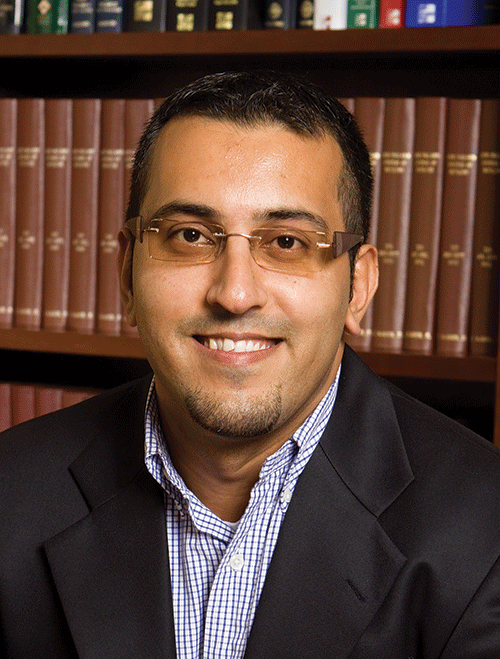
Vineet Chopra, MD, MSc, FHM, LIMITING THE NUMBER OF LUMENS IN PERIPHERALLY INSERTED CENTRAL CATHETERS TO IMPROVE OUTCOMES AND REDUCE COST: A SIMULATION STUDY
TRAINEE WINNER:
N. Downing, MD, AN ELECTRONIC HEALTH RECORD-BASED SEVERE SEPSIS ALERT TO IMPROVE SEPSIS TREATMENT PERFORMANCE: RANDOMIZED EVALUATION
FINALISTS:
Waseem Khaliq, MD, MPH, PREVALENCE AND PREDICTORS OF NON-ADHERENCE TO BREAST CANCER SCREENING: PERSPECTIVE AND PREFERENCES OF HOSPITALIZED WOMEN
Dilli Poudel, MD, SYSTEMIC SCLEROSIS AS A RISK FACTOR OF ACUTE MYOCARDIAL INFARCTION: A US POPULATION BASED STUDY
Aiham Albaeni, MD, REGIONAL VARIATION IN RESOURCES UTILIZATION AND OUTCOMES FOLLOWING OUT-OF-HOSPITAL CARDIAC ARREST IN THE UNITED STATES
Poushali Bhattacharjee, MD, DETECTING SEPSIS: ARE TWO OPINIONS BETTER THAN ONE?
Vineet Chopra, MD, MSc, FHM, THE INFLUENCE OF RED BLOOD CELL TRANSFUSION ON VENOUS THROMBOEMBOLISM IN PATIENTS WITH PERIPHERALLY-INSERTED CENTRAL CATHETERS
Shaker Eid, MD, MBA, IMPACT OF HOSPITAL TEACHING STATUS ON OUT-OF-HOSPITAL CARDIAC ARREST OUTCOMES AND RESOURCE UTILIZATION IN THE UNITED STATES: 2000-2012
Tarun Jain, MD, CONTRAST-INDUCED NEPHROPATHY IN STEMI PATIENTS WITH AND WITHOUT CHRONIC KIDNEY DISEASE
Mona Beier, MD, CREATING A PATIENT SAFETY CULTURE ONE INCIDENT REPORT AT A TIME
Charles Pollack, MD, REINITIATION OF ANTITHROMBOTIC THERAPY AFTER EMERGENCY PROCEDURES OR AFTER AN EMERGENT BLEEDING EVENT: ADDITIONAL INTERIM EXPERIENCE FROM THE RE-VERSE AD TRIAL
Robert Boxer, MD, PhD, SAVING TIME: A TIME-MOTION ANALYSIS OF THE IMPACT OF REGIONALIZATION AND DAILY ADMITTING ON INTERN WORKFLOW
Kaleigh Evans, MD, THIRD TROPONIN ORDER OVERUSE IN THE SETTING OF CLINICAL STABILITY
David Paje, MD, SFHM, RISK OF VENOUS THROMBOEMBOLISM IN HOSPITALIZED PATIENTS WITH INFLAMMATORY BOWEL DISEASE
Rehan Qayyum, MD, COMPARISON OF TIME-TRENDS IN PATIENT SATISFACTION BETWEEN TEACHING AND NONTEACHING HOSPITAL
Joshua Rolnick, MD, VALIDATION OF TEST PERFORMANCE AND CLINICAL TIME ZERO FOR AN ELECTRONIC HEALTH RECORD-EMBEDDED SEVERE SEPSIS ALERT
Allison Louis, MD, BLIND SIDED: MISSING POOR VISUAL ACUITY AND DECREASED SELF-EFFICACY IN HOSPITALIZED PATIENTS WITH DIABETES
G. Randy Smith, MD, MS, SFHM, ASSOCIATION OF HOSPITAL ADMISSION SERVICE STRUCTURE WITH EARLY TRANSFER TO CRITICAL CARE, HOSPITAL READMISSION, AND LENGTH OF STAY
Kathleene Wooldridge, MD, R-VA-MARQUIS: IMPLEMENTING BEST PRACTICES IN MEDICATION RECONCILIATION FOR RURAL VETERANS
INNOVATION CATEGORY
WINNER:
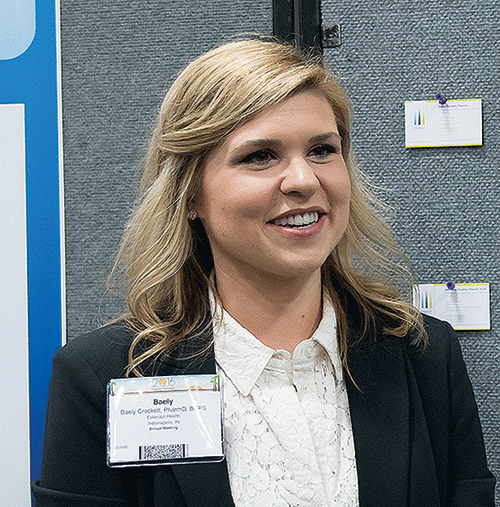
Baely Crockett, PharmD, NOVEL PHARMACIST-MANAGED RIVAROXABAN CLINIC FOR OUTPATIENT TREATMENT OF VENOUS THROMBOEMBOLISM
TRAINEE WINNER:
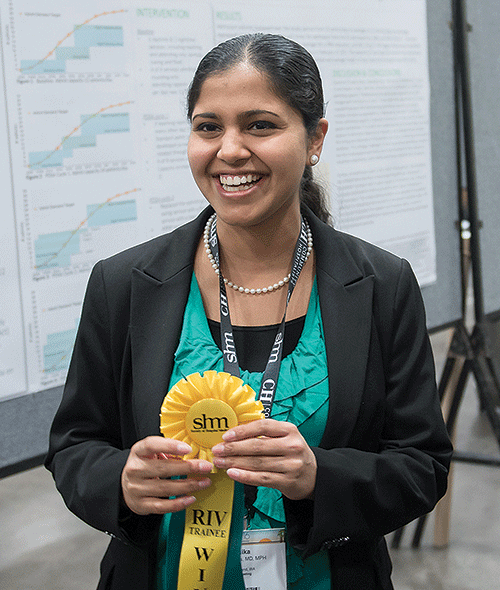
Monika Wells, MD, MPH, DESIGNING HOSPITALIST SHIFTS AROUND ADMISSION DEMAND REDUCES PATIENT WAIT TIMES AND COST
FINALISTS:
Jessica Dong, WHO MOVED MY EHR CHEESE? A NEW APPROACH TO CURATING AND INDIVIDUALIZING COMMUNICATIONS TO PHYSICIANS ABOUT EHR SOFTWARE UPDATES
Stephanie Rennke, MD, MED REC: A SKILLS-BASED CURRICULUM ON MEDICATION SAFETY AND MEDICATION RECONCILIATION FOR MEDICAL STUDENTS
Jens Langsjoen, MD, DEVELOPING AN INPATIENT DELIRIUM PREVENTION PROTOCOL
Mark Goldin, MD, BUILDING PARALLEL CO-MANAGEMENT SERVICES IN A LARGE ACADEMIC HOSPITALIST GROUP
Brian Lichtenstein, MD, IMPROVING RISK-ADJUSTED OUTCOME MEASURES WITH PHYSICIAN-ORIENTED DOCUMENTATION INTERVENTIONS
Matthew Cerasale, MD, REAL-TIME PADUA: AN AUTOMATED EHR INTEGRATED VENOUS THROMBOEMBOLISM RISK ASSESSMENT TOOL
Franziska Jovin, MD, MMM, FHM, IMPLEMENTATION OF A PAY-FOR-PERFOMANCE STRUCTURE FOR HOSPITALIST-LED QUALITY IMPROVEMENT PROJECTS
Arpit Khandelwal, MD, MANAGING CHALLENGING PATIENTS: FROM CONFLICT TO TEACHING OPPORTUNITY
Justin Lotfi, MD, MAKING IT SIMPLE - PROCESS IMPROVEMENT FOR OUTSIDE MEDICAL RECORDS
David McCollum, MD, FIXING WHAT IS BROKEN: QUALITY IMPROVEMENT IN THE CRITICAL LAB VALUE PROCESS
Nidhi Rohatgi, MD, MS, A NOVEL MD-RN COLLABORATIVE PROTOCOL TO PREVENT AND MANAGE ACUTE DELIRIUM IN INPATIENT WARDS
Lesley Schmaltz, MD, UNNECESSARY TRANSFUSIONS: HOSPITAL MEDICINE LEADING INSTITUTION-WIDE CHANGE
Anuj Dalal, MD, FHM, IMPLEMENTATION OF A PATIENT-CENTERED ‘MICROBLOG' MESSAGING PLATFORM TO IMPROVE CARE TEAM COMMUNICATION
Willard Ellis, MD, PhD, FHM, INTENSIVE FOLLOW UP AFTER PALLIATIVE CARE CONSULTATIONS TO REDUCE READMISSIONS
Lakshmi Swaminathan, MD, MHSA, FHM, USING “MAGIC” TO FACILITATE APPROPRIATE PICC USE: RESULTS OF IMPLEMENTATION OF A PICC APPROPRIATENESS ASSESSMENT TOOL
Charles Coffey, MD, MSc, FHM, IMPLEMENTING GUIDELINE-BASED INDICATIONS FOR CARDIAC MONITORING AT CEDARS-SINAI MEDICAL CENTER
Erik Hoyer, MD, USE OF A HOSPITALIST CLINICAL COMMUNITY TO FACILITATE DISSEMINATION OF AN EARLY MOBILITY QUALITY IMPROVEMENT PROGRAM
Elizabeth Stewart, MD, A MULTIDISCIPLINARY APPROACH TO HIGH VALUE CARDIAC BIOMARKER
CLINICAL VIGNETTES CATEGORY
WINNER (ADULT):
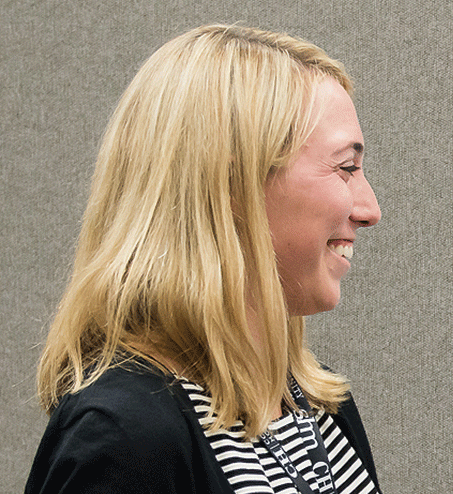
Molly Kantor, MD, THE TIP OF THE ICEBERG: A RARE CAUSE OF ACUTE LIVER FAILURE
WINNER (PEDIATRIC):
Jennifer Ladd, MD, MORE THAN JUST THE “TERRIBLE TWOS”: A CASE OF RESISTANT HSV ENCEPHALITIS
TRAINEE WINNER:

Bhakti Shah, MD, UNMASKING THE TERATOMA
FINALISTS:
Weijen Chang, MD, SFHM, UNCOILING A PROBLEMATIC TICKLE IN THE THROAT
Kenton Dover, MD, KEEPING AN EYE OUT FOR THE DIAGNOSIS
Stephanie Royer, MD, THE YOUNGEST REPORTED CASE OF EOSINOPHILIC CHOLANGITIS
Oluremi Ajala, MD, ANGINA OF ABDOMINAL ORIGIN
Asana Anderson, MBBS, A PARATHYROID CRISIS BURIED IN A SEPTIC OTOMASTOIDITIS
Kyle Bennett, DO, BULLS-EYE MARKS THE SPOT: LYME CARDITIS PRESENTING AS RASH AND PRESYNCOPE
John Biebelhausen, MD, MBA, CROSSFIT CATASTROPHE: CHEST PAIN IN A HEALTHY YOUNG WOMAN
Xuan Gao, MD, A CASE OF THE UNSEEN: KLEBSIELLA PNEUMONIA PYOGENIC LIVER ABSCESS WITH PNEUMONIA AND SEPTIC ENDOPHTHALMITIS IN A NON-ASIAN U.S. RESIDENT
Sana Grover, MBBS, 'ABSTINENT AND INTOXICATED'. A RARE CASE OF AUTO-BREWERY SYNDROME
Andrew Hawrylak, MD, WHEN IT'S NOT AN ALLERGIC REACTION: AN UNUSUAL CASE OF ECTHYEMA GANGRENOSUM ASSOCIATED WITH PROTEUS BACTEREMIA
Rasheen Imtiaz, MD, LACTIC ACIDOSIS IN ASTHMA
Jessie King, MD, PhD, THE SMOKING WOMAN
Bradley Manning, MD, A SUPER-ANTIGEN-MEDIATED MIMIC OF ACUTE APPENDICITIS
Hiroki Matsuura, IMPAIRED CONSCIOUSNESS WITH INDOLENT BREAST MASS
Niharika Singh, MD, LOWER EXTREMITY NECROTIZING FASCIITIS: AN UNUSUAL PRESENTATION OF PERFORATED SIGMOID DIVERTICULITIS
Vivan Tran, DO, PUTTING THE PEE IN PREGNANCY: A CASE OF GESTATIONAL DIABETES INSIPIDUS YOU DON'T WANT TO MISS
Kristen Welch, THE MYSTERIOUS DANCE: A RARE CASE OF DELAYED ONSET DIABETIC STRIATOPATHY
Standing adjacent Poster 391 in a loud, crowded meeting hall, Monika Wells, MD, MPH, a resident in internal medicine at Virginia Mason Medical Center in Seattle, chatted with a colleague. A few feet away, a group of doctors and healthcare professionals huddled dramatically, just barely out of earshot.
The fate of Dr. Wells’ scientific abstract hung in the balance.
Her study, a look at scheduling the start and stop times of hospitalist shifts around expected demand to reduce costs and patient wait times, was a short-list finalist in the Innovations category of HM16’s annual Research, Innovation, and Clinical Vignettes scientific abstract competition. With her work done—she had already made presentations to first a pair of semifinalist judges and then to a herd of all 10 of the category judges—Dr. Wells looked remarkably calm as she waited for the announcement of the winners.
Either way, she said, the competition had been an invigorating, exciting experience.
“I’m a doctor, so I like to compete,” she half-joked. “It definitely has been motivating.”
RIV ribbons this year were handed out to seven winners in four categories. The competition garnered 914 abstracts accepted for presentation.
Dr. Wells ended up being one of them. She was named Innovations’ trainee winner. In her study, researchers found that analyzing the flow of admissions and redistributing hospitalists to better conform to that flow reduced patient wait times and costs as well as improved the subjective experience of hospitalists even as volume increased.
The overall winner in the Innovations category also went to a trainee, Baely Crockett, PharmD, a resident at Eskenazi Health in Indianapolis. Her study looked at a pharmacist-managed rivaroxaban clinic for the treatment of venous thromboembolism (VTE). It was the first time, as far as the judges knew, that an award had gone to a pharmacist.
Dr. Crockett’s abstract showed that patients diagnosed in the ED with low-risk VTE are given a prescription scheduled to be seen in the follow-up clinic within two to five days, at which point the pharmacist sees the patients and reviews their case with them and determines treatment duration.
Dr. Crockett said the pharmacists involved are especially suitable for the role not only because of their expertise in the medication and the handling of time-consuming co-pay issues and other concerns but also because they shadowed ED physicians for six months to get training and experience.
“We’re able to fill in gaps that are true challenges to the patient’s success in finishing therapy,” she said.
One of the Innovations judges, Michael Craig, MD, MPH, FHM, associate professor of medicine at the University of North Carolina in Chapel Hill, said the research hit on an area of growing interest.
“The movement toward outpatient treatment of VTE is a pretty big topic that lots of people are working on,” he said. “It’s very relevant. The whole idea of having a pharmacist-driven intervention is unique; nobody had thought of or heard of before.”
The winner in the Research category was Vineet Chopra, MD, MSc, FHM, assistant professor at the University of Michigan in Ann Arbor, whose work set out to quantify how to prevent bloodstream infection and blood clots from the use of peripherally inserted central catheters, or PICC lines. Researchers created a simulation model, based on data from the literature, looking at what would happen to a hospital if the use of certain types of PICCs was increased while use of other types was decreased—the rationale being that PICCs with just one channel, or port, have a lower risk of infection or blood clots than those with multiple ports.
It is a risk that is often unrecognized, and PICC lines with multiple ports are often ordered as a just-in-case measure in the event that the first port gets clogged.
Chopra and colleagues found that, at the average hospital, about 75% of all PICCs used tend to be multichannel and 25% single-channel. They found every 5% increase in single-channel PICC use could prevent almost 1.5 infections per 1,000 patients, and 0.5 blood clots, with a corresponding cost savings of $13,000 per event. That can add up to hundreds of thousands of dollars a year at large hospitals.
And those calculations, Dr. Chopra noted, do not include penalties for infections or the financial effects of having those results publicly reported. Researchers are now creating an online tool— at improvepicc.com—that will allow users to calculate their own costs and potential savings.
“The hope of this is that it will give hospital administrators and hospital leadership and quality officers the momentum, perhaps, to overcome the inertia of not thinking actively,” said Dr. Chopra, who notched his first win after 10 years of participating in the RIV competition. “I think we don’t think actively about the choices we make when it comes to these devices.”
In the Clinical Vignettes category, winner Molly Kantor, MD, assistant clinical professor at the University of California, San Diego, recounted the case of a sickle-cell disease patient whose diagnosis, and hence treatment, was delayed and who ultimately died. She outlined a series of missteps, including taking at face-value a patient-reported past medical disease, which turned out to be wrong; making certain diagnoses based on lab tests and stopping there; and anchoring on the original diagnosis when the thought process was later reevaluated.
Dr. Kantor said the case is a caution flag to hospitalists, reinforcing the need for “a broad differential diagnosis.”
“[Make] sure that the data fits together and that you’re not using just one isolated piece of information to cinch everything, including the past medical history or a certain lab test, when the whole picture doesn’t quite fit together,” she said. “Looking back at this case, it’s pretty clear that the puzzle pieces probably weren’t quite fitting together, but there was enough that the easier thing to do was to make the diagnosis and move on.”
In the Pediatric Clinical Vignettes category, winner Jennifer Ladd, MD, a resident at Duke University, won for a study of a vexing case of a 2-year-old who was irritable and stalled on developmental milestones. At the hospital, the thought was that it could likely be a recurrence of herpes simplex (HSV) encephalitis, but the spinal fluid showed no signs of that and the acyclovir, which nearly always works for the disorder, was having no effect and the symptoms worsened.
The key in the case, said Alyssa Stephany, MD, then assistant professor at Duke University and now section chief of pediatric hospital medicine at Children’s Hospital of Wisconsin, who presented the case in Dr. Ladd’s absence, was that the team reopened the diagnosis and didn’t get ensnared in cognitive bias. A biopsy ultimately showed HSV in the brain tissue; it was a case of recurrence, despite signs to the contrary. Foscarnet was used to effectively treat the child; it is unknown why acyclovir didn’t work in this case.
“It kind of brings to the surface that that’s what a hospitalist is—a hospitalist is that person who sits and thinks, and really thinks, about the patient and doesn’t just do their rote work of input and output of a patient through the hospital system,” Dr. Stephany said. “When you get a case like this, it makes you take pause.”
The trainee winner in the Research category was N. Lance Downing, MD, of Stanford University School of Medicine, for work on an EHR-based severe sepsis alert. The trainee winner in Clinical Vignettes was Bhakti Shah, MD, of North Shore-LIJ Health System, now Northwell Health, on a rare case of autoimmune NMDA receptor encephalitis. TH
Thomas R. Collins is a freelance writer in South Florida.
2016 RIV Finalists, Winners
Research Category
WINNER:
Vineet Chopra, MD, MSc, FHM, LIMITING THE NUMBER OF LUMENS IN PERIPHERALLY INSERTED CENTRAL CATHETERS TO IMPROVE OUTCOMES AND REDUCE COST: A SIMULATION STUDY
TRAINEE WINNER:
N. Downing, MD, AN ELECTRONIC HEALTH RECORD-BASED SEVERE SEPSIS ALERT TO IMPROVE SEPSIS TREATMENT PERFORMANCE: RANDOMIZED EVALUATION
FINALISTS:
Waseem Khaliq, MD, MPH, PREVALENCE AND PREDICTORS OF NON-ADHERENCE TO BREAST CANCER SCREENING: PERSPECTIVE AND PREFERENCES OF HOSPITALIZED WOMEN
Dilli Poudel, MD, SYSTEMIC SCLEROSIS AS A RISK FACTOR OF ACUTE MYOCARDIAL INFARCTION: A US POPULATION BASED STUDY
Aiham Albaeni, MD, REGIONAL VARIATION IN RESOURCES UTILIZATION AND OUTCOMES FOLLOWING OUT-OF-HOSPITAL CARDIAC ARREST IN THE UNITED STATES
Poushali Bhattacharjee, MD, DETECTING SEPSIS: ARE TWO OPINIONS BETTER THAN ONE?
Vineet Chopra, MD, MSc, FHM, THE INFLUENCE OF RED BLOOD CELL TRANSFUSION ON VENOUS THROMBOEMBOLISM IN PATIENTS WITH PERIPHERALLY-INSERTED CENTRAL CATHETERS
Shaker Eid, MD, MBA, IMPACT OF HOSPITAL TEACHING STATUS ON OUT-OF-HOSPITAL CARDIAC ARREST OUTCOMES AND RESOURCE UTILIZATION IN THE UNITED STATES: 2000-2012
Tarun Jain, MD, CONTRAST-INDUCED NEPHROPATHY IN STEMI PATIENTS WITH AND WITHOUT CHRONIC KIDNEY DISEASE
Mona Beier, MD, CREATING A PATIENT SAFETY CULTURE ONE INCIDENT REPORT AT A TIME
Charles Pollack, MD, REINITIATION OF ANTITHROMBOTIC THERAPY AFTER EMERGENCY PROCEDURES OR AFTER AN EMERGENT BLEEDING EVENT: ADDITIONAL INTERIM EXPERIENCE FROM THE RE-VERSE AD TRIAL
Robert Boxer, MD, PhD, SAVING TIME: A TIME-MOTION ANALYSIS OF THE IMPACT OF REGIONALIZATION AND DAILY ADMITTING ON INTERN WORKFLOW
Kaleigh Evans, MD, THIRD TROPONIN ORDER OVERUSE IN THE SETTING OF CLINICAL STABILITY
David Paje, MD, SFHM, RISK OF VENOUS THROMBOEMBOLISM IN HOSPITALIZED PATIENTS WITH INFLAMMATORY BOWEL DISEASE
Rehan Qayyum, MD, COMPARISON OF TIME-TRENDS IN PATIENT SATISFACTION BETWEEN TEACHING AND NONTEACHING HOSPITAL
Joshua Rolnick, MD, VALIDATION OF TEST PERFORMANCE AND CLINICAL TIME ZERO FOR AN ELECTRONIC HEALTH RECORD-EMBEDDED SEVERE SEPSIS ALERT
Allison Louis, MD, BLIND SIDED: MISSING POOR VISUAL ACUITY AND DECREASED SELF-EFFICACY IN HOSPITALIZED PATIENTS WITH DIABETES
G. Randy Smith, MD, MS, SFHM, ASSOCIATION OF HOSPITAL ADMISSION SERVICE STRUCTURE WITH EARLY TRANSFER TO CRITICAL CARE, HOSPITAL READMISSION, AND LENGTH OF STAY
Kathleene Wooldridge, MD, R-VA-MARQUIS: IMPLEMENTING BEST PRACTICES IN MEDICATION RECONCILIATION FOR RURAL VETERANS
INNOVATION CATEGORY
WINNER:
Baely Crockett, PharmD, NOVEL PHARMACIST-MANAGED RIVAROXABAN CLINIC FOR OUTPATIENT TREATMENT OF VENOUS THROMBOEMBOLISM
TRAINEE WINNER:
Monika Wells, MD, MPH, DESIGNING HOSPITALIST SHIFTS AROUND ADMISSION DEMAND REDUCES PATIENT WAIT TIMES AND COST
FINALISTS:
Jessica Dong, WHO MOVED MY EHR CHEESE? A NEW APPROACH TO CURATING AND INDIVIDUALIZING COMMUNICATIONS TO PHYSICIANS ABOUT EHR SOFTWARE UPDATES
Stephanie Rennke, MD, MED REC: A SKILLS-BASED CURRICULUM ON MEDICATION SAFETY AND MEDICATION RECONCILIATION FOR MEDICAL STUDENTS
Jens Langsjoen, MD, DEVELOPING AN INPATIENT DELIRIUM PREVENTION PROTOCOL
Mark Goldin, MD, BUILDING PARALLEL CO-MANAGEMENT SERVICES IN A LARGE ACADEMIC HOSPITALIST GROUP
Brian Lichtenstein, MD, IMPROVING RISK-ADJUSTED OUTCOME MEASURES WITH PHYSICIAN-ORIENTED DOCUMENTATION INTERVENTIONS
Matthew Cerasale, MD, REAL-TIME PADUA: AN AUTOMATED EHR INTEGRATED VENOUS THROMBOEMBOLISM RISK ASSESSMENT TOOL
Franziska Jovin, MD, MMM, FHM, IMPLEMENTATION OF A PAY-FOR-PERFOMANCE STRUCTURE FOR HOSPITALIST-LED QUALITY IMPROVEMENT PROJECTS
Arpit Khandelwal, MD, MANAGING CHALLENGING PATIENTS: FROM CONFLICT TO TEACHING OPPORTUNITY
Justin Lotfi, MD, MAKING IT SIMPLE - PROCESS IMPROVEMENT FOR OUTSIDE MEDICAL RECORDS
David McCollum, MD, FIXING WHAT IS BROKEN: QUALITY IMPROVEMENT IN THE CRITICAL LAB VALUE PROCESS
Nidhi Rohatgi, MD, MS, A NOVEL MD-RN COLLABORATIVE PROTOCOL TO PREVENT AND MANAGE ACUTE DELIRIUM IN INPATIENT WARDS
Lesley Schmaltz, MD, UNNECESSARY TRANSFUSIONS: HOSPITAL MEDICINE LEADING INSTITUTION-WIDE CHANGE
Anuj Dalal, MD, FHM, IMPLEMENTATION OF A PATIENT-CENTERED ‘MICROBLOG' MESSAGING PLATFORM TO IMPROVE CARE TEAM COMMUNICATION
Willard Ellis, MD, PhD, FHM, INTENSIVE FOLLOW UP AFTER PALLIATIVE CARE CONSULTATIONS TO REDUCE READMISSIONS
Lakshmi Swaminathan, MD, MHSA, FHM, USING “MAGIC” TO FACILITATE APPROPRIATE PICC USE: RESULTS OF IMPLEMENTATION OF A PICC APPROPRIATENESS ASSESSMENT TOOL
Charles Coffey, MD, MSc, FHM, IMPLEMENTING GUIDELINE-BASED INDICATIONS FOR CARDIAC MONITORING AT CEDARS-SINAI MEDICAL CENTER
Erik Hoyer, MD, USE OF A HOSPITALIST CLINICAL COMMUNITY TO FACILITATE DISSEMINATION OF AN EARLY MOBILITY QUALITY IMPROVEMENT PROGRAM
Elizabeth Stewart, MD, A MULTIDISCIPLINARY APPROACH TO HIGH VALUE CARDIAC BIOMARKER
CLINICAL VIGNETTES CATEGORY
WINNER (ADULT):
Molly Kantor, MD, THE TIP OF THE ICEBERG: A RARE CAUSE OF ACUTE LIVER FAILURE
WINNER (PEDIATRIC):
Jennifer Ladd, MD, MORE THAN JUST THE “TERRIBLE TWOS”: A CASE OF RESISTANT HSV ENCEPHALITIS
TRAINEE WINNER:
Bhakti Shah, MD, UNMASKING THE TERATOMA
FINALISTS:
Weijen Chang, MD, SFHM, UNCOILING A PROBLEMATIC TICKLE IN THE THROAT
Kenton Dover, MD, KEEPING AN EYE OUT FOR THE DIAGNOSIS
Stephanie Royer, MD, THE YOUNGEST REPORTED CASE OF EOSINOPHILIC CHOLANGITIS
Oluremi Ajala, MD, ANGINA OF ABDOMINAL ORIGIN
Asana Anderson, MBBS, A PARATHYROID CRISIS BURIED IN A SEPTIC OTOMASTOIDITIS
Kyle Bennett, DO, BULLS-EYE MARKS THE SPOT: LYME CARDITIS PRESENTING AS RASH AND PRESYNCOPE
John Biebelhausen, MD, MBA, CROSSFIT CATASTROPHE: CHEST PAIN IN A HEALTHY YOUNG WOMAN
Xuan Gao, MD, A CASE OF THE UNSEEN: KLEBSIELLA PNEUMONIA PYOGENIC LIVER ABSCESS WITH PNEUMONIA AND SEPTIC ENDOPHTHALMITIS IN A NON-ASIAN U.S. RESIDENT
Sana Grover, MBBS, 'ABSTINENT AND INTOXICATED'. A RARE CASE OF AUTO-BREWERY SYNDROME
Andrew Hawrylak, MD, WHEN IT'S NOT AN ALLERGIC REACTION: AN UNUSUAL CASE OF ECTHYEMA GANGRENOSUM ASSOCIATED WITH PROTEUS BACTEREMIA
Rasheen Imtiaz, MD, LACTIC ACIDOSIS IN ASTHMA
Jessie King, MD, PhD, THE SMOKING WOMAN
Bradley Manning, MD, A SUPER-ANTIGEN-MEDIATED MIMIC OF ACUTE APPENDICITIS
Hiroki Matsuura, IMPAIRED CONSCIOUSNESS WITH INDOLENT BREAST MASS
Niharika Singh, MD, LOWER EXTREMITY NECROTIZING FASCIITIS: AN UNUSUAL PRESENTATION OF PERFORATED SIGMOID DIVERTICULITIS
Vivan Tran, DO, PUTTING THE PEE IN PREGNANCY: A CASE OF GESTATIONAL DIABETES INSIPIDUS YOU DON'T WANT TO MISS
Kristen Welch, THE MYSTERIOUS DANCE: A RARE CASE OF DELAYED ONSET DIABETIC STRIATOPATHY
Standing adjacent Poster 391 in a loud, crowded meeting hall, Monika Wells, MD, MPH, a resident in internal medicine at Virginia Mason Medical Center in Seattle, chatted with a colleague. A few feet away, a group of doctors and healthcare professionals huddled dramatically, just barely out of earshot.
The fate of Dr. Wells’ scientific abstract hung in the balance.
Her study, a look at scheduling the start and stop times of hospitalist shifts around expected demand to reduce costs and patient wait times, was a short-list finalist in the Innovations category of HM16’s annual Research, Innovation, and Clinical Vignettes scientific abstract competition. With her work done—she had already made presentations to first a pair of semifinalist judges and then to a herd of all 10 of the category judges—Dr. Wells looked remarkably calm as she waited for the announcement of the winners.
Either way, she said, the competition had been an invigorating, exciting experience.
“I’m a doctor, so I like to compete,” she half-joked. “It definitely has been motivating.”
RIV ribbons this year were handed out to seven winners in four categories. The competition garnered 914 abstracts accepted for presentation.
Dr. Wells ended up being one of them. She was named Innovations’ trainee winner. In her study, researchers found that analyzing the flow of admissions and redistributing hospitalists to better conform to that flow reduced patient wait times and costs as well as improved the subjective experience of hospitalists even as volume increased.
The overall winner in the Innovations category also went to a trainee, Baely Crockett, PharmD, a resident at Eskenazi Health in Indianapolis. Her study looked at a pharmacist-managed rivaroxaban clinic for the treatment of venous thromboembolism (VTE). It was the first time, as far as the judges knew, that an award had gone to a pharmacist.
Dr. Crockett’s abstract showed that patients diagnosed in the ED with low-risk VTE are given a prescription scheduled to be seen in the follow-up clinic within two to five days, at which point the pharmacist sees the patients and reviews their case with them and determines treatment duration.
Dr. Crockett said the pharmacists involved are especially suitable for the role not only because of their expertise in the medication and the handling of time-consuming co-pay issues and other concerns but also because they shadowed ED physicians for six months to get training and experience.
“We’re able to fill in gaps that are true challenges to the patient’s success in finishing therapy,” she said.
One of the Innovations judges, Michael Craig, MD, MPH, FHM, associate professor of medicine at the University of North Carolina in Chapel Hill, said the research hit on an area of growing interest.
“The movement toward outpatient treatment of VTE is a pretty big topic that lots of people are working on,” he said. “It’s very relevant. The whole idea of having a pharmacist-driven intervention is unique; nobody had thought of or heard of before.”
The winner in the Research category was Vineet Chopra, MD, MSc, FHM, assistant professor at the University of Michigan in Ann Arbor, whose work set out to quantify how to prevent bloodstream infection and blood clots from the use of peripherally inserted central catheters, or PICC lines. Researchers created a simulation model, based on data from the literature, looking at what would happen to a hospital if the use of certain types of PICCs was increased while use of other types was decreased—the rationale being that PICCs with just one channel, or port, have a lower risk of infection or blood clots than those with multiple ports.
It is a risk that is often unrecognized, and PICC lines with multiple ports are often ordered as a just-in-case measure in the event that the first port gets clogged.
Chopra and colleagues found that, at the average hospital, about 75% of all PICCs used tend to be multichannel and 25% single-channel. They found every 5% increase in single-channel PICC use could prevent almost 1.5 infections per 1,000 patients, and 0.5 blood clots, with a corresponding cost savings of $13,000 per event. That can add up to hundreds of thousands of dollars a year at large hospitals.
And those calculations, Dr. Chopra noted, do not include penalties for infections or the financial effects of having those results publicly reported. Researchers are now creating an online tool— at improvepicc.com—that will allow users to calculate their own costs and potential savings.
“The hope of this is that it will give hospital administrators and hospital leadership and quality officers the momentum, perhaps, to overcome the inertia of not thinking actively,” said Dr. Chopra, who notched his first win after 10 years of participating in the RIV competition. “I think we don’t think actively about the choices we make when it comes to these devices.”
In the Clinical Vignettes category, winner Molly Kantor, MD, assistant clinical professor at the University of California, San Diego, recounted the case of a sickle-cell disease patient whose diagnosis, and hence treatment, was delayed and who ultimately died. She outlined a series of missteps, including taking at face-value a patient-reported past medical disease, which turned out to be wrong; making certain diagnoses based on lab tests and stopping there; and anchoring on the original diagnosis when the thought process was later reevaluated.
Dr. Kantor said the case is a caution flag to hospitalists, reinforcing the need for “a broad differential diagnosis.”
“[Make] sure that the data fits together and that you’re not using just one isolated piece of information to cinch everything, including the past medical history or a certain lab test, when the whole picture doesn’t quite fit together,” she said. “Looking back at this case, it’s pretty clear that the puzzle pieces probably weren’t quite fitting together, but there was enough that the easier thing to do was to make the diagnosis and move on.”
In the Pediatric Clinical Vignettes category, winner Jennifer Ladd, MD, a resident at Duke University, won for a study of a vexing case of a 2-year-old who was irritable and stalled on developmental milestones. At the hospital, the thought was that it could likely be a recurrence of herpes simplex (HSV) encephalitis, but the spinal fluid showed no signs of that and the acyclovir, which nearly always works for the disorder, was having no effect and the symptoms worsened.
The key in the case, said Alyssa Stephany, MD, then assistant professor at Duke University and now section chief of pediatric hospital medicine at Children’s Hospital of Wisconsin, who presented the case in Dr. Ladd’s absence, was that the team reopened the diagnosis and didn’t get ensnared in cognitive bias. A biopsy ultimately showed HSV in the brain tissue; it was a case of recurrence, despite signs to the contrary. Foscarnet was used to effectively treat the child; it is unknown why acyclovir didn’t work in this case.
“It kind of brings to the surface that that’s what a hospitalist is—a hospitalist is that person who sits and thinks, and really thinks, about the patient and doesn’t just do their rote work of input and output of a patient through the hospital system,” Dr. Stephany said. “When you get a case like this, it makes you take pause.”
The trainee winner in the Research category was N. Lance Downing, MD, of Stanford University School of Medicine, for work on an EHR-based severe sepsis alert. The trainee winner in Clinical Vignettes was Bhakti Shah, MD, of North Shore-LIJ Health System, now Northwell Health, on a rare case of autoimmune NMDA receptor encephalitis. TH
Thomas R. Collins is a freelance writer in South Florida.
2016 RIV Finalists, Winners
Research Category
WINNER:
Vineet Chopra, MD, MSc, FHM, LIMITING THE NUMBER OF LUMENS IN PERIPHERALLY INSERTED CENTRAL CATHETERS TO IMPROVE OUTCOMES AND REDUCE COST: A SIMULATION STUDY
TRAINEE WINNER:
N. Downing, MD, AN ELECTRONIC HEALTH RECORD-BASED SEVERE SEPSIS ALERT TO IMPROVE SEPSIS TREATMENT PERFORMANCE: RANDOMIZED EVALUATION
FINALISTS:
Waseem Khaliq, MD, MPH, PREVALENCE AND PREDICTORS OF NON-ADHERENCE TO BREAST CANCER SCREENING: PERSPECTIVE AND PREFERENCES OF HOSPITALIZED WOMEN
Dilli Poudel, MD, SYSTEMIC SCLEROSIS AS A RISK FACTOR OF ACUTE MYOCARDIAL INFARCTION: A US POPULATION BASED STUDY
Aiham Albaeni, MD, REGIONAL VARIATION IN RESOURCES UTILIZATION AND OUTCOMES FOLLOWING OUT-OF-HOSPITAL CARDIAC ARREST IN THE UNITED STATES
Poushali Bhattacharjee, MD, DETECTING SEPSIS: ARE TWO OPINIONS BETTER THAN ONE?
Vineet Chopra, MD, MSc, FHM, THE INFLUENCE OF RED BLOOD CELL TRANSFUSION ON VENOUS THROMBOEMBOLISM IN PATIENTS WITH PERIPHERALLY-INSERTED CENTRAL CATHETERS
Shaker Eid, MD, MBA, IMPACT OF HOSPITAL TEACHING STATUS ON OUT-OF-HOSPITAL CARDIAC ARREST OUTCOMES AND RESOURCE UTILIZATION IN THE UNITED STATES: 2000-2012
Tarun Jain, MD, CONTRAST-INDUCED NEPHROPATHY IN STEMI PATIENTS WITH AND WITHOUT CHRONIC KIDNEY DISEASE
Mona Beier, MD, CREATING A PATIENT SAFETY CULTURE ONE INCIDENT REPORT AT A TIME
Charles Pollack, MD, REINITIATION OF ANTITHROMBOTIC THERAPY AFTER EMERGENCY PROCEDURES OR AFTER AN EMERGENT BLEEDING EVENT: ADDITIONAL INTERIM EXPERIENCE FROM THE RE-VERSE AD TRIAL
Robert Boxer, MD, PhD, SAVING TIME: A TIME-MOTION ANALYSIS OF THE IMPACT OF REGIONALIZATION AND DAILY ADMITTING ON INTERN WORKFLOW
Kaleigh Evans, MD, THIRD TROPONIN ORDER OVERUSE IN THE SETTING OF CLINICAL STABILITY
David Paje, MD, SFHM, RISK OF VENOUS THROMBOEMBOLISM IN HOSPITALIZED PATIENTS WITH INFLAMMATORY BOWEL DISEASE
Rehan Qayyum, MD, COMPARISON OF TIME-TRENDS IN PATIENT SATISFACTION BETWEEN TEACHING AND NONTEACHING HOSPITAL
Joshua Rolnick, MD, VALIDATION OF TEST PERFORMANCE AND CLINICAL TIME ZERO FOR AN ELECTRONIC HEALTH RECORD-EMBEDDED SEVERE SEPSIS ALERT
Allison Louis, MD, BLIND SIDED: MISSING POOR VISUAL ACUITY AND DECREASED SELF-EFFICACY IN HOSPITALIZED PATIENTS WITH DIABETES
G. Randy Smith, MD, MS, SFHM, ASSOCIATION OF HOSPITAL ADMISSION SERVICE STRUCTURE WITH EARLY TRANSFER TO CRITICAL CARE, HOSPITAL READMISSION, AND LENGTH OF STAY
Kathleene Wooldridge, MD, R-VA-MARQUIS: IMPLEMENTING BEST PRACTICES IN MEDICATION RECONCILIATION FOR RURAL VETERANS
INNOVATION CATEGORY
WINNER:
Baely Crockett, PharmD, NOVEL PHARMACIST-MANAGED RIVAROXABAN CLINIC FOR OUTPATIENT TREATMENT OF VENOUS THROMBOEMBOLISM
TRAINEE WINNER:
Monika Wells, MD, MPH, DESIGNING HOSPITALIST SHIFTS AROUND ADMISSION DEMAND REDUCES PATIENT WAIT TIMES AND COST
FINALISTS:
Jessica Dong, WHO MOVED MY EHR CHEESE? A NEW APPROACH TO CURATING AND INDIVIDUALIZING COMMUNICATIONS TO PHYSICIANS ABOUT EHR SOFTWARE UPDATES
Stephanie Rennke, MD, MED REC: A SKILLS-BASED CURRICULUM ON MEDICATION SAFETY AND MEDICATION RECONCILIATION FOR MEDICAL STUDENTS
Jens Langsjoen, MD, DEVELOPING AN INPATIENT DELIRIUM PREVENTION PROTOCOL
Mark Goldin, MD, BUILDING PARALLEL CO-MANAGEMENT SERVICES IN A LARGE ACADEMIC HOSPITALIST GROUP
Brian Lichtenstein, MD, IMPROVING RISK-ADJUSTED OUTCOME MEASURES WITH PHYSICIAN-ORIENTED DOCUMENTATION INTERVENTIONS
Matthew Cerasale, MD, REAL-TIME PADUA: AN AUTOMATED EHR INTEGRATED VENOUS THROMBOEMBOLISM RISK ASSESSMENT TOOL
Franziska Jovin, MD, MMM, FHM, IMPLEMENTATION OF A PAY-FOR-PERFOMANCE STRUCTURE FOR HOSPITALIST-LED QUALITY IMPROVEMENT PROJECTS
Arpit Khandelwal, MD, MANAGING CHALLENGING PATIENTS: FROM CONFLICT TO TEACHING OPPORTUNITY
Justin Lotfi, MD, MAKING IT SIMPLE - PROCESS IMPROVEMENT FOR OUTSIDE MEDICAL RECORDS
David McCollum, MD, FIXING WHAT IS BROKEN: QUALITY IMPROVEMENT IN THE CRITICAL LAB VALUE PROCESS
Nidhi Rohatgi, MD, MS, A NOVEL MD-RN COLLABORATIVE PROTOCOL TO PREVENT AND MANAGE ACUTE DELIRIUM IN INPATIENT WARDS
Lesley Schmaltz, MD, UNNECESSARY TRANSFUSIONS: HOSPITAL MEDICINE LEADING INSTITUTION-WIDE CHANGE
Anuj Dalal, MD, FHM, IMPLEMENTATION OF A PATIENT-CENTERED ‘MICROBLOG' MESSAGING PLATFORM TO IMPROVE CARE TEAM COMMUNICATION
Willard Ellis, MD, PhD, FHM, INTENSIVE FOLLOW UP AFTER PALLIATIVE CARE CONSULTATIONS TO REDUCE READMISSIONS
Lakshmi Swaminathan, MD, MHSA, FHM, USING “MAGIC” TO FACILITATE APPROPRIATE PICC USE: RESULTS OF IMPLEMENTATION OF A PICC APPROPRIATENESS ASSESSMENT TOOL
Charles Coffey, MD, MSc, FHM, IMPLEMENTING GUIDELINE-BASED INDICATIONS FOR CARDIAC MONITORING AT CEDARS-SINAI MEDICAL CENTER
Erik Hoyer, MD, USE OF A HOSPITALIST CLINICAL COMMUNITY TO FACILITATE DISSEMINATION OF AN EARLY MOBILITY QUALITY IMPROVEMENT PROGRAM
Elizabeth Stewart, MD, A MULTIDISCIPLINARY APPROACH TO HIGH VALUE CARDIAC BIOMARKER
CLINICAL VIGNETTES CATEGORY
WINNER (ADULT):
Molly Kantor, MD, THE TIP OF THE ICEBERG: A RARE CAUSE OF ACUTE LIVER FAILURE
WINNER (PEDIATRIC):
Jennifer Ladd, MD, MORE THAN JUST THE “TERRIBLE TWOS”: A CASE OF RESISTANT HSV ENCEPHALITIS
TRAINEE WINNER:
Bhakti Shah, MD, UNMASKING THE TERATOMA
FINALISTS:
Weijen Chang, MD, SFHM, UNCOILING A PROBLEMATIC TICKLE IN THE THROAT
Kenton Dover, MD, KEEPING AN EYE OUT FOR THE DIAGNOSIS
Stephanie Royer, MD, THE YOUNGEST REPORTED CASE OF EOSINOPHILIC CHOLANGITIS
Oluremi Ajala, MD, ANGINA OF ABDOMINAL ORIGIN
Asana Anderson, MBBS, A PARATHYROID CRISIS BURIED IN A SEPTIC OTOMASTOIDITIS
Kyle Bennett, DO, BULLS-EYE MARKS THE SPOT: LYME CARDITIS PRESENTING AS RASH AND PRESYNCOPE
John Biebelhausen, MD, MBA, CROSSFIT CATASTROPHE: CHEST PAIN IN A HEALTHY YOUNG WOMAN
Xuan Gao, MD, A CASE OF THE UNSEEN: KLEBSIELLA PNEUMONIA PYOGENIC LIVER ABSCESS WITH PNEUMONIA AND SEPTIC ENDOPHTHALMITIS IN A NON-ASIAN U.S. RESIDENT
Sana Grover, MBBS, 'ABSTINENT AND INTOXICATED'. A RARE CASE OF AUTO-BREWERY SYNDROME
Andrew Hawrylak, MD, WHEN IT'S NOT AN ALLERGIC REACTION: AN UNUSUAL CASE OF ECTHYEMA GANGRENOSUM ASSOCIATED WITH PROTEUS BACTEREMIA
Rasheen Imtiaz, MD, LACTIC ACIDOSIS IN ASTHMA
Jessie King, MD, PhD, THE SMOKING WOMAN
Bradley Manning, MD, A SUPER-ANTIGEN-MEDIATED MIMIC OF ACUTE APPENDICITIS
Hiroki Matsuura, IMPAIRED CONSCIOUSNESS WITH INDOLENT BREAST MASS
Niharika Singh, MD, LOWER EXTREMITY NECROTIZING FASCIITIS: AN UNUSUAL PRESENTATION OF PERFORATED SIGMOID DIVERTICULITIS
Vivan Tran, DO, PUTTING THE PEE IN PREGNANCY: A CASE OF GESTATIONAL DIABETES INSIPIDUS YOU DON'T WANT TO MISS
Kristen Welch, THE MYSTERIOUS DANCE: A RARE CASE OF DELAYED ONSET DIABETIC STRIATOPATHY