User login
New type of CAR for multiple myeloma

CHICAGO—A new type of chimeric antigen receptor (CAR) T cell, one that is specific for the B-cell maturation antigen (BCMA), has produced durable remissions in patients with multiple myeloma (MM), according to research reported at the 2017 ASCO Annual Meeting (abstract LBA3001).
BCMA is a cell surface antigen universally expressed on malignant plasma cells. It plays a role in the progression of MM and is turning out to be a highly selective antigen to target in novel treatments for MM.
This trial of LCAR-B38M is one of the first clinical trials of CAR T cells to target BCMA.
“[W]hat makes our CAR T different from other CAR T all over the world is we are truly a bispecific CAR T modality,” Frank (Xiaohu) Fan, MD, PhD, explained in a media briefing, “especially our antigen-binding units compared to single domain antibodies.” Dr Fan is CSO of Nanjing Legend Biotech in China, the developer of LCAR-B38M.
“We believe targeting BCMA alone should be enough to get a good efficacy,” he said.
To date the objective response rate is 100%.
The investigators treated 35 relapsed/refractory MM patients thus far with LCAR-B38M. Patients received the modified CAR T cells in 3 doses, on days 0, 2, and 6.
The investigators reported on 19 patients who they followed for more than 4 months, a criterion established by the International Myeloma Working Group for full efficacy evaluation.
Efficacy
Of the 19 patients, 14 (74%) achieved a stringent complete response (sCR), 4 (21%) a very good partial response (VGPR), and 1 (5%) a PR.
One patient who achieved a VGPR relapsed due to an extramedullary lesion.
Investigators observed no evidence of relapse among patients who achieved sCR.
Five patients have been followed for more than a year and all have maintained sCR.
Safety
Safety is a major issue with CAR T-cell therapies, with a frequent and major adverse event being cytokine release syndrome (CRS).
Of the 35 patients treated, 6 experienced no CRS, 17 had grade 1, 10 had grade 2, and 2 had grade 3 CRS. No patient experienced grade 4 CRS or any grade 5 event.
Because LCAR-B38M demonstrates “outstanding” efficacy with a “great” safety profile, the investigators believe this technology raises the hope of cure for MM patients.
A clinical trial of LCAR-B38M is planned in the United States. 
CHICAGO—A new type of chimeric antigen receptor (CAR) T cell, one that is specific for the B-cell maturation antigen (BCMA), has produced durable remissions in patients with multiple myeloma (MM), according to research reported at the 2017 ASCO Annual Meeting (abstract LBA3001).
BCMA is a cell surface antigen universally expressed on malignant plasma cells. It plays a role in the progression of MM and is turning out to be a highly selective antigen to target in novel treatments for MM.
This trial of LCAR-B38M is one of the first clinical trials of CAR T cells to target BCMA.
“[W]hat makes our CAR T different from other CAR T all over the world is we are truly a bispecific CAR T modality,” Frank (Xiaohu) Fan, MD, PhD, explained in a media briefing, “especially our antigen-binding units compared to single domain antibodies.” Dr Fan is CSO of Nanjing Legend Biotech in China, the developer of LCAR-B38M.
“We believe targeting BCMA alone should be enough to get a good efficacy,” he said.
To date the objective response rate is 100%.
The investigators treated 35 relapsed/refractory MM patients thus far with LCAR-B38M. Patients received the modified CAR T cells in 3 doses, on days 0, 2, and 6.
The investigators reported on 19 patients who they followed for more than 4 months, a criterion established by the International Myeloma Working Group for full efficacy evaluation.
Efficacy
Of the 19 patients, 14 (74%) achieved a stringent complete response (sCR), 4 (21%) a very good partial response (VGPR), and 1 (5%) a PR.
One patient who achieved a VGPR relapsed due to an extramedullary lesion.
Investigators observed no evidence of relapse among patients who achieved sCR.
Five patients have been followed for more than a year and all have maintained sCR.
Safety
Safety is a major issue with CAR T-cell therapies, with a frequent and major adverse event being cytokine release syndrome (CRS).
Of the 35 patients treated, 6 experienced no CRS, 17 had grade 1, 10 had grade 2, and 2 had grade 3 CRS. No patient experienced grade 4 CRS or any grade 5 event.
Because LCAR-B38M demonstrates “outstanding” efficacy with a “great” safety profile, the investigators believe this technology raises the hope of cure for MM patients.
A clinical trial of LCAR-B38M is planned in the United States.
CHICAGO—A new type of chimeric antigen receptor (CAR) T cell, one that is specific for the B-cell maturation antigen (BCMA), has produced durable remissions in patients with multiple myeloma (MM), according to research reported at the 2017 ASCO Annual Meeting (abstract LBA3001).
BCMA is a cell surface antigen universally expressed on malignant plasma cells. It plays a role in the progression of MM and is turning out to be a highly selective antigen to target in novel treatments for MM.
This trial of LCAR-B38M is one of the first clinical trials of CAR T cells to target BCMA.
“[W]hat makes our CAR T different from other CAR T all over the world is we are truly a bispecific CAR T modality,” Frank (Xiaohu) Fan, MD, PhD, explained in a media briefing, “especially our antigen-binding units compared to single domain antibodies.” Dr Fan is CSO of Nanjing Legend Biotech in China, the developer of LCAR-B38M.
“We believe targeting BCMA alone should be enough to get a good efficacy,” he said.
To date the objective response rate is 100%.
The investigators treated 35 relapsed/refractory MM patients thus far with LCAR-B38M. Patients received the modified CAR T cells in 3 doses, on days 0, 2, and 6.
The investigators reported on 19 patients who they followed for more than 4 months, a criterion established by the International Myeloma Working Group for full efficacy evaluation.
Efficacy
Of the 19 patients, 14 (74%) achieved a stringent complete response (sCR), 4 (21%) a very good partial response (VGPR), and 1 (5%) a PR.
One patient who achieved a VGPR relapsed due to an extramedullary lesion.
Investigators observed no evidence of relapse among patients who achieved sCR.
Five patients have been followed for more than a year and all have maintained sCR.
Safety
Safety is a major issue with CAR T-cell therapies, with a frequent and major adverse event being cytokine release syndrome (CRS).
Of the 35 patients treated, 6 experienced no CRS, 17 had grade 1, 10 had grade 2, and 2 had grade 3 CRS. No patient experienced grade 4 CRS or any grade 5 event.
Because LCAR-B38M demonstrates “outstanding” efficacy with a “great” safety profile, the investigators believe this technology raises the hope of cure for MM patients.
A clinical trial of LCAR-B38M is planned in the United States.
MRD beats CR in prognostic value for MM, team confirms
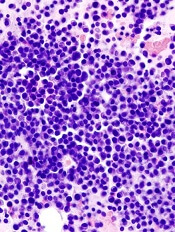
A team of researchers has confirmed that minimal residual disease (MRD) negativity is superior to complete response (CR) as a prognostic marker for progression-free survival (PFS) and overall survival (OS) in patients with multiple myeloma (MM).
MRD-positive patients who achieved CR had a similar survival to MRD-positive patients who achieved near CR (nCR) or partial response (PR). And this held true despite different induction regimens, disease stages, patient ages, cytogenetic groups, and whether the patients were transplant eligible or ineligible.
The team conducted the pooled analysis on behalf of the GEM (Grupo Español de Mieloma)/PETHEMA (Programa para el Estudio de la Terapéutica en Hemopatías Malignas) Cooperative Study Group.
They analyzed data from a large pool of 609 patients newly diagnosed with MM enrolled in 3 clinical trials—GEM 2000 (n=256), GEM2005MENOS65 (n=226), and GEM2010MAS65 (n=127). All patients had MRD assessments 9 months after study enrollment. The median follow-up was 71 months.
Juan-Jose Lahuerta, MD, PhD, of Hospital 12 de Octubre in Madrid, Spain, and colleagues reported the results in the Journal of Clinical Oncology.
Of the 609 patients, 286 (47%) achieved CR and had a significantly longer PFS (median, 49 months) than those who achieved nCR (median, 37 months), PR (median, 34 months) or less than PR (median, 11 months).
Patients who achieved CR also had a significantly longer OS (median, 128 months) than those who achieved PR (median, 75 months) or less than PR (median, 28 months), but not nCR (median, 77 months).
But patients who achieved CR and were still MRD-positive had a similar PFS (median, 27 months) to those patients who achieved nCR and PR and were MRD-positive (median 27 and 29 months, respectively). Median OS for MRD-positive patients in CR was a median 59 months, compared to 64 and 65 months, respectively, for MRD-positive patients in nCR and PR.
The team found that only MRD negativity significantly prolonged PFS and OS. Patients who were MRD-negative, even without achieving a CR, had a median PFS of 63 months (P<0.001) and the median OS not reached (P<0.001).
According to their paper, the investigators consider MRD negativity to be “one of the most relevant clinical end points and an aim of MM treatment of transplant-eligible and elderly patients who can tolerate intensive therapies.”
The team also investigated whether MRD negativity could be used as a meaningful clinical endpoint. They compared outcomes between patients who achieved CR according to MRD status before and after high-dose therapy and autologous stem cell transplant (ASCT).
Patients who were MRD-positive before transplant but MRD-negative afterwards had similar PFS and OS compared to patients who were MRD-negative before and after transplant. Patients who remained MRD-positive after transplant had inferior PFS and OS.
The team believes these results “support the adoption of MRD testing in routine practice to help discriminate between patients with clinically meaningful (MRD-negative) and misleading (MRD- positive) CRs.”
They noted, however, that a limitation of the study was the use of 2 different flow cytometries (8- and 4-color) with different sensitivities (10-5 and 10-4, respectively).
They also cautioned that these results should not be used to tailor treatments. Rather, new clinical trials that incorporate MRD assessments at additional time points need to be conducted.
A team of researchers has confirmed that minimal residual disease (MRD) negativity is superior to complete response (CR) as a prognostic marker for progression-free survival (PFS) and overall survival (OS) in patients with multiple myeloma (MM).
MRD-positive patients who achieved CR had a similar survival to MRD-positive patients who achieved near CR (nCR) or partial response (PR). And this held true despite different induction regimens, disease stages, patient ages, cytogenetic groups, and whether the patients were transplant eligible or ineligible.
The team conducted the pooled analysis on behalf of the GEM (Grupo Español de Mieloma)/PETHEMA (Programa para el Estudio de la Terapéutica en Hemopatías Malignas) Cooperative Study Group.
They analyzed data from a large pool of 609 patients newly diagnosed with MM enrolled in 3 clinical trials—GEM 2000 (n=256), GEM2005MENOS65 (n=226), and GEM2010MAS65 (n=127). All patients had MRD assessments 9 months after study enrollment. The median follow-up was 71 months.
Juan-Jose Lahuerta, MD, PhD, of Hospital 12 de Octubre in Madrid, Spain, and colleagues reported the results in the Journal of Clinical Oncology.
Of the 609 patients, 286 (47%) achieved CR and had a significantly longer PFS (median, 49 months) than those who achieved nCR (median, 37 months), PR (median, 34 months) or less than PR (median, 11 months).
Patients who achieved CR also had a significantly longer OS (median, 128 months) than those who achieved PR (median, 75 months) or less than PR (median, 28 months), but not nCR (median, 77 months).
But patients who achieved CR and were still MRD-positive had a similar PFS (median, 27 months) to those patients who achieved nCR and PR and were MRD-positive (median 27 and 29 months, respectively). Median OS for MRD-positive patients in CR was a median 59 months, compared to 64 and 65 months, respectively, for MRD-positive patients in nCR and PR.
The team found that only MRD negativity significantly prolonged PFS and OS. Patients who were MRD-negative, even without achieving a CR, had a median PFS of 63 months (P<0.001) and the median OS not reached (P<0.001).
According to their paper, the investigators consider MRD negativity to be “one of the most relevant clinical end points and an aim of MM treatment of transplant-eligible and elderly patients who can tolerate intensive therapies.”
The team also investigated whether MRD negativity could be used as a meaningful clinical endpoint. They compared outcomes between patients who achieved CR according to MRD status before and after high-dose therapy and autologous stem cell transplant (ASCT).
Patients who were MRD-positive before transplant but MRD-negative afterwards had similar PFS and OS compared to patients who were MRD-negative before and after transplant. Patients who remained MRD-positive after transplant had inferior PFS and OS.
The team believes these results “support the adoption of MRD testing in routine practice to help discriminate between patients with clinically meaningful (MRD-negative) and misleading (MRD- positive) CRs.”
They noted, however, that a limitation of the study was the use of 2 different flow cytometries (8- and 4-color) with different sensitivities (10-5 and 10-4, respectively).
They also cautioned that these results should not be used to tailor treatments. Rather, new clinical trials that incorporate MRD assessments at additional time points need to be conducted.
A team of researchers has confirmed that minimal residual disease (MRD) negativity is superior to complete response (CR) as a prognostic marker for progression-free survival (PFS) and overall survival (OS) in patients with multiple myeloma (MM).
MRD-positive patients who achieved CR had a similar survival to MRD-positive patients who achieved near CR (nCR) or partial response (PR). And this held true despite different induction regimens, disease stages, patient ages, cytogenetic groups, and whether the patients were transplant eligible or ineligible.
The team conducted the pooled analysis on behalf of the GEM (Grupo Español de Mieloma)/PETHEMA (Programa para el Estudio de la Terapéutica en Hemopatías Malignas) Cooperative Study Group.
They analyzed data from a large pool of 609 patients newly diagnosed with MM enrolled in 3 clinical trials—GEM 2000 (n=256), GEM2005MENOS65 (n=226), and GEM2010MAS65 (n=127). All patients had MRD assessments 9 months after study enrollment. The median follow-up was 71 months.
Juan-Jose Lahuerta, MD, PhD, of Hospital 12 de Octubre in Madrid, Spain, and colleagues reported the results in the Journal of Clinical Oncology.
Of the 609 patients, 286 (47%) achieved CR and had a significantly longer PFS (median, 49 months) than those who achieved nCR (median, 37 months), PR (median, 34 months) or less than PR (median, 11 months).
Patients who achieved CR also had a significantly longer OS (median, 128 months) than those who achieved PR (median, 75 months) or less than PR (median, 28 months), but not nCR (median, 77 months).
But patients who achieved CR and were still MRD-positive had a similar PFS (median, 27 months) to those patients who achieved nCR and PR and were MRD-positive (median 27 and 29 months, respectively). Median OS for MRD-positive patients in CR was a median 59 months, compared to 64 and 65 months, respectively, for MRD-positive patients in nCR and PR.
The team found that only MRD negativity significantly prolonged PFS and OS. Patients who were MRD-negative, even without achieving a CR, had a median PFS of 63 months (P<0.001) and the median OS not reached (P<0.001).
According to their paper, the investigators consider MRD negativity to be “one of the most relevant clinical end points and an aim of MM treatment of transplant-eligible and elderly patients who can tolerate intensive therapies.”
The team also investigated whether MRD negativity could be used as a meaningful clinical endpoint. They compared outcomes between patients who achieved CR according to MRD status before and after high-dose therapy and autologous stem cell transplant (ASCT).
Patients who were MRD-positive before transplant but MRD-negative afterwards had similar PFS and OS compared to patients who were MRD-negative before and after transplant. Patients who remained MRD-positive after transplant had inferior PFS and OS.
The team believes these results “support the adoption of MRD testing in routine practice to help discriminate between patients with clinically meaningful (MRD-negative) and misleading (MRD- positive) CRs.”
They noted, however, that a limitation of the study was the use of 2 different flow cytometries (8- and 4-color) with different sensitivities (10-5 and 10-4, respectively).
They also cautioned that these results should not be used to tailor treatments. Rather, new clinical trials that incorporate MRD assessments at additional time points need to be conducted.
FDA panel backs licensure for epoetin alfa biosimilar
A Food and Drug Administration advisory committee voted overwhelmingly in support of licensure for Epoetin Hospira as a biosimilar product to epoetin alfa (Epogen/Procrit) for all approved Epogen/Procrit indications.
Most committee members who voted “yes” said they were hesitant to do so, however, because of safety concerns, particularly in HIV and oncology patients.
“I voted yes. I came in with concerns about the HIV and oncology patients. However, I do believe ... after hearing the justification, that it meets the [FDA regulatory guideline],” said temporary voting member and patient representative Karen E. Arscott, DO, of the Commonwealth Medical College, Scranton, Penn. “I would like to see extensive follow-up in these two population groups,” she said.
The concerns about HIV and oncology patients are related to the potential for immunogenicity-related events. Some members noted that the study populations were likely too small to detect these rare events.
Scott A. Waldman, MD, of Thomas Jefferson University, Philadelphia, also a temporary member, said he voted “yes” because there was “no substantial difference analytically, biologically, or clinically in what was tested.”
“I think the residual uncertainty of immunogenicity and hypersensitivity and the extrapolation across different patient populations will emerge in postmarketing surveillance. I think that’s when we’ll get the clearest picture of whether there really is any uncertainty in how these drugs perform,” he said.
For one member, however, the concerns were enough for a “no” vote.
“The analytical, clinical, and preclinical data support biosimilarity, and I strongly support approval for indications 1 and 4 based on the clinical data ... but I have residual concerns about lack of data, immunogenicity, basic safety data in patients with HIV and cancer and, for that reason, voted no for the broader indication,” said Thomas S. Uldrick, MD, of the HIV & AIDS Malignancy Branch at the Center for Cancer Research, National Cancer Institute, Bethesda, Md.
Gregory J. Riely, MD, of Memorial Sloan-Kettering Cancer Center in New York expressed similar concerns but said he found the data compelling.
“I understand the concerns around immunogenicity for HIV and cancer patients. I was somewhat reassured by the nonclinical data showing an absence of increased immunogenicity for this biosimilar,” he said.
To support its BLA for Epoetin Hospira, Hospira submitted data from four studies comparing it with the U.S.-licensed Epogen/Procrit and presented an analytical biosimilarity assessment and a nonclinical, clinical pharmacology and clinical biosimilarity assessment. The FDA analysis of the data considered chemistry, manufacturing, and controls, as well as pharmacology/toxicology, immunogenicity, clinical pharmacology, and clinical efficacy and safety.
Sumant Ramachandra, MD, of Pfizer Essential Health noted that the company is not currently seeking an interchangeability designation and that, while this is the first application for a biosimilar product to Amgen’s Epogen/Procrit product, which was approved in 1989, a “highly related epoetin product” from Pfizer (Retacrit) has been available in Europe for 9 years, with more than 363,000 patient years of treatment administered.
The demonstration of biosimilarity in the Epoetin Hospira data presented to the FDA, coupled with well-characterized nature of the reference product, “together support extrapolation across all conditions of use for the reference product,” he said, noting that the data demonstrate that the mechanism of action for both the biosimilar and reference product is the same, and that the immunogenicity profiles are consistent.
The FDA assessment of the data led to a similar conclusion that no clinically significant differences were found between the biosimilar and reference product.
Among other concerns expressed by advisory committee members and/or the public were in regard to the extrapolation of data from patients with chronic kidney disease on hemodialysis to other indications (although this is considered acceptable, according to FDA regulations) and to populations that weren’t studied and about the possibility that Epoetin Hospira would be forced on patients inappropriately, despite the fact that Hospira is not seeking an interchangeability designation. Patients and others speaking on behalf of various patient groups and advocacy organizations called for safeguards against such inappropriate substitution.
Acting committee chair, Brian I. Rini, MD, of the Cleveland Clinic Taussig Cancer Clinic, Ohio, said he voted “yes” because the product met all regulatory requirements but agreed that the “need for vigilance is exceedingly important not only for this drug but for all drugs in this circumstance.”
The FDA, which usually follows the recommendations of its advisory committees, will now consider the BLA for Epoetin Hospira.
In a statement released after the vote, Diem Nguyen, Pfizer Essential Health global president, Americas, said the committee’s recommendation for approval “reinforces the potential value of biosimilars in expanding access to additional high-quality treatment options for the patients in the U.S. who need them.”
The advisory committee members were screened and found to have no relevant conflicts of interest.
A Food and Drug Administration advisory committee voted overwhelmingly in support of licensure for Epoetin Hospira as a biosimilar product to epoetin alfa (Epogen/Procrit) for all approved Epogen/Procrit indications.
Most committee members who voted “yes” said they were hesitant to do so, however, because of safety concerns, particularly in HIV and oncology patients.
“I voted yes. I came in with concerns about the HIV and oncology patients. However, I do believe ... after hearing the justification, that it meets the [FDA regulatory guideline],” said temporary voting member and patient representative Karen E. Arscott, DO, of the Commonwealth Medical College, Scranton, Penn. “I would like to see extensive follow-up in these two population groups,” she said.
The concerns about HIV and oncology patients are related to the potential for immunogenicity-related events. Some members noted that the study populations were likely too small to detect these rare events.
Scott A. Waldman, MD, of Thomas Jefferson University, Philadelphia, also a temporary member, said he voted “yes” because there was “no substantial difference analytically, biologically, or clinically in what was tested.”
“I think the residual uncertainty of immunogenicity and hypersensitivity and the extrapolation across different patient populations will emerge in postmarketing surveillance. I think that’s when we’ll get the clearest picture of whether there really is any uncertainty in how these drugs perform,” he said.
For one member, however, the concerns were enough for a “no” vote.
“The analytical, clinical, and preclinical data support biosimilarity, and I strongly support approval for indications 1 and 4 based on the clinical data ... but I have residual concerns about lack of data, immunogenicity, basic safety data in patients with HIV and cancer and, for that reason, voted no for the broader indication,” said Thomas S. Uldrick, MD, of the HIV & AIDS Malignancy Branch at the Center for Cancer Research, National Cancer Institute, Bethesda, Md.
Gregory J. Riely, MD, of Memorial Sloan-Kettering Cancer Center in New York expressed similar concerns but said he found the data compelling.
“I understand the concerns around immunogenicity for HIV and cancer patients. I was somewhat reassured by the nonclinical data showing an absence of increased immunogenicity for this biosimilar,” he said.
To support its BLA for Epoetin Hospira, Hospira submitted data from four studies comparing it with the U.S.-licensed Epogen/Procrit and presented an analytical biosimilarity assessment and a nonclinical, clinical pharmacology and clinical biosimilarity assessment. The FDA analysis of the data considered chemistry, manufacturing, and controls, as well as pharmacology/toxicology, immunogenicity, clinical pharmacology, and clinical efficacy and safety.
Sumant Ramachandra, MD, of Pfizer Essential Health noted that the company is not currently seeking an interchangeability designation and that, while this is the first application for a biosimilar product to Amgen’s Epogen/Procrit product, which was approved in 1989, a “highly related epoetin product” from Pfizer (Retacrit) has been available in Europe for 9 years, with more than 363,000 patient years of treatment administered.
The demonstration of biosimilarity in the Epoetin Hospira data presented to the FDA, coupled with well-characterized nature of the reference product, “together support extrapolation across all conditions of use for the reference product,” he said, noting that the data demonstrate that the mechanism of action for both the biosimilar and reference product is the same, and that the immunogenicity profiles are consistent.
The FDA assessment of the data led to a similar conclusion that no clinically significant differences were found between the biosimilar and reference product.
Among other concerns expressed by advisory committee members and/or the public were in regard to the extrapolation of data from patients with chronic kidney disease on hemodialysis to other indications (although this is considered acceptable, according to FDA regulations) and to populations that weren’t studied and about the possibility that Epoetin Hospira would be forced on patients inappropriately, despite the fact that Hospira is not seeking an interchangeability designation. Patients and others speaking on behalf of various patient groups and advocacy organizations called for safeguards against such inappropriate substitution.
Acting committee chair, Brian I. Rini, MD, of the Cleveland Clinic Taussig Cancer Clinic, Ohio, said he voted “yes” because the product met all regulatory requirements but agreed that the “need for vigilance is exceedingly important not only for this drug but for all drugs in this circumstance.”
The FDA, which usually follows the recommendations of its advisory committees, will now consider the BLA for Epoetin Hospira.
In a statement released after the vote, Diem Nguyen, Pfizer Essential Health global president, Americas, said the committee’s recommendation for approval “reinforces the potential value of biosimilars in expanding access to additional high-quality treatment options for the patients in the U.S. who need them.”
The advisory committee members were screened and found to have no relevant conflicts of interest.
A Food and Drug Administration advisory committee voted overwhelmingly in support of licensure for Epoetin Hospira as a biosimilar product to epoetin alfa (Epogen/Procrit) for all approved Epogen/Procrit indications.
Most committee members who voted “yes” said they were hesitant to do so, however, because of safety concerns, particularly in HIV and oncology patients.
“I voted yes. I came in with concerns about the HIV and oncology patients. However, I do believe ... after hearing the justification, that it meets the [FDA regulatory guideline],” said temporary voting member and patient representative Karen E. Arscott, DO, of the Commonwealth Medical College, Scranton, Penn. “I would like to see extensive follow-up in these two population groups,” she said.
The concerns about HIV and oncology patients are related to the potential for immunogenicity-related events. Some members noted that the study populations were likely too small to detect these rare events.
Scott A. Waldman, MD, of Thomas Jefferson University, Philadelphia, also a temporary member, said he voted “yes” because there was “no substantial difference analytically, biologically, or clinically in what was tested.”
“I think the residual uncertainty of immunogenicity and hypersensitivity and the extrapolation across different patient populations will emerge in postmarketing surveillance. I think that’s when we’ll get the clearest picture of whether there really is any uncertainty in how these drugs perform,” he said.
For one member, however, the concerns were enough for a “no” vote.
“The analytical, clinical, and preclinical data support biosimilarity, and I strongly support approval for indications 1 and 4 based on the clinical data ... but I have residual concerns about lack of data, immunogenicity, basic safety data in patients with HIV and cancer and, for that reason, voted no for the broader indication,” said Thomas S. Uldrick, MD, of the HIV & AIDS Malignancy Branch at the Center for Cancer Research, National Cancer Institute, Bethesda, Md.
Gregory J. Riely, MD, of Memorial Sloan-Kettering Cancer Center in New York expressed similar concerns but said he found the data compelling.
“I understand the concerns around immunogenicity for HIV and cancer patients. I was somewhat reassured by the nonclinical data showing an absence of increased immunogenicity for this biosimilar,” he said.
To support its BLA for Epoetin Hospira, Hospira submitted data from four studies comparing it with the U.S.-licensed Epogen/Procrit and presented an analytical biosimilarity assessment and a nonclinical, clinical pharmacology and clinical biosimilarity assessment. The FDA analysis of the data considered chemistry, manufacturing, and controls, as well as pharmacology/toxicology, immunogenicity, clinical pharmacology, and clinical efficacy and safety.
Sumant Ramachandra, MD, of Pfizer Essential Health noted that the company is not currently seeking an interchangeability designation and that, while this is the first application for a biosimilar product to Amgen’s Epogen/Procrit product, which was approved in 1989, a “highly related epoetin product” from Pfizer (Retacrit) has been available in Europe for 9 years, with more than 363,000 patient years of treatment administered.
The demonstration of biosimilarity in the Epoetin Hospira data presented to the FDA, coupled with well-characterized nature of the reference product, “together support extrapolation across all conditions of use for the reference product,” he said, noting that the data demonstrate that the mechanism of action for both the biosimilar and reference product is the same, and that the immunogenicity profiles are consistent.
The FDA assessment of the data led to a similar conclusion that no clinically significant differences were found between the biosimilar and reference product.
Among other concerns expressed by advisory committee members and/or the public were in regard to the extrapolation of data from patients with chronic kidney disease on hemodialysis to other indications (although this is considered acceptable, according to FDA regulations) and to populations that weren’t studied and about the possibility that Epoetin Hospira would be forced on patients inappropriately, despite the fact that Hospira is not seeking an interchangeability designation. Patients and others speaking on behalf of various patient groups and advocacy organizations called for safeguards against such inappropriate substitution.
Acting committee chair, Brian I. Rini, MD, of the Cleveland Clinic Taussig Cancer Clinic, Ohio, said he voted “yes” because the product met all regulatory requirements but agreed that the “need for vigilance is exceedingly important not only for this drug but for all drugs in this circumstance.”
The FDA, which usually follows the recommendations of its advisory committees, will now consider the BLA for Epoetin Hospira.
In a statement released after the vote, Diem Nguyen, Pfizer Essential Health global president, Americas, said the committee’s recommendation for approval “reinforces the potential value of biosimilars in expanding access to additional high-quality treatment options for the patients in the U.S. who need them.”
The advisory committee members were screened and found to have no relevant conflicts of interest.
Key clinical point:
Major finding: The data demonstrate that the mechanism of action for both the biosimilar and reference product is the same, and that the immunogenicity profiles are consistent.
Data source: An FDA advisory committee review of epoetin alfa biosimilar Epoetin Hospira.
Disclosures: The advisory committee members were screened and found to have no relevant conflicts of interest.
Why fewer blood cancer patients receive hospice care

New research provides an explanation for the fact that US patients with hematologic malignancies are less likely to enroll in hospice care than patients with solid tumor malignancies.
Results of a national survey suggest that concerns about the adequacy of hospice may prevent hematologic oncologists from referring their patients.
Researchers say this finding, published in Cancer, points to potential means of improving end-of-life care for patients with hematologic malignancies.
Oreofe Odejide, MD, of the Dana-Farber Cancer Institute in Boston, Massachusetts, and her colleagues carried out this study.
The team conducted a survey of a national sample of hematologic oncologists listed in the publicly available clinical directory of the American Society of Hematology.
More than 57% of physicians who were contacted provided responses, for a total of 349 respondents.
The survey included questions about views regarding the helpfulness and adequacy of home hospice services for patients with hematologic malignancies, as well as factors that would impact oncologists’ likelihood of referring patients to hospice.
More than 68% of hematologic oncologists strongly agreed that hospice care is “helpful” for patients with hematologic malignancies.
However, 46% of the oncologists felt that home hospice is “inadequate” for the needs of patients with hematologic malignancies, when compared to inpatient hospice.
Still, most of the respondents who believed home hospice is inadequate said they would be more likely to refer patients if platelet and red blood cell transfusions were readily available.
“Our findings are important as they shed light on factors that are potential barriers to hospice referrals,” Dr Odejide said. “These findings can be employed to develop targeted interventions to address hospice underuse for patients with blood cancers.”
New research provides an explanation for the fact that US patients with hematologic malignancies are less likely to enroll in hospice care than patients with solid tumor malignancies.
Results of a national survey suggest that concerns about the adequacy of hospice may prevent hematologic oncologists from referring their patients.
Researchers say this finding, published in Cancer, points to potential means of improving end-of-life care for patients with hematologic malignancies.
Oreofe Odejide, MD, of the Dana-Farber Cancer Institute in Boston, Massachusetts, and her colleagues carried out this study.
The team conducted a survey of a national sample of hematologic oncologists listed in the publicly available clinical directory of the American Society of Hematology.
More than 57% of physicians who were contacted provided responses, for a total of 349 respondents.
The survey included questions about views regarding the helpfulness and adequacy of home hospice services for patients with hematologic malignancies, as well as factors that would impact oncologists’ likelihood of referring patients to hospice.
More than 68% of hematologic oncologists strongly agreed that hospice care is “helpful” for patients with hematologic malignancies.
However, 46% of the oncologists felt that home hospice is “inadequate” for the needs of patients with hematologic malignancies, when compared to inpatient hospice.
Still, most of the respondents who believed home hospice is inadequate said they would be more likely to refer patients if platelet and red blood cell transfusions were readily available.
“Our findings are important as they shed light on factors that are potential barriers to hospice referrals,” Dr Odejide said. “These findings can be employed to develop targeted interventions to address hospice underuse for patients with blood cancers.”
New research provides an explanation for the fact that US patients with hematologic malignancies are less likely to enroll in hospice care than patients with solid tumor malignancies.
Results of a national survey suggest that concerns about the adequacy of hospice may prevent hematologic oncologists from referring their patients.
Researchers say this finding, published in Cancer, points to potential means of improving end-of-life care for patients with hematologic malignancies.
Oreofe Odejide, MD, of the Dana-Farber Cancer Institute in Boston, Massachusetts, and her colleagues carried out this study.
The team conducted a survey of a national sample of hematologic oncologists listed in the publicly available clinical directory of the American Society of Hematology.
More than 57% of physicians who were contacted provided responses, for a total of 349 respondents.
The survey included questions about views regarding the helpfulness and adequacy of home hospice services for patients with hematologic malignancies, as well as factors that would impact oncologists’ likelihood of referring patients to hospice.
More than 68% of hematologic oncologists strongly agreed that hospice care is “helpful” for patients with hematologic malignancies.
However, 46% of the oncologists felt that home hospice is “inadequate” for the needs of patients with hematologic malignancies, when compared to inpatient hospice.
Still, most of the respondents who believed home hospice is inadequate said they would be more likely to refer patients if platelet and red blood cell transfusions were readily available.
“Our findings are important as they shed light on factors that are potential barriers to hospice referrals,” Dr Odejide said. “These findings can be employed to develop targeted interventions to address hospice underuse for patients with blood cancers.”
Smoldering myeloma progressed more rapidly in patients with elevated BMIs
An elevated body mass index appears to be a risk factor for progression of smoldering multiple myeloma, according to Wilson I. Gonsalves, MD, and his colleagues at Mayo Clinic, Rochester, Minn.
The findings, based on median follow up data of 106 months from 306 patients diagnosed with smoldering multiple myeloma from 2000-2010 at the Mayo Clinic, need to be confirmed in larger studies. Nevertheless, the results imply that patient weight is a potentially modifiable risk factor for progression from smoldering disease to multiple myeloma, Dr. Gonsalves and his colleagues wrote.

At initial evaluation, 28% of patients had myeloma defining events, such as a serum free light chain ratio greater than 100 or over 60% clonal bone marrow plasma cells. Myeloma defining events were present in 17% of patients with normal BMIs and 33% of patients with elevated BMIs, a statistically significant difference (P = .011).
When the analysis was limited to the 187 patients without myeloma-defining events at initial evaluation, the 2-year rate of progression to symptomatic multiple myeloma was 15% in those with a normal BMI and 33% in those with an elevated BMI (P = .013).
In a multivariable model, only elevated BMI (P = .004) and increasing clonal bone marrow plasma cells (P = .001) were statistically significant in predicting 2-year progression to multiple myeloma.
At last follow-up, 66% of patients had progressed to symptomatic multiple myeloma.
Dr. Gonsalves had no relationships to disclose.
The impact of body mass index on the risk of early progression of smoldering multiple myeloma to symptomatic myeloma. 2017 ASCO annual meeting. Abstract No: 8032.
[email protected]
On Twitter @maryjodales
An elevated body mass index appears to be a risk factor for progression of smoldering multiple myeloma, according to Wilson I. Gonsalves, MD, and his colleagues at Mayo Clinic, Rochester, Minn.
The findings, based on median follow up data of 106 months from 306 patients diagnosed with smoldering multiple myeloma from 2000-2010 at the Mayo Clinic, need to be confirmed in larger studies. Nevertheless, the results imply that patient weight is a potentially modifiable risk factor for progression from smoldering disease to multiple myeloma, Dr. Gonsalves and his colleagues wrote.
At initial evaluation, 28% of patients had myeloma defining events, such as a serum free light chain ratio greater than 100 or over 60% clonal bone marrow plasma cells. Myeloma defining events were present in 17% of patients with normal BMIs and 33% of patients with elevated BMIs, a statistically significant difference (P = .011).
When the analysis was limited to the 187 patients without myeloma-defining events at initial evaluation, the 2-year rate of progression to symptomatic multiple myeloma was 15% in those with a normal BMI and 33% in those with an elevated BMI (P = .013).
In a multivariable model, only elevated BMI (P = .004) and increasing clonal bone marrow plasma cells (P = .001) were statistically significant in predicting 2-year progression to multiple myeloma.
At last follow-up, 66% of patients had progressed to symptomatic multiple myeloma.
Dr. Gonsalves had no relationships to disclose.
The impact of body mass index on the risk of early progression of smoldering multiple myeloma to symptomatic myeloma. 2017 ASCO annual meeting. Abstract No: 8032.
[email protected]
On Twitter @maryjodales
An elevated body mass index appears to be a risk factor for progression of smoldering multiple myeloma, according to Wilson I. Gonsalves, MD, and his colleagues at Mayo Clinic, Rochester, Minn.
The findings, based on median follow up data of 106 months from 306 patients diagnosed with smoldering multiple myeloma from 2000-2010 at the Mayo Clinic, need to be confirmed in larger studies. Nevertheless, the results imply that patient weight is a potentially modifiable risk factor for progression from smoldering disease to multiple myeloma, Dr. Gonsalves and his colleagues wrote.
At initial evaluation, 28% of patients had myeloma defining events, such as a serum free light chain ratio greater than 100 or over 60% clonal bone marrow plasma cells. Myeloma defining events were present in 17% of patients with normal BMIs and 33% of patients with elevated BMIs, a statistically significant difference (P = .011).
When the analysis was limited to the 187 patients without myeloma-defining events at initial evaluation, the 2-year rate of progression to symptomatic multiple myeloma was 15% in those with a normal BMI and 33% in those with an elevated BMI (P = .013).
In a multivariable model, only elevated BMI (P = .004) and increasing clonal bone marrow plasma cells (P = .001) were statistically significant in predicting 2-year progression to multiple myeloma.
At last follow-up, 66% of patients had progressed to symptomatic multiple myeloma.
Dr. Gonsalves had no relationships to disclose.
The impact of body mass index on the risk of early progression of smoldering multiple myeloma to symptomatic myeloma. 2017 ASCO annual meeting. Abstract No: 8032.
[email protected]
On Twitter @maryjodales
FROM ASCO 2017
Key clinical point:
Major finding: The 2-year rate of progression from smoldering disease to symptomatic multiple myeloma was 16% in patients with a normal BMI and 42% in patients with an elevated BMI (P less than 0.0001).
Data source: Median follow up data of 106 months from 306 patients diagnosed with smoldering multiple myeloma during 2000-2010 at the Mayo Clinic.
Disclosures: Dr. Gonsalves had no relationships to disclose.
Citation: The impact of body mass index on the risk of early progression of smoldering multiple myeloma to symptomatic myeloma. 2017 ASCO annual meeting. Abstract No: 8032.
Myeloma patients who get solid tumor cancers do as well as other cancer patients
With improved treatment, patients with multiple myeloma are surviving long enough to develop other cancers, Jorge J. Castillo, MD, and Adam J. Olszewski, MD, reported in a poster to be presented at the annual meeting of the American Society of Clinical Oncology.
The good news is that myeloma patients, when diagnosed with a subsequent solid tumor, are just as likely to respond to treatment and do just as well as patients without myeloma, according to Dr. Castillo of Dana-Farber Cancer Institute, Boston, and Dr. Olszewski of Alpert Medical School of Brown University, Providence, R.I.

They based their conclusion on Surveillance, Epidemiology, and End Results (SEER) data for patients diagnosed with six common cancers from 2004-2013.
“Among them, we identified [nearly 1,300] myeloma survivors, and we matched each to 50 randomly sampled controls with the same cancer by age, sex, race, and year of diagnosis. We then compared [cancer specific survival], cumulative incidence function (CIF) for death from the non-myeloma index cancer, and whether patients had surgery for non-metastastic, stage-matched tumors only,” the researchers wrote in their abstract.
They did analyses for breast, lung, prostate, colorectal, melanoma, and bladder cancers. The median time from diagnosis of myeloma to diagnosis of the second ranged from 35 months (bladder [133 myeloma patients] and lung [286 myeloma patients] cancers) to 50 months (melanoma [140 myeloma patients]). The median time after myeloma diagnosis was 40 months for those patients who developed breast, prostate, or colorectal cancers.
In the comparisons, myeloma survivors were significantly older (P less than .001) than patients initially diagnosed with the same respective cancers. In the case-control analysis, breast (P = .002) and lung cancers (P = .003) were more often diagnosed at an early stage among myeloma survivors.
The hazard ratio (HR) for cancer-specific survival for 189 myeloma patients diagnosed with breast cancer as compared to other breast cancer patients, for example, was 0.99, 95% confidence interval (CI) 0.61-1.61. The HR for the cumulative incidence function of cancer death was 0.82, 95% CI 0.50-1.35.
Myeloma patients were no less likely than were case-control subjects to have surgery for their cancers, with the exception of the 330 myeloma patients who developed prostate cancer (odds ratio, 0.59, 95% CI, 0.44-0.81).
Cancer-specific survival significantly differed (P less than .05) only for lung cancer, and was better among the 286 myeloma patients with lung cancer even when stratified by stage (HR 0.64, 95% CI 0.54-0.75). For cumulative incidence function of cancer death for lung cancer, the hazard ratio was 0.52 (95% CI 0.44-0.61). Better outcomes in lung cancer are not fully explained by earlier detection, suggesting a biological difference, the researchers reported.
Cumulative incidence function of cancer death was significantly lower for myeloma patients with lung and colorectal cancers.
Dr. Castillo disclosed honoraria from Celgene and Janssen; a consulting or advisory role with Biogen, Otsuka, and Pharmacyclics; and institutional research funding from Abbvie, Gilead Sciences, Millennium, and Pharmacyclics. Dr. Olszewski disclosed institutional research funding from Genentech, Incyte, and TG Therapeutics.
Citation: Outcomes of secondary cancers among myeloma survivors. 2017 ASCO annual meeting. Abstract No. 8043.
[email protected]
On Twitter @maryjodales
With improved treatment, patients with multiple myeloma are surviving long enough to develop other cancers, Jorge J. Castillo, MD, and Adam J. Olszewski, MD, reported in a poster to be presented at the annual meeting of the American Society of Clinical Oncology.
The good news is that myeloma patients, when diagnosed with a subsequent solid tumor, are just as likely to respond to treatment and do just as well as patients without myeloma, according to Dr. Castillo of Dana-Farber Cancer Institute, Boston, and Dr. Olszewski of Alpert Medical School of Brown University, Providence, R.I.
They based their conclusion on Surveillance, Epidemiology, and End Results (SEER) data for patients diagnosed with six common cancers from 2004-2013.
“Among them, we identified [nearly 1,300] myeloma survivors, and we matched each to 50 randomly sampled controls with the same cancer by age, sex, race, and year of diagnosis. We then compared [cancer specific survival], cumulative incidence function (CIF) for death from the non-myeloma index cancer, and whether patients had surgery for non-metastastic, stage-matched tumors only,” the researchers wrote in their abstract.
They did analyses for breast, lung, prostate, colorectal, melanoma, and bladder cancers. The median time from diagnosis of myeloma to diagnosis of the second ranged from 35 months (bladder [133 myeloma patients] and lung [286 myeloma patients] cancers) to 50 months (melanoma [140 myeloma patients]). The median time after myeloma diagnosis was 40 months for those patients who developed breast, prostate, or colorectal cancers.
In the comparisons, myeloma survivors were significantly older (P less than .001) than patients initially diagnosed with the same respective cancers. In the case-control analysis, breast (P = .002) and lung cancers (P = .003) were more often diagnosed at an early stage among myeloma survivors.
The hazard ratio (HR) for cancer-specific survival for 189 myeloma patients diagnosed with breast cancer as compared to other breast cancer patients, for example, was 0.99, 95% confidence interval (CI) 0.61-1.61. The HR for the cumulative incidence function of cancer death was 0.82, 95% CI 0.50-1.35.
Myeloma patients were no less likely than were case-control subjects to have surgery for their cancers, with the exception of the 330 myeloma patients who developed prostate cancer (odds ratio, 0.59, 95% CI, 0.44-0.81).
Cancer-specific survival significantly differed (P less than .05) only for lung cancer, and was better among the 286 myeloma patients with lung cancer even when stratified by stage (HR 0.64, 95% CI 0.54-0.75). For cumulative incidence function of cancer death for lung cancer, the hazard ratio was 0.52 (95% CI 0.44-0.61). Better outcomes in lung cancer are not fully explained by earlier detection, suggesting a biological difference, the researchers reported.
Cumulative incidence function of cancer death was significantly lower for myeloma patients with lung and colorectal cancers.
Dr. Castillo disclosed honoraria from Celgene and Janssen; a consulting or advisory role with Biogen, Otsuka, and Pharmacyclics; and institutional research funding from Abbvie, Gilead Sciences, Millennium, and Pharmacyclics. Dr. Olszewski disclosed institutional research funding from Genentech, Incyte, and TG Therapeutics.
Citation: Outcomes of secondary cancers among myeloma survivors. 2017 ASCO annual meeting. Abstract No. 8043.
[email protected]
On Twitter @maryjodales
With improved treatment, patients with multiple myeloma are surviving long enough to develop other cancers, Jorge J. Castillo, MD, and Adam J. Olszewski, MD, reported in a poster to be presented at the annual meeting of the American Society of Clinical Oncology.
The good news is that myeloma patients, when diagnosed with a subsequent solid tumor, are just as likely to respond to treatment and do just as well as patients without myeloma, according to Dr. Castillo of Dana-Farber Cancer Institute, Boston, and Dr. Olszewski of Alpert Medical School of Brown University, Providence, R.I.
They based their conclusion on Surveillance, Epidemiology, and End Results (SEER) data for patients diagnosed with six common cancers from 2004-2013.
“Among them, we identified [nearly 1,300] myeloma survivors, and we matched each to 50 randomly sampled controls with the same cancer by age, sex, race, and year of diagnosis. We then compared [cancer specific survival], cumulative incidence function (CIF) for death from the non-myeloma index cancer, and whether patients had surgery for non-metastastic, stage-matched tumors only,” the researchers wrote in their abstract.
They did analyses for breast, lung, prostate, colorectal, melanoma, and bladder cancers. The median time from diagnosis of myeloma to diagnosis of the second ranged from 35 months (bladder [133 myeloma patients] and lung [286 myeloma patients] cancers) to 50 months (melanoma [140 myeloma patients]). The median time after myeloma diagnosis was 40 months for those patients who developed breast, prostate, or colorectal cancers.
In the comparisons, myeloma survivors were significantly older (P less than .001) than patients initially diagnosed with the same respective cancers. In the case-control analysis, breast (P = .002) and lung cancers (P = .003) were more often diagnosed at an early stage among myeloma survivors.
The hazard ratio (HR) for cancer-specific survival for 189 myeloma patients diagnosed with breast cancer as compared to other breast cancer patients, for example, was 0.99, 95% confidence interval (CI) 0.61-1.61. The HR for the cumulative incidence function of cancer death was 0.82, 95% CI 0.50-1.35.
Myeloma patients were no less likely than were case-control subjects to have surgery for their cancers, with the exception of the 330 myeloma patients who developed prostate cancer (odds ratio, 0.59, 95% CI, 0.44-0.81).
Cancer-specific survival significantly differed (P less than .05) only for lung cancer, and was better among the 286 myeloma patients with lung cancer even when stratified by stage (HR 0.64, 95% CI 0.54-0.75). For cumulative incidence function of cancer death for lung cancer, the hazard ratio was 0.52 (95% CI 0.44-0.61). Better outcomes in lung cancer are not fully explained by earlier detection, suggesting a biological difference, the researchers reported.
Cumulative incidence function of cancer death was significantly lower for myeloma patients with lung and colorectal cancers.
Dr. Castillo disclosed honoraria from Celgene and Janssen; a consulting or advisory role with Biogen, Otsuka, and Pharmacyclics; and institutional research funding from Abbvie, Gilead Sciences, Millennium, and Pharmacyclics. Dr. Olszewski disclosed institutional research funding from Genentech, Incyte, and TG Therapeutics.
Citation: Outcomes of secondary cancers among myeloma survivors. 2017 ASCO annual meeting. Abstract No. 8043.
[email protected]
On Twitter @maryjodales
FROM 2017 ASCO ANNUAL MEETING
Key clinical point:
Major finding: Cancer-specific survival significantly differed (P less than .05) only for lung cancer, and was better among the 286 myeloma patients with lung cancer even when stratified by stage (HR, 0.64, 95% CI 0.54-0.75).
Data source: Surveillance, Epidemiology, and End Results (SEER) data for patients diagnosed with six common cancers from 2004-2013.
Disclosures: Dr. Castillo disclosed honoraria from Celgene and Janssen; a consulting or advisory role with Biogen, Otsuka, and Pharmacyclics; and institutional research funding from Abbvie, Gilead Sciences, Millennium, and Pharmacyclics. Dr. Olszewski disclosed institutional research funding from Genentech, Incyte, and TG Therapeutics.
Citation: Outcomes of secondary cancers among myeloma survivors. 2017 ASCO annual meeting. Abstract No. 8043.
Lenalidomide maintenance boosted depth of response in myeloma patients
Lenalidomide maintenance therapy further improved depth of response in newly diagnosed, transplant-eligible patients with multiple myeloma in the EMN02/HO95 trial, based on the abstract of a poster to be presented at the annual meeting of the American Society of Clinical Oncology.
The study results also show that using multiparameter flow cytometry to monitor minimal residual disease (MRD) was predictive of patient outcome. A high-risk cytogenetic profile – defined as having del17, translocation (4;14), or translocation (14;16) – was the most important prognostic factor in MRD-positive patients, according to Stefania Oliva, MD, of the University of Torino [Italy] and her colleagues.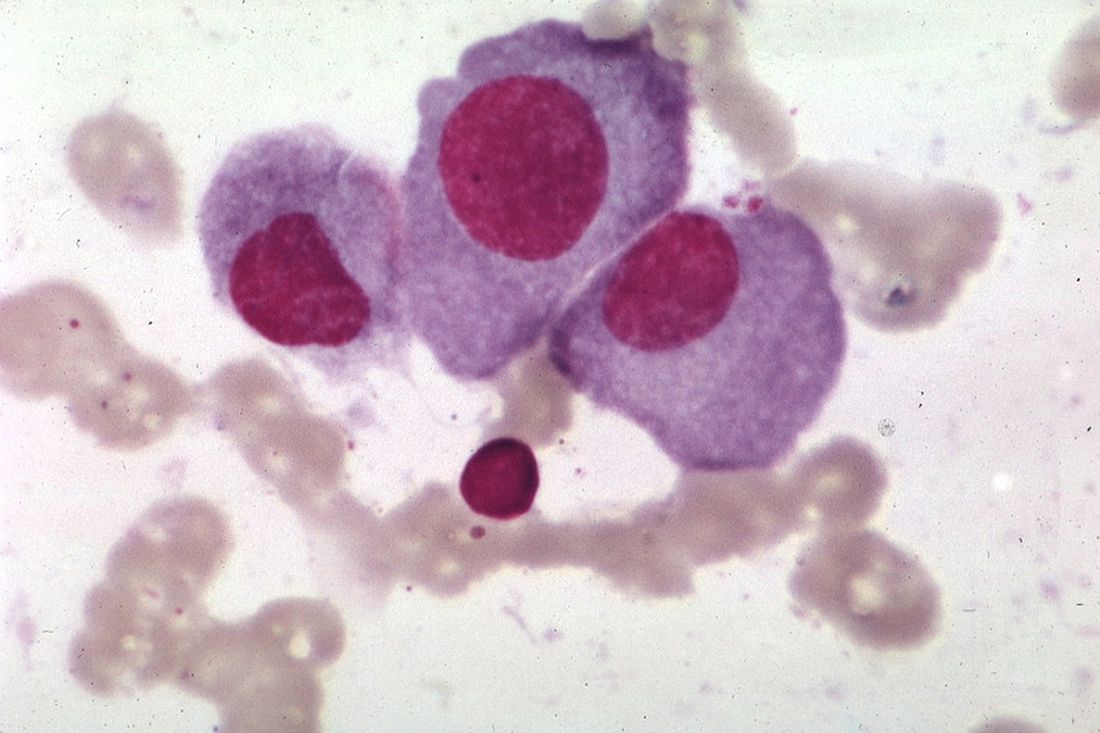
At 3 years, progression-free survival was 50% in MRD-positive patients and 77% in MRD-negative patients (hazard ratio, 2.87; P less than .001). High-risk cytogenetics was the most important risk factor (HR, 9.87; interaction-P = .001). Further, 48% of patients who had MRD before maintenance therapy and had a second evaluation for minimal residual disease after at least 1 year of lenalidomide therapy became MRD negative.
The trial (NCT01208766) participants were no older than age 65 years and received received bortezomib-cyclophosphamide-dexamethasone (VCD) induction therapy, then bortezomib-melphalan-prednisone (VMP) or high-dose melphalan intensification therapy followed by stem cell transplant, and subsequently bortezomib-lenalidomide-dexamethasone (VRD) consolidation therapy or no consolidation therapy, followed by lenalidomide maintenance therapy.
Of 316 patients who were evaluable before maintenance therapy, 18% had International Staging System stage III disease (beta-2 microglobulin of 5.5 mg/L or greater) and 22% had a high-risk cytogenetic profile.
For intensification therapy, 63% had received high-dose melphalan and 37% got VMP; thereafter 51% had received VRD. Nearly two-thirds of the 76% of patients who were MRD negative got high-dose melphalan, with a median follow-up of 30 months from MRD enrollment.
Patients who had at least a very good partial response underwent minimal residual disease evaluation before starting maintenance therapy and then every 6-12 months during maintenance therapy. Multiparameter flow cytometry was performed on bone marrow according to Euroflow-based methods (eight colors, two tubes) with a sensitivity of 10-5, and quality checks were performed to compare sensitivity and to show correlation between protocols.
Dr. Oliva disclosed receiving honoraria from Celgene and Takeda.
Citation: Minimal residual disease (MRD) monitoring by multiparameter flow cytometry (MFC) in newly diagnosed transplant eligible multiple myeloma (MM) patients: Results from the EMN02/HO95 phase 3 trial. 2017 ASCO annual meeting. Abstract No: 8011
[email protected]
On Twitter @maryjodales
Lenalidomide maintenance therapy further improved depth of response in newly diagnosed, transplant-eligible patients with multiple myeloma in the EMN02/HO95 trial, based on the abstract of a poster to be presented at the annual meeting of the American Society of Clinical Oncology.
The study results also show that using multiparameter flow cytometry to monitor minimal residual disease (MRD) was predictive of patient outcome. A high-risk cytogenetic profile – defined as having del17, translocation (4;14), or translocation (14;16) – was the most important prognostic factor in MRD-positive patients, according to Stefania Oliva, MD, of the University of Torino [Italy] and her colleagues.
At 3 years, progression-free survival was 50% in MRD-positive patients and 77% in MRD-negative patients (hazard ratio, 2.87; P less than .001). High-risk cytogenetics was the most important risk factor (HR, 9.87; interaction-P = .001). Further, 48% of patients who had MRD before maintenance therapy and had a second evaluation for minimal residual disease after at least 1 year of lenalidomide therapy became MRD negative.
The trial (NCT01208766) participants were no older than age 65 years and received received bortezomib-cyclophosphamide-dexamethasone (VCD) induction therapy, then bortezomib-melphalan-prednisone (VMP) or high-dose melphalan intensification therapy followed by stem cell transplant, and subsequently bortezomib-lenalidomide-dexamethasone (VRD) consolidation therapy or no consolidation therapy, followed by lenalidomide maintenance therapy.
Of 316 patients who were evaluable before maintenance therapy, 18% had International Staging System stage III disease (beta-2 microglobulin of 5.5 mg/L or greater) and 22% had a high-risk cytogenetic profile.
For intensification therapy, 63% had received high-dose melphalan and 37% got VMP; thereafter 51% had received VRD. Nearly two-thirds of the 76% of patients who were MRD negative got high-dose melphalan, with a median follow-up of 30 months from MRD enrollment.
Patients who had at least a very good partial response underwent minimal residual disease evaluation before starting maintenance therapy and then every 6-12 months during maintenance therapy. Multiparameter flow cytometry was performed on bone marrow according to Euroflow-based methods (eight colors, two tubes) with a sensitivity of 10-5, and quality checks were performed to compare sensitivity and to show correlation between protocols.
Dr. Oliva disclosed receiving honoraria from Celgene and Takeda.
Citation: Minimal residual disease (MRD) monitoring by multiparameter flow cytometry (MFC) in newly diagnosed transplant eligible multiple myeloma (MM) patients: Results from the EMN02/HO95 phase 3 trial. 2017 ASCO annual meeting. Abstract No: 8011
[email protected]
On Twitter @maryjodales
Lenalidomide maintenance therapy further improved depth of response in newly diagnosed, transplant-eligible patients with multiple myeloma in the EMN02/HO95 trial, based on the abstract of a poster to be presented at the annual meeting of the American Society of Clinical Oncology.
The study results also show that using multiparameter flow cytometry to monitor minimal residual disease (MRD) was predictive of patient outcome. A high-risk cytogenetic profile – defined as having del17, translocation (4;14), or translocation (14;16) – was the most important prognostic factor in MRD-positive patients, according to Stefania Oliva, MD, of the University of Torino [Italy] and her colleagues.
At 3 years, progression-free survival was 50% in MRD-positive patients and 77% in MRD-negative patients (hazard ratio, 2.87; P less than .001). High-risk cytogenetics was the most important risk factor (HR, 9.87; interaction-P = .001). Further, 48% of patients who had MRD before maintenance therapy and had a second evaluation for minimal residual disease after at least 1 year of lenalidomide therapy became MRD negative.
The trial (NCT01208766) participants were no older than age 65 years and received received bortezomib-cyclophosphamide-dexamethasone (VCD) induction therapy, then bortezomib-melphalan-prednisone (VMP) or high-dose melphalan intensification therapy followed by stem cell transplant, and subsequently bortezomib-lenalidomide-dexamethasone (VRD) consolidation therapy or no consolidation therapy, followed by lenalidomide maintenance therapy.
Of 316 patients who were evaluable before maintenance therapy, 18% had International Staging System stage III disease (beta-2 microglobulin of 5.5 mg/L or greater) and 22% had a high-risk cytogenetic profile.
For intensification therapy, 63% had received high-dose melphalan and 37% got VMP; thereafter 51% had received VRD. Nearly two-thirds of the 76% of patients who were MRD negative got high-dose melphalan, with a median follow-up of 30 months from MRD enrollment.
Patients who had at least a very good partial response underwent minimal residual disease evaluation before starting maintenance therapy and then every 6-12 months during maintenance therapy. Multiparameter flow cytometry was performed on bone marrow according to Euroflow-based methods (eight colors, two tubes) with a sensitivity of 10-5, and quality checks were performed to compare sensitivity and to show correlation between protocols.
Dr. Oliva disclosed receiving honoraria from Celgene and Takeda.
Citation: Minimal residual disease (MRD) monitoring by multiparameter flow cytometry (MFC) in newly diagnosed transplant eligible multiple myeloma (MM) patients: Results from the EMN02/HO95 phase 3 trial. 2017 ASCO annual meeting. Abstract No: 8011
[email protected]
On Twitter @maryjodales
FROM 2017 ASCO ANNUAL MEETING
Key clinical point:
Major finding: 48% of patients who had minimal residual disease before maintenance therapy and had a second evaluation for MRD after at least 1 year of lenalidomide therapy became MRD negative.
Data source: A 3-year study of 316 patients who were evaluable before maintenance therapy in the EMN02/HO95 trial.
Disclosures: Dr. Oliva disclosed receiving honoraria from Celgene and Takeda.
Citation: Minimal residual disease (MRD) monitoring by multiparameter flow cytometry (MFC) in newly diagnosed transplant eligible multiple myeloma (MM) patients: Results from the EMN02/HO95 phase 3 trial. 2017 ASCO annual meeting. Abstract No: 8011
Compound could treat lymphoma, myeloma

A nucleoside analog has shown potential for treating primary effusion lymphoma (PEL) and multiple myeloma (MM), according to researchers.
The compound, 6-ethylthioinosine (6-ETI), killed both PEL and MM cells in vitro.
6-ETI also reduced tumor burden and prolonged survival in mouse models of MM and PEL.
Ethel Cesarman, MD, PhD, of Weill Cornell Medicine in New York, New York, and her colleagues conducted this research and disclosed their results in the Journal of Clinical Investigation.
The researchers identified 6-ETI via high-throughput screening, and they initially tested the compound in PEL cell lines. 6-ETI induced necrosis, apoptosis, and autophagy in these cells.
In a xenograft model of PEL, mice treated with 6-ETI experienced “striking and immediate regression of the implanted xenograft within 3 days of treatment,” according to the researchers.
In addition, mice that received 6-ETI had significantly longer progression-free and overall survival than control mice (P<0.0001 for both), and the researchers said there were no obvious toxicities from the treatment.
Looking into the mechanism of 6-ETI, the researchers found that adenosine kinase (ADK) is required to phosphorylate and activate the compound, and PEL cells have high levels of ADK.
Because PEL cells closely resemble plasma cells, the researchers theorized that MM might produce high levels of ADK as well. Experiments in MM cells proved this theory correct.
So the researchers tested 6-ETI in MM cell lines and samples from MM patients. The compound induced apoptosis and autophagy, and it activated a DNA damage response in MM cells.
In a mouse model of MM, 6-ETI treatment significantly reduced tumor burden but did not result in weight loss. And treated mice had significantly longer overall survival than control mice (P<0.005).
Dr Cesarman and her colleagues are now trying to better understand how 6-ETI works and determine what other cancers expressing high levels of ADK might respond to the drug.
“This compound could provide a much-needed approach to treat people with some forms of plasma malignancies as well as other cancers that express ADK,” Dr Cesarman said.
A nucleoside analog has shown potential for treating primary effusion lymphoma (PEL) and multiple myeloma (MM), according to researchers.
The compound, 6-ethylthioinosine (6-ETI), killed both PEL and MM cells in vitro.
6-ETI also reduced tumor burden and prolonged survival in mouse models of MM and PEL.
Ethel Cesarman, MD, PhD, of Weill Cornell Medicine in New York, New York, and her colleagues conducted this research and disclosed their results in the Journal of Clinical Investigation.
The researchers identified 6-ETI via high-throughput screening, and they initially tested the compound in PEL cell lines. 6-ETI induced necrosis, apoptosis, and autophagy in these cells.
In a xenograft model of PEL, mice treated with 6-ETI experienced “striking and immediate regression of the implanted xenograft within 3 days of treatment,” according to the researchers.
In addition, mice that received 6-ETI had significantly longer progression-free and overall survival than control mice (P<0.0001 for both), and the researchers said there were no obvious toxicities from the treatment.
Looking into the mechanism of 6-ETI, the researchers found that adenosine kinase (ADK) is required to phosphorylate and activate the compound, and PEL cells have high levels of ADK.
Because PEL cells closely resemble plasma cells, the researchers theorized that MM might produce high levels of ADK as well. Experiments in MM cells proved this theory correct.
So the researchers tested 6-ETI in MM cell lines and samples from MM patients. The compound induced apoptosis and autophagy, and it activated a DNA damage response in MM cells.
In a mouse model of MM, 6-ETI treatment significantly reduced tumor burden but did not result in weight loss. And treated mice had significantly longer overall survival than control mice (P<0.005).
Dr Cesarman and her colleagues are now trying to better understand how 6-ETI works and determine what other cancers expressing high levels of ADK might respond to the drug.
“This compound could provide a much-needed approach to treat people with some forms of plasma malignancies as well as other cancers that express ADK,” Dr Cesarman said.
A nucleoside analog has shown potential for treating primary effusion lymphoma (PEL) and multiple myeloma (MM), according to researchers.
The compound, 6-ethylthioinosine (6-ETI), killed both PEL and MM cells in vitro.
6-ETI also reduced tumor burden and prolonged survival in mouse models of MM and PEL.
Ethel Cesarman, MD, PhD, of Weill Cornell Medicine in New York, New York, and her colleagues conducted this research and disclosed their results in the Journal of Clinical Investigation.
The researchers identified 6-ETI via high-throughput screening, and they initially tested the compound in PEL cell lines. 6-ETI induced necrosis, apoptosis, and autophagy in these cells.
In a xenograft model of PEL, mice treated with 6-ETI experienced “striking and immediate regression of the implanted xenograft within 3 days of treatment,” according to the researchers.
In addition, mice that received 6-ETI had significantly longer progression-free and overall survival than control mice (P<0.0001 for both), and the researchers said there were no obvious toxicities from the treatment.
Looking into the mechanism of 6-ETI, the researchers found that adenosine kinase (ADK) is required to phosphorylate and activate the compound, and PEL cells have high levels of ADK.
Because PEL cells closely resemble plasma cells, the researchers theorized that MM might produce high levels of ADK as well. Experiments in MM cells proved this theory correct.
So the researchers tested 6-ETI in MM cell lines and samples from MM patients. The compound induced apoptosis and autophagy, and it activated a DNA damage response in MM cells.
In a mouse model of MM, 6-ETI treatment significantly reduced tumor burden but did not result in weight loss. And treated mice had significantly longer overall survival than control mice (P<0.005).
Dr Cesarman and her colleagues are now trying to better understand how 6-ETI works and determine what other cancers expressing high levels of ADK might respond to the drug.
“This compound could provide a much-needed approach to treat people with some forms of plasma malignancies as well as other cancers that express ADK,” Dr Cesarman said.
Study: Most oncologists don’t discuss exercise with patients

Results of a small, single-center study suggest oncologists may not provide cancer patients with adequate guidance on exercise.
A majority of the patients and oncologists surveyed for this study placed importance on exercise during cancer care, but most of the oncologists failed to give patients recommendations on exercise.
“Our results indicate that exercise is perceived as important to patients with cancer, both from a patient and physician perspective,” said study author Agnes Smaradottir, MD, of Gundersen Health System in La Crosse, Wisconsin.
“However, physicians are reluctant to consistently include [physical activity] recommendations in their patient discussions.”
Dr Smaradottir and her colleagues reported these findings in JNCCN.
The researchers surveyed 20 cancer patients and 9 oncologists for this study.
The patients’ mean age was 64. Ten patients had stage I-III non-metastatic cancer after adjuvant therapy, and 10 had stage IV metastatic disease and were undergoing palliative treatment. Most patients had solid tumor malignancies, but 1 had chronic lymphocytic leukemia.
The oncologists’ mean age was 45, 56% were male, and they had a mean of 12 years of practice. Most (89%) said they exercise on a regular basis.
Discussions
Nineteen (95%) of the patients surveyed felt they benefited from exercise during treatment, but only 3 of the patients recalled being instructed to exercise.
Exercise was felt to be an equally important part of treatment and well-being for patients with early stage cancer treated with curative intent as well as patients receiving palliative therapy.
Although all the oncologists noted that exercise can benefit cancer patients, only 1 of the 9 surveyed documented discussion of exercise in patient charts.
Preferences and concerns
More than 80% of the patients said they would prefer a home-based exercise regimen that could be performed in alignment with their personal schedules and symptoms.
Patients also noted a preference that exercise recommendations come from their oncologists, as they have an established relationship and feel their oncologists best understand the complexities of their personalized treatment plans.
The oncologists, on the other hand, wanted to refer patients to specialist care for exercise recommendations. Reasons for this included the oncologists’ mounting clinic schedules and a lack of education about appropriate physical activity recommendations for patients.
The oncologists also expressed concern about asking patients to be more physically active during chemotherapy and radiation and expressed trepidation about prescribing exercise to frail patients with limited mobility.
“We were surprised by the gap in expectations regarding exercise recommendation between patients and providers,” Dr Smaradottir said. “Many providers, ourselves included, thought patients would prefer to be referred to an exercise center, but they clearly preferred to have a home-based program recommended by their oncologist.”
“Our findings highlight the value of examining both patient and provider attitudes and behavioral intentions. While we uncovered barriers to exercise recommendations, questions remain on how to bridge the gap between patient and provider preferences.”
Results of a small, single-center study suggest oncologists may not provide cancer patients with adequate guidance on exercise.
A majority of the patients and oncologists surveyed for this study placed importance on exercise during cancer care, but most of the oncologists failed to give patients recommendations on exercise.
“Our results indicate that exercise is perceived as important to patients with cancer, both from a patient and physician perspective,” said study author Agnes Smaradottir, MD, of Gundersen Health System in La Crosse, Wisconsin.
“However, physicians are reluctant to consistently include [physical activity] recommendations in their patient discussions.”
Dr Smaradottir and her colleagues reported these findings in JNCCN.
The researchers surveyed 20 cancer patients and 9 oncologists for this study.
The patients’ mean age was 64. Ten patients had stage I-III non-metastatic cancer after adjuvant therapy, and 10 had stage IV metastatic disease and were undergoing palliative treatment. Most patients had solid tumor malignancies, but 1 had chronic lymphocytic leukemia.
The oncologists’ mean age was 45, 56% were male, and they had a mean of 12 years of practice. Most (89%) said they exercise on a regular basis.
Discussions
Nineteen (95%) of the patients surveyed felt they benefited from exercise during treatment, but only 3 of the patients recalled being instructed to exercise.
Exercise was felt to be an equally important part of treatment and well-being for patients with early stage cancer treated with curative intent as well as patients receiving palliative therapy.
Although all the oncologists noted that exercise can benefit cancer patients, only 1 of the 9 surveyed documented discussion of exercise in patient charts.
Preferences and concerns
More than 80% of the patients said they would prefer a home-based exercise regimen that could be performed in alignment with their personal schedules and symptoms.
Patients also noted a preference that exercise recommendations come from their oncologists, as they have an established relationship and feel their oncologists best understand the complexities of their personalized treatment plans.
The oncologists, on the other hand, wanted to refer patients to specialist care for exercise recommendations. Reasons for this included the oncologists’ mounting clinic schedules and a lack of education about appropriate physical activity recommendations for patients.
The oncologists also expressed concern about asking patients to be more physically active during chemotherapy and radiation and expressed trepidation about prescribing exercise to frail patients with limited mobility.
“We were surprised by the gap in expectations regarding exercise recommendation between patients and providers,” Dr Smaradottir said. “Many providers, ourselves included, thought patients would prefer to be referred to an exercise center, but they clearly preferred to have a home-based program recommended by their oncologist.”
“Our findings highlight the value of examining both patient and provider attitudes and behavioral intentions. While we uncovered barriers to exercise recommendations, questions remain on how to bridge the gap between patient and provider preferences.”
Results of a small, single-center study suggest oncologists may not provide cancer patients with adequate guidance on exercise.
A majority of the patients and oncologists surveyed for this study placed importance on exercise during cancer care, but most of the oncologists failed to give patients recommendations on exercise.
“Our results indicate that exercise is perceived as important to patients with cancer, both from a patient and physician perspective,” said study author Agnes Smaradottir, MD, of Gundersen Health System in La Crosse, Wisconsin.
“However, physicians are reluctant to consistently include [physical activity] recommendations in their patient discussions.”
Dr Smaradottir and her colleagues reported these findings in JNCCN.
The researchers surveyed 20 cancer patients and 9 oncologists for this study.
The patients’ mean age was 64. Ten patients had stage I-III non-metastatic cancer after adjuvant therapy, and 10 had stage IV metastatic disease and were undergoing palliative treatment. Most patients had solid tumor malignancies, but 1 had chronic lymphocytic leukemia.
The oncologists’ mean age was 45, 56% were male, and they had a mean of 12 years of practice. Most (89%) said they exercise on a regular basis.
Discussions
Nineteen (95%) of the patients surveyed felt they benefited from exercise during treatment, but only 3 of the patients recalled being instructed to exercise.
Exercise was felt to be an equally important part of treatment and well-being for patients with early stage cancer treated with curative intent as well as patients receiving palliative therapy.
Although all the oncologists noted that exercise can benefit cancer patients, only 1 of the 9 surveyed documented discussion of exercise in patient charts.
Preferences and concerns
More than 80% of the patients said they would prefer a home-based exercise regimen that could be performed in alignment with their personal schedules and symptoms.
Patients also noted a preference that exercise recommendations come from their oncologists, as they have an established relationship and feel their oncologists best understand the complexities of their personalized treatment plans.
The oncologists, on the other hand, wanted to refer patients to specialist care for exercise recommendations. Reasons for this included the oncologists’ mounting clinic schedules and a lack of education about appropriate physical activity recommendations for patients.
The oncologists also expressed concern about asking patients to be more physically active during chemotherapy and radiation and expressed trepidation about prescribing exercise to frail patients with limited mobility.
“We were surprised by the gap in expectations regarding exercise recommendation between patients and providers,” Dr Smaradottir said. “Many providers, ourselves included, thought patients would prefer to be referred to an exercise center, but they clearly preferred to have a home-based program recommended by their oncologist.”
“Our findings highlight the value of examining both patient and provider attitudes and behavioral intentions. While we uncovered barriers to exercise recommendations, questions remain on how to bridge the gap between patient and provider preferences.”
Compound inhibits translation program to treat MM

A new compound has shown promise for treating multiple myeloma (MM) by inhibiting the oncogenic MYC-driven translation program supporting the disease, according to researchers.
The compound is CMLD01059, a derivative of natural products called rocaglates that are known to interfere with translation.
CMLD010509 induced apoptosis in MM cells in culture and exhibited anti-myeloma activity in 3 different mouse models.
In addition, the compound was well-tolerated by the mice and spared normal cells in culture.
Salomon Manier, MD, of Dana-Farber Cancer Institute in Boston, Massachusetts, and his colleagues reported these results in Science Translational Medicine.
The researchers found that CMLD01059 treatment significantly reduced the levels of 54 proteins in MM cell lines, including 5 known drivers of tumor progression—MYC, MDM2, CCND1, MAF, and MCL-1.
Further investigation confirmed that CMLD010509 inhibits the translation of oncoproteins that support the proliferation and survival of MM cells.
The researchers also found that CMLD010509 triggered a “strong” and “rapid” apoptotic response in MM cells (NCI-H929 and MM1S).
So the team tested the anti-myeloma activity of CMLD010509 in mouse models.
In one model (mice injected with MM1S cells), CMLD010509 “caused a marked reduction in tumor burden,” according to the researchers.
The median survival was 47 days in CMLD010509-treated mice, compared to 35 days in control mice (P<0.001).
The researchers also noted that 4 weeks of CMLD010509 treatment was well-tolerated in the mice, who maintained their weight and normal complete blood counts.
In another MM model (mice injected with KMS-11 cells), the mice received CMLD010509 or vehicle control twice a week for 4 weeks and were sacrificed at the end of treatment.
Immunohistochemistry studies conducted on bone marrow samples revealed a decrease in CD138+ plasma cells, depletion of MYC, and inhibition of proliferation in the CMLD010509-treated mice.
For the last model, the researchers injected transplantable mouse MM cells into C57BL/6 mice. The team noted that these cells are driven by plasma cell-specific MYC overexpression (Vk*Myc cells).
The mice received CMLD010509 or vehicle control twice a week starting 1 week after cell inoculation.
The researchers said CMLD010509 was well-tolerated, and they observed a “robust” decrease of M-spike in the treated mice that was associated with a significant improvement in survival.
The median survival was 39 days in the control mice, but it had not been reached by 90 days in the treated mice (P=0.0019).
The researchers said these results support targeting translation with rocaglates to treat MM.
A new compound has shown promise for treating multiple myeloma (MM) by inhibiting the oncogenic MYC-driven translation program supporting the disease, according to researchers.
The compound is CMLD01059, a derivative of natural products called rocaglates that are known to interfere with translation.
CMLD010509 induced apoptosis in MM cells in culture and exhibited anti-myeloma activity in 3 different mouse models.
In addition, the compound was well-tolerated by the mice and spared normal cells in culture.
Salomon Manier, MD, of Dana-Farber Cancer Institute in Boston, Massachusetts, and his colleagues reported these results in Science Translational Medicine.
The researchers found that CMLD01059 treatment significantly reduced the levels of 54 proteins in MM cell lines, including 5 known drivers of tumor progression—MYC, MDM2, CCND1, MAF, and MCL-1.
Further investigation confirmed that CMLD010509 inhibits the translation of oncoproteins that support the proliferation and survival of MM cells.
The researchers also found that CMLD010509 triggered a “strong” and “rapid” apoptotic response in MM cells (NCI-H929 and MM1S).
So the team tested the anti-myeloma activity of CMLD010509 in mouse models.
In one model (mice injected with MM1S cells), CMLD010509 “caused a marked reduction in tumor burden,” according to the researchers.
The median survival was 47 days in CMLD010509-treated mice, compared to 35 days in control mice (P<0.001).
The researchers also noted that 4 weeks of CMLD010509 treatment was well-tolerated in the mice, who maintained their weight and normal complete blood counts.
In another MM model (mice injected with KMS-11 cells), the mice received CMLD010509 or vehicle control twice a week for 4 weeks and were sacrificed at the end of treatment.
Immunohistochemistry studies conducted on bone marrow samples revealed a decrease in CD138+ plasma cells, depletion of MYC, and inhibition of proliferation in the CMLD010509-treated mice.
For the last model, the researchers injected transplantable mouse MM cells into C57BL/6 mice. The team noted that these cells are driven by plasma cell-specific MYC overexpression (Vk*Myc cells).
The mice received CMLD010509 or vehicle control twice a week starting 1 week after cell inoculation.
The researchers said CMLD010509 was well-tolerated, and they observed a “robust” decrease of M-spike in the treated mice that was associated with a significant improvement in survival.
The median survival was 39 days in the control mice, but it had not been reached by 90 days in the treated mice (P=0.0019).
The researchers said these results support targeting translation with rocaglates to treat MM.
A new compound has shown promise for treating multiple myeloma (MM) by inhibiting the oncogenic MYC-driven translation program supporting the disease, according to researchers.
The compound is CMLD01059, a derivative of natural products called rocaglates that are known to interfere with translation.
CMLD010509 induced apoptosis in MM cells in culture and exhibited anti-myeloma activity in 3 different mouse models.
In addition, the compound was well-tolerated by the mice and spared normal cells in culture.
Salomon Manier, MD, of Dana-Farber Cancer Institute in Boston, Massachusetts, and his colleagues reported these results in Science Translational Medicine.
The researchers found that CMLD01059 treatment significantly reduced the levels of 54 proteins in MM cell lines, including 5 known drivers of tumor progression—MYC, MDM2, CCND1, MAF, and MCL-1.
Further investigation confirmed that CMLD010509 inhibits the translation of oncoproteins that support the proliferation and survival of MM cells.
The researchers also found that CMLD010509 triggered a “strong” and “rapid” apoptotic response in MM cells (NCI-H929 and MM1S).
So the team tested the anti-myeloma activity of CMLD010509 in mouse models.
In one model (mice injected with MM1S cells), CMLD010509 “caused a marked reduction in tumor burden,” according to the researchers.
The median survival was 47 days in CMLD010509-treated mice, compared to 35 days in control mice (P<0.001).
The researchers also noted that 4 weeks of CMLD010509 treatment was well-tolerated in the mice, who maintained their weight and normal complete blood counts.
In another MM model (mice injected with KMS-11 cells), the mice received CMLD010509 or vehicle control twice a week for 4 weeks and were sacrificed at the end of treatment.
Immunohistochemistry studies conducted on bone marrow samples revealed a decrease in CD138+ plasma cells, depletion of MYC, and inhibition of proliferation in the CMLD010509-treated mice.
For the last model, the researchers injected transplantable mouse MM cells into C57BL/6 mice. The team noted that these cells are driven by plasma cell-specific MYC overexpression (Vk*Myc cells).
The mice received CMLD010509 or vehicle control twice a week starting 1 week after cell inoculation.
The researchers said CMLD010509 was well-tolerated, and they observed a “robust” decrease of M-spike in the treated mice that was associated with a significant improvement in survival.
The median survival was 39 days in the control mice, but it had not been reached by 90 days in the treated mice (P=0.0019).
The researchers said these results support targeting translation with rocaglates to treat MM.