User login
Damian McNamara is a journalist for Medscape Medical News and MDedge. He worked full-time for MDedge as the Miami Bureau covering a dozen medical specialties during 2001-2012, then as a freelancer for Medscape and MDedge, before being hired on staff by Medscape in 2018. Now the two companies are one. He uses what he learned in school – Damian has a BS in chemistry and an MS in science, health and environmental reporting/journalism. He works out of a home office in Miami, with a 100-pound chocolate lab known to snore under his desk during work hours.
Assess PTSD-Related Impairment and Symptoms
ATLANTA – Personal injury from a rocket attack, sleep difficulties, alcohol use, and nontraumatic major events in the past year significantly predicted functional impairment associated with symptoms of posttraumatic stress disorder in a large study of Israeli civilians exposed to pervasive war and terrorism.
Researchers surveyed 1,001 Israeli residents via telephone during the summer of 2008. A total of 500 respondents who lived close to the town of Sderot near the Gaza Strip and along the northern border of Gaza, an area subjected to frequent rocket attacks over several years, composed a higher-exposure group. Their reports of posttraumatic stress disorder (PTSD) symptoms and impairment were compared with those of 501 respondents who lived in lower-exposure regions of the country.
PTSD severity was similar between groups, but the level of symptom-related impairment was higher in those living in areas struck by rocket attacks.
A large proportion of people interviewed were distressed but did not necessarily meet the full criteria for PTSD, Katie J. Horsey, said in an interview at her poster during the annual meeting of the International Society for Trauma Stress Studies. “Only about 5.5% met full DSM-IV criteria for PTSD, but 29% reported impairment by those symptoms,” she said, adding that this subclinical impairment after exposure to pervasive trauma suggests reliance on a full PTSD diagnosis may be insufficient to identify those most in need of intervention.
The findings in the current study support previous findings that even people with subthreshold symptoms might significantly suffer from PTSD (Behav. Ther. 2009;40:39-49; J. Nerv. Ment. Dis. 2007;195:48-53). Psychosocial resource loss–defined as a loss of hope, of closeness to family, of a sense that one is of value to others, and of feelings of control over one's life–was “very significantly” associated with impairment, according to logistic regression analysis. People who reported a slight degree of loss were more than twice as likely to be impaired (odds ratio, 2.53), for example, and risk increased with a higher degree of loss (OR, 4.59), compared with those with no such loss.
“It may be that people who have more resources are better able to cope with their PTSD,” Ms. Horsey said.
In addition, poor or fair health quality and sleep difficulty each significantly predicted greater risk for functional impairment (OR, 1.71 and 1.73, respectively). “When you are not sleeping well, you cannot cope as well,” said Ms. Horsey, a doctoral student in the Clinical Psychology Program at Kent State University in Akron, Ohio.
Respondents who reported injury to themselves or a close other were at higher risk for impairment (OR, 2.8), compared with those who reported no such injuries (OR, 1.0).
It might be worthwhile to assess PTSD-related impairment–and not just symptoms–even in populations with a low level of symptoms, Ms. Horsey said. Some respondents reporting a high level of symptoms, including some who met all three DSM-IV clusters, did not report impairment. In contrast, some could not function well at a low level of symptoms.
All of the telephone interviews were conducted in Hebrew. The interviewers used the PTSD Symptom Scale–Self-Report Version, a measure previously validated in Hebrew-speaking populations. Impairment was based on a single question about whether posttraumatic symptoms interfered with functioning.
The researchers may explore more specifics, including which symptoms of PTSD are most associated with functional impairment and which areas of life are most impaired by exposure to trauma.
Ms. Horsey had no relevant disclosures. The study was supported by a National Institutes of Health grant.

Only about 5.5% of respondents met full DSM-IV criteria for PTSD, but 29% reported impairment by those symptoms.
Source MS. HORSEY
ATLANTA – Personal injury from a rocket attack, sleep difficulties, alcohol use, and nontraumatic major events in the past year significantly predicted functional impairment associated with symptoms of posttraumatic stress disorder in a large study of Israeli civilians exposed to pervasive war and terrorism.
Researchers surveyed 1,001 Israeli residents via telephone during the summer of 2008. A total of 500 respondents who lived close to the town of Sderot near the Gaza Strip and along the northern border of Gaza, an area subjected to frequent rocket attacks over several years, composed a higher-exposure group. Their reports of posttraumatic stress disorder (PTSD) symptoms and impairment were compared with those of 501 respondents who lived in lower-exposure regions of the country.
PTSD severity was similar between groups, but the level of symptom-related impairment was higher in those living in areas struck by rocket attacks.
A large proportion of people interviewed were distressed but did not necessarily meet the full criteria for PTSD, Katie J. Horsey, said in an interview at her poster during the annual meeting of the International Society for Trauma Stress Studies. “Only about 5.5% met full DSM-IV criteria for PTSD, but 29% reported impairment by those symptoms,” she said, adding that this subclinical impairment after exposure to pervasive trauma suggests reliance on a full PTSD diagnosis may be insufficient to identify those most in need of intervention.
The findings in the current study support previous findings that even people with subthreshold symptoms might significantly suffer from PTSD (Behav. Ther. 2009;40:39-49; J. Nerv. Ment. Dis. 2007;195:48-53). Psychosocial resource loss–defined as a loss of hope, of closeness to family, of a sense that one is of value to others, and of feelings of control over one's life–was “very significantly” associated with impairment, according to logistic regression analysis. People who reported a slight degree of loss were more than twice as likely to be impaired (odds ratio, 2.53), for example, and risk increased with a higher degree of loss (OR, 4.59), compared with those with no such loss.
“It may be that people who have more resources are better able to cope with their PTSD,” Ms. Horsey said.
In addition, poor or fair health quality and sleep difficulty each significantly predicted greater risk for functional impairment (OR, 1.71 and 1.73, respectively). “When you are not sleeping well, you cannot cope as well,” said Ms. Horsey, a doctoral student in the Clinical Psychology Program at Kent State University in Akron, Ohio.
Respondents who reported injury to themselves or a close other were at higher risk for impairment (OR, 2.8), compared with those who reported no such injuries (OR, 1.0).
It might be worthwhile to assess PTSD-related impairment–and not just symptoms–even in populations with a low level of symptoms, Ms. Horsey said. Some respondents reporting a high level of symptoms, including some who met all three DSM-IV clusters, did not report impairment. In contrast, some could not function well at a low level of symptoms.
All of the telephone interviews were conducted in Hebrew. The interviewers used the PTSD Symptom Scale–Self-Report Version, a measure previously validated in Hebrew-speaking populations. Impairment was based on a single question about whether posttraumatic symptoms interfered with functioning.
The researchers may explore more specifics, including which symptoms of PTSD are most associated with functional impairment and which areas of life are most impaired by exposure to trauma.
Ms. Horsey had no relevant disclosures. The study was supported by a National Institutes of Health grant.
Only about 5.5% of respondents met full DSM-IV criteria for PTSD, but 29% reported impairment by those symptoms.
Source MS. HORSEY
ATLANTA – Personal injury from a rocket attack, sleep difficulties, alcohol use, and nontraumatic major events in the past year significantly predicted functional impairment associated with symptoms of posttraumatic stress disorder in a large study of Israeli civilians exposed to pervasive war and terrorism.
Researchers surveyed 1,001 Israeli residents via telephone during the summer of 2008. A total of 500 respondents who lived close to the town of Sderot near the Gaza Strip and along the northern border of Gaza, an area subjected to frequent rocket attacks over several years, composed a higher-exposure group. Their reports of posttraumatic stress disorder (PTSD) symptoms and impairment were compared with those of 501 respondents who lived in lower-exposure regions of the country.
PTSD severity was similar between groups, but the level of symptom-related impairment was higher in those living in areas struck by rocket attacks.
A large proportion of people interviewed were distressed but did not necessarily meet the full criteria for PTSD, Katie J. Horsey, said in an interview at her poster during the annual meeting of the International Society for Trauma Stress Studies. “Only about 5.5% met full DSM-IV criteria for PTSD, but 29% reported impairment by those symptoms,” she said, adding that this subclinical impairment after exposure to pervasive trauma suggests reliance on a full PTSD diagnosis may be insufficient to identify those most in need of intervention.
The findings in the current study support previous findings that even people with subthreshold symptoms might significantly suffer from PTSD (Behav. Ther. 2009;40:39-49; J. Nerv. Ment. Dis. 2007;195:48-53). Psychosocial resource loss–defined as a loss of hope, of closeness to family, of a sense that one is of value to others, and of feelings of control over one's life–was “very significantly” associated with impairment, according to logistic regression analysis. People who reported a slight degree of loss were more than twice as likely to be impaired (odds ratio, 2.53), for example, and risk increased with a higher degree of loss (OR, 4.59), compared with those with no such loss.
“It may be that people who have more resources are better able to cope with their PTSD,” Ms. Horsey said.
In addition, poor or fair health quality and sleep difficulty each significantly predicted greater risk for functional impairment (OR, 1.71 and 1.73, respectively). “When you are not sleeping well, you cannot cope as well,” said Ms. Horsey, a doctoral student in the Clinical Psychology Program at Kent State University in Akron, Ohio.
Respondents who reported injury to themselves or a close other were at higher risk for impairment (OR, 2.8), compared with those who reported no such injuries (OR, 1.0).
It might be worthwhile to assess PTSD-related impairment–and not just symptoms–even in populations with a low level of symptoms, Ms. Horsey said. Some respondents reporting a high level of symptoms, including some who met all three DSM-IV clusters, did not report impairment. In contrast, some could not function well at a low level of symptoms.
All of the telephone interviews were conducted in Hebrew. The interviewers used the PTSD Symptom Scale–Self-Report Version, a measure previously validated in Hebrew-speaking populations. Impairment was based on a single question about whether posttraumatic symptoms interfered with functioning.
The researchers may explore more specifics, including which symptoms of PTSD are most associated with functional impairment and which areas of life are most impaired by exposure to trauma.
Ms. Horsey had no relevant disclosures. The study was supported by a National Institutes of Health grant.
Only about 5.5% of respondents met full DSM-IV criteria for PTSD, but 29% reported impairment by those symptoms.
Source MS. HORSEY
Dopamine Agonists Quell Dyskinesia in PD
Major Findings: At 6 years, 50% of trial participants started on pramipexole and 69% started on levodopa experienced motor complications.
Data Source: A randomized trial of 151 patients initially assigned to pramipexole and 150 others assigned to levodopa in 1996 and 1997.
Disclosures: The presenter is on the Novartis and Teva advisory boards and Boehringher Ingelheim, GlaxoSmithKline, Novartis, and Teva speakers bureaus.
MIAMI BEACH – Levodopa produces greater symptomatic relief for Parkinson's disease patients compared with a dopamine agonist, consistent results of long-term studies indicate. However, more dyskinesia and motor fluctuations are the trade-offs.
Dopamine agonists are still effective treatments for Parkinson's disease, said Dr. Cheryl Waters at the World Federation of Neurology World Congress on Parkinson's Disease and Related Disorders. So how do you choose one or the other for initial therapy?
Generally, use patient age as a general guide. Prescribe levodopa for older and dopamine agonists for younger patients.
In the Comparison of the Agonist Pramipexole With Levodopa on Motor Complications of Parkinson's Disease, Dr. Waters, professor of clinical neurology at Columbia University Medical Center in New York City, and her colleagues randomized 151 patients to pramipexole, and 150 others to levodopa in 1996 and 1997. The participants were permitted to switch to levodopa during an open-label phase. Six-year results for 222 participants showed that 50% of the initial pramipexole group and 69% of the initial levodopa group experienced motor complications (Arch. Neurol. 2009;66:563-70).
By the final visit, dyskinesias were more common in the initial levodopa group than in the initial pramipexole group (37% vs. 20%, respectively), Dr. Waters said. “Those in the pramipexole group have substantially remained on pramipexole all these years, even though they are not in the trial anymore,” she noted.
Dr. Waters also referred to the Pergolide versus L-Dopa Monotherapy and Positron Emission Tomography (PELMOPET) trial, in which 148 early Parkinson's disease patients were randomized to pergolide and another 146 to levodopa in this 3-year, multicenter, double-blind study (Mov. Disord. 2006;21:343-53). Pergolide was withdrawn from the U.S. market in 2007 because of its potential for heart valve damage.
A significant delay was found in the onset of dyskinesia and lower severity of motor symptoms in the pergolide group, Dr. Waters said. The levodopa group, however, reported significantly greater symptomatic relief on the Unified Parkinson's Disease Rating Scale (UPDRS) sections I, II, and III; Clinical Global Impressions severity and improvement ratings; and the Patient Global Impressions improvement scale.
The authors concluded that both agents are suitable for initial therapy, so physician judgment drives the ultimate decision based on efficacy and adverse events.
Dr. Waters also addressed the 10-year results of a ropinirole versus levodopa study (Mov. Disord. 2007;22:2409-17).
This was an extension of a study that compared treatment with ropinirole in 85 patients with levodopa therapy in 45 patients at 5 years (N. Engl. J. Med. 2000;342:1484-91). At that time point, the cumulative incidence of dyskinesia was 20% with ropinirole, compared with 45% with levodopa.
“These clinical trials are all quite consistent,” Dr. Waters said. “Dyskinesia is better with dopamine agonists and the [symptomatic] effect of levodopa is greater.”
Major Findings: At 6 years, 50% of trial participants started on pramipexole and 69% started on levodopa experienced motor complications.
Data Source: A randomized trial of 151 patients initially assigned to pramipexole and 150 others assigned to levodopa in 1996 and 1997.
Disclosures: The presenter is on the Novartis and Teva advisory boards and Boehringher Ingelheim, GlaxoSmithKline, Novartis, and Teva speakers bureaus.
MIAMI BEACH – Levodopa produces greater symptomatic relief for Parkinson's disease patients compared with a dopamine agonist, consistent results of long-term studies indicate. However, more dyskinesia and motor fluctuations are the trade-offs.
Dopamine agonists are still effective treatments for Parkinson's disease, said Dr. Cheryl Waters at the World Federation of Neurology World Congress on Parkinson's Disease and Related Disorders. So how do you choose one or the other for initial therapy?
Generally, use patient age as a general guide. Prescribe levodopa for older and dopamine agonists for younger patients.
In the Comparison of the Agonist Pramipexole With Levodopa on Motor Complications of Parkinson's Disease, Dr. Waters, professor of clinical neurology at Columbia University Medical Center in New York City, and her colleagues randomized 151 patients to pramipexole, and 150 others to levodopa in 1996 and 1997. The participants were permitted to switch to levodopa during an open-label phase. Six-year results for 222 participants showed that 50% of the initial pramipexole group and 69% of the initial levodopa group experienced motor complications (Arch. Neurol. 2009;66:563-70).
By the final visit, dyskinesias were more common in the initial levodopa group than in the initial pramipexole group (37% vs. 20%, respectively), Dr. Waters said. “Those in the pramipexole group have substantially remained on pramipexole all these years, even though they are not in the trial anymore,” she noted.
Dr. Waters also referred to the Pergolide versus L-Dopa Monotherapy and Positron Emission Tomography (PELMOPET) trial, in which 148 early Parkinson's disease patients were randomized to pergolide and another 146 to levodopa in this 3-year, multicenter, double-blind study (Mov. Disord. 2006;21:343-53). Pergolide was withdrawn from the U.S. market in 2007 because of its potential for heart valve damage.
A significant delay was found in the onset of dyskinesia and lower severity of motor symptoms in the pergolide group, Dr. Waters said. The levodopa group, however, reported significantly greater symptomatic relief on the Unified Parkinson's Disease Rating Scale (UPDRS) sections I, II, and III; Clinical Global Impressions severity and improvement ratings; and the Patient Global Impressions improvement scale.
The authors concluded that both agents are suitable for initial therapy, so physician judgment drives the ultimate decision based on efficacy and adverse events.
Dr. Waters also addressed the 10-year results of a ropinirole versus levodopa study (Mov. Disord. 2007;22:2409-17).
This was an extension of a study that compared treatment with ropinirole in 85 patients with levodopa therapy in 45 patients at 5 years (N. Engl. J. Med. 2000;342:1484-91). At that time point, the cumulative incidence of dyskinesia was 20% with ropinirole, compared with 45% with levodopa.
“These clinical trials are all quite consistent,” Dr. Waters said. “Dyskinesia is better with dopamine agonists and the [symptomatic] effect of levodopa is greater.”
Major Findings: At 6 years, 50% of trial participants started on pramipexole and 69% started on levodopa experienced motor complications.
Data Source: A randomized trial of 151 patients initially assigned to pramipexole and 150 others assigned to levodopa in 1996 and 1997.
Disclosures: The presenter is on the Novartis and Teva advisory boards and Boehringher Ingelheim, GlaxoSmithKline, Novartis, and Teva speakers bureaus.
MIAMI BEACH – Levodopa produces greater symptomatic relief for Parkinson's disease patients compared with a dopamine agonist, consistent results of long-term studies indicate. However, more dyskinesia and motor fluctuations are the trade-offs.
Dopamine agonists are still effective treatments for Parkinson's disease, said Dr. Cheryl Waters at the World Federation of Neurology World Congress on Parkinson's Disease and Related Disorders. So how do you choose one or the other for initial therapy?
Generally, use patient age as a general guide. Prescribe levodopa for older and dopamine agonists for younger patients.
In the Comparison of the Agonist Pramipexole With Levodopa on Motor Complications of Parkinson's Disease, Dr. Waters, professor of clinical neurology at Columbia University Medical Center in New York City, and her colleagues randomized 151 patients to pramipexole, and 150 others to levodopa in 1996 and 1997. The participants were permitted to switch to levodopa during an open-label phase. Six-year results for 222 participants showed that 50% of the initial pramipexole group and 69% of the initial levodopa group experienced motor complications (Arch. Neurol. 2009;66:563-70).
By the final visit, dyskinesias were more common in the initial levodopa group than in the initial pramipexole group (37% vs. 20%, respectively), Dr. Waters said. “Those in the pramipexole group have substantially remained on pramipexole all these years, even though they are not in the trial anymore,” she noted.
Dr. Waters also referred to the Pergolide versus L-Dopa Monotherapy and Positron Emission Tomography (PELMOPET) trial, in which 148 early Parkinson's disease patients were randomized to pergolide and another 146 to levodopa in this 3-year, multicenter, double-blind study (Mov. Disord. 2006;21:343-53). Pergolide was withdrawn from the U.S. market in 2007 because of its potential for heart valve damage.
A significant delay was found in the onset of dyskinesia and lower severity of motor symptoms in the pergolide group, Dr. Waters said. The levodopa group, however, reported significantly greater symptomatic relief on the Unified Parkinson's Disease Rating Scale (UPDRS) sections I, II, and III; Clinical Global Impressions severity and improvement ratings; and the Patient Global Impressions improvement scale.
The authors concluded that both agents are suitable for initial therapy, so physician judgment drives the ultimate decision based on efficacy and adverse events.
Dr. Waters also addressed the 10-year results of a ropinirole versus levodopa study (Mov. Disord. 2007;22:2409-17).
This was an extension of a study that compared treatment with ropinirole in 85 patients with levodopa therapy in 45 patients at 5 years (N. Engl. J. Med. 2000;342:1484-91). At that time point, the cumulative incidence of dyskinesia was 20% with ropinirole, compared with 45% with levodopa.
“These clinical trials are all quite consistent,” Dr. Waters said. “Dyskinesia is better with dopamine agonists and the [symptomatic] effect of levodopa is greater.”
Technique May Improve Sleep in Parkinson's
MIAMI BEACH – Stimulation of the pedunculopontine nucleus could be a new target to treat excessive daytime sleepiness and other sleep disorders in people with Parkinson's disease, recent reports in the literature show.
“Daytime sleepiness is a frequent and disabling problem in Parkinson's disease,” Dr. Isabelle Arnulf said at the World Federation of Neurology World Congress on Parkinson's Disease and Related Disorders.
Although excessive daytime sleepiness can interfere with activities of daily life for Parkinson's disease patients, increased risk for a driving accident is a main concern.
Dr. Arnulf, a sleep disorders specialist at Hôpital Pitié-Salpêtrière in Paris, advised telling patients to be cautious when driving. “The most dangerous for driving are those who do not feel their own sleepiness.”
In the first report of its kind, researchers at the University of Toronto demonstrated last year that deep brain stimulation of the pedunculopontine nucleus (PPN) alters human sleep patterns (Ann. Neurol. 2009;66:110-4).
They studied REM and non-REM phases for five parkinsonian patients undergoing unilateral deep brain stimulation of their PPN. Nocturnal REM sleep time nearly doubled during stimulation compared with periods when stimulation was turned off.
The implication is that helping people with Parkinson's disease sleep better at night will decrease daytime sleepiness.
High frequency (80 Hz) PPN stimulation produces a sedative effect that “even occurs when the patient actively tries to maintain wakefulness,” according to Dr. Arnulf.
In her experience, patients trying to stay awake during this stimulation demonstrate periods of microsleep. She showed meeting attendees a video of a man undergoing stimulation who, despite trying to fight off sleep, went on to establish sleep stage I and then non-REM sleep stage II within 2 minutes. The patient fell asleep 10 out of 10 times, she said.
The results that were obtained in the pilot study suggest that the PPN “could be a new target for sleep disorders,” she said. Sleep attacks, or the sudden onset of sleep without prodroma, are primarily described in narcolepsy.
Risk factors include an Epworth Sleepiness Scale score greater than 10 (range, 0-24), use of dopamine agonists, or high levodopa equivalent doses, Dr. Arnulf said.
Patients can be screened for excessive daytime sleepiness using objective measures such as the Multiple Sleep Latency Test and the Maintenance of Wakefulness Test.
Among the possible causes of excessive daytime sleepiness in people with Parkinson's disease are the side effects of dopaminergic agents, insufficient sleep at nighttime, and lesions in arousal systems.
To treat excessive daytime sleepiness, one could decrease or switch dopamine agonists, or consider replacement of a dopamine agonist with levodopa. Combining dopamine agonist therapy with a stimulant drug is another option, Dr. Arnulf said.
Reports in the literature support sleepiness as a medication side effect. For example, in one study, researchers observed a “huge increase” in sedation effects–a decrease in sleep latency–about 3-5 hours after 12 healthy volunteers took a dopamine agonist (Br. J. Clin. Pharmacol. 2009;67:333-40).
A common question is whether sustained-release dopamine agonists are less sedative, Dr. Arnulf said.
Dopamine-related sleepiness usually occurs at the peak of the dopamine agonist effect, she said, but a blunted peak does not prevent sleepiness from occurring,
Dr. Arnulf had no relevant financial disclosures.
MIAMI BEACH – Stimulation of the pedunculopontine nucleus could be a new target to treat excessive daytime sleepiness and other sleep disorders in people with Parkinson's disease, recent reports in the literature show.
“Daytime sleepiness is a frequent and disabling problem in Parkinson's disease,” Dr. Isabelle Arnulf said at the World Federation of Neurology World Congress on Parkinson's Disease and Related Disorders.
Although excessive daytime sleepiness can interfere with activities of daily life for Parkinson's disease patients, increased risk for a driving accident is a main concern.
Dr. Arnulf, a sleep disorders specialist at Hôpital Pitié-Salpêtrière in Paris, advised telling patients to be cautious when driving. “The most dangerous for driving are those who do not feel their own sleepiness.”
In the first report of its kind, researchers at the University of Toronto demonstrated last year that deep brain stimulation of the pedunculopontine nucleus (PPN) alters human sleep patterns (Ann. Neurol. 2009;66:110-4).
They studied REM and non-REM phases for five parkinsonian patients undergoing unilateral deep brain stimulation of their PPN. Nocturnal REM sleep time nearly doubled during stimulation compared with periods when stimulation was turned off.
The implication is that helping people with Parkinson's disease sleep better at night will decrease daytime sleepiness.
High frequency (80 Hz) PPN stimulation produces a sedative effect that “even occurs when the patient actively tries to maintain wakefulness,” according to Dr. Arnulf.
In her experience, patients trying to stay awake during this stimulation demonstrate periods of microsleep. She showed meeting attendees a video of a man undergoing stimulation who, despite trying to fight off sleep, went on to establish sleep stage I and then non-REM sleep stage II within 2 minutes. The patient fell asleep 10 out of 10 times, she said.
The results that were obtained in the pilot study suggest that the PPN “could be a new target for sleep disorders,” she said. Sleep attacks, or the sudden onset of sleep without prodroma, are primarily described in narcolepsy.
Risk factors include an Epworth Sleepiness Scale score greater than 10 (range, 0-24), use of dopamine agonists, or high levodopa equivalent doses, Dr. Arnulf said.
Patients can be screened for excessive daytime sleepiness using objective measures such as the Multiple Sleep Latency Test and the Maintenance of Wakefulness Test.
Among the possible causes of excessive daytime sleepiness in people with Parkinson's disease are the side effects of dopaminergic agents, insufficient sleep at nighttime, and lesions in arousal systems.
To treat excessive daytime sleepiness, one could decrease or switch dopamine agonists, or consider replacement of a dopamine agonist with levodopa. Combining dopamine agonist therapy with a stimulant drug is another option, Dr. Arnulf said.
Reports in the literature support sleepiness as a medication side effect. For example, in one study, researchers observed a “huge increase” in sedation effects–a decrease in sleep latency–about 3-5 hours after 12 healthy volunteers took a dopamine agonist (Br. J. Clin. Pharmacol. 2009;67:333-40).
A common question is whether sustained-release dopamine agonists are less sedative, Dr. Arnulf said.
Dopamine-related sleepiness usually occurs at the peak of the dopamine agonist effect, she said, but a blunted peak does not prevent sleepiness from occurring,
Dr. Arnulf had no relevant financial disclosures.
MIAMI BEACH – Stimulation of the pedunculopontine nucleus could be a new target to treat excessive daytime sleepiness and other sleep disorders in people with Parkinson's disease, recent reports in the literature show.
“Daytime sleepiness is a frequent and disabling problem in Parkinson's disease,” Dr. Isabelle Arnulf said at the World Federation of Neurology World Congress on Parkinson's Disease and Related Disorders.
Although excessive daytime sleepiness can interfere with activities of daily life for Parkinson's disease patients, increased risk for a driving accident is a main concern.
Dr. Arnulf, a sleep disorders specialist at Hôpital Pitié-Salpêtrière in Paris, advised telling patients to be cautious when driving. “The most dangerous for driving are those who do not feel their own sleepiness.”
In the first report of its kind, researchers at the University of Toronto demonstrated last year that deep brain stimulation of the pedunculopontine nucleus (PPN) alters human sleep patterns (Ann. Neurol. 2009;66:110-4).
They studied REM and non-REM phases for five parkinsonian patients undergoing unilateral deep brain stimulation of their PPN. Nocturnal REM sleep time nearly doubled during stimulation compared with periods when stimulation was turned off.
The implication is that helping people with Parkinson's disease sleep better at night will decrease daytime sleepiness.
High frequency (80 Hz) PPN stimulation produces a sedative effect that “even occurs when the patient actively tries to maintain wakefulness,” according to Dr. Arnulf.
In her experience, patients trying to stay awake during this stimulation demonstrate periods of microsleep. She showed meeting attendees a video of a man undergoing stimulation who, despite trying to fight off sleep, went on to establish sleep stage I and then non-REM sleep stage II within 2 minutes. The patient fell asleep 10 out of 10 times, she said.
The results that were obtained in the pilot study suggest that the PPN “could be a new target for sleep disorders,” she said. Sleep attacks, or the sudden onset of sleep without prodroma, are primarily described in narcolepsy.
Risk factors include an Epworth Sleepiness Scale score greater than 10 (range, 0-24), use of dopamine agonists, or high levodopa equivalent doses, Dr. Arnulf said.
Patients can be screened for excessive daytime sleepiness using objective measures such as the Multiple Sleep Latency Test and the Maintenance of Wakefulness Test.
Among the possible causes of excessive daytime sleepiness in people with Parkinson's disease are the side effects of dopaminergic agents, insufficient sleep at nighttime, and lesions in arousal systems.
To treat excessive daytime sleepiness, one could decrease or switch dopamine agonists, or consider replacement of a dopamine agonist with levodopa. Combining dopamine agonist therapy with a stimulant drug is another option, Dr. Arnulf said.
Reports in the literature support sleepiness as a medication side effect. For example, in one study, researchers observed a “huge increase” in sedation effects–a decrease in sleep latency–about 3-5 hours after 12 healthy volunteers took a dopamine agonist (Br. J. Clin. Pharmacol. 2009;67:333-40).
A common question is whether sustained-release dopamine agonists are less sedative, Dr. Arnulf said.
Dopamine-related sleepiness usually occurs at the peak of the dopamine agonist effect, she said, but a blunted peak does not prevent sleepiness from occurring,
Dr. Arnulf had no relevant financial disclosures.
Single Traumatic Injury Tied to Psychopathology in Teens
ATLANTA — A single traumatic injury is associated with more psychiatric diagnoses and more psychotropic medication prescriptions among adolescents than among those uninjured, according to a large, prospective, cohort study.
Researchers studied 20,507 patients aged 10-19 years who were treated at Group Health, a large health maintenance organization based in Seattle. Dr. Doug Zatzick and his associate studied the 6,116 teenagers (30%) who experienced a single traumatic injury in the index year of 2001 and looked for mental health diagnoses and psychotropic prescriptions in these patients for 2002, 2003, or 2004. They compared these factors with the group of 14,391 teens (70%) who were not injured.
“Yes, a single event in 2001 was associated with increased risk for a broad range of psychopathology,” Dr. Zatzick said at the annual meeting of the International Society for Trauma Stress Studies.
Injury during the index year was significantly and independently associated with an increased likelihood of any psychiatric diagnosis (odds ratio, 1.23) in this population-based study, said Dr. Zatzick, of the psychiatry and behavioral science departments at the University of Washington, Seattle. Dr. Zatzick conducted the study with Dr. David Grossman, a pediatrician at the Group Health Research Center in Seattle.
Specifically, injured teenagers were more likely to have an anxiety diagnosis (OR, 1.19) or an acute stress disorder (OR, 1.21), compared with the noninjured adolescents, according to adjusted regression analyses. As an example, a significantly higher percentage of injured teens had an anxiety diagnosis in 2002, 6.5%, compared with 4.8% of the noninjured group.
A total 6.2% of the injured adolescents were subsequently diagnosed with a disruptive behavior disorder, compared with 4.6% of their noninjured peers, Dr. Zatzick said.
A secondary objective of the study was to look at prevalence of traumatic brain injury in this population. Of the 30% of the patients who were injured, “only 1% had a traumatic brain-related injury, so it's not that common,” he said.
A greater percentage of the injured group (15%) received a prescription for a psychotropic medication, compared with the noninjured group (9%). There was an increased odds ratio of 1.35 for psychotropic drug use by the injured teenagers.
A total of 72% of the injured group versus 49% of the noninjured reported a history of previous injury. Although this study assessed only a single event, some adolescents present with a cumulative trauma burden.
“We randomly approach injured adolescents on our trauma ward. About 40% have four or more lifetime trauma [events] when they present, and so do about 50% of their parents—a common story at level 1 trauma centers,” said Dr. Zatzick said, a self-described “front-line, trauma center clinician” at Harborview Injury Prevention and Research Center in Seattle. He is director of Attending Consult Services at Harborview.
Misclassification bias of psychiatric diagnosis is a potential limitation of the study, Dr. Zatzick said. In addition, there is the possibility of increased injury visits associated with increased diagnoses, “but we don't think that is happening.”
In terms of the future, “injury surveillance would be good way to pick up these kids in general practice,” Dr. Zatzick said. “There could be screening on [their] charts for one injury, two injuries, etc.”
Disclosures: Dr. Zatzick and Dr. Grossman reported having no relevant conflicts of interest.
ATLANTA — A single traumatic injury is associated with more psychiatric diagnoses and more psychotropic medication prescriptions among adolescents than among those uninjured, according to a large, prospective, cohort study.
Researchers studied 20,507 patients aged 10-19 years who were treated at Group Health, a large health maintenance organization based in Seattle. Dr. Doug Zatzick and his associate studied the 6,116 teenagers (30%) who experienced a single traumatic injury in the index year of 2001 and looked for mental health diagnoses and psychotropic prescriptions in these patients for 2002, 2003, or 2004. They compared these factors with the group of 14,391 teens (70%) who were not injured.
“Yes, a single event in 2001 was associated with increased risk for a broad range of psychopathology,” Dr. Zatzick said at the annual meeting of the International Society for Trauma Stress Studies.
Injury during the index year was significantly and independently associated with an increased likelihood of any psychiatric diagnosis (odds ratio, 1.23) in this population-based study, said Dr. Zatzick, of the psychiatry and behavioral science departments at the University of Washington, Seattle. Dr. Zatzick conducted the study with Dr. David Grossman, a pediatrician at the Group Health Research Center in Seattle.
Specifically, injured teenagers were more likely to have an anxiety diagnosis (OR, 1.19) or an acute stress disorder (OR, 1.21), compared with the noninjured adolescents, according to adjusted regression analyses. As an example, a significantly higher percentage of injured teens had an anxiety diagnosis in 2002, 6.5%, compared with 4.8% of the noninjured group.
A total 6.2% of the injured adolescents were subsequently diagnosed with a disruptive behavior disorder, compared with 4.6% of their noninjured peers, Dr. Zatzick said.
A secondary objective of the study was to look at prevalence of traumatic brain injury in this population. Of the 30% of the patients who were injured, “only 1% had a traumatic brain-related injury, so it's not that common,” he said.
A greater percentage of the injured group (15%) received a prescription for a psychotropic medication, compared with the noninjured group (9%). There was an increased odds ratio of 1.35 for psychotropic drug use by the injured teenagers.
A total of 72% of the injured group versus 49% of the noninjured reported a history of previous injury. Although this study assessed only a single event, some adolescents present with a cumulative trauma burden.
“We randomly approach injured adolescents on our trauma ward. About 40% have four or more lifetime trauma [events] when they present, and so do about 50% of their parents—a common story at level 1 trauma centers,” said Dr. Zatzick said, a self-described “front-line, trauma center clinician” at Harborview Injury Prevention and Research Center in Seattle. He is director of Attending Consult Services at Harborview.
Misclassification bias of psychiatric diagnosis is a potential limitation of the study, Dr. Zatzick said. In addition, there is the possibility of increased injury visits associated with increased diagnoses, “but we don't think that is happening.”
In terms of the future, “injury surveillance would be good way to pick up these kids in general practice,” Dr. Zatzick said. “There could be screening on [their] charts for one injury, two injuries, etc.”
Disclosures: Dr. Zatzick and Dr. Grossman reported having no relevant conflicts of interest.
ATLANTA — A single traumatic injury is associated with more psychiatric diagnoses and more psychotropic medication prescriptions among adolescents than among those uninjured, according to a large, prospective, cohort study.
Researchers studied 20,507 patients aged 10-19 years who were treated at Group Health, a large health maintenance organization based in Seattle. Dr. Doug Zatzick and his associate studied the 6,116 teenagers (30%) who experienced a single traumatic injury in the index year of 2001 and looked for mental health diagnoses and psychotropic prescriptions in these patients for 2002, 2003, or 2004. They compared these factors with the group of 14,391 teens (70%) who were not injured.
“Yes, a single event in 2001 was associated with increased risk for a broad range of psychopathology,” Dr. Zatzick said at the annual meeting of the International Society for Trauma Stress Studies.
Injury during the index year was significantly and independently associated with an increased likelihood of any psychiatric diagnosis (odds ratio, 1.23) in this population-based study, said Dr. Zatzick, of the psychiatry and behavioral science departments at the University of Washington, Seattle. Dr. Zatzick conducted the study with Dr. David Grossman, a pediatrician at the Group Health Research Center in Seattle.
Specifically, injured teenagers were more likely to have an anxiety diagnosis (OR, 1.19) or an acute stress disorder (OR, 1.21), compared with the noninjured adolescents, according to adjusted regression analyses. As an example, a significantly higher percentage of injured teens had an anxiety diagnosis in 2002, 6.5%, compared with 4.8% of the noninjured group.
A total 6.2% of the injured adolescents were subsequently diagnosed with a disruptive behavior disorder, compared with 4.6% of their noninjured peers, Dr. Zatzick said.
A secondary objective of the study was to look at prevalence of traumatic brain injury in this population. Of the 30% of the patients who were injured, “only 1% had a traumatic brain-related injury, so it's not that common,” he said.
A greater percentage of the injured group (15%) received a prescription for a psychotropic medication, compared with the noninjured group (9%). There was an increased odds ratio of 1.35 for psychotropic drug use by the injured teenagers.
A total of 72% of the injured group versus 49% of the noninjured reported a history of previous injury. Although this study assessed only a single event, some adolescents present with a cumulative trauma burden.
“We randomly approach injured adolescents on our trauma ward. About 40% have four or more lifetime trauma [events] when they present, and so do about 50% of their parents—a common story at level 1 trauma centers,” said Dr. Zatzick said, a self-described “front-line, trauma center clinician” at Harborview Injury Prevention and Research Center in Seattle. He is director of Attending Consult Services at Harborview.
Misclassification bias of psychiatric diagnosis is a potential limitation of the study, Dr. Zatzick said. In addition, there is the possibility of increased injury visits associated with increased diagnoses, “but we don't think that is happening.”
In terms of the future, “injury surveillance would be good way to pick up these kids in general practice,” Dr. Zatzick said. “There could be screening on [their] charts for one injury, two injuries, etc.”
Disclosures: Dr. Zatzick and Dr. Grossman reported having no relevant conflicts of interest.
SUI Surgery Becoming More Common in Elderly
Major Finding: Older women received a growing proportion of inpatient surgeries for stress urinary incontinence between 1993 and 2006.
Data Source: Nationwide Inpatient Sample.
Disclosures: Dr. Weidner, Dr. Wu, and their associates said they did not have any relevant disclosures.
HOLLYWOOD, FLA. — Women 65 years and older account for a growing proportion of surgeries for stress urinary incontinence in the United States, based on a study of inpatient trends from 1993 to 2006.
“Providers are not shying away from procedures in the elderly,” Dr. Alison Catherine Weidner said at the annual meeting of the American Urogynecologic Society.
This study of the Nationwide Inpatient Sample (NIS) also reveals a dramatic increase in stress urinary incontinence procedures around 2002. This spike in numbers coincides with the 2001 publication supporting the efficacy of midurethral slings, Dr. Weidner said (Int. Urogynecol. J. Pelvic Floor Dysfunct. 2001;12[suppl. 2]:S5-8).
The promotion of new tension-free vaginal tape systems for midurethral slings may account for some of the increase, a meeting attendee commented.
“It was increased clinical use in response to marketing, but also to good data,” replied Dr. Weidner, chief of the division of urogynecology in the department of obstetrics and gynecology at Duke University Medical Center, Durham, N.C.
The database tracks the number of procedures by ICD-9 coding. Another meeting attendee asked if any coding changes could account for the jump.
“Coding practices were actually quite stable,” Dr. Weidner said. “We compared ICD-9 coding books from year to year, and the wording did not change much.” She added, “While it's a bit of a leap, it's safe to assume it's from change in clinical practice.”
The total number of stress urinary incontinence (SUI) inpatient surgeries increased over time. The number was approximately 18,500 in 1993. Then there was a dramatic increase up to 114,600 in 2002, and a slight decrease down to about 95,600 in 2006, the last year of the study.
Dr. Weidner, lead author Dr. Jennifer M. Wu, and their associates assessed both urinary incontinence ICD-9 diagnosis code and ICD-9 SUI procedure codes to calculate the total number of such surgeries per year in women aged 20 and older. The NIS database includes about 5 million to 8 million random discharges per year from community hospitals.
The rates of SUI procedures in elderly versus nonelderly patients (defined as those younger than age 65 years) changed over time as well. “In 1993, rates were fairly similar,” Dr. Weidner said. But rates were significantly different in 2006: 124/100,000 elderly vs. 76/100,000 among nonelderly patients that year. Age-adjusted rates were calculated using 2000 U.S. census data.
“Since 1997, the introduction of the midurethral sling [has] changed practice patterns,” Dr. Weidner said. For example, in 1993, “other repair” of SUI accounted for 34% of procedures. “There was a dramatic shift in 2006 to other repair of SUI being most common at 72%,” Dr. Weidner said. Retropubic suspensions made up 45% of procedures in 1993 but only 17% in 2006. At the same time, significant decreases in “less effective” procedures such as Kelly plication and needle suspensions were observed, with rates dropping below 2% for each in 2006.
The use of a national database on hospital discharges is a strength of the study. However, the NIS only represents inpatient procedures, a potential limitation. “As you know, many stress urinary incontinence surgeries are performed on an outpatient basis,” Dr. Weidner said. In addition, the NIS uses only ICD-9 codes, not CPT codes, she said.
A meeting attendee commented that most slings are placed on an outpatient basis. “Unfortunately, there really is no great outpatient database for surgeries in the United States,” Dr. Weidner said.
Major Finding: Older women received a growing proportion of inpatient surgeries for stress urinary incontinence between 1993 and 2006.
Data Source: Nationwide Inpatient Sample.
Disclosures: Dr. Weidner, Dr. Wu, and their associates said they did not have any relevant disclosures.
HOLLYWOOD, FLA. — Women 65 years and older account for a growing proportion of surgeries for stress urinary incontinence in the United States, based on a study of inpatient trends from 1993 to 2006.
“Providers are not shying away from procedures in the elderly,” Dr. Alison Catherine Weidner said at the annual meeting of the American Urogynecologic Society.
This study of the Nationwide Inpatient Sample (NIS) also reveals a dramatic increase in stress urinary incontinence procedures around 2002. This spike in numbers coincides with the 2001 publication supporting the efficacy of midurethral slings, Dr. Weidner said (Int. Urogynecol. J. Pelvic Floor Dysfunct. 2001;12[suppl. 2]:S5-8).
The promotion of new tension-free vaginal tape systems for midurethral slings may account for some of the increase, a meeting attendee commented.
“It was increased clinical use in response to marketing, but also to good data,” replied Dr. Weidner, chief of the division of urogynecology in the department of obstetrics and gynecology at Duke University Medical Center, Durham, N.C.
The database tracks the number of procedures by ICD-9 coding. Another meeting attendee asked if any coding changes could account for the jump.
“Coding practices were actually quite stable,” Dr. Weidner said. “We compared ICD-9 coding books from year to year, and the wording did not change much.” She added, “While it's a bit of a leap, it's safe to assume it's from change in clinical practice.”
The total number of stress urinary incontinence (SUI) inpatient surgeries increased over time. The number was approximately 18,500 in 1993. Then there was a dramatic increase up to 114,600 in 2002, and a slight decrease down to about 95,600 in 2006, the last year of the study.
Dr. Weidner, lead author Dr. Jennifer M. Wu, and their associates assessed both urinary incontinence ICD-9 diagnosis code and ICD-9 SUI procedure codes to calculate the total number of such surgeries per year in women aged 20 and older. The NIS database includes about 5 million to 8 million random discharges per year from community hospitals.
The rates of SUI procedures in elderly versus nonelderly patients (defined as those younger than age 65 years) changed over time as well. “In 1993, rates were fairly similar,” Dr. Weidner said. But rates were significantly different in 2006: 124/100,000 elderly vs. 76/100,000 among nonelderly patients that year. Age-adjusted rates were calculated using 2000 U.S. census data.
“Since 1997, the introduction of the midurethral sling [has] changed practice patterns,” Dr. Weidner said. For example, in 1993, “other repair” of SUI accounted for 34% of procedures. “There was a dramatic shift in 2006 to other repair of SUI being most common at 72%,” Dr. Weidner said. Retropubic suspensions made up 45% of procedures in 1993 but only 17% in 2006. At the same time, significant decreases in “less effective” procedures such as Kelly plication and needle suspensions were observed, with rates dropping below 2% for each in 2006.
The use of a national database on hospital discharges is a strength of the study. However, the NIS only represents inpatient procedures, a potential limitation. “As you know, many stress urinary incontinence surgeries are performed on an outpatient basis,” Dr. Weidner said. In addition, the NIS uses only ICD-9 codes, not CPT codes, she said.
A meeting attendee commented that most slings are placed on an outpatient basis. “Unfortunately, there really is no great outpatient database for surgeries in the United States,” Dr. Weidner said.
Major Finding: Older women received a growing proportion of inpatient surgeries for stress urinary incontinence between 1993 and 2006.
Data Source: Nationwide Inpatient Sample.
Disclosures: Dr. Weidner, Dr. Wu, and their associates said they did not have any relevant disclosures.
HOLLYWOOD, FLA. — Women 65 years and older account for a growing proportion of surgeries for stress urinary incontinence in the United States, based on a study of inpatient trends from 1993 to 2006.
“Providers are not shying away from procedures in the elderly,” Dr. Alison Catherine Weidner said at the annual meeting of the American Urogynecologic Society.
This study of the Nationwide Inpatient Sample (NIS) also reveals a dramatic increase in stress urinary incontinence procedures around 2002. This spike in numbers coincides with the 2001 publication supporting the efficacy of midurethral slings, Dr. Weidner said (Int. Urogynecol. J. Pelvic Floor Dysfunct. 2001;12[suppl. 2]:S5-8).
The promotion of new tension-free vaginal tape systems for midurethral slings may account for some of the increase, a meeting attendee commented.
“It was increased clinical use in response to marketing, but also to good data,” replied Dr. Weidner, chief of the division of urogynecology in the department of obstetrics and gynecology at Duke University Medical Center, Durham, N.C.
The database tracks the number of procedures by ICD-9 coding. Another meeting attendee asked if any coding changes could account for the jump.
“Coding practices were actually quite stable,” Dr. Weidner said. “We compared ICD-9 coding books from year to year, and the wording did not change much.” She added, “While it's a bit of a leap, it's safe to assume it's from change in clinical practice.”
The total number of stress urinary incontinence (SUI) inpatient surgeries increased over time. The number was approximately 18,500 in 1993. Then there was a dramatic increase up to 114,600 in 2002, and a slight decrease down to about 95,600 in 2006, the last year of the study.
Dr. Weidner, lead author Dr. Jennifer M. Wu, and their associates assessed both urinary incontinence ICD-9 diagnosis code and ICD-9 SUI procedure codes to calculate the total number of such surgeries per year in women aged 20 and older. The NIS database includes about 5 million to 8 million random discharges per year from community hospitals.
The rates of SUI procedures in elderly versus nonelderly patients (defined as those younger than age 65 years) changed over time as well. “In 1993, rates were fairly similar,” Dr. Weidner said. But rates were significantly different in 2006: 124/100,000 elderly vs. 76/100,000 among nonelderly patients that year. Age-adjusted rates were calculated using 2000 U.S. census data.
“Since 1997, the introduction of the midurethral sling [has] changed practice patterns,” Dr. Weidner said. For example, in 1993, “other repair” of SUI accounted for 34% of procedures. “There was a dramatic shift in 2006 to other repair of SUI being most common at 72%,” Dr. Weidner said. Retropubic suspensions made up 45% of procedures in 1993 but only 17% in 2006. At the same time, significant decreases in “less effective” procedures such as Kelly plication and needle suspensions were observed, with rates dropping below 2% for each in 2006.
The use of a national database on hospital discharges is a strength of the study. However, the NIS only represents inpatient procedures, a potential limitation. “As you know, many stress urinary incontinence surgeries are performed on an outpatient basis,” Dr. Weidner said. In addition, the NIS uses only ICD-9 codes, not CPT codes, she said.
A meeting attendee commented that most slings are placed on an outpatient basis. “Unfortunately, there really is no great outpatient database for surgeries in the United States,” Dr. Weidner said.
Dopamine Agonists Vie With
MIAMI BEACH — Levodopa produces greater symptomatic relief for Parkinson's disease patients, compared with a dopamine agonist, consistent results of long-term studies indicate, but more dyskinesia and motor fluctuations are the trade-offs.
Dopamine agonists are still effective treatments for Parkinson's disease, said Dr. Cheryl Waters at the World Federation of Neurology World Congress on Parkinson's Disease and Related Disorders. So how do you choose one or the other for initial therapy?
Use patient age as a general guide. Prescribe levodopa for older and dopamine agonists for younger patients. However, “we shouldn't be firmly stating use of a dopamine agonist or levodopa. We are individualizing therapy,” she said.
In the Comparison of the Agonist Pramipexole With Levodopa on Motor Complications of Parkinson's Disease study, Dr. Waters, professor of clinical neurology at Columbia University Medical Center, New York, and her colleagues randomized 151 patients to pramipexole and 150 others to levodopa in 1996 and 1997. The patients were permitted to switch to levodopa during an open-label phase. Six-year results for 222 participants showed that 50% of the initial pramipexole group and 69% of the initial levodopa group had motor complications (Arch. Neurol. 2009;66:563-70).
By the final visit, dyskinesias were more common in the initial levodopa group than in the initial pramipexole group (37% vs. 20%, respectively), Dr. Waters said.
Dr. Waters also referred to the Pergolide Versus L-dopa Monotherapy and Positron Emission Tomography (PELMOPET) trial in which 148 early Parkinson's disease patients were randomized to pergolide (Permax) and another 146 to levodopa in this 3-year, multicenter, double-blind study (Mov. Disord. 2006;21:343-53). Pergolide was withdrawn from the U.S. market in 2007 because of its potential for heart valve damage.
There was a significant delay in the onset of dyskinesia and lower severity of motor symptoms in the pergolide group, Dr. Waters said. The levodopa group, however, reported significantly greater symptomatic relief. The authors concluded that both agents are suitable for initial therapy, so physician judgment drives the decision based on efficacy and adverse events.
Dr. Waters also addressed the 10-year results of a ropinirole (Requip) versus levodopa study (Mov. Disord. 2007;22:2409-17). This was an extension of a study that compared treatment with ropinirole in 85 patients with levodopa therapy in 45 patients at 5 years (N. Engl. J. Med. 2000;342:1484-91). At that time point, the cumulative incidence of dyskinesia was 20% with ropinirole, compared with 45% with levodopa.
At 10 years, 51 patients remained in the ropinirole cohort and 29 in the levodopa group. “Even after the 10 years, there was a substantial difference in those being free of dyskinesia for those initially randomized to ropinirole [52%] versus levodopa [77%],” Dr. Waters said.
“These clinical trials are all quite consistent,” she said. “Dyskinesia is better with dopamine agonists and the [symptomatic] effect of levodopa is greater.”
Disclosures: Dr. Waters is on the advisory board or speakers bureau of Boehringher Ingelheim, GlaxoSmithKline, Novartis, and Teva.
MIAMI BEACH — Levodopa produces greater symptomatic relief for Parkinson's disease patients, compared with a dopamine agonist, consistent results of long-term studies indicate, but more dyskinesia and motor fluctuations are the trade-offs.
Dopamine agonists are still effective treatments for Parkinson's disease, said Dr. Cheryl Waters at the World Federation of Neurology World Congress on Parkinson's Disease and Related Disorders. So how do you choose one or the other for initial therapy?
Use patient age as a general guide. Prescribe levodopa for older and dopamine agonists for younger patients. However, “we shouldn't be firmly stating use of a dopamine agonist or levodopa. We are individualizing therapy,” she said.
In the Comparison of the Agonist Pramipexole With Levodopa on Motor Complications of Parkinson's Disease study, Dr. Waters, professor of clinical neurology at Columbia University Medical Center, New York, and her colleagues randomized 151 patients to pramipexole and 150 others to levodopa in 1996 and 1997. The patients were permitted to switch to levodopa during an open-label phase. Six-year results for 222 participants showed that 50% of the initial pramipexole group and 69% of the initial levodopa group had motor complications (Arch. Neurol. 2009;66:563-70).
By the final visit, dyskinesias were more common in the initial levodopa group than in the initial pramipexole group (37% vs. 20%, respectively), Dr. Waters said.
Dr. Waters also referred to the Pergolide Versus L-dopa Monotherapy and Positron Emission Tomography (PELMOPET) trial in which 148 early Parkinson's disease patients were randomized to pergolide (Permax) and another 146 to levodopa in this 3-year, multicenter, double-blind study (Mov. Disord. 2006;21:343-53). Pergolide was withdrawn from the U.S. market in 2007 because of its potential for heart valve damage.
There was a significant delay in the onset of dyskinesia and lower severity of motor symptoms in the pergolide group, Dr. Waters said. The levodopa group, however, reported significantly greater symptomatic relief. The authors concluded that both agents are suitable for initial therapy, so physician judgment drives the decision based on efficacy and adverse events.
Dr. Waters also addressed the 10-year results of a ropinirole (Requip) versus levodopa study (Mov. Disord. 2007;22:2409-17). This was an extension of a study that compared treatment with ropinirole in 85 patients with levodopa therapy in 45 patients at 5 years (N. Engl. J. Med. 2000;342:1484-91). At that time point, the cumulative incidence of dyskinesia was 20% with ropinirole, compared with 45% with levodopa.
At 10 years, 51 patients remained in the ropinirole cohort and 29 in the levodopa group. “Even after the 10 years, there was a substantial difference in those being free of dyskinesia for those initially randomized to ropinirole [52%] versus levodopa [77%],” Dr. Waters said.
“These clinical trials are all quite consistent,” she said. “Dyskinesia is better with dopamine agonists and the [symptomatic] effect of levodopa is greater.”
Disclosures: Dr. Waters is on the advisory board or speakers bureau of Boehringher Ingelheim, GlaxoSmithKline, Novartis, and Teva.
MIAMI BEACH — Levodopa produces greater symptomatic relief for Parkinson's disease patients, compared with a dopamine agonist, consistent results of long-term studies indicate, but more dyskinesia and motor fluctuations are the trade-offs.
Dopamine agonists are still effective treatments for Parkinson's disease, said Dr. Cheryl Waters at the World Federation of Neurology World Congress on Parkinson's Disease and Related Disorders. So how do you choose one or the other for initial therapy?
Use patient age as a general guide. Prescribe levodopa for older and dopamine agonists for younger patients. However, “we shouldn't be firmly stating use of a dopamine agonist or levodopa. We are individualizing therapy,” she said.
In the Comparison of the Agonist Pramipexole With Levodopa on Motor Complications of Parkinson's Disease study, Dr. Waters, professor of clinical neurology at Columbia University Medical Center, New York, and her colleagues randomized 151 patients to pramipexole and 150 others to levodopa in 1996 and 1997. The patients were permitted to switch to levodopa during an open-label phase. Six-year results for 222 participants showed that 50% of the initial pramipexole group and 69% of the initial levodopa group had motor complications (Arch. Neurol. 2009;66:563-70).
By the final visit, dyskinesias were more common in the initial levodopa group than in the initial pramipexole group (37% vs. 20%, respectively), Dr. Waters said.
Dr. Waters also referred to the Pergolide Versus L-dopa Monotherapy and Positron Emission Tomography (PELMOPET) trial in which 148 early Parkinson's disease patients were randomized to pergolide (Permax) and another 146 to levodopa in this 3-year, multicenter, double-blind study (Mov. Disord. 2006;21:343-53). Pergolide was withdrawn from the U.S. market in 2007 because of its potential for heart valve damage.
There was a significant delay in the onset of dyskinesia and lower severity of motor symptoms in the pergolide group, Dr. Waters said. The levodopa group, however, reported significantly greater symptomatic relief. The authors concluded that both agents are suitable for initial therapy, so physician judgment drives the decision based on efficacy and adverse events.
Dr. Waters also addressed the 10-year results of a ropinirole (Requip) versus levodopa study (Mov. Disord. 2007;22:2409-17). This was an extension of a study that compared treatment with ropinirole in 85 patients with levodopa therapy in 45 patients at 5 years (N. Engl. J. Med. 2000;342:1484-91). At that time point, the cumulative incidence of dyskinesia was 20% with ropinirole, compared with 45% with levodopa.
At 10 years, 51 patients remained in the ropinirole cohort and 29 in the levodopa group. “Even after the 10 years, there was a substantial difference in those being free of dyskinesia for those initially randomized to ropinirole [52%] versus levodopa [77%],” Dr. Waters said.
“These clinical trials are all quite consistent,” she said. “Dyskinesia is better with dopamine agonists and the [symptomatic] effect of levodopa is greater.”
Disclosures: Dr. Waters is on the advisory board or speakers bureau of Boehringher Ingelheim, GlaxoSmithKline, Novartis, and Teva.
Green Tea Polyphenols Do Not Modify Course of Parkinson's
MIAMI BEACH — Green tea polyphenols taken daily provide minor symptomatic improvement for people with Parkinson's disease, particularly those with more severe disease at baseline, according to findings in a 12-month study. However, the green tea did not provide any disease-modifying effect, Dr. Piu Chan said.
The study lends some confirmation to observations in China of a dose-dependent protective effect of tea drinking against Parkinson's disease, Dr. Chan said at the World Federation of Neurology World Congress on Parkinson's Disease and Related Disorders.
To determine the safety, tolerability, and efficacy of green tea polyphenols for slowing progression of Parkinson's disease, Dr. Chan and his colleagues conducted a randomized, double-blind, placebo-controlled, and delayed-start study. They enrolled 410 untreated people with Parkinson's disease at 32 sites. Participants were randomized to 0.4 g (102 people), 0.8 g (103), or 1.2 g (104) of green tea polyphenols daily, or placebo (101). At 6 months, the placebo group switched to 1.2 g of green tea polyphenols daily as well.
For comparison, Dr. Chan said two cups of green tea typically contain about 300 mg polyphenols. Patients were assessed at baseline and at 3, 6, 9, and 12 months. They also kept a tea consumption diary. Change in Unified Parkinson Disease Rating Scale (UPDRS) score was the main outcome. Although a significant improvement in UPDRS scores was observed at 6 months for patients in each dosage group, they were no longer significantly different at 12 months compared with placebo.
Although green tea extract was safe and well tolerated, there was “no obvious disease-modifying effect seen,” said Dr. Chan, director, Beijing Institute of Geriatrics and Department of Neurology, Xuanwu Hospital of Capital University of Medical Sciences, Beijing.
“You pretty much don't see a significant difference around 12 months,” Dr. Chan said. There was a 2.5- to 3.5-point increase in UPDRS scores in all groups compared with baseline.
The UPDRS improvement was most marked in the patients with more severe disease at baseline, Dr. Chan said.
Adverse events were similar between groups, with the exception of a slight increase in insomnia in patients treated with green tea polyphenols.
Despite the less than encouraging disease modification results, the study is ongoing. “We are following up with about 2,000 patients now,” he said.
Disclosures: Dr. Chan reported having no conflicts of interest.
MIAMI BEACH — Green tea polyphenols taken daily provide minor symptomatic improvement for people with Parkinson's disease, particularly those with more severe disease at baseline, according to findings in a 12-month study. However, the green tea did not provide any disease-modifying effect, Dr. Piu Chan said.
The study lends some confirmation to observations in China of a dose-dependent protective effect of tea drinking against Parkinson's disease, Dr. Chan said at the World Federation of Neurology World Congress on Parkinson's Disease and Related Disorders.
To determine the safety, tolerability, and efficacy of green tea polyphenols for slowing progression of Parkinson's disease, Dr. Chan and his colleagues conducted a randomized, double-blind, placebo-controlled, and delayed-start study. They enrolled 410 untreated people with Parkinson's disease at 32 sites. Participants were randomized to 0.4 g (102 people), 0.8 g (103), or 1.2 g (104) of green tea polyphenols daily, or placebo (101). At 6 months, the placebo group switched to 1.2 g of green tea polyphenols daily as well.
For comparison, Dr. Chan said two cups of green tea typically contain about 300 mg polyphenols. Patients were assessed at baseline and at 3, 6, 9, and 12 months. They also kept a tea consumption diary. Change in Unified Parkinson Disease Rating Scale (UPDRS) score was the main outcome. Although a significant improvement in UPDRS scores was observed at 6 months for patients in each dosage group, they were no longer significantly different at 12 months compared with placebo.
Although green tea extract was safe and well tolerated, there was “no obvious disease-modifying effect seen,” said Dr. Chan, director, Beijing Institute of Geriatrics and Department of Neurology, Xuanwu Hospital of Capital University of Medical Sciences, Beijing.
“You pretty much don't see a significant difference around 12 months,” Dr. Chan said. There was a 2.5- to 3.5-point increase in UPDRS scores in all groups compared with baseline.
The UPDRS improvement was most marked in the patients with more severe disease at baseline, Dr. Chan said.
Adverse events were similar between groups, with the exception of a slight increase in insomnia in patients treated with green tea polyphenols.
Despite the less than encouraging disease modification results, the study is ongoing. “We are following up with about 2,000 patients now,” he said.
Disclosures: Dr. Chan reported having no conflicts of interest.
MIAMI BEACH — Green tea polyphenols taken daily provide minor symptomatic improvement for people with Parkinson's disease, particularly those with more severe disease at baseline, according to findings in a 12-month study. However, the green tea did not provide any disease-modifying effect, Dr. Piu Chan said.
The study lends some confirmation to observations in China of a dose-dependent protective effect of tea drinking against Parkinson's disease, Dr. Chan said at the World Federation of Neurology World Congress on Parkinson's Disease and Related Disorders.
To determine the safety, tolerability, and efficacy of green tea polyphenols for slowing progression of Parkinson's disease, Dr. Chan and his colleagues conducted a randomized, double-blind, placebo-controlled, and delayed-start study. They enrolled 410 untreated people with Parkinson's disease at 32 sites. Participants were randomized to 0.4 g (102 people), 0.8 g (103), or 1.2 g (104) of green tea polyphenols daily, or placebo (101). At 6 months, the placebo group switched to 1.2 g of green tea polyphenols daily as well.
For comparison, Dr. Chan said two cups of green tea typically contain about 300 mg polyphenols. Patients were assessed at baseline and at 3, 6, 9, and 12 months. They also kept a tea consumption diary. Change in Unified Parkinson Disease Rating Scale (UPDRS) score was the main outcome. Although a significant improvement in UPDRS scores was observed at 6 months for patients in each dosage group, they were no longer significantly different at 12 months compared with placebo.
Although green tea extract was safe and well tolerated, there was “no obvious disease-modifying effect seen,” said Dr. Chan, director, Beijing Institute of Geriatrics and Department of Neurology, Xuanwu Hospital of Capital University of Medical Sciences, Beijing.
“You pretty much don't see a significant difference around 12 months,” Dr. Chan said. There was a 2.5- to 3.5-point increase in UPDRS scores in all groups compared with baseline.
The UPDRS improvement was most marked in the patients with more severe disease at baseline, Dr. Chan said.
Adverse events were similar between groups, with the exception of a slight increase in insomnia in patients treated with green tea polyphenols.
Despite the less than encouraging disease modification results, the study is ongoing. “We are following up with about 2,000 patients now,” he said.
Disclosures: Dr. Chan reported having no conflicts of interest.
REM Sleep Disorder Might Predict Parkinson's Disease
MIAMI BEACH — A patient with REM sleep behavior disorder has about a 50/50 chance for developing Parkinson's disease within 12 years, according to a recently published report.
REM sleep behavior disorder (RBD) “is a striking parasomnia very common in Parkinson's disease,” Dr. Ronald Postuma said. Also, because RBD often precedes the onset of symptoms of Parkinson's disease, patients with this sleep disorder should be closely followed and counseled about their increased risk, he said at the World Federation of Neurology World Congress on Parkinson's Disease and Related Disorders.
RBD is characterized by speech and body movement during the rapid eye movement phase of sleep. “Normally, we are paralyzed when we dream. You lose this in RBD,” he said. Other phases of sleep appear normal. Apnea, sleep walking, and sleep talking are part of the differential diagnosis, said Dr. Postuma, who is a member of the neurology faculty at McGill University, Montreal, and is a neurologist at Montreal General Hospital.
Dr. Postuma and his colleagues conducted follow-up with 93 patients who were diagnosed with RBD at the Hôpital du Sacré-Coeur in Montreal. During follow-up, 26 of these patients developed a neurodegenerative disease—14 developed Parkinson's disease; 7, Lewy body dementia; 4, dementia; and 1, multiple system atrophy (Neurology 2009;72:1296-300).
Based on these findings, the estimated 5-year risk of neurodegenerative disease was 18%, the estimated 10-year risk was 41%, and the estimated 12-year risk was 52%. A diagnosis of RBD, therefore, carries important counseling implications.
The consensus is that about 35% of patients with Parkinson's disease have RBD, Dr. Postuma said. Prevalence estimates are higher from polysomnography studies, with reports that 40%–60% of Parkinson's disease patients have signs.
“An important clinical question is: Do you need polysomnography to diagnose RBD?” he said. Proponents point out that mimics of RBD can have consequences and some are treatable, such as apnea. Opponents say that patient history is often reliable for diagnosis and polysomnography is expensive. Dr. Postuma's approach is a compromise of sorts: With the relatively rare RBD, “the stakes are high” and he always recommends polysomnography.
Medication may be worthwhile, he added, particularly if a patient has a history of being violent during episodes of RBD.
Disclosures: Dr. Postuma reported having no relevant financial ties.
MIAMI BEACH — A patient with REM sleep behavior disorder has about a 50/50 chance for developing Parkinson's disease within 12 years, according to a recently published report.
REM sleep behavior disorder (RBD) “is a striking parasomnia very common in Parkinson's disease,” Dr. Ronald Postuma said. Also, because RBD often precedes the onset of symptoms of Parkinson's disease, patients with this sleep disorder should be closely followed and counseled about their increased risk, he said at the World Federation of Neurology World Congress on Parkinson's Disease and Related Disorders.
RBD is characterized by speech and body movement during the rapid eye movement phase of sleep. “Normally, we are paralyzed when we dream. You lose this in RBD,” he said. Other phases of sleep appear normal. Apnea, sleep walking, and sleep talking are part of the differential diagnosis, said Dr. Postuma, who is a member of the neurology faculty at McGill University, Montreal, and is a neurologist at Montreal General Hospital.
Dr. Postuma and his colleagues conducted follow-up with 93 patients who were diagnosed with RBD at the Hôpital du Sacré-Coeur in Montreal. During follow-up, 26 of these patients developed a neurodegenerative disease—14 developed Parkinson's disease; 7, Lewy body dementia; 4, dementia; and 1, multiple system atrophy (Neurology 2009;72:1296-300).
Based on these findings, the estimated 5-year risk of neurodegenerative disease was 18%, the estimated 10-year risk was 41%, and the estimated 12-year risk was 52%. A diagnosis of RBD, therefore, carries important counseling implications.
The consensus is that about 35% of patients with Parkinson's disease have RBD, Dr. Postuma said. Prevalence estimates are higher from polysomnography studies, with reports that 40%–60% of Parkinson's disease patients have signs.
“An important clinical question is: Do you need polysomnography to diagnose RBD?” he said. Proponents point out that mimics of RBD can have consequences and some are treatable, such as apnea. Opponents say that patient history is often reliable for diagnosis and polysomnography is expensive. Dr. Postuma's approach is a compromise of sorts: With the relatively rare RBD, “the stakes are high” and he always recommends polysomnography.
Medication may be worthwhile, he added, particularly if a patient has a history of being violent during episodes of RBD.
Disclosures: Dr. Postuma reported having no relevant financial ties.
MIAMI BEACH — A patient with REM sleep behavior disorder has about a 50/50 chance for developing Parkinson's disease within 12 years, according to a recently published report.
REM sleep behavior disorder (RBD) “is a striking parasomnia very common in Parkinson's disease,” Dr. Ronald Postuma said. Also, because RBD often precedes the onset of symptoms of Parkinson's disease, patients with this sleep disorder should be closely followed and counseled about their increased risk, he said at the World Federation of Neurology World Congress on Parkinson's Disease and Related Disorders.
RBD is characterized by speech and body movement during the rapid eye movement phase of sleep. “Normally, we are paralyzed when we dream. You lose this in RBD,” he said. Other phases of sleep appear normal. Apnea, sleep walking, and sleep talking are part of the differential diagnosis, said Dr. Postuma, who is a member of the neurology faculty at McGill University, Montreal, and is a neurologist at Montreal General Hospital.
Dr. Postuma and his colleagues conducted follow-up with 93 patients who were diagnosed with RBD at the Hôpital du Sacré-Coeur in Montreal. During follow-up, 26 of these patients developed a neurodegenerative disease—14 developed Parkinson's disease; 7, Lewy body dementia; 4, dementia; and 1, multiple system atrophy (Neurology 2009;72:1296-300).
Based on these findings, the estimated 5-year risk of neurodegenerative disease was 18%, the estimated 10-year risk was 41%, and the estimated 12-year risk was 52%. A diagnosis of RBD, therefore, carries important counseling implications.
The consensus is that about 35% of patients with Parkinson's disease have RBD, Dr. Postuma said. Prevalence estimates are higher from polysomnography studies, with reports that 40%–60% of Parkinson's disease patients have signs.
“An important clinical question is: Do you need polysomnography to diagnose RBD?” he said. Proponents point out that mimics of RBD can have consequences and some are treatable, such as apnea. Opponents say that patient history is often reliable for diagnosis and polysomnography is expensive. Dr. Postuma's approach is a compromise of sorts: With the relatively rare RBD, “the stakes are high” and he always recommends polysomnography.
Medication may be worthwhile, he added, particularly if a patient has a history of being violent during episodes of RBD.
Disclosures: Dr. Postuma reported having no relevant financial ties.
Early Tx of Dementia Helpful in Parkinson's
MIAMI BEACH — Early and aggressive treatment of dementia in people with Parkinson's disease could optimize outcomes and quality of life for patients and their caregivers, growing evidence suggests.
Approximately one-third of people with Parkinson's disease experience dementia. “We know there is such high risk for dementia in this population. We need to be proactive,” Dr. David J. Burn said at the World Federation of Neurology World Congress on Parkinson's Disease and Related Disorders.
Hallucinations are a major concern. These can arise when mild cognitive impairment, common in people with Parkinson's disease, progresses to dementia.
“There is some reluctance to give the diagnosis. You have to be sure in your mind the dementia exists,” Dr. Burn said. “But giving this in a reasonable way might reassure people with hallucinations they are not going mad.” A definitive diagnosis can provide a sense of relief to patients and family members.
“Giving a positive diagnosis is still something that is not terribly well done,” said Dr. Burn, professor of movement disorder neurology at Newcastle (U.K.) University, Newcastle-Upon-Tyne.
Current patient age is the dominant risk factor for dementia in Parkinson's disease. Cognitive impairments (attention, executive functioning, visuospatial perception, and memory) and behavioral effects (apathy, mood) are clinical features often associated with this classic “dysexecutive visuoperceptual” dementia. “There is a high psychiatric burden in that dementia, which is important in management of the disease.”
General and specific diagnostic instruments can be helpful in this population, such as the Mini-Mental State Examination or the Mini-Mental Parkinson. Dr. Burn recommended the Neuropsychiatric Inventory-4. “It is a fairly quick thing to administer to the caregiver and can be administered with the Caregiver Distress Scale. It is quite a neat, compact way of assessing a lot quite quickly.”
“What we sometimes forget is why we are actually using them,” Dr. Burn said. “This is an important point. Never forget that just because the scale generates a number, we would never feel comfortable the number is robust. Always follow-up with an interview with the patient and the informant—that is essential.”
Fluctuation in symptoms is among the diagnostic challenges, Dr. Burn said. “They can have good hours/days versus bad hours/days—can have widely different values on neurologic testing. These fluctuations may be the biggest determinant of [impact on] activities of daily living in the setting of Parkinson's disease dementia.”
Other confounding factors can further complicate diagnosis, including an insidious onset, slow progression, motor effects of Parkinson's disease, and whether the impairment is the result of cognitive dysfunction, he said.
Multiple medications have been studied for efficacy in this comorbid population. These include clozapine (Clozaril), quetiapine (Seroquel), memantine (Namenda), rivastigmine (Exelon), and donepezil (Aricept). However, the level of evidence to support a particular agent varies in the literature, and many drugs have side effects that need to be considered. Cholinesterase inhibitors can have effects on the heart, including reports of hospital visits for syncope and bradycardia, for example.
“Most of us when we diagnose Parkinson's disease dementia would reach for a cholinesterase inhibitor if patients are symptomatic,” Dr. Burn said. “You need to push the dose to the maximum,” he advised.
Keep in mind patients do not always respond to the first agent, so a switch to a different agent in this class or a different type of medication may be warranted for some patients, he added.
Choice of agent is unclear in part because randomized, controlled trials of antipsychotics in Parkinson's disease frequently exclude demented cases, he said. Also, there is a lack of randomized, controlled trials to support use of quetiapine.
“The jury is out on memantine, but for the moment … studies are favoring use of the drug,” Dr. Burn said.
Dr. Burn and his colleagues are planning a study in which they will randomize 500 patients with Parkinson's disease and dementia to either donepezil or placebo. Secondary measures will include caregiver distress, strain, and health economics. “We hope to reconcile some unanswered questions.”
Disclosures: Dr. Burn disclosed that he was recently a member of the advisory board for Eisai Inc.

'We know there is such high risk for dementia in this population. We need to be proactive.'
Source DR. BURN
MIAMI BEACH — Early and aggressive treatment of dementia in people with Parkinson's disease could optimize outcomes and quality of life for patients and their caregivers, growing evidence suggests.
Approximately one-third of people with Parkinson's disease experience dementia. “We know there is such high risk for dementia in this population. We need to be proactive,” Dr. David J. Burn said at the World Federation of Neurology World Congress on Parkinson's Disease and Related Disorders.
Hallucinations are a major concern. These can arise when mild cognitive impairment, common in people with Parkinson's disease, progresses to dementia.
“There is some reluctance to give the diagnosis. You have to be sure in your mind the dementia exists,” Dr. Burn said. “But giving this in a reasonable way might reassure people with hallucinations they are not going mad.” A definitive diagnosis can provide a sense of relief to patients and family members.
“Giving a positive diagnosis is still something that is not terribly well done,” said Dr. Burn, professor of movement disorder neurology at Newcastle (U.K.) University, Newcastle-Upon-Tyne.
Current patient age is the dominant risk factor for dementia in Parkinson's disease. Cognitive impairments (attention, executive functioning, visuospatial perception, and memory) and behavioral effects (apathy, mood) are clinical features often associated with this classic “dysexecutive visuoperceptual” dementia. “There is a high psychiatric burden in that dementia, which is important in management of the disease.”
General and specific diagnostic instruments can be helpful in this population, such as the Mini-Mental State Examination or the Mini-Mental Parkinson. Dr. Burn recommended the Neuropsychiatric Inventory-4. “It is a fairly quick thing to administer to the caregiver and can be administered with the Caregiver Distress Scale. It is quite a neat, compact way of assessing a lot quite quickly.”
“What we sometimes forget is why we are actually using them,” Dr. Burn said. “This is an important point. Never forget that just because the scale generates a number, we would never feel comfortable the number is robust. Always follow-up with an interview with the patient and the informant—that is essential.”
Fluctuation in symptoms is among the diagnostic challenges, Dr. Burn said. “They can have good hours/days versus bad hours/days—can have widely different values on neurologic testing. These fluctuations may be the biggest determinant of [impact on] activities of daily living in the setting of Parkinson's disease dementia.”
Other confounding factors can further complicate diagnosis, including an insidious onset, slow progression, motor effects of Parkinson's disease, and whether the impairment is the result of cognitive dysfunction, he said.
Multiple medications have been studied for efficacy in this comorbid population. These include clozapine (Clozaril), quetiapine (Seroquel), memantine (Namenda), rivastigmine (Exelon), and donepezil (Aricept). However, the level of evidence to support a particular agent varies in the literature, and many drugs have side effects that need to be considered. Cholinesterase inhibitors can have effects on the heart, including reports of hospital visits for syncope and bradycardia, for example.
“Most of us when we diagnose Parkinson's disease dementia would reach for a cholinesterase inhibitor if patients are symptomatic,” Dr. Burn said. “You need to push the dose to the maximum,” he advised.
Keep in mind patients do not always respond to the first agent, so a switch to a different agent in this class or a different type of medication may be warranted for some patients, he added.
Choice of agent is unclear in part because randomized, controlled trials of antipsychotics in Parkinson's disease frequently exclude demented cases, he said. Also, there is a lack of randomized, controlled trials to support use of quetiapine.
“The jury is out on memantine, but for the moment … studies are favoring use of the drug,” Dr. Burn said.
Dr. Burn and his colleagues are planning a study in which they will randomize 500 patients with Parkinson's disease and dementia to either donepezil or placebo. Secondary measures will include caregiver distress, strain, and health economics. “We hope to reconcile some unanswered questions.”
Disclosures: Dr. Burn disclosed that he was recently a member of the advisory board for Eisai Inc.
'We know there is such high risk for dementia in this population. We need to be proactive.'
Source DR. BURN
MIAMI BEACH — Early and aggressive treatment of dementia in people with Parkinson's disease could optimize outcomes and quality of life for patients and their caregivers, growing evidence suggests.
Approximately one-third of people with Parkinson's disease experience dementia. “We know there is such high risk for dementia in this population. We need to be proactive,” Dr. David J. Burn said at the World Federation of Neurology World Congress on Parkinson's Disease and Related Disorders.
Hallucinations are a major concern. These can arise when mild cognitive impairment, common in people with Parkinson's disease, progresses to dementia.
“There is some reluctance to give the diagnosis. You have to be sure in your mind the dementia exists,” Dr. Burn said. “But giving this in a reasonable way might reassure people with hallucinations they are not going mad.” A definitive diagnosis can provide a sense of relief to patients and family members.
“Giving a positive diagnosis is still something that is not terribly well done,” said Dr. Burn, professor of movement disorder neurology at Newcastle (U.K.) University, Newcastle-Upon-Tyne.
Current patient age is the dominant risk factor for dementia in Parkinson's disease. Cognitive impairments (attention, executive functioning, visuospatial perception, and memory) and behavioral effects (apathy, mood) are clinical features often associated with this classic “dysexecutive visuoperceptual” dementia. “There is a high psychiatric burden in that dementia, which is important in management of the disease.”
General and specific diagnostic instruments can be helpful in this population, such as the Mini-Mental State Examination or the Mini-Mental Parkinson. Dr. Burn recommended the Neuropsychiatric Inventory-4. “It is a fairly quick thing to administer to the caregiver and can be administered with the Caregiver Distress Scale. It is quite a neat, compact way of assessing a lot quite quickly.”
“What we sometimes forget is why we are actually using them,” Dr. Burn said. “This is an important point. Never forget that just because the scale generates a number, we would never feel comfortable the number is robust. Always follow-up with an interview with the patient and the informant—that is essential.”
Fluctuation in symptoms is among the diagnostic challenges, Dr. Burn said. “They can have good hours/days versus bad hours/days—can have widely different values on neurologic testing. These fluctuations may be the biggest determinant of [impact on] activities of daily living in the setting of Parkinson's disease dementia.”
Other confounding factors can further complicate diagnosis, including an insidious onset, slow progression, motor effects of Parkinson's disease, and whether the impairment is the result of cognitive dysfunction, he said.
Multiple medications have been studied for efficacy in this comorbid population. These include clozapine (Clozaril), quetiapine (Seroquel), memantine (Namenda), rivastigmine (Exelon), and donepezil (Aricept). However, the level of evidence to support a particular agent varies in the literature, and many drugs have side effects that need to be considered. Cholinesterase inhibitors can have effects on the heart, including reports of hospital visits for syncope and bradycardia, for example.
“Most of us when we diagnose Parkinson's disease dementia would reach for a cholinesterase inhibitor if patients are symptomatic,” Dr. Burn said. “You need to push the dose to the maximum,” he advised.
Keep in mind patients do not always respond to the first agent, so a switch to a different agent in this class or a different type of medication may be warranted for some patients, he added.
Choice of agent is unclear in part because randomized, controlled trials of antipsychotics in Parkinson's disease frequently exclude demented cases, he said. Also, there is a lack of randomized, controlled trials to support use of quetiapine.
“The jury is out on memantine, but for the moment … studies are favoring use of the drug,” Dr. Burn said.
Dr. Burn and his colleagues are planning a study in which they will randomize 500 patients with Parkinson's disease and dementia to either donepezil or placebo. Secondary measures will include caregiver distress, strain, and health economics. “We hope to reconcile some unanswered questions.”
Disclosures: Dr. Burn disclosed that he was recently a member of the advisory board for Eisai Inc.
'We know there is such high risk for dementia in this population. We need to be proactive.'
Source DR. BURN
A Quick and Accurate Diagnosis Can Aid Photosensitivity Patients
While the diagnostic challenges of photodermatoses are multiple, one thing is certain, a proper and rapid diagnosis is essential to optimizing patient management and outcomes, according to Dr. Vincent DeLeo.
The diagnostic challenges of photodermatoses include increasing clinical suspicion to recognize the less common forms, ruling out dermatologic mimics in the differential diagnosis, and identifying etiology to guide therapy and speed patient recovery, Dr. DeLeo noted at the annual Hawaii Dermatology Seminar sponsored by Skin Disease Education Foundation.
Photodermatosis incidence varies from the relatively common to the relatively rare, he said. Specific presentations include porphyria, idiopathic photodermatitis, polymorphic light eruption, solar urticaria, chronic actinic dermatitis, exogenous chemical photosensitivity, and photocontact dermatitis.
Consider age of onset, timing of the skin eruption, and occupation, medication, or plant exposures when taking patient history. Ask about products used for personal care, particularly any sunscreens or colognes. Clinical workup should include a review of systems that focuses on cutaneous and neurologic effects and a complete physical examination, said Dr. DeLeo, chairman of the department of dermatology at St. Luke's-Roosevelt Hospital Center and Beth Israel Medical Center in New York.
Porphyrias present in two specific patterns - immediate with skin burning within a day of exposure or delayed with blistering, hirsutism, or hyperpigmentation. With an immediate form, such as erythropoietic protoporphyria (EPP), rule out solar urticaria and lupus erythematosus, Dr. DeLeo suggested.
With a delayed presentation, such as porphyria cutanea tarda (PCT), consider pseudo-PCT and epidermolysis bullosa acquisita in your differential diagnosis, he said. A blood test for plasma porphyrins is usually diagnostic in all porphyrias, but a red blood cell porphyrin assay will diagnose EPP and a 24-hour urine assay will diagnose PCT.
Among the sporadic presentations of PCT, it is important to check for a diagnosis of hemochromatosis early to prevent serious tissue damage, especially dysfunction of the liver, Dr. DeLeo said. A test for the culprit gene mutations can be ordered from any major diagnostic laboratory.
Idiopathic photodermatoses include polymorphous light eruption (PMLE), chronic actinic dermatitis, and solar urticaria. Dermatologists are most likely to encounter PMLE, the most common form of photosensitivity, Dr. DeLeo said.
PMLE tends to arise in young adults and in women more than men. Symptoms usually occur within days of exposure - during springtime or while on vacation, for example. Look for a symmetrical distribution on exposed areas only. The histologic differential with suspected PMLE includes lupus erythematosus, lymphocytic infiltrate of Jessner, and cutaneous lymphoid hyperplasia.
Solar urticaria also occurs more often in women than in men. A sudden onset of erythema, edema, urticaria, and pruritus in exposed areas is characteristic. Systemic involvement is rare, Dr. DeLeo said. Careful photo provocation can aid in the definitive diagnosis of this condition. Treatment options include H1 antihistamines and proper photoprotection.
Chronic actinic dermatitis, on the other hand, is more persistent and not related to a specific acute exposure. Patients typically present with patchy eczema and may have erythroderma or lymphoma-like plaques in sun-exposed areas.
This form of photosensitivity is much more common in men and tends to present in older patients, at a mean age of 65 years, Dr. DeLeo said. Rigorous photoprotection is warranted. Consider patch testing and photopatch testing to rule out underlying contact or photocontact allergy. PUVA or immunosuppressants can be used in severe cases.
Some patients can experience photoirritant contact dermatitis from plants. A number of plants can cause this, including celery, dill, lemon, lime, and St. John's wort, he concluded.
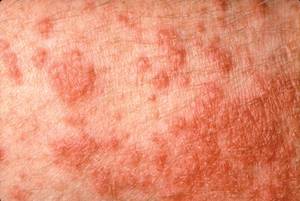
Dermatologists are most likely to encounter PMLE (shown above). It tends to arise in young adults and in women more than men. Symptoms usually occur within days of exposure. (Photo Courtesy: Dr. Vincent DeLeo)
Dr. DeLeo disclosed being a consultant for Neutrogena, Schering-Plough, L'Oreal, Pfizer, Estée Lauder, Orfagen, Goodyear, and Limited Brands. SDEF and this news organization are owned by Elsevier.
While the diagnostic challenges of photodermatoses are multiple, one thing is certain, a proper and rapid diagnosis is essential to optimizing patient management and outcomes, according to Dr. Vincent DeLeo.
The diagnostic challenges of photodermatoses include increasing clinical suspicion to recognize the less common forms, ruling out dermatologic mimics in the differential diagnosis, and identifying etiology to guide therapy and speed patient recovery, Dr. DeLeo noted at the annual Hawaii Dermatology Seminar sponsored by Skin Disease Education Foundation.
Photodermatosis incidence varies from the relatively common to the relatively rare, he said. Specific presentations include porphyria, idiopathic photodermatitis, polymorphic light eruption, solar urticaria, chronic actinic dermatitis, exogenous chemical photosensitivity, and photocontact dermatitis.
Consider age of onset, timing of the skin eruption, and occupation, medication, or plant exposures when taking patient history. Ask about products used for personal care, particularly any sunscreens or colognes. Clinical workup should include a review of systems that focuses on cutaneous and neurologic effects and a complete physical examination, said Dr. DeLeo, chairman of the department of dermatology at St. Luke's-Roosevelt Hospital Center and Beth Israel Medical Center in New York.
Porphyrias present in two specific patterns - immediate with skin burning within a day of exposure or delayed with blistering, hirsutism, or hyperpigmentation. With an immediate form, such as erythropoietic protoporphyria (EPP), rule out solar urticaria and lupus erythematosus, Dr. DeLeo suggested.
With a delayed presentation, such as porphyria cutanea tarda (PCT), consider pseudo-PCT and epidermolysis bullosa acquisita in your differential diagnosis, he said. A blood test for plasma porphyrins is usually diagnostic in all porphyrias, but a red blood cell porphyrin assay will diagnose EPP and a 24-hour urine assay will diagnose PCT.
Among the sporadic presentations of PCT, it is important to check for a diagnosis of hemochromatosis early to prevent serious tissue damage, especially dysfunction of the liver, Dr. DeLeo said. A test for the culprit gene mutations can be ordered from any major diagnostic laboratory.
Idiopathic photodermatoses include polymorphous light eruption (PMLE), chronic actinic dermatitis, and solar urticaria. Dermatologists are most likely to encounter PMLE, the most common form of photosensitivity, Dr. DeLeo said.
PMLE tends to arise in young adults and in women more than men. Symptoms usually occur within days of exposure - during springtime or while on vacation, for example. Look for a symmetrical distribution on exposed areas only. The histologic differential with suspected PMLE includes lupus erythematosus, lymphocytic infiltrate of Jessner, and cutaneous lymphoid hyperplasia.
Solar urticaria also occurs more often in women than in men. A sudden onset of erythema, edema, urticaria, and pruritus in exposed areas is characteristic. Systemic involvement is rare, Dr. DeLeo said. Careful photo provocation can aid in the definitive diagnosis of this condition. Treatment options include H1 antihistamines and proper photoprotection.
Chronic actinic dermatitis, on the other hand, is more persistent and not related to a specific acute exposure. Patients typically present with patchy eczema and may have erythroderma or lymphoma-like plaques in sun-exposed areas.
This form of photosensitivity is much more common in men and tends to present in older patients, at a mean age of 65 years, Dr. DeLeo said. Rigorous photoprotection is warranted. Consider patch testing and photopatch testing to rule out underlying contact or photocontact allergy. PUVA or immunosuppressants can be used in severe cases.
Some patients can experience photoirritant contact dermatitis from plants. A number of plants can cause this, including celery, dill, lemon, lime, and St. John's wort, he concluded.
Dermatologists are most likely to encounter PMLE (shown above). It tends to arise in young adults and in women more than men. Symptoms usually occur within days of exposure. (Photo Courtesy: Dr. Vincent DeLeo)
Dr. DeLeo disclosed being a consultant for Neutrogena, Schering-Plough, L'Oreal, Pfizer, Estée Lauder, Orfagen, Goodyear, and Limited Brands. SDEF and this news organization are owned by Elsevier.
While the diagnostic challenges of photodermatoses are multiple, one thing is certain, a proper and rapid diagnosis is essential to optimizing patient management and outcomes, according to Dr. Vincent DeLeo.
The diagnostic challenges of photodermatoses include increasing clinical suspicion to recognize the less common forms, ruling out dermatologic mimics in the differential diagnosis, and identifying etiology to guide therapy and speed patient recovery, Dr. DeLeo noted at the annual Hawaii Dermatology Seminar sponsored by Skin Disease Education Foundation.
Photodermatosis incidence varies from the relatively common to the relatively rare, he said. Specific presentations include porphyria, idiopathic photodermatitis, polymorphic light eruption, solar urticaria, chronic actinic dermatitis, exogenous chemical photosensitivity, and photocontact dermatitis.
Consider age of onset, timing of the skin eruption, and occupation, medication, or plant exposures when taking patient history. Ask about products used for personal care, particularly any sunscreens or colognes. Clinical workup should include a review of systems that focuses on cutaneous and neurologic effects and a complete physical examination, said Dr. DeLeo, chairman of the department of dermatology at St. Luke's-Roosevelt Hospital Center and Beth Israel Medical Center in New York.
Porphyrias present in two specific patterns - immediate with skin burning within a day of exposure or delayed with blistering, hirsutism, or hyperpigmentation. With an immediate form, such as erythropoietic protoporphyria (EPP), rule out solar urticaria and lupus erythematosus, Dr. DeLeo suggested.
With a delayed presentation, such as porphyria cutanea tarda (PCT), consider pseudo-PCT and epidermolysis bullosa acquisita in your differential diagnosis, he said. A blood test for plasma porphyrins is usually diagnostic in all porphyrias, but a red blood cell porphyrin assay will diagnose EPP and a 24-hour urine assay will diagnose PCT.
Among the sporadic presentations of PCT, it is important to check for a diagnosis of hemochromatosis early to prevent serious tissue damage, especially dysfunction of the liver, Dr. DeLeo said. A test for the culprit gene mutations can be ordered from any major diagnostic laboratory.
Idiopathic photodermatoses include polymorphous light eruption (PMLE), chronic actinic dermatitis, and solar urticaria. Dermatologists are most likely to encounter PMLE, the most common form of photosensitivity, Dr. DeLeo said.
PMLE tends to arise in young adults and in women more than men. Symptoms usually occur within days of exposure - during springtime or while on vacation, for example. Look for a symmetrical distribution on exposed areas only. The histologic differential with suspected PMLE includes lupus erythematosus, lymphocytic infiltrate of Jessner, and cutaneous lymphoid hyperplasia.
Solar urticaria also occurs more often in women than in men. A sudden onset of erythema, edema, urticaria, and pruritus in exposed areas is characteristic. Systemic involvement is rare, Dr. DeLeo said. Careful photo provocation can aid in the definitive diagnosis of this condition. Treatment options include H1 antihistamines and proper photoprotection.
Chronic actinic dermatitis, on the other hand, is more persistent and not related to a specific acute exposure. Patients typically present with patchy eczema and may have erythroderma or lymphoma-like plaques in sun-exposed areas.
This form of photosensitivity is much more common in men and tends to present in older patients, at a mean age of 65 years, Dr. DeLeo said. Rigorous photoprotection is warranted. Consider patch testing and photopatch testing to rule out underlying contact or photocontact allergy. PUVA or immunosuppressants can be used in severe cases.
Some patients can experience photoirritant contact dermatitis from plants. A number of plants can cause this, including celery, dill, lemon, lime, and St. John's wort, he concluded.
Dermatologists are most likely to encounter PMLE (shown above). It tends to arise in young adults and in women more than men. Symptoms usually occur within days of exposure. (Photo Courtesy: Dr. Vincent DeLeo)
Dr. DeLeo disclosed being a consultant for Neutrogena, Schering-Plough, L'Oreal, Pfizer, Estée Lauder, Orfagen, Goodyear, and Limited Brands. SDEF and this news organization are owned by Elsevier.