User login
Tale of a Compliant Patient
Nearly 26 million US adults are estimated to have type 2 diabetes, including at least eight million who are unaware they have the disease.1 An additional 80 million adults are affected by prediabetes, with above-average glucose levels that do not yet meet American Diabetes Association (ADA) criteria for type 2 diabetes.1,2
In this context, the primary care provider is likely to encounter patients with a diagnosis of type 2 diabetes in its early stages. Which patients can be considered candidates for conservative management—that is, lifestyle modification—before antidiabetic medications are initiated?
Case Patient
A black woman, age 44, presented for a routine physical examination. She said she had been in good health until three months earlier, when she began to experience weakness and fatigue. She complained of increased thirst and frequent urination, requiring her to get up three or four times each night. She had increased her average fluid intake to nine glasses a day from the usual four. Despite a good appetite, she had lost about 7 lb over the previous three months.
The patient’s previous medical history was significant for four cesarean deliveries, gestational diabetes during all four pregnancies, hemorrhoids, constipation, keloid formation, and hyperlipidemia. Her family history was significant for diabetes (paternal side) and hyperlipidemia.
Findings from the patient’s physical exam included weight, 217 lb; height, 5’11”; BMI, 30.3; pulse, 80 beats/min and regular; and blood pressure, 138/78 mm Hg. With the exception of obesity and elevated systolic blood pressure, her physical exam findings were within normal limits.
Laboratory testing yielded the following results: urinalysis, 3+ glucose, negative for ketones and protein; fasting blood glucose, 145 mg/dL; hemoglobin A1C, 6.9%; total cholesterol, 230 mg/dL; HDL cholesterol (HDL-C), 21 mg/dL; LDL cholesterol (LDL-C), 144 mg/dL; and triglycerides, 400 mg/dL.
The patient’s history of gestational diabetes, her acknowledged sedentary lifestyle, body weight currently exceeding her ideal weight by 50 lb, and family history positive for diabetes put her at increased risk for diabetes. Also of concern was her elevated systolic blood pressure.
The patient’s A1C of 6.9% indicated that during the previous two months, her average blood glucose had been in excess of 125 mg/dL. A diagnosis of type 2 diabetes was made, based on the patient’s elevated fasting blood glucose and A1C, and the aforementioned symptoms of weight loss, fatigue, polydypsia, and polyuria.
Because the patient was perceived as self-reliant and responsible, it was recommended that she be treated conservatively with a broad lifestyle modification regimen. Goals were to reduce all of her diabetes indicators, including weight,3,4 blood pressure,5 and A1C, with an improved lipids profile—all, if possible, without the use of medication. The regimen comprised a low–glycemic index (GI) diet6,7 to reduce her glucose level, and aerobic exercise and strength training8 to improve her cardiovascular health. With resulting weight loss and reduced salt intake,3-5 it was expected that the patient would see reductions in her total cholesterol, LDL-C, and systolic blood pressure.
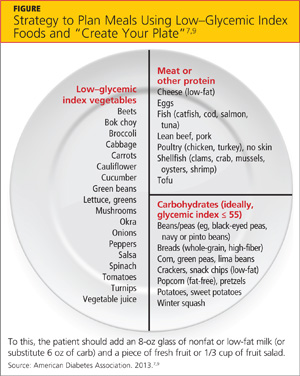
The patient’s management team recommended a daily plan of four small meals and one or two small snacks. She was advised to control portions by visually dividing her plate: Non-starchy (low-GI) vegetables should fill half of the plate, with the remaining half divided into equal sections for a small serving of protein and a small serving of carbohydrates with a GI of 55 or less (see figure7,9).
Her exercise program was based on recommendations from the American Association of Clinical Endocrinologists (AACE)10 and the US Department of Health and Human Services11: cardiovascular/aerobic exercise (five 30-minute sessions per week), ranging in intensity from moderate (eg, brisk walking, bicycling, doubles tennis) to vigorous (jogging or running, swimming laps, singles tennis); and strength training (two 30-minute sessions per week), such as weight-lifting, push-ups, and sit-ups.
Discussion
Type 2 diabetes mellitus affects an estimated 25.8 million residents of the United States, including an estimated 8.3 million who have not yet been diagnosed.1 According to the CDC,12 prevalence of diabetes is greatest in black and Hispanic women and men.
The sixth leading cause of death in the US, diabetes is also the leading cause of blindness (ie, diabetic retinopathy), kidney disease requiring dialysis, and lower-limb amputation. Diabetes is closely associated with cardiovascular disease (CVD), the leading cause of death in the US.12 Other diabetes-related health concerns include hypertension, peripheral diabetic neuropathy, dental disease, depression, delayed wound healing, and increased risk for infection.12
The standard criteria for a diagnosis of diabetes, according to the 2012 ADA Standards of Medical Care in Diabetes,13 are:
• A1C exceeding 6.5%, or
• A fasting blood glucose level at or exceeding 126 mg/dL, or
• A 2-hour plasma glucose at or exceeding 200 mg/dL during an oral glucose tolerance test, or
• A random blood glucose of 200 mg/dL or higher in a patient with classic symptoms of hyperglycemia or hyperglycemic crisis.13
Treatment Goals
Goals for diabetic patients advocated by the National Diabetes Education Program (NDEP)1 include maintaining blood pressure below 130/80 mm Hg, lowering LDL-C to below 100 mg/dL (and below 70 mg/dL in patients at risk for CVD), reducing triglyceride levels to below 150 mg/dL, and raising HDL-C above 40 mg/dL in women and above 50 mg/dL in men. Achieving these levels can reduce the diabetic patient’s risk for CVD and microvascular complications by 50%.1
Medical Nutrition Therapy
The NDEP and other entities1,14 refer to medical nutrition therapy as an integral component of diabetic management. This individualized meal plan, developed by a registered dietitian, is based on the patient’s nutritional status and preferences. To optimize the case patient’s glycemic control,10 a low-GI diet was selected.
As the ADA9 and Solomon et al15 have explained, this diet is based on foods that produce a reduced glucose response during the two hours after consumption. According to one literature review,16 use of a low-GI diet led a reduction in A1C of 0.43 percentage points. When combined with appropriate exercise, the low-GI diet can alleviate hypertension and postprandial hyperinsulinemia,15,17 as well as levels of C-reactive protein, an inflammatory marker that in high concentrations is associated with increased risk for CVD.18
The Role of Exercise
The ADA 2012 standards13 recommend a minimum of 150 minutes per week of moderate physical activity. The benefits of exercise in diabetic patients include improved control of blood glucose and reduction of risk for heart disease and other illnesses.3,11 Patients should be under the care of a provider who can help develop an appropriate, individualized plan.3,11
According to ADA recommendations,13 the patient’s lipid levels, blood pressure, and smoking status should be evaluated, with assessment for the presence of CVD in at-risk patients. For asymptomatic diabetic patients, the American College of Cardiology/American Heart Association recommend an ECG stress test before an exercise program is undertaken.19,20 Exercise is contraindicated in those with decompensated congestive heart failure, complex ventricular arrhythmias, unstable angina, significant aortic stenosis, or aortic aneurysm.19
Because initiating an exercise program incurs a slight risk for injury, patients should start gradually, warming up before each session and cooling down afterward.11,19 Diabetic patients should also wear proper shoes for maximum foot protection. They must also be instructed to watch for signs of hypoglycemia during physical activity and be prepared to treat it.11,13
Patient Outcome
After one year on her prescribed treatment regimen, the patient’s A1C was measured at 6.3%, and her LDL-C was 124 mg/dL. Another year later, her A1C was further reduced to 5.9%, and her LDL-C to 77.2 mg/dL. By then, she had lost 15 lb (BMI, 28.2) and perceived her current maintenance plan as enjoyable and manageable, long-term: She was exercising every day possible, with seven sessions of at least 30 minutes, and maintaining a diet of low-GI foods. The patient was committed to following up with her clinician for glucose monitoring every three months.
Conclusion
As illustrated in this patient’s case, the best plan for management of diabetes in its early stages is one that is realistic for the patient and that will prevent diabetic complications for as long as possible.
References
1. US Department of Health and Human Services, National Diabetes Education Program. Guiding Principles for Diabetes Care for Healthcare Professionals (2009). www.ndep.nih.gov/media/guid prin_hc_eng.pdf. Accessed January 24, 2013.
2. National Diabetes Information Clearinghouse, National Institute of Diabetes and Digestive and Kidney Diseases, NIH. Insulin resistance and prediabetes (2011). http://diabetes.niddk.nih.gov/dm/pubs/insulinresistance. Accessed January 25, 2013.
3. Hayes C, Kriska A. Role of physical activity in diabetes management and prevention. J Am Diet Assoc. 2008;108(4 suppl 1):S19-S23.
4. American Diabetes Association. Food and fitness: weight loss (2011). www.diabetes.org/food-and-fitness/fitness/weight-loss. Accessed January 25, 2013.
5. US Department of Health and Human Services, NIH. Seventh Report of the Joint National Committee on Prevention, Detection, Evaluation, and Treatment of High Blood Pressure (JNC 7 reference card, 2003). www.nhlbi.nih.gov/guidelines/hyper tension/phycard.pdf. Accessed January 24, 2013.
6. Ma Y, Olendzki BC, Merriam PA, et al. A randomized clinical trial comparing low-glycemic index versus ADA dietary education among individuals with type 2 diabetes. Nutrition. 2008;24(1):45-56.
7. American Diabetes Association. Glycemic index of foods (2013). www.diabetes.org/food-and-fit ness/food/planning-meals/the-glycemic-index-of-foods.html. Accessed January 25, 2013.
8. Pariser G, Ann Demeuro M, Gillette P, Stephen W. Outcomes of an education and exercise program for adults with type 2 diabetes, and comorbidities that limit their mobility: a preliminary project report. Cardiopulm Phys Ther J. 2010;21(2):5-12.
9. American Diabetes Association. Food and fitness: create your plate (2013). www.diabetes.org/food-and-fitness/food/planning-meals/create-your-plate. Accessed January 24, 2013.
10. Handelsman Y, Mechanick JI, Blonde L, et al. American Association of Clinical Endocrinologists Medical Guidelines for Clinical Practice for developing a diabetes mellitus comprehensive care plan. Endocr Pract. 2011;17 suppl 2:1-53.
11. CDC. 2008 Physical Activity Guidelines. www.health.gov/PAGuidelines/pdf/paguide.pdf. Accessed January 24, 2013.
12. CDC. 2011 National Diabetes Fact Sheet. www.cdc.gov/diabetes/pubs/factsheet11.htm. Accessed January 25, 2013.
13. American Diabetes Association. Standards of medical care in diabetes—2012. Diabetes Care. 2012;35 suppl 1:S11-S63.
14. Franz MJ, Powers MA, Leontos C, et al. The evidence for medical nutrition therapy for type 1 and type 2 diabetes in adults. J Am Diet Assoc. 2010;110(12):1852-1889.
15. Solomon TP, Haus JM, Kelly KR, et al. A low-glycemic index diet combined with exercise reduces insulin resistance, postprandial hyperinsulinemia, and glucose-dependent insulinotropic polypeptide responses in obese, prediabetic humans. Am J Clin Nutr. 2010;92(6):1359-1368.
16. Brand-Miller J, Hayne S, Petocz P, Colagiuri S. Low-glycemic index diets in the management of diabetes: a meta-analysis of randomized controlled trials. Diabetes Care. 2003;26(8):2261-2267.
17. Solomon TP, Haus JM, Kelly KR, et al. Randomized trial on the effects of a 7-d low–glycemic diet and exercise intervention on insulin resistance in older obese humans. Am J Clin Nutr. 2009;90(5):1222-1229.
18. Wolever TM, Gibbs AL, Mehling C, et al. The Canadian Trial of Carbohydrates in Diabetes (CCD), a 1-y controlled trial of low–glycemic-index dietary carbohydrate in type 2 diabetes: no effect on glycated hemoglobin but reduction in C-reactive protein. Am J Clin Nutr. 2008;87(1):114-125.
19. Metkus TS, Baughman KL, Thompson PD. Exercise prescription and primary prevention of cardiovascular disease. Circulation. 2010;121(23):2601-2604.
20. Gibbons RJ, Balady GJ, Bricker JT, et al. ACC/AHA 2002 guideline update for exercise testing: summary article: a report of the American College of Cardiology/American Heart Association Task Force on Practice Guidelines (Committee to Update the 1997 Exercise Testing Guidelines). Circulation. 2002;106(14);1883-1892.
Nearly 26 million US adults are estimated to have type 2 diabetes, including at least eight million who are unaware they have the disease.1 An additional 80 million adults are affected by prediabetes, with above-average glucose levels that do not yet meet American Diabetes Association (ADA) criteria for type 2 diabetes.1,2
In this context, the primary care provider is likely to encounter patients with a diagnosis of type 2 diabetes in its early stages. Which patients can be considered candidates for conservative management—that is, lifestyle modification—before antidiabetic medications are initiated?
Case Patient
A black woman, age 44, presented for a routine physical examination. She said she had been in good health until three months earlier, when she began to experience weakness and fatigue. She complained of increased thirst and frequent urination, requiring her to get up three or four times each night. She had increased her average fluid intake to nine glasses a day from the usual four. Despite a good appetite, she had lost about 7 lb over the previous three months.
The patient’s previous medical history was significant for four cesarean deliveries, gestational diabetes during all four pregnancies, hemorrhoids, constipation, keloid formation, and hyperlipidemia. Her family history was significant for diabetes (paternal side) and hyperlipidemia.
Findings from the patient’s physical exam included weight, 217 lb; height, 5’11”; BMI, 30.3; pulse, 80 beats/min and regular; and blood pressure, 138/78 mm Hg. With the exception of obesity and elevated systolic blood pressure, her physical exam findings were within normal limits.
Laboratory testing yielded the following results: urinalysis, 3+ glucose, negative for ketones and protein; fasting blood glucose, 145 mg/dL; hemoglobin A1C, 6.9%; total cholesterol, 230 mg/dL; HDL cholesterol (HDL-C), 21 mg/dL; LDL cholesterol (LDL-C), 144 mg/dL; and triglycerides, 400 mg/dL.
The patient’s history of gestational diabetes, her acknowledged sedentary lifestyle, body weight currently exceeding her ideal weight by 50 lb, and family history positive for diabetes put her at increased risk for diabetes. Also of concern was her elevated systolic blood pressure.
The patient’s A1C of 6.9% indicated that during the previous two months, her average blood glucose had been in excess of 125 mg/dL. A diagnosis of type 2 diabetes was made, based on the patient’s elevated fasting blood glucose and A1C, and the aforementioned symptoms of weight loss, fatigue, polydypsia, and polyuria.
Because the patient was perceived as self-reliant and responsible, it was recommended that she be treated conservatively with a broad lifestyle modification regimen. Goals were to reduce all of her diabetes indicators, including weight,3,4 blood pressure,5 and A1C, with an improved lipids profile—all, if possible, without the use of medication. The regimen comprised a low–glycemic index (GI) diet6,7 to reduce her glucose level, and aerobic exercise and strength training8 to improve her cardiovascular health. With resulting weight loss and reduced salt intake,3-5 it was expected that the patient would see reductions in her total cholesterol, LDL-C, and systolic blood pressure.
The patient’s management team recommended a daily plan of four small meals and one or two small snacks. She was advised to control portions by visually dividing her plate: Non-starchy (low-GI) vegetables should fill half of the plate, with the remaining half divided into equal sections for a small serving of protein and a small serving of carbohydrates with a GI of 55 or less (see figure7,9).
Her exercise program was based on recommendations from the American Association of Clinical Endocrinologists (AACE)10 and the US Department of Health and Human Services11: cardiovascular/aerobic exercise (five 30-minute sessions per week), ranging in intensity from moderate (eg, brisk walking, bicycling, doubles tennis) to vigorous (jogging or running, swimming laps, singles tennis); and strength training (two 30-minute sessions per week), such as weight-lifting, push-ups, and sit-ups.
Discussion
Type 2 diabetes mellitus affects an estimated 25.8 million residents of the United States, including an estimated 8.3 million who have not yet been diagnosed.1 According to the CDC,12 prevalence of diabetes is greatest in black and Hispanic women and men.
The sixth leading cause of death in the US, diabetes is also the leading cause of blindness (ie, diabetic retinopathy), kidney disease requiring dialysis, and lower-limb amputation. Diabetes is closely associated with cardiovascular disease (CVD), the leading cause of death in the US.12 Other diabetes-related health concerns include hypertension, peripheral diabetic neuropathy, dental disease, depression, delayed wound healing, and increased risk for infection.12
The standard criteria for a diagnosis of diabetes, according to the 2012 ADA Standards of Medical Care in Diabetes,13 are:
• A1C exceeding 6.5%, or
• A fasting blood glucose level at or exceeding 126 mg/dL, or
• A 2-hour plasma glucose at or exceeding 200 mg/dL during an oral glucose tolerance test, or
• A random blood glucose of 200 mg/dL or higher in a patient with classic symptoms of hyperglycemia or hyperglycemic crisis.13
Treatment Goals
Goals for diabetic patients advocated by the National Diabetes Education Program (NDEP)1 include maintaining blood pressure below 130/80 mm Hg, lowering LDL-C to below 100 mg/dL (and below 70 mg/dL in patients at risk for CVD), reducing triglyceride levels to below 150 mg/dL, and raising HDL-C above 40 mg/dL in women and above 50 mg/dL in men. Achieving these levels can reduce the diabetic patient’s risk for CVD and microvascular complications by 50%.1
Medical Nutrition Therapy
The NDEP and other entities1,14 refer to medical nutrition therapy as an integral component of diabetic management. This individualized meal plan, developed by a registered dietitian, is based on the patient’s nutritional status and preferences. To optimize the case patient’s glycemic control,10 a low-GI diet was selected.
As the ADA9 and Solomon et al15 have explained, this diet is based on foods that produce a reduced glucose response during the two hours after consumption. According to one literature review,16 use of a low-GI diet led a reduction in A1C of 0.43 percentage points. When combined with appropriate exercise, the low-GI diet can alleviate hypertension and postprandial hyperinsulinemia,15,17 as well as levels of C-reactive protein, an inflammatory marker that in high concentrations is associated with increased risk for CVD.18
The Role of Exercise
The ADA 2012 standards13 recommend a minimum of 150 minutes per week of moderate physical activity. The benefits of exercise in diabetic patients include improved control of blood glucose and reduction of risk for heart disease and other illnesses.3,11 Patients should be under the care of a provider who can help develop an appropriate, individualized plan.3,11
According to ADA recommendations,13 the patient’s lipid levels, blood pressure, and smoking status should be evaluated, with assessment for the presence of CVD in at-risk patients. For asymptomatic diabetic patients, the American College of Cardiology/American Heart Association recommend an ECG stress test before an exercise program is undertaken.19,20 Exercise is contraindicated in those with decompensated congestive heart failure, complex ventricular arrhythmias, unstable angina, significant aortic stenosis, or aortic aneurysm.19
Because initiating an exercise program incurs a slight risk for injury, patients should start gradually, warming up before each session and cooling down afterward.11,19 Diabetic patients should also wear proper shoes for maximum foot protection. They must also be instructed to watch for signs of hypoglycemia during physical activity and be prepared to treat it.11,13
Patient Outcome
After one year on her prescribed treatment regimen, the patient’s A1C was measured at 6.3%, and her LDL-C was 124 mg/dL. Another year later, her A1C was further reduced to 5.9%, and her LDL-C to 77.2 mg/dL. By then, she had lost 15 lb (BMI, 28.2) and perceived her current maintenance plan as enjoyable and manageable, long-term: She was exercising every day possible, with seven sessions of at least 30 minutes, and maintaining a diet of low-GI foods. The patient was committed to following up with her clinician for glucose monitoring every three months.
Conclusion
As illustrated in this patient’s case, the best plan for management of diabetes in its early stages is one that is realistic for the patient and that will prevent diabetic complications for as long as possible.
References
1. US Department of Health and Human Services, National Diabetes Education Program. Guiding Principles for Diabetes Care for Healthcare Professionals (2009). www.ndep.nih.gov/media/guid prin_hc_eng.pdf. Accessed January 24, 2013.
2. National Diabetes Information Clearinghouse, National Institute of Diabetes and Digestive and Kidney Diseases, NIH. Insulin resistance and prediabetes (2011). http://diabetes.niddk.nih.gov/dm/pubs/insulinresistance. Accessed January 25, 2013.
3. Hayes C, Kriska A. Role of physical activity in diabetes management and prevention. J Am Diet Assoc. 2008;108(4 suppl 1):S19-S23.
4. American Diabetes Association. Food and fitness: weight loss (2011). www.diabetes.org/food-and-fitness/fitness/weight-loss. Accessed January 25, 2013.
5. US Department of Health and Human Services, NIH. Seventh Report of the Joint National Committee on Prevention, Detection, Evaluation, and Treatment of High Blood Pressure (JNC 7 reference card, 2003). www.nhlbi.nih.gov/guidelines/hyper tension/phycard.pdf. Accessed January 24, 2013.
6. Ma Y, Olendzki BC, Merriam PA, et al. A randomized clinical trial comparing low-glycemic index versus ADA dietary education among individuals with type 2 diabetes. Nutrition. 2008;24(1):45-56.
7. American Diabetes Association. Glycemic index of foods (2013). www.diabetes.org/food-and-fit ness/food/planning-meals/the-glycemic-index-of-foods.html. Accessed January 25, 2013.
8. Pariser G, Ann Demeuro M, Gillette P, Stephen W. Outcomes of an education and exercise program for adults with type 2 diabetes, and comorbidities that limit their mobility: a preliminary project report. Cardiopulm Phys Ther J. 2010;21(2):5-12.
9. American Diabetes Association. Food and fitness: create your plate (2013). www.diabetes.org/food-and-fitness/food/planning-meals/create-your-plate. Accessed January 24, 2013.
10. Handelsman Y, Mechanick JI, Blonde L, et al. American Association of Clinical Endocrinologists Medical Guidelines for Clinical Practice for developing a diabetes mellitus comprehensive care plan. Endocr Pract. 2011;17 suppl 2:1-53.
11. CDC. 2008 Physical Activity Guidelines. www.health.gov/PAGuidelines/pdf/paguide.pdf. Accessed January 24, 2013.
12. CDC. 2011 National Diabetes Fact Sheet. www.cdc.gov/diabetes/pubs/factsheet11.htm. Accessed January 25, 2013.
13. American Diabetes Association. Standards of medical care in diabetes—2012. Diabetes Care. 2012;35 suppl 1:S11-S63.
14. Franz MJ, Powers MA, Leontos C, et al. The evidence for medical nutrition therapy for type 1 and type 2 diabetes in adults. J Am Diet Assoc. 2010;110(12):1852-1889.
15. Solomon TP, Haus JM, Kelly KR, et al. A low-glycemic index diet combined with exercise reduces insulin resistance, postprandial hyperinsulinemia, and glucose-dependent insulinotropic polypeptide responses in obese, prediabetic humans. Am J Clin Nutr. 2010;92(6):1359-1368.
16. Brand-Miller J, Hayne S, Petocz P, Colagiuri S. Low-glycemic index diets in the management of diabetes: a meta-analysis of randomized controlled trials. Diabetes Care. 2003;26(8):2261-2267.
17. Solomon TP, Haus JM, Kelly KR, et al. Randomized trial on the effects of a 7-d low–glycemic diet and exercise intervention on insulin resistance in older obese humans. Am J Clin Nutr. 2009;90(5):1222-1229.
18. Wolever TM, Gibbs AL, Mehling C, et al. The Canadian Trial of Carbohydrates in Diabetes (CCD), a 1-y controlled trial of low–glycemic-index dietary carbohydrate in type 2 diabetes: no effect on glycated hemoglobin but reduction in C-reactive protein. Am J Clin Nutr. 2008;87(1):114-125.
19. Metkus TS, Baughman KL, Thompson PD. Exercise prescription and primary prevention of cardiovascular disease. Circulation. 2010;121(23):2601-2604.
20. Gibbons RJ, Balady GJ, Bricker JT, et al. ACC/AHA 2002 guideline update for exercise testing: summary article: a report of the American College of Cardiology/American Heart Association Task Force on Practice Guidelines (Committee to Update the 1997 Exercise Testing Guidelines). Circulation. 2002;106(14);1883-1892.
Nearly 26 million US adults are estimated to have type 2 diabetes, including at least eight million who are unaware they have the disease.1 An additional 80 million adults are affected by prediabetes, with above-average glucose levels that do not yet meet American Diabetes Association (ADA) criteria for type 2 diabetes.1,2
In this context, the primary care provider is likely to encounter patients with a diagnosis of type 2 diabetes in its early stages. Which patients can be considered candidates for conservative management—that is, lifestyle modification—before antidiabetic medications are initiated?
Case Patient
A black woman, age 44, presented for a routine physical examination. She said she had been in good health until three months earlier, when she began to experience weakness and fatigue. She complained of increased thirst and frequent urination, requiring her to get up three or four times each night. She had increased her average fluid intake to nine glasses a day from the usual four. Despite a good appetite, she had lost about 7 lb over the previous three months.
The patient’s previous medical history was significant for four cesarean deliveries, gestational diabetes during all four pregnancies, hemorrhoids, constipation, keloid formation, and hyperlipidemia. Her family history was significant for diabetes (paternal side) and hyperlipidemia.
Findings from the patient’s physical exam included weight, 217 lb; height, 5’11”; BMI, 30.3; pulse, 80 beats/min and regular; and blood pressure, 138/78 mm Hg. With the exception of obesity and elevated systolic blood pressure, her physical exam findings were within normal limits.
Laboratory testing yielded the following results: urinalysis, 3+ glucose, negative for ketones and protein; fasting blood glucose, 145 mg/dL; hemoglobin A1C, 6.9%; total cholesterol, 230 mg/dL; HDL cholesterol (HDL-C), 21 mg/dL; LDL cholesterol (LDL-C), 144 mg/dL; and triglycerides, 400 mg/dL.
The patient’s history of gestational diabetes, her acknowledged sedentary lifestyle, body weight currently exceeding her ideal weight by 50 lb, and family history positive for diabetes put her at increased risk for diabetes. Also of concern was her elevated systolic blood pressure.
The patient’s A1C of 6.9% indicated that during the previous two months, her average blood glucose had been in excess of 125 mg/dL. A diagnosis of type 2 diabetes was made, based on the patient’s elevated fasting blood glucose and A1C, and the aforementioned symptoms of weight loss, fatigue, polydypsia, and polyuria.
Because the patient was perceived as self-reliant and responsible, it was recommended that she be treated conservatively with a broad lifestyle modification regimen. Goals were to reduce all of her diabetes indicators, including weight,3,4 blood pressure,5 and A1C, with an improved lipids profile—all, if possible, without the use of medication. The regimen comprised a low–glycemic index (GI) diet6,7 to reduce her glucose level, and aerobic exercise and strength training8 to improve her cardiovascular health. With resulting weight loss and reduced salt intake,3-5 it was expected that the patient would see reductions in her total cholesterol, LDL-C, and systolic blood pressure.
The patient’s management team recommended a daily plan of four small meals and one or two small snacks. She was advised to control portions by visually dividing her plate: Non-starchy (low-GI) vegetables should fill half of the plate, with the remaining half divided into equal sections for a small serving of protein and a small serving of carbohydrates with a GI of 55 or less (see figure7,9).
Her exercise program was based on recommendations from the American Association of Clinical Endocrinologists (AACE)10 and the US Department of Health and Human Services11: cardiovascular/aerobic exercise (five 30-minute sessions per week), ranging in intensity from moderate (eg, brisk walking, bicycling, doubles tennis) to vigorous (jogging or running, swimming laps, singles tennis); and strength training (two 30-minute sessions per week), such as weight-lifting, push-ups, and sit-ups.
Discussion
Type 2 diabetes mellitus affects an estimated 25.8 million residents of the United States, including an estimated 8.3 million who have not yet been diagnosed.1 According to the CDC,12 prevalence of diabetes is greatest in black and Hispanic women and men.
The sixth leading cause of death in the US, diabetes is also the leading cause of blindness (ie, diabetic retinopathy), kidney disease requiring dialysis, and lower-limb amputation. Diabetes is closely associated with cardiovascular disease (CVD), the leading cause of death in the US.12 Other diabetes-related health concerns include hypertension, peripheral diabetic neuropathy, dental disease, depression, delayed wound healing, and increased risk for infection.12
The standard criteria for a diagnosis of diabetes, according to the 2012 ADA Standards of Medical Care in Diabetes,13 are:
• A1C exceeding 6.5%, or
• A fasting blood glucose level at or exceeding 126 mg/dL, or
• A 2-hour plasma glucose at or exceeding 200 mg/dL during an oral glucose tolerance test, or
• A random blood glucose of 200 mg/dL or higher in a patient with classic symptoms of hyperglycemia or hyperglycemic crisis.13
Treatment Goals
Goals for diabetic patients advocated by the National Diabetes Education Program (NDEP)1 include maintaining blood pressure below 130/80 mm Hg, lowering LDL-C to below 100 mg/dL (and below 70 mg/dL in patients at risk for CVD), reducing triglyceride levels to below 150 mg/dL, and raising HDL-C above 40 mg/dL in women and above 50 mg/dL in men. Achieving these levels can reduce the diabetic patient’s risk for CVD and microvascular complications by 50%.1
Medical Nutrition Therapy
The NDEP and other entities1,14 refer to medical nutrition therapy as an integral component of diabetic management. This individualized meal plan, developed by a registered dietitian, is based on the patient’s nutritional status and preferences. To optimize the case patient’s glycemic control,10 a low-GI diet was selected.
As the ADA9 and Solomon et al15 have explained, this diet is based on foods that produce a reduced glucose response during the two hours after consumption. According to one literature review,16 use of a low-GI diet led a reduction in A1C of 0.43 percentage points. When combined with appropriate exercise, the low-GI diet can alleviate hypertension and postprandial hyperinsulinemia,15,17 as well as levels of C-reactive protein, an inflammatory marker that in high concentrations is associated with increased risk for CVD.18
The Role of Exercise
The ADA 2012 standards13 recommend a minimum of 150 minutes per week of moderate physical activity. The benefits of exercise in diabetic patients include improved control of blood glucose and reduction of risk for heart disease and other illnesses.3,11 Patients should be under the care of a provider who can help develop an appropriate, individualized plan.3,11
According to ADA recommendations,13 the patient’s lipid levels, blood pressure, and smoking status should be evaluated, with assessment for the presence of CVD in at-risk patients. For asymptomatic diabetic patients, the American College of Cardiology/American Heart Association recommend an ECG stress test before an exercise program is undertaken.19,20 Exercise is contraindicated in those with decompensated congestive heart failure, complex ventricular arrhythmias, unstable angina, significant aortic stenosis, or aortic aneurysm.19
Because initiating an exercise program incurs a slight risk for injury, patients should start gradually, warming up before each session and cooling down afterward.11,19 Diabetic patients should also wear proper shoes for maximum foot protection. They must also be instructed to watch for signs of hypoglycemia during physical activity and be prepared to treat it.11,13
Patient Outcome
After one year on her prescribed treatment regimen, the patient’s A1C was measured at 6.3%, and her LDL-C was 124 mg/dL. Another year later, her A1C was further reduced to 5.9%, and her LDL-C to 77.2 mg/dL. By then, she had lost 15 lb (BMI, 28.2) and perceived her current maintenance plan as enjoyable and manageable, long-term: She was exercising every day possible, with seven sessions of at least 30 minutes, and maintaining a diet of low-GI foods. The patient was committed to following up with her clinician for glucose monitoring every three months.
Conclusion
As illustrated in this patient’s case, the best plan for management of diabetes in its early stages is one that is realistic for the patient and that will prevent diabetic complications for as long as possible.
References
1. US Department of Health and Human Services, National Diabetes Education Program. Guiding Principles for Diabetes Care for Healthcare Professionals (2009). www.ndep.nih.gov/media/guid prin_hc_eng.pdf. Accessed January 24, 2013.
2. National Diabetes Information Clearinghouse, National Institute of Diabetes and Digestive and Kidney Diseases, NIH. Insulin resistance and prediabetes (2011). http://diabetes.niddk.nih.gov/dm/pubs/insulinresistance. Accessed January 25, 2013.
3. Hayes C, Kriska A. Role of physical activity in diabetes management and prevention. J Am Diet Assoc. 2008;108(4 suppl 1):S19-S23.
4. American Diabetes Association. Food and fitness: weight loss (2011). www.diabetes.org/food-and-fitness/fitness/weight-loss. Accessed January 25, 2013.
5. US Department of Health and Human Services, NIH. Seventh Report of the Joint National Committee on Prevention, Detection, Evaluation, and Treatment of High Blood Pressure (JNC 7 reference card, 2003). www.nhlbi.nih.gov/guidelines/hyper tension/phycard.pdf. Accessed January 24, 2013.
6. Ma Y, Olendzki BC, Merriam PA, et al. A randomized clinical trial comparing low-glycemic index versus ADA dietary education among individuals with type 2 diabetes. Nutrition. 2008;24(1):45-56.
7. American Diabetes Association. Glycemic index of foods (2013). www.diabetes.org/food-and-fit ness/food/planning-meals/the-glycemic-index-of-foods.html. Accessed January 25, 2013.
8. Pariser G, Ann Demeuro M, Gillette P, Stephen W. Outcomes of an education and exercise program for adults with type 2 diabetes, and comorbidities that limit their mobility: a preliminary project report. Cardiopulm Phys Ther J. 2010;21(2):5-12.
9. American Diabetes Association. Food and fitness: create your plate (2013). www.diabetes.org/food-and-fitness/food/planning-meals/create-your-plate. Accessed January 24, 2013.
10. Handelsman Y, Mechanick JI, Blonde L, et al. American Association of Clinical Endocrinologists Medical Guidelines for Clinical Practice for developing a diabetes mellitus comprehensive care plan. Endocr Pract. 2011;17 suppl 2:1-53.
11. CDC. 2008 Physical Activity Guidelines. www.health.gov/PAGuidelines/pdf/paguide.pdf. Accessed January 24, 2013.
12. CDC. 2011 National Diabetes Fact Sheet. www.cdc.gov/diabetes/pubs/factsheet11.htm. Accessed January 25, 2013.
13. American Diabetes Association. Standards of medical care in diabetes—2012. Diabetes Care. 2012;35 suppl 1:S11-S63.
14. Franz MJ, Powers MA, Leontos C, et al. The evidence for medical nutrition therapy for type 1 and type 2 diabetes in adults. J Am Diet Assoc. 2010;110(12):1852-1889.
15. Solomon TP, Haus JM, Kelly KR, et al. A low-glycemic index diet combined with exercise reduces insulin resistance, postprandial hyperinsulinemia, and glucose-dependent insulinotropic polypeptide responses in obese, prediabetic humans. Am J Clin Nutr. 2010;92(6):1359-1368.
16. Brand-Miller J, Hayne S, Petocz P, Colagiuri S. Low-glycemic index diets in the management of diabetes: a meta-analysis of randomized controlled trials. Diabetes Care. 2003;26(8):2261-2267.
17. Solomon TP, Haus JM, Kelly KR, et al. Randomized trial on the effects of a 7-d low–glycemic diet and exercise intervention on insulin resistance in older obese humans. Am J Clin Nutr. 2009;90(5):1222-1229.
18. Wolever TM, Gibbs AL, Mehling C, et al. The Canadian Trial of Carbohydrates in Diabetes (CCD), a 1-y controlled trial of low–glycemic-index dietary carbohydrate in type 2 diabetes: no effect on glycated hemoglobin but reduction in C-reactive protein. Am J Clin Nutr. 2008;87(1):114-125.
19. Metkus TS, Baughman KL, Thompson PD. Exercise prescription and primary prevention of cardiovascular disease. Circulation. 2010;121(23):2601-2604.
20. Gibbons RJ, Balady GJ, Bricker JT, et al. ACC/AHA 2002 guideline update for exercise testing: summary article: a report of the American College of Cardiology/American Heart Association Task Force on Practice Guidelines (Committee to Update the 1997 Exercise Testing Guidelines). Circulation. 2002;106(14);1883-1892.