User login
EZH2 may be therapeutic target for multiple myeloma
multiple myeloma
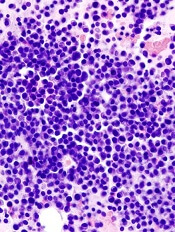
Preclinical research published in Oncotarget has provided new insights regarding how the protein EZH2 affects the development of multiple myeloma (MM) and reinforces the idea that EZH2 inhibition may be a way to treat MM.
Previous research by the same group suggested that EZH2 is a potential therapeutic target in MM.
With the current study, the group further investigated the anti-myeloma mechanisms mediated by EZH2 inhibition.
They found that targeting EZH2 with an agent known as UNC1999 reduces the expression of 4 MM-associated oncogenes—IRF-4, XBP-1, PRDM1/BLIMP-1, and c-MYC.
“The role of oncogenes in the development of cancer is to potentiate the survival of the cancer cell, which, instead of undergoing cell death, as is usually the case when the cell is not functioning properly, continues to divide and proliferate,” said study author Helena Jernberg-Wiklund, PhD, of Uppsala University in Uppsala, Sweden.
“In our study, we identified 4 oncogenes that showed lower activity in cells treated with the EZH2 inhibitor as compared to control-treated cells. All 4 genes have previously been shown to be associated with the development of multiple myeloma. This confirms our previous findings that inhibition of EZH2 could be used as a means to treat multiple myeloma.”
However, the researchers were puzzled by the fact that inhibition of EZH2 could decrease the activity of the oncogenes.
The chemical histone modification performed by EZH2 leads to decreased activity of affected genes. Therefore, inhibition of EZH2 should result in a reduced level of chemical modifications, which, in turn, should result in increased gene activity.
“The answer is that there are other genetic factors involved, called microRNAs,” Dr Jernberg-Wiklund said. “In the cells treated with the EZH2 inhibitor, we found 2 microRNA genes with increased activity, and we believe that the oncogenes are regulated by these microRNAs.”
“What happens then is that, when EZH2 is inhibited, there is a reduced histone modification at the microRNA genes. This leads to an increased synthesis of the microRNAs, which, in turn, decreases the activity of the oncogenes. This is a completely new mechanism for EZH2 action.”
The microRNAs the researchers identified are miR-125a-3p and miR-320c. The team found that miR-125a-3p and miR-320c were targets of EZH2 and H3K27me3 in MM cell lines and primary cells.
The researchers said these results support their previous work suggesting EZH2 could be a therapeutic target in MM. 
multiple myeloma
Preclinical research published in Oncotarget has provided new insights regarding how the protein EZH2 affects the development of multiple myeloma (MM) and reinforces the idea that EZH2 inhibition may be a way to treat MM.
Previous research by the same group suggested that EZH2 is a potential therapeutic target in MM.
With the current study, the group further investigated the anti-myeloma mechanisms mediated by EZH2 inhibition.
They found that targeting EZH2 with an agent known as UNC1999 reduces the expression of 4 MM-associated oncogenes—IRF-4, XBP-1, PRDM1/BLIMP-1, and c-MYC.
“The role of oncogenes in the development of cancer is to potentiate the survival of the cancer cell, which, instead of undergoing cell death, as is usually the case when the cell is not functioning properly, continues to divide and proliferate,” said study author Helena Jernberg-Wiklund, PhD, of Uppsala University in Uppsala, Sweden.
“In our study, we identified 4 oncogenes that showed lower activity in cells treated with the EZH2 inhibitor as compared to control-treated cells. All 4 genes have previously been shown to be associated with the development of multiple myeloma. This confirms our previous findings that inhibition of EZH2 could be used as a means to treat multiple myeloma.”
However, the researchers were puzzled by the fact that inhibition of EZH2 could decrease the activity of the oncogenes.
The chemical histone modification performed by EZH2 leads to decreased activity of affected genes. Therefore, inhibition of EZH2 should result in a reduced level of chemical modifications, which, in turn, should result in increased gene activity.
“The answer is that there are other genetic factors involved, called microRNAs,” Dr Jernberg-Wiklund said. “In the cells treated with the EZH2 inhibitor, we found 2 microRNA genes with increased activity, and we believe that the oncogenes are regulated by these microRNAs.”
“What happens then is that, when EZH2 is inhibited, there is a reduced histone modification at the microRNA genes. This leads to an increased synthesis of the microRNAs, which, in turn, decreases the activity of the oncogenes. This is a completely new mechanism for EZH2 action.”
The microRNAs the researchers identified are miR-125a-3p and miR-320c. The team found that miR-125a-3p and miR-320c were targets of EZH2 and H3K27me3 in MM cell lines and primary cells.
The researchers said these results support their previous work suggesting EZH2 could be a therapeutic target in MM.
multiple myeloma
Preclinical research published in Oncotarget has provided new insights regarding how the protein EZH2 affects the development of multiple myeloma (MM) and reinforces the idea that EZH2 inhibition may be a way to treat MM.
Previous research by the same group suggested that EZH2 is a potential therapeutic target in MM.
With the current study, the group further investigated the anti-myeloma mechanisms mediated by EZH2 inhibition.
They found that targeting EZH2 with an agent known as UNC1999 reduces the expression of 4 MM-associated oncogenes—IRF-4, XBP-1, PRDM1/BLIMP-1, and c-MYC.
“The role of oncogenes in the development of cancer is to potentiate the survival of the cancer cell, which, instead of undergoing cell death, as is usually the case when the cell is not functioning properly, continues to divide and proliferate,” said study author Helena Jernberg-Wiklund, PhD, of Uppsala University in Uppsala, Sweden.
“In our study, we identified 4 oncogenes that showed lower activity in cells treated with the EZH2 inhibitor as compared to control-treated cells. All 4 genes have previously been shown to be associated with the development of multiple myeloma. This confirms our previous findings that inhibition of EZH2 could be used as a means to treat multiple myeloma.”
However, the researchers were puzzled by the fact that inhibition of EZH2 could decrease the activity of the oncogenes.
The chemical histone modification performed by EZH2 leads to decreased activity of affected genes. Therefore, inhibition of EZH2 should result in a reduced level of chemical modifications, which, in turn, should result in increased gene activity.
“The answer is that there are other genetic factors involved, called microRNAs,” Dr Jernberg-Wiklund said. “In the cells treated with the EZH2 inhibitor, we found 2 microRNA genes with increased activity, and we believe that the oncogenes are regulated by these microRNAs.”
“What happens then is that, when EZH2 is inhibited, there is a reduced histone modification at the microRNA genes. This leads to an increased synthesis of the microRNAs, which, in turn, decreases the activity of the oncogenes. This is a completely new mechanism for EZH2 action.”
The microRNAs the researchers identified are miR-125a-3p and miR-320c. The team found that miR-125a-3p and miR-320c were targets of EZH2 and H3K27me3 in MM cell lines and primary cells.
The researchers said these results support their previous work suggesting EZH2 could be a therapeutic target in MM.
Considering cattle could help fight malaria

Photo by Ilya Mauter
The goal of eliminating malaria in countries like India could be more achievable if mosquito-control efforts take into account the relationship between mosquitoes and cattle, according to an international team of researchers.
The group analyzed 2 mosquito
species found in Odisha, the state with the highest number of malaria cases in
India, and found that both species fed on cattle as well as humans.
“In many parts of the world, the mosquitoes responsible for transmitting malaria are specialist feeders on humans and often rest within human houses,” said Matthew Thomas, PhD, of Pennsylvania State University in University Park, Pennsylvania.
“We found that, in an area of India that has a high burden of malaria, most of the mosquitoes that are known to transmit malaria rest in cattle sheds and feed on both cows and humans.”
Dr Thomas and his colleagues reported these findings in Scientific Reports.
According to the researchers, cattle sheds in India are often next to, and sometimes even share a wall with, human houses. However, current malaria control efforts are restricted to domestic dwellings only.
“Given this cattle-shed ‘refuge’ for mosquitoes, focusing only on humans with regard to malaria control is a bit like treating the tip of an iceberg,” said study author Jessica Waite, PhD, also of Pennsylvania State University.
She, Dr Thomas, and their colleagues determined the importance of cows in the malaria-control problem by capturing adult mosquitoes in different habitats within 6 villages in Odisha state—which has the highest number of malaria cases in the country—and noting where the mosquitoes had been resting.
The team then used molecular techniques to determine which species of mosquitoes had been captured and which hosts they had been feeding on.
The researchers collected 1774 Anopheles culicifacies mosquitoes and 169 Anopheles fluviatilis mosquitoes across all study sites.
Both species were denser in cattle sheds than in human dwellings, and both were feeding on humans as well as cattle.
Next, the researchers used their field-collected data to help build a computer model that simulated the life of an adult mosquito. The team used the model to explore how best to control the mosquitoes to have maximum impact on malaria transmission in these villages.
“Our model analysis suggests that conventional control tools—such as insecticide-treated bed nets and indoor insecticide sprays—are less effective when mosquitoes exhibit ‘zoophilic’ behaviors (having an attraction to nonhuman animals),” Dr Thomas said.
“However, extending controls to better target the zoophilic mosquitoes—for example, by broadening coverage of non-repellant insecticide sprays to include cattle sheds—could help reduce transmission dramatically.”
Dr Waite added that the model suggests very little cattle-based vector control effort would be required to drive malaria transmission in the region to elimination.
“We show that directing even modest amounts of effort to specifically increase mosquito mortality associated with zoophilic behavior can shift the balance towards elimination,” she said.
“Understanding the dynamic between humans, cattle, and mosquitoes could have major implications for malaria control policy and practice, not only in India, but in other areas where transmission is sustained by zoophilic vectors,” Dr Thomas said.
“Specifically, optimizing use of existing tools will be essential to achieving the ambitious 2030 elimination target set by the World Health Organization, which aims to decrease malaria cases globally by 90% compared to 2015 levels and eliminate malaria in at least 35 additional countries by 2030.”
Photo by Ilya Mauter
The goal of eliminating malaria in countries like India could be more achievable if mosquito-control efforts take into account the relationship between mosquitoes and cattle, according to an international team of researchers.
The group analyzed 2 mosquito
species found in Odisha, the state with the highest number of malaria cases in
India, and found that both species fed on cattle as well as humans.
“In many parts of the world, the mosquitoes responsible for transmitting malaria are specialist feeders on humans and often rest within human houses,” said Matthew Thomas, PhD, of Pennsylvania State University in University Park, Pennsylvania.
“We found that, in an area of India that has a high burden of malaria, most of the mosquitoes that are known to transmit malaria rest in cattle sheds and feed on both cows and humans.”
Dr Thomas and his colleagues reported these findings in Scientific Reports.
According to the researchers, cattle sheds in India are often next to, and sometimes even share a wall with, human houses. However, current malaria control efforts are restricted to domestic dwellings only.
“Given this cattle-shed ‘refuge’ for mosquitoes, focusing only on humans with regard to malaria control is a bit like treating the tip of an iceberg,” said study author Jessica Waite, PhD, also of Pennsylvania State University.
She, Dr Thomas, and their colleagues determined the importance of cows in the malaria-control problem by capturing adult mosquitoes in different habitats within 6 villages in Odisha state—which has the highest number of malaria cases in the country—and noting where the mosquitoes had been resting.
The team then used molecular techniques to determine which species of mosquitoes had been captured and which hosts they had been feeding on.
The researchers collected 1774 Anopheles culicifacies mosquitoes and 169 Anopheles fluviatilis mosquitoes across all study sites.
Both species were denser in cattle sheds than in human dwellings, and both were feeding on humans as well as cattle.
Next, the researchers used their field-collected data to help build a computer model that simulated the life of an adult mosquito. The team used the model to explore how best to control the mosquitoes to have maximum impact on malaria transmission in these villages.
“Our model analysis suggests that conventional control tools—such as insecticide-treated bed nets and indoor insecticide sprays—are less effective when mosquitoes exhibit ‘zoophilic’ behaviors (having an attraction to nonhuman animals),” Dr Thomas said.
“However, extending controls to better target the zoophilic mosquitoes—for example, by broadening coverage of non-repellant insecticide sprays to include cattle sheds—could help reduce transmission dramatically.”
Dr Waite added that the model suggests very little cattle-based vector control effort would be required to drive malaria transmission in the region to elimination.
“We show that directing even modest amounts of effort to specifically increase mosquito mortality associated with zoophilic behavior can shift the balance towards elimination,” she said.
“Understanding the dynamic between humans, cattle, and mosquitoes could have major implications for malaria control policy and practice, not only in India, but in other areas where transmission is sustained by zoophilic vectors,” Dr Thomas said.
“Specifically, optimizing use of existing tools will be essential to achieving the ambitious 2030 elimination target set by the World Health Organization, which aims to decrease malaria cases globally by 90% compared to 2015 levels and eliminate malaria in at least 35 additional countries by 2030.”
Photo by Ilya Mauter
The goal of eliminating malaria in countries like India could be more achievable if mosquito-control efforts take into account the relationship between mosquitoes and cattle, according to an international team of researchers.
The group analyzed 2 mosquito
species found in Odisha, the state with the highest number of malaria cases in
India, and found that both species fed on cattle as well as humans.
“In many parts of the world, the mosquitoes responsible for transmitting malaria are specialist feeders on humans and often rest within human houses,” said Matthew Thomas, PhD, of Pennsylvania State University in University Park, Pennsylvania.
“We found that, in an area of India that has a high burden of malaria, most of the mosquitoes that are known to transmit malaria rest in cattle sheds and feed on both cows and humans.”
Dr Thomas and his colleagues reported these findings in Scientific Reports.
According to the researchers, cattle sheds in India are often next to, and sometimes even share a wall with, human houses. However, current malaria control efforts are restricted to domestic dwellings only.
“Given this cattle-shed ‘refuge’ for mosquitoes, focusing only on humans with regard to malaria control is a bit like treating the tip of an iceberg,” said study author Jessica Waite, PhD, also of Pennsylvania State University.
She, Dr Thomas, and their colleagues determined the importance of cows in the malaria-control problem by capturing adult mosquitoes in different habitats within 6 villages in Odisha state—which has the highest number of malaria cases in the country—and noting where the mosquitoes had been resting.
The team then used molecular techniques to determine which species of mosquitoes had been captured and which hosts they had been feeding on.
The researchers collected 1774 Anopheles culicifacies mosquitoes and 169 Anopheles fluviatilis mosquitoes across all study sites.
Both species were denser in cattle sheds than in human dwellings, and both were feeding on humans as well as cattle.
Next, the researchers used their field-collected data to help build a computer model that simulated the life of an adult mosquito. The team used the model to explore how best to control the mosquitoes to have maximum impact on malaria transmission in these villages.
“Our model analysis suggests that conventional control tools—such as insecticide-treated bed nets and indoor insecticide sprays—are less effective when mosquitoes exhibit ‘zoophilic’ behaviors (having an attraction to nonhuman animals),” Dr Thomas said.
“However, extending controls to better target the zoophilic mosquitoes—for example, by broadening coverage of non-repellant insecticide sprays to include cattle sheds—could help reduce transmission dramatically.”
Dr Waite added that the model suggests very little cattle-based vector control effort would be required to drive malaria transmission in the region to elimination.
“We show that directing even modest amounts of effort to specifically increase mosquito mortality associated with zoophilic behavior can shift the balance towards elimination,” she said.
“Understanding the dynamic between humans, cattle, and mosquitoes could have major implications for malaria control policy and practice, not only in India, but in other areas where transmission is sustained by zoophilic vectors,” Dr Thomas said.
“Specifically, optimizing use of existing tools will be essential to achieving the ambitious 2030 elimination target set by the World Health Organization, which aims to decrease malaria cases globally by 90% compared to 2015 levels and eliminate malaria in at least 35 additional countries by 2030.”
Bank could help docs identify optimal AML treatment, team says

Photo courtesy of
University Hospital Ulm
Research published in Nature Genetics suggests a knowledge bank
can reveal the optimal treatment for patients with acute
myeloid leukemia (AML), although more research is needed before such
banks can be used in the clinic.
Researchers built a knowledge
bank using data from 1540 AML patients enrolled in clinical
trials in Germany and Austria.
The bank includes information on genetic features, treatment, and outcomes for each patient.
The researchers used this information to develop models that could predict a patient’s likelihood of remission, relapse, and mortality.
The team then validated those results using data from patients in The Cancer Genome Atlas.
The researchers estimate that up to 1 in 3 AML patients would be prescribed a different treatment regimen if physicians used the knowledge bank approach rather than current practice.
“The knowledge bank approach makes far more detailed and accurate predictions about the likely future course of a patient with AML than what we can make in the clinic at the moment,” said study author Peter Campbell, PhD, of the Wellcome Trust Sanger Institute in Hinxton, UK.
“Current guides use a simple set of rules based on only a few genetic findings. For any given patient, using the new tool, we can compare the likely future outcomes under a transplant route versus a standard chemotherapy route. This means that we can make a treatment choice that is personally tailored to the unique features of that particular patient.”
However, the researchers said the knowledge bank approach requires further testing before it can be used to prescribe treatment in AML clinics.
“Our analysis reveals that knowledge banks of up to 10,000 patients would be needed to obtain the precision needed for routine clinical application,” said study author Moritz Gerstung, PhD, of the European Bioinformatics Institute in Hinxton, UK.
“Building knowledge banks is not easy,” added author Hartmut Döhner, MD, of the University of Ulm in Germany. “To get accurate treatment predictions, you need data from thousands of patients and all tumor types.”
“Furthermore, such knowledge banks will need continuous updating as new therapies become approved and available. As genetic testing enters routine clinical practice, there is an opportunity to learn from patients undergoing care in our health systems. Our paper gives the first real evidence that the approach is worthwhile, how it could be used, and what the scale needs to be.”
Photo courtesy of
University Hospital Ulm
Research published in Nature Genetics suggests a knowledge bank
can reveal the optimal treatment for patients with acute
myeloid leukemia (AML), although more research is needed before such
banks can be used in the clinic.
Researchers built a knowledge
bank using data from 1540 AML patients enrolled in clinical
trials in Germany and Austria.
The bank includes information on genetic features, treatment, and outcomes for each patient.
The researchers used this information to develop models that could predict a patient’s likelihood of remission, relapse, and mortality.
The team then validated those results using data from patients in The Cancer Genome Atlas.
The researchers estimate that up to 1 in 3 AML patients would be prescribed a different treatment regimen if physicians used the knowledge bank approach rather than current practice.
“The knowledge bank approach makes far more detailed and accurate predictions about the likely future course of a patient with AML than what we can make in the clinic at the moment,” said study author Peter Campbell, PhD, of the Wellcome Trust Sanger Institute in Hinxton, UK.
“Current guides use a simple set of rules based on only a few genetic findings. For any given patient, using the new tool, we can compare the likely future outcomes under a transplant route versus a standard chemotherapy route. This means that we can make a treatment choice that is personally tailored to the unique features of that particular patient.”
However, the researchers said the knowledge bank approach requires further testing before it can be used to prescribe treatment in AML clinics.
“Our analysis reveals that knowledge banks of up to 10,000 patients would be needed to obtain the precision needed for routine clinical application,” said study author Moritz Gerstung, PhD, of the European Bioinformatics Institute in Hinxton, UK.
“Building knowledge banks is not easy,” added author Hartmut Döhner, MD, of the University of Ulm in Germany. “To get accurate treatment predictions, you need data from thousands of patients and all tumor types.”
“Furthermore, such knowledge banks will need continuous updating as new therapies become approved and available. As genetic testing enters routine clinical practice, there is an opportunity to learn from patients undergoing care in our health systems. Our paper gives the first real evidence that the approach is worthwhile, how it could be used, and what the scale needs to be.”
Photo courtesy of
University Hospital Ulm
Research published in Nature Genetics suggests a knowledge bank
can reveal the optimal treatment for patients with acute
myeloid leukemia (AML), although more research is needed before such
banks can be used in the clinic.
Researchers built a knowledge
bank using data from 1540 AML patients enrolled in clinical
trials in Germany and Austria.
The bank includes information on genetic features, treatment, and outcomes for each patient.
The researchers used this information to develop models that could predict a patient’s likelihood of remission, relapse, and mortality.
The team then validated those results using data from patients in The Cancer Genome Atlas.
The researchers estimate that up to 1 in 3 AML patients would be prescribed a different treatment regimen if physicians used the knowledge bank approach rather than current practice.
“The knowledge bank approach makes far more detailed and accurate predictions about the likely future course of a patient with AML than what we can make in the clinic at the moment,” said study author Peter Campbell, PhD, of the Wellcome Trust Sanger Institute in Hinxton, UK.
“Current guides use a simple set of rules based on only a few genetic findings. For any given patient, using the new tool, we can compare the likely future outcomes under a transplant route versus a standard chemotherapy route. This means that we can make a treatment choice that is personally tailored to the unique features of that particular patient.”
However, the researchers said the knowledge bank approach requires further testing before it can be used to prescribe treatment in AML clinics.
“Our analysis reveals that knowledge banks of up to 10,000 patients would be needed to obtain the precision needed for routine clinical application,” said study author Moritz Gerstung, PhD, of the European Bioinformatics Institute in Hinxton, UK.
“Building knowledge banks is not easy,” added author Hartmut Döhner, MD, of the University of Ulm in Germany. “To get accurate treatment predictions, you need data from thousands of patients and all tumor types.”
“Furthermore, such knowledge banks will need continuous updating as new therapies become approved and available. As genetic testing enters routine clinical practice, there is an opportunity to learn from patients undergoing care in our health systems. Our paper gives the first real evidence that the approach is worthwhile, how it could be used, and what the scale needs to be.”
HAIs in kids are most common among infants, study shows

Photo by Bertrand Devouard
Data from hospitals in 29 European countries suggest that healthcare-associated infections (HAIs) reported in children occur most often in infants younger than 12 months of age.
And the prevalence of infection is highest for children in intensive care units (ICUs).
Walter Zingg, MD, of Imperial College London in the UK, and his colleagues conducted this research and detailed the results in The Lancet Infectious Diseases.
The researchers analyzed data from the European Centre for Disease Prevention and Control (ECDC) point prevalence survey of HAIs and antimicrobial use in European acute care hospitals.
The data encompassed 17,273 children and adolescents (ages 0 to 18) treated at 1149 hospitals in 29 European countries* from May 2011 to November 2012.
During that time, there were 770 infections reported in 726 children and adolescents.
The researchers found that most HAIs (77%) occurred in infants younger than 12 months. And the prevalence of infections was highest in pediatric ICUs and neonatal ICUs—15.5% and 10.7%, respectively.
Bloodstream infections were the most common type (45%), followed by lower respiratory tract infections (22%); gastrointestinal infections (8%); eye, ear, nose, and throat infections (7%); urinary tract infections (5%); and surgical-site infections (4%).
Analyses suggested that independent risk factors for infection included being younger than 12 months, having a fatal disease, a prolonged length of hospital stay, and receiving treatment with invasive medical devices.
The researchers said a pan-European program is urgently needed to prevent and reduce the unacceptably high rates of HAIs in children in Europe, with a focus in neonatal and pediatric ICUs and addressing the issues related to healthcare-associated bloodstream infections.
The team said this is the largest multinational study describing HAIs in children thus far.
A second point prevalence survey is ongoing in Europe, and its results are expected to be published by the ECDC after 2017.
*Austria, Belgium, Bulgaria, Croatia, Cyprus, Czech Republic, Denmark, Estonia, Finland, France, Germany, Greece, Hungary, Iceland, Ireland, Italy, Latvia, Lithuania, Luxembourg, Malta, Netherlands, Norway, Poland, Portugal, Romania, Slovakia, Slovenia, Spain, and the UK.
Photo by Bertrand Devouard
Data from hospitals in 29 European countries suggest that healthcare-associated infections (HAIs) reported in children occur most often in infants younger than 12 months of age.
And the prevalence of infection is highest for children in intensive care units (ICUs).
Walter Zingg, MD, of Imperial College London in the UK, and his colleagues conducted this research and detailed the results in The Lancet Infectious Diseases.
The researchers analyzed data from the European Centre for Disease Prevention and Control (ECDC) point prevalence survey of HAIs and antimicrobial use in European acute care hospitals.
The data encompassed 17,273 children and adolescents (ages 0 to 18) treated at 1149 hospitals in 29 European countries* from May 2011 to November 2012.
During that time, there were 770 infections reported in 726 children and adolescents.
The researchers found that most HAIs (77%) occurred in infants younger than 12 months. And the prevalence of infections was highest in pediatric ICUs and neonatal ICUs—15.5% and 10.7%, respectively.
Bloodstream infections were the most common type (45%), followed by lower respiratory tract infections (22%); gastrointestinal infections (8%); eye, ear, nose, and throat infections (7%); urinary tract infections (5%); and surgical-site infections (4%).
Analyses suggested that independent risk factors for infection included being younger than 12 months, having a fatal disease, a prolonged length of hospital stay, and receiving treatment with invasive medical devices.
The researchers said a pan-European program is urgently needed to prevent and reduce the unacceptably high rates of HAIs in children in Europe, with a focus in neonatal and pediatric ICUs and addressing the issues related to healthcare-associated bloodstream infections.
The team said this is the largest multinational study describing HAIs in children thus far.
A second point prevalence survey is ongoing in Europe, and its results are expected to be published by the ECDC after 2017.
*Austria, Belgium, Bulgaria, Croatia, Cyprus, Czech Republic, Denmark, Estonia, Finland, France, Germany, Greece, Hungary, Iceland, Ireland, Italy, Latvia, Lithuania, Luxembourg, Malta, Netherlands, Norway, Poland, Portugal, Romania, Slovakia, Slovenia, Spain, and the UK.
Photo by Bertrand Devouard
Data from hospitals in 29 European countries suggest that healthcare-associated infections (HAIs) reported in children occur most often in infants younger than 12 months of age.
And the prevalence of infection is highest for children in intensive care units (ICUs).
Walter Zingg, MD, of Imperial College London in the UK, and his colleagues conducted this research and detailed the results in The Lancet Infectious Diseases.
The researchers analyzed data from the European Centre for Disease Prevention and Control (ECDC) point prevalence survey of HAIs and antimicrobial use in European acute care hospitals.
The data encompassed 17,273 children and adolescents (ages 0 to 18) treated at 1149 hospitals in 29 European countries* from May 2011 to November 2012.
During that time, there were 770 infections reported in 726 children and adolescents.
The researchers found that most HAIs (77%) occurred in infants younger than 12 months. And the prevalence of infections was highest in pediatric ICUs and neonatal ICUs—15.5% and 10.7%, respectively.
Bloodstream infections were the most common type (45%), followed by lower respiratory tract infections (22%); gastrointestinal infections (8%); eye, ear, nose, and throat infections (7%); urinary tract infections (5%); and surgical-site infections (4%).
Analyses suggested that independent risk factors for infection included being younger than 12 months, having a fatal disease, a prolonged length of hospital stay, and receiving treatment with invasive medical devices.
The researchers said a pan-European program is urgently needed to prevent and reduce the unacceptably high rates of HAIs in children in Europe, with a focus in neonatal and pediatric ICUs and addressing the issues related to healthcare-associated bloodstream infections.
The team said this is the largest multinational study describing HAIs in children thus far.
A second point prevalence survey is ongoing in Europe, and its results are expected to be published by the ECDC after 2017.
*Austria, Belgium, Bulgaria, Croatia, Cyprus, Czech Republic, Denmark, Estonia, Finland, France, Germany, Greece, Hungary, Iceland, Ireland, Italy, Latvia, Lithuania, Luxembourg, Malta, Netherlands, Norway, Poland, Portugal, Romania, Slovakia, Slovenia, Spain, and the UK.
Drug could treat IDA in patients with NDD CKD

Photo courtesy of CDC
Results of a phase 3 trial suggest oral ferric citrate could be an alternative to intravenous iron for treating iron deficiency anemia (IDA) in patients with non-dialysis-dependent (NDD) chronic kidney disease (CKD).
Slightly more than half of patients receiving ferric citrate in this study experienced a significant boost in hemoglobin levels.
A treatment effect was seen as early as 1 to 2 weeks after patients started ferric citrate, and responses were durable.
Patients enrolled in the trial had not adequately responded to or could not tolerate prior treatment with oral iron.
Ferric citrate was generally well tolerated in this trial. Adverse events (AEs) were consistent with the drug’s known safety profile, with diarrhea being reported as the most common AE.
These results were published in the Journal of the American Society of Nephrology. The study was sponsored by Keryx Biopharmaceuticals, Inc., the company marketing ferric citrate as Auryxia.
The drug is currently approved in the US as a phosphate binder for the control of serum phosphorus levels in patients with CKD who are on dialysis.
Researchers conducted this phase 3 trial to determine if ferric citrate might be a safe and effective alternative to intravenous iron in patients with NDD CKD.
The study enrolled NDD-CKD patients with hemoglobin levels between 9.0 g/dL and 11.5 g/dL who were intolerant to or had inadequate response to oral iron supplements.
The patients were randomized 1:1 to receive ferric citrate (n=117) or placebo (n=116). Baseline characteristics were similar between the treatment arms.
The study had a 16-week, double-blind efficacy period, followed by an 8-week, open-label, safety extension period in which all patients remaining in the study, including the placebo group, received ferric citrate.
During the 16-week efficacy period, ferric citrate was administered at a starting dose of 3 tablets per day with food and could be titrated every 4 weeks by an additional 3 tablets for up to 12 tablets per day. The mean dose received in ferric citrate-treated patients was 5 tablets per day.
Efficacy
The study’s primary endpoint was the proportion of patients achieving a ≥1 g/dL increase in hemoglobin at any point during the 16-week efficacy period.
A significantly higher proportion of patients in the ferric citrate arm achieved the primary endpoint—52.1%, compared to 19.1% of patients receiving placebo (P<0.001).
The mean relative change in hemoglobin (for ferric citrate vs placebo) at week 16 was 0.84 g/dL (P<0.001).
Patients who received ferric citrate were significantly more likely to experience a sustained increase in hemoglobin—48.7%, compared to 14.8% for those receiving placebo (P<0.001).
“Not only did ferric citrate deliver a clinically meaningful 1 g/dL increase in hemoglobin levels for the majority of patients . . ., increases were seen as early as 1 to 2 weeks after start of treatment and were sustained for the majority of patients who achieved the primary endpoint,” said study author Steven Fishbane, MD, of Hofstra Northwell School of Medicine in Mineola, New York.
Safety
Treatment-emergent AEs occurred in 79.5% of patients in the ferric citrate arm and 64.7% of those in the placebo arm.
Common AEs (in the ferric citrate and placebo arms, respectively) included diarrhea (20.5% and 16.4%), constipation (18.8% and 12.9%), discolored feces (14.5% and 0%), nausea (11.1% and 2.6%), abdominal pain (6% and 1.7%), fatigue (0% and 5.2%), hyperkalemia (6.8% and 3.4%), and hypertension (4.3% and 5.2%).
Rates of serious AE were similar in the ferric citrate and placebo arms—12.0% and 11.2%, respectively. None of the serious AEs were considered treatment-related.
There were 2 deaths in the ferric citrate arm (and none in the placebo arm), but neither were considered treatment-related.
“The results shown in this pivotal study demonstrated that ferric citrate, if approved for this indication, could provide an important new treatment option for people living with chronic kidney disease and iron deficiency anemia who are not on dialysis,” Dr Fishbane said.
Keryx Biopharmaceuticals recently submitted a supplemental new drug application with these data to the US Food and Drug Administration.
Photo courtesy of CDC
Results of a phase 3 trial suggest oral ferric citrate could be an alternative to intravenous iron for treating iron deficiency anemia (IDA) in patients with non-dialysis-dependent (NDD) chronic kidney disease (CKD).
Slightly more than half of patients receiving ferric citrate in this study experienced a significant boost in hemoglobin levels.
A treatment effect was seen as early as 1 to 2 weeks after patients started ferric citrate, and responses were durable.
Patients enrolled in the trial had not adequately responded to or could not tolerate prior treatment with oral iron.
Ferric citrate was generally well tolerated in this trial. Adverse events (AEs) were consistent with the drug’s known safety profile, with diarrhea being reported as the most common AE.
These results were published in the Journal of the American Society of Nephrology. The study was sponsored by Keryx Biopharmaceuticals, Inc., the company marketing ferric citrate as Auryxia.
The drug is currently approved in the US as a phosphate binder for the control of serum phosphorus levels in patients with CKD who are on dialysis.
Researchers conducted this phase 3 trial to determine if ferric citrate might be a safe and effective alternative to intravenous iron in patients with NDD CKD.
The study enrolled NDD-CKD patients with hemoglobin levels between 9.0 g/dL and 11.5 g/dL who were intolerant to or had inadequate response to oral iron supplements.
The patients were randomized 1:1 to receive ferric citrate (n=117) or placebo (n=116). Baseline characteristics were similar between the treatment arms.
The study had a 16-week, double-blind efficacy period, followed by an 8-week, open-label, safety extension period in which all patients remaining in the study, including the placebo group, received ferric citrate.
During the 16-week efficacy period, ferric citrate was administered at a starting dose of 3 tablets per day with food and could be titrated every 4 weeks by an additional 3 tablets for up to 12 tablets per day. The mean dose received in ferric citrate-treated patients was 5 tablets per day.
Efficacy
The study’s primary endpoint was the proportion of patients achieving a ≥1 g/dL increase in hemoglobin at any point during the 16-week efficacy period.
A significantly higher proportion of patients in the ferric citrate arm achieved the primary endpoint—52.1%, compared to 19.1% of patients receiving placebo (P<0.001).
The mean relative change in hemoglobin (for ferric citrate vs placebo) at week 16 was 0.84 g/dL (P<0.001).
Patients who received ferric citrate were significantly more likely to experience a sustained increase in hemoglobin—48.7%, compared to 14.8% for those receiving placebo (P<0.001).
“Not only did ferric citrate deliver a clinically meaningful 1 g/dL increase in hemoglobin levels for the majority of patients . . ., increases were seen as early as 1 to 2 weeks after start of treatment and were sustained for the majority of patients who achieved the primary endpoint,” said study author Steven Fishbane, MD, of Hofstra Northwell School of Medicine in Mineola, New York.
Safety
Treatment-emergent AEs occurred in 79.5% of patients in the ferric citrate arm and 64.7% of those in the placebo arm.
Common AEs (in the ferric citrate and placebo arms, respectively) included diarrhea (20.5% and 16.4%), constipation (18.8% and 12.9%), discolored feces (14.5% and 0%), nausea (11.1% and 2.6%), abdominal pain (6% and 1.7%), fatigue (0% and 5.2%), hyperkalemia (6.8% and 3.4%), and hypertension (4.3% and 5.2%).
Rates of serious AE were similar in the ferric citrate and placebo arms—12.0% and 11.2%, respectively. None of the serious AEs were considered treatment-related.
There were 2 deaths in the ferric citrate arm (and none in the placebo arm), but neither were considered treatment-related.
“The results shown in this pivotal study demonstrated that ferric citrate, if approved for this indication, could provide an important new treatment option for people living with chronic kidney disease and iron deficiency anemia who are not on dialysis,” Dr Fishbane said.
Keryx Biopharmaceuticals recently submitted a supplemental new drug application with these data to the US Food and Drug Administration.
Photo courtesy of CDC
Results of a phase 3 trial suggest oral ferric citrate could be an alternative to intravenous iron for treating iron deficiency anemia (IDA) in patients with non-dialysis-dependent (NDD) chronic kidney disease (CKD).
Slightly more than half of patients receiving ferric citrate in this study experienced a significant boost in hemoglobin levels.
A treatment effect was seen as early as 1 to 2 weeks after patients started ferric citrate, and responses were durable.
Patients enrolled in the trial had not adequately responded to or could not tolerate prior treatment with oral iron.
Ferric citrate was generally well tolerated in this trial. Adverse events (AEs) were consistent with the drug’s known safety profile, with diarrhea being reported as the most common AE.
These results were published in the Journal of the American Society of Nephrology. The study was sponsored by Keryx Biopharmaceuticals, Inc., the company marketing ferric citrate as Auryxia.
The drug is currently approved in the US as a phosphate binder for the control of serum phosphorus levels in patients with CKD who are on dialysis.
Researchers conducted this phase 3 trial to determine if ferric citrate might be a safe and effective alternative to intravenous iron in patients with NDD CKD.
The study enrolled NDD-CKD patients with hemoglobin levels between 9.0 g/dL and 11.5 g/dL who were intolerant to or had inadequate response to oral iron supplements.
The patients were randomized 1:1 to receive ferric citrate (n=117) or placebo (n=116). Baseline characteristics were similar between the treatment arms.
The study had a 16-week, double-blind efficacy period, followed by an 8-week, open-label, safety extension period in which all patients remaining in the study, including the placebo group, received ferric citrate.
During the 16-week efficacy period, ferric citrate was administered at a starting dose of 3 tablets per day with food and could be titrated every 4 weeks by an additional 3 tablets for up to 12 tablets per day. The mean dose received in ferric citrate-treated patients was 5 tablets per day.
Efficacy
The study’s primary endpoint was the proportion of patients achieving a ≥1 g/dL increase in hemoglobin at any point during the 16-week efficacy period.
A significantly higher proportion of patients in the ferric citrate arm achieved the primary endpoint—52.1%, compared to 19.1% of patients receiving placebo (P<0.001).
The mean relative change in hemoglobin (for ferric citrate vs placebo) at week 16 was 0.84 g/dL (P<0.001).
Patients who received ferric citrate were significantly more likely to experience a sustained increase in hemoglobin—48.7%, compared to 14.8% for those receiving placebo (P<0.001).
“Not only did ferric citrate deliver a clinically meaningful 1 g/dL increase in hemoglobin levels for the majority of patients . . ., increases were seen as early as 1 to 2 weeks after start of treatment and were sustained for the majority of patients who achieved the primary endpoint,” said study author Steven Fishbane, MD, of Hofstra Northwell School of Medicine in Mineola, New York.
Safety
Treatment-emergent AEs occurred in 79.5% of patients in the ferric citrate arm and 64.7% of those in the placebo arm.
Common AEs (in the ferric citrate and placebo arms, respectively) included diarrhea (20.5% and 16.4%), constipation (18.8% and 12.9%), discolored feces (14.5% and 0%), nausea (11.1% and 2.6%), abdominal pain (6% and 1.7%), fatigue (0% and 5.2%), hyperkalemia (6.8% and 3.4%), and hypertension (4.3% and 5.2%).
Rates of serious AE were similar in the ferric citrate and placebo arms—12.0% and 11.2%, respectively. None of the serious AEs were considered treatment-related.
There were 2 deaths in the ferric citrate arm (and none in the placebo arm), but neither were considered treatment-related.
“The results shown in this pivotal study demonstrated that ferric citrate, if approved for this indication, could provide an important new treatment option for people living with chronic kidney disease and iron deficiency anemia who are not on dialysis,” Dr Fishbane said.
Keryx Biopharmaceuticals recently submitted a supplemental new drug application with these data to the US Food and Drug Administration.
FDA issues CRL for IV formulation of antiemetic agent

chemotherapy
Photo by Rhoda Baer
The US Food and Drug Administration (FDA) has issued a complete response letter (CRL) regarding the new drug application (NDA) for an intravenous (IV) formulation of rolapitant.
An oral formulation of rolapitant, marketed as VARUBI®, is FDA-approved for use in combination with other antiemetic agents to prevent delayed nausea and vomiting associated with initial and repeat courses of emetogenic cancer chemotherapy in adults.
The NDA for rolapitant IV is for the same indication.
The FDA requested additional information regarding the in vitro method utilized to demonstrate comparability of drug product produced at the 2 proposed commercial manufacturers for rolapitant IV that were included in the NDA.
TESARO Inc., the company developing rolapitant IV, said it is working to provide the requested information.
The CRL did not identify concerns related to the safety or efficacy of rolapitant IV or request additional clinical studies. No concerns were raised regarding the active pharmaceutical ingredient, which is also used for VARUBI®.
TESARO identified potential deficiencies at the original contract manufacturer for rolapitant IV, secured a second drug product supplier, and included data from this manufacturer in the NDA.
During the NDA review, the FDA requested and TESARO provided in vitro data to demonstrate comparability of drug product made at the 2 manufacturing sites.
“TESARO is committed to bringing this new intravenous formulation of rolapitant to physicians and patients to enable additional flexibility and choice of antiemetic regimens, and we plan to address FDA’s questions expeditiously and complete this application, which we expect to enable approval in the first half of 2017,” said Mary Lynne Hedley, PhD, president and chief operating officer of TESARO.
chemotherapy
Photo by Rhoda Baer
The US Food and Drug Administration (FDA) has issued a complete response letter (CRL) regarding the new drug application (NDA) for an intravenous (IV) formulation of rolapitant.
An oral formulation of rolapitant, marketed as VARUBI®, is FDA-approved for use in combination with other antiemetic agents to prevent delayed nausea and vomiting associated with initial and repeat courses of emetogenic cancer chemotherapy in adults.
The NDA for rolapitant IV is for the same indication.
The FDA requested additional information regarding the in vitro method utilized to demonstrate comparability of drug product produced at the 2 proposed commercial manufacturers for rolapitant IV that were included in the NDA.
TESARO Inc., the company developing rolapitant IV, said it is working to provide the requested information.
The CRL did not identify concerns related to the safety or efficacy of rolapitant IV or request additional clinical studies. No concerns were raised regarding the active pharmaceutical ingredient, which is also used for VARUBI®.
TESARO identified potential deficiencies at the original contract manufacturer for rolapitant IV, secured a second drug product supplier, and included data from this manufacturer in the NDA.
During the NDA review, the FDA requested and TESARO provided in vitro data to demonstrate comparability of drug product made at the 2 manufacturing sites.
“TESARO is committed to bringing this new intravenous formulation of rolapitant to physicians and patients to enable additional flexibility and choice of antiemetic regimens, and we plan to address FDA’s questions expeditiously and complete this application, which we expect to enable approval in the first half of 2017,” said Mary Lynne Hedley, PhD, president and chief operating officer of TESARO.
chemotherapy
Photo by Rhoda Baer
The US Food and Drug Administration (FDA) has issued a complete response letter (CRL) regarding the new drug application (NDA) for an intravenous (IV) formulation of rolapitant.
An oral formulation of rolapitant, marketed as VARUBI®, is FDA-approved for use in combination with other antiemetic agents to prevent delayed nausea and vomiting associated with initial and repeat courses of emetogenic cancer chemotherapy in adults.
The NDA for rolapitant IV is for the same indication.
The FDA requested additional information regarding the in vitro method utilized to demonstrate comparability of drug product produced at the 2 proposed commercial manufacturers for rolapitant IV that were included in the NDA.
TESARO Inc., the company developing rolapitant IV, said it is working to provide the requested information.
The CRL did not identify concerns related to the safety or efficacy of rolapitant IV or request additional clinical studies. No concerns were raised regarding the active pharmaceutical ingredient, which is also used for VARUBI®.
TESARO identified potential deficiencies at the original contract manufacturer for rolapitant IV, secured a second drug product supplier, and included data from this manufacturer in the NDA.
During the NDA review, the FDA requested and TESARO provided in vitro data to demonstrate comparability of drug product made at the 2 manufacturing sites.
“TESARO is committed to bringing this new intravenous formulation of rolapitant to physicians and patients to enable additional flexibility and choice of antiemetic regimens, and we plan to address FDA’s questions expeditiously and complete this application, which we expect to enable approval in the first half of 2017,” said Mary Lynne Hedley, PhD, president and chief operating officer of TESARO.
Approach may provide better treatment of GVHD, team says

Photo by Aaron Logan
Preclinical research suggests that targeting 2 kinases may provide an approach to treating graft-vs-host-disease (GVHD) that does not compromise the tumor-fighting capabilities of the immune system.
Researchers said that dual inhibition of Aurora kinase A and JAK2, attenuating CD28 costimulation and IL-6-mediated signal transduction, respectively, can fight GVHD without destroying potential antitumor cytotoxic T lymphocyte (CTL) responses.
The team detailed these findings in Science Translational Medicine.
“It is known that Aurora kinase A and JAK2 pathway activation contributes to GVHD,” said study author Brian C. Betts, MD, of H. Lee Moffitt Cancer Center & Research Institute in Tampa, Florida.
“However, drugs that inhibit either protein alone do not completely prevent GVHD. We hypothesized that co-treatment with drugs that target both Aurora kinase A and JAK2 could prevent GVHD better than either drug alone.”
In fact, Dr Betts and his colleagues engineered and tested 2 compounds that inhibit both Aurora kinase A and JAK2—AJI-100 and AJI-214.
The team then compared the AJI analogs to the Aurora kinase A inhibitor alisertib, the JAK2 inhibitor TG101348, the combination of alisertib and TG101348, and dimethyl sulfoxide (DMSO) control.
The researchers first found that AJI-214 and AJI-100 “exerted significant suppression of T cells” in vitro, suppressing alloreactive T-cell proliferation with a potency that was similar to that of alisertib and TG101348 in combination.
The team noted that inhibition of Aurora kinase A and JAK2—with either AJI analog or alisertib and TG101348 in combination—significantly reduced alloreactive conventional T cells (Tconv) and helper T cells (TH1 and TH17) but permitted the differentiation of inducible regulatory T cells (iTregs).
In fact, the researchers said that dual inhibition of Aurora kinase A and JAK2 supports potent CD39+ iTregs. They observed higher CD39 cell surface density among AJI-214–treated iTregs, which resulted in improved scavenging of extracellular adenosine triphosphate, when compared to DMSO-treated iTregs.
The team then tested AJI-100 in mouse models of GVHD, as this drug has better bioavailability than AJI-214.
AJI-100 significantly improved the overall survival of the mice and reduced the severity of GVHD, compared to vehicle control (P=0.003).
In comparison, alisertib and TG101348 in combination significantly delayed the onset and severity of GVHD when compared to vehicle or TG101348 alone (P<0.0001 and P=0.0001). But the combination did not significantly improve survival in the mice.
Next, the researchers tested the effects of AJI-100 on CTLs by generating human antitumor CTLs in xenotransplanted mice. The mice received AJI-100 or vehicle control, as well as irradiated U937 cells. Unvaccinated, xenotransplanted mice served as negative controls.
The team said AJI-100 did not inhibit CTL generation because CD8+ CTLs from AJI-100–treated and vehicle-treated mice demonstrated similarly enhanced killing capacity against U937 targets in vitro, when compared to unvaccinated controls.
Additional experiments in mice showed that AJI-100 significantly increases the ratio of Tregs to activated Tconv while eliminating TH17 and TH1 cells.
The researchers therefore concluded that inhibiting CD28 and IL-6 signal transduction pathways in donor T cells may increase the Treg/Tconv ratio, prevent GVHD, and preserve antitumor CTLs.
“This novel prevention strategy warrants further investigation because of its potential to reduce the risk of GVHD and possibly be more effective and selective than commonly used GVHD treatments currently available today,” Dr Betts said.
Photo by Aaron Logan
Preclinical research suggests that targeting 2 kinases may provide an approach to treating graft-vs-host-disease (GVHD) that does not compromise the tumor-fighting capabilities of the immune system.
Researchers said that dual inhibition of Aurora kinase A and JAK2, attenuating CD28 costimulation and IL-6-mediated signal transduction, respectively, can fight GVHD without destroying potential antitumor cytotoxic T lymphocyte (CTL) responses.
The team detailed these findings in Science Translational Medicine.
“It is known that Aurora kinase A and JAK2 pathway activation contributes to GVHD,” said study author Brian C. Betts, MD, of H. Lee Moffitt Cancer Center & Research Institute in Tampa, Florida.
“However, drugs that inhibit either protein alone do not completely prevent GVHD. We hypothesized that co-treatment with drugs that target both Aurora kinase A and JAK2 could prevent GVHD better than either drug alone.”
In fact, Dr Betts and his colleagues engineered and tested 2 compounds that inhibit both Aurora kinase A and JAK2—AJI-100 and AJI-214.
The team then compared the AJI analogs to the Aurora kinase A inhibitor alisertib, the JAK2 inhibitor TG101348, the combination of alisertib and TG101348, and dimethyl sulfoxide (DMSO) control.
The researchers first found that AJI-214 and AJI-100 “exerted significant suppression of T cells” in vitro, suppressing alloreactive T-cell proliferation with a potency that was similar to that of alisertib and TG101348 in combination.
The team noted that inhibition of Aurora kinase A and JAK2—with either AJI analog or alisertib and TG101348 in combination—significantly reduced alloreactive conventional T cells (Tconv) and helper T cells (TH1 and TH17) but permitted the differentiation of inducible regulatory T cells (iTregs).
In fact, the researchers said that dual inhibition of Aurora kinase A and JAK2 supports potent CD39+ iTregs. They observed higher CD39 cell surface density among AJI-214–treated iTregs, which resulted in improved scavenging of extracellular adenosine triphosphate, when compared to DMSO-treated iTregs.
The team then tested AJI-100 in mouse models of GVHD, as this drug has better bioavailability than AJI-214.
AJI-100 significantly improved the overall survival of the mice and reduced the severity of GVHD, compared to vehicle control (P=0.003).
In comparison, alisertib and TG101348 in combination significantly delayed the onset and severity of GVHD when compared to vehicle or TG101348 alone (P<0.0001 and P=0.0001). But the combination did not significantly improve survival in the mice.
Next, the researchers tested the effects of AJI-100 on CTLs by generating human antitumor CTLs in xenotransplanted mice. The mice received AJI-100 or vehicle control, as well as irradiated U937 cells. Unvaccinated, xenotransplanted mice served as negative controls.
The team said AJI-100 did not inhibit CTL generation because CD8+ CTLs from AJI-100–treated and vehicle-treated mice demonstrated similarly enhanced killing capacity against U937 targets in vitro, when compared to unvaccinated controls.
Additional experiments in mice showed that AJI-100 significantly increases the ratio of Tregs to activated Tconv while eliminating TH17 and TH1 cells.
The researchers therefore concluded that inhibiting CD28 and IL-6 signal transduction pathways in donor T cells may increase the Treg/Tconv ratio, prevent GVHD, and preserve antitumor CTLs.
“This novel prevention strategy warrants further investigation because of its potential to reduce the risk of GVHD and possibly be more effective and selective than commonly used GVHD treatments currently available today,” Dr Betts said.
Photo by Aaron Logan
Preclinical research suggests that targeting 2 kinases may provide an approach to treating graft-vs-host-disease (GVHD) that does not compromise the tumor-fighting capabilities of the immune system.
Researchers said that dual inhibition of Aurora kinase A and JAK2, attenuating CD28 costimulation and IL-6-mediated signal transduction, respectively, can fight GVHD without destroying potential antitumor cytotoxic T lymphocyte (CTL) responses.
The team detailed these findings in Science Translational Medicine.
“It is known that Aurora kinase A and JAK2 pathway activation contributes to GVHD,” said study author Brian C. Betts, MD, of H. Lee Moffitt Cancer Center & Research Institute in Tampa, Florida.
“However, drugs that inhibit either protein alone do not completely prevent GVHD. We hypothesized that co-treatment with drugs that target both Aurora kinase A and JAK2 could prevent GVHD better than either drug alone.”
In fact, Dr Betts and his colleagues engineered and tested 2 compounds that inhibit both Aurora kinase A and JAK2—AJI-100 and AJI-214.
The team then compared the AJI analogs to the Aurora kinase A inhibitor alisertib, the JAK2 inhibitor TG101348, the combination of alisertib and TG101348, and dimethyl sulfoxide (DMSO) control.
The researchers first found that AJI-214 and AJI-100 “exerted significant suppression of T cells” in vitro, suppressing alloreactive T-cell proliferation with a potency that was similar to that of alisertib and TG101348 in combination.
The team noted that inhibition of Aurora kinase A and JAK2—with either AJI analog or alisertib and TG101348 in combination—significantly reduced alloreactive conventional T cells (Tconv) and helper T cells (TH1 and TH17) but permitted the differentiation of inducible regulatory T cells (iTregs).
In fact, the researchers said that dual inhibition of Aurora kinase A and JAK2 supports potent CD39+ iTregs. They observed higher CD39 cell surface density among AJI-214–treated iTregs, which resulted in improved scavenging of extracellular adenosine triphosphate, when compared to DMSO-treated iTregs.
The team then tested AJI-100 in mouse models of GVHD, as this drug has better bioavailability than AJI-214.
AJI-100 significantly improved the overall survival of the mice and reduced the severity of GVHD, compared to vehicle control (P=0.003).
In comparison, alisertib and TG101348 in combination significantly delayed the onset and severity of GVHD when compared to vehicle or TG101348 alone (P<0.0001 and P=0.0001). But the combination did not significantly improve survival in the mice.
Next, the researchers tested the effects of AJI-100 on CTLs by generating human antitumor CTLs in xenotransplanted mice. The mice received AJI-100 or vehicle control, as well as irradiated U937 cells. Unvaccinated, xenotransplanted mice served as negative controls.
The team said AJI-100 did not inhibit CTL generation because CD8+ CTLs from AJI-100–treated and vehicle-treated mice demonstrated similarly enhanced killing capacity against U937 targets in vitro, when compared to unvaccinated controls.
Additional experiments in mice showed that AJI-100 significantly increases the ratio of Tregs to activated Tconv while eliminating TH17 and TH1 cells.
The researchers therefore concluded that inhibiting CD28 and IL-6 signal transduction pathways in donor T cells may increase the Treg/Tconv ratio, prevent GVHD, and preserve antitumor CTLs.
“This novel prevention strategy warrants further investigation because of its potential to reduce the risk of GVHD and possibly be more effective and selective than commonly used GVHD treatments currently available today,” Dr Betts said.
Malaria infection depends on number of parasites in mosquitoes

Photo by James Gathany
Mosquitoes carrying a greater number of malaria-causing parasites may be more likely to cause infection, according to a study published in PLOS Pathogens.
More than 100 years have passed since scientists first discovered that infectious mosquitoes inject malaria parasites when they bite people.
However, it hasn’t been clear whether injecting more parasites with each bite increases a person’s chances of infection or if all infectious bites are equally dangerous.
In the new study, researchers set out to determine whether the number of parasites found in the salivary glands of malaria-carrying mosquitos impacts disease transmission.
Via experiments in mice, the team determined that the more parasites present in a mosquito’s salivary glands, the more likely it was to be infectious and the faster an infection would develop.
“It is surprising that the relationship between parasite density and infectiousness has not been properly investigated before, but the studies are quite complex to carry out,” noted Andrew Blagborough, PhD, of Imperial College London in the UK.
For this study, he and his colleagues set up repeated cycles of infection so that groups of infected mosquitoes containing variable numbers of parasites repeatedly bit sedated mice, transmitting malaria to them under a range of transmission settings.
This allowed the researchers to track how many individual parasites different mosquitoes harbored, how many mice were infected as a result of exposure to them, and how long it took the mice to develop malaria.
The team also analyzed data from human volunteers who were exposed to bites from infectious mosquitoes.
Dissection of these mosquitoes revealed that infection was significantly more likely—and occurred sooner—after bites from mosquitoes with more than 1000 individual parasites in their salivary glands.
By conducting further studies with mice and human volunteers, the researchers were able to provide an explanation for why the malaria vaccine RTS,S is effective only some of the time and why any protection rapidly drops off after 3 years.
The vaccine was less effective when mice or humans were bitten by mosquitoes carrying a greater number of parasites. The researchers think this is because the vaccine can only kill a certain proportion of the parasites and is overwhelmed when the parasite population is too large.
“Vaccine development has come a long way, and this new insight should help future vaccine studies to be tested more rigorously,” said study author Thomas Churcher, PhD, of Imperial College London.
“However, in the end, it is unlikely that one magic bullet will eradicate malaria, and we should continue to seek and apply combinations of strategies for reducing the burden of this disease.”
Photo by James Gathany
Mosquitoes carrying a greater number of malaria-causing parasites may be more likely to cause infection, according to a study published in PLOS Pathogens.
More than 100 years have passed since scientists first discovered that infectious mosquitoes inject malaria parasites when they bite people.
However, it hasn’t been clear whether injecting more parasites with each bite increases a person’s chances of infection or if all infectious bites are equally dangerous.
In the new study, researchers set out to determine whether the number of parasites found in the salivary glands of malaria-carrying mosquitos impacts disease transmission.
Via experiments in mice, the team determined that the more parasites present in a mosquito’s salivary glands, the more likely it was to be infectious and the faster an infection would develop.
“It is surprising that the relationship between parasite density and infectiousness has not been properly investigated before, but the studies are quite complex to carry out,” noted Andrew Blagborough, PhD, of Imperial College London in the UK.
For this study, he and his colleagues set up repeated cycles of infection so that groups of infected mosquitoes containing variable numbers of parasites repeatedly bit sedated mice, transmitting malaria to them under a range of transmission settings.
This allowed the researchers to track how many individual parasites different mosquitoes harbored, how many mice were infected as a result of exposure to them, and how long it took the mice to develop malaria.
The team also analyzed data from human volunteers who were exposed to bites from infectious mosquitoes.
Dissection of these mosquitoes revealed that infection was significantly more likely—and occurred sooner—after bites from mosquitoes with more than 1000 individual parasites in their salivary glands.
By conducting further studies with mice and human volunteers, the researchers were able to provide an explanation for why the malaria vaccine RTS,S is effective only some of the time and why any protection rapidly drops off after 3 years.
The vaccine was less effective when mice or humans were bitten by mosquitoes carrying a greater number of parasites. The researchers think this is because the vaccine can only kill a certain proportion of the parasites and is overwhelmed when the parasite population is too large.
“Vaccine development has come a long way, and this new insight should help future vaccine studies to be tested more rigorously,” said study author Thomas Churcher, PhD, of Imperial College London.
“However, in the end, it is unlikely that one magic bullet will eradicate malaria, and we should continue to seek and apply combinations of strategies for reducing the burden of this disease.”
Photo by James Gathany
Mosquitoes carrying a greater number of malaria-causing parasites may be more likely to cause infection, according to a study published in PLOS Pathogens.
More than 100 years have passed since scientists first discovered that infectious mosquitoes inject malaria parasites when they bite people.
However, it hasn’t been clear whether injecting more parasites with each bite increases a person’s chances of infection or if all infectious bites are equally dangerous.
In the new study, researchers set out to determine whether the number of parasites found in the salivary glands of malaria-carrying mosquitos impacts disease transmission.
Via experiments in mice, the team determined that the more parasites present in a mosquito’s salivary glands, the more likely it was to be infectious and the faster an infection would develop.
“It is surprising that the relationship between parasite density and infectiousness has not been properly investigated before, but the studies are quite complex to carry out,” noted Andrew Blagborough, PhD, of Imperial College London in the UK.
For this study, he and his colleagues set up repeated cycles of infection so that groups of infected mosquitoes containing variable numbers of parasites repeatedly bit sedated mice, transmitting malaria to them under a range of transmission settings.
This allowed the researchers to track how many individual parasites different mosquitoes harbored, how many mice were infected as a result of exposure to them, and how long it took the mice to develop malaria.
The team also analyzed data from human volunteers who were exposed to bites from infectious mosquitoes.
Dissection of these mosquitoes revealed that infection was significantly more likely—and occurred sooner—after bites from mosquitoes with more than 1000 individual parasites in their salivary glands.
By conducting further studies with mice and human volunteers, the researchers were able to provide an explanation for why the malaria vaccine RTS,S is effective only some of the time and why any protection rapidly drops off after 3 years.
The vaccine was less effective when mice or humans were bitten by mosquitoes carrying a greater number of parasites. The researchers think this is because the vaccine can only kill a certain proportion of the parasites and is overwhelmed when the parasite population is too large.
“Vaccine development has come a long way, and this new insight should help future vaccine studies to be tested more rigorously,” said study author Thomas Churcher, PhD, of Imperial College London.
“However, in the end, it is unlikely that one magic bullet will eradicate malaria, and we should continue to seek and apply combinations of strategies for reducing the burden of this disease.”
FDA warns against use of ‘anticancer’ product

Photo by James Heilman
The US Food and Drug Administration (FDA) is warning consumers not to purchase or use PNC-27, a product being promoted and sold through PNC27.com as a treatment for all cancers.
The FDA has not evaluated or approved PNC-27 as safe and effective to treat any disease, including any form of cancer.
In addition, an FDA laboratory discovered the bacteria Variovorax paradoxus in a PNC-27 solution sample for inhalation.
The FDA has not received reports of illnesses or serious adverse events related to PNC-27.
However, the agency said consumers who use a contaminated product are at risk for serious, potentially life-threatening infections.
Individuals at higher risk include vulnerable populations, such as young children, elderly people, pregnant women, and individuals with weakened immune systems.
PNC-27 may be available in various dosage forms, such as a nebulized solution, intravenous solution, vaginal suppository, or rectal suppository.
The FDA recommends that patients who have used any PNC-27 product and have concerns contact their healthcare provider as soon as possible.
The agency is also encouraging healthcare professionals and consumers to report any adverse events possibly related to the use of a PNC-27 product to the FDA’s MedWatch Adverse Event Reporting Program.
Photo by James Heilman
The US Food and Drug Administration (FDA) is warning consumers not to purchase or use PNC-27, a product being promoted and sold through PNC27.com as a treatment for all cancers.
The FDA has not evaluated or approved PNC-27 as safe and effective to treat any disease, including any form of cancer.
In addition, an FDA laboratory discovered the bacteria Variovorax paradoxus in a PNC-27 solution sample for inhalation.
The FDA has not received reports of illnesses or serious adverse events related to PNC-27.
However, the agency said consumers who use a contaminated product are at risk for serious, potentially life-threatening infections.
Individuals at higher risk include vulnerable populations, such as young children, elderly people, pregnant women, and individuals with weakened immune systems.
PNC-27 may be available in various dosage forms, such as a nebulized solution, intravenous solution, vaginal suppository, or rectal suppository.
The FDA recommends that patients who have used any PNC-27 product and have concerns contact their healthcare provider as soon as possible.
The agency is also encouraging healthcare professionals and consumers to report any adverse events possibly related to the use of a PNC-27 product to the FDA’s MedWatch Adverse Event Reporting Program.
Photo by James Heilman
The US Food and Drug Administration (FDA) is warning consumers not to purchase or use PNC-27, a product being promoted and sold through PNC27.com as a treatment for all cancers.
The FDA has not evaluated or approved PNC-27 as safe and effective to treat any disease, including any form of cancer.
In addition, an FDA laboratory discovered the bacteria Variovorax paradoxus in a PNC-27 solution sample for inhalation.
The FDA has not received reports of illnesses or serious adverse events related to PNC-27.
However, the agency said consumers who use a contaminated product are at risk for serious, potentially life-threatening infections.
Individuals at higher risk include vulnerable populations, such as young children, elderly people, pregnant women, and individuals with weakened immune systems.
PNC-27 may be available in various dosage forms, such as a nebulized solution, intravenous solution, vaginal suppository, or rectal suppository.
The FDA recommends that patients who have used any PNC-27 product and have concerns contact their healthcare provider as soon as possible.
The agency is also encouraging healthcare professionals and consumers to report any adverse events possibly related to the use of a PNC-27 product to the FDA’s MedWatch Adverse Event Reporting Program.
Blood and plasma screening system gets CE mark
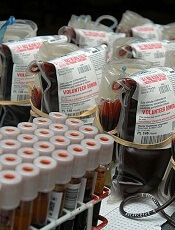
Photo by Daniel Gay
Abbott’s Alinity s System for blood and plasma screening has received the CE mark and is now available for use in countries that recognize the mark.
The Alinity s System is designed to screen blood and plasma faster and more efficiently than Abbott’s current systems.
The company said the additional automation and flexibility of the Alinity s System helps blood and plasma centers improve productivity and maintain accuracy without expanding the instrument footprint.
According to Abbott, the Alinity s System offers a number of new features. It expands capacity to run up to 600 tests per hour, and it increases walk-away time to a minimum of 3 hours.
The system also gives laboratory professionals the ability to continuously load and
unload samples and supplies without pausing or stopping the system.
The Alinity s System improves centers’ ability to track all activities and actions associated with the testing and processing of each donation in accordance with relevant legislation and requirements.
And the system features an intuitive software interface, menu design, and sample loading layout (shared with other Alinity instruments), making it easy for lab technicians to learn and use.
“When Abbott developed the Alinity s System, we considered the challenges that blood and plasma centers face today as well as in the future, such as adequate space, easier training, and more time for lab professionals to work away from the instrument,” said Daman Kowalski, divisional vice president of new product development in diagnostics at Abbott.
“In addressing these challenges, the Alinity s System has the potential to transform how quickly and accurately these centers can screen blood and plasma, which means we can deliver life-saving blood components to the people who need it the most.”
Photo by Daniel Gay
Abbott’s Alinity s System for blood and plasma screening has received the CE mark and is now available for use in countries that recognize the mark.
The Alinity s System is designed to screen blood and plasma faster and more efficiently than Abbott’s current systems.
The company said the additional automation and flexibility of the Alinity s System helps blood and plasma centers improve productivity and maintain accuracy without expanding the instrument footprint.
According to Abbott, the Alinity s System offers a number of new features. It expands capacity to run up to 600 tests per hour, and it increases walk-away time to a minimum of 3 hours.
The system also gives laboratory professionals the ability to continuously load and
unload samples and supplies without pausing or stopping the system.
The Alinity s System improves centers’ ability to track all activities and actions associated with the testing and processing of each donation in accordance with relevant legislation and requirements.
And the system features an intuitive software interface, menu design, and sample loading layout (shared with other Alinity instruments), making it easy for lab technicians to learn and use.
“When Abbott developed the Alinity s System, we considered the challenges that blood and plasma centers face today as well as in the future, such as adequate space, easier training, and more time for lab professionals to work away from the instrument,” said Daman Kowalski, divisional vice president of new product development in diagnostics at Abbott.
“In addressing these challenges, the Alinity s System has the potential to transform how quickly and accurately these centers can screen blood and plasma, which means we can deliver life-saving blood components to the people who need it the most.”
Photo by Daniel Gay
Abbott’s Alinity s System for blood and plasma screening has received the CE mark and is now available for use in countries that recognize the mark.
The Alinity s System is designed to screen blood and plasma faster and more efficiently than Abbott’s current systems.
The company said the additional automation and flexibility of the Alinity s System helps blood and plasma centers improve productivity and maintain accuracy without expanding the instrument footprint.
According to Abbott, the Alinity s System offers a number of new features. It expands capacity to run up to 600 tests per hour, and it increases walk-away time to a minimum of 3 hours.
The system also gives laboratory professionals the ability to continuously load and
unload samples and supplies without pausing or stopping the system.
The Alinity s System improves centers’ ability to track all activities and actions associated with the testing and processing of each donation in accordance with relevant legislation and requirements.
And the system features an intuitive software interface, menu design, and sample loading layout (shared with other Alinity instruments), making it easy for lab technicians to learn and use.
“When Abbott developed the Alinity s System, we considered the challenges that blood and plasma centers face today as well as in the future, such as adequate space, easier training, and more time for lab professionals to work away from the instrument,” said Daman Kowalski, divisional vice president of new product development in diagnostics at Abbott.
“In addressing these challenges, the Alinity s System has the potential to transform how quickly and accurately these centers can screen blood and plasma, which means we can deliver life-saving blood components to the people who need it the most.”