User login
Sex-discordant transfusions don’t increase death risk
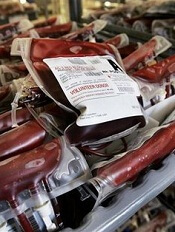
Photo by Elise Amendola
There is no association between sex-discordant blood transfusions and the risk of death after cardiac surgery, according to research published in Circulation.
Two previous studies suggested that patients who received red blood cells (RBCs) from a donor of the opposite sex had an increased risk of death after cardiac surgery.
However, the current study showed no significant difference between same-sex and opposite-sex donor-recipient pairs.
The researchers said the reason for the difference between the new and older studies is that, in the new study, the team “carefully adjusted” for the number of transfusions performed and allowed for the effect of RBC transfusions on mortality to differ between men and women.
“The consequences of the findings from [the earlier studies], if proved true, would have been immense and necessitated radical changes to how blood transfusions are managed around the world,” said Martin Holzmann, MD, PhD, of Karolinska Institutet in Stockholm, Sweden.
“Our results clearly show that there is no real connection between sex-discordant blood transfusions and the risk of death.”
Therefore, Dr Holzmann and his colleagues believe there is no need to consider donor sex when allocating RBC units for transfusion.
To come to this conclusion, the researchers analyzed data on 45,090 patients who underwent cardiac surgery and received at least 1 RBC transfusion.
All patients were adults who had undergone isolated coronary artery bypass grafting, isolated valve repair/replacement surgery, or a combination of these procedures between 1997 and 2012.
The researchers estimated the relative hazard of death in relation to exposure to sex-discordant transfusions, adjusting their analyses for potential confounding factors, such as patient sex, age, blood group, and number of transfusions.
Results
The researchers found that women were more likely to receive sex-discordant transfusions than same-sex transfusions—45.3% and 19.8%, respectively. And patients who received sex-discordant transfusions tended to receive more transfusions—a mean of 4.2 vs 2.0 for same-sex transfusions.
However, there were no other significant differences between the sex-discordant and same-sex groups.
The researchers noted that, during the 30-day follow-up period, there were more deaths among patients who received sex-discordant transfusions than those who did not—1701 (4.9%) and 205 (1.9%), respectively.
However, when the team adjusted for potential confounding factors, the relative risk of death was similar for patients who received at least 1 unit of sex-discordant blood and those who did not. The hazard ratio was 0.97 at 30 days of follow-up, 0.97 at the 2-year mark, and 0.98 at 10 years of follow-up.
The risk of death did increase as the number of sex-discordant units transfused increased. However, the increase was not statistically significant. 
Photo by Elise Amendola
There is no association between sex-discordant blood transfusions and the risk of death after cardiac surgery, according to research published in Circulation.
Two previous studies suggested that patients who received red blood cells (RBCs) from a donor of the opposite sex had an increased risk of death after cardiac surgery.
However, the current study showed no significant difference between same-sex and opposite-sex donor-recipient pairs.
The researchers said the reason for the difference between the new and older studies is that, in the new study, the team “carefully adjusted” for the number of transfusions performed and allowed for the effect of RBC transfusions on mortality to differ between men and women.
“The consequences of the findings from [the earlier studies], if proved true, would have been immense and necessitated radical changes to how blood transfusions are managed around the world,” said Martin Holzmann, MD, PhD, of Karolinska Institutet in Stockholm, Sweden.
“Our results clearly show that there is no real connection between sex-discordant blood transfusions and the risk of death.”
Therefore, Dr Holzmann and his colleagues believe there is no need to consider donor sex when allocating RBC units for transfusion.
To come to this conclusion, the researchers analyzed data on 45,090 patients who underwent cardiac surgery and received at least 1 RBC transfusion.
All patients were adults who had undergone isolated coronary artery bypass grafting, isolated valve repair/replacement surgery, or a combination of these procedures between 1997 and 2012.
The researchers estimated the relative hazard of death in relation to exposure to sex-discordant transfusions, adjusting their analyses for potential confounding factors, such as patient sex, age, blood group, and number of transfusions.
Results
The researchers found that women were more likely to receive sex-discordant transfusions than same-sex transfusions—45.3% and 19.8%, respectively. And patients who received sex-discordant transfusions tended to receive more transfusions—a mean of 4.2 vs 2.0 for same-sex transfusions.
However, there were no other significant differences between the sex-discordant and same-sex groups.
The researchers noted that, during the 30-day follow-up period, there were more deaths among patients who received sex-discordant transfusions than those who did not—1701 (4.9%) and 205 (1.9%), respectively.
However, when the team adjusted for potential confounding factors, the relative risk of death was similar for patients who received at least 1 unit of sex-discordant blood and those who did not. The hazard ratio was 0.97 at 30 days of follow-up, 0.97 at the 2-year mark, and 0.98 at 10 years of follow-up.
The risk of death did increase as the number of sex-discordant units transfused increased. However, the increase was not statistically significant.
Photo by Elise Amendola
There is no association between sex-discordant blood transfusions and the risk of death after cardiac surgery, according to research published in Circulation.
Two previous studies suggested that patients who received red blood cells (RBCs) from a donor of the opposite sex had an increased risk of death after cardiac surgery.
However, the current study showed no significant difference between same-sex and opposite-sex donor-recipient pairs.
The researchers said the reason for the difference between the new and older studies is that, in the new study, the team “carefully adjusted” for the number of transfusions performed and allowed for the effect of RBC transfusions on mortality to differ between men and women.
“The consequences of the findings from [the earlier studies], if proved true, would have been immense and necessitated radical changes to how blood transfusions are managed around the world,” said Martin Holzmann, MD, PhD, of Karolinska Institutet in Stockholm, Sweden.
“Our results clearly show that there is no real connection between sex-discordant blood transfusions and the risk of death.”
Therefore, Dr Holzmann and his colleagues believe there is no need to consider donor sex when allocating RBC units for transfusion.
To come to this conclusion, the researchers analyzed data on 45,090 patients who underwent cardiac surgery and received at least 1 RBC transfusion.
All patients were adults who had undergone isolated coronary artery bypass grafting, isolated valve repair/replacement surgery, or a combination of these procedures between 1997 and 2012.
The researchers estimated the relative hazard of death in relation to exposure to sex-discordant transfusions, adjusting their analyses for potential confounding factors, such as patient sex, age, blood group, and number of transfusions.
Results
The researchers found that women were more likely to receive sex-discordant transfusions than same-sex transfusions—45.3% and 19.8%, respectively. And patients who received sex-discordant transfusions tended to receive more transfusions—a mean of 4.2 vs 2.0 for same-sex transfusions.
However, there were no other significant differences between the sex-discordant and same-sex groups.
The researchers noted that, during the 30-day follow-up period, there were more deaths among patients who received sex-discordant transfusions than those who did not—1701 (4.9%) and 205 (1.9%), respectively.
However, when the team adjusted for potential confounding factors, the relative risk of death was similar for patients who received at least 1 unit of sex-discordant blood and those who did not. The hazard ratio was 0.97 at 30 days of follow-up, 0.97 at the 2-year mark, and 0.98 at 10 years of follow-up.
The risk of death did increase as the number of sex-discordant units transfused increased. However, the increase was not statistically significant.
EC grants drug orphan designation for PNH
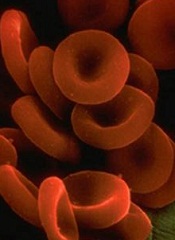
The European Commission (EC) has granted orphan drug designation to RA101495 for the treatment of paroxysmal nocturnal hemoglobinuria (PNH).
RA101495 is a synthetic macrocyclic peptide inhibitor of complement component C5.
Ra Pharmaceuticals is developing RA101495 as a self-administered, subcutaneous injection for the treatment of PNH, refractory generalized myasthenia gravis, and lupus nephritis.
RA101495 binds complement C5 with subnanomolar affinity and allosterically inhibits its cleavage into C5a and C5b upon activation of the classical, alternative, or lectin pathways.
RA101495 also directly binds to C5b, disrupting the interaction between C5b and C6 and preventing assembly of the membrane attack complex.
According to Ra Pharmaceuticals, repeat dosing of RA101495 in vivo has demonstrated “sustained and predictable” inhibition of complement activity with an “excellent” safety profile.
The company also said phase 1 data have suggested that RA101495 is potent inhibitor of C5-mediated hemolysis with a favorable safety profile.
Preclinical research involving RA101495 was presented at the 2015 ASH Annual Meeting, and phase 1 data were presented at the 21st Congress of the European Hematology Association earlier this year.
RA101495’s orphan designation
The EC grants orphan designation to therapies intended to treat life-threatening or chronically debilitating conditions affecting no more than 5 in 10,000 people in the European Union, and where no satisfactory treatment is available.
In situations where there is already an approved standard of care—such as with PNH, where the monoclonal antibody eculizumab (Soliris) is currently available—the EC requires companies developing a potential orphan drug to provide evidence that the drug is expected to provide significant benefits over the standard of care.
In the case of RA101495, the decision to grant orphan designation was based on the potential for improved patient convenience with subcutaneous self-administration, as well as the potential to treat patients who do not respond to eculizumab.
Orphan designation provides the company developing a drug with regulatory and financial incentives, including protocol assistance, 10 years of market exclusivity once the drug is approved, and, in some cases, reductions in fees.
The European Commission (EC) has granted orphan drug designation to RA101495 for the treatment of paroxysmal nocturnal hemoglobinuria (PNH).
RA101495 is a synthetic macrocyclic peptide inhibitor of complement component C5.
Ra Pharmaceuticals is developing RA101495 as a self-administered, subcutaneous injection for the treatment of PNH, refractory generalized myasthenia gravis, and lupus nephritis.
RA101495 binds complement C5 with subnanomolar affinity and allosterically inhibits its cleavage into C5a and C5b upon activation of the classical, alternative, or lectin pathways.
RA101495 also directly binds to C5b, disrupting the interaction between C5b and C6 and preventing assembly of the membrane attack complex.
According to Ra Pharmaceuticals, repeat dosing of RA101495 in vivo has demonstrated “sustained and predictable” inhibition of complement activity with an “excellent” safety profile.
The company also said phase 1 data have suggested that RA101495 is potent inhibitor of C5-mediated hemolysis with a favorable safety profile.
Preclinical research involving RA101495 was presented at the 2015 ASH Annual Meeting, and phase 1 data were presented at the 21st Congress of the European Hematology Association earlier this year.
RA101495’s orphan designation
The EC grants orphan designation to therapies intended to treat life-threatening or chronically debilitating conditions affecting no more than 5 in 10,000 people in the European Union, and where no satisfactory treatment is available.
In situations where there is already an approved standard of care—such as with PNH, where the monoclonal antibody eculizumab (Soliris) is currently available—the EC requires companies developing a potential orphan drug to provide evidence that the drug is expected to provide significant benefits over the standard of care.
In the case of RA101495, the decision to grant orphan designation was based on the potential for improved patient convenience with subcutaneous self-administration, as well as the potential to treat patients who do not respond to eculizumab.
Orphan designation provides the company developing a drug with regulatory and financial incentives, including protocol assistance, 10 years of market exclusivity once the drug is approved, and, in some cases, reductions in fees.
The European Commission (EC) has granted orphan drug designation to RA101495 for the treatment of paroxysmal nocturnal hemoglobinuria (PNH).
RA101495 is a synthetic macrocyclic peptide inhibitor of complement component C5.
Ra Pharmaceuticals is developing RA101495 as a self-administered, subcutaneous injection for the treatment of PNH, refractory generalized myasthenia gravis, and lupus nephritis.
RA101495 binds complement C5 with subnanomolar affinity and allosterically inhibits its cleavage into C5a and C5b upon activation of the classical, alternative, or lectin pathways.
RA101495 also directly binds to C5b, disrupting the interaction between C5b and C6 and preventing assembly of the membrane attack complex.
According to Ra Pharmaceuticals, repeat dosing of RA101495 in vivo has demonstrated “sustained and predictable” inhibition of complement activity with an “excellent” safety profile.
The company also said phase 1 data have suggested that RA101495 is potent inhibitor of C5-mediated hemolysis with a favorable safety profile.
Preclinical research involving RA101495 was presented at the 2015 ASH Annual Meeting, and phase 1 data were presented at the 21st Congress of the European Hematology Association earlier this year.
RA101495’s orphan designation
The EC grants orphan designation to therapies intended to treat life-threatening or chronically debilitating conditions affecting no more than 5 in 10,000 people in the European Union, and where no satisfactory treatment is available.
In situations where there is already an approved standard of care—such as with PNH, where the monoclonal antibody eculizumab (Soliris) is currently available—the EC requires companies developing a potential orphan drug to provide evidence that the drug is expected to provide significant benefits over the standard of care.
In the case of RA101495, the decision to grant orphan designation was based on the potential for improved patient convenience with subcutaneous self-administration, as well as the potential to treat patients who do not respond to eculizumab.
Orphan designation provides the company developing a drug with regulatory and financial incentives, including protocol assistance, 10 years of market exclusivity once the drug is approved, and, in some cases, reductions in fees.
CAR T-cell trial placed on hold again
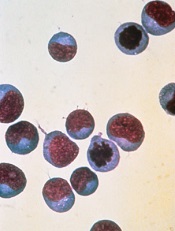
Once again, the phase 2 ROCKET trial has been placed on clinical hold due to patient deaths.
In this trial, researchers are testing the chimeric antigen receptor (CAR) T-cell therapy JCAR015 in adults with relapsed or refractory B-cell acute lymphoblastic leukemia.
Juno Therapeutics, Inc. voluntarily put the trial on hold after 2 more patients suffered cerebral edema and died.
A total of 5 patients have died of cerebral edema in this trial.
Juno has notified the US Food and Drug Administration (FDA) of the latest clinical hold on the ROCKET trial and is working with the agency and the company’s data and safety monitoring board to determine next steps.
The ROCKET trial was previously placed on clinical hold in July, after 3 patients died of cerebral edema. The FDA lifted the hold less than a week later, allowing the trial to continue with a revised protocol.
Juno had theorized the deaths were likely a result of adding fludarabine to the conditioning regimen.
Patients enrolled in ROCKET initially received conditioning with cyclophosphamide alone, but researchers later decided to add fludarabine in the hopes of increasing efficacy. Previous trials of 2 other CAR T-cell therapies, JCAR014 and JCAR017, had suggested that adding fludarabine to conditioning could increase efficacy.
However, in the ROCKET trial, the addition of fludarabine was associated with an increase in the incidence of severe neurotoxicity and the 3 deaths from cerebral edema.
Juno said that, although other factors may have contributed to the deaths, fludarabine was the most likely culprit. So the company revised the trial protocol, and the FDA allowed ROCKET to continue with a conditioning regimen consisting of cyclophosphamide alone.
Since that time, 12 patients have been treated on the ROCKET trial. Two patients who were treated the week of November 14 developed cerebral edema and died on November 22 and 23, respectively.
In a conference call, Juno’s Chief Medical Officer Mark Gilbert, MD, said the etiology of cerebral edema is multi-factorial, and Juno will need more time to draw even preliminary conclusions about what factors contributed to the cases of cerebral edema in ROCKET.
Right now, the company is assessing data from the cases and the trial and is evaluating its options regarding the JCAR015 program.
Juno’s President and CEO Hans Bishop said the options for JCAR015 going forward include continuing the ROCKET trial with a modified protocol, beginning a new study of JCAR015, and terminating the JCAR015 development program.
Bishop said the company expects to provide an update on the status of ROCKET and JCAR015 in the next few weeks.
Juno’s other trials and plans for its other CD19-directed CAR T-cell product candidates are not affected by the issues with ROCKET and JCAR015.
ROCKET is not the first trial of JCAR015 to be placed on hold. The phase 1 trial of the therapy was placed on clinical hold in 2014, after 2 patients died of cytokine release syndrome.
That hold was lifted following changes to enrollment criteria and dosing. Results from this trial were presented at ASCO 2015 and ASCO 2016.
Once again, the phase 2 ROCKET trial has been placed on clinical hold due to patient deaths.
In this trial, researchers are testing the chimeric antigen receptor (CAR) T-cell therapy JCAR015 in adults with relapsed or refractory B-cell acute lymphoblastic leukemia.
Juno Therapeutics, Inc. voluntarily put the trial on hold after 2 more patients suffered cerebral edema and died.
A total of 5 patients have died of cerebral edema in this trial.
Juno has notified the US Food and Drug Administration (FDA) of the latest clinical hold on the ROCKET trial and is working with the agency and the company’s data and safety monitoring board to determine next steps.
The ROCKET trial was previously placed on clinical hold in July, after 3 patients died of cerebral edema. The FDA lifted the hold less than a week later, allowing the trial to continue with a revised protocol.
Juno had theorized the deaths were likely a result of adding fludarabine to the conditioning regimen.
Patients enrolled in ROCKET initially received conditioning with cyclophosphamide alone, but researchers later decided to add fludarabine in the hopes of increasing efficacy. Previous trials of 2 other CAR T-cell therapies, JCAR014 and JCAR017, had suggested that adding fludarabine to conditioning could increase efficacy.
However, in the ROCKET trial, the addition of fludarabine was associated with an increase in the incidence of severe neurotoxicity and the 3 deaths from cerebral edema.
Juno said that, although other factors may have contributed to the deaths, fludarabine was the most likely culprit. So the company revised the trial protocol, and the FDA allowed ROCKET to continue with a conditioning regimen consisting of cyclophosphamide alone.
Since that time, 12 patients have been treated on the ROCKET trial. Two patients who were treated the week of November 14 developed cerebral edema and died on November 22 and 23, respectively.
In a conference call, Juno’s Chief Medical Officer Mark Gilbert, MD, said the etiology of cerebral edema is multi-factorial, and Juno will need more time to draw even preliminary conclusions about what factors contributed to the cases of cerebral edema in ROCKET.
Right now, the company is assessing data from the cases and the trial and is evaluating its options regarding the JCAR015 program.
Juno’s President and CEO Hans Bishop said the options for JCAR015 going forward include continuing the ROCKET trial with a modified protocol, beginning a new study of JCAR015, and terminating the JCAR015 development program.
Bishop said the company expects to provide an update on the status of ROCKET and JCAR015 in the next few weeks.
Juno’s other trials and plans for its other CD19-directed CAR T-cell product candidates are not affected by the issues with ROCKET and JCAR015.
ROCKET is not the first trial of JCAR015 to be placed on hold. The phase 1 trial of the therapy was placed on clinical hold in 2014, after 2 patients died of cytokine release syndrome.
That hold was lifted following changes to enrollment criteria and dosing. Results from this trial were presented at ASCO 2015 and ASCO 2016.
Once again, the phase 2 ROCKET trial has been placed on clinical hold due to patient deaths.
In this trial, researchers are testing the chimeric antigen receptor (CAR) T-cell therapy JCAR015 in adults with relapsed or refractory B-cell acute lymphoblastic leukemia.
Juno Therapeutics, Inc. voluntarily put the trial on hold after 2 more patients suffered cerebral edema and died.
A total of 5 patients have died of cerebral edema in this trial.
Juno has notified the US Food and Drug Administration (FDA) of the latest clinical hold on the ROCKET trial and is working with the agency and the company’s data and safety monitoring board to determine next steps.
The ROCKET trial was previously placed on clinical hold in July, after 3 patients died of cerebral edema. The FDA lifted the hold less than a week later, allowing the trial to continue with a revised protocol.
Juno had theorized the deaths were likely a result of adding fludarabine to the conditioning regimen.
Patients enrolled in ROCKET initially received conditioning with cyclophosphamide alone, but researchers later decided to add fludarabine in the hopes of increasing efficacy. Previous trials of 2 other CAR T-cell therapies, JCAR014 and JCAR017, had suggested that adding fludarabine to conditioning could increase efficacy.
However, in the ROCKET trial, the addition of fludarabine was associated with an increase in the incidence of severe neurotoxicity and the 3 deaths from cerebral edema.
Juno said that, although other factors may have contributed to the deaths, fludarabine was the most likely culprit. So the company revised the trial protocol, and the FDA allowed ROCKET to continue with a conditioning regimen consisting of cyclophosphamide alone.
Since that time, 12 patients have been treated on the ROCKET trial. Two patients who were treated the week of November 14 developed cerebral edema and died on November 22 and 23, respectively.
In a conference call, Juno’s Chief Medical Officer Mark Gilbert, MD, said the etiology of cerebral edema is multi-factorial, and Juno will need more time to draw even preliminary conclusions about what factors contributed to the cases of cerebral edema in ROCKET.
Right now, the company is assessing data from the cases and the trial and is evaluating its options regarding the JCAR015 program.
Juno’s President and CEO Hans Bishop said the options for JCAR015 going forward include continuing the ROCKET trial with a modified protocol, beginning a new study of JCAR015, and terminating the JCAR015 development program.
Bishop said the company expects to provide an update on the status of ROCKET and JCAR015 in the next few weeks.
Juno’s other trials and plans for its other CD19-directed CAR T-cell product candidates are not affected by the issues with ROCKET and JCAR015.
ROCKET is not the first trial of JCAR015 to be placed on hold. The phase 1 trial of the therapy was placed on clinical hold in 2014, after 2 patients died of cytokine release syndrome.
That hold was lifted following changes to enrollment criteria and dosing. Results from this trial were presented at ASCO 2015 and ASCO 2016.
EC grants drug orphan status for AML, sarcoma
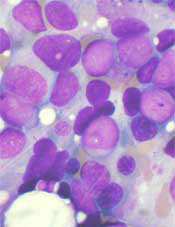
The European Commission (EC) has granted orphan drug designation to crenolanib for the treatment of acute myeloid leukemia (AML) and soft tissue sarcoma.
Crenolanib is a benzimidazole type I kinase inhibitor that selectively inhibits signaling of wild-type and mutant isoforms of FLT3 and PDGFRα/β.
The drug is under investigation as a treatment for multiple cancers. It is being developed by Arog Pharmaceuticals, Inc.
Results from a phase 2 trial of crenolanib in relapsed/refractory, FLT3+ AML were presented at the 2016 ASCO Annual Meeting.
About orphan designation
The EC grants orphan designation to therapies intended to treat life-threatening or chronically debilitating conditions affecting no more than 5 in 10,000 people in the European Union, and where no satisfactory treatment is available.
Orphan designation provides companies developing such drugs with regulatory and financial incentives, including protocol assistance, 10 years of market exclusivity once the drug is approved, and, in some cases, reductions in fees.
The European Commission (EC) has granted orphan drug designation to crenolanib for the treatment of acute myeloid leukemia (AML) and soft tissue sarcoma.
Crenolanib is a benzimidazole type I kinase inhibitor that selectively inhibits signaling of wild-type and mutant isoforms of FLT3 and PDGFRα/β.
The drug is under investigation as a treatment for multiple cancers. It is being developed by Arog Pharmaceuticals, Inc.
Results from a phase 2 trial of crenolanib in relapsed/refractory, FLT3+ AML were presented at the 2016 ASCO Annual Meeting.
About orphan designation
The EC grants orphan designation to therapies intended to treat life-threatening or chronically debilitating conditions affecting no more than 5 in 10,000 people in the European Union, and where no satisfactory treatment is available.
Orphan designation provides companies developing such drugs with regulatory and financial incentives, including protocol assistance, 10 years of market exclusivity once the drug is approved, and, in some cases, reductions in fees.
The European Commission (EC) has granted orphan drug designation to crenolanib for the treatment of acute myeloid leukemia (AML) and soft tissue sarcoma.
Crenolanib is a benzimidazole type I kinase inhibitor that selectively inhibits signaling of wild-type and mutant isoforms of FLT3 and PDGFRα/β.
The drug is under investigation as a treatment for multiple cancers. It is being developed by Arog Pharmaceuticals, Inc.
Results from a phase 2 trial of crenolanib in relapsed/refractory, FLT3+ AML were presented at the 2016 ASCO Annual Meeting.
About orphan designation
The EC grants orphan designation to therapies intended to treat life-threatening or chronically debilitating conditions affecting no more than 5 in 10,000 people in the European Union, and where no satisfactory treatment is available.
Orphan designation provides companies developing such drugs with regulatory and financial incentives, including protocol assistance, 10 years of market exclusivity once the drug is approved, and, in some cases, reductions in fees.
Study supports palliative care in HSCT recipients

Photo by Chad McNeeley
Palliative care can be beneficial for patients undergoing hematopoietic stem cell transplant (HSCT) to treat hematologic malignancies, according to research published in JAMA.
The single-center study suggested that palliative care can improve HSCT recipients’ quality of life, relieve symptoms associated with the procedure, and reduce depression and anxiety.
Researchers observed such benefits during hospitalization for HSCT and a few months later.
In addition, caregivers of patients receiving palliative care experienced less depression and were better at coping with the stress associated with the illness of their loved one.
“Palliative care clinicians are increasingly asked to help care for patients with solid tumors but are rarely consulted for patients with hematologic malignancies, especially those receiving therapy designed to cure their disease,” said study author Areej El-Jawahri, MD, of Massachusette General Hospital in Boston.
“The physical and psychological symptoms associated with HSCT are sometimes regarded as expected and unavoidable, which, combined with the persistent misperception that equates palliative care with end-of-life care, has contributed to a lack of involvement of palliative care clinicians in the care of these patients.”
Intervention
Dr El-Jawahri and her colleagues studied 160 patients who underwent autologous or allogeneic HSCT to treat a variety of hematologic malignancies from August 2014 into January 2016.
Participants were randomized to receive either standard care (n=79) or the palliative care intervention (n=81).
Within 3 days of their admission to the hospital, patients in the intervention group had an initial meeting with a palliative care clinician—a physician or advance practice nurse—who continued to meet with them at least twice a week during their hospitalization.
At the meetings, which could be attended by a family member or friend of the patient, clinicians first focused on establishing a rapport with patients and their caregivers.
Clinicians addressed ways of managing the physical and psychological symptoms patients were experiencing and provided support and strategies for coping with distress. Patients received an average of 8 palliative care visits during their hospitalizations, which lasted on average 20 days.
At the outset of the study and 2 weeks into the process, a time when symptoms tend to be at their worst, patients in both groups and participating caregivers completed questionnaires assessing their mood and quality of life.
Patients also completed questionnaires asking about symptoms of their illness and those associated with the procedure. Patients completed additional assessments 3 months after HSCT as well.
Results
The study’s primary endpoint was change in quality of life from baseline to week 2. Patients receiving the palliative care intervention had significantly better quality of life scores at week 2 than patients in the control group.
Also at the 2-week mark, patients receiving the palliative care intervention reported lower levels of depression, anxiety, and symptoms than the control group, but there was no significant difference between the groups with regard to fatigue.
At 3 months, patients receiving the palliative care intervention still had higher quality of life scores and less depression than controls, but there were no significant between-group differences in anxiety, fatigue, or symptom burden.
Caregivers attended 42% of the palliative care sessions. At the 2-week assessment, caregivers in the intervention group were found to have fewer depressive symptoms and improved coping skills, compared with caregivers in the control group.
“Caregivers play a crucial role in supporting patients during the transplant process, and they are substantially impacted as they watch their loved ones struggle with side effects that can be emotionally challenging,” Dr El-Jawahri said.
She and her colleagues noted that additional, larger studies are needed to assess caregiver impacts more completely, to replicate patient results at centers with more diverse patient populations, to assess the inclusion of more complete palliative care teams, to collect cost data, and to adapt the palliative care intervention to assist patients receiving other potentially curative treatment for hematologic or other cancers.
Photo by Chad McNeeley
Palliative care can be beneficial for patients undergoing hematopoietic stem cell transplant (HSCT) to treat hematologic malignancies, according to research published in JAMA.
The single-center study suggested that palliative care can improve HSCT recipients’ quality of life, relieve symptoms associated with the procedure, and reduce depression and anxiety.
Researchers observed such benefits during hospitalization for HSCT and a few months later.
In addition, caregivers of patients receiving palliative care experienced less depression and were better at coping with the stress associated with the illness of their loved one.
“Palliative care clinicians are increasingly asked to help care for patients with solid tumors but are rarely consulted for patients with hematologic malignancies, especially those receiving therapy designed to cure their disease,” said study author Areej El-Jawahri, MD, of Massachusette General Hospital in Boston.
“The physical and psychological symptoms associated with HSCT are sometimes regarded as expected and unavoidable, which, combined with the persistent misperception that equates palliative care with end-of-life care, has contributed to a lack of involvement of palliative care clinicians in the care of these patients.”
Intervention
Dr El-Jawahri and her colleagues studied 160 patients who underwent autologous or allogeneic HSCT to treat a variety of hematologic malignancies from August 2014 into January 2016.
Participants were randomized to receive either standard care (n=79) or the palliative care intervention (n=81).
Within 3 days of their admission to the hospital, patients in the intervention group had an initial meeting with a palliative care clinician—a physician or advance practice nurse—who continued to meet with them at least twice a week during their hospitalization.
At the meetings, which could be attended by a family member or friend of the patient, clinicians first focused on establishing a rapport with patients and their caregivers.
Clinicians addressed ways of managing the physical and psychological symptoms patients were experiencing and provided support and strategies for coping with distress. Patients received an average of 8 palliative care visits during their hospitalizations, which lasted on average 20 days.
At the outset of the study and 2 weeks into the process, a time when symptoms tend to be at their worst, patients in both groups and participating caregivers completed questionnaires assessing their mood and quality of life.
Patients also completed questionnaires asking about symptoms of their illness and those associated with the procedure. Patients completed additional assessments 3 months after HSCT as well.
Results
The study’s primary endpoint was change in quality of life from baseline to week 2. Patients receiving the palliative care intervention had significantly better quality of life scores at week 2 than patients in the control group.
Also at the 2-week mark, patients receiving the palliative care intervention reported lower levels of depression, anxiety, and symptoms than the control group, but there was no significant difference between the groups with regard to fatigue.
At 3 months, patients receiving the palliative care intervention still had higher quality of life scores and less depression than controls, but there were no significant between-group differences in anxiety, fatigue, or symptom burden.
Caregivers attended 42% of the palliative care sessions. At the 2-week assessment, caregivers in the intervention group were found to have fewer depressive symptoms and improved coping skills, compared with caregivers in the control group.
“Caregivers play a crucial role in supporting patients during the transplant process, and they are substantially impacted as they watch their loved ones struggle with side effects that can be emotionally challenging,” Dr El-Jawahri said.
She and her colleagues noted that additional, larger studies are needed to assess caregiver impacts more completely, to replicate patient results at centers with more diverse patient populations, to assess the inclusion of more complete palliative care teams, to collect cost data, and to adapt the palliative care intervention to assist patients receiving other potentially curative treatment for hematologic or other cancers.
Photo by Chad McNeeley
Palliative care can be beneficial for patients undergoing hematopoietic stem cell transplant (HSCT) to treat hematologic malignancies, according to research published in JAMA.
The single-center study suggested that palliative care can improve HSCT recipients’ quality of life, relieve symptoms associated with the procedure, and reduce depression and anxiety.
Researchers observed such benefits during hospitalization for HSCT and a few months later.
In addition, caregivers of patients receiving palliative care experienced less depression and were better at coping with the stress associated with the illness of their loved one.
“Palliative care clinicians are increasingly asked to help care for patients with solid tumors but are rarely consulted for patients with hematologic malignancies, especially those receiving therapy designed to cure their disease,” said study author Areej El-Jawahri, MD, of Massachusette General Hospital in Boston.
“The physical and psychological symptoms associated with HSCT are sometimes regarded as expected and unavoidable, which, combined with the persistent misperception that equates palliative care with end-of-life care, has contributed to a lack of involvement of palliative care clinicians in the care of these patients.”
Intervention
Dr El-Jawahri and her colleagues studied 160 patients who underwent autologous or allogeneic HSCT to treat a variety of hematologic malignancies from August 2014 into January 2016.
Participants were randomized to receive either standard care (n=79) or the palliative care intervention (n=81).
Within 3 days of their admission to the hospital, patients in the intervention group had an initial meeting with a palliative care clinician—a physician or advance practice nurse—who continued to meet with them at least twice a week during their hospitalization.
At the meetings, which could be attended by a family member or friend of the patient, clinicians first focused on establishing a rapport with patients and their caregivers.
Clinicians addressed ways of managing the physical and psychological symptoms patients were experiencing and provided support and strategies for coping with distress. Patients received an average of 8 palliative care visits during their hospitalizations, which lasted on average 20 days.
At the outset of the study and 2 weeks into the process, a time when symptoms tend to be at their worst, patients in both groups and participating caregivers completed questionnaires assessing their mood and quality of life.
Patients also completed questionnaires asking about symptoms of their illness and those associated with the procedure. Patients completed additional assessments 3 months after HSCT as well.
Results
The study’s primary endpoint was change in quality of life from baseline to week 2. Patients receiving the palliative care intervention had significantly better quality of life scores at week 2 than patients in the control group.
Also at the 2-week mark, patients receiving the palliative care intervention reported lower levels of depression, anxiety, and symptoms than the control group, but there was no significant difference between the groups with regard to fatigue.
At 3 months, patients receiving the palliative care intervention still had higher quality of life scores and less depression than controls, but there were no significant between-group differences in anxiety, fatigue, or symptom burden.
Caregivers attended 42% of the palliative care sessions. At the 2-week assessment, caregivers in the intervention group were found to have fewer depressive symptoms and improved coping skills, compared with caregivers in the control group.
“Caregivers play a crucial role in supporting patients during the transplant process, and they are substantially impacted as they watch their loved ones struggle with side effects that can be emotionally challenging,” Dr El-Jawahri said.
She and her colleagues noted that additional, larger studies are needed to assess caregiver impacts more completely, to replicate patient results at centers with more diverse patient populations, to assess the inclusion of more complete palliative care teams, to collect cost data, and to adapt the palliative care intervention to assist patients receiving other potentially curative treatment for hematologic or other cancers.
EC approves nivolumab for relapsed/refractory cHL
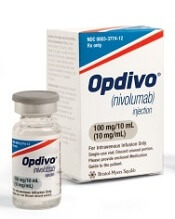
Photo from Business Wire
The European Commission (EC) has approved nivolumab (Opdivo) for the treatment of adults with relapsed or refractory classical Hodgkin lymphoma (cHL) who have already received an autologous hematopoietic stem cell transplant (auto-HSCT) and treatment with brentuximab vedotin (BV).
Nivolumab is the first PD-1 inhibitor approved in the European Economic Area as a treatment for a hematologic malignancy.
The EC previously approved nivolumab to treat advanced melanoma, non-small cell lung cancer, and renal cell carcinoma. In Europe, nivolumab is marketed by Bristol-Myers Squibb.
Trials in cHL
The EC’s approval of nivolumab in cHL is based on an integrated analysis of data from 2 trials—the phase 1 CheckMate -039 trial and the phase 2 CheckMate -205 trial.
In CheckMate -039, researchers evaluated nivolumab in patients with cHL, non-Hodgkin lymphoma, and multiple myeloma. Results from this trial were presented at the 13th International Congress on Malignant Lymphoma in June 2015.
In CheckMate -205, researchers are evaluating nivolumab in 4 cohorts of cHL patients. Cohort A includes patients who previously received auto-HSCT and were BV-naïve at enrollment (n=63). Cohort B includes patients who previously received auto-HSCT followed by BV (n=80).
Cohort C includes patients who previously received BV before and/or after auto-HSCT (n=100). And cohort D, which is currently enrolling, is an evaluation of nivolumab in combination with chemotherapy in newly diagnosed, advanced-stage cHL patients who are treatment-naïve (n=50).
Results from cohort B were presented at the 21st Congress of the European Hematology Association in June 2016. Results from cohort C were presented at the 10th International Symposium on Hodgkin Lymphoma last month.
Integrated analysis
The analysis included cHL patients from CheckMate -205 and -039 who had received auto-HSCT and BV.
In the efficacy population (n=95), the objective response rate was 66%. The percentage of patients with a complete response was 6%. Twenty-three percent of patients had stable disease.
The median time to response was 2.0 months (range, 0.7-11.1), and the median duration of response was 13.1 months (range, 0.0+, 23.1+). At 12 months, the progression-free survival rate was 57%.
The safety of nivolumab in cHL was evaluated in 263 patients from CheckMate -205 (n=240) and CheckMate -039 (n=23). Serious adverse events (AEs) occurred in 21% of these patients.
The most common serious AEs (reported in at least 1% of patients) were infusion-related reactions, pneumonia, pleural effusion, pyrexia, rash, and pneumonitis.
The most common AEs (reported in at least 20% of patients) were fatigue (32%), upper respiratory tract infection (28%), pyrexia (24%), diarrhea (23%), and cough (22%).
Twenty-three percent of patients had a dose delay resulting from an AE, and 4.2% of patients discontinued treatment due to AEs.
Forty patients went on to allogeneic HSCT after nivolumab, and 6 of these patients died from complications of the transplant. The 40 patients had a median follow-up from allogeneic HSCT of 2.9 months (range, 0-22).
Because of these deaths, the US Food and Drug Administration asked Bristol-Myers Squibb to study the safety of allogeneic HSCT after nivolumab.
Photo from Business Wire
The European Commission (EC) has approved nivolumab (Opdivo) for the treatment of adults with relapsed or refractory classical Hodgkin lymphoma (cHL) who have already received an autologous hematopoietic stem cell transplant (auto-HSCT) and treatment with brentuximab vedotin (BV).
Nivolumab is the first PD-1 inhibitor approved in the European Economic Area as a treatment for a hematologic malignancy.
The EC previously approved nivolumab to treat advanced melanoma, non-small cell lung cancer, and renal cell carcinoma. In Europe, nivolumab is marketed by Bristol-Myers Squibb.
Trials in cHL
The EC’s approval of nivolumab in cHL is based on an integrated analysis of data from 2 trials—the phase 1 CheckMate -039 trial and the phase 2 CheckMate -205 trial.
In CheckMate -039, researchers evaluated nivolumab in patients with cHL, non-Hodgkin lymphoma, and multiple myeloma. Results from this trial were presented at the 13th International Congress on Malignant Lymphoma in June 2015.
In CheckMate -205, researchers are evaluating nivolumab in 4 cohorts of cHL patients. Cohort A includes patients who previously received auto-HSCT and were BV-naïve at enrollment (n=63). Cohort B includes patients who previously received auto-HSCT followed by BV (n=80).
Cohort C includes patients who previously received BV before and/or after auto-HSCT (n=100). And cohort D, which is currently enrolling, is an evaluation of nivolumab in combination with chemotherapy in newly diagnosed, advanced-stage cHL patients who are treatment-naïve (n=50).
Results from cohort B were presented at the 21st Congress of the European Hematology Association in June 2016. Results from cohort C were presented at the 10th International Symposium on Hodgkin Lymphoma last month.
Integrated analysis
The analysis included cHL patients from CheckMate -205 and -039 who had received auto-HSCT and BV.
In the efficacy population (n=95), the objective response rate was 66%. The percentage of patients with a complete response was 6%. Twenty-three percent of patients had stable disease.
The median time to response was 2.0 months (range, 0.7-11.1), and the median duration of response was 13.1 months (range, 0.0+, 23.1+). At 12 months, the progression-free survival rate was 57%.
The safety of nivolumab in cHL was evaluated in 263 patients from CheckMate -205 (n=240) and CheckMate -039 (n=23). Serious adverse events (AEs) occurred in 21% of these patients.
The most common serious AEs (reported in at least 1% of patients) were infusion-related reactions, pneumonia, pleural effusion, pyrexia, rash, and pneumonitis.
The most common AEs (reported in at least 20% of patients) were fatigue (32%), upper respiratory tract infection (28%), pyrexia (24%), diarrhea (23%), and cough (22%).
Twenty-three percent of patients had a dose delay resulting from an AE, and 4.2% of patients discontinued treatment due to AEs.
Forty patients went on to allogeneic HSCT after nivolumab, and 6 of these patients died from complications of the transplant. The 40 patients had a median follow-up from allogeneic HSCT of 2.9 months (range, 0-22).
Because of these deaths, the US Food and Drug Administration asked Bristol-Myers Squibb to study the safety of allogeneic HSCT after nivolumab.
Photo from Business Wire
The European Commission (EC) has approved nivolumab (Opdivo) for the treatment of adults with relapsed or refractory classical Hodgkin lymphoma (cHL) who have already received an autologous hematopoietic stem cell transplant (auto-HSCT) and treatment with brentuximab vedotin (BV).
Nivolumab is the first PD-1 inhibitor approved in the European Economic Area as a treatment for a hematologic malignancy.
The EC previously approved nivolumab to treat advanced melanoma, non-small cell lung cancer, and renal cell carcinoma. In Europe, nivolumab is marketed by Bristol-Myers Squibb.
Trials in cHL
The EC’s approval of nivolumab in cHL is based on an integrated analysis of data from 2 trials—the phase 1 CheckMate -039 trial and the phase 2 CheckMate -205 trial.
In CheckMate -039, researchers evaluated nivolumab in patients with cHL, non-Hodgkin lymphoma, and multiple myeloma. Results from this trial were presented at the 13th International Congress on Malignant Lymphoma in June 2015.
In CheckMate -205, researchers are evaluating nivolumab in 4 cohorts of cHL patients. Cohort A includes patients who previously received auto-HSCT and were BV-naïve at enrollment (n=63). Cohort B includes patients who previously received auto-HSCT followed by BV (n=80).
Cohort C includes patients who previously received BV before and/or after auto-HSCT (n=100). And cohort D, which is currently enrolling, is an evaluation of nivolumab in combination with chemotherapy in newly diagnosed, advanced-stage cHL patients who are treatment-naïve (n=50).
Results from cohort B were presented at the 21st Congress of the European Hematology Association in June 2016. Results from cohort C were presented at the 10th International Symposium on Hodgkin Lymphoma last month.
Integrated analysis
The analysis included cHL patients from CheckMate -205 and -039 who had received auto-HSCT and BV.
In the efficacy population (n=95), the objective response rate was 66%. The percentage of patients with a complete response was 6%. Twenty-three percent of patients had stable disease.
The median time to response was 2.0 months (range, 0.7-11.1), and the median duration of response was 13.1 months (range, 0.0+, 23.1+). At 12 months, the progression-free survival rate was 57%.
The safety of nivolumab in cHL was evaluated in 263 patients from CheckMate -205 (n=240) and CheckMate -039 (n=23). Serious adverse events (AEs) occurred in 21% of these patients.
The most common serious AEs (reported in at least 1% of patients) were infusion-related reactions, pneumonia, pleural effusion, pyrexia, rash, and pneumonitis.
The most common AEs (reported in at least 20% of patients) were fatigue (32%), upper respiratory tract infection (28%), pyrexia (24%), diarrhea (23%), and cough (22%).
Twenty-three percent of patients had a dose delay resulting from an AE, and 4.2% of patients discontinued treatment due to AEs.
Forty patients went on to allogeneic HSCT after nivolumab, and 6 of these patients died from complications of the transplant. The 40 patients had a median follow-up from allogeneic HSCT of 2.9 months (range, 0-22).
Because of these deaths, the US Food and Drug Administration asked Bristol-Myers Squibb to study the safety of allogeneic HSCT after nivolumab.
Statins increase bleeding risk with dabigatran

Photo courtesy of
St. Michael’s Hospital
Two commonly used statins, lovastatin and simvastatin, can increase the risk of major hemorrhage in patients receiving the anticoagulant dabigatran etexilate, according to research published in the Canadian Medical Association Journal.
“We found no difference in the risk of stroke in patients receiving dabigatran who were prescribed lovastatin or simvastatin versus other statins,” said study author Tony Antoniou, PhD, of St. Michael’s Hospital in Toronto, Ontario, Canada.
“However, an increase in the risk of bleeding requiring hospital admission or emergency department visits was seen with lovastatin and simvastatin compared with the other statins.”
Dr Antoniou and his colleagues made these discoveries by conducting 2 population-based, nested case-control studies.
The studies included patients older than 65 years of age who started treatment with dabigatran etexilate between 2012 and 2014. All patients had nonvalvular atrial fibrillation and were receiving dabigatran etexilate for the prevention of stroke and systemic embolism.
In the first study, the cases were patients with ischemic stroke. In the second study, the cases were patients with major hemorrhage. Each case had up to 4 age- and sex-matched controls.
Both cases and controls received a statin. And the researchers set out to determine the association between each outcome and the use of simvastatin or lovastatin compared to other statins.
In the 45,991 patients studied, there were 397 cases of ischemic stroke and 1117 cases of major hemorrhage.
Multivariable analysis suggested that use of simvastatin or lovastatin was not associated with an increased risk of stroke or transient ischemic attack
relative to other statins. The adjusted odds ratio was 1.33.
However, the use of simvastatin and lovastatin was associated with an increased risk of major hemorrhage. The adjusted odds ratio was 1.46.
Dr Antoniou and his colleagues believe simvastatin and lovastatin increase the risk of bleeding by increasing the amount of dabigatran absorbed by the body.
The team noted that dabigatran etexilate is metabolized to dabigatran by carboxylesterase enzymes, intestinal absorption of the prodrug is opposed by P-glycoprotein, and simvastatin and lovastatin are potent inhibitors of P-glycoprotein and carboxylesterase.
The researchers said the fact that the statins inhibit P-glycoprotein appears to explain the increased risk of bleeding they observed. And the fact that simvastatin and lovastatin were not associated with an increased risk of stroke suggests carboxylesterase inhibition is of little clinical relevance in this setting.
On the other hand, the researchers also noted that the number of cases receiving lovastatin and simvastatin was small. This may have influenced the team’s power to detect an association between these drugs and stroke.
Regardless, the researchers said the results of these studies suggest there is a clinically important drug interaction between dabigatran etexilate and both simvastatin and lovastatin. Therefore, other statins should be considered in patients receiving dabigatran etexilate.
Photo courtesy of
St. Michael’s Hospital
Two commonly used statins, lovastatin and simvastatin, can increase the risk of major hemorrhage in patients receiving the anticoagulant dabigatran etexilate, according to research published in the Canadian Medical Association Journal.
“We found no difference in the risk of stroke in patients receiving dabigatran who were prescribed lovastatin or simvastatin versus other statins,” said study author Tony Antoniou, PhD, of St. Michael’s Hospital in Toronto, Ontario, Canada.
“However, an increase in the risk of bleeding requiring hospital admission or emergency department visits was seen with lovastatin and simvastatin compared with the other statins.”
Dr Antoniou and his colleagues made these discoveries by conducting 2 population-based, nested case-control studies.
The studies included patients older than 65 years of age who started treatment with dabigatran etexilate between 2012 and 2014. All patients had nonvalvular atrial fibrillation and were receiving dabigatran etexilate for the prevention of stroke and systemic embolism.
In the first study, the cases were patients with ischemic stroke. In the second study, the cases were patients with major hemorrhage. Each case had up to 4 age- and sex-matched controls.
Both cases and controls received a statin. And the researchers set out to determine the association between each outcome and the use of simvastatin or lovastatin compared to other statins.
In the 45,991 patients studied, there were 397 cases of ischemic stroke and 1117 cases of major hemorrhage.
Multivariable analysis suggested that use of simvastatin or lovastatin was not associated with an increased risk of stroke or transient ischemic attack
relative to other statins. The adjusted odds ratio was 1.33.
However, the use of simvastatin and lovastatin was associated with an increased risk of major hemorrhage. The adjusted odds ratio was 1.46.
Dr Antoniou and his colleagues believe simvastatin and lovastatin increase the risk of bleeding by increasing the amount of dabigatran absorbed by the body.
The team noted that dabigatran etexilate is metabolized to dabigatran by carboxylesterase enzymes, intestinal absorption of the prodrug is opposed by P-glycoprotein, and simvastatin and lovastatin are potent inhibitors of P-glycoprotein and carboxylesterase.
The researchers said the fact that the statins inhibit P-glycoprotein appears to explain the increased risk of bleeding they observed. And the fact that simvastatin and lovastatin were not associated with an increased risk of stroke suggests carboxylesterase inhibition is of little clinical relevance in this setting.
On the other hand, the researchers also noted that the number of cases receiving lovastatin and simvastatin was small. This may have influenced the team’s power to detect an association between these drugs and stroke.
Regardless, the researchers said the results of these studies suggest there is a clinically important drug interaction between dabigatran etexilate and both simvastatin and lovastatin. Therefore, other statins should be considered in patients receiving dabigatran etexilate.
Photo courtesy of
St. Michael’s Hospital
Two commonly used statins, lovastatin and simvastatin, can increase the risk of major hemorrhage in patients receiving the anticoagulant dabigatran etexilate, according to research published in the Canadian Medical Association Journal.
“We found no difference in the risk of stroke in patients receiving dabigatran who were prescribed lovastatin or simvastatin versus other statins,” said study author Tony Antoniou, PhD, of St. Michael’s Hospital in Toronto, Ontario, Canada.
“However, an increase in the risk of bleeding requiring hospital admission or emergency department visits was seen with lovastatin and simvastatin compared with the other statins.”
Dr Antoniou and his colleagues made these discoveries by conducting 2 population-based, nested case-control studies.
The studies included patients older than 65 years of age who started treatment with dabigatran etexilate between 2012 and 2014. All patients had nonvalvular atrial fibrillation and were receiving dabigatran etexilate for the prevention of stroke and systemic embolism.
In the first study, the cases were patients with ischemic stroke. In the second study, the cases were patients with major hemorrhage. Each case had up to 4 age- and sex-matched controls.
Both cases and controls received a statin. And the researchers set out to determine the association between each outcome and the use of simvastatin or lovastatin compared to other statins.
In the 45,991 patients studied, there were 397 cases of ischemic stroke and 1117 cases of major hemorrhage.
Multivariable analysis suggested that use of simvastatin or lovastatin was not associated with an increased risk of stroke or transient ischemic attack
relative to other statins. The adjusted odds ratio was 1.33.
However, the use of simvastatin and lovastatin was associated with an increased risk of major hemorrhage. The adjusted odds ratio was 1.46.
Dr Antoniou and his colleagues believe simvastatin and lovastatin increase the risk of bleeding by increasing the amount of dabigatran absorbed by the body.
The team noted that dabigatran etexilate is metabolized to dabigatran by carboxylesterase enzymes, intestinal absorption of the prodrug is opposed by P-glycoprotein, and simvastatin and lovastatin are potent inhibitors of P-glycoprotein and carboxylesterase.
The researchers said the fact that the statins inhibit P-glycoprotein appears to explain the increased risk of bleeding they observed. And the fact that simvastatin and lovastatin were not associated with an increased risk of stroke suggests carboxylesterase inhibition is of little clinical relevance in this setting.
On the other hand, the researchers also noted that the number of cases receiving lovastatin and simvastatin was small. This may have influenced the team’s power to detect an association between these drugs and stroke.
Regardless, the researchers said the results of these studies suggest there is a clinically important drug interaction between dabigatran etexilate and both simvastatin and lovastatin. Therefore, other statins should be considered in patients receiving dabigatran etexilate.
EC expands indication for arsenic trioxide in APL

Image courtesy of the Armed
Forces Institute of Pathology
The European Commission (EC) has extended the approved indication for arsenic trioxide (Trisenox®) in patients with acute promyelocytic leukemia (APL).
The drug is now approved for use in combination with all-trans-retinoic acid (ATRA) to induce remission and for consolidation in adults with newly diagnosed low- to intermediate-risk APL (white blood cell count, ≤ 10 x 103/μL) characterized by the presence of the t(15;17) translocation and/or the presence of the PML/RARα gene.
Arsenic trioxide was previously approved by the EC to induce remission and as consolidation in adults with relapsed/refractory APL, which is characterized by the presence of the t(15;17) translocation and/or the presence of the PML/RARα gene, whose previous treatment included a retinoid and chemotherapy.
“This [expanded] approval by the European Commission is good news for APL patients, as we now have access to a cure for an acute leukemia without using chemotherapy,” said Francesco Lo-Coco, MD, of University of Rome Tor Vergata in Italy.
“Moreover, this decision is a very positive endorsement by the European Commission, as it was made based solely on published academic research and studies.”
Arsenic trioxide is marketed by Teva Pharmaceutical Industries Ltd.
Phase 3 study results
The EC’s expanded approval of arsenic trioxide is based on results from the APL0406 Intergroup GIMEMA-AMLSG-SAL study. Previous results from this phase 3 study were published in NEJM in 2013.
Updated results include 276 adults (ages 18 to 71) with newly diagnosed, low- or intermediate-risk APL. Patients were randomized to receive ATRA plus arsenic trioxide or ATRA plus chemotherapy.
A total of 263 patients were evaluable for response to induction. One hundred percent of patients in the arsenic trioxide arm (127/127) achieved a complete response (CR), as did 97% (132/136) of patients in the chemotherapy arm (P=0.12).
After a median follow-up of 40.6 months, the event-free survival was 97.3% in the arsenic trioxide arm and 80% in the chemotherapy arm (P<0.001). The cumulative incidence of relapse was 1.9% and 13.9%, respectively (P=0.0013).
At 50 months, the overall survival was 99.2% in the arsenic trioxide arm and 92.6% in the chemotherapy arm (P=0.0073).
After induction, there were 2 relapses and 1 death in CR in the arsenic trioxide arm.
In the chemotherapy arm, there were 2 instances of molecular resistance after third consolidation, 15 relapses, 5 deaths in CR, and 2 patients who developed a therapy-related myeloid neoplasm.
Image courtesy of the Armed
Forces Institute of Pathology
The European Commission (EC) has extended the approved indication for arsenic trioxide (Trisenox®) in patients with acute promyelocytic leukemia (APL).
The drug is now approved for use in combination with all-trans-retinoic acid (ATRA) to induce remission and for consolidation in adults with newly diagnosed low- to intermediate-risk APL (white blood cell count, ≤ 10 x 103/μL) characterized by the presence of the t(15;17) translocation and/or the presence of the PML/RARα gene.
Arsenic trioxide was previously approved by the EC to induce remission and as consolidation in adults with relapsed/refractory APL, which is characterized by the presence of the t(15;17) translocation and/or the presence of the PML/RARα gene, whose previous treatment included a retinoid and chemotherapy.
“This [expanded] approval by the European Commission is good news for APL patients, as we now have access to a cure for an acute leukemia without using chemotherapy,” said Francesco Lo-Coco, MD, of University of Rome Tor Vergata in Italy.
“Moreover, this decision is a very positive endorsement by the European Commission, as it was made based solely on published academic research and studies.”
Arsenic trioxide is marketed by Teva Pharmaceutical Industries Ltd.
Phase 3 study results
The EC’s expanded approval of arsenic trioxide is based on results from the APL0406 Intergroup GIMEMA-AMLSG-SAL study. Previous results from this phase 3 study were published in NEJM in 2013.
Updated results include 276 adults (ages 18 to 71) with newly diagnosed, low- or intermediate-risk APL. Patients were randomized to receive ATRA plus arsenic trioxide or ATRA plus chemotherapy.
A total of 263 patients were evaluable for response to induction. One hundred percent of patients in the arsenic trioxide arm (127/127) achieved a complete response (CR), as did 97% (132/136) of patients in the chemotherapy arm (P=0.12).
After a median follow-up of 40.6 months, the event-free survival was 97.3% in the arsenic trioxide arm and 80% in the chemotherapy arm (P<0.001). The cumulative incidence of relapse was 1.9% and 13.9%, respectively (P=0.0013).
At 50 months, the overall survival was 99.2% in the arsenic trioxide arm and 92.6% in the chemotherapy arm (P=0.0073).
After induction, there were 2 relapses and 1 death in CR in the arsenic trioxide arm.
In the chemotherapy arm, there were 2 instances of molecular resistance after third consolidation, 15 relapses, 5 deaths in CR, and 2 patients who developed a therapy-related myeloid neoplasm.
Image courtesy of the Armed
Forces Institute of Pathology
The European Commission (EC) has extended the approved indication for arsenic trioxide (Trisenox®) in patients with acute promyelocytic leukemia (APL).
The drug is now approved for use in combination with all-trans-retinoic acid (ATRA) to induce remission and for consolidation in adults with newly diagnosed low- to intermediate-risk APL (white blood cell count, ≤ 10 x 103/μL) characterized by the presence of the t(15;17) translocation and/or the presence of the PML/RARα gene.
Arsenic trioxide was previously approved by the EC to induce remission and as consolidation in adults with relapsed/refractory APL, which is characterized by the presence of the t(15;17) translocation and/or the presence of the PML/RARα gene, whose previous treatment included a retinoid and chemotherapy.
“This [expanded] approval by the European Commission is good news for APL patients, as we now have access to a cure for an acute leukemia without using chemotherapy,” said Francesco Lo-Coco, MD, of University of Rome Tor Vergata in Italy.
“Moreover, this decision is a very positive endorsement by the European Commission, as it was made based solely on published academic research and studies.”
Arsenic trioxide is marketed by Teva Pharmaceutical Industries Ltd.
Phase 3 study results
The EC’s expanded approval of arsenic trioxide is based on results from the APL0406 Intergroup GIMEMA-AMLSG-SAL study. Previous results from this phase 3 study were published in NEJM in 2013.
Updated results include 276 adults (ages 18 to 71) with newly diagnosed, low- or intermediate-risk APL. Patients were randomized to receive ATRA plus arsenic trioxide or ATRA plus chemotherapy.
A total of 263 patients were evaluable for response to induction. One hundred percent of patients in the arsenic trioxide arm (127/127) achieved a complete response (CR), as did 97% (132/136) of patients in the chemotherapy arm (P=0.12).
After a median follow-up of 40.6 months, the event-free survival was 97.3% in the arsenic trioxide arm and 80% in the chemotherapy arm (P<0.001). The cumulative incidence of relapse was 1.9% and 13.9%, respectively (P=0.0013).
At 50 months, the overall survival was 99.2% in the arsenic trioxide arm and 92.6% in the chemotherapy arm (P=0.0073).
After induction, there were 2 relapses and 1 death in CR in the arsenic trioxide arm.
In the chemotherapy arm, there were 2 instances of molecular resistance after third consolidation, 15 relapses, 5 deaths in CR, and 2 patients who developed a therapy-related myeloid neoplasm.
FDA approves new uses for drug in MM
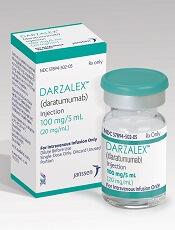
Photo courtesy of Janssen
The US Food and Drug Administration (FDA) has approved new indications for the monoclonal antibody daratumumab (Darzalex®).
The drug is now approved for use in combination with lenalidomide and dexamethasone or bortezomib and dexamethasone to treat patients with multiple myeloma (MM) who have received at least 1 prior therapy.
This approval comes 3 months after a supplemental biologics license application was submitted to the FDA.
The application was granted priority review last month, and the FDA granted daratumumab breakthrough therapy designation in July.
Daratumumab is the first CD38-directed cytolytic antibody approved anywhere in the world.
The drug received accelerated approval from the FDA in November of last year for use as monotherapy in MM patients who have received at least 3 prior lines of therapy, including a proteasome inhibitor and an immunomodulatory agent, or MM patients who are double refractory to a proteasome inhibitor and immunomodulatory agent.
Daratumumab is being developed by Janssen Biotech, Inc. under an exclusive worldwide license from Genmab. For the full prescribing information, visit www.DARZALEX.com.
Phase 3 trials
The FDA’s latest approval of daratumumab was based on data from the phase 3 POLLUX and CASTOR trials.
In the POLLUX trial, researchers compared treatment with lenalidomide and dexamethasone to treatment with daratumumab, lenalidomide, and dexamethasone in patients with relapsed or refractory MM.
Patients who received daratumumab in combination had a significantly higher response rate and longer progression-free survival than patients who received the 2-drug combination.
However, treatment with daratumumab was associated with infusion-related reactions and a higher incidence of neutropenia.
Results from this trial were published in NEJM in October.
In the CASTOR trial, researchers compared treatment with bortezomib and dexamethasone to treatment with daratumumab, bortezomib, and dexamethasone in patients with previously treated MM.
Patients who received the 3-drug combination had a higher response rate, longer progression-free survival, and a higher incidence of grade 3/4 adverse events than those who received the 2-drug combination.
Results from this trial were published in NEJM in August.
Photo courtesy of Janssen
The US Food and Drug Administration (FDA) has approved new indications for the monoclonal antibody daratumumab (Darzalex®).
The drug is now approved for use in combination with lenalidomide and dexamethasone or bortezomib and dexamethasone to treat patients with multiple myeloma (MM) who have received at least 1 prior therapy.
This approval comes 3 months after a supplemental biologics license application was submitted to the FDA.
The application was granted priority review last month, and the FDA granted daratumumab breakthrough therapy designation in July.
Daratumumab is the first CD38-directed cytolytic antibody approved anywhere in the world.
The drug received accelerated approval from the FDA in November of last year for use as monotherapy in MM patients who have received at least 3 prior lines of therapy, including a proteasome inhibitor and an immunomodulatory agent, or MM patients who are double refractory to a proteasome inhibitor and immunomodulatory agent.
Daratumumab is being developed by Janssen Biotech, Inc. under an exclusive worldwide license from Genmab. For the full prescribing information, visit www.DARZALEX.com.
Phase 3 trials
The FDA’s latest approval of daratumumab was based on data from the phase 3 POLLUX and CASTOR trials.
In the POLLUX trial, researchers compared treatment with lenalidomide and dexamethasone to treatment with daratumumab, lenalidomide, and dexamethasone in patients with relapsed or refractory MM.
Patients who received daratumumab in combination had a significantly higher response rate and longer progression-free survival than patients who received the 2-drug combination.
However, treatment with daratumumab was associated with infusion-related reactions and a higher incidence of neutropenia.
Results from this trial were published in NEJM in October.
In the CASTOR trial, researchers compared treatment with bortezomib and dexamethasone to treatment with daratumumab, bortezomib, and dexamethasone in patients with previously treated MM.
Patients who received the 3-drug combination had a higher response rate, longer progression-free survival, and a higher incidence of grade 3/4 adverse events than those who received the 2-drug combination.
Results from this trial were published in NEJM in August.
Photo courtesy of Janssen
The US Food and Drug Administration (FDA) has approved new indications for the monoclonal antibody daratumumab (Darzalex®).
The drug is now approved for use in combination with lenalidomide and dexamethasone or bortezomib and dexamethasone to treat patients with multiple myeloma (MM) who have received at least 1 prior therapy.
This approval comes 3 months after a supplemental biologics license application was submitted to the FDA.
The application was granted priority review last month, and the FDA granted daratumumab breakthrough therapy designation in July.
Daratumumab is the first CD38-directed cytolytic antibody approved anywhere in the world.
The drug received accelerated approval from the FDA in November of last year for use as monotherapy in MM patients who have received at least 3 prior lines of therapy, including a proteasome inhibitor and an immunomodulatory agent, or MM patients who are double refractory to a proteasome inhibitor and immunomodulatory agent.
Daratumumab is being developed by Janssen Biotech, Inc. under an exclusive worldwide license from Genmab. For the full prescribing information, visit www.DARZALEX.com.
Phase 3 trials
The FDA’s latest approval of daratumumab was based on data from the phase 3 POLLUX and CASTOR trials.
In the POLLUX trial, researchers compared treatment with lenalidomide and dexamethasone to treatment with daratumumab, lenalidomide, and dexamethasone in patients with relapsed or refractory MM.
Patients who received daratumumab in combination had a significantly higher response rate and longer progression-free survival than patients who received the 2-drug combination.
However, treatment with daratumumab was associated with infusion-related reactions and a higher incidence of neutropenia.
Results from this trial were published in NEJM in October.
In the CASTOR trial, researchers compared treatment with bortezomib and dexamethasone to treatment with daratumumab, bortezomib, and dexamethasone in patients with previously treated MM.
Patients who received the 3-drug combination had a higher response rate, longer progression-free survival, and a higher incidence of grade 3/4 adverse events than those who received the 2-drug combination.
Results from this trial were published in NEJM in August.
ALL subtype ‘highly prevalent’ in adults

Photo courtesy of St. Jude
Children’s Research Hospital
Researchers have found evidence to suggest that a high-risk subtype of acute lymphoblastic leukemia (ALL) is “highly prevalent” in adults with ALL.
In a study of nearly 800 adults with ALL, roughly a quarter of the patients had Philadelphia chromosome-like (Ph-like) ALL.
Patients with Ph-like ALL had inferior overall survival (OS) and event-free survival (EFS), but most of them also had kinase-activating alterations that suggest they might respond well to tyrosine kinase inhibitors.
The researchers reported these findings in the Journal of Clinical Oncology.
“This study establishes that a large percentage of adults with ALL have this high-risk subtype,” said study author Charles Mullighan, MD, MBBS, of St. Jude Children’s Research Hospital in Memphis, Tennessee.
“The finding provides a compelling reason to identify those with Ph-like ALL and move forward with clinical trials of these targeted therapies in combination with current chemotherapeutic regimens.”
This study builds on previous research, which suggested that Ph-like ALL becomes more common with age, is associated with poor prognosis, and is characterized by genomic alterations that appear to make patients responsive to treatment with tyrosine kinase inhibitors.
“Our 2014 findings that the prevalence of Ph-like ALL increased with age and was particularly common in young adults generated tremendous interest because adult ALL is difficult to treat,” Dr Mullighan said. “In this study, we determined that the prevalence remains high across the age spectrum of adults with ALL.”
Prevalence and outcomes
The study included 798 adults who were between the ages of 21 and 86 when diagnosed with ALL. A total of 194 patients (24%) had Ph-like ALL.
The incidence of Ph-like ALL was 27.9% among young adults (ages 21 to 39), 20.4% in adults (ages 40 to 59), and 24.0% in older adults (ages 60 to 86).
Patients with Ph-like ALL had significantly inferior 5-year OS compared to patients with non-Ph-like ALL—23.8% and 52.4%, respectively (P<0.001). The same was true for 5-year EFS—22.5% and 49.3%, respectively (P<0.001).
Among Ph-like ALL patients, the 5-year EFS rates were 40.4% for young adults, 29.8% for adults, and 18.9% for older adults. The 5-year OS rates were 45.2%, 35.1%, and 16.2%, respectively.
Genomic analysis
The researchers performed genomic analysis of 180 of the Ph-like ALL cases and found that 88% had kinase-activating alterations.
This included CRLF2 rearrangements in 51% of cases, JAK2 or EPOR rearrangements in 12.4%, ABL class fusions in 9.8%, other JAK-STAT sequence mutations in 7.2%, other kinase alterations in 4.1%, and Ras pathway mutations in 3.6%.
“Our comprehensive sequencing showed that Ph-like ALL in adults is the most genetically diverse subtype of leukemia that has been described,” said study author Kathryn Roberts, PhD, of St. Jude.
“Cumulatively, more than 50 different chromosomal rearrangements involving 15 different kinases and cytokine receptors have been identified. In this study, we identified 11 chromosomal rearrangements that are new to Ph-like ALL.”
These 11 rearrangements are FIP1L1-PDGFRA, SNX29-PDGFRB, SMU1-JAK2, ZNF340-JAK2, THADA-EPOR, SMARCA4-TYK2, ZNF340-TYK2, ZYMM2-FLT3, DNTT-BLNK, TMEM2-PTK2B, and KANK1-CBL1.
The diversity of kinase-activating alterations in Ph-like ALL has important clinical implications, said study author Hagop Kantarjian, MD, of the University of Texas MD Anderson Cancer Center in Houston.
“It is important that we now identify patients with Ph-like ALL at diagnosis to provide optimal treatment with targeted agents,” he said.
The findings also highlight the importance of centralized comprehensive genomic sequencing for patients, said study author Elisabeth Paietta, PhD, of the Montefiore Health System and Albert Einstein College of Medicine in Bronx, New York.
“Lymphoblasts from almost half of the patients with Ph-like ALL harbor a genomic rearrangement of CRLF2, which can be detected by flow cytometry using an antibody to CRLF2,” Dr Paietta said. “This is very important as it allows a quick characterization of this Ph-like ALL subtype prior to any detailed sequencing.”
Photo courtesy of St. Jude
Children’s Research Hospital
Researchers have found evidence to suggest that a high-risk subtype of acute lymphoblastic leukemia (ALL) is “highly prevalent” in adults with ALL.
In a study of nearly 800 adults with ALL, roughly a quarter of the patients had Philadelphia chromosome-like (Ph-like) ALL.
Patients with Ph-like ALL had inferior overall survival (OS) and event-free survival (EFS), but most of them also had kinase-activating alterations that suggest they might respond well to tyrosine kinase inhibitors.
The researchers reported these findings in the Journal of Clinical Oncology.
“This study establishes that a large percentage of adults with ALL have this high-risk subtype,” said study author Charles Mullighan, MD, MBBS, of St. Jude Children’s Research Hospital in Memphis, Tennessee.
“The finding provides a compelling reason to identify those with Ph-like ALL and move forward with clinical trials of these targeted therapies in combination with current chemotherapeutic regimens.”
This study builds on previous research, which suggested that Ph-like ALL becomes more common with age, is associated with poor prognosis, and is characterized by genomic alterations that appear to make patients responsive to treatment with tyrosine kinase inhibitors.
“Our 2014 findings that the prevalence of Ph-like ALL increased with age and was particularly common in young adults generated tremendous interest because adult ALL is difficult to treat,” Dr Mullighan said. “In this study, we determined that the prevalence remains high across the age spectrum of adults with ALL.”
Prevalence and outcomes
The study included 798 adults who were between the ages of 21 and 86 when diagnosed with ALL. A total of 194 patients (24%) had Ph-like ALL.
The incidence of Ph-like ALL was 27.9% among young adults (ages 21 to 39), 20.4% in adults (ages 40 to 59), and 24.0% in older adults (ages 60 to 86).
Patients with Ph-like ALL had significantly inferior 5-year OS compared to patients with non-Ph-like ALL—23.8% and 52.4%, respectively (P<0.001). The same was true for 5-year EFS—22.5% and 49.3%, respectively (P<0.001).
Among Ph-like ALL patients, the 5-year EFS rates were 40.4% for young adults, 29.8% for adults, and 18.9% for older adults. The 5-year OS rates were 45.2%, 35.1%, and 16.2%, respectively.
Genomic analysis
The researchers performed genomic analysis of 180 of the Ph-like ALL cases and found that 88% had kinase-activating alterations.
This included CRLF2 rearrangements in 51% of cases, JAK2 or EPOR rearrangements in 12.4%, ABL class fusions in 9.8%, other JAK-STAT sequence mutations in 7.2%, other kinase alterations in 4.1%, and Ras pathway mutations in 3.6%.
“Our comprehensive sequencing showed that Ph-like ALL in adults is the most genetically diverse subtype of leukemia that has been described,” said study author Kathryn Roberts, PhD, of St. Jude.
“Cumulatively, more than 50 different chromosomal rearrangements involving 15 different kinases and cytokine receptors have been identified. In this study, we identified 11 chromosomal rearrangements that are new to Ph-like ALL.”
These 11 rearrangements are FIP1L1-PDGFRA, SNX29-PDGFRB, SMU1-JAK2, ZNF340-JAK2, THADA-EPOR, SMARCA4-TYK2, ZNF340-TYK2, ZYMM2-FLT3, DNTT-BLNK, TMEM2-PTK2B, and KANK1-CBL1.
The diversity of kinase-activating alterations in Ph-like ALL has important clinical implications, said study author Hagop Kantarjian, MD, of the University of Texas MD Anderson Cancer Center in Houston.
“It is important that we now identify patients with Ph-like ALL at diagnosis to provide optimal treatment with targeted agents,” he said.
The findings also highlight the importance of centralized comprehensive genomic sequencing for patients, said study author Elisabeth Paietta, PhD, of the Montefiore Health System and Albert Einstein College of Medicine in Bronx, New York.
“Lymphoblasts from almost half of the patients with Ph-like ALL harbor a genomic rearrangement of CRLF2, which can be detected by flow cytometry using an antibody to CRLF2,” Dr Paietta said. “This is very important as it allows a quick characterization of this Ph-like ALL subtype prior to any detailed sequencing.”
Photo courtesy of St. Jude
Children’s Research Hospital
Researchers have found evidence to suggest that a high-risk subtype of acute lymphoblastic leukemia (ALL) is “highly prevalent” in adults with ALL.
In a study of nearly 800 adults with ALL, roughly a quarter of the patients had Philadelphia chromosome-like (Ph-like) ALL.
Patients with Ph-like ALL had inferior overall survival (OS) and event-free survival (EFS), but most of them also had kinase-activating alterations that suggest they might respond well to tyrosine kinase inhibitors.
The researchers reported these findings in the Journal of Clinical Oncology.
“This study establishes that a large percentage of adults with ALL have this high-risk subtype,” said study author Charles Mullighan, MD, MBBS, of St. Jude Children’s Research Hospital in Memphis, Tennessee.
“The finding provides a compelling reason to identify those with Ph-like ALL and move forward with clinical trials of these targeted therapies in combination with current chemotherapeutic regimens.”
This study builds on previous research, which suggested that Ph-like ALL becomes more common with age, is associated with poor prognosis, and is characterized by genomic alterations that appear to make patients responsive to treatment with tyrosine kinase inhibitors.
“Our 2014 findings that the prevalence of Ph-like ALL increased with age and was particularly common in young adults generated tremendous interest because adult ALL is difficult to treat,” Dr Mullighan said. “In this study, we determined that the prevalence remains high across the age spectrum of adults with ALL.”
Prevalence and outcomes
The study included 798 adults who were between the ages of 21 and 86 when diagnosed with ALL. A total of 194 patients (24%) had Ph-like ALL.
The incidence of Ph-like ALL was 27.9% among young adults (ages 21 to 39), 20.4% in adults (ages 40 to 59), and 24.0% in older adults (ages 60 to 86).
Patients with Ph-like ALL had significantly inferior 5-year OS compared to patients with non-Ph-like ALL—23.8% and 52.4%, respectively (P<0.001). The same was true for 5-year EFS—22.5% and 49.3%, respectively (P<0.001).
Among Ph-like ALL patients, the 5-year EFS rates were 40.4% for young adults, 29.8% for adults, and 18.9% for older adults. The 5-year OS rates were 45.2%, 35.1%, and 16.2%, respectively.
Genomic analysis
The researchers performed genomic analysis of 180 of the Ph-like ALL cases and found that 88% had kinase-activating alterations.
This included CRLF2 rearrangements in 51% of cases, JAK2 or EPOR rearrangements in 12.4%, ABL class fusions in 9.8%, other JAK-STAT sequence mutations in 7.2%, other kinase alterations in 4.1%, and Ras pathway mutations in 3.6%.
“Our comprehensive sequencing showed that Ph-like ALL in adults is the most genetically diverse subtype of leukemia that has been described,” said study author Kathryn Roberts, PhD, of St. Jude.
“Cumulatively, more than 50 different chromosomal rearrangements involving 15 different kinases and cytokine receptors have been identified. In this study, we identified 11 chromosomal rearrangements that are new to Ph-like ALL.”
These 11 rearrangements are FIP1L1-PDGFRA, SNX29-PDGFRB, SMU1-JAK2, ZNF340-JAK2, THADA-EPOR, SMARCA4-TYK2, ZNF340-TYK2, ZYMM2-FLT3, DNTT-BLNK, TMEM2-PTK2B, and KANK1-CBL1.
The diversity of kinase-activating alterations in Ph-like ALL has important clinical implications, said study author Hagop Kantarjian, MD, of the University of Texas MD Anderson Cancer Center in Houston.
“It is important that we now identify patients with Ph-like ALL at diagnosis to provide optimal treatment with targeted agents,” he said.
The findings also highlight the importance of centralized comprehensive genomic sequencing for patients, said study author Elisabeth Paietta, PhD, of the Montefiore Health System and Albert Einstein College of Medicine in Bronx, New York.
“Lymphoblasts from almost half of the patients with Ph-like ALL harbor a genomic rearrangement of CRLF2, which can be detected by flow cytometry using an antibody to CRLF2,” Dr Paietta said. “This is very important as it allows a quick characterization of this Ph-like ALL subtype prior to any detailed sequencing.”