User login
Drug approved to treat hemophilia A in Kuwait
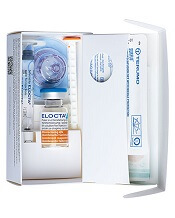
(Elocta) packaging
Photo courtesy of Sobi
The Ministry of Health in Kuwait has approved efmoroctocog alfa (Elocta®), a recombinant human factor VIII Fc-fusion protein, for the treatment of hemophilia A.
It is indicated for both on-demand and prophylactic treatment in hemophilia A patients of all ages.
Efmoroctocog alfa is the first recombinant factor VIII Fc fusion protein therapy approved for the treatment of hemophilia A in the Middle East region.
Efmoroctocog alfa is also approved in the European Union, Switzerland, Iceland, Liechtenstein, Norway, the US, Canada, Australia, New Zealand, Brazil, Taiwan, and Japan.
Efmoroctocog alfa was developed by fusing B-domain deleted factor VIII to the Fc portion of immunoglobulin G subclass 1. It is believed that this enables efmoroctocog alfa to utilize a naturally occurring pathway to prolong the time the therapy remains in the body.
Sobi and Biogen are collaborators in the development and commercialization of efmoroctocog alfa for hemophilia A.
The approval of efmoroctocog alfa in Kuwait was based on data from a pair of phase 3 studies: A-LONG and Kids A-LONG.
A-LONG
The A-LONG study included 165 previously treated males 12 years of age and older with severe hemophilia A. Researchers evaluated individualized and weekly prophylaxis to reduce or prevent bleeding episodes and on-demand dosing to treat bleeding episodes.
Prophylaxis with efmoroctocog alfa resulted in low annualized bleeding rates, and a majority of bleeding episodes were controlled with a single injection of efmoroctocog alfa.
None of the patients developed neutralizing antibodies, efmoroctocog alfa was considered well-tolerated, and the product had a prolonged half-life when compared with recombinant factor VIII.
Kids A-LONG
The Kids A-LONG study included 71 boys (younger than 12) with severe hemophilia A who had at least 50 prior exposure days to factor VIII therapies.
The children saw their median annualized bleeding rate decrease with efmoroctocog alfa, and close to half of the children did not have any bleeding episodes while they were receiving efmoroctocog alfa.
None of the patients developed inhibitors, and researchers said adverse events were typical of a pediatric hemophilia population. 
(Elocta) packaging
Photo courtesy of Sobi
The Ministry of Health in Kuwait has approved efmoroctocog alfa (Elocta®), a recombinant human factor VIII Fc-fusion protein, for the treatment of hemophilia A.
It is indicated for both on-demand and prophylactic treatment in hemophilia A patients of all ages.
Efmoroctocog alfa is the first recombinant factor VIII Fc fusion protein therapy approved for the treatment of hemophilia A in the Middle East region.
Efmoroctocog alfa is also approved in the European Union, Switzerland, Iceland, Liechtenstein, Norway, the US, Canada, Australia, New Zealand, Brazil, Taiwan, and Japan.
Efmoroctocog alfa was developed by fusing B-domain deleted factor VIII to the Fc portion of immunoglobulin G subclass 1. It is believed that this enables efmoroctocog alfa to utilize a naturally occurring pathway to prolong the time the therapy remains in the body.
Sobi and Biogen are collaborators in the development and commercialization of efmoroctocog alfa for hemophilia A.
The approval of efmoroctocog alfa in Kuwait was based on data from a pair of phase 3 studies: A-LONG and Kids A-LONG.
A-LONG
The A-LONG study included 165 previously treated males 12 years of age and older with severe hemophilia A. Researchers evaluated individualized and weekly prophylaxis to reduce or prevent bleeding episodes and on-demand dosing to treat bleeding episodes.
Prophylaxis with efmoroctocog alfa resulted in low annualized bleeding rates, and a majority of bleeding episodes were controlled with a single injection of efmoroctocog alfa.
None of the patients developed neutralizing antibodies, efmoroctocog alfa was considered well-tolerated, and the product had a prolonged half-life when compared with recombinant factor VIII.
Kids A-LONG
The Kids A-LONG study included 71 boys (younger than 12) with severe hemophilia A who had at least 50 prior exposure days to factor VIII therapies.
The children saw their median annualized bleeding rate decrease with efmoroctocog alfa, and close to half of the children did not have any bleeding episodes while they were receiving efmoroctocog alfa.
None of the patients developed inhibitors, and researchers said adverse events were typical of a pediatric hemophilia population.
(Elocta) packaging
Photo courtesy of Sobi
The Ministry of Health in Kuwait has approved efmoroctocog alfa (Elocta®), a recombinant human factor VIII Fc-fusion protein, for the treatment of hemophilia A.
It is indicated for both on-demand and prophylactic treatment in hemophilia A patients of all ages.
Efmoroctocog alfa is the first recombinant factor VIII Fc fusion protein therapy approved for the treatment of hemophilia A in the Middle East region.
Efmoroctocog alfa is also approved in the European Union, Switzerland, Iceland, Liechtenstein, Norway, the US, Canada, Australia, New Zealand, Brazil, Taiwan, and Japan.
Efmoroctocog alfa was developed by fusing B-domain deleted factor VIII to the Fc portion of immunoglobulin G subclass 1. It is believed that this enables efmoroctocog alfa to utilize a naturally occurring pathway to prolong the time the therapy remains in the body.
Sobi and Biogen are collaborators in the development and commercialization of efmoroctocog alfa for hemophilia A.
The approval of efmoroctocog alfa in Kuwait was based on data from a pair of phase 3 studies: A-LONG and Kids A-LONG.
A-LONG
The A-LONG study included 165 previously treated males 12 years of age and older with severe hemophilia A. Researchers evaluated individualized and weekly prophylaxis to reduce or prevent bleeding episodes and on-demand dosing to treat bleeding episodes.
Prophylaxis with efmoroctocog alfa resulted in low annualized bleeding rates, and a majority of bleeding episodes were controlled with a single injection of efmoroctocog alfa.
None of the patients developed neutralizing antibodies, efmoroctocog alfa was considered well-tolerated, and the product had a prolonged half-life when compared with recombinant factor VIII.
Kids A-LONG
The Kids A-LONG study included 71 boys (younger than 12) with severe hemophilia A who had at least 50 prior exposure days to factor VIII therapies.
The children saw their median annualized bleeding rate decrease with efmoroctocog alfa, and close to half of the children did not have any bleeding episodes while they were receiving efmoroctocog alfa.
None of the patients developed inhibitors, and researchers said adverse events were typical of a pediatric hemophilia population.
Novel CLL drugs could greatly increase costs

New research suggests the increasing use of oral targeted therapies for chronic lymphocytic leukemia (CLL) could raise US treatment costs for the disease by almost 600%.
Investigators modeled the evolving management of CLL from 2011 to 2025 and found that increasing use of the oral targeted therapies ibrutinib and idelalisib could greatly increase costs for both patients and payers.
The team detailed these findings in the Journal of Clinical Oncology.
“The rising cost of cancer care is a serious concern,” said study author Jagpreet Chhatwal, PhD, of Massachusetts General Hospital in Boston.
“The average cost of annual cancer treatment, which was below $10,000 per patient before 2000, has now increased to more than $100,000. Such increasing trends can limit access to new therapies, potentially undermining their clinical effectiveness. These new drugs are highly effective, but their high costs motivated us to project their changing economic burden and affordability.”
Dr Chhatwal and his colleagues noted that ibrutinib and idelalisib each cost around $130,000 per year, and treatment with these drugs may be continued indefinitely.
So the team set out to determine the potential financial impact of the drugs on payers’ budgets, as well as on Medicare-enrolled patients, who represent the majority of CLL patients in the US.
The investigators developed a model to simulate the evolving management of CLL from 2011 to 2025.
In one scenario, chemoimmunotherapy was the standard of care before 2014, while oral targeted therapies were used for patients with del(17p) and relapsed CLL from 2014 onward and for first-line treatment of CLL from 2016 onward.
The team also modeled a scenario in which chemoimmunotherapy was the standard of care throughout the entire time period and compared the costs between these scenarios.
The model projects that:
- Per-patient lifetime costs for CLL treatment will increase from $147,000 to $604,000 from 2016 onward
- The total out-of-pocket costs for Medicare patients will increase from $9200 to $57,000 for patients initiating treatment from 2016 onward
- The total annual cost of CLL management in the US will rise from $0.74 billion in 2011 to $5.13 billion in 2025, an increase of 590%.
“Such substantial increases in the cost are mainly driven by high drug prices, prolonged treatment duration, and the increase in the number of patients living with CLL,” said study author Qiushi Chen, PhD, of Massachusetts General Hospital.
The investigators also noted that the standard measure used to determine the cost-effectiveness of a medical intervention is whether it costs less than $100,000 for each additional year of life gained. The projected cost-effectiveness ratio of oral targeted therapy in CLL is $189,000 for each year gained.
“At the current average wholesale prices, oral targeted therapies for CLL are not cost-effective, and prices would need to drop by 50% to 70% to become cost-effective,” Dr Chhatwal said.
“We are not recommending that clinicians choose less effective CLL management strategies that do not include oral targeted therapies,” said study author Nitin Jain, MD, of the University of Texas MD Anderson Cancer Center in Houston.
“Instead, we propose that the prices of these drugs need to be reduced to make the treatment cost-effective and more affordable, something we hope may happen with all cancer drugs. We also believe more research is needed to explore whether we can discontinue targeted treatment of patients who have responded well without risking worsening of their health.”
New research suggests the increasing use of oral targeted therapies for chronic lymphocytic leukemia (CLL) could raise US treatment costs for the disease by almost 600%.
Investigators modeled the evolving management of CLL from 2011 to 2025 and found that increasing use of the oral targeted therapies ibrutinib and idelalisib could greatly increase costs for both patients and payers.
The team detailed these findings in the Journal of Clinical Oncology.
“The rising cost of cancer care is a serious concern,” said study author Jagpreet Chhatwal, PhD, of Massachusetts General Hospital in Boston.
“The average cost of annual cancer treatment, which was below $10,000 per patient before 2000, has now increased to more than $100,000. Such increasing trends can limit access to new therapies, potentially undermining their clinical effectiveness. These new drugs are highly effective, but their high costs motivated us to project their changing economic burden and affordability.”
Dr Chhatwal and his colleagues noted that ibrutinib and idelalisib each cost around $130,000 per year, and treatment with these drugs may be continued indefinitely.
So the team set out to determine the potential financial impact of the drugs on payers’ budgets, as well as on Medicare-enrolled patients, who represent the majority of CLL patients in the US.
The investigators developed a model to simulate the evolving management of CLL from 2011 to 2025.
In one scenario, chemoimmunotherapy was the standard of care before 2014, while oral targeted therapies were used for patients with del(17p) and relapsed CLL from 2014 onward and for first-line treatment of CLL from 2016 onward.
The team also modeled a scenario in which chemoimmunotherapy was the standard of care throughout the entire time period and compared the costs between these scenarios.
The model projects that:
- Per-patient lifetime costs for CLL treatment will increase from $147,000 to $604,000 from 2016 onward
- The total out-of-pocket costs for Medicare patients will increase from $9200 to $57,000 for patients initiating treatment from 2016 onward
- The total annual cost of CLL management in the US will rise from $0.74 billion in 2011 to $5.13 billion in 2025, an increase of 590%.
“Such substantial increases in the cost are mainly driven by high drug prices, prolonged treatment duration, and the increase in the number of patients living with CLL,” said study author Qiushi Chen, PhD, of Massachusetts General Hospital.
The investigators also noted that the standard measure used to determine the cost-effectiveness of a medical intervention is whether it costs less than $100,000 for each additional year of life gained. The projected cost-effectiveness ratio of oral targeted therapy in CLL is $189,000 for each year gained.
“At the current average wholesale prices, oral targeted therapies for CLL are not cost-effective, and prices would need to drop by 50% to 70% to become cost-effective,” Dr Chhatwal said.
“We are not recommending that clinicians choose less effective CLL management strategies that do not include oral targeted therapies,” said study author Nitin Jain, MD, of the University of Texas MD Anderson Cancer Center in Houston.
“Instead, we propose that the prices of these drugs need to be reduced to make the treatment cost-effective and more affordable, something we hope may happen with all cancer drugs. We also believe more research is needed to explore whether we can discontinue targeted treatment of patients who have responded well without risking worsening of their health.”
New research suggests the increasing use of oral targeted therapies for chronic lymphocytic leukemia (CLL) could raise US treatment costs for the disease by almost 600%.
Investigators modeled the evolving management of CLL from 2011 to 2025 and found that increasing use of the oral targeted therapies ibrutinib and idelalisib could greatly increase costs for both patients and payers.
The team detailed these findings in the Journal of Clinical Oncology.
“The rising cost of cancer care is a serious concern,” said study author Jagpreet Chhatwal, PhD, of Massachusetts General Hospital in Boston.
“The average cost of annual cancer treatment, which was below $10,000 per patient before 2000, has now increased to more than $100,000. Such increasing trends can limit access to new therapies, potentially undermining their clinical effectiveness. These new drugs are highly effective, but their high costs motivated us to project their changing economic burden and affordability.”
Dr Chhatwal and his colleagues noted that ibrutinib and idelalisib each cost around $130,000 per year, and treatment with these drugs may be continued indefinitely.
So the team set out to determine the potential financial impact of the drugs on payers’ budgets, as well as on Medicare-enrolled patients, who represent the majority of CLL patients in the US.
The investigators developed a model to simulate the evolving management of CLL from 2011 to 2025.
In one scenario, chemoimmunotherapy was the standard of care before 2014, while oral targeted therapies were used for patients with del(17p) and relapsed CLL from 2014 onward and for first-line treatment of CLL from 2016 onward.
The team also modeled a scenario in which chemoimmunotherapy was the standard of care throughout the entire time period and compared the costs between these scenarios.
The model projects that:
- Per-patient lifetime costs for CLL treatment will increase from $147,000 to $604,000 from 2016 onward
- The total out-of-pocket costs for Medicare patients will increase from $9200 to $57,000 for patients initiating treatment from 2016 onward
- The total annual cost of CLL management in the US will rise from $0.74 billion in 2011 to $5.13 billion in 2025, an increase of 590%.
“Such substantial increases in the cost are mainly driven by high drug prices, prolonged treatment duration, and the increase in the number of patients living with CLL,” said study author Qiushi Chen, PhD, of Massachusetts General Hospital.
The investigators also noted that the standard measure used to determine the cost-effectiveness of a medical intervention is whether it costs less than $100,000 for each additional year of life gained. The projected cost-effectiveness ratio of oral targeted therapy in CLL is $189,000 for each year gained.
“At the current average wholesale prices, oral targeted therapies for CLL are not cost-effective, and prices would need to drop by 50% to 70% to become cost-effective,” Dr Chhatwal said.
“We are not recommending that clinicians choose less effective CLL management strategies that do not include oral targeted therapies,” said study author Nitin Jain, MD, of the University of Texas MD Anderson Cancer Center in Houston.
“Instead, we propose that the prices of these drugs need to be reduced to make the treatment cost-effective and more affordable, something we hope may happen with all cancer drugs. We also believe more research is needed to explore whether we can discontinue targeted treatment of patients who have responded well without risking worsening of their health.”
NCCN guidelines on MM now include MRD testing
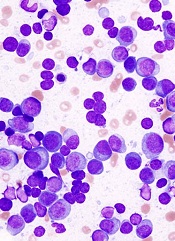
The National Comprehensive Cancer Network (NCCN) has revised its clinical practice guidelines on multiple myeloma (MM) to include response criteria developed by the International Myeloma Working Group (IMWG) and testing for minimal residual disease (MRD).
The NCCN develops practice guidelines to help physicians in making informed treatment decisions.
Its recommendations can facilitate reimbursement for testing or treatment.
“The NCCN’s action represents a further step toward broad use of MRD testing,” said Brian Durie, MD, chairman of the International Myeloma Foundation (IMF).
The importance of first identifying and then eliminating MRD is the key principle of the IMF’s Black Swan Research Initiative®, a collaborative effort launched in 2012 to cure MM.
“We’ve long believed early intervention with highly effective treatments is the pathway to curing myeloma, and we are currently testing this in clinical trials,” Dr Durie said.
Through the Black Swan Research Initiative, the IMF helped develop next-generation flow cytometry, 1 of 2 tests recommended by the NCCN to assess the presence of MRD in MM patients. The second test is next-generation sequencing.
The new MM response criteria, on which the NCCN based its most recent revision to the guidelines, were developed and agreed upon by the more than 200 members of the IMWG.
The new response criteria spell out exact definitions of “MRD negative” by next-generation flow cytometry or next-generation sequencing.
“We are pleased that the 2016 IMWG response criteria were adopted in full in the new NCCN recommendations,” said Shaji Kumar, MD, of the Mayo Clinic in Rochester, Minnesota.
The 2016 IMWG response criteria were published in The Lancet Oncology in August.
The National Comprehensive Cancer Network (NCCN) has revised its clinical practice guidelines on multiple myeloma (MM) to include response criteria developed by the International Myeloma Working Group (IMWG) and testing for minimal residual disease (MRD).
The NCCN develops practice guidelines to help physicians in making informed treatment decisions.
Its recommendations can facilitate reimbursement for testing or treatment.
“The NCCN’s action represents a further step toward broad use of MRD testing,” said Brian Durie, MD, chairman of the International Myeloma Foundation (IMF).
The importance of first identifying and then eliminating MRD is the key principle of the IMF’s Black Swan Research Initiative®, a collaborative effort launched in 2012 to cure MM.
“We’ve long believed early intervention with highly effective treatments is the pathway to curing myeloma, and we are currently testing this in clinical trials,” Dr Durie said.
Through the Black Swan Research Initiative, the IMF helped develop next-generation flow cytometry, 1 of 2 tests recommended by the NCCN to assess the presence of MRD in MM patients. The second test is next-generation sequencing.
The new MM response criteria, on which the NCCN based its most recent revision to the guidelines, were developed and agreed upon by the more than 200 members of the IMWG.
The new response criteria spell out exact definitions of “MRD negative” by next-generation flow cytometry or next-generation sequencing.
“We are pleased that the 2016 IMWG response criteria were adopted in full in the new NCCN recommendations,” said Shaji Kumar, MD, of the Mayo Clinic in Rochester, Minnesota.
The 2016 IMWG response criteria were published in The Lancet Oncology in August.
The National Comprehensive Cancer Network (NCCN) has revised its clinical practice guidelines on multiple myeloma (MM) to include response criteria developed by the International Myeloma Working Group (IMWG) and testing for minimal residual disease (MRD).
The NCCN develops practice guidelines to help physicians in making informed treatment decisions.
Its recommendations can facilitate reimbursement for testing or treatment.
“The NCCN’s action represents a further step toward broad use of MRD testing,” said Brian Durie, MD, chairman of the International Myeloma Foundation (IMF).
The importance of first identifying and then eliminating MRD is the key principle of the IMF’s Black Swan Research Initiative®, a collaborative effort launched in 2012 to cure MM.
“We’ve long believed early intervention with highly effective treatments is the pathway to curing myeloma, and we are currently testing this in clinical trials,” Dr Durie said.
Through the Black Swan Research Initiative, the IMF helped develop next-generation flow cytometry, 1 of 2 tests recommended by the NCCN to assess the presence of MRD in MM patients. The second test is next-generation sequencing.
The new MM response criteria, on which the NCCN based its most recent revision to the guidelines, were developed and agreed upon by the more than 200 members of the IMWG.
The new response criteria spell out exact definitions of “MRD negative” by next-generation flow cytometry or next-generation sequencing.
“We are pleased that the 2016 IMWG response criteria were adopted in full in the new NCCN recommendations,” said Shaji Kumar, MD, of the Mayo Clinic in Rochester, Minnesota.
The 2016 IMWG response criteria were published in The Lancet Oncology in August.
Large-scale tumor profiling deemed feasible, but challenges remain

Photo courtesy of the
National Institute of
General Medical Sciences
New research suggests large-scale genomic profiling is technically feasible in a broad population of cancer patients.
However, the study also revealed challenges and barriers to widespread implementation of precision medicine, according to researchers.
Specifically, half of the patients studied did not receive results of genomic profiling due to insufficient samples or sequencing failure.
Most patients who did receive results did not see a change in their care.
However, genomic profiling provided an accurate diagnosis and changed treatment for a handful of the patients studied.
Lynette M. Sholl, MD, of Brigham and Women’s Hospital in Boston, Massachusetts, and her colleagues reported these findings in JCI Insight.
The report contains data on pediatric and adult patients with a range of malignancies.
Patient samples were analyzed using OncoPanel. This platform sequences hundreds of known cancer-related genes to look for alterations that drive tumors and might be helpful in guiding treatment choice or enrolling the patient in an appropriate clinical trial.
This study began with 7397 patients, but many of these individuals did not have specimens adequate for sequencing. This left 3892 patients (53%) to undergo genomic profiling, but sequencing failed in 165 (4%) of them. So sequencing was successful in 3727 patients, or 50% of the overall population.
Of the 3727 patients in whom sequencing was successful, 73% had at least 1 genetic alteration that was considered “clinically actionable or informative” by the researchers.
This included 54% of patients with alterations that might be used to inform diagnosis or recommend enrollment in a clinical trial. It also included 19% of patients who had an alteration that “would inform standard-of-care therapeutic decision-making,” according to the researchers.
The team provided several examples of how genomic testing clarified or changed a patient’s diagnosis, which, in turn, altered treatment and prognosis.
One example was a patient who was originally diagnosed with peripheral T-cell lymphoma, which was later revised to myeloid sarcoma. Sequencing results suggested the patient actually had FIP1L1-PDGFRA-driven acute myeloid leukemia, which predicted responsiveness to imatinib.
The patient was treated with imatinib and experienced a “dramatic and sustained clinical response.” He then proceeded to allogeneic transplant and had no evidence of disease at 1 year of follow-up.
The researchers concluded that genomic sequencing results may alter the management of cancer patients in some cases, but certain barriers must be overcome to enable precision cancer medicine on a large scale.
Photo courtesy of the
National Institute of
General Medical Sciences
New research suggests large-scale genomic profiling is technically feasible in a broad population of cancer patients.
However, the study also revealed challenges and barriers to widespread implementation of precision medicine, according to researchers.
Specifically, half of the patients studied did not receive results of genomic profiling due to insufficient samples or sequencing failure.
Most patients who did receive results did not see a change in their care.
However, genomic profiling provided an accurate diagnosis and changed treatment for a handful of the patients studied.
Lynette M. Sholl, MD, of Brigham and Women’s Hospital in Boston, Massachusetts, and her colleagues reported these findings in JCI Insight.
The report contains data on pediatric and adult patients with a range of malignancies.
Patient samples were analyzed using OncoPanel. This platform sequences hundreds of known cancer-related genes to look for alterations that drive tumors and might be helpful in guiding treatment choice or enrolling the patient in an appropriate clinical trial.
This study began with 7397 patients, but many of these individuals did not have specimens adequate for sequencing. This left 3892 patients (53%) to undergo genomic profiling, but sequencing failed in 165 (4%) of them. So sequencing was successful in 3727 patients, or 50% of the overall population.
Of the 3727 patients in whom sequencing was successful, 73% had at least 1 genetic alteration that was considered “clinically actionable or informative” by the researchers.
This included 54% of patients with alterations that might be used to inform diagnosis or recommend enrollment in a clinical trial. It also included 19% of patients who had an alteration that “would inform standard-of-care therapeutic decision-making,” according to the researchers.
The team provided several examples of how genomic testing clarified or changed a patient’s diagnosis, which, in turn, altered treatment and prognosis.
One example was a patient who was originally diagnosed with peripheral T-cell lymphoma, which was later revised to myeloid sarcoma. Sequencing results suggested the patient actually had FIP1L1-PDGFRA-driven acute myeloid leukemia, which predicted responsiveness to imatinib.
The patient was treated with imatinib and experienced a “dramatic and sustained clinical response.” He then proceeded to allogeneic transplant and had no evidence of disease at 1 year of follow-up.
The researchers concluded that genomic sequencing results may alter the management of cancer patients in some cases, but certain barriers must be overcome to enable precision cancer medicine on a large scale.
Photo courtesy of the
National Institute of
General Medical Sciences
New research suggests large-scale genomic profiling is technically feasible in a broad population of cancer patients.
However, the study also revealed challenges and barriers to widespread implementation of precision medicine, according to researchers.
Specifically, half of the patients studied did not receive results of genomic profiling due to insufficient samples or sequencing failure.
Most patients who did receive results did not see a change in their care.
However, genomic profiling provided an accurate diagnosis and changed treatment for a handful of the patients studied.
Lynette M. Sholl, MD, of Brigham and Women’s Hospital in Boston, Massachusetts, and her colleagues reported these findings in JCI Insight.
The report contains data on pediatric and adult patients with a range of malignancies.
Patient samples were analyzed using OncoPanel. This platform sequences hundreds of known cancer-related genes to look for alterations that drive tumors and might be helpful in guiding treatment choice or enrolling the patient in an appropriate clinical trial.
This study began with 7397 patients, but many of these individuals did not have specimens adequate for sequencing. This left 3892 patients (53%) to undergo genomic profiling, but sequencing failed in 165 (4%) of them. So sequencing was successful in 3727 patients, or 50% of the overall population.
Of the 3727 patients in whom sequencing was successful, 73% had at least 1 genetic alteration that was considered “clinically actionable or informative” by the researchers.
This included 54% of patients with alterations that might be used to inform diagnosis or recommend enrollment in a clinical trial. It also included 19% of patients who had an alteration that “would inform standard-of-care therapeutic decision-making,” according to the researchers.
The team provided several examples of how genomic testing clarified or changed a patient’s diagnosis, which, in turn, altered treatment and prognosis.
One example was a patient who was originally diagnosed with peripheral T-cell lymphoma, which was later revised to myeloid sarcoma. Sequencing results suggested the patient actually had FIP1L1-PDGFRA-driven acute myeloid leukemia, which predicted responsiveness to imatinib.
The patient was treated with imatinib and experienced a “dramatic and sustained clinical response.” He then proceeded to allogeneic transplant and had no evidence of disease at 1 year of follow-up.
The researchers concluded that genomic sequencing results may alter the management of cancer patients in some cases, but certain barriers must be overcome to enable precision cancer medicine on a large scale.
Improving cryopreservation of RBCs
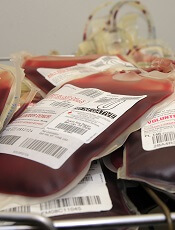
Photo from UAB Hospital
A class of small-molecule ice recrystallization inhibitors could improve the cryopreservation of red blood cells (RBCs) intended for transfusion, according to researchers.
The team said these molecules can decrease the time needed to thaw cryopreserved RBCs, thereby reducing transfusion wait times.
But the molecules also protect RBCs from injury during cryopreservation and reduce the risk of post-thaw hemolysis.
Robert N. Ben, PhD, of the University of Ottawa in Ontario, Canada, and his colleagues conducted this research and detailed the results in the journal ACS Omega.
The researchers began with a class of glucose-based molecules they had previously found to be cryoprotective.
The team set out to determine whether these molecules, known as O-aryl-glycosides, could potentially reduce the time needed to process frozen RBCs.
They found that changes in the structure of O-aryl-glycosides affect their ability to inhibit ice recrystallization and protect against cryoinjury. But 3 O-aryl-glycosides—β-PMP-Glc, β-pBrPh-Glc, and β-pBrPh-Gal—proved particularly effective in these areas.
The researchers said low concentrations of β-PMP-Glc, β-pBrPh-Glc, and β-pBrPh-Gal provided “high post-thaw RBC integrity” and reduced the needed concentration of glycerol from 40% to between 10% and 15%.
The highest post-thaw integrity observed in slow freezing conditions was with β-pBrPh-Glc and β-pBrPh-Gal. The post-thaw integrity was 65% with 55 mM of β-pBrPh-Gal and 67% with 30 mM of β-pBrPh-Glc.
The researchers noted that these molecules were “very effective” in rapid freezing conditions as well. And the addition of glycerol improved post-thaw RBC integrity.
Combining 30 mM of either molecule with 15% glycerol resulted in almost 95% post-thaw RBC integrity, whereas 15% glycerol alone provides 75% post-thaw integrity.
The researchers said 30 mM of β-pBrPh-Glc was even “highly effective” in preventing post-thaw hemolysis with a glycerol concentration of 10%. In this case, the post-thaw integrity was 67%, whereas 10% glycerol alone provides 23% post-thaw integrity.
The researchers noted that lowering the amount of glycerol needed during the cryopreservation process could help minimize the time required to prepare thawed RBCs for transfusion and provide patients with faster access to cryopreserved RBCs.
The team added that O-aryl-glycosides are structurally simple and amenable to large-scale preparation for use in cryopreservation.
Photo from UAB Hospital
A class of small-molecule ice recrystallization inhibitors could improve the cryopreservation of red blood cells (RBCs) intended for transfusion, according to researchers.
The team said these molecules can decrease the time needed to thaw cryopreserved RBCs, thereby reducing transfusion wait times.
But the molecules also protect RBCs from injury during cryopreservation and reduce the risk of post-thaw hemolysis.
Robert N. Ben, PhD, of the University of Ottawa in Ontario, Canada, and his colleagues conducted this research and detailed the results in the journal ACS Omega.
The researchers began with a class of glucose-based molecules they had previously found to be cryoprotective.
The team set out to determine whether these molecules, known as O-aryl-glycosides, could potentially reduce the time needed to process frozen RBCs.
They found that changes in the structure of O-aryl-glycosides affect their ability to inhibit ice recrystallization and protect against cryoinjury. But 3 O-aryl-glycosides—β-PMP-Glc, β-pBrPh-Glc, and β-pBrPh-Gal—proved particularly effective in these areas.
The researchers said low concentrations of β-PMP-Glc, β-pBrPh-Glc, and β-pBrPh-Gal provided “high post-thaw RBC integrity” and reduced the needed concentration of glycerol from 40% to between 10% and 15%.
The highest post-thaw integrity observed in slow freezing conditions was with β-pBrPh-Glc and β-pBrPh-Gal. The post-thaw integrity was 65% with 55 mM of β-pBrPh-Gal and 67% with 30 mM of β-pBrPh-Glc.
The researchers noted that these molecules were “very effective” in rapid freezing conditions as well. And the addition of glycerol improved post-thaw RBC integrity.
Combining 30 mM of either molecule with 15% glycerol resulted in almost 95% post-thaw RBC integrity, whereas 15% glycerol alone provides 75% post-thaw integrity.
The researchers said 30 mM of β-pBrPh-Glc was even “highly effective” in preventing post-thaw hemolysis with a glycerol concentration of 10%. In this case, the post-thaw integrity was 67%, whereas 10% glycerol alone provides 23% post-thaw integrity.
The researchers noted that lowering the amount of glycerol needed during the cryopreservation process could help minimize the time required to prepare thawed RBCs for transfusion and provide patients with faster access to cryopreserved RBCs.
The team added that O-aryl-glycosides are structurally simple and amenable to large-scale preparation for use in cryopreservation.
Photo from UAB Hospital
A class of small-molecule ice recrystallization inhibitors could improve the cryopreservation of red blood cells (RBCs) intended for transfusion, according to researchers.
The team said these molecules can decrease the time needed to thaw cryopreserved RBCs, thereby reducing transfusion wait times.
But the molecules also protect RBCs from injury during cryopreservation and reduce the risk of post-thaw hemolysis.
Robert N. Ben, PhD, of the University of Ottawa in Ontario, Canada, and his colleagues conducted this research and detailed the results in the journal ACS Omega.
The researchers began with a class of glucose-based molecules they had previously found to be cryoprotective.
The team set out to determine whether these molecules, known as O-aryl-glycosides, could potentially reduce the time needed to process frozen RBCs.
They found that changes in the structure of O-aryl-glycosides affect their ability to inhibit ice recrystallization and protect against cryoinjury. But 3 O-aryl-glycosides—β-PMP-Glc, β-pBrPh-Glc, and β-pBrPh-Gal—proved particularly effective in these areas.
The researchers said low concentrations of β-PMP-Glc, β-pBrPh-Glc, and β-pBrPh-Gal provided “high post-thaw RBC integrity” and reduced the needed concentration of glycerol from 40% to between 10% and 15%.
The highest post-thaw integrity observed in slow freezing conditions was with β-pBrPh-Glc and β-pBrPh-Gal. The post-thaw integrity was 65% with 55 mM of β-pBrPh-Gal and 67% with 30 mM of β-pBrPh-Glc.
The researchers noted that these molecules were “very effective” in rapid freezing conditions as well. And the addition of glycerol improved post-thaw RBC integrity.
Combining 30 mM of either molecule with 15% glycerol resulted in almost 95% post-thaw RBC integrity, whereas 15% glycerol alone provides 75% post-thaw integrity.
The researchers said 30 mM of β-pBrPh-Glc was even “highly effective” in preventing post-thaw hemolysis with a glycerol concentration of 10%. In this case, the post-thaw integrity was 67%, whereas 10% glycerol alone provides 23% post-thaw integrity.
The researchers noted that lowering the amount of glycerol needed during the cryopreservation process could help minimize the time required to prepare thawed RBCs for transfusion and provide patients with faster access to cryopreserved RBCs.
The team added that O-aryl-glycosides are structurally simple and amenable to large-scale preparation for use in cryopreservation.
Drug produces mixed results in myelofibrosis

Two phase 3 trials have shown mixed results in myelofibrosis (MF) patients receiving the JAK inhibitor momelotinib, according to Gilead Sciences, Inc., the company developing the drug.
In the SIMPLIFY-1 study, momelotinib proved non-inferior to ruxolitinib when it came to the study’s primary endpoint but not its key secondary
endpoint.
In the SIMPLIFY-2 trial, momelotinib was not superior to best available therapy (BAT) with regard to the primary endpoint.
However, there were differences in favor of momelotinib when it came to some secondary endpoints.
“The results from both the SIMPLIFY-1 and SIMPLIFY-2 studies indicate that momelotinib provides some treatment benefit, including benefit on anemia-related endpoints,” said Norbert Bischofberger, PhD, executive vice president of research and development and chief scientific officer at Gilead Sciences, Inc.
“We plan to discuss these results with regulatory authorities to determine the next steps.”
About the studies
The SIMPLIFY studies are randomized, phase 3 trials designed to evaluate momelotinib in patients with primary MF, post-polycythemia vera MF, or post-essential thrombocythemia MF. The trials have the same primary and secondary endpoints.
The primary efficacy endpoint is splenic response rate at week 24 (SRR24), defined as the proportion of patients achieving a ≥ 35% reduction in spleen volume at week 24, as measured by MRI or CT scan.
Secondary endpoints include:
- Response rate in total symptom score (TSS) at week 24, defined as the proportion of patients achieving ≥ 50% reduction in symptoms, as measured by the modified Myeloproliferative Neoplasm Symptom Assessment Form Total Symptom Score diary
- The proportion of patients who are transfusion-independent at week 24, defined as no red blood cell transfusion and no hemoglobin level below 8 g/dL in the prior 12 weeks
- The proportion who are transfusion-dependent at week 24, defined as at least 4 units of red blood cell transfusion or hemoglobin level below 8 g/dL in the prior 8 weeks
- The rate of red blood cell transfusion through week 24.
SIMPLIFY-1 trial
In SIMPLIFY-1, a double-blind, active-controlled study, 432 MF patients who had not previously been treated with a JAK inhibitor were randomized (1:1) to receive momelotinib or ruxolitinib for 24 weeks.
The study achieved its pre-specified primary endpoint of non-inferiority to ruxolitinib for SRR24. The incidence of SRR24 was 26.5% in the momelotinib arm and 29.0% in the ruxolitinib arm (95% CI: -11.2% to +5.6%; P=0.011).
However, non-inferiority was not achieved for the key secondary endpoint of response rate in TSS.
Greater improvements in all 3 anemia-related secondary endpoints—transfusion independence, transfusion dependence, and transfusion rate—were observed in patients receiving momelotinib compared to ruxolitinib.
However, because the TSS response rate did not meet the non-inferiority test, formal sequential statistical testing was not undertaken for these 3 secondary endpoints.
During 24 weeks of treatment in SIMPLIFY-1, the most frequent adverse events in patients receiving momelotinib were thrombocytopenia, diarrhea, headache, dizziness, and nausea.
The most frequent adverse events in patients receiving ruxolitinib were anemia, thrombocytopenia, diarrhea, headache, and dizziness.
Ten percent of patients receiving momelotinib reported peripheral neuropathy (any grade), compared to 5% of ruxolitinib-treated patients. There was no grade 3 or higher peripheral neuropathy in momelotinib-treated patients, but there was 1 case in the ruxolitinib arm.
SIMPLIFY-2 trial
In SIMPLIFY-2, 156 patients previously treated with, but not refractory to, ruxolitinib were randomized (2:1) to receive momelotinib or BAT for 24 weeks.
Eighty-eight percent of patients randomized to the BAT arm continued to receive ruxolitinib. The remainder of patients received chemotherapy, interferon, corticosteroids, other therapies, or some combination thereof.
The study’s primary endpoint was not met. Momelotinib did not prove superior to BAT with regard to SRR24. The incidence of SRR24 was 6.7% in the momelotinib arm and 5.8% in the BAT arm (95% CI: -8.9% to +10.2%; P=0.90).
Differences in favor of momelotinib were observed for the secondary endpoints of TSS and transfusion independence. However, formal sequential statistical testing was not undertaken because the primary superiority endpoint was not achieved.
Gilead did not release safety data from this trial. The company said detailed results from both SIMPLIFY studies will be submitted for presentation at upcoming scientific conferences.
Two phase 3 trials have shown mixed results in myelofibrosis (MF) patients receiving the JAK inhibitor momelotinib, according to Gilead Sciences, Inc., the company developing the drug.
In the SIMPLIFY-1 study, momelotinib proved non-inferior to ruxolitinib when it came to the study’s primary endpoint but not its key secondary
endpoint.
In the SIMPLIFY-2 trial, momelotinib was not superior to best available therapy (BAT) with regard to the primary endpoint.
However, there were differences in favor of momelotinib when it came to some secondary endpoints.
“The results from both the SIMPLIFY-1 and SIMPLIFY-2 studies indicate that momelotinib provides some treatment benefit, including benefit on anemia-related endpoints,” said Norbert Bischofberger, PhD, executive vice president of research and development and chief scientific officer at Gilead Sciences, Inc.
“We plan to discuss these results with regulatory authorities to determine the next steps.”
About the studies
The SIMPLIFY studies are randomized, phase 3 trials designed to evaluate momelotinib in patients with primary MF, post-polycythemia vera MF, or post-essential thrombocythemia MF. The trials have the same primary and secondary endpoints.
The primary efficacy endpoint is splenic response rate at week 24 (SRR24), defined as the proportion of patients achieving a ≥ 35% reduction in spleen volume at week 24, as measured by MRI or CT scan.
Secondary endpoints include:
- Response rate in total symptom score (TSS) at week 24, defined as the proportion of patients achieving ≥ 50% reduction in symptoms, as measured by the modified Myeloproliferative Neoplasm Symptom Assessment Form Total Symptom Score diary
- The proportion of patients who are transfusion-independent at week 24, defined as no red blood cell transfusion and no hemoglobin level below 8 g/dL in the prior 12 weeks
- The proportion who are transfusion-dependent at week 24, defined as at least 4 units of red blood cell transfusion or hemoglobin level below 8 g/dL in the prior 8 weeks
- The rate of red blood cell transfusion through week 24.
SIMPLIFY-1 trial
In SIMPLIFY-1, a double-blind, active-controlled study, 432 MF patients who had not previously been treated with a JAK inhibitor were randomized (1:1) to receive momelotinib or ruxolitinib for 24 weeks.
The study achieved its pre-specified primary endpoint of non-inferiority to ruxolitinib for SRR24. The incidence of SRR24 was 26.5% in the momelotinib arm and 29.0% in the ruxolitinib arm (95% CI: -11.2% to +5.6%; P=0.011).
However, non-inferiority was not achieved for the key secondary endpoint of response rate in TSS.
Greater improvements in all 3 anemia-related secondary endpoints—transfusion independence, transfusion dependence, and transfusion rate—were observed in patients receiving momelotinib compared to ruxolitinib.
However, because the TSS response rate did not meet the non-inferiority test, formal sequential statistical testing was not undertaken for these 3 secondary endpoints.
During 24 weeks of treatment in SIMPLIFY-1, the most frequent adverse events in patients receiving momelotinib were thrombocytopenia, diarrhea, headache, dizziness, and nausea.
The most frequent adverse events in patients receiving ruxolitinib were anemia, thrombocytopenia, diarrhea, headache, and dizziness.
Ten percent of patients receiving momelotinib reported peripheral neuropathy (any grade), compared to 5% of ruxolitinib-treated patients. There was no grade 3 or higher peripheral neuropathy in momelotinib-treated patients, but there was 1 case in the ruxolitinib arm.
SIMPLIFY-2 trial
In SIMPLIFY-2, 156 patients previously treated with, but not refractory to, ruxolitinib were randomized (2:1) to receive momelotinib or BAT for 24 weeks.
Eighty-eight percent of patients randomized to the BAT arm continued to receive ruxolitinib. The remainder of patients received chemotherapy, interferon, corticosteroids, other therapies, or some combination thereof.
The study’s primary endpoint was not met. Momelotinib did not prove superior to BAT with regard to SRR24. The incidence of SRR24 was 6.7% in the momelotinib arm and 5.8% in the BAT arm (95% CI: -8.9% to +10.2%; P=0.90).
Differences in favor of momelotinib were observed for the secondary endpoints of TSS and transfusion independence. However, formal sequential statistical testing was not undertaken because the primary superiority endpoint was not achieved.
Gilead did not release safety data from this trial. The company said detailed results from both SIMPLIFY studies will be submitted for presentation at upcoming scientific conferences.
Two phase 3 trials have shown mixed results in myelofibrosis (MF) patients receiving the JAK inhibitor momelotinib, according to Gilead Sciences, Inc., the company developing the drug.
In the SIMPLIFY-1 study, momelotinib proved non-inferior to ruxolitinib when it came to the study’s primary endpoint but not its key secondary
endpoint.
In the SIMPLIFY-2 trial, momelotinib was not superior to best available therapy (BAT) with regard to the primary endpoint.
However, there were differences in favor of momelotinib when it came to some secondary endpoints.
“The results from both the SIMPLIFY-1 and SIMPLIFY-2 studies indicate that momelotinib provides some treatment benefit, including benefit on anemia-related endpoints,” said Norbert Bischofberger, PhD, executive vice president of research and development and chief scientific officer at Gilead Sciences, Inc.
“We plan to discuss these results with regulatory authorities to determine the next steps.”
About the studies
The SIMPLIFY studies are randomized, phase 3 trials designed to evaluate momelotinib in patients with primary MF, post-polycythemia vera MF, or post-essential thrombocythemia MF. The trials have the same primary and secondary endpoints.
The primary efficacy endpoint is splenic response rate at week 24 (SRR24), defined as the proportion of patients achieving a ≥ 35% reduction in spleen volume at week 24, as measured by MRI or CT scan.
Secondary endpoints include:
- Response rate in total symptom score (TSS) at week 24, defined as the proportion of patients achieving ≥ 50% reduction in symptoms, as measured by the modified Myeloproliferative Neoplasm Symptom Assessment Form Total Symptom Score diary
- The proportion of patients who are transfusion-independent at week 24, defined as no red blood cell transfusion and no hemoglobin level below 8 g/dL in the prior 12 weeks
- The proportion who are transfusion-dependent at week 24, defined as at least 4 units of red blood cell transfusion or hemoglobin level below 8 g/dL in the prior 8 weeks
- The rate of red blood cell transfusion through week 24.
SIMPLIFY-1 trial
In SIMPLIFY-1, a double-blind, active-controlled study, 432 MF patients who had not previously been treated with a JAK inhibitor were randomized (1:1) to receive momelotinib or ruxolitinib for 24 weeks.
The study achieved its pre-specified primary endpoint of non-inferiority to ruxolitinib for SRR24. The incidence of SRR24 was 26.5% in the momelotinib arm and 29.0% in the ruxolitinib arm (95% CI: -11.2% to +5.6%; P=0.011).
However, non-inferiority was not achieved for the key secondary endpoint of response rate in TSS.
Greater improvements in all 3 anemia-related secondary endpoints—transfusion independence, transfusion dependence, and transfusion rate—were observed in patients receiving momelotinib compared to ruxolitinib.
However, because the TSS response rate did not meet the non-inferiority test, formal sequential statistical testing was not undertaken for these 3 secondary endpoints.
During 24 weeks of treatment in SIMPLIFY-1, the most frequent adverse events in patients receiving momelotinib were thrombocytopenia, diarrhea, headache, dizziness, and nausea.
The most frequent adverse events in patients receiving ruxolitinib were anemia, thrombocytopenia, diarrhea, headache, and dizziness.
Ten percent of patients receiving momelotinib reported peripheral neuropathy (any grade), compared to 5% of ruxolitinib-treated patients. There was no grade 3 or higher peripheral neuropathy in momelotinib-treated patients, but there was 1 case in the ruxolitinib arm.
SIMPLIFY-2 trial
In SIMPLIFY-2, 156 patients previously treated with, but not refractory to, ruxolitinib were randomized (2:1) to receive momelotinib or BAT for 24 weeks.
Eighty-eight percent of patients randomized to the BAT arm continued to receive ruxolitinib. The remainder of patients received chemotherapy, interferon, corticosteroids, other therapies, or some combination thereof.
The study’s primary endpoint was not met. Momelotinib did not prove superior to BAT with regard to SRR24. The incidence of SRR24 was 6.7% in the momelotinib arm and 5.8% in the BAT arm (95% CI: -8.9% to +10.2%; P=0.90).
Differences in favor of momelotinib were observed for the secondary endpoints of TSS and transfusion independence. However, formal sequential statistical testing was not undertaken because the primary superiority endpoint was not achieved.
Gilead did not release safety data from this trial. The company said detailed results from both SIMPLIFY studies will be submitted for presentation at upcoming scientific conferences.
AACN releases updated resource on VTE

caring for a patient in
an intensive care unit
The American Association of Critical-Care Nurses (AACN) has released updated resources aimed at helping nurses prevent serious complications facing critically ill patients.
The resources, or “practice alerts,” address venous thromboembolism (VTE), delirium, and catheter-associated urinary tract infections (CAUTIs).
Each alert outlines the scope of the problem, summarizes the expected nursing practice, and provides supporting evidence and research.
These documents are available on the AACN website.
The VTE practice alert, “Preventing Venous Thromboembolism in Adults,” notes that VTE affects approximately 900,000 adult patients in the US annually and results in an estimated 300,000 deaths. Furthermore, VTE prevalence is predicted to more than double in the next 35 years.
The document also reviews risk factors for VTE and methods of VTE prophylaxis, including medications and compression devices.
The CAUTI practice alert, “Prevention of Catheter-Associated Urinary Tract Infections in Adults,” notes that urinary tract infections are the most common healthcare-associated infection, and prolonged indwelling catheterization is the major risk factor for CAUTIs.
The document outlines preliminary and ongoing assessment, documentation, and adherence to infection control protocols.
The delirium practice alert, “Assessment and Management of Delirium Across the Life Span,” states that delirium affects up to 80% of critically ill patients in the US, with associated annual costs between $4 billion and $16 billion.
The document reviews risk factors for pediatric and adult patients and the use of validated tools to assess for delirium.
According to AACN, each practice alert is supported by authoritative evidence and seeks to ensure excellence in practice along with promotion of a safe and humane work environment.
Topics address both nursing and interprofessional activities of importance for patients in acute and critical care environments. Some alerts include additional resources for staff education and performance-improvement activities.
caring for a patient in
an intensive care unit
The American Association of Critical-Care Nurses (AACN) has released updated resources aimed at helping nurses prevent serious complications facing critically ill patients.
The resources, or “practice alerts,” address venous thromboembolism (VTE), delirium, and catheter-associated urinary tract infections (CAUTIs).
Each alert outlines the scope of the problem, summarizes the expected nursing practice, and provides supporting evidence and research.
These documents are available on the AACN website.
The VTE practice alert, “Preventing Venous Thromboembolism in Adults,” notes that VTE affects approximately 900,000 adult patients in the US annually and results in an estimated 300,000 deaths. Furthermore, VTE prevalence is predicted to more than double in the next 35 years.
The document also reviews risk factors for VTE and methods of VTE prophylaxis, including medications and compression devices.
The CAUTI practice alert, “Prevention of Catheter-Associated Urinary Tract Infections in Adults,” notes that urinary tract infections are the most common healthcare-associated infection, and prolonged indwelling catheterization is the major risk factor for CAUTIs.
The document outlines preliminary and ongoing assessment, documentation, and adherence to infection control protocols.
The delirium practice alert, “Assessment and Management of Delirium Across the Life Span,” states that delirium affects up to 80% of critically ill patients in the US, with associated annual costs between $4 billion and $16 billion.
The document reviews risk factors for pediatric and adult patients and the use of validated tools to assess for delirium.
According to AACN, each practice alert is supported by authoritative evidence and seeks to ensure excellence in practice along with promotion of a safe and humane work environment.
Topics address both nursing and interprofessional activities of importance for patients in acute and critical care environments. Some alerts include additional resources for staff education and performance-improvement activities.
caring for a patient in
an intensive care unit
The American Association of Critical-Care Nurses (AACN) has released updated resources aimed at helping nurses prevent serious complications facing critically ill patients.
The resources, or “practice alerts,” address venous thromboembolism (VTE), delirium, and catheter-associated urinary tract infections (CAUTIs).
Each alert outlines the scope of the problem, summarizes the expected nursing practice, and provides supporting evidence and research.
These documents are available on the AACN website.
The VTE practice alert, “Preventing Venous Thromboembolism in Adults,” notes that VTE affects approximately 900,000 adult patients in the US annually and results in an estimated 300,000 deaths. Furthermore, VTE prevalence is predicted to more than double in the next 35 years.
The document also reviews risk factors for VTE and methods of VTE prophylaxis, including medications and compression devices.
The CAUTI practice alert, “Prevention of Catheter-Associated Urinary Tract Infections in Adults,” notes that urinary tract infections are the most common healthcare-associated infection, and prolonged indwelling catheterization is the major risk factor for CAUTIs.
The document outlines preliminary and ongoing assessment, documentation, and adherence to infection control protocols.
The delirium practice alert, “Assessment and Management of Delirium Across the Life Span,” states that delirium affects up to 80% of critically ill patients in the US, with associated annual costs between $4 billion and $16 billion.
The document reviews risk factors for pediatric and adult patients and the use of validated tools to assess for delirium.
According to AACN, each practice alert is supported by authoritative evidence and seeks to ensure excellence in practice along with promotion of a safe and humane work environment.
Topics address both nursing and interprofessional activities of importance for patients in acute and critical care environments. Some alerts include additional resources for staff education and performance-improvement activities.
Eligible patients aren’t receiving anticoagulants

NEW ORLEANS—Many US patients who are candidates for treatment with oral anticoagulants (OACs) are not actually receiving these drugs, a large study suggests.
Investigators analyzed information on nearly 1.6 million hospital admissions of patients with atrial fibrillation who were candidates for OAC treatment according to guideline recommendations.
The data showed that only 46% of these patients actually received an OAC at discharge.
“This low rate of OAC use in hospitalized patients highlights an important opportunity to improve care in atrial fibrillation patients,” said Sean Pokorney, MD, of Duke University School of Medicine in Durham, North Carolina.
Dr Pokorney and his colleagues presented this research at the American Heart Association Scientific Sessions (abstract 17636).
The study was supported by Janssen Scientific Affairs, and some of the study’s investigators reported financial relationships with Janssen.
The investigators analyzed data on 1,579,456 hospital admissions across the US, occurring between January 2010 and June 2015, in which patients were treated for atrial fibrillation. The information was taken from the Premier Healthcare Database, which includes data for 1 in 5 hospital discharges in the US.
The patients analyzed were at least 40 years old and stayed in the hospital for at least 1 day. They also had a CHA2DS2-VASc stroke risk score of 2 or higher and were therefore candidates for treatment with an OAC, according to guideline recommendations from the American Heart Association and American College of Cardiology.
The CHA2DS2-VASc stroke risk score considers several factors, including age, sex, and history of congestive heart failure, stroke, diabetes, hypertension, and vascular disease.
“[I]n certain cases, it may not be safe for patients with a high stroke risk score to take blood thinners because of complications that could arise,” Dr Pokorney noted. “Still, we think 50% is too low and that there are thousands of preventable strokes happening in the United States each year because of the low rates of OAC usage.”
Dr Pokorney noted that use of OACs hovered just below 50% across several subgroups in the study.
OAC use by subgroup
The proportion of OAC use was:
- 46% overall
- 47% for patients with prior stroke
- 45% for females
- 46% for non-whites
- 47% for patients with hypertension
- 49% for those with diabetes
- 45% for patients with chronic kidney disease
- 35% for those with dementia
- 38% for patients with a history of falls
- 47% for those younger than 55
- 50% for ages 55-64 and 65-74
- 49% for ages 75-84
- 38% for patients 85 and older.
“This study identified a gap in care and is a critical first step in raising questions about how we can optimize the OAC decision-making process that atrial fibrillation patients and their providers are engaging in during a hospital stay and at the point of discharge,” Dr Pokorney said.
Barriers to OAC use
Dr Pokorney and his colleagues hope to conduct further research to determine what barriers to OAC use might exist. Dr Pokorney said possible barriers could include:
- A lack of understanding about atrial fibrillation and the risk of stroke or fear of using OACs among patients
- Knowledge deficits about stroke prevention or overemphasis of the risks of OACs among healthcare providers
- A view that OAC use is an outpatient issue, rather than an inpatient issue, among healthcare providers and systems.
Study limitations
The data showed whether patients were provided an OAC during their hospital stays. For the purposes of the study, the investigators assumed that those inpatients who were on an OAC within 24 hours of hospital discharge were also prescribed an OAC upon discharge.
However, there was no way to verify that a prescription was indeed made or filled after discharge. Additionally, although the investigators tried to exclude patients who were not candidates for OACs because of the risk of complications, there is the possibility that some remained in the study’s sample.
NEW ORLEANS—Many US patients who are candidates for treatment with oral anticoagulants (OACs) are not actually receiving these drugs, a large study suggests.
Investigators analyzed information on nearly 1.6 million hospital admissions of patients with atrial fibrillation who were candidates for OAC treatment according to guideline recommendations.
The data showed that only 46% of these patients actually received an OAC at discharge.
“This low rate of OAC use in hospitalized patients highlights an important opportunity to improve care in atrial fibrillation patients,” said Sean Pokorney, MD, of Duke University School of Medicine in Durham, North Carolina.
Dr Pokorney and his colleagues presented this research at the American Heart Association Scientific Sessions (abstract 17636).
The study was supported by Janssen Scientific Affairs, and some of the study’s investigators reported financial relationships with Janssen.
The investigators analyzed data on 1,579,456 hospital admissions across the US, occurring between January 2010 and June 2015, in which patients were treated for atrial fibrillation. The information was taken from the Premier Healthcare Database, which includes data for 1 in 5 hospital discharges in the US.
The patients analyzed were at least 40 years old and stayed in the hospital for at least 1 day. They also had a CHA2DS2-VASc stroke risk score of 2 or higher and were therefore candidates for treatment with an OAC, according to guideline recommendations from the American Heart Association and American College of Cardiology.
The CHA2DS2-VASc stroke risk score considers several factors, including age, sex, and history of congestive heart failure, stroke, diabetes, hypertension, and vascular disease.
“[I]n certain cases, it may not be safe for patients with a high stroke risk score to take blood thinners because of complications that could arise,” Dr Pokorney noted. “Still, we think 50% is too low and that there are thousands of preventable strokes happening in the United States each year because of the low rates of OAC usage.”
Dr Pokorney noted that use of OACs hovered just below 50% across several subgroups in the study.
OAC use by subgroup
The proportion of OAC use was:
- 46% overall
- 47% for patients with prior stroke
- 45% for females
- 46% for non-whites
- 47% for patients with hypertension
- 49% for those with diabetes
- 45% for patients with chronic kidney disease
- 35% for those with dementia
- 38% for patients with a history of falls
- 47% for those younger than 55
- 50% for ages 55-64 and 65-74
- 49% for ages 75-84
- 38% for patients 85 and older.
“This study identified a gap in care and is a critical first step in raising questions about how we can optimize the OAC decision-making process that atrial fibrillation patients and their providers are engaging in during a hospital stay and at the point of discharge,” Dr Pokorney said.
Barriers to OAC use
Dr Pokorney and his colleagues hope to conduct further research to determine what barriers to OAC use might exist. Dr Pokorney said possible barriers could include:
- A lack of understanding about atrial fibrillation and the risk of stroke or fear of using OACs among patients
- Knowledge deficits about stroke prevention or overemphasis of the risks of OACs among healthcare providers
- A view that OAC use is an outpatient issue, rather than an inpatient issue, among healthcare providers and systems.
Study limitations
The data showed whether patients were provided an OAC during their hospital stays. For the purposes of the study, the investigators assumed that those inpatients who were on an OAC within 24 hours of hospital discharge were also prescribed an OAC upon discharge.
However, there was no way to verify that a prescription was indeed made or filled after discharge. Additionally, although the investigators tried to exclude patients who were not candidates for OACs because of the risk of complications, there is the possibility that some remained in the study’s sample.
NEW ORLEANS—Many US patients who are candidates for treatment with oral anticoagulants (OACs) are not actually receiving these drugs, a large study suggests.
Investigators analyzed information on nearly 1.6 million hospital admissions of patients with atrial fibrillation who were candidates for OAC treatment according to guideline recommendations.
The data showed that only 46% of these patients actually received an OAC at discharge.
“This low rate of OAC use in hospitalized patients highlights an important opportunity to improve care in atrial fibrillation patients,” said Sean Pokorney, MD, of Duke University School of Medicine in Durham, North Carolina.
Dr Pokorney and his colleagues presented this research at the American Heart Association Scientific Sessions (abstract 17636).
The study was supported by Janssen Scientific Affairs, and some of the study’s investigators reported financial relationships with Janssen.
The investigators analyzed data on 1,579,456 hospital admissions across the US, occurring between January 2010 and June 2015, in which patients were treated for atrial fibrillation. The information was taken from the Premier Healthcare Database, which includes data for 1 in 5 hospital discharges in the US.
The patients analyzed were at least 40 years old and stayed in the hospital for at least 1 day. They also had a CHA2DS2-VASc stroke risk score of 2 or higher and were therefore candidates for treatment with an OAC, according to guideline recommendations from the American Heart Association and American College of Cardiology.
The CHA2DS2-VASc stroke risk score considers several factors, including age, sex, and history of congestive heart failure, stroke, diabetes, hypertension, and vascular disease.
“[I]n certain cases, it may not be safe for patients with a high stroke risk score to take blood thinners because of complications that could arise,” Dr Pokorney noted. “Still, we think 50% is too low and that there are thousands of preventable strokes happening in the United States each year because of the low rates of OAC usage.”
Dr Pokorney noted that use of OACs hovered just below 50% across several subgroups in the study.
OAC use by subgroup
The proportion of OAC use was:
- 46% overall
- 47% for patients with prior stroke
- 45% for females
- 46% for non-whites
- 47% for patients with hypertension
- 49% for those with diabetes
- 45% for patients with chronic kidney disease
- 35% for those with dementia
- 38% for patients with a history of falls
- 47% for those younger than 55
- 50% for ages 55-64 and 65-74
- 49% for ages 75-84
- 38% for patients 85 and older.
“This study identified a gap in care and is a critical first step in raising questions about how we can optimize the OAC decision-making process that atrial fibrillation patients and their providers are engaging in during a hospital stay and at the point of discharge,” Dr Pokorney said.
Barriers to OAC use
Dr Pokorney and his colleagues hope to conduct further research to determine what barriers to OAC use might exist. Dr Pokorney said possible barriers could include:
- A lack of understanding about atrial fibrillation and the risk of stroke or fear of using OACs among patients
- Knowledge deficits about stroke prevention or overemphasis of the risks of OACs among healthcare providers
- A view that OAC use is an outpatient issue, rather than an inpatient issue, among healthcare providers and systems.
Study limitations
The data showed whether patients were provided an OAC during their hospital stays. For the purposes of the study, the investigators assumed that those inpatients who were on an OAC within 24 hours of hospital discharge were also prescribed an OAC upon discharge.
However, there was no way to verify that a prescription was indeed made or filled after discharge. Additionally, although the investigators tried to exclude patients who were not candidates for OACs because of the risk of complications, there is the possibility that some remained in the study’s sample.
Biomaterial stops bleeding, doesn’t rely on thrombosis

Photo courtesy of USDA
Bioengineers have developed an injectable material that may provide a better way to stop bleeding in injured patients, even those taking anticoagulants and individuals with coagulopathy.
The so-called shear-thinning biomaterial (STB) is composed of gelatin and silicate nanoplatelet hydrogel.
It can be injected through a catheter or needle to occlude blood vessels.
The STB demonstrated efficacy in vitro and in experiments with mice and pigs.
“This work is an example of how bioengineering can help address the challenges that clinicians and patients face,” said Ali Khademhosseini, PhD, of Brigham and Women’s Hospital in Boston, Massachusetts.
“Our work thus far has been in the lab, but we are on a translational path to bring this new biomaterial for embolization to the clinic to improve patient care.”
Dr Khademhosseini and his colleagues described their work with STB in Science Translational Medicine.
The researchers noted that trauma or injury often leads to excessive bleeding that can result in death.
Embolic materials, such as metallic coils or liquid embolic agents, are commonly used to block injured blood vessels and stem bleeding, but these materials can cause complications such as coil migration or breakthrough bleeding.
Because these materials rely on intrinsic thrombosis, they are often ineffective in patients with severe bleeding disorders or those on anticoagulation therapy.
In search of a safer and more effective alternative, Dr Khademhosseini and his colleagues developed their STB.
The STB can be flowed into a blood vessel using a catheter, but the material is able to maintain its shape once inside the vessel, obstructing the vessel without relying on the formation of a blood clot.
In vitro, the STB performed just as well as metallic coils and was able to withstand high pressures without fragmenting or being dislodged in explant vessels.
The STB was even effective in stemming anticoagulated blood flow in vitro, suggesting that it could potentially be used in patients with bleeding disorders or those on anticoagulants.
The STB successfully blocked arteries and veins in mice and pigs, forming an impenetrable cast of the vessels that remained in place for up to 24 days.
The researchers said some of the beneficial properties of the STB include its ability to withstand pressure within the blood vessel, remain at the site of injection, and naturally degrade over time.
In addition, the STB attracted cells to migrate and deposit themselves at the site of the STB, helping to block the vessel.
The researchers noted that the individual component materials that make up the STB have been previously used in humans, which may mean a quicker path to regulatory approval.
Photo courtesy of USDA
Bioengineers have developed an injectable material that may provide a better way to stop bleeding in injured patients, even those taking anticoagulants and individuals with coagulopathy.
The so-called shear-thinning biomaterial (STB) is composed of gelatin and silicate nanoplatelet hydrogel.
It can be injected through a catheter or needle to occlude blood vessels.
The STB demonstrated efficacy in vitro and in experiments with mice and pigs.
“This work is an example of how bioengineering can help address the challenges that clinicians and patients face,” said Ali Khademhosseini, PhD, of Brigham and Women’s Hospital in Boston, Massachusetts.
“Our work thus far has been in the lab, but we are on a translational path to bring this new biomaterial for embolization to the clinic to improve patient care.”
Dr Khademhosseini and his colleagues described their work with STB in Science Translational Medicine.
The researchers noted that trauma or injury often leads to excessive bleeding that can result in death.
Embolic materials, such as metallic coils or liquid embolic agents, are commonly used to block injured blood vessels and stem bleeding, but these materials can cause complications such as coil migration or breakthrough bleeding.
Because these materials rely on intrinsic thrombosis, they are often ineffective in patients with severe bleeding disorders or those on anticoagulation therapy.
In search of a safer and more effective alternative, Dr Khademhosseini and his colleagues developed their STB.
The STB can be flowed into a blood vessel using a catheter, but the material is able to maintain its shape once inside the vessel, obstructing the vessel without relying on the formation of a blood clot.
In vitro, the STB performed just as well as metallic coils and was able to withstand high pressures without fragmenting or being dislodged in explant vessels.
The STB was even effective in stemming anticoagulated blood flow in vitro, suggesting that it could potentially be used in patients with bleeding disorders or those on anticoagulants.
The STB successfully blocked arteries and veins in mice and pigs, forming an impenetrable cast of the vessels that remained in place for up to 24 days.
The researchers said some of the beneficial properties of the STB include its ability to withstand pressure within the blood vessel, remain at the site of injection, and naturally degrade over time.
In addition, the STB attracted cells to migrate and deposit themselves at the site of the STB, helping to block the vessel.
The researchers noted that the individual component materials that make up the STB have been previously used in humans, which may mean a quicker path to regulatory approval.
Photo courtesy of USDA
Bioengineers have developed an injectable material that may provide a better way to stop bleeding in injured patients, even those taking anticoagulants and individuals with coagulopathy.
The so-called shear-thinning biomaterial (STB) is composed of gelatin and silicate nanoplatelet hydrogel.
It can be injected through a catheter or needle to occlude blood vessels.
The STB demonstrated efficacy in vitro and in experiments with mice and pigs.
“This work is an example of how bioengineering can help address the challenges that clinicians and patients face,” said Ali Khademhosseini, PhD, of Brigham and Women’s Hospital in Boston, Massachusetts.
“Our work thus far has been in the lab, but we are on a translational path to bring this new biomaterial for embolization to the clinic to improve patient care.”
Dr Khademhosseini and his colleagues described their work with STB in Science Translational Medicine.
The researchers noted that trauma or injury often leads to excessive bleeding that can result in death.
Embolic materials, such as metallic coils or liquid embolic agents, are commonly used to block injured blood vessels and stem bleeding, but these materials can cause complications such as coil migration or breakthrough bleeding.
Because these materials rely on intrinsic thrombosis, they are often ineffective in patients with severe bleeding disorders or those on anticoagulation therapy.
In search of a safer and more effective alternative, Dr Khademhosseini and his colleagues developed their STB.
The STB can be flowed into a blood vessel using a catheter, but the material is able to maintain its shape once inside the vessel, obstructing the vessel without relying on the formation of a blood clot.
In vitro, the STB performed just as well as metallic coils and was able to withstand high pressures without fragmenting or being dislodged in explant vessels.
The STB was even effective in stemming anticoagulated blood flow in vitro, suggesting that it could potentially be used in patients with bleeding disorders or those on anticoagulants.
The STB successfully blocked arteries and veins in mice and pigs, forming an impenetrable cast of the vessels that remained in place for up to 24 days.
The researchers said some of the beneficial properties of the STB include its ability to withstand pressure within the blood vessel, remain at the site of injection, and naturally degrade over time.
In addition, the STB attracted cells to migrate and deposit themselves at the site of the STB, helping to block the vessel.
The researchers noted that the individual component materials that make up the STB have been previously used in humans, which may mean a quicker path to regulatory approval.
Device provides long-lasting drug delivery

with 6 arms that can be folded
and encased in a capsule.
Photo by Melanie Gonick/MIT
A new device can provide long-term, controlled drug release, according to research published in Science Translational Medicine.
Researchers tested this device—a 6-armed structure encased in a capsule—by loading it with ivermectin, an antiparasitic drug that disrupts malaria transmission by killing infected mosquitoes.
When administered to pigs, the device safely stayed in the stomach, slowly releasing ivermectin for up to 14 days.
Researchers believe this type of lasting drug delivery could help bolster the success of malaria elimination campaigns, which rely on treatment adherence and cost-effective approaches that reach large, rural populations.
The team also believes this device could be used to treat a range of other diseases, particularly those in which treatment adherence may be an issue.
“We want to make it as easy as possible for people to take their medications over a sustained period of time,” said study author C. Giovanni Traverso, MB, BChir, PhD, of the Massachusetts Institute of Technology (MIT) in Cambridge.
“When patients have to remember to take a drug every day or multiple times a day, we start to see less and less adherence to the regimen. Being able to swallow a capsule once a week or once a month could change the way we think about delivering medications.”
This research has led to the launch of Lyndra, a company that is developing this technology with a focus on diseases for which patients would benefit the most from sustained drug delivery. This includes neuropsychiatric disorders, HIV, diabetes, and epilepsy.
Designing, testing the device
To provide long-term drug delivery, the researchers designed a star-shaped device with 6 arms that can be folded inward and encased in a smooth capsule.
Drug molecules are loaded into the arms, which are made of a rigid polymer called polycaprolactone. Each arm is attached to a rubber-like core by a linker that is designed to eventually break down.
After the capsule is swallowed, stomach acid dissolves the outer layer, allowing the 6-armed device to unfold.
Once the device expands, it is large enough to stay in the stomach and resist the forces that would normally push an object further down the digestive tract. However, it is not large enough to cause any harmful blockage of the digestive tract.
The drug is gradually released over a period of several days. After that, the linkers that join the arms to the core of the device dissolve, allowing the arms to break off. The pieces are small enough that they can pass harmlessly through the digestive tract.
In pigs, the device slowly released ivermectin for up to 14 days without causing injury to the stomach or obstructing the passage of food, before breaking apart and passing safely out of the body.
Modeling the impact
The researchers used mathematical modeling to predict the potential impact of this drug delivery method.
The data suggested that if the device were used to deliver ivermectin, it could increase the efficacy of mass drug administration campaigns designed to fight malaria.
“What we showed is that we stand to significantly amplify the effect of those campaigns,” Dr Traverso said. “The introduction of this kind of system could have a substantial impact on the fight against malaria and transform clinical care in general by ensuring patients receive their medication.”
Potential applications
“Until now, oral drugs would almost never last for more than a day,” said study author Robert Langer, ScD, of MIT.
“This really opens the door to ultra-long-lasting oral systems, which could have an effect on all kinds of diseases, such as Alzheimer’s or mental health disorders. There are a lot of exciting things this could someday enable.”
“This is a platform into which you can incorporate any drug,” added Mousa Jafari, PhD, of MIT. “This can be used with any drug that requires frequent dosing. We can replace that dosing with a single administration.”
This type of delivery could also help researchers run better clinical trials by making it easier for patients to take the drugs, said Shiyi Zhang, PhD, of MIT.
“It may help doctors and the pharma industry to better evaluate the efficacy of certain drugs because, currently, a lot of patients in clinical trials have serious medication adherence problems that will mislead the clinical studies,” he said.
with 6 arms that can be folded
and encased in a capsule.
Photo by Melanie Gonick/MIT
A new device can provide long-term, controlled drug release, according to research published in Science Translational Medicine.
Researchers tested this device—a 6-armed structure encased in a capsule—by loading it with ivermectin, an antiparasitic drug that disrupts malaria transmission by killing infected mosquitoes.
When administered to pigs, the device safely stayed in the stomach, slowly releasing ivermectin for up to 14 days.
Researchers believe this type of lasting drug delivery could help bolster the success of malaria elimination campaigns, which rely on treatment adherence and cost-effective approaches that reach large, rural populations.
The team also believes this device could be used to treat a range of other diseases, particularly those in which treatment adherence may be an issue.
“We want to make it as easy as possible for people to take their medications over a sustained period of time,” said study author C. Giovanni Traverso, MB, BChir, PhD, of the Massachusetts Institute of Technology (MIT) in Cambridge.
“When patients have to remember to take a drug every day or multiple times a day, we start to see less and less adherence to the regimen. Being able to swallow a capsule once a week or once a month could change the way we think about delivering medications.”
This research has led to the launch of Lyndra, a company that is developing this technology with a focus on diseases for which patients would benefit the most from sustained drug delivery. This includes neuropsychiatric disorders, HIV, diabetes, and epilepsy.
Designing, testing the device
To provide long-term drug delivery, the researchers designed a star-shaped device with 6 arms that can be folded inward and encased in a smooth capsule.
Drug molecules are loaded into the arms, which are made of a rigid polymer called polycaprolactone. Each arm is attached to a rubber-like core by a linker that is designed to eventually break down.
After the capsule is swallowed, stomach acid dissolves the outer layer, allowing the 6-armed device to unfold.
Once the device expands, it is large enough to stay in the stomach and resist the forces that would normally push an object further down the digestive tract. However, it is not large enough to cause any harmful blockage of the digestive tract.
The drug is gradually released over a period of several days. After that, the linkers that join the arms to the core of the device dissolve, allowing the arms to break off. The pieces are small enough that they can pass harmlessly through the digestive tract.
In pigs, the device slowly released ivermectin for up to 14 days without causing injury to the stomach or obstructing the passage of food, before breaking apart and passing safely out of the body.
Modeling the impact
The researchers used mathematical modeling to predict the potential impact of this drug delivery method.
The data suggested that if the device were used to deliver ivermectin, it could increase the efficacy of mass drug administration campaigns designed to fight malaria.
“What we showed is that we stand to significantly amplify the effect of those campaigns,” Dr Traverso said. “The introduction of this kind of system could have a substantial impact on the fight against malaria and transform clinical care in general by ensuring patients receive their medication.”
Potential applications
“Until now, oral drugs would almost never last for more than a day,” said study author Robert Langer, ScD, of MIT.
“This really opens the door to ultra-long-lasting oral systems, which could have an effect on all kinds of diseases, such as Alzheimer’s or mental health disorders. There are a lot of exciting things this could someday enable.”
“This is a platform into which you can incorporate any drug,” added Mousa Jafari, PhD, of MIT. “This can be used with any drug that requires frequent dosing. We can replace that dosing with a single administration.”
This type of delivery could also help researchers run better clinical trials by making it easier for patients to take the drugs, said Shiyi Zhang, PhD, of MIT.
“It may help doctors and the pharma industry to better evaluate the efficacy of certain drugs because, currently, a lot of patients in clinical trials have serious medication adherence problems that will mislead the clinical studies,” he said.
with 6 arms that can be folded
and encased in a capsule.
Photo by Melanie Gonick/MIT
A new device can provide long-term, controlled drug release, according to research published in Science Translational Medicine.
Researchers tested this device—a 6-armed structure encased in a capsule—by loading it with ivermectin, an antiparasitic drug that disrupts malaria transmission by killing infected mosquitoes.
When administered to pigs, the device safely stayed in the stomach, slowly releasing ivermectin for up to 14 days.
Researchers believe this type of lasting drug delivery could help bolster the success of malaria elimination campaigns, which rely on treatment adherence and cost-effective approaches that reach large, rural populations.
The team also believes this device could be used to treat a range of other diseases, particularly those in which treatment adherence may be an issue.
“We want to make it as easy as possible for people to take their medications over a sustained period of time,” said study author C. Giovanni Traverso, MB, BChir, PhD, of the Massachusetts Institute of Technology (MIT) in Cambridge.
“When patients have to remember to take a drug every day or multiple times a day, we start to see less and less adherence to the regimen. Being able to swallow a capsule once a week or once a month could change the way we think about delivering medications.”
This research has led to the launch of Lyndra, a company that is developing this technology with a focus on diseases for which patients would benefit the most from sustained drug delivery. This includes neuropsychiatric disorders, HIV, diabetes, and epilepsy.
Designing, testing the device
To provide long-term drug delivery, the researchers designed a star-shaped device with 6 arms that can be folded inward and encased in a smooth capsule.
Drug molecules are loaded into the arms, which are made of a rigid polymer called polycaprolactone. Each arm is attached to a rubber-like core by a linker that is designed to eventually break down.
After the capsule is swallowed, stomach acid dissolves the outer layer, allowing the 6-armed device to unfold.
Once the device expands, it is large enough to stay in the stomach and resist the forces that would normally push an object further down the digestive tract. However, it is not large enough to cause any harmful blockage of the digestive tract.
The drug is gradually released over a period of several days. After that, the linkers that join the arms to the core of the device dissolve, allowing the arms to break off. The pieces are small enough that they can pass harmlessly through the digestive tract.
In pigs, the device slowly released ivermectin for up to 14 days without causing injury to the stomach or obstructing the passage of food, before breaking apart and passing safely out of the body.
Modeling the impact
The researchers used mathematical modeling to predict the potential impact of this drug delivery method.
The data suggested that if the device were used to deliver ivermectin, it could increase the efficacy of mass drug administration campaigns designed to fight malaria.
“What we showed is that we stand to significantly amplify the effect of those campaigns,” Dr Traverso said. “The introduction of this kind of system could have a substantial impact on the fight against malaria and transform clinical care in general by ensuring patients receive their medication.”
Potential applications
“Until now, oral drugs would almost never last for more than a day,” said study author Robert Langer, ScD, of MIT.
“This really opens the door to ultra-long-lasting oral systems, which could have an effect on all kinds of diseases, such as Alzheimer’s or mental health disorders. There are a lot of exciting things this could someday enable.”
“This is a platform into which you can incorporate any drug,” added Mousa Jafari, PhD, of MIT. “This can be used with any drug that requires frequent dosing. We can replace that dosing with a single administration.”
This type of delivery could also help researchers run better clinical trials by making it easier for patients to take the drugs, said Shiyi Zhang, PhD, of MIT.
“It may help doctors and the pharma industry to better evaluate the efficacy of certain drugs because, currently, a lot of patients in clinical trials have serious medication adherence problems that will mislead the clinical studies,” he said.