User login
Product approved for hemoglobin maintenance

Image courtesy of NHLBI
The US Food and Drug Administration (FDA) has approved the use of a powder formulation of ferric pyrophosphate citrate (Triferic powder packet) to maintain hemoglobin in adult patients with hemodialysis-dependent chronic kidney disease.
The FDA previously approved ferric pyrophosphate citrate solution (Triferic) in ampule form. It is an iron-replacement drug intended to treat anemia in chronic kidney disease patients receiving hemodialysis.
Triferic is delivered to hemodialysis patients via dialysate, replacing the ongoing iron loss that occurs during their dialysis treatment. The drug is added to the bicarbonate concentrate on-site at the dialysis clinic.
Once in dialysate, Triferic crosses the dialyzer membrane and enters the blood, where it immediately binds to transferrin and is transported to the erythroid precursor cells to be incorporated into hemoglobin.
Triferic is designed to deliver sufficient iron to the bone marrow and maintain hemoglobin without increasing iron stores.
“We are pleased to obtain this FDA approval for the Triferic powder packet,” said Robert L. Chioini, founder, chairman, and chief executive officer of Rockwell Medical, Inc., makers of Triferic.
“The Triferic powder packet is similar to the size of a packet of sugar. It is much smaller and lighter than the current Triferic liquid ampule, and it enables us to place 3-times greater the number of units in an even smaller carton.”
“This presentation is much more convenient for customers, as it reduces storage space and requires fewer reorders to maintain inventory. We expect it to be commercially available shortly.” 
Image courtesy of NHLBI
The US Food and Drug Administration (FDA) has approved the use of a powder formulation of ferric pyrophosphate citrate (Triferic powder packet) to maintain hemoglobin in adult patients with hemodialysis-dependent chronic kidney disease.
The FDA previously approved ferric pyrophosphate citrate solution (Triferic) in ampule form. It is an iron-replacement drug intended to treat anemia in chronic kidney disease patients receiving hemodialysis.
Triferic is delivered to hemodialysis patients via dialysate, replacing the ongoing iron loss that occurs during their dialysis treatment. The drug is added to the bicarbonate concentrate on-site at the dialysis clinic.
Once in dialysate, Triferic crosses the dialyzer membrane and enters the blood, where it immediately binds to transferrin and is transported to the erythroid precursor cells to be incorporated into hemoglobin.
Triferic is designed to deliver sufficient iron to the bone marrow and maintain hemoglobin without increasing iron stores.
“We are pleased to obtain this FDA approval for the Triferic powder packet,” said Robert L. Chioini, founder, chairman, and chief executive officer of Rockwell Medical, Inc., makers of Triferic.
“The Triferic powder packet is similar to the size of a packet of sugar. It is much smaller and lighter than the current Triferic liquid ampule, and it enables us to place 3-times greater the number of units in an even smaller carton.”
“This presentation is much more convenient for customers, as it reduces storage space and requires fewer reorders to maintain inventory. We expect it to be commercially available shortly.”
Image courtesy of NHLBI
The US Food and Drug Administration (FDA) has approved the use of a powder formulation of ferric pyrophosphate citrate (Triferic powder packet) to maintain hemoglobin in adult patients with hemodialysis-dependent chronic kidney disease.
The FDA previously approved ferric pyrophosphate citrate solution (Triferic) in ampule form. It is an iron-replacement drug intended to treat anemia in chronic kidney disease patients receiving hemodialysis.
Triferic is delivered to hemodialysis patients via dialysate, replacing the ongoing iron loss that occurs during their dialysis treatment. The drug is added to the bicarbonate concentrate on-site at the dialysis clinic.
Once in dialysate, Triferic crosses the dialyzer membrane and enters the blood, where it immediately binds to transferrin and is transported to the erythroid precursor cells to be incorporated into hemoglobin.
Triferic is designed to deliver sufficient iron to the bone marrow and maintain hemoglobin without increasing iron stores.
“We are pleased to obtain this FDA approval for the Triferic powder packet,” said Robert L. Chioini, founder, chairman, and chief executive officer of Rockwell Medical, Inc., makers of Triferic.
“The Triferic powder packet is similar to the size of a packet of sugar. It is much smaller and lighter than the current Triferic liquid ampule, and it enables us to place 3-times greater the number of units in an even smaller carton.”
“This presentation is much more convenient for customers, as it reduces storage space and requires fewer reorders to maintain inventory. We expect it to be commercially available shortly.”
Manipulating a microRNA to treat AML

Image by Su Jung Song
The microRNA miR-22 is “an essential antitumor gatekeeper” in acute myeloid leukemia (AML), researchers have reported in Nature Communications.
The team found that miR-22 was significantly downregulated in AML, and forced expression of miR-22 produced antileukemic effects in AML cells
and mouse models of the disease.
Futhermore, nanoparticles carrying miR-22 oligonucleotides appeared to cure AML in some mice.
“Previous research has shown that microRNA miR-22 is linked to breast cancer and other blood disorders [myelodysplastic syndromes], which sometimes turn into AML,” said study author Jianjun Chen, PhD, of the University of Cincinnati in Ohio.
“But we found in this study that it could be an essential antitumor gatekeeper in AML when it is downregulated. When we forced miR-22 expression, we saw difficulty in leukemia cells developing, growing, and thriving.”
Dr Chen and his colleagues first found that miR-22 was significantly downregulated (P<0.05) in samples from AML patients, when compared with normal CD34+ hematopoietic stem/progenitor cells, CD33+ myeloid progenitor cells, and mononuclear cells. The set of AML samples included MLL, t(15;17), t(8;21), and inv(16) AML.
When the researchers forced expression of miR-22 in human AML cells, they found the microRNA significantly inhibited cell viability, growth, and proliferation, while promoting apoptosis.
The team also investigated the role of miR-22 in colony formation induced by MLL-AF10/t(10;11), PML-RARA/t(15;17), and AML1-ETO9a/t(8;21). They found that forced expression of miR-22 significantly inhibited colony formation induced by all of these oncogenic fusion genes.
In mice, forced expression of miR-22 blocked MLL-AF9-mediated leukemogenesis and MLL-AF10-mediated leukemogenesis.
Forced expression of miR-22 also inhibited progression of AML induced by MLL-AF9, AE9a, or FLT3-ITD/NPM1c+ in secondary recipient mice. The researchers said this resulted in “largely normal” morphologies in the peripheral blood, bone marrow, spleen, and liver tissues of these mice.
In addition, the team found that nanoparticles carrying miR-22 oligonucleotides significantly delayed AML progression in secondary recipient mice with MLL-AF9 and AE9a-induced AML. At least 40% of the mice appeared to be completely cured.
In a xenotransplantation model, miR-22 nanoparticles significantly delayed AML progression induced by human MV4;11/t(4;11) cells.
Further investigation into the role miR-22 plays in AML revealed that 3 oncogenes—CRTC1, FLT3, and MYCBP—are “functionally important” targets of miR-22 in AML. And miR-22 represses the CREB and MYC signaling pathways.
The researchers also found DNA copy-number loss in the miR-22 gene locus in AML cases, and they discovered the expression of miR-22 is epigenetically repressed in AML.
“The downregulation, or decreased output, of miR-22 in AML is caused by the loss of the number of DNA being copied and/or stopping their expression through a pathway called TET1/GFI1/EZH2/SIN3A,” Dr Chen explained.
“Our study uncovers a previously unappreciated signaling pathway—TET1/GFI1/EZH2/SIN3A/miR-22/CREB-MYC—and provides new insights into genetic mechanisms causing and progressing AML and also highlights the clinical potential of miR-22-based AML therapy. More research on this pathway and ways to target it are necessary.”
Image by Su Jung Song
The microRNA miR-22 is “an essential antitumor gatekeeper” in acute myeloid leukemia (AML), researchers have reported in Nature Communications.
The team found that miR-22 was significantly downregulated in AML, and forced expression of miR-22 produced antileukemic effects in AML cells
and mouse models of the disease.
Futhermore, nanoparticles carrying miR-22 oligonucleotides appeared to cure AML in some mice.
“Previous research has shown that microRNA miR-22 is linked to breast cancer and other blood disorders [myelodysplastic syndromes], which sometimes turn into AML,” said study author Jianjun Chen, PhD, of the University of Cincinnati in Ohio.
“But we found in this study that it could be an essential antitumor gatekeeper in AML when it is downregulated. When we forced miR-22 expression, we saw difficulty in leukemia cells developing, growing, and thriving.”
Dr Chen and his colleagues first found that miR-22 was significantly downregulated (P<0.05) in samples from AML patients, when compared with normal CD34+ hematopoietic stem/progenitor cells, CD33+ myeloid progenitor cells, and mononuclear cells. The set of AML samples included MLL, t(15;17), t(8;21), and inv(16) AML.
When the researchers forced expression of miR-22 in human AML cells, they found the microRNA significantly inhibited cell viability, growth, and proliferation, while promoting apoptosis.
The team also investigated the role of miR-22 in colony formation induced by MLL-AF10/t(10;11), PML-RARA/t(15;17), and AML1-ETO9a/t(8;21). They found that forced expression of miR-22 significantly inhibited colony formation induced by all of these oncogenic fusion genes.
In mice, forced expression of miR-22 blocked MLL-AF9-mediated leukemogenesis and MLL-AF10-mediated leukemogenesis.
Forced expression of miR-22 also inhibited progression of AML induced by MLL-AF9, AE9a, or FLT3-ITD/NPM1c+ in secondary recipient mice. The researchers said this resulted in “largely normal” morphologies in the peripheral blood, bone marrow, spleen, and liver tissues of these mice.
In addition, the team found that nanoparticles carrying miR-22 oligonucleotides significantly delayed AML progression in secondary recipient mice with MLL-AF9 and AE9a-induced AML. At least 40% of the mice appeared to be completely cured.
In a xenotransplantation model, miR-22 nanoparticles significantly delayed AML progression induced by human MV4;11/t(4;11) cells.
Further investigation into the role miR-22 plays in AML revealed that 3 oncogenes—CRTC1, FLT3, and MYCBP—are “functionally important” targets of miR-22 in AML. And miR-22 represses the CREB and MYC signaling pathways.
The researchers also found DNA copy-number loss in the miR-22 gene locus in AML cases, and they discovered the expression of miR-22 is epigenetically repressed in AML.
“The downregulation, or decreased output, of miR-22 in AML is caused by the loss of the number of DNA being copied and/or stopping their expression through a pathway called TET1/GFI1/EZH2/SIN3A,” Dr Chen explained.
“Our study uncovers a previously unappreciated signaling pathway—TET1/GFI1/EZH2/SIN3A/miR-22/CREB-MYC—and provides new insights into genetic mechanisms causing and progressing AML and also highlights the clinical potential of miR-22-based AML therapy. More research on this pathway and ways to target it are necessary.”
Image by Su Jung Song
The microRNA miR-22 is “an essential antitumor gatekeeper” in acute myeloid leukemia (AML), researchers have reported in Nature Communications.
The team found that miR-22 was significantly downregulated in AML, and forced expression of miR-22 produced antileukemic effects in AML cells
and mouse models of the disease.
Futhermore, nanoparticles carrying miR-22 oligonucleotides appeared to cure AML in some mice.
“Previous research has shown that microRNA miR-22 is linked to breast cancer and other blood disorders [myelodysplastic syndromes], which sometimes turn into AML,” said study author Jianjun Chen, PhD, of the University of Cincinnati in Ohio.
“But we found in this study that it could be an essential antitumor gatekeeper in AML when it is downregulated. When we forced miR-22 expression, we saw difficulty in leukemia cells developing, growing, and thriving.”
Dr Chen and his colleagues first found that miR-22 was significantly downregulated (P<0.05) in samples from AML patients, when compared with normal CD34+ hematopoietic stem/progenitor cells, CD33+ myeloid progenitor cells, and mononuclear cells. The set of AML samples included MLL, t(15;17), t(8;21), and inv(16) AML.
When the researchers forced expression of miR-22 in human AML cells, they found the microRNA significantly inhibited cell viability, growth, and proliferation, while promoting apoptosis.
The team also investigated the role of miR-22 in colony formation induced by MLL-AF10/t(10;11), PML-RARA/t(15;17), and AML1-ETO9a/t(8;21). They found that forced expression of miR-22 significantly inhibited colony formation induced by all of these oncogenic fusion genes.
In mice, forced expression of miR-22 blocked MLL-AF9-mediated leukemogenesis and MLL-AF10-mediated leukemogenesis.
Forced expression of miR-22 also inhibited progression of AML induced by MLL-AF9, AE9a, or FLT3-ITD/NPM1c+ in secondary recipient mice. The researchers said this resulted in “largely normal” morphologies in the peripheral blood, bone marrow, spleen, and liver tissues of these mice.
In addition, the team found that nanoparticles carrying miR-22 oligonucleotides significantly delayed AML progression in secondary recipient mice with MLL-AF9 and AE9a-induced AML. At least 40% of the mice appeared to be completely cured.
In a xenotransplantation model, miR-22 nanoparticles significantly delayed AML progression induced by human MV4;11/t(4;11) cells.
Further investigation into the role miR-22 plays in AML revealed that 3 oncogenes—CRTC1, FLT3, and MYCBP—are “functionally important” targets of miR-22 in AML. And miR-22 represses the CREB and MYC signaling pathways.
The researchers also found DNA copy-number loss in the miR-22 gene locus in AML cases, and they discovered the expression of miR-22 is epigenetically repressed in AML.
“The downregulation, or decreased output, of miR-22 in AML is caused by the loss of the number of DNA being copied and/or stopping their expression through a pathway called TET1/GFI1/EZH2/SIN3A,” Dr Chen explained.
“Our study uncovers a previously unappreciated signaling pathway—TET1/GFI1/EZH2/SIN3A/miR-22/CREB-MYC—and provides new insights into genetic mechanisms causing and progressing AML and also highlights the clinical potential of miR-22-based AML therapy. More research on this pathway and ways to target it are necessary.”
Team designs ‘targeted EPO’

Researchers say they have used a rational design approach to create a safer variant of the drug erythropoietin (EPO).
This “targeted EPO” effectively stimulated red blood cell production in mice and had a minimal impact on platelets.
The team believes this approach could allow for the use of higher restorative doses of EPO without platelet-mediated side effects, and it might improve drug pharmacokinetics.
Devin Burrill, PhD, of the Wyss Institute for Biologically Inspired Engineering at Harvard University in Boston, Massachusetts, and his colleagues described the approach in PNAS.
The researchers noted that EPO has been widely used to treat anemia, but the drug also poses a risk of thrombotic complications. To combat this problem, the team set out to design a more effective, multi-part drug molecule.
“Compared to currently available EPO drugs, our molecule is engineered to prevent EPO from binding to and activating cells that promote side effects such as blood clotting or tumor growth,” said Jeffrey Way, PhD, also of the Wyss Institute.
“This cell-targeted EPO approach demonstrates a new theoretical basis for the rational design of engineered protein fusion drugs.”
To create their drug, the researchers first mutated EPO to reduce its ability to bind to EPO receptors.
Then, using a chain of amino acids as a flexible linker, they attached mutated EPO to an antibody fragment that specifically binds the human red blood cell marker glycophorin A (huGYPA). This antibody fragment binds to red blood cell precursors while avoiding other types of blood cells.
When the team’s fusion protein molecules were delivered to huGYPA transgenic mice, the antibody fragments piloted toward and bound to the membranes of red blood cell precursors, towing along EPO molecules on the other end of their linkers.
In such close proximity to the surface of the cells, a high concentration of tethered EPO bounced around until it ultimately toggled into place on the cells’ receptors. In this way, red blood cell production was increased with only minimal effects on platelets.
“Our rational design strategy is unique compared to current industry approaches,” Dr Burrill said. “Our goal is to use our method to advance predictive drug design and minimize the time between drug concept and commercialization.”
“The principles of synthetic biology influenced our efforts,” added James Collins, PhD, of the Wyss Institute.
“In drug development, the focus is typically on increasing the strength of interaction with a drug target, but, here, we found that weakening an interaction was useful. This illustrates how we need to adopt alternative, non-traditional approaches if we want to build complex, multi-part therapeutics.”
The researchers said this specific, cell-targeted approach could be applied quite broadly. In addition to “targeted EPO,” the team has developed “targeted interferon-alfa.”
Researchers say they have used a rational design approach to create a safer variant of the drug erythropoietin (EPO).
This “targeted EPO” effectively stimulated red blood cell production in mice and had a minimal impact on platelets.
The team believes this approach could allow for the use of higher restorative doses of EPO without platelet-mediated side effects, and it might improve drug pharmacokinetics.
Devin Burrill, PhD, of the Wyss Institute for Biologically Inspired Engineering at Harvard University in Boston, Massachusetts, and his colleagues described the approach in PNAS.
The researchers noted that EPO has been widely used to treat anemia, but the drug also poses a risk of thrombotic complications. To combat this problem, the team set out to design a more effective, multi-part drug molecule.
“Compared to currently available EPO drugs, our molecule is engineered to prevent EPO from binding to and activating cells that promote side effects such as blood clotting or tumor growth,” said Jeffrey Way, PhD, also of the Wyss Institute.
“This cell-targeted EPO approach demonstrates a new theoretical basis for the rational design of engineered protein fusion drugs.”
To create their drug, the researchers first mutated EPO to reduce its ability to bind to EPO receptors.
Then, using a chain of amino acids as a flexible linker, they attached mutated EPO to an antibody fragment that specifically binds the human red blood cell marker glycophorin A (huGYPA). This antibody fragment binds to red blood cell precursors while avoiding other types of blood cells.
When the team’s fusion protein molecules were delivered to huGYPA transgenic mice, the antibody fragments piloted toward and bound to the membranes of red blood cell precursors, towing along EPO molecules on the other end of their linkers.
In such close proximity to the surface of the cells, a high concentration of tethered EPO bounced around until it ultimately toggled into place on the cells’ receptors. In this way, red blood cell production was increased with only minimal effects on platelets.
“Our rational design strategy is unique compared to current industry approaches,” Dr Burrill said. “Our goal is to use our method to advance predictive drug design and minimize the time between drug concept and commercialization.”
“The principles of synthetic biology influenced our efforts,” added James Collins, PhD, of the Wyss Institute.
“In drug development, the focus is typically on increasing the strength of interaction with a drug target, but, here, we found that weakening an interaction was useful. This illustrates how we need to adopt alternative, non-traditional approaches if we want to build complex, multi-part therapeutics.”
The researchers said this specific, cell-targeted approach could be applied quite broadly. In addition to “targeted EPO,” the team has developed “targeted interferon-alfa.”
Researchers say they have used a rational design approach to create a safer variant of the drug erythropoietin (EPO).
This “targeted EPO” effectively stimulated red blood cell production in mice and had a minimal impact on platelets.
The team believes this approach could allow for the use of higher restorative doses of EPO without platelet-mediated side effects, and it might improve drug pharmacokinetics.
Devin Burrill, PhD, of the Wyss Institute for Biologically Inspired Engineering at Harvard University in Boston, Massachusetts, and his colleagues described the approach in PNAS.
The researchers noted that EPO has been widely used to treat anemia, but the drug also poses a risk of thrombotic complications. To combat this problem, the team set out to design a more effective, multi-part drug molecule.
“Compared to currently available EPO drugs, our molecule is engineered to prevent EPO from binding to and activating cells that promote side effects such as blood clotting or tumor growth,” said Jeffrey Way, PhD, also of the Wyss Institute.
“This cell-targeted EPO approach demonstrates a new theoretical basis for the rational design of engineered protein fusion drugs.”
To create their drug, the researchers first mutated EPO to reduce its ability to bind to EPO receptors.
Then, using a chain of amino acids as a flexible linker, they attached mutated EPO to an antibody fragment that specifically binds the human red blood cell marker glycophorin A (huGYPA). This antibody fragment binds to red blood cell precursors while avoiding other types of blood cells.
When the team’s fusion protein molecules were delivered to huGYPA transgenic mice, the antibody fragments piloted toward and bound to the membranes of red blood cell precursors, towing along EPO molecules on the other end of their linkers.
In such close proximity to the surface of the cells, a high concentration of tethered EPO bounced around until it ultimately toggled into place on the cells’ receptors. In this way, red blood cell production was increased with only minimal effects on platelets.
“Our rational design strategy is unique compared to current industry approaches,” Dr Burrill said. “Our goal is to use our method to advance predictive drug design and minimize the time between drug concept and commercialization.”
“The principles of synthetic biology influenced our efforts,” added James Collins, PhD, of the Wyss Institute.
“In drug development, the focus is typically on increasing the strength of interaction with a drug target, but, here, we found that weakening an interaction was useful. This illustrates how we need to adopt alternative, non-traditional approaches if we want to build complex, multi-part therapeutics.”
The researchers said this specific, cell-targeted approach could be applied quite broadly. In addition to “targeted EPO,” the team has developed “targeted interferon-alfa.”
Childhood cancer risk linked to mother’s birthplace

Photo by Nina Matthews
New research suggests a mother’s birthplace may affect the risk of certain cancers for Hispanic children.
The study showed that children of Hispanic mothers who were not born in the US had lower risks of brain cancers, neuroblastoma, and Wilms tumor, when compared to children of US-born Hispanic mothers and non-Hispanic white mothers born in the US.
However, all Hispanic children, regardless of where their mothers were born, had higher risks of acute leukemias and Hodgkin lymphoma but a lower risk of non-Hodgkin lymphoma (NHL).
Julia E. Heck, PhD, of the University of California, Los Angeles, and her colleagues reported these findings in JAMA Pediatrics.
The researchers used California birth records to identify children born from 1983 through 2011. Information on cancer cases came from California Cancer Registry records from 1988 to 2012.
The team restricted their analysis to children of US-born white, US-born Hispanic, and non-US-born Hispanic mothers. The study included 13,666 cases of children diagnosed with cancer before the age of 6 and 15,513,718 children who served as control subjects.
To assess the hazard ratios (HRs) for various cancers, the researchers used children of non-Hispanic white mothers as a reference (HR=1.00) and compared them to the children of non-US-born Hispanic mothers and US-born Hispanic mothers.
For children of non-US-born Hispanic mothers, the HR was 0.50 for glioma, 0.43 for astrocytoma, 0.47 for neuroblastoma, and 0.70 for Wilms tumor. For children of US-born Hispanic mothers, the HR was 0.71 for glioma, 0.62 for astrocytoma, 0.66 for neuroblastoma, and 0.88 for Wilms tumor.
When compared to non-Hispanic white children, Hispanic children had an increased risk of acute lymphoblastic leukemia (ALL), acute myeloid leukemia (AML), and Hodgkin lymphoma but lower risks of NHL and Burkitt lymphoma.
For children of US-born Hispanic mothers, the HR was 1.20 for ALL, 1.28 for AML, 2.49 for Hodgkin lymphoma, 0.79 for NHL, and 0.69 for Burkitt lymphoma.
For children of non-US-born Hispanic mothers, the HR was 1.06 for ALL, 1.05 for AML, 2.35 for Hodgkin lymphoma, 0.76 for NHL, and 0.73 for Burkitt lymphoma.
The researchers said the differences observed between children of US-born and non-US-born Hispanic mothers may be explained by lifestyle differences and varying environmental exposures.
These factors may explain the differences in cancer incidence between Hispanic children and white children as well, but the differences may also be a result of genetic variation and infection exposures early in life.
Photo by Nina Matthews
New research suggests a mother’s birthplace may affect the risk of certain cancers for Hispanic children.
The study showed that children of Hispanic mothers who were not born in the US had lower risks of brain cancers, neuroblastoma, and Wilms tumor, when compared to children of US-born Hispanic mothers and non-Hispanic white mothers born in the US.
However, all Hispanic children, regardless of where their mothers were born, had higher risks of acute leukemias and Hodgkin lymphoma but a lower risk of non-Hodgkin lymphoma (NHL).
Julia E. Heck, PhD, of the University of California, Los Angeles, and her colleagues reported these findings in JAMA Pediatrics.
The researchers used California birth records to identify children born from 1983 through 2011. Information on cancer cases came from California Cancer Registry records from 1988 to 2012.
The team restricted their analysis to children of US-born white, US-born Hispanic, and non-US-born Hispanic mothers. The study included 13,666 cases of children diagnosed with cancer before the age of 6 and 15,513,718 children who served as control subjects.
To assess the hazard ratios (HRs) for various cancers, the researchers used children of non-Hispanic white mothers as a reference (HR=1.00) and compared them to the children of non-US-born Hispanic mothers and US-born Hispanic mothers.
For children of non-US-born Hispanic mothers, the HR was 0.50 for glioma, 0.43 for astrocytoma, 0.47 for neuroblastoma, and 0.70 for Wilms tumor. For children of US-born Hispanic mothers, the HR was 0.71 for glioma, 0.62 for astrocytoma, 0.66 for neuroblastoma, and 0.88 for Wilms tumor.
When compared to non-Hispanic white children, Hispanic children had an increased risk of acute lymphoblastic leukemia (ALL), acute myeloid leukemia (AML), and Hodgkin lymphoma but lower risks of NHL and Burkitt lymphoma.
For children of US-born Hispanic mothers, the HR was 1.20 for ALL, 1.28 for AML, 2.49 for Hodgkin lymphoma, 0.79 for NHL, and 0.69 for Burkitt lymphoma.
For children of non-US-born Hispanic mothers, the HR was 1.06 for ALL, 1.05 for AML, 2.35 for Hodgkin lymphoma, 0.76 for NHL, and 0.73 for Burkitt lymphoma.
The researchers said the differences observed between children of US-born and non-US-born Hispanic mothers may be explained by lifestyle differences and varying environmental exposures.
These factors may explain the differences in cancer incidence between Hispanic children and white children as well, but the differences may also be a result of genetic variation and infection exposures early in life.
Photo by Nina Matthews
New research suggests a mother’s birthplace may affect the risk of certain cancers for Hispanic children.
The study showed that children of Hispanic mothers who were not born in the US had lower risks of brain cancers, neuroblastoma, and Wilms tumor, when compared to children of US-born Hispanic mothers and non-Hispanic white mothers born in the US.
However, all Hispanic children, regardless of where their mothers were born, had higher risks of acute leukemias and Hodgkin lymphoma but a lower risk of non-Hodgkin lymphoma (NHL).
Julia E. Heck, PhD, of the University of California, Los Angeles, and her colleagues reported these findings in JAMA Pediatrics.
The researchers used California birth records to identify children born from 1983 through 2011. Information on cancer cases came from California Cancer Registry records from 1988 to 2012.
The team restricted their analysis to children of US-born white, US-born Hispanic, and non-US-born Hispanic mothers. The study included 13,666 cases of children diagnosed with cancer before the age of 6 and 15,513,718 children who served as control subjects.
To assess the hazard ratios (HRs) for various cancers, the researchers used children of non-Hispanic white mothers as a reference (HR=1.00) and compared them to the children of non-US-born Hispanic mothers and US-born Hispanic mothers.
For children of non-US-born Hispanic mothers, the HR was 0.50 for glioma, 0.43 for astrocytoma, 0.47 for neuroblastoma, and 0.70 for Wilms tumor. For children of US-born Hispanic mothers, the HR was 0.71 for glioma, 0.62 for astrocytoma, 0.66 for neuroblastoma, and 0.88 for Wilms tumor.
When compared to non-Hispanic white children, Hispanic children had an increased risk of acute lymphoblastic leukemia (ALL), acute myeloid leukemia (AML), and Hodgkin lymphoma but lower risks of NHL and Burkitt lymphoma.
For children of US-born Hispanic mothers, the HR was 1.20 for ALL, 1.28 for AML, 2.49 for Hodgkin lymphoma, 0.79 for NHL, and 0.69 for Burkitt lymphoma.
For children of non-US-born Hispanic mothers, the HR was 1.06 for ALL, 1.05 for AML, 2.35 for Hodgkin lymphoma, 0.76 for NHL, and 0.73 for Burkitt lymphoma.
The researchers said the differences observed between children of US-born and non-US-born Hispanic mothers may be explained by lifestyle differences and varying environmental exposures.
These factors may explain the differences in cancer incidence between Hispanic children and white children as well, but the differences may also be a result of genetic variation and infection exposures early in life.
High-dose MTX improves EFS in high-risk B-ALL

Photo by Bill Branson
High-dose methotrexate (MTX) is more effective than escalating doses of MTX for young patients with high-risk B-cell acute lymphoblastic leukemia (B-ALL), according to a study published in the Journal of Clinical Oncology.
Patients who received high-dose MTX during interim maintenance 1 had significantly better event-free survival (EFS) than those who received escalating MTX.
In addition, the study showed that substituting dexamethasone for prednisone during induction was beneficial for younger—but not older—patients.
The high-dose MTX protocol outlined in this study, and the use of dexamethasone in younger patients, has become the standard practice for the treatment of high-risk ALL patients in North America.
Prior to the release of the initial study results, which were first presented last year at the ASCO Annual Meeting, the standard of care for high-risk ALL patients in North America was escalating MTX.
“One of the improvements in outcome for ALL overall has been using methotrexate in a more intense fashion, by giving higher doses,” said study investigator William L. Carroll, MD, of NYU Langone Medical Center in New York, New York.
“We designed this study to compare high-dose and escalating methotrexate to determine the best way to use this drug to increase the survival of high-risk ALL patients.”
Treatment
Between January 2004 and January 2011, Dr Carroll and his colleagues enrolled 3154 patients, ages 1 to 30, with newly diagnosed, high-risk B-ALL. After exclusions, 2914 patients were randomized to treatment.
Using a 2 × 2 factorial design, the patients were randomized to receive dexamethasone for 14 days or prednisone for 28 days during induction and high-dose MTX or Capizzi escalating-dose MTX plus pegaspargase during interim maintenance 1.
So the treatment groups were as follows:
- Prednisone and escalating MTX (n=926)
- Prednisone and high-dose MTX (n=926)
- Dexamethasone and escalating MTX (n=535)
- Dexamethasone and high-dose MTX (n=527).
MTX results
At the planned interim analysis, the 5-year EFS was 82% among patients who received high-dose MTX and 75.4% among those who received escalating MTX (P=0.006).
The final data showed 5-year EFS rates of 79.6% and 75.2%, respectively (P=0.008) and 5-year overall survival rates of 88.9% and 86.1%, respectively (P=0.025).
There was a higher rate of febrile neutropenia during interim maintenance 1 among patients who received escalating MTX than among those who received high-dose MTX—8.3% and 5.1%, respectively (P=0.003).
There were 5 cases of ischemic cerebrovascular toxicity among patients who received high-dose MTX and none among the patients who received escalating MTX (P=0.03).
But there were no other significant differences in adverse events between the high-dose and escalating-dose MTX groups.
Corticosteroid results
Patients age 10 and older saw no benefit from dexamethasone, and, in fact, were at much higher risk of developing osteonecrosis. Because of this risk, the corticosteroid induction arm of this study was closed early, in 2008.
However, the investigators found that patients younger than age 10 did benefit from dexamethasone exposure.
Specifically, patients under 10 who received dexamethasone and high-dose MTX had significantly better EFS than patients who received the other 3 treatment regimens.
The 5-year EFS rate was 91.2% in the dexamethasone and high-dose MTX arm, 83.2% in the dexamethasone and escalating MTX arm, 80.8% in the prednisone and high-dose MTX arm, and 82.1% in the prednisone and escalating MTX arm (P=0.015).
For patients of all ages, there was a higher rate of febrile neutropenia during induction among patients who received dexamethasone than among those who received prednisone—18.2% and 11.0%, respectively (P<0.001).
Patients who received dexamethasone also had a higher rate of infections/infestations—29.4% and 20.3%, respectively (P<0.001).
However, there was no significant difference in induction death rate—1.9% and 1.8%, respectively (P=0.87). The same was true when the investigators looked only at patients younger than 10 (P=0.71) or at patients 10 and older (P=0.69).
Among patients ages 10 and older who participated in the induction corticosteroid randomization before it was closed, the 5-year cumulative incidence of osteonecrosis was 24.3% for patients who received dexamethasone and 15.9% for those who received prednisone (P=0.001).
There were no other significant differences in adverse events between the 2 corticosteroid regimens.
Photo by Bill Branson
High-dose methotrexate (MTX) is more effective than escalating doses of MTX for young patients with high-risk B-cell acute lymphoblastic leukemia (B-ALL), according to a study published in the Journal of Clinical Oncology.
Patients who received high-dose MTX during interim maintenance 1 had significantly better event-free survival (EFS) than those who received escalating MTX.
In addition, the study showed that substituting dexamethasone for prednisone during induction was beneficial for younger—but not older—patients.
The high-dose MTX protocol outlined in this study, and the use of dexamethasone in younger patients, has become the standard practice for the treatment of high-risk ALL patients in North America.
Prior to the release of the initial study results, which were first presented last year at the ASCO Annual Meeting, the standard of care for high-risk ALL patients in North America was escalating MTX.
“One of the improvements in outcome for ALL overall has been using methotrexate in a more intense fashion, by giving higher doses,” said study investigator William L. Carroll, MD, of NYU Langone Medical Center in New York, New York.
“We designed this study to compare high-dose and escalating methotrexate to determine the best way to use this drug to increase the survival of high-risk ALL patients.”
Treatment
Between January 2004 and January 2011, Dr Carroll and his colleagues enrolled 3154 patients, ages 1 to 30, with newly diagnosed, high-risk B-ALL. After exclusions, 2914 patients were randomized to treatment.
Using a 2 × 2 factorial design, the patients were randomized to receive dexamethasone for 14 days or prednisone for 28 days during induction and high-dose MTX or Capizzi escalating-dose MTX plus pegaspargase during interim maintenance 1.
So the treatment groups were as follows:
- Prednisone and escalating MTX (n=926)
- Prednisone and high-dose MTX (n=926)
- Dexamethasone and escalating MTX (n=535)
- Dexamethasone and high-dose MTX (n=527).
MTX results
At the planned interim analysis, the 5-year EFS was 82% among patients who received high-dose MTX and 75.4% among those who received escalating MTX (P=0.006).
The final data showed 5-year EFS rates of 79.6% and 75.2%, respectively (P=0.008) and 5-year overall survival rates of 88.9% and 86.1%, respectively (P=0.025).
There was a higher rate of febrile neutropenia during interim maintenance 1 among patients who received escalating MTX than among those who received high-dose MTX—8.3% and 5.1%, respectively (P=0.003).
There were 5 cases of ischemic cerebrovascular toxicity among patients who received high-dose MTX and none among the patients who received escalating MTX (P=0.03).
But there were no other significant differences in adverse events between the high-dose and escalating-dose MTX groups.
Corticosteroid results
Patients age 10 and older saw no benefit from dexamethasone, and, in fact, were at much higher risk of developing osteonecrosis. Because of this risk, the corticosteroid induction arm of this study was closed early, in 2008.
However, the investigators found that patients younger than age 10 did benefit from dexamethasone exposure.
Specifically, patients under 10 who received dexamethasone and high-dose MTX had significantly better EFS than patients who received the other 3 treatment regimens.
The 5-year EFS rate was 91.2% in the dexamethasone and high-dose MTX arm, 83.2% in the dexamethasone and escalating MTX arm, 80.8% in the prednisone and high-dose MTX arm, and 82.1% in the prednisone and escalating MTX arm (P=0.015).
For patients of all ages, there was a higher rate of febrile neutropenia during induction among patients who received dexamethasone than among those who received prednisone—18.2% and 11.0%, respectively (P<0.001).
Patients who received dexamethasone also had a higher rate of infections/infestations—29.4% and 20.3%, respectively (P<0.001).
However, there was no significant difference in induction death rate—1.9% and 1.8%, respectively (P=0.87). The same was true when the investigators looked only at patients younger than 10 (P=0.71) or at patients 10 and older (P=0.69).
Among patients ages 10 and older who participated in the induction corticosteroid randomization before it was closed, the 5-year cumulative incidence of osteonecrosis was 24.3% for patients who received dexamethasone and 15.9% for those who received prednisone (P=0.001).
There were no other significant differences in adverse events between the 2 corticosteroid regimens.
Photo by Bill Branson
High-dose methotrexate (MTX) is more effective than escalating doses of MTX for young patients with high-risk B-cell acute lymphoblastic leukemia (B-ALL), according to a study published in the Journal of Clinical Oncology.
Patients who received high-dose MTX during interim maintenance 1 had significantly better event-free survival (EFS) than those who received escalating MTX.
In addition, the study showed that substituting dexamethasone for prednisone during induction was beneficial for younger—but not older—patients.
The high-dose MTX protocol outlined in this study, and the use of dexamethasone in younger patients, has become the standard practice for the treatment of high-risk ALL patients in North America.
Prior to the release of the initial study results, which were first presented last year at the ASCO Annual Meeting, the standard of care for high-risk ALL patients in North America was escalating MTX.
“One of the improvements in outcome for ALL overall has been using methotrexate in a more intense fashion, by giving higher doses,” said study investigator William L. Carroll, MD, of NYU Langone Medical Center in New York, New York.
“We designed this study to compare high-dose and escalating methotrexate to determine the best way to use this drug to increase the survival of high-risk ALL patients.”
Treatment
Between January 2004 and January 2011, Dr Carroll and his colleagues enrolled 3154 patients, ages 1 to 30, with newly diagnosed, high-risk B-ALL. After exclusions, 2914 patients were randomized to treatment.
Using a 2 × 2 factorial design, the patients were randomized to receive dexamethasone for 14 days or prednisone for 28 days during induction and high-dose MTX or Capizzi escalating-dose MTX plus pegaspargase during interim maintenance 1.
So the treatment groups were as follows:
- Prednisone and escalating MTX (n=926)
- Prednisone and high-dose MTX (n=926)
- Dexamethasone and escalating MTX (n=535)
- Dexamethasone and high-dose MTX (n=527).
MTX results
At the planned interim analysis, the 5-year EFS was 82% among patients who received high-dose MTX and 75.4% among those who received escalating MTX (P=0.006).
The final data showed 5-year EFS rates of 79.6% and 75.2%, respectively (P=0.008) and 5-year overall survival rates of 88.9% and 86.1%, respectively (P=0.025).
There was a higher rate of febrile neutropenia during interim maintenance 1 among patients who received escalating MTX than among those who received high-dose MTX—8.3% and 5.1%, respectively (P=0.003).
There were 5 cases of ischemic cerebrovascular toxicity among patients who received high-dose MTX and none among the patients who received escalating MTX (P=0.03).
But there were no other significant differences in adverse events between the high-dose and escalating-dose MTX groups.
Corticosteroid results
Patients age 10 and older saw no benefit from dexamethasone, and, in fact, were at much higher risk of developing osteonecrosis. Because of this risk, the corticosteroid induction arm of this study was closed early, in 2008.
However, the investigators found that patients younger than age 10 did benefit from dexamethasone exposure.
Specifically, patients under 10 who received dexamethasone and high-dose MTX had significantly better EFS than patients who received the other 3 treatment regimens.
The 5-year EFS rate was 91.2% in the dexamethasone and high-dose MTX arm, 83.2% in the dexamethasone and escalating MTX arm, 80.8% in the prednisone and high-dose MTX arm, and 82.1% in the prednisone and escalating MTX arm (P=0.015).
For patients of all ages, there was a higher rate of febrile neutropenia during induction among patients who received dexamethasone than among those who received prednisone—18.2% and 11.0%, respectively (P<0.001).
Patients who received dexamethasone also had a higher rate of infections/infestations—29.4% and 20.3%, respectively (P<0.001).
However, there was no significant difference in induction death rate—1.9% and 1.8%, respectively (P=0.87). The same was true when the investigators looked only at patients younger than 10 (P=0.71) or at patients 10 and older (P=0.69).
Among patients ages 10 and older who participated in the induction corticosteroid randomization before it was closed, the 5-year cumulative incidence of osteonecrosis was 24.3% for patients who received dexamethasone and 15.9% for those who received prednisone (P=0.001).
There were no other significant differences in adverse events between the 2 corticosteroid regimens.
Study suggests tests overused in monoclonal gammopathies

Photo by Phil Jones
A series of tests used to diagnose and monitor monoclonal gammopathies may fail to benefit patients while increasing healthcare costs, according to research published in The American Journal of Clinical Pathology.
Researchers conducted a review of all tests for investigating monoclonal gammopathies at a single institution and found that fewer than half of the serum immunofixation and serum free light chain assays performed were actually warranted.
According to the researchers, these results suggest that, instead of ordering individual tests, physicians should request an initial workup for monoclonal gammopathy.
Once pathologists interpret results of a screening serum protein electrophoresis (SPEP) and examine the patient’s medical record, they can decide what, if any, additional tests are needed.
“These are stepwise things,” said study author Gurmukh Singh, MD, PhD, of the Medical College of Georgia at Augusta University.
“If it’s a new patient, do this. If it’s a known patient, do that. Results drive it. That will reduce the number of tests that are done without in any way being of detriment to the patient or the quality of care.”
To conduct this study, Dr Singh and his colleagues reviewed the history of 237 patients, ages 19 to 87, who had a total of 1503 episodes of testing.
In addition to SPEP, many patients had serum immunofixation electrophoresis and/or serum free light chain assays.
But the researchers found that only 46% of the serum immunofixation and 42% of the serum free light chain assays were warranted.
The 2 tests were ordered multiple times in patients in whom M-protein was easily detected with SPEP. In fact, for most patients with measurable levels of M-protein, SPEP can be used to follow the course of the disease and treatment, the researchers said.
“About 40% to 50% of the second tests are not needed or adding value,” Dr Sing stressed.
In fact, he and his colleagues estimated that putting an end to unnecessary testing would have saved $64,182.95 per year in healthcare costs at this institution.
Therefore, the researchers propose using an algorithm that would put more of the decision-making in the hands of pathologists interpreting the tests.
An example of when serum immunofixation and serum free light chain assays should be done at least once is in a new patient when M-protein is first found, Dr Singh said. The additional tests might also be beneficial for patients under treatment for multiple myeloma, to ensure there are no trace amounts left of the abnormal protein.
Dr Singh added that testing patterns similar to those observed in this study are in play in hospitals across the US. However, a protocol similar to the one he is proposing has safely enabled up to a 60% reduction in the volume of second tests at a Missouri hospital where it has been in use for about 8 years.
“It’s better for patients and for healthcare delivery in general,” Dr Singh said. “Why spend money that you don’t need to spend when you are not gaining information that will benefit the patient’s outcome?”
Photo by Phil Jones
A series of tests used to diagnose and monitor monoclonal gammopathies may fail to benefit patients while increasing healthcare costs, according to research published in The American Journal of Clinical Pathology.
Researchers conducted a review of all tests for investigating monoclonal gammopathies at a single institution and found that fewer than half of the serum immunofixation and serum free light chain assays performed were actually warranted.
According to the researchers, these results suggest that, instead of ordering individual tests, physicians should request an initial workup for monoclonal gammopathy.
Once pathologists interpret results of a screening serum protein electrophoresis (SPEP) and examine the patient’s medical record, they can decide what, if any, additional tests are needed.
“These are stepwise things,” said study author Gurmukh Singh, MD, PhD, of the Medical College of Georgia at Augusta University.
“If it’s a new patient, do this. If it’s a known patient, do that. Results drive it. That will reduce the number of tests that are done without in any way being of detriment to the patient or the quality of care.”
To conduct this study, Dr Singh and his colleagues reviewed the history of 237 patients, ages 19 to 87, who had a total of 1503 episodes of testing.
In addition to SPEP, many patients had serum immunofixation electrophoresis and/or serum free light chain assays.
But the researchers found that only 46% of the serum immunofixation and 42% of the serum free light chain assays were warranted.
The 2 tests were ordered multiple times in patients in whom M-protein was easily detected with SPEP. In fact, for most patients with measurable levels of M-protein, SPEP can be used to follow the course of the disease and treatment, the researchers said.
“About 40% to 50% of the second tests are not needed or adding value,” Dr Sing stressed.
In fact, he and his colleagues estimated that putting an end to unnecessary testing would have saved $64,182.95 per year in healthcare costs at this institution.
Therefore, the researchers propose using an algorithm that would put more of the decision-making in the hands of pathologists interpreting the tests.
An example of when serum immunofixation and serum free light chain assays should be done at least once is in a new patient when M-protein is first found, Dr Singh said. The additional tests might also be beneficial for patients under treatment for multiple myeloma, to ensure there are no trace amounts left of the abnormal protein.
Dr Singh added that testing patterns similar to those observed in this study are in play in hospitals across the US. However, a protocol similar to the one he is proposing has safely enabled up to a 60% reduction in the volume of second tests at a Missouri hospital where it has been in use for about 8 years.
“It’s better for patients and for healthcare delivery in general,” Dr Singh said. “Why spend money that you don’t need to spend when you are not gaining information that will benefit the patient’s outcome?”
Photo by Phil Jones
A series of tests used to diagnose and monitor monoclonal gammopathies may fail to benefit patients while increasing healthcare costs, according to research published in The American Journal of Clinical Pathology.
Researchers conducted a review of all tests for investigating monoclonal gammopathies at a single institution and found that fewer than half of the serum immunofixation and serum free light chain assays performed were actually warranted.
According to the researchers, these results suggest that, instead of ordering individual tests, physicians should request an initial workup for monoclonal gammopathy.
Once pathologists interpret results of a screening serum protein electrophoresis (SPEP) and examine the patient’s medical record, they can decide what, if any, additional tests are needed.
“These are stepwise things,” said study author Gurmukh Singh, MD, PhD, of the Medical College of Georgia at Augusta University.
“If it’s a new patient, do this. If it’s a known patient, do that. Results drive it. That will reduce the number of tests that are done without in any way being of detriment to the patient or the quality of care.”
To conduct this study, Dr Singh and his colleagues reviewed the history of 237 patients, ages 19 to 87, who had a total of 1503 episodes of testing.
In addition to SPEP, many patients had serum immunofixation electrophoresis and/or serum free light chain assays.
But the researchers found that only 46% of the serum immunofixation and 42% of the serum free light chain assays were warranted.
The 2 tests were ordered multiple times in patients in whom M-protein was easily detected with SPEP. In fact, for most patients with measurable levels of M-protein, SPEP can be used to follow the course of the disease and treatment, the researchers said.
“About 40% to 50% of the second tests are not needed or adding value,” Dr Sing stressed.
In fact, he and his colleagues estimated that putting an end to unnecessary testing would have saved $64,182.95 per year in healthcare costs at this institution.
Therefore, the researchers propose using an algorithm that would put more of the decision-making in the hands of pathologists interpreting the tests.
An example of when serum immunofixation and serum free light chain assays should be done at least once is in a new patient when M-protein is first found, Dr Singh said. The additional tests might also be beneficial for patients under treatment for multiple myeloma, to ensure there are no trace amounts left of the abnormal protein.
Dr Singh added that testing patterns similar to those observed in this study are in play in hospitals across the US. However, a protocol similar to the one he is proposing has safely enabled up to a 60% reduction in the volume of second tests at a Missouri hospital where it has been in use for about 8 years.
“It’s better for patients and for healthcare delivery in general,” Dr Singh said. “Why spend money that you don’t need to spend when you are not gaining information that will benefit the patient’s outcome?”
Inflammation has negative effects on HSCs

in the bone marrow
Preclinical research suggests chronic inflammation leads to an imbalanced blood system, which may have an impact on hematopoietic stem cell (HSC) transplant.
The study showed that chronic exposure to an inflammatory “emergency” signal, interleukin-1 (IL-1), has a negative effect on HSCs—restricting differentiation, impairing self-renewal capacity, and priming HSCs to fail massive replicative challenges such as transplantation.
However, these effects proved to be fully reversible.
Eric M. Pietras, PhD, of the University of Colorado Anschutz Medical Campus in Aurora, and his colleagues recounted these findings in Nature Cell Biology.
While HSCs are usually dormant in the bone marrow, Dr Pietras said he and his colleagues showed that, “these cells are also exquisitely sensitive to changes in their environment and react accordingly.”
The team showed that HSCs are sensitive to the amount of IL-1 they encounter. Chronic IL-1 exposure prompts accelerated cell division and pushes HSCs toward myeloid differentiation through activation of the NF-κB pathway and engagement of a PU.1-dependent myeloid gene program.
So HSCs that are overexposed to IL-1 lose their ability to differentiate into lymphoid and erythroid cells.
“[The HSCs are] receiving a signal telling them they need to keep building myeloid cells, and, as a result, they don’t make the other blood cells you need,” Dr Pietras explained.
“You can end up with too few red blood cells, reducing the body’s ability to deliver oxygen to cells. Or we see decreased production of new lymphoid cells, leaving the system potentially immunodeficient. These are all common features of chronically inflamed, and even aged, blood systems.”
Chronic IL-1 exposure also led to decreased self-renewal activity and regenerative potential in HSCs in response to transplantation in mice. Dr Pietras and his colleagues believe these findings may translate to HSC transplant in humans.
“Our results show that not only should we be looking for markers of blood system compatibility [in HSC donors], but we may also want to explore whether a potential donor’s [HSCs] have been exposed to inflammation and may not be as effective at rebuilding the patient’s blood system,” Dr Pietras said.
“Likewise, the presence of inflammation in the individual receiving the [HSC transplant] could also be an important factor in how well the stem cells regenerate a new blood system once they are transplanted.”
Fortunately, Dr Pietras and his colleagues found the damaging effects of chronic IL-1 exposure could be reversed upon IL-1 withdrawal.
To test the durability of IL-1’s effects, the researchers treated mice with IL-1 for 20 days and then stopped for several weeks to see if the HSCs recovered.
“Our data suggest that it is possible to turn back the clock and reverse the effects of chronic inflammation on [HSCs], perhaps using therapies already available in the clinic to block inflammatory signals such as IL-1,” Dr Pietras said.
“Of course, we don’t yet know, on a human scale, how long it takes a stem cell to ‘remember’ these insults. It may be that, after a longer period of exposure to IL-1, these changes become more fixed.”
in the bone marrow
Preclinical research suggests chronic inflammation leads to an imbalanced blood system, which may have an impact on hematopoietic stem cell (HSC) transplant.
The study showed that chronic exposure to an inflammatory “emergency” signal, interleukin-1 (IL-1), has a negative effect on HSCs—restricting differentiation, impairing self-renewal capacity, and priming HSCs to fail massive replicative challenges such as transplantation.
However, these effects proved to be fully reversible.
Eric M. Pietras, PhD, of the University of Colorado Anschutz Medical Campus in Aurora, and his colleagues recounted these findings in Nature Cell Biology.
While HSCs are usually dormant in the bone marrow, Dr Pietras said he and his colleagues showed that, “these cells are also exquisitely sensitive to changes in their environment and react accordingly.”
The team showed that HSCs are sensitive to the amount of IL-1 they encounter. Chronic IL-1 exposure prompts accelerated cell division and pushes HSCs toward myeloid differentiation through activation of the NF-κB pathway and engagement of a PU.1-dependent myeloid gene program.
So HSCs that are overexposed to IL-1 lose their ability to differentiate into lymphoid and erythroid cells.
“[The HSCs are] receiving a signal telling them they need to keep building myeloid cells, and, as a result, they don’t make the other blood cells you need,” Dr Pietras explained.
“You can end up with too few red blood cells, reducing the body’s ability to deliver oxygen to cells. Or we see decreased production of new lymphoid cells, leaving the system potentially immunodeficient. These are all common features of chronically inflamed, and even aged, blood systems.”
Chronic IL-1 exposure also led to decreased self-renewal activity and regenerative potential in HSCs in response to transplantation in mice. Dr Pietras and his colleagues believe these findings may translate to HSC transplant in humans.
“Our results show that not only should we be looking for markers of blood system compatibility [in HSC donors], but we may also want to explore whether a potential donor’s [HSCs] have been exposed to inflammation and may not be as effective at rebuilding the patient’s blood system,” Dr Pietras said.
“Likewise, the presence of inflammation in the individual receiving the [HSC transplant] could also be an important factor in how well the stem cells regenerate a new blood system once they are transplanted.”
Fortunately, Dr Pietras and his colleagues found the damaging effects of chronic IL-1 exposure could be reversed upon IL-1 withdrawal.
To test the durability of IL-1’s effects, the researchers treated mice with IL-1 for 20 days and then stopped for several weeks to see if the HSCs recovered.
“Our data suggest that it is possible to turn back the clock and reverse the effects of chronic inflammation on [HSCs], perhaps using therapies already available in the clinic to block inflammatory signals such as IL-1,” Dr Pietras said.
“Of course, we don’t yet know, on a human scale, how long it takes a stem cell to ‘remember’ these insults. It may be that, after a longer period of exposure to IL-1, these changes become more fixed.”
in the bone marrow
Preclinical research suggests chronic inflammation leads to an imbalanced blood system, which may have an impact on hematopoietic stem cell (HSC) transplant.
The study showed that chronic exposure to an inflammatory “emergency” signal, interleukin-1 (IL-1), has a negative effect on HSCs—restricting differentiation, impairing self-renewal capacity, and priming HSCs to fail massive replicative challenges such as transplantation.
However, these effects proved to be fully reversible.
Eric M. Pietras, PhD, of the University of Colorado Anschutz Medical Campus in Aurora, and his colleagues recounted these findings in Nature Cell Biology.
While HSCs are usually dormant in the bone marrow, Dr Pietras said he and his colleagues showed that, “these cells are also exquisitely sensitive to changes in their environment and react accordingly.”
The team showed that HSCs are sensitive to the amount of IL-1 they encounter. Chronic IL-1 exposure prompts accelerated cell division and pushes HSCs toward myeloid differentiation through activation of the NF-κB pathway and engagement of a PU.1-dependent myeloid gene program.
So HSCs that are overexposed to IL-1 lose their ability to differentiate into lymphoid and erythroid cells.
“[The HSCs are] receiving a signal telling them they need to keep building myeloid cells, and, as a result, they don’t make the other blood cells you need,” Dr Pietras explained.
“You can end up with too few red blood cells, reducing the body’s ability to deliver oxygen to cells. Or we see decreased production of new lymphoid cells, leaving the system potentially immunodeficient. These are all common features of chronically inflamed, and even aged, blood systems.”
Chronic IL-1 exposure also led to decreased self-renewal activity and regenerative potential in HSCs in response to transplantation in mice. Dr Pietras and his colleagues believe these findings may translate to HSC transplant in humans.
“Our results show that not only should we be looking for markers of blood system compatibility [in HSC donors], but we may also want to explore whether a potential donor’s [HSCs] have been exposed to inflammation and may not be as effective at rebuilding the patient’s blood system,” Dr Pietras said.
“Likewise, the presence of inflammation in the individual receiving the [HSC transplant] could also be an important factor in how well the stem cells regenerate a new blood system once they are transplanted.”
Fortunately, Dr Pietras and his colleagues found the damaging effects of chronic IL-1 exposure could be reversed upon IL-1 withdrawal.
To test the durability of IL-1’s effects, the researchers treated mice with IL-1 for 20 days and then stopped for several weeks to see if the HSCs recovered.
“Our data suggest that it is possible to turn back the clock and reverse the effects of chronic inflammation on [HSCs], perhaps using therapies already available in the clinic to block inflammatory signals such as IL-1,” Dr Pietras said.
“Of course, we don’t yet know, on a human scale, how long it takes a stem cell to ‘remember’ these insults. It may be that, after a longer period of exposure to IL-1, these changes become more fixed.”
CDC, OSHA issue guidance to protect workers from Zika virus
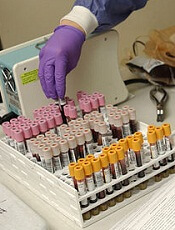
Photo by William Weinert
The US Centers for Disease Control and Prevention (CDC) and the Occupational Safety and Health Administration (OSHA) have issued an interim guidance for protecting workers from occupational exposure to the Zika virus.
The guidance is for healthcare and laboratory workers, outdoor workers, mosquito control workers, and business travelers.
It includes recommendations to help protect these workers from mosquito bites and exposure to an infected person’s blood or other body fluids.
The CDC noted that, although Zika virus is primarily spread by infected mosquitoes, exposure to an infected person’s blood or other body fluids may also result in transmission.
So healthcare workers who may be exposed to contaminated blood or other potentially infectious materials from people infected with Zika virus may require additional protection.
Recommendations for healthcare and laboratory workers
Employers and workers in healthcare settings and laboratories should follow standard infection control and biosafety practices (including universal precautions) as appropriate to prevent or minimize the risk of Zika virus transmission.
Standard precautions include, but are not limited to, hand hygiene and the use of personal protective equipment (PPE) to avoid direct contact with blood and other potentially infectious materials, including laboratory specimens/samples. PPE may include gloves, gowns, masks, and eye protection.
Hand hygiene consists of washing with soap and water or using alcohol-based hand rubs containing at least 60% alcohol. Soap and water are best for hands that are visibly soiled. Perform hand hygiene before and after any contact with a patient, after any contact with potentially infectious material, and before putting on and upon removing PPE, including gloves.
Laboratories should ensure that their facilities and practices meet the appropriate Biosafety Level for the type of work being conducted (including the specific biologic agents—in this case, Zika virus) in the laboratory.
Employers should ensure that workers follow workplace standard operating procedures (eg, workplace exposure control plans) and use the engineering controls and work practices available in the workplace to prevent exposure to blood or other potentially infectious materials.
Employers should ensure workers do not bend, recap, or remove contaminated needles or other contaminated sharps. Properly dispose of these items in closable, puncture-resistant, leak-proof, and labeled or color-coded containers. Workers should use sharps with engineered sharps injury protection to avoid sharps-related injuries.
Additional details and recommendations for business travelers, outdoor workers, and mosquito control workers are available in the full guidance document.
The CDC said it will continue to update this guidance based on accumulating evidence. For updates, visit www.cdc.gov/zika.
Photo by William Weinert
The US Centers for Disease Control and Prevention (CDC) and the Occupational Safety and Health Administration (OSHA) have issued an interim guidance for protecting workers from occupational exposure to the Zika virus.
The guidance is for healthcare and laboratory workers, outdoor workers, mosquito control workers, and business travelers.
It includes recommendations to help protect these workers from mosquito bites and exposure to an infected person’s blood or other body fluids.
The CDC noted that, although Zika virus is primarily spread by infected mosquitoes, exposure to an infected person’s blood or other body fluids may also result in transmission.
So healthcare workers who may be exposed to contaminated blood or other potentially infectious materials from people infected with Zika virus may require additional protection.
Recommendations for healthcare and laboratory workers
Employers and workers in healthcare settings and laboratories should follow standard infection control and biosafety practices (including universal precautions) as appropriate to prevent or minimize the risk of Zika virus transmission.
Standard precautions include, but are not limited to, hand hygiene and the use of personal protective equipment (PPE) to avoid direct contact with blood and other potentially infectious materials, including laboratory specimens/samples. PPE may include gloves, gowns, masks, and eye protection.
Hand hygiene consists of washing with soap and water or using alcohol-based hand rubs containing at least 60% alcohol. Soap and water are best for hands that are visibly soiled. Perform hand hygiene before and after any contact with a patient, after any contact with potentially infectious material, and before putting on and upon removing PPE, including gloves.
Laboratories should ensure that their facilities and practices meet the appropriate Biosafety Level for the type of work being conducted (including the specific biologic agents—in this case, Zika virus) in the laboratory.
Employers should ensure that workers follow workplace standard operating procedures (eg, workplace exposure control plans) and use the engineering controls and work practices available in the workplace to prevent exposure to blood or other potentially infectious materials.
Employers should ensure workers do not bend, recap, or remove contaminated needles or other contaminated sharps. Properly dispose of these items in closable, puncture-resistant, leak-proof, and labeled or color-coded containers. Workers should use sharps with engineered sharps injury protection to avoid sharps-related injuries.
Additional details and recommendations for business travelers, outdoor workers, and mosquito control workers are available in the full guidance document.
The CDC said it will continue to update this guidance based on accumulating evidence. For updates, visit www.cdc.gov/zika.
Photo by William Weinert
The US Centers for Disease Control and Prevention (CDC) and the Occupational Safety and Health Administration (OSHA) have issued an interim guidance for protecting workers from occupational exposure to the Zika virus.
The guidance is for healthcare and laboratory workers, outdoor workers, mosquito control workers, and business travelers.
It includes recommendations to help protect these workers from mosquito bites and exposure to an infected person’s blood or other body fluids.
The CDC noted that, although Zika virus is primarily spread by infected mosquitoes, exposure to an infected person’s blood or other body fluids may also result in transmission.
So healthcare workers who may be exposed to contaminated blood or other potentially infectious materials from people infected with Zika virus may require additional protection.
Recommendations for healthcare and laboratory workers
Employers and workers in healthcare settings and laboratories should follow standard infection control and biosafety practices (including universal precautions) as appropriate to prevent or minimize the risk of Zika virus transmission.
Standard precautions include, but are not limited to, hand hygiene and the use of personal protective equipment (PPE) to avoid direct contact with blood and other potentially infectious materials, including laboratory specimens/samples. PPE may include gloves, gowns, masks, and eye protection.
Hand hygiene consists of washing with soap and water or using alcohol-based hand rubs containing at least 60% alcohol. Soap and water are best for hands that are visibly soiled. Perform hand hygiene before and after any contact with a patient, after any contact with potentially infectious material, and before putting on and upon removing PPE, including gloves.
Laboratories should ensure that their facilities and practices meet the appropriate Biosafety Level for the type of work being conducted (including the specific biologic agents—in this case, Zika virus) in the laboratory.
Employers should ensure that workers follow workplace standard operating procedures (eg, workplace exposure control plans) and use the engineering controls and work practices available in the workplace to prevent exposure to blood or other potentially infectious materials.
Employers should ensure workers do not bend, recap, or remove contaminated needles or other contaminated sharps. Properly dispose of these items in closable, puncture-resistant, leak-proof, and labeled or color-coded containers. Workers should use sharps with engineered sharps injury protection to avoid sharps-related injuries.
Additional details and recommendations for business travelers, outdoor workers, and mosquito control workers are available in the full guidance document.
The CDC said it will continue to update this guidance based on accumulating evidence. For updates, visit www.cdc.gov/zika.
Combo may be active in refractory MM

Photo courtesy of the CDC
The combination of vorinostat and bortezomib, with or without dexamethasone, can be active in patients with multiple myeloma (MM) that is refractory to novel treatments, according to researchers.
In a phase 2 trial, the combination produced an overall response rate of 11% among MM patients who were refractory to bortezomib and were either refractory to or could not receive treatment with an immunomodulatory agent (IMiD).
About 92% of patients had drug-related adverse events (AEs), and 20% had serious drug-related AEs.
These results were published in Clinical Lymphoma, Myeloma & Leukemia. The study was funded by Merck & Co., Inc., which markets vorinostat as Zolinza.
This trial (VANTAGE 095) enrolled 143 MM patients from 41 centers in 12 countries. The patients had a median age of 63 (range, 37-81) and had received a median of 4 prior lines of therapy (range, 2-17).
All 143 patients were considered refractory to previous bortezomib, which was defined as less than 25% response on therapy or progression during/less than 60 days after the completion of bortezomib therapy.
All but 1 patient had been exposed to 1 or more IMiDs (99.3%). Roughly 87% of patients exposed to IMiDs were considered to have disease refractory to at least 1 IMiD and 40% to at least 2 different IMiDs. Three percent of patients were considered ineligible for further IMiD-based therapy because of previous toxicities.
For this study, patients received 21-day cycles of bortezomib (1.3 mg/m2 intravenously; days 1, 4, 8, and 11) plus oral vorinostat at 400 mg/d on days 1 to 14.
If a patient had no change as the best response after 4 cycles of treatment or progressive disease after 2 cycles of treatment, oral dexamethasone at 20 mg on the day of and day after each dose of bortezomib could be added to the treatment regimen.
Patients were treated until disease progression, unacceptable toxicities, or withdrawal from the study.
One hundred and forty-two patients were evaluable for safety and efficacy. Fifty-seven of these patients received dexamethasone per protocol.
The overall response rate (partial response or better), as assessed by an independent adjudication committee, was 11.3%.
All 16 responses were partial responses. The median time to response was 44 days (range, 22-71), and the median duration of response was 211 days (range, 64-550 days).
Eleven patients (7.7%) had a minimal response, and 87 (61.3%) had stable disease.
The median progression-free survival was 3.13 months, and the median time to progression was 3.47 months. The median overall survival was 11.2 months, with a 2-year survival rate of 32%.
All 142 patients had at least 1 AE, and 131 (92.3%) had drug-related AEs. Most AEs were grade 3 (28.9%) or 4 (50.7%). Serious AEs occurred in 64.8% of patients, and serious drug-related AEs occurred in 20.4%.
Twenty-seven patients (19%) discontinued treatment due to an AE. And 24 patients (16.9%) died from an AE, although 18 of these deaths were attributable to progression of underlying MM.
The most common AEs were thrombocytopenia (69.7%), nausea (57.0%), diarrhea (53.5%), anemia (52.1%), and fatigue (48.6%).
Photo courtesy of the CDC
The combination of vorinostat and bortezomib, with or without dexamethasone, can be active in patients with multiple myeloma (MM) that is refractory to novel treatments, according to researchers.
In a phase 2 trial, the combination produced an overall response rate of 11% among MM patients who were refractory to bortezomib and were either refractory to or could not receive treatment with an immunomodulatory agent (IMiD).
About 92% of patients had drug-related adverse events (AEs), and 20% had serious drug-related AEs.
These results were published in Clinical Lymphoma, Myeloma & Leukemia. The study was funded by Merck & Co., Inc., which markets vorinostat as Zolinza.
This trial (VANTAGE 095) enrolled 143 MM patients from 41 centers in 12 countries. The patients had a median age of 63 (range, 37-81) and had received a median of 4 prior lines of therapy (range, 2-17).
All 143 patients were considered refractory to previous bortezomib, which was defined as less than 25% response on therapy or progression during/less than 60 days after the completion of bortezomib therapy.
All but 1 patient had been exposed to 1 or more IMiDs (99.3%). Roughly 87% of patients exposed to IMiDs were considered to have disease refractory to at least 1 IMiD and 40% to at least 2 different IMiDs. Three percent of patients were considered ineligible for further IMiD-based therapy because of previous toxicities.
For this study, patients received 21-day cycles of bortezomib (1.3 mg/m2 intravenously; days 1, 4, 8, and 11) plus oral vorinostat at 400 mg/d on days 1 to 14.
If a patient had no change as the best response after 4 cycles of treatment or progressive disease after 2 cycles of treatment, oral dexamethasone at 20 mg on the day of and day after each dose of bortezomib could be added to the treatment regimen.
Patients were treated until disease progression, unacceptable toxicities, or withdrawal from the study.
One hundred and forty-two patients were evaluable for safety and efficacy. Fifty-seven of these patients received dexamethasone per protocol.
The overall response rate (partial response or better), as assessed by an independent adjudication committee, was 11.3%.
All 16 responses were partial responses. The median time to response was 44 days (range, 22-71), and the median duration of response was 211 days (range, 64-550 days).
Eleven patients (7.7%) had a minimal response, and 87 (61.3%) had stable disease.
The median progression-free survival was 3.13 months, and the median time to progression was 3.47 months. The median overall survival was 11.2 months, with a 2-year survival rate of 32%.
All 142 patients had at least 1 AE, and 131 (92.3%) had drug-related AEs. Most AEs were grade 3 (28.9%) or 4 (50.7%). Serious AEs occurred in 64.8% of patients, and serious drug-related AEs occurred in 20.4%.
Twenty-seven patients (19%) discontinued treatment due to an AE. And 24 patients (16.9%) died from an AE, although 18 of these deaths were attributable to progression of underlying MM.
The most common AEs were thrombocytopenia (69.7%), nausea (57.0%), diarrhea (53.5%), anemia (52.1%), and fatigue (48.6%).
Photo courtesy of the CDC
The combination of vorinostat and bortezomib, with or without dexamethasone, can be active in patients with multiple myeloma (MM) that is refractory to novel treatments, according to researchers.
In a phase 2 trial, the combination produced an overall response rate of 11% among MM patients who were refractory to bortezomib and were either refractory to or could not receive treatment with an immunomodulatory agent (IMiD).
About 92% of patients had drug-related adverse events (AEs), and 20% had serious drug-related AEs.
These results were published in Clinical Lymphoma, Myeloma & Leukemia. The study was funded by Merck & Co., Inc., which markets vorinostat as Zolinza.
This trial (VANTAGE 095) enrolled 143 MM patients from 41 centers in 12 countries. The patients had a median age of 63 (range, 37-81) and had received a median of 4 prior lines of therapy (range, 2-17).
All 143 patients were considered refractory to previous bortezomib, which was defined as less than 25% response on therapy or progression during/less than 60 days after the completion of bortezomib therapy.
All but 1 patient had been exposed to 1 or more IMiDs (99.3%). Roughly 87% of patients exposed to IMiDs were considered to have disease refractory to at least 1 IMiD and 40% to at least 2 different IMiDs. Three percent of patients were considered ineligible for further IMiD-based therapy because of previous toxicities.
For this study, patients received 21-day cycles of bortezomib (1.3 mg/m2 intravenously; days 1, 4, 8, and 11) plus oral vorinostat at 400 mg/d on days 1 to 14.
If a patient had no change as the best response after 4 cycles of treatment or progressive disease after 2 cycles of treatment, oral dexamethasone at 20 mg on the day of and day after each dose of bortezomib could be added to the treatment regimen.
Patients were treated until disease progression, unacceptable toxicities, or withdrawal from the study.
One hundred and forty-two patients were evaluable for safety and efficacy. Fifty-seven of these patients received dexamethasone per protocol.
The overall response rate (partial response or better), as assessed by an independent adjudication committee, was 11.3%.
All 16 responses were partial responses. The median time to response was 44 days (range, 22-71), and the median duration of response was 211 days (range, 64-550 days).
Eleven patients (7.7%) had a minimal response, and 87 (61.3%) had stable disease.
The median progression-free survival was 3.13 months, and the median time to progression was 3.47 months. The median overall survival was 11.2 months, with a 2-year survival rate of 32%.
All 142 patients had at least 1 AE, and 131 (92.3%) had drug-related AEs. Most AEs were grade 3 (28.9%) or 4 (50.7%). Serious AEs occurred in 64.8% of patients, and serious drug-related AEs occurred in 20.4%.
Twenty-seven patients (19%) discontinued treatment due to an AE. And 24 patients (16.9%) died from an AE, although 18 of these deaths were attributable to progression of underlying MM.
The most common AEs were thrombocytopenia (69.7%), nausea (57.0%), diarrhea (53.5%), anemia (52.1%), and fatigue (48.6%).
Factors may increase risk of asparaginase-induced pancreatitis in ALL

(left) and Chengcheng Liu
Photo courtesy of St. Jude
Children’s Research Hospital
and Peter Barta
Researchers have identified several factors that may increase the risk of asparaginase-induced pancreatitis in patients with acute lymphoblastic leukemia (ALL).
The team found that 16 variants in the CPA2 gene—and 1 rare variant in particular—were associated with a higher risk of asparaginase-induced pancreatitis.
Patients also had a higher risk if they had genetically defined Native American ancestry, were older, and received higher doses of asparaginase.
The researchers reported these findings in the Journal of Clinical Oncology.
“In this study, we identified several independent risk factors for asparaginase-induced pancreatitis and also gained insight into the mechanism responsible for this serious treatment complication,” said study author Mary Relling, PharmD, of St. Jude Children’s Research Hospital in Memphis, Tennessee.
“Understanding the risk factors for acute pancreatitis is important because, in patients who can tolerate the drug, asparaginase reduces the likelihood that ALL patients will relapse.”
The research included 5398 ALL patients (ages 0 to 30) who were treated in clinical trials organized by St. Jude or the Children’s Oncology Group. In all, 188 patients developed pancreatitis at least once during ALL therapy.
To search for risk factors associated with asparaginase-induced pancreatitis, the researchers checked patient DNA for more than 920,000 gene variants.
The team also sequenced 283 genes, including genes associated with ALL risk and treatment outcome and genes linked to an elevated risk of pancreatitis in patients with different health problems.
The results revealed a rare nonsense variant in CPA2 (rs199695765) that yields a truncated version of the pancreatic enzyme proCPA2. The researchers said this variant was “highly associated” with pancreatitis, with a hazard ratio (HR) of 587 (P=9.0×10⁻⁹).
Two study participants each carried 1 copy of the variant, and both patients developed severe pancreatitis within weeks of receiving their first dose of asparaginase.
“That suggests patients with this rare variant cannot tolerate the drug long enough to benefit from treatment,” Dr Relling said. “For these patients, ALL treatment regimens that do not depend on asparaginase may be preferable.”
The researchers estimated that about 9 in 100,000 individuals carry the suspected high-risk CPA2 variant.
The team also found an excess of additional CPA2 variants in patients who developed pancreatitis compared to those who did not (P=0.001).
In all, the researchers identified 380 variants in CPA2. Sixteen of them were significantly associated (P<0.05) with pancreatitis, and 54% (13/24) of patients who carried at least 1 of these variants developed pancreatitis.
The researchers also found links between clinical factors and asparaginase-induced pancreatitis. A multivariate analysis suggested the following were associated with pancreatitis:
- Older age (HR=1.1 per year; P<0.001)
- Genetically defined Native American ancestry (HR=1.2 for every 10% increase in Native American ancestry; P<0.001)
- High-dose (≥240,000 U/m2) asparaginase regimens (HR=3.2; P<0.001).
(left) and Chengcheng Liu
Photo courtesy of St. Jude
Children’s Research Hospital
and Peter Barta
Researchers have identified several factors that may increase the risk of asparaginase-induced pancreatitis in patients with acute lymphoblastic leukemia (ALL).
The team found that 16 variants in the CPA2 gene—and 1 rare variant in particular—were associated with a higher risk of asparaginase-induced pancreatitis.
Patients also had a higher risk if they had genetically defined Native American ancestry, were older, and received higher doses of asparaginase.
The researchers reported these findings in the Journal of Clinical Oncology.
“In this study, we identified several independent risk factors for asparaginase-induced pancreatitis and also gained insight into the mechanism responsible for this serious treatment complication,” said study author Mary Relling, PharmD, of St. Jude Children’s Research Hospital in Memphis, Tennessee.
“Understanding the risk factors for acute pancreatitis is important because, in patients who can tolerate the drug, asparaginase reduces the likelihood that ALL patients will relapse.”
The research included 5398 ALL patients (ages 0 to 30) who were treated in clinical trials organized by St. Jude or the Children’s Oncology Group. In all, 188 patients developed pancreatitis at least once during ALL therapy.
To search for risk factors associated with asparaginase-induced pancreatitis, the researchers checked patient DNA for more than 920,000 gene variants.
The team also sequenced 283 genes, including genes associated with ALL risk and treatment outcome and genes linked to an elevated risk of pancreatitis in patients with different health problems.
The results revealed a rare nonsense variant in CPA2 (rs199695765) that yields a truncated version of the pancreatic enzyme proCPA2. The researchers said this variant was “highly associated” with pancreatitis, with a hazard ratio (HR) of 587 (P=9.0×10⁻⁹).
Two study participants each carried 1 copy of the variant, and both patients developed severe pancreatitis within weeks of receiving their first dose of asparaginase.
“That suggests patients with this rare variant cannot tolerate the drug long enough to benefit from treatment,” Dr Relling said. “For these patients, ALL treatment regimens that do not depend on asparaginase may be preferable.”
The researchers estimated that about 9 in 100,000 individuals carry the suspected high-risk CPA2 variant.
The team also found an excess of additional CPA2 variants in patients who developed pancreatitis compared to those who did not (P=0.001).
In all, the researchers identified 380 variants in CPA2. Sixteen of them were significantly associated (P<0.05) with pancreatitis, and 54% (13/24) of patients who carried at least 1 of these variants developed pancreatitis.
The researchers also found links between clinical factors and asparaginase-induced pancreatitis. A multivariate analysis suggested the following were associated with pancreatitis:
- Older age (HR=1.1 per year; P<0.001)
- Genetically defined Native American ancestry (HR=1.2 for every 10% increase in Native American ancestry; P<0.001)
- High-dose (≥240,000 U/m2) asparaginase regimens (HR=3.2; P<0.001).
(left) and Chengcheng Liu
Photo courtesy of St. Jude
Children’s Research Hospital
and Peter Barta
Researchers have identified several factors that may increase the risk of asparaginase-induced pancreatitis in patients with acute lymphoblastic leukemia (ALL).
The team found that 16 variants in the CPA2 gene—and 1 rare variant in particular—were associated with a higher risk of asparaginase-induced pancreatitis.
Patients also had a higher risk if they had genetically defined Native American ancestry, were older, and received higher doses of asparaginase.
The researchers reported these findings in the Journal of Clinical Oncology.
“In this study, we identified several independent risk factors for asparaginase-induced pancreatitis and also gained insight into the mechanism responsible for this serious treatment complication,” said study author Mary Relling, PharmD, of St. Jude Children’s Research Hospital in Memphis, Tennessee.
“Understanding the risk factors for acute pancreatitis is important because, in patients who can tolerate the drug, asparaginase reduces the likelihood that ALL patients will relapse.”
The research included 5398 ALL patients (ages 0 to 30) who were treated in clinical trials organized by St. Jude or the Children’s Oncology Group. In all, 188 patients developed pancreatitis at least once during ALL therapy.
To search for risk factors associated with asparaginase-induced pancreatitis, the researchers checked patient DNA for more than 920,000 gene variants.
The team also sequenced 283 genes, including genes associated with ALL risk and treatment outcome and genes linked to an elevated risk of pancreatitis in patients with different health problems.
The results revealed a rare nonsense variant in CPA2 (rs199695765) that yields a truncated version of the pancreatic enzyme proCPA2. The researchers said this variant was “highly associated” with pancreatitis, with a hazard ratio (HR) of 587 (P=9.0×10⁻⁹).
Two study participants each carried 1 copy of the variant, and both patients developed severe pancreatitis within weeks of receiving their first dose of asparaginase.
“That suggests patients with this rare variant cannot tolerate the drug long enough to benefit from treatment,” Dr Relling said. “For these patients, ALL treatment regimens that do not depend on asparaginase may be preferable.”
The researchers estimated that about 9 in 100,000 individuals carry the suspected high-risk CPA2 variant.
The team also found an excess of additional CPA2 variants in patients who developed pancreatitis compared to those who did not (P=0.001).
In all, the researchers identified 380 variants in CPA2. Sixteen of them were significantly associated (P<0.05) with pancreatitis, and 54% (13/24) of patients who carried at least 1 of these variants developed pancreatitis.
The researchers also found links between clinical factors and asparaginase-induced pancreatitis. A multivariate analysis suggested the following were associated with pancreatitis:
- Older age (HR=1.1 per year; P<0.001)
- Genetically defined Native American ancestry (HR=1.2 for every 10% increase in Native American ancestry; P<0.001)
- High-dose (≥240,000 U/m2) asparaginase regimens (HR=3.2; P<0.001).