User login
New insight into blood production

in the bone marrow
Scientists say they have identified a family of multipotent progenitor (MPP) cells that are the first to arise from hematopoietic stem cells (HSCs).
The team said their discovery, published in Cell Stem Cell, raises the possibility that, by manipulating the fates of MPPs or HSCs, researchers could one day help overcome imbalances and deficiencies that can arise in the blood system due to aging or leukemia.
Similar imbalances can render patients vulnerable immediately following HSC transplants, especially following umbilical cord transplants, said study author Emmanuelle Passegué, PhD, of the University of California San Francisco.
Via experiments in mice, Dr Passegué and her colleagues found that HSCs “make educated decisions” when it comes time to differentiate.
“Previously, researchers thought that the developmental paths of daughter cells were randomly specified by the HSC, but we conclude that the HSC normally responds appropriately to signals in the environment, making the different MPPs in parallel, but at different speeds and in different amounts to meet the body’s needs,” Dr Passegué said.
To uncover these findings, she and her colleagues investigated patterns of gene expression and cell signaling that determine which developmental paths are favored when relatively rare HSCs spin off daughter cells. The team also explored HSCs’ responses during transplant.
The researchers found that the first daughter cells that arise from HSCs are already distinct, favoring the development of different specialized cell lineages.
The team identified two types of daughter cells, MPP2 and MPP3, which, under normal conditions, are rare. These cells work together with more common daughter cells, MPP4 cells, to control blood production.
MPP2 cells favor the production of platelets and red blood cells, while MPP3 cells favor production of inflammatory cells.
MPP4 cells are the main producers of lymphocytes that fight specific disease pathogens, but the researchers showed that MPP4 cells can easily be re-educated to make many inflammatory cells when regenerative needs are high, as they are following a transplant.
The team found that, during transplant, regenerating HSCs limit their own self-renewal and instead go to work overproducing MPP2 and MPP3 cells that quickly produce needed red blood cells, platelets, and inflammatory cells. Only later does MPP4 production return to normal, enabling the immune system to replenish lymphocytes.
“It will be compelling to test whether the developmental pathways leading to cell specialization can be manipulated to favor production of specific lineage-biased MPPs in order to optimize blood recovery following hematopoietic injury or to rebalance the output of various cell lineages in an aging or deregulated blood system,” Dr Passegué said. 
in the bone marrow
Scientists say they have identified a family of multipotent progenitor (MPP) cells that are the first to arise from hematopoietic stem cells (HSCs).
The team said their discovery, published in Cell Stem Cell, raises the possibility that, by manipulating the fates of MPPs or HSCs, researchers could one day help overcome imbalances and deficiencies that can arise in the blood system due to aging or leukemia.
Similar imbalances can render patients vulnerable immediately following HSC transplants, especially following umbilical cord transplants, said study author Emmanuelle Passegué, PhD, of the University of California San Francisco.
Via experiments in mice, Dr Passegué and her colleagues found that HSCs “make educated decisions” when it comes time to differentiate.
“Previously, researchers thought that the developmental paths of daughter cells were randomly specified by the HSC, but we conclude that the HSC normally responds appropriately to signals in the environment, making the different MPPs in parallel, but at different speeds and in different amounts to meet the body’s needs,” Dr Passegué said.
To uncover these findings, she and her colleagues investigated patterns of gene expression and cell signaling that determine which developmental paths are favored when relatively rare HSCs spin off daughter cells. The team also explored HSCs’ responses during transplant.
The researchers found that the first daughter cells that arise from HSCs are already distinct, favoring the development of different specialized cell lineages.
The team identified two types of daughter cells, MPP2 and MPP3, which, under normal conditions, are rare. These cells work together with more common daughter cells, MPP4 cells, to control blood production.
MPP2 cells favor the production of platelets and red blood cells, while MPP3 cells favor production of inflammatory cells.
MPP4 cells are the main producers of lymphocytes that fight specific disease pathogens, but the researchers showed that MPP4 cells can easily be re-educated to make many inflammatory cells when regenerative needs are high, as they are following a transplant.
The team found that, during transplant, regenerating HSCs limit their own self-renewal and instead go to work overproducing MPP2 and MPP3 cells that quickly produce needed red blood cells, platelets, and inflammatory cells. Only later does MPP4 production return to normal, enabling the immune system to replenish lymphocytes.
“It will be compelling to test whether the developmental pathways leading to cell specialization can be manipulated to favor production of specific lineage-biased MPPs in order to optimize blood recovery following hematopoietic injury or to rebalance the output of various cell lineages in an aging or deregulated blood system,” Dr Passegué said.
in the bone marrow
Scientists say they have identified a family of multipotent progenitor (MPP) cells that are the first to arise from hematopoietic stem cells (HSCs).
The team said their discovery, published in Cell Stem Cell, raises the possibility that, by manipulating the fates of MPPs or HSCs, researchers could one day help overcome imbalances and deficiencies that can arise in the blood system due to aging or leukemia.
Similar imbalances can render patients vulnerable immediately following HSC transplants, especially following umbilical cord transplants, said study author Emmanuelle Passegué, PhD, of the University of California San Francisco.
Via experiments in mice, Dr Passegué and her colleagues found that HSCs “make educated decisions” when it comes time to differentiate.
“Previously, researchers thought that the developmental paths of daughter cells were randomly specified by the HSC, but we conclude that the HSC normally responds appropriately to signals in the environment, making the different MPPs in parallel, but at different speeds and in different amounts to meet the body’s needs,” Dr Passegué said.
To uncover these findings, she and her colleagues investigated patterns of gene expression and cell signaling that determine which developmental paths are favored when relatively rare HSCs spin off daughter cells. The team also explored HSCs’ responses during transplant.
The researchers found that the first daughter cells that arise from HSCs are already distinct, favoring the development of different specialized cell lineages.
The team identified two types of daughter cells, MPP2 and MPP3, which, under normal conditions, are rare. These cells work together with more common daughter cells, MPP4 cells, to control blood production.
MPP2 cells favor the production of platelets and red blood cells, while MPP3 cells favor production of inflammatory cells.
MPP4 cells are the main producers of lymphocytes that fight specific disease pathogens, but the researchers showed that MPP4 cells can easily be re-educated to make many inflammatory cells when regenerative needs are high, as they are following a transplant.
The team found that, during transplant, regenerating HSCs limit their own self-renewal and instead go to work overproducing MPP2 and MPP3 cells that quickly produce needed red blood cells, platelets, and inflammatory cells. Only later does MPP4 production return to normal, enabling the immune system to replenish lymphocytes.
“It will be compelling to test whether the developmental pathways leading to cell specialization can be manipulated to favor production of specific lineage-biased MPPs in order to optimize blood recovery following hematopoietic injury or to rebalance the output of various cell lineages in an aging or deregulated blood system,” Dr Passegué said.
Jury still out on combo for elderly AML

Photo courtesy of NIH
VIENNA—A 2-drug combination can produce complete responses (CRs) in elderly patients with newly diagnosed acute myeloid leukemia (AML), but whether the treatment confers a survival benefit remains to be seen.
The combination consists of the HDAC inhibitor pracinostat and the antineoplastic agent azacitidine.
In a phase 2 study, the treatment produced CRs in nearly a third of AML patients, and follow-up has shown that responses improve over time.
However, the median overall survival has not been reached.
“The combination of pracinostat and azacitidine continues to demonstrate compelling clinical activity in these elderly patients with newly diagnosed AML,” said Daniel P. Gold, PhD, President and Chief Executive Officer of MEI Pharma, the company developing pracinostat.
“While the overall survival trend in this study is encouraging, we believe that longer follow-up is needed to gain an accurate survival estimate. Ultimately, this survival estimate will be critical in determining the development path forward for this combination. We look forward to providing an update when these data mature, which we expect to occur later this year.”
The current data were presented at the 20th Congress of the European Hematology Association (abstract P568*). The trial was sponsored by MEI Pharma.
The study included 50 patients who had a median age of 75 (range, 66-84). Sixty-six percent of patients had de novo AML, and 34% had secondary AML. Fifty-four percent of patients had intermediate-risk cytogenetics, 42% had high-risk, and 4% were not evaluable.
The patients received pracinostat at 60 mg orally on days 1, 3, and 5 of each week for 21 days of each 28-day cycle. They received azacitidine subcutaneously or intravenously on days 1-7 or days 1-5 and 8-9 (per site preference) of each 28-day cycle.
To date, half of patients have discontinued treatment, 8% due to death, 36% because of progressive disease, 32% due to adverse events, and 24% for other reasons.
Response and survival
Thus far, 54% of patients (n=27) have achieved the primary endpoint of CR plus CR with incomplete count recovery (CRi) plus morphologic leukemia-free state (MLFS).
Thirty-two percent of patients had a CR, 14% had a CRi, 8% achieved MLFS, and 6% had a partial response (PR) or PR with incomplete count recovery (PRi).
Among the 27 patients with intermediate-risk cytogenetics, 63% achieved a CR/CRi/MLFS, and 7% had a PR/PRi. Among the 21 patients with high-risk cytogenetics, 48% achieved a CR/CRi/MLFS, and none had a PR/PRi.
The researchers said these response rates compare favorably with previous studies of azacitidine alone in this patient population. In this trial, most responses occurred within the first 2 cycles of therapy and continued to improve with ongoing therapy.
The median overall survival has not yet been reached. Sixty-four percent of patients (n=32) are still being followed (range, 6-15 months).
The survival rate of patients with intermediate-risk cytogenetics appears greater than that for patients with high-risk cytogenetics, though neither subset of patients has reached median survival.
The 60-day mortality rate was 10% (n=5).
Safety and tolerability
The most common treatment-emergent adverse events (AEs) were nausea (66%), constipation (58%), fatigue (48%), febrile neutropenia (40%), thrombocytopenia (32%), diarrhea (30%), vomiting (28%), decreased appetite (28%), anemia (26%), hypokalemia (26%), neutropenia (24%), pyrexia (24%), dizziness (24%), dyspnea (24%), and rash (20%).
Treatment-emergent AEs led to discontinuation in 8 patients. Two of these patients developed sepsis that proved fatal.
The other events included grade 3 peripheral motor neuropathy (which was resolved), grade 3 parainfluenza (resolved with sequelae), grade 3 prolonged QTc/atrial fibrillation (resolved), grade 2 failure to thrive (not resolved), grade 3 mucositis (not resolved), and grade 2 fatigue (not resolved).
AEs resulting in dose reductions were frequently due to disease, according to the researchers.
The team also noted that nearly half of the patients in this study (n=22) have received pracinostat and azacitidine beyond 6 months, and 5 patients have received it for more than a year, which reflects long-term tolerability.
*Information in the abstract differs from that presented at the meeting.
Photo courtesy of NIH
VIENNA—A 2-drug combination can produce complete responses (CRs) in elderly patients with newly diagnosed acute myeloid leukemia (AML), but whether the treatment confers a survival benefit remains to be seen.
The combination consists of the HDAC inhibitor pracinostat and the antineoplastic agent azacitidine.
In a phase 2 study, the treatment produced CRs in nearly a third of AML patients, and follow-up has shown that responses improve over time.
However, the median overall survival has not been reached.
“The combination of pracinostat and azacitidine continues to demonstrate compelling clinical activity in these elderly patients with newly diagnosed AML,” said Daniel P. Gold, PhD, President and Chief Executive Officer of MEI Pharma, the company developing pracinostat.
“While the overall survival trend in this study is encouraging, we believe that longer follow-up is needed to gain an accurate survival estimate. Ultimately, this survival estimate will be critical in determining the development path forward for this combination. We look forward to providing an update when these data mature, which we expect to occur later this year.”
The current data were presented at the 20th Congress of the European Hematology Association (abstract P568*). The trial was sponsored by MEI Pharma.
The study included 50 patients who had a median age of 75 (range, 66-84). Sixty-six percent of patients had de novo AML, and 34% had secondary AML. Fifty-four percent of patients had intermediate-risk cytogenetics, 42% had high-risk, and 4% were not evaluable.
The patients received pracinostat at 60 mg orally on days 1, 3, and 5 of each week for 21 days of each 28-day cycle. They received azacitidine subcutaneously or intravenously on days 1-7 or days 1-5 and 8-9 (per site preference) of each 28-day cycle.
To date, half of patients have discontinued treatment, 8% due to death, 36% because of progressive disease, 32% due to adverse events, and 24% for other reasons.
Response and survival
Thus far, 54% of patients (n=27) have achieved the primary endpoint of CR plus CR with incomplete count recovery (CRi) plus morphologic leukemia-free state (MLFS).
Thirty-two percent of patients had a CR, 14% had a CRi, 8% achieved MLFS, and 6% had a partial response (PR) or PR with incomplete count recovery (PRi).
Among the 27 patients with intermediate-risk cytogenetics, 63% achieved a CR/CRi/MLFS, and 7% had a PR/PRi. Among the 21 patients with high-risk cytogenetics, 48% achieved a CR/CRi/MLFS, and none had a PR/PRi.
The researchers said these response rates compare favorably with previous studies of azacitidine alone in this patient population. In this trial, most responses occurred within the first 2 cycles of therapy and continued to improve with ongoing therapy.
The median overall survival has not yet been reached. Sixty-four percent of patients (n=32) are still being followed (range, 6-15 months).
The survival rate of patients with intermediate-risk cytogenetics appears greater than that for patients with high-risk cytogenetics, though neither subset of patients has reached median survival.
The 60-day mortality rate was 10% (n=5).
Safety and tolerability
The most common treatment-emergent adverse events (AEs) were nausea (66%), constipation (58%), fatigue (48%), febrile neutropenia (40%), thrombocytopenia (32%), diarrhea (30%), vomiting (28%), decreased appetite (28%), anemia (26%), hypokalemia (26%), neutropenia (24%), pyrexia (24%), dizziness (24%), dyspnea (24%), and rash (20%).
Treatment-emergent AEs led to discontinuation in 8 patients. Two of these patients developed sepsis that proved fatal.
The other events included grade 3 peripheral motor neuropathy (which was resolved), grade 3 parainfluenza (resolved with sequelae), grade 3 prolonged QTc/atrial fibrillation (resolved), grade 2 failure to thrive (not resolved), grade 3 mucositis (not resolved), and grade 2 fatigue (not resolved).
AEs resulting in dose reductions were frequently due to disease, according to the researchers.
The team also noted that nearly half of the patients in this study (n=22) have received pracinostat and azacitidine beyond 6 months, and 5 patients have received it for more than a year, which reflects long-term tolerability.
*Information in the abstract differs from that presented at the meeting.
Photo courtesy of NIH
VIENNA—A 2-drug combination can produce complete responses (CRs) in elderly patients with newly diagnosed acute myeloid leukemia (AML), but whether the treatment confers a survival benefit remains to be seen.
The combination consists of the HDAC inhibitor pracinostat and the antineoplastic agent azacitidine.
In a phase 2 study, the treatment produced CRs in nearly a third of AML patients, and follow-up has shown that responses improve over time.
However, the median overall survival has not been reached.
“The combination of pracinostat and azacitidine continues to demonstrate compelling clinical activity in these elderly patients with newly diagnosed AML,” said Daniel P. Gold, PhD, President and Chief Executive Officer of MEI Pharma, the company developing pracinostat.
“While the overall survival trend in this study is encouraging, we believe that longer follow-up is needed to gain an accurate survival estimate. Ultimately, this survival estimate will be critical in determining the development path forward for this combination. We look forward to providing an update when these data mature, which we expect to occur later this year.”
The current data were presented at the 20th Congress of the European Hematology Association (abstract P568*). The trial was sponsored by MEI Pharma.
The study included 50 patients who had a median age of 75 (range, 66-84). Sixty-six percent of patients had de novo AML, and 34% had secondary AML. Fifty-four percent of patients had intermediate-risk cytogenetics, 42% had high-risk, and 4% were not evaluable.
The patients received pracinostat at 60 mg orally on days 1, 3, and 5 of each week for 21 days of each 28-day cycle. They received azacitidine subcutaneously or intravenously on days 1-7 or days 1-5 and 8-9 (per site preference) of each 28-day cycle.
To date, half of patients have discontinued treatment, 8% due to death, 36% because of progressive disease, 32% due to adverse events, and 24% for other reasons.
Response and survival
Thus far, 54% of patients (n=27) have achieved the primary endpoint of CR plus CR with incomplete count recovery (CRi) plus morphologic leukemia-free state (MLFS).
Thirty-two percent of patients had a CR, 14% had a CRi, 8% achieved MLFS, and 6% had a partial response (PR) or PR with incomplete count recovery (PRi).
Among the 27 patients with intermediate-risk cytogenetics, 63% achieved a CR/CRi/MLFS, and 7% had a PR/PRi. Among the 21 patients with high-risk cytogenetics, 48% achieved a CR/CRi/MLFS, and none had a PR/PRi.
The researchers said these response rates compare favorably with previous studies of azacitidine alone in this patient population. In this trial, most responses occurred within the first 2 cycles of therapy and continued to improve with ongoing therapy.
The median overall survival has not yet been reached. Sixty-four percent of patients (n=32) are still being followed (range, 6-15 months).
The survival rate of patients with intermediate-risk cytogenetics appears greater than that for patients with high-risk cytogenetics, though neither subset of patients has reached median survival.
The 60-day mortality rate was 10% (n=5).
Safety and tolerability
The most common treatment-emergent adverse events (AEs) were nausea (66%), constipation (58%), fatigue (48%), febrile neutropenia (40%), thrombocytopenia (32%), diarrhea (30%), vomiting (28%), decreased appetite (28%), anemia (26%), hypokalemia (26%), neutropenia (24%), pyrexia (24%), dizziness (24%), dyspnea (24%), and rash (20%).
Treatment-emergent AEs led to discontinuation in 8 patients. Two of these patients developed sepsis that proved fatal.
The other events included grade 3 peripheral motor neuropathy (which was resolved), grade 3 parainfluenza (resolved with sequelae), grade 3 prolonged QTc/atrial fibrillation (resolved), grade 2 failure to thrive (not resolved), grade 3 mucositis (not resolved), and grade 2 fatigue (not resolved).
AEs resulting in dose reductions were frequently due to disease, according to the researchers.
The team also noted that nearly half of the patients in this study (n=22) have received pracinostat and azacitidine beyond 6 months, and 5 patients have received it for more than a year, which reflects long-term tolerability.
*Information in the abstract differs from that presented at the meeting.
Triplet can provide clinical benefit in rel/ref MM
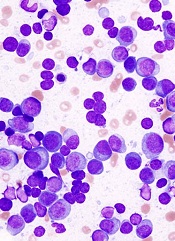
VIENNA—Combination therapy consisting of the HDAC6 inhibitor ricolinostat, pomalidomide, and dexamethasone can provide a clinical benefit for patients with relapsed and refractory multiple myeloma (MM), according to a researchers.
In a phase 1b/2 trial, the triplet produced an overall response rate (ORR) of 29% and a clinical benefit rate of 50%.
The most common treatment-related adverse events were fatigue, diarrhea, and neutropenia.
“As a physician, it is encouraging to see patients whose multiple myeloma has progressed while receiving standard-of-care therapy achieve clinical benefit with the combination of ricolinostat, [pomalidomide], and dexamethasone,” said study investigator Noopur Raje, MD, of the Massachusetts General Hospital Cancer Center in Boston.
Dr Raje and her colleagues presented results with this combination at the 20th Congress of the European Hematology Association (abstract P279*). The research was sponsored by Acetylon Pharmaceuticals, Inc., the company developing ricolinostat.
The phase 1b portion of this trial was a 3+3 design in which ricolinostat (160 mg) was given once daily (QD) or twice daily (BID) along with pomalidomide (4 mg) for 21 days of a 28-day cycle with dexamethasone (40 mg) on days 1, 8, 15, and 22. Seven patients were treated in the phase 1b portion, with 3 at 160 mg QD and 4 at 160 mg BID.
In the ongoing phase 2 portion of the study, 32 patients were enrolled as of April 27, 2015, and 28 of these patients were evaluable for response. Nineteen of the patients received ricolinostat at 160 mg QD, and 9 received the drug at 160 mg BID.
The median age for all 39 patients was 68 (range, 48-80), and they had received a median of 3 prior therapies (range, 2-5). Seventy-four percent of patients were refractory to lenalidomide, 59% to bortezomib, and 38% to both drugs.
Treatment results
At a median follow-up of 12 weeks, the ORR among the 28 evaluable phase 2 patients was 29%. Clinical benefit, defined as minimal response or greater, was 50%.
Three patients had a very good partial response, 5 had a partial response, 6 had a minimal response, 5 had stable disease, 3 progressed, and 6 had an unconfirmed response at the time of data cutoff.
All 7 patients in the phase 1b portion of the study had discontinued treatment due to progressive disease.
Of the 28 evaluable patients in the phase 2 portion, 57% (n=16) remained on the study after a median of 3 months on therapy. The other 43% discontinued treatment due to progressive disease (n=6), a non-fatal adverse event (n=3), patient decision (n=2), or investigator decision (n=1).
The researchers said the optimal dose and schedule for ricolinostat in combination with pomalidomide and dexamethasone was 160 mg QD on days 1-21 of a 28-day cycle. Patients treated at this dose experienced no dose-limiting toxicities. At 160 mg BID, some clinically relevant grade 2 diarrhea was observed.
In all 39 patients, the common treatment-emergent adverse events were fatigue (41%), diarrhea (38%), neutropenia (36%), anemia (31%), a decrease in platelet count (26%), constipation (21%), hypertension (18%), hyponatremia (18%), upper respiratory tract infection (15%), and a decrease in white cell count (15%).
Grade 3 and 4 adverse events, apart from neutropenia (26%), were uncommon (occurring in 8% of patients or fewer).
Grade 3/4 adverse events considered possibly related to ricolinostat included neutropenia (n=5), diarrhea (n=3), bronchitis (n=1), anemia (n=1), chronic cardiac failure (n=1), leukopenia (n=1), lymphopenia (n=1), pneumonia (n=1), increased alanine aminotransferase (n=1), fatigue (n=1), thrombocytopenia (n=1), and renal failure (n=1).
“This all-oral combination has been very well-tolerated,” Dr Raje said, “making it potentially suitable for treatment of a broad range of patients, including older patients, patients for whom a non-oral drug regimen is limiting, and potentially as a part of an all-oral maintenance regimen.”
*Information in the abstract differs from that presented at the meeting.
VIENNA—Combination therapy consisting of the HDAC6 inhibitor ricolinostat, pomalidomide, and dexamethasone can provide a clinical benefit for patients with relapsed and refractory multiple myeloma (MM), according to a researchers.
In a phase 1b/2 trial, the triplet produced an overall response rate (ORR) of 29% and a clinical benefit rate of 50%.
The most common treatment-related adverse events were fatigue, diarrhea, and neutropenia.
“As a physician, it is encouraging to see patients whose multiple myeloma has progressed while receiving standard-of-care therapy achieve clinical benefit with the combination of ricolinostat, [pomalidomide], and dexamethasone,” said study investigator Noopur Raje, MD, of the Massachusetts General Hospital Cancer Center in Boston.
Dr Raje and her colleagues presented results with this combination at the 20th Congress of the European Hematology Association (abstract P279*). The research was sponsored by Acetylon Pharmaceuticals, Inc., the company developing ricolinostat.
The phase 1b portion of this trial was a 3+3 design in which ricolinostat (160 mg) was given once daily (QD) or twice daily (BID) along with pomalidomide (4 mg) for 21 days of a 28-day cycle with dexamethasone (40 mg) on days 1, 8, 15, and 22. Seven patients were treated in the phase 1b portion, with 3 at 160 mg QD and 4 at 160 mg BID.
In the ongoing phase 2 portion of the study, 32 patients were enrolled as of April 27, 2015, and 28 of these patients were evaluable for response. Nineteen of the patients received ricolinostat at 160 mg QD, and 9 received the drug at 160 mg BID.
The median age for all 39 patients was 68 (range, 48-80), and they had received a median of 3 prior therapies (range, 2-5). Seventy-four percent of patients were refractory to lenalidomide, 59% to bortezomib, and 38% to both drugs.
Treatment results
At a median follow-up of 12 weeks, the ORR among the 28 evaluable phase 2 patients was 29%. Clinical benefit, defined as minimal response or greater, was 50%.
Three patients had a very good partial response, 5 had a partial response, 6 had a minimal response, 5 had stable disease, 3 progressed, and 6 had an unconfirmed response at the time of data cutoff.
All 7 patients in the phase 1b portion of the study had discontinued treatment due to progressive disease.
Of the 28 evaluable patients in the phase 2 portion, 57% (n=16) remained on the study after a median of 3 months on therapy. The other 43% discontinued treatment due to progressive disease (n=6), a non-fatal adverse event (n=3), patient decision (n=2), or investigator decision (n=1).
The researchers said the optimal dose and schedule for ricolinostat in combination with pomalidomide and dexamethasone was 160 mg QD on days 1-21 of a 28-day cycle. Patients treated at this dose experienced no dose-limiting toxicities. At 160 mg BID, some clinically relevant grade 2 diarrhea was observed.
In all 39 patients, the common treatment-emergent adverse events were fatigue (41%), diarrhea (38%), neutropenia (36%), anemia (31%), a decrease in platelet count (26%), constipation (21%), hypertension (18%), hyponatremia (18%), upper respiratory tract infection (15%), and a decrease in white cell count (15%).
Grade 3 and 4 adverse events, apart from neutropenia (26%), were uncommon (occurring in 8% of patients or fewer).
Grade 3/4 adverse events considered possibly related to ricolinostat included neutropenia (n=5), diarrhea (n=3), bronchitis (n=1), anemia (n=1), chronic cardiac failure (n=1), leukopenia (n=1), lymphopenia (n=1), pneumonia (n=1), increased alanine aminotransferase (n=1), fatigue (n=1), thrombocytopenia (n=1), and renal failure (n=1).
“This all-oral combination has been very well-tolerated,” Dr Raje said, “making it potentially suitable for treatment of a broad range of patients, including older patients, patients for whom a non-oral drug regimen is limiting, and potentially as a part of an all-oral maintenance regimen.”
*Information in the abstract differs from that presented at the meeting.
VIENNA—Combination therapy consisting of the HDAC6 inhibitor ricolinostat, pomalidomide, and dexamethasone can provide a clinical benefit for patients with relapsed and refractory multiple myeloma (MM), according to a researchers.
In a phase 1b/2 trial, the triplet produced an overall response rate (ORR) of 29% and a clinical benefit rate of 50%.
The most common treatment-related adverse events were fatigue, diarrhea, and neutropenia.
“As a physician, it is encouraging to see patients whose multiple myeloma has progressed while receiving standard-of-care therapy achieve clinical benefit with the combination of ricolinostat, [pomalidomide], and dexamethasone,” said study investigator Noopur Raje, MD, of the Massachusetts General Hospital Cancer Center in Boston.
Dr Raje and her colleagues presented results with this combination at the 20th Congress of the European Hematology Association (abstract P279*). The research was sponsored by Acetylon Pharmaceuticals, Inc., the company developing ricolinostat.
The phase 1b portion of this trial was a 3+3 design in which ricolinostat (160 mg) was given once daily (QD) or twice daily (BID) along with pomalidomide (4 mg) for 21 days of a 28-day cycle with dexamethasone (40 mg) on days 1, 8, 15, and 22. Seven patients were treated in the phase 1b portion, with 3 at 160 mg QD and 4 at 160 mg BID.
In the ongoing phase 2 portion of the study, 32 patients were enrolled as of April 27, 2015, and 28 of these patients were evaluable for response. Nineteen of the patients received ricolinostat at 160 mg QD, and 9 received the drug at 160 mg BID.
The median age for all 39 patients was 68 (range, 48-80), and they had received a median of 3 prior therapies (range, 2-5). Seventy-four percent of patients were refractory to lenalidomide, 59% to bortezomib, and 38% to both drugs.
Treatment results
At a median follow-up of 12 weeks, the ORR among the 28 evaluable phase 2 patients was 29%. Clinical benefit, defined as minimal response or greater, was 50%.
Three patients had a very good partial response, 5 had a partial response, 6 had a minimal response, 5 had stable disease, 3 progressed, and 6 had an unconfirmed response at the time of data cutoff.
All 7 patients in the phase 1b portion of the study had discontinued treatment due to progressive disease.
Of the 28 evaluable patients in the phase 2 portion, 57% (n=16) remained on the study after a median of 3 months on therapy. The other 43% discontinued treatment due to progressive disease (n=6), a non-fatal adverse event (n=3), patient decision (n=2), or investigator decision (n=1).
The researchers said the optimal dose and schedule for ricolinostat in combination with pomalidomide and dexamethasone was 160 mg QD on days 1-21 of a 28-day cycle. Patients treated at this dose experienced no dose-limiting toxicities. At 160 mg BID, some clinically relevant grade 2 diarrhea was observed.
In all 39 patients, the common treatment-emergent adverse events were fatigue (41%), diarrhea (38%), neutropenia (36%), anemia (31%), a decrease in platelet count (26%), constipation (21%), hypertension (18%), hyponatremia (18%), upper respiratory tract infection (15%), and a decrease in white cell count (15%).
Grade 3 and 4 adverse events, apart from neutropenia (26%), were uncommon (occurring in 8% of patients or fewer).
Grade 3/4 adverse events considered possibly related to ricolinostat included neutropenia (n=5), diarrhea (n=3), bronchitis (n=1), anemia (n=1), chronic cardiac failure (n=1), leukopenia (n=1), lymphopenia (n=1), pneumonia (n=1), increased alanine aminotransferase (n=1), fatigue (n=1), thrombocytopenia (n=1), and renal failure (n=1).
“This all-oral combination has been very well-tolerated,” Dr Raje said, “making it potentially suitable for treatment of a broad range of patients, including older patients, patients for whom a non-oral drug regimen is limiting, and potentially as a part of an all-oral maintenance regimen.”
*Information in the abstract differs from that presented at the meeting.
Combo delays progression in relapsed CLL
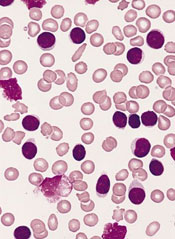
VIENNA—Results of the COMPLEMENT 2 trial indicate that adding ofatumumab to treatment with fludarabine and cyclophosphamide (OFC) can improve some outcome measures in patients with relapsed chronic lymphocytic leukemia (CLL), when compared to fludarabine and cyclophosphamide alone (FC).
Patients who received OFC had a significantly higher overall response rate and longer median progression-free survival than patients who received FC.
On the other hand, there was no significant difference between the treatment arms with regard to response duration or overall survival. And there were more grade 3 or higher adverse events (AEs) in the 3-drug arm than the 2-drug arm.
“There are limited treatment options for patients who have stopped responding to current CLL treatments, which happens in many patients with this disease over time,” said study investigator Tadeusz Robak, MD, PhD, of the Medical University of Lodz and Copernicus Memorial Hospital in Lodz, Poland.
“These data showed that the addition of ofatumumab to fludarabine and cyclophosphamide extended the amount of time before a patient’s CLL progressed, and further add to the body of evidence supporting the potential use of ofatumumab for these patients.”
The data were presented at the 20th Congress of the European Hematology Association (abstract LB219). The study was sponsored by GlaxoSmithKline and Genmab, which were previously co-developing ofatumumab. The drug is now an asset of Novartis AG.
Efficacy data
COMPLEMENT 2 is a phase 3 trial of 365 patients with relapsed CLL. Patients were randomized 1:1 to receive treatment with up to 6 cycles of OFC or FC. Baseline characteristics were well-balanced between the treatment arms.
The overall response rate was higher in the OFC arm than the FC arm—84% and 68%, respectively (P=0.0003)—as was the complete response rate—27% and 7%, respectively.
However, there was no significant difference in time to response or response duration. The median duration of response was 29.6 months in the OFC arm and 24.9 months in the FC arm (P=0.0878). And the median time to response was 0.99 months in both arms (P=0.449).
Still, patients in the OFC arm experienced a 54% improvement in progression-free survival. The median progression-free survival was 28.9 months in the OFC arm and 18.8 months in the FC arm (P=0.0032). And time to progression was 42.1 months and 26.8 months, respectively (P=0.0036).
But there was no significant difference in overall survival or time to next cancer treatment between the arms. The median overall survival was 56.4 months in the OFC arm and 45.8 months in the FC arm (P=0.1410). The median time to next therapy was 48.13 months and 40.08 months, respectively (P=0.0735).
Safety data
The rate of treatment-related AEs was 93% in the OFC arm and 85% in the FC arm. The rate of grade 3 or higher AEs was 74% and 69%, respectively.
The most common treatment-related AEs occurring in the OFC and FC arms, respectively, were neutropenia (58% vs 41%), thrombocytopenia (26% vs 32%), anemia (15% vs 26%), nausea (19% in both), leukopenia (14% vs 6%), vomiting (7% vs 10%), pyrexia (10% vs 3%), rash (10% vs 2%), fatigue (6% vs 4%), and pneumonia (6% vs 4%).
Treatment-related infections occurred in 20% of patients in the OFC arm and 15% in the FC arm. Infusion reactions occurred in 60% and 28% of patients, respectively.
VIENNA—Results of the COMPLEMENT 2 trial indicate that adding ofatumumab to treatment with fludarabine and cyclophosphamide (OFC) can improve some outcome measures in patients with relapsed chronic lymphocytic leukemia (CLL), when compared to fludarabine and cyclophosphamide alone (FC).
Patients who received OFC had a significantly higher overall response rate and longer median progression-free survival than patients who received FC.
On the other hand, there was no significant difference between the treatment arms with regard to response duration or overall survival. And there were more grade 3 or higher adverse events (AEs) in the 3-drug arm than the 2-drug arm.
“There are limited treatment options for patients who have stopped responding to current CLL treatments, which happens in many patients with this disease over time,” said study investigator Tadeusz Robak, MD, PhD, of the Medical University of Lodz and Copernicus Memorial Hospital in Lodz, Poland.
“These data showed that the addition of ofatumumab to fludarabine and cyclophosphamide extended the amount of time before a patient’s CLL progressed, and further add to the body of evidence supporting the potential use of ofatumumab for these patients.”
The data were presented at the 20th Congress of the European Hematology Association (abstract LB219). The study was sponsored by GlaxoSmithKline and Genmab, which were previously co-developing ofatumumab. The drug is now an asset of Novartis AG.
Efficacy data
COMPLEMENT 2 is a phase 3 trial of 365 patients with relapsed CLL. Patients were randomized 1:1 to receive treatment with up to 6 cycles of OFC or FC. Baseline characteristics were well-balanced between the treatment arms.
The overall response rate was higher in the OFC arm than the FC arm—84% and 68%, respectively (P=0.0003)—as was the complete response rate—27% and 7%, respectively.
However, there was no significant difference in time to response or response duration. The median duration of response was 29.6 months in the OFC arm and 24.9 months in the FC arm (P=0.0878). And the median time to response was 0.99 months in both arms (P=0.449).
Still, patients in the OFC arm experienced a 54% improvement in progression-free survival. The median progression-free survival was 28.9 months in the OFC arm and 18.8 months in the FC arm (P=0.0032). And time to progression was 42.1 months and 26.8 months, respectively (P=0.0036).
But there was no significant difference in overall survival or time to next cancer treatment between the arms. The median overall survival was 56.4 months in the OFC arm and 45.8 months in the FC arm (P=0.1410). The median time to next therapy was 48.13 months and 40.08 months, respectively (P=0.0735).
Safety data
The rate of treatment-related AEs was 93% in the OFC arm and 85% in the FC arm. The rate of grade 3 or higher AEs was 74% and 69%, respectively.
The most common treatment-related AEs occurring in the OFC and FC arms, respectively, were neutropenia (58% vs 41%), thrombocytopenia (26% vs 32%), anemia (15% vs 26%), nausea (19% in both), leukopenia (14% vs 6%), vomiting (7% vs 10%), pyrexia (10% vs 3%), rash (10% vs 2%), fatigue (6% vs 4%), and pneumonia (6% vs 4%).
Treatment-related infections occurred in 20% of patients in the OFC arm and 15% in the FC arm. Infusion reactions occurred in 60% and 28% of patients, respectively.
VIENNA—Results of the COMPLEMENT 2 trial indicate that adding ofatumumab to treatment with fludarabine and cyclophosphamide (OFC) can improve some outcome measures in patients with relapsed chronic lymphocytic leukemia (CLL), when compared to fludarabine and cyclophosphamide alone (FC).
Patients who received OFC had a significantly higher overall response rate and longer median progression-free survival than patients who received FC.
On the other hand, there was no significant difference between the treatment arms with regard to response duration or overall survival. And there were more grade 3 or higher adverse events (AEs) in the 3-drug arm than the 2-drug arm.
“There are limited treatment options for patients who have stopped responding to current CLL treatments, which happens in many patients with this disease over time,” said study investigator Tadeusz Robak, MD, PhD, of the Medical University of Lodz and Copernicus Memorial Hospital in Lodz, Poland.
“These data showed that the addition of ofatumumab to fludarabine and cyclophosphamide extended the amount of time before a patient’s CLL progressed, and further add to the body of evidence supporting the potential use of ofatumumab for these patients.”
The data were presented at the 20th Congress of the European Hematology Association (abstract LB219). The study was sponsored by GlaxoSmithKline and Genmab, which were previously co-developing ofatumumab. The drug is now an asset of Novartis AG.
Efficacy data
COMPLEMENT 2 is a phase 3 trial of 365 patients with relapsed CLL. Patients were randomized 1:1 to receive treatment with up to 6 cycles of OFC or FC. Baseline characteristics were well-balanced between the treatment arms.
The overall response rate was higher in the OFC arm than the FC arm—84% and 68%, respectively (P=0.0003)—as was the complete response rate—27% and 7%, respectively.
However, there was no significant difference in time to response or response duration. The median duration of response was 29.6 months in the OFC arm and 24.9 months in the FC arm (P=0.0878). And the median time to response was 0.99 months in both arms (P=0.449).
Still, patients in the OFC arm experienced a 54% improvement in progression-free survival. The median progression-free survival was 28.9 months in the OFC arm and 18.8 months in the FC arm (P=0.0032). And time to progression was 42.1 months and 26.8 months, respectively (P=0.0036).
But there was no significant difference in overall survival or time to next cancer treatment between the arms. The median overall survival was 56.4 months in the OFC arm and 45.8 months in the FC arm (P=0.1410). The median time to next therapy was 48.13 months and 40.08 months, respectively (P=0.0735).
Safety data
The rate of treatment-related AEs was 93% in the OFC arm and 85% in the FC arm. The rate of grade 3 or higher AEs was 74% and 69%, respectively.
The most common treatment-related AEs occurring in the OFC and FC arms, respectively, were neutropenia (58% vs 41%), thrombocytopenia (26% vs 32%), anemia (15% vs 26%), nausea (19% in both), leukopenia (14% vs 6%), vomiting (7% vs 10%), pyrexia (10% vs 3%), rash (10% vs 2%), fatigue (6% vs 4%), and pneumonia (6% vs 4%).
Treatment-related infections occurred in 20% of patients in the OFC arm and 15% in the FC arm. Infusion reactions occurred in 60% and 28% of patients, respectively.
SVT may indicate undiagnosed cancers
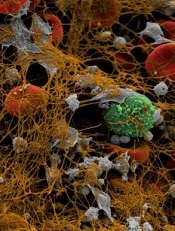
Image by Andre E.X. Brown
Splanchnic venous thrombosis (SVT) may be an indicator of undiagnosed cancer, according to research published in Blood.
The study showed that patients with SVT had a particularly high incidence of myeloproliferative neoplasms (MPNs), liver cancer, and pancreatic cancer.
The presence of SVT also appeared to predict poorer survival in patients with liver and pancreatic cancers. The researchers were unable to calculate the impact of SVT on survival in MPN patients.
“As we learn more about the association between many types of thromboses and cancer, we also want to better understand these more rare clots and how they can perhaps signal a hidden cancer,” said study author Kirstine K. Søgaard, MD, of Aarhus University Hospital in Aarhus, Denmark.
“In this case, we had access to comprehensive data that we believed could provide insights useful to clinicians caring for patients with this condition.”
Dr Søgaard and her colleagues analyzed the medical discharge diagnoses of more than 1191 Danish patients diagnosed with SVT from 1994 to 2011. The researchers followed the patients for a median of 1.6 years, calculating their risk of having a subsequent cancer diagnosis compared to the expected risk in the general population in Denmark.
In all, 183 SVT patients were diagnosed with cancer, for an overall standardized incidence ratio (SIR) of 4.2. More than half of the cancers (n=95) were identified within 3 months of SVT diagnosis. The 3-month absolute risk of cancer was 8%, and the absolute risk at 5 years was 14.8%.
During the first 3 months of follow-up, the SIR for cancer among SVT patients was 33. The SIR fell to 2.7 between 3 and 12 months, then to 2.1 past the 1-year mark.
SIRs were highest for liver and pancreatic cancers and MPNs. The overall SIRs were 138, 21, and 133, respectively.
For MPNs, the SIR was 764 in the first 3 months of SVT diagnosis, 119 from 3 to 12 months, and 88 after the 12-month mark. For liver cancer, the SIR was 1805 in the first 3 months, 92 from 3 to 12 months, and 7.4 after the 12-month mark. For pancreatic cancer, the SIR was 256 in the first 3 months, 0 from 3 to 12 months, and 4 after the 12-month mark.
The researchers also found an excess risk of lymphoma, leukemia, and myelodysplastic syndromes in the first 3 months after SVT diagnosis. After that, the risk did not differ from that of the general population.
Patients with liver or pancreatic cancer had a poor outcome regardless of SVT, but patients with SVT and these cancers had markedly worse 3-month survival outcomes than cancer patients without SVT—44% vs 55% for patients with liver cancer and 33% vs 53% for patients with pancreatic cancer.
Patients with MPNs had a much better prognosis, regardless of SVT. And because so few MPN patients died, the researchers did not analyze the impact of SVT on relative mortality.
“This study is the first to demonstrate, in a large population, that patients who develop splanchnic venous thrombosis are likely to be diagnosed with cancer within a relatively short time period,” Dr Søgaard said. “As we continue to learn more about patients who suffer from these blood clots, it will be important to examine the pros and cons of screening for these hidden cancers.”
Image by Andre E.X. Brown
Splanchnic venous thrombosis (SVT) may be an indicator of undiagnosed cancer, according to research published in Blood.
The study showed that patients with SVT had a particularly high incidence of myeloproliferative neoplasms (MPNs), liver cancer, and pancreatic cancer.
The presence of SVT also appeared to predict poorer survival in patients with liver and pancreatic cancers. The researchers were unable to calculate the impact of SVT on survival in MPN patients.
“As we learn more about the association between many types of thromboses and cancer, we also want to better understand these more rare clots and how they can perhaps signal a hidden cancer,” said study author Kirstine K. Søgaard, MD, of Aarhus University Hospital in Aarhus, Denmark.
“In this case, we had access to comprehensive data that we believed could provide insights useful to clinicians caring for patients with this condition.”
Dr Søgaard and her colleagues analyzed the medical discharge diagnoses of more than 1191 Danish patients diagnosed with SVT from 1994 to 2011. The researchers followed the patients for a median of 1.6 years, calculating their risk of having a subsequent cancer diagnosis compared to the expected risk in the general population in Denmark.
In all, 183 SVT patients were diagnosed with cancer, for an overall standardized incidence ratio (SIR) of 4.2. More than half of the cancers (n=95) were identified within 3 months of SVT diagnosis. The 3-month absolute risk of cancer was 8%, and the absolute risk at 5 years was 14.8%.
During the first 3 months of follow-up, the SIR for cancer among SVT patients was 33. The SIR fell to 2.7 between 3 and 12 months, then to 2.1 past the 1-year mark.
SIRs were highest for liver and pancreatic cancers and MPNs. The overall SIRs were 138, 21, and 133, respectively.
For MPNs, the SIR was 764 in the first 3 months of SVT diagnosis, 119 from 3 to 12 months, and 88 after the 12-month mark. For liver cancer, the SIR was 1805 in the first 3 months, 92 from 3 to 12 months, and 7.4 after the 12-month mark. For pancreatic cancer, the SIR was 256 in the first 3 months, 0 from 3 to 12 months, and 4 after the 12-month mark.
The researchers also found an excess risk of lymphoma, leukemia, and myelodysplastic syndromes in the first 3 months after SVT diagnosis. After that, the risk did not differ from that of the general population.
Patients with liver or pancreatic cancer had a poor outcome regardless of SVT, but patients with SVT and these cancers had markedly worse 3-month survival outcomes than cancer patients without SVT—44% vs 55% for patients with liver cancer and 33% vs 53% for patients with pancreatic cancer.
Patients with MPNs had a much better prognosis, regardless of SVT. And because so few MPN patients died, the researchers did not analyze the impact of SVT on relative mortality.
“This study is the first to demonstrate, in a large population, that patients who develop splanchnic venous thrombosis are likely to be diagnosed with cancer within a relatively short time period,” Dr Søgaard said. “As we continue to learn more about patients who suffer from these blood clots, it will be important to examine the pros and cons of screening for these hidden cancers.”
Image by Andre E.X. Brown
Splanchnic venous thrombosis (SVT) may be an indicator of undiagnosed cancer, according to research published in Blood.
The study showed that patients with SVT had a particularly high incidence of myeloproliferative neoplasms (MPNs), liver cancer, and pancreatic cancer.
The presence of SVT also appeared to predict poorer survival in patients with liver and pancreatic cancers. The researchers were unable to calculate the impact of SVT on survival in MPN patients.
“As we learn more about the association between many types of thromboses and cancer, we also want to better understand these more rare clots and how they can perhaps signal a hidden cancer,” said study author Kirstine K. Søgaard, MD, of Aarhus University Hospital in Aarhus, Denmark.
“In this case, we had access to comprehensive data that we believed could provide insights useful to clinicians caring for patients with this condition.”
Dr Søgaard and her colleagues analyzed the medical discharge diagnoses of more than 1191 Danish patients diagnosed with SVT from 1994 to 2011. The researchers followed the patients for a median of 1.6 years, calculating their risk of having a subsequent cancer diagnosis compared to the expected risk in the general population in Denmark.
In all, 183 SVT patients were diagnosed with cancer, for an overall standardized incidence ratio (SIR) of 4.2. More than half of the cancers (n=95) were identified within 3 months of SVT diagnosis. The 3-month absolute risk of cancer was 8%, and the absolute risk at 5 years was 14.8%.
During the first 3 months of follow-up, the SIR for cancer among SVT patients was 33. The SIR fell to 2.7 between 3 and 12 months, then to 2.1 past the 1-year mark.
SIRs were highest for liver and pancreatic cancers and MPNs. The overall SIRs were 138, 21, and 133, respectively.
For MPNs, the SIR was 764 in the first 3 months of SVT diagnosis, 119 from 3 to 12 months, and 88 after the 12-month mark. For liver cancer, the SIR was 1805 in the first 3 months, 92 from 3 to 12 months, and 7.4 after the 12-month mark. For pancreatic cancer, the SIR was 256 in the first 3 months, 0 from 3 to 12 months, and 4 after the 12-month mark.
The researchers also found an excess risk of lymphoma, leukemia, and myelodysplastic syndromes in the first 3 months after SVT diagnosis. After that, the risk did not differ from that of the general population.
Patients with liver or pancreatic cancer had a poor outcome regardless of SVT, but patients with SVT and these cancers had markedly worse 3-month survival outcomes than cancer patients without SVT—44% vs 55% for patients with liver cancer and 33% vs 53% for patients with pancreatic cancer.
Patients with MPNs had a much better prognosis, regardless of SVT. And because so few MPN patients died, the researchers did not analyze the impact of SVT on relative mortality.
“This study is the first to demonstrate, in a large population, that patients who develop splanchnic venous thrombosis are likely to be diagnosed with cancer within a relatively short time period,” Dr Søgaard said. “As we continue to learn more about patients who suffer from these blood clots, it will be important to examine the pros and cons of screening for these hidden cancers.”
Dose reductions make ponatinib safer for CP-CML

VIENNA—Administering ponatinib at lower doses can reduce the risk of arterial occlusive events (AOE) without hindering responses in patients with chronic-phase chronic myeloid leukemia (CP-CML), data from the PACE trial suggest.
When earlier results of this phase 2 study showed that ponatinib can cause AOEs, trials of the drug were put on partial clinical hold. Enrollment was stalled temporarily, and investigators began reducing ponatinib doses.
Now, updated data from the PACE trial suggest ponatinib can be administered safely and effectively in certain patients with CP-CML.
At a median follow-up of about 3.5 years, 95% of CP-CML patients who underwent dose reductions maintained a major cytogenetic response (MCyR). And AOEs occurred in 7% of patients who underwent dose reductions, compared to 13% of patients who did not.
“These continued responses . . . in such a heavily pretreated patient population are very encouraging,” said study investigator Jorge E. Cortes, MD, of The University of Texas MD Anderson Cancer Center in Houston.
“Careful assessment of the benefit and risk of initiating ponatinib therapy, particularly in patients who may be at increased risk for arterial occlusive events, can help identify patients with refractory, Ph+ leukemias who can benefit most from this treatment.”
Dr Cortes and his colleagues presented data from the PACE trial at the 20th Congress of the European Hematology Association as abstract P234*. The study was sponsored by Ariad Pharmaceuticals, the company developing ponatinib.
Updated results
The trial included patients with resistant or intolerant CML or Philadelphia chromosome-positive acute lymphoblastic leukemia. A total of 449 patients received ponatinib at a starting dose of 45 mg/day.
Ninety-three percent of patients had previously received 2 or more approved tyrosine kinase inhibitors (TKI), and 55% had previously received 3 or more approved TKIs.
Dr Cortes and his colleagues presented data on 270 CP-CML patients. At a median follow-up of 42.3 months (data as of February 2, 2015), 114 patients (42%) continue to receive ponatinib.
Eighteen percent of patients discontinued treatment due to adverse events (AEs), 10% due to disease progression, 3% due to death, and 27% for other reasons.
Fifty-nine percent of CP-CML patients achieved an MCyR at any time during the study, and 83% of responders are estimated to remain in MCyR at 3 years. Thirty-nine percent of patients achieved a major molecular response (MMR).
The estimated progression-free survival at 3 years is 60%, and the estimated overall survival is 81%.
Twenty-three percent of CP-CML patients experienced an AOE designated a serious AE, and 28% experienced any AOE. The median time to onset for AOEs was 14.1 months (range, 0.3–44.0).
Four percent of CP-CML patients experienced a venous thromboembolism (VTE) that was considered an serious AE, and 5% experienced any VTE.
The most common all-grade, treatment-emergent AEs occurring in at least 40% of CP-CML patients were abdominal pain (46%), rash (46%), thrombocytopenia (45%), headache (43%), constipation (41%), and dry skin (41%).
Outcomes after dose reductions
On October 10, 2013, Ariad provided dose-reduction recommendations to investigators for patients remaining on the PACE trial. The following dose reductions were recommended, unless the benefit-risk analysis warranted treatment with a higher dose:
- CP-CML patients who already achieved an MCyR should have their ponatinib dose reduced to 15 mg/day
- CP-CML patients who had not already achieved an MCyR should have their dose reduced to 30 mg/day
- Advanced-phase patients should have their dose reduced to 30 mg/day.
As of February 2015, with 1.3 years (16 months) of follow-up after these recommendations, 95% of CP-CML patients maintained their response, whether or not they underwent prospective dose reductions.
Of the patients who were in MCyR as of October 10, 2013, and had a prospective dose reduction, 95% (61/64) maintained their response at 1.3 years. Of the patients who were in MMR as of October 10, 2013, and had a prospective dose reduction, 94% (44/47) maintained their response at 1.3 years.
Forty-two patients in MCyR did not undergo prospective dose reductions (the majority of which were already at a reduced dose of 30 mg or 15 mg as of October 10, 2013). Of these patients, 93% (n=39) maintained an MCyR after 1.3 more years of ponatinib treatment.
Twenty-four patients in MMR did not undergo prospective dose reductions, and 96% of these patients (n=22) maintained their response at 1.3 years.
Seven percent (5/71) of patients without prior AOEs who underwent dose reductions had a new AOE during the 1.3-year interval after dose reduction.
Thirteen percent (9/67) of patients without prior AOEs who did not undergo dose reductions had a new AOE in the same time interval.
*Information in the abstract differs from that presented at the meeting.
VIENNA—Administering ponatinib at lower doses can reduce the risk of arterial occlusive events (AOE) without hindering responses in patients with chronic-phase chronic myeloid leukemia (CP-CML), data from the PACE trial suggest.
When earlier results of this phase 2 study showed that ponatinib can cause AOEs, trials of the drug were put on partial clinical hold. Enrollment was stalled temporarily, and investigators began reducing ponatinib doses.
Now, updated data from the PACE trial suggest ponatinib can be administered safely and effectively in certain patients with CP-CML.
At a median follow-up of about 3.5 years, 95% of CP-CML patients who underwent dose reductions maintained a major cytogenetic response (MCyR). And AOEs occurred in 7% of patients who underwent dose reductions, compared to 13% of patients who did not.
“These continued responses . . . in such a heavily pretreated patient population are very encouraging,” said study investigator Jorge E. Cortes, MD, of The University of Texas MD Anderson Cancer Center in Houston.
“Careful assessment of the benefit and risk of initiating ponatinib therapy, particularly in patients who may be at increased risk for arterial occlusive events, can help identify patients with refractory, Ph+ leukemias who can benefit most from this treatment.”
Dr Cortes and his colleagues presented data from the PACE trial at the 20th Congress of the European Hematology Association as abstract P234*. The study was sponsored by Ariad Pharmaceuticals, the company developing ponatinib.
Updated results
The trial included patients with resistant or intolerant CML or Philadelphia chromosome-positive acute lymphoblastic leukemia. A total of 449 patients received ponatinib at a starting dose of 45 mg/day.
Ninety-three percent of patients had previously received 2 or more approved tyrosine kinase inhibitors (TKI), and 55% had previously received 3 or more approved TKIs.
Dr Cortes and his colleagues presented data on 270 CP-CML patients. At a median follow-up of 42.3 months (data as of February 2, 2015), 114 patients (42%) continue to receive ponatinib.
Eighteen percent of patients discontinued treatment due to adverse events (AEs), 10% due to disease progression, 3% due to death, and 27% for other reasons.
Fifty-nine percent of CP-CML patients achieved an MCyR at any time during the study, and 83% of responders are estimated to remain in MCyR at 3 years. Thirty-nine percent of patients achieved a major molecular response (MMR).
The estimated progression-free survival at 3 years is 60%, and the estimated overall survival is 81%.
Twenty-three percent of CP-CML patients experienced an AOE designated a serious AE, and 28% experienced any AOE. The median time to onset for AOEs was 14.1 months (range, 0.3–44.0).
Four percent of CP-CML patients experienced a venous thromboembolism (VTE) that was considered an serious AE, and 5% experienced any VTE.
The most common all-grade, treatment-emergent AEs occurring in at least 40% of CP-CML patients were abdominal pain (46%), rash (46%), thrombocytopenia (45%), headache (43%), constipation (41%), and dry skin (41%).
Outcomes after dose reductions
On October 10, 2013, Ariad provided dose-reduction recommendations to investigators for patients remaining on the PACE trial. The following dose reductions were recommended, unless the benefit-risk analysis warranted treatment with a higher dose:
- CP-CML patients who already achieved an MCyR should have their ponatinib dose reduced to 15 mg/day
- CP-CML patients who had not already achieved an MCyR should have their dose reduced to 30 mg/day
- Advanced-phase patients should have their dose reduced to 30 mg/day.
As of February 2015, with 1.3 years (16 months) of follow-up after these recommendations, 95% of CP-CML patients maintained their response, whether or not they underwent prospective dose reductions.
Of the patients who were in MCyR as of October 10, 2013, and had a prospective dose reduction, 95% (61/64) maintained their response at 1.3 years. Of the patients who were in MMR as of October 10, 2013, and had a prospective dose reduction, 94% (44/47) maintained their response at 1.3 years.
Forty-two patients in MCyR did not undergo prospective dose reductions (the majority of which were already at a reduced dose of 30 mg or 15 mg as of October 10, 2013). Of these patients, 93% (n=39) maintained an MCyR after 1.3 more years of ponatinib treatment.
Twenty-four patients in MMR did not undergo prospective dose reductions, and 96% of these patients (n=22) maintained their response at 1.3 years.
Seven percent (5/71) of patients without prior AOEs who underwent dose reductions had a new AOE during the 1.3-year interval after dose reduction.
Thirteen percent (9/67) of patients without prior AOEs who did not undergo dose reductions had a new AOE in the same time interval.
*Information in the abstract differs from that presented at the meeting.
VIENNA—Administering ponatinib at lower doses can reduce the risk of arterial occlusive events (AOE) without hindering responses in patients with chronic-phase chronic myeloid leukemia (CP-CML), data from the PACE trial suggest.
When earlier results of this phase 2 study showed that ponatinib can cause AOEs, trials of the drug were put on partial clinical hold. Enrollment was stalled temporarily, and investigators began reducing ponatinib doses.
Now, updated data from the PACE trial suggest ponatinib can be administered safely and effectively in certain patients with CP-CML.
At a median follow-up of about 3.5 years, 95% of CP-CML patients who underwent dose reductions maintained a major cytogenetic response (MCyR). And AOEs occurred in 7% of patients who underwent dose reductions, compared to 13% of patients who did not.
“These continued responses . . . in such a heavily pretreated patient population are very encouraging,” said study investigator Jorge E. Cortes, MD, of The University of Texas MD Anderson Cancer Center in Houston.
“Careful assessment of the benefit and risk of initiating ponatinib therapy, particularly in patients who may be at increased risk for arterial occlusive events, can help identify patients with refractory, Ph+ leukemias who can benefit most from this treatment.”
Dr Cortes and his colleagues presented data from the PACE trial at the 20th Congress of the European Hematology Association as abstract P234*. The study was sponsored by Ariad Pharmaceuticals, the company developing ponatinib.
Updated results
The trial included patients with resistant or intolerant CML or Philadelphia chromosome-positive acute lymphoblastic leukemia. A total of 449 patients received ponatinib at a starting dose of 45 mg/day.
Ninety-three percent of patients had previously received 2 or more approved tyrosine kinase inhibitors (TKI), and 55% had previously received 3 or more approved TKIs.
Dr Cortes and his colleagues presented data on 270 CP-CML patients. At a median follow-up of 42.3 months (data as of February 2, 2015), 114 patients (42%) continue to receive ponatinib.
Eighteen percent of patients discontinued treatment due to adverse events (AEs), 10% due to disease progression, 3% due to death, and 27% for other reasons.
Fifty-nine percent of CP-CML patients achieved an MCyR at any time during the study, and 83% of responders are estimated to remain in MCyR at 3 years. Thirty-nine percent of patients achieved a major molecular response (MMR).
The estimated progression-free survival at 3 years is 60%, and the estimated overall survival is 81%.
Twenty-three percent of CP-CML patients experienced an AOE designated a serious AE, and 28% experienced any AOE. The median time to onset for AOEs was 14.1 months (range, 0.3–44.0).
Four percent of CP-CML patients experienced a venous thromboembolism (VTE) that was considered an serious AE, and 5% experienced any VTE.
The most common all-grade, treatment-emergent AEs occurring in at least 40% of CP-CML patients were abdominal pain (46%), rash (46%), thrombocytopenia (45%), headache (43%), constipation (41%), and dry skin (41%).
Outcomes after dose reductions
On October 10, 2013, Ariad provided dose-reduction recommendations to investigators for patients remaining on the PACE trial. The following dose reductions were recommended, unless the benefit-risk analysis warranted treatment with a higher dose:
- CP-CML patients who already achieved an MCyR should have their ponatinib dose reduced to 15 mg/day
- CP-CML patients who had not already achieved an MCyR should have their dose reduced to 30 mg/day
- Advanced-phase patients should have their dose reduced to 30 mg/day.
As of February 2015, with 1.3 years (16 months) of follow-up after these recommendations, 95% of CP-CML patients maintained their response, whether or not they underwent prospective dose reductions.
Of the patients who were in MCyR as of October 10, 2013, and had a prospective dose reduction, 95% (61/64) maintained their response at 1.3 years. Of the patients who were in MMR as of October 10, 2013, and had a prospective dose reduction, 94% (44/47) maintained their response at 1.3 years.
Forty-two patients in MCyR did not undergo prospective dose reductions (the majority of which were already at a reduced dose of 30 mg or 15 mg as of October 10, 2013). Of these patients, 93% (n=39) maintained an MCyR after 1.3 more years of ponatinib treatment.
Twenty-four patients in MMR did not undergo prospective dose reductions, and 96% of these patients (n=22) maintained their response at 1.3 years.
Seven percent (5/71) of patients without prior AOEs who underwent dose reductions had a new AOE during the 1.3-year interval after dose reduction.
Thirteen percent (9/67) of patients without prior AOEs who did not undergo dose reductions had a new AOE in the same time interval.
*Information in the abstract differs from that presented at the meeting.
JAK inhibitor can provide long-term disease control in PV

Image courtesy of AFIP
VIENNA—Updated results from the phase 3 RESPONSE trial suggest the JAK1/2 inhibitor ruxolitinib can provide long-term disease control in patients with polycythemia vera (PV) who are resistant to or intolerant of hydroxyurea.
At 18 months of follow-up, 80% of patients had achieved a durable response to ruxolitinib, sustaining hematocrit levels below 45% without the use of phlebotomy and experiencing reductions in spleen size.
In addition, 83% of patients were still receiving ruxolitinib at last follow-up.
“Polycythemia vera can lead to serious complications if inadequately controlled, and these data demonstrate the ability of [ruxolitinib] to provide a durable and comprehensive clinical benefit in this patient population,” said Jean-Jacques Kiladjian, MD, PhD, of Hôpital Saint-Louis et Université Paris Diderot in France.
Dr Kiladjian presented these results at the 20th Congress of the European Hematology Association (abstract S447). The RESPONSE trial was sponsored by Incyte Corporation and Novartis Pharmaceuticals, the companies developing ruxolitinib.
The study included 222 patients with PV whose were resistant to or could not tolerate hydroxyurea. They were randomized 1:1 to receive either ruxolitinib (at a starting dose of 10 mg twice daily) or best available therapy (BAT), which was defined as investigator-selected monotherapy or observation only. The ruxolitinib dose was adjusted as needed throughout the trial.
The study’s primary endpoint was the proportion of patients who achieved hematocrit control and were not eligible for phlebotomy from week 8 through 32 (with no more than 1 instance of phlebotomy eligibility between randomization and week 8) and who saw a 35% or greater reduction in spleen volume from baseline, as assessed by imaging at week 32.
Patients were deemed eligible for phlebotomy if they had hematocrit that was greater than 45% and had increased 3 or more percentage points from the time they entered the trial or if they had hematocrit greater than 48%.
The researchers performed a second, preplanned analysis at 80 weeks (18 months), evaluating the durability of primary response, hematocrit control, spleen size reduction, complete hematologic remission, and safety. The team also conducted a separate analysis evaluating hematologic parameters.
Results at 32 and 80 weeks
Twenty-one percent of patients in the ruxolitinib arm and 1% of patients in the BAT arm achieved the primary endpoint (P<0.0001). All but 1 of the responders in the ruxolitinib arm maintained this response at 80 weeks.
Sixty percent of patients in the ruxolitinib arm and 20% in the BAT arm achieved hematocrit control without phlebotomy through week 32. Patients in the ruxolitinib arm had an 89% probability of maintaining this response for 80 weeks from the time of initial response. Of the 98 patients on ruxolitinib at week 32, 90% did not have a phlebotomy between weeks 32 and 80.
At week 32, 38% of patients in the ruxolitinib arm and 1% of patients in the BAT arm achieved a 35% or greater reduction in spleen volume. All of the ruxolitinib-treated patients maintained this response at 80 weeks.
At week 32, 24% of patients in the ruxolitinib arm had a complete hematologic remission, as did 9% of patients in the BAT arm. Patients in the ruxolitinib arm had a 69% probability of maintaining this response for 80 weeks.
A separate analysis of the data at 18 months demonstrated that ruxolitinib treatment also led to sustained control of white blood cell and platelet levels, with the largest reductions occurring in patients who had the most elevated values at baseline.
At week 80, 83% of patients in the ruxolitinib arm remained on treatment (median exposure of 111 weeks), but none of the patients in the BAT arm were still receiving their assigned therapy.
At 80 weeks, the most common adverse events in the ruxolitinib arm were headache (22%), diarrhea (20%), pruritus (20%), and fatigue (17%). Grade 3 or 4 anemia and thrombocytopenia occurred in 2% and 6% of patients, respectively. Five percent of patients discontinued treatment due to adverse events.
“There is currently a significant unmet need for patients with polycythemia vera who are unable to tolerate or control their disease on other treatments,” Dr Kiladjian said. “For these patients, [ruxolitinib] represents a valuable new option, as confirmed by results from the long-term, phase 3 study.”
Image courtesy of AFIP
VIENNA—Updated results from the phase 3 RESPONSE trial suggest the JAK1/2 inhibitor ruxolitinib can provide long-term disease control in patients with polycythemia vera (PV) who are resistant to or intolerant of hydroxyurea.
At 18 months of follow-up, 80% of patients had achieved a durable response to ruxolitinib, sustaining hematocrit levels below 45% without the use of phlebotomy and experiencing reductions in spleen size.
In addition, 83% of patients were still receiving ruxolitinib at last follow-up.
“Polycythemia vera can lead to serious complications if inadequately controlled, and these data demonstrate the ability of [ruxolitinib] to provide a durable and comprehensive clinical benefit in this patient population,” said Jean-Jacques Kiladjian, MD, PhD, of Hôpital Saint-Louis et Université Paris Diderot in France.
Dr Kiladjian presented these results at the 20th Congress of the European Hematology Association (abstract S447). The RESPONSE trial was sponsored by Incyte Corporation and Novartis Pharmaceuticals, the companies developing ruxolitinib.
The study included 222 patients with PV whose were resistant to or could not tolerate hydroxyurea. They were randomized 1:1 to receive either ruxolitinib (at a starting dose of 10 mg twice daily) or best available therapy (BAT), which was defined as investigator-selected monotherapy or observation only. The ruxolitinib dose was adjusted as needed throughout the trial.
The study’s primary endpoint was the proportion of patients who achieved hematocrit control and were not eligible for phlebotomy from week 8 through 32 (with no more than 1 instance of phlebotomy eligibility between randomization and week 8) and who saw a 35% or greater reduction in spleen volume from baseline, as assessed by imaging at week 32.
Patients were deemed eligible for phlebotomy if they had hematocrit that was greater than 45% and had increased 3 or more percentage points from the time they entered the trial or if they had hematocrit greater than 48%.
The researchers performed a second, preplanned analysis at 80 weeks (18 months), evaluating the durability of primary response, hematocrit control, spleen size reduction, complete hematologic remission, and safety. The team also conducted a separate analysis evaluating hematologic parameters.
Results at 32 and 80 weeks
Twenty-one percent of patients in the ruxolitinib arm and 1% of patients in the BAT arm achieved the primary endpoint (P<0.0001). All but 1 of the responders in the ruxolitinib arm maintained this response at 80 weeks.
Sixty percent of patients in the ruxolitinib arm and 20% in the BAT arm achieved hematocrit control without phlebotomy through week 32. Patients in the ruxolitinib arm had an 89% probability of maintaining this response for 80 weeks from the time of initial response. Of the 98 patients on ruxolitinib at week 32, 90% did not have a phlebotomy between weeks 32 and 80.
At week 32, 38% of patients in the ruxolitinib arm and 1% of patients in the BAT arm achieved a 35% or greater reduction in spleen volume. All of the ruxolitinib-treated patients maintained this response at 80 weeks.
At week 32, 24% of patients in the ruxolitinib arm had a complete hematologic remission, as did 9% of patients in the BAT arm. Patients in the ruxolitinib arm had a 69% probability of maintaining this response for 80 weeks.
A separate analysis of the data at 18 months demonstrated that ruxolitinib treatment also led to sustained control of white blood cell and platelet levels, with the largest reductions occurring in patients who had the most elevated values at baseline.
At week 80, 83% of patients in the ruxolitinib arm remained on treatment (median exposure of 111 weeks), but none of the patients in the BAT arm were still receiving their assigned therapy.
At 80 weeks, the most common adverse events in the ruxolitinib arm were headache (22%), diarrhea (20%), pruritus (20%), and fatigue (17%). Grade 3 or 4 anemia and thrombocytopenia occurred in 2% and 6% of patients, respectively. Five percent of patients discontinued treatment due to adverse events.
“There is currently a significant unmet need for patients with polycythemia vera who are unable to tolerate or control their disease on other treatments,” Dr Kiladjian said. “For these patients, [ruxolitinib] represents a valuable new option, as confirmed by results from the long-term, phase 3 study.”
Image courtesy of AFIP
VIENNA—Updated results from the phase 3 RESPONSE trial suggest the JAK1/2 inhibitor ruxolitinib can provide long-term disease control in patients with polycythemia vera (PV) who are resistant to or intolerant of hydroxyurea.
At 18 months of follow-up, 80% of patients had achieved a durable response to ruxolitinib, sustaining hematocrit levels below 45% without the use of phlebotomy and experiencing reductions in spleen size.
In addition, 83% of patients were still receiving ruxolitinib at last follow-up.
“Polycythemia vera can lead to serious complications if inadequately controlled, and these data demonstrate the ability of [ruxolitinib] to provide a durable and comprehensive clinical benefit in this patient population,” said Jean-Jacques Kiladjian, MD, PhD, of Hôpital Saint-Louis et Université Paris Diderot in France.
Dr Kiladjian presented these results at the 20th Congress of the European Hematology Association (abstract S447). The RESPONSE trial was sponsored by Incyte Corporation and Novartis Pharmaceuticals, the companies developing ruxolitinib.
The study included 222 patients with PV whose were resistant to or could not tolerate hydroxyurea. They were randomized 1:1 to receive either ruxolitinib (at a starting dose of 10 mg twice daily) or best available therapy (BAT), which was defined as investigator-selected monotherapy or observation only. The ruxolitinib dose was adjusted as needed throughout the trial.
The study’s primary endpoint was the proportion of patients who achieved hematocrit control and were not eligible for phlebotomy from week 8 through 32 (with no more than 1 instance of phlebotomy eligibility between randomization and week 8) and who saw a 35% or greater reduction in spleen volume from baseline, as assessed by imaging at week 32.
Patients were deemed eligible for phlebotomy if they had hematocrit that was greater than 45% and had increased 3 or more percentage points from the time they entered the trial or if they had hematocrit greater than 48%.
The researchers performed a second, preplanned analysis at 80 weeks (18 months), evaluating the durability of primary response, hematocrit control, spleen size reduction, complete hematologic remission, and safety. The team also conducted a separate analysis evaluating hematologic parameters.
Results at 32 and 80 weeks
Twenty-one percent of patients in the ruxolitinib arm and 1% of patients in the BAT arm achieved the primary endpoint (P<0.0001). All but 1 of the responders in the ruxolitinib arm maintained this response at 80 weeks.
Sixty percent of patients in the ruxolitinib arm and 20% in the BAT arm achieved hematocrit control without phlebotomy through week 32. Patients in the ruxolitinib arm had an 89% probability of maintaining this response for 80 weeks from the time of initial response. Of the 98 patients on ruxolitinib at week 32, 90% did not have a phlebotomy between weeks 32 and 80.
At week 32, 38% of patients in the ruxolitinib arm and 1% of patients in the BAT arm achieved a 35% or greater reduction in spleen volume. All of the ruxolitinib-treated patients maintained this response at 80 weeks.
At week 32, 24% of patients in the ruxolitinib arm had a complete hematologic remission, as did 9% of patients in the BAT arm. Patients in the ruxolitinib arm had a 69% probability of maintaining this response for 80 weeks.
A separate analysis of the data at 18 months demonstrated that ruxolitinib treatment also led to sustained control of white blood cell and platelet levels, with the largest reductions occurring in patients who had the most elevated values at baseline.
At week 80, 83% of patients in the ruxolitinib arm remained on treatment (median exposure of 111 weeks), but none of the patients in the BAT arm were still receiving their assigned therapy.
At 80 weeks, the most common adverse events in the ruxolitinib arm were headache (22%), diarrhea (20%), pruritus (20%), and fatigue (17%). Grade 3 or 4 anemia and thrombocytopenia occurred in 2% and 6% of patients, respectively. Five percent of patients discontinued treatment due to adverse events.
“There is currently a significant unmet need for patients with polycythemia vera who are unable to tolerate or control their disease on other treatments,” Dr Kiladjian said. “For these patients, [ruxolitinib] represents a valuable new option, as confirmed by results from the long-term, phase 3 study.”
mAb produces responses in AL amyloidosis

VIENNA—A monoclonal antibody (mAb) can produce responses in patients with light chain (AL) amyloidosis and persistent organ dysfunction, according to research presented at the 20th Congress of the European Hematology Association.
In an ongoing phase 1/2 trial, the mAb, known as NEOD001, produced a cardiac response in 57% of evaluable patients and a renal response in 60% of evaluable patients.
Michaela Liedtke, MD, of the Stanford University School of Medicine in California, presented these results as abstract S104*. The research was sponsored by Prothena Therapeutics Ltd., the company developing NEOD001.
Dr Liedtke presented results of an interim analysis as of February 28, 2015. The analysis included 27 patients with AL amyloidosis who had received 1 or more anti-plasma-cell systemic therapies, had a partial response or better, and did not require additional chemotherapy. The patients also had persistent organ dysfunction.
Patients received a dose of NEOD001 every 28 days, in 1 of 7 dosing cohorts (0.5 mg/kg, 1 mg/kg, 2 mg/kg, 4 mg/kg, 8 mg/kg, 16 mg/kg, and 24 mg/kg). They received a total of 327 infusions, with an average treatment duration of 12 months.
The patients’ median age was 60 (range, 38-80), and they had received a median of 2 prior treatments (range, 1-7). A third of patients each had 1 organ system involved (n=9), 2 organ systems involved (n=9), or 3 or more organ systems involved (n=9).
Safety data
The most frequently reported treatment-emergent adverse events (occurring in more than 10% of subjects) were fatigue (37%), upper respiratory tract infection (26%), cough (19%), dyspnea (19%), headache (15%), anemia (15%), increased blood creatinine (15%), peripheral edema (15%), edema (11%), diarrhea (11%), nausea (11%), and hyponatremia (11%).
There were no reports of hypersensitivity reactions to NEOD001 or drug-related serious adverse events, and no anti-NEOD001 antibodies were detected. There were no dose-limiting toxicities, and none of the patients discontinued treatment due to drug-related adverse events.
All patients remaining in the study were escalated to a dose of 24 mg/kg as of December 2, 2014.
Renal and cardiac responses
In a best-response analysis, 60% (9/15) of renal-evaluable patients demonstrated a renal response to NEOD001, defined as a 30% decrease in proteinuria in the absence of estimated glomerular filtration rate (eGFR) worsening. The other 40% of patients (n=6) had stable disease.
In another best-response analysis, 57% (8/14) of cardiac-evaluable patients had a cardiac response to NEOD001, defined as more than 30% and 300 pg/mL decrease in levels of N-terminal pro-brain natriuretic peptide (NT-proBNP). The other 43% of patients (n=6) had stable disease.
Longer treatment with NEOD001 was significantly associated with NT-proBNP decline (P<0.0001).
“[M]onthly infusions of NEOD001 correlate significantly with decreases in both cardiac and renal biomarkers over time,” Dr Liedtke said. “Decreases in cardiac biomarkers predict increased survival, and decreases in renal biomarkers predict delayed time to kidney failure.”
*Information in the abstract differs from that presented at the meeting.
VIENNA—A monoclonal antibody (mAb) can produce responses in patients with light chain (AL) amyloidosis and persistent organ dysfunction, according to research presented at the 20th Congress of the European Hematology Association.
In an ongoing phase 1/2 trial, the mAb, known as NEOD001, produced a cardiac response in 57% of evaluable patients and a renal response in 60% of evaluable patients.
Michaela Liedtke, MD, of the Stanford University School of Medicine in California, presented these results as abstract S104*. The research was sponsored by Prothena Therapeutics Ltd., the company developing NEOD001.
Dr Liedtke presented results of an interim analysis as of February 28, 2015. The analysis included 27 patients with AL amyloidosis who had received 1 or more anti-plasma-cell systemic therapies, had a partial response or better, and did not require additional chemotherapy. The patients also had persistent organ dysfunction.
Patients received a dose of NEOD001 every 28 days, in 1 of 7 dosing cohorts (0.5 mg/kg, 1 mg/kg, 2 mg/kg, 4 mg/kg, 8 mg/kg, 16 mg/kg, and 24 mg/kg). They received a total of 327 infusions, with an average treatment duration of 12 months.
The patients’ median age was 60 (range, 38-80), and they had received a median of 2 prior treatments (range, 1-7). A third of patients each had 1 organ system involved (n=9), 2 organ systems involved (n=9), or 3 or more organ systems involved (n=9).
Safety data
The most frequently reported treatment-emergent adverse events (occurring in more than 10% of subjects) were fatigue (37%), upper respiratory tract infection (26%), cough (19%), dyspnea (19%), headache (15%), anemia (15%), increased blood creatinine (15%), peripheral edema (15%), edema (11%), diarrhea (11%), nausea (11%), and hyponatremia (11%).
There were no reports of hypersensitivity reactions to NEOD001 or drug-related serious adverse events, and no anti-NEOD001 antibodies were detected. There were no dose-limiting toxicities, and none of the patients discontinued treatment due to drug-related adverse events.
All patients remaining in the study were escalated to a dose of 24 mg/kg as of December 2, 2014.
Renal and cardiac responses
In a best-response analysis, 60% (9/15) of renal-evaluable patients demonstrated a renal response to NEOD001, defined as a 30% decrease in proteinuria in the absence of estimated glomerular filtration rate (eGFR) worsening. The other 40% of patients (n=6) had stable disease.
In another best-response analysis, 57% (8/14) of cardiac-evaluable patients had a cardiac response to NEOD001, defined as more than 30% and 300 pg/mL decrease in levels of N-terminal pro-brain natriuretic peptide (NT-proBNP). The other 43% of patients (n=6) had stable disease.
Longer treatment with NEOD001 was significantly associated with NT-proBNP decline (P<0.0001).
“[M]onthly infusions of NEOD001 correlate significantly with decreases in both cardiac and renal biomarkers over time,” Dr Liedtke said. “Decreases in cardiac biomarkers predict increased survival, and decreases in renal biomarkers predict delayed time to kidney failure.”
*Information in the abstract differs from that presented at the meeting.
VIENNA—A monoclonal antibody (mAb) can produce responses in patients with light chain (AL) amyloidosis and persistent organ dysfunction, according to research presented at the 20th Congress of the European Hematology Association.
In an ongoing phase 1/2 trial, the mAb, known as NEOD001, produced a cardiac response in 57% of evaluable patients and a renal response in 60% of evaluable patients.
Michaela Liedtke, MD, of the Stanford University School of Medicine in California, presented these results as abstract S104*. The research was sponsored by Prothena Therapeutics Ltd., the company developing NEOD001.
Dr Liedtke presented results of an interim analysis as of February 28, 2015. The analysis included 27 patients with AL amyloidosis who had received 1 or more anti-plasma-cell systemic therapies, had a partial response or better, and did not require additional chemotherapy. The patients also had persistent organ dysfunction.
Patients received a dose of NEOD001 every 28 days, in 1 of 7 dosing cohorts (0.5 mg/kg, 1 mg/kg, 2 mg/kg, 4 mg/kg, 8 mg/kg, 16 mg/kg, and 24 mg/kg). They received a total of 327 infusions, with an average treatment duration of 12 months.
The patients’ median age was 60 (range, 38-80), and they had received a median of 2 prior treatments (range, 1-7). A third of patients each had 1 organ system involved (n=9), 2 organ systems involved (n=9), or 3 or more organ systems involved (n=9).
Safety data
The most frequently reported treatment-emergent adverse events (occurring in more than 10% of subjects) were fatigue (37%), upper respiratory tract infection (26%), cough (19%), dyspnea (19%), headache (15%), anemia (15%), increased blood creatinine (15%), peripheral edema (15%), edema (11%), diarrhea (11%), nausea (11%), and hyponatremia (11%).
There were no reports of hypersensitivity reactions to NEOD001 or drug-related serious adverse events, and no anti-NEOD001 antibodies were detected. There were no dose-limiting toxicities, and none of the patients discontinued treatment due to drug-related adverse events.
All patients remaining in the study were escalated to a dose of 24 mg/kg as of December 2, 2014.
Renal and cardiac responses
In a best-response analysis, 60% (9/15) of renal-evaluable patients demonstrated a renal response to NEOD001, defined as a 30% decrease in proteinuria in the absence of estimated glomerular filtration rate (eGFR) worsening. The other 40% of patients (n=6) had stable disease.
In another best-response analysis, 57% (8/14) of cardiac-evaluable patients had a cardiac response to NEOD001, defined as more than 30% and 300 pg/mL decrease in levels of N-terminal pro-brain natriuretic peptide (NT-proBNP). The other 43% of patients (n=6) had stable disease.
Longer treatment with NEOD001 was significantly associated with NT-proBNP decline (P<0.0001).
“[M]onthly infusions of NEOD001 correlate significantly with decreases in both cardiac and renal biomarkers over time,” Dr Liedtke said. “Decreases in cardiac biomarkers predict increased survival, and decreases in renal biomarkers predict delayed time to kidney failure.”
*Information in the abstract differs from that presented at the meeting.
Drug may be ‘important treatment option’ for AML

Photo courtesy of ASH
VIENNA—Adding the anticancer quinolone derivative vosaroxin to treatment with cytarabine can improve outcomes for some older patients with relapsed/refractory acute myeloid leukemia (AML), results of the phase 3 VALOR trial suggest.
AML patients age 60 and older with refractory and early relapse disease had improved survival rates when they received vosaroxin and cytarabine, compared to patients who received cytarabine and placebo.
However, for older patients with late-relapse AML, the addition of vosaroxin had no significant impact on survival.
Farhad Ravandi, MD, of the University of Texas MD Anderson Cancer Center in Houston, and his colleagues presented these result at the 20th Congress of the European Hematology Association (abstract P197*). The trial was sponsored by Sunesis Pharmaceuticals, the company developing vosaroxin.
“AML is a disease that primarily affects older patients, and clinical outcomes among these patients is abysmal,” Dr Ravandi noted. “These patients have had few options outside of clinical trial enrollment.”
“Results from the analyses presented today show compelling survival and durable responses, with comparable early mortality, for the vosaroxin and cytarabine treatment arm in the older refractory and early relapse patients. Given these results, I believe vosaroxin represents an important new treatment option.”
VALOR is a randomized, double-blind, phase 3 trial that enrolled 711 adult patients with relapsed or refractory AML. Patients were stratified for age, geographic region, and disease status, then randomized 1:1 to receive vosaroxin and cytarabine or placebo and cytarabine.
Dr Ravandi and his colleagues presented results from the subgroups of patients age 60 years and older (451/711) with late-relapse disease (n=87) and refractory or early relapse disease (combined n=364).
Late-relapse disease
Patients with late-relapse disease had a significantly higher complete response (CR) rate if they received vosaroxin/cytarabine rather than placebo/cytarabine. The rates were 57% and 28%, respectively (P=0.0064).
However, there was no significant difference between the treatment arms with regard to overall survival (OS), leukemia-free survival (LFS), or event-free survival (EFS).
The median OS was 9.2 months in the vosaroxin/cytarabine arm and 9.8 months in the placebo/cytarabine arm (hazard ratio [HR]=1.06, P=0.82). The median OS, censored for transplant, was 9.1 months in both arms (HR=0.92, P=0.78).
The median LFS was 10.3 months in the vosaroxin/cytarabine arm and 8.7 months in the placebo/cytarabine arm (HR=1.16, P=0.77). And the median EFS was 5.5 months and 2.3 months, respectively (HR=0.65, P=0.0852).
Thirty-day all-cause mortality was 11% the vosaroxin/cytarabine arm and 2% in the placebo/cytarabine arm. Sixty-day all-cause mortality was 18% and 14%, respectively.
Refractory/early relapse disease
Patients with refractory AML (n=210) and those with early relapse disease (n=154) had significant improvements in CR and survival when they received vosaroxin and cytarabine. The CR rate was 26% in the vosaroxin/cytarabine arm and 10% in the placebo/cytarabine arm (P=0.0001).
The median OS was 6.5 months in the vosaroxin/cytarabine arm and 3.9 months in the placebo/cytarabine arm (HR=0.69, P=0.0008). The median OS, censored for transplant, was 6.2 months and 3.9 months, respectively (HR=0.71, P=0.0048).
The median LFS was 9.7 months in the vosaroxin/cytarabine arm and 5.5 months in the placebo/cytarabine arm (HR=0.50, P=0.0424). And the median EFS was 1.7 months and 1.3 months, respectively (HR=0.59, P<0.0001).
Rates of all-cause mortality were comparable between the arms. Thirty-day all-cause mortality was 10% in the vosaroxin/cytarabine arm and 11% in the placebo/cytarabine arm. Sixty-day all-cause mortality was 21% and 25%, respectively.
Adverse events
Ninety-four percent of patients in the vosaroxin/cytarabine arm and 86% of those in the placebo/cytarabine arm experienced a grade 3 or higher adverse event (AE). The rate of treatment-related, grade 3 or higher AEs was 74% and 60%, respectively.
The most common grade 3 or higher AEs—occurring in at least 10% of patients in the vosaroxin/cytarabine and placebo/cytarabine arms, respectively—were febrile neutropenia (43% vs 30%), thrombocytopenia (24% vs 25%), anemia (23% vs 24%), neutropenia (19% vs 14%), hypokalemia (15% vs 7%), stomatitis (16% vs 4%), sepsis (12% vs 6%), and pneumonia (11% vs 8%).
*Information in the abstract differs from that presented at the meeting.
Photo courtesy of ASH
VIENNA—Adding the anticancer quinolone derivative vosaroxin to treatment with cytarabine can improve outcomes for some older patients with relapsed/refractory acute myeloid leukemia (AML), results of the phase 3 VALOR trial suggest.
AML patients age 60 and older with refractory and early relapse disease had improved survival rates when they received vosaroxin and cytarabine, compared to patients who received cytarabine and placebo.
However, for older patients with late-relapse AML, the addition of vosaroxin had no significant impact on survival.
Farhad Ravandi, MD, of the University of Texas MD Anderson Cancer Center in Houston, and his colleagues presented these result at the 20th Congress of the European Hematology Association (abstract P197*). The trial was sponsored by Sunesis Pharmaceuticals, the company developing vosaroxin.
“AML is a disease that primarily affects older patients, and clinical outcomes among these patients is abysmal,” Dr Ravandi noted. “These patients have had few options outside of clinical trial enrollment.”
“Results from the analyses presented today show compelling survival and durable responses, with comparable early mortality, for the vosaroxin and cytarabine treatment arm in the older refractory and early relapse patients. Given these results, I believe vosaroxin represents an important new treatment option.”
VALOR is a randomized, double-blind, phase 3 trial that enrolled 711 adult patients with relapsed or refractory AML. Patients were stratified for age, geographic region, and disease status, then randomized 1:1 to receive vosaroxin and cytarabine or placebo and cytarabine.
Dr Ravandi and his colleagues presented results from the subgroups of patients age 60 years and older (451/711) with late-relapse disease (n=87) and refractory or early relapse disease (combined n=364).
Late-relapse disease
Patients with late-relapse disease had a significantly higher complete response (CR) rate if they received vosaroxin/cytarabine rather than placebo/cytarabine. The rates were 57% and 28%, respectively (P=0.0064).
However, there was no significant difference between the treatment arms with regard to overall survival (OS), leukemia-free survival (LFS), or event-free survival (EFS).
The median OS was 9.2 months in the vosaroxin/cytarabine arm and 9.8 months in the placebo/cytarabine arm (hazard ratio [HR]=1.06, P=0.82). The median OS, censored for transplant, was 9.1 months in both arms (HR=0.92, P=0.78).
The median LFS was 10.3 months in the vosaroxin/cytarabine arm and 8.7 months in the placebo/cytarabine arm (HR=1.16, P=0.77). And the median EFS was 5.5 months and 2.3 months, respectively (HR=0.65, P=0.0852).
Thirty-day all-cause mortality was 11% the vosaroxin/cytarabine arm and 2% in the placebo/cytarabine arm. Sixty-day all-cause mortality was 18% and 14%, respectively.
Refractory/early relapse disease
Patients with refractory AML (n=210) and those with early relapse disease (n=154) had significant improvements in CR and survival when they received vosaroxin and cytarabine. The CR rate was 26% in the vosaroxin/cytarabine arm and 10% in the placebo/cytarabine arm (P=0.0001).
The median OS was 6.5 months in the vosaroxin/cytarabine arm and 3.9 months in the placebo/cytarabine arm (HR=0.69, P=0.0008). The median OS, censored for transplant, was 6.2 months and 3.9 months, respectively (HR=0.71, P=0.0048).
The median LFS was 9.7 months in the vosaroxin/cytarabine arm and 5.5 months in the placebo/cytarabine arm (HR=0.50, P=0.0424). And the median EFS was 1.7 months and 1.3 months, respectively (HR=0.59, P<0.0001).
Rates of all-cause mortality were comparable between the arms. Thirty-day all-cause mortality was 10% in the vosaroxin/cytarabine arm and 11% in the placebo/cytarabine arm. Sixty-day all-cause mortality was 21% and 25%, respectively.
Adverse events
Ninety-four percent of patients in the vosaroxin/cytarabine arm and 86% of those in the placebo/cytarabine arm experienced a grade 3 or higher adverse event (AE). The rate of treatment-related, grade 3 or higher AEs was 74% and 60%, respectively.
The most common grade 3 or higher AEs—occurring in at least 10% of patients in the vosaroxin/cytarabine and placebo/cytarabine arms, respectively—were febrile neutropenia (43% vs 30%), thrombocytopenia (24% vs 25%), anemia (23% vs 24%), neutropenia (19% vs 14%), hypokalemia (15% vs 7%), stomatitis (16% vs 4%), sepsis (12% vs 6%), and pneumonia (11% vs 8%).
*Information in the abstract differs from that presented at the meeting.
Photo courtesy of ASH
VIENNA—Adding the anticancer quinolone derivative vosaroxin to treatment with cytarabine can improve outcomes for some older patients with relapsed/refractory acute myeloid leukemia (AML), results of the phase 3 VALOR trial suggest.
AML patients age 60 and older with refractory and early relapse disease had improved survival rates when they received vosaroxin and cytarabine, compared to patients who received cytarabine and placebo.
However, for older patients with late-relapse AML, the addition of vosaroxin had no significant impact on survival.
Farhad Ravandi, MD, of the University of Texas MD Anderson Cancer Center in Houston, and his colleagues presented these result at the 20th Congress of the European Hematology Association (abstract P197*). The trial was sponsored by Sunesis Pharmaceuticals, the company developing vosaroxin.
“AML is a disease that primarily affects older patients, and clinical outcomes among these patients is abysmal,” Dr Ravandi noted. “These patients have had few options outside of clinical trial enrollment.”
“Results from the analyses presented today show compelling survival and durable responses, with comparable early mortality, for the vosaroxin and cytarabine treatment arm in the older refractory and early relapse patients. Given these results, I believe vosaroxin represents an important new treatment option.”
VALOR is a randomized, double-blind, phase 3 trial that enrolled 711 adult patients with relapsed or refractory AML. Patients were stratified for age, geographic region, and disease status, then randomized 1:1 to receive vosaroxin and cytarabine or placebo and cytarabine.
Dr Ravandi and his colleagues presented results from the subgroups of patients age 60 years and older (451/711) with late-relapse disease (n=87) and refractory or early relapse disease (combined n=364).
Late-relapse disease
Patients with late-relapse disease had a significantly higher complete response (CR) rate if they received vosaroxin/cytarabine rather than placebo/cytarabine. The rates were 57% and 28%, respectively (P=0.0064).
However, there was no significant difference between the treatment arms with regard to overall survival (OS), leukemia-free survival (LFS), or event-free survival (EFS).
The median OS was 9.2 months in the vosaroxin/cytarabine arm and 9.8 months in the placebo/cytarabine arm (hazard ratio [HR]=1.06, P=0.82). The median OS, censored for transplant, was 9.1 months in both arms (HR=0.92, P=0.78).
The median LFS was 10.3 months in the vosaroxin/cytarabine arm and 8.7 months in the placebo/cytarabine arm (HR=1.16, P=0.77). And the median EFS was 5.5 months and 2.3 months, respectively (HR=0.65, P=0.0852).
Thirty-day all-cause mortality was 11% the vosaroxin/cytarabine arm and 2% in the placebo/cytarabine arm. Sixty-day all-cause mortality was 18% and 14%, respectively.
Refractory/early relapse disease
Patients with refractory AML (n=210) and those with early relapse disease (n=154) had significant improvements in CR and survival when they received vosaroxin and cytarabine. The CR rate was 26% in the vosaroxin/cytarabine arm and 10% in the placebo/cytarabine arm (P=0.0001).
The median OS was 6.5 months in the vosaroxin/cytarabine arm and 3.9 months in the placebo/cytarabine arm (HR=0.69, P=0.0008). The median OS, censored for transplant, was 6.2 months and 3.9 months, respectively (HR=0.71, P=0.0048).
The median LFS was 9.7 months in the vosaroxin/cytarabine arm and 5.5 months in the placebo/cytarabine arm (HR=0.50, P=0.0424). And the median EFS was 1.7 months and 1.3 months, respectively (HR=0.59, P<0.0001).
Rates of all-cause mortality were comparable between the arms. Thirty-day all-cause mortality was 10% in the vosaroxin/cytarabine arm and 11% in the placebo/cytarabine arm. Sixty-day all-cause mortality was 21% and 25%, respectively.
Adverse events
Ninety-four percent of patients in the vosaroxin/cytarabine arm and 86% of those in the placebo/cytarabine arm experienced a grade 3 or higher adverse event (AE). The rate of treatment-related, grade 3 or higher AEs was 74% and 60%, respectively.
The most common grade 3 or higher AEs—occurring in at least 10% of patients in the vosaroxin/cytarabine and placebo/cytarabine arms, respectively—were febrile neutropenia (43% vs 30%), thrombocytopenia (24% vs 25%), anemia (23% vs 24%), neutropenia (19% vs 14%), hypokalemia (15% vs 7%), stomatitis (16% vs 4%), sepsis (12% vs 6%), and pneumonia (11% vs 8%).
*Information in the abstract differs from that presented at the meeting.
Avocado-derived compound could treat AML

lab, surrounded by avocados
Photo by Light Imaging/
University of Waterloo
A compound derived from avocados could be effective in treating acute myeloid leukemia (AML), according to a study published in Cancer Research.
Investigators discovered that avocatin B, a lipid found in avocados, combats AML by targeting leukemia stem cells.
In in vitro experiments, avocatin B proved cytotoxic to AML stem and progenitor cells but did not affect normal hematopoietic stem cells.
“We’ve performed many rounds of testing to determine how this new drug works at a molecular level and confirmed that it targets stem cells selectively, leaving healthy cells unharmed,” said study author Paul Spagnuolo, PhD, of the University of Waterloo in Ontario, Canada.
Dr Spagnuolo and his colleagues performed a screen of a natural health product library to identify avocatin B. Subsequent experiments showed that avocatin B employs a novel mechanism to induce death in leukemic cells.
Avocatin B induces mitochondria-mediated apoptosis. The mitochondrial localization of avocatin B inhibits fatty acid oxidation and decreases levels of nicotinamide adenine dinucleotide phosphate, which results in elevated reactive oxygen species and leads to apoptosis.
Next steps
Through a partnership with the Centre for Commercialization of Regenerative Medicine, Dr Spagnuolo has filed a patent application for the use of avocatin B to treat AML. He is also performing experiments to prepare the drug for a phase 1 trial.
Dr Spagnuolo said there are other potential applications for avocatin B beyond oncology, and the drug is one of several compounds he and his team have isolated from a library of nutraceuticals. Some labs use food or plant extracts to develop nutraceuticals, but Dr Spagnuolo said he prefers the precision of using nutraceuticals with defined structures.
“Extracts are less refined,” he said. “The contents of an extract can vary from plant to plant and year to year, depending on lots of factors—on the soil, the location, the amount of sunlight, the rain.”
“Evaluating a nutraceutical as a potential clinical drug requires in-depth evaluation at the molecular level. This approach provides a clearer understanding of how the nutraceutical works, and it means we can reproduce the effects more accurately and consistently. This is critical to safely translating our lab work into a reliable drug that could be used in oncology clinics.”
lab, surrounded by avocados
Photo by Light Imaging/
University of Waterloo
A compound derived from avocados could be effective in treating acute myeloid leukemia (AML), according to a study published in Cancer Research.
Investigators discovered that avocatin B, a lipid found in avocados, combats AML by targeting leukemia stem cells.
In in vitro experiments, avocatin B proved cytotoxic to AML stem and progenitor cells but did not affect normal hematopoietic stem cells.
“We’ve performed many rounds of testing to determine how this new drug works at a molecular level and confirmed that it targets stem cells selectively, leaving healthy cells unharmed,” said study author Paul Spagnuolo, PhD, of the University of Waterloo in Ontario, Canada.
Dr Spagnuolo and his colleagues performed a screen of a natural health product library to identify avocatin B. Subsequent experiments showed that avocatin B employs a novel mechanism to induce death in leukemic cells.
Avocatin B induces mitochondria-mediated apoptosis. The mitochondrial localization of avocatin B inhibits fatty acid oxidation and decreases levels of nicotinamide adenine dinucleotide phosphate, which results in elevated reactive oxygen species and leads to apoptosis.
Next steps
Through a partnership with the Centre for Commercialization of Regenerative Medicine, Dr Spagnuolo has filed a patent application for the use of avocatin B to treat AML. He is also performing experiments to prepare the drug for a phase 1 trial.
Dr Spagnuolo said there are other potential applications for avocatin B beyond oncology, and the drug is one of several compounds he and his team have isolated from a library of nutraceuticals. Some labs use food or plant extracts to develop nutraceuticals, but Dr Spagnuolo said he prefers the precision of using nutraceuticals with defined structures.
“Extracts are less refined,” he said. “The contents of an extract can vary from plant to plant and year to year, depending on lots of factors—on the soil, the location, the amount of sunlight, the rain.”
“Evaluating a nutraceutical as a potential clinical drug requires in-depth evaluation at the molecular level. This approach provides a clearer understanding of how the nutraceutical works, and it means we can reproduce the effects more accurately and consistently. This is critical to safely translating our lab work into a reliable drug that could be used in oncology clinics.”
lab, surrounded by avocados
Photo by Light Imaging/
University of Waterloo
A compound derived from avocados could be effective in treating acute myeloid leukemia (AML), according to a study published in Cancer Research.
Investigators discovered that avocatin B, a lipid found in avocados, combats AML by targeting leukemia stem cells.
In in vitro experiments, avocatin B proved cytotoxic to AML stem and progenitor cells but did not affect normal hematopoietic stem cells.
“We’ve performed many rounds of testing to determine how this new drug works at a molecular level and confirmed that it targets stem cells selectively, leaving healthy cells unharmed,” said study author Paul Spagnuolo, PhD, of the University of Waterloo in Ontario, Canada.
Dr Spagnuolo and his colleagues performed a screen of a natural health product library to identify avocatin B. Subsequent experiments showed that avocatin B employs a novel mechanism to induce death in leukemic cells.
Avocatin B induces mitochondria-mediated apoptosis. The mitochondrial localization of avocatin B inhibits fatty acid oxidation and decreases levels of nicotinamide adenine dinucleotide phosphate, which results in elevated reactive oxygen species and leads to apoptosis.
Next steps
Through a partnership with the Centre for Commercialization of Regenerative Medicine, Dr Spagnuolo has filed a patent application for the use of avocatin B to treat AML. He is also performing experiments to prepare the drug for a phase 1 trial.
Dr Spagnuolo said there are other potential applications for avocatin B beyond oncology, and the drug is one of several compounds he and his team have isolated from a library of nutraceuticals. Some labs use food or plant extracts to develop nutraceuticals, but Dr Spagnuolo said he prefers the precision of using nutraceuticals with defined structures.
“Extracts are less refined,” he said. “The contents of an extract can vary from plant to plant and year to year, depending on lots of factors—on the soil, the location, the amount of sunlight, the rain.”
“Evaluating a nutraceutical as a potential clinical drug requires in-depth evaluation at the molecular level. This approach provides a clearer understanding of how the nutraceutical works, and it means we can reproduce the effects more accurately and consistently. This is critical to safely translating our lab work into a reliable drug that could be used in oncology clinics.”