User login
“Present”: Ebola’s Impact on PAs in Liberia
In November 2012 and January 2014, I traveled to Liberia to conduct a needs assessment of the health care system there on behalf of a company that was interested in supporting efforts to rebuild the country’s infrastructure. I discovered that the physician assistant profession has been in existence in Liberia since 1965—the same year that it started in the United States.
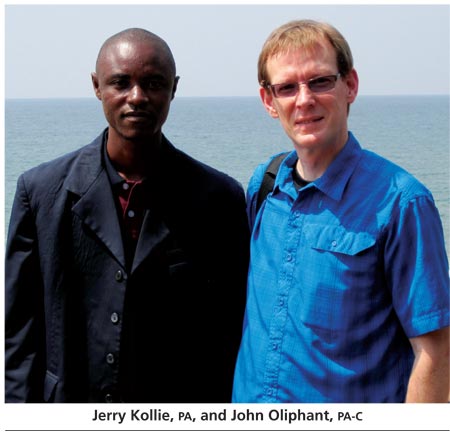
During my time in Liberia, I became close friends with Jerry Kollie, PA, President of the Liberia National Physician Assistants Association (LINPAA). I recently interviewed him to learn more about his organization and the PA profession in Liberia, where they have spent almost a year and a half dealing with the worst Ebola virus outbreak in history.
Editor’s note: The following excerpt focuses on the Ebola outbreak. Please visit our website (http://bit.ly/1NgHX2Q) to learn more about the PA profession in Liberia.
John Oliphant: What impact has the Ebola epidemic had on PAs’ clinical practice in Liberia?
Jerry Kollie: The Ebola epidemic has had a serious impact on us in many ways. It created fear among many PAs about continued clinical practice. Some of our students have lost interest in the profession for fear of contracting the virus and dying after graduation.
Workforce is also an issue. Training has been delayed, which means there are fewer PAs available in the various health facilities providing services to people. Many PAs died and others were ill with Ebola, which increased the workload in our health facilities.
The outbreak also created fear among patients; many of them stopped going to health facilities for care. As a result, PAs would go to work and not see any patients.
JO: Do you know how many PAs in Liberia lost their lives due to Ebola? And how many contracted the virus but survived?
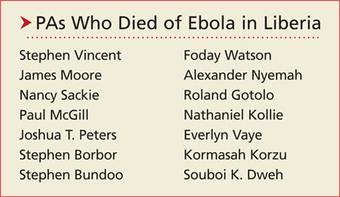
JK: A total of 26 PAs were affected by Ebola virus disease. Many contracted the virus at their workplaces and were taken to various Ebola Treatment Units (ETUs), where some died while others survived. Of the total number, 14 died (see box on page 42 for a list of their names), nine survived, and three were quarantined but did not contract the virus. Those three PAs spent 21 days in quarantine after unknowingly attending to patients who were later confirmed to have Ebola. As God would have it, they all went through the quarantine without experiencing or developing signs or symptoms.
JO: What has been your greatest leadership challenge as the President of LINPAA during the Ebola epidemic?
JK: My greatest challenge was the stress of responding to the demands of PAs who were in the various ETUs seeking medical care; responding to the numerous calls from family members, relatives, and friends wanting me to advocate for their well-being; creating awareness and informing other PAs of the status of their colleagues; and also informing the world at large of the situation we were in. I had many sleepless days and nights, with most of those happening in the months of August, September, and October 2014, when I could not sleep at my own house. I just kept moving from one ETU, radio station, or office to another, advocating and soliciting assistance for the well-being of the health care providers—especially for PAs.
Continue for the aftermath >>
AFTERMATH
On May 9, 2015, the World Health Organization declared Liberia free of Ebola after 42 consecutive days without a new case. That changed on June 29, when Liberia experienced its first new case of Ebola virus since March 20.
In the neighboring countries of Guinea and Sierra Leone, Ebola cases are still regularly occurring (although fewer than at the peak of the outbreak).
As of August 19, 2015, 880 health care workers have become infected with the Ebola virus in Liberia, Guinea, and Sierra Leone; 512 have reportedly died. In Liberia alone, 192 health care worker deaths have been attributed to Ebola.1
REFERENCES
1. World Health Organization. Ebola Situation Report, 19 August, 2015. http://apps.who.int/ebola/current-situation/ebola-situation-report-19-august-2015. Accessed August 24, 2015.
In November 2012 and January 2014, I traveled to Liberia to conduct a needs assessment of the health care system there on behalf of a company that was interested in supporting efforts to rebuild the country’s infrastructure. I discovered that the physician assistant profession has been in existence in Liberia since 1965—the same year that it started in the United States.
During my time in Liberia, I became close friends with Jerry Kollie, PA, President of the Liberia National Physician Assistants Association (LINPAA). I recently interviewed him to learn more about his organization and the PA profession in Liberia, where they have spent almost a year and a half dealing with the worst Ebola virus outbreak in history.
Editor’s note: The following excerpt focuses on the Ebola outbreak. Please visit our website (http://bit.ly/1NgHX2Q) to learn more about the PA profession in Liberia.
John Oliphant: What impact has the Ebola epidemic had on PAs’ clinical practice in Liberia?
Jerry Kollie: The Ebola epidemic has had a serious impact on us in many ways. It created fear among many PAs about continued clinical practice. Some of our students have lost interest in the profession for fear of contracting the virus and dying after graduation.
Workforce is also an issue. Training has been delayed, which means there are fewer PAs available in the various health facilities providing services to people. Many PAs died and others were ill with Ebola, which increased the workload in our health facilities.
The outbreak also created fear among patients; many of them stopped going to health facilities for care. As a result, PAs would go to work and not see any patients.
JO: Do you know how many PAs in Liberia lost their lives due to Ebola? And how many contracted the virus but survived?
JK: A total of 26 PAs were affected by Ebola virus disease. Many contracted the virus at their workplaces and were taken to various Ebola Treatment Units (ETUs), where some died while others survived. Of the total number, 14 died (see box on page 42 for a list of their names), nine survived, and three were quarantined but did not contract the virus. Those three PAs spent 21 days in quarantine after unknowingly attending to patients who were later confirmed to have Ebola. As God would have it, they all went through the quarantine without experiencing or developing signs or symptoms.
JO: What has been your greatest leadership challenge as the President of LINPAA during the Ebola epidemic?
JK: My greatest challenge was the stress of responding to the demands of PAs who were in the various ETUs seeking medical care; responding to the numerous calls from family members, relatives, and friends wanting me to advocate for their well-being; creating awareness and informing other PAs of the status of their colleagues; and also informing the world at large of the situation we were in. I had many sleepless days and nights, with most of those happening in the months of August, September, and October 2014, when I could not sleep at my own house. I just kept moving from one ETU, radio station, or office to another, advocating and soliciting assistance for the well-being of the health care providers—especially for PAs.
Continue for the aftermath >>
AFTERMATH
On May 9, 2015, the World Health Organization declared Liberia free of Ebola after 42 consecutive days without a new case. That changed on June 29, when Liberia experienced its first new case of Ebola virus since March 20.
In the neighboring countries of Guinea and Sierra Leone, Ebola cases are still regularly occurring (although fewer than at the peak of the outbreak).
As of August 19, 2015, 880 health care workers have become infected with the Ebola virus in Liberia, Guinea, and Sierra Leone; 512 have reportedly died. In Liberia alone, 192 health care worker deaths have been attributed to Ebola.1
REFERENCES
1. World Health Organization. Ebola Situation Report, 19 August, 2015. http://apps.who.int/ebola/current-situation/ebola-situation-report-19-august-2015. Accessed August 24, 2015.
In November 2012 and January 2014, I traveled to Liberia to conduct a needs assessment of the health care system there on behalf of a company that was interested in supporting efforts to rebuild the country’s infrastructure. I discovered that the physician assistant profession has been in existence in Liberia since 1965—the same year that it started in the United States.
During my time in Liberia, I became close friends with Jerry Kollie, PA, President of the Liberia National Physician Assistants Association (LINPAA). I recently interviewed him to learn more about his organization and the PA profession in Liberia, where they have spent almost a year and a half dealing with the worst Ebola virus outbreak in history.
Editor’s note: The following excerpt focuses on the Ebola outbreak. Please visit our website (http://bit.ly/1NgHX2Q) to learn more about the PA profession in Liberia.
John Oliphant: What impact has the Ebola epidemic had on PAs’ clinical practice in Liberia?
Jerry Kollie: The Ebola epidemic has had a serious impact on us in many ways. It created fear among many PAs about continued clinical practice. Some of our students have lost interest in the profession for fear of contracting the virus and dying after graduation.
Workforce is also an issue. Training has been delayed, which means there are fewer PAs available in the various health facilities providing services to people. Many PAs died and others were ill with Ebola, which increased the workload in our health facilities.
The outbreak also created fear among patients; many of them stopped going to health facilities for care. As a result, PAs would go to work and not see any patients.
JO: Do you know how many PAs in Liberia lost their lives due to Ebola? And how many contracted the virus but survived?
JK: A total of 26 PAs were affected by Ebola virus disease. Many contracted the virus at their workplaces and were taken to various Ebola Treatment Units (ETUs), where some died while others survived. Of the total number, 14 died (see box on page 42 for a list of their names), nine survived, and three were quarantined but did not contract the virus. Those three PAs spent 21 days in quarantine after unknowingly attending to patients who were later confirmed to have Ebola. As God would have it, they all went through the quarantine without experiencing or developing signs or symptoms.
JO: What has been your greatest leadership challenge as the President of LINPAA during the Ebola epidemic?
JK: My greatest challenge was the stress of responding to the demands of PAs who were in the various ETUs seeking medical care; responding to the numerous calls from family members, relatives, and friends wanting me to advocate for their well-being; creating awareness and informing other PAs of the status of their colleagues; and also informing the world at large of the situation we were in. I had many sleepless days and nights, with most of those happening in the months of August, September, and October 2014, when I could not sleep at my own house. I just kept moving from one ETU, radio station, or office to another, advocating and soliciting assistance for the well-being of the health care providers—especially for PAs.
Continue for the aftermath >>
AFTERMATH
On May 9, 2015, the World Health Organization declared Liberia free of Ebola after 42 consecutive days without a new case. That changed on June 29, when Liberia experienced its first new case of Ebola virus since March 20.
In the neighboring countries of Guinea and Sierra Leone, Ebola cases are still regularly occurring (although fewer than at the peak of the outbreak).
As of August 19, 2015, 880 health care workers have become infected with the Ebola virus in Liberia, Guinea, and Sierra Leone; 512 have reportedly died. In Liberia alone, 192 health care worker deaths have been attributed to Ebola.1
REFERENCES
1. World Health Organization. Ebola Situation Report, 19 August, 2015. http://apps.who.int/ebola/current-situation/ebola-situation-report-19-august-2015. Accessed August 24, 2015.
PAs in Liberia: Challenges and Opportunities
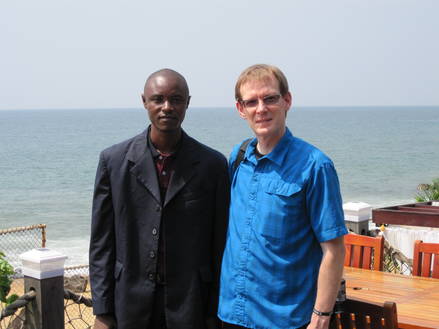
In November 2012 and January 2014, I traveled to Liberia to conduct a needs assessment of the health care system there and discovered that the physician assistant profession has been in existence in Liberia since 1965—the same year that it started in the United States. During my time there, I became close friends with Jerry Kollie, PA, President of the Liberian National Physician Assistants Association (LINPAA). I recently interviewed him to learn more about his organization and the PA profession in Liberia.
John Oliphant (JO): Please tell me about your country’s physician assistant organization.
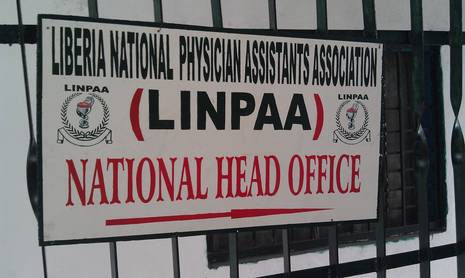
Jerry Kollie (JK): LINPAA is an umbrella organization of physician assistants that has been legally established since 1974, when a group of PAs saw the need for an association with a board of directors that would advocate for PAs, monitor and provide supportive supervision, evaluate their performance, create job opportunities, conduct capacity-building training, administer state board exams to new graduates, and issue professional licenses annually, among others functions.
In terms of structure, LINPAA has a board of directors headed by a chairman, an executive committee headed by the president, and a large membership. LINPAA hosts a convention biannually, during which elections for executives are held. Every year, on the second Saturday in November, LINPAA celebrates National Physician Assistants Day across the country.
JO: How culturally diverse is your organization?
JK: LINPAA’s membership is inclusive of PAs from a lot of diverse cultural backgrounds, tribal lines, and religious affiliations.
JO: What do you consider LINPAA’s greatest strengths and weaknesses at this time?
JK: Our greatest strength is unity among PAs, and the establishment of local chapters across the 15 political subdivisions of Liberia. The major weakness is the delay in license renewal due to low salaries and incentives.
JO: What are the biggest challenges and opportunities for the PA profession in Liberia?
JK: Right now, our biggest challenges include lack of permanent office space, equipment, and supplies for our national headquarters, lack of vehicles with which to do monitoring and supportive supervision, and lack of subsidies from the government of Liberia (GOL) and financial support from other partners.
Also, there is poor recognition of PAs by the GOL and a sense of marginalization and neglect by Ministry of Health (MOH) officials. PAs do not have a career ladder in Liberia; there are no specialist or subspecialist programs, and the government refuses to elevate the PA program at Tubman National Institute of Medical Arts to a degree-granting institution. Currently, it offers a three-year certificate program.
On the more positive side, what we consider our biggest opportunity for now is the gradual recognition by our international PA colleagues, such as the American PAs.
JO: How do you plan to address these challenges and explore your opportunities?
JK: We plan to write proposals to solicit funding to build our headquarters and procure office equipment, supplies, and vehicles. We want to engage stakeholders for proper recognition and support, and work on legislation recognizing LINPAA’s board and providing funding for PAs in the national budget. Through talking to international partners, we hope to prevail on our government to see the reasons to give us the kind of recognition we need and deserve. We must also appeal to partners through proposals to help establish programs for specialist or subspecialist training for us, either in country or out.
JO: If you could talk directly to the PAs of America and the rest of the world, what would you want to tell them about the PAs of Liberia?
JK: The PAs in Liberia are eager to get connected to and seek recognition from our international colleagues. We are striving for a degree-granting program, and so we are asking our international colleagues to help us achieve our goal. We are appealing to international colleagues to buttress our efforts in talking to our government for better recognition. We are in search of assistance from individuals, organizations, or institutions to build our LINPAA headquarters. Our office lacks a vehicle, LINPAA stationery, and other office supplies, and we will highly appreciate however people can help us.
JO: What sort of relationship would you like to see exist between the AAPA and LINPAA?
JK: I would like to see AAPA and LINPAA having a very good relationship in terms of inviting one another to programs, conferences, and other annual activities; having exchange programs to share knowledge and experiences; and engaging our government to ensure that we have better care.
JO: What are some practical ways that the international PA community could support your efforts in Liberia?
JK: Invite us to international PA activities and attend some of our yearly or biannual programs or activities upon invitation. Help to prevail on our government to provide us a degree-granting program. Help us to establish either national career development programs or provide us scholarships for career development at the international level.
Editor’s note: To learn more about LINPPA and the PA profession in Liberia, visit the organization’s website at www.linpaa.com.
In November 2012 and January 2014, I traveled to Liberia to conduct a needs assessment of the health care system there and discovered that the physician assistant profession has been in existence in Liberia since 1965—the same year that it started in the United States. During my time there, I became close friends with Jerry Kollie, PA, President of the Liberian National Physician Assistants Association (LINPAA). I recently interviewed him to learn more about his organization and the PA profession in Liberia.
John Oliphant (JO): Please tell me about your country’s physician assistant organization.
Jerry Kollie (JK): LINPAA is an umbrella organization of physician assistants that has been legally established since 1974, when a group of PAs saw the need for an association with a board of directors that would advocate for PAs, monitor and provide supportive supervision, evaluate their performance, create job opportunities, conduct capacity-building training, administer state board exams to new graduates, and issue professional licenses annually, among others functions.
In terms of structure, LINPAA has a board of directors headed by a chairman, an executive committee headed by the president, and a large membership. LINPAA hosts a convention biannually, during which elections for executives are held. Every year, on the second Saturday in November, LINPAA celebrates National Physician Assistants Day across the country.
JO: How culturally diverse is your organization?
JK: LINPAA’s membership is inclusive of PAs from a lot of diverse cultural backgrounds, tribal lines, and religious affiliations.
JO: What do you consider LINPAA’s greatest strengths and weaknesses at this time?
JK: Our greatest strength is unity among PAs, and the establishment of local chapters across the 15 political subdivisions of Liberia. The major weakness is the delay in license renewal due to low salaries and incentives.
JO: What are the biggest challenges and opportunities for the PA profession in Liberia?
JK: Right now, our biggest challenges include lack of permanent office space, equipment, and supplies for our national headquarters, lack of vehicles with which to do monitoring and supportive supervision, and lack of subsidies from the government of Liberia (GOL) and financial support from other partners.
Also, there is poor recognition of PAs by the GOL and a sense of marginalization and neglect by Ministry of Health (MOH) officials. PAs do not have a career ladder in Liberia; there are no specialist or subspecialist programs, and the government refuses to elevate the PA program at Tubman National Institute of Medical Arts to a degree-granting institution. Currently, it offers a three-year certificate program.
On the more positive side, what we consider our biggest opportunity for now is the gradual recognition by our international PA colleagues, such as the American PAs.
JO: How do you plan to address these challenges and explore your opportunities?
JK: We plan to write proposals to solicit funding to build our headquarters and procure office equipment, supplies, and vehicles. We want to engage stakeholders for proper recognition and support, and work on legislation recognizing LINPAA’s board and providing funding for PAs in the national budget. Through talking to international partners, we hope to prevail on our government to see the reasons to give us the kind of recognition we need and deserve. We must also appeal to partners through proposals to help establish programs for specialist or subspecialist training for us, either in country or out.
JO: If you could talk directly to the PAs of America and the rest of the world, what would you want to tell them about the PAs of Liberia?
JK: The PAs in Liberia are eager to get connected to and seek recognition from our international colleagues. We are striving for a degree-granting program, and so we are asking our international colleagues to help us achieve our goal. We are appealing to international colleagues to buttress our efforts in talking to our government for better recognition. We are in search of assistance from individuals, organizations, or institutions to build our LINPAA headquarters. Our office lacks a vehicle, LINPAA stationery, and other office supplies, and we will highly appreciate however people can help us.
JO: What sort of relationship would you like to see exist between the AAPA and LINPAA?
JK: I would like to see AAPA and LINPAA having a very good relationship in terms of inviting one another to programs, conferences, and other annual activities; having exchange programs to share knowledge and experiences; and engaging our government to ensure that we have better care.
JO: What are some practical ways that the international PA community could support your efforts in Liberia?
JK: Invite us to international PA activities and attend some of our yearly or biannual programs or activities upon invitation. Help to prevail on our government to provide us a degree-granting program. Help us to establish either national career development programs or provide us scholarships for career development at the international level.
Editor’s note: To learn more about LINPPA and the PA profession in Liberia, visit the organization’s website at www.linpaa.com.
In November 2012 and January 2014, I traveled to Liberia to conduct a needs assessment of the health care system there and discovered that the physician assistant profession has been in existence in Liberia since 1965—the same year that it started in the United States. During my time there, I became close friends with Jerry Kollie, PA, President of the Liberian National Physician Assistants Association (LINPAA). I recently interviewed him to learn more about his organization and the PA profession in Liberia.
John Oliphant (JO): Please tell me about your country’s physician assistant organization.
Jerry Kollie (JK): LINPAA is an umbrella organization of physician assistants that has been legally established since 1974, when a group of PAs saw the need for an association with a board of directors that would advocate for PAs, monitor and provide supportive supervision, evaluate their performance, create job opportunities, conduct capacity-building training, administer state board exams to new graduates, and issue professional licenses annually, among others functions.
In terms of structure, LINPAA has a board of directors headed by a chairman, an executive committee headed by the president, and a large membership. LINPAA hosts a convention biannually, during which elections for executives are held. Every year, on the second Saturday in November, LINPAA celebrates National Physician Assistants Day across the country.
JO: How culturally diverse is your organization?
JK: LINPAA’s membership is inclusive of PAs from a lot of diverse cultural backgrounds, tribal lines, and religious affiliations.
JO: What do you consider LINPAA’s greatest strengths and weaknesses at this time?
JK: Our greatest strength is unity among PAs, and the establishment of local chapters across the 15 political subdivisions of Liberia. The major weakness is the delay in license renewal due to low salaries and incentives.
JO: What are the biggest challenges and opportunities for the PA profession in Liberia?
JK: Right now, our biggest challenges include lack of permanent office space, equipment, and supplies for our national headquarters, lack of vehicles with which to do monitoring and supportive supervision, and lack of subsidies from the government of Liberia (GOL) and financial support from other partners.
Also, there is poor recognition of PAs by the GOL and a sense of marginalization and neglect by Ministry of Health (MOH) officials. PAs do not have a career ladder in Liberia; there are no specialist or subspecialist programs, and the government refuses to elevate the PA program at Tubman National Institute of Medical Arts to a degree-granting institution. Currently, it offers a three-year certificate program.
On the more positive side, what we consider our biggest opportunity for now is the gradual recognition by our international PA colleagues, such as the American PAs.
JO: How do you plan to address these challenges and explore your opportunities?
JK: We plan to write proposals to solicit funding to build our headquarters and procure office equipment, supplies, and vehicles. We want to engage stakeholders for proper recognition and support, and work on legislation recognizing LINPAA’s board and providing funding for PAs in the national budget. Through talking to international partners, we hope to prevail on our government to see the reasons to give us the kind of recognition we need and deserve. We must also appeal to partners through proposals to help establish programs for specialist or subspecialist training for us, either in country or out.
JO: If you could talk directly to the PAs of America and the rest of the world, what would you want to tell them about the PAs of Liberia?
JK: The PAs in Liberia are eager to get connected to and seek recognition from our international colleagues. We are striving for a degree-granting program, and so we are asking our international colleagues to help us achieve our goal. We are appealing to international colleagues to buttress our efforts in talking to our government for better recognition. We are in search of assistance from individuals, organizations, or institutions to build our LINPAA headquarters. Our office lacks a vehicle, LINPAA stationery, and other office supplies, and we will highly appreciate however people can help us.
JO: What sort of relationship would you like to see exist between the AAPA and LINPAA?
JK: I would like to see AAPA and LINPAA having a very good relationship in terms of inviting one another to programs, conferences, and other annual activities; having exchange programs to share knowledge and experiences; and engaging our government to ensure that we have better care.
JO: What are some practical ways that the international PA community could support your efforts in Liberia?
JK: Invite us to international PA activities and attend some of our yearly or biannual programs or activities upon invitation. Help to prevail on our government to provide us a degree-granting program. Help us to establish either national career development programs or provide us scholarships for career development at the international level.
Editor’s note: To learn more about LINPPA and the PA profession in Liberia, visit the organization’s website at www.linpaa.com.