User login
Lenalidomide Worsens Survival in Advanced Prostate Cancer
VIENNA – Lenalidomide failed to increase overall survival above what was achieved with docetaxel plus prednisone in a phase III trial, leading to doubts that it has any potential value in the treatment of advanced prostate cancer.
Results from the halted MAINSAIL study, showed that median overall survival for men with metastatic castration-resistant prostate cancer (mCRPC) was significantly less for those given lenalidomide (Revlimid) in addition to docetaxel (Taxotere) plus prednisone (hazard ratio, 1.53; P = .0017).

The median was 19.5 months in the patients who received the additional lenalidomide, but has not been reached in the control chemotherapy arm.
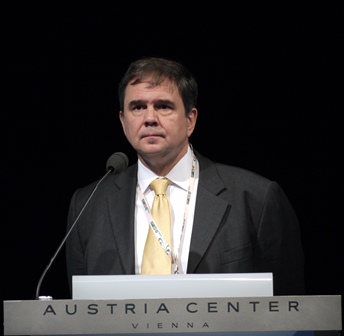
"The addition of lenalidomide to docetaxel and prednisone in patients with castration-resistant prostate cancer did not improve overall survival," said study investigator Dr. Daniel Petrylak, leader of prostate medical oncology at Yale Cancer Center in New Haven, Conn.
"Thus docetaxel q3w remains the standard of care for cytotoxic therapy for castration-resistant disease," Dr. Petrylak added at the European Society for Medical Oncology Congress.
Although follow-up is ongoing, the study’s sponsors, Celgene, announced last November that the trial would be stopped following the advice of the study’s data monitoring committee that the results were unlikely to prove positive.
Lenalidomide, a derivative of thalidomide, has antiangiogenic and immunomodulatory effects. It is approved for use in the management of multiple myeloma and myelodysplastic syndromes (MDS) in the United States. Early clinical data suggested that it might have antitumor activity in men with CRPC when used as a single agent and when used in combination with docetaxel and prednisone. The MAINSAIL findings do not support this hypothesis.
The trial involved 1,059 men with mCRPC who had received no recent (up to 3 years) chemotherapy. They were randomized to receive 21-day cycles of docetaxel (75 mg/m2 on day 1), prednisone (5 mg twice daily on days 1-21) with (n = 533) or without (n = 526) lenalidomide. Treatment was until progression, with the survival end points assessed every 3 months for up to 5 years after treatment discontinuation.
The median age of patients in the lenalidomide-containing and lenalidomide-free arms was 69.6 years and 68.6 years, respectively. Baseline characteristics were well balanced. The median number of cycles received was six in the lenalidomide-containing and eight in the lenalidomide-free arms, respectively.
The secondary end point of progression-free survival (PFS) also showed no added benefit of lenalidomide. The median was 45 weeks in the lenalidomide-containing arm vs. 46 weeks in the control arm (HR, 1.32; P = .0187). Overall response rates were similar in patients with a confirmed prostate-specific antigen response.
"The three-drug regimen was associated with greater toxicity than [was] a two-drug regimen in this patient population," Dr. Petrylak said. Indeed, there was significantly more neutropenia (21.7% vs. 16.3%), febrile neutropenia (11.8% vs. 4.6%), diarrhea (7% vs. 2.3%), and pulmonary embolism (6.5% vs.1.5%) reported in the experimental arm vs. the control group.
The lack of effect on overall survival might be related to a number of factors, Dr. Petrylak suggested. "It may be attributed to shorter treatment duration, lower dose–intensity docetaxel, and earlier treatment discontinuation," he noted.
"Pharmacokinetic interactions could not be ruled out and further analysis is underway to elucidate the observed results in the lenalidomide arm," added Dr. Petrylak.
The study was funded by Celgene Corporation, the manufacturers of Revlimid. Dr. Petrylak disclosed receiving research funding and being an advisor for Celgene and Sanofi-Aventis.

|
Sara Freeman/IMNG Medical Media
|
The negative overall survival result had direct consequences for the patients who took part in the experimental arm of this study as their care was compromised as a result. This was a large study of more than 1,000 patients, and it’s important to mention that by being in this trial, these patients were lost to other trials that were taking place at this time with perhaps more active agents. I think it is reasonable to conclude that whatever the cause for the detrimental effect on overall survival that there is probably no future for lenalidomide in prostate cancer, in any context.
Dr. Robert Jones is senior lecturer and honorary consultant in medical oncology at the University of Glasgow in Scotland. Dr. Jones has acted as a consultant and received honoraria or research funding from Astellas, AstraZeneca, Dendreon, GlaxoSmithKline, Janssen, Novartis, Pfizer, Roche, and Sanofi-Aventis.
|
|
Sara Freeman/IMNG Medical Media
|
The negative overall survival result had direct consequences for the patients who took part in the experimental arm of this study as their care was compromised as a result. This was a large study of more than 1,000 patients, and it’s important to mention that by being in this trial, these patients were lost to other trials that were taking place at this time with perhaps more active agents. I think it is reasonable to conclude that whatever the cause for the detrimental effect on overall survival that there is probably no future for lenalidomide in prostate cancer, in any context.
Dr. Robert Jones is senior lecturer and honorary consultant in medical oncology at the University of Glasgow in Scotland. Dr. Jones has acted as a consultant and received honoraria or research funding from Astellas, AstraZeneca, Dendreon, GlaxoSmithKline, Janssen, Novartis, Pfizer, Roche, and Sanofi-Aventis.
|
|
Sara Freeman/IMNG Medical Media
|
The negative overall survival result had direct consequences for the patients who took part in the experimental arm of this study as their care was compromised as a result. This was a large study of more than 1,000 patients, and it’s important to mention that by being in this trial, these patients were lost to other trials that were taking place at this time with perhaps more active agents. I think it is reasonable to conclude that whatever the cause for the detrimental effect on overall survival that there is probably no future for lenalidomide in prostate cancer, in any context.
Dr. Robert Jones is senior lecturer and honorary consultant in medical oncology at the University of Glasgow in Scotland. Dr. Jones has acted as a consultant and received honoraria or research funding from Astellas, AstraZeneca, Dendreon, GlaxoSmithKline, Janssen, Novartis, Pfizer, Roche, and Sanofi-Aventis.
VIENNA – Lenalidomide failed to increase overall survival above what was achieved with docetaxel plus prednisone in a phase III trial, leading to doubts that it has any potential value in the treatment of advanced prostate cancer.
Results from the halted MAINSAIL study, showed that median overall survival for men with metastatic castration-resistant prostate cancer (mCRPC) was significantly less for those given lenalidomide (Revlimid) in addition to docetaxel (Taxotere) plus prednisone (hazard ratio, 1.53; P = .0017).
The median was 19.5 months in the patients who received the additional lenalidomide, but has not been reached in the control chemotherapy arm.
"The addition of lenalidomide to docetaxel and prednisone in patients with castration-resistant prostate cancer did not improve overall survival," said study investigator Dr. Daniel Petrylak, leader of prostate medical oncology at Yale Cancer Center in New Haven, Conn.
"Thus docetaxel q3w remains the standard of care for cytotoxic therapy for castration-resistant disease," Dr. Petrylak added at the European Society for Medical Oncology Congress.
Although follow-up is ongoing, the study’s sponsors, Celgene, announced last November that the trial would be stopped following the advice of the study’s data monitoring committee that the results were unlikely to prove positive.
Lenalidomide, a derivative of thalidomide, has antiangiogenic and immunomodulatory effects. It is approved for use in the management of multiple myeloma and myelodysplastic syndromes (MDS) in the United States. Early clinical data suggested that it might have antitumor activity in men with CRPC when used as a single agent and when used in combination with docetaxel and prednisone. The MAINSAIL findings do not support this hypothesis.
The trial involved 1,059 men with mCRPC who had received no recent (up to 3 years) chemotherapy. They were randomized to receive 21-day cycles of docetaxel (75 mg/m2 on day 1), prednisone (5 mg twice daily on days 1-21) with (n = 533) or without (n = 526) lenalidomide. Treatment was until progression, with the survival end points assessed every 3 months for up to 5 years after treatment discontinuation.
The median age of patients in the lenalidomide-containing and lenalidomide-free arms was 69.6 years and 68.6 years, respectively. Baseline characteristics were well balanced. The median number of cycles received was six in the lenalidomide-containing and eight in the lenalidomide-free arms, respectively.
The secondary end point of progression-free survival (PFS) also showed no added benefit of lenalidomide. The median was 45 weeks in the lenalidomide-containing arm vs. 46 weeks in the control arm (HR, 1.32; P = .0187). Overall response rates were similar in patients with a confirmed prostate-specific antigen response.
"The three-drug regimen was associated with greater toxicity than [was] a two-drug regimen in this patient population," Dr. Petrylak said. Indeed, there was significantly more neutropenia (21.7% vs. 16.3%), febrile neutropenia (11.8% vs. 4.6%), diarrhea (7% vs. 2.3%), and pulmonary embolism (6.5% vs.1.5%) reported in the experimental arm vs. the control group.
The lack of effect on overall survival might be related to a number of factors, Dr. Petrylak suggested. "It may be attributed to shorter treatment duration, lower dose–intensity docetaxel, and earlier treatment discontinuation," he noted.
"Pharmacokinetic interactions could not be ruled out and further analysis is underway to elucidate the observed results in the lenalidomide arm," added Dr. Petrylak.
The study was funded by Celgene Corporation, the manufacturers of Revlimid. Dr. Petrylak disclosed receiving research funding and being an advisor for Celgene and Sanofi-Aventis.
VIENNA – Lenalidomide failed to increase overall survival above what was achieved with docetaxel plus prednisone in a phase III trial, leading to doubts that it has any potential value in the treatment of advanced prostate cancer.
Results from the halted MAINSAIL study, showed that median overall survival for men with metastatic castration-resistant prostate cancer (mCRPC) was significantly less for those given lenalidomide (Revlimid) in addition to docetaxel (Taxotere) plus prednisone (hazard ratio, 1.53; P = .0017).
The median was 19.5 months in the patients who received the additional lenalidomide, but has not been reached in the control chemotherapy arm.
"The addition of lenalidomide to docetaxel and prednisone in patients with castration-resistant prostate cancer did not improve overall survival," said study investigator Dr. Daniel Petrylak, leader of prostate medical oncology at Yale Cancer Center in New Haven, Conn.
"Thus docetaxel q3w remains the standard of care for cytotoxic therapy for castration-resistant disease," Dr. Petrylak added at the European Society for Medical Oncology Congress.
Although follow-up is ongoing, the study’s sponsors, Celgene, announced last November that the trial would be stopped following the advice of the study’s data monitoring committee that the results were unlikely to prove positive.
Lenalidomide, a derivative of thalidomide, has antiangiogenic and immunomodulatory effects. It is approved for use in the management of multiple myeloma and myelodysplastic syndromes (MDS) in the United States. Early clinical data suggested that it might have antitumor activity in men with CRPC when used as a single agent and when used in combination with docetaxel and prednisone. The MAINSAIL findings do not support this hypothesis.
The trial involved 1,059 men with mCRPC who had received no recent (up to 3 years) chemotherapy. They were randomized to receive 21-day cycles of docetaxel (75 mg/m2 on day 1), prednisone (5 mg twice daily on days 1-21) with (n = 533) or without (n = 526) lenalidomide. Treatment was until progression, with the survival end points assessed every 3 months for up to 5 years after treatment discontinuation.
The median age of patients in the lenalidomide-containing and lenalidomide-free arms was 69.6 years and 68.6 years, respectively. Baseline characteristics were well balanced. The median number of cycles received was six in the lenalidomide-containing and eight in the lenalidomide-free arms, respectively.
The secondary end point of progression-free survival (PFS) also showed no added benefit of lenalidomide. The median was 45 weeks in the lenalidomide-containing arm vs. 46 weeks in the control arm (HR, 1.32; P = .0187). Overall response rates were similar in patients with a confirmed prostate-specific antigen response.
"The three-drug regimen was associated with greater toxicity than [was] a two-drug regimen in this patient population," Dr. Petrylak said. Indeed, there was significantly more neutropenia (21.7% vs. 16.3%), febrile neutropenia (11.8% vs. 4.6%), diarrhea (7% vs. 2.3%), and pulmonary embolism (6.5% vs.1.5%) reported in the experimental arm vs. the control group.
The lack of effect on overall survival might be related to a number of factors, Dr. Petrylak suggested. "It may be attributed to shorter treatment duration, lower dose–intensity docetaxel, and earlier treatment discontinuation," he noted.
"Pharmacokinetic interactions could not be ruled out and further analysis is underway to elucidate the observed results in the lenalidomide arm," added Dr. Petrylak.
The study was funded by Celgene Corporation, the manufacturers of Revlimid. Dr. Petrylak disclosed receiving research funding and being an advisor for Celgene and Sanofi-Aventis.
AT THE EUROPEAN SOCIETY FOR MEDICAL ONCOLOGY CONGRESS
Major Finding: Median overall survival was 19.5 months in patient given lenalidomide plus docetaxel and prednisone but was not reached in the docetaxel plus prednisone control arm (HR, 1.53; P = .0017) after up to 5 years’ follow up.
Data Source: Results were taken from MAINSAIL, a phase III trial, randomized 1,059 men with metastatic castration-resistant prostate cancer to receive docetaxel plus prednisone with or without lenalidomide every 3 weeks.
Disclosures: The study was funded by Celgene Corporation, the manufacturer of Revlimid. Dr. Petrylak disclosed receiving research funding and being an adviser for Celgene and Sanofi-Aventis.
Abiraterone and Enzalutamide Thwart Prostate Cancer Pain
VIENNA – Two recently approved drugs – abiraterone acetate and enzalutamide – led to better pain control in reports from separate clinical trials conducted among men with metastatic castration-resistant prostate cancer.
Abiraterone (Zytiga) reduced opiate use by 19%, the average pain intensity score by 19%, and the impact of pain on daily lives by 21% for chemotherapy-naive patients, according to new data from the phase III COU-AA-302 study.
Hazard ratios favoring abiraterone were 0.817 for the median time to opiate use, 0.817 for the average pain intensity, 0.792 for pain interference, and 0.845 for worst pain intensity. Abiraterone was given in combination with prednisone during the trial and compared with placebo plus prednisone.
New data from the AFFIRM trial show that enzalutamide (MDV3100, Xtandi) had a beneficial impact on cancer-related pain in men with previously treated metastatic castrate-resistant prostate cancer (mCRPC). Notably, investigators reported a 44% reduction in pain progression vs. placebo (HR, 0.564; P less than .0001).
These findings from both trials were presented at the European Society for Medical Oncology (ESMO) congress. In the United States, the Food and Drug Administration has approved both androgen-signaling inhibitors for second-line treatment of mCRPC after docetaxel (Taxotere) therapy has failed – abiraterone in April 2011 and enzalutamide in August 2012.
Abiraterone: New Data From the COU-AA-302 Trial
"Pain is an important, often feared, and debilitating complication of metastatic, castration-resistant prostate cancer, which can affect up to half of men with metastatic disease," said Dr. Ethan Basch, who presented the COU-AA-302 patient-reported outcome data.
"Understanding the impact of abiraterone and other agents on pain provides valuable information for decision makers," Dr. Basch, of Memorial Sloan-Kettering Cancer Center in New York, added.
Abiraterone’s pain-reducing effects add to benefits reported at American Society of Clinical Oncology (ASCO) annual meeting earlier in the year, where the results of the second planned interim analysis showed it significantly delayed progression and the initiation of chemotherapy in the targeted population.
Trial participants were chemotherapy-naive men with asymptomatic or mildly symptomatic, mCRPC; 546 were randomized to treatment with abiraterone plus prednisone and 542 to placebo plus prednisone. The median treatment duration in each arm was 13.8 months and 8.3 months, respectively.
Patient pain and functional status was assessed using a variety of measures, including the Brief Pain Inventory–Short Form (BPI-SF) and the Functional Assessment of Cancer Therapy–Prostate (FACT-P) questionnaires.
The median time to opiate use was not reached in the abiraterone arm vs. 23.7 months in the placebo arm (P = .0001). The median time to progression of average pain intensity was 26.7 months and 18.4 months, respectively (P = .0049). Similar benefits were seen in median time to progression of pain interference (10.3 vs. 7.4 months; P = .005) and worst pain intensity (26.7 vs. 19.4 months; P = .109). The latter only became significant, however, after a post hoc sensitivity analysis was performed (P = .045).
The median time to functional status degradation – assessed using the FACT-P total score – was more than 4 months longer in the abiraterone arm than in the control arm (12.7 vs. 8.3 months; P = .003).
Enzalutamide: AFFIRM Trial Also Gives New Data
Pain-reducing benefits were also seen with enzalutamide vs. placebo in the phase III AFFIRM study. The trial involved 1,199 men with progressive disease who had been previously treated with docetaxel (Taxotere). It randomized 800 to enzalutamide and 399 to placebo. Investigators previously reported that median overall survival was 18.4 months with enzalutamide vs. 13.6 months with placebo (N. Engl. J. Med. 2012 [doi: 10.1056/NEJMoa1207506]).
"This was a typical population of patients with advanced prostate cancer," said Dr. Karim Fizazi of the Institut Gustave-Roussy in Paris.
The median age was 69 years, around 28% had a mean pain score of 4 or higher, 91% had bone disease, 21%-25% had disease that had progressed to the liver, and about half had received three or more lines of prior hormonal treatment, and 26%-28% two or more regimens of chemotherapy. Bisphosphonates were used by 43% of patients.
Enzalutamide reduced the time to a first skeletal event by 31% (HR, 0.688, P = .0001), compared with placebo. The median time to the first skeletal event was 16.7 months and 13.3 months, respectively.
Radiation to the bone was the first skeletal event in around one-fifth of patients, with fewer patients experiencing spinal cord compression, clinically apparent pathological bone fracture, a change in antineoplastic therapy, or surgery to the bone
Three pain assessments were used – the BPI-SF, the FACT-P, and a pain diary. Pain palliation was reported in 45% of enzalutamide-treated patients vs. 7% of those on placebo (P = .0079).
"Enzalutamide had a significant impact on all quality of life domains, which was also significant," Dr. Fizazi reported.
Implications for Practice
Dr. Eleni Efstathiou, who was not involved in either trial, put the findings into context.
"Abiraterone acetate is a good drug that, beyond a survival benefit, dose delay pain progression, opiate use, and functional decline even in an asymptomatic, oligosymptomatic, chemotherapy-naive disease setting," said Dr. Efstathiou of the University of Texas M.D. Anderson Cancer Center in Houston.
She added the following caveat: "Severe clinical symptoms may not be reduced proportionally to the effect observed in this patient population."
The AFFIRM data represent the first report of quality of life measures and pain amelioration for enzalutamide, Dr. Efstathiou observed. While provision was made in the study design to assess these as planned secondary outcomes, as with the COU-AA-302 data, the study was not powered to demonstrate their statistical significance.
"Androgen-signaling inhibition does not only prolong life, but also ameliorates bone metastases-associated symptoms in men with metastatic castrate-resistant prostate cancer," Dr. Efstathiou concluded. "However, we cannot claim victory given that severe clinical events may remain unaltered and the reported benefit in this advanced setting, of both trials, is still short lived."
Ortho Biotech Oncology Research & Development sponsored the COU-AA-302 study. AFFIRM was supported by Medivation and Astellas Pharma. Dr. Fizazi has participated in advisory boards for Medivation and Astellas Pharma. Dr. Basch reported no conflicts of interest in relation to the COU-AA-302 study. Dr. Efstathiou had no disclosures.
VIENNA – Two recently approved drugs – abiraterone acetate and enzalutamide – led to better pain control in reports from separate clinical trials conducted among men with metastatic castration-resistant prostate cancer.
Abiraterone (Zytiga) reduced opiate use by 19%, the average pain intensity score by 19%, and the impact of pain on daily lives by 21% for chemotherapy-naive patients, according to new data from the phase III COU-AA-302 study.
Hazard ratios favoring abiraterone were 0.817 for the median time to opiate use, 0.817 for the average pain intensity, 0.792 for pain interference, and 0.845 for worst pain intensity. Abiraterone was given in combination with prednisone during the trial and compared with placebo plus prednisone.
New data from the AFFIRM trial show that enzalutamide (MDV3100, Xtandi) had a beneficial impact on cancer-related pain in men with previously treated metastatic castrate-resistant prostate cancer (mCRPC). Notably, investigators reported a 44% reduction in pain progression vs. placebo (HR, 0.564; P less than .0001).
These findings from both trials were presented at the European Society for Medical Oncology (ESMO) congress. In the United States, the Food and Drug Administration has approved both androgen-signaling inhibitors for second-line treatment of mCRPC after docetaxel (Taxotere) therapy has failed – abiraterone in April 2011 and enzalutamide in August 2012.
Abiraterone: New Data From the COU-AA-302 Trial
"Pain is an important, often feared, and debilitating complication of metastatic, castration-resistant prostate cancer, which can affect up to half of men with metastatic disease," said Dr. Ethan Basch, who presented the COU-AA-302 patient-reported outcome data.
"Understanding the impact of abiraterone and other agents on pain provides valuable information for decision makers," Dr. Basch, of Memorial Sloan-Kettering Cancer Center in New York, added.
Abiraterone’s pain-reducing effects add to benefits reported at American Society of Clinical Oncology (ASCO) annual meeting earlier in the year, where the results of the second planned interim analysis showed it significantly delayed progression and the initiation of chemotherapy in the targeted population.
Trial participants were chemotherapy-naive men with asymptomatic or mildly symptomatic, mCRPC; 546 were randomized to treatment with abiraterone plus prednisone and 542 to placebo plus prednisone. The median treatment duration in each arm was 13.8 months and 8.3 months, respectively.
Patient pain and functional status was assessed using a variety of measures, including the Brief Pain Inventory–Short Form (BPI-SF) and the Functional Assessment of Cancer Therapy–Prostate (FACT-P) questionnaires.
The median time to opiate use was not reached in the abiraterone arm vs. 23.7 months in the placebo arm (P = .0001). The median time to progression of average pain intensity was 26.7 months and 18.4 months, respectively (P = .0049). Similar benefits were seen in median time to progression of pain interference (10.3 vs. 7.4 months; P = .005) and worst pain intensity (26.7 vs. 19.4 months; P = .109). The latter only became significant, however, after a post hoc sensitivity analysis was performed (P = .045).
The median time to functional status degradation – assessed using the FACT-P total score – was more than 4 months longer in the abiraterone arm than in the control arm (12.7 vs. 8.3 months; P = .003).
Enzalutamide: AFFIRM Trial Also Gives New Data
Pain-reducing benefits were also seen with enzalutamide vs. placebo in the phase III AFFIRM study. The trial involved 1,199 men with progressive disease who had been previously treated with docetaxel (Taxotere). It randomized 800 to enzalutamide and 399 to placebo. Investigators previously reported that median overall survival was 18.4 months with enzalutamide vs. 13.6 months with placebo (N. Engl. J. Med. 2012 [doi: 10.1056/NEJMoa1207506]).
"This was a typical population of patients with advanced prostate cancer," said Dr. Karim Fizazi of the Institut Gustave-Roussy in Paris.
The median age was 69 years, around 28% had a mean pain score of 4 or higher, 91% had bone disease, 21%-25% had disease that had progressed to the liver, and about half had received three or more lines of prior hormonal treatment, and 26%-28% two or more regimens of chemotherapy. Bisphosphonates were used by 43% of patients.
Enzalutamide reduced the time to a first skeletal event by 31% (HR, 0.688, P = .0001), compared with placebo. The median time to the first skeletal event was 16.7 months and 13.3 months, respectively.
Radiation to the bone was the first skeletal event in around one-fifth of patients, with fewer patients experiencing spinal cord compression, clinically apparent pathological bone fracture, a change in antineoplastic therapy, or surgery to the bone
Three pain assessments were used – the BPI-SF, the FACT-P, and a pain diary. Pain palliation was reported in 45% of enzalutamide-treated patients vs. 7% of those on placebo (P = .0079).
"Enzalutamide had a significant impact on all quality of life domains, which was also significant," Dr. Fizazi reported.
Implications for Practice
Dr. Eleni Efstathiou, who was not involved in either trial, put the findings into context.
"Abiraterone acetate is a good drug that, beyond a survival benefit, dose delay pain progression, opiate use, and functional decline even in an asymptomatic, oligosymptomatic, chemotherapy-naive disease setting," said Dr. Efstathiou of the University of Texas M.D. Anderson Cancer Center in Houston.
She added the following caveat: "Severe clinical symptoms may not be reduced proportionally to the effect observed in this patient population."
The AFFIRM data represent the first report of quality of life measures and pain amelioration for enzalutamide, Dr. Efstathiou observed. While provision was made in the study design to assess these as planned secondary outcomes, as with the COU-AA-302 data, the study was not powered to demonstrate their statistical significance.
"Androgen-signaling inhibition does not only prolong life, but also ameliorates bone metastases-associated symptoms in men with metastatic castrate-resistant prostate cancer," Dr. Efstathiou concluded. "However, we cannot claim victory given that severe clinical events may remain unaltered and the reported benefit in this advanced setting, of both trials, is still short lived."
Ortho Biotech Oncology Research & Development sponsored the COU-AA-302 study. AFFIRM was supported by Medivation and Astellas Pharma. Dr. Fizazi has participated in advisory boards for Medivation and Astellas Pharma. Dr. Basch reported no conflicts of interest in relation to the COU-AA-302 study. Dr. Efstathiou had no disclosures.
VIENNA – Two recently approved drugs – abiraterone acetate and enzalutamide – led to better pain control in reports from separate clinical trials conducted among men with metastatic castration-resistant prostate cancer.
Abiraterone (Zytiga) reduced opiate use by 19%, the average pain intensity score by 19%, and the impact of pain on daily lives by 21% for chemotherapy-naive patients, according to new data from the phase III COU-AA-302 study.
Hazard ratios favoring abiraterone were 0.817 for the median time to opiate use, 0.817 for the average pain intensity, 0.792 for pain interference, and 0.845 for worst pain intensity. Abiraterone was given in combination with prednisone during the trial and compared with placebo plus prednisone.
New data from the AFFIRM trial show that enzalutamide (MDV3100, Xtandi) had a beneficial impact on cancer-related pain in men with previously treated metastatic castrate-resistant prostate cancer (mCRPC). Notably, investigators reported a 44% reduction in pain progression vs. placebo (HR, 0.564; P less than .0001).
These findings from both trials were presented at the European Society for Medical Oncology (ESMO) congress. In the United States, the Food and Drug Administration has approved both androgen-signaling inhibitors for second-line treatment of mCRPC after docetaxel (Taxotere) therapy has failed – abiraterone in April 2011 and enzalutamide in August 2012.
Abiraterone: New Data From the COU-AA-302 Trial
"Pain is an important, often feared, and debilitating complication of metastatic, castration-resistant prostate cancer, which can affect up to half of men with metastatic disease," said Dr. Ethan Basch, who presented the COU-AA-302 patient-reported outcome data.
"Understanding the impact of abiraterone and other agents on pain provides valuable information for decision makers," Dr. Basch, of Memorial Sloan-Kettering Cancer Center in New York, added.
Abiraterone’s pain-reducing effects add to benefits reported at American Society of Clinical Oncology (ASCO) annual meeting earlier in the year, where the results of the second planned interim analysis showed it significantly delayed progression and the initiation of chemotherapy in the targeted population.
Trial participants were chemotherapy-naive men with asymptomatic or mildly symptomatic, mCRPC; 546 were randomized to treatment with abiraterone plus prednisone and 542 to placebo plus prednisone. The median treatment duration in each arm was 13.8 months and 8.3 months, respectively.
Patient pain and functional status was assessed using a variety of measures, including the Brief Pain Inventory–Short Form (BPI-SF) and the Functional Assessment of Cancer Therapy–Prostate (FACT-P) questionnaires.
The median time to opiate use was not reached in the abiraterone arm vs. 23.7 months in the placebo arm (P = .0001). The median time to progression of average pain intensity was 26.7 months and 18.4 months, respectively (P = .0049). Similar benefits were seen in median time to progression of pain interference (10.3 vs. 7.4 months; P = .005) and worst pain intensity (26.7 vs. 19.4 months; P = .109). The latter only became significant, however, after a post hoc sensitivity analysis was performed (P = .045).
The median time to functional status degradation – assessed using the FACT-P total score – was more than 4 months longer in the abiraterone arm than in the control arm (12.7 vs. 8.3 months; P = .003).
Enzalutamide: AFFIRM Trial Also Gives New Data
Pain-reducing benefits were also seen with enzalutamide vs. placebo in the phase III AFFIRM study. The trial involved 1,199 men with progressive disease who had been previously treated with docetaxel (Taxotere). It randomized 800 to enzalutamide and 399 to placebo. Investigators previously reported that median overall survival was 18.4 months with enzalutamide vs. 13.6 months with placebo (N. Engl. J. Med. 2012 [doi: 10.1056/NEJMoa1207506]).
"This was a typical population of patients with advanced prostate cancer," said Dr. Karim Fizazi of the Institut Gustave-Roussy in Paris.
The median age was 69 years, around 28% had a mean pain score of 4 or higher, 91% had bone disease, 21%-25% had disease that had progressed to the liver, and about half had received three or more lines of prior hormonal treatment, and 26%-28% two or more regimens of chemotherapy. Bisphosphonates were used by 43% of patients.
Enzalutamide reduced the time to a first skeletal event by 31% (HR, 0.688, P = .0001), compared with placebo. The median time to the first skeletal event was 16.7 months and 13.3 months, respectively.
Radiation to the bone was the first skeletal event in around one-fifth of patients, with fewer patients experiencing spinal cord compression, clinically apparent pathological bone fracture, a change in antineoplastic therapy, or surgery to the bone
Three pain assessments were used – the BPI-SF, the FACT-P, and a pain diary. Pain palliation was reported in 45% of enzalutamide-treated patients vs. 7% of those on placebo (P = .0079).
"Enzalutamide had a significant impact on all quality of life domains, which was also significant," Dr. Fizazi reported.
Implications for Practice
Dr. Eleni Efstathiou, who was not involved in either trial, put the findings into context.
"Abiraterone acetate is a good drug that, beyond a survival benefit, dose delay pain progression, opiate use, and functional decline even in an asymptomatic, oligosymptomatic, chemotherapy-naive disease setting," said Dr. Efstathiou of the University of Texas M.D. Anderson Cancer Center in Houston.
She added the following caveat: "Severe clinical symptoms may not be reduced proportionally to the effect observed in this patient population."
The AFFIRM data represent the first report of quality of life measures and pain amelioration for enzalutamide, Dr. Efstathiou observed. While provision was made in the study design to assess these as planned secondary outcomes, as with the COU-AA-302 data, the study was not powered to demonstrate their statistical significance.
"Androgen-signaling inhibition does not only prolong life, but also ameliorates bone metastases-associated symptoms in men with metastatic castrate-resistant prostate cancer," Dr. Efstathiou concluded. "However, we cannot claim victory given that severe clinical events may remain unaltered and the reported benefit in this advanced setting, of both trials, is still short lived."
Ortho Biotech Oncology Research & Development sponsored the COU-AA-302 study. AFFIRM was supported by Medivation and Astellas Pharma. Dr. Fizazi has participated in advisory boards for Medivation and Astellas Pharma. Dr. Basch reported no conflicts of interest in relation to the COU-AA-302 study. Dr. Efstathiou had no disclosures.
AT THE EUROPEAN SOCIETY FOR MEDICAL ONCOLOGY CONGRESS
Major Findings: Abiraterone acetate reduced opiate use by 19%, and enzalutamide the risk of pain progression by 44%.
Data Source: Two randomized phase III trials reported on pain outcomes: COU-AA-302 involved 1,088 chemotherapy-naive and men with metastatic, castration-resistant prostate cancer (mCRPC) treated with abiraterone acetate plus prednisone or prednisone plus placebo; AFFIRM involved 1,199 chemotherapy-experienced mCRPC patients comparing enzalutamide vs. placebo.
Disclosures: Ortho Biotech Oncology Research & Development sponsored the COU-AA-302 study. AFFIRM was supported by Medivation and Astellas Pharma. Dr. Fizazi has participated in advisory boards for Medivation and Astellas Pharma. Dr. Basch reported no conflicts of interest in relation to the COU-AA-302 study. Dr. Efstathiou had no disclosures.
EMILIA Confirms T-DM1 Overall Survival Advantage
VIENNA – T-DM1 resulted in a significant 5-month overall survival benefit over capecitabine plus lapatinib in the treatment of metastatic breast cancer that had progressed following treatment with trastuzumab plus a taxane in a phase III trial.
Updated results from the open-label, EMILIA trial showed that the median overall survival was 25.1 months with capecitabine (Xeloda) plus lapatinib (XL), but 30.9 months with T-DM1. The hazard ratio for the survival benefit was 0.68 (P =.0006), indicating a 32% reduction in the risk of dying if treated with T-DM1 versus XL.
The findings were presented at the European Society for Medical Oncology Congress, with simultaneous online publication in the New England Journal of Medicine (doi:10.1056/NEJMoa1209124).
"The second overall survival interim analysis saw that the patients who received T-DM1 lived longer," said Dr. Javier Cortes, the invited discussant who commented on the significance of the findings.
"I do not remember any clinical trial in the history of metastatic breast cancer with these numbers," observed Dr. Cortes of the Vall d’Hebron Institute of Oncology in Barcelona.
Overall survival was a co-primary end point of the EMILIA study, but was not initially statistically better with T-DM1 than with XL. Indeed, results of the first interim analysis, which were presented at ASCO in June, showed that there was a trend, but not a definite overall survival benefit. In the T-DM1 vs. the XL arms, overall survival was 84.1% and 77% at 1 year and 65.4% and 47.5% at 2 years.
Those data were based on a data cut-off of Jan. 14, at a median follow up of 12.4 and 12.9 months in the T-DM1 and XL arms, when the progression-free analysis was also performed. This showed a clear progression-free survival benefit in favor of T-DM1 (9.6 months vs. 6.4 months, P less than .0001).
The second interim overall survival analysis performed up to the end of July 31 accounts for 18.6 months and 19.1 months of median follow-up. Estimated 1-year survival rates were 85.2% in the T-DM1 arm and 78.4% in the XL arm, with 2-year survival rates of 67.6% and 51.8%.
"A decision was made to conduct a second interim overall survival analysis after 50% of the targeted number of OS events had taken place," study investigator Dr. Sunil Verma of Sunnybrook Odette Cancer Center in Toronto explained.
"The final overall survival analysis is expected in 2014," he added, but this will only be descriptive, since following the beneficial findings of the second interim overall survival analysis, patients in the XL arm are now allowed to cross over to the T-DM1 arm.
Results for all additional secondary end points favored treatment with T-DM1 over XL. The objective response rate was 43.6% and 30.8% (P less than .001), and the median duration of response was 12.6 months versus 6.5 months. There were also greater improvements in patient-reported outcomes, such as symptom worsening assessed by the Functional Assessment of Cancer Therapy–Breast (FACT-B).
As with any new agent, toxicity is a potential concern, but data so far show that there are no untoward safety concerns. Specifically, cardiotoxicity was not increased in the T-DM1 arm. Cardiac events of grade 3 or higher occurred in 1 (0.2%) of 490 patients vs. 2 (0.4%) of 488 XL-treated patients. Other side effects increased in the T-DM1 arm were thrombocytopenia (12.9%) and altered liver enzymes and anemia. Adverse events in the XL arm were similar to those seen in clinical practice, including diarrhea and hand-foot syndrome.
Patient choice will also be a deciding factor when it comes to how T-DM1 could be used in routine practice. As an intravenous therapy – given every 3 weeks until progression – patients may prefer to stick to an oral regimen such as XL – although some patients may not like to take the multiple, and in the case of capecitabine, large pills to swallow.
Further trials with T-DM1 are ongoing and will help determine its role in the management of women with metastatic disease. The MARIANNE trial, for example, is investigating the use of T-DM1 in combination with taxanes after failure of taxane-based chemotherapy plus trastuzumab or pertuzumab in patients with HER-2–positive metastatic breast cancer. In the trial, T-DM1 plus taxanes are being compared with T-DM1 alone and with T-DM1 plus pertuzumab.
The EMILIA study was funded by F. Hoffmann–La Roche/Genentech. Dr. Verma disclosed receiving compensation for consultancy/advisory services and honoraria from both Roche and GlaxoSmithKline, and research funding from Roche/Genentech. Dr. Javier Cortes has received honoraria from Roche.
It’s very rare to see a survival impact in metastatic disease, Dr. Stephen Johnston said. The magnitude of difference seen in progression-free and now in overall survival are both significant findings. There are enough event deaths to know that these data are not going to change with regard to overall survival, and that’s what will lead T-DM1 to becoming an approved therapy in the future.

|
|
Treatment with capecitabine and lapatinib (XL) was discontinued because of adverse events in a higher percentage of patients than in the T-DM1 group (10.7% vs. 5.9%);however, because this was an open-label trial, it’s not possible to tell if there might have been a lower threshold for discontinuation in those taking the tablets rather the intravenous treatment. The rates of grade 3/4 diarrhea seen in the XL vs. T-DM1 arm (20.7% vs. 1.6%) are no higher than those reported previously.
T-DM1 will almost certainly become a new treatment option post trastuzumab, and possibly even a front-line option based on previous data. The challenge then will be how we sequence our other therapies in the second-line setting.
Dr. Johnston is professor of breast cancer medicine, consultant medical oncologist, and director of clinical research and development at he Royal Marsden and the Institute of Cancer Research in London. He is also director of the United Kingdom’s National Institute for Health Research (NIHR) Biomedical Research Centre for Cancer, also based at the Royal Marsden. Dr. Johnston has received consultancy fees, advisory board fees, and research support from GlaxoSmithKline.
It’s very rare to see a survival impact in metastatic disease, Dr. Stephen Johnston said. The magnitude of difference seen in progression-free and now in overall survival are both significant findings. There are enough event deaths to know that these data are not going to change with regard to overall survival, and that’s what will lead T-DM1 to becoming an approved therapy in the future.
|
|
|
Treatment with capecitabine and lapatinib (XL) was discontinued because of adverse events in a higher percentage of patients than in the T-DM1 group (10.7% vs. 5.9%);however, because this was an open-label trial, it’s not possible to tell if there might have been a lower threshold for discontinuation in those taking the tablets rather the intravenous treatment. The rates of grade 3/4 diarrhea seen in the XL vs. T-DM1 arm (20.7% vs. 1.6%) are no higher than those reported previously.
T-DM1 will almost certainly become a new treatment option post trastuzumab, and possibly even a front-line option based on previous data. The challenge then will be how we sequence our other therapies in the second-line setting.
Dr. Johnston is professor of breast cancer medicine, consultant medical oncologist, and director of clinical research and development at he Royal Marsden and the Institute of Cancer Research in London. He is also director of the United Kingdom’s National Institute for Health Research (NIHR) Biomedical Research Centre for Cancer, also based at the Royal Marsden. Dr. Johnston has received consultancy fees, advisory board fees, and research support from GlaxoSmithKline.
It’s very rare to see a survival impact in metastatic disease, Dr. Stephen Johnston said. The magnitude of difference seen in progression-free and now in overall survival are both significant findings. There are enough event deaths to know that these data are not going to change with regard to overall survival, and that’s what will lead T-DM1 to becoming an approved therapy in the future.
|
|
|
Treatment with capecitabine and lapatinib (XL) was discontinued because of adverse events in a higher percentage of patients than in the T-DM1 group (10.7% vs. 5.9%);however, because this was an open-label trial, it’s not possible to tell if there might have been a lower threshold for discontinuation in those taking the tablets rather the intravenous treatment. The rates of grade 3/4 diarrhea seen in the XL vs. T-DM1 arm (20.7% vs. 1.6%) are no higher than those reported previously.
T-DM1 will almost certainly become a new treatment option post trastuzumab, and possibly even a front-line option based on previous data. The challenge then will be how we sequence our other therapies in the second-line setting.
Dr. Johnston is professor of breast cancer medicine, consultant medical oncologist, and director of clinical research and development at he Royal Marsden and the Institute of Cancer Research in London. He is also director of the United Kingdom’s National Institute for Health Research (NIHR) Biomedical Research Centre for Cancer, also based at the Royal Marsden. Dr. Johnston has received consultancy fees, advisory board fees, and research support from GlaxoSmithKline.
VIENNA – T-DM1 resulted in a significant 5-month overall survival benefit over capecitabine plus lapatinib in the treatment of metastatic breast cancer that had progressed following treatment with trastuzumab plus a taxane in a phase III trial.
Updated results from the open-label, EMILIA trial showed that the median overall survival was 25.1 months with capecitabine (Xeloda) plus lapatinib (XL), but 30.9 months with T-DM1. The hazard ratio for the survival benefit was 0.68 (P =.0006), indicating a 32% reduction in the risk of dying if treated with T-DM1 versus XL.
The findings were presented at the European Society for Medical Oncology Congress, with simultaneous online publication in the New England Journal of Medicine (doi:10.1056/NEJMoa1209124).
"The second overall survival interim analysis saw that the patients who received T-DM1 lived longer," said Dr. Javier Cortes, the invited discussant who commented on the significance of the findings.
"I do not remember any clinical trial in the history of metastatic breast cancer with these numbers," observed Dr. Cortes of the Vall d’Hebron Institute of Oncology in Barcelona.
Overall survival was a co-primary end point of the EMILIA study, but was not initially statistically better with T-DM1 than with XL. Indeed, results of the first interim analysis, which were presented at ASCO in June, showed that there was a trend, but not a definite overall survival benefit. In the T-DM1 vs. the XL arms, overall survival was 84.1% and 77% at 1 year and 65.4% and 47.5% at 2 years.
Those data were based on a data cut-off of Jan. 14, at a median follow up of 12.4 and 12.9 months in the T-DM1 and XL arms, when the progression-free analysis was also performed. This showed a clear progression-free survival benefit in favor of T-DM1 (9.6 months vs. 6.4 months, P less than .0001).
The second interim overall survival analysis performed up to the end of July 31 accounts for 18.6 months and 19.1 months of median follow-up. Estimated 1-year survival rates were 85.2% in the T-DM1 arm and 78.4% in the XL arm, with 2-year survival rates of 67.6% and 51.8%.
"A decision was made to conduct a second interim overall survival analysis after 50% of the targeted number of OS events had taken place," study investigator Dr. Sunil Verma of Sunnybrook Odette Cancer Center in Toronto explained.
"The final overall survival analysis is expected in 2014," he added, but this will only be descriptive, since following the beneficial findings of the second interim overall survival analysis, patients in the XL arm are now allowed to cross over to the T-DM1 arm.
Results for all additional secondary end points favored treatment with T-DM1 over XL. The objective response rate was 43.6% and 30.8% (P less than .001), and the median duration of response was 12.6 months versus 6.5 months. There were also greater improvements in patient-reported outcomes, such as symptom worsening assessed by the Functional Assessment of Cancer Therapy–Breast (FACT-B).
As with any new agent, toxicity is a potential concern, but data so far show that there are no untoward safety concerns. Specifically, cardiotoxicity was not increased in the T-DM1 arm. Cardiac events of grade 3 or higher occurred in 1 (0.2%) of 490 patients vs. 2 (0.4%) of 488 XL-treated patients. Other side effects increased in the T-DM1 arm were thrombocytopenia (12.9%) and altered liver enzymes and anemia. Adverse events in the XL arm were similar to those seen in clinical practice, including diarrhea and hand-foot syndrome.
Patient choice will also be a deciding factor when it comes to how T-DM1 could be used in routine practice. As an intravenous therapy – given every 3 weeks until progression – patients may prefer to stick to an oral regimen such as XL – although some patients may not like to take the multiple, and in the case of capecitabine, large pills to swallow.
Further trials with T-DM1 are ongoing and will help determine its role in the management of women with metastatic disease. The MARIANNE trial, for example, is investigating the use of T-DM1 in combination with taxanes after failure of taxane-based chemotherapy plus trastuzumab or pertuzumab in patients with HER-2–positive metastatic breast cancer. In the trial, T-DM1 plus taxanes are being compared with T-DM1 alone and with T-DM1 plus pertuzumab.
The EMILIA study was funded by F. Hoffmann–La Roche/Genentech. Dr. Verma disclosed receiving compensation for consultancy/advisory services and honoraria from both Roche and GlaxoSmithKline, and research funding from Roche/Genentech. Dr. Javier Cortes has received honoraria from Roche.
VIENNA – T-DM1 resulted in a significant 5-month overall survival benefit over capecitabine plus lapatinib in the treatment of metastatic breast cancer that had progressed following treatment with trastuzumab plus a taxane in a phase III trial.
Updated results from the open-label, EMILIA trial showed that the median overall survival was 25.1 months with capecitabine (Xeloda) plus lapatinib (XL), but 30.9 months with T-DM1. The hazard ratio for the survival benefit was 0.68 (P =.0006), indicating a 32% reduction in the risk of dying if treated with T-DM1 versus XL.
The findings were presented at the European Society for Medical Oncology Congress, with simultaneous online publication in the New England Journal of Medicine (doi:10.1056/NEJMoa1209124).
"The second overall survival interim analysis saw that the patients who received T-DM1 lived longer," said Dr. Javier Cortes, the invited discussant who commented on the significance of the findings.
"I do not remember any clinical trial in the history of metastatic breast cancer with these numbers," observed Dr. Cortes of the Vall d’Hebron Institute of Oncology in Barcelona.
Overall survival was a co-primary end point of the EMILIA study, but was not initially statistically better with T-DM1 than with XL. Indeed, results of the first interim analysis, which were presented at ASCO in June, showed that there was a trend, but not a definite overall survival benefit. In the T-DM1 vs. the XL arms, overall survival was 84.1% and 77% at 1 year and 65.4% and 47.5% at 2 years.
Those data were based on a data cut-off of Jan. 14, at a median follow up of 12.4 and 12.9 months in the T-DM1 and XL arms, when the progression-free analysis was also performed. This showed a clear progression-free survival benefit in favor of T-DM1 (9.6 months vs. 6.4 months, P less than .0001).
The second interim overall survival analysis performed up to the end of July 31 accounts for 18.6 months and 19.1 months of median follow-up. Estimated 1-year survival rates were 85.2% in the T-DM1 arm and 78.4% in the XL arm, with 2-year survival rates of 67.6% and 51.8%.
"A decision was made to conduct a second interim overall survival analysis after 50% of the targeted number of OS events had taken place," study investigator Dr. Sunil Verma of Sunnybrook Odette Cancer Center in Toronto explained.
"The final overall survival analysis is expected in 2014," he added, but this will only be descriptive, since following the beneficial findings of the second interim overall survival analysis, patients in the XL arm are now allowed to cross over to the T-DM1 arm.
Results for all additional secondary end points favored treatment with T-DM1 over XL. The objective response rate was 43.6% and 30.8% (P less than .001), and the median duration of response was 12.6 months versus 6.5 months. There were also greater improvements in patient-reported outcomes, such as symptom worsening assessed by the Functional Assessment of Cancer Therapy–Breast (FACT-B).
As with any new agent, toxicity is a potential concern, but data so far show that there are no untoward safety concerns. Specifically, cardiotoxicity was not increased in the T-DM1 arm. Cardiac events of grade 3 or higher occurred in 1 (0.2%) of 490 patients vs. 2 (0.4%) of 488 XL-treated patients. Other side effects increased in the T-DM1 arm were thrombocytopenia (12.9%) and altered liver enzymes and anemia. Adverse events in the XL arm were similar to those seen in clinical practice, including diarrhea and hand-foot syndrome.
Patient choice will also be a deciding factor when it comes to how T-DM1 could be used in routine practice. As an intravenous therapy – given every 3 weeks until progression – patients may prefer to stick to an oral regimen such as XL – although some patients may not like to take the multiple, and in the case of capecitabine, large pills to swallow.
Further trials with T-DM1 are ongoing and will help determine its role in the management of women with metastatic disease. The MARIANNE trial, for example, is investigating the use of T-DM1 in combination with taxanes after failure of taxane-based chemotherapy plus trastuzumab or pertuzumab in patients with HER-2–positive metastatic breast cancer. In the trial, T-DM1 plus taxanes are being compared with T-DM1 alone and with T-DM1 plus pertuzumab.
The EMILIA study was funded by F. Hoffmann–La Roche/Genentech. Dr. Verma disclosed receiving compensation for consultancy/advisory services and honoraria from both Roche and GlaxoSmithKline, and research funding from Roche/Genentech. Dr. Javier Cortes has received honoraria from Roche.
AT THE EUROPEAN SOCIETY FOR MEDICAL ONCOLOGY CONGRESS
Major Finding: Median overall survival was 30.9 months for T-DM1 and 25.1 months for capecitabine plus lapatinib (hazard ratio = 0.68, P = .0006).
Data Source: Data are from a randomized, open-label, phase III EMILIA trial of 991 women with HER2+ metastatic breast cancer treated with T-DM1 or capecitabine plus lapatinib who had progressed despite treatment with trastuzumab plus a taxane.
Disclosures: The EMILIA study was funded by F. Hoffmann–La Roche/Genentech. Dr. Verma disclosed receiving compensation for consultancy/advisory services and honoraria from both Roche and GlaxoSmithKline, and research funding from Roche/Genentech. Dr. Javier Cortes has received honoraria from Roche. Dr. Johnston has received research support from AstraZeneca and GSK, and consultancy fees from GSK, Novartis, and Roche.

One Year of Trastuzumab Remains the Standard in Early Breast Cancer
VIENNA – One year of adjuvant trastuzumab after primary therapy for HER2-positive early breast cancer remains the recommended standard of care, according to the first report of a landmark analysis from the HERA trial and findings from the PHARE study.
The latest data to emerge from the HERA (Herceptin Adjuvant) trial show similar disease-free survival and overall survival for 1 and 2 years of adjuvant trastuzumab (Herceptin), with respective hazard ratios (HRs) of 0.99 (95% confidence interval, 0.85-1.14; P =.86) and 1.05 (95% CI, 0.86-1.28; P = .63).
In the PHARE (Protocol of Herceptin Adjuvant With Reduced Exposure) study, which was designed as a noninferiority trial, disease-free survival at 1, 2, 3, and 4 years was not statistically different for those given 6 months versus 1 year of adjuvant trastuzumab. The respective disease-free survivals at 4 years were 84.9% and 87.8%, with an HR of 1.28 (95% CI 1.05-1.56, P = .29).
"In my opinion, 1 year adjuvant trastuzumab is still considered the standard of care," ASCO president Dr. Barbara Swain commented.
Dr. Swain, who is the director of the Washington Cancer Institute, was the invited discussant for the trials after their presentation, Oct. 1, at the European Society for Medical Oncology Congress.
"It’s very important that the presented data be peer reviewed and certainly longer follow-up for PHARE be obtained before final conclusions can be made," she added.
HERA Now at 8-Years’ Follow-up
To date, HERA has been the only trial to look at whether prolonging trastuzumab for more than 1 year may further increase patient survival. The trial findings, which were originally published in 2005 (N. Engl. J. Med. 2005;353:1659-72), showed that 1 year of treatment after adjuvant chemotherapy significantly improved disease-free survival among women with HER2-positive breast cancer.
Now with a median of 8 years of follow-up, the HERA investigators were able to report on the 2-year versus 1-year comparison, using a landmark analysis that considered 3,105 women who had remained disease free for at least 1 year since being randomized to trastuzumab.
Disease-free survivals for 2 years versus 1 year of trastuzumab were comparable, at 89.1% and 86.7%, respectively, at 1 year; 81.6% and 81.0% at 5 years; and 75.8% and 76.0% at 8 years.

Disease-free survivals according to hormone receptor status were also comparable, although an intriguing finding was that there was a slight difference in disease-free survival favoring 2 years of trastuzumab in HR-negative women at about the 3-year mark.
"This raises hypotheses and illustrates the need to evaluate results by receptor status," Richard Gelber, Ph.D., one of the biostatisticians for the HERA trial, commented at a press briefing.
Looking at safety, secondary cardiac end points and other adverse events were increased in the 2-year trastuzumab arm, with 7.2% of patients having a decreased left ventricular ejection fraction versus 4.1% of those treated for 1 year, and 0.9% of those who were in the observation arm.
"Today, I am happy to report that the overall survival advantage for trastuzumab versus observation is sustained, it’s robust, and it’s long term," said Dr. Gelber, of the Dana-Farber Cancer Institute in Boston.
Rationale for Shorter Treatment
The rationale for investigating the possible benefit of shorter trastuzumab treatment is twofold, explained Dr. Xavier Pivot, of the Université de Franche-Comté in Besançon, who presented the PHARE data. First, the FinHer study suggested that just 9 weeks of trastuzumab could perhaps provide a similar magnitude of benefit as 1 year of therapy (N. Engl. J. Med. 2006;354:809-20). Second, there were cardiotoxicity concerns with trastuzumab, which might be reduced by a shorter duration of treatment.
The PHARE trial was initiated in 2006 and involved 3,380 women who were treated for 6 or 12 months with trastuzumab.
"Results were inconclusive for the noninferiority between 6 months’ duration and 12 months’ duration," Dr. Pivot said.

"Nevertheless, there was a trend favoring the standard 12 months’ treatment." The hazard ratio for overall survival after a median of 3.6 years was 1.47 (95% CI, 1.07-2.02).
A significant difference in cardiac events favored the shorter treatment regimen, however, and a multivariate analysis is due to be presented at the San Antonio Breast Cancer Symposium in December.
Practice Remains Unchanged
"These are extremely important, well-designed, phase III trials on the duration of trastuzumab treatment in the adjuvant setting," Dr. Swain said.
Commenting on the PHARE study results, she said: "The observed hazard ratio was 1.28, so it is inconclusive statistically in terms of noninferiority." The bar for noninferiority was set at an HR of 1.15.
"However, since the lower confidence interval is greater than 1, we can conclude that 12 months at this time with a short follow-up is better than 6 months," Dr. Swain said.
The use of concurrent versus sequential chemotherapy could have influenced the results, she suggested. The HR for concurrent chemotherapy with docetaxel and trastuzumab, which was received by 42% of patients, was 1.17 (95% CI, 0.89-1.54). The HR for sequential chemotherapy was 1.39 (95% CI, 1.05-1.85).
If the study had continued, she added, the HR for 6 months versus 1 year of treatment may have shown that the shorter duration is at least as good as the standard regimen.
There are several ongoing studies still looking at the optimum duration of adjuvant trastuzumab in the early breast cancer setting, Dr. Swain observed, These include the Persephone, Hellenic, Short-Her, and SOLD trials.
Persephone and Hellenic are looking at 6 versus 12 months of trastuzumab, but the former is still accruing patients until the end of next year and won’t report until the middle of 2016 at the earliest.
Results of the Short-Her and SOLD trials, which are looking at 9 weeks versus 12 months of trastuzumab, should appear sooner. Until results are available, there is no practice-changing message, and 1 year of trastuzumab – at least outside the clinical trial setting – should remain the current practice standard.
The HERA trial was run by the Breast International Group with funding from Roche. Dr. Gelber disclosed he had no conflicts of interest. The PHARE trial was funded and conducted by the French National Cancer Institute. Dr. Pivot has received honoraria from and acted as a consultant to Roche and GlaxoSmithKline. Dr. Swain disclosed receiving honoraria from Genentech/Roche.
VIENNA – One year of adjuvant trastuzumab after primary therapy for HER2-positive early breast cancer remains the recommended standard of care, according to the first report of a landmark analysis from the HERA trial and findings from the PHARE study.
The latest data to emerge from the HERA (Herceptin Adjuvant) trial show similar disease-free survival and overall survival for 1 and 2 years of adjuvant trastuzumab (Herceptin), with respective hazard ratios (HRs) of 0.99 (95% confidence interval, 0.85-1.14; P =.86) and 1.05 (95% CI, 0.86-1.28; P = .63).
In the PHARE (Protocol of Herceptin Adjuvant With Reduced Exposure) study, which was designed as a noninferiority trial, disease-free survival at 1, 2, 3, and 4 years was not statistically different for those given 6 months versus 1 year of adjuvant trastuzumab. The respective disease-free survivals at 4 years were 84.9% and 87.8%, with an HR of 1.28 (95% CI 1.05-1.56, P = .29).
"In my opinion, 1 year adjuvant trastuzumab is still considered the standard of care," ASCO president Dr. Barbara Swain commented.
Dr. Swain, who is the director of the Washington Cancer Institute, was the invited discussant for the trials after their presentation, Oct. 1, at the European Society for Medical Oncology Congress.
"It’s very important that the presented data be peer reviewed and certainly longer follow-up for PHARE be obtained before final conclusions can be made," she added.
HERA Now at 8-Years’ Follow-up
To date, HERA has been the only trial to look at whether prolonging trastuzumab for more than 1 year may further increase patient survival. The trial findings, which were originally published in 2005 (N. Engl. J. Med. 2005;353:1659-72), showed that 1 year of treatment after adjuvant chemotherapy significantly improved disease-free survival among women with HER2-positive breast cancer.
Now with a median of 8 years of follow-up, the HERA investigators were able to report on the 2-year versus 1-year comparison, using a landmark analysis that considered 3,105 women who had remained disease free for at least 1 year since being randomized to trastuzumab.
Disease-free survivals for 2 years versus 1 year of trastuzumab were comparable, at 89.1% and 86.7%, respectively, at 1 year; 81.6% and 81.0% at 5 years; and 75.8% and 76.0% at 8 years.
Disease-free survivals according to hormone receptor status were also comparable, although an intriguing finding was that there was a slight difference in disease-free survival favoring 2 years of trastuzumab in HR-negative women at about the 3-year mark.
"This raises hypotheses and illustrates the need to evaluate results by receptor status," Richard Gelber, Ph.D., one of the biostatisticians for the HERA trial, commented at a press briefing.
Looking at safety, secondary cardiac end points and other adverse events were increased in the 2-year trastuzumab arm, with 7.2% of patients having a decreased left ventricular ejection fraction versus 4.1% of those treated for 1 year, and 0.9% of those who were in the observation arm.
"Today, I am happy to report that the overall survival advantage for trastuzumab versus observation is sustained, it’s robust, and it’s long term," said Dr. Gelber, of the Dana-Farber Cancer Institute in Boston.
Rationale for Shorter Treatment
The rationale for investigating the possible benefit of shorter trastuzumab treatment is twofold, explained Dr. Xavier Pivot, of the Université de Franche-Comté in Besançon, who presented the PHARE data. First, the FinHer study suggested that just 9 weeks of trastuzumab could perhaps provide a similar magnitude of benefit as 1 year of therapy (N. Engl. J. Med. 2006;354:809-20). Second, there were cardiotoxicity concerns with trastuzumab, which might be reduced by a shorter duration of treatment.
The PHARE trial was initiated in 2006 and involved 3,380 women who were treated for 6 or 12 months with trastuzumab.
"Results were inconclusive for the noninferiority between 6 months’ duration and 12 months’ duration," Dr. Pivot said.
"Nevertheless, there was a trend favoring the standard 12 months’ treatment." The hazard ratio for overall survival after a median of 3.6 years was 1.47 (95% CI, 1.07-2.02).
A significant difference in cardiac events favored the shorter treatment regimen, however, and a multivariate analysis is due to be presented at the San Antonio Breast Cancer Symposium in December.
Practice Remains Unchanged
"These are extremely important, well-designed, phase III trials on the duration of trastuzumab treatment in the adjuvant setting," Dr. Swain said.
Commenting on the PHARE study results, she said: "The observed hazard ratio was 1.28, so it is inconclusive statistically in terms of noninferiority." The bar for noninferiority was set at an HR of 1.15.
"However, since the lower confidence interval is greater than 1, we can conclude that 12 months at this time with a short follow-up is better than 6 months," Dr. Swain said.
The use of concurrent versus sequential chemotherapy could have influenced the results, she suggested. The HR for concurrent chemotherapy with docetaxel and trastuzumab, which was received by 42% of patients, was 1.17 (95% CI, 0.89-1.54). The HR for sequential chemotherapy was 1.39 (95% CI, 1.05-1.85).
If the study had continued, she added, the HR for 6 months versus 1 year of treatment may have shown that the shorter duration is at least as good as the standard regimen.
There are several ongoing studies still looking at the optimum duration of adjuvant trastuzumab in the early breast cancer setting, Dr. Swain observed, These include the Persephone, Hellenic, Short-Her, and SOLD trials.
Persephone and Hellenic are looking at 6 versus 12 months of trastuzumab, but the former is still accruing patients until the end of next year and won’t report until the middle of 2016 at the earliest.
Results of the Short-Her and SOLD trials, which are looking at 9 weeks versus 12 months of trastuzumab, should appear sooner. Until results are available, there is no practice-changing message, and 1 year of trastuzumab – at least outside the clinical trial setting – should remain the current practice standard.
The HERA trial was run by the Breast International Group with funding from Roche. Dr. Gelber disclosed he had no conflicts of interest. The PHARE trial was funded and conducted by the French National Cancer Institute. Dr. Pivot has received honoraria from and acted as a consultant to Roche and GlaxoSmithKline. Dr. Swain disclosed receiving honoraria from Genentech/Roche.
VIENNA – One year of adjuvant trastuzumab after primary therapy for HER2-positive early breast cancer remains the recommended standard of care, according to the first report of a landmark analysis from the HERA trial and findings from the PHARE study.
The latest data to emerge from the HERA (Herceptin Adjuvant) trial show similar disease-free survival and overall survival for 1 and 2 years of adjuvant trastuzumab (Herceptin), with respective hazard ratios (HRs) of 0.99 (95% confidence interval, 0.85-1.14; P =.86) and 1.05 (95% CI, 0.86-1.28; P = .63).
In the PHARE (Protocol of Herceptin Adjuvant With Reduced Exposure) study, which was designed as a noninferiority trial, disease-free survival at 1, 2, 3, and 4 years was not statistically different for those given 6 months versus 1 year of adjuvant trastuzumab. The respective disease-free survivals at 4 years were 84.9% and 87.8%, with an HR of 1.28 (95% CI 1.05-1.56, P = .29).
"In my opinion, 1 year adjuvant trastuzumab is still considered the standard of care," ASCO president Dr. Barbara Swain commented.
Dr. Swain, who is the director of the Washington Cancer Institute, was the invited discussant for the trials after their presentation, Oct. 1, at the European Society for Medical Oncology Congress.
"It’s very important that the presented data be peer reviewed and certainly longer follow-up for PHARE be obtained before final conclusions can be made," she added.
HERA Now at 8-Years’ Follow-up
To date, HERA has been the only trial to look at whether prolonging trastuzumab for more than 1 year may further increase patient survival. The trial findings, which were originally published in 2005 (N. Engl. J. Med. 2005;353:1659-72), showed that 1 year of treatment after adjuvant chemotherapy significantly improved disease-free survival among women with HER2-positive breast cancer.
Now with a median of 8 years of follow-up, the HERA investigators were able to report on the 2-year versus 1-year comparison, using a landmark analysis that considered 3,105 women who had remained disease free for at least 1 year since being randomized to trastuzumab.
Disease-free survivals for 2 years versus 1 year of trastuzumab were comparable, at 89.1% and 86.7%, respectively, at 1 year; 81.6% and 81.0% at 5 years; and 75.8% and 76.0% at 8 years.
Disease-free survivals according to hormone receptor status were also comparable, although an intriguing finding was that there was a slight difference in disease-free survival favoring 2 years of trastuzumab in HR-negative women at about the 3-year mark.
"This raises hypotheses and illustrates the need to evaluate results by receptor status," Richard Gelber, Ph.D., one of the biostatisticians for the HERA trial, commented at a press briefing.
Looking at safety, secondary cardiac end points and other adverse events were increased in the 2-year trastuzumab arm, with 7.2% of patients having a decreased left ventricular ejection fraction versus 4.1% of those treated for 1 year, and 0.9% of those who were in the observation arm.
"Today, I am happy to report that the overall survival advantage for trastuzumab versus observation is sustained, it’s robust, and it’s long term," said Dr. Gelber, of the Dana-Farber Cancer Institute in Boston.
Rationale for Shorter Treatment
The rationale for investigating the possible benefit of shorter trastuzumab treatment is twofold, explained Dr. Xavier Pivot, of the Université de Franche-Comté in Besançon, who presented the PHARE data. First, the FinHer study suggested that just 9 weeks of trastuzumab could perhaps provide a similar magnitude of benefit as 1 year of therapy (N. Engl. J. Med. 2006;354:809-20). Second, there were cardiotoxicity concerns with trastuzumab, which might be reduced by a shorter duration of treatment.
The PHARE trial was initiated in 2006 and involved 3,380 women who were treated for 6 or 12 months with trastuzumab.
"Results were inconclusive for the noninferiority between 6 months’ duration and 12 months’ duration," Dr. Pivot said.
"Nevertheless, there was a trend favoring the standard 12 months’ treatment." The hazard ratio for overall survival after a median of 3.6 years was 1.47 (95% CI, 1.07-2.02).
A significant difference in cardiac events favored the shorter treatment regimen, however, and a multivariate analysis is due to be presented at the San Antonio Breast Cancer Symposium in December.
Practice Remains Unchanged
"These are extremely important, well-designed, phase III trials on the duration of trastuzumab treatment in the adjuvant setting," Dr. Swain said.
Commenting on the PHARE study results, she said: "The observed hazard ratio was 1.28, so it is inconclusive statistically in terms of noninferiority." The bar for noninferiority was set at an HR of 1.15.
"However, since the lower confidence interval is greater than 1, we can conclude that 12 months at this time with a short follow-up is better than 6 months," Dr. Swain said.
The use of concurrent versus sequential chemotherapy could have influenced the results, she suggested. The HR for concurrent chemotherapy with docetaxel and trastuzumab, which was received by 42% of patients, was 1.17 (95% CI, 0.89-1.54). The HR for sequential chemotherapy was 1.39 (95% CI, 1.05-1.85).
If the study had continued, she added, the HR for 6 months versus 1 year of treatment may have shown that the shorter duration is at least as good as the standard regimen.
There are several ongoing studies still looking at the optimum duration of adjuvant trastuzumab in the early breast cancer setting, Dr. Swain observed, These include the Persephone, Hellenic, Short-Her, and SOLD trials.
Persephone and Hellenic are looking at 6 versus 12 months of trastuzumab, but the former is still accruing patients until the end of next year and won’t report until the middle of 2016 at the earliest.
Results of the Short-Her and SOLD trials, which are looking at 9 weeks versus 12 months of trastuzumab, should appear sooner. Until results are available, there is no practice-changing message, and 1 year of trastuzumab – at least outside the clinical trial setting – should remain the current practice standard.
The HERA trial was run by the Breast International Group with funding from Roche. Dr. Gelber disclosed he had no conflicts of interest. The PHARE trial was funded and conducted by the French National Cancer Institute. Dr. Pivot has received honoraria from and acted as a consultant to Roche and GlaxoSmithKline. Dr. Swain disclosed receiving honoraria from Genentech/Roche.
AT THE EUROPEAN SOCIETY FOR MEDICAL ONCOLOGY CONGRESS
Major Findings: The hazard ratios for disease-free and overall survival comparing 1 year and 2 years of adjuvant trastuzumab in the HERA trial were 0.99 (P = .86) and 1.05 (P = .63), respectively. The respective disease-free survival rates at 4 years in the PHARE trial were 84.9% and 87.8%, with an HR of 1.28 (P = .29).
Data Sources: Findings were analyzed from the phase III HERA trial involving 5,102 women with HER2-positive breast cancer who received 1 or 2 years of adjuvant trastuzumab. The PHARE noninferiority trial included 3,380 women who were treated with 6 or 12 months of adjuvant trastuzumab.
Disclosures: The HERA trial was run by the Breast International Group with funding from Roche. Dr. Gelber disclosed he had no conflicts of interest. The PHARE trial was funded and conducted by the French National Cancer Institute. Dr. Pivot has received honoraria and acted as a consultant to Roche and GlaxoSmithKline. Dr. Swain disclosed receiving honoraria from Genentech/Roche.

Dual Kinase Therapy Slows BRAF-Mutated Metastatic Melanoma
VIENNA – Combination therapy with a BRAF inhibitor and a MEK inhibitor extended progression-free survival by more than 3 months in patients with BRAF V600 mutated metastatic melanoma, early clinical findings suggest.
"This is the first kinase-kinase combination to show enhanced antitumor activity over the single agent," and the first to show that specific oncogenic toxicities may be reduced with combination therapy, said Dr. Georgina Long of the Melanoma Institute Australia in Sydney.
In a phase II randomized trial, progression-free survival (PFS) was nearly 9 months when the BRAF inhibitor dabrafenib was given at the same time as the MEK inhibitor trametinib, as compared to about 6 months with dabrafenib monotherapy. Overall response rates (ORR) were significantly higher at 76% with the combination therapy and 54% with dabrafenib monotherapy; the duration of response also longer, at 10.5 months for combination therapy and 5.6 months for monotherapy. The proportion of patients with PFS at 12 months was 41%, 26%, and 9%, respectively. Overall survival at 12 months was 79%, 68%, and 70%, although 80% of patients from the monotherapy arm crossed over to the full-dose combination.
The findings were published online, Sept. 29, in the New England Journal of Medicine (doi:10.1056/NEJMoa1210093) to coincide with their release at the European Multidisciplinary Cancer Congress.
As single agents, BRAF inhibitors and MEK inhibitors have been shown to improve PFS vs. standard chemotherapy, but the results can be relatively short lived, Dr. Long said.
There is a strong rationale for combining the two classes of drugs, she said. "The MAPK [mitogen-activated protein kinase] pathway is constituently and aberrantly activated in the vast majority of melanomas." The BRAF protein is mutated in approximately 50% of melanoma cases.
Preclinical data have already shown that combining the two classes of drugs can possibly overcome drug resistance and may also decrease the incidence of some adverse events that have been seen with single-agent therapy.
In the phase II study, Dr. Long and her colleagues randomized 162 patients with BRAF V600-mutated metastatic melanoma to receive either dabrafenib monotherapy, 150 mg twice daily, or the same dose of dabrafenib plus either trametinib, 2 mg twice daily or 1 mg twice daily.
Baseline patient characteristics were broadly similar among the three treatment groups, although patients in the full-dose combination arm were about 8 years older on average than were those in the half-dose combination arm or monotherapy groups. The majority (83%-87%) of patients in each group had the V600E mutation, with the remainder having the V600K mutation.
After a median follow-up to 14 months, the primary end point of PFS was 5.8 months with dabrafenib monotherapy, as compared with 9.4 months (P less than .0001) with the higher dose of combination therapy and 9.2 months (P = .005) with the lower dose.
The ORR was 76% with the higher-dose combination as compared with 54% with dabrafenib monotherapy (P = .026); the duration of response also was longer, 10.5 months vs. 5.6 months, respectively.
Pyrexia, defined as a fever of more than 38.5 C, was significantly more likely to be associated with combination therapy. Pyrexia occurred in 67% and 63% of those on combination therapies and in 23% on monotherapy.
"In all three arms, the median time to first fever was less than 6 weeks," Dr. Long said. "Corticosteroids were an effective prophylactic to prevent fever in these patients."
Nausea and vomiting also were more common in the combination arms. Alopecia and skin-related events including squamous cell carcinoma, hyperkeratosis, and papilloma were less frequent with combination therapy.
Two phase III studies will now investigate the use of the 2-mg dose combination with dabrafenib (COMB-d) or vemurafenib (COMBI-v) versus monotherapy in the first line treatment of advanced melanoma.
Vemurafenib/GDC-0973 Combination Tested
In a separate open-label, phase IB study presented at ESMO, the safety and tolerability of a different BRAF/MEK inhibitor combination – vemurafenib (Zelboraf) and the investigational compound GDC-0973 – was investigated.
The BRIM7 study involved 70 patients with BRAF V600-mutated metastatic melanoma. Since one of the aims of the trial was to identify a dose that could move forward into phase II and III trials if no unforeseen toxicity occurred, several doses and schedules of vemurafenib and GDC-0973 were evaluated, according to study investigator Dr. Rene Gonzalez of the University of Colorado Cancer Center in Denver.
Nearly all – 67 of the 70 patients, experienced a possible treatment-related adverse event. However, the events were grade 3 or 4 in only 20 patients; the most common grade 3 or 4 adverse effects were non–acneiform rash (5 or 7.1% of patients) and diarrhea (4 or 5.7%). Fatigue occurred in one patient and nausea was seen in one patient (1.4% of patients).
Treatment was temporarily interrupted in 13 patients (18.5%) given the vemurafenib and GDC-0973 combination, and 2 patients (2.9%) required a dose reduction.
Preliminary antitumor activity in vemurafenib-naive patients (n = 25) was particularly encouraging, with all patients seemingly responding to varying degrees, with reductions in tumor size from baseline ranging from 30% to 60%.
The meeting was a joint congress of the European Cancer Organization, the European Society for Medical Oncology, and the European Society for Radiotherapy and Oncology.
GSK provided research funding for both studies. Dr. Long has participated in advisory boards for GSK, Roche, and Bristol-Myers Squibb, and received honoraria and research funding from Roche. Dr. Gonzalez has received research support, advisory board, and consulting fees from Roche/Genentech and GSK. Dr. Dummer made no disclosures.
VIENNA – Combination therapy with a BRAF inhibitor and a MEK inhibitor extended progression-free survival by more than 3 months in patients with BRAF V600 mutated metastatic melanoma, early clinical findings suggest.
"This is the first kinase-kinase combination to show enhanced antitumor activity over the single agent," and the first to show that specific oncogenic toxicities may be reduced with combination therapy, said Dr. Georgina Long of the Melanoma Institute Australia in Sydney.
In a phase II randomized trial, progression-free survival (PFS) was nearly 9 months when the BRAF inhibitor dabrafenib was given at the same time as the MEK inhibitor trametinib, as compared to about 6 months with dabrafenib monotherapy. Overall response rates (ORR) were significantly higher at 76% with the combination therapy and 54% with dabrafenib monotherapy; the duration of response also longer, at 10.5 months for combination therapy and 5.6 months for monotherapy. The proportion of patients with PFS at 12 months was 41%, 26%, and 9%, respectively. Overall survival at 12 months was 79%, 68%, and 70%, although 80% of patients from the monotherapy arm crossed over to the full-dose combination.
The findings were published online, Sept. 29, in the New England Journal of Medicine (doi:10.1056/NEJMoa1210093) to coincide with their release at the European Multidisciplinary Cancer Congress.
As single agents, BRAF inhibitors and MEK inhibitors have been shown to improve PFS vs. standard chemotherapy, but the results can be relatively short lived, Dr. Long said.
There is a strong rationale for combining the two classes of drugs, she said. "The MAPK [mitogen-activated protein kinase] pathway is constituently and aberrantly activated in the vast majority of melanomas." The BRAF protein is mutated in approximately 50% of melanoma cases.
Preclinical data have already shown that combining the two classes of drugs can possibly overcome drug resistance and may also decrease the incidence of some adverse events that have been seen with single-agent therapy.
In the phase II study, Dr. Long and her colleagues randomized 162 patients with BRAF V600-mutated metastatic melanoma to receive either dabrafenib monotherapy, 150 mg twice daily, or the same dose of dabrafenib plus either trametinib, 2 mg twice daily or 1 mg twice daily.
Baseline patient characteristics were broadly similar among the three treatment groups, although patients in the full-dose combination arm were about 8 years older on average than were those in the half-dose combination arm or monotherapy groups. The majority (83%-87%) of patients in each group had the V600E mutation, with the remainder having the V600K mutation.
After a median follow-up to 14 months, the primary end point of PFS was 5.8 months with dabrafenib monotherapy, as compared with 9.4 months (P less than .0001) with the higher dose of combination therapy and 9.2 months (P = .005) with the lower dose.
The ORR was 76% with the higher-dose combination as compared with 54% with dabrafenib monotherapy (P = .026); the duration of response also was longer, 10.5 months vs. 5.6 months, respectively.
Pyrexia, defined as a fever of more than 38.5 C, was significantly more likely to be associated with combination therapy. Pyrexia occurred in 67% and 63% of those on combination therapies and in 23% on monotherapy.
"In all three arms, the median time to first fever was less than 6 weeks," Dr. Long said. "Corticosteroids were an effective prophylactic to prevent fever in these patients."
Nausea and vomiting also were more common in the combination arms. Alopecia and skin-related events including squamous cell carcinoma, hyperkeratosis, and papilloma were less frequent with combination therapy.
Two phase III studies will now investigate the use of the 2-mg dose combination with dabrafenib (COMB-d) or vemurafenib (COMBI-v) versus monotherapy in the first line treatment of advanced melanoma.
Vemurafenib/GDC-0973 Combination Tested
In a separate open-label, phase IB study presented at ESMO, the safety and tolerability of a different BRAF/MEK inhibitor combination – vemurafenib (Zelboraf) and the investigational compound GDC-0973 – was investigated.
The BRIM7 study involved 70 patients with BRAF V600-mutated metastatic melanoma. Since one of the aims of the trial was to identify a dose that could move forward into phase II and III trials if no unforeseen toxicity occurred, several doses and schedules of vemurafenib and GDC-0973 were evaluated, according to study investigator Dr. Rene Gonzalez of the University of Colorado Cancer Center in Denver.
Nearly all – 67 of the 70 patients, experienced a possible treatment-related adverse event. However, the events were grade 3 or 4 in only 20 patients; the most common grade 3 or 4 adverse effects were non–acneiform rash (5 or 7.1% of patients) and diarrhea (4 or 5.7%). Fatigue occurred in one patient and nausea was seen in one patient (1.4% of patients).
Treatment was temporarily interrupted in 13 patients (18.5%) given the vemurafenib and GDC-0973 combination, and 2 patients (2.9%) required a dose reduction.
Preliminary antitumor activity in vemurafenib-naive patients (n = 25) was particularly encouraging, with all patients seemingly responding to varying degrees, with reductions in tumor size from baseline ranging from 30% to 60%.
The meeting was a joint congress of the European Cancer Organization, the European Society for Medical Oncology, and the European Society for Radiotherapy and Oncology.
GSK provided research funding for both studies. Dr. Long has participated in advisory boards for GSK, Roche, and Bristol-Myers Squibb, and received honoraria and research funding from Roche. Dr. Gonzalez has received research support, advisory board, and consulting fees from Roche/Genentech and GSK. Dr. Dummer made no disclosures.
VIENNA – Combination therapy with a BRAF inhibitor and a MEK inhibitor extended progression-free survival by more than 3 months in patients with BRAF V600 mutated metastatic melanoma, early clinical findings suggest.
"This is the first kinase-kinase combination to show enhanced antitumor activity over the single agent," and the first to show that specific oncogenic toxicities may be reduced with combination therapy, said Dr. Georgina Long of the Melanoma Institute Australia in Sydney.
In a phase II randomized trial, progression-free survival (PFS) was nearly 9 months when the BRAF inhibitor dabrafenib was given at the same time as the MEK inhibitor trametinib, as compared to about 6 months with dabrafenib monotherapy. Overall response rates (ORR) were significantly higher at 76% with the combination therapy and 54% with dabrafenib monotherapy; the duration of response also longer, at 10.5 months for combination therapy and 5.6 months for monotherapy. The proportion of patients with PFS at 12 months was 41%, 26%, and 9%, respectively. Overall survival at 12 months was 79%, 68%, and 70%, although 80% of patients from the monotherapy arm crossed over to the full-dose combination.
The findings were published online, Sept. 29, in the New England Journal of Medicine (doi:10.1056/NEJMoa1210093) to coincide with their release at the European Multidisciplinary Cancer Congress.
As single agents, BRAF inhibitors and MEK inhibitors have been shown to improve PFS vs. standard chemotherapy, but the results can be relatively short lived, Dr. Long said.
There is a strong rationale for combining the two classes of drugs, she said. "The MAPK [mitogen-activated protein kinase] pathway is constituently and aberrantly activated in the vast majority of melanomas." The BRAF protein is mutated in approximately 50% of melanoma cases.
Preclinical data have already shown that combining the two classes of drugs can possibly overcome drug resistance and may also decrease the incidence of some adverse events that have been seen with single-agent therapy.
In the phase II study, Dr. Long and her colleagues randomized 162 patients with BRAF V600-mutated metastatic melanoma to receive either dabrafenib monotherapy, 150 mg twice daily, or the same dose of dabrafenib plus either trametinib, 2 mg twice daily or 1 mg twice daily.
Baseline patient characteristics were broadly similar among the three treatment groups, although patients in the full-dose combination arm were about 8 years older on average than were those in the half-dose combination arm or monotherapy groups. The majority (83%-87%) of patients in each group had the V600E mutation, with the remainder having the V600K mutation.
After a median follow-up to 14 months, the primary end point of PFS was 5.8 months with dabrafenib monotherapy, as compared with 9.4 months (P less than .0001) with the higher dose of combination therapy and 9.2 months (P = .005) with the lower dose.
The ORR was 76% with the higher-dose combination as compared with 54% with dabrafenib monotherapy (P = .026); the duration of response also was longer, 10.5 months vs. 5.6 months, respectively.
Pyrexia, defined as a fever of more than 38.5 C, was significantly more likely to be associated with combination therapy. Pyrexia occurred in 67% and 63% of those on combination therapies and in 23% on monotherapy.
"In all three arms, the median time to first fever was less than 6 weeks," Dr. Long said. "Corticosteroids were an effective prophylactic to prevent fever in these patients."
Nausea and vomiting also were more common in the combination arms. Alopecia and skin-related events including squamous cell carcinoma, hyperkeratosis, and papilloma were less frequent with combination therapy.
Two phase III studies will now investigate the use of the 2-mg dose combination with dabrafenib (COMB-d) or vemurafenib (COMBI-v) versus monotherapy in the first line treatment of advanced melanoma.
Vemurafenib/GDC-0973 Combination Tested
In a separate open-label, phase IB study presented at ESMO, the safety and tolerability of a different BRAF/MEK inhibitor combination – vemurafenib (Zelboraf) and the investigational compound GDC-0973 – was investigated.
The BRIM7 study involved 70 patients with BRAF V600-mutated metastatic melanoma. Since one of the aims of the trial was to identify a dose that could move forward into phase II and III trials if no unforeseen toxicity occurred, several doses and schedules of vemurafenib and GDC-0973 were evaluated, according to study investigator Dr. Rene Gonzalez of the University of Colorado Cancer Center in Denver.
Nearly all – 67 of the 70 patients, experienced a possible treatment-related adverse event. However, the events were grade 3 or 4 in only 20 patients; the most common grade 3 or 4 adverse effects were non–acneiform rash (5 or 7.1% of patients) and diarrhea (4 or 5.7%). Fatigue occurred in one patient and nausea was seen in one patient (1.4% of patients).
Treatment was temporarily interrupted in 13 patients (18.5%) given the vemurafenib and GDC-0973 combination, and 2 patients (2.9%) required a dose reduction.
Preliminary antitumor activity in vemurafenib-naive patients (n = 25) was particularly encouraging, with all patients seemingly responding to varying degrees, with reductions in tumor size from baseline ranging from 30% to 60%.
The meeting was a joint congress of the European Cancer Organization, the European Society for Medical Oncology, and the European Society for Radiotherapy and Oncology.
GSK provided research funding for both studies. Dr. Long has participated in advisory boards for GSK, Roche, and Bristol-Myers Squibb, and received honoraria and research funding from Roche. Dr. Gonzalez has received research support, advisory board, and consulting fees from Roche/Genentech and GSK. Dr. Dummer made no disclosures.
AT THE EUROPEAN SOCIETY FOR MEDICAL ONCOLOGY CONGRESS
Major Findings: Progression-free survival was 9.4 months using a combination of dabrafenib 150 mg and trametinib 2 mg as compared with 5.8 months with dabrafenib alone (P less than .0001) in the phase II trial.
Data Source: Results were taken from two randomized clinical studies: a phase II trial comparing dabrafenib/trametinib vs. dabrafenib alone; BRIM7, a phase IB study comparing different two doses of vemurafenib in combination with different dosing schedules of GDC-0973 in patients with BRAF V600-mutated metastatic melanoma.
Disclosures: GSK provided research funding for both studies. Dr. Long has participated in advisory boards for GSK, Roche, and Bristol-Myers Squibb, and received honoraria and research funding from Roche. Dr. Gonzalez has received research support, advisory board and consulting fees from Roche/Genentech and GSK. Dr. Dummer made no disclosures.
Cancer Patients Differ With Docs on QoL Issues
AMSTERDAM – Ask a hematologist about the most serious quality of life issues for patients with multiple myeloma, and neuropathy typically tops the list. But fatigue, malaise, or muscle weakness was more often concerning to patients who answered a survey on treatment-related side effects.
Cancer patients and their physicians differ to a large extent in their perceptions of a treatment’s impact on quality of life, according to Eric Low, the founder and chief executive of Myeloma UK. Even caregivers with a clear view of day-to-day realities may not see the patients’ point of view.

Although the patients’ caregivers "will often have a more accurate insight into how the cancer is affecting patients than the patients themselves, patients put more emphasis on quality than on longevity of life," he observed, citing data from the United Kingdom and from Europe, with myeloma patients specifically.
Contradictions in how patients and practitioners perceive quality of life was a recurrent theme in talks by patient advocates at the recent annual congress of the European Hematology Association. They described efforts to give patients a stronger voice through Internet-based questionnaires, physician guidelines, and tools for quality of life (QoL) assessment.
"There is such a large difference in perception of quality of life and what doctors think of quality of life in practice of a therapy and symptoms of disease, and what patients perceive about their impact on quality of life and symptoms," said Jan Geissler, a cofounder of the CML [Chronic Myeloid Leukemia] Advocates Network and director of the EUPATI (European Patients’ Academy on Therapeutic Innovation).
For patients on therapy, the need "is not only survival, but includes a lot of factors including quality of life – including, let’s say, how to cope with the disease, psychological factors," added Mr. Geissler, a CML survivor.
Survey Pinpoints Discrepancies
In 2009, Myeloma Euronet – which recently changed its name to Myeloma Patients Europe – conducted a survey to look at the effects of treatment side effects and unmet patient needs in patients with multiple myeloma. The aim was to look at, and compare, the opinions of those affected by the disease, including family members and general caregivers, vs. those of the medical profession.

A total of 314 health care professionals – among them 217 hematologists, 15 medical oncologists, 8 hematologist-oncologists, 68 nurses, and 5 other professionals – from 43 countries took part.
Participants also included 173 patients with multiple myeloma from 17 countries, and 85 relatives and 2 caregivers participating on behalf of myeloma patients from 13 countries. The largest patient contingent came from Poland.
The findings were enlightening, Mr. Low said. Patients and health care providers viewed the potential negative impact of several treatment-related side effects on overall well-being very differently.
Among physicians and nurses (83% and 77%, respectively), neuropathy was most often cited as having a negative impact on a patients’ well-being.
This was followed by a broad category of fatigue/malaise/weakness/dizziness/somnolence/sedation/insomnia, which was cited more often by nurses (72%) than by physicians (60%).
For physicians, infection had the third most negative impact. It was cited by (56%), followed by pain (48%) and thrombotic events (47%). A majority (62%) of nurses put nausea and vomiting in the No. 3 spot, however, followed by pain (57%). Infections and effects on the stomach and/or colon were each cited by 47% of nurses.
Among patients, relatives, and caregivers, the treatment side effect most often cited as compromising daily life fell into the broad category of fatigue/malaise/weakness/dizziness/somnolence/sedation/insomnia. This was cited by 73% of patients and 70% of their relatives and caregivers.
Neuropathy ranked second in negative impact for patients (54%) but was cited less often (45%) by relatives and caregivers, who put effects on the stomach and/or colon in second place (55%). Whereas decreased body function followed as No. 3 in negative impact among patients (53%), hair loss was cited by 52% of relatives and caregivers.
There were also several treatment-related side effects that patients did not report to their doctor, perhaps because they felt uncomfortable to do so. These included sexual problems, diarrhea, constipation, gastrointestinal upsets, and psychological issues, among others.
"Patients often put on a brave face, don’t want to let the side down, and associate [having] a positive outlook with therapeutic benefit," observed Mr. Low.
Moreover, balancing efficacy against side effects is "not what drives the patient all the time," he said. What patients want from treatment is very individual; although some patients may want greater choice or involvement in making decisions about their care, others may not. Some may prefer convenience or fewer side effects; others may want maximum disease control and a long, durable remission.
"It’s important that doctors tweak out what the objectives are for each individual patient and try to facilitate these in terms of how they are managed, and what treatments options are available," Mr. Low said. Quality of life should be considered as much as clinical outcomes, he suggested.
RareConnect Gathers Patient-Reported Information
An initiative called RareConnect could help provide important information about the effects of treatment from the patient perspective. Run by the EURODIS (European Organization for Rare Diseases), and by the U.S.-based NORD (National Organization for Rare Disorders), RareConnect is a social network of rare-disease communities that offers users the opportunity to assess patient-reported quality of life via a series of Internet-based questionnaires.
"What we are trying to do is bring a certain sense of structure now to the way patients can report on outcomes, essentially," said Denis Costello, who is leading the RareConnect project on behalf of EURODIS.
A pilot project is underway in patients with myeloma, he added in an interview. The Internet-based tool involves a series of interactive questionnaires that patients answer at a minimum of once a week. The collected information will include when patients were diagnosed, what treatments they have used, and their sliding-scale ratings of any side effects they have experienced.
RareConnect also allows patients to see how they compare with the rest of the community, and they can discuss their condition with others who are in a similar situation.
To develop a patient-friendly tool with the right level of lightness has been challenging because physicians want it to follow the lines of the quality of life scales and currently available instruments, Mr. Costello said. Physicians "want to get statistically significant data, but patients, we know, are not going to fill in those kinds of questionnaires."
Ultimately, "we want to provide a tool to patients to help them better self-manage their own outcomes in conjunction with their [health care professional], because we feel that this tool can help the patient, and bring a new dynamism between patient and doctor," he explained.
"It’s about discussion, really," Mr. Costello added, noting that the tool could help patients be more aware of their treatment and how it may affect them. In myeloma, for example, it could help prevent patients’ stopping treatment too early and later suffering a relapse.
"We really want to empower patients to see that [perhaps] you need to stay on the treatment a bit longer, and sometimes you need to fight," he suggested. RareConnect and other similar initiatives could provide the starting evidence that patients need to discuss such issues with their doctor.
Measuring Quality of Life
The European Hematology Association’s Scientific Working Group on Quality of Life and Symptoms has just published guidelines on how to assess quality of life in patients with hematologic disorders. Aimed at the practicing hematologist, these guidelines cover hematological malignancies, as well as other blood conditions.
"As physicians, as researchers, we understand that we do have new treatment modalities; we are able to provide good quality of care, but it very important to have the patient perspective to know if we are doing everything in the right way," said Tatyana Ionova, Ph.D., professor of the Postgraduate Education Institute at the National Medical Surgical Center Northwestern Branch in St. Petersburg, Russian Federation.
"Sometimes we may have information about the success or benefit or risks of treatment only from the patient perspective. That is why we try to develop the instruments, [which are] standardized measures that are able to ask the patients about their physical, social, psychological well-being, about [their] symptoms," Dr. Ionova said.
The EHA guidelines on "Patient-Reported Outcomes in Hematology" recognize that there are differences between hematologic diseases in terms of the quality of life assessments that can be used, "because bone marrow transplantation is very different from ITP [immune thrombocytopenic purpura," Dr. Ionova noted.
So how should hematologists measure quality of life? "First, read the guidelines," she suggested. "Then, have some very simple training about the questionnaires and how to use them."
These questionnaires shouldn’t take very long to be completed by or with the patient, she added. The important thing is that quality of life is considered.
The Myeloma Euronet survey was made possible through an unrestricted grant from Ortho Biotech. All authors reported no relevant disclosures other than working for their respective organizations.
AMSTERDAM – Ask a hematologist about the most serious quality of life issues for patients with multiple myeloma, and neuropathy typically tops the list. But fatigue, malaise, or muscle weakness was more often concerning to patients who answered a survey on treatment-related side effects.
Cancer patients and their physicians differ to a large extent in their perceptions of a treatment’s impact on quality of life, according to Eric Low, the founder and chief executive of Myeloma UK. Even caregivers with a clear view of day-to-day realities may not see the patients’ point of view.
Although the patients’ caregivers "will often have a more accurate insight into how the cancer is affecting patients than the patients themselves, patients put more emphasis on quality than on longevity of life," he observed, citing data from the United Kingdom and from Europe, with myeloma patients specifically.
Contradictions in how patients and practitioners perceive quality of life was a recurrent theme in talks by patient advocates at the recent annual congress of the European Hematology Association. They described efforts to give patients a stronger voice through Internet-based questionnaires, physician guidelines, and tools for quality of life (QoL) assessment.
"There is such a large difference in perception of quality of life and what doctors think of quality of life in practice of a therapy and symptoms of disease, and what patients perceive about their impact on quality of life and symptoms," said Jan Geissler, a cofounder of the CML [Chronic Myeloid Leukemia] Advocates Network and director of the EUPATI (European Patients’ Academy on Therapeutic Innovation).
For patients on therapy, the need "is not only survival, but includes a lot of factors including quality of life – including, let’s say, how to cope with the disease, psychological factors," added Mr. Geissler, a CML survivor.
Survey Pinpoints Discrepancies
In 2009, Myeloma Euronet – which recently changed its name to Myeloma Patients Europe – conducted a survey to look at the effects of treatment side effects and unmet patient needs in patients with multiple myeloma. The aim was to look at, and compare, the opinions of those affected by the disease, including family members and general caregivers, vs. those of the medical profession.
A total of 314 health care professionals – among them 217 hematologists, 15 medical oncologists, 8 hematologist-oncologists, 68 nurses, and 5 other professionals – from 43 countries took part.
Participants also included 173 patients with multiple myeloma from 17 countries, and 85 relatives and 2 caregivers participating on behalf of myeloma patients from 13 countries. The largest patient contingent came from Poland.
The findings were enlightening, Mr. Low said. Patients and health care providers viewed the potential negative impact of several treatment-related side effects on overall well-being very differently.
Among physicians and nurses (83% and 77%, respectively), neuropathy was most often cited as having a negative impact on a patients’ well-being.
This was followed by a broad category of fatigue/malaise/weakness/dizziness/somnolence/sedation/insomnia, which was cited more often by nurses (72%) than by physicians (60%).
For physicians, infection had the third most negative impact. It was cited by (56%), followed by pain (48%) and thrombotic events (47%). A majority (62%) of nurses put nausea and vomiting in the No. 3 spot, however, followed by pain (57%). Infections and effects on the stomach and/or colon were each cited by 47% of nurses.
Among patients, relatives, and caregivers, the treatment side effect most often cited as compromising daily life fell into the broad category of fatigue/malaise/weakness/dizziness/somnolence/sedation/insomnia. This was cited by 73% of patients and 70% of their relatives and caregivers.
Neuropathy ranked second in negative impact for patients (54%) but was cited less often (45%) by relatives and caregivers, who put effects on the stomach and/or colon in second place (55%). Whereas decreased body function followed as No. 3 in negative impact among patients (53%), hair loss was cited by 52% of relatives and caregivers.
There were also several treatment-related side effects that patients did not report to their doctor, perhaps because they felt uncomfortable to do so. These included sexual problems, diarrhea, constipation, gastrointestinal upsets, and psychological issues, among others.
"Patients often put on a brave face, don’t want to let the side down, and associate [having] a positive outlook with therapeutic benefit," observed Mr. Low.
Moreover, balancing efficacy against side effects is "not what drives the patient all the time," he said. What patients want from treatment is very individual; although some patients may want greater choice or involvement in making decisions about their care, others may not. Some may prefer convenience or fewer side effects; others may want maximum disease control and a long, durable remission.
"It’s important that doctors tweak out what the objectives are for each individual patient and try to facilitate these in terms of how they are managed, and what treatments options are available," Mr. Low said. Quality of life should be considered as much as clinical outcomes, he suggested.
RareConnect Gathers Patient-Reported Information
An initiative called RareConnect could help provide important information about the effects of treatment from the patient perspective. Run by the EURODIS (European Organization for Rare Diseases), and by the U.S.-based NORD (National Organization for Rare Disorders), RareConnect is a social network of rare-disease communities that offers users the opportunity to assess patient-reported quality of life via a series of Internet-based questionnaires.
"What we are trying to do is bring a certain sense of structure now to the way patients can report on outcomes, essentially," said Denis Costello, who is leading the RareConnect project on behalf of EURODIS.
A pilot project is underway in patients with myeloma, he added in an interview. The Internet-based tool involves a series of interactive questionnaires that patients answer at a minimum of once a week. The collected information will include when patients were diagnosed, what treatments they have used, and their sliding-scale ratings of any side effects they have experienced.
RareConnect also allows patients to see how they compare with the rest of the community, and they can discuss their condition with others who are in a similar situation.
To develop a patient-friendly tool with the right level of lightness has been challenging because physicians want it to follow the lines of the quality of life scales and currently available instruments, Mr. Costello said. Physicians "want to get statistically significant data, but patients, we know, are not going to fill in those kinds of questionnaires."
Ultimately, "we want to provide a tool to patients to help them better self-manage their own outcomes in conjunction with their [health care professional], because we feel that this tool can help the patient, and bring a new dynamism between patient and doctor," he explained.
"It’s about discussion, really," Mr. Costello added, noting that the tool could help patients be more aware of their treatment and how it may affect them. In myeloma, for example, it could help prevent patients’ stopping treatment too early and later suffering a relapse.
"We really want to empower patients to see that [perhaps] you need to stay on the treatment a bit longer, and sometimes you need to fight," he suggested. RareConnect and other similar initiatives could provide the starting evidence that patients need to discuss such issues with their doctor.
Measuring Quality of Life
The European Hematology Association’s Scientific Working Group on Quality of Life and Symptoms has just published guidelines on how to assess quality of life in patients with hematologic disorders. Aimed at the practicing hematologist, these guidelines cover hematological malignancies, as well as other blood conditions.
"As physicians, as researchers, we understand that we do have new treatment modalities; we are able to provide good quality of care, but it very important to have the patient perspective to know if we are doing everything in the right way," said Tatyana Ionova, Ph.D., professor of the Postgraduate Education Institute at the National Medical Surgical Center Northwestern Branch in St. Petersburg, Russian Federation.
"Sometimes we may have information about the success or benefit or risks of treatment only from the patient perspective. That is why we try to develop the instruments, [which are] standardized measures that are able to ask the patients about their physical, social, psychological well-being, about [their] symptoms," Dr. Ionova said.
The EHA guidelines on "Patient-Reported Outcomes in Hematology" recognize that there are differences between hematologic diseases in terms of the quality of life assessments that can be used, "because bone marrow transplantation is very different from ITP [immune thrombocytopenic purpura," Dr. Ionova noted.
So how should hematologists measure quality of life? "First, read the guidelines," she suggested. "Then, have some very simple training about the questionnaires and how to use them."
These questionnaires shouldn’t take very long to be completed by or with the patient, she added. The important thing is that quality of life is considered.
The Myeloma Euronet survey was made possible through an unrestricted grant from Ortho Biotech. All authors reported no relevant disclosures other than working for their respective organizations.
AMSTERDAM – Ask a hematologist about the most serious quality of life issues for patients with multiple myeloma, and neuropathy typically tops the list. But fatigue, malaise, or muscle weakness was more often concerning to patients who answered a survey on treatment-related side effects.
Cancer patients and their physicians differ to a large extent in their perceptions of a treatment’s impact on quality of life, according to Eric Low, the founder and chief executive of Myeloma UK. Even caregivers with a clear view of day-to-day realities may not see the patients’ point of view.
Although the patients’ caregivers "will often have a more accurate insight into how the cancer is affecting patients than the patients themselves, patients put more emphasis on quality than on longevity of life," he observed, citing data from the United Kingdom and from Europe, with myeloma patients specifically.
Contradictions in how patients and practitioners perceive quality of life was a recurrent theme in talks by patient advocates at the recent annual congress of the European Hematology Association. They described efforts to give patients a stronger voice through Internet-based questionnaires, physician guidelines, and tools for quality of life (QoL) assessment.
"There is such a large difference in perception of quality of life and what doctors think of quality of life in practice of a therapy and symptoms of disease, and what patients perceive about their impact on quality of life and symptoms," said Jan Geissler, a cofounder of the CML [Chronic Myeloid Leukemia] Advocates Network and director of the EUPATI (European Patients’ Academy on Therapeutic Innovation).
For patients on therapy, the need "is not only survival, but includes a lot of factors including quality of life – including, let’s say, how to cope with the disease, psychological factors," added Mr. Geissler, a CML survivor.
Survey Pinpoints Discrepancies
In 2009, Myeloma Euronet – which recently changed its name to Myeloma Patients Europe – conducted a survey to look at the effects of treatment side effects and unmet patient needs in patients with multiple myeloma. The aim was to look at, and compare, the opinions of those affected by the disease, including family members and general caregivers, vs. those of the medical profession.
A total of 314 health care professionals – among them 217 hematologists, 15 medical oncologists, 8 hematologist-oncologists, 68 nurses, and 5 other professionals – from 43 countries took part.
Participants also included 173 patients with multiple myeloma from 17 countries, and 85 relatives and 2 caregivers participating on behalf of myeloma patients from 13 countries. The largest patient contingent came from Poland.
The findings were enlightening, Mr. Low said. Patients and health care providers viewed the potential negative impact of several treatment-related side effects on overall well-being very differently.
Among physicians and nurses (83% and 77%, respectively), neuropathy was most often cited as having a negative impact on a patients’ well-being.
This was followed by a broad category of fatigue/malaise/weakness/dizziness/somnolence/sedation/insomnia, which was cited more often by nurses (72%) than by physicians (60%).
For physicians, infection had the third most negative impact. It was cited by (56%), followed by pain (48%) and thrombotic events (47%). A majority (62%) of nurses put nausea and vomiting in the No. 3 spot, however, followed by pain (57%). Infections and effects on the stomach and/or colon were each cited by 47% of nurses.
Among patients, relatives, and caregivers, the treatment side effect most often cited as compromising daily life fell into the broad category of fatigue/malaise/weakness/dizziness/somnolence/sedation/insomnia. This was cited by 73% of patients and 70% of their relatives and caregivers.
Neuropathy ranked second in negative impact for patients (54%) but was cited less often (45%) by relatives and caregivers, who put effects on the stomach and/or colon in second place (55%). Whereas decreased body function followed as No. 3 in negative impact among patients (53%), hair loss was cited by 52% of relatives and caregivers.
There were also several treatment-related side effects that patients did not report to their doctor, perhaps because they felt uncomfortable to do so. These included sexual problems, diarrhea, constipation, gastrointestinal upsets, and psychological issues, among others.
"Patients often put on a brave face, don’t want to let the side down, and associate [having] a positive outlook with therapeutic benefit," observed Mr. Low.
Moreover, balancing efficacy against side effects is "not what drives the patient all the time," he said. What patients want from treatment is very individual; although some patients may want greater choice or involvement in making decisions about their care, others may not. Some may prefer convenience or fewer side effects; others may want maximum disease control and a long, durable remission.
"It’s important that doctors tweak out what the objectives are for each individual patient and try to facilitate these in terms of how they are managed, and what treatments options are available," Mr. Low said. Quality of life should be considered as much as clinical outcomes, he suggested.
RareConnect Gathers Patient-Reported Information
An initiative called RareConnect could help provide important information about the effects of treatment from the patient perspective. Run by the EURODIS (European Organization for Rare Diseases), and by the U.S.-based NORD (National Organization for Rare Disorders), RareConnect is a social network of rare-disease communities that offers users the opportunity to assess patient-reported quality of life via a series of Internet-based questionnaires.
"What we are trying to do is bring a certain sense of structure now to the way patients can report on outcomes, essentially," said Denis Costello, who is leading the RareConnect project on behalf of EURODIS.
A pilot project is underway in patients with myeloma, he added in an interview. The Internet-based tool involves a series of interactive questionnaires that patients answer at a minimum of once a week. The collected information will include when patients were diagnosed, what treatments they have used, and their sliding-scale ratings of any side effects they have experienced.
RareConnect also allows patients to see how they compare with the rest of the community, and they can discuss their condition with others who are in a similar situation.
To develop a patient-friendly tool with the right level of lightness has been challenging because physicians want it to follow the lines of the quality of life scales and currently available instruments, Mr. Costello said. Physicians "want to get statistically significant data, but patients, we know, are not going to fill in those kinds of questionnaires."
Ultimately, "we want to provide a tool to patients to help them better self-manage their own outcomes in conjunction with their [health care professional], because we feel that this tool can help the patient, and bring a new dynamism between patient and doctor," he explained.
"It’s about discussion, really," Mr. Costello added, noting that the tool could help patients be more aware of their treatment and how it may affect them. In myeloma, for example, it could help prevent patients’ stopping treatment too early and later suffering a relapse.
"We really want to empower patients to see that [perhaps] you need to stay on the treatment a bit longer, and sometimes you need to fight," he suggested. RareConnect and other similar initiatives could provide the starting evidence that patients need to discuss such issues with their doctor.
Measuring Quality of Life
The European Hematology Association’s Scientific Working Group on Quality of Life and Symptoms has just published guidelines on how to assess quality of life in patients with hematologic disorders. Aimed at the practicing hematologist, these guidelines cover hematological malignancies, as well as other blood conditions.
"As physicians, as researchers, we understand that we do have new treatment modalities; we are able to provide good quality of care, but it very important to have the patient perspective to know if we are doing everything in the right way," said Tatyana Ionova, Ph.D., professor of the Postgraduate Education Institute at the National Medical Surgical Center Northwestern Branch in St. Petersburg, Russian Federation.
"Sometimes we may have information about the success or benefit or risks of treatment only from the patient perspective. That is why we try to develop the instruments, [which are] standardized measures that are able to ask the patients about their physical, social, psychological well-being, about [their] symptoms," Dr. Ionova said.
The EHA guidelines on "Patient-Reported Outcomes in Hematology" recognize that there are differences between hematologic diseases in terms of the quality of life assessments that can be used, "because bone marrow transplantation is very different from ITP [immune thrombocytopenic purpura," Dr. Ionova noted.
So how should hematologists measure quality of life? "First, read the guidelines," she suggested. "Then, have some very simple training about the questionnaires and how to use them."
These questionnaires shouldn’t take very long to be completed by or with the patient, she added. The important thing is that quality of life is considered.
The Myeloma Euronet survey was made possible through an unrestricted grant from Ortho Biotech. All authors reported no relevant disclosures other than working for their respective organizations.
AT THE ANNUAL CONGRESS OF THE EUROPEAN HEMATOLOGY ASSOCIATION

Early BCR-ABL Predicts Survival in Nilotinib-Treated CML
AMSTERDAM – Measuring BCR-ABL transcript levels at 3 and 6 months can predict the outcome of treatment with nilotinib in patients newly diagnosed with chronic myeloid leukemia, according to new data from the ENESTnd study.
Patients with lower levels at these milestones had higher rates of progression-free and overall survival, whether they received nilotinib (Tasigna) or imatinib (Gleevec) in the pivotal phase III study, investigators reported at the annual congress of the European Hematology Association (EHA).

"The main message is that for patients who are on imatinib, you have an early predictor of response that you may use the second-generation drugs if there is a problem – and the same now applies for second-generation drugs," the lead author Dr. Andreas Hochhaus, said in an interview.
The phase III ENESTnd [Evaluating Nilotinib Efficacy and Safety in Clinical Trials Newly Diagnosed Ph+ CML Patients] trial led to the approval of nilotinib for the first-line treatment of adult patients with newly-diagnosed, Philadelphia chromosome–positive chronic myeloid leukemia (CML) in the chronic phase. The findings, along with data from the DASISION trial, which led to comparable approval of dasatinib (Sprycel), show that second-generation tyrosine kinase inhibitors (TKIs) induce faster and deeper molecular responses than does imatinib.
With three TKIs already licensed and more potentially on the way, there is a need to compare the outcomes achievable with each available agent, observed Dr. Hochhaus of Jena (Germany) University Hospital.
"Since cytogenetics is not very popular [and] PCR [polymerase chain reaction] is standardized now, at least in Europe, PCR can be used" for the 3 months’, 6 months’, and 12 months’ assessment, he suggested
The analysis presented by Dr. Hochhaus concerned only some of the patients included in the main ENESTnd study – namely, 282 patients who were treated with nilotinib at a dose of 300 mg twice daily, and 283 who were treated with 400-mg imatinib once daily.
BCR-ABL was measured after 3 and 6 months of treatment. The investigators defined progression-free survival in terms of progression to the advanced phase of disease or blast crisis, or death due to any cause; overall survival was defined as death due to any cause.
At 3 months, significantly more nilotinib-treated patients than imatinib-treated patients achieved a BCR-ABL transcript level of 10% or less (91% vs. 67%) and 1% or less (56% vs. 16%). In contrast, 33% of the imatinib-treated patients and 9% of those given nilotinib had transcript levels higher than 10%.
These 3-month transcript levels correlated with survival outcomes at 3 years’ follow-up, Dr. Hochhaus reported. In the nilotinib-treated group, 96.9% of those who achieved 1% or less and 98.8% of those who achieved up to 10% – but only 86.7% of those whose levels exceeded 10% – were alive at that point. Corresponding values for imatinib-treated patients were 95.3%, 100%, and 84.8%.
Progression-free survival rates at 3 years showed the same pattern: 96.5%, 95.6%, and 82.9%, respectively, for nilotinib-treated patients with BCR-ABL transcript levels of 1% or less, 10% or less, and more than 10% at 3 months. In the imatinib arm at 3 years’ follow-up, progression-free survival rates were 98.5%, 95.3%, and 83.8%, respectively, based on 3-month transcript levels.
Only the differences between a BCR level of 10% or less vs. more than 10% were significant for both drugs.
Similarly, progression-free survival rates at 3 years’ follow-up correlated with BCR-ABL transcript levels at 6 months. In nilotinib-treated patients, these rates were 96.5% for levels of 1% or less, 91.3% for 10% or less, and 75% for more than 10%. Corresponding values in imatinib-treated patients were 97.6%, 96.5%, and 79.7%, respectively.
Overall survival at 6 months for nilotinib and imatinib reflected the results seen at 3 months.
"Long-term outcomes for patients with more than 10% BCR-ABL levels at 3 or 6 months are worse compared to patients with less than 10% BCR-ABL when considering both progression-free survival and overall survival," Dr. Hochhaus said.
He concluded: "Nilotinib frontline allows more patients to achieve deeper responses earlier, [which is] associated with improved long-term outcomes versus imatinib."

The 3-year follow-up data from the 846-patient ENESTnd study have just been published online and were reported separately at the EHA meeting by Dr. Richard Clark, professor of hematology and consultant hematologist at the Royal Liverpool (England) University Hospital (Leukemia 2012 May 18 [doi:10.1038/leu.2012.134]).
Dr. Clark reported that – similar to previous finding – nilotinib was associated with faster and deeper molecular response rates, a lower progression to the advanced phase or blast crisis, and fewer CML-related deaths than is treatment with imatinib.
"The 3-year update shows a continuation of messages that we saw earlier in the study," Dr. Clark said. There were "significantly higher rates of all molecular responses, there’s no evidence that there is any difference according to Sokal risk in terms of outcome, and there are fewer progressions [to advanced-phase disease] on nilotinib."
The ENESTnd trial was funded by Novartis. The DASISION trial was funded by Bristol-Myers Squibb. Dr. Hochhaus and Dr. Clark had ties with Novartis, BMS, and other companies.
AMSTERDAM – Measuring BCR-ABL transcript levels at 3 and 6 months can predict the outcome of treatment with nilotinib in patients newly diagnosed with chronic myeloid leukemia, according to new data from the ENESTnd study.
Patients with lower levels at these milestones had higher rates of progression-free and overall survival, whether they received nilotinib (Tasigna) or imatinib (Gleevec) in the pivotal phase III study, investigators reported at the annual congress of the European Hematology Association (EHA).
"The main message is that for patients who are on imatinib, you have an early predictor of response that you may use the second-generation drugs if there is a problem – and the same now applies for second-generation drugs," the lead author Dr. Andreas Hochhaus, said in an interview.
The phase III ENESTnd [Evaluating Nilotinib Efficacy and Safety in Clinical Trials Newly Diagnosed Ph+ CML Patients] trial led to the approval of nilotinib for the first-line treatment of adult patients with newly-diagnosed, Philadelphia chromosome–positive chronic myeloid leukemia (CML) in the chronic phase. The findings, along with data from the DASISION trial, which led to comparable approval of dasatinib (Sprycel), show that second-generation tyrosine kinase inhibitors (TKIs) induce faster and deeper molecular responses than does imatinib.
With three TKIs already licensed and more potentially on the way, there is a need to compare the outcomes achievable with each available agent, observed Dr. Hochhaus of Jena (Germany) University Hospital.
"Since cytogenetics is not very popular [and] PCR [polymerase chain reaction] is standardized now, at least in Europe, PCR can be used" for the 3 months’, 6 months’, and 12 months’ assessment, he suggested
The analysis presented by Dr. Hochhaus concerned only some of the patients included in the main ENESTnd study – namely, 282 patients who were treated with nilotinib at a dose of 300 mg twice daily, and 283 who were treated with 400-mg imatinib once daily.
BCR-ABL was measured after 3 and 6 months of treatment. The investigators defined progression-free survival in terms of progression to the advanced phase of disease or blast crisis, or death due to any cause; overall survival was defined as death due to any cause.
At 3 months, significantly more nilotinib-treated patients than imatinib-treated patients achieved a BCR-ABL transcript level of 10% or less (91% vs. 67%) and 1% or less (56% vs. 16%). In contrast, 33% of the imatinib-treated patients and 9% of those given nilotinib had transcript levels higher than 10%.
These 3-month transcript levels correlated with survival outcomes at 3 years’ follow-up, Dr. Hochhaus reported. In the nilotinib-treated group, 96.9% of those who achieved 1% or less and 98.8% of those who achieved up to 10% – but only 86.7% of those whose levels exceeded 10% – were alive at that point. Corresponding values for imatinib-treated patients were 95.3%, 100%, and 84.8%.
Progression-free survival rates at 3 years showed the same pattern: 96.5%, 95.6%, and 82.9%, respectively, for nilotinib-treated patients with BCR-ABL transcript levels of 1% or less, 10% or less, and more than 10% at 3 months. In the imatinib arm at 3 years’ follow-up, progression-free survival rates were 98.5%, 95.3%, and 83.8%, respectively, based on 3-month transcript levels.
Only the differences between a BCR level of 10% or less vs. more than 10% were significant for both drugs.
Similarly, progression-free survival rates at 3 years’ follow-up correlated with BCR-ABL transcript levels at 6 months. In nilotinib-treated patients, these rates were 96.5% for levels of 1% or less, 91.3% for 10% or less, and 75% for more than 10%. Corresponding values in imatinib-treated patients were 97.6%, 96.5%, and 79.7%, respectively.
Overall survival at 6 months for nilotinib and imatinib reflected the results seen at 3 months.
"Long-term outcomes for patients with more than 10% BCR-ABL levels at 3 or 6 months are worse compared to patients with less than 10% BCR-ABL when considering both progression-free survival and overall survival," Dr. Hochhaus said.
He concluded: "Nilotinib frontline allows more patients to achieve deeper responses earlier, [which is] associated with improved long-term outcomes versus imatinib."
The 3-year follow-up data from the 846-patient ENESTnd study have just been published online and were reported separately at the EHA meeting by Dr. Richard Clark, professor of hematology and consultant hematologist at the Royal Liverpool (England) University Hospital (Leukemia 2012 May 18 [doi:10.1038/leu.2012.134]).
Dr. Clark reported that – similar to previous finding – nilotinib was associated with faster and deeper molecular response rates, a lower progression to the advanced phase or blast crisis, and fewer CML-related deaths than is treatment with imatinib.
"The 3-year update shows a continuation of messages that we saw earlier in the study," Dr. Clark said. There were "significantly higher rates of all molecular responses, there’s no evidence that there is any difference according to Sokal risk in terms of outcome, and there are fewer progressions [to advanced-phase disease] on nilotinib."
The ENESTnd trial was funded by Novartis. The DASISION trial was funded by Bristol-Myers Squibb. Dr. Hochhaus and Dr. Clark had ties with Novartis, BMS, and other companies.
AMSTERDAM – Measuring BCR-ABL transcript levels at 3 and 6 months can predict the outcome of treatment with nilotinib in patients newly diagnosed with chronic myeloid leukemia, according to new data from the ENESTnd study.
Patients with lower levels at these milestones had higher rates of progression-free and overall survival, whether they received nilotinib (Tasigna) or imatinib (Gleevec) in the pivotal phase III study, investigators reported at the annual congress of the European Hematology Association (EHA).
"The main message is that for patients who are on imatinib, you have an early predictor of response that you may use the second-generation drugs if there is a problem – and the same now applies for second-generation drugs," the lead author Dr. Andreas Hochhaus, said in an interview.
The phase III ENESTnd [Evaluating Nilotinib Efficacy and Safety in Clinical Trials Newly Diagnosed Ph+ CML Patients] trial led to the approval of nilotinib for the first-line treatment of adult patients with newly-diagnosed, Philadelphia chromosome–positive chronic myeloid leukemia (CML) in the chronic phase. The findings, along with data from the DASISION trial, which led to comparable approval of dasatinib (Sprycel), show that second-generation tyrosine kinase inhibitors (TKIs) induce faster and deeper molecular responses than does imatinib.
With three TKIs already licensed and more potentially on the way, there is a need to compare the outcomes achievable with each available agent, observed Dr. Hochhaus of Jena (Germany) University Hospital.
"Since cytogenetics is not very popular [and] PCR [polymerase chain reaction] is standardized now, at least in Europe, PCR can be used" for the 3 months’, 6 months’, and 12 months’ assessment, he suggested
The analysis presented by Dr. Hochhaus concerned only some of the patients included in the main ENESTnd study – namely, 282 patients who were treated with nilotinib at a dose of 300 mg twice daily, and 283 who were treated with 400-mg imatinib once daily.
BCR-ABL was measured after 3 and 6 months of treatment. The investigators defined progression-free survival in terms of progression to the advanced phase of disease or blast crisis, or death due to any cause; overall survival was defined as death due to any cause.
At 3 months, significantly more nilotinib-treated patients than imatinib-treated patients achieved a BCR-ABL transcript level of 10% or less (91% vs. 67%) and 1% or less (56% vs. 16%). In contrast, 33% of the imatinib-treated patients and 9% of those given nilotinib had transcript levels higher than 10%.
These 3-month transcript levels correlated with survival outcomes at 3 years’ follow-up, Dr. Hochhaus reported. In the nilotinib-treated group, 96.9% of those who achieved 1% or less and 98.8% of those who achieved up to 10% – but only 86.7% of those whose levels exceeded 10% – were alive at that point. Corresponding values for imatinib-treated patients were 95.3%, 100%, and 84.8%.
Progression-free survival rates at 3 years showed the same pattern: 96.5%, 95.6%, and 82.9%, respectively, for nilotinib-treated patients with BCR-ABL transcript levels of 1% or less, 10% or less, and more than 10% at 3 months. In the imatinib arm at 3 years’ follow-up, progression-free survival rates were 98.5%, 95.3%, and 83.8%, respectively, based on 3-month transcript levels.
Only the differences between a BCR level of 10% or less vs. more than 10% were significant for both drugs.
Similarly, progression-free survival rates at 3 years’ follow-up correlated with BCR-ABL transcript levels at 6 months. In nilotinib-treated patients, these rates were 96.5% for levels of 1% or less, 91.3% for 10% or less, and 75% for more than 10%. Corresponding values in imatinib-treated patients were 97.6%, 96.5%, and 79.7%, respectively.
Overall survival at 6 months for nilotinib and imatinib reflected the results seen at 3 months.
"Long-term outcomes for patients with more than 10% BCR-ABL levels at 3 or 6 months are worse compared to patients with less than 10% BCR-ABL when considering both progression-free survival and overall survival," Dr. Hochhaus said.
He concluded: "Nilotinib frontline allows more patients to achieve deeper responses earlier, [which is] associated with improved long-term outcomes versus imatinib."
The 3-year follow-up data from the 846-patient ENESTnd study have just been published online and were reported separately at the EHA meeting by Dr. Richard Clark, professor of hematology and consultant hematologist at the Royal Liverpool (England) University Hospital (Leukemia 2012 May 18 [doi:10.1038/leu.2012.134]).
Dr. Clark reported that – similar to previous finding – nilotinib was associated with faster and deeper molecular response rates, a lower progression to the advanced phase or blast crisis, and fewer CML-related deaths than is treatment with imatinib.
"The 3-year update shows a continuation of messages that we saw earlier in the study," Dr. Clark said. There were "significantly higher rates of all molecular responses, there’s no evidence that there is any difference according to Sokal risk in terms of outcome, and there are fewer progressions [to advanced-phase disease] on nilotinib."
The ENESTnd trial was funded by Novartis. The DASISION trial was funded by Bristol-Myers Squibb. Dr. Hochhaus and Dr. Clark had ties with Novartis, BMS, and other companies.
AT THE ANNUAL CONGRESS OF THE EUROPEAN HEMATOLOGY ASSOCIATION
Major Finding: In the nilotinib-treated group, 96.9% of those who achieved BCR-ABL transcript levels of 1% or less and 98.8% of those who achieved up to 10% – but only 86.7% of those whose levels exceeded 10% – at 3 months were alive at 3 years’ follow-up
Data Source: Investigators presented a new analysis of updated data from the ENESTnd phase III trial of nilotinib vs. imatinib in patients with newly diagnosed, chronic phase CML.
Disclosures: The ENESTnd trial was funded by Novartis. The DASISION trial was funded by Bristol-Myers Squibb. Dr. Hochhaus and Dr. Clark had ties with Novartis, BMS, and other companies.
Simple Comorbidity Scale Judged Useful in Leukemia
AMSTERDAM – Clinicians can use a simple tool to assess comorbidity in patients who are being considered for treatment of chronic lymphocytic leukemia in a clinical trial or routine practice, according to a retrospective analysis of data from a randomized controlled trial.
The cumulative illness rating scale (CIRS) proved to be helpful in identifying thresholds at which comorbidity might have an impact on mortality or the tolerability of chemotherapy with or without rituximab (Rituxan) in the CLL8 trial, Dr. Valentin Goede of the German Chronic Lymphocytic Leukemia Study Group (GCLLSG) reported. Patients with a high number of comorbidities or a high score in any category of comorbidity had worse outcomes in the trial.

"Chronic lymphocytic leukemia is a disease that primarily occurs in elderly patients," Dr. Goede said in an interview at the annual congress of the European Hematology Association. A relatively high proportion of patients is thus likely to have cardiovascular, metabolic, respiratory, gastrointestinal, genitourinary, neurologic, and other health problems "that might impact on the tolerability of the treatments."
How to assess the impact is not standardized, said Dr. Goede of the University of Cologne, Germany, and this compounds an existing predicament in that elderly patients and those with comorbid diseases tend to be excluded from clinical trials. A key problem is how to assess a patient’s "fitness" for treatment objectively, rather than on the basis of a physician’s clinical experience or opinion, he said.
"What the GCLLSG has done over the past 10 years is integrate a comorbidity score into our trials, [so that we can] try to have a more objective measurement of the fitness of the patients," Dr. Goede said.
For the current study, the GCLLSG looked at data from the phase III CLL8 trial to see whether the CIRS could be used to stratify patients based on their levels of comorbidity. The CLL8 trial compared fludarabine, cyclophosphamide, and rituximab (FCR) chemotherapy with FC. A total of 817 patients were involved, and while the trial excluded "unfit" patients, "it was not clear if this was the correct cutoff," said Dr. Goede.
Although the comorbidity burden was low in the population of patients studied, CIRS results correlated with overall survival and the frequency of grade 3-4 side effects, he reported. Items graded in the CIRS include cardiovascular, respiratory, gastrointestinal, genitourinary, and other categories. Each was scored individually and a total score obtained.
Patients with four or more comorbidities or with higher CIRS scores in any category (2-4) were more likely to have worse survival than were those with fewer comorbidities or lower CIRS category scores (hazard ratio, 1.9; P less than .01). If they met both of these criteria, their hazard ratio rose to 7.2 (P less than .001), when compared with patients who had fewer comorbidities or scores of 0-1 in the categories rated.
Though the number of comorbidities did not predict grade 3 or 4 toxicity, a higher score of 2-4 in any category did (P less than .001).
The CIRS might thus be a useful tool for future clinical trials "to stratify between patients who are more susceptible and less susceptible to toxicity, and [those who are susceptible] to early mortality," Dr. Goede suggested. Refinements and further validation are of course required.
"For normal practitioners, I would say that if you do this assessment in a patient, ... based on these data, you are able to anticipate the outcome of the patient a little bit," he added. This may also help identify comorbidities that need to be addressed in order to improve patients’ overall outcomes.
Compared with the complete geriatric assessment (CGA), the CIRS might be an easier tool to use in the clinic, he added. As a geriatrician and hematologist, Dr. Goede has experience with using both in clinical practice.
"The complete geriatric assessment is quite complicated, it’s very resource intensive, and it takes a very long time to do [it], and you really need people who are skilled to do the assessment," he noted. While the CGA takes about 1 hour, the CIRS takes around 1-3 minutes.
"The main problem with the CGA, as with other simple tools, is that they do not really tell you what the cutoff is," Dr. Goede added. The CGA is also not validated specifically in the hematologic setting.
The CIRS could potentially be useful in assessing comorbidity in other hematologic malignancies or tumor types, but there are no data. The tool itself is, however, validated in hospitalized patients (J. Am. Geriatr. Soc. 2008;56:1926-31) and in the family practice setting (J. Clin. Epidemiol. 2005;58:603-8).
The CLL8 study was sponsored by the GCLLSG with funding from Roche. Dr. Goede has received honoraria from Roche, Mundi-Pharma, and Gilead.
The cumulative illness rating scale, CIRS, tolerability of chemotherapy, rituximab, Rituxan, CLL8 trial, Dr. Valentin Goede, German Chronic Lymphocytic Leukemia Study Group, GCLLSG, high number of comorbidities, European Hematology Association,
AMSTERDAM – Clinicians can use a simple tool to assess comorbidity in patients who are being considered for treatment of chronic lymphocytic leukemia in a clinical trial or routine practice, according to a retrospective analysis of data from a randomized controlled trial.
The cumulative illness rating scale (CIRS) proved to be helpful in identifying thresholds at which comorbidity might have an impact on mortality or the tolerability of chemotherapy with or without rituximab (Rituxan) in the CLL8 trial, Dr. Valentin Goede of the German Chronic Lymphocytic Leukemia Study Group (GCLLSG) reported. Patients with a high number of comorbidities or a high score in any category of comorbidity had worse outcomes in the trial.
"Chronic lymphocytic leukemia is a disease that primarily occurs in elderly patients," Dr. Goede said in an interview at the annual congress of the European Hematology Association. A relatively high proportion of patients is thus likely to have cardiovascular, metabolic, respiratory, gastrointestinal, genitourinary, neurologic, and other health problems "that might impact on the tolerability of the treatments."
How to assess the impact is not standardized, said Dr. Goede of the University of Cologne, Germany, and this compounds an existing predicament in that elderly patients and those with comorbid diseases tend to be excluded from clinical trials. A key problem is how to assess a patient’s "fitness" for treatment objectively, rather than on the basis of a physician’s clinical experience or opinion, he said.
"What the GCLLSG has done over the past 10 years is integrate a comorbidity score into our trials, [so that we can] try to have a more objective measurement of the fitness of the patients," Dr. Goede said.
For the current study, the GCLLSG looked at data from the phase III CLL8 trial to see whether the CIRS could be used to stratify patients based on their levels of comorbidity. The CLL8 trial compared fludarabine, cyclophosphamide, and rituximab (FCR) chemotherapy with FC. A total of 817 patients were involved, and while the trial excluded "unfit" patients, "it was not clear if this was the correct cutoff," said Dr. Goede.
Although the comorbidity burden was low in the population of patients studied, CIRS results correlated with overall survival and the frequency of grade 3-4 side effects, he reported. Items graded in the CIRS include cardiovascular, respiratory, gastrointestinal, genitourinary, and other categories. Each was scored individually and a total score obtained.
Patients with four or more comorbidities or with higher CIRS scores in any category (2-4) were more likely to have worse survival than were those with fewer comorbidities or lower CIRS category scores (hazard ratio, 1.9; P less than .01). If they met both of these criteria, their hazard ratio rose to 7.2 (P less than .001), when compared with patients who had fewer comorbidities or scores of 0-1 in the categories rated.
Though the number of comorbidities did not predict grade 3 or 4 toxicity, a higher score of 2-4 in any category did (P less than .001).
The CIRS might thus be a useful tool for future clinical trials "to stratify between patients who are more susceptible and less susceptible to toxicity, and [those who are susceptible] to early mortality," Dr. Goede suggested. Refinements and further validation are of course required.
"For normal practitioners, I would say that if you do this assessment in a patient, ... based on these data, you are able to anticipate the outcome of the patient a little bit," he added. This may also help identify comorbidities that need to be addressed in order to improve patients’ overall outcomes.
Compared with the complete geriatric assessment (CGA), the CIRS might be an easier tool to use in the clinic, he added. As a geriatrician and hematologist, Dr. Goede has experience with using both in clinical practice.
"The complete geriatric assessment is quite complicated, it’s very resource intensive, and it takes a very long time to do [it], and you really need people who are skilled to do the assessment," he noted. While the CGA takes about 1 hour, the CIRS takes around 1-3 minutes.
"The main problem with the CGA, as with other simple tools, is that they do not really tell you what the cutoff is," Dr. Goede added. The CGA is also not validated specifically in the hematologic setting.
The CIRS could potentially be useful in assessing comorbidity in other hematologic malignancies or tumor types, but there are no data. The tool itself is, however, validated in hospitalized patients (J. Am. Geriatr. Soc. 2008;56:1926-31) and in the family practice setting (J. Clin. Epidemiol. 2005;58:603-8).
The CLL8 study was sponsored by the GCLLSG with funding from Roche. Dr. Goede has received honoraria from Roche, Mundi-Pharma, and Gilead.
AMSTERDAM – Clinicians can use a simple tool to assess comorbidity in patients who are being considered for treatment of chronic lymphocytic leukemia in a clinical trial or routine practice, according to a retrospective analysis of data from a randomized controlled trial.
The cumulative illness rating scale (CIRS) proved to be helpful in identifying thresholds at which comorbidity might have an impact on mortality or the tolerability of chemotherapy with or without rituximab (Rituxan) in the CLL8 trial, Dr. Valentin Goede of the German Chronic Lymphocytic Leukemia Study Group (GCLLSG) reported. Patients with a high number of comorbidities or a high score in any category of comorbidity had worse outcomes in the trial.
"Chronic lymphocytic leukemia is a disease that primarily occurs in elderly patients," Dr. Goede said in an interview at the annual congress of the European Hematology Association. A relatively high proportion of patients is thus likely to have cardiovascular, metabolic, respiratory, gastrointestinal, genitourinary, neurologic, and other health problems "that might impact on the tolerability of the treatments."
How to assess the impact is not standardized, said Dr. Goede of the University of Cologne, Germany, and this compounds an existing predicament in that elderly patients and those with comorbid diseases tend to be excluded from clinical trials. A key problem is how to assess a patient’s "fitness" for treatment objectively, rather than on the basis of a physician’s clinical experience or opinion, he said.
"What the GCLLSG has done over the past 10 years is integrate a comorbidity score into our trials, [so that we can] try to have a more objective measurement of the fitness of the patients," Dr. Goede said.
For the current study, the GCLLSG looked at data from the phase III CLL8 trial to see whether the CIRS could be used to stratify patients based on their levels of comorbidity. The CLL8 trial compared fludarabine, cyclophosphamide, and rituximab (FCR) chemotherapy with FC. A total of 817 patients were involved, and while the trial excluded "unfit" patients, "it was not clear if this was the correct cutoff," said Dr. Goede.
Although the comorbidity burden was low in the population of patients studied, CIRS results correlated with overall survival and the frequency of grade 3-4 side effects, he reported. Items graded in the CIRS include cardiovascular, respiratory, gastrointestinal, genitourinary, and other categories. Each was scored individually and a total score obtained.
Patients with four or more comorbidities or with higher CIRS scores in any category (2-4) were more likely to have worse survival than were those with fewer comorbidities or lower CIRS category scores (hazard ratio, 1.9; P less than .01). If they met both of these criteria, their hazard ratio rose to 7.2 (P less than .001), when compared with patients who had fewer comorbidities or scores of 0-1 in the categories rated.
Though the number of comorbidities did not predict grade 3 or 4 toxicity, a higher score of 2-4 in any category did (P less than .001).
The CIRS might thus be a useful tool for future clinical trials "to stratify between patients who are more susceptible and less susceptible to toxicity, and [those who are susceptible] to early mortality," Dr. Goede suggested. Refinements and further validation are of course required.
"For normal practitioners, I would say that if you do this assessment in a patient, ... based on these data, you are able to anticipate the outcome of the patient a little bit," he added. This may also help identify comorbidities that need to be addressed in order to improve patients’ overall outcomes.
Compared with the complete geriatric assessment (CGA), the CIRS might be an easier tool to use in the clinic, he added. As a geriatrician and hematologist, Dr. Goede has experience with using both in clinical practice.
"The complete geriatric assessment is quite complicated, it’s very resource intensive, and it takes a very long time to do [it], and you really need people who are skilled to do the assessment," he noted. While the CGA takes about 1 hour, the CIRS takes around 1-3 minutes.
"The main problem with the CGA, as with other simple tools, is that they do not really tell you what the cutoff is," Dr. Goede added. The CGA is also not validated specifically in the hematologic setting.
The CIRS could potentially be useful in assessing comorbidity in other hematologic malignancies or tumor types, but there are no data. The tool itself is, however, validated in hospitalized patients (J. Am. Geriatr. Soc. 2008;56:1926-31) and in the family practice setting (J. Clin. Epidemiol. 2005;58:603-8).
The CLL8 study was sponsored by the GCLLSG with funding from Roche. Dr. Goede has received honoraria from Roche, Mundi-Pharma, and Gilead.
The cumulative illness rating scale, CIRS, tolerability of chemotherapy, rituximab, Rituxan, CLL8 trial, Dr. Valentin Goede, German Chronic Lymphocytic Leukemia Study Group, GCLLSG, high number of comorbidities, European Hematology Association,
The cumulative illness rating scale, CIRS, tolerability of chemotherapy, rituximab, Rituxan, CLL8 trial, Dr. Valentin Goede, German Chronic Lymphocytic Leukemia Study Group, GCLLSG, high number of comorbidities, European Hematology Association,
AT THE ANNUAL CONGRESS OF THE EUROPEAN HEMATOLOGY ASSOCIATION
Adjuvant Cetuximab Fails to Boost FOLFOX in Stage III Colon Cancer
BARCELONA – Adding cetuximab to standard adjuvant chemotherapy for resected stage III colon cancer does not benefit patients, according to interim results from a large, phase III, European trial.
In the multicenter randomized study, the combination of FOLFOX4 plus cetuximab (Erbitux) did not prolong disease-free survival compared with FOLFOX4 alone, even in patients with KRAS wild-type tumors. The disease-free survival rate at 3 years was 75.1% in 791 patients given FOLFOX4 with cetuximab and 78% in 811 patients in the control group.
These preliminary results of the PETACC8 cooperative group trial were presented for the first time on June 29 at the European Society for Medical Oncology’s (ESMO’s) 14th World Congress on Gastrointestinal Cancer. The disappointing outcome follows a negative report from the North Central Cancer Treatment Group (NCCTG) N0147 trial, which also looked at the benefit of cetuximab added to FOLFOX in the adjuvant colorectal cancer setting (JAMA 2012;13:1383-93).
The FOLFOX regimen, a combination of oxaliplatin, leucovorin, and 5-fluorouracil (5-FU), has been the standard of care since the MOSAIC trial (Multicenter International Study of Oxaliplatin/5FU-LV in the Adjuvant Treatment of Colon Cancer) reported its results (Cancer Treat. Rev. 2004;30:711-13), said Dr. Julien Taieb, who presented the current study.
The MOSAIC benefit was confirmed by the National Surgical Adjuvant Breast and Bowel Project (NSABP) C-07 trial, with attainable 3-year disease-free survival rates of around 70% (J. Clin. Oncol. 2007;25:2198-204), noted Dr. Taieb of Georges Pompidou European Hospital in Paris.
"When [molecularly] targeted agents came for colorectal cancer, of course everyone was wondering if they were [effective] in the adjuvant setting," he said.
In addition to the U.S. trial of cetuximab, two other trials of the antiangiogenesis inhibitor bevacizumab (Avastin) – the AVANT and NSABP C-08 trials – have also failed to show a benefit in disease-free survival at 3 years in this clinical setting, however.
"It is a little bit disappointing," coinvestigator Dr. Michel Ducreux, head of the gastrointestinal unit at the Institût Gustave Roussy in Villejuif, France, said in an interview.
The current study specifically looked at patients with the KRAS wild type, Dr. Ducreux noted. These are patients who should, in theory, still be able to respond to an epidermal growth factor receptor (EGFR) inhibitor, such as cetuximab. It has been known since 2008 that patients with mutated KRAS tumors do not respond to EGFR inhibition.
"The main point now is to go into the details of the biological samples in that study," Dr. Ducreux suggested, to determine whether any subpopulations of patients might benefit, and if not, to find out why.
The PETACC8 trial was originally designed to compare 12 cycles of FOLFOX4 versus FOLFOX4 plus additional cetuximab. The trial protocol was amended in 2008, when it became possible to select patients for cetuximab therapy based on their KRAS status.
Of the 2,559 patients recruited into the trial at 340 sites in Europe, nearly two-thirds had KRAS wild-type disease and 1,602 of them were randomized. The mean age of the KRAS wild-type patients was 58 years. All had completely resected, pathologically confirmed stage III colon cancer, a good WHO performance status, and a life expectancy of at least 5 years at enrollment.
The primary end point was disease-free survival, defined as the period before recurrence, second colorectal cancer, or death. However, the hazard ratio for disease-free-survival was 1.047 (P = .66). The differences in rates at 1, 2, and 4 years were also not statistically significant for FOLFOX4 with cetuximab (90.4%, 79.7%, and 72.4%, respectively) or without (92%, 81.5%, and 75.5%).
"Disease-free survival was really excellent compared to what has been reported with FOLFOX4 in the literature," Dr. Taieb said.
He noted that while cetuximab appeared to give no extra benefit, there might be subgroup of KRAS wild-type patients that could gain some benefit. There were trends for women; patients 70 years and older; and groups with a WHO performance status of 0, pT1-3 and pN1 tumors, and no bowel obstruction or perforation to do a little better.
Tolerability was as might be expected for the agents tested, but with a higher chance of hypersensitivity reactions, acnelike rash, diarrhea, and mucositis in the cetuximab-containing arm. There was an overall 15% difference in the occurrence of grade 3 and 4 adverse events between the FOLFOX4 with cetuximab and FOLFOX4 arms (80.9% vs. 66.2%, respectively).
"The probability for a positive result in the final analysis is very low," Dr. Taieb said, suggesting that "cetuximab might have a different form of activity on micrometastatic disease compared to that observed in stage IV disease."
Merck Serono and Sanofi-Aventis provided grants to fund the trial. Dr. Taieb has received consultancy and advisory board honoraria from Merck. Dr. Ducreux has received consultancy fees from Merck Serono and Roche.
BARCELONA – Adding cetuximab to standard adjuvant chemotherapy for resected stage III colon cancer does not benefit patients, according to interim results from a large, phase III, European trial.
In the multicenter randomized study, the combination of FOLFOX4 plus cetuximab (Erbitux) did not prolong disease-free survival compared with FOLFOX4 alone, even in patients with KRAS wild-type tumors. The disease-free survival rate at 3 years was 75.1% in 791 patients given FOLFOX4 with cetuximab and 78% in 811 patients in the control group.
These preliminary results of the PETACC8 cooperative group trial were presented for the first time on June 29 at the European Society for Medical Oncology’s (ESMO’s) 14th World Congress on Gastrointestinal Cancer. The disappointing outcome follows a negative report from the North Central Cancer Treatment Group (NCCTG) N0147 trial, which also looked at the benefit of cetuximab added to FOLFOX in the adjuvant colorectal cancer setting (JAMA 2012;13:1383-93).
The FOLFOX regimen, a combination of oxaliplatin, leucovorin, and 5-fluorouracil (5-FU), has been the standard of care since the MOSAIC trial (Multicenter International Study of Oxaliplatin/5FU-LV in the Adjuvant Treatment of Colon Cancer) reported its results (Cancer Treat. Rev. 2004;30:711-13), said Dr. Julien Taieb, who presented the current study.
The MOSAIC benefit was confirmed by the National Surgical Adjuvant Breast and Bowel Project (NSABP) C-07 trial, with attainable 3-year disease-free survival rates of around 70% (J. Clin. Oncol. 2007;25:2198-204), noted Dr. Taieb of Georges Pompidou European Hospital in Paris.
"When [molecularly] targeted agents came for colorectal cancer, of course everyone was wondering if they were [effective] in the adjuvant setting," he said.
In addition to the U.S. trial of cetuximab, two other trials of the antiangiogenesis inhibitor bevacizumab (Avastin) – the AVANT and NSABP C-08 trials – have also failed to show a benefit in disease-free survival at 3 years in this clinical setting, however.
"It is a little bit disappointing," coinvestigator Dr. Michel Ducreux, head of the gastrointestinal unit at the Institût Gustave Roussy in Villejuif, France, said in an interview.
The current study specifically looked at patients with the KRAS wild type, Dr. Ducreux noted. These are patients who should, in theory, still be able to respond to an epidermal growth factor receptor (EGFR) inhibitor, such as cetuximab. It has been known since 2008 that patients with mutated KRAS tumors do not respond to EGFR inhibition.
"The main point now is to go into the details of the biological samples in that study," Dr. Ducreux suggested, to determine whether any subpopulations of patients might benefit, and if not, to find out why.
The PETACC8 trial was originally designed to compare 12 cycles of FOLFOX4 versus FOLFOX4 plus additional cetuximab. The trial protocol was amended in 2008, when it became possible to select patients for cetuximab therapy based on their KRAS status.
Of the 2,559 patients recruited into the trial at 340 sites in Europe, nearly two-thirds had KRAS wild-type disease and 1,602 of them were randomized. The mean age of the KRAS wild-type patients was 58 years. All had completely resected, pathologically confirmed stage III colon cancer, a good WHO performance status, and a life expectancy of at least 5 years at enrollment.
The primary end point was disease-free survival, defined as the period before recurrence, second colorectal cancer, or death. However, the hazard ratio for disease-free-survival was 1.047 (P = .66). The differences in rates at 1, 2, and 4 years were also not statistically significant for FOLFOX4 with cetuximab (90.4%, 79.7%, and 72.4%, respectively) or without (92%, 81.5%, and 75.5%).
"Disease-free survival was really excellent compared to what has been reported with FOLFOX4 in the literature," Dr. Taieb said.
He noted that while cetuximab appeared to give no extra benefit, there might be subgroup of KRAS wild-type patients that could gain some benefit. There were trends for women; patients 70 years and older; and groups with a WHO performance status of 0, pT1-3 and pN1 tumors, and no bowel obstruction or perforation to do a little better.
Tolerability was as might be expected for the agents tested, but with a higher chance of hypersensitivity reactions, acnelike rash, diarrhea, and mucositis in the cetuximab-containing arm. There was an overall 15% difference in the occurrence of grade 3 and 4 adverse events between the FOLFOX4 with cetuximab and FOLFOX4 arms (80.9% vs. 66.2%, respectively).
"The probability for a positive result in the final analysis is very low," Dr. Taieb said, suggesting that "cetuximab might have a different form of activity on micrometastatic disease compared to that observed in stage IV disease."
Merck Serono and Sanofi-Aventis provided grants to fund the trial. Dr. Taieb has received consultancy and advisory board honoraria from Merck. Dr. Ducreux has received consultancy fees from Merck Serono and Roche.
BARCELONA – Adding cetuximab to standard adjuvant chemotherapy for resected stage III colon cancer does not benefit patients, according to interim results from a large, phase III, European trial.
In the multicenter randomized study, the combination of FOLFOX4 plus cetuximab (Erbitux) did not prolong disease-free survival compared with FOLFOX4 alone, even in patients with KRAS wild-type tumors. The disease-free survival rate at 3 years was 75.1% in 791 patients given FOLFOX4 with cetuximab and 78% in 811 patients in the control group.
These preliminary results of the PETACC8 cooperative group trial were presented for the first time on June 29 at the European Society for Medical Oncology’s (ESMO’s) 14th World Congress on Gastrointestinal Cancer. The disappointing outcome follows a negative report from the North Central Cancer Treatment Group (NCCTG) N0147 trial, which also looked at the benefit of cetuximab added to FOLFOX in the adjuvant colorectal cancer setting (JAMA 2012;13:1383-93).
The FOLFOX regimen, a combination of oxaliplatin, leucovorin, and 5-fluorouracil (5-FU), has been the standard of care since the MOSAIC trial (Multicenter International Study of Oxaliplatin/5FU-LV in the Adjuvant Treatment of Colon Cancer) reported its results (Cancer Treat. Rev. 2004;30:711-13), said Dr. Julien Taieb, who presented the current study.
The MOSAIC benefit was confirmed by the National Surgical Adjuvant Breast and Bowel Project (NSABP) C-07 trial, with attainable 3-year disease-free survival rates of around 70% (J. Clin. Oncol. 2007;25:2198-204), noted Dr. Taieb of Georges Pompidou European Hospital in Paris.
"When [molecularly] targeted agents came for colorectal cancer, of course everyone was wondering if they were [effective] in the adjuvant setting," he said.
In addition to the U.S. trial of cetuximab, two other trials of the antiangiogenesis inhibitor bevacizumab (Avastin) – the AVANT and NSABP C-08 trials – have also failed to show a benefit in disease-free survival at 3 years in this clinical setting, however.
"It is a little bit disappointing," coinvestigator Dr. Michel Ducreux, head of the gastrointestinal unit at the Institût Gustave Roussy in Villejuif, France, said in an interview.
The current study specifically looked at patients with the KRAS wild type, Dr. Ducreux noted. These are patients who should, in theory, still be able to respond to an epidermal growth factor receptor (EGFR) inhibitor, such as cetuximab. It has been known since 2008 that patients with mutated KRAS tumors do not respond to EGFR inhibition.
"The main point now is to go into the details of the biological samples in that study," Dr. Ducreux suggested, to determine whether any subpopulations of patients might benefit, and if not, to find out why.
The PETACC8 trial was originally designed to compare 12 cycles of FOLFOX4 versus FOLFOX4 plus additional cetuximab. The trial protocol was amended in 2008, when it became possible to select patients for cetuximab therapy based on their KRAS status.
Of the 2,559 patients recruited into the trial at 340 sites in Europe, nearly two-thirds had KRAS wild-type disease and 1,602 of them were randomized. The mean age of the KRAS wild-type patients was 58 years. All had completely resected, pathologically confirmed stage III colon cancer, a good WHO performance status, and a life expectancy of at least 5 years at enrollment.
The primary end point was disease-free survival, defined as the period before recurrence, second colorectal cancer, or death. However, the hazard ratio for disease-free-survival was 1.047 (P = .66). The differences in rates at 1, 2, and 4 years were also not statistically significant for FOLFOX4 with cetuximab (90.4%, 79.7%, and 72.4%, respectively) or without (92%, 81.5%, and 75.5%).
"Disease-free survival was really excellent compared to what has been reported with FOLFOX4 in the literature," Dr. Taieb said.
He noted that while cetuximab appeared to give no extra benefit, there might be subgroup of KRAS wild-type patients that could gain some benefit. There were trends for women; patients 70 years and older; and groups with a WHO performance status of 0, pT1-3 and pN1 tumors, and no bowel obstruction or perforation to do a little better.
Tolerability was as might be expected for the agents tested, but with a higher chance of hypersensitivity reactions, acnelike rash, diarrhea, and mucositis in the cetuximab-containing arm. There was an overall 15% difference in the occurrence of grade 3 and 4 adverse events between the FOLFOX4 with cetuximab and FOLFOX4 arms (80.9% vs. 66.2%, respectively).
"The probability for a positive result in the final analysis is very low," Dr. Taieb said, suggesting that "cetuximab might have a different form of activity on micrometastatic disease compared to that observed in stage IV disease."
Merck Serono and Sanofi-Aventis provided grants to fund the trial. Dr. Taieb has received consultancy and advisory board honoraria from Merck. Dr. Ducreux has received consultancy fees from Merck Serono and Roche.
AT THE WORLD CONGRESS ON GASTROINTESTINAL CANCER
CNS Events Not Immediately Fatal in Mantle Cell Lymphomas
AMSTERDAM – Although it is rare and the prognosis for patients is often poor, the presence of central nervous system involvement at the time of diagnosis of mantle cell lymphoma is not always immediately fatal, according to findings from an international study.
According to the European Mantle Cell Lymphoma Network (EMCLN) findings, the crude prevalence of CNS events was 0.9% at the time of diagnosis and 4.1% at any time. The multicenter, retrospective study found that the median time to a CNS event’s occurring was 15.2 months, with an overall survival of 3.9 months after the event was identified, but some patients were still alive 2 years later.

"We now have some better descriptors about what the expectations and outcome of patients with central nervous system involvement are," Dr. John Seymour said in an interview at the annual congress of the European Hematology Association.
Dr. Seymour, professor and chair of the hematology service at Australia’s Peter MacCallum Cancer Centre in East Melbourne, Victoria, added that even though the overall prognosis of patients who develop CNS involvement is very poor, there are some patients who do better than others.
There is "a subgroup [of patients] who are able to receive high-dose ara-c [cytarabine] or high-dose methotrexate treatment, who are young and fit enough, who do somewhat better," Dr. Seymour said. "A proportion will be alive at 2 years, so it’s not an inevitably, rapidly fatal, and ... futile situation."
Mantle cell lymphomas are a rare type of non-Hodgkin’s lymphoma (NHL), accounting for just less than 3% of all NHL cases in the United States and affecting primarily more elderly patients (Cancer 2008;113:791-8).CNS involvement is also a rare and often devastating event, but it has not previously been very well characterized. As a result, it’s not known whether CNS prophylaxis is of benefit to patients.
The aim of the EMCLN study, therefore, was to look at the problem in more detail, to determine the prevalence of CNS involvement, and to look for any clinically defining features, effect of treatment, and patient outcomes.
A retrospective database review by EMCLN members in 12 centers identified 1,396 patients with mantle cell lymphoma, of whom 1,339 had no CNS involvement. Of the 57 patients with CNS involvement, most (44) developed it at some point during the course of their follow-up.
At diagnosis of mantle cell lymphoma, the patients who developed CNS involvement had a median age of 61 years, but this ranged from 38 years to 82 years; patients were predominantly men (70%), with stage IV (91%) disease, and 28% had blastoid histology. Isolated CNS involvement occurred in 15 cases.
Prominent features were a high MIPI (Mantle Cell Lymphoma International Prognostic Index) score (61% of cases), a Ki-67 greater than 30% in 69% of patients, and increased beta2-microglobulin and lactate dehydrogenase in 77% and 75% of cases, respectively. The bone marrow and the peripheral blood were the most common extranodal sites involved, affecting two or more sites in 61% of patients.
At diagnosis of CNS involvement, patients’ neurologic symptoms included weakness, altered mental state, headache, and ocular problems such as double vision. Other symptoms – such as sensory disturbances, pain, sciatica, dizziness, vertigo, ataxia, seizure, and dysphagia – occurred but were less frequent.
CSF cytology and flow cytometry showed a high sensitivity for identifying CNS involvement, with 85% having positive cytology and 91% a positive flow cytometry result.
"Patients had a range of chemotherapies prior to developing central nervous system involvement, but receipt of these regimens was not totally protective," Dr. Seymour said. Data were not collected to enable the relative risk of CNS development with the regimens received.
Chemotherapy was the most frequent treatment strategy to allay CNS disease (67%), and some patients did appear to achieve a complete remission of the CNS disease as a result. In an exploratory analysis, these patients also tended to have improved overall survival, as did those with lower white cell counts (less than 10.9 x 10⁹/L), and who received treatment with high-dose antimetabolites.
"In the longer term, these data will provide a foundation for us to identify predictive factors, to identify – ahead of the event – those people at increased risk," Dr. Seymour said, adding his hope that this will allow preventive steps to be taken.
Dr. Seymour had no conflicts of interest.
AMSTERDAM – Although it is rare and the prognosis for patients is often poor, the presence of central nervous system involvement at the time of diagnosis of mantle cell lymphoma is not always immediately fatal, according to findings from an international study.
According to the European Mantle Cell Lymphoma Network (EMCLN) findings, the crude prevalence of CNS events was 0.9% at the time of diagnosis and 4.1% at any time. The multicenter, retrospective study found that the median time to a CNS event’s occurring was 15.2 months, with an overall survival of 3.9 months after the event was identified, but some patients were still alive 2 years later.
"We now have some better descriptors about what the expectations and outcome of patients with central nervous system involvement are," Dr. John Seymour said in an interview at the annual congress of the European Hematology Association.
Dr. Seymour, professor and chair of the hematology service at Australia’s Peter MacCallum Cancer Centre in East Melbourne, Victoria, added that even though the overall prognosis of patients who develop CNS involvement is very poor, there are some patients who do better than others.
There is "a subgroup [of patients] who are able to receive high-dose ara-c [cytarabine] or high-dose methotrexate treatment, who are young and fit enough, who do somewhat better," Dr. Seymour said. "A proportion will be alive at 2 years, so it’s not an inevitably, rapidly fatal, and ... futile situation."
Mantle cell lymphomas are a rare type of non-Hodgkin’s lymphoma (NHL), accounting for just less than 3% of all NHL cases in the United States and affecting primarily more elderly patients (Cancer 2008;113:791-8).CNS involvement is also a rare and often devastating event, but it has not previously been very well characterized. As a result, it’s not known whether CNS prophylaxis is of benefit to patients.
The aim of the EMCLN study, therefore, was to look at the problem in more detail, to determine the prevalence of CNS involvement, and to look for any clinically defining features, effect of treatment, and patient outcomes.
A retrospective database review by EMCLN members in 12 centers identified 1,396 patients with mantle cell lymphoma, of whom 1,339 had no CNS involvement. Of the 57 patients with CNS involvement, most (44) developed it at some point during the course of their follow-up.
At diagnosis of mantle cell lymphoma, the patients who developed CNS involvement had a median age of 61 years, but this ranged from 38 years to 82 years; patients were predominantly men (70%), with stage IV (91%) disease, and 28% had blastoid histology. Isolated CNS involvement occurred in 15 cases.
Prominent features were a high MIPI (Mantle Cell Lymphoma International Prognostic Index) score (61% of cases), a Ki-67 greater than 30% in 69% of patients, and increased beta2-microglobulin and lactate dehydrogenase in 77% and 75% of cases, respectively. The bone marrow and the peripheral blood were the most common extranodal sites involved, affecting two or more sites in 61% of patients.
At diagnosis of CNS involvement, patients’ neurologic symptoms included weakness, altered mental state, headache, and ocular problems such as double vision. Other symptoms – such as sensory disturbances, pain, sciatica, dizziness, vertigo, ataxia, seizure, and dysphagia – occurred but were less frequent.
CSF cytology and flow cytometry showed a high sensitivity for identifying CNS involvement, with 85% having positive cytology and 91% a positive flow cytometry result.
"Patients had a range of chemotherapies prior to developing central nervous system involvement, but receipt of these regimens was not totally protective," Dr. Seymour said. Data were not collected to enable the relative risk of CNS development with the regimens received.
Chemotherapy was the most frequent treatment strategy to allay CNS disease (67%), and some patients did appear to achieve a complete remission of the CNS disease as a result. In an exploratory analysis, these patients also tended to have improved overall survival, as did those with lower white cell counts (less than 10.9 x 10⁹/L), and who received treatment with high-dose antimetabolites.
"In the longer term, these data will provide a foundation for us to identify predictive factors, to identify – ahead of the event – those people at increased risk," Dr. Seymour said, adding his hope that this will allow preventive steps to be taken.
Dr. Seymour had no conflicts of interest.
AMSTERDAM – Although it is rare and the prognosis for patients is often poor, the presence of central nervous system involvement at the time of diagnosis of mantle cell lymphoma is not always immediately fatal, according to findings from an international study.
According to the European Mantle Cell Lymphoma Network (EMCLN) findings, the crude prevalence of CNS events was 0.9% at the time of diagnosis and 4.1% at any time. The multicenter, retrospective study found that the median time to a CNS event’s occurring was 15.2 months, with an overall survival of 3.9 months after the event was identified, but some patients were still alive 2 years later.
"We now have some better descriptors about what the expectations and outcome of patients with central nervous system involvement are," Dr. John Seymour said in an interview at the annual congress of the European Hematology Association.
Dr. Seymour, professor and chair of the hematology service at Australia’s Peter MacCallum Cancer Centre in East Melbourne, Victoria, added that even though the overall prognosis of patients who develop CNS involvement is very poor, there are some patients who do better than others.
There is "a subgroup [of patients] who are able to receive high-dose ara-c [cytarabine] or high-dose methotrexate treatment, who are young and fit enough, who do somewhat better," Dr. Seymour said. "A proportion will be alive at 2 years, so it’s not an inevitably, rapidly fatal, and ... futile situation."
Mantle cell lymphomas are a rare type of non-Hodgkin’s lymphoma (NHL), accounting for just less than 3% of all NHL cases in the United States and affecting primarily more elderly patients (Cancer 2008;113:791-8).CNS involvement is also a rare and often devastating event, but it has not previously been very well characterized. As a result, it’s not known whether CNS prophylaxis is of benefit to patients.
The aim of the EMCLN study, therefore, was to look at the problem in more detail, to determine the prevalence of CNS involvement, and to look for any clinically defining features, effect of treatment, and patient outcomes.
A retrospective database review by EMCLN members in 12 centers identified 1,396 patients with mantle cell lymphoma, of whom 1,339 had no CNS involvement. Of the 57 patients with CNS involvement, most (44) developed it at some point during the course of their follow-up.
At diagnosis of mantle cell lymphoma, the patients who developed CNS involvement had a median age of 61 years, but this ranged from 38 years to 82 years; patients were predominantly men (70%), with stage IV (91%) disease, and 28% had blastoid histology. Isolated CNS involvement occurred in 15 cases.
Prominent features were a high MIPI (Mantle Cell Lymphoma International Prognostic Index) score (61% of cases), a Ki-67 greater than 30% in 69% of patients, and increased beta2-microglobulin and lactate dehydrogenase in 77% and 75% of cases, respectively. The bone marrow and the peripheral blood were the most common extranodal sites involved, affecting two or more sites in 61% of patients.
At diagnosis of CNS involvement, patients’ neurologic symptoms included weakness, altered mental state, headache, and ocular problems such as double vision. Other symptoms – such as sensory disturbances, pain, sciatica, dizziness, vertigo, ataxia, seizure, and dysphagia – occurred but were less frequent.
CSF cytology and flow cytometry showed a high sensitivity for identifying CNS involvement, with 85% having positive cytology and 91% a positive flow cytometry result.
"Patients had a range of chemotherapies prior to developing central nervous system involvement, but receipt of these regimens was not totally protective," Dr. Seymour said. Data were not collected to enable the relative risk of CNS development with the regimens received.
Chemotherapy was the most frequent treatment strategy to allay CNS disease (67%), and some patients did appear to achieve a complete remission of the CNS disease as a result. In an exploratory analysis, these patients also tended to have improved overall survival, as did those with lower white cell counts (less than 10.9 x 10⁹/L), and who received treatment with high-dose antimetabolites.
"In the longer term, these data will provide a foundation for us to identify predictive factors, to identify – ahead of the event – those people at increased risk," Dr. Seymour said, adding his hope that this will allow preventive steps to be taken.
Dr. Seymour had no conflicts of interest.
AT THE ANNUAL CONGRESS OF THE EUROPEAN HEMATOLOGY ASSOCIATION
Major Finding: Crude prevalences of CNS involvement at diagnosis and overall were 0.9% and 4.1%, respectively, with a median time to an event of 15.2 months and overall survival thereafter of 3.9 months.
Data Source: The EMCLN conducted a retrospective database review of 1,396 patients with mantle cell lymphoma in 12 centers.
Disclosures: Dr. Seymour had no conflicts of interest.