User login
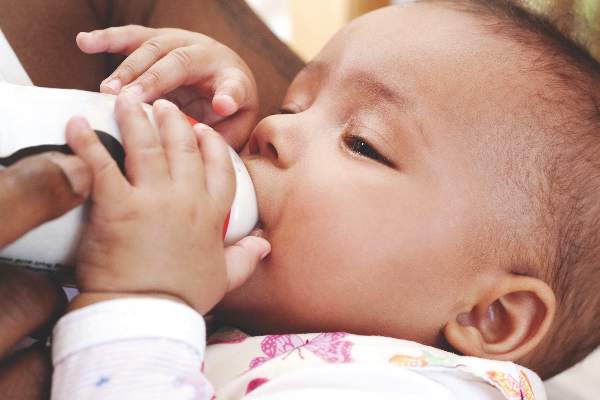
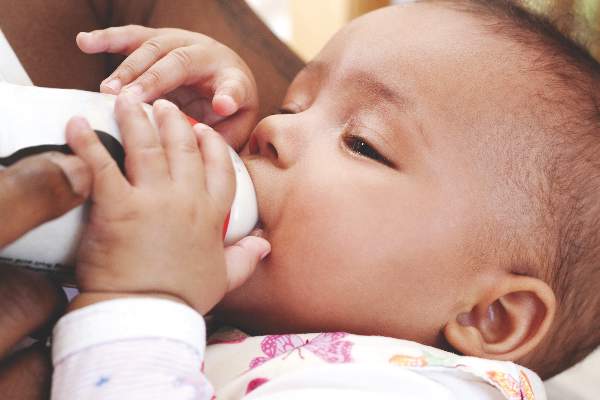
Infants from low-income families fed with large-size bottles were significantly heavier at age 6 months than infants fed using smaller bottles, according to Dr. Charles Wood of the University of North Carolina at Chapel Hill and his associates.
Of 865 infants, 386 were fed exclusively through bottles; 171 infants were fed using a bottle with a volume greater than 6 ounces, 208 infants were fed using a bottle with a volume less than 6 ounces, and data was missing for the rest of the infants. Infants fed with large bottles were 0.21 kg heavier, had 0.24 units more change in weight-for-age z score, and had 0.31 units more change in weight-for-length z score.
Most of the infants who were exclusively bottle fed were either black or Hispanic, accounting for 41% and 35% of study participants, respectively. More than half of households of bottle-fed infants had an income of less than $20,000 a year, and a similar number of parents had a high school diploma or less. The primary caregiver in most households was the mother, and 86% received assistance from the Special Supplemental Nutrition Program for Women, Infants, and Children.
“Given the complexity of infant growth, future research should consider influences such as feeding practices and should include rigorous measurement of intake and body composition. Nearly all parents use a bottle to feed their infant at some point during their infancy, and further efforts to more completely understand the mechanisms linking bottle-feeding, development of satiety responsiveness, and obesity risk may also inform obesity prevention interventions,” the investigators concluded.
Find the full study in Pediatrics (doi: 10.1542/peds.2015-4538).
Infants from low-income families fed with large-size bottles were significantly heavier at age 6 months than infants fed using smaller bottles, according to Dr. Charles Wood of the University of North Carolina at Chapel Hill and his associates.
Of 865 infants, 386 were fed exclusively through bottles; 171 infants were fed using a bottle with a volume greater than 6 ounces, 208 infants were fed using a bottle with a volume less than 6 ounces, and data was missing for the rest of the infants. Infants fed with large bottles were 0.21 kg heavier, had 0.24 units more change in weight-for-age z score, and had 0.31 units more change in weight-for-length z score.
Most of the infants who were exclusively bottle fed were either black or Hispanic, accounting for 41% and 35% of study participants, respectively. More than half of households of bottle-fed infants had an income of less than $20,000 a year, and a similar number of parents had a high school diploma or less. The primary caregiver in most households was the mother, and 86% received assistance from the Special Supplemental Nutrition Program for Women, Infants, and Children.
“Given the complexity of infant growth, future research should consider influences such as feeding practices and should include rigorous measurement of intake and body composition. Nearly all parents use a bottle to feed their infant at some point during their infancy, and further efforts to more completely understand the mechanisms linking bottle-feeding, development of satiety responsiveness, and obesity risk may also inform obesity prevention interventions,” the investigators concluded.
Find the full study in Pediatrics (doi: 10.1542/peds.2015-4538).
Infants from low-income families fed with large-size bottles were significantly heavier at age 6 months than infants fed using smaller bottles, according to Dr. Charles Wood of the University of North Carolina at Chapel Hill and his associates.
Of 865 infants, 386 were fed exclusively through bottles; 171 infants were fed using a bottle with a volume greater than 6 ounces, 208 infants were fed using a bottle with a volume less than 6 ounces, and data was missing for the rest of the infants. Infants fed with large bottles were 0.21 kg heavier, had 0.24 units more change in weight-for-age z score, and had 0.31 units more change in weight-for-length z score.
Most of the infants who were exclusively bottle fed were either black or Hispanic, accounting for 41% and 35% of study participants, respectively. More than half of households of bottle-fed infants had an income of less than $20,000 a year, and a similar number of parents had a high school diploma or less. The primary caregiver in most households was the mother, and 86% received assistance from the Special Supplemental Nutrition Program for Women, Infants, and Children.
“Given the complexity of infant growth, future research should consider influences such as feeding practices and should include rigorous measurement of intake and body composition. Nearly all parents use a bottle to feed their infant at some point during their infancy, and further efforts to more completely understand the mechanisms linking bottle-feeding, development of satiety responsiveness, and obesity risk may also inform obesity prevention interventions,” the investigators concluded.
Find the full study in Pediatrics (doi: 10.1542/peds.2015-4538).
FROM PEDIATRICS