User login
BOCA RATON, Fla. – Older patients hospitalized with acute alcohol withdrawal experience significantly more delirium tremens and delirium than do inpatients younger than 65 years, according to a retrospective study.
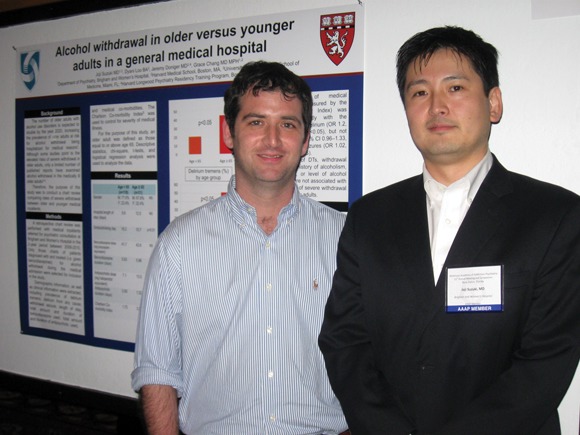
Screen older patients for alcohol consumption and consider medications other than benzodiazepines to treat withdrawal in this population, advised Dr. Jeremy Doniger, a resident at Harvard Longwood Psychiatry in Boston.
"Older people are drinking more than we realize. Be consistent about screening for it," Dr. Doniger said. In fact, with the aging of the population, the number of older adults with an alcohol use disorder is expected to double by 2020 (Brit. Med. J. 2003;327:664-7). A likely outcome is that more older patients will be admitted to hospitals for severe alcohol withdrawal in the future.
"Benzodiazepines can cause delirium, and older patients may be more susceptible [to these effects]," said Dr. Doniger. N-methyl-d-aspartate antagonists, for example, alone or in combination with benzodiazepines, are an effective alternative strategy, he added.
Reports in the literature are mixed as to whether older age predicts worse withdrawal, said Dr. Joji Suzuki, lead study investigator, and director of the Addiction Recovery Program at Brigham and Women’s Hospital and Harvard Medical School, Boston.
To find a more definitive answer, the investigators reviewed the charts of all medical inpatients at Brigham and Women’s Hospital for whom a psychiatry consultation was requested from 2008 to 2010. They identified 141 patients diagnosed and treated for alcohol withdrawal during hospital admission.
They compared 31 older patients to 110 younger ones. "We wanted to know if older patients, those 65 and older, have worse or the same outcomes as younger folks," said Dr. Suzuki. "We found something very striking: that DTs [delirium tremens] or delirium from any cause approaches 50% in older patients," Dr. Suzuki said. "Delirium is very serious, and can be a predictor for death."
Delirium from any cause affected 52% of the older group versus 30% of the younger patients, a statistically significant difference. In addition, 44% of older patients experienced DTs while hospitalized, compared with 20% of younger patients. This disparity also was significantly different.
"Part of it might be severity of comorbidities," Dr. Doniger said. The presence of more severe comorbidities was significantly associated with development of any delirium (odds ratio, 1.2), but not with DTs (OR, 1.13) or withdrawal seizures (OR, 1.02).
Prevalence of withdrawal seizures did not differ significantly between older patients (10%) and younger patients (6%). Nor did hospital length of stay differ significantly. Older patients stayed at Brigham and Women’s Hospital a mean 12.5 days compared with 8.6 days for the younger group.
The take-home message is that "younger patients going through withdrawal will fare about the same or a little worse than someone in a detox setting. But older patients are at greater risk for adverse outcomes, and the longer they stay in the hospital, the higher their risk for not doing well [because of nosocomial infections, falls, and other risk factors]," Dr. Suzuki said.
Inpatients who experienced DTs received significantly higher doses of benzodiazepines than did those who did not. In terms of lorazepam equivalents, the mean dose was 64.6 mg versus 30.5 mg in the non-DT group.
Dr. Doniger said differences in body composition and metabolism could contribute to greater benzodiazepine delirium in older patients because they typically have less water and more fat, which holds medications, and they have slower liver metabolism, he said.
The study was supported in part by the Department of Psychiatry at Harvard Medical School. Dr. Suzuki and Dr. Doniger had no relevant financial disclosures.
BOCA RATON, Fla. – Older patients hospitalized with acute alcohol withdrawal experience significantly more delirium tremens and delirium than do inpatients younger than 65 years, according to a retrospective study.
Screen older patients for alcohol consumption and consider medications other than benzodiazepines to treat withdrawal in this population, advised Dr. Jeremy Doniger, a resident at Harvard Longwood Psychiatry in Boston.
"Older people are drinking more than we realize. Be consistent about screening for it," Dr. Doniger said. In fact, with the aging of the population, the number of older adults with an alcohol use disorder is expected to double by 2020 (Brit. Med. J. 2003;327:664-7). A likely outcome is that more older patients will be admitted to hospitals for severe alcohol withdrawal in the future.
"Benzodiazepines can cause delirium, and older patients may be more susceptible [to these effects]," said Dr. Doniger. N-methyl-d-aspartate antagonists, for example, alone or in combination with benzodiazepines, are an effective alternative strategy, he added.
Reports in the literature are mixed as to whether older age predicts worse withdrawal, said Dr. Joji Suzuki, lead study investigator, and director of the Addiction Recovery Program at Brigham and Women’s Hospital and Harvard Medical School, Boston.
To find a more definitive answer, the investigators reviewed the charts of all medical inpatients at Brigham and Women’s Hospital for whom a psychiatry consultation was requested from 2008 to 2010. They identified 141 patients diagnosed and treated for alcohol withdrawal during hospital admission.
They compared 31 older patients to 110 younger ones. "We wanted to know if older patients, those 65 and older, have worse or the same outcomes as younger folks," said Dr. Suzuki. "We found something very striking: that DTs [delirium tremens] or delirium from any cause approaches 50% in older patients," Dr. Suzuki said. "Delirium is very serious, and can be a predictor for death."
Delirium from any cause affected 52% of the older group versus 30% of the younger patients, a statistically significant difference. In addition, 44% of older patients experienced DTs while hospitalized, compared with 20% of younger patients. This disparity also was significantly different.
"Part of it might be severity of comorbidities," Dr. Doniger said. The presence of more severe comorbidities was significantly associated with development of any delirium (odds ratio, 1.2), but not with DTs (OR, 1.13) or withdrawal seizures (OR, 1.02).
Prevalence of withdrawal seizures did not differ significantly between older patients (10%) and younger patients (6%). Nor did hospital length of stay differ significantly. Older patients stayed at Brigham and Women’s Hospital a mean 12.5 days compared with 8.6 days for the younger group.
The take-home message is that "younger patients going through withdrawal will fare about the same or a little worse than someone in a detox setting. But older patients are at greater risk for adverse outcomes, and the longer they stay in the hospital, the higher their risk for not doing well [because of nosocomial infections, falls, and other risk factors]," Dr. Suzuki said.
Inpatients who experienced DTs received significantly higher doses of benzodiazepines than did those who did not. In terms of lorazepam equivalents, the mean dose was 64.6 mg versus 30.5 mg in the non-DT group.
Dr. Doniger said differences in body composition and metabolism could contribute to greater benzodiazepine delirium in older patients because they typically have less water and more fat, which holds medications, and they have slower liver metabolism, he said.
The study was supported in part by the Department of Psychiatry at Harvard Medical School. Dr. Suzuki and Dr. Doniger had no relevant financial disclosures.
BOCA RATON, Fla. – Older patients hospitalized with acute alcohol withdrawal experience significantly more delirium tremens and delirium than do inpatients younger than 65 years, according to a retrospective study.
Screen older patients for alcohol consumption and consider medications other than benzodiazepines to treat withdrawal in this population, advised Dr. Jeremy Doniger, a resident at Harvard Longwood Psychiatry in Boston.
"Older people are drinking more than we realize. Be consistent about screening for it," Dr. Doniger said. In fact, with the aging of the population, the number of older adults with an alcohol use disorder is expected to double by 2020 (Brit. Med. J. 2003;327:664-7). A likely outcome is that more older patients will be admitted to hospitals for severe alcohol withdrawal in the future.
"Benzodiazepines can cause delirium, and older patients may be more susceptible [to these effects]," said Dr. Doniger. N-methyl-d-aspartate antagonists, for example, alone or in combination with benzodiazepines, are an effective alternative strategy, he added.
Reports in the literature are mixed as to whether older age predicts worse withdrawal, said Dr. Joji Suzuki, lead study investigator, and director of the Addiction Recovery Program at Brigham and Women’s Hospital and Harvard Medical School, Boston.
To find a more definitive answer, the investigators reviewed the charts of all medical inpatients at Brigham and Women’s Hospital for whom a psychiatry consultation was requested from 2008 to 2010. They identified 141 patients diagnosed and treated for alcohol withdrawal during hospital admission.
They compared 31 older patients to 110 younger ones. "We wanted to know if older patients, those 65 and older, have worse or the same outcomes as younger folks," said Dr. Suzuki. "We found something very striking: that DTs [delirium tremens] or delirium from any cause approaches 50% in older patients," Dr. Suzuki said. "Delirium is very serious, and can be a predictor for death."
Delirium from any cause affected 52% of the older group versus 30% of the younger patients, a statistically significant difference. In addition, 44% of older patients experienced DTs while hospitalized, compared with 20% of younger patients. This disparity also was significantly different.
"Part of it might be severity of comorbidities," Dr. Doniger said. The presence of more severe comorbidities was significantly associated with development of any delirium (odds ratio, 1.2), but not with DTs (OR, 1.13) or withdrawal seizures (OR, 1.02).
Prevalence of withdrawal seizures did not differ significantly between older patients (10%) and younger patients (6%). Nor did hospital length of stay differ significantly. Older patients stayed at Brigham and Women’s Hospital a mean 12.5 days compared with 8.6 days for the younger group.
The take-home message is that "younger patients going through withdrawal will fare about the same or a little worse than someone in a detox setting. But older patients are at greater risk for adverse outcomes, and the longer they stay in the hospital, the higher their risk for not doing well [because of nosocomial infections, falls, and other risk factors]," Dr. Suzuki said.
Inpatients who experienced DTs received significantly higher doses of benzodiazepines than did those who did not. In terms of lorazepam equivalents, the mean dose was 64.6 mg versus 30.5 mg in the non-DT group.
Dr. Doniger said differences in body composition and metabolism could contribute to greater benzodiazepine delirium in older patients because they typically have less water and more fat, which holds medications, and they have slower liver metabolism, he said.
The study was supported in part by the Department of Psychiatry at Harvard Medical School. Dr. Suzuki and Dr. Doniger had no relevant financial disclosures.
FROM THE ANNUAL MEETING OF THE AMERICAN ACADEMY OF ADDICTION PSYCHIATRY
Major Finding: A greater percentage of hospitalized patients 65 and older with alcohol withdrawal experience delirium, 52%, compared with 30% among younger patients.
Data Source: Review of 141 patient charts involving a psychiatry consultation from 2008 to 2010.
Disclosures: Dr. Joji Suzuki and Dr. Jeremy Doniger had no relevant disclosures.