User login
Feds extend ACA enrollment deadline for some
Consumers who have had difficulty enrolling in a health insurance plan through healthcare.gov or through federal call centers will be given extra time to sign up beyond the March 31 open enrollment deadline, according to the Obama administration.
The leeway applies only to those trying to enroll through the federal health insurance exchange, which operates in 27 states. Several other states, including Maryland, Minnesota, and Nevada, also have offered relief to consumers having trouble signing up through those states’ exchanges.
"We are experiencing a surge in demand and are making sure that we will be ready to help consumers who may be in line by the deadline to complete enrollment – either online or over the phone," said Aaron Albright, a spokesman for the Health and Human Services (HHS) department.

The agency has not yet issued guidance on how to get help finishing up the enrollment process or how long the extension would last.
For everyone else, open enrollment ends March 31.
"Like clockwork, another day, another delay," House Energy and Commerce Committee Chairman Fred Upton (R-Mich.) said in a statement. He also noted that HHS Secretary Kathleen Sebelius told the committee in December that there would be no more delays, and that "2 weeks ago an HHS official insisted that the administration did not have ‘statutory authority’ to extend the enrollment period for this year; yet here we are."
Rep. Dave Camp (R-Mich.) and Rep. Kevin Brady (R-Tex.) said in a statement that they are going to press the administration on just how many individuals have paid for their insurance coverage so far – information that HHS says it does not have.
"We have recently obtained information that suggests your most recent testimony before the Ways and Means Committee was at best evasive and perhaps misleading," they wrote in a letter to Ms. Sebelius. They note that the committee has obtained evidence that insurers are indeed submitting payment data to the Centers for Medicare and Medicaid Services.
On Twitter @aliciaault
Consumers who have had difficulty enrolling in a health insurance plan through healthcare.gov or through federal call centers will be given extra time to sign up beyond the March 31 open enrollment deadline, according to the Obama administration.
The leeway applies only to those trying to enroll through the federal health insurance exchange, which operates in 27 states. Several other states, including Maryland, Minnesota, and Nevada, also have offered relief to consumers having trouble signing up through those states’ exchanges.
"We are experiencing a surge in demand and are making sure that we will be ready to help consumers who may be in line by the deadline to complete enrollment – either online or over the phone," said Aaron Albright, a spokesman for the Health and Human Services (HHS) department.
The agency has not yet issued guidance on how to get help finishing up the enrollment process or how long the extension would last.
For everyone else, open enrollment ends March 31.
"Like clockwork, another day, another delay," House Energy and Commerce Committee Chairman Fred Upton (R-Mich.) said in a statement. He also noted that HHS Secretary Kathleen Sebelius told the committee in December that there would be no more delays, and that "2 weeks ago an HHS official insisted that the administration did not have ‘statutory authority’ to extend the enrollment period for this year; yet here we are."
Rep. Dave Camp (R-Mich.) and Rep. Kevin Brady (R-Tex.) said in a statement that they are going to press the administration on just how many individuals have paid for their insurance coverage so far – information that HHS says it does not have.
"We have recently obtained information that suggests your most recent testimony before the Ways and Means Committee was at best evasive and perhaps misleading," they wrote in a letter to Ms. Sebelius. They note that the committee has obtained evidence that insurers are indeed submitting payment data to the Centers for Medicare and Medicaid Services.
On Twitter @aliciaault
Consumers who have had difficulty enrolling in a health insurance plan through healthcare.gov or through federal call centers will be given extra time to sign up beyond the March 31 open enrollment deadline, according to the Obama administration.
The leeway applies only to those trying to enroll through the federal health insurance exchange, which operates in 27 states. Several other states, including Maryland, Minnesota, and Nevada, also have offered relief to consumers having trouble signing up through those states’ exchanges.
"We are experiencing a surge in demand and are making sure that we will be ready to help consumers who may be in line by the deadline to complete enrollment – either online or over the phone," said Aaron Albright, a spokesman for the Health and Human Services (HHS) department.
The agency has not yet issued guidance on how to get help finishing up the enrollment process or how long the extension would last.
For everyone else, open enrollment ends March 31.
"Like clockwork, another day, another delay," House Energy and Commerce Committee Chairman Fred Upton (R-Mich.) said in a statement. He also noted that HHS Secretary Kathleen Sebelius told the committee in December that there would be no more delays, and that "2 weeks ago an HHS official insisted that the administration did not have ‘statutory authority’ to extend the enrollment period for this year; yet here we are."
Rep. Dave Camp (R-Mich.) and Rep. Kevin Brady (R-Tex.) said in a statement that they are going to press the administration on just how many individuals have paid for their insurance coverage so far – information that HHS says it does not have.
"We have recently obtained information that suggests your most recent testimony before the Ways and Means Committee was at best evasive and perhaps misleading," they wrote in a letter to Ms. Sebelius. They note that the committee has obtained evidence that insurers are indeed submitting payment data to the Centers for Medicare and Medicaid Services.
On Twitter @aliciaault

Contraception challenge could have broad impact on medicine
Should a company be required to provide employees with health insurance coverage for contraception if the owner says it is a violation of his or her religious beliefs?
That’s one issue the Supreme Court will consider when it hears oral arguments March 25 in cases filed by Hobby Lobby Stores and Conestoga Wood Specialties Corp.
Each company objects to the Affordable Care Act’s requirement that insurance plans (with some exceptions) provide coverage of family planning counseling and any Food and Drug Administration–approved contraceptive method, as well as follow-up counseling and management, all at no cost to employees.
If the court rules in favor of the companies, millions of women potentially could lose their health care coverage for contraception.

More chillingly, such a ruling could lead to interference in the physician-patient relationship. Further, if for-profit employers are allowed to deny coverage of contraception based on religion, might they eventually seek to drop coverage for vaccination, psychiatric care, transfusions, and other medical procedures from their health plans?
"It would be a dangerous precedent," Dr. Hal C. Lawrence III, executive vice president and chief executive officer of the American Congress of Obstetricians and Gynecologists (ACOG), said in a briefing with reporters.
Tom Goldstein, a partner with law firm Goldstein & Russell and the publisher of SCOTUSblog, agreed.
"The legal principle invoked by the plaintiffs has some potentially startling implications for what one might claim as a religious liberty," he said at a briefing sponsored by the Kaiser Family Foundation. A ruling in their favor could result in "more expansive, more troubling claims," including denial of coverage for other medical procedures and, potentially, discrimination based on race, ethnicity, gender, or sexual orientation – all in the name of religious freedom.
Not all insurance plans must provide contraception coverage under the ACA. Health plans that existed before 2010 and have not substantially changed since are "grandfathered" and don’t have to provide coverage. Plans offered by nonprofit religious organizations are exempt. Nonprofit, religiously affiliated employers also are accommodated. If these employers object to providing coverage on religious grounds, they must notify their insurer. The employer can elect not to pay for that benefit, but the insurer has to reimburse the worker for contraception.
There are no exemptions for plans offered by secular employers, which face a $100 per day per enrollee penalty if they do not provide coverage. Hobby Lobby could face fines of up to $475 million a year, and Conestoga could be looking at $35 million a year in penalties, according to Laurie Sobel, a senior policy analyst with the Kaiser Family Foundation.
The contraception requirement has triggered at least 93 lawsuits. Some object to providing any contraception coverage, while others focus in on emergency contraception. The Hobby Lobby and Conestoga cases are the first to make it to the Supreme Court.
Religious objections
The family that owns Hobby Lobby, a chain with 500 stores and 13,000 employees, says it objects to covering Plan B, Ella, or IUDs because doing so violates its religious beliefs and First Amendment rights.
The Hahn family, which owns the 950-employee Conestoga Wood Specialties, says that it objects to covering Plan B or Ella for the same reasons.
Both object to covering family planning counseling as well.
The companies argue that the Religious Freedom Restoration Act of 1993 gives them the right to deny coverage. The task before their attorneys is to convince Supreme Court justices that a corporation can have religious beliefs and that expressing those beliefs is covered by the First Amendment.
Their arguments are supported by 59 amicus (friend of the court) briefs filed by religious groups and related parties.
The court has not upheld anything like that before, according to Marci A. Hamilton, the Paul R. Verkuil Chair in Public Law at the Benjamin N. Cardozo School of Law at Yeshiva University in New York. Religious beliefs are usually strictly protected, but religious conduct, which has the potential to harm people, can be governed, Ms. Hamilton said at the Kaiser briefing.
Contraception and public health
The government is arguing that it has a compelling interest to require contraception coverage and family planning because it helps prevent unintended pregnancy and thus improves the health of women and children.
This argument is supported in 23 amicus briefs filed by groups including physician organizations such as ACOG, the American Academy of Pediatrics, the Association of Reproductive Health Professionals, the California Medical Association, the Massachusetts Medical Society, and the Society for Maternal-Fetal Medicine, among others.
"The value of family planning, including contraception, has been clearly demonstrated for decades," said Dr. Lawrence of ACOG. It gives women the ability to prevent unintended pregnancy and to time and space pregnancies, and it helps to reduce fetal and maternal morbidity and mortality, he said.
Dr. Lawrence noted that Hobby Lobby and Conestoga were characterizing emergency contraception as abortion methods. "The best scientific evidence shows that emergency contraception works by inhibiting ovulation," he said. "This is contraception, not abortion."
Doctor-patient relationship
If the court upholds the companies’ objection to counseling, that also could open the door to a wide range of restrictions on what physicians can talk to their patients about.
"Your employer would be telling your doctor what you can and can’t talk about," said Adam Sonfield, a senior public policy associate with the Guttmacher Institute. "That would be a clear violation of the rights of the patient ... and could even be considered malpractice."
Dr. Lawrence said that "to not be able to educate patients about their bodies is anathema to women’s health care."
Decisions about a woman’s needs and her health should be between her and her doctor and "should not include input from a woman’s boss," he added.
That sentiment was echoed by ACOG and other medical groups in their brief. They said that "important, private medical decisions should be made by a patient in consultation with her health care provider. There is no role for a woman’s employer in these decisions."
Predictions on ruling?
The Supreme Court could make its ruling any time between March 25 and the end of its current term in late June. Legal experts at the Kaiser Family Foundation and National Health Law Program said they did not expect a ruling in favor of the plaintiffs, Hobby Lobby and Conestoga Wood.
Should the court support the companies’ arguments, however, many state laws require contraceptive equity, said Susan Berke Fogel, director of Reproductive Health at the National Health Law Program.
Mr. Sonfeld of the Guttmacher Institute also noted that 28 states require employers to cover the full range of FDA-approved contraceptives.
On Twitter @aliciaault
Should a company be required to provide employees with health insurance coverage for contraception if the owner says it is a violation of his or her religious beliefs?
That’s one issue the Supreme Court will consider when it hears oral arguments March 25 in cases filed by Hobby Lobby Stores and Conestoga Wood Specialties Corp.
Each company objects to the Affordable Care Act’s requirement that insurance plans (with some exceptions) provide coverage of family planning counseling and any Food and Drug Administration–approved contraceptive method, as well as follow-up counseling and management, all at no cost to employees.
If the court rules in favor of the companies, millions of women potentially could lose their health care coverage for contraception.
More chillingly, such a ruling could lead to interference in the physician-patient relationship. Further, if for-profit employers are allowed to deny coverage of contraception based on religion, might they eventually seek to drop coverage for vaccination, psychiatric care, transfusions, and other medical procedures from their health plans?
"It would be a dangerous precedent," Dr. Hal C. Lawrence III, executive vice president and chief executive officer of the American Congress of Obstetricians and Gynecologists (ACOG), said in a briefing with reporters.
Tom Goldstein, a partner with law firm Goldstein & Russell and the publisher of SCOTUSblog, agreed.
"The legal principle invoked by the plaintiffs has some potentially startling implications for what one might claim as a religious liberty," he said at a briefing sponsored by the Kaiser Family Foundation. A ruling in their favor could result in "more expansive, more troubling claims," including denial of coverage for other medical procedures and, potentially, discrimination based on race, ethnicity, gender, or sexual orientation – all in the name of religious freedom.
Not all insurance plans must provide contraception coverage under the ACA. Health plans that existed before 2010 and have not substantially changed since are "grandfathered" and don’t have to provide coverage. Plans offered by nonprofit religious organizations are exempt. Nonprofit, religiously affiliated employers also are accommodated. If these employers object to providing coverage on religious grounds, they must notify their insurer. The employer can elect not to pay for that benefit, but the insurer has to reimburse the worker for contraception.
There are no exemptions for plans offered by secular employers, which face a $100 per day per enrollee penalty if they do not provide coverage. Hobby Lobby could face fines of up to $475 million a year, and Conestoga could be looking at $35 million a year in penalties, according to Laurie Sobel, a senior policy analyst with the Kaiser Family Foundation.
The contraception requirement has triggered at least 93 lawsuits. Some object to providing any contraception coverage, while others focus in on emergency contraception. The Hobby Lobby and Conestoga cases are the first to make it to the Supreme Court.
Religious objections
The family that owns Hobby Lobby, a chain with 500 stores and 13,000 employees, says it objects to covering Plan B, Ella, or IUDs because doing so violates its religious beliefs and First Amendment rights.
The Hahn family, which owns the 950-employee Conestoga Wood Specialties, says that it objects to covering Plan B or Ella for the same reasons.
Both object to covering family planning counseling as well.
The companies argue that the Religious Freedom Restoration Act of 1993 gives them the right to deny coverage. The task before their attorneys is to convince Supreme Court justices that a corporation can have religious beliefs and that expressing those beliefs is covered by the First Amendment.
Their arguments are supported by 59 amicus (friend of the court) briefs filed by religious groups and related parties.
The court has not upheld anything like that before, according to Marci A. Hamilton, the Paul R. Verkuil Chair in Public Law at the Benjamin N. Cardozo School of Law at Yeshiva University in New York. Religious beliefs are usually strictly protected, but religious conduct, which has the potential to harm people, can be governed, Ms. Hamilton said at the Kaiser briefing.
Contraception and public health
The government is arguing that it has a compelling interest to require contraception coverage and family planning because it helps prevent unintended pregnancy and thus improves the health of women and children.
This argument is supported in 23 amicus briefs filed by groups including physician organizations such as ACOG, the American Academy of Pediatrics, the Association of Reproductive Health Professionals, the California Medical Association, the Massachusetts Medical Society, and the Society for Maternal-Fetal Medicine, among others.
"The value of family planning, including contraception, has been clearly demonstrated for decades," said Dr. Lawrence of ACOG. It gives women the ability to prevent unintended pregnancy and to time and space pregnancies, and it helps to reduce fetal and maternal morbidity and mortality, he said.
Dr. Lawrence noted that Hobby Lobby and Conestoga were characterizing emergency contraception as abortion methods. "The best scientific evidence shows that emergency contraception works by inhibiting ovulation," he said. "This is contraception, not abortion."
Doctor-patient relationship
If the court upholds the companies’ objection to counseling, that also could open the door to a wide range of restrictions on what physicians can talk to their patients about.
"Your employer would be telling your doctor what you can and can’t talk about," said Adam Sonfield, a senior public policy associate with the Guttmacher Institute. "That would be a clear violation of the rights of the patient ... and could even be considered malpractice."
Dr. Lawrence said that "to not be able to educate patients about their bodies is anathema to women’s health care."
Decisions about a woman’s needs and her health should be between her and her doctor and "should not include input from a woman’s boss," he added.
That sentiment was echoed by ACOG and other medical groups in their brief. They said that "important, private medical decisions should be made by a patient in consultation with her health care provider. There is no role for a woman’s employer in these decisions."
Predictions on ruling?
The Supreme Court could make its ruling any time between March 25 and the end of its current term in late June. Legal experts at the Kaiser Family Foundation and National Health Law Program said they did not expect a ruling in favor of the plaintiffs, Hobby Lobby and Conestoga Wood.
Should the court support the companies’ arguments, however, many state laws require contraceptive equity, said Susan Berke Fogel, director of Reproductive Health at the National Health Law Program.
Mr. Sonfeld of the Guttmacher Institute also noted that 28 states require employers to cover the full range of FDA-approved contraceptives.
On Twitter @aliciaault
Should a company be required to provide employees with health insurance coverage for contraception if the owner says it is a violation of his or her religious beliefs?
That’s one issue the Supreme Court will consider when it hears oral arguments March 25 in cases filed by Hobby Lobby Stores and Conestoga Wood Specialties Corp.
Each company objects to the Affordable Care Act’s requirement that insurance plans (with some exceptions) provide coverage of family planning counseling and any Food and Drug Administration–approved contraceptive method, as well as follow-up counseling and management, all at no cost to employees.
If the court rules in favor of the companies, millions of women potentially could lose their health care coverage for contraception.
More chillingly, such a ruling could lead to interference in the physician-patient relationship. Further, if for-profit employers are allowed to deny coverage of contraception based on religion, might they eventually seek to drop coverage for vaccination, psychiatric care, transfusions, and other medical procedures from their health plans?
"It would be a dangerous precedent," Dr. Hal C. Lawrence III, executive vice president and chief executive officer of the American Congress of Obstetricians and Gynecologists (ACOG), said in a briefing with reporters.
Tom Goldstein, a partner with law firm Goldstein & Russell and the publisher of SCOTUSblog, agreed.
"The legal principle invoked by the plaintiffs has some potentially startling implications for what one might claim as a religious liberty," he said at a briefing sponsored by the Kaiser Family Foundation. A ruling in their favor could result in "more expansive, more troubling claims," including denial of coverage for other medical procedures and, potentially, discrimination based on race, ethnicity, gender, or sexual orientation – all in the name of religious freedom.
Not all insurance plans must provide contraception coverage under the ACA. Health plans that existed before 2010 and have not substantially changed since are "grandfathered" and don’t have to provide coverage. Plans offered by nonprofit religious organizations are exempt. Nonprofit, religiously affiliated employers also are accommodated. If these employers object to providing coverage on religious grounds, they must notify their insurer. The employer can elect not to pay for that benefit, but the insurer has to reimburse the worker for contraception.
There are no exemptions for plans offered by secular employers, which face a $100 per day per enrollee penalty if they do not provide coverage. Hobby Lobby could face fines of up to $475 million a year, and Conestoga could be looking at $35 million a year in penalties, according to Laurie Sobel, a senior policy analyst with the Kaiser Family Foundation.
The contraception requirement has triggered at least 93 lawsuits. Some object to providing any contraception coverage, while others focus in on emergency contraception. The Hobby Lobby and Conestoga cases are the first to make it to the Supreme Court.
Religious objections
The family that owns Hobby Lobby, a chain with 500 stores and 13,000 employees, says it objects to covering Plan B, Ella, or IUDs because doing so violates its religious beliefs and First Amendment rights.
The Hahn family, which owns the 950-employee Conestoga Wood Specialties, says that it objects to covering Plan B or Ella for the same reasons.
Both object to covering family planning counseling as well.
The companies argue that the Religious Freedom Restoration Act of 1993 gives them the right to deny coverage. The task before their attorneys is to convince Supreme Court justices that a corporation can have religious beliefs and that expressing those beliefs is covered by the First Amendment.
Their arguments are supported by 59 amicus (friend of the court) briefs filed by religious groups and related parties.
The court has not upheld anything like that before, according to Marci A. Hamilton, the Paul R. Verkuil Chair in Public Law at the Benjamin N. Cardozo School of Law at Yeshiva University in New York. Religious beliefs are usually strictly protected, but religious conduct, which has the potential to harm people, can be governed, Ms. Hamilton said at the Kaiser briefing.
Contraception and public health
The government is arguing that it has a compelling interest to require contraception coverage and family planning because it helps prevent unintended pregnancy and thus improves the health of women and children.
This argument is supported in 23 amicus briefs filed by groups including physician organizations such as ACOG, the American Academy of Pediatrics, the Association of Reproductive Health Professionals, the California Medical Association, the Massachusetts Medical Society, and the Society for Maternal-Fetal Medicine, among others.
"The value of family planning, including contraception, has been clearly demonstrated for decades," said Dr. Lawrence of ACOG. It gives women the ability to prevent unintended pregnancy and to time and space pregnancies, and it helps to reduce fetal and maternal morbidity and mortality, he said.
Dr. Lawrence noted that Hobby Lobby and Conestoga were characterizing emergency contraception as abortion methods. "The best scientific evidence shows that emergency contraception works by inhibiting ovulation," he said. "This is contraception, not abortion."
Doctor-patient relationship
If the court upholds the companies’ objection to counseling, that also could open the door to a wide range of restrictions on what physicians can talk to their patients about.
"Your employer would be telling your doctor what you can and can’t talk about," said Adam Sonfield, a senior public policy associate with the Guttmacher Institute. "That would be a clear violation of the rights of the patient ... and could even be considered malpractice."
Dr. Lawrence said that "to not be able to educate patients about their bodies is anathema to women’s health care."
Decisions about a woman’s needs and her health should be between her and her doctor and "should not include input from a woman’s boss," he added.
That sentiment was echoed by ACOG and other medical groups in their brief. They said that "important, private medical decisions should be made by a patient in consultation with her health care provider. There is no role for a woman’s employer in these decisions."
Predictions on ruling?
The Supreme Court could make its ruling any time between March 25 and the end of its current term in late June. Legal experts at the Kaiser Family Foundation and National Health Law Program said they did not expect a ruling in favor of the plaintiffs, Hobby Lobby and Conestoga Wood.
Should the court support the companies’ arguments, however, many state laws require contraceptive equity, said Susan Berke Fogel, director of Reproductive Health at the National Health Law Program.
Mr. Sonfeld of the Guttmacher Institute also noted that 28 states require employers to cover the full range of FDA-approved contraceptives.
On Twitter @aliciaault

Doctors may not get paid for care if patients don’t pay their ACA premiums
Will you get paid for the care you provide to patients who have gained insurance coverage through the Affordable Care Act’s health insurance claims? You’ll soon find out.
Under the health reform law, patients must pay their first month’s premium to be considered enrolled; they then have 90 days to pay the next premium.
If the patient doesn’t pay his or her premiums for the second month, the insurer can hold or "pend" all claims. By the third month, if the patient still has not paid, the insurer can terminate his or her policy. The physician is left to collect whatever is owed for all outstanding claims from the patient.
The Centers for Medicare and Medicaid Services (CMS) clarified the grace period policy in a letter to insurers last year.
The first ripples could come in April. Patients who started and paid for coverage in January, but who did not pay in February or March, might get dropped from coverage. That could leave physicians scrambling to cover the unreimbursed care.
Physicians’ organizations including the American Medical Association, the American College of Physicians, and the American Academy of Family Physicians have been working to reverse this provision of the Affordable Care Act, to no avail so far.
In a March 5 letter to the CMS, dozens of organizations and state medical societies urged the agency to require insurers to tell physicians whether patients had up-to-date coverage during the verification of eligibility. As the law and current regulations are written, insurers can notify physicians on their own timeline whether a patient’s coverage has lapsed.
The organizations also asked the CMS to "require issuers to assume full financial responsibility if an issuer provides inaccurate eligibility information during the last 60 days of the grace period."
"Managing risk is typically a role for insurers, but the grace period rule transfers two-thirds of that risk from the insurers to physicians and health care providers," Dr. Ardis Dee Hoven, president of the American Medical Association, said in a statement.
She added that the AMA is now offering some resources to help physicians manage the "potential negative impact" from having unwittingly given uncompensated care.
Among the resources is a sample letter for patients that explains the 90-day grace period and the importance of paying premiums on a timely basis and in full. The AMA also provides a step-by-step outline suggesting how to collect from patients whose coverage has lapsed.
It is unclear how many individuals have paid for coverage under the Affordable Care Act. The Health and Human Services department said on March 17 that 5 million Americans have signed up for coverage through the state and federal exchanges since Oct. 1. But the department continues to say that it does not know how many have paid their premiums.
On Twitter @aliciaault
Will you get paid for the care you provide to patients who have gained insurance coverage through the Affordable Care Act’s health insurance claims? You’ll soon find out.
Under the health reform law, patients must pay their first month’s premium to be considered enrolled; they then have 90 days to pay the next premium.
If the patient doesn’t pay his or her premiums for the second month, the insurer can hold or "pend" all claims. By the third month, if the patient still has not paid, the insurer can terminate his or her policy. The physician is left to collect whatever is owed for all outstanding claims from the patient.
The Centers for Medicare and Medicaid Services (CMS) clarified the grace period policy in a letter to insurers last year.
The first ripples could come in April. Patients who started and paid for coverage in January, but who did not pay in February or March, might get dropped from coverage. That could leave physicians scrambling to cover the unreimbursed care.
Physicians’ organizations including the American Medical Association, the American College of Physicians, and the American Academy of Family Physicians have been working to reverse this provision of the Affordable Care Act, to no avail so far.
In a March 5 letter to the CMS, dozens of organizations and state medical societies urged the agency to require insurers to tell physicians whether patients had up-to-date coverage during the verification of eligibility. As the law and current regulations are written, insurers can notify physicians on their own timeline whether a patient’s coverage has lapsed.
The organizations also asked the CMS to "require issuers to assume full financial responsibility if an issuer provides inaccurate eligibility information during the last 60 days of the grace period."
"Managing risk is typically a role for insurers, but the grace period rule transfers two-thirds of that risk from the insurers to physicians and health care providers," Dr. Ardis Dee Hoven, president of the American Medical Association, said in a statement.
She added that the AMA is now offering some resources to help physicians manage the "potential negative impact" from having unwittingly given uncompensated care.
Among the resources is a sample letter for patients that explains the 90-day grace period and the importance of paying premiums on a timely basis and in full. The AMA also provides a step-by-step outline suggesting how to collect from patients whose coverage has lapsed.
It is unclear how many individuals have paid for coverage under the Affordable Care Act. The Health and Human Services department said on March 17 that 5 million Americans have signed up for coverage through the state and federal exchanges since Oct. 1. But the department continues to say that it does not know how many have paid their premiums.
On Twitter @aliciaault
Will you get paid for the care you provide to patients who have gained insurance coverage through the Affordable Care Act’s health insurance claims? You’ll soon find out.
Under the health reform law, patients must pay their first month’s premium to be considered enrolled; they then have 90 days to pay the next premium.
If the patient doesn’t pay his or her premiums for the second month, the insurer can hold or "pend" all claims. By the third month, if the patient still has not paid, the insurer can terminate his or her policy. The physician is left to collect whatever is owed for all outstanding claims from the patient.
The Centers for Medicare and Medicaid Services (CMS) clarified the grace period policy in a letter to insurers last year.
The first ripples could come in April. Patients who started and paid for coverage in January, but who did not pay in February or March, might get dropped from coverage. That could leave physicians scrambling to cover the unreimbursed care.
Physicians’ organizations including the American Medical Association, the American College of Physicians, and the American Academy of Family Physicians have been working to reverse this provision of the Affordable Care Act, to no avail so far.
In a March 5 letter to the CMS, dozens of organizations and state medical societies urged the agency to require insurers to tell physicians whether patients had up-to-date coverage during the verification of eligibility. As the law and current regulations are written, insurers can notify physicians on their own timeline whether a patient’s coverage has lapsed.
The organizations also asked the CMS to "require issuers to assume full financial responsibility if an issuer provides inaccurate eligibility information during the last 60 days of the grace period."
"Managing risk is typically a role for insurers, but the grace period rule transfers two-thirds of that risk from the insurers to physicians and health care providers," Dr. Ardis Dee Hoven, president of the American Medical Association, said in a statement.
She added that the AMA is now offering some resources to help physicians manage the "potential negative impact" from having unwittingly given uncompensated care.
Among the resources is a sample letter for patients that explains the 90-day grace period and the importance of paying premiums on a timely basis and in full. The AMA also provides a step-by-step outline suggesting how to collect from patients whose coverage has lapsed.
It is unclear how many individuals have paid for coverage under the Affordable Care Act. The Health and Human Services department said on March 17 that 5 million Americans have signed up for coverage through the state and federal exchanges since Oct. 1. But the department continues to say that it does not know how many have paid their premiums.
On Twitter @aliciaault
House passes bill to repeal the SGR
The House of Representatives on March 14 approved a bill to repeal the Medicare Sustainable Growth Rate formula; the Senate is not likely to take up the bill.
The House voted mostly along party lines, with 226 Republicans and 12 Democrats voting in favor of approving H.R. 4015 and sending it to the Senate. Many Democrats who voted against it objected to the bill’s financing, which was achieved through a 5-year delay of the Affordable Care Act’s individual health insurance mandate.
The Congressional Budget Office estimated that delaying the mandate would save about $170 billion over 10 years, while the Sustainable Growth Rate (SGR) fix would cost $130 billion in the same period. But the CBO also said that the plan would increase the number of uninsured by 13 million and lead to 10%-20% premium increases.
"Political games are threatening to derail months of bipartisan, bicameral progress" on implementing the Affordable Care Act, House Minority Leader Nancy Pelosi (D-Calif.) said in a speech before the vote.
"We shouldn’t be wasting time on this foolishness and this recklessness," she added, noting that securing a permanent fix before a 24% physician pay cut takes effect on April 1 was increasingly less likely as the Senate was not likely to approve the plan with the accompanying financing.
The House now is on break until March 25.
Dr. Ardis Dee Hoven, president of the American Medical Association, said that she was disappointed at the House action, given that the House and Senate had already agreed on the fundamentals of replacing the SGR. "It would be a shame for lawmakers to have done all of that hard work only to have it overcome by partisan politics over budgetary issues," she said in a statement.

"We thank all members who spoke on the floor in support of a return to bipartisan negotiations and encourage the United States Senate to proceed in a timely and bipartisan manner to advance legislation in that body," she said, adding that the AMA would continue to try to help forge a compromise.
"Continuing the cycle of kicking the can down the road through temporary patches in the months ahead simply wastes more taxpayer money to preserve a bad policy of Congress’ own making," Dr. Hoven said.
Leaders at other physicians’ organizations echoed Dr. Hoven’s disappointment.
"We’re dismayed that Congress sabotaged their own work by linking this legislation to unrelated, ideological issues – particularly in light of the nearly universal opposition to such action from patients, insurers, and the medical community," Dr. Reid Blackwelder, president of the American Academy of Family Physicians, said in a statement.
"It’s imperative that both parties come together to reach agreement on the budgetary payment that will pass both the House and the Senate before April 1," Dr. Blackwelder said.
Ms. Molly Cooke, president of the American College of Physicians, said the ACP stands by its statement from March 7. At that time, she said, "Congress knows that it is counterproductive for either the House or the Senate, Republicans or Democrats, to tie the bipartisan, bicameral SGR repeal bill to other policies that do not have the bipartisan support needed to pass both chambers, and be signed into law by the President."
Dr. Cooke added, "We cannot support linking SGR repeal to changes in current law that will result in fewer people getting health insurance coverage."

House Republican leaders called on the Senate to act.
"We have never come this far in finding a permanent solution," House Energy and Commerce Committee Chairman Fred Upton (R-Mich.) said in a statement. "But there is still much work to be done after today’s vote, and I call on my good friend Sen. Ron Wyden [D-Ore.] to pick up the torch and work with Majority Leader Harry Reid [D-Nev.] to put politics aside, stand up for our seniors and doctors, and solve SGR this year."
On Twitter @aliciaault
The House of Representatives on March 14 approved a bill to repeal the Medicare Sustainable Growth Rate formula; the Senate is not likely to take up the bill.
The House voted mostly along party lines, with 226 Republicans and 12 Democrats voting in favor of approving H.R. 4015 and sending it to the Senate. Many Democrats who voted against it objected to the bill’s financing, which was achieved through a 5-year delay of the Affordable Care Act’s individual health insurance mandate.
The Congressional Budget Office estimated that delaying the mandate would save about $170 billion over 10 years, while the Sustainable Growth Rate (SGR) fix would cost $130 billion in the same period. But the CBO also said that the plan would increase the number of uninsured by 13 million and lead to 10%-20% premium increases.
"Political games are threatening to derail months of bipartisan, bicameral progress" on implementing the Affordable Care Act, House Minority Leader Nancy Pelosi (D-Calif.) said in a speech before the vote.
"We shouldn’t be wasting time on this foolishness and this recklessness," she added, noting that securing a permanent fix before a 24% physician pay cut takes effect on April 1 was increasingly less likely as the Senate was not likely to approve the plan with the accompanying financing.
The House now is on break until March 25.
Dr. Ardis Dee Hoven, president of the American Medical Association, said that she was disappointed at the House action, given that the House and Senate had already agreed on the fundamentals of replacing the SGR. "It would be a shame for lawmakers to have done all of that hard work only to have it overcome by partisan politics over budgetary issues," she said in a statement.
"We thank all members who spoke on the floor in support of a return to bipartisan negotiations and encourage the United States Senate to proceed in a timely and bipartisan manner to advance legislation in that body," she said, adding that the AMA would continue to try to help forge a compromise.
"Continuing the cycle of kicking the can down the road through temporary patches in the months ahead simply wastes more taxpayer money to preserve a bad policy of Congress’ own making," Dr. Hoven said.
Leaders at other physicians’ organizations echoed Dr. Hoven’s disappointment.
"We’re dismayed that Congress sabotaged their own work by linking this legislation to unrelated, ideological issues – particularly in light of the nearly universal opposition to such action from patients, insurers, and the medical community," Dr. Reid Blackwelder, president of the American Academy of Family Physicians, said in a statement.
"It’s imperative that both parties come together to reach agreement on the budgetary payment that will pass both the House and the Senate before April 1," Dr. Blackwelder said.
Ms. Molly Cooke, president of the American College of Physicians, said the ACP stands by its statement from March 7. At that time, she said, "Congress knows that it is counterproductive for either the House or the Senate, Republicans or Democrats, to tie the bipartisan, bicameral SGR repeal bill to other policies that do not have the bipartisan support needed to pass both chambers, and be signed into law by the President."
Dr. Cooke added, "We cannot support linking SGR repeal to changes in current law that will result in fewer people getting health insurance coverage."
House Republican leaders called on the Senate to act.
"We have never come this far in finding a permanent solution," House Energy and Commerce Committee Chairman Fred Upton (R-Mich.) said in a statement. "But there is still much work to be done after today’s vote, and I call on my good friend Sen. Ron Wyden [D-Ore.] to pick up the torch and work with Majority Leader Harry Reid [D-Nev.] to put politics aside, stand up for our seniors and doctors, and solve SGR this year."
On Twitter @aliciaault
The House of Representatives on March 14 approved a bill to repeal the Medicare Sustainable Growth Rate formula; the Senate is not likely to take up the bill.
The House voted mostly along party lines, with 226 Republicans and 12 Democrats voting in favor of approving H.R. 4015 and sending it to the Senate. Many Democrats who voted against it objected to the bill’s financing, which was achieved through a 5-year delay of the Affordable Care Act’s individual health insurance mandate.
The Congressional Budget Office estimated that delaying the mandate would save about $170 billion over 10 years, while the Sustainable Growth Rate (SGR) fix would cost $130 billion in the same period. But the CBO also said that the plan would increase the number of uninsured by 13 million and lead to 10%-20% premium increases.
"Political games are threatening to derail months of bipartisan, bicameral progress" on implementing the Affordable Care Act, House Minority Leader Nancy Pelosi (D-Calif.) said in a speech before the vote.
"We shouldn’t be wasting time on this foolishness and this recklessness," she added, noting that securing a permanent fix before a 24% physician pay cut takes effect on April 1 was increasingly less likely as the Senate was not likely to approve the plan with the accompanying financing.
The House now is on break until March 25.
Dr. Ardis Dee Hoven, president of the American Medical Association, said that she was disappointed at the House action, given that the House and Senate had already agreed on the fundamentals of replacing the SGR. "It would be a shame for lawmakers to have done all of that hard work only to have it overcome by partisan politics over budgetary issues," she said in a statement.
"We thank all members who spoke on the floor in support of a return to bipartisan negotiations and encourage the United States Senate to proceed in a timely and bipartisan manner to advance legislation in that body," she said, adding that the AMA would continue to try to help forge a compromise.
"Continuing the cycle of kicking the can down the road through temporary patches in the months ahead simply wastes more taxpayer money to preserve a bad policy of Congress’ own making," Dr. Hoven said.
Leaders at other physicians’ organizations echoed Dr. Hoven’s disappointment.
"We’re dismayed that Congress sabotaged their own work by linking this legislation to unrelated, ideological issues – particularly in light of the nearly universal opposition to such action from patients, insurers, and the medical community," Dr. Reid Blackwelder, president of the American Academy of Family Physicians, said in a statement.
"It’s imperative that both parties come together to reach agreement on the budgetary payment that will pass both the House and the Senate before April 1," Dr. Blackwelder said.
Ms. Molly Cooke, president of the American College of Physicians, said the ACP stands by its statement from March 7. At that time, she said, "Congress knows that it is counterproductive for either the House or the Senate, Republicans or Democrats, to tie the bipartisan, bicameral SGR repeal bill to other policies that do not have the bipartisan support needed to pass both chambers, and be signed into law by the President."
Dr. Cooke added, "We cannot support linking SGR repeal to changes in current law that will result in fewer people getting health insurance coverage."
House Republican leaders called on the Senate to act.
"We have never come this far in finding a permanent solution," House Energy and Commerce Committee Chairman Fred Upton (R-Mich.) said in a statement. "But there is still much work to be done after today’s vote, and I call on my good friend Sen. Ron Wyden [D-Ore.] to pick up the torch and work with Majority Leader Harry Reid [D-Nev.] to put politics aside, stand up for our seniors and doctors, and solve SGR this year."
On Twitter @aliciaault
VIDEO: Website collects best practices for reducing readmissions
ORLANDO – Under the Affordable Care Act, hospitals are financially penalized for having higher than average readmission rates for certain conditions. Since the law’s 2010 enactment, hospital leaders have been working to reduce readmission rates.
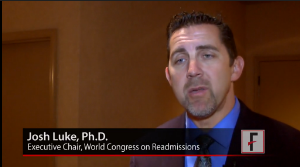
At the World Congress Leadership Summit on Hospital Readmissions, Josh Luke, Ph.D., said that communication and technology are key elements of reducing readmissions, but implementing effective protocols is also site specific.
To collect best practices in hospitals across the nation, Dr. Luke, who was the meeting’s chair, has created the National Readmission Prevention Collaborative website. Accessing the information is free, and Dr. Luke encouraged others to submit their success stories.
Dr. Luke is the vice president of post acute services at Torrance (Calif.) Memorial Medical Center, and he shared his thoughts and ideas on reducing readmissions during a video interview at the meeting.
The video associated with this article is no longer available on this site. Please view all of our videos on the MDedge YouTube channel
On Twitter @naseemsmiller
ORLANDO – Under the Affordable Care Act, hospitals are financially penalized for having higher than average readmission rates for certain conditions. Since the law’s 2010 enactment, hospital leaders have been working to reduce readmission rates.
At the World Congress Leadership Summit on Hospital Readmissions, Josh Luke, Ph.D., said that communication and technology are key elements of reducing readmissions, but implementing effective protocols is also site specific.
To collect best practices in hospitals across the nation, Dr. Luke, who was the meeting’s chair, has created the National Readmission Prevention Collaborative website. Accessing the information is free, and Dr. Luke encouraged others to submit their success stories.
Dr. Luke is the vice president of post acute services at Torrance (Calif.) Memorial Medical Center, and he shared his thoughts and ideas on reducing readmissions during a video interview at the meeting.
The video associated with this article is no longer available on this site. Please view all of our videos on the MDedge YouTube channel
On Twitter @naseemsmiller
ORLANDO – Under the Affordable Care Act, hospitals are financially penalized for having higher than average readmission rates for certain conditions. Since the law’s 2010 enactment, hospital leaders have been working to reduce readmission rates.
At the World Congress Leadership Summit on Hospital Readmissions, Josh Luke, Ph.D., said that communication and technology are key elements of reducing readmissions, but implementing effective protocols is also site specific.
To collect best practices in hospitals across the nation, Dr. Luke, who was the meeting’s chair, has created the National Readmission Prevention Collaborative website. Accessing the information is free, and Dr. Luke encouraged others to submit their success stories.
Dr. Luke is the vice president of post acute services at Torrance (Calif.) Memorial Medical Center, and he shared his thoughts and ideas on reducing readmissions during a video interview at the meeting.
The video associated with this article is no longer available on this site. Please view all of our videos on the MDedge YouTube channel
On Twitter @naseemsmiller
ANALYSIS FROM THE HOSPITAL READMISSIONS SUMMIT
CMS outlines how to get meaningful use exemptions
As promised, the Centers for Medicare & Medicaid Services has issued guidance on how physicians can apply for a hardship exemption on meeting Stage 2 of the meaningful use of electronic health records in 2014.
Administrator Marilyn Tavenner said at the annual meeting of the Healthcare Information and Management Systems Society on Feb. 27 that CMS would not extend the deadline for meeting Stage 2 criteria, but that it would allow more flexibility in how physicians and other eligible professionals reach the goals.
Physicians who participate in the meaningful use program receive incentive payments from Medicare. If they don’t participate this year, they’ll be penalized next year. On Feb. 21, 48 physician organizations wrote to the Health and Human Services department, asking for delays in some of the deadlines for meaningful use this year and for more flexibility from the CMS.

In a guidance document, the agency now says it is currently accepting applications for exemptions from penalties for 2015. Physicians who have not yet participated in meaningful use at all have until July 1 to apply.
If a physician has demonstrated meaningful use for the 2013 reporting year, there will be no penalty in 2015. If, however, a practice is having trouble implementing 2014 certified EHR technology for a 2014 reporting period, the practice or physician can apply for a hardship exception by July 1, 2015, to avoid a penalty in 2016.
Applications will be reviewed on a case-by-case basis, according to the guidance.
Meaningful use penalties only apply to physicians who participate in the Medicare incentive program, or in both the Medicare and Medicaid programs. There are no penalties for those who participate only in the Medicaid incentive program.
On Twitter @aliciaault
As promised, the Centers for Medicare & Medicaid Services has issued guidance on how physicians can apply for a hardship exemption on meeting Stage 2 of the meaningful use of electronic health records in 2014.
Administrator Marilyn Tavenner said at the annual meeting of the Healthcare Information and Management Systems Society on Feb. 27 that CMS would not extend the deadline for meeting Stage 2 criteria, but that it would allow more flexibility in how physicians and other eligible professionals reach the goals.
Physicians who participate in the meaningful use program receive incentive payments from Medicare. If they don’t participate this year, they’ll be penalized next year. On Feb. 21, 48 physician organizations wrote to the Health and Human Services department, asking for delays in some of the deadlines for meaningful use this year and for more flexibility from the CMS.
In a guidance document, the agency now says it is currently accepting applications for exemptions from penalties for 2015. Physicians who have not yet participated in meaningful use at all have until July 1 to apply.
If a physician has demonstrated meaningful use for the 2013 reporting year, there will be no penalty in 2015. If, however, a practice is having trouble implementing 2014 certified EHR technology for a 2014 reporting period, the practice or physician can apply for a hardship exception by July 1, 2015, to avoid a penalty in 2016.
Applications will be reviewed on a case-by-case basis, according to the guidance.
Meaningful use penalties only apply to physicians who participate in the Medicare incentive program, or in both the Medicare and Medicaid programs. There are no penalties for those who participate only in the Medicaid incentive program.
On Twitter @aliciaault
As promised, the Centers for Medicare & Medicaid Services has issued guidance on how physicians can apply for a hardship exemption on meeting Stage 2 of the meaningful use of electronic health records in 2014.
Administrator Marilyn Tavenner said at the annual meeting of the Healthcare Information and Management Systems Society on Feb. 27 that CMS would not extend the deadline for meeting Stage 2 criteria, but that it would allow more flexibility in how physicians and other eligible professionals reach the goals.
Physicians who participate in the meaningful use program receive incentive payments from Medicare. If they don’t participate this year, they’ll be penalized next year. On Feb. 21, 48 physician organizations wrote to the Health and Human Services department, asking for delays in some of the deadlines for meaningful use this year and for more flexibility from the CMS.
In a guidance document, the agency now says it is currently accepting applications for exemptions from penalties for 2015. Physicians who have not yet participated in meaningful use at all have until July 1 to apply.
If a physician has demonstrated meaningful use for the 2013 reporting year, there will be no penalty in 2015. If, however, a practice is having trouble implementing 2014 certified EHR technology for a 2014 reporting period, the practice or physician can apply for a hardship exception by July 1, 2015, to avoid a penalty in 2016.
Applications will be reviewed on a case-by-case basis, according to the guidance.
Meaningful use penalties only apply to physicians who participate in the Medicare incentive program, or in both the Medicare and Medicaid programs. There are no penalties for those who participate only in the Medicaid incentive program.
On Twitter @aliciaault

University of Chicago Hospitalist Evan Lyon, MD, Chats about Rational Testing and Social Context in Low-Resource Areas
Hospitalists Are Uniquely Qualified for Global Health Initiatives
Hospitalist Vincent DeGennaro, Jr., MD, MPH, didn’t train as an oncologist. But during the course of his daily duties at the Hospital Bernard Mevs in Port-au-Prince, Haiti, he administers chemotherapy at the hospital’s women’s cancer center.
“Chemotherapy was outside the realm of my specialty, but under the training and remote consultation of U.S. oncologists, I have become more comfortable with it,” says Dr. DeGennaro, an assistant professor in the division of hospital medicine at the University of Florida College of Medicine in Gainesville. Along with performing echocardiograms and working in Haiti’s only ICU, it’s an example of how global health forces him to be a “true generalist.” That’s also true of hospital medicine. In fact, the flexible schedule hospital medicine offers was a deciding factor in his career choice. Shift work in a discrete time period would allow him, he reasoned, to also follow his passion of global health.
Volunteering in low-resource settings was something that “felt right to me from the beginning,” Dr. DeGennaro says. He worked in Honduras and the Dominican Republic during medical school, mostly through medical missions organizations. Work with Partners in Health during medical school and in Rwanda after residency exposed him to the capacity-building goals of that organization. He now spends seven months of the academic year in Haiti, where he is helping Project Medishare (www.projectmedishare.org) in its efforts to build capacity and infrastructure at the country’s major trauma hospital. In July, he will be supervising clinical fellows as the director of the University of Florida’s first HM global health fellowship program.
Haitian patients have to pay for their own tests, so Dr. DeGennaro must carefully choose those that will guide his management decisions for patients. “Low-resource utilization forces you to become a better clinician,” he says. “I think we have gotten intellectually lazy in the United States, where we can order a dozen tests and let the results guide us instead of using our clinical skills to narrow what tests to order.”
Delivering care in under-resourced countries, he adds, has changed him: “I’m a much better doctor for it.”
Gretchen Henkel is a freelance writer in California.
Hospitalist Vincent DeGennaro, Jr., MD, MPH, didn’t train as an oncologist. But during the course of his daily duties at the Hospital Bernard Mevs in Port-au-Prince, Haiti, he administers chemotherapy at the hospital’s women’s cancer center.
“Chemotherapy was outside the realm of my specialty, but under the training and remote consultation of U.S. oncologists, I have become more comfortable with it,” says Dr. DeGennaro, an assistant professor in the division of hospital medicine at the University of Florida College of Medicine in Gainesville. Along with performing echocardiograms and working in Haiti’s only ICU, it’s an example of how global health forces him to be a “true generalist.” That’s also true of hospital medicine. In fact, the flexible schedule hospital medicine offers was a deciding factor in his career choice. Shift work in a discrete time period would allow him, he reasoned, to also follow his passion of global health.
Volunteering in low-resource settings was something that “felt right to me from the beginning,” Dr. DeGennaro says. He worked in Honduras and the Dominican Republic during medical school, mostly through medical missions organizations. Work with Partners in Health during medical school and in Rwanda after residency exposed him to the capacity-building goals of that organization. He now spends seven months of the academic year in Haiti, where he is helping Project Medishare (www.projectmedishare.org) in its efforts to build capacity and infrastructure at the country’s major trauma hospital. In July, he will be supervising clinical fellows as the director of the University of Florida’s first HM global health fellowship program.
Haitian patients have to pay for their own tests, so Dr. DeGennaro must carefully choose those that will guide his management decisions for patients. “Low-resource utilization forces you to become a better clinician,” he says. “I think we have gotten intellectually lazy in the United States, where we can order a dozen tests and let the results guide us instead of using our clinical skills to narrow what tests to order.”
Delivering care in under-resourced countries, he adds, has changed him: “I’m a much better doctor for it.”
Gretchen Henkel is a freelance writer in California.
Hospitalist Vincent DeGennaro, Jr., MD, MPH, didn’t train as an oncologist. But during the course of his daily duties at the Hospital Bernard Mevs in Port-au-Prince, Haiti, he administers chemotherapy at the hospital’s women’s cancer center.
“Chemotherapy was outside the realm of my specialty, but under the training and remote consultation of U.S. oncologists, I have become more comfortable with it,” says Dr. DeGennaro, an assistant professor in the division of hospital medicine at the University of Florida College of Medicine in Gainesville. Along with performing echocardiograms and working in Haiti’s only ICU, it’s an example of how global health forces him to be a “true generalist.” That’s also true of hospital medicine. In fact, the flexible schedule hospital medicine offers was a deciding factor in his career choice. Shift work in a discrete time period would allow him, he reasoned, to also follow his passion of global health.
Volunteering in low-resource settings was something that “felt right to me from the beginning,” Dr. DeGennaro says. He worked in Honduras and the Dominican Republic during medical school, mostly through medical missions organizations. Work with Partners in Health during medical school and in Rwanda after residency exposed him to the capacity-building goals of that organization. He now spends seven months of the academic year in Haiti, where he is helping Project Medishare (www.projectmedishare.org) in its efforts to build capacity and infrastructure at the country’s major trauma hospital. In July, he will be supervising clinical fellows as the director of the University of Florida’s first HM global health fellowship program.
Haitian patients have to pay for their own tests, so Dr. DeGennaro must carefully choose those that will guide his management decisions for patients. “Low-resource utilization forces you to become a better clinician,” he says. “I think we have gotten intellectually lazy in the United States, where we can order a dozen tests and let the results guide us instead of using our clinical skills to narrow what tests to order.”
Delivering care in under-resourced countries, he adds, has changed him: “I’m a much better doctor for it.”
Gretchen Henkel is a freelance writer in California.
Administration to allow noncompliant health policies through 2017
The Obama Administration said that it will allow through 2016 renewals of health insurance policies that do not meet the minimum criteria established by the Affordable Care Act.
Each state has the final say on whether such policies can continue to be sold, but the move by the White House will help remove some of the hurdles, a senior administration official said March 5.
In November, President Obama said that, to avoid cancellations, the federal government would let insurers renew, for 1 year, policies that did not contain the essential health benefits outlined by the ACA. That would give policyholders who did renew time to find new coverage.
About half of the states agreed to allow renewals after the policy change, but some states with the largest number of such policyholders – including California, Washington, New York, and Maryland – refused to allow renewals.
Now, in a wide-ranging rule that covers many aspects of the ACA for 2015, the administration said that noncompliant policies can be renewed as late as Oct. 1, 2016. No new policies can be issued. States that chose not to allow the renewals before also can change their decisions, senior administration officials said.
In 2015, the administration also is giving consumers an additional month to shop for coverage on the federal and state health insurance exchanges for 2015: Open enrollment will run from Nov. 15, 2014, to Feb. 15, 2015.
The rule also reduces out-of-pocket limits for individuals and families who buy coverage through the exchanges. Depending on income, individuals will pay a maximum of $2,250 to $5,200, and families will pay $4,500 to $10,400.
"These policies implement the health care law in a common-sense way by continuing to smooth the transition for consumers and stakeholders and fixing problems wherever the law provides flexibility," HHS Secretary Kathleen Sebelius said in a statement. "This comprehensive guidance will help ensure that consumers, employers and insurers have the information they need to plan for next year and make it easier for families to make decisions to access quality, affordable coverage."
The administration said that it had worked on the guidance for 2015 with input from consumers, states, businesses, health professionals, insurance commissioners, insurers, and members of Congress.
On Twitter @aliciaault
The Obama Administration said that it will allow through 2016 renewals of health insurance policies that do not meet the minimum criteria established by the Affordable Care Act.
Each state has the final say on whether such policies can continue to be sold, but the move by the White House will help remove some of the hurdles, a senior administration official said March 5.
In November, President Obama said that, to avoid cancellations, the federal government would let insurers renew, for 1 year, policies that did not contain the essential health benefits outlined by the ACA. That would give policyholders who did renew time to find new coverage.
About half of the states agreed to allow renewals after the policy change, but some states with the largest number of such policyholders – including California, Washington, New York, and Maryland – refused to allow renewals.
Now, in a wide-ranging rule that covers many aspects of the ACA for 2015, the administration said that noncompliant policies can be renewed as late as Oct. 1, 2016. No new policies can be issued. States that chose not to allow the renewals before also can change their decisions, senior administration officials said.
In 2015, the administration also is giving consumers an additional month to shop for coverage on the federal and state health insurance exchanges for 2015: Open enrollment will run from Nov. 15, 2014, to Feb. 15, 2015.
The rule also reduces out-of-pocket limits for individuals and families who buy coverage through the exchanges. Depending on income, individuals will pay a maximum of $2,250 to $5,200, and families will pay $4,500 to $10,400.
"These policies implement the health care law in a common-sense way by continuing to smooth the transition for consumers and stakeholders and fixing problems wherever the law provides flexibility," HHS Secretary Kathleen Sebelius said in a statement. "This comprehensive guidance will help ensure that consumers, employers and insurers have the information they need to plan for next year and make it easier for families to make decisions to access quality, affordable coverage."
The administration said that it had worked on the guidance for 2015 with input from consumers, states, businesses, health professionals, insurance commissioners, insurers, and members of Congress.
On Twitter @aliciaault
The Obama Administration said that it will allow through 2016 renewals of health insurance policies that do not meet the minimum criteria established by the Affordable Care Act.
Each state has the final say on whether such policies can continue to be sold, but the move by the White House will help remove some of the hurdles, a senior administration official said March 5.
In November, President Obama said that, to avoid cancellations, the federal government would let insurers renew, for 1 year, policies that did not contain the essential health benefits outlined by the ACA. That would give policyholders who did renew time to find new coverage.
About half of the states agreed to allow renewals after the policy change, but some states with the largest number of such policyholders – including California, Washington, New York, and Maryland – refused to allow renewals.
Now, in a wide-ranging rule that covers many aspects of the ACA for 2015, the administration said that noncompliant policies can be renewed as late as Oct. 1, 2016. No new policies can be issued. States that chose not to allow the renewals before also can change their decisions, senior administration officials said.
In 2015, the administration also is giving consumers an additional month to shop for coverage on the federal and state health insurance exchanges for 2015: Open enrollment will run from Nov. 15, 2014, to Feb. 15, 2015.
The rule also reduces out-of-pocket limits for individuals and families who buy coverage through the exchanges. Depending on income, individuals will pay a maximum of $2,250 to $5,200, and families will pay $4,500 to $10,400.
"These policies implement the health care law in a common-sense way by continuing to smooth the transition for consumers and stakeholders and fixing problems wherever the law provides flexibility," HHS Secretary Kathleen Sebelius said in a statement. "This comprehensive guidance will help ensure that consumers, employers and insurers have the information they need to plan for next year and make it easier for families to make decisions to access quality, affordable coverage."
The administration said that it had worked on the guidance for 2015 with input from consumers, states, businesses, health professionals, insurance commissioners, insurers, and members of Congress.
On Twitter @aliciaault
Obama 2015 budget would extend Medicaid pay bump
Primary care physicians would continue to see higher payments for treating Medicaid patients through the end of 2015, under President Obama’s proposed budget for the upcoming fiscal year.
The budget request submitted to Congress March 4 includes $5.4 billion to extend the Affordable Care Act provisions that pay physicians at the higher Medicare levels for providing certain primary care services to Medicaid patients. The ACA sunsets the pay increase at the end of 2014.

Under the budget proposal, nurse practitioners and physician assistants also would be eligible for the higher payment rates.
"Allowing [the higher rates] to expire would result in a deep, across-the-board cut to primary care physicians who are taking care of the most vulnerable populations, at a time when millions more are becoming eligible for Medicaid," Dr. Molly Cooke, president of the American College of Physicians (ACP), said in a statement. ACP is urging Congress to go further and fund the program for at least 2 more years.
The $1 trillion budget proposed for the Health and Human Services (HHS) department includes $77.1 billion in discretionary spending, down $1.3 billion from 2014. The proposal includes investments in the primary care workforce, expanded mental health services, and continued implementation of the ACA insurance marketplaces.
The president’s budget also calls for Medicare cuts that would save the government more than $400 billion over 10 years. The cost-saving measures, which have been proposed in previous budgets, include reduction in Medicare coverage of hospitals’ bad debts; reductions to indirect graduate medical education payments; payment cuts to critical access hospitals; and payment cuts for inpatient rehabilitation facilities, long-term care hospitals, and home health agencies. In addition, the budget would introduce readmission penalties for skilled nursing facilities and strengthen the controversial Independent Payment Advisory Board (IPAB).
As have previous budget requests, the fiscal 2015 proposal would require the IPAB to recommend cost-cutting targets to Congress if the Medicare growth rate exceeds gross domestic product plus 0.5 percentage points. Current law sets that level at GDP plus 1 percentage point.
The 2015 budget proposal would increase investment in the primary care workforce. It requests more than $5 billion over the next decade to train 13,000 new residents as part of a new competitive grant program available to teaching hospitals, children’s hospitals, and community-based consortia of teaching hospitals or other health care institutions. In 2015, the program would provide $100 million for pediatric residents in children’s hospitals.
The budget also beefs up funding for the National Health Service Corps. It includes nearly $4 billion in new funding over 6 years to increase the number of health providers in rural areas and federally funded health centers to 15,000. And it would invest $4.6 billion in community health centers in 2015 and another $8.1 billion for the next 3 years.
For mental health services, the budget includes $55 million for Project AWARE, which encourages community and school officials to work together to keep schools safe, refer students to mental health services, and provide mental health "first aid" training so that teachers can detect early signs of mental illness.
The budget request includes $50 million to train about 5,000 new mental health professionals, $20 million to help young adults aged 16-25 years navigate behavioral health services, and $5 million to change attitudes about people who have behavioral health needs in the workplace.
The budget also provides funding for a demonstration project in Medicaid to help reduce the use of psychotropic medications prescribed to children in foster care by improving access to other mental health services.
The release of the president’s budget request comes just weeks before the end of open enrollment in private health plans through the ACA’s marketplaces. The budget includes $1.8 billion in funding for 2015 to cover the cost of running the federally facilitated marketplace. However, most of the funding – $1.2 billion – would be covered by user fees from health plans in the marketplaces. If Congress fails to provide the remaining funds, HHS officials said they could transfer monies from other agency accounts to cover marketplace costs.
On Twitter @maryellenny
Primary care physicians would continue to see higher payments for treating Medicaid patients through the end of 2015, under President Obama’s proposed budget for the upcoming fiscal year.
The budget request submitted to Congress March 4 includes $5.4 billion to extend the Affordable Care Act provisions that pay physicians at the higher Medicare levels for providing certain primary care services to Medicaid patients. The ACA sunsets the pay increase at the end of 2014.
Under the budget proposal, nurse practitioners and physician assistants also would be eligible for the higher payment rates.
"Allowing [the higher rates] to expire would result in a deep, across-the-board cut to primary care physicians who are taking care of the most vulnerable populations, at a time when millions more are becoming eligible for Medicaid," Dr. Molly Cooke, president of the American College of Physicians (ACP), said in a statement. ACP is urging Congress to go further and fund the program for at least 2 more years.
The $1 trillion budget proposed for the Health and Human Services (HHS) department includes $77.1 billion in discretionary spending, down $1.3 billion from 2014. The proposal includes investments in the primary care workforce, expanded mental health services, and continued implementation of the ACA insurance marketplaces.
The president’s budget also calls for Medicare cuts that would save the government more than $400 billion over 10 years. The cost-saving measures, which have been proposed in previous budgets, include reduction in Medicare coverage of hospitals’ bad debts; reductions to indirect graduate medical education payments; payment cuts to critical access hospitals; and payment cuts for inpatient rehabilitation facilities, long-term care hospitals, and home health agencies. In addition, the budget would introduce readmission penalties for skilled nursing facilities and strengthen the controversial Independent Payment Advisory Board (IPAB).
As have previous budget requests, the fiscal 2015 proposal would require the IPAB to recommend cost-cutting targets to Congress if the Medicare growth rate exceeds gross domestic product plus 0.5 percentage points. Current law sets that level at GDP plus 1 percentage point.
The 2015 budget proposal would increase investment in the primary care workforce. It requests more than $5 billion over the next decade to train 13,000 new residents as part of a new competitive grant program available to teaching hospitals, children’s hospitals, and community-based consortia of teaching hospitals or other health care institutions. In 2015, the program would provide $100 million for pediatric residents in children’s hospitals.
The budget also beefs up funding for the National Health Service Corps. It includes nearly $4 billion in new funding over 6 years to increase the number of health providers in rural areas and federally funded health centers to 15,000. And it would invest $4.6 billion in community health centers in 2015 and another $8.1 billion for the next 3 years.
For mental health services, the budget includes $55 million for Project AWARE, which encourages community and school officials to work together to keep schools safe, refer students to mental health services, and provide mental health "first aid" training so that teachers can detect early signs of mental illness.
The budget request includes $50 million to train about 5,000 new mental health professionals, $20 million to help young adults aged 16-25 years navigate behavioral health services, and $5 million to change attitudes about people who have behavioral health needs in the workplace.
The budget also provides funding for a demonstration project in Medicaid to help reduce the use of psychotropic medications prescribed to children in foster care by improving access to other mental health services.
The release of the president’s budget request comes just weeks before the end of open enrollment in private health plans through the ACA’s marketplaces. The budget includes $1.8 billion in funding for 2015 to cover the cost of running the federally facilitated marketplace. However, most of the funding – $1.2 billion – would be covered by user fees from health plans in the marketplaces. If Congress fails to provide the remaining funds, HHS officials said they could transfer monies from other agency accounts to cover marketplace costs.
On Twitter @maryellenny
Primary care physicians would continue to see higher payments for treating Medicaid patients through the end of 2015, under President Obama’s proposed budget for the upcoming fiscal year.
The budget request submitted to Congress March 4 includes $5.4 billion to extend the Affordable Care Act provisions that pay physicians at the higher Medicare levels for providing certain primary care services to Medicaid patients. The ACA sunsets the pay increase at the end of 2014.
Under the budget proposal, nurse practitioners and physician assistants also would be eligible for the higher payment rates.
"Allowing [the higher rates] to expire would result in a deep, across-the-board cut to primary care physicians who are taking care of the most vulnerable populations, at a time when millions more are becoming eligible for Medicaid," Dr. Molly Cooke, president of the American College of Physicians (ACP), said in a statement. ACP is urging Congress to go further and fund the program for at least 2 more years.
The $1 trillion budget proposed for the Health and Human Services (HHS) department includes $77.1 billion in discretionary spending, down $1.3 billion from 2014. The proposal includes investments in the primary care workforce, expanded mental health services, and continued implementation of the ACA insurance marketplaces.
The president’s budget also calls for Medicare cuts that would save the government more than $400 billion over 10 years. The cost-saving measures, which have been proposed in previous budgets, include reduction in Medicare coverage of hospitals’ bad debts; reductions to indirect graduate medical education payments; payment cuts to critical access hospitals; and payment cuts for inpatient rehabilitation facilities, long-term care hospitals, and home health agencies. In addition, the budget would introduce readmission penalties for skilled nursing facilities and strengthen the controversial Independent Payment Advisory Board (IPAB).
As have previous budget requests, the fiscal 2015 proposal would require the IPAB to recommend cost-cutting targets to Congress if the Medicare growth rate exceeds gross domestic product plus 0.5 percentage points. Current law sets that level at GDP plus 1 percentage point.
The 2015 budget proposal would increase investment in the primary care workforce. It requests more than $5 billion over the next decade to train 13,000 new residents as part of a new competitive grant program available to teaching hospitals, children’s hospitals, and community-based consortia of teaching hospitals or other health care institutions. In 2015, the program would provide $100 million for pediatric residents in children’s hospitals.
The budget also beefs up funding for the National Health Service Corps. It includes nearly $4 billion in new funding over 6 years to increase the number of health providers in rural areas and federally funded health centers to 15,000. And it would invest $4.6 billion in community health centers in 2015 and another $8.1 billion for the next 3 years.
For mental health services, the budget includes $55 million for Project AWARE, which encourages community and school officials to work together to keep schools safe, refer students to mental health services, and provide mental health "first aid" training so that teachers can detect early signs of mental illness.
The budget request includes $50 million to train about 5,000 new mental health professionals, $20 million to help young adults aged 16-25 years navigate behavioral health services, and $5 million to change attitudes about people who have behavioral health needs in the workplace.
The budget also provides funding for a demonstration project in Medicaid to help reduce the use of psychotropic medications prescribed to children in foster care by improving access to other mental health services.
The release of the president’s budget request comes just weeks before the end of open enrollment in private health plans through the ACA’s marketplaces. The budget includes $1.8 billion in funding for 2015 to cover the cost of running the federally facilitated marketplace. However, most of the funding – $1.2 billion – would be covered by user fees from health plans in the marketplaces. If Congress fails to provide the remaining funds, HHS officials said they could transfer monies from other agency accounts to cover marketplace costs.
On Twitter @maryellenny