User login
VIDEO: TH3RESA results further solidify role of T-DM1
SAN ANTONIO – Compared with a treatment of the physician’s choice, the antibody-drug conjugate trastuzumab emtansine (T-DM1) prolongs median overall survival by almost 7 months among women with heavily pretreated HER2-positive metastatic breast cancer, according to new data from the TH3RESA trial.
In an interview at the San Antonio Breast Cancer Symposium, Dr. Hans Wildiers, professor at Katholieke Universiteit Leuven, Belgium, discusses the findings and how they further solidify the role of T-DM1 in the treatment of advanced HER2-positive disease.
The video associated with this article is no longer available on this site. Please view all of our videos on the MDedge YouTube channel
SAN ANTONIO – Compared with a treatment of the physician’s choice, the antibody-drug conjugate trastuzumab emtansine (T-DM1) prolongs median overall survival by almost 7 months among women with heavily pretreated HER2-positive metastatic breast cancer, according to new data from the TH3RESA trial.
In an interview at the San Antonio Breast Cancer Symposium, Dr. Hans Wildiers, professor at Katholieke Universiteit Leuven, Belgium, discusses the findings and how they further solidify the role of T-DM1 in the treatment of advanced HER2-positive disease.
The video associated with this article is no longer available on this site. Please view all of our videos on the MDedge YouTube channel
SAN ANTONIO – Compared with a treatment of the physician’s choice, the antibody-drug conjugate trastuzumab emtansine (T-DM1) prolongs median overall survival by almost 7 months among women with heavily pretreated HER2-positive metastatic breast cancer, according to new data from the TH3RESA trial.
In an interview at the San Antonio Breast Cancer Symposium, Dr. Hans Wildiers, professor at Katholieke Universiteit Leuven, Belgium, discusses the findings and how they further solidify the role of T-DM1 in the treatment of advanced HER2-positive disease.
The video associated with this article is no longer available on this site. Please view all of our videos on the MDedge YouTube channel
AT SABCS 2015

VIDEO: Patient-reported outcomes differ by age with anastrozole versus tamoxifen for DCIS
SAN ANTONIO – A highlight of this year’s San Antonio Breast Cancer Symposium was presentation of two large phase III trials comparing anastrozole to tamoxifen for prevention of recurrent disease in women with ductal carcinoma in situ.
In an interview, Dr. Patricia A. Ganz of the University of California, Los Angeles, breaks down the efficacy and quality of life differences between the two secondary prevention agents studied in NSABP B-35 and IBIS-II-DCIS.
The video associated with this article is no longer available on this site. Please view all of our videos on the MDedge YouTube channel
SAN ANTONIO – A highlight of this year’s San Antonio Breast Cancer Symposium was presentation of two large phase III trials comparing anastrozole to tamoxifen for prevention of recurrent disease in women with ductal carcinoma in situ.
In an interview, Dr. Patricia A. Ganz of the University of California, Los Angeles, breaks down the efficacy and quality of life differences between the two secondary prevention agents studied in NSABP B-35 and IBIS-II-DCIS.
The video associated with this article is no longer available on this site. Please view all of our videos on the MDedge YouTube channel
SAN ANTONIO – A highlight of this year’s San Antonio Breast Cancer Symposium was presentation of two large phase III trials comparing anastrozole to tamoxifen for prevention of recurrent disease in women with ductal carcinoma in situ.
In an interview, Dr. Patricia A. Ganz of the University of California, Los Angeles, breaks down the efficacy and quality of life differences between the two secondary prevention agents studied in NSABP B-35 and IBIS-II-DCIS.
The video associated with this article is no longer available on this site. Please view all of our videos on the MDedge YouTube channel
AT SABCS 2015
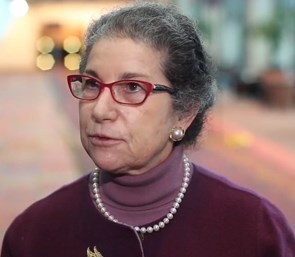
VIDEO: Is anastrozole or tamoxifen best for secondary prevention of DCIS?
SAN ANTONIO – Two large phase III randomized trials comparing anastrozole and tamoxifen for prevention of disease recurrence in postmenopausal women with ductal carcinoma in situ were presented at the San Antonio Breast Cancer Symposium.
In an interview, Dr. Anthony Howell, professor of medical oncology at the University of Manchester, England, provides the key take-home lessons from the NSABP B-35 and IBIS-II DCIS trials.
The video associated with this article is no longer available on this site. Please view all of our videos on the MDedge YouTube channel
SAN ANTONIO – Two large phase III randomized trials comparing anastrozole and tamoxifen for prevention of disease recurrence in postmenopausal women with ductal carcinoma in situ were presented at the San Antonio Breast Cancer Symposium.
In an interview, Dr. Anthony Howell, professor of medical oncology at the University of Manchester, England, provides the key take-home lessons from the NSABP B-35 and IBIS-II DCIS trials.
The video associated with this article is no longer available on this site. Please view all of our videos on the MDedge YouTube channel
SAN ANTONIO – Two large phase III randomized trials comparing anastrozole and tamoxifen for prevention of disease recurrence in postmenopausal women with ductal carcinoma in situ were presented at the San Antonio Breast Cancer Symposium.
In an interview, Dr. Anthony Howell, professor of medical oncology at the University of Manchester, England, provides the key take-home lessons from the NSABP B-35 and IBIS-II DCIS trials.
The video associated with this article is no longer available on this site. Please view all of our videos on the MDedge YouTube channel
AT SABCS 2015

VIDEO: Beta-blocker prevented trastuzumab-related drop in LVEF
SAN ANTONIO – Prophylactic beta-blockade with bisoprolol during adjuvant trastuzumab therapy for HER2-positive breast cancer prevented trastuzumab-induced decline in left ventricular ejection fraction in a randomized trial.
In an interview at the San Antonio Breast Cancer Symposium, Dr. Edie Pituskin of the University of Alberta, Edmonton, explained why the double-blind, placebo-controlled MANTICORE trial may change clinical practice.
The video associated with this article is no longer available on this site. Please view all of our videos on the MDedge YouTube channel
SAN ANTONIO – Prophylactic beta-blockade with bisoprolol during adjuvant trastuzumab therapy for HER2-positive breast cancer prevented trastuzumab-induced decline in left ventricular ejection fraction in a randomized trial.
In an interview at the San Antonio Breast Cancer Symposium, Dr. Edie Pituskin of the University of Alberta, Edmonton, explained why the double-blind, placebo-controlled MANTICORE trial may change clinical practice.
The video associated with this article is no longer available on this site. Please view all of our videos on the MDedge YouTube channel
SAN ANTONIO – Prophylactic beta-blockade with bisoprolol during adjuvant trastuzumab therapy for HER2-positive breast cancer prevented trastuzumab-induced decline in left ventricular ejection fraction in a randomized trial.
In an interview at the San Antonio Breast Cancer Symposium, Dr. Edie Pituskin of the University of Alberta, Edmonton, explained why the double-blind, placebo-controlled MANTICORE trial may change clinical practice.
The video associated with this article is no longer available on this site. Please view all of our videos on the MDedge YouTube channel
AT SABCS 2015

VIDEO: Estrogen receptor gene mutations linked to poorer survival
SAN ANTONIO – Mutations of the estrogen receptor 1 (ESR1) gene are more common than previously thought in women with advanced estrogen receptor–positive breast cancer and are associated with poorer survival. In an interview at the San Antonio Breast Cancer Symposium, Dr. Sarat Chandarlapaty of Memorial Sloan Kettering Cancer Center, New York, discusses a mutational analysis of cell-free DNA in blood samples from the BOLERO-2 trial and how the findings may help refine therapeutic strategies.
The video associated with this article is no longer available on this site. Please view all of our videos on the MDedge YouTube channel
SAN ANTONIO – Mutations of the estrogen receptor 1 (ESR1) gene are more common than previously thought in women with advanced estrogen receptor–positive breast cancer and are associated with poorer survival. In an interview at the San Antonio Breast Cancer Symposium, Dr. Sarat Chandarlapaty of Memorial Sloan Kettering Cancer Center, New York, discusses a mutational analysis of cell-free DNA in blood samples from the BOLERO-2 trial and how the findings may help refine therapeutic strategies.
The video associated with this article is no longer available on this site. Please view all of our videos on the MDedge YouTube channel
SAN ANTONIO – Mutations of the estrogen receptor 1 (ESR1) gene are more common than previously thought in women with advanced estrogen receptor–positive breast cancer and are associated with poorer survival. In an interview at the San Antonio Breast Cancer Symposium, Dr. Sarat Chandarlapaty of Memorial Sloan Kettering Cancer Center, New York, discusses a mutational analysis of cell-free DNA in blood samples from the BOLERO-2 trial and how the findings may help refine therapeutic strategies.
The video associated with this article is no longer available on this site. Please view all of our videos on the MDedge YouTube channel
AT SABCS 2015

VIDEO: Time to skip chemo for luminal A tumors?
SAN ANTONIO – Premenopausal women with luminal A tumors did not derive benefit from adjuvant cyclophosphamide-based chemotherapy.
In an interview, Dr. Torsten Nielsen, professor of pathology at the University of British Columbia in Vancouver, discusses the prospective-retrospective study and whether its findings will prompt patients with these tumors and their physicians to skip chemotherapy.
The video associated with this article is no longer available on this site. Please view all of our videos on the MDedge YouTube channel
SAN ANTONIO – Premenopausal women with luminal A tumors did not derive benefit from adjuvant cyclophosphamide-based chemotherapy.
In an interview, Dr. Torsten Nielsen, professor of pathology at the University of British Columbia in Vancouver, discusses the prospective-retrospective study and whether its findings will prompt patients with these tumors and their physicians to skip chemotherapy.
The video associated with this article is no longer available on this site. Please view all of our videos on the MDedge YouTube channel
SAN ANTONIO – Premenopausal women with luminal A tumors did not derive benefit from adjuvant cyclophosphamide-based chemotherapy.
In an interview, Dr. Torsten Nielsen, professor of pathology at the University of British Columbia in Vancouver, discusses the prospective-retrospective study and whether its findings will prompt patients with these tumors and their physicians to skip chemotherapy.
The video associated with this article is no longer available on this site. Please view all of our videos on the MDedge YouTube channel
AT SABCS 2015

VIDEO: APOBEC3B enzyme may limit tamoxifen efficacy
SAN ANTONIO – Patients with estrogen receptor–positive breast cancers who had up-regulation of the APOBEC3B enzyme – a DNA-mutating enzyme – had a shorter time to progression on tamoxifen. In addition, suppressing levels of the enzyme in a preclinical model reduced tamoxifen resistance. In an interview, Reuben Harris, Ph.D., professor in the department of biochemistry, molecular biology, and biophysics at the University of Minnesota, Minneapolis, discussed the study’s findings and what they mean for the conduct of clinical trials and for future research.
The video associated with this article is no longer available on this site. Please view all of our videos on the MDedge YouTube channel
SAN ANTONIO – Patients with estrogen receptor–positive breast cancers who had up-regulation of the APOBEC3B enzyme – a DNA-mutating enzyme – had a shorter time to progression on tamoxifen. In addition, suppressing levels of the enzyme in a preclinical model reduced tamoxifen resistance. In an interview, Reuben Harris, Ph.D., professor in the department of biochemistry, molecular biology, and biophysics at the University of Minnesota, Minneapolis, discussed the study’s findings and what they mean for the conduct of clinical trials and for future research.
The video associated with this article is no longer available on this site. Please view all of our videos on the MDedge YouTube channel
SAN ANTONIO – Patients with estrogen receptor–positive breast cancers who had up-regulation of the APOBEC3B enzyme – a DNA-mutating enzyme – had a shorter time to progression on tamoxifen. In addition, suppressing levels of the enzyme in a preclinical model reduced tamoxifen resistance. In an interview, Reuben Harris, Ph.D., professor in the department of biochemistry, molecular biology, and biophysics at the University of Minnesota, Minneapolis, discussed the study’s findings and what they mean for the conduct of clinical trials and for future research.
The video associated with this article is no longer available on this site. Please view all of our videos on the MDedge YouTube channel
AT SABCS 2015

VIDEO: Mastectomy plus reconstruction has highest complication rates of all early BC treatment options
SAN ANTONIO – Mastectomy with reconstruction is the outlier in terms of complication rates and cost among options for local therapy for early breast cancer, according to a large observational study presented at the San Antonio Breast Cancer Symposium.
Complication rates during the first 2 years after diagnosis were roughly twice as high for mastectomy plus reconstruction, compared with lumpectomy with whole breast irradiation. Moreover, average total procedural and complication costs were $23,000 greater for women aged 65 years or younger who opted for mastectomy plus reconstruction than for those who chose lumpectomy plus whole breast irradiation. These fresh insights into the trade-offs involved in local treatment options should prove useful in oncologists’ discussions with newly diagnosed patients, as well as for payers, as Dr. Benjamin D. Smith of University of Texas M.D. Anderson Cancer Center, Houston, explains in an interview.
The video associated with this article is no longer available on this site. Please view all of our videos on the MDedge YouTube channel
SAN ANTONIO – Mastectomy with reconstruction is the outlier in terms of complication rates and cost among options for local therapy for early breast cancer, according to a large observational study presented at the San Antonio Breast Cancer Symposium.
Complication rates during the first 2 years after diagnosis were roughly twice as high for mastectomy plus reconstruction, compared with lumpectomy with whole breast irradiation. Moreover, average total procedural and complication costs were $23,000 greater for women aged 65 years or younger who opted for mastectomy plus reconstruction than for those who chose lumpectomy plus whole breast irradiation. These fresh insights into the trade-offs involved in local treatment options should prove useful in oncologists’ discussions with newly diagnosed patients, as well as for payers, as Dr. Benjamin D. Smith of University of Texas M.D. Anderson Cancer Center, Houston, explains in an interview.
The video associated with this article is no longer available on this site. Please view all of our videos on the MDedge YouTube channel
SAN ANTONIO – Mastectomy with reconstruction is the outlier in terms of complication rates and cost among options for local therapy for early breast cancer, according to a large observational study presented at the San Antonio Breast Cancer Symposium.
Complication rates during the first 2 years after diagnosis were roughly twice as high for mastectomy plus reconstruction, compared with lumpectomy with whole breast irradiation. Moreover, average total procedural and complication costs were $23,000 greater for women aged 65 years or younger who opted for mastectomy plus reconstruction than for those who chose lumpectomy plus whole breast irradiation. These fresh insights into the trade-offs involved in local treatment options should prove useful in oncologists’ discussions with newly diagnosed patients, as well as for payers, as Dr. Benjamin D. Smith of University of Texas M.D. Anderson Cancer Center, Houston, explains in an interview.
The video associated with this article is no longer available on this site. Please view all of our videos on the MDedge YouTube channel
AT SABCS 2015

VIDEO: Triple-negative breast cancer outcomes boosted by adding carboplatin to neoadjuvant chemo
SAN ANTONIO – Adding weekly carboplatin to 18 weeks of anthracycline/taxane-based neoadjuvant chemotherapy markedly improved disease-free survival in patients with triple-negative breast cancer, according to updated results from the GeparSixto trial presented at the San Antonio Breast Cancer Symposium.
Dr. Gunter von Minckwitz, president of the German Breast Group, explains in an interview that the nearly 50% reduction in the risk of disease relapse at 3 years seen in the phase II trial has converted him and his coinvestigators to routine use of add-on carboplatin in triple-negative breast cancer patients on neoadjuvant chemotherapy.
The video associated with this article is no longer available on this site. Please view all of our videos on the MDedge YouTube channel
SAN ANTONIO – Adding weekly carboplatin to 18 weeks of anthracycline/taxane-based neoadjuvant chemotherapy markedly improved disease-free survival in patients with triple-negative breast cancer, according to updated results from the GeparSixto trial presented at the San Antonio Breast Cancer Symposium.
Dr. Gunter von Minckwitz, president of the German Breast Group, explains in an interview that the nearly 50% reduction in the risk of disease relapse at 3 years seen in the phase II trial has converted him and his coinvestigators to routine use of add-on carboplatin in triple-negative breast cancer patients on neoadjuvant chemotherapy.
The video associated with this article is no longer available on this site. Please view all of our videos on the MDedge YouTube channel
SAN ANTONIO – Adding weekly carboplatin to 18 weeks of anthracycline/taxane-based neoadjuvant chemotherapy markedly improved disease-free survival in patients with triple-negative breast cancer, according to updated results from the GeparSixto trial presented at the San Antonio Breast Cancer Symposium.
Dr. Gunter von Minckwitz, president of the German Breast Group, explains in an interview that the nearly 50% reduction in the risk of disease relapse at 3 years seen in the phase II trial has converted him and his coinvestigators to routine use of add-on carboplatin in triple-negative breast cancer patients on neoadjuvant chemotherapy.
The video associated with this article is no longer available on this site. Please view all of our videos on the MDedge YouTube channel
AT SABCS 2015

VIDEO: Adjuvant capecitabine has role for residual disease after neoadjuvant therapy
SAN ANTONIO – Adjuvant capecitabine improved both disease-free and overall survival in women with HER2-negative breast cancer who had residual disease after neoadjuvant chemotherapy. In an interview, Dr. Masakazu Toi, a professor at Kyoto University Hospital, and founder and senior director of the Japan Breast Cancer Research Group, discusses the phase III CREATE-X trial and its implications for clinical care.
The video associated with this article is no longer available on this site. Please view all of our videos on the MDedge YouTube channel
SAN ANTONIO – Adjuvant capecitabine improved both disease-free and overall survival in women with HER2-negative breast cancer who had residual disease after neoadjuvant chemotherapy. In an interview, Dr. Masakazu Toi, a professor at Kyoto University Hospital, and founder and senior director of the Japan Breast Cancer Research Group, discusses the phase III CREATE-X trial and its implications for clinical care.
The video associated with this article is no longer available on this site. Please view all of our videos on the MDedge YouTube channel
SAN ANTONIO – Adjuvant capecitabine improved both disease-free and overall survival in women with HER2-negative breast cancer who had residual disease after neoadjuvant chemotherapy. In an interview, Dr. Masakazu Toi, a professor at Kyoto University Hospital, and founder and senior director of the Japan Breast Cancer Research Group, discusses the phase III CREATE-X trial and its implications for clinical care.
The video associated with this article is no longer available on this site. Please view all of our videos on the MDedge YouTube channel
AT SABCS 2015