User login
Fecal calprotectin levels predicted mucosal, deep healing in pediatric Crohn’s
For children with Crohn’s disease, fecal calprotectin levels below 300 mcg indicated mucosal healing, while values below 100 mcg signified deep healing in a multicenter, 151-patient study.
Sensitivity was 80% for mucosal healing and 71% for deep healing, while specificities were 81% and 92%, respectively, said Inbar Nakar of the Hebrew University of Jerusalem, with her associates. In line with prior studies, adding C-reactive protein (CRP) to fecal calprotectin improved neither sensitivity or specificity, the researchers wrote in Clinical Gastroenterology and Hepatology.
Bowel healing is a crucial goal in Crohn’s disease (CD). Because pediatric transmural healing had not been studied, the researchers analyzed data from the ImageKids study, a multicenter effort to develop magnetic resonance enterography (MRE) measures for CD patients aged 6-18 years. Participants averaged 14 years old with a standard deviation of 2 years. Assessments included MRE, complete ileocolonoscopic evaluation, CRP, and fecal calprotectin. The researchers defined mucosal healing as a Simple Endoscopic Severity Index in Crohn’s Disease score below 3, transmural healing as an MRE visual analog score below 20 mm, and deep healing as transmural plus mucosal healing.
Nearly one-third of patients had healing only in the mucosa or the bowel wall, but not both; 6% had mucosal healing but transmural inflammation, and 25% of children had transmural healing but mucosal inflammation. In addition, 14% of children had deep healing, and 55% of children had both mucosal and transmural inflammation. Those findings highlight “the discrepancy between mucosal and transmural inflammation and the importance of evaluating the disease by both ileocolonoscopy and imaging,” the researchers wrote.
Median calprotectin levels varied significantly by healing status (P less than .001). They were lowest (10 mcg/g) for deep healing, followed by either transmural or mucosal inflammation, and were highest (median, 810 mcg/g) when children had both mucosal and transmural inflammation. Calprotectin in children with deep healing had an area under the receiver operating characteristic curve value of 0.93 (95% confidence interval, 0.89- 0.98). In contrast, CRP level identified children with deep healing with an AUROC value of only 0.81 (95% CI, 0.71-0.90).
Although “calprotectin level is driven primarily by mucosal healing, [it] is still superior to CRP,” the investigators concluded. “Although a calprotectin cutoff [less than] 300 mcg/g predicted mucosal healing, a lower cutoff of [less than] 100 mcg/g may be more suitable to predict deep healing.” However, they emphasized that fecal calprotectin level is only moderately accurate in predicting mucosal or transmural healing in children with CD. They advised physicians to “be familiar with the predictive values of each cutoff before incorporating them in clinical decision making.”
An educational grant from AbbVie funded the ImageKids study. AbbVie was not otherwise involved in the study. Two coinvestigators disclosed ties to AbbVie and other pharmaceutical companies. There were no other disclosures.
SOURCE: Nakar I et al. Clin Gastroenterol Hepatol. 2018 Mar 2. doi: 10.1016/j.cgh.2018.01.024.
For children with Crohn’s disease, fecal calprotectin levels below 300 mcg indicated mucosal healing, while values below 100 mcg signified deep healing in a multicenter, 151-patient study.
Sensitivity was 80% for mucosal healing and 71% for deep healing, while specificities were 81% and 92%, respectively, said Inbar Nakar of the Hebrew University of Jerusalem, with her associates. In line with prior studies, adding C-reactive protein (CRP) to fecal calprotectin improved neither sensitivity or specificity, the researchers wrote in Clinical Gastroenterology and Hepatology.
Bowel healing is a crucial goal in Crohn’s disease (CD). Because pediatric transmural healing had not been studied, the researchers analyzed data from the ImageKids study, a multicenter effort to develop magnetic resonance enterography (MRE) measures for CD patients aged 6-18 years. Participants averaged 14 years old with a standard deviation of 2 years. Assessments included MRE, complete ileocolonoscopic evaluation, CRP, and fecal calprotectin. The researchers defined mucosal healing as a Simple Endoscopic Severity Index in Crohn’s Disease score below 3, transmural healing as an MRE visual analog score below 20 mm, and deep healing as transmural plus mucosal healing.
Nearly one-third of patients had healing only in the mucosa or the bowel wall, but not both; 6% had mucosal healing but transmural inflammation, and 25% of children had transmural healing but mucosal inflammation. In addition, 14% of children had deep healing, and 55% of children had both mucosal and transmural inflammation. Those findings highlight “the discrepancy between mucosal and transmural inflammation and the importance of evaluating the disease by both ileocolonoscopy and imaging,” the researchers wrote.
Median calprotectin levels varied significantly by healing status (P less than .001). They were lowest (10 mcg/g) for deep healing, followed by either transmural or mucosal inflammation, and were highest (median, 810 mcg/g) when children had both mucosal and transmural inflammation. Calprotectin in children with deep healing had an area under the receiver operating characteristic curve value of 0.93 (95% confidence interval, 0.89- 0.98). In contrast, CRP level identified children with deep healing with an AUROC value of only 0.81 (95% CI, 0.71-0.90).
Although “calprotectin level is driven primarily by mucosal healing, [it] is still superior to CRP,” the investigators concluded. “Although a calprotectin cutoff [less than] 300 mcg/g predicted mucosal healing, a lower cutoff of [less than] 100 mcg/g may be more suitable to predict deep healing.” However, they emphasized that fecal calprotectin level is only moderately accurate in predicting mucosal or transmural healing in children with CD. They advised physicians to “be familiar with the predictive values of each cutoff before incorporating them in clinical decision making.”
An educational grant from AbbVie funded the ImageKids study. AbbVie was not otherwise involved in the study. Two coinvestigators disclosed ties to AbbVie and other pharmaceutical companies. There were no other disclosures.
SOURCE: Nakar I et al. Clin Gastroenterol Hepatol. 2018 Mar 2. doi: 10.1016/j.cgh.2018.01.024.
For children with Crohn’s disease, fecal calprotectin levels below 300 mcg indicated mucosal healing, while values below 100 mcg signified deep healing in a multicenter, 151-patient study.
Sensitivity was 80% for mucosal healing and 71% for deep healing, while specificities were 81% and 92%, respectively, said Inbar Nakar of the Hebrew University of Jerusalem, with her associates. In line with prior studies, adding C-reactive protein (CRP) to fecal calprotectin improved neither sensitivity or specificity, the researchers wrote in Clinical Gastroenterology and Hepatology.
Bowel healing is a crucial goal in Crohn’s disease (CD). Because pediatric transmural healing had not been studied, the researchers analyzed data from the ImageKids study, a multicenter effort to develop magnetic resonance enterography (MRE) measures for CD patients aged 6-18 years. Participants averaged 14 years old with a standard deviation of 2 years. Assessments included MRE, complete ileocolonoscopic evaluation, CRP, and fecal calprotectin. The researchers defined mucosal healing as a Simple Endoscopic Severity Index in Crohn’s Disease score below 3, transmural healing as an MRE visual analog score below 20 mm, and deep healing as transmural plus mucosal healing.
Nearly one-third of patients had healing only in the mucosa or the bowel wall, but not both; 6% had mucosal healing but transmural inflammation, and 25% of children had transmural healing but mucosal inflammation. In addition, 14% of children had deep healing, and 55% of children had both mucosal and transmural inflammation. Those findings highlight “the discrepancy between mucosal and transmural inflammation and the importance of evaluating the disease by both ileocolonoscopy and imaging,” the researchers wrote.
Median calprotectin levels varied significantly by healing status (P less than .001). They were lowest (10 mcg/g) for deep healing, followed by either transmural or mucosal inflammation, and were highest (median, 810 mcg/g) when children had both mucosal and transmural inflammation. Calprotectin in children with deep healing had an area under the receiver operating characteristic curve value of 0.93 (95% confidence interval, 0.89- 0.98). In contrast, CRP level identified children with deep healing with an AUROC value of only 0.81 (95% CI, 0.71-0.90).
Although “calprotectin level is driven primarily by mucosal healing, [it] is still superior to CRP,” the investigators concluded. “Although a calprotectin cutoff [less than] 300 mcg/g predicted mucosal healing, a lower cutoff of [less than] 100 mcg/g may be more suitable to predict deep healing.” However, they emphasized that fecal calprotectin level is only moderately accurate in predicting mucosal or transmural healing in children with CD. They advised physicians to “be familiar with the predictive values of each cutoff before incorporating them in clinical decision making.”
An educational grant from AbbVie funded the ImageKids study. AbbVie was not otherwise involved in the study. Two coinvestigators disclosed ties to AbbVie and other pharmaceutical companies. There were no other disclosures.
SOURCE: Nakar I et al. Clin Gastroenterol Hepatol. 2018 Mar 2. doi: 10.1016/j.cgh.2018.01.024.
FROM CLINICAL GASTROENTEROLOGY AND HEPATOLOGY
Key clinical point: Fecal calprotectin levels below 300 mcg indicated mucosal healing, while values below 100 mcg signified deep healing in children with Crohn’s disease.
Major finding: Sensitivity was 80% for mucosal healing and 71% for deep healing, while specificities were 81% and 92%, respectively.
Study details: A multicenter study of 151 patients aged 6-18 years with Crohn’s disease.
Disclosures: AbbVie funded the ImageKids study through an educational grant but otherwise was not involved in the study. Two coinvestigators disclosed ties to AbbVie and other pharmaceutical companies. There were no other disclosures.
Source: Nakar I et al. Clin Gastroenterol Hepatol. 2018 Mar 2. doi: 10.1016/j.cgh.2018.01.024.
Norovirus vaccine appears promising in children
MALMO, SWEDEN – in an interim analysis of an ongoing phase 2 study, Taisei Masuda, MD, reported at the annual meeting of the European Society for Paediatric Infectious Diseases.
The randomized, double-blind, multinational trial remains blinded because follow-up is continuing, so – to the disappointment of the ESPID audience – there are as yet no data on duration of antibody persistence or clinical efficacy.

However, an earlier phase 2 study in 420 healthy participants aged 18-64 years showed that the Takeda vaccine elicited persistent immune responses 1 year post vaccination and that higher antibody levels correlated with a reduced frequency of moderate to severe vomiting and diarrheal illness following oral challenge with norovirus (Clin Vaccine Immunol. 2015 Aug;22[8]:923-9). Follow-up will continue in order to learn how long the protective immune response lasts in adults, according to Dr. Masuda, of Takeda Pharmaceuticals in Zurich.
The bivalent Takeda vaccine is the first candidate vaccine to reach the randomized trial stage. An oral vaccine in tablet form under development by Vaxart, a San Francisco Bay Area biotech company, recently completed preliminary phase 1 studies.
Dr. Masuda explained that the Takeda vaccine contains virus-like particle antigens from norovirus strains GI.1 and GII.4c, which together account for the majority of human norovirus illness. These virus-like particles are formed on the outer surface of the virus. Of note, virus-like particle–based vaccines against hepatitis B and human papillomavirus have won regulatory approval in the United States, Europe, and elsewhere.
He presented data on 120 healthy subjects aged 1 year to less than 4 years old and another 120 aged 4 years to less than 9 years. They are part of a larger phase 2 study of 840 children as young as age 6 weeks. This was a dose-finding study, so participants received various doses of the vaccine on day 1 and either a second dose or a saline injection 28 days later. The vaccine, which contains aluminum hydroxide to enhance immunogenicity, comes in prefilled syringes.
At 57 days of follow-up in this interim analysis, protective seroresponse rates as defined by at least a fourfold increase in histo-blood group antigen–blocking titers approached 100%. In the older group, this was typically achieved with a single dose of vaccine. However, the younger group of children generally derived further benefit from a second dose, according to Dr. Masuda.
In terms of safety concerns, he said no serious adverse events occurred in the study and no one withdrew from the trial because of vaccine-related side effects. The overall safety picture was the same in the two age groups. The incidence of fever of 38° C or higher was similar after administration of vaccine and placebo. Injection site pain occurred in one-quarter of younger vaccine recipients, in 38%-63% of those aged 4 years or older, and in 17%-22% who got placebo injections. Those and other local and systemic adverse events were mostly mild and transient. Their incidence and severity weren’t related to vaccine dosage.
In sum, Dr. Masuda deemed the safety profile “clinically acceptable.”
Session chair Karina Butler, MD, of Temple Street Children’s University Hospital, Dublin, raised the question of how might this vaccine, which may require two doses in younger children, fit into an already crowded pediatric immunization schedule – will parents and physicians embrace it?
Dr. Masuda replied that noroviruses are the No. 1 cause of acute gastroenteritis worldwide and there is a clamor for development of effective vaccines to protect the groups that bear the greatest burden of disease, including children, the elderly, military personnel, cruise ship vacationers, and others who experience crowded conditions. He expressed confidence that a safe and effective vaccine will be in high demand.
“In the future, we’ll look at the possibility of a combination vaccine,” he added.
In response to audience questions, Dr. Masuda said that in adult studies higher levels of immunogenicity have been achieved after vaccination, compared with natural infection; however, there are as yet no pediatric data on that score. Also, investigators have seen evidence of cross-reactivity to the vaccine in some but not all naturally circulating nonvaccine strains.
The vaccine formulation being carried forward into advanced clinical trials in adults is 15 mcg of GI.1/50 mcg of GII.4c (J Infect Dis. 2018 Jan 30;217[4]:597-607).
The phase 2 study presented by Dr. Masuda was supported by the U.S. Army.
MALMO, SWEDEN – in an interim analysis of an ongoing phase 2 study, Taisei Masuda, MD, reported at the annual meeting of the European Society for Paediatric Infectious Diseases.
The randomized, double-blind, multinational trial remains blinded because follow-up is continuing, so – to the disappointment of the ESPID audience – there are as yet no data on duration of antibody persistence or clinical efficacy.
However, an earlier phase 2 study in 420 healthy participants aged 18-64 years showed that the Takeda vaccine elicited persistent immune responses 1 year post vaccination and that higher antibody levels correlated with a reduced frequency of moderate to severe vomiting and diarrheal illness following oral challenge with norovirus (Clin Vaccine Immunol. 2015 Aug;22[8]:923-9). Follow-up will continue in order to learn how long the protective immune response lasts in adults, according to Dr. Masuda, of Takeda Pharmaceuticals in Zurich.
The bivalent Takeda vaccine is the first candidate vaccine to reach the randomized trial stage. An oral vaccine in tablet form under development by Vaxart, a San Francisco Bay Area biotech company, recently completed preliminary phase 1 studies.
Dr. Masuda explained that the Takeda vaccine contains virus-like particle antigens from norovirus strains GI.1 and GII.4c, which together account for the majority of human norovirus illness. These virus-like particles are formed on the outer surface of the virus. Of note, virus-like particle–based vaccines against hepatitis B and human papillomavirus have won regulatory approval in the United States, Europe, and elsewhere.
He presented data on 120 healthy subjects aged 1 year to less than 4 years old and another 120 aged 4 years to less than 9 years. They are part of a larger phase 2 study of 840 children as young as age 6 weeks. This was a dose-finding study, so participants received various doses of the vaccine on day 1 and either a second dose or a saline injection 28 days later. The vaccine, which contains aluminum hydroxide to enhance immunogenicity, comes in prefilled syringes.
At 57 days of follow-up in this interim analysis, protective seroresponse rates as defined by at least a fourfold increase in histo-blood group antigen–blocking titers approached 100%. In the older group, this was typically achieved with a single dose of vaccine. However, the younger group of children generally derived further benefit from a second dose, according to Dr. Masuda.
In terms of safety concerns, he said no serious adverse events occurred in the study and no one withdrew from the trial because of vaccine-related side effects. The overall safety picture was the same in the two age groups. The incidence of fever of 38° C or higher was similar after administration of vaccine and placebo. Injection site pain occurred in one-quarter of younger vaccine recipients, in 38%-63% of those aged 4 years or older, and in 17%-22% who got placebo injections. Those and other local and systemic adverse events were mostly mild and transient. Their incidence and severity weren’t related to vaccine dosage.
In sum, Dr. Masuda deemed the safety profile “clinically acceptable.”
Session chair Karina Butler, MD, of Temple Street Children’s University Hospital, Dublin, raised the question of how might this vaccine, which may require two doses in younger children, fit into an already crowded pediatric immunization schedule – will parents and physicians embrace it?
Dr. Masuda replied that noroviruses are the No. 1 cause of acute gastroenteritis worldwide and there is a clamor for development of effective vaccines to protect the groups that bear the greatest burden of disease, including children, the elderly, military personnel, cruise ship vacationers, and others who experience crowded conditions. He expressed confidence that a safe and effective vaccine will be in high demand.
“In the future, we’ll look at the possibility of a combination vaccine,” he added.
In response to audience questions, Dr. Masuda said that in adult studies higher levels of immunogenicity have been achieved after vaccination, compared with natural infection; however, there are as yet no pediatric data on that score. Also, investigators have seen evidence of cross-reactivity to the vaccine in some but not all naturally circulating nonvaccine strains.
The vaccine formulation being carried forward into advanced clinical trials in adults is 15 mcg of GI.1/50 mcg of GII.4c (J Infect Dis. 2018 Jan 30;217[4]:597-607).
The phase 2 study presented by Dr. Masuda was supported by the U.S. Army.
MALMO, SWEDEN – in an interim analysis of an ongoing phase 2 study, Taisei Masuda, MD, reported at the annual meeting of the European Society for Paediatric Infectious Diseases.
The randomized, double-blind, multinational trial remains blinded because follow-up is continuing, so – to the disappointment of the ESPID audience – there are as yet no data on duration of antibody persistence or clinical efficacy.
However, an earlier phase 2 study in 420 healthy participants aged 18-64 years showed that the Takeda vaccine elicited persistent immune responses 1 year post vaccination and that higher antibody levels correlated with a reduced frequency of moderate to severe vomiting and diarrheal illness following oral challenge with norovirus (Clin Vaccine Immunol. 2015 Aug;22[8]:923-9). Follow-up will continue in order to learn how long the protective immune response lasts in adults, according to Dr. Masuda, of Takeda Pharmaceuticals in Zurich.
The bivalent Takeda vaccine is the first candidate vaccine to reach the randomized trial stage. An oral vaccine in tablet form under development by Vaxart, a San Francisco Bay Area biotech company, recently completed preliminary phase 1 studies.
Dr. Masuda explained that the Takeda vaccine contains virus-like particle antigens from norovirus strains GI.1 and GII.4c, which together account for the majority of human norovirus illness. These virus-like particles are formed on the outer surface of the virus. Of note, virus-like particle–based vaccines against hepatitis B and human papillomavirus have won regulatory approval in the United States, Europe, and elsewhere.
He presented data on 120 healthy subjects aged 1 year to less than 4 years old and another 120 aged 4 years to less than 9 years. They are part of a larger phase 2 study of 840 children as young as age 6 weeks. This was a dose-finding study, so participants received various doses of the vaccine on day 1 and either a second dose or a saline injection 28 days later. The vaccine, which contains aluminum hydroxide to enhance immunogenicity, comes in prefilled syringes.
At 57 days of follow-up in this interim analysis, protective seroresponse rates as defined by at least a fourfold increase in histo-blood group antigen–blocking titers approached 100%. In the older group, this was typically achieved with a single dose of vaccine. However, the younger group of children generally derived further benefit from a second dose, according to Dr. Masuda.
In terms of safety concerns, he said no serious adverse events occurred in the study and no one withdrew from the trial because of vaccine-related side effects. The overall safety picture was the same in the two age groups. The incidence of fever of 38° C or higher was similar after administration of vaccine and placebo. Injection site pain occurred in one-quarter of younger vaccine recipients, in 38%-63% of those aged 4 years or older, and in 17%-22% who got placebo injections. Those and other local and systemic adverse events were mostly mild and transient. Their incidence and severity weren’t related to vaccine dosage.
In sum, Dr. Masuda deemed the safety profile “clinically acceptable.”
Session chair Karina Butler, MD, of Temple Street Children’s University Hospital, Dublin, raised the question of how might this vaccine, which may require two doses in younger children, fit into an already crowded pediatric immunization schedule – will parents and physicians embrace it?
Dr. Masuda replied that noroviruses are the No. 1 cause of acute gastroenteritis worldwide and there is a clamor for development of effective vaccines to protect the groups that bear the greatest burden of disease, including children, the elderly, military personnel, cruise ship vacationers, and others who experience crowded conditions. He expressed confidence that a safe and effective vaccine will be in high demand.
“In the future, we’ll look at the possibility of a combination vaccine,” he added.
In response to audience questions, Dr. Masuda said that in adult studies higher levels of immunogenicity have been achieved after vaccination, compared with natural infection; however, there are as yet no pediatric data on that score. Also, investigators have seen evidence of cross-reactivity to the vaccine in some but not all naturally circulating nonvaccine strains.
The vaccine formulation being carried forward into advanced clinical trials in adults is 15 mcg of GI.1/50 mcg of GII.4c (J Infect Dis. 2018 Jan 30;217[4]:597-607).
The phase 2 study presented by Dr. Masuda was supported by the U.S. Army.
REPORTING FROM ESPID 2018
Key clinical point: Hope runs high that an effective norovirus vaccine is in the works.
Major finding: Protective seroresponse rates against the two chief disease-causing strains of norovirus were seen in nearly 100% of vaccinated children aged 1-8 years.
Study details: This is an ongoing prospective, multicenter, double-blind, phase 2 randomized trial including 840 children.
Disclosures: The study was supported by the U.S. Army and presented by an employee of Takeda Pharmaceuticals.
Tenapanor shows safety, efficacy for irritable bowel syndrome
WASHINGTON –
These data combined with results from an already reported additional phase 3 trial and a phase 2 study will go to the Food and Drug Administration later in 2018 in an application for marketing approval for tenapanor, William D. Chey, MD, said at the annual Digestive Disease Week.®
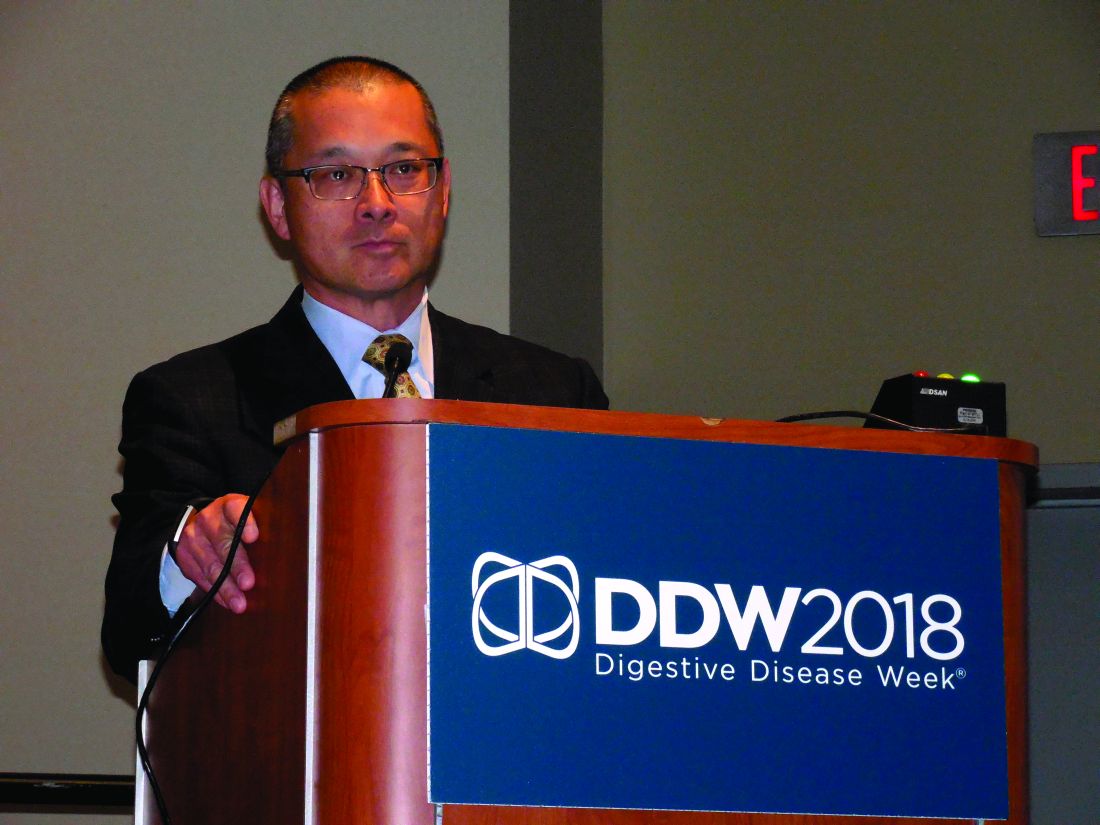
“Tenapanor may represent a novel, effective treatment option” for patients with constipation-predominant irritable bowel syndrome (IBS-C), said Dr. Chey, a professor of medicine and director of the GI Physiology Laboratory at the University of Michigan in Ann Arbor.
The study results met the trial’s primary endpoint, the percentage of patients with a combined response consisting of at least a 30% drop from baseline in reported abdominal pain and an increase of at least one complete spontaneous bowel movement (CSBM) per week for 6 of the first 12 weeks of treatment. This combined response occurred in 37% of patients treated with tenapanor at a dosage of 50 mg orally b.i.d., compared with a 24% rate among the placebo-control patients, a statistically significant difference, Dr. Chey reported.
The most common adverse effect seen in the tenapanor-treated patients was diarrhea, which occurred in 16% of the drug-treated patients and in 4% of controls. “I think diarrhea is an expected adverse effect,” Dr. Chey said. Overall, treatment-related adverse effects occurred in 23% of tenapanor-treated patients and in 9% of controls, serious adverse effects occurred in 4% of patients on tenapanor and in 3% of controls, and adverse effects leading to treatment discontinuation occurred in 8% on tenapanor and in 1% of controls. Aside from diarrhea, the other most common adverse effects linked with tenapanor treatment were abdominal distension, in 3%, and flatulence, also in 3%.
Tenapanor is an inhibitor of sodium/hydrogen exchanger isoform 3, the predominant intestinal sodium transporter. Through this inhibition tenapanor reduces sodium uptake in the gut, causing increased intestinal fluid volume and shorter transit time and thereby softening stool consistency and increasing bowel movement frequency. Dr. Chey and his colleagues previously reported results from a phase 2 study of tenapanor (Am J Gastroenterol. 2017 Feb;112[2]:763-74), and from a phase 3 study with 606 patients reported at a meeting in late 2017. Results from these two studies were similar to those from the new study.
The current study, A 26-Week Study to Evaluate the Efficacy and Safety of Tenapanor in IBS-C (T3MPO-2) enrolled 593 patients at 114 U.S. centers. Enrolled patients met the Rome III criteria for IBS-C and had an average CSMB frequency of less than 3/week. The researchers treated and followed patients for 26 weeks, although the primary endpoint occurred after 12 weeks on treatment, and 481 of the enrolled patients remained in the study through 26 weeks. At baseline, patients had an average of 0.12 CSBM/week and an average abdominal pain score of 6.26, indicative of moderate to severe abdominal pain. These characteristics identified the enrolled patients as being “on the more severe spectrum of what we see in clinical practice,” Dr. Chey noted.
Secondary endpoints included the combined endpoint with the target rate of CSBM achieved in at least 9 of the first 12 weeks, 18% on the active drug and 5% on placebo, and in at least 13 of the 26 weeks on treatment, 36% on tenapanor and 24% on placebo. After 26 weeks on treatment, 55% of patients on tenapanor rated themselves as quite satisfied or very satisfied with their treatment, compared with 33% of the placebo-control patients.
T3MPO-2 was funded by Ardelyx, the company developing tenapanor. Dr. Chey has been a consultant to and has received research funding from Ardelyx and from several other companies. A coauthor on the study was an Ardelyx employee.
[email protected]
On Twitter @mitchelzoler
WASHINGTON –
These data combined with results from an already reported additional phase 3 trial and a phase 2 study will go to the Food and Drug Administration later in 2018 in an application for marketing approval for tenapanor, William D. Chey, MD, said at the annual Digestive Disease Week.®
“Tenapanor may represent a novel, effective treatment option” for patients with constipation-predominant irritable bowel syndrome (IBS-C), said Dr. Chey, a professor of medicine and director of the GI Physiology Laboratory at the University of Michigan in Ann Arbor.
The study results met the trial’s primary endpoint, the percentage of patients with a combined response consisting of at least a 30% drop from baseline in reported abdominal pain and an increase of at least one complete spontaneous bowel movement (CSBM) per week for 6 of the first 12 weeks of treatment. This combined response occurred in 37% of patients treated with tenapanor at a dosage of 50 mg orally b.i.d., compared with a 24% rate among the placebo-control patients, a statistically significant difference, Dr. Chey reported.
The most common adverse effect seen in the tenapanor-treated patients was diarrhea, which occurred in 16% of the drug-treated patients and in 4% of controls. “I think diarrhea is an expected adverse effect,” Dr. Chey said. Overall, treatment-related adverse effects occurred in 23% of tenapanor-treated patients and in 9% of controls, serious adverse effects occurred in 4% of patients on tenapanor and in 3% of controls, and adverse effects leading to treatment discontinuation occurred in 8% on tenapanor and in 1% of controls. Aside from diarrhea, the other most common adverse effects linked with tenapanor treatment were abdominal distension, in 3%, and flatulence, also in 3%.
Tenapanor is an inhibitor of sodium/hydrogen exchanger isoform 3, the predominant intestinal sodium transporter. Through this inhibition tenapanor reduces sodium uptake in the gut, causing increased intestinal fluid volume and shorter transit time and thereby softening stool consistency and increasing bowel movement frequency. Dr. Chey and his colleagues previously reported results from a phase 2 study of tenapanor (Am J Gastroenterol. 2017 Feb;112[2]:763-74), and from a phase 3 study with 606 patients reported at a meeting in late 2017. Results from these two studies were similar to those from the new study.
The current study, A 26-Week Study to Evaluate the Efficacy and Safety of Tenapanor in IBS-C (T3MPO-2) enrolled 593 patients at 114 U.S. centers. Enrolled patients met the Rome III criteria for IBS-C and had an average CSMB frequency of less than 3/week. The researchers treated and followed patients for 26 weeks, although the primary endpoint occurred after 12 weeks on treatment, and 481 of the enrolled patients remained in the study through 26 weeks. At baseline, patients had an average of 0.12 CSBM/week and an average abdominal pain score of 6.26, indicative of moderate to severe abdominal pain. These characteristics identified the enrolled patients as being “on the more severe spectrum of what we see in clinical practice,” Dr. Chey noted.
Secondary endpoints included the combined endpoint with the target rate of CSBM achieved in at least 9 of the first 12 weeks, 18% on the active drug and 5% on placebo, and in at least 13 of the 26 weeks on treatment, 36% on tenapanor and 24% on placebo. After 26 weeks on treatment, 55% of patients on tenapanor rated themselves as quite satisfied or very satisfied with their treatment, compared with 33% of the placebo-control patients.
T3MPO-2 was funded by Ardelyx, the company developing tenapanor. Dr. Chey has been a consultant to and has received research funding from Ardelyx and from several other companies. A coauthor on the study was an Ardelyx employee.
[email protected]
On Twitter @mitchelzoler
WASHINGTON –
These data combined with results from an already reported additional phase 3 trial and a phase 2 study will go to the Food and Drug Administration later in 2018 in an application for marketing approval for tenapanor, William D. Chey, MD, said at the annual Digestive Disease Week.®
“Tenapanor may represent a novel, effective treatment option” for patients with constipation-predominant irritable bowel syndrome (IBS-C), said Dr. Chey, a professor of medicine and director of the GI Physiology Laboratory at the University of Michigan in Ann Arbor.
The study results met the trial’s primary endpoint, the percentage of patients with a combined response consisting of at least a 30% drop from baseline in reported abdominal pain and an increase of at least one complete spontaneous bowel movement (CSBM) per week for 6 of the first 12 weeks of treatment. This combined response occurred in 37% of patients treated with tenapanor at a dosage of 50 mg orally b.i.d., compared with a 24% rate among the placebo-control patients, a statistically significant difference, Dr. Chey reported.
The most common adverse effect seen in the tenapanor-treated patients was diarrhea, which occurred in 16% of the drug-treated patients and in 4% of controls. “I think diarrhea is an expected adverse effect,” Dr. Chey said. Overall, treatment-related adverse effects occurred in 23% of tenapanor-treated patients and in 9% of controls, serious adverse effects occurred in 4% of patients on tenapanor and in 3% of controls, and adverse effects leading to treatment discontinuation occurred in 8% on tenapanor and in 1% of controls. Aside from diarrhea, the other most common adverse effects linked with tenapanor treatment were abdominal distension, in 3%, and flatulence, also in 3%.
Tenapanor is an inhibitor of sodium/hydrogen exchanger isoform 3, the predominant intestinal sodium transporter. Through this inhibition tenapanor reduces sodium uptake in the gut, causing increased intestinal fluid volume and shorter transit time and thereby softening stool consistency and increasing bowel movement frequency. Dr. Chey and his colleagues previously reported results from a phase 2 study of tenapanor (Am J Gastroenterol. 2017 Feb;112[2]:763-74), and from a phase 3 study with 606 patients reported at a meeting in late 2017. Results from these two studies were similar to those from the new study.
The current study, A 26-Week Study to Evaluate the Efficacy and Safety of Tenapanor in IBS-C (T3MPO-2) enrolled 593 patients at 114 U.S. centers. Enrolled patients met the Rome III criteria for IBS-C and had an average CSMB frequency of less than 3/week. The researchers treated and followed patients for 26 weeks, although the primary endpoint occurred after 12 weeks on treatment, and 481 of the enrolled patients remained in the study through 26 weeks. At baseline, patients had an average of 0.12 CSBM/week and an average abdominal pain score of 6.26, indicative of moderate to severe abdominal pain. These characteristics identified the enrolled patients as being “on the more severe spectrum of what we see in clinical practice,” Dr. Chey noted.
Secondary endpoints included the combined endpoint with the target rate of CSBM achieved in at least 9 of the first 12 weeks, 18% on the active drug and 5% on placebo, and in at least 13 of the 26 weeks on treatment, 36% on tenapanor and 24% on placebo. After 26 weeks on treatment, 55% of patients on tenapanor rated themselves as quite satisfied or very satisfied with their treatment, compared with 33% of the placebo-control patients.
T3MPO-2 was funded by Ardelyx, the company developing tenapanor. Dr. Chey has been a consultant to and has received research funding from Ardelyx and from several other companies. A coauthor on the study was an Ardelyx employee.
[email protected]
On Twitter @mitchelzoler
REPORTING FROM DDW 2018
Key clinical point: New drug shows safety and efficacy for irritable bowel syndrome.
Major finding: The combined primary endpoint occurred in 37% of tenapanor-treated patients and in 24% of patients on placebo.
Study details: T3MPO-2, a multicenter U.S. trial with 593 patients.
Disclosures: T3MPO-2 was funded by Ardelyx, the company developing tenapanor. Dr. Chey has been a consultant to and has received research funding from Ardelyx and from several other companies. A coauthor on the study was an Ardelyx employee.
CDC concerned about multidrug-resistant Shigella
The Centers for Disease Control and Prevention have issued follow-up recommendations for managing and reporting Shigella infections because of concerns about increasing antibiotic resistance and the possibility of treatment failures.
Isolates with no resistance to quinolone antibiotics have ciprofloxacin minimum inhibitory concentration (MIC) values of less than 0.015 mcg/mL. However, the CDC has continued to identify isolates of Shigella that, while still within the susceptible range for the fluoroquinolone antibiotic ciprofloxacin (that is, having MIC values less than 1 mcg/mL), have MIC values for ciprofloxacin of 0.12-1.0 mcg/mL, thus appearing to harbor one or more resistance mechanisms. Furthermore, the CDC has identified an increasing number of isolates that have MIC values for azithromycin exceeding the epidemiologic cutoff value, which suggests some form of acquired resistance.

“CDC is particularly concerned about people who are at high risk for multidrug-resistant Shigella infections and are more likely to require antibiotic treatment, such as men who have sex with men, patients who are homeless, and immunocompromised patients. These patients often have more severe disease, prolonged shedding, and recurrent infections,” the recommendations stated.
More information can be found in the CDC’s Health Alert Network release.
The Centers for Disease Control and Prevention have issued follow-up recommendations for managing and reporting Shigella infections because of concerns about increasing antibiotic resistance and the possibility of treatment failures.
Isolates with no resistance to quinolone antibiotics have ciprofloxacin minimum inhibitory concentration (MIC) values of less than 0.015 mcg/mL. However, the CDC has continued to identify isolates of Shigella that, while still within the susceptible range for the fluoroquinolone antibiotic ciprofloxacin (that is, having MIC values less than 1 mcg/mL), have MIC values for ciprofloxacin of 0.12-1.0 mcg/mL, thus appearing to harbor one or more resistance mechanisms. Furthermore, the CDC has identified an increasing number of isolates that have MIC values for azithromycin exceeding the epidemiologic cutoff value, which suggests some form of acquired resistance.
“CDC is particularly concerned about people who are at high risk for multidrug-resistant Shigella infections and are more likely to require antibiotic treatment, such as men who have sex with men, patients who are homeless, and immunocompromised patients. These patients often have more severe disease, prolonged shedding, and recurrent infections,” the recommendations stated.
More information can be found in the CDC’s Health Alert Network release.
The Centers for Disease Control and Prevention have issued follow-up recommendations for managing and reporting Shigella infections because of concerns about increasing antibiotic resistance and the possibility of treatment failures.
Isolates with no resistance to quinolone antibiotics have ciprofloxacin minimum inhibitory concentration (MIC) values of less than 0.015 mcg/mL. However, the CDC has continued to identify isolates of Shigella that, while still within the susceptible range for the fluoroquinolone antibiotic ciprofloxacin (that is, having MIC values less than 1 mcg/mL), have MIC values for ciprofloxacin of 0.12-1.0 mcg/mL, thus appearing to harbor one or more resistance mechanisms. Furthermore, the CDC has identified an increasing number of isolates that have MIC values for azithromycin exceeding the epidemiologic cutoff value, which suggests some form of acquired resistance.
“CDC is particularly concerned about people who are at high risk for multidrug-resistant Shigella infections and are more likely to require antibiotic treatment, such as men who have sex with men, patients who are homeless, and immunocompromised patients. These patients often have more severe disease, prolonged shedding, and recurrent infections,” the recommendations stated.
More information can be found in the CDC’s Health Alert Network release.
Shingles hospitalization occurs more often among IBD patients
WASHINGTON –

This elevated risk for patients with inflammatory bowel disease (IBD) to develop a herpes zoster virus (HZV) reactivation severe enough to put them in the hospital makes it especially important for IBD patients to receive immunization against shingles, especially now that a more effective vaccine is available, Daniela G. Vinsard, MD, said at the annual Digestive Disease Week®. Ideally, IBD patients should receive the full course of the adjuvanted, recombinant zoster vaccine Shingrix before starting an immunosuppressive regimen, said Dr. Vinsard, a physician at the University of Connecticut, Farmington.
This finding, which underscored the susceptibility of IBD patients to shingles because of their immunosuppressive treatments and the importance of vaccination, recently became even more relevant when the Food and Drug Administration approved tofacitinib (Xeljanz) to treat ulcerative colitis in late May, commented Gil Y. Melmed, MD, director of clinical inflammatory bowel disease at Cedars-Sinai Medical Center, Los Angeles. Tofacitinib, which may be an attractive option to some patients as an oral immunomodulator, carries a black box warning about the added risk for certain serious infections while taking the drug, including HZV. Recent recommendations from the American College of Gastroenterology said that IBD patients aged 51 years or older should “strongly consider” HZV vaccination, including immunosuppressed patients (Am J Gastroenterol. 2017 Feb; 112[2]:241-58). The introduction of a potentially popular drug for ulcerative colitis that’s known to pose a risk for shingles might lead to a stronger recommendation for vaccination in the near future, Dr. Melmed said in an interview.
The study Dr. Vinsard reported used data collected by the National Inpatient Sample from 2012 to September 2015, which represented, with weighting, more than 142 million hospitalized American patients. From this data set she and her associates identified 7,180 IBD patients hospitalized with a primary diagnosis of a vaccine-preventable disease, and about 589,000 weighted patients hospitalized for a vaccine-preventable disease but without IBD. The selection also focused on patients aged 18-65 years. Dr. Vinsard said that she excluded older patients to eliminate advanced age as a cause of immunosuppression.

In a multivariate analysis that controlled for diabetes, HIV infection, cancer, and transplantation, the IBD patients had more than twice the rate of hospitalization for shingles, compared with the patients without IBD, Dr. Vinsard said. When broken down by specific disease type, the rate of HZV infection was 110% higher among ulcerative colitis patients, compared with the general population, and was 140% higher in Crohn’s disease patients, both statistically significant differences.
An additional finding from the analysis was that during the 4 years of study, the rate of hospitalizations of IBD patients for influenza steadily rose, from about 10% in 2012 to nearly 30% in 2015.
Dr. Vinsard reported no disclosures. Dr. Melmed reported consulting with Pfizer, the company that markets tofacitinib, and with several other companies that market biological agents.
WASHINGTON –
This elevated risk for patients with inflammatory bowel disease (IBD) to develop a herpes zoster virus (HZV) reactivation severe enough to put them in the hospital makes it especially important for IBD patients to receive immunization against shingles, especially now that a more effective vaccine is available, Daniela G. Vinsard, MD, said at the annual Digestive Disease Week®. Ideally, IBD patients should receive the full course of the adjuvanted, recombinant zoster vaccine Shingrix before starting an immunosuppressive regimen, said Dr. Vinsard, a physician at the University of Connecticut, Farmington.
This finding, which underscored the susceptibility of IBD patients to shingles because of their immunosuppressive treatments and the importance of vaccination, recently became even more relevant when the Food and Drug Administration approved tofacitinib (Xeljanz) to treat ulcerative colitis in late May, commented Gil Y. Melmed, MD, director of clinical inflammatory bowel disease at Cedars-Sinai Medical Center, Los Angeles. Tofacitinib, which may be an attractive option to some patients as an oral immunomodulator, carries a black box warning about the added risk for certain serious infections while taking the drug, including HZV. Recent recommendations from the American College of Gastroenterology said that IBD patients aged 51 years or older should “strongly consider” HZV vaccination, including immunosuppressed patients (Am J Gastroenterol. 2017 Feb; 112[2]:241-58). The introduction of a potentially popular drug for ulcerative colitis that’s known to pose a risk for shingles might lead to a stronger recommendation for vaccination in the near future, Dr. Melmed said in an interview.
The study Dr. Vinsard reported used data collected by the National Inpatient Sample from 2012 to September 2015, which represented, with weighting, more than 142 million hospitalized American patients. From this data set she and her associates identified 7,180 IBD patients hospitalized with a primary diagnosis of a vaccine-preventable disease, and about 589,000 weighted patients hospitalized for a vaccine-preventable disease but without IBD. The selection also focused on patients aged 18-65 years. Dr. Vinsard said that she excluded older patients to eliminate advanced age as a cause of immunosuppression.
In a multivariate analysis that controlled for diabetes, HIV infection, cancer, and transplantation, the IBD patients had more than twice the rate of hospitalization for shingles, compared with the patients without IBD, Dr. Vinsard said. When broken down by specific disease type, the rate of HZV infection was 110% higher among ulcerative colitis patients, compared with the general population, and was 140% higher in Crohn’s disease patients, both statistically significant differences.
An additional finding from the analysis was that during the 4 years of study, the rate of hospitalizations of IBD patients for influenza steadily rose, from about 10% in 2012 to nearly 30% in 2015.
Dr. Vinsard reported no disclosures. Dr. Melmed reported consulting with Pfizer, the company that markets tofacitinib, and with several other companies that market biological agents.
WASHINGTON –
This elevated risk for patients with inflammatory bowel disease (IBD) to develop a herpes zoster virus (HZV) reactivation severe enough to put them in the hospital makes it especially important for IBD patients to receive immunization against shingles, especially now that a more effective vaccine is available, Daniela G. Vinsard, MD, said at the annual Digestive Disease Week®. Ideally, IBD patients should receive the full course of the adjuvanted, recombinant zoster vaccine Shingrix before starting an immunosuppressive regimen, said Dr. Vinsard, a physician at the University of Connecticut, Farmington.
This finding, which underscored the susceptibility of IBD patients to shingles because of their immunosuppressive treatments and the importance of vaccination, recently became even more relevant when the Food and Drug Administration approved tofacitinib (Xeljanz) to treat ulcerative colitis in late May, commented Gil Y. Melmed, MD, director of clinical inflammatory bowel disease at Cedars-Sinai Medical Center, Los Angeles. Tofacitinib, which may be an attractive option to some patients as an oral immunomodulator, carries a black box warning about the added risk for certain serious infections while taking the drug, including HZV. Recent recommendations from the American College of Gastroenterology said that IBD patients aged 51 years or older should “strongly consider” HZV vaccination, including immunosuppressed patients (Am J Gastroenterol. 2017 Feb; 112[2]:241-58). The introduction of a potentially popular drug for ulcerative colitis that’s known to pose a risk for shingles might lead to a stronger recommendation for vaccination in the near future, Dr. Melmed said in an interview.
The study Dr. Vinsard reported used data collected by the National Inpatient Sample from 2012 to September 2015, which represented, with weighting, more than 142 million hospitalized American patients. From this data set she and her associates identified 7,180 IBD patients hospitalized with a primary diagnosis of a vaccine-preventable disease, and about 589,000 weighted patients hospitalized for a vaccine-preventable disease but without IBD. The selection also focused on patients aged 18-65 years. Dr. Vinsard said that she excluded older patients to eliminate advanced age as a cause of immunosuppression.
In a multivariate analysis that controlled for diabetes, HIV infection, cancer, and transplantation, the IBD patients had more than twice the rate of hospitalization for shingles, compared with the patients without IBD, Dr. Vinsard said. When broken down by specific disease type, the rate of HZV infection was 110% higher among ulcerative colitis patients, compared with the general population, and was 140% higher in Crohn’s disease patients, both statistically significant differences.
An additional finding from the analysis was that during the 4 years of study, the rate of hospitalizations of IBD patients for influenza steadily rose, from about 10% in 2012 to nearly 30% in 2015.
Dr. Vinsard reported no disclosures. Dr. Melmed reported consulting with Pfizer, the company that markets tofacitinib, and with several other companies that market biological agents.
REPORTING FROM DDW 2018
Key clinical point: Patients with inflammatory bowel disease have an increased risk for shingles that results in hospitalization.
Major finding: Patients with IBD hospitalized for a vaccine-preventable infection had twice the rate of shingles as the general population.
Study details: A review of data collected by the U.S. National Inpatient Sample during 2012-2015.
Disclosures: Dr. Vinsard reported no disclosures. Dr. Melmed reported consulting with Pfizer, the company that markets tofacitinib (Xeljanz), and with several other companies that market biological agents.
Web portal does not reduce phone encounters or office visits for IBD patients
WASHINGTON – Inflammatory bowel disease patients may love web-based portals that allow them to interact with their doctors and records, but it does not seem to reduce their trips to the doctor.
“There was actually no decrease in office visits or phone encounters with patients that are utilizing MyChart [a web-based patient portal],” said Alexander Hristov, MD, a resident at the University of Wisconsin–Madison, in a video interview at the annual Digestive Disease Week®. “So in fact, the patients that had MyChart use were also the patients that were calling in more frequently and visiting the clinic more frequently, which is interesting because we did not see that there was an offset for emergency room visits or hospitalizations.”
The video associated with this article is no longer available on this site. Please view all of our videos on the MDedge YouTube channel
Out of the 616 total patients with either Crohn’s disease (355 patients) or ulcerative colitis (261 patients) analyzed in the study, 28% used MyChart. MyChart users also had higher number of prednisone prescriptions, compared with nonusers (51.9% vs. 40.8%, P = .01). There was no difference between MyChart users and nonusers for emergency room visits (P = .11) or hospitalizations (P = .16).
Interestingly, most messages sent via MyChart were for administrative reasons (54%), with both symptoms (28%) and education (18%) lagging behind.
Even though patients seem to like the portal, there is no billable time set aside for physicians to add the data for patients to access or respond to patient comments and requests through the portal. Unless MyChart can be shown to improve outcomes in some way, it is only an added burden for physicians.
Dr. Hristov mentioned that further work should be done to understand how web-based portals like MyChart can help both doctors and patients utilize this technology.
“We want to see the actual, measurable clinical outcomes of MyChart use,” he said. “So we want to set up a protocol where we can actually have measurable statistics looking at disease activity, inflammatory markers, and is there an impact that we are having on the patients disease course.”
Dr. Hristov had no financial disclosures to report.
SOURCE: Hristov A et al. Gastroenterology. 2018 May. doi: 0.1016/S0016-5085(18)32737-9.
WASHINGTON – Inflammatory bowel disease patients may love web-based portals that allow them to interact with their doctors and records, but it does not seem to reduce their trips to the doctor.
“There was actually no decrease in office visits or phone encounters with patients that are utilizing MyChart [a web-based patient portal],” said Alexander Hristov, MD, a resident at the University of Wisconsin–Madison, in a video interview at the annual Digestive Disease Week®. “So in fact, the patients that had MyChart use were also the patients that were calling in more frequently and visiting the clinic more frequently, which is interesting because we did not see that there was an offset for emergency room visits or hospitalizations.”
The video associated with this article is no longer available on this site. Please view all of our videos on the MDedge YouTube channel
Out of the 616 total patients with either Crohn’s disease (355 patients) or ulcerative colitis (261 patients) analyzed in the study, 28% used MyChart. MyChart users also had higher number of prednisone prescriptions, compared with nonusers (51.9% vs. 40.8%, P = .01). There was no difference between MyChart users and nonusers for emergency room visits (P = .11) or hospitalizations (P = .16).
Interestingly, most messages sent via MyChart were for administrative reasons (54%), with both symptoms (28%) and education (18%) lagging behind.
Even though patients seem to like the portal, there is no billable time set aside for physicians to add the data for patients to access or respond to patient comments and requests through the portal. Unless MyChart can be shown to improve outcomes in some way, it is only an added burden for physicians.
Dr. Hristov mentioned that further work should be done to understand how web-based portals like MyChart can help both doctors and patients utilize this technology.
“We want to see the actual, measurable clinical outcomes of MyChart use,” he said. “So we want to set up a protocol where we can actually have measurable statistics looking at disease activity, inflammatory markers, and is there an impact that we are having on the patients disease course.”
Dr. Hristov had no financial disclosures to report.
SOURCE: Hristov A et al. Gastroenterology. 2018 May. doi: 0.1016/S0016-5085(18)32737-9.
WASHINGTON – Inflammatory bowel disease patients may love web-based portals that allow them to interact with their doctors and records, but it does not seem to reduce their trips to the doctor.
“There was actually no decrease in office visits or phone encounters with patients that are utilizing MyChart [a web-based patient portal],” said Alexander Hristov, MD, a resident at the University of Wisconsin–Madison, in a video interview at the annual Digestive Disease Week®. “So in fact, the patients that had MyChart use were also the patients that were calling in more frequently and visiting the clinic more frequently, which is interesting because we did not see that there was an offset for emergency room visits or hospitalizations.”
The video associated with this article is no longer available on this site. Please view all of our videos on the MDedge YouTube channel
Out of the 616 total patients with either Crohn’s disease (355 patients) or ulcerative colitis (261 patients) analyzed in the study, 28% used MyChart. MyChart users also had higher number of prednisone prescriptions, compared with nonusers (51.9% vs. 40.8%, P = .01). There was no difference between MyChart users and nonusers for emergency room visits (P = .11) or hospitalizations (P = .16).
Interestingly, most messages sent via MyChart were for administrative reasons (54%), with both symptoms (28%) and education (18%) lagging behind.
Even though patients seem to like the portal, there is no billable time set aside for physicians to add the data for patients to access or respond to patient comments and requests through the portal. Unless MyChart can be shown to improve outcomes in some way, it is only an added burden for physicians.
Dr. Hristov mentioned that further work should be done to understand how web-based portals like MyChart can help both doctors and patients utilize this technology.
“We want to see the actual, measurable clinical outcomes of MyChart use,” he said. “So we want to set up a protocol where we can actually have measurable statistics looking at disease activity, inflammatory markers, and is there an impact that we are having on the patients disease course.”
Dr. Hristov had no financial disclosures to report.
SOURCE: Hristov A et al. Gastroenterology. 2018 May. doi: 0.1016/S0016-5085(18)32737-9.
REPORTING FROM DDW 2018
Key clinical point: Inflammatory bowel disease patients had more office visits and phone calls with physicians, and had worse outcomes.
Major finding: MyChart patients averaged 7.2 office visits and 19.2 phone encounters, compared with 5.6 office visits and 13.7 phone encounters in nonusers.
Study details: A review of patient electronic health records from Jan. 1, 2012, to December 31, 2015.
Disclosures: Dr. Hristov had no relevant financial disclosures to report.
Source: Hristov A et al Gastroenterology. 2018 May. doi: 10.1016/S0016-5085(18)32737-9.

App monitoring improves quality of IBD care
WASHINGTON – in a single-center randomized study with 320 patients.
The video associated with this article is no longer available on this site. Please view all of our videos on the MDedge YouTube channel
Based on this success, the app will soon be made available to all of the roughly 5,000 inflammatory bowel disease (IBD) patients managed at Mount Sinai Medical Center in New York as well as IBD patients at several other North American centers that plan to adopt the app, Ashish Atreja, MD, said at the annual Digestive Disease Week.®
Home monitoring of IBD patients “is feasible with high adoption,” said Dr. Atreja, a gastroenterologist at Mount Sinai who directs the Sinai AppLab. The 162 IBD patients randomized to regularly use the HealthPROMISE app had their quality-of-care metric rise from 50% at baseline to 84% after an average follow-up of 575 days (19 months), a statistically significant improvement over the 158 control patients whose metric rose from 50% to 65% for the study’s primary endpoint, he reported. The results also showed a trend toward improved quality of life among the patients using the HealthPROMISE app, compared with the controls, who used an IBD educational app that produced less patient engagement than did the HealthPROMISE app, Dr Atreja said.
Dr. Atreja and his associates modeled the app on remote monitoring methods developed for patients with other types of chronic disease, such as diabetes and heart failure.
“You can’t provide proactive IBD care without remote monitoring,” Dr. Atreja explained in a video interview. “Reactive care is not best practice anymore. The only way to do treat-to-target is with remote monitoring.”
Care coordinators monitor the entries that IBD patients send in via the app. Dr. Atreja estimated that about five care coordinators will be able to track the inputs from the roughly 5,000 IBD patients at Mount Sinai who will soon begin using the app. The financial feasibility of this approach depends in part on the $45/patient per month reimbursement that U.S. health insurers now provide to centers that run remote monitoring programs, he said.
“The direction for managing chronic diseases is increasingly looking at home monitoring as a way to streamline costs and improve patient care,” commented Gil Y. Melmed, MD, director of Clinical Inflammatory Bowel Disease at Cedars-Sinai Medical Center in Los Angeles. The results that Dr. Atreja reported came from “a highly selected population that was well educated and largely white.” The study needs replication in different patient groups to establish its reproducibility and generalizability, Dr. Melmed said in an interview.
Dr. Melmed had no relevant disclosures.
[email protected]
On Twitter @mitchelzoler
SOURCE: Atreja A et al. Digestive Disease Week 2018 abstract 17.
*This story was updated on June 7, 2018.
WASHINGTON – in a single-center randomized study with 320 patients.
The video associated with this article is no longer available on this site. Please view all of our videos on the MDedge YouTube channel
Based on this success, the app will soon be made available to all of the roughly 5,000 inflammatory bowel disease (IBD) patients managed at Mount Sinai Medical Center in New York as well as IBD patients at several other North American centers that plan to adopt the app, Ashish Atreja, MD, said at the annual Digestive Disease Week.®
Home monitoring of IBD patients “is feasible with high adoption,” said Dr. Atreja, a gastroenterologist at Mount Sinai who directs the Sinai AppLab. The 162 IBD patients randomized to regularly use the HealthPROMISE app had their quality-of-care metric rise from 50% at baseline to 84% after an average follow-up of 575 days (19 months), a statistically significant improvement over the 158 control patients whose metric rose from 50% to 65% for the study’s primary endpoint, he reported. The results also showed a trend toward improved quality of life among the patients using the HealthPROMISE app, compared with the controls, who used an IBD educational app that produced less patient engagement than did the HealthPROMISE app, Dr Atreja said.
Dr. Atreja and his associates modeled the app on remote monitoring methods developed for patients with other types of chronic disease, such as diabetes and heart failure.
“You can’t provide proactive IBD care without remote monitoring,” Dr. Atreja explained in a video interview. “Reactive care is not best practice anymore. The only way to do treat-to-target is with remote monitoring.”
Care coordinators monitor the entries that IBD patients send in via the app. Dr. Atreja estimated that about five care coordinators will be able to track the inputs from the roughly 5,000 IBD patients at Mount Sinai who will soon begin using the app. The financial feasibility of this approach depends in part on the $45/patient per month reimbursement that U.S. health insurers now provide to centers that run remote monitoring programs, he said.
“The direction for managing chronic diseases is increasingly looking at home monitoring as a way to streamline costs and improve patient care,” commented Gil Y. Melmed, MD, director of Clinical Inflammatory Bowel Disease at Cedars-Sinai Medical Center in Los Angeles. The results that Dr. Atreja reported came from “a highly selected population that was well educated and largely white.” The study needs replication in different patient groups to establish its reproducibility and generalizability, Dr. Melmed said in an interview.
Dr. Melmed had no relevant disclosures.
[email protected]
On Twitter @mitchelzoler
SOURCE: Atreja A et al. Digestive Disease Week 2018 abstract 17.
*This story was updated on June 7, 2018.
WASHINGTON – in a single-center randomized study with 320 patients.
The video associated with this article is no longer available on this site. Please view all of our videos on the MDedge YouTube channel
Based on this success, the app will soon be made available to all of the roughly 5,000 inflammatory bowel disease (IBD) patients managed at Mount Sinai Medical Center in New York as well as IBD patients at several other North American centers that plan to adopt the app, Ashish Atreja, MD, said at the annual Digestive Disease Week.®
Home monitoring of IBD patients “is feasible with high adoption,” said Dr. Atreja, a gastroenterologist at Mount Sinai who directs the Sinai AppLab. The 162 IBD patients randomized to regularly use the HealthPROMISE app had their quality-of-care metric rise from 50% at baseline to 84% after an average follow-up of 575 days (19 months), a statistically significant improvement over the 158 control patients whose metric rose from 50% to 65% for the study’s primary endpoint, he reported. The results also showed a trend toward improved quality of life among the patients using the HealthPROMISE app, compared with the controls, who used an IBD educational app that produced less patient engagement than did the HealthPROMISE app, Dr Atreja said.
Dr. Atreja and his associates modeled the app on remote monitoring methods developed for patients with other types of chronic disease, such as diabetes and heart failure.
“You can’t provide proactive IBD care without remote monitoring,” Dr. Atreja explained in a video interview. “Reactive care is not best practice anymore. The only way to do treat-to-target is with remote monitoring.”
Care coordinators monitor the entries that IBD patients send in via the app. Dr. Atreja estimated that about five care coordinators will be able to track the inputs from the roughly 5,000 IBD patients at Mount Sinai who will soon begin using the app. The financial feasibility of this approach depends in part on the $45/patient per month reimbursement that U.S. health insurers now provide to centers that run remote monitoring programs, he said.
“The direction for managing chronic diseases is increasingly looking at home monitoring as a way to streamline costs and improve patient care,” commented Gil Y. Melmed, MD, director of Clinical Inflammatory Bowel Disease at Cedars-Sinai Medical Center in Los Angeles. The results that Dr. Atreja reported came from “a highly selected population that was well educated and largely white.” The study needs replication in different patient groups to establish its reproducibility and generalizability, Dr. Melmed said in an interview.
Dr. Melmed had no relevant disclosures.
[email protected]
On Twitter @mitchelzoler
SOURCE: Atreja A et al. Digestive Disease Week 2018 abstract 17.
*This story was updated on June 7, 2018.
REPORTING FROM DDW 2018
Key clinical point: Regular remote monitoring of IBD patients improved the medical care they received.
Major finding: Quality of care rose from 50% at baseline to 84% in app-monitored patients and to 65% in controls.
Study details: A single-center randomized study with 320 IBD patients.
Disclosures: The study had no commercial funding. Dr. Atreja had no disclosures.
Source: Atreja A et al. Digestive Disease Week 2018 abstract 17.

Mesenteric adipose–derived stromal cell lactoferrin may mediate protective effects in Crohn’s disease
Inflammatory bowel disease (IBD) and Crohn’s disease (CD), in particular, are characterized by an unusual ectopic extension of mesenteric adipose tissue. This intra-abdominal fat, also known as “creeping fat,” which wraps around the intestine during the onset of CD, is associated with inflammation and ulceration of the small or large intestine. The role of this fat in the development of CD, and whether it is protective or harmful, however, is not clear.
The current study demonstrates that adipose-derived stromal cells (ADSCs), the precursor cell population of adipose tissue, promote colonocyte proliferation and exhibit a differential gene expression profile in a disease-dependent manner. according to Jill M. Hoffman, MD, and her colleagues at the University of California, Los Angeles. Increased expression and release of lactoferrin by ADSCs – an iron-binding glycoprotein and antimicrobial peptide usually found in large quantities in breast milk – was shown to be a likely mediator that could regulate inflammatory responses during CD. These results were published in Cellular and Molecular Gastroenterology and Hepatology (doi: 10.1016/j.jcmgh.2018.02.001).
Intestinal inflammation is primarily mediated by cytokine production, and targeted anticytokine therapy is the current standard for IBD treatment. The cytokine profile from CD patient–derived mesenteric ADSCs and fat tissue was significantly different from that of these patients’ disease-free counterparts. The authors hypothesized that mesenteric ADSCs release adipokines in response to disease-associated signals; this release of adipokines results from differential gene expression of mesenteric ADSCs in CD versus control patients. To test this hypothesis, conditioned media from CD patient–derived ADSCs was used to study gene expression in colonic intestinal epithelial cells in vitro and in mice with experimental colitis in vivo.
Using the Human LncRNA Expression Microarray V4.0, expression of 20,730 protein-coding mRNA targets was analysed, and 992 mRNA transcripts were found to be differentially (less than or equal to twofold change) expressed in CD patient–derived ADSCs, compared with control patient–derived ADSCs. Subsequent pathway analysis suggested activation of cellular growth and proliferation pathways with caspase 8 and p42/44 as top predicted networks that are differentially regulated in CD patient–derived ADSCs with respect to those of control patients.
The investigators treated intestinal epithelial cells – specifically, NCM460 – with conditioned 233 media from the same CD or control patient–derived ADSCs; subsequent microarray profiling using the GeneChip Human Gene ST Array showed increased expression of interleukin-17A, CCL23, and VEGFA. Ingenuity Pathway Analysis of mRNA expression indicated convergence in injury and inflammation pathways with the SERPINE1 gene, which suggests it’s the central regulator of the differential gene expression network.
In vivo, mice with active dextran sulfate sodium (DSS) colitis that were treated with daily injections of conditioned media from CD patients showed attenuation of colitis as compared with mice treated with vehicle or conditioned media from control patients. Furthermore, the mRNA expression of proinflammatory cytokines was reduced with increased proliferative response (as measured by Ki67 expression) in intestinal epithelial cells in the dextran sulfate sodium–treated mice receiving media from CD patients, compared with that in mice receiving media from control patients or vehicle-treated mice.
Cell proliferation was studied in real time (during a period of 120 hours) using the xCELLigence platform. The authors suggested that mesenteric adipose tissue–derived mediators may regulate proliferative responses in intestinal epithelial cells during intestinal inflammation, as observed by enhanced cell-doubling time in conditioned media from CD patient–derived ADSCs.
Levels of lactoferrin mRNA (validated by real time polymerase chain reaction; 92.70 ± 18.41 versus 28.98 ± 5.681; P less than .05) and protein (validated by ELISA; 142.2 ± 5.653 versus 120.1 ± 3.664; P less than .01) were increased in human mesenteric ADSCs and conditioned media from CD patients, respectively, compared with that from controls.
“Compared with mice receiving vehicle injections, mice receiving daily injections of lactoferrin had improved clinical scores (5.625 ± 0.565 versus 11.125 ± 0.743; n = 8) and colon length at day 7 (6.575 ± 0.1688 versus 5.613 ± 0.1445; n = 8). In addition, we found epithelial cell proliferation was increased in the colons of lactoferrin-treated mice with colitis, compared with vehicle-treated controls (3.548e7 ± 1.547e6 versus 1.184e7 ± 2.915e6; P less than .01),” said the authors.
Collectively, the presented data was suggestive of a protective role of mesenteric adipose tissue–derived mediators, such as lactoferrin, in the pathophysiology of CD.
The study was supported by the Broad Medical Research Program (IBD-0390), an NIDDK Q51856 Ruth L. Kirschstein National Research Service Award Postdoctoral Fellowship 1857 (F32 DK102322), the Neuroendocrine Assay and Models of Gastrointestinal Function and Disease Cores (P50 DK 64539), an AGA-1858 Broad Student Research Fellowship, the Blinder Center for Crohn’s 1859 Disease Research, the Eli and Edythe Broad Chair, and NIH/NIDDK grant DK047343.
The authors disclosed no conflicts of interest.
SOURCE: Hoffman J et al. Cell Molec Gastro Hepatol. doi: 10.1016/j.jcmgh.2018.02.001.
Inflammatory bowel disease (IBD), including Crohn’s disease, is a chronic inflammatory condition of the gastrointestinal tract that is often associated with changes in adipose tissue. However, the pathophysiological significance of fat wrapping in Crohn’s disease remains largely elusive. A correlation of IBD with obesity has been established by a number of studies, which report 15%-40% of adults with IBD are obese. Obesity is found to have a negative effect on disease activity and progression to surgery in patients with Crohn’s disease. In contrast, adipose-derived stromal or stem cells exhibit regenerative and anti-inflammatory function.
A recent study published in Cellular and Molecular Gastroenterology and Hepatology by Jill M. Hoffman and her colleagues highlighted the immune-modulatory function of adipose-derived stromal cells (ADSCs) in Crohn’s disease patients. They observed that patient-derived ADSCs promote colonocyte proliferation and exhibit distinct gene expression patterns, compared with healthy controls. The authors successfully identified ADSC-derived lactoferrin, an iron binding glycoprotein and an antimicrobial peptide, as a potential immunoregulatory molecule.

Amlan Biswas, PhD, is an instructor in pediatrics at Harvard Medical School, Boston, and is affiliated with Boston Children’s Hospital in the division of gastroenterology and nutrition. He has no conflicts of interest
Inflammatory bowel disease (IBD), including Crohn’s disease, is a chronic inflammatory condition of the gastrointestinal tract that is often associated with changes in adipose tissue. However, the pathophysiological significance of fat wrapping in Crohn’s disease remains largely elusive. A correlation of IBD with obesity has been established by a number of studies, which report 15%-40% of adults with IBD are obese. Obesity is found to have a negative effect on disease activity and progression to surgery in patients with Crohn’s disease. In contrast, adipose-derived stromal or stem cells exhibit regenerative and anti-inflammatory function.
A recent study published in Cellular and Molecular Gastroenterology and Hepatology by Jill M. Hoffman and her colleagues highlighted the immune-modulatory function of adipose-derived stromal cells (ADSCs) in Crohn’s disease patients. They observed that patient-derived ADSCs promote colonocyte proliferation and exhibit distinct gene expression patterns, compared with healthy controls. The authors successfully identified ADSC-derived lactoferrin, an iron binding glycoprotein and an antimicrobial peptide, as a potential immunoregulatory molecule.
Amlan Biswas, PhD, is an instructor in pediatrics at Harvard Medical School, Boston, and is affiliated with Boston Children’s Hospital in the division of gastroenterology and nutrition. He has no conflicts of interest
Inflammatory bowel disease (IBD), including Crohn’s disease, is a chronic inflammatory condition of the gastrointestinal tract that is often associated with changes in adipose tissue. However, the pathophysiological significance of fat wrapping in Crohn’s disease remains largely elusive. A correlation of IBD with obesity has been established by a number of studies, which report 15%-40% of adults with IBD are obese. Obesity is found to have a negative effect on disease activity and progression to surgery in patients with Crohn’s disease. In contrast, adipose-derived stromal or stem cells exhibit regenerative and anti-inflammatory function.
A recent study published in Cellular and Molecular Gastroenterology and Hepatology by Jill M. Hoffman and her colleagues highlighted the immune-modulatory function of adipose-derived stromal cells (ADSCs) in Crohn’s disease patients. They observed that patient-derived ADSCs promote colonocyte proliferation and exhibit distinct gene expression patterns, compared with healthy controls. The authors successfully identified ADSC-derived lactoferrin, an iron binding glycoprotein and an antimicrobial peptide, as a potential immunoregulatory molecule.
Amlan Biswas, PhD, is an instructor in pediatrics at Harvard Medical School, Boston, and is affiliated with Boston Children’s Hospital in the division of gastroenterology and nutrition. He has no conflicts of interest
Inflammatory bowel disease (IBD) and Crohn’s disease (CD), in particular, are characterized by an unusual ectopic extension of mesenteric adipose tissue. This intra-abdominal fat, also known as “creeping fat,” which wraps around the intestine during the onset of CD, is associated with inflammation and ulceration of the small or large intestine. The role of this fat in the development of CD, and whether it is protective or harmful, however, is not clear.
The current study demonstrates that adipose-derived stromal cells (ADSCs), the precursor cell population of adipose tissue, promote colonocyte proliferation and exhibit a differential gene expression profile in a disease-dependent manner. according to Jill M. Hoffman, MD, and her colleagues at the University of California, Los Angeles. Increased expression and release of lactoferrin by ADSCs – an iron-binding glycoprotein and antimicrobial peptide usually found in large quantities in breast milk – was shown to be a likely mediator that could regulate inflammatory responses during CD. These results were published in Cellular and Molecular Gastroenterology and Hepatology (doi: 10.1016/j.jcmgh.2018.02.001).
Intestinal inflammation is primarily mediated by cytokine production, and targeted anticytokine therapy is the current standard for IBD treatment. The cytokine profile from CD patient–derived mesenteric ADSCs and fat tissue was significantly different from that of these patients’ disease-free counterparts. The authors hypothesized that mesenteric ADSCs release adipokines in response to disease-associated signals; this release of adipokines results from differential gene expression of mesenteric ADSCs in CD versus control patients. To test this hypothesis, conditioned media from CD patient–derived ADSCs was used to study gene expression in colonic intestinal epithelial cells in vitro and in mice with experimental colitis in vivo.
Using the Human LncRNA Expression Microarray V4.0, expression of 20,730 protein-coding mRNA targets was analysed, and 992 mRNA transcripts were found to be differentially (less than or equal to twofold change) expressed in CD patient–derived ADSCs, compared with control patient–derived ADSCs. Subsequent pathway analysis suggested activation of cellular growth and proliferation pathways with caspase 8 and p42/44 as top predicted networks that are differentially regulated in CD patient–derived ADSCs with respect to those of control patients.
The investigators treated intestinal epithelial cells – specifically, NCM460 – with conditioned 233 media from the same CD or control patient–derived ADSCs; subsequent microarray profiling using the GeneChip Human Gene ST Array showed increased expression of interleukin-17A, CCL23, and VEGFA. Ingenuity Pathway Analysis of mRNA expression indicated convergence in injury and inflammation pathways with the SERPINE1 gene, which suggests it’s the central regulator of the differential gene expression network.
In vivo, mice with active dextran sulfate sodium (DSS) colitis that were treated with daily injections of conditioned media from CD patients showed attenuation of colitis as compared with mice treated with vehicle or conditioned media from control patients. Furthermore, the mRNA expression of proinflammatory cytokines was reduced with increased proliferative response (as measured by Ki67 expression) in intestinal epithelial cells in the dextran sulfate sodium–treated mice receiving media from CD patients, compared with that in mice receiving media from control patients or vehicle-treated mice.
Cell proliferation was studied in real time (during a period of 120 hours) using the xCELLigence platform. The authors suggested that mesenteric adipose tissue–derived mediators may regulate proliferative responses in intestinal epithelial cells during intestinal inflammation, as observed by enhanced cell-doubling time in conditioned media from CD patient–derived ADSCs.
Levels of lactoferrin mRNA (validated by real time polymerase chain reaction; 92.70 ± 18.41 versus 28.98 ± 5.681; P less than .05) and protein (validated by ELISA; 142.2 ± 5.653 versus 120.1 ± 3.664; P less than .01) were increased in human mesenteric ADSCs and conditioned media from CD patients, respectively, compared with that from controls.
“Compared with mice receiving vehicle injections, mice receiving daily injections of lactoferrin had improved clinical scores (5.625 ± 0.565 versus 11.125 ± 0.743; n = 8) and colon length at day 7 (6.575 ± 0.1688 versus 5.613 ± 0.1445; n = 8). In addition, we found epithelial cell proliferation was increased in the colons of lactoferrin-treated mice with colitis, compared with vehicle-treated controls (3.548e7 ± 1.547e6 versus 1.184e7 ± 2.915e6; P less than .01),” said the authors.
Collectively, the presented data was suggestive of a protective role of mesenteric adipose tissue–derived mediators, such as lactoferrin, in the pathophysiology of CD.
The study was supported by the Broad Medical Research Program (IBD-0390), an NIDDK Q51856 Ruth L. Kirschstein National Research Service Award Postdoctoral Fellowship 1857 (F32 DK102322), the Neuroendocrine Assay and Models of Gastrointestinal Function and Disease Cores (P50 DK 64539), an AGA-1858 Broad Student Research Fellowship, the Blinder Center for Crohn’s 1859 Disease Research, the Eli and Edythe Broad Chair, and NIH/NIDDK grant DK047343.
The authors disclosed no conflicts of interest.
SOURCE: Hoffman J et al. Cell Molec Gastro Hepatol. doi: 10.1016/j.jcmgh.2018.02.001.
Inflammatory bowel disease (IBD) and Crohn’s disease (CD), in particular, are characterized by an unusual ectopic extension of mesenteric adipose tissue. This intra-abdominal fat, also known as “creeping fat,” which wraps around the intestine during the onset of CD, is associated with inflammation and ulceration of the small or large intestine. The role of this fat in the development of CD, and whether it is protective or harmful, however, is not clear.
The current study demonstrates that adipose-derived stromal cells (ADSCs), the precursor cell population of adipose tissue, promote colonocyte proliferation and exhibit a differential gene expression profile in a disease-dependent manner. according to Jill M. Hoffman, MD, and her colleagues at the University of California, Los Angeles. Increased expression and release of lactoferrin by ADSCs – an iron-binding glycoprotein and antimicrobial peptide usually found in large quantities in breast milk – was shown to be a likely mediator that could regulate inflammatory responses during CD. These results were published in Cellular and Molecular Gastroenterology and Hepatology (doi: 10.1016/j.jcmgh.2018.02.001).
Intestinal inflammation is primarily mediated by cytokine production, and targeted anticytokine therapy is the current standard for IBD treatment. The cytokine profile from CD patient–derived mesenteric ADSCs and fat tissue was significantly different from that of these patients’ disease-free counterparts. The authors hypothesized that mesenteric ADSCs release adipokines in response to disease-associated signals; this release of adipokines results from differential gene expression of mesenteric ADSCs in CD versus control patients. To test this hypothesis, conditioned media from CD patient–derived ADSCs was used to study gene expression in colonic intestinal epithelial cells in vitro and in mice with experimental colitis in vivo.
Using the Human LncRNA Expression Microarray V4.0, expression of 20,730 protein-coding mRNA targets was analysed, and 992 mRNA transcripts were found to be differentially (less than or equal to twofold change) expressed in CD patient–derived ADSCs, compared with control patient–derived ADSCs. Subsequent pathway analysis suggested activation of cellular growth and proliferation pathways with caspase 8 and p42/44 as top predicted networks that are differentially regulated in CD patient–derived ADSCs with respect to those of control patients.
The investigators treated intestinal epithelial cells – specifically, NCM460 – with conditioned 233 media from the same CD or control patient–derived ADSCs; subsequent microarray profiling using the GeneChip Human Gene ST Array showed increased expression of interleukin-17A, CCL23, and VEGFA. Ingenuity Pathway Analysis of mRNA expression indicated convergence in injury and inflammation pathways with the SERPINE1 gene, which suggests it’s the central regulator of the differential gene expression network.
In vivo, mice with active dextran sulfate sodium (DSS) colitis that were treated with daily injections of conditioned media from CD patients showed attenuation of colitis as compared with mice treated with vehicle or conditioned media from control patients. Furthermore, the mRNA expression of proinflammatory cytokines was reduced with increased proliferative response (as measured by Ki67 expression) in intestinal epithelial cells in the dextran sulfate sodium–treated mice receiving media from CD patients, compared with that in mice receiving media from control patients or vehicle-treated mice.
Cell proliferation was studied in real time (during a period of 120 hours) using the xCELLigence platform. The authors suggested that mesenteric adipose tissue–derived mediators may regulate proliferative responses in intestinal epithelial cells during intestinal inflammation, as observed by enhanced cell-doubling time in conditioned media from CD patient–derived ADSCs.
Levels of lactoferrin mRNA (validated by real time polymerase chain reaction; 92.70 ± 18.41 versus 28.98 ± 5.681; P less than .05) and protein (validated by ELISA; 142.2 ± 5.653 versus 120.1 ± 3.664; P less than .01) were increased in human mesenteric ADSCs and conditioned media from CD patients, respectively, compared with that from controls.
“Compared with mice receiving vehicle injections, mice receiving daily injections of lactoferrin had improved clinical scores (5.625 ± 0.565 versus 11.125 ± 0.743; n = 8) and colon length at day 7 (6.575 ± 0.1688 versus 5.613 ± 0.1445; n = 8). In addition, we found epithelial cell proliferation was increased in the colons of lactoferrin-treated mice with colitis, compared with vehicle-treated controls (3.548e7 ± 1.547e6 versus 1.184e7 ± 2.915e6; P less than .01),” said the authors.
Collectively, the presented data was suggestive of a protective role of mesenteric adipose tissue–derived mediators, such as lactoferrin, in the pathophysiology of CD.
The study was supported by the Broad Medical Research Program (IBD-0390), an NIDDK Q51856 Ruth L. Kirschstein National Research Service Award Postdoctoral Fellowship 1857 (F32 DK102322), the Neuroendocrine Assay and Models of Gastrointestinal Function and Disease Cores (P50 DK 64539), an AGA-1858 Broad Student Research Fellowship, the Blinder Center for Crohn’s 1859 Disease Research, the Eli and Edythe Broad Chair, and NIH/NIDDK grant DK047343.
The authors disclosed no conflicts of interest.
SOURCE: Hoffman J et al. Cell Molec Gastro Hepatol. doi: 10.1016/j.jcmgh.2018.02.001.
FROM CMGH
Colonic diverticulosis not linked to mucosal inflammation, GI symptoms
Colonic diverticulosis was not associated with mucosal inflammation or gastrointestinal symptoms in a single-center, prospective study of adults undergoing their first screening colonoscopy.
After adjustment for age, sex, and body mass index, there were no significant links between diverticulosis and tumor necrosis factor, CD4+ cells, CD8+ cells, CD57+ cells, irritable bowel syndrome, or chronic abdominal pain, reported Anne F. Peery, MD, with her associates at the University of North Carolina at Chapel Hill. “Our findings strongly question the rationale for treating symptomatic uncomplicated diverticular disease with mesalamine,” they wrote in the June issue of Clinical Gastroenterology and Hepatology (doi: 10.1016/j.cgh.2017.05.051).

Colonic diverticula affect more than half of individuals in the United States over the age of 60 years, according to the results of past studies. “Although colonic diverticulosis can be complicated by the overt inflammation of acute diverticulitis, there is some thought that colonic diverticulosis is associated with low-grade mucosal inflammation,” the researchers said. “Moreover, this low-grade diverticular inflammation is believed to contribute to chronic gastrointestinal symptoms.” However, no rigorous prospective study had tested these assertions.
Accordingly, the researchers evaluated prospective data from 619 outpatients aged 30 years and older who underwent screening colonoscopies for the first time during 2013-2015. These patients had consented to participate in a study of risk factors for colonic diverticulosis. Most were white (76%) or black (21%), and most were aged 50-59 years.
A total of 255 individuals had diverticula while 364 controls did not. Patients with diverticula tended to be older and were more often male (47% vs. 41% of controls) and overweight or obese (72% vs. 62%). After adjustment for age, sex, and body mass index, there was no evidence linking diverticulosis with tumor necrosis factor alpha expression (odds ratio, 0.9; 95% confidence interval, 0.6-1.2), CD4+ cells (OR, 1.2; 95% CI, 0.9-1.6), CD8+ cells (OR, 1.0; 95% CI, 0.7-1.3), or CD57+ cells (OR, 0.8; 95% CI, 0.6-1.1).
Among 42 patients who met Rome III criteria for irritable bowel syndrome, 11 had diverticulosis. Diverticulosis in IBS was not associated with changes in expression of the mucosal inflammatory markers interleukin-6, interleukin-10, tumor necrosis factor, CD4, CD8, or mast cell tryptase, said the researchers. A total of 63 patients had chronic abdominal pain, of whom 22 also had diverticulosis. There were no significant differences in mucosal inflammatory markers between symptomatic patients with diverticula and those without. Adjusted analysis found no association between number of diverticula and chronic abdominal pain (OR, 0.7; 95% CI, 0.4-1.2) or IBS (OR, 0.5; 95% CI, 0.3-1.1).
The number of patients with IBS in this study was small, and the researchers did not ascertain IBS symptom severity, they noted. “Although we studied several immune markers and cytokines, there are other potential markers that may be associated with chronic inflammation,” they added. “Multianalyte profiling could be used to assess an array of cytokines, and markers for macrophages (CD68), global T cells (CD3), and B cells (CD19). Whether there is utility in further studies given our negative results is debatable.”
The National Institutes of Health provided funding. The investigators reported having no conflicts of interest.
SOURCE: Peery AF et al. Clin Gastroenterol Hepatol. 2017 Jun 8. doi: 10.1016/j.cgh.2017.05.051.
Colonic diverticulosis was not associated with mucosal inflammation or gastrointestinal symptoms in a single-center, prospective study of adults undergoing their first screening colonoscopy.
After adjustment for age, sex, and body mass index, there were no significant links between diverticulosis and tumor necrosis factor, CD4+ cells, CD8+ cells, CD57+ cells, irritable bowel syndrome, or chronic abdominal pain, reported Anne F. Peery, MD, with her associates at the University of North Carolina at Chapel Hill. “Our findings strongly question the rationale for treating symptomatic uncomplicated diverticular disease with mesalamine,” they wrote in the June issue of Clinical Gastroenterology and Hepatology (doi: 10.1016/j.cgh.2017.05.051).
Colonic diverticula affect more than half of individuals in the United States over the age of 60 years, according to the results of past studies. “Although colonic diverticulosis can be complicated by the overt inflammation of acute diverticulitis, there is some thought that colonic diverticulosis is associated with low-grade mucosal inflammation,” the researchers said. “Moreover, this low-grade diverticular inflammation is believed to contribute to chronic gastrointestinal symptoms.” However, no rigorous prospective study had tested these assertions.
Accordingly, the researchers evaluated prospective data from 619 outpatients aged 30 years and older who underwent screening colonoscopies for the first time during 2013-2015. These patients had consented to participate in a study of risk factors for colonic diverticulosis. Most were white (76%) or black (21%), and most were aged 50-59 years.
A total of 255 individuals had diverticula while 364 controls did not. Patients with diverticula tended to be older and were more often male (47% vs. 41% of controls) and overweight or obese (72% vs. 62%). After adjustment for age, sex, and body mass index, there was no evidence linking diverticulosis with tumor necrosis factor alpha expression (odds ratio, 0.9; 95% confidence interval, 0.6-1.2), CD4+ cells (OR, 1.2; 95% CI, 0.9-1.6), CD8+ cells (OR, 1.0; 95% CI, 0.7-1.3), or CD57+ cells (OR, 0.8; 95% CI, 0.6-1.1).
Among 42 patients who met Rome III criteria for irritable bowel syndrome, 11 had diverticulosis. Diverticulosis in IBS was not associated with changes in expression of the mucosal inflammatory markers interleukin-6, interleukin-10, tumor necrosis factor, CD4, CD8, or mast cell tryptase, said the researchers. A total of 63 patients had chronic abdominal pain, of whom 22 also had diverticulosis. There were no significant differences in mucosal inflammatory markers between symptomatic patients with diverticula and those without. Adjusted analysis found no association between number of diverticula and chronic abdominal pain (OR, 0.7; 95% CI, 0.4-1.2) or IBS (OR, 0.5; 95% CI, 0.3-1.1).
The number of patients with IBS in this study was small, and the researchers did not ascertain IBS symptom severity, they noted. “Although we studied several immune markers and cytokines, there are other potential markers that may be associated with chronic inflammation,” they added. “Multianalyte profiling could be used to assess an array of cytokines, and markers for macrophages (CD68), global T cells (CD3), and B cells (CD19). Whether there is utility in further studies given our negative results is debatable.”
The National Institutes of Health provided funding. The investigators reported having no conflicts of interest.
SOURCE: Peery AF et al. Clin Gastroenterol Hepatol. 2017 Jun 8. doi: 10.1016/j.cgh.2017.05.051.
Colonic diverticulosis was not associated with mucosal inflammation or gastrointestinal symptoms in a single-center, prospective study of adults undergoing their first screening colonoscopy.
After adjustment for age, sex, and body mass index, there were no significant links between diverticulosis and tumor necrosis factor, CD4+ cells, CD8+ cells, CD57+ cells, irritable bowel syndrome, or chronic abdominal pain, reported Anne F. Peery, MD, with her associates at the University of North Carolina at Chapel Hill. “Our findings strongly question the rationale for treating symptomatic uncomplicated diverticular disease with mesalamine,” they wrote in the June issue of Clinical Gastroenterology and Hepatology (doi: 10.1016/j.cgh.2017.05.051).
Colonic diverticula affect more than half of individuals in the United States over the age of 60 years, according to the results of past studies. “Although colonic diverticulosis can be complicated by the overt inflammation of acute diverticulitis, there is some thought that colonic diverticulosis is associated with low-grade mucosal inflammation,” the researchers said. “Moreover, this low-grade diverticular inflammation is believed to contribute to chronic gastrointestinal symptoms.” However, no rigorous prospective study had tested these assertions.
Accordingly, the researchers evaluated prospective data from 619 outpatients aged 30 years and older who underwent screening colonoscopies for the first time during 2013-2015. These patients had consented to participate in a study of risk factors for colonic diverticulosis. Most were white (76%) or black (21%), and most were aged 50-59 years.
A total of 255 individuals had diverticula while 364 controls did not. Patients with diverticula tended to be older and were more often male (47% vs. 41% of controls) and overweight or obese (72% vs. 62%). After adjustment for age, sex, and body mass index, there was no evidence linking diverticulosis with tumor necrosis factor alpha expression (odds ratio, 0.9; 95% confidence interval, 0.6-1.2), CD4+ cells (OR, 1.2; 95% CI, 0.9-1.6), CD8+ cells (OR, 1.0; 95% CI, 0.7-1.3), or CD57+ cells (OR, 0.8; 95% CI, 0.6-1.1).
Among 42 patients who met Rome III criteria for irritable bowel syndrome, 11 had diverticulosis. Diverticulosis in IBS was not associated with changes in expression of the mucosal inflammatory markers interleukin-6, interleukin-10, tumor necrosis factor, CD4, CD8, or mast cell tryptase, said the researchers. A total of 63 patients had chronic abdominal pain, of whom 22 also had diverticulosis. There were no significant differences in mucosal inflammatory markers between symptomatic patients with diverticula and those without. Adjusted analysis found no association between number of diverticula and chronic abdominal pain (OR, 0.7; 95% CI, 0.4-1.2) or IBS (OR, 0.5; 95% CI, 0.3-1.1).
The number of patients with IBS in this study was small, and the researchers did not ascertain IBS symptom severity, they noted. “Although we studied several immune markers and cytokines, there are other potential markers that may be associated with chronic inflammation,” they added. “Multianalyte profiling could be used to assess an array of cytokines, and markers for macrophages (CD68), global T cells (CD3), and B cells (CD19). Whether there is utility in further studies given our negative results is debatable.”
The National Institutes of Health provided funding. The investigators reported having no conflicts of interest.
SOURCE: Peery AF et al. Clin Gastroenterol Hepatol. 2017 Jun 8. doi: 10.1016/j.cgh.2017.05.051.
FROM CLINICAL GASTROENTEROLOGY AND HEPATOLOGY
Key clinical point: Colonic diverticula were not associated with mucosal inflammation or chronic gastrointestinal symptoms.
Major finding: After adjustment for possible confounders, there were no significant associations between diverticulosis and tumor necrosis factor, CD4+ cells, CD8+ cells, CD57+ cells, irritable bowel syndrome, or chronic abdominal pain.
Study details: Single-center prospective study of 619 patients undergoing screening colonoscopies.
Disclosures: The National Institutes of Health provided funding. The investigators reported having no conflicts of interest.
Source: Peery AF et al. Clin Gastroenterol Hepatol. 2017 Jun 8. doi: 10.1016/j.cgh.2017.05.051

FDA expands Xeljanz approval to certain adults with ulcerative colitis
In two 8-week placebo-controlled trials, 10 mg of Xeljanz given twice daily induced remissions in 17%-18% of patients. In a placebo-controlled trial among the patients who responded by week 8, Xeljanz, at a 5-mg or 10-mg dose given twice daily, was effective in inducing remission by week 52 in 34% and 41% of patients, respectively. Additionally, 35% and 47% of those patients sustained corticosteroid-free remissions when treated with 5-mg and 10-mg doses, respectively.
“New treatments are needed for patients with moderately to severely active ulcerative colitis,” said Julie Beitz, MD, director of the Office of Drug Evaluation III in FDA’s Center for Drug Evaluation and Research in a press release. “Today’s approval provides an alternative therapy for a debilitating disease with limited treatment options.”
Xeljanz is the first oral medication approved for chronic use in moderately to severely active UC. The FDA states that other FDA-approved treatments for the chronic treatment of moderately to severely active ulcerative colitis must be administered through an intravenous infusion or subcutaneous injection.
Xeljanz, made by Pfizer Labs, was previously approved in 2012 for rheumatoid arthritis and in 2017 for psoriatic arthritis.
Find the full press release on the FDA’s website.
In two 8-week placebo-controlled trials, 10 mg of Xeljanz given twice daily induced remissions in 17%-18% of patients. In a placebo-controlled trial among the patients who responded by week 8, Xeljanz, at a 5-mg or 10-mg dose given twice daily, was effective in inducing remission by week 52 in 34% and 41% of patients, respectively. Additionally, 35% and 47% of those patients sustained corticosteroid-free remissions when treated with 5-mg and 10-mg doses, respectively.
“New treatments are needed for patients with moderately to severely active ulcerative colitis,” said Julie Beitz, MD, director of the Office of Drug Evaluation III in FDA’s Center for Drug Evaluation and Research in a press release. “Today’s approval provides an alternative therapy for a debilitating disease with limited treatment options.”
Xeljanz is the first oral medication approved for chronic use in moderately to severely active UC. The FDA states that other FDA-approved treatments for the chronic treatment of moderately to severely active ulcerative colitis must be administered through an intravenous infusion or subcutaneous injection.
Xeljanz, made by Pfizer Labs, was previously approved in 2012 for rheumatoid arthritis and in 2017 for psoriatic arthritis.
Find the full press release on the FDA’s website.
In two 8-week placebo-controlled trials, 10 mg of Xeljanz given twice daily induced remissions in 17%-18% of patients. In a placebo-controlled trial among the patients who responded by week 8, Xeljanz, at a 5-mg or 10-mg dose given twice daily, was effective in inducing remission by week 52 in 34% and 41% of patients, respectively. Additionally, 35% and 47% of those patients sustained corticosteroid-free remissions when treated with 5-mg and 10-mg doses, respectively.
“New treatments are needed for patients with moderately to severely active ulcerative colitis,” said Julie Beitz, MD, director of the Office of Drug Evaluation III in FDA’s Center for Drug Evaluation and Research in a press release. “Today’s approval provides an alternative therapy for a debilitating disease with limited treatment options.”
Xeljanz is the first oral medication approved for chronic use in moderately to severely active UC. The FDA states that other FDA-approved treatments for the chronic treatment of moderately to severely active ulcerative colitis must be administered through an intravenous infusion or subcutaneous injection.
Xeljanz, made by Pfizer Labs, was previously approved in 2012 for rheumatoid arthritis and in 2017 for psoriatic arthritis.
Find the full press release on the FDA’s website.