User login
Program for poor can boost hospital profits

Credit: Petr Kratochvil
A federal program designed to help the poor may actually be used to help US hospitals increase their profits, according to research published in Health Affairs.
Researchers examined enrollment in the 340B program, which provides deep discounts on outpatient drug purchases.
They found that hospitals and clinics that joined the program since 2004 currently serve more affluent and well-insured communities than those that qualified for the program in previous years.
This supports the idea that the program is changing from one that serves patients in need to one that enriches hospitals and their affiliated clinics, according to the researchers.
“This study provides the first nationally representative empirical evidence suggesting that the program’s original intent is being eroded by the actions of certain hospitals,” said study author Rena M. Conti, PhD, of the University of Chicago in Illinois.
This study follows work by Dr Conti and Peter B. Bach, MD, of Memorial Sloan-Kettering Cancer Center in New York, that was published in JAMA last year.
The JAMA study explained how 340B-qualified hospital-affiliated clinics can boost profits thanks to discounts on expensive anticancer drugs. The facilities receive the discounts under the expectation that the savings will be passed on to poor patients.
“Hospitals qualify for the program based on the poverty of their inpatient census only,” Dr Conti said. “The affiliated clinics are the only 340B institutions not required to pass the discounts off to patients or their insurers, nor do they have to report to the government exactly how these profits are used to serve the poor. Insurers’ and their patients’ payments for outpatient drug treatment don’t reflect the discounts the hospital receives.”
The 340B program, which began in 1992, was designed to help selected hospitals and their outpatient clinics serve low-income and uninsured patients by providing discounts of 30% to 50% on outpatient drugs.
About a decade ago, enrollment in 340B began to increase rapidly. Now, more than a third of the 4375 US non-federal hospitals are 340B-qualified. Recent Congressional and news reports suggest that, for selected hospitals, profits off the 340B program can be significant.
For their new study, Drs Conti and Bach examined the populations served by hospitals and clinics qualifying for 340B before and after the decade-long growth spurt. They matched data for all hospitals and clinics registered with the 340B program to socioeconomic data from the US Census Bureau.
The results showed that communities served by hospital-affiliated clinics joining the program in 2004 or later tended to have higher household incomes, much less unemployment, and higher rates of health insurance.
The researchers said their findings are consistent with recent complaints that, rather than serving vulnerable communities, the 340B program is being used to increase profits for hospitals and their affiliated clinics. 
Credit: Petr Kratochvil
A federal program designed to help the poor may actually be used to help US hospitals increase their profits, according to research published in Health Affairs.
Researchers examined enrollment in the 340B program, which provides deep discounts on outpatient drug purchases.
They found that hospitals and clinics that joined the program since 2004 currently serve more affluent and well-insured communities than those that qualified for the program in previous years.
This supports the idea that the program is changing from one that serves patients in need to one that enriches hospitals and their affiliated clinics, according to the researchers.
“This study provides the first nationally representative empirical evidence suggesting that the program’s original intent is being eroded by the actions of certain hospitals,” said study author Rena M. Conti, PhD, of the University of Chicago in Illinois.
This study follows work by Dr Conti and Peter B. Bach, MD, of Memorial Sloan-Kettering Cancer Center in New York, that was published in JAMA last year.
The JAMA study explained how 340B-qualified hospital-affiliated clinics can boost profits thanks to discounts on expensive anticancer drugs. The facilities receive the discounts under the expectation that the savings will be passed on to poor patients.
“Hospitals qualify for the program based on the poverty of their inpatient census only,” Dr Conti said. “The affiliated clinics are the only 340B institutions not required to pass the discounts off to patients or their insurers, nor do they have to report to the government exactly how these profits are used to serve the poor. Insurers’ and their patients’ payments for outpatient drug treatment don’t reflect the discounts the hospital receives.”
The 340B program, which began in 1992, was designed to help selected hospitals and their outpatient clinics serve low-income and uninsured patients by providing discounts of 30% to 50% on outpatient drugs.
About a decade ago, enrollment in 340B began to increase rapidly. Now, more than a third of the 4375 US non-federal hospitals are 340B-qualified. Recent Congressional and news reports suggest that, for selected hospitals, profits off the 340B program can be significant.
For their new study, Drs Conti and Bach examined the populations served by hospitals and clinics qualifying for 340B before and after the decade-long growth spurt. They matched data for all hospitals and clinics registered with the 340B program to socioeconomic data from the US Census Bureau.
The results showed that communities served by hospital-affiliated clinics joining the program in 2004 or later tended to have higher household incomes, much less unemployment, and higher rates of health insurance.
The researchers said their findings are consistent with recent complaints that, rather than serving vulnerable communities, the 340B program is being used to increase profits for hospitals and their affiliated clinics.
Credit: Petr Kratochvil
A federal program designed to help the poor may actually be used to help US hospitals increase their profits, according to research published in Health Affairs.
Researchers examined enrollment in the 340B program, which provides deep discounts on outpatient drug purchases.
They found that hospitals and clinics that joined the program since 2004 currently serve more affluent and well-insured communities than those that qualified for the program in previous years.
This supports the idea that the program is changing from one that serves patients in need to one that enriches hospitals and their affiliated clinics, according to the researchers.
“This study provides the first nationally representative empirical evidence suggesting that the program’s original intent is being eroded by the actions of certain hospitals,” said study author Rena M. Conti, PhD, of the University of Chicago in Illinois.
This study follows work by Dr Conti and Peter B. Bach, MD, of Memorial Sloan-Kettering Cancer Center in New York, that was published in JAMA last year.
The JAMA study explained how 340B-qualified hospital-affiliated clinics can boost profits thanks to discounts on expensive anticancer drugs. The facilities receive the discounts under the expectation that the savings will be passed on to poor patients.
“Hospitals qualify for the program based on the poverty of their inpatient census only,” Dr Conti said. “The affiliated clinics are the only 340B institutions not required to pass the discounts off to patients or their insurers, nor do they have to report to the government exactly how these profits are used to serve the poor. Insurers’ and their patients’ payments for outpatient drug treatment don’t reflect the discounts the hospital receives.”
The 340B program, which began in 1992, was designed to help selected hospitals and their outpatient clinics serve low-income and uninsured patients by providing discounts of 30% to 50% on outpatient drugs.
About a decade ago, enrollment in 340B began to increase rapidly. Now, more than a third of the 4375 US non-federal hospitals are 340B-qualified. Recent Congressional and news reports suggest that, for selected hospitals, profits off the 340B program can be significant.
For their new study, Drs Conti and Bach examined the populations served by hospitals and clinics qualifying for 340B before and after the decade-long growth spurt. They matched data for all hospitals and clinics registered with the 340B program to socioeconomic data from the US Census Bureau.
The results showed that communities served by hospital-affiliated clinics joining the program in 2004 or later tended to have higher household incomes, much less unemployment, and higher rates of health insurance.
The researchers said their findings are consistent with recent complaints that, rather than serving vulnerable communities, the 340B program is being used to increase profits for hospitals and their affiliated clinics.
Survey shows lack of adherence to safety guidelines

Credit: Bill Branson
Healthcare professionals do not consistently follow the recommended safe handling practices for antineoplastic drugs, according to a survey published in the Journal of Occupational and Environmental Hygiene.
Researchers surveyed more than 2000 healthcare workers and found that a majority do not always use the recommended personal protective equipment when they are administering antineoplastic drugs.
Furthermore, some respondents reported spills or leaks of a drug during administration, and a small percentage said they had experienced skin
contact with an antineoplastic drug.
“Chemotherapy drugs save lives of cancer patients but also can result in adverse health outcomes in workers who are exposed to these drugs, including cancer, reproductive problems, and organ damage when recommended safe handling guidelines are not followed,” said John Howard, MD, director of the National Institute for Occupational Safety and Health (NIOSH).
NIOSH researchers conducted this study, which included 2069 healthcare personnel who completed the 2011 Health and Safety Practices Survey of Healthcare Workers.
Results showed that, despite the longstanding availability of authoritative safe handling guidelines (ASHP, NIOSH, ONS, OSHA), recommended exposure controls were not always used.
For example, 80% of respondents said they do not always wear 2 pairs of chemotherapy gloves, and 15% said they don’t always wear a single pair.
Forty-two percent of respondents said they don’t always wear a nonabsorbent gown with a closed front and tight-fitting cuffs, and 12% had taken home potentially contaminated clothing.
Twelve percent of respondents reported a spill or leak of an antineoplastic drug during administration, and 4% reported skin contact with an antineoplastic drug.
Six percent of respondents said they primed intravenous tubing with an antineoplastic drug instead of a non-drug containing liquid, and 12% said the pharmacy department followed this practice.
Taking these and other findings into account, the researchers concluded that better risk communication is needed to ensure that employers and employees are fully aware of the hazards and the availability of precautionary measures to minimize exposure to antineoplastic drugs.
Credit: Bill Branson
Healthcare professionals do not consistently follow the recommended safe handling practices for antineoplastic drugs, according to a survey published in the Journal of Occupational and Environmental Hygiene.
Researchers surveyed more than 2000 healthcare workers and found that a majority do not always use the recommended personal protective equipment when they are administering antineoplastic drugs.
Furthermore, some respondents reported spills or leaks of a drug during administration, and a small percentage said they had experienced skin
contact with an antineoplastic drug.
“Chemotherapy drugs save lives of cancer patients but also can result in adverse health outcomes in workers who are exposed to these drugs, including cancer, reproductive problems, and organ damage when recommended safe handling guidelines are not followed,” said John Howard, MD, director of the National Institute for Occupational Safety and Health (NIOSH).
NIOSH researchers conducted this study, which included 2069 healthcare personnel who completed the 2011 Health and Safety Practices Survey of Healthcare Workers.
Results showed that, despite the longstanding availability of authoritative safe handling guidelines (ASHP, NIOSH, ONS, OSHA), recommended exposure controls were not always used.
For example, 80% of respondents said they do not always wear 2 pairs of chemotherapy gloves, and 15% said they don’t always wear a single pair.
Forty-two percent of respondents said they don’t always wear a nonabsorbent gown with a closed front and tight-fitting cuffs, and 12% had taken home potentially contaminated clothing.
Twelve percent of respondents reported a spill or leak of an antineoplastic drug during administration, and 4% reported skin contact with an antineoplastic drug.
Six percent of respondents said they primed intravenous tubing with an antineoplastic drug instead of a non-drug containing liquid, and 12% said the pharmacy department followed this practice.
Taking these and other findings into account, the researchers concluded that better risk communication is needed to ensure that employers and employees are fully aware of the hazards and the availability of precautionary measures to minimize exposure to antineoplastic drugs.
Credit: Bill Branson
Healthcare professionals do not consistently follow the recommended safe handling practices for antineoplastic drugs, according to a survey published in the Journal of Occupational and Environmental Hygiene.
Researchers surveyed more than 2000 healthcare workers and found that a majority do not always use the recommended personal protective equipment when they are administering antineoplastic drugs.
Furthermore, some respondents reported spills or leaks of a drug during administration, and a small percentage said they had experienced skin
contact with an antineoplastic drug.
“Chemotherapy drugs save lives of cancer patients but also can result in adverse health outcomes in workers who are exposed to these drugs, including cancer, reproductive problems, and organ damage when recommended safe handling guidelines are not followed,” said John Howard, MD, director of the National Institute for Occupational Safety and Health (NIOSH).
NIOSH researchers conducted this study, which included 2069 healthcare personnel who completed the 2011 Health and Safety Practices Survey of Healthcare Workers.
Results showed that, despite the longstanding availability of authoritative safe handling guidelines (ASHP, NIOSH, ONS, OSHA), recommended exposure controls were not always used.
For example, 80% of respondents said they do not always wear 2 pairs of chemotherapy gloves, and 15% said they don’t always wear a single pair.
Forty-two percent of respondents said they don’t always wear a nonabsorbent gown with a closed front and tight-fitting cuffs, and 12% had taken home potentially contaminated clothing.
Twelve percent of respondents reported a spill or leak of an antineoplastic drug during administration, and 4% reported skin contact with an antineoplastic drug.
Six percent of respondents said they primed intravenous tubing with an antineoplastic drug instead of a non-drug containing liquid, and 12% said the pharmacy department followed this practice.
Taking these and other findings into account, the researchers concluded that better risk communication is needed to ensure that employers and employees are fully aware of the hazards and the availability of precautionary measures to minimize exposure to antineoplastic drugs.
NICE rejects obinutuzumab for CLL
Credit: Linda Bartlett
In a new draft guidance, the UK’s National Institute for Health and Care Excellence (NICE) has said it cannot recommend obinutuzumab (Gazyvaro) to treat chronic lymphocytic leukemia (CLL).
NICE CEO Sir Andrew Dillon said that although data suggest obinutuzumab is effective, there were too many “uncertainties” in the information submitted by Roche, the company developing the drug.
So NICE cannot be sure obinutuzumab would be an effective use of the National Health Service’s resources.
This is despite the fact that Roche offered to discount the drug’s list price of £26,496 per treatment course.
NICE is accepting comments on the draft guidance until 5 pm on October 23.
Obinutuzumab is a glycoengineered, humanized, monoclonal antibody that selectively binds to the extracellular domain of the CD20 antigen on B cells. The drug induces antibody-dependent cellular cytotoxicity and caspase-independent apoptosis.
The European Commission approved obinutuzumab in July for use in combination with chlorambucil to treat patients with previously untreated CLL who have comorbidities that make them ineligible to receive fludarabine-based therapy.
Obinutuzumab was approved for this indication in the US in November 2013.
Obinutuzumab is marketed as Gazyvaro in the European Union and Switzerland but as Gazyva in the US and the rest of the world.
Credit: Linda Bartlett
In a new draft guidance, the UK’s National Institute for Health and Care Excellence (NICE) has said it cannot recommend obinutuzumab (Gazyvaro) to treat chronic lymphocytic leukemia (CLL).
NICE CEO Sir Andrew Dillon said that although data suggest obinutuzumab is effective, there were too many “uncertainties” in the information submitted by Roche, the company developing the drug.
So NICE cannot be sure obinutuzumab would be an effective use of the National Health Service’s resources.
This is despite the fact that Roche offered to discount the drug’s list price of £26,496 per treatment course.
NICE is accepting comments on the draft guidance until 5 pm on October 23.
Obinutuzumab is a glycoengineered, humanized, monoclonal antibody that selectively binds to the extracellular domain of the CD20 antigen on B cells. The drug induces antibody-dependent cellular cytotoxicity and caspase-independent apoptosis.
The European Commission approved obinutuzumab in July for use in combination with chlorambucil to treat patients with previously untreated CLL who have comorbidities that make them ineligible to receive fludarabine-based therapy.
Obinutuzumab was approved for this indication in the US in November 2013.
Obinutuzumab is marketed as Gazyvaro in the European Union and Switzerland but as Gazyva in the US and the rest of the world.
Credit: Linda Bartlett
In a new draft guidance, the UK’s National Institute for Health and Care Excellence (NICE) has said it cannot recommend obinutuzumab (Gazyvaro) to treat chronic lymphocytic leukemia (CLL).
NICE CEO Sir Andrew Dillon said that although data suggest obinutuzumab is effective, there were too many “uncertainties” in the information submitted by Roche, the company developing the drug.
So NICE cannot be sure obinutuzumab would be an effective use of the National Health Service’s resources.
This is despite the fact that Roche offered to discount the drug’s list price of £26,496 per treatment course.
NICE is accepting comments on the draft guidance until 5 pm on October 23.
Obinutuzumab is a glycoengineered, humanized, monoclonal antibody that selectively binds to the extracellular domain of the CD20 antigen on B cells. The drug induces antibody-dependent cellular cytotoxicity and caspase-independent apoptosis.
The European Commission approved obinutuzumab in July for use in combination with chlorambucil to treat patients with previously untreated CLL who have comorbidities that make them ineligible to receive fludarabine-based therapy.
Obinutuzumab was approved for this indication in the US in November 2013.
Obinutuzumab is marketed as Gazyvaro in the European Union and Switzerland but as Gazyva in the US and the rest of the world.
FDA approves cancer drugs faster, study shows
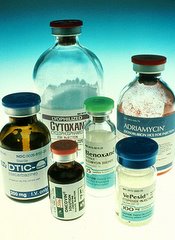
MADRID—The US Food and Drug Administration (FDA) tends to approve cancer drugs faster than Health Canada and the European Medicines Agency (EMA),
according to a study presented at the ESMO 2014 Congress.
On average, the FDA approved antineoplastic agents about 6 to 8 months faster than the EMA and Health Canada, researchers found.
One of the drugs studied had been FDA-approved for more than 4.5 years before the EMA and Health Canada authorized its use.
The researchers said these results suggest a need for a coordinated international approach to reduce the disparity in approval times.
“There needs to be a dialogue amongst industry, regulatory agencies, patient bodies, [the] research community, and oncology professionals on how best we can reduce the time to approval while ensuring safety for approved drugs,” said study investigator Sunil Verma, MD, of Sunnybrook Odette Cancer Center in Toronto, Canada.
A previous study, published in NEJM in 2012, showed that, between 2001 and 2010, the FDA tended to approve all types of drugs faster than the EMA and Health Canada.
Dr Verma and Nardin Samuel, an MD/PhD student at the University of Toronto, focused their study on cancer drugs and presented their findings at ESMO as abstract 1036O_PR.
The pair analyzed approval data for 41 antineoplastic agents and found the average time to FDA approval for these drugs was 6 months shorter than for the EMA and 7.6 months shorter than for Health Canada.
Azacitidine, which is approved to treat hematologic malignancies, had the greatest delay between FDA and Health Canada approval, at 66.1 months. The EMA approved azacitidine 10.3 months earlier than Health Canada but 55.8 months after the FDA.
The fastest approval time among the drugs studied was for cabazitaxel, which was approved for metastatic prostate cancer by the FDA just 17 days after the drug’s manufacturer filed for approval. In Canada and the European Union, the times to approval for cabazitaxel were 11.63 months and 11.03 months, respectively.
“It is not clear why there were these differences, but they are of some concern . . . ,” said David Cameron, MD, of the Edinburgh Cancer Research Centre in the UK, who was not involved in this research.
“[T]hey suggest that, in the absence of data to the contrary, there may be bureaucratic rather than medical/scientific reasons for differential geographical approval timelines, which, of course, will lead to differential geographical benefits from new agents.”
Dr Cameron added that more work is needed to understand the reasons for these differences, as well as assess any potential impact on patients.
MADRID—The US Food and Drug Administration (FDA) tends to approve cancer drugs faster than Health Canada and the European Medicines Agency (EMA),
according to a study presented at the ESMO 2014 Congress.
On average, the FDA approved antineoplastic agents about 6 to 8 months faster than the EMA and Health Canada, researchers found.
One of the drugs studied had been FDA-approved for more than 4.5 years before the EMA and Health Canada authorized its use.
The researchers said these results suggest a need for a coordinated international approach to reduce the disparity in approval times.
“There needs to be a dialogue amongst industry, regulatory agencies, patient bodies, [the] research community, and oncology professionals on how best we can reduce the time to approval while ensuring safety for approved drugs,” said study investigator Sunil Verma, MD, of Sunnybrook Odette Cancer Center in Toronto, Canada.
A previous study, published in NEJM in 2012, showed that, between 2001 and 2010, the FDA tended to approve all types of drugs faster than the EMA and Health Canada.
Dr Verma and Nardin Samuel, an MD/PhD student at the University of Toronto, focused their study on cancer drugs and presented their findings at ESMO as abstract 1036O_PR.
The pair analyzed approval data for 41 antineoplastic agents and found the average time to FDA approval for these drugs was 6 months shorter than for the EMA and 7.6 months shorter than for Health Canada.
Azacitidine, which is approved to treat hematologic malignancies, had the greatest delay between FDA and Health Canada approval, at 66.1 months. The EMA approved azacitidine 10.3 months earlier than Health Canada but 55.8 months after the FDA.
The fastest approval time among the drugs studied was for cabazitaxel, which was approved for metastatic prostate cancer by the FDA just 17 days after the drug’s manufacturer filed for approval. In Canada and the European Union, the times to approval for cabazitaxel were 11.63 months and 11.03 months, respectively.
“It is not clear why there were these differences, but they are of some concern . . . ,” said David Cameron, MD, of the Edinburgh Cancer Research Centre in the UK, who was not involved in this research.
“[T]hey suggest that, in the absence of data to the contrary, there may be bureaucratic rather than medical/scientific reasons for differential geographical approval timelines, which, of course, will lead to differential geographical benefits from new agents.”
Dr Cameron added that more work is needed to understand the reasons for these differences, as well as assess any potential impact on patients.
MADRID—The US Food and Drug Administration (FDA) tends to approve cancer drugs faster than Health Canada and the European Medicines Agency (EMA),
according to a study presented at the ESMO 2014 Congress.
On average, the FDA approved antineoplastic agents about 6 to 8 months faster than the EMA and Health Canada, researchers found.
One of the drugs studied had been FDA-approved for more than 4.5 years before the EMA and Health Canada authorized its use.
The researchers said these results suggest a need for a coordinated international approach to reduce the disparity in approval times.
“There needs to be a dialogue amongst industry, regulatory agencies, patient bodies, [the] research community, and oncology professionals on how best we can reduce the time to approval while ensuring safety for approved drugs,” said study investigator Sunil Verma, MD, of Sunnybrook Odette Cancer Center in Toronto, Canada.
A previous study, published in NEJM in 2012, showed that, between 2001 and 2010, the FDA tended to approve all types of drugs faster than the EMA and Health Canada.
Dr Verma and Nardin Samuel, an MD/PhD student at the University of Toronto, focused their study on cancer drugs and presented their findings at ESMO as abstract 1036O_PR.
The pair analyzed approval data for 41 antineoplastic agents and found the average time to FDA approval for these drugs was 6 months shorter than for the EMA and 7.6 months shorter than for Health Canada.
Azacitidine, which is approved to treat hematologic malignancies, had the greatest delay between FDA and Health Canada approval, at 66.1 months. The EMA approved azacitidine 10.3 months earlier than Health Canada but 55.8 months after the FDA.
The fastest approval time among the drugs studied was for cabazitaxel, which was approved for metastatic prostate cancer by the FDA just 17 days after the drug’s manufacturer filed for approval. In Canada and the European Union, the times to approval for cabazitaxel were 11.63 months and 11.03 months, respectively.
“It is not clear why there were these differences, but they are of some concern . . . ,” said David Cameron, MD, of the Edinburgh Cancer Research Centre in the UK, who was not involved in this research.
“[T]hey suggest that, in the absence of data to the contrary, there may be bureaucratic rather than medical/scientific reasons for differential geographical approval timelines, which, of course, will lead to differential geographical benefits from new agents.”
Dr Cameron added that more work is needed to understand the reasons for these differences, as well as assess any potential impact on patients.
Blood testing system wins marketing authorization in US
Credit: Juan D. Alfonso
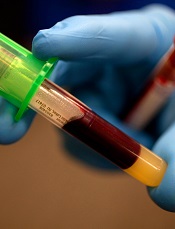
The US Food and Drug Administration (FDA) has granted marketing authorization for the T2Candida® Panel and the T2Dx® Instrument, a system that provides direct detection of 5 yeast pathogens in whole blood samples.
The system can detect Candida albicans, Candida tropicalis, Candida parapsilosis, Candida glabrata, and Candida krusei in patients with symptoms of, or medical conditions predisposing them to, invasive fungal infections.
It can take up to 6 days to detect yeast pathogens using blood culture, and even more time to identify the specific type of yeast present.
The T2Candida system can identify specific Candida pathogens from a single blood sample within 3 to 5 hours.
However, false positive results are possible with this system, so physicians should perform blood cultures to confirm T2Candida results, according to the FDA. Still, a negative test result may provide timely data that allows physicians to avoid or suspend unnecessary antifungal treatment.
“By testing 1 blood sample for 5 yeast pathogens—and getting results within a few hours—physicians can initiate appropriate antifungal treatment earlier and potentially reduce patient illness and decrease the risk of dying from these infections,” said Alberto Gutierrez, director of the Office of In Vitro Diagnostics and Radiological Health at the FDA’s Center for Devices and Radiological Health.
How the system works
The T2Candida panel and T2Dx instrument are powered by T2MR, a miniaturized, magnetic-resonance-based diagnostic approach that measures how water molecules react in the presence of magnetic fields.
The system uses blood-compatible polymerase chain reaction to amplify Candida DNA, which then binds to superparamagnetic nanoparticles coated with a complementary DNA strand. The binding event causes the nanoparticles to cluster, which changes the sample’s T2 magnetic resonance signal.
If the system detects yeast DNA, it can then determine the species category to which the DNA belongs, which helps point healthcare providers to the appropriate treatment.
T2Dx is a fully automated, bench-top instrument. To perform a test, the patient sample is snapped onto a disposable test cartridge, which is preloaded with the necessary reagents. The cartridge is then inserted into T2Dx, which processes the sample and delivers a diagnostic test result.
Studies and FDA review
The FDA reviewed the T2Candida panel and the T2Dx instrument through the agency’s de novo classification process, a regulatory pathway for certain novel, low- to moderate-risk medical devices.
The FDA based its review on a clinical study of 1500 patients, in which the T2Candida system correctly categorized nearly 100% of the negative specimens as negative for the presence of yeast.
In a separate study of 300 blood samples with specific concentrations of yeast, the system correctly identified the organism in 84% to 96% of the positive specimens.
The T2Candida panel and T2Dx instrument are manufactured by T2 Biosystems, Inc.
Credit: Juan D. Alfonso
The US Food and Drug Administration (FDA) has granted marketing authorization for the T2Candida® Panel and the T2Dx® Instrument, a system that provides direct detection of 5 yeast pathogens in whole blood samples.
The system can detect Candida albicans, Candida tropicalis, Candida parapsilosis, Candida glabrata, and Candida krusei in patients with symptoms of, or medical conditions predisposing them to, invasive fungal infections.
It can take up to 6 days to detect yeast pathogens using blood culture, and even more time to identify the specific type of yeast present.
The T2Candida system can identify specific Candida pathogens from a single blood sample within 3 to 5 hours.
However, false positive results are possible with this system, so physicians should perform blood cultures to confirm T2Candida results, according to the FDA. Still, a negative test result may provide timely data that allows physicians to avoid or suspend unnecessary antifungal treatment.
“By testing 1 blood sample for 5 yeast pathogens—and getting results within a few hours—physicians can initiate appropriate antifungal treatment earlier and potentially reduce patient illness and decrease the risk of dying from these infections,” said Alberto Gutierrez, director of the Office of In Vitro Diagnostics and Radiological Health at the FDA’s Center for Devices and Radiological Health.
How the system works
The T2Candida panel and T2Dx instrument are powered by T2MR, a miniaturized, magnetic-resonance-based diagnostic approach that measures how water molecules react in the presence of magnetic fields.
The system uses blood-compatible polymerase chain reaction to amplify Candida DNA, which then binds to superparamagnetic nanoparticles coated with a complementary DNA strand. The binding event causes the nanoparticles to cluster, which changes the sample’s T2 magnetic resonance signal.
If the system detects yeast DNA, it can then determine the species category to which the DNA belongs, which helps point healthcare providers to the appropriate treatment.
T2Dx is a fully automated, bench-top instrument. To perform a test, the patient sample is snapped onto a disposable test cartridge, which is preloaded with the necessary reagents. The cartridge is then inserted into T2Dx, which processes the sample and delivers a diagnostic test result.
Studies and FDA review
The FDA reviewed the T2Candida panel and the T2Dx instrument through the agency’s de novo classification process, a regulatory pathway for certain novel, low- to moderate-risk medical devices.
The FDA based its review on a clinical study of 1500 patients, in which the T2Candida system correctly categorized nearly 100% of the negative specimens as negative for the presence of yeast.
In a separate study of 300 blood samples with specific concentrations of yeast, the system correctly identified the organism in 84% to 96% of the positive specimens.
The T2Candida panel and T2Dx instrument are manufactured by T2 Biosystems, Inc.
Credit: Juan D. Alfonso
The US Food and Drug Administration (FDA) has granted marketing authorization for the T2Candida® Panel and the T2Dx® Instrument, a system that provides direct detection of 5 yeast pathogens in whole blood samples.
The system can detect Candida albicans, Candida tropicalis, Candida parapsilosis, Candida glabrata, and Candida krusei in patients with symptoms of, or medical conditions predisposing them to, invasive fungal infections.
It can take up to 6 days to detect yeast pathogens using blood culture, and even more time to identify the specific type of yeast present.
The T2Candida system can identify specific Candida pathogens from a single blood sample within 3 to 5 hours.
However, false positive results are possible with this system, so physicians should perform blood cultures to confirm T2Candida results, according to the FDA. Still, a negative test result may provide timely data that allows physicians to avoid or suspend unnecessary antifungal treatment.
“By testing 1 blood sample for 5 yeast pathogens—and getting results within a few hours—physicians can initiate appropriate antifungal treatment earlier and potentially reduce patient illness and decrease the risk of dying from these infections,” said Alberto Gutierrez, director of the Office of In Vitro Diagnostics and Radiological Health at the FDA’s Center for Devices and Radiological Health.
How the system works
The T2Candida panel and T2Dx instrument are powered by T2MR, a miniaturized, magnetic-resonance-based diagnostic approach that measures how water molecules react in the presence of magnetic fields.
The system uses blood-compatible polymerase chain reaction to amplify Candida DNA, which then binds to superparamagnetic nanoparticles coated with a complementary DNA strand. The binding event causes the nanoparticles to cluster, which changes the sample’s T2 magnetic resonance signal.
If the system detects yeast DNA, it can then determine the species category to which the DNA belongs, which helps point healthcare providers to the appropriate treatment.
T2Dx is a fully automated, bench-top instrument. To perform a test, the patient sample is snapped onto a disposable test cartridge, which is preloaded with the necessary reagents. The cartridge is then inserted into T2Dx, which processes the sample and delivers a diagnostic test result.
Studies and FDA review
The FDA reviewed the T2Candida panel and the T2Dx instrument through the agency’s de novo classification process, a regulatory pathway for certain novel, low- to moderate-risk medical devices.
The FDA based its review on a clinical study of 1500 patients, in which the T2Candida system correctly categorized nearly 100% of the negative specimens as negative for the presence of yeast.
In a separate study of 300 blood samples with specific concentrations of yeast, the system correctly identified the organism in 84% to 96% of the positive specimens.
The T2Candida panel and T2Dx instrument are manufactured by T2 Biosystems, Inc.
FDA approves 30-day pack of anticoagulant

Credit: NHS
The US Food and Drug Administration (FDA) has approved the Xarelto Starter Pack™ for the treatment of deep vein thrombosis (DVT) and/or pulmonary embolism (PE).
The pack provides a 30-day supply of Xarelto (rivaroxaban), which gives patients time to follow up with their primary care physician after leaving the hospital, without missing treatment.
Patients have the greatest risk of recurrence in the first 30 days after a DVT or PE.
“The starter pack will make a difference for patients impacted by blood clots by offering a 30-day supply of the drug in a new, convenient package, which may help support patients as they transition from the hospital to outpatient care,” said Paul Burton, MD, PhD, Vice President of Medical Affairs at Janssen, the company developing Xarelto.
The Xarelto Starter Pack™ will be available at pharmacies in October.
Xarelto is a factor Xa inhibitor that is FDA-approved to treat and prevent the recurrence of DVT/PE, as thromboprophylaxis in patients who have undergone knee or hip replacement surgery, and to reduce the risk of stroke in patients with non-valvular atrial fibrillation.
For DVT/PE patients, Xarelto is given twice daily at 15 mg with food for the first 21 days. On day 22, patients transition to a once-daily dose of 20 mg with food for the remainder of treatment.
Xarelto has a boxed warning stating that premature discontinuation of the drug increases the risk of thrombotic events, and epidural or spinal hematomas have occurred in Xarelto-treated patients who are receiving neuraxial anesthesia or undergoing spinal puncture.
For more details on Xarelto, see the full prescribing information.
Credit: NHS
The US Food and Drug Administration (FDA) has approved the Xarelto Starter Pack™ for the treatment of deep vein thrombosis (DVT) and/or pulmonary embolism (PE).
The pack provides a 30-day supply of Xarelto (rivaroxaban), which gives patients time to follow up with their primary care physician after leaving the hospital, without missing treatment.
Patients have the greatest risk of recurrence in the first 30 days after a DVT or PE.
“The starter pack will make a difference for patients impacted by blood clots by offering a 30-day supply of the drug in a new, convenient package, which may help support patients as they transition from the hospital to outpatient care,” said Paul Burton, MD, PhD, Vice President of Medical Affairs at Janssen, the company developing Xarelto.
The Xarelto Starter Pack™ will be available at pharmacies in October.
Xarelto is a factor Xa inhibitor that is FDA-approved to treat and prevent the recurrence of DVT/PE, as thromboprophylaxis in patients who have undergone knee or hip replacement surgery, and to reduce the risk of stroke in patients with non-valvular atrial fibrillation.
For DVT/PE patients, Xarelto is given twice daily at 15 mg with food for the first 21 days. On day 22, patients transition to a once-daily dose of 20 mg with food for the remainder of treatment.
Xarelto has a boxed warning stating that premature discontinuation of the drug increases the risk of thrombotic events, and epidural or spinal hematomas have occurred in Xarelto-treated patients who are receiving neuraxial anesthesia or undergoing spinal puncture.
For more details on Xarelto, see the full prescribing information.
Credit: NHS
The US Food and Drug Administration (FDA) has approved the Xarelto Starter Pack™ for the treatment of deep vein thrombosis (DVT) and/or pulmonary embolism (PE).
The pack provides a 30-day supply of Xarelto (rivaroxaban), which gives patients time to follow up with their primary care physician after leaving the hospital, without missing treatment.
Patients have the greatest risk of recurrence in the first 30 days after a DVT or PE.
“The starter pack will make a difference for patients impacted by blood clots by offering a 30-day supply of the drug in a new, convenient package, which may help support patients as they transition from the hospital to outpatient care,” said Paul Burton, MD, PhD, Vice President of Medical Affairs at Janssen, the company developing Xarelto.
The Xarelto Starter Pack™ will be available at pharmacies in October.
Xarelto is a factor Xa inhibitor that is FDA-approved to treat and prevent the recurrence of DVT/PE, as thromboprophylaxis in patients who have undergone knee or hip replacement surgery, and to reduce the risk of stroke in patients with non-valvular atrial fibrillation.
For DVT/PE patients, Xarelto is given twice daily at 15 mg with food for the first 21 days. On day 22, patients transition to a once-daily dose of 20 mg with food for the remainder of treatment.
Xarelto has a boxed warning stating that premature discontinuation of the drug increases the risk of thrombotic events, and epidural or spinal hematomas have occurred in Xarelto-treated patients who are receiving neuraxial anesthesia or undergoing spinal puncture.
For more details on Xarelto, see the full prescribing information.
Idelalisib approved to treat CLL, FL in EU
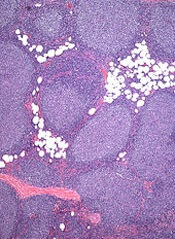
The European Commission has granted marketing authorization for the PI3K delta inhibitor idelalisib (Zydelig) to treat chronic lymphocytic leukemia (CLL) and follicular lymphoma (FL) in the European Union.
The drug is now approved for use in combination with rituximab for CLL patients who have received at least 1 prior therapy or as first-line treatment in CLL patients who have 17p deletion or TP53 mutation and are not eligible for chemo-immunotherapy.
Idelalisib is also approved as monotherapy for FL patients who were refractory to 2 prior lines of treatment.
These approvals are based on data from 2 clinical trials—Study 116 and Study 101-09.
Study 116: Idelalisib in CLL
This phase 3 trial was stopped early because idelalisib had a significant impact on progression-free survival.
The study included 220 CLL patients who could not receive chemotherapy. Half were randomized to receive idelalisib plus rituximab, and the other half were randomized to rituximab plus placebo.
Patients in the rituximab-idelalisib arm had a much higher overall response rate than patients in the rituximab-placebo arm—81% and 13%, respectively (P<0.001). There were no complete responses.
At 24 weeks, the rate of progression-free survival was 93% in the rituximab-idelalisib arm and 46% in the rituximab-placebo arm (P<0.001). The median progression-free survival was 5.5 months in the rituximab-placebo arm and not reached in the rituximab-idelalisib arm (P<0.001).
At 12 months, the overall survival rate was 92% in the rituximab-idelalisib arm and 80% in the rituximab-placebo arm (P=0.02).
Most adverse events, in either treatment arm, were grade 2 or lower. The most common events in the rituximab-idelalisib arm were pyrexia, fatigue, nausea, chills, and diarrhea. In the rituximab-placebo arm, the most common events were infusion-related reactions, fatigue, cough, nausea, and dyspnea.
There were more serious adverse events in the rituximab-idelalisib arm than in the rituximab-placebo arm—40% and 35%, respectively. The most frequent serious events were pneumonia, pyrexia, and febrile neutropenia (in both treatment arms).
Study 101-09: Idelalisib in FL
This phase 2 trial enrolled 125 patients with indolent non-Hodgkin lymphoma who were refractory to rituximab and chemotherapy containing an alkylating agent. Patients received idelalisib monotherapy.
Of the 72 subjects with FL, 54% achieved a response, and 8% had a complete response. The median duration of response was not reached (range, 0-14.8 months).
Improvements in survival or disease-related symptoms have not been established.
In all patients, the most common grade 3 or higher adverse events were neutropenia (27%), elevations in aminotransferase levels (13%), diarrhea (13%), and pneumonia (7%).
Idelalisib is under development by Gilead Sciences. The drug is already approved in the US for the aforementioned indications, as well as to treat small lymphocytic lymphoma.
The European Commission has granted marketing authorization for the PI3K delta inhibitor idelalisib (Zydelig) to treat chronic lymphocytic leukemia (CLL) and follicular lymphoma (FL) in the European Union.
The drug is now approved for use in combination with rituximab for CLL patients who have received at least 1 prior therapy or as first-line treatment in CLL patients who have 17p deletion or TP53 mutation and are not eligible for chemo-immunotherapy.
Idelalisib is also approved as monotherapy for FL patients who were refractory to 2 prior lines of treatment.
These approvals are based on data from 2 clinical trials—Study 116 and Study 101-09.
Study 116: Idelalisib in CLL
This phase 3 trial was stopped early because idelalisib had a significant impact on progression-free survival.
The study included 220 CLL patients who could not receive chemotherapy. Half were randomized to receive idelalisib plus rituximab, and the other half were randomized to rituximab plus placebo.
Patients in the rituximab-idelalisib arm had a much higher overall response rate than patients in the rituximab-placebo arm—81% and 13%, respectively (P<0.001). There were no complete responses.
At 24 weeks, the rate of progression-free survival was 93% in the rituximab-idelalisib arm and 46% in the rituximab-placebo arm (P<0.001). The median progression-free survival was 5.5 months in the rituximab-placebo arm and not reached in the rituximab-idelalisib arm (P<0.001).
At 12 months, the overall survival rate was 92% in the rituximab-idelalisib arm and 80% in the rituximab-placebo arm (P=0.02).
Most adverse events, in either treatment arm, were grade 2 or lower. The most common events in the rituximab-idelalisib arm were pyrexia, fatigue, nausea, chills, and diarrhea. In the rituximab-placebo arm, the most common events were infusion-related reactions, fatigue, cough, nausea, and dyspnea.
There were more serious adverse events in the rituximab-idelalisib arm than in the rituximab-placebo arm—40% and 35%, respectively. The most frequent serious events were pneumonia, pyrexia, and febrile neutropenia (in both treatment arms).
Study 101-09: Idelalisib in FL
This phase 2 trial enrolled 125 patients with indolent non-Hodgkin lymphoma who were refractory to rituximab and chemotherapy containing an alkylating agent. Patients received idelalisib monotherapy.
Of the 72 subjects with FL, 54% achieved a response, and 8% had a complete response. The median duration of response was not reached (range, 0-14.8 months).
Improvements in survival or disease-related symptoms have not been established.
In all patients, the most common grade 3 or higher adverse events were neutropenia (27%), elevations in aminotransferase levels (13%), diarrhea (13%), and pneumonia (7%).
Idelalisib is under development by Gilead Sciences. The drug is already approved in the US for the aforementioned indications, as well as to treat small lymphocytic lymphoma.
The European Commission has granted marketing authorization for the PI3K delta inhibitor idelalisib (Zydelig) to treat chronic lymphocytic leukemia (CLL) and follicular lymphoma (FL) in the European Union.
The drug is now approved for use in combination with rituximab for CLL patients who have received at least 1 prior therapy or as first-line treatment in CLL patients who have 17p deletion or TP53 mutation and are not eligible for chemo-immunotherapy.
Idelalisib is also approved as monotherapy for FL patients who were refractory to 2 prior lines of treatment.
These approvals are based on data from 2 clinical trials—Study 116 and Study 101-09.
Study 116: Idelalisib in CLL
This phase 3 trial was stopped early because idelalisib had a significant impact on progression-free survival.
The study included 220 CLL patients who could not receive chemotherapy. Half were randomized to receive idelalisib plus rituximab, and the other half were randomized to rituximab plus placebo.
Patients in the rituximab-idelalisib arm had a much higher overall response rate than patients in the rituximab-placebo arm—81% and 13%, respectively (P<0.001). There were no complete responses.
At 24 weeks, the rate of progression-free survival was 93% in the rituximab-idelalisib arm and 46% in the rituximab-placebo arm (P<0.001). The median progression-free survival was 5.5 months in the rituximab-placebo arm and not reached in the rituximab-idelalisib arm (P<0.001).
At 12 months, the overall survival rate was 92% in the rituximab-idelalisib arm and 80% in the rituximab-placebo arm (P=0.02).
Most adverse events, in either treatment arm, were grade 2 or lower. The most common events in the rituximab-idelalisib arm were pyrexia, fatigue, nausea, chills, and diarrhea. In the rituximab-placebo arm, the most common events were infusion-related reactions, fatigue, cough, nausea, and dyspnea.
There were more serious adverse events in the rituximab-idelalisib arm than in the rituximab-placebo arm—40% and 35%, respectively. The most frequent serious events were pneumonia, pyrexia, and febrile neutropenia (in both treatment arms).
Study 101-09: Idelalisib in FL
This phase 2 trial enrolled 125 patients with indolent non-Hodgkin lymphoma who were refractory to rituximab and chemotherapy containing an alkylating agent. Patients received idelalisib monotherapy.
Of the 72 subjects with FL, 54% achieved a response, and 8% had a complete response. The median duration of response was not reached (range, 0-14.8 months).
Improvements in survival or disease-related symptoms have not been established.
In all patients, the most common grade 3 or higher adverse events were neutropenia (27%), elevations in aminotransferase levels (13%), diarrhea (13%), and pneumonia (7%).
Idelalisib is under development by Gilead Sciences. The drug is already approved in the US for the aforementioned indications, as well as to treat small lymphocytic lymphoma.
FDA approves treatment for kids with hemophilia B
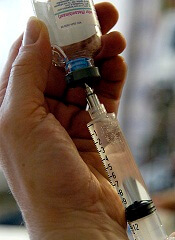
The US Food and Drug Administration (FDA) has approved a recombinant factor IX product (Rixubis) for use in children with hemophilia B.
Rixubis is indicated for routine prophylactic treatment, control and prevention of bleeding episodes, and perioperative management in these patients.
Rixubis was the first recombinant factor IX product to gain FDA approval for routine prophylaxis and control of bleeding episodes in adults with hemophilia B.
The latest FDA approval is based on results of a trial investigating the efficacy and safety of Rixubis in 23 previously treated male patients younger than 12 years of age who had severe or moderately severe hemophilia B.
The patients received a twice-weekly Rixubis prophylaxis regimen (mean dose 56 IU/kg) for a mean treatment duration of 6 months and a mean of 54 exposure days.
The median annualized bleeding rate was 2.0 (0.0 for spontaneous bleeds and joint bleeds). Nine patients (39.1%) experienced no bleeds, and 23 bleeding episodes (88.5%) were treated with 1 to 2 infusions.
There were no reports of inhibitor development, severe allergic reactions, thrombotic events, or treatment-related adverse events.
These data were presented at the 2013 ASH Annual Meeting (abstract 1118).
Common adverse reactions observed in more than 1% of subjects in clinical studies of Rixubis were dysgeusia, pain in an extremity, and a positive test for furin antibody. Rixubis may pose a risk of hypersensitivity reactions, inhibitor development, nephrotic syndrome, and thromboembolic complications.
Rixubis is contraindicated in patients who have known hypersensitivity to the product or its excipients (including hamster protein), patients with disseminated intravascular coagulation, and those with signs of fibrinolysis.
For more details on Rixubis, see the full prescribing information. Rixubis is under development by Baxter International Inc.
The US Food and Drug Administration (FDA) has approved a recombinant factor IX product (Rixubis) for use in children with hemophilia B.
Rixubis is indicated for routine prophylactic treatment, control and prevention of bleeding episodes, and perioperative management in these patients.
Rixubis was the first recombinant factor IX product to gain FDA approval for routine prophylaxis and control of bleeding episodes in adults with hemophilia B.
The latest FDA approval is based on results of a trial investigating the efficacy and safety of Rixubis in 23 previously treated male patients younger than 12 years of age who had severe or moderately severe hemophilia B.
The patients received a twice-weekly Rixubis prophylaxis regimen (mean dose 56 IU/kg) for a mean treatment duration of 6 months and a mean of 54 exposure days.
The median annualized bleeding rate was 2.0 (0.0 for spontaneous bleeds and joint bleeds). Nine patients (39.1%) experienced no bleeds, and 23 bleeding episodes (88.5%) were treated with 1 to 2 infusions.
There were no reports of inhibitor development, severe allergic reactions, thrombotic events, or treatment-related adverse events.
These data were presented at the 2013 ASH Annual Meeting (abstract 1118).
Common adverse reactions observed in more than 1% of subjects in clinical studies of Rixubis were dysgeusia, pain in an extremity, and a positive test for furin antibody. Rixubis may pose a risk of hypersensitivity reactions, inhibitor development, nephrotic syndrome, and thromboembolic complications.
Rixubis is contraindicated in patients who have known hypersensitivity to the product or its excipients (including hamster protein), patients with disseminated intravascular coagulation, and those with signs of fibrinolysis.
For more details on Rixubis, see the full prescribing information. Rixubis is under development by Baxter International Inc.
The US Food and Drug Administration (FDA) has approved a recombinant factor IX product (Rixubis) for use in children with hemophilia B.
Rixubis is indicated for routine prophylactic treatment, control and prevention of bleeding episodes, and perioperative management in these patients.
Rixubis was the first recombinant factor IX product to gain FDA approval for routine prophylaxis and control of bleeding episodes in adults with hemophilia B.
The latest FDA approval is based on results of a trial investigating the efficacy and safety of Rixubis in 23 previously treated male patients younger than 12 years of age who had severe or moderately severe hemophilia B.
The patients received a twice-weekly Rixubis prophylaxis regimen (mean dose 56 IU/kg) for a mean treatment duration of 6 months and a mean of 54 exposure days.
The median annualized bleeding rate was 2.0 (0.0 for spontaneous bleeds and joint bleeds). Nine patients (39.1%) experienced no bleeds, and 23 bleeding episodes (88.5%) were treated with 1 to 2 infusions.
There were no reports of inhibitor development, severe allergic reactions, thrombotic events, or treatment-related adverse events.
These data were presented at the 2013 ASH Annual Meeting (abstract 1118).
Common adverse reactions observed in more than 1% of subjects in clinical studies of Rixubis were dysgeusia, pain in an extremity, and a positive test for furin antibody. Rixubis may pose a risk of hypersensitivity reactions, inhibitor development, nephrotic syndrome, and thromboembolic complications.
Rixubis is contraindicated in patients who have known hypersensitivity to the product or its excipients (including hamster protein), patients with disseminated intravascular coagulation, and those with signs of fibrinolysis.
For more details on Rixubis, see the full prescribing information. Rixubis is under development by Baxter International Inc.
FDA approves new treatment for PI
Credit: Baxter
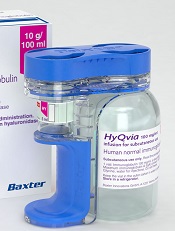
The US Food and Drug Administration (FDA) has approved a subcutaneous immune globulin product for use in adults with primary immunodeficiency (PI).
The product, HyQvia, is an immune globulin with a recombinant human hyaluronidase. It requires a single infusion every 3 to 4 weeks and 1 injection site per infusion to deliver a full therapeutic dose of immune globulin.
Current therapies require weekly or bi-weekly treatment with multiple infusion sites per treatment.
Baxter International Inc. expects to launch HyQvia in the US in the coming weeks. The product has been FDA-approved with a black-box warning detailing the risk of thrombosis associated with immune globulin products.
The immune globulin component of HyQvia is a 10% solution prepared from large pools of human plasma consisting of at least 98% IgG. The recombinant human hyaluronidase increases the dispersion and absorption of the immune globulin.
In a phase 3 trial, HyQvia compared well with intravenous human immune globulin 10% (IVIG).
Researchers compared the treatments at different time periods in a cohort of PI patients with a median age of 35 (range, 4-78 years). All 87 patients studied received IVIG, and 83 of the patients received at least 1 dose of HyQvia.
Patients received HyQvia for a median of 366 days and IVIG for a median of 91 days. The median ratio (HyQvia:IVIG) for the IgG dosage administered was 1.088 (range, 0.986–1.382).
Trough IgG concentrations, the incidence of infection, and rates of adverse events were generally similar during the HyQvia treatment period and the IVIG treatment period.
For patients aged 12 years and older, the median IgG Ctrough values with HyQvia were approximately the same as with IVIG. The median trough ratio (HyQvia:IVIG) was 0.985.
For patients younger than 12 (n=11), the median IgG Ctrough values were 10.0 and 9.6 g/L after HyQvia and IVIG, respectively, with a median trough ratio of 1.038.
The overall infection rates were 2.97 per patient-year with HyQvia and 4.51 per patient-year with IVIG.
During the HyQvia treatment period, the rate of acute serious bacterial infection (SBI) was 0.025 per patient-year. The rate of acute SBIs occurring during IVIG treatment was not reported.
In patients age 18 and older (n=59), the rate of acute SBIs was 0.00 per patient-year, and the overall infection rate was 3.20 per patient-year.
For this same patient group, the local adverse reaction rate was 0.286 per infusion.
The rate of systemic adverse events temporally related to an infusion was 0.20 per infusion with HyQvia and 0.33 per infusion with IVIG. There were no serious adverse events reported in these patients with either treatment.
HyQvia was approved in Europe in 2013 for adults with PI syndromes and myeloma or chronic lymphocytic leukemia with severe secondary hypogammaglobulinemia and recurrent infections.
For more details on HyQvia, see the prescribing information.
Credit: Baxter
The US Food and Drug Administration (FDA) has approved a subcutaneous immune globulin product for use in adults with primary immunodeficiency (PI).
The product, HyQvia, is an immune globulin with a recombinant human hyaluronidase. It requires a single infusion every 3 to 4 weeks and 1 injection site per infusion to deliver a full therapeutic dose of immune globulin.
Current therapies require weekly or bi-weekly treatment with multiple infusion sites per treatment.
Baxter International Inc. expects to launch HyQvia in the US in the coming weeks. The product has been FDA-approved with a black-box warning detailing the risk of thrombosis associated with immune globulin products.
The immune globulin component of HyQvia is a 10% solution prepared from large pools of human plasma consisting of at least 98% IgG. The recombinant human hyaluronidase increases the dispersion and absorption of the immune globulin.
In a phase 3 trial, HyQvia compared well with intravenous human immune globulin 10% (IVIG).
Researchers compared the treatments at different time periods in a cohort of PI patients with a median age of 35 (range, 4-78 years). All 87 patients studied received IVIG, and 83 of the patients received at least 1 dose of HyQvia.
Patients received HyQvia for a median of 366 days and IVIG for a median of 91 days. The median ratio (HyQvia:IVIG) for the IgG dosage administered was 1.088 (range, 0.986–1.382).
Trough IgG concentrations, the incidence of infection, and rates of adverse events were generally similar during the HyQvia treatment period and the IVIG treatment period.
For patients aged 12 years and older, the median IgG Ctrough values with HyQvia were approximately the same as with IVIG. The median trough ratio (HyQvia:IVIG) was 0.985.
For patients younger than 12 (n=11), the median IgG Ctrough values were 10.0 and 9.6 g/L after HyQvia and IVIG, respectively, with a median trough ratio of 1.038.
The overall infection rates were 2.97 per patient-year with HyQvia and 4.51 per patient-year with IVIG.
During the HyQvia treatment period, the rate of acute serious bacterial infection (SBI) was 0.025 per patient-year. The rate of acute SBIs occurring during IVIG treatment was not reported.
In patients age 18 and older (n=59), the rate of acute SBIs was 0.00 per patient-year, and the overall infection rate was 3.20 per patient-year.
For this same patient group, the local adverse reaction rate was 0.286 per infusion.
The rate of systemic adverse events temporally related to an infusion was 0.20 per infusion with HyQvia and 0.33 per infusion with IVIG. There were no serious adverse events reported in these patients with either treatment.
HyQvia was approved in Europe in 2013 for adults with PI syndromes and myeloma or chronic lymphocytic leukemia with severe secondary hypogammaglobulinemia and recurrent infections.
For more details on HyQvia, see the prescribing information.
Credit: Baxter
The US Food and Drug Administration (FDA) has approved a subcutaneous immune globulin product for use in adults with primary immunodeficiency (PI).
The product, HyQvia, is an immune globulin with a recombinant human hyaluronidase. It requires a single infusion every 3 to 4 weeks and 1 injection site per infusion to deliver a full therapeutic dose of immune globulin.
Current therapies require weekly or bi-weekly treatment with multiple infusion sites per treatment.
Baxter International Inc. expects to launch HyQvia in the US in the coming weeks. The product has been FDA-approved with a black-box warning detailing the risk of thrombosis associated with immune globulin products.
The immune globulin component of HyQvia is a 10% solution prepared from large pools of human plasma consisting of at least 98% IgG. The recombinant human hyaluronidase increases the dispersion and absorption of the immune globulin.
In a phase 3 trial, HyQvia compared well with intravenous human immune globulin 10% (IVIG).
Researchers compared the treatments at different time periods in a cohort of PI patients with a median age of 35 (range, 4-78 years). All 87 patients studied received IVIG, and 83 of the patients received at least 1 dose of HyQvia.
Patients received HyQvia for a median of 366 days and IVIG for a median of 91 days. The median ratio (HyQvia:IVIG) for the IgG dosage administered was 1.088 (range, 0.986–1.382).
Trough IgG concentrations, the incidence of infection, and rates of adverse events were generally similar during the HyQvia treatment period and the IVIG treatment period.
For patients aged 12 years and older, the median IgG Ctrough values with HyQvia were approximately the same as with IVIG. The median trough ratio (HyQvia:IVIG) was 0.985.
For patients younger than 12 (n=11), the median IgG Ctrough values were 10.0 and 9.6 g/L after HyQvia and IVIG, respectively, with a median trough ratio of 1.038.
The overall infection rates were 2.97 per patient-year with HyQvia and 4.51 per patient-year with IVIG.
During the HyQvia treatment period, the rate of acute serious bacterial infection (SBI) was 0.025 per patient-year. The rate of acute SBIs occurring during IVIG treatment was not reported.
In patients age 18 and older (n=59), the rate of acute SBIs was 0.00 per patient-year, and the overall infection rate was 3.20 per patient-year.
For this same patient group, the local adverse reaction rate was 0.286 per infusion.
The rate of systemic adverse events temporally related to an infusion was 0.20 per infusion with HyQvia and 0.33 per infusion with IVIG. There were no serious adverse events reported in these patients with either treatment.
HyQvia was approved in Europe in 2013 for adults with PI syndromes and myeloma or chronic lymphocytic leukemia with severe secondary hypogammaglobulinemia and recurrent infections.
For more details on HyQvia, see the prescribing information.
Heparin lot recalled due to particulate
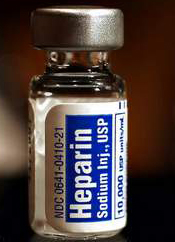
Hospira Inc. has initiated a US-wide recall of 1 lot of heparin sodium, following a customer report of particulate in a single unit.
The recall affects lot 41-046-JT of 1000 USP Heparin Units/500 mL (2 USP Heparin Units/mL), in 0.9% Sodium Chloride Injection, 500 mL (NDC 0409-7620-03; expiration date November 1, 2015).
The foreign particle found in a unit from this lot was a human hair sealed between the tube and the film at the round seal of the unused administrative port on the non-print side of the container.
To date, Hospira has not received reports of any adverse events associated with this issue. The root cause has not been determined and is under investigation.
Heparin sodium injection is indicated as an anticoagulant to maintain catheter patency. In the event that a particulate breaks and pieces are able to pass through the intravenous catheter, injected particulate material may result in local inflammation, phlebitis, and/or low-level allergic response.
Capillaries may become occluded. Patients with a pre-existing condition of trauma or another medical condition that adversely affects the microvascular blood supply are at an increased risk.
The lot of heparin affected by this recall was distributed nationwide between June 2014 and August 2014 to wholesalers/distributors, hospitals, and pharmacies.
Anyone with existing inventory should stop use and distribution and quarantine the product immediately. Customers should also inform potential users of this product about the recall.
Hospira will be notifying its direct distributors/customers via a recall letter and will arrange for the impacted product to be returned to Stericycle. For additional assistance, call Stericycle at 1-855-201-4337 between the hours of 8 am and 5pm ET, Monday through Friday.
For clinical inquiries, contact Hospira. To report adverse events or product complaints, call 1-800-441-4100 (8 am to 5 pm CT, Monday through Friday) or email [email protected].
For medical inquiries, call 1-800-615-0187 (available 24 hours a day, 7 days per week) or email [email protected].
Adverse reactions or quality problems associated with this product can be reported to the US Food and Drug Administration’s MedWatch Adverse Event Reporting Program.
Hospira Inc. has initiated a US-wide recall of 1 lot of heparin sodium, following a customer report of particulate in a single unit.
The recall affects lot 41-046-JT of 1000 USP Heparin Units/500 mL (2 USP Heparin Units/mL), in 0.9% Sodium Chloride Injection, 500 mL (NDC 0409-7620-03; expiration date November 1, 2015).
The foreign particle found in a unit from this lot was a human hair sealed between the tube and the film at the round seal of the unused administrative port on the non-print side of the container.
To date, Hospira has not received reports of any adverse events associated with this issue. The root cause has not been determined and is under investigation.
Heparin sodium injection is indicated as an anticoagulant to maintain catheter patency. In the event that a particulate breaks and pieces are able to pass through the intravenous catheter, injected particulate material may result in local inflammation, phlebitis, and/or low-level allergic response.
Capillaries may become occluded. Patients with a pre-existing condition of trauma or another medical condition that adversely affects the microvascular blood supply are at an increased risk.
The lot of heparin affected by this recall was distributed nationwide between June 2014 and August 2014 to wholesalers/distributors, hospitals, and pharmacies.
Anyone with existing inventory should stop use and distribution and quarantine the product immediately. Customers should also inform potential users of this product about the recall.
Hospira will be notifying its direct distributors/customers via a recall letter and will arrange for the impacted product to be returned to Stericycle. For additional assistance, call Stericycle at 1-855-201-4337 between the hours of 8 am and 5pm ET, Monday through Friday.
For clinical inquiries, contact Hospira. To report adverse events or product complaints, call 1-800-441-4100 (8 am to 5 pm CT, Monday through Friday) or email [email protected].
For medical inquiries, call 1-800-615-0187 (available 24 hours a day, 7 days per week) or email [email protected].
Adverse reactions or quality problems associated with this product can be reported to the US Food and Drug Administration’s MedWatch Adverse Event Reporting Program.
Hospira Inc. has initiated a US-wide recall of 1 lot of heparin sodium, following a customer report of particulate in a single unit.
The recall affects lot 41-046-JT of 1000 USP Heparin Units/500 mL (2 USP Heparin Units/mL), in 0.9% Sodium Chloride Injection, 500 mL (NDC 0409-7620-03; expiration date November 1, 2015).
The foreign particle found in a unit from this lot was a human hair sealed between the tube and the film at the round seal of the unused administrative port on the non-print side of the container.
To date, Hospira has not received reports of any adverse events associated with this issue. The root cause has not been determined and is under investigation.
Heparin sodium injection is indicated as an anticoagulant to maintain catheter patency. In the event that a particulate breaks and pieces are able to pass through the intravenous catheter, injected particulate material may result in local inflammation, phlebitis, and/or low-level allergic response.
Capillaries may become occluded. Patients with a pre-existing condition of trauma or another medical condition that adversely affects the microvascular blood supply are at an increased risk.
The lot of heparin affected by this recall was distributed nationwide between June 2014 and August 2014 to wholesalers/distributors, hospitals, and pharmacies.
Anyone with existing inventory should stop use and distribution and quarantine the product immediately. Customers should also inform potential users of this product about the recall.
Hospira will be notifying its direct distributors/customers via a recall letter and will arrange for the impacted product to be returned to Stericycle. For additional assistance, call Stericycle at 1-855-201-4337 between the hours of 8 am and 5pm ET, Monday through Friday.
For clinical inquiries, contact Hospira. To report adverse events or product complaints, call 1-800-441-4100 (8 am to 5 pm CT, Monday through Friday) or email [email protected].
For medical inquiries, call 1-800-615-0187 (available 24 hours a day, 7 days per week) or email [email protected].
Adverse reactions or quality problems associated with this product can be reported to the US Food and Drug Administration’s MedWatch Adverse Event Reporting Program.