User login
For MD-IQ only
Complaints of incomplete bladder emptying
Many patients with nonmetastatic prostate cancer are asymptomatic at the time of diagnosis due to widespread routine screening. When localized symptoms do occur, they may include urinary frequency, decreased urine stream, urinary urgency, and hematuria. An increasing proportion of patients with localized disease are asymptomatic, however; such signs and symptoms may well be related to age-associated prostate enlargement or other conditions. Nevertheless, men over the age of 50 years who present with urinary symptoms should be screened for prostate cancer using DRE and PSA. Benign prostatic hyperplasia, for example, can manifest in urinary symptoms and even elevate PSA. Acute prostatitis, on the other hand, presents as a urinary tract infection.
Because this patient showed elevated PSA levels, albeit with normal DRE findings, needle biopsy of the prostate is indicated for tissue diagnosis, usually performed with transrectal ultrasound. A pathologic evaluation of the biopsy specimen will determine the patient's Gleason score. PSA density (amount of PSA per gram of prostate tissue) and PSA doubling time should be collected as well. As seen in the present case, MRI can be used to assess lesions concerning for prostate cancer prior to biopsy. Lesions are then assigned Prostate Imaging–Reporting and Data System (PI-RADS) scores depending on their location within the prostatic zones. Imaging is also useful in staging and active surveillance. Staging is based on the tumor, node, and metastasis (TNM), with clinically localized prostate cancers including any T, N0, M0, NX, or MX cases. The clinician should pursue genetic testing to determine the presence of high-risk germline mutations.
The NCCN Guidelines recommend that for clinically localized prostate cancer, approaches include watchful waiting, active surveillance, radical prostatectomy, and radiation therapy. For asymptomatic patients who are older and/or have other serious comorbidities, active surveillance is often suggested. Radical prostatectomy is typically reserved for patients with a life expectancy of 10 years or more. Pelvic lymph node dissection may be performed on the basis of probability of nodal metastasis. Radiotherapy is also potentially curative in localized prostate cancer and may be delivered via brachytherapy, proton radiation, or external beam radiation therapy (EBRT). EBRT techniques include intensity-modulated radiation therapy (IMRT) and hypofractionated, image-guided stereotactic body radiation therapy (SBRT).
Chad R. Tracy, MD, Professor; Director, Minimally Invasive Surgery, Department of Urology, University of Iowa Hospitals and Clinics, Iowa City, Iowa
Chad R. Tracy, MD, has disclosed the following relevant financial relationships:
Serve(d) as a consultant for: Cvico Medical Solutions
Many patients with nonmetastatic prostate cancer are asymptomatic at the time of diagnosis due to widespread routine screening. When localized symptoms do occur, they may include urinary frequency, decreased urine stream, urinary urgency, and hematuria. An increasing proportion of patients with localized disease are asymptomatic, however; such signs and symptoms may well be related to age-associated prostate enlargement or other conditions. Nevertheless, men over the age of 50 years who present with urinary symptoms should be screened for prostate cancer using DRE and PSA. Benign prostatic hyperplasia, for example, can manifest in urinary symptoms and even elevate PSA. Acute prostatitis, on the other hand, presents as a urinary tract infection.
Because this patient showed elevated PSA levels, albeit with normal DRE findings, needle biopsy of the prostate is indicated for tissue diagnosis, usually performed with transrectal ultrasound. A pathologic evaluation of the biopsy specimen will determine the patient's Gleason score. PSA density (amount of PSA per gram of prostate tissue) and PSA doubling time should be collected as well. As seen in the present case, MRI can be used to assess lesions concerning for prostate cancer prior to biopsy. Lesions are then assigned Prostate Imaging–Reporting and Data System (PI-RADS) scores depending on their location within the prostatic zones. Imaging is also useful in staging and active surveillance. Staging is based on the tumor, node, and metastasis (TNM), with clinically localized prostate cancers including any T, N0, M0, NX, or MX cases. The clinician should pursue genetic testing to determine the presence of high-risk germline mutations.
The NCCN Guidelines recommend that for clinically localized prostate cancer, approaches include watchful waiting, active surveillance, radical prostatectomy, and radiation therapy. For asymptomatic patients who are older and/or have other serious comorbidities, active surveillance is often suggested. Radical prostatectomy is typically reserved for patients with a life expectancy of 10 years or more. Pelvic lymph node dissection may be performed on the basis of probability of nodal metastasis. Radiotherapy is also potentially curative in localized prostate cancer and may be delivered via brachytherapy, proton radiation, or external beam radiation therapy (EBRT). EBRT techniques include intensity-modulated radiation therapy (IMRT) and hypofractionated, image-guided stereotactic body radiation therapy (SBRT).
Chad R. Tracy, MD, Professor; Director, Minimally Invasive Surgery, Department of Urology, University of Iowa Hospitals and Clinics, Iowa City, Iowa
Chad R. Tracy, MD, has disclosed the following relevant financial relationships:
Serve(d) as a consultant for: Cvico Medical Solutions
Many patients with nonmetastatic prostate cancer are asymptomatic at the time of diagnosis due to widespread routine screening. When localized symptoms do occur, they may include urinary frequency, decreased urine stream, urinary urgency, and hematuria. An increasing proportion of patients with localized disease are asymptomatic, however; such signs and symptoms may well be related to age-associated prostate enlargement or other conditions. Nevertheless, men over the age of 50 years who present with urinary symptoms should be screened for prostate cancer using DRE and PSA. Benign prostatic hyperplasia, for example, can manifest in urinary symptoms and even elevate PSA. Acute prostatitis, on the other hand, presents as a urinary tract infection.
Because this patient showed elevated PSA levels, albeit with normal DRE findings, needle biopsy of the prostate is indicated for tissue diagnosis, usually performed with transrectal ultrasound. A pathologic evaluation of the biopsy specimen will determine the patient's Gleason score. PSA density (amount of PSA per gram of prostate tissue) and PSA doubling time should be collected as well. As seen in the present case, MRI can be used to assess lesions concerning for prostate cancer prior to biopsy. Lesions are then assigned Prostate Imaging–Reporting and Data System (PI-RADS) scores depending on their location within the prostatic zones. Imaging is also useful in staging and active surveillance. Staging is based on the tumor, node, and metastasis (TNM), with clinically localized prostate cancers including any T, N0, M0, NX, or MX cases. The clinician should pursue genetic testing to determine the presence of high-risk germline mutations.
The NCCN Guidelines recommend that for clinically localized prostate cancer, approaches include watchful waiting, active surveillance, radical prostatectomy, and radiation therapy. For asymptomatic patients who are older and/or have other serious comorbidities, active surveillance is often suggested. Radical prostatectomy is typically reserved for patients with a life expectancy of 10 years or more. Pelvic lymph node dissection may be performed on the basis of probability of nodal metastasis. Radiotherapy is also potentially curative in localized prostate cancer and may be delivered via brachytherapy, proton radiation, or external beam radiation therapy (EBRT). EBRT techniques include intensity-modulated radiation therapy (IMRT) and hypofractionated, image-guided stereotactic body radiation therapy (SBRT).
Chad R. Tracy, MD, Professor; Director, Minimally Invasive Surgery, Department of Urology, University of Iowa Hospitals and Clinics, Iowa City, Iowa
Chad R. Tracy, MD, has disclosed the following relevant financial relationships:
Serve(d) as a consultant for: Cvico Medical Solutions
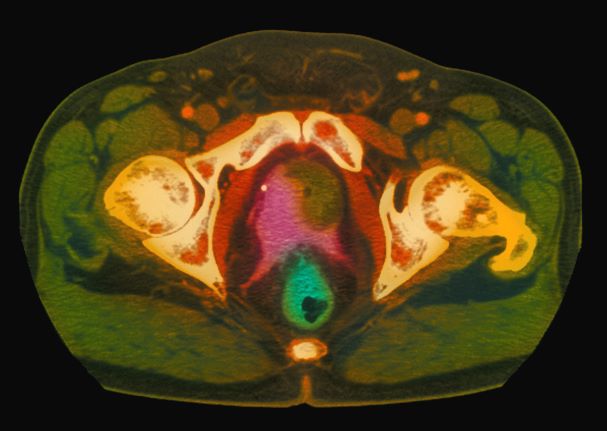
A 61-year-old man presents with complaints of frequent urination and incomplete bladder emptying. He also has been feeling fatigued but cannot tell if this is because his symptoms are worse at night and he has not been sleeping well. Despite a family history of atrial fibrillation, he reports no significant medical history beyond appendicitis many years ago. The patient underwent a prostate cancer screening about 18 months ago, which was normal. During a recent office visit, digital rectal examination (DRE) was normal, but prostate-specific antigen (PSA) levels were elevated at 10.2 ng/mL. An MRI is performed as part of the workup.
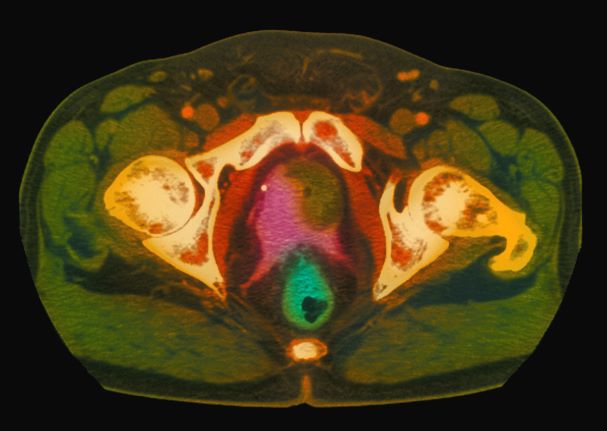
Prostate cancer: Preoperative mpMRI PI-RAD score is linked to upstaging
Key clinical point: A higher preoperative multiparametric magnetic resonance imaging (mpMRI) Prostate Imaging Reporting and Data System (PI‐RADS) score is associated with upstaging on surgical pathology in patients with prostate cancer.
Major finding: PI-RADS score was greater than 3 in 87% of patients. Upstaging was reported in 47% of patients. PI-RADS was an independent risk predictor for upstaging (adjusted odds ratio, 2.034; P < .001).
Study details: A retrospective study of 294 patients with prostate cancer who underwent a prostate mpMRI and radical prostatectomy between 2016 and 2020.
Disclosures: No funding source was identified for this work. The authors declared no conflict of interests.
Source: Pockros B et al. Prostate. 2021 Dec 8. doi: 10.1002/pros.24280.
Key clinical point: A higher preoperative multiparametric magnetic resonance imaging (mpMRI) Prostate Imaging Reporting and Data System (PI‐RADS) score is associated with upstaging on surgical pathology in patients with prostate cancer.
Major finding: PI-RADS score was greater than 3 in 87% of patients. Upstaging was reported in 47% of patients. PI-RADS was an independent risk predictor for upstaging (adjusted odds ratio, 2.034; P < .001).
Study details: A retrospective study of 294 patients with prostate cancer who underwent a prostate mpMRI and radical prostatectomy between 2016 and 2020.
Disclosures: No funding source was identified for this work. The authors declared no conflict of interests.
Source: Pockros B et al. Prostate. 2021 Dec 8. doi: 10.1002/pros.24280.
Key clinical point: A higher preoperative multiparametric magnetic resonance imaging (mpMRI) Prostate Imaging Reporting and Data System (PI‐RADS) score is associated with upstaging on surgical pathology in patients with prostate cancer.
Major finding: PI-RADS score was greater than 3 in 87% of patients. Upstaging was reported in 47% of patients. PI-RADS was an independent risk predictor for upstaging (adjusted odds ratio, 2.034; P < .001).
Study details: A retrospective study of 294 patients with prostate cancer who underwent a prostate mpMRI and radical prostatectomy between 2016 and 2020.
Disclosures: No funding source was identified for this work. The authors declared no conflict of interests.
Source: Pockros B et al. Prostate. 2021 Dec 8. doi: 10.1002/pros.24280.
Prostate cancer: ADT use tied to high risk for dementia
Key clinical point: Cumulative androgen deprivation therapy (ADT) is associated with a significant risk for dementia in older men with prostate cancer.
Major finding: At a median follow-up of 7 years, 2.3% of patients were diagnosed with dementia. Cumulative ADT use showed a significant association with dementia (hazard ratio [HR], 2.02; P < .01). No significant association was seen between primary treatment type and onset of dementia in the patients who did not receive ADT (HR, 1.4; P = .14).
Study details: A retrospective study of 13,570 patients aged ≥50 years from the CaPSURE registry diagnosed with prostate cancer between 1995 and 2017.
Disclosures: This study was supported by the UCSF Goldberg-Benioff Program in Translational Cancer Biology. The authors reported no competing interests.
Source: Lonergan PE et al. J Urol. 2021 Dec 2. doi: 10.1097/JU.0000000000002335.
Key clinical point: Cumulative androgen deprivation therapy (ADT) is associated with a significant risk for dementia in older men with prostate cancer.
Major finding: At a median follow-up of 7 years, 2.3% of patients were diagnosed with dementia. Cumulative ADT use showed a significant association with dementia (hazard ratio [HR], 2.02; P < .01). No significant association was seen between primary treatment type and onset of dementia in the patients who did not receive ADT (HR, 1.4; P = .14).
Study details: A retrospective study of 13,570 patients aged ≥50 years from the CaPSURE registry diagnosed with prostate cancer between 1995 and 2017.
Disclosures: This study was supported by the UCSF Goldberg-Benioff Program in Translational Cancer Biology. The authors reported no competing interests.
Source: Lonergan PE et al. J Urol. 2021 Dec 2. doi: 10.1097/JU.0000000000002335.
Key clinical point: Cumulative androgen deprivation therapy (ADT) is associated with a significant risk for dementia in older men with prostate cancer.
Major finding: At a median follow-up of 7 years, 2.3% of patients were diagnosed with dementia. Cumulative ADT use showed a significant association with dementia (hazard ratio [HR], 2.02; P < .01). No significant association was seen between primary treatment type and onset of dementia in the patients who did not receive ADT (HR, 1.4; P = .14).
Study details: A retrospective study of 13,570 patients aged ≥50 years from the CaPSURE registry diagnosed with prostate cancer between 1995 and 2017.
Disclosures: This study was supported by the UCSF Goldberg-Benioff Program in Translational Cancer Biology. The authors reported no competing interests.
Source: Lonergan PE et al. J Urol. 2021 Dec 2. doi: 10.1097/JU.0000000000002335.
Prostate cancer: Severe urinary incontinence after surgery is common
Key clinical point: More than 9% of men with prostate cancer undergoing radical prostatectomy report a bad urinary incontinence score. Only approximately 9% of these men receive subsequent incontinence surgery.
Major finding: About 5,165 men completed a posttreatment survey after a median time of 18.6 months. A “bad” urinary incontinence score was reported by 9.3% of patients, and 4% also reported having had a big problem with their urinary function. Only 9.1% of patients with "bad" urinary incontinence scores underwent incontinence surgery within 6 months.
Study details: A retrospective study of 11,290 patients with prostate cancer who underwent radical prostatectomy between April 2014 and January 2016.
Disclosures: This work was supported by National Institute of Health Research, Medical Research Council, University College London Hospitals/University College London Comprehensive Biomedical Research Centre, and others. The authors received honoraria, advisory fees, travel expenses, and/or being employed outside this work.
Source: Parry MG et al. BJU Int. 2021 Nov 30. doi: 10.1111/bju.15663.
Key clinical point: More than 9% of men with prostate cancer undergoing radical prostatectomy report a bad urinary incontinence score. Only approximately 9% of these men receive subsequent incontinence surgery.
Major finding: About 5,165 men completed a posttreatment survey after a median time of 18.6 months. A “bad” urinary incontinence score was reported by 9.3% of patients, and 4% also reported having had a big problem with their urinary function. Only 9.1% of patients with "bad" urinary incontinence scores underwent incontinence surgery within 6 months.
Study details: A retrospective study of 11,290 patients with prostate cancer who underwent radical prostatectomy between April 2014 and January 2016.
Disclosures: This work was supported by National Institute of Health Research, Medical Research Council, University College London Hospitals/University College London Comprehensive Biomedical Research Centre, and others. The authors received honoraria, advisory fees, travel expenses, and/or being employed outside this work.
Source: Parry MG et al. BJU Int. 2021 Nov 30. doi: 10.1111/bju.15663.
Key clinical point: More than 9% of men with prostate cancer undergoing radical prostatectomy report a bad urinary incontinence score. Only approximately 9% of these men receive subsequent incontinence surgery.
Major finding: About 5,165 men completed a posttreatment survey after a median time of 18.6 months. A “bad” urinary incontinence score was reported by 9.3% of patients, and 4% also reported having had a big problem with their urinary function. Only 9.1% of patients with "bad" urinary incontinence scores underwent incontinence surgery within 6 months.
Study details: A retrospective study of 11,290 patients with prostate cancer who underwent radical prostatectomy between April 2014 and January 2016.
Disclosures: This work was supported by National Institute of Health Research, Medical Research Council, University College London Hospitals/University College London Comprehensive Biomedical Research Centre, and others. The authors received honoraria, advisory fees, travel expenses, and/or being employed outside this work.
Source: Parry MG et al. BJU Int. 2021 Nov 30. doi: 10.1111/bju.15663.
Low-grade prostate cancer: Secondary treatment rates slightly higher with delayed surgery
Key clinical point: Men with low-grade prostate cancer undergoing delayed radical prostatectomy (RP) after an initial period of active surveillance show a small increase in the use of secondary treatments, despite an increase in adverse pathology vs those undergoing immediate RP.
Major finding: The incidence of adverse pathology was higher with delayed vs immediate RP (49% vs 36%; P < .0001). Estimated 24‐month secondary treatment‐free probabilities in patients who received delayed and immediate RP were 93% and 96%, respectively (P = .0023).
Study details: A retrospective study of 1,878 patients with grade group 1 prostate cancer who underwent RP between April 2012 and July 2018.
Disclosures: This study is supported by the Blue Cross Blue Shield of Michigan Foundation. Some authors reported salary support. No other competing interests were disclosed.
Source: Arcot R et al. Prostate. 2021 Dec 2. doi: 10.1002/pros.24277.
Key clinical point: Men with low-grade prostate cancer undergoing delayed radical prostatectomy (RP) after an initial period of active surveillance show a small increase in the use of secondary treatments, despite an increase in adverse pathology vs those undergoing immediate RP.
Major finding: The incidence of adverse pathology was higher with delayed vs immediate RP (49% vs 36%; P < .0001). Estimated 24‐month secondary treatment‐free probabilities in patients who received delayed and immediate RP were 93% and 96%, respectively (P = .0023).
Study details: A retrospective study of 1,878 patients with grade group 1 prostate cancer who underwent RP between April 2012 and July 2018.
Disclosures: This study is supported by the Blue Cross Blue Shield of Michigan Foundation. Some authors reported salary support. No other competing interests were disclosed.
Source: Arcot R et al. Prostate. 2021 Dec 2. doi: 10.1002/pros.24277.
Key clinical point: Men with low-grade prostate cancer undergoing delayed radical prostatectomy (RP) after an initial period of active surveillance show a small increase in the use of secondary treatments, despite an increase in adverse pathology vs those undergoing immediate RP.
Major finding: The incidence of adverse pathology was higher with delayed vs immediate RP (49% vs 36%; P < .0001). Estimated 24‐month secondary treatment‐free probabilities in patients who received delayed and immediate RP were 93% and 96%, respectively (P = .0023).
Study details: A retrospective study of 1,878 patients with grade group 1 prostate cancer who underwent RP between April 2012 and July 2018.
Disclosures: This study is supported by the Blue Cross Blue Shield of Michigan Foundation. Some authors reported salary support. No other competing interests were disclosed.
Source: Arcot R et al. Prostate. 2021 Dec 2. doi: 10.1002/pros.24277.
Prostate cancer: Positive targeted cores increase upgradation risk in active surveillance
Key clinical point: In patients with low-intermediate prostate cancer undergoing active surveillance, Gleason grade group (GG) 2 and positive targeted core are associated with significant risk for upgradation.
Major finding: At a median follow-up of 4.8 years, GG upgraded in 92 patients. GG2 (hazard ratio [HR], 2.93; 95% CI, 1.05-8.19) and 1 and more than 1 positive targeted cores (HR, 2.75; 95% CI, 1.25-6.03 and HR, 3.38; 95% CI, 1.65-6.91, respectively) at confirmatory magnetic resonance imaging (MRI)-guided biopsy were significant risk factor of upgradation.
Study details: A prospective study of 519 men with GG 1 and GG 2 prostate cancer undergoing active surveillance, who received confirmatory targeted and systemic MRI-guided biopsy followed by surveillance MRI-guided biopsy every 12 to 24 months.
Disclosures: This work was supported by National Cancer Institute, Center for Interventional Oncology, University of California, and others. Dr. L.S. Marks and Dr. A. Priester reported association with Avenda Health. No other competing interests were reported.
Source: Kinnaird A et al. J Urol. 2021 Dec 2. doi: 10.1097/JU.0000000000002343.
Key clinical point: In patients with low-intermediate prostate cancer undergoing active surveillance, Gleason grade group (GG) 2 and positive targeted core are associated with significant risk for upgradation.
Major finding: At a median follow-up of 4.8 years, GG upgraded in 92 patients. GG2 (hazard ratio [HR], 2.93; 95% CI, 1.05-8.19) and 1 and more than 1 positive targeted cores (HR, 2.75; 95% CI, 1.25-6.03 and HR, 3.38; 95% CI, 1.65-6.91, respectively) at confirmatory magnetic resonance imaging (MRI)-guided biopsy were significant risk factor of upgradation.
Study details: A prospective study of 519 men with GG 1 and GG 2 prostate cancer undergoing active surveillance, who received confirmatory targeted and systemic MRI-guided biopsy followed by surveillance MRI-guided biopsy every 12 to 24 months.
Disclosures: This work was supported by National Cancer Institute, Center for Interventional Oncology, University of California, and others. Dr. L.S. Marks and Dr. A. Priester reported association with Avenda Health. No other competing interests were reported.
Source: Kinnaird A et al. J Urol. 2021 Dec 2. doi: 10.1097/JU.0000000000002343.
Key clinical point: In patients with low-intermediate prostate cancer undergoing active surveillance, Gleason grade group (GG) 2 and positive targeted core are associated with significant risk for upgradation.
Major finding: At a median follow-up of 4.8 years, GG upgraded in 92 patients. GG2 (hazard ratio [HR], 2.93; 95% CI, 1.05-8.19) and 1 and more than 1 positive targeted cores (HR, 2.75; 95% CI, 1.25-6.03 and HR, 3.38; 95% CI, 1.65-6.91, respectively) at confirmatory magnetic resonance imaging (MRI)-guided biopsy were significant risk factor of upgradation.
Study details: A prospective study of 519 men with GG 1 and GG 2 prostate cancer undergoing active surveillance, who received confirmatory targeted and systemic MRI-guided biopsy followed by surveillance MRI-guided biopsy every 12 to 24 months.
Disclosures: This work was supported by National Cancer Institute, Center for Interventional Oncology, University of California, and others. Dr. L.S. Marks and Dr. A. Priester reported association with Avenda Health. No other competing interests were reported.
Source: Kinnaird A et al. J Urol. 2021 Dec 2. doi: 10.1097/JU.0000000000002343.
Prostate cancer screening: Statins do not modify mortality risk
Key clinical point: Prostate-specific antigen (PSA)-based prostate cancer screening was associated with less overdiagnosis of low-risk cancer in statin users, with similar risk for advanced disease and mortality compared with nonusers.
Major finding: PSA screening was associated with increased prostate cancer incidence in statin nonusers (rate ratio [RR], 1.31; 95% CI, 1.24-1.38), but not in statin users (RR, 1.02; 95% CI, 0.95-1.10; P for interaction < .001). The screening was not associated with decreased mortality in statin users and nonusers.
Study details: A post hoc analysis of the Finnish Prostate Cancer Screening Trial in which 78,606 men were randomly assigned to either the screening or the control group.
Disclosures: This study was supported by Tampere University Hospital, Finnish Cancer Society, and Academy of Finland. The authors received grants, consulting/speaker/personal fees, research funding, compensation, and/or held patents outside this work.
Source: Vettenranta A et al. JAMA Oncol. 2021 Nov 24. doi: 10.1001/jamaoncol.2021.5672.
Key clinical point: Prostate-specific antigen (PSA)-based prostate cancer screening was associated with less overdiagnosis of low-risk cancer in statin users, with similar risk for advanced disease and mortality compared with nonusers.
Major finding: PSA screening was associated with increased prostate cancer incidence in statin nonusers (rate ratio [RR], 1.31; 95% CI, 1.24-1.38), but not in statin users (RR, 1.02; 95% CI, 0.95-1.10; P for interaction < .001). The screening was not associated with decreased mortality in statin users and nonusers.
Study details: A post hoc analysis of the Finnish Prostate Cancer Screening Trial in which 78,606 men were randomly assigned to either the screening or the control group.
Disclosures: This study was supported by Tampere University Hospital, Finnish Cancer Society, and Academy of Finland. The authors received grants, consulting/speaker/personal fees, research funding, compensation, and/or held patents outside this work.
Source: Vettenranta A et al. JAMA Oncol. 2021 Nov 24. doi: 10.1001/jamaoncol.2021.5672.
Key clinical point: Prostate-specific antigen (PSA)-based prostate cancer screening was associated with less overdiagnosis of low-risk cancer in statin users, with similar risk for advanced disease and mortality compared with nonusers.
Major finding: PSA screening was associated with increased prostate cancer incidence in statin nonusers (rate ratio [RR], 1.31; 95% CI, 1.24-1.38), but not in statin users (RR, 1.02; 95% CI, 0.95-1.10; P for interaction < .001). The screening was not associated with decreased mortality in statin users and nonusers.
Study details: A post hoc analysis of the Finnish Prostate Cancer Screening Trial in which 78,606 men were randomly assigned to either the screening or the control group.
Disclosures: This study was supported by Tampere University Hospital, Finnish Cancer Society, and Academy of Finland. The authors received grants, consulting/speaker/personal fees, research funding, compensation, and/or held patents outside this work.
Source: Vettenranta A et al. JAMA Oncol. 2021 Nov 24. doi: 10.1001/jamaoncol.2021.5672.
Prostate cancer: Grade group 2 is associated with higher treatment rate
Key clinical point: In patients with prostate cancer undergoing active surveillance (AS), Gleason grade group (GG) 2 compared with GG1 at diagnosis was associated with a higher definitive treatment rate.
Major finding: There was no significant difference in the 5-year reclassification rates in patients with GG2 vs GG1 disease (30% vs 37%; P = .11). A higher proportion of patients with GG2 disease received treatment at 5 years (58% vs 34%; P < .001).
Study details: A prospective multicenter Canary PASS cohort study of 1,728 patients undergoing AS.
Disclosures: This work was supported by Canary Foundation and Institute for Prostate Cancer Research. The authors reported no conflict of interests.
Source: Malaret AJW et al. J Urol. 2021 Dec 2. doi: 10.1097/JU.0000000000002354.
Key clinical point: In patients with prostate cancer undergoing active surveillance (AS), Gleason grade group (GG) 2 compared with GG1 at diagnosis was associated with a higher definitive treatment rate.
Major finding: There was no significant difference in the 5-year reclassification rates in patients with GG2 vs GG1 disease (30% vs 37%; P = .11). A higher proportion of patients with GG2 disease received treatment at 5 years (58% vs 34%; P < .001).
Study details: A prospective multicenter Canary PASS cohort study of 1,728 patients undergoing AS.
Disclosures: This work was supported by Canary Foundation and Institute for Prostate Cancer Research. The authors reported no conflict of interests.
Source: Malaret AJW et al. J Urol. 2021 Dec 2. doi: 10.1097/JU.0000000000002354.
Key clinical point: In patients with prostate cancer undergoing active surveillance (AS), Gleason grade group (GG) 2 compared with GG1 at diagnosis was associated with a higher definitive treatment rate.
Major finding: There was no significant difference in the 5-year reclassification rates in patients with GG2 vs GG1 disease (30% vs 37%; P = .11). A higher proportion of patients with GG2 disease received treatment at 5 years (58% vs 34%; P < .001).
Study details: A prospective multicenter Canary PASS cohort study of 1,728 patients undergoing AS.
Disclosures: This work was supported by Canary Foundation and Institute for Prostate Cancer Research. The authors reported no conflict of interests.
Source: Malaret AJW et al. J Urol. 2021 Dec 2. doi: 10.1097/JU.0000000000002354.
Prostate cancer: Patient- and surgeon-level variation in postsurgery sexual function outcomes
Key clinical point: A significant patient- and surgeon-level variation in sexual function recovery is seen over 2 years after radical prostatectomy.
Major finding: At 24-month follow-up, 24% of patients recovered sexual function. Across 12 surgeons, patients achieving sexual function recovery ranged from 3% to 44%. At the surgeon level, the Pearson correlation coefficient between case volume and mean Expanded Prostate Cancer Index Composite-26 sexual domain score was 0.08 (95% CI, −0.52 to 0.62). The Spearman correlation coefficient between case volume and the proportion of patients achieving sexual function recovery was −0.16 (95% CI, −0.67 to 0.46).
Study details: A prospective cohort of 1,426 patients with prostate cancer who underwent radical prostatectomy between May 2014 and August 2019.
Disclosures: This work was supported by Blue Cross Blue Shield of Michigan and National Institutes of Health. The authors received financial/nonfinancial support and/or served as journal editors without compensation outside this work.
Source: Agochukwu-Mmonu N et al. JAMA Surg. 2021 Dec 1. doi: 10.1001/jamasurg.2021.6215.
Key clinical point: A significant patient- and surgeon-level variation in sexual function recovery is seen over 2 years after radical prostatectomy.
Major finding: At 24-month follow-up, 24% of patients recovered sexual function. Across 12 surgeons, patients achieving sexual function recovery ranged from 3% to 44%. At the surgeon level, the Pearson correlation coefficient between case volume and mean Expanded Prostate Cancer Index Composite-26 sexual domain score was 0.08 (95% CI, −0.52 to 0.62). The Spearman correlation coefficient between case volume and the proportion of patients achieving sexual function recovery was −0.16 (95% CI, −0.67 to 0.46).
Study details: A prospective cohort of 1,426 patients with prostate cancer who underwent radical prostatectomy between May 2014 and August 2019.
Disclosures: This work was supported by Blue Cross Blue Shield of Michigan and National Institutes of Health. The authors received financial/nonfinancial support and/or served as journal editors without compensation outside this work.
Source: Agochukwu-Mmonu N et al. JAMA Surg. 2021 Dec 1. doi: 10.1001/jamasurg.2021.6215.
Key clinical point: A significant patient- and surgeon-level variation in sexual function recovery is seen over 2 years after radical prostatectomy.
Major finding: At 24-month follow-up, 24% of patients recovered sexual function. Across 12 surgeons, patients achieving sexual function recovery ranged from 3% to 44%. At the surgeon level, the Pearson correlation coefficient between case volume and mean Expanded Prostate Cancer Index Composite-26 sexual domain score was 0.08 (95% CI, −0.52 to 0.62). The Spearman correlation coefficient between case volume and the proportion of patients achieving sexual function recovery was −0.16 (95% CI, −0.67 to 0.46).
Study details: A prospective cohort of 1,426 patients with prostate cancer who underwent radical prostatectomy between May 2014 and August 2019.
Disclosures: This work was supported by Blue Cross Blue Shield of Michigan and National Institutes of Health. The authors received financial/nonfinancial support and/or served as journal editors without compensation outside this work.
Source: Agochukwu-Mmonu N et al. JAMA Surg. 2021 Dec 1. doi: 10.1001/jamasurg.2021.6215.
Treatment-related regret is common in localized prostate cancer
Key clinical point: Treatment-related regret is common in patients with clinically localized prostate cancer. Patients undergoing surgery reported a significantly higher regret vs those undergoing radiotherapy or active surveillance.
Major finding: Overall treatment-related regret at 5 years was 13%. Treatment-related regret with surgery, radiotherapy, and active surveillance was 16%, 11%, and 7%, respectively. Patients who underwent surgery had a higher likelihood of regret than those who underwent active surveillance (adjusted odds ratio [aOR], 2.40; P < .001) or radiotherapy (aOR, 1.57; P = .01).
Study details: An observational study of 2,072 patients with clinically localized prostate cancer between 2011 and 2012.
Disclosures: This work was supported by Patient-Centered Outcomes Research Institute, Agency for Healthcare Research and Quality, and National Cancer Institute. The authors reported receiving personal fees and grants outside this work.
Source: Wallis CJD et al. JAMA Oncol. 2021 Nov 18. doi: 10.1001/jamaoncol.2021.5160.
Key clinical point: Treatment-related regret is common in patients with clinically localized prostate cancer. Patients undergoing surgery reported a significantly higher regret vs those undergoing radiotherapy or active surveillance.
Major finding: Overall treatment-related regret at 5 years was 13%. Treatment-related regret with surgery, radiotherapy, and active surveillance was 16%, 11%, and 7%, respectively. Patients who underwent surgery had a higher likelihood of regret than those who underwent active surveillance (adjusted odds ratio [aOR], 2.40; P < .001) or radiotherapy (aOR, 1.57; P = .01).
Study details: An observational study of 2,072 patients with clinically localized prostate cancer between 2011 and 2012.
Disclosures: This work was supported by Patient-Centered Outcomes Research Institute, Agency for Healthcare Research and Quality, and National Cancer Institute. The authors reported receiving personal fees and grants outside this work.
Source: Wallis CJD et al. JAMA Oncol. 2021 Nov 18. doi: 10.1001/jamaoncol.2021.5160.
Key clinical point: Treatment-related regret is common in patients with clinically localized prostate cancer. Patients undergoing surgery reported a significantly higher regret vs those undergoing radiotherapy or active surveillance.
Major finding: Overall treatment-related regret at 5 years was 13%. Treatment-related regret with surgery, radiotherapy, and active surveillance was 16%, 11%, and 7%, respectively. Patients who underwent surgery had a higher likelihood of regret than those who underwent active surveillance (adjusted odds ratio [aOR], 2.40; P < .001) or radiotherapy (aOR, 1.57; P = .01).
Study details: An observational study of 2,072 patients with clinically localized prostate cancer between 2011 and 2012.
Disclosures: This work was supported by Patient-Centered Outcomes Research Institute, Agency for Healthcare Research and Quality, and National Cancer Institute. The authors reported receiving personal fees and grants outside this work.
Source: Wallis CJD et al. JAMA Oncol. 2021 Nov 18. doi: 10.1001/jamaoncol.2021.5160.