User login
PA Specific Program Scheduled for VAM
The PA Section steering committee has been hard at work developing session programming for the 2019 Vascular Annual Meeting. Vascular PAs can look forward to a four-hour session on Thursday, June 13, completely dedicated to them. The program will focus on a variety of topics that include optimal team practice, vascular diagnostics, venous disease and wound management, an “Ask the Expert” portion and much more. Know a vascular PA who needs to become an SVS member? Encourage them to apply today.
The PA Section steering committee has been hard at work developing session programming for the 2019 Vascular Annual Meeting. Vascular PAs can look forward to a four-hour session on Thursday, June 13, completely dedicated to them. The program will focus on a variety of topics that include optimal team practice, vascular diagnostics, venous disease and wound management, an “Ask the Expert” portion and much more. Know a vascular PA who needs to become an SVS member? Encourage them to apply today.
The PA Section steering committee has been hard at work developing session programming for the 2019 Vascular Annual Meeting. Vascular PAs can look forward to a four-hour session on Thursday, June 13, completely dedicated to them. The program will focus on a variety of topics that include optimal team practice, vascular diagnostics, venous disease and wound management, an “Ask the Expert” portion and much more. Know a vascular PA who needs to become an SVS member? Encourage them to apply today.
SVSConnect – Save the Date!
The SVS is excited to announce that within your online community, SVSConnect, there will be an “Ask Us Anything” session at 2 p.m. CDT on April 8. Drs. Daniel McDevitt and William Shutze will be available in real time to answer questions about building relationships in a competitive environment. SVSConnect users will be able to chime in during the session to ask them anything. If you can’t make it to the live Q&A on April 8, all the questions and responses will be available in the SVSConnect library. More information will come soon.
The SVS is excited to announce that within your online community, SVSConnect, there will be an “Ask Us Anything” session at 2 p.m. CDT on April 8. Drs. Daniel McDevitt and William Shutze will be available in real time to answer questions about building relationships in a competitive environment. SVSConnect users will be able to chime in during the session to ask them anything. If you can’t make it to the live Q&A on April 8, all the questions and responses will be available in the SVSConnect library. More information will come soon.
The SVS is excited to announce that within your online community, SVSConnect, there will be an “Ask Us Anything” session at 2 p.m. CDT on April 8. Drs. Daniel McDevitt and William Shutze will be available in real time to answer questions about building relationships in a competitive environment. SVSConnect users will be able to chime in during the session to ask them anything. If you can’t make it to the live Q&A on April 8, all the questions and responses will be available in the SVSConnect library. More information will come soon.
Register for VRIC
"Hard Science: Calcification and Vascular Solutions” is the theme of this year’s Vascular Research Initiatives Conference (VRIC). The meeting will be held in Boston on May 13 and will focus on emerging vascular science and biology. Abstracts will cover topic areas including, but not limited to, vascular remodeling, stem cells and wound healing, arterial injury, and diabetes. Don’t miss out on the essential meeting for translational vascular science and interdisciplinary research – make your travel plans now.
"Hard Science: Calcification and Vascular Solutions” is the theme of this year’s Vascular Research Initiatives Conference (VRIC). The meeting will be held in Boston on May 13 and will focus on emerging vascular science and biology. Abstracts will cover topic areas including, but not limited to, vascular remodeling, stem cells and wound healing, arterial injury, and diabetes. Don’t miss out on the essential meeting for translational vascular science and interdisciplinary research – make your travel plans now.
"Hard Science: Calcification and Vascular Solutions” is the theme of this year’s Vascular Research Initiatives Conference (VRIC). The meeting will be held in Boston on May 13 and will focus on emerging vascular science and biology. Abstracts will cover topic areas including, but not limited to, vascular remodeling, stem cells and wound healing, arterial injury, and diabetes. Don’t miss out on the essential meeting for translational vascular science and interdisciplinary research – make your travel plans now.
Top AGA Community patient cases
Physicians with difficult patient scenarios regularly bring their questions to the AGA Community to seek advice from colleagues about therapy and disease management options, best practices, and diagnoses.
In case you missed it, here are the most popular clinical discussions shared in the forum recently:
1. Refractory lymphocytic colitis and diarrhea
An elderly female with lymphocytic colitis wasn’t responding to any treatment provided by her physician, who was trying to avoid a colectomy due to her advanced age. The GI community shared their support with recommendations for therapy options and next steps.
2. Atypical case of enteropathy
This physician found mild erosive gastritis, villous blunting and mucosal accumulation of eosinophils up to 55/hpf in an 18-year-old female with a history of nausea, vomiting, nonbloody diarrhea, abdominal pain, and weight loss over the past year. She tested negative for celiac disease and a gluten-free diet only provided partial improvement. The conversation in the Community forum covered potential diagnoses to be considered and recommendations for therapy.
3. Eosinophilic esophagitis with aperistalsis
A 21-year-old male presented with progressive dysphagia due to eosinophilic esophagitis with a weight loss of 17 pounds in two months. A panendoscopy revealed a hiatal hernia and aperistalsis of the esophagus, with normal inferior and superior sphincter pressures. No changes were observed recently; he is being managed with prokinetics and remains asymptomatic.
More clinical cases and discussions are at https://community.gastro.org/discussions.
Physicians with difficult patient scenarios regularly bring their questions to the AGA Community to seek advice from colleagues about therapy and disease management options, best practices, and diagnoses.
In case you missed it, here are the most popular clinical discussions shared in the forum recently:
1. Refractory lymphocytic colitis and diarrhea
An elderly female with lymphocytic colitis wasn’t responding to any treatment provided by her physician, who was trying to avoid a colectomy due to her advanced age. The GI community shared their support with recommendations for therapy options and next steps.
2. Atypical case of enteropathy
This physician found mild erosive gastritis, villous blunting and mucosal accumulation of eosinophils up to 55/hpf in an 18-year-old female with a history of nausea, vomiting, nonbloody diarrhea, abdominal pain, and weight loss over the past year. She tested negative for celiac disease and a gluten-free diet only provided partial improvement. The conversation in the Community forum covered potential diagnoses to be considered and recommendations for therapy.
3. Eosinophilic esophagitis with aperistalsis
A 21-year-old male presented with progressive dysphagia due to eosinophilic esophagitis with a weight loss of 17 pounds in two months. A panendoscopy revealed a hiatal hernia and aperistalsis of the esophagus, with normal inferior and superior sphincter pressures. No changes were observed recently; he is being managed with prokinetics and remains asymptomatic.
More clinical cases and discussions are at https://community.gastro.org/discussions.
Physicians with difficult patient scenarios regularly bring their questions to the AGA Community to seek advice from colleagues about therapy and disease management options, best practices, and diagnoses.
In case you missed it, here are the most popular clinical discussions shared in the forum recently:
1. Refractory lymphocytic colitis and diarrhea
An elderly female with lymphocytic colitis wasn’t responding to any treatment provided by her physician, who was trying to avoid a colectomy due to her advanced age. The GI community shared their support with recommendations for therapy options and next steps.
2. Atypical case of enteropathy
This physician found mild erosive gastritis, villous blunting and mucosal accumulation of eosinophils up to 55/hpf in an 18-year-old female with a history of nausea, vomiting, nonbloody diarrhea, abdominal pain, and weight loss over the past year. She tested negative for celiac disease and a gluten-free diet only provided partial improvement. The conversation in the Community forum covered potential diagnoses to be considered and recommendations for therapy.
3. Eosinophilic esophagitis with aperistalsis
A 21-year-old male presented with progressive dysphagia due to eosinophilic esophagitis with a weight loss of 17 pounds in two months. A panendoscopy revealed a hiatal hernia and aperistalsis of the esophagus, with normal inferior and superior sphincter pressures. No changes were observed recently; he is being managed with prokinetics and remains asymptomatic.
More clinical cases and discussions are at https://community.gastro.org/discussions.
Continuing board certification vision report includes many sound recommendations on MOC
Five key wins will help lay the foundation for new assessment pathway to maintaining board certification.
The Continuing Board Certification: Vision for the Future Commission submitted its final report to the American Board of Medical Specialties (ABMS) Board of Directors. The draft reflected many of the issues AGA has raised with ABIM over the years and our comments on the draft report.
Having this report in hand puts AGA in a position of strength as we begin working with ABIM and the other GI societies to explore the development of a new assessment pathway through which gastroenterologists and hepatologists can maintain board certification.
Here’s a link to the full report: https://visioninitiative.org/commission/final-report/
Key wins:
- Commission recommended the term “Maintenance of Certification” be abandoned.
- “Emphasis on continuing certification must be focused on the availability of curated information that helps diplomates deliver improved clinical care ... traditional infrequent high-stakes assessments no matter how psychometrically valid, is viewed as inappropriate as the future direction for continuing certification.”
- The Commission believes ABMS Boards need to engage with diplomates on an ongoing basis instead of every 2, 5, or 10 years.
- The ABMS Board must offer an alternative to burdensome highly secure, point-in-time examinations of knowledge.
- ABMS and ABMS Boards must facilitate and encourage independent research to build on the existing evidence base about the value of continuing certification.
MOC and AGA’s approach to reform are topics of much discussion on the AGA Community.
Five key wins will help lay the foundation for new assessment pathway to maintaining board certification.
The Continuing Board Certification: Vision for the Future Commission submitted its final report to the American Board of Medical Specialties (ABMS) Board of Directors. The draft reflected many of the issues AGA has raised with ABIM over the years and our comments on the draft report.
Having this report in hand puts AGA in a position of strength as we begin working with ABIM and the other GI societies to explore the development of a new assessment pathway through which gastroenterologists and hepatologists can maintain board certification.
Here’s a link to the full report: https://visioninitiative.org/commission/final-report/
Key wins:
- Commission recommended the term “Maintenance of Certification” be abandoned.
- “Emphasis on continuing certification must be focused on the availability of curated information that helps diplomates deliver improved clinical care ... traditional infrequent high-stakes assessments no matter how psychometrically valid, is viewed as inappropriate as the future direction for continuing certification.”
- The Commission believes ABMS Boards need to engage with diplomates on an ongoing basis instead of every 2, 5, or 10 years.
- The ABMS Board must offer an alternative to burdensome highly secure, point-in-time examinations of knowledge.
- ABMS and ABMS Boards must facilitate and encourage independent research to build on the existing evidence base about the value of continuing certification.
MOC and AGA’s approach to reform are topics of much discussion on the AGA Community.
Five key wins will help lay the foundation for new assessment pathway to maintaining board certification.
The Continuing Board Certification: Vision for the Future Commission submitted its final report to the American Board of Medical Specialties (ABMS) Board of Directors. The draft reflected many of the issues AGA has raised with ABIM over the years and our comments on the draft report.
Having this report in hand puts AGA in a position of strength as we begin working with ABIM and the other GI societies to explore the development of a new assessment pathway through which gastroenterologists and hepatologists can maintain board certification.
Here’s a link to the full report: https://visioninitiative.org/commission/final-report/
Key wins:
- Commission recommended the term “Maintenance of Certification” be abandoned.
- “Emphasis on continuing certification must be focused on the availability of curated information that helps diplomates deliver improved clinical care ... traditional infrequent high-stakes assessments no matter how psychometrically valid, is viewed as inappropriate as the future direction for continuing certification.”
- The Commission believes ABMS Boards need to engage with diplomates on an ongoing basis instead of every 2, 5, or 10 years.
- The ABMS Board must offer an alternative to burdensome highly secure, point-in-time examinations of knowledge.
- ABMS and ABMS Boards must facilitate and encourage independent research to build on the existing evidence base about the value of continuing certification.
MOC and AGA’s approach to reform are topics of much discussion on the AGA Community.
How to get involved in advocacy
Interested in advocacy but not sure how or whether you have time in your busy schedule? AGA has an array of options for how you can be active in advocacy. Some take as little as 5 minutes.
Letter writing. AGA uses GovPredict, an online advocacy platform that allows members to contact their member of Congress with just a few clicks. AGA develops messages on significant pieces of legislation, key efforts in Congress or on issues being advanced by federal agencies that have a great impact on gastroenterology. AGA’s ongoing letter writing campaigns can always be found on www.gastro.org/advocacy but be sure to keep an eye out for advocacy emails, AGA eDigest, and social media, so you do not miss your opportunity to take action on timely issues. AGA encourages its members to share letter writing campaigns with their colleagues, as well as posting them on social media.
Meetings with your member of Congress. In-person meetings are an excellent opportunity to share with your member of Congress, or their staff, how the issues that impact gastroenterology affect you, your patients, and your practice. AGA has a plethora of resources to help you set up a meeting with your member of Congress, including up-to-date issue briefs, tips and tricks for productive meetings, and webinars on how to host an on-site visit. AGA staff is always more than happy to help you arrange a meeting either in Washington, DC, or your home state. If you are interested in arranging a meeting with your member of Congress, please contact AGA Public Policy Coordinator, Jonathan Sollish, at [email protected] or 240-482-3228.
AGA PAC. AGA PAC is a voluntary, nonpartisan political organization affiliated with and supported by AGA. The only political action committee supported by a national gastroenterology society, its mission is to give gastroenterologists a greater presence on Capitol Hill and a more effective voice in policy discussions. AGA PAC supports candidates who support our policy priorities, such as fair reimbursement, cutting regulatory red tape, supporting patient protections, and access to specialty care, and sustained federal funding of digestive disease research. If you are interested in learning more, contact AGA Government and Political Affairs Manager, Navneet Buttar, at [email protected] or 240-482-3221.
Congressional Advocates Program. This grassroots program is aimed at establishing a stronger foundation for our current and future advocacy initiatives by creating state teams to work on advocacy on the local, state, and national levels. Participation can include a wide variety of activities, ranging from creating educational posts on social media to meeting with members of Congress. Members of the Congressional Advocates Program are mentored and receive advocacy training by AGA leadership and staff. Participating members receive an AGA Congressional Advocate Program Certificate, a Digestive Disease Week® (DDW) badge ribbon, policy badge on the AGA Community, and recognition on AGA’s website. Applications for the next cycle will be released in 2019.
[email protected]
Interested in advocacy but not sure how or whether you have time in your busy schedule? AGA has an array of options for how you can be active in advocacy. Some take as little as 5 minutes.
Letter writing. AGA uses GovPredict, an online advocacy platform that allows members to contact their member of Congress with just a few clicks. AGA develops messages on significant pieces of legislation, key efforts in Congress or on issues being advanced by federal agencies that have a great impact on gastroenterology. AGA’s ongoing letter writing campaigns can always be found on www.gastro.org/advocacy but be sure to keep an eye out for advocacy emails, AGA eDigest, and social media, so you do not miss your opportunity to take action on timely issues. AGA encourages its members to share letter writing campaigns with their colleagues, as well as posting them on social media.
Meetings with your member of Congress. In-person meetings are an excellent opportunity to share with your member of Congress, or their staff, how the issues that impact gastroenterology affect you, your patients, and your practice. AGA has a plethora of resources to help you set up a meeting with your member of Congress, including up-to-date issue briefs, tips and tricks for productive meetings, and webinars on how to host an on-site visit. AGA staff is always more than happy to help you arrange a meeting either in Washington, DC, or your home state. If you are interested in arranging a meeting with your member of Congress, please contact AGA Public Policy Coordinator, Jonathan Sollish, at [email protected] or 240-482-3228.
AGA PAC. AGA PAC is a voluntary, nonpartisan political organization affiliated with and supported by AGA. The only political action committee supported by a national gastroenterology society, its mission is to give gastroenterologists a greater presence on Capitol Hill and a more effective voice in policy discussions. AGA PAC supports candidates who support our policy priorities, such as fair reimbursement, cutting regulatory red tape, supporting patient protections, and access to specialty care, and sustained federal funding of digestive disease research. If you are interested in learning more, contact AGA Government and Political Affairs Manager, Navneet Buttar, at [email protected] or 240-482-3221.
Congressional Advocates Program. This grassroots program is aimed at establishing a stronger foundation for our current and future advocacy initiatives by creating state teams to work on advocacy on the local, state, and national levels. Participation can include a wide variety of activities, ranging from creating educational posts on social media to meeting with members of Congress. Members of the Congressional Advocates Program are mentored and receive advocacy training by AGA leadership and staff. Participating members receive an AGA Congressional Advocate Program Certificate, a Digestive Disease Week® (DDW) badge ribbon, policy badge on the AGA Community, and recognition on AGA’s website. Applications for the next cycle will be released in 2019.
[email protected]
Interested in advocacy but not sure how or whether you have time in your busy schedule? AGA has an array of options for how you can be active in advocacy. Some take as little as 5 minutes.
Letter writing. AGA uses GovPredict, an online advocacy platform that allows members to contact their member of Congress with just a few clicks. AGA develops messages on significant pieces of legislation, key efforts in Congress or on issues being advanced by federal agencies that have a great impact on gastroenterology. AGA’s ongoing letter writing campaigns can always be found on www.gastro.org/advocacy but be sure to keep an eye out for advocacy emails, AGA eDigest, and social media, so you do not miss your opportunity to take action on timely issues. AGA encourages its members to share letter writing campaigns with their colleagues, as well as posting them on social media.
Meetings with your member of Congress. In-person meetings are an excellent opportunity to share with your member of Congress, or their staff, how the issues that impact gastroenterology affect you, your patients, and your practice. AGA has a plethora of resources to help you set up a meeting with your member of Congress, including up-to-date issue briefs, tips and tricks for productive meetings, and webinars on how to host an on-site visit. AGA staff is always more than happy to help you arrange a meeting either in Washington, DC, or your home state. If you are interested in arranging a meeting with your member of Congress, please contact AGA Public Policy Coordinator, Jonathan Sollish, at [email protected] or 240-482-3228.
AGA PAC. AGA PAC is a voluntary, nonpartisan political organization affiliated with and supported by AGA. The only political action committee supported by a national gastroenterology society, its mission is to give gastroenterologists a greater presence on Capitol Hill and a more effective voice in policy discussions. AGA PAC supports candidates who support our policy priorities, such as fair reimbursement, cutting regulatory red tape, supporting patient protections, and access to specialty care, and sustained federal funding of digestive disease research. If you are interested in learning more, contact AGA Government and Political Affairs Manager, Navneet Buttar, at [email protected] or 240-482-3221.
Congressional Advocates Program. This grassroots program is aimed at establishing a stronger foundation for our current and future advocacy initiatives by creating state teams to work on advocacy on the local, state, and national levels. Participation can include a wide variety of activities, ranging from creating educational posts on social media to meeting with members of Congress. Members of the Congressional Advocates Program are mentored and receive advocacy training by AGA leadership and staff. Participating members receive an AGA Congressional Advocate Program Certificate, a Digestive Disease Week® (DDW) badge ribbon, policy badge on the AGA Community, and recognition on AGA’s website. Applications for the next cycle will be released in 2019.
[email protected]
AGA welcomes new governing board members
Sheila E. Crowe, MD, AGAF, chair of the nominating committee, is pleased to announce that John M. Inadomi, MD, AGAF, joins the presidential line up for AGA.
John M. Inadomi, MD, AGAF
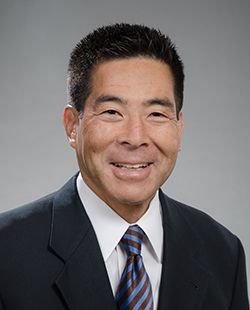
Dr. Inadomi is a national expert in comparative effectiveness research and colorectal cancer who has lent his expertise to AGA in several capacities over the years, most recently as the clinical research councillor to the board. Dr. Inadomi will serve as vice president, then president elect and will become AGA president after Digestive Disease Week® (DDW) 2021.
The AGA Nominating Committee also appointed the following slate of councillors, which is subject to membership vote.
Maria T. Abreu, MD, AGAF

Councillor-At-Large: Maria T. Abreu, MD, AGAF, is former chair of the AGA Institute Council, which plans AGA’s programming for DDW, and a researcher and clinician focusing on inflammatory bowel disease (IBD), microbiome and colorectal cancer.
David A. Katzka, MD

Education and Training Councillor: David A. Katzka, MD, has been very active in AGA’s education and practice initiatives, including his recently completed service as the chair of the AGA Institute Clinical Practice Updates Committee. Dr. Katzka received AGA’s distinguished clinician award in 2010. His research and clinical work focus on esophageal disorders.
Michael L. Kochman, MD, AGAF

Councillor-at-Large, Growth and Development: Michael L. Kochman, MD, AGAF, takes on this newly created governing board position after successfully leading the AGA Center for GI Innovation and Technology. He is an interventional endoscopist at University of Pennsylvania.
Pending approval by the voting membership, all board members begin their terms after DDW 2019. The voting membership will be sent a ballot to approve the slate of officers on or before March 21, 2019, with a response date of no later than April 20, 2019.
Thank you to our nominating committee members, pictured here at a well-deserved dinner after their committee work was completed.
Sheila E. Crowe, MD, AGAF, chair of the nominating committee, is pleased to announce that John M. Inadomi, MD, AGAF, joins the presidential line up for AGA.
John M. Inadomi, MD, AGAF
Dr. Inadomi is a national expert in comparative effectiveness research and colorectal cancer who has lent his expertise to AGA in several capacities over the years, most recently as the clinical research councillor to the board. Dr. Inadomi will serve as vice president, then president elect and will become AGA president after Digestive Disease Week® (DDW) 2021.
The AGA Nominating Committee also appointed the following slate of councillors, which is subject to membership vote.
Maria T. Abreu, MD, AGAF
Councillor-At-Large: Maria T. Abreu, MD, AGAF, is former chair of the AGA Institute Council, which plans AGA’s programming for DDW, and a researcher and clinician focusing on inflammatory bowel disease (IBD), microbiome and colorectal cancer.
David A. Katzka, MD
Education and Training Councillor: David A. Katzka, MD, has been very active in AGA’s education and practice initiatives, including his recently completed service as the chair of the AGA Institute Clinical Practice Updates Committee. Dr. Katzka received AGA’s distinguished clinician award in 2010. His research and clinical work focus on esophageal disorders.
Michael L. Kochman, MD, AGAF
Councillor-at-Large, Growth and Development: Michael L. Kochman, MD, AGAF, takes on this newly created governing board position after successfully leading the AGA Center for GI Innovation and Technology. He is an interventional endoscopist at University of Pennsylvania.
Pending approval by the voting membership, all board members begin their terms after DDW 2019. The voting membership will be sent a ballot to approve the slate of officers on or before March 21, 2019, with a response date of no later than April 20, 2019.
Thank you to our nominating committee members, pictured here at a well-deserved dinner after their committee work was completed.
Sheila E. Crowe, MD, AGAF, chair of the nominating committee, is pleased to announce that John M. Inadomi, MD, AGAF, joins the presidential line up for AGA.
John M. Inadomi, MD, AGAF
Dr. Inadomi is a national expert in comparative effectiveness research and colorectal cancer who has lent his expertise to AGA in several capacities over the years, most recently as the clinical research councillor to the board. Dr. Inadomi will serve as vice president, then president elect and will become AGA president after Digestive Disease Week® (DDW) 2021.
The AGA Nominating Committee also appointed the following slate of councillors, which is subject to membership vote.
Maria T. Abreu, MD, AGAF
Councillor-At-Large: Maria T. Abreu, MD, AGAF, is former chair of the AGA Institute Council, which plans AGA’s programming for DDW, and a researcher and clinician focusing on inflammatory bowel disease (IBD), microbiome and colorectal cancer.
David A. Katzka, MD
Education and Training Councillor: David A. Katzka, MD, has been very active in AGA’s education and practice initiatives, including his recently completed service as the chair of the AGA Institute Clinical Practice Updates Committee. Dr. Katzka received AGA’s distinguished clinician award in 2010. His research and clinical work focus on esophageal disorders.
Michael L. Kochman, MD, AGAF
Councillor-at-Large, Growth and Development: Michael L. Kochman, MD, AGAF, takes on this newly created governing board position after successfully leading the AGA Center for GI Innovation and Technology. He is an interventional endoscopist at University of Pennsylvania.
Pending approval by the voting membership, all board members begin their terms after DDW 2019. The voting membership will be sent a ballot to approve the slate of officers on or before March 21, 2019, with a response date of no later than April 20, 2019.
Thank you to our nominating committee members, pictured here at a well-deserved dinner after their committee work was completed.
Special Programming for Trainees at VAM set
This year’s Vascular Annual Meeting on June 12-15 will introduce a dedicated program for vascular trainees. The Vascular Residents and Fellows Program will help these trainees make the transition from training to practice, and to explore leadership development. Programming is set for 2 to 6 p.m. Thursday, June 13, with a reception from 6 to 7 p.m. and dinner and keynote speaker from 7 to 9:30 p.m. Attendance is open to all vascular residents and fellows currently enrolled in vascular fellowship or 0+5 residency programs. Be sure to contact e[email protected] for more information
This year’s Vascular Annual Meeting on June 12-15 will introduce a dedicated program for vascular trainees. The Vascular Residents and Fellows Program will help these trainees make the transition from training to practice, and to explore leadership development. Programming is set for 2 to 6 p.m. Thursday, June 13, with a reception from 6 to 7 p.m. and dinner and keynote speaker from 7 to 9:30 p.m. Attendance is open to all vascular residents and fellows currently enrolled in vascular fellowship or 0+5 residency programs. Be sure to contact e[email protected] for more information
This year’s Vascular Annual Meeting on June 12-15 will introduce a dedicated program for vascular trainees. The Vascular Residents and Fellows Program will help these trainees make the transition from training to practice, and to explore leadership development. Programming is set for 2 to 6 p.m. Thursday, June 13, with a reception from 6 to 7 p.m. and dinner and keynote speaker from 7 to 9:30 p.m. Attendance is open to all vascular residents and fellows currently enrolled in vascular fellowship or 0+5 residency programs. Be sure to contact e[email protected] for more information
The New Gastroenterologist seeks its next editor-in-chief
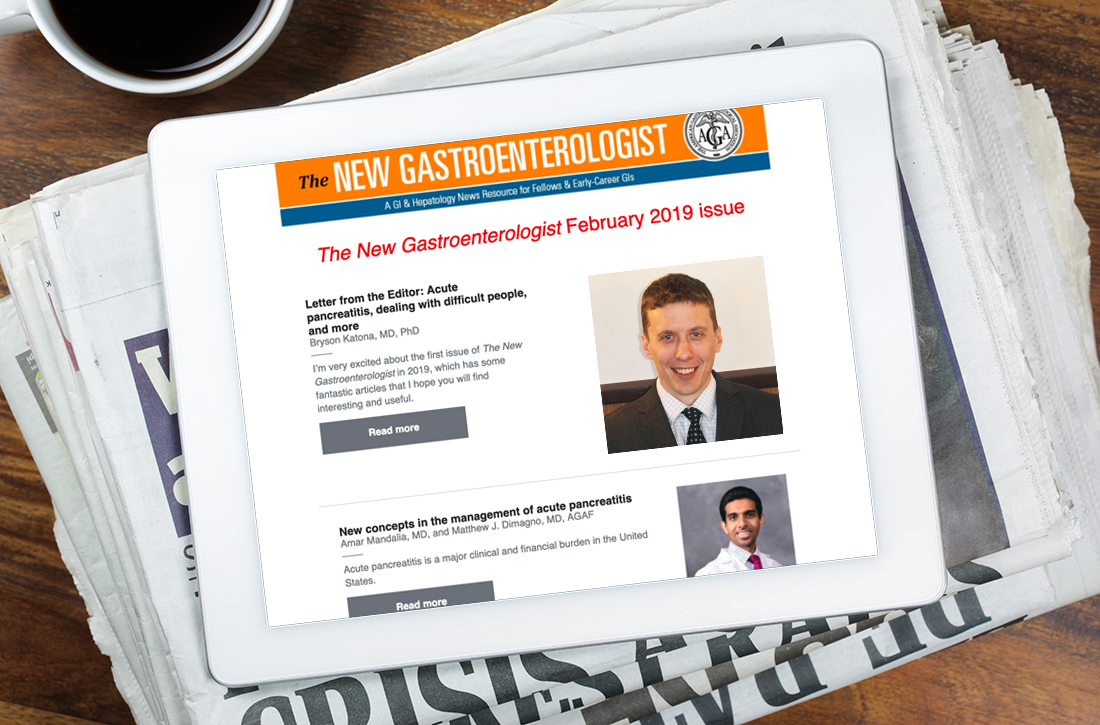
AGA’s cutting-edge, trainee and early-career focused e-newsletter The New Gastroenterologist (TNG) is seeking applications for the position of editor-in-chief (EIC). The role will facilitate the communication of the latest clinical advances among peers and build strong leadership skills managing editorial responsibilities as well as working with reviewers and fellow editors at AGA’s journals.
The term is from Oct. 1, 2019 – Sept. 30, 2022, with a transition period starting July 2019.
About TNG
TNG content covers highly relevant clinical topics, such as endoscopic management of obesity and quality metrics on colonoscopy. Also included in each issue are articles that focus on career pathways, financial and legal matters, perspectives from private practice, and other topics that are relevant to early-career GIs.
Honorarium
The EIC will receive an annual honorarium of $5,000.
Qualifications
• AGA member, between second year of fellowship and five years post-fellowship.
• Experience identifying and promoting newsworthy content that is relevant to the trainee and early-career GI community, as well as excellent judgment that expands the outstanding reputation of TNG and AGA.
• Experience in medical, scientific or news-related publishing is preferred, but not required.
• Familiarity with AGA and its priorities, activities and stances on important issues is ideal, preferably via past volunteer member experience with the association.
• The EIC must be able to devote sufficient time to TNG matters and may not accept editorial appointments to competing publications during their tenure as EIC.
For more information or to apply view the full request for application.
If you have questions, please contact Ryan Farrell, managing editor, The New Gastroenterologist, at [email protected].
AGA’s cutting-edge, trainee and early-career focused e-newsletter The New Gastroenterologist (TNG) is seeking applications for the position of editor-in-chief (EIC). The role will facilitate the communication of the latest clinical advances among peers and build strong leadership skills managing editorial responsibilities as well as working with reviewers and fellow editors at AGA’s journals.
The term is from Oct. 1, 2019 – Sept. 30, 2022, with a transition period starting July 2019.
About TNG
TNG content covers highly relevant clinical topics, such as endoscopic management of obesity and quality metrics on colonoscopy. Also included in each issue are articles that focus on career pathways, financial and legal matters, perspectives from private practice, and other topics that are relevant to early-career GIs.
Honorarium
The EIC will receive an annual honorarium of $5,000.
Qualifications
• AGA member, between second year of fellowship and five years post-fellowship.
• Experience identifying and promoting newsworthy content that is relevant to the trainee and early-career GI community, as well as excellent judgment that expands the outstanding reputation of TNG and AGA.
• Experience in medical, scientific or news-related publishing is preferred, but not required.
• Familiarity with AGA and its priorities, activities and stances on important issues is ideal, preferably via past volunteer member experience with the association.
• The EIC must be able to devote sufficient time to TNG matters and may not accept editorial appointments to competing publications during their tenure as EIC.
For more information or to apply view the full request for application.
If you have questions, please contact Ryan Farrell, managing editor, The New Gastroenterologist, at [email protected].
AGA’s cutting-edge, trainee and early-career focused e-newsletter The New Gastroenterologist (TNG) is seeking applications for the position of editor-in-chief (EIC). The role will facilitate the communication of the latest clinical advances among peers and build strong leadership skills managing editorial responsibilities as well as working with reviewers and fellow editors at AGA’s journals.
The term is from Oct. 1, 2019 – Sept. 30, 2022, with a transition period starting July 2019.
About TNG
TNG content covers highly relevant clinical topics, such as endoscopic management of obesity and quality metrics on colonoscopy. Also included in each issue are articles that focus on career pathways, financial and legal matters, perspectives from private practice, and other topics that are relevant to early-career GIs.
Honorarium
The EIC will receive an annual honorarium of $5,000.
Qualifications
• AGA member, between second year of fellowship and five years post-fellowship.
• Experience identifying and promoting newsworthy content that is relevant to the trainee and early-career GI community, as well as excellent judgment that expands the outstanding reputation of TNG and AGA.
• Experience in medical, scientific or news-related publishing is preferred, but not required.
• Familiarity with AGA and its priorities, activities and stances on important issues is ideal, preferably via past volunteer member experience with the association.
• The EIC must be able to devote sufficient time to TNG matters and may not accept editorial appointments to competing publications during their tenure as EIC.
For more information or to apply view the full request for application.
If you have questions, please contact Ryan Farrell, managing editor, The New Gastroenterologist, at [email protected].
Comment on Reporting Standards
The Society for Vascular Surgeons and the Society for Thoracic Surgeons are seeking comments on draft Reporting Standards for Type-B Aortic Dissection. Reports focusing on type-B aortic dissection have become increasingly common in recent years, but there is currently no guidance for investigators on reporting. Submit your comments here and direct questions to Kristin Hitchcock, the SVS senior manager for guidelines & quality.
The Society for Vascular Surgeons and the Society for Thoracic Surgeons are seeking comments on draft Reporting Standards for Type-B Aortic Dissection. Reports focusing on type-B aortic dissection have become increasingly common in recent years, but there is currently no guidance for investigators on reporting. Submit your comments here and direct questions to Kristin Hitchcock, the SVS senior manager for guidelines & quality.
The Society for Vascular Surgeons and the Society for Thoracic Surgeons are seeking comments on draft Reporting Standards for Type-B Aortic Dissection. Reports focusing on type-B aortic dissection have become increasingly common in recent years, but there is currently no guidance for investigators on reporting. Submit your comments here and direct questions to Kristin Hitchcock, the SVS senior manager for guidelines & quality.