User login
This month in the journal CHEST®
Editor’s Picks
Richard S. Irwin, MD, Master FCCP
Giants in Chest Medicine
David C. Zavala, MD, FCCP
Original Research
Accuracy of Algorithms to Identify Pulmonary Arterial Hypertension in Administrative Data:
A Systematic Review. By K. R. Gillmeyer, et al.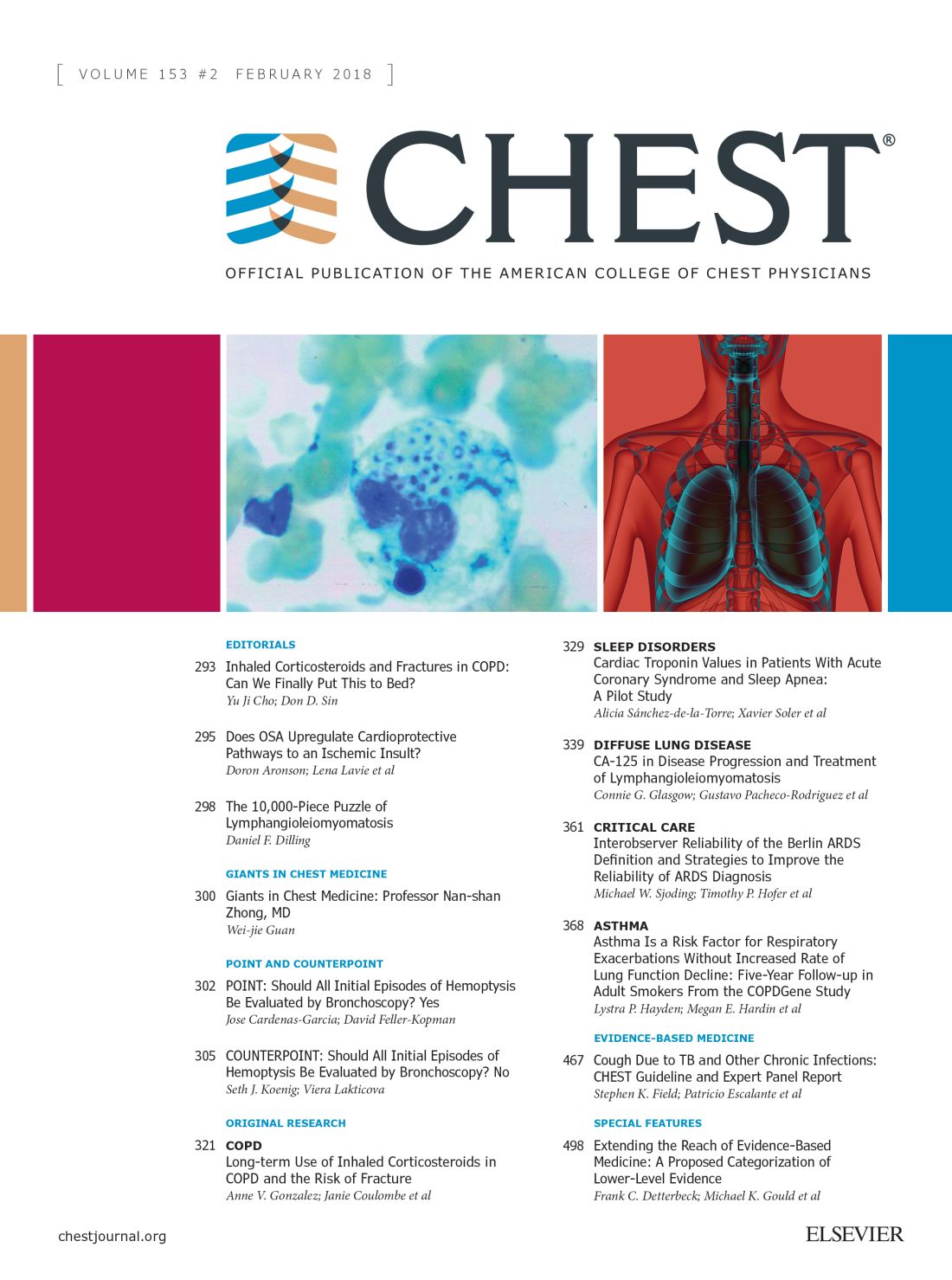
Hypersensitivity Pneumonitis: Radiologic Phenotypes Are Associated With Distinct Survival
Time and Pulmonary Function Trajectory. By M. L. Salisbury, et al.
The Effects of Long-term CPAP on Weight Change in Patients With Comorbid OSA and
Cardiovascular Disease: Data From the SAVE Trial. By Q. Ou, et al, on behalf of the SAVE investigators.
Editor’s Picks
Richard S. Irwin, MD, Master FCCP
Giants in Chest Medicine
David C. Zavala, MD, FCCP
Original Research
Accuracy of Algorithms to Identify Pulmonary Arterial Hypertension in Administrative Data:
A Systematic Review. By K. R. Gillmeyer, et al.
Hypersensitivity Pneumonitis: Radiologic Phenotypes Are Associated With Distinct Survival
Time and Pulmonary Function Trajectory. By M. L. Salisbury, et al.
The Effects of Long-term CPAP on Weight Change in Patients With Comorbid OSA and
Cardiovascular Disease: Data From the SAVE Trial. By Q. Ou, et al, on behalf of the SAVE investigators.
Editor’s Picks
Richard S. Irwin, MD, Master FCCP
Giants in Chest Medicine
David C. Zavala, MD, FCCP
Original Research
Accuracy of Algorithms to Identify Pulmonary Arterial Hypertension in Administrative Data:
A Systematic Review. By K. R. Gillmeyer, et al.
Hypersensitivity Pneumonitis: Radiologic Phenotypes Are Associated With Distinct Survival
Time and Pulmonary Function Trajectory. By M. L. Salisbury, et al.
The Effects of Long-term CPAP on Weight Change in Patients With Comorbid OSA and
Cardiovascular Disease: Data From the SAVE Trial. By Q. Ou, et al, on behalf of the SAVE investigators.
Updates from your CHEST Board of Regents
In late January, your Board of Regents met for its first face-to-face quarterly meeting under the leadership of new President Clayton Cowl, MD, MS, FCCP. One of the most valuable aspects of serving on the Board is an opportunity to take an overall look at the direction of the organization. The Board makes a concerted effort not to get too deep into the weeds planning out specific tactics for achieving goals; we have a great many outstanding volunteers serving on dozens of our committees who do an incredible job of making things happen. The Board tries to focus on overall organizational strategy. Are we going in the right direction? Are there opportunities of which we should be taking better advantage? Are there efforts in which we are currently engaged that may not be yielding outcomes as we expected? To better answer these questions, Dr. Cowl and his team asked all members of the Board of Regents and the Strategic Planning Subcommittee members of the Foundation Board of Trustees, as well as senior CHEST staff, to engage in an environmental scan to take an aggressive look at where we are and where we are headed. The output from our first environmental scan is currently being curated into a list of highest priority items that will be shared with the general membership in the coming months.
A review of our accomplishments over the last 6 months came next. Our new Executive Vice President and Chief Operating Officer, Dr. Robert Musacchio, has superseded all expectations in his first few months in the role. In addition to continuing to push the organization toward the “One CHEST” model by better integrating the Foundation with the College, as well as refining our operating principles in working with industry, Bob is further developing our international reach—exploring collaborations with a number of large international societies and planning meetings abroad later this year (CHEST Congress Thailand and CHEST Regional Congress Athens) and into the next (in Italy, with the regional meeting location to be determined). We are also in the process of recruiting for a new position, Chief Learning Officer, a role that will serve not only to better organize the educational activities of CHEST, but to also serve as a visionary to better imagine what future projects we should be pursuing to be of better service and value to our members.
We took a few moments to recognize the new, incoming Editor in Chief of the journal CHEST®; Peter Mazzone, MD, FCCP, will have some huge shoes to fill in taking the editor’s chair from Richard Irwin, MD, Master FCCP, who has served the journal in this role for more than a decade. Under Dr. Irwin’s leadership, CHEST has been the most-read publication amongst practicing pulmonary specialists; he is also responsible for having launched CHEST’s social media presence, including both video series that integrated directly with the journal (such as Ultrasound Corner) and podcasts. Richard also spoke beautifully about his passion for patient-centered care as a keynote speaker at CHEST 2018. Peter has outlined a number of different areas of focus for the journal in the next year, including putting a high priority on improving the reader experience and crafting an even better web and multimedia presence. We look forward to great things from the journal!
Chris Carroll, MD, FCCP, who chairs CHEST’s Digital Strategy Task Force, presented to the Board on their progress to date. The goal of this group is to evaluate the user experience for CHEST’s content delivery platforms, including the website, apps, and our social media platforms to identify opportunities for improvements that will enable us to better provide our members with on demand, high quality information to improve patient care through a personalized, seamless digital user experience. The team is being co-led by Nicki Augustyn, Senior Vice President for Marketing, Communications, and Publishing, and Ron Moen, Chief Information Officer. We look forward to further updates on this important project.
As I stated in my opening, many of the good things that CHEST does can only happen with the participation of our great members, and so I want to take the time to recognize the NetWorks and everything that they do for the College. In the past year, under the leadership of Council of NetWorks Chairs Hassan Bencheqroun, MD, FCCP, and David Zielinski, MD, FCCP, the NetWorks produced more than 60% of the content at the 2018 CHEST meeting and are actively working on projects ranging from creating educational videos for public consumption to CHEST guidelines proposals and crafting a donor registry for lung transplantation. Our volunteer leaders are our most valuable resource; if you are not currently engaged in the NetWorks, please consider getting involved this spring during the nomination process!
It remains a privilege for the Board to serve this great organization. If you are interested in hearing more, or getting more engaged, please send me an email at [email protected].
David A. Schulman, MD, FCCP
In late January, your Board of Regents met for its first face-to-face quarterly meeting under the leadership of new President Clayton Cowl, MD, MS, FCCP. One of the most valuable aspects of serving on the Board is an opportunity to take an overall look at the direction of the organization. The Board makes a concerted effort not to get too deep into the weeds planning out specific tactics for achieving goals; we have a great many outstanding volunteers serving on dozens of our committees who do an incredible job of making things happen. The Board tries to focus on overall organizational strategy. Are we going in the right direction? Are there opportunities of which we should be taking better advantage? Are there efforts in which we are currently engaged that may not be yielding outcomes as we expected? To better answer these questions, Dr. Cowl and his team asked all members of the Board of Regents and the Strategic Planning Subcommittee members of the Foundation Board of Trustees, as well as senior CHEST staff, to engage in an environmental scan to take an aggressive look at where we are and where we are headed. The output from our first environmental scan is currently being curated into a list of highest priority items that will be shared with the general membership in the coming months.
A review of our accomplishments over the last 6 months came next. Our new Executive Vice President and Chief Operating Officer, Dr. Robert Musacchio, has superseded all expectations in his first few months in the role. In addition to continuing to push the organization toward the “One CHEST” model by better integrating the Foundation with the College, as well as refining our operating principles in working with industry, Bob is further developing our international reach—exploring collaborations with a number of large international societies and planning meetings abroad later this year (CHEST Congress Thailand and CHEST Regional Congress Athens) and into the next (in Italy, with the regional meeting location to be determined). We are also in the process of recruiting for a new position, Chief Learning Officer, a role that will serve not only to better organize the educational activities of CHEST, but to also serve as a visionary to better imagine what future projects we should be pursuing to be of better service and value to our members.
We took a few moments to recognize the new, incoming Editor in Chief of the journal CHEST®; Peter Mazzone, MD, FCCP, will have some huge shoes to fill in taking the editor’s chair from Richard Irwin, MD, Master FCCP, who has served the journal in this role for more than a decade. Under Dr. Irwin’s leadership, CHEST has been the most-read publication amongst practicing pulmonary specialists; he is also responsible for having launched CHEST’s social media presence, including both video series that integrated directly with the journal (such as Ultrasound Corner) and podcasts. Richard also spoke beautifully about his passion for patient-centered care as a keynote speaker at CHEST 2018. Peter has outlined a number of different areas of focus for the journal in the next year, including putting a high priority on improving the reader experience and crafting an even better web and multimedia presence. We look forward to great things from the journal!
Chris Carroll, MD, FCCP, who chairs CHEST’s Digital Strategy Task Force, presented to the Board on their progress to date. The goal of this group is to evaluate the user experience for CHEST’s content delivery platforms, including the website, apps, and our social media platforms to identify opportunities for improvements that will enable us to better provide our members with on demand, high quality information to improve patient care through a personalized, seamless digital user experience. The team is being co-led by Nicki Augustyn, Senior Vice President for Marketing, Communications, and Publishing, and Ron Moen, Chief Information Officer. We look forward to further updates on this important project.
As I stated in my opening, many of the good things that CHEST does can only happen with the participation of our great members, and so I want to take the time to recognize the NetWorks and everything that they do for the College. In the past year, under the leadership of Council of NetWorks Chairs Hassan Bencheqroun, MD, FCCP, and David Zielinski, MD, FCCP, the NetWorks produced more than 60% of the content at the 2018 CHEST meeting and are actively working on projects ranging from creating educational videos for public consumption to CHEST guidelines proposals and crafting a donor registry for lung transplantation. Our volunteer leaders are our most valuable resource; if you are not currently engaged in the NetWorks, please consider getting involved this spring during the nomination process!
It remains a privilege for the Board to serve this great organization. If you are interested in hearing more, or getting more engaged, please send me an email at [email protected].
David A. Schulman, MD, FCCP
In late January, your Board of Regents met for its first face-to-face quarterly meeting under the leadership of new President Clayton Cowl, MD, MS, FCCP. One of the most valuable aspects of serving on the Board is an opportunity to take an overall look at the direction of the organization. The Board makes a concerted effort not to get too deep into the weeds planning out specific tactics for achieving goals; we have a great many outstanding volunteers serving on dozens of our committees who do an incredible job of making things happen. The Board tries to focus on overall organizational strategy. Are we going in the right direction? Are there opportunities of which we should be taking better advantage? Are there efforts in which we are currently engaged that may not be yielding outcomes as we expected? To better answer these questions, Dr. Cowl and his team asked all members of the Board of Regents and the Strategic Planning Subcommittee members of the Foundation Board of Trustees, as well as senior CHEST staff, to engage in an environmental scan to take an aggressive look at where we are and where we are headed. The output from our first environmental scan is currently being curated into a list of highest priority items that will be shared with the general membership in the coming months.
A review of our accomplishments over the last 6 months came next. Our new Executive Vice President and Chief Operating Officer, Dr. Robert Musacchio, has superseded all expectations in his first few months in the role. In addition to continuing to push the organization toward the “One CHEST” model by better integrating the Foundation with the College, as well as refining our operating principles in working with industry, Bob is further developing our international reach—exploring collaborations with a number of large international societies and planning meetings abroad later this year (CHEST Congress Thailand and CHEST Regional Congress Athens) and into the next (in Italy, with the regional meeting location to be determined). We are also in the process of recruiting for a new position, Chief Learning Officer, a role that will serve not only to better organize the educational activities of CHEST, but to also serve as a visionary to better imagine what future projects we should be pursuing to be of better service and value to our members.
We took a few moments to recognize the new, incoming Editor in Chief of the journal CHEST®; Peter Mazzone, MD, FCCP, will have some huge shoes to fill in taking the editor’s chair from Richard Irwin, MD, Master FCCP, who has served the journal in this role for more than a decade. Under Dr. Irwin’s leadership, CHEST has been the most-read publication amongst practicing pulmonary specialists; he is also responsible for having launched CHEST’s social media presence, including both video series that integrated directly with the journal (such as Ultrasound Corner) and podcasts. Richard also spoke beautifully about his passion for patient-centered care as a keynote speaker at CHEST 2018. Peter has outlined a number of different areas of focus for the journal in the next year, including putting a high priority on improving the reader experience and crafting an even better web and multimedia presence. We look forward to great things from the journal!
Chris Carroll, MD, FCCP, who chairs CHEST’s Digital Strategy Task Force, presented to the Board on their progress to date. The goal of this group is to evaluate the user experience for CHEST’s content delivery platforms, including the website, apps, and our social media platforms to identify opportunities for improvements that will enable us to better provide our members with on demand, high quality information to improve patient care through a personalized, seamless digital user experience. The team is being co-led by Nicki Augustyn, Senior Vice President for Marketing, Communications, and Publishing, and Ron Moen, Chief Information Officer. We look forward to further updates on this important project.
As I stated in my opening, many of the good things that CHEST does can only happen with the participation of our great members, and so I want to take the time to recognize the NetWorks and everything that they do for the College. In the past year, under the leadership of Council of NetWorks Chairs Hassan Bencheqroun, MD, FCCP, and David Zielinski, MD, FCCP, the NetWorks produced more than 60% of the content at the 2018 CHEST meeting and are actively working on projects ranging from creating educational videos for public consumption to CHEST guidelines proposals and crafting a donor registry for lung transplantation. Our volunteer leaders are our most valuable resource; if you are not currently engaged in the NetWorks, please consider getting involved this spring during the nomination process!
It remains a privilege for the Board to serve this great organization. If you are interested in hearing more, or getting more engaged, please send me an email at [email protected].
David A. Schulman, MD, FCCP
Black lung. Choosing the right words. Low-tidal volume. Recent key OSA articles
Occupational and Environmental Health
Black lung disease in the 21st century
Inhalation and deposition of coal dust particles cause a range of lung injury from coal workers’ pneumoconiosis (CWP) to dust-related diffuse fibrosis to COPD. Despite workplace standards and improved environmental controls to limit dust exposure within coal mines, incidence of “black lung disease” in the United States has increased since the turn of the century (Antao VC, et al. Occup Environ Med. 2005;62[10]:670). Coal miners working in the Appalachian Mountains have been particularly vulnerable to developing rapidly progressive and severe pneumoconiosis. In 2018, three black lung clinics in central Appalachia uncovered the largest cluster of progressive massive fibrosis (PMF) ever reported (Blackley DJ, et al. JAMA. 2018;319[5]:500). An investigation by National Public Radio (NPR) and the Public Broadcasting Service (PBS) program Frontline identified more than 2,000 Appalachian coal miners suffering with PMF from 2011 to 2016, while only 99 cases of PMF were identified by the current federal monitoring program during the same period (https://goo.gl/ZJXp1W). Only about one-third of coal miners may participate in screening for black lung disease, and lack of participation could result from barriers such as fear of retaliation from employers (Siddons A. CQ-Roll Call, Inc. March 1, 2019; https://goo.gl/5mfVFvl). Ongoing research is studying factors leading to the resurgence in CWP. Increasing silica content in coal dust is a likely culprit that has escaped mine safety regulations. Given the rising incidence and the increasing morbidity and mortality of black lung disease, there is a need to educate and engage pulmonologists and others to improve surveillance and early recognition of the spectrum of coal-dust-related lung diseases to decrease morbidity and mortality among this vulnerable occupational group.

Drew Harris, MD
Amy Ahasic, MD, MPH, FCCP
Steering Committee Members
Palliative and End-of-Life Care
Importance of language and word choice when discussing cardiopulmonary resuscitation (CPR)
Words matter. Whether spoken or written, the words we choose when communicating with each other are fundamentally important, both by intention of the originator and the understanding of the audience, whether or not the meaning is imparted faithfully.

In medicine, we identify patients with their illness, “the septic patient,” or category, “the terminal patient” or “the DNR patient” (Altillio, et al. AAHPM Quarterly. 2013;14-18). We escape responsibility for adequate communication by adopting a language filled with anatomic and pharmaceutical references where we blame patients for their disease process, eg, “the patient failed extubation” or “the patient is noncompliant.” We tend to resort to medical jargon or terror language in order to achieve the desired outcome. Never is this more evident than when discussing code status. In the ICU, when one hopes to “get the DNR,” it is not uncommon to hear the phrase, “If your heart stops, we would have to break all of your ribs, and that would be torture.” While the data are clear on harmful effects of CPR, and its general lack of success for people with a serious illness (Dunham, et al. Eur Radiol. 2018;28[10]:4122), it is unnecessary to use threatening language in our communication.
Compassionate care begins and ends with effective communication. The Palliative and End of Life Care NetWork supports making better word choices. We encourage framing end-of-life care around what will continue to work to help support the patient and not doing things that we know do not work. “We will do everything to help manage his/her breathing and heart rate, and when his/her heart stops, we will allow him/her to die naturally” (Curtis, et al. Intensive Care Med. 2014;40:606).
Benjamin Moses, MD
Anne Kelemen, LICSW
Steering Committee Members
Respiratory Care

Low-tidal volume ventilation
Respir CMechanical ventilation in postoperative (post-op) patients is essential in care because it can determine the patient’s overall outcome, especially in post-op cardiovascular surgery patients. The risks of hemodynamic instability and consideration of total body organ function make choosing the correct strategy of mechanical ventilation vital (Ball, et al. Crit Care. 2016;22[4]:386). The current standard of practice for mechanically ventilated patients is to use low-tidal volume (LTV) ventilation, meaning administering 6-7 mL/kg of ideal body weight (Hoegl, et al. Anesthesiology. 2016;29[4]:94). The benefits of LTV ventilation include significantly decreased risk in lung injury, decreased risk of developing ARDS, and lessening of hemodynamic compromise (Hoegl, et al. 2016); (Stephens, et al. Crit Care Med. 2015;43:1477). Also, due to its high efficacy in terms of cost-effective care, such as shorter ICU stays and less number of days supported by mechanical ventilation, many hospitals have incorporated LTV strategy into the care of almost all post-op patients (Stephens, et al. 2015). However, no randomized controlled trials have been conducted in post-op cardiovascular patients undergoing mechanical ventilation to determine if LTV ventilation (6-7 mL/kg) has superior efficacy over higher levels of ventilation (8-10 mL/kg). This patient population tends to have normal lung function and, therefore, a LTV strategy could possibly be too conservative, whereas larger tidal volumes may be more comfortable and provide better ventilation considering the increased dead space in post-op cardiovascular patients. In order to address this gap in the literature, it is essential to determine if significant differences exist in patient mortality, ventilator days, hospital stay, and incidence of pulmonary complications for this population undergoing ventilation volumes of approximately 6 mL/kg or 8 mL/kg of ideal body weight.
Bethlehem Markos
Fellow-in-Training
Sleep Medicine
In case you missed it: Recent findings in obstructive sleep apnea

On behalf of the Sleep Medicine NetWork, I would like to highlight a few key articles related to OSA:
A potential drug combo to treat OSA (Taranto-Montemurro, et al. Am J Respir Crit Care Med. Articles in Press. Published on 05-November-2018 as 10.1164/rccm.201808-1493OC) The apnea-hypopnea index (AHI) decreased by over 20 events/hour in a small group of patients receiving atomoxetine and oxybutynin, presumably via increased activity of the upper airway dilator muscles.
CPAP may reduce hospitalizations (Truong, et al. J Clin Sleep Med. 2018;14[2]:183) Patients nonadherent to CPAP had greater all-cause 30-day readmission rates over an 8-year period after adjusting for comorbidities, suggesting the potential of CPAP to prevent recurrent hospitalizations.
Patients getting in-lab sleep testing are increasingly complex (Colaco, et al. J Clin Sleep Med. 2018;14[4]:631) Patients undergoing PSG as opposed to home testing have more medical comorbidities than in the past, with implications for how labs are staffed and what monitoring is available.
OSA severity predicts amyloid burden (Sharma. Am J Respir Crit Care Med. 2018;197[7]:933) This study highlights a potential pathway in which OSA impacts amyloid deposition and, thereby, vulnerability to developing Alzheimer disease.
A drug for residual sleepiness in OSA (Schweitzer, et al. Am J Respir Crit Care Med Articles in Press. Published on 06-December-2018 as 10.1164/rccm.201806-1100OC) For patients with OSA whose sleepiness persisted despite PAP adherence, this 12-week randomized trial showed dose-dependent improvements in wakefulness with use of solriamfetol, a dopamine/norepinephrine reuptake inhibitor.
Lauren Tobias, MD
Steering Committee Member
Occupational and Environmental Health
Black lung disease in the 21st century
Inhalation and deposition of coal dust particles cause a range of lung injury from coal workers’ pneumoconiosis (CWP) to dust-related diffuse fibrosis to COPD. Despite workplace standards and improved environmental controls to limit dust exposure within coal mines, incidence of “black lung disease” in the United States has increased since the turn of the century (Antao VC, et al. Occup Environ Med. 2005;62[10]:670). Coal miners working in the Appalachian Mountains have been particularly vulnerable to developing rapidly progressive and severe pneumoconiosis. In 2018, three black lung clinics in central Appalachia uncovered the largest cluster of progressive massive fibrosis (PMF) ever reported (Blackley DJ, et al. JAMA. 2018;319[5]:500). An investigation by National Public Radio (NPR) and the Public Broadcasting Service (PBS) program Frontline identified more than 2,000 Appalachian coal miners suffering with PMF from 2011 to 2016, while only 99 cases of PMF were identified by the current federal monitoring program during the same period (https://goo.gl/ZJXp1W). Only about one-third of coal miners may participate in screening for black lung disease, and lack of participation could result from barriers such as fear of retaliation from employers (Siddons A. CQ-Roll Call, Inc. March 1, 2019; https://goo.gl/5mfVFvl). Ongoing research is studying factors leading to the resurgence in CWP. Increasing silica content in coal dust is a likely culprit that has escaped mine safety regulations. Given the rising incidence and the increasing morbidity and mortality of black lung disease, there is a need to educate and engage pulmonologists and others to improve surveillance and early recognition of the spectrum of coal-dust-related lung diseases to decrease morbidity and mortality among this vulnerable occupational group.
Drew Harris, MD
Amy Ahasic, MD, MPH, FCCP
Steering Committee Members
Palliative and End-of-Life Care
Importance of language and word choice when discussing cardiopulmonary resuscitation (CPR)
Words matter. Whether spoken or written, the words we choose when communicating with each other are fundamentally important, both by intention of the originator and the understanding of the audience, whether or not the meaning is imparted faithfully.
In medicine, we identify patients with their illness, “the septic patient,” or category, “the terminal patient” or “the DNR patient” (Altillio, et al. AAHPM Quarterly. 2013;14-18). We escape responsibility for adequate communication by adopting a language filled with anatomic and pharmaceutical references where we blame patients for their disease process, eg, “the patient failed extubation” or “the patient is noncompliant.” We tend to resort to medical jargon or terror language in order to achieve the desired outcome. Never is this more evident than when discussing code status. In the ICU, when one hopes to “get the DNR,” it is not uncommon to hear the phrase, “If your heart stops, we would have to break all of your ribs, and that would be torture.” While the data are clear on harmful effects of CPR, and its general lack of success for people with a serious illness (Dunham, et al. Eur Radiol. 2018;28[10]:4122), it is unnecessary to use threatening language in our communication.
Compassionate care begins and ends with effective communication. The Palliative and End of Life Care NetWork supports making better word choices. We encourage framing end-of-life care around what will continue to work to help support the patient and not doing things that we know do not work. “We will do everything to help manage his/her breathing and heart rate, and when his/her heart stops, we will allow him/her to die naturally” (Curtis, et al. Intensive Care Med. 2014;40:606).
Benjamin Moses, MD
Anne Kelemen, LICSW
Steering Committee Members
Respiratory Care
Low-tidal volume ventilation
Respir CMechanical ventilation in postoperative (post-op) patients is essential in care because it can determine the patient’s overall outcome, especially in post-op cardiovascular surgery patients. The risks of hemodynamic instability and consideration of total body organ function make choosing the correct strategy of mechanical ventilation vital (Ball, et al. Crit Care. 2016;22[4]:386). The current standard of practice for mechanically ventilated patients is to use low-tidal volume (LTV) ventilation, meaning administering 6-7 mL/kg of ideal body weight (Hoegl, et al. Anesthesiology. 2016;29[4]:94). The benefits of LTV ventilation include significantly decreased risk in lung injury, decreased risk of developing ARDS, and lessening of hemodynamic compromise (Hoegl, et al. 2016); (Stephens, et al. Crit Care Med. 2015;43:1477). Also, due to its high efficacy in terms of cost-effective care, such as shorter ICU stays and less number of days supported by mechanical ventilation, many hospitals have incorporated LTV strategy into the care of almost all post-op patients (Stephens, et al. 2015). However, no randomized controlled trials have been conducted in post-op cardiovascular patients undergoing mechanical ventilation to determine if LTV ventilation (6-7 mL/kg) has superior efficacy over higher levels of ventilation (8-10 mL/kg). This patient population tends to have normal lung function and, therefore, a LTV strategy could possibly be too conservative, whereas larger tidal volumes may be more comfortable and provide better ventilation considering the increased dead space in post-op cardiovascular patients. In order to address this gap in the literature, it is essential to determine if significant differences exist in patient mortality, ventilator days, hospital stay, and incidence of pulmonary complications for this population undergoing ventilation volumes of approximately 6 mL/kg or 8 mL/kg of ideal body weight.
Bethlehem Markos
Fellow-in-Training
Sleep Medicine
In case you missed it: Recent findings in obstructive sleep apnea
On behalf of the Sleep Medicine NetWork, I would like to highlight a few key articles related to OSA:
A potential drug combo to treat OSA (Taranto-Montemurro, et al. Am J Respir Crit Care Med. Articles in Press. Published on 05-November-2018 as 10.1164/rccm.201808-1493OC) The apnea-hypopnea index (AHI) decreased by over 20 events/hour in a small group of patients receiving atomoxetine and oxybutynin, presumably via increased activity of the upper airway dilator muscles.
CPAP may reduce hospitalizations (Truong, et al. J Clin Sleep Med. 2018;14[2]:183) Patients nonadherent to CPAP had greater all-cause 30-day readmission rates over an 8-year period after adjusting for comorbidities, suggesting the potential of CPAP to prevent recurrent hospitalizations.
Patients getting in-lab sleep testing are increasingly complex (Colaco, et al. J Clin Sleep Med. 2018;14[4]:631) Patients undergoing PSG as opposed to home testing have more medical comorbidities than in the past, with implications for how labs are staffed and what monitoring is available.
OSA severity predicts amyloid burden (Sharma. Am J Respir Crit Care Med. 2018;197[7]:933) This study highlights a potential pathway in which OSA impacts amyloid deposition and, thereby, vulnerability to developing Alzheimer disease.
A drug for residual sleepiness in OSA (Schweitzer, et al. Am J Respir Crit Care Med Articles in Press. Published on 06-December-2018 as 10.1164/rccm.201806-1100OC) For patients with OSA whose sleepiness persisted despite PAP adherence, this 12-week randomized trial showed dose-dependent improvements in wakefulness with use of solriamfetol, a dopamine/norepinephrine reuptake inhibitor.
Lauren Tobias, MD
Steering Committee Member
Occupational and Environmental Health
Black lung disease in the 21st century
Inhalation and deposition of coal dust particles cause a range of lung injury from coal workers’ pneumoconiosis (CWP) to dust-related diffuse fibrosis to COPD. Despite workplace standards and improved environmental controls to limit dust exposure within coal mines, incidence of “black lung disease” in the United States has increased since the turn of the century (Antao VC, et al. Occup Environ Med. 2005;62[10]:670). Coal miners working in the Appalachian Mountains have been particularly vulnerable to developing rapidly progressive and severe pneumoconiosis. In 2018, three black lung clinics in central Appalachia uncovered the largest cluster of progressive massive fibrosis (PMF) ever reported (Blackley DJ, et al. JAMA. 2018;319[5]:500). An investigation by National Public Radio (NPR) and the Public Broadcasting Service (PBS) program Frontline identified more than 2,000 Appalachian coal miners suffering with PMF from 2011 to 2016, while only 99 cases of PMF were identified by the current federal monitoring program during the same period (https://goo.gl/ZJXp1W). Only about one-third of coal miners may participate in screening for black lung disease, and lack of participation could result from barriers such as fear of retaliation from employers (Siddons A. CQ-Roll Call, Inc. March 1, 2019; https://goo.gl/5mfVFvl). Ongoing research is studying factors leading to the resurgence in CWP. Increasing silica content in coal dust is a likely culprit that has escaped mine safety regulations. Given the rising incidence and the increasing morbidity and mortality of black lung disease, there is a need to educate and engage pulmonologists and others to improve surveillance and early recognition of the spectrum of coal-dust-related lung diseases to decrease morbidity and mortality among this vulnerable occupational group.
Drew Harris, MD
Amy Ahasic, MD, MPH, FCCP
Steering Committee Members
Palliative and End-of-Life Care
Importance of language and word choice when discussing cardiopulmonary resuscitation (CPR)
Words matter. Whether spoken or written, the words we choose when communicating with each other are fundamentally important, both by intention of the originator and the understanding of the audience, whether or not the meaning is imparted faithfully.
In medicine, we identify patients with their illness, “the septic patient,” or category, “the terminal patient” or “the DNR patient” (Altillio, et al. AAHPM Quarterly. 2013;14-18). We escape responsibility for adequate communication by adopting a language filled with anatomic and pharmaceutical references where we blame patients for their disease process, eg, “the patient failed extubation” or “the patient is noncompliant.” We tend to resort to medical jargon or terror language in order to achieve the desired outcome. Never is this more evident than when discussing code status. In the ICU, when one hopes to “get the DNR,” it is not uncommon to hear the phrase, “If your heart stops, we would have to break all of your ribs, and that would be torture.” While the data are clear on harmful effects of CPR, and its general lack of success for people with a serious illness (Dunham, et al. Eur Radiol. 2018;28[10]:4122), it is unnecessary to use threatening language in our communication.
Compassionate care begins and ends with effective communication. The Palliative and End of Life Care NetWork supports making better word choices. We encourage framing end-of-life care around what will continue to work to help support the patient and not doing things that we know do not work. “We will do everything to help manage his/her breathing and heart rate, and when his/her heart stops, we will allow him/her to die naturally” (Curtis, et al. Intensive Care Med. 2014;40:606).
Benjamin Moses, MD
Anne Kelemen, LICSW
Steering Committee Members
Respiratory Care
Low-tidal volume ventilation
Respir CMechanical ventilation in postoperative (post-op) patients is essential in care because it can determine the patient’s overall outcome, especially in post-op cardiovascular surgery patients. The risks of hemodynamic instability and consideration of total body organ function make choosing the correct strategy of mechanical ventilation vital (Ball, et al. Crit Care. 2016;22[4]:386). The current standard of practice for mechanically ventilated patients is to use low-tidal volume (LTV) ventilation, meaning administering 6-7 mL/kg of ideal body weight (Hoegl, et al. Anesthesiology. 2016;29[4]:94). The benefits of LTV ventilation include significantly decreased risk in lung injury, decreased risk of developing ARDS, and lessening of hemodynamic compromise (Hoegl, et al. 2016); (Stephens, et al. Crit Care Med. 2015;43:1477). Also, due to its high efficacy in terms of cost-effective care, such as shorter ICU stays and less number of days supported by mechanical ventilation, many hospitals have incorporated LTV strategy into the care of almost all post-op patients (Stephens, et al. 2015). However, no randomized controlled trials have been conducted in post-op cardiovascular patients undergoing mechanical ventilation to determine if LTV ventilation (6-7 mL/kg) has superior efficacy over higher levels of ventilation (8-10 mL/kg). This patient population tends to have normal lung function and, therefore, a LTV strategy could possibly be too conservative, whereas larger tidal volumes may be more comfortable and provide better ventilation considering the increased dead space in post-op cardiovascular patients. In order to address this gap in the literature, it is essential to determine if significant differences exist in patient mortality, ventilator days, hospital stay, and incidence of pulmonary complications for this population undergoing ventilation volumes of approximately 6 mL/kg or 8 mL/kg of ideal body weight.
Bethlehem Markos
Fellow-in-Training
Sleep Medicine
In case you missed it: Recent findings in obstructive sleep apnea
On behalf of the Sleep Medicine NetWork, I would like to highlight a few key articles related to OSA:
A potential drug combo to treat OSA (Taranto-Montemurro, et al. Am J Respir Crit Care Med. Articles in Press. Published on 05-November-2018 as 10.1164/rccm.201808-1493OC) The apnea-hypopnea index (AHI) decreased by over 20 events/hour in a small group of patients receiving atomoxetine and oxybutynin, presumably via increased activity of the upper airway dilator muscles.
CPAP may reduce hospitalizations (Truong, et al. J Clin Sleep Med. 2018;14[2]:183) Patients nonadherent to CPAP had greater all-cause 30-day readmission rates over an 8-year period after adjusting for comorbidities, suggesting the potential of CPAP to prevent recurrent hospitalizations.
Patients getting in-lab sleep testing are increasingly complex (Colaco, et al. J Clin Sleep Med. 2018;14[4]:631) Patients undergoing PSG as opposed to home testing have more medical comorbidities than in the past, with implications for how labs are staffed and what monitoring is available.
OSA severity predicts amyloid burden (Sharma. Am J Respir Crit Care Med. 2018;197[7]:933) This study highlights a potential pathway in which OSA impacts amyloid deposition and, thereby, vulnerability to developing Alzheimer disease.
A drug for residual sleepiness in OSA (Schweitzer, et al. Am J Respir Crit Care Med Articles in Press. Published on 06-December-2018 as 10.1164/rccm.201806-1100OC) For patients with OSA whose sleepiness persisted despite PAP adherence, this 12-week randomized trial showed dose-dependent improvements in wakefulness with use of solriamfetol, a dopamine/norepinephrine reuptake inhibitor.
Lauren Tobias, MD
Steering Committee Member
Risks of removing the default: Lung protective ventilation IS for everyone
Since the landmark ARMA trial, use of low tidal volume ventilation (LTVV) at 6 mL/kg predicted body weight (PBW) has become our gold standard for ventilator management in acute respiratory distress syndrome (ARDS) (Brower RG, et al. N Engl J Med. 2000;342[18]:1301). While other studies have suggested that patients without ARDS may also benefit from lower volumes, the recently published Protective Ventilation in Patients Without ARDS (PReVENT) trial found no benefit to using LTVV in non-ARDS patients (Simonis FD, et al. JAMA. 2018;320[18]:1872). Does this mean we let physicians set volumes at will? Is tidal volume (VT) even clinically relevant anymore in the non-ARDS population?
Prior to the PReVENT trial, our practice of LTVV for patients without ARDS was informed primarily by observational data. In 2012, a meta-analysis comparing LTVV with “conventional” VT (10-12 mL/kg IBW) in non-ARDS patients found that those given LTVV had a lower incidence of acute lung injury and lower overall mortality (Neto AS, et al. JAMA. 2012 308[16]:1651). While these were promising findings, there was limited follow-up poststudy onset, and the majority of included studies were based on a surgical population. Additionally, the use of VT > 10 mL/kg PBW has become uncommon in routine clinical practice. How comparable are those previous studies to today’s clinical milieu? When comparing outcomes for ICU patients who were ventilated with low (≤7mL/kg PBW), intermediate (>7, but <10 mL/kg PBW), and high (≥10 mL/kg PBW) VT, a second meta-analysis found a 28% risk reduction in the development of ARDS or pneumonia with low vs high, but the similar difference was not seen when comparing low vs intermediate groups (Neto AS, et al. Crit Care Med. 2015;43[10]:2155). This research suggested that negative outcomes were driven by the excessive VT.

Slated to be the definitive study on the matter, the PReVENT trial used a multicenter randomized control trial design comparing target VT of 4 mL/kg with 10 mL/kg PBW, with setting titration primarily based on plateau pressure targets. The headline out of this trial may have been that it was “negative,” in that there was no difference between the groups in the primary outcome of ventilator-free days and survival by day 28. However, there are some important limitations to consider before discounting LTVV for everyone. First, half of the trial patients were ventilated with pressure-control ventilation, the actual VT settings were 7.3 (5.9 – 9.1) for the low group vs 9.1 (7.7 – 10.5) mL/kg PBW for the intermediate group by day 3, statistically significant differences, but perhaps not as striking clinically. Moreover, a secondary analysis of ARDSnet data (Amato MB, et al, N Engl J Med. 2015;372[8]:747) also suggests that driving pressure, more so than VT, may determine outcomes, which, for most patients in the PReVENT trial, remained in the “safe” range of < 15 cm H2O. Finally, almost two-thirds of patients eligible for PReVENT were not enrolled, and the included cohort had PaO2/FiO2 ratios greater than 200 for the 3 days of the study, limiting generalizability, especially for patients with acute hypoxemic respiratory failure.
When approaching the patient who we have determined to not have ARDS (either by clinical diagnosis or suspicion plus a low PaO2/FiO2 ratio as defined by PReVENT’s protocol), it is important to also consider our accuracy in recognizing ARDS before settling for the use of unregulated VT. ARDS is often underrecognized, and this delay in diagnosis results in delayed LTVV initiation. Results from the LUNG SAFE study, an international multicenter prospective observational study of over 2,300 ICU patients with ARDS, showed that only 34% of patients were recognized by the clinician to have ARDS at the time they met the Berlin criteria (Bellani G, et al. JAMA. 2016;315[8]:788). As ARDS is defined by clinical criteria, it is biologically plausible to think that the pathologic process commences before these criteria are recognized by the clinician.

To investigate the importance of timing of LTVV in ARDS, Needham and colleagues performed a prospective cohort study in patients with ARDS, examining the effect of VT received over time on the outcome of ICU mortality (Needham DM, et al. Am J Respir Crit Care Med. 2015;191[2]:177). They found that every 1 mL/kg increase in VT setting was associated with a 23% increase in mortality and, indeed, increases in subsequent VT compared with baseline setting were associated with increasing mortality. One may, therefore, be concerned that if we miss the ARDS diagnosis, the default to higher VT at the time of intubation may harm our patients. With or without clinician recognition of ARDS, LUNG SAFE revealed that the average VT for the patients with confirmed ARDS was 7.6 (95% CI 7.5-7.7) mL/kg PBW. While this mean value is well within the range of lung protective ventilation (less than 8 mL/kg PBW), over one-third of patients were exposed to larger VT. A recently published study by Sjoding and colleagues showed that VT of >8 mL/kg PBW was used in 40% of the cohort, and continued exposure to 24 total hours of these high VT was associated with increased risk of mortality (OR 1.82 (95% CI, 1.20–2.78) (Sjoding MW, et al. Crit Care Med. 2019;47[1]:56). All three studies support early administration of lung protective ventilation, considering the high mortality associated with ARDS.
Before consolidating what we know about empiric use of LTVV, we also must highlight the important concerns about LTVV that were investigated in the PReVENT trial. Over-sedation to maintain low VT, increased delirium, ventilator asynchrony, and possibility of effort-induced lung injury are some of the potential risks associated with LTVV. While there were no differences in the use of sedatives or neuromuscular blocking agents between groups in the PReVENT trial, more delirium was seen in the LTVV group with a P = .06, which may be a signal deserving further exploration.
Therefore, now understanding both the upside and downside of LTVV, what’s our best approach? While we lack prospective clinical trial data showing benefit of LTVV in patients without ARDS, we do not have conclusive evidence to show its harm. Remembering that even intensivists can fail to recognize ARDS at its onset, default utilization of LTVV, or at least lung protective ventilation of <8 mL/kg PBW, may be the safest approach for all patients. To be clear, this approach would still allow for active physician decision-making to personalize the settings to the individual patient’s needs, including the use of higher VT if needed for patient comfort, effort, and sedation needs. Changing the default settings and implementing friendly reminders about how to manage the ventilator has already been shown to be helpful for the surgical population (O’Reilly-Shah VN, et al. BMJ Qual Saf. 2018;27[12]:1008).
We must also consider the process of health-care delivery and the implementation of best practices, after considering the facilitators and barriers to adoption of said practices. Many patients decompensate and require intubation prior to ICU arrival, with prolonged boarding in the ED or medical wards being a common occurrence for many hospitals. As such, we need to consider a ventilation strategy that allows for best practice implementation at a hospital-wide level, appealing to an interprofessional approach to ventilator management, employing physicians outside of critical care medicine, respiratory therapists, and nursing. The PReVENT trial had a nicely constructed protocol with clear instructions on ventilator adjustments with frequent plateau pressure measurements and patient assessments. In the real world setting, especially in a non-ICU setting, ventilator management is not as straightforward. Considering that plateau pressures were only checked in approximately 40% of the patients in LUNG SAFE cohort, active management and attention to driving pressure may be a stretch in many settings.
Until we get 100% sensitive in timely recognition (instantaneous, really) of ARDS pathology augmented by automated diagnostic tools embedded in the medical record and/or incorporate advanced technology in the ventilator management to avoid human error, employing simple defaults to guarantee a protective setting in case of later diagnosis of ARDS seems logical. We can even go further to separate the defaults into LTVV for hypoxemic respiratory failure and lung protective ventilation for everything else, with future development of more algorithms, protocols, and clinical decision support tools for ventilator management. For the time being, a simpler intervention of setting a safer default is a great universal start.
Dr. Mathews and Dr. Howell are with the Division of Pulmonary, Critical Care, and Sleep Medicine, Department of Medicine; Dr. Mathews is also with the Department of Emergency Medicine; Icahn School of Medicine at Mount Sinai, New York, NY.
Since the landmark ARMA trial, use of low tidal volume ventilation (LTVV) at 6 mL/kg predicted body weight (PBW) has become our gold standard for ventilator management in acute respiratory distress syndrome (ARDS) (Brower RG, et al. N Engl J Med. 2000;342[18]:1301). While other studies have suggested that patients without ARDS may also benefit from lower volumes, the recently published Protective Ventilation in Patients Without ARDS (PReVENT) trial found no benefit to using LTVV in non-ARDS patients (Simonis FD, et al. JAMA. 2018;320[18]:1872). Does this mean we let physicians set volumes at will? Is tidal volume (VT) even clinically relevant anymore in the non-ARDS population?
Prior to the PReVENT trial, our practice of LTVV for patients without ARDS was informed primarily by observational data. In 2012, a meta-analysis comparing LTVV with “conventional” VT (10-12 mL/kg IBW) in non-ARDS patients found that those given LTVV had a lower incidence of acute lung injury and lower overall mortality (Neto AS, et al. JAMA. 2012 308[16]:1651). While these were promising findings, there was limited follow-up poststudy onset, and the majority of included studies were based on a surgical population. Additionally, the use of VT > 10 mL/kg PBW has become uncommon in routine clinical practice. How comparable are those previous studies to today’s clinical milieu? When comparing outcomes for ICU patients who were ventilated with low (≤7mL/kg PBW), intermediate (>7, but <10 mL/kg PBW), and high (≥10 mL/kg PBW) VT, a second meta-analysis found a 28% risk reduction in the development of ARDS or pneumonia with low vs high, but the similar difference was not seen when comparing low vs intermediate groups (Neto AS, et al. Crit Care Med. 2015;43[10]:2155). This research suggested that negative outcomes were driven by the excessive VT.
Slated to be the definitive study on the matter, the PReVENT trial used a multicenter randomized control trial design comparing target VT of 4 mL/kg with 10 mL/kg PBW, with setting titration primarily based on plateau pressure targets. The headline out of this trial may have been that it was “negative,” in that there was no difference between the groups in the primary outcome of ventilator-free days and survival by day 28. However, there are some important limitations to consider before discounting LTVV for everyone. First, half of the trial patients were ventilated with pressure-control ventilation, the actual VT settings were 7.3 (5.9 – 9.1) for the low group vs 9.1 (7.7 – 10.5) mL/kg PBW for the intermediate group by day 3, statistically significant differences, but perhaps not as striking clinically. Moreover, a secondary analysis of ARDSnet data (Amato MB, et al, N Engl J Med. 2015;372[8]:747) also suggests that driving pressure, more so than VT, may determine outcomes, which, for most patients in the PReVENT trial, remained in the “safe” range of < 15 cm H2O. Finally, almost two-thirds of patients eligible for PReVENT were not enrolled, and the included cohort had PaO2/FiO2 ratios greater than 200 for the 3 days of the study, limiting generalizability, especially for patients with acute hypoxemic respiratory failure.
When approaching the patient who we have determined to not have ARDS (either by clinical diagnosis or suspicion plus a low PaO2/FiO2 ratio as defined by PReVENT’s protocol), it is important to also consider our accuracy in recognizing ARDS before settling for the use of unregulated VT. ARDS is often underrecognized, and this delay in diagnosis results in delayed LTVV initiation. Results from the LUNG SAFE study, an international multicenter prospective observational study of over 2,300 ICU patients with ARDS, showed that only 34% of patients were recognized by the clinician to have ARDS at the time they met the Berlin criteria (Bellani G, et al. JAMA. 2016;315[8]:788). As ARDS is defined by clinical criteria, it is biologically plausible to think that the pathologic process commences before these criteria are recognized by the clinician.
To investigate the importance of timing of LTVV in ARDS, Needham and colleagues performed a prospective cohort study in patients with ARDS, examining the effect of VT received over time on the outcome of ICU mortality (Needham DM, et al. Am J Respir Crit Care Med. 2015;191[2]:177). They found that every 1 mL/kg increase in VT setting was associated with a 23% increase in mortality and, indeed, increases in subsequent VT compared with baseline setting were associated with increasing mortality. One may, therefore, be concerned that if we miss the ARDS diagnosis, the default to higher VT at the time of intubation may harm our patients. With or without clinician recognition of ARDS, LUNG SAFE revealed that the average VT for the patients with confirmed ARDS was 7.6 (95% CI 7.5-7.7) mL/kg PBW. While this mean value is well within the range of lung protective ventilation (less than 8 mL/kg PBW), over one-third of patients were exposed to larger VT. A recently published study by Sjoding and colleagues showed that VT of >8 mL/kg PBW was used in 40% of the cohort, and continued exposure to 24 total hours of these high VT was associated with increased risk of mortality (OR 1.82 (95% CI, 1.20–2.78) (Sjoding MW, et al. Crit Care Med. 2019;47[1]:56). All three studies support early administration of lung protective ventilation, considering the high mortality associated with ARDS.
Before consolidating what we know about empiric use of LTVV, we also must highlight the important concerns about LTVV that were investigated in the PReVENT trial. Over-sedation to maintain low VT, increased delirium, ventilator asynchrony, and possibility of effort-induced lung injury are some of the potential risks associated with LTVV. While there were no differences in the use of sedatives or neuromuscular blocking agents between groups in the PReVENT trial, more delirium was seen in the LTVV group with a P = .06, which may be a signal deserving further exploration.
Therefore, now understanding both the upside and downside of LTVV, what’s our best approach? While we lack prospective clinical trial data showing benefit of LTVV in patients without ARDS, we do not have conclusive evidence to show its harm. Remembering that even intensivists can fail to recognize ARDS at its onset, default utilization of LTVV, or at least lung protective ventilation of <8 mL/kg PBW, may be the safest approach for all patients. To be clear, this approach would still allow for active physician decision-making to personalize the settings to the individual patient’s needs, including the use of higher VT if needed for patient comfort, effort, and sedation needs. Changing the default settings and implementing friendly reminders about how to manage the ventilator has already been shown to be helpful for the surgical population (O’Reilly-Shah VN, et al. BMJ Qual Saf. 2018;27[12]:1008).
We must also consider the process of health-care delivery and the implementation of best practices, after considering the facilitators and barriers to adoption of said practices. Many patients decompensate and require intubation prior to ICU arrival, with prolonged boarding in the ED or medical wards being a common occurrence for many hospitals. As such, we need to consider a ventilation strategy that allows for best practice implementation at a hospital-wide level, appealing to an interprofessional approach to ventilator management, employing physicians outside of critical care medicine, respiratory therapists, and nursing. The PReVENT trial had a nicely constructed protocol with clear instructions on ventilator adjustments with frequent plateau pressure measurements and patient assessments. In the real world setting, especially in a non-ICU setting, ventilator management is not as straightforward. Considering that plateau pressures were only checked in approximately 40% of the patients in LUNG SAFE cohort, active management and attention to driving pressure may be a stretch in many settings.
Until we get 100% sensitive in timely recognition (instantaneous, really) of ARDS pathology augmented by automated diagnostic tools embedded in the medical record and/or incorporate advanced technology in the ventilator management to avoid human error, employing simple defaults to guarantee a protective setting in case of later diagnosis of ARDS seems logical. We can even go further to separate the defaults into LTVV for hypoxemic respiratory failure and lung protective ventilation for everything else, with future development of more algorithms, protocols, and clinical decision support tools for ventilator management. For the time being, a simpler intervention of setting a safer default is a great universal start.
Dr. Mathews and Dr. Howell are with the Division of Pulmonary, Critical Care, and Sleep Medicine, Department of Medicine; Dr. Mathews is also with the Department of Emergency Medicine; Icahn School of Medicine at Mount Sinai, New York, NY.
Since the landmark ARMA trial, use of low tidal volume ventilation (LTVV) at 6 mL/kg predicted body weight (PBW) has become our gold standard for ventilator management in acute respiratory distress syndrome (ARDS) (Brower RG, et al. N Engl J Med. 2000;342[18]:1301). While other studies have suggested that patients without ARDS may also benefit from lower volumes, the recently published Protective Ventilation in Patients Without ARDS (PReVENT) trial found no benefit to using LTVV in non-ARDS patients (Simonis FD, et al. JAMA. 2018;320[18]:1872). Does this mean we let physicians set volumes at will? Is tidal volume (VT) even clinically relevant anymore in the non-ARDS population?
Prior to the PReVENT trial, our practice of LTVV for patients without ARDS was informed primarily by observational data. In 2012, a meta-analysis comparing LTVV with “conventional” VT (10-12 mL/kg IBW) in non-ARDS patients found that those given LTVV had a lower incidence of acute lung injury and lower overall mortality (Neto AS, et al. JAMA. 2012 308[16]:1651). While these were promising findings, there was limited follow-up poststudy onset, and the majority of included studies were based on a surgical population. Additionally, the use of VT > 10 mL/kg PBW has become uncommon in routine clinical practice. How comparable are those previous studies to today’s clinical milieu? When comparing outcomes for ICU patients who were ventilated with low (≤7mL/kg PBW), intermediate (>7, but <10 mL/kg PBW), and high (≥10 mL/kg PBW) VT, a second meta-analysis found a 28% risk reduction in the development of ARDS or pneumonia with low vs high, but the similar difference was not seen when comparing low vs intermediate groups (Neto AS, et al. Crit Care Med. 2015;43[10]:2155). This research suggested that negative outcomes were driven by the excessive VT.
Slated to be the definitive study on the matter, the PReVENT trial used a multicenter randomized control trial design comparing target VT of 4 mL/kg with 10 mL/kg PBW, with setting titration primarily based on plateau pressure targets. The headline out of this trial may have been that it was “negative,” in that there was no difference between the groups in the primary outcome of ventilator-free days and survival by day 28. However, there are some important limitations to consider before discounting LTVV for everyone. First, half of the trial patients were ventilated with pressure-control ventilation, the actual VT settings were 7.3 (5.9 – 9.1) for the low group vs 9.1 (7.7 – 10.5) mL/kg PBW for the intermediate group by day 3, statistically significant differences, but perhaps not as striking clinically. Moreover, a secondary analysis of ARDSnet data (Amato MB, et al, N Engl J Med. 2015;372[8]:747) also suggests that driving pressure, more so than VT, may determine outcomes, which, for most patients in the PReVENT trial, remained in the “safe” range of < 15 cm H2O. Finally, almost two-thirds of patients eligible for PReVENT were not enrolled, and the included cohort had PaO2/FiO2 ratios greater than 200 for the 3 days of the study, limiting generalizability, especially for patients with acute hypoxemic respiratory failure.
When approaching the patient who we have determined to not have ARDS (either by clinical diagnosis or suspicion plus a low PaO2/FiO2 ratio as defined by PReVENT’s protocol), it is important to also consider our accuracy in recognizing ARDS before settling for the use of unregulated VT. ARDS is often underrecognized, and this delay in diagnosis results in delayed LTVV initiation. Results from the LUNG SAFE study, an international multicenter prospective observational study of over 2,300 ICU patients with ARDS, showed that only 34% of patients were recognized by the clinician to have ARDS at the time they met the Berlin criteria (Bellani G, et al. JAMA. 2016;315[8]:788). As ARDS is defined by clinical criteria, it is biologically plausible to think that the pathologic process commences before these criteria are recognized by the clinician.
To investigate the importance of timing of LTVV in ARDS, Needham and colleagues performed a prospective cohort study in patients with ARDS, examining the effect of VT received over time on the outcome of ICU mortality (Needham DM, et al. Am J Respir Crit Care Med. 2015;191[2]:177). They found that every 1 mL/kg increase in VT setting was associated with a 23% increase in mortality and, indeed, increases in subsequent VT compared with baseline setting were associated with increasing mortality. One may, therefore, be concerned that if we miss the ARDS diagnosis, the default to higher VT at the time of intubation may harm our patients. With or without clinician recognition of ARDS, LUNG SAFE revealed that the average VT for the patients with confirmed ARDS was 7.6 (95% CI 7.5-7.7) mL/kg PBW. While this mean value is well within the range of lung protective ventilation (less than 8 mL/kg PBW), over one-third of patients were exposed to larger VT. A recently published study by Sjoding and colleagues showed that VT of >8 mL/kg PBW was used in 40% of the cohort, and continued exposure to 24 total hours of these high VT was associated with increased risk of mortality (OR 1.82 (95% CI, 1.20–2.78) (Sjoding MW, et al. Crit Care Med. 2019;47[1]:56). All three studies support early administration of lung protective ventilation, considering the high mortality associated with ARDS.
Before consolidating what we know about empiric use of LTVV, we also must highlight the important concerns about LTVV that were investigated in the PReVENT trial. Over-sedation to maintain low VT, increased delirium, ventilator asynchrony, and possibility of effort-induced lung injury are some of the potential risks associated with LTVV. While there were no differences in the use of sedatives or neuromuscular blocking agents between groups in the PReVENT trial, more delirium was seen in the LTVV group with a P = .06, which may be a signal deserving further exploration.
Therefore, now understanding both the upside and downside of LTVV, what’s our best approach? While we lack prospective clinical trial data showing benefit of LTVV in patients without ARDS, we do not have conclusive evidence to show its harm. Remembering that even intensivists can fail to recognize ARDS at its onset, default utilization of LTVV, or at least lung protective ventilation of <8 mL/kg PBW, may be the safest approach for all patients. To be clear, this approach would still allow for active physician decision-making to personalize the settings to the individual patient’s needs, including the use of higher VT if needed for patient comfort, effort, and sedation needs. Changing the default settings and implementing friendly reminders about how to manage the ventilator has already been shown to be helpful for the surgical population (O’Reilly-Shah VN, et al. BMJ Qual Saf. 2018;27[12]:1008).
We must also consider the process of health-care delivery and the implementation of best practices, after considering the facilitators and barriers to adoption of said practices. Many patients decompensate and require intubation prior to ICU arrival, with prolonged boarding in the ED or medical wards being a common occurrence for many hospitals. As such, we need to consider a ventilation strategy that allows for best practice implementation at a hospital-wide level, appealing to an interprofessional approach to ventilator management, employing physicians outside of critical care medicine, respiratory therapists, and nursing. The PReVENT trial had a nicely constructed protocol with clear instructions on ventilator adjustments with frequent plateau pressure measurements and patient assessments. In the real world setting, especially in a non-ICU setting, ventilator management is not as straightforward. Considering that plateau pressures were only checked in approximately 40% of the patients in LUNG SAFE cohort, active management and attention to driving pressure may be a stretch in many settings.
Until we get 100% sensitive in timely recognition (instantaneous, really) of ARDS pathology augmented by automated diagnostic tools embedded in the medical record and/or incorporate advanced technology in the ventilator management to avoid human error, employing simple defaults to guarantee a protective setting in case of later diagnosis of ARDS seems logical. We can even go further to separate the defaults into LTVV for hypoxemic respiratory failure and lung protective ventilation for everything else, with future development of more algorithms, protocols, and clinical decision support tools for ventilator management. For the time being, a simpler intervention of setting a safer default is a great universal start.
Dr. Mathews and Dr. Howell are with the Division of Pulmonary, Critical Care, and Sleep Medicine, Department of Medicine; Dr. Mathews is also with the Department of Emergency Medicine; Icahn School of Medicine at Mount Sinai, New York, NY.
Welcoming a new Section Editor for Sleep Strategies
Michelle Cao, DO, FCCP

Dr. Michelle Cao is a Clinical Associate Professor in the Division of Sleep Medicine and Division of Neuromuscular Medicine, at the Stanford University School of Medicine. Her clinical expertise is in complex sleep-related respiratory disorders and home mechanical ventilation for chronic respiratory failure syndromes. She oversees the Noninvasive Ventilation Program for the Stanford Neuromuscular Medicine Center. Dr. Cao also holds the position of Vice-Chair for the Home-Based Mechanical Ventilation and Neuromuscular Disease NetWork with CHEST and is a member of the Scientific Presentations and Awards Committee.
Michelle Cao, DO, FCCP
Dr. Michelle Cao is a Clinical Associate Professor in the Division of Sleep Medicine and Division of Neuromuscular Medicine, at the Stanford University School of Medicine. Her clinical expertise is in complex sleep-related respiratory disorders and home mechanical ventilation for chronic respiratory failure syndromes. She oversees the Noninvasive Ventilation Program for the Stanford Neuromuscular Medicine Center. Dr. Cao also holds the position of Vice-Chair for the Home-Based Mechanical Ventilation and Neuromuscular Disease NetWork with CHEST and is a member of the Scientific Presentations and Awards Committee.
Michelle Cao, DO, FCCP
Dr. Michelle Cao is a Clinical Associate Professor in the Division of Sleep Medicine and Division of Neuromuscular Medicine, at the Stanford University School of Medicine. Her clinical expertise is in complex sleep-related respiratory disorders and home mechanical ventilation for chronic respiratory failure syndromes. She oversees the Noninvasive Ventilation Program for the Stanford Neuromuscular Medicine Center. Dr. Cao also holds the position of Vice-Chair for the Home-Based Mechanical Ventilation and Neuromuscular Disease NetWork with CHEST and is a member of the Scientific Presentations and Awards Committee.
On your mark, get set, GO! The NetWorks Challenge is now underway!
We are so excited to once again host the NetWorks Challenge. During the next 3 months, you have the opportunity to be a Champion and make a donation to the CHEST Foundation. Every time you contribute, you can designate a NetWork of your choice to benefit from your gift. Each NetWork is eligible to receive travel grants to CHEST 2019 based on the amount raised. Last year, we more than doubled the number of early career clinician travel grants to attend CHEST 2018. This year, we want to raise the bar again. Don’t delay, make a donation today by visiting Chestfoundation.org/donate and be a Champion for your NetWork!
Length: This year, the NetWorks Challenge will span 3 months. Contributions made between April 1 and June 30 count toward your NetWork’s fundraising total! Just be sure to list your NetWork when making your contribution on chestfoundation.org/donate. Additionally, any contributions made to the CHEST Foundation during your membership renewal will count toward your NetWorks total amount raised - no matter when your membership is up for renewal. Contributions made in this manner after June 30 will count toward your Network’s 2020 amount raised.

Each month has a unique theme related to CHEST, so be sure to watch our social media profiles to engage with us and each other during the drive.
Prizes: This year, every NetWork is eligible to receive travel grants to CHEST 2019 in New Orleans based on the amount raised by the NetWork. Our final winners – the NetWork with the highest amount raised and the NetWork with the highest participation rate, will each receive two additional travel grants to CHEST 2019. Plus, the NetWork with the highest amount raised over the course of the challenge receives an additional prize – a seat in a CHEST Live Learning course of the winner’s choosing, offered at CHEST’s Innovation, Simulation, and Training Center in Glenview, Illinois.
Visit chestfoundation.org/nc for more detailed information!
We are so excited to once again host the NetWorks Challenge. During the next 3 months, you have the opportunity to be a Champion and make a donation to the CHEST Foundation. Every time you contribute, you can designate a NetWork of your choice to benefit from your gift. Each NetWork is eligible to receive travel grants to CHEST 2019 based on the amount raised. Last year, we more than doubled the number of early career clinician travel grants to attend CHEST 2018. This year, we want to raise the bar again. Don’t delay, make a donation today by visiting Chestfoundation.org/donate and be a Champion for your NetWork!
Length: This year, the NetWorks Challenge will span 3 months. Contributions made between April 1 and June 30 count toward your NetWork’s fundraising total! Just be sure to list your NetWork when making your contribution on chestfoundation.org/donate. Additionally, any contributions made to the CHEST Foundation during your membership renewal will count toward your NetWorks total amount raised - no matter when your membership is up for renewal. Contributions made in this manner after June 30 will count toward your Network’s 2020 amount raised.
Each month has a unique theme related to CHEST, so be sure to watch our social media profiles to engage with us and each other during the drive.
Prizes: This year, every NetWork is eligible to receive travel grants to CHEST 2019 in New Orleans based on the amount raised by the NetWork. Our final winners – the NetWork with the highest amount raised and the NetWork with the highest participation rate, will each receive two additional travel grants to CHEST 2019. Plus, the NetWork with the highest amount raised over the course of the challenge receives an additional prize – a seat in a CHEST Live Learning course of the winner’s choosing, offered at CHEST’s Innovation, Simulation, and Training Center in Glenview, Illinois.
Visit chestfoundation.org/nc for more detailed information!
We are so excited to once again host the NetWorks Challenge. During the next 3 months, you have the opportunity to be a Champion and make a donation to the CHEST Foundation. Every time you contribute, you can designate a NetWork of your choice to benefit from your gift. Each NetWork is eligible to receive travel grants to CHEST 2019 based on the amount raised. Last year, we more than doubled the number of early career clinician travel grants to attend CHEST 2018. This year, we want to raise the bar again. Don’t delay, make a donation today by visiting Chestfoundation.org/donate and be a Champion for your NetWork!
Length: This year, the NetWorks Challenge will span 3 months. Contributions made between April 1 and June 30 count toward your NetWork’s fundraising total! Just be sure to list your NetWork when making your contribution on chestfoundation.org/donate. Additionally, any contributions made to the CHEST Foundation during your membership renewal will count toward your NetWorks total amount raised - no matter when your membership is up for renewal. Contributions made in this manner after June 30 will count toward your Network’s 2020 amount raised.
Each month has a unique theme related to CHEST, so be sure to watch our social media profiles to engage with us and each other during the drive.
Prizes: This year, every NetWork is eligible to receive travel grants to CHEST 2019 in New Orleans based on the amount raised by the NetWork. Our final winners – the NetWork with the highest amount raised and the NetWork with the highest participation rate, will each receive two additional travel grants to CHEST 2019. Plus, the NetWork with the highest amount raised over the course of the challenge receives an additional prize – a seat in a CHEST Live Learning course of the winner’s choosing, offered at CHEST’s Innovation, Simulation, and Training Center in Glenview, Illinois.
Visit chestfoundation.org/nc for more detailed information!
Five things to do near the convention center in NOLA
While CHEST 2019 will have your days busy, don’t forget to find time to explore entertaining, cultural, and historic places around New Orleans. Grab your friends and colleagues for some fun, and try out a few of these places!
1. House of Blues New Orleans
If you’re already heading to the city known for jazz and blues, there’s no better place to experience that than the House of Blues New Orleans. Enjoy live music and great food under one roof. Be sure to check the House of Blues website as the annual meeting draws nearer to see which concerts and events will be happening in October.
2. Audubon Aquarium of the Americas
Located just north of the convention center, head over to the Audubon Aquarium of the Americas. During the fall and winter months, the aquarium has less traffic, which allows you to take in all the animals and exhibits at your own pace. See exhibits like the Great Maya Reef, a walk-through tunnel into a submerged Maya city of the Yucatan peninsula; the penguins, sea otters, or the sharks and rays in the 400,000-gallon Gulf of Mexico Exhibit.
Hours: Monday - Sunday | 10 AM - 5 PM

3. Ogden Museum of Southern Art
Less than 5 minutes from the convention center, the Ogden Museum of Southern Art holds the largest and most comprehensive collection of southern art, including visual art, music, literature, and culinary heritage. If you’re in the city before or after the annual meeting, catch a guided tour on a Thursday afternoon. Tours are free with admission into the museum. Check their website for museum hours.
4. Escape My Room
Who doesn’t love a good escape room? At Escape My Room, look for clues and hints to help the DeLaporte family as you’re transported through history into the DeLaporte Family Museum. Bring your family or team in a group of up to eight, depending on the room, and see if you can solve the mystery.
5. A walking tour of the Garden District
Take a cable car a few stops to the Garden District, a historic neighborhood in New Orleans. This picturesque neighborhood showcases plantation-style mansions, streets separated by stretches of green parks, and the historic Lafayette Cemetery No. 1 and cable car line that runs along St. Charles Avenue. There are guided tours available, but you can also choose to take a self-tour of the area.
While CHEST 2019 will have your days busy, don’t forget to find time to explore entertaining, cultural, and historic places around New Orleans. Grab your friends and colleagues for some fun, and try out a few of these places!
1. House of Blues New Orleans
If you’re already heading to the city known for jazz and blues, there’s no better place to experience that than the House of Blues New Orleans. Enjoy live music and great food under one roof. Be sure to check the House of Blues website as the annual meeting draws nearer to see which concerts and events will be happening in October.
2. Audubon Aquarium of the Americas
Located just north of the convention center, head over to the Audubon Aquarium of the Americas. During the fall and winter months, the aquarium has less traffic, which allows you to take in all the animals and exhibits at your own pace. See exhibits like the Great Maya Reef, a walk-through tunnel into a submerged Maya city of the Yucatan peninsula; the penguins, sea otters, or the sharks and rays in the 400,000-gallon Gulf of Mexico Exhibit.
Hours: Monday - Sunday | 10 AM - 5 PM
3. Ogden Museum of Southern Art
Less than 5 minutes from the convention center, the Ogden Museum of Southern Art holds the largest and most comprehensive collection of southern art, including visual art, music, literature, and culinary heritage. If you’re in the city before or after the annual meeting, catch a guided tour on a Thursday afternoon. Tours are free with admission into the museum. Check their website for museum hours.
4. Escape My Room
Who doesn’t love a good escape room? At Escape My Room, look for clues and hints to help the DeLaporte family as you’re transported through history into the DeLaporte Family Museum. Bring your family or team in a group of up to eight, depending on the room, and see if you can solve the mystery.
5. A walking tour of the Garden District
Take a cable car a few stops to the Garden District, a historic neighborhood in New Orleans. This picturesque neighborhood showcases plantation-style mansions, streets separated by stretches of green parks, and the historic Lafayette Cemetery No. 1 and cable car line that runs along St. Charles Avenue. There are guided tours available, but you can also choose to take a self-tour of the area.
While CHEST 2019 will have your days busy, don’t forget to find time to explore entertaining, cultural, and historic places around New Orleans. Grab your friends and colleagues for some fun, and try out a few of these places!
1. House of Blues New Orleans
If you’re already heading to the city known for jazz and blues, there’s no better place to experience that than the House of Blues New Orleans. Enjoy live music and great food under one roof. Be sure to check the House of Blues website as the annual meeting draws nearer to see which concerts and events will be happening in October.
2. Audubon Aquarium of the Americas
Located just north of the convention center, head over to the Audubon Aquarium of the Americas. During the fall and winter months, the aquarium has less traffic, which allows you to take in all the animals and exhibits at your own pace. See exhibits like the Great Maya Reef, a walk-through tunnel into a submerged Maya city of the Yucatan peninsula; the penguins, sea otters, or the sharks and rays in the 400,000-gallon Gulf of Mexico Exhibit.
Hours: Monday - Sunday | 10 AM - 5 PM
3. Ogden Museum of Southern Art
Less than 5 minutes from the convention center, the Ogden Museum of Southern Art holds the largest and most comprehensive collection of southern art, including visual art, music, literature, and culinary heritage. If you’re in the city before or after the annual meeting, catch a guided tour on a Thursday afternoon. Tours are free with admission into the museum. Check their website for museum hours.
4. Escape My Room
Who doesn’t love a good escape room? At Escape My Room, look for clues and hints to help the DeLaporte family as you’re transported through history into the DeLaporte Family Museum. Bring your family or team in a group of up to eight, depending on the room, and see if you can solve the mystery.
5. A walking tour of the Garden District
Take a cable car a few stops to the Garden District, a historic neighborhood in New Orleans. This picturesque neighborhood showcases plantation-style mansions, streets separated by stretches of green parks, and the historic Lafayette Cemetery No. 1 and cable car line that runs along St. Charles Avenue. There are guided tours available, but you can also choose to take a self-tour of the area.
Check out the current CHEST Thought Leaders Blog teaser
Sleep: It Does a Body Good by Dr. Nancy Stewart
Sleep: it does a body good. No really, it does. When asked to write this month’s blog on sleep for Sleep Awareness Month, although honored, it was somewhat comical because the night prior I had one of my worst nights of sleep in a long time, taking care of a sick child. As health-care providers, we often lead stressful lives and pack way too much into our schedules. Both the Centers for Disease Control and the American Academy of Sleep Medicine recommend obtaining 7 to 9 hours of sleep per night for adults; unfortunately, many of us are not getting the recommended 7 to 9 hours of sleep.
Find the entire blog at https://goo.gl/sp9wWn.
Sleep: It Does a Body Good by Dr. Nancy Stewart
Sleep: it does a body good. No really, it does. When asked to write this month’s blog on sleep for Sleep Awareness Month, although honored, it was somewhat comical because the night prior I had one of my worst nights of sleep in a long time, taking care of a sick child. As health-care providers, we often lead stressful lives and pack way too much into our schedules. Both the Centers for Disease Control and the American Academy of Sleep Medicine recommend obtaining 7 to 9 hours of sleep per night for adults; unfortunately, many of us are not getting the recommended 7 to 9 hours of sleep.
Find the entire blog at https://goo.gl/sp9wWn.
Sleep: It Does a Body Good by Dr. Nancy Stewart
Sleep: it does a body good. No really, it does. When asked to write this month’s blog on sleep for Sleep Awareness Month, although honored, it was somewhat comical because the night prior I had one of my worst nights of sleep in a long time, taking care of a sick child. As health-care providers, we often lead stressful lives and pack way too much into our schedules. Both the Centers for Disease Control and the American Academy of Sleep Medicine recommend obtaining 7 to 9 hours of sleep per night for adults; unfortunately, many of us are not getting the recommended 7 to 9 hours of sleep.
Find the entire blog at https://goo.gl/sp9wWn.
Apply for the Community Awareness and Prevention Grant
The application deadline for the Community Awareness and Prevention Project Grant is April 15. This award is intended to help vascular surgeons conduct community-based projects that address emerging issues in vascular health, wellness and disease prevention. The SVS Foundation encourages applicants to establish collaborative community partnerships with organizations who share our goals for maximizing public health and can contribute to the success of the project. Read more about the grant here.
The application deadline for the Community Awareness and Prevention Project Grant is April 15. This award is intended to help vascular surgeons conduct community-based projects that address emerging issues in vascular health, wellness and disease prevention. The SVS Foundation encourages applicants to establish collaborative community partnerships with organizations who share our goals for maximizing public health and can contribute to the success of the project. Read more about the grant here.
The application deadline for the Community Awareness and Prevention Project Grant is April 15. This award is intended to help vascular surgeons conduct community-based projects that address emerging issues in vascular health, wellness and disease prevention. The SVS Foundation encourages applicants to establish collaborative community partnerships with organizations who share our goals for maximizing public health and can contribute to the success of the project. Read more about the grant here.
VAM Online Planner Available Now
Begin planning your Vascular Annual Meeting experience with the SVS Online Planner. This includes the entire VAM schedule, plus the schedule for the Society for Vascular Nursing’s annual conference. The full schedule for the Vascular Quality Initiative's meeting, VQI@VAM, also will be available in the future. Users can easily find such information as presenters, certain topics, session types, intended audience and credit availability. Find the online planner on the VAM site here.
Begin planning your Vascular Annual Meeting experience with the SVS Online Planner. This includes the entire VAM schedule, plus the schedule for the Society for Vascular Nursing’s annual conference. The full schedule for the Vascular Quality Initiative's meeting, VQI@VAM, also will be available in the future. Users can easily find such information as presenters, certain topics, session types, intended audience and credit availability. Find the online planner on the VAM site here.
Begin planning your Vascular Annual Meeting experience with the SVS Online Planner. This includes the entire VAM schedule, plus the schedule for the Society for Vascular Nursing’s annual conference. The full schedule for the Vascular Quality Initiative's meeting, VQI@VAM, also will be available in the future. Users can easily find such information as presenters, certain topics, session types, intended audience and credit availability. Find the online planner on the VAM site here.