User login
AMA House of Delegates meeting: Setting policy for organized medicine
The American Medical Association (AMA) Annual House of Delegates (HOD) meeting took place June 9–13 in Chicago, IL. Approximately 600 delegates representing state medical societies, national specialty societies, and national medical societies gathered to discuss a variety of policies and issues that affect patients and physicians.
The American College of Surgeons (ACS) sent a six-member delegation to the meeting (see sidebar, page 84). In addition to serving on the College’s delegation, some of the ACS delegates serve in other capacities in the HOD, on the AMA Council on Medical Education, in the AMA Young Physicians Section, and in the AMA Resident and Fellow Section. All three of these entities convene during the broader HOD meeting, providing further opportunities to influence the adoption of health care policy.
Issue highlights
During the HOD meeting, delegates discuss and adopt policies as presented in reports and resolutions. The HOD considered more than 64 reports and 200 resolutions at the June meeting, including the following:
• Colorectal cancer screening: A joint report of the Council on Medical Service and the Council on Science and Public Health focused on policy updates related to coverage for colorectal cancer screening. As adopted, this report directs the AMA to seek to eliminate cost-sharing in all health care plans for the full range of colorectal cancer screening and all associated costs, including colonoscopies that include a diagnostic intervention (such as the removal of a polyp or biopsy of a mass), as defined by Medicare. In addition, the AMA now recognizes colon cancer as a leading cause of cancer deaths in the U.S. and encourages appropriate screening programs to detect colorectal cancer.
• Obesity treatment: The ACS cosponsored Resolution 201, Barriers to Obesity Treatment, which the HOD adopted. It directs the AMA to work with appropriate stakeholders to remove out-of-date restrictions at the state and federal level that prohibit health care providers from providing the accepted standard of care to patients affected by obesity.
• Kidney transplantation: The ACS cosponsored Resolution 219, which asked the AMA to work with professional and patient-centered organizations to advance patient- and physician-directed coordinated care for end-stage renal disease (ESRD) patients and to actively oppose the Dialysis Patient Access to Integrated-care, Empowerment, Nephrologists, and Treatment Services (PATIENTS) Demonstration Act of 2017. The College and other organizations opposed this federal legislation as introduced, partly due to infringement on the patient-physician relationship and the disruption of care by prohibiting nephrologists who are not part of preferred networks from caring for their patients receiving care in units owned by an ESRD integrated care organization participating in the model. The resolution was referred to the AMA Board of Trustees.
The HOD also amended AMA policy regarding living organ donation. The amended policy supports removing financial barriers to living organ donation, such as provisions for expenses incurred after the donation as a consequence of donation, and prohibiting the use of living donor status to limit disability and long-term care coverage. In addition, the AMA will advocate that live organ donation operations be classified as a serious health condition under the Family and Medical Leave Act.
• Firearms: After extensive debate, the HOD adopted a new policy regarding firearms. The new policy supports a ban on the sale of firearms and ammunition from licensed and unlicensed dealers to those younger than 21 years old (excluding certain categories of individuals, such as military and law enforcement personnel); opposes “concealed carry reciprocity” federal legislation; and supports a ban on the sale and ownership of all assault-type weapons, bump stocks and related devices, high-capacity magazines, and armor-piercing bullets.
• Prostate cancer screening: Resolution 226 proposed that the AMA develop model state legislation for screening asymptomatic men ages 55–69 for prostate cancer after informed discussion between patients and their physician without annual deductible or copayment. Testimony both for and against this resolution was offered, and the HOD referred the resolution so that the various facets of the issue can be studied.
• Maintenance of Certification: The AMA Council on Medical Education submitted its annual report on Maintenance of Certification (MOC), detailing the status of revisions by specialty boards to the MOC process and discussing council interactions with the boards and the American Board of Medical Specialties. The HOD adopted this report.
Two additional MOC-related resolutions were introduced. Resolution 320 asked the AMA to support young physician involvement in MOC, and Resolution 316 asked the AMA to oppose the Part 4 Improvement in Medical Practice requirement for MOC. The HOD adopted Resolution 320 and referred Resolution 316.
AMA elections
During the annual meeting of the HOD, officers and councils are elected. Patrice Harris, MD, a psychiatrist from Atlanta, GA, was elected president-elect, and Russell Kridel, MD, FACS, a facial plastic surgeon from Houston, TX, who was endorsed by the ACS, was reelected to the Board of Trustees. Following the conclusion of the HOD, Dr. Kridel also was elected to serve as Secretary of the Board. For a summary of the AMA election results, go to the AMA Wire article at wire.ama-assn.org/ama-news/patrice-harris-md-wins-office-ama-president-elect.
Surgical Caucus
Founded almost 30 years ago, the Surgical Caucus gives surgeon delegates and alternates the opportunity to meet to discuss HOD business from the surgical perspective. Part of the regular business of the caucus involves sponsoring an educational session. Titled Ready or Not, Here We Come: Transitioning to Practice in a Modern Healthcare System, this program focused on the transition from surgical residency to practice and how the profession can enhance this process, as well as the effects of current training program requirements on preparedness for independent practice.
Future meeting
The Interim Meeting of the HOD will take place November 10–13 at National Harbor, MD, and the ACS delegation will be well-prepared to represent surgical perspectives. Surgeons with thoughts about potential resolutions or questions about the HOD may contact [email protected] or visit the HOD web page at www.ama-assn.org/hod-annual-overview.
ACS Delegation at the AMA HOD
• Patricia L. Turner, MD, FACS (Delegation Chair), general surgery, Chicago, IL; Director, ACS Division of Member Services; member and immediate past-chair, AMA Council on Medical Education
• David B. Hoyt, MD, FACS, general surgery, Chicago, IL; ACS Executive Director
• Brian J. Gavitt, MD, MPH (also Young Physicians Section delegate), general surgery, Cincinnati, OH
• Jacob Moalem, MD, FACS, general surgery, Rochester, NY
• Leigh A. Neumayer, MD, FACS, general surgery, Tucson, AZ; Chair, ACS Board of Regents
• Naveen F. Sangji, MD (also Resident and Fellow Section delegate), general surgery resident, Boston, MA
Dr. Turner is Director, ACS Division of Member Services, Chicago, IL.
Mr. Sutton is Manager, State Affairs, ACS Division of Advocacy and Health Policy, Washington, DC.
The American Medical Association (AMA) Annual House of Delegates (HOD) meeting took place June 9–13 in Chicago, IL. Approximately 600 delegates representing state medical societies, national specialty societies, and national medical societies gathered to discuss a variety of policies and issues that affect patients and physicians.
The American College of Surgeons (ACS) sent a six-member delegation to the meeting (see sidebar, page 84). In addition to serving on the College’s delegation, some of the ACS delegates serve in other capacities in the HOD, on the AMA Council on Medical Education, in the AMA Young Physicians Section, and in the AMA Resident and Fellow Section. All three of these entities convene during the broader HOD meeting, providing further opportunities to influence the adoption of health care policy.
Issue highlights
During the HOD meeting, delegates discuss and adopt policies as presented in reports and resolutions. The HOD considered more than 64 reports and 200 resolutions at the June meeting, including the following:
• Colorectal cancer screening: A joint report of the Council on Medical Service and the Council on Science and Public Health focused on policy updates related to coverage for colorectal cancer screening. As adopted, this report directs the AMA to seek to eliminate cost-sharing in all health care plans for the full range of colorectal cancer screening and all associated costs, including colonoscopies that include a diagnostic intervention (such as the removal of a polyp or biopsy of a mass), as defined by Medicare. In addition, the AMA now recognizes colon cancer as a leading cause of cancer deaths in the U.S. and encourages appropriate screening programs to detect colorectal cancer.
• Obesity treatment: The ACS cosponsored Resolution 201, Barriers to Obesity Treatment, which the HOD adopted. It directs the AMA to work with appropriate stakeholders to remove out-of-date restrictions at the state and federal level that prohibit health care providers from providing the accepted standard of care to patients affected by obesity.
• Kidney transplantation: The ACS cosponsored Resolution 219, which asked the AMA to work with professional and patient-centered organizations to advance patient- and physician-directed coordinated care for end-stage renal disease (ESRD) patients and to actively oppose the Dialysis Patient Access to Integrated-care, Empowerment, Nephrologists, and Treatment Services (PATIENTS) Demonstration Act of 2017. The College and other organizations opposed this federal legislation as introduced, partly due to infringement on the patient-physician relationship and the disruption of care by prohibiting nephrologists who are not part of preferred networks from caring for their patients receiving care in units owned by an ESRD integrated care organization participating in the model. The resolution was referred to the AMA Board of Trustees.
The HOD also amended AMA policy regarding living organ donation. The amended policy supports removing financial barriers to living organ donation, such as provisions for expenses incurred after the donation as a consequence of donation, and prohibiting the use of living donor status to limit disability and long-term care coverage. In addition, the AMA will advocate that live organ donation operations be classified as a serious health condition under the Family and Medical Leave Act.
• Firearms: After extensive debate, the HOD adopted a new policy regarding firearms. The new policy supports a ban on the sale of firearms and ammunition from licensed and unlicensed dealers to those younger than 21 years old (excluding certain categories of individuals, such as military and law enforcement personnel); opposes “concealed carry reciprocity” federal legislation; and supports a ban on the sale and ownership of all assault-type weapons, bump stocks and related devices, high-capacity magazines, and armor-piercing bullets.
• Prostate cancer screening: Resolution 226 proposed that the AMA develop model state legislation for screening asymptomatic men ages 55–69 for prostate cancer after informed discussion between patients and their physician without annual deductible or copayment. Testimony both for and against this resolution was offered, and the HOD referred the resolution so that the various facets of the issue can be studied.
• Maintenance of Certification: The AMA Council on Medical Education submitted its annual report on Maintenance of Certification (MOC), detailing the status of revisions by specialty boards to the MOC process and discussing council interactions with the boards and the American Board of Medical Specialties. The HOD adopted this report.
Two additional MOC-related resolutions were introduced. Resolution 320 asked the AMA to support young physician involvement in MOC, and Resolution 316 asked the AMA to oppose the Part 4 Improvement in Medical Practice requirement for MOC. The HOD adopted Resolution 320 and referred Resolution 316.
AMA elections
During the annual meeting of the HOD, officers and councils are elected. Patrice Harris, MD, a psychiatrist from Atlanta, GA, was elected president-elect, and Russell Kridel, MD, FACS, a facial plastic surgeon from Houston, TX, who was endorsed by the ACS, was reelected to the Board of Trustees. Following the conclusion of the HOD, Dr. Kridel also was elected to serve as Secretary of the Board. For a summary of the AMA election results, go to the AMA Wire article at wire.ama-assn.org/ama-news/patrice-harris-md-wins-office-ama-president-elect.
Surgical Caucus
Founded almost 30 years ago, the Surgical Caucus gives surgeon delegates and alternates the opportunity to meet to discuss HOD business from the surgical perspective. Part of the regular business of the caucus involves sponsoring an educational session. Titled Ready or Not, Here We Come: Transitioning to Practice in a Modern Healthcare System, this program focused on the transition from surgical residency to practice and how the profession can enhance this process, as well as the effects of current training program requirements on preparedness for independent practice.
Future meeting
The Interim Meeting of the HOD will take place November 10–13 at National Harbor, MD, and the ACS delegation will be well-prepared to represent surgical perspectives. Surgeons with thoughts about potential resolutions or questions about the HOD may contact [email protected] or visit the HOD web page at www.ama-assn.org/hod-annual-overview.
ACS Delegation at the AMA HOD
• Patricia L. Turner, MD, FACS (Delegation Chair), general surgery, Chicago, IL; Director, ACS Division of Member Services; member and immediate past-chair, AMA Council on Medical Education
• David B. Hoyt, MD, FACS, general surgery, Chicago, IL; ACS Executive Director
• Brian J. Gavitt, MD, MPH (also Young Physicians Section delegate), general surgery, Cincinnati, OH
• Jacob Moalem, MD, FACS, general surgery, Rochester, NY
• Leigh A. Neumayer, MD, FACS, general surgery, Tucson, AZ; Chair, ACS Board of Regents
• Naveen F. Sangji, MD (also Resident and Fellow Section delegate), general surgery resident, Boston, MA
Dr. Turner is Director, ACS Division of Member Services, Chicago, IL.
Mr. Sutton is Manager, State Affairs, ACS Division of Advocacy and Health Policy, Washington, DC.
The American Medical Association (AMA) Annual House of Delegates (HOD) meeting took place June 9–13 in Chicago, IL. Approximately 600 delegates representing state medical societies, national specialty societies, and national medical societies gathered to discuss a variety of policies and issues that affect patients and physicians.
The American College of Surgeons (ACS) sent a six-member delegation to the meeting (see sidebar, page 84). In addition to serving on the College’s delegation, some of the ACS delegates serve in other capacities in the HOD, on the AMA Council on Medical Education, in the AMA Young Physicians Section, and in the AMA Resident and Fellow Section. All three of these entities convene during the broader HOD meeting, providing further opportunities to influence the adoption of health care policy.
Issue highlights
During the HOD meeting, delegates discuss and adopt policies as presented in reports and resolutions. The HOD considered more than 64 reports and 200 resolutions at the June meeting, including the following:
• Colorectal cancer screening: A joint report of the Council on Medical Service and the Council on Science and Public Health focused on policy updates related to coverage for colorectal cancer screening. As adopted, this report directs the AMA to seek to eliminate cost-sharing in all health care plans for the full range of colorectal cancer screening and all associated costs, including colonoscopies that include a diagnostic intervention (such as the removal of a polyp or biopsy of a mass), as defined by Medicare. In addition, the AMA now recognizes colon cancer as a leading cause of cancer deaths in the U.S. and encourages appropriate screening programs to detect colorectal cancer.
• Obesity treatment: The ACS cosponsored Resolution 201, Barriers to Obesity Treatment, which the HOD adopted. It directs the AMA to work with appropriate stakeholders to remove out-of-date restrictions at the state and federal level that prohibit health care providers from providing the accepted standard of care to patients affected by obesity.
• Kidney transplantation: The ACS cosponsored Resolution 219, which asked the AMA to work with professional and patient-centered organizations to advance patient- and physician-directed coordinated care for end-stage renal disease (ESRD) patients and to actively oppose the Dialysis Patient Access to Integrated-care, Empowerment, Nephrologists, and Treatment Services (PATIENTS) Demonstration Act of 2017. The College and other organizations opposed this federal legislation as introduced, partly due to infringement on the patient-physician relationship and the disruption of care by prohibiting nephrologists who are not part of preferred networks from caring for their patients receiving care in units owned by an ESRD integrated care organization participating in the model. The resolution was referred to the AMA Board of Trustees.
The HOD also amended AMA policy regarding living organ donation. The amended policy supports removing financial barriers to living organ donation, such as provisions for expenses incurred after the donation as a consequence of donation, and prohibiting the use of living donor status to limit disability and long-term care coverage. In addition, the AMA will advocate that live organ donation operations be classified as a serious health condition under the Family and Medical Leave Act.
• Firearms: After extensive debate, the HOD adopted a new policy regarding firearms. The new policy supports a ban on the sale of firearms and ammunition from licensed and unlicensed dealers to those younger than 21 years old (excluding certain categories of individuals, such as military and law enforcement personnel); opposes “concealed carry reciprocity” federal legislation; and supports a ban on the sale and ownership of all assault-type weapons, bump stocks and related devices, high-capacity magazines, and armor-piercing bullets.
• Prostate cancer screening: Resolution 226 proposed that the AMA develop model state legislation for screening asymptomatic men ages 55–69 for prostate cancer after informed discussion between patients and their physician without annual deductible or copayment. Testimony both for and against this resolution was offered, and the HOD referred the resolution so that the various facets of the issue can be studied.
• Maintenance of Certification: The AMA Council on Medical Education submitted its annual report on Maintenance of Certification (MOC), detailing the status of revisions by specialty boards to the MOC process and discussing council interactions with the boards and the American Board of Medical Specialties. The HOD adopted this report.
Two additional MOC-related resolutions were introduced. Resolution 320 asked the AMA to support young physician involvement in MOC, and Resolution 316 asked the AMA to oppose the Part 4 Improvement in Medical Practice requirement for MOC. The HOD adopted Resolution 320 and referred Resolution 316.
AMA elections
During the annual meeting of the HOD, officers and councils are elected. Patrice Harris, MD, a psychiatrist from Atlanta, GA, was elected president-elect, and Russell Kridel, MD, FACS, a facial plastic surgeon from Houston, TX, who was endorsed by the ACS, was reelected to the Board of Trustees. Following the conclusion of the HOD, Dr. Kridel also was elected to serve as Secretary of the Board. For a summary of the AMA election results, go to the AMA Wire article at wire.ama-assn.org/ama-news/patrice-harris-md-wins-office-ama-president-elect.
Surgical Caucus
Founded almost 30 years ago, the Surgical Caucus gives surgeon delegates and alternates the opportunity to meet to discuss HOD business from the surgical perspective. Part of the regular business of the caucus involves sponsoring an educational session. Titled Ready or Not, Here We Come: Transitioning to Practice in a Modern Healthcare System, this program focused on the transition from surgical residency to practice and how the profession can enhance this process, as well as the effects of current training program requirements on preparedness for independent practice.
Future meeting
The Interim Meeting of the HOD will take place November 10–13 at National Harbor, MD, and the ACS delegation will be well-prepared to represent surgical perspectives. Surgeons with thoughts about potential resolutions or questions about the HOD may contact [email protected] or visit the HOD web page at www.ama-assn.org/hod-annual-overview.
ACS Delegation at the AMA HOD
• Patricia L. Turner, MD, FACS (Delegation Chair), general surgery, Chicago, IL; Director, ACS Division of Member Services; member and immediate past-chair, AMA Council on Medical Education
• David B. Hoyt, MD, FACS, general surgery, Chicago, IL; ACS Executive Director
• Brian J. Gavitt, MD, MPH (also Young Physicians Section delegate), general surgery, Cincinnati, OH
• Jacob Moalem, MD, FACS, general surgery, Rochester, NY
• Leigh A. Neumayer, MD, FACS, general surgery, Tucson, AZ; Chair, ACS Board of Regents
• Naveen F. Sangji, MD (also Resident and Fellow Section delegate), general surgery resident, Boston, MA
Dr. Turner is Director, ACS Division of Member Services, Chicago, IL.
Mr. Sutton is Manager, State Affairs, ACS Division of Advocacy and Health Policy, Washington, DC.
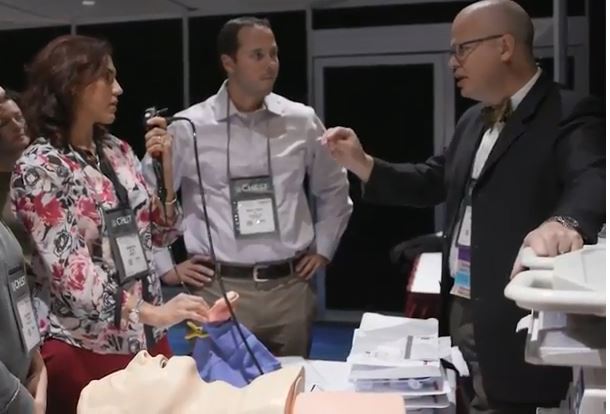
Plan to ‘Learn by Doing’ at the CHEST Annual Meeting 2018
Don’t miss the CHEST Annual Meeting 2018 in San Antonio, Oct 6-10. Watch as CHEST 2018 Program Chair David A. Schulman, MD, MPH, FCCP, walks you through the vision of this year’s meeting. View complete details at chestmeeting.chestnet.org.
Don’t miss the CHEST Annual Meeting 2018 in San Antonio, Oct 6-10. Watch as CHEST 2018 Program Chair David A. Schulman, MD, MPH, FCCP, walks you through the vision of this year’s meeting. View complete details at chestmeeting.chestnet.org.
Don’t miss the CHEST Annual Meeting 2018 in San Antonio, Oct 6-10. Watch as CHEST 2018 Program Chair David A. Schulman, MD, MPH, FCCP, walks you through the vision of this year’s meeting. View complete details at chestmeeting.chestnet.org.
Trainees Can Learn About Health Policy, Advocacy
Coding. Practice expenses. Supervised Exercise Therapy. The vascular lab. Medicare reimbursement (including MACRA, MIPS, APMs and QPP). All these topics and more are part of a vascular surgeon's life and livelihood. Vascular surgery trainees interested in health policy and advocacy issues related to vascular surgery are encouraged to apply for the SVS Vascular Surgery Trainee Advocacy Travel Scholarship. Submissions are due by Oct. 31. The winner receives $1,500 to defray travel costs to Washington, D.C., to participate in Capitol Hill visits and learn more about SVS' health policy and advocacy activities.
Coding. Practice expenses. Supervised Exercise Therapy. The vascular lab. Medicare reimbursement (including MACRA, MIPS, APMs and QPP). All these topics and more are part of a vascular surgeon's life and livelihood. Vascular surgery trainees interested in health policy and advocacy issues related to vascular surgery are encouraged to apply for the SVS Vascular Surgery Trainee Advocacy Travel Scholarship. Submissions are due by Oct. 31. The winner receives $1,500 to defray travel costs to Washington, D.C., to participate in Capitol Hill visits and learn more about SVS' health policy and advocacy activities.
Coding. Practice expenses. Supervised Exercise Therapy. The vascular lab. Medicare reimbursement (including MACRA, MIPS, APMs and QPP). All these topics and more are part of a vascular surgeon's life and livelihood. Vascular surgery trainees interested in health policy and advocacy issues related to vascular surgery are encouraged to apply for the SVS Vascular Surgery Trainee Advocacy Travel Scholarship. Submissions are due by Oct. 31. The winner receives $1,500 to defray travel costs to Washington, D.C., to participate in Capitol Hill visits and learn more about SVS' health policy and advocacy activities.
Vascular Nurses Get SVS Member Application Discount
It’s Vascular Nurses Week this week, and as part of the celebration, the SVS is inviting Society for Vascular Nursing members to join the SVS as affiliate members. Applicants will receive a 50 percent discount through Dec. 1. Email CVs and the completed membership form to [email protected].
It’s Vascular Nurses Week this week, and as part of the celebration, the SVS is inviting Society for Vascular Nursing members to join the SVS as affiliate members. Applicants will receive a 50 percent discount through Dec. 1. Email CVs and the completed membership form to [email protected].
It’s Vascular Nurses Week this week, and as part of the celebration, the SVS is inviting Society for Vascular Nursing members to join the SVS as affiliate members. Applicants will receive a 50 percent discount through Dec. 1. Email CVs and the completed membership form to [email protected].
Top patient cases
Physicians with difficult patient scenarios regularly bring their questions to the AGA Community forum to seek advice from fellow GIs on therapy and disease management options, best practices and diagnoses.

In case you missed it, here are the most popular clinical cases shared in the forum recently:
1. Ulcerative colitis
A 24-year-old male with severe pancolitis is in remission and currently functioning well, but the attending GI is fearful that a relapse is impending based on a fecal calprotectin of 1258 in a “clinically stable patient on long term maximal therapy.”
2. Esophageal varices on Warfarin
A 64-year-old patient with Child-Turcotte-Pugh (CTP) class A cirrhosis had an upper endoscopy that showed large esophageal varices with no prior history of bleeding. View Dr. Miguel Malespin’s take on this popular case in the August issue of AGA Perspectives.
3. Does he have IBS or what?
A 37-year-old male with psoriatic arthritis and abdominal pain experiences rectal bleeding and abnormal findings during colonoscopy.
4. Chronic pancolitis
Quite a few GI experts commented on next steps for this 77-year-old pancolitis patient who has refused biologics based on cost.
5. Pouchitis
This 40-year-old patient developed diarrhea, fever, abdominal pain and other symptoms, with observed ulceration and inflammation in the pouch and proximally.
More clinical cases and discussions are at https://community.gastro.org/discussions.
Physicians with difficult patient scenarios regularly bring their questions to the AGA Community forum to seek advice from fellow GIs on therapy and disease management options, best practices and diagnoses.
In case you missed it, here are the most popular clinical cases shared in the forum recently:
1. Ulcerative colitis
A 24-year-old male with severe pancolitis is in remission and currently functioning well, but the attending GI is fearful that a relapse is impending based on a fecal calprotectin of 1258 in a “clinically stable patient on long term maximal therapy.”
2. Esophageal varices on Warfarin
A 64-year-old patient with Child-Turcotte-Pugh (CTP) class A cirrhosis had an upper endoscopy that showed large esophageal varices with no prior history of bleeding. View Dr. Miguel Malespin’s take on this popular case in the August issue of AGA Perspectives.
3. Does he have IBS or what?
A 37-year-old male with psoriatic arthritis and abdominal pain experiences rectal bleeding and abnormal findings during colonoscopy.
4. Chronic pancolitis
Quite a few GI experts commented on next steps for this 77-year-old pancolitis patient who has refused biologics based on cost.
5. Pouchitis
This 40-year-old patient developed diarrhea, fever, abdominal pain and other symptoms, with observed ulceration and inflammation in the pouch and proximally.
More clinical cases and discussions are at https://community.gastro.org/discussions.
Physicians with difficult patient scenarios regularly bring their questions to the AGA Community forum to seek advice from fellow GIs on therapy and disease management options, best practices and diagnoses.
In case you missed it, here are the most popular clinical cases shared in the forum recently:
1. Ulcerative colitis
A 24-year-old male with severe pancolitis is in remission and currently functioning well, but the attending GI is fearful that a relapse is impending based on a fecal calprotectin of 1258 in a “clinically stable patient on long term maximal therapy.”
2. Esophageal varices on Warfarin
A 64-year-old patient with Child-Turcotte-Pugh (CTP) class A cirrhosis had an upper endoscopy that showed large esophageal varices with no prior history of bleeding. View Dr. Miguel Malespin’s take on this popular case in the August issue of AGA Perspectives.
3. Does he have IBS or what?
A 37-year-old male with psoriatic arthritis and abdominal pain experiences rectal bleeding and abnormal findings during colonoscopy.
4. Chronic pancolitis
Quite a few GI experts commented on next steps for this 77-year-old pancolitis patient who has refused biologics based on cost.
5. Pouchitis
This 40-year-old patient developed diarrhea, fever, abdominal pain and other symptoms, with observed ulceration and inflammation in the pouch and proximally.
More clinical cases and discussions are at https://community.gastro.org/discussions.
AGA funds noteworthy microbiome research
Congrats to AGA Research Foundation grantee Amir Zarrinpar, MD, PhD, from UC San Diego whose new microbiome research has been published in Nature Communications. Dr. Zarrinpar — a former AGA Microbiome Junior Investigator Research Award recipient — used his AGA funding to study cyclical fluctuations in the gut microbiome and its effects on host metabolism. This new study in Nature Communications is an unexpected finding resulting from Dr. Zarrinpar’s AGA research project with his collaborator Satchin Panda, PhD, and their colleagues in the Salk Institute.
The study, Antibiotic-induced microbiome depletion alters metabolic homeostasis by affecting gut signaling and colonic metabolism, finds that mice that have their microbiomes depleted with antibiotics have decreased levels of glucose in their blood and better insulin sensitivity. The research has implications for understanding the role of the microbiome in diabetes. It also could lead to better insight into the side effects seen in people who are being treated with high levels of antibiotics.
The next steps for Dr. Zarrinpar and his team are to better understand what bacterial metabolites can affect insulin sensitivity and to functionally manipulate the microbiome to alter gut signaling to treat diabetes and other metabolic diseases. We look forward to seeing additional research on this topic that can eventually translate into improvements in patient care.
Congrats to AGA Research Foundation grantee Amir Zarrinpar, MD, PhD, from UC San Diego whose new microbiome research has been published in Nature Communications. Dr. Zarrinpar — a former AGA Microbiome Junior Investigator Research Award recipient — used his AGA funding to study cyclical fluctuations in the gut microbiome and its effects on host metabolism. This new study in Nature Communications is an unexpected finding resulting from Dr. Zarrinpar’s AGA research project with his collaborator Satchin Panda, PhD, and their colleagues in the Salk Institute.
The study, Antibiotic-induced microbiome depletion alters metabolic homeostasis by affecting gut signaling and colonic metabolism, finds that mice that have their microbiomes depleted with antibiotics have decreased levels of glucose in their blood and better insulin sensitivity. The research has implications for understanding the role of the microbiome in diabetes. It also could lead to better insight into the side effects seen in people who are being treated with high levels of antibiotics.
The next steps for Dr. Zarrinpar and his team are to better understand what bacterial metabolites can affect insulin sensitivity and to functionally manipulate the microbiome to alter gut signaling to treat diabetes and other metabolic diseases. We look forward to seeing additional research on this topic that can eventually translate into improvements in patient care.
Congrats to AGA Research Foundation grantee Amir Zarrinpar, MD, PhD, from UC San Diego whose new microbiome research has been published in Nature Communications. Dr. Zarrinpar — a former AGA Microbiome Junior Investigator Research Award recipient — used his AGA funding to study cyclical fluctuations in the gut microbiome and its effects on host metabolism. This new study in Nature Communications is an unexpected finding resulting from Dr. Zarrinpar’s AGA research project with his collaborator Satchin Panda, PhD, and their colleagues in the Salk Institute.
The study, Antibiotic-induced microbiome depletion alters metabolic homeostasis by affecting gut signaling and colonic metabolism, finds that mice that have their microbiomes depleted with antibiotics have decreased levels of glucose in their blood and better insulin sensitivity. The research has implications for understanding the role of the microbiome in diabetes. It also could lead to better insight into the side effects seen in people who are being treated with high levels of antibiotics.
The next steps for Dr. Zarrinpar and his team are to better understand what bacterial metabolites can affect insulin sensitivity and to functionally manipulate the microbiome to alter gut signaling to treat diabetes and other metabolic diseases. We look forward to seeing additional research on this topic that can eventually translate into improvements in patient care.
September is PAD Awareness Month
We need your help to spread the word
Please help us spread the news about peripheral arterial disease. It’s easy – SVS has updated its online resources for physicians and resources for patients. Both web pages have videos, web links, scholarly articles and more, appropriate for each audience. Please share the links to people on your email list. Help us reach more patients and caregivers and spread awareness about PAD!
We need your help to spread the word
Please help us spread the news about peripheral arterial disease. It’s easy – SVS has updated its online resources for physicians and resources for patients. Both web pages have videos, web links, scholarly articles and more, appropriate for each audience. Please share the links to people on your email list. Help us reach more patients and caregivers and spread awareness about PAD!
We need your help to spread the word
Please help us spread the news about peripheral arterial disease. It’s easy – SVS has updated its online resources for physicians and resources for patients. Both web pages have videos, web links, scholarly articles and more, appropriate for each audience. Please share the links to people on your email list. Help us reach more patients and caregivers and spread awareness about PAD!
Strides in digestive cancer research: Two research projects to note
The AGA Research Foundation Research Awards Program includes two grants dedicated to digestive cancer research: the AGA–Caroline Craig Augustyn & Damian Augustyn Award in Digestive Cancer and the AGA–R. Robert & Sally Funderburg Research Award in Gastric Cancer.
Continue reading to learn about the novel research projects being conducted by our 2018 digestive cancer grant recipients.
AGA–Caroline Craig Augustyn & Damian Augustyn Award in Digestive Cancer
Ravikanth Maddipati, MD
University of Pennsylvania Hospital System, Philadelphia
Dr. Maddipati’s research focuses on understanding and treating metastatic disease in pancreatic cancer. With this grant, Dr. Maddipati will use advanced lineage-traced mouse models and innovative bioengineering approaches to identify the molecular pathways involved in tumor cell cooperation and define the role of circulating tumor cell-clusters in pancreatic cancer progression. This work will lead to a noninvasive method for monitoring disease progression and response to treatment in pancreatic cancer patients.
AGA’s take: Pancreatic cancer, namely pancreatic ductal adenocarcinoma, is one of the deadliest cancers in the U.S. The AGA Research Foundation is pleased to fund Dr. Maddipati’s research. As a physician-scientist, he is in a unique position to translate findings from basic research, using preclinical models, to develop improved approaches to treating patients with pancreatic cancer.
AGA–R. Robert & Sally Funderburg Research Award in Gastric Cancer
Jingwu Xie, PhD
Indiana University, Indianapolis
Dr. Xie’s research focuses on drug resistance in gastric cancer. His team recently had a monumental discovery — activated hedgehog signaling, via GLI1 and GLI2 gene up-regulation, is responsible for drug resistance in gastric cancer. Dr. Xie’s AGA-funded research will work to identify novel ways to sensitize gastric cancer cells to drug treatment by suppressing GLI1 and GLI2 activity.
AGA’s take: Gastric cancer is a very underfunded area of research in the U.S., and with limited treatment options for patients, there is a great need for novel research projects. The AGA Research Foundation is proud to fund Dr. Xie’s research, which we believe has the potential to translate into a new treatment that will improve outcomes for gastric cancer patients.
To see the full class of 2018 AGA Research Foundation awardees, visit the Meet Our Awardees section of our website, www.gastro.org/foundation-awardees.
The AGA Research Foundation Research Awards Program includes two grants dedicated to digestive cancer research: the AGA–Caroline Craig Augustyn & Damian Augustyn Award in Digestive Cancer and the AGA–R. Robert & Sally Funderburg Research Award in Gastric Cancer.
Continue reading to learn about the novel research projects being conducted by our 2018 digestive cancer grant recipients.
AGA–Caroline Craig Augustyn & Damian Augustyn Award in Digestive Cancer
Ravikanth Maddipati, MD
University of Pennsylvania Hospital System, Philadelphia
Dr. Maddipati’s research focuses on understanding and treating metastatic disease in pancreatic cancer. With this grant, Dr. Maddipati will use advanced lineage-traced mouse models and innovative bioengineering approaches to identify the molecular pathways involved in tumor cell cooperation and define the role of circulating tumor cell-clusters in pancreatic cancer progression. This work will lead to a noninvasive method for monitoring disease progression and response to treatment in pancreatic cancer patients.
AGA’s take: Pancreatic cancer, namely pancreatic ductal adenocarcinoma, is one of the deadliest cancers in the U.S. The AGA Research Foundation is pleased to fund Dr. Maddipati’s research. As a physician-scientist, he is in a unique position to translate findings from basic research, using preclinical models, to develop improved approaches to treating patients with pancreatic cancer.
AGA–R. Robert & Sally Funderburg Research Award in Gastric Cancer
Jingwu Xie, PhD
Indiana University, Indianapolis
Dr. Xie’s research focuses on drug resistance in gastric cancer. His team recently had a monumental discovery — activated hedgehog signaling, via GLI1 and GLI2 gene up-regulation, is responsible for drug resistance in gastric cancer. Dr. Xie’s AGA-funded research will work to identify novel ways to sensitize gastric cancer cells to drug treatment by suppressing GLI1 and GLI2 activity.
AGA’s take: Gastric cancer is a very underfunded area of research in the U.S., and with limited treatment options for patients, there is a great need for novel research projects. The AGA Research Foundation is proud to fund Dr. Xie’s research, which we believe has the potential to translate into a new treatment that will improve outcomes for gastric cancer patients.
To see the full class of 2018 AGA Research Foundation awardees, visit the Meet Our Awardees section of our website, www.gastro.org/foundation-awardees.
The AGA Research Foundation Research Awards Program includes two grants dedicated to digestive cancer research: the AGA–Caroline Craig Augustyn & Damian Augustyn Award in Digestive Cancer and the AGA–R. Robert & Sally Funderburg Research Award in Gastric Cancer.
Continue reading to learn about the novel research projects being conducted by our 2018 digestive cancer grant recipients.
AGA–Caroline Craig Augustyn & Damian Augustyn Award in Digestive Cancer
Ravikanth Maddipati, MD
University of Pennsylvania Hospital System, Philadelphia
Dr. Maddipati’s research focuses on understanding and treating metastatic disease in pancreatic cancer. With this grant, Dr. Maddipati will use advanced lineage-traced mouse models and innovative bioengineering approaches to identify the molecular pathways involved in tumor cell cooperation and define the role of circulating tumor cell-clusters in pancreatic cancer progression. This work will lead to a noninvasive method for monitoring disease progression and response to treatment in pancreatic cancer patients.
AGA’s take: Pancreatic cancer, namely pancreatic ductal adenocarcinoma, is one of the deadliest cancers in the U.S. The AGA Research Foundation is pleased to fund Dr. Maddipati’s research. As a physician-scientist, he is in a unique position to translate findings from basic research, using preclinical models, to develop improved approaches to treating patients with pancreatic cancer.
AGA–R. Robert & Sally Funderburg Research Award in Gastric Cancer
Jingwu Xie, PhD
Indiana University, Indianapolis
Dr. Xie’s research focuses on drug resistance in gastric cancer. His team recently had a monumental discovery — activated hedgehog signaling, via GLI1 and GLI2 gene up-regulation, is responsible for drug resistance in gastric cancer. Dr. Xie’s AGA-funded research will work to identify novel ways to sensitize gastric cancer cells to drug treatment by suppressing GLI1 and GLI2 activity.
AGA’s take: Gastric cancer is a very underfunded area of research in the U.S., and with limited treatment options for patients, there is a great need for novel research projects. The AGA Research Foundation is proud to fund Dr. Xie’s research, which we believe has the potential to translate into a new treatment that will improve outcomes for gastric cancer patients.
To see the full class of 2018 AGA Research Foundation awardees, visit the Meet Our Awardees section of our website, www.gastro.org/foundation-awardees.
Registration now open for the Crohn’s & Colitis Congress
Registration for the Crohn’s & Colitis Congress,® the premier conference on inflammatory bowel disease (IBD), is open. The Crohn’s & Colitis Congress, a partnership of the Crohn’s & Colitis Foundation and the American Gastroenterological Association, will take place Feb. 7-9, 2019, at the Bellagio, in Las Vegas.
Led by committee chair Brent Polk, MD, AGAF, and co-chairs Maria T. Abreu, MD, AGAF, and David T. Rubin, MD, AGAF, invited faculty include IBD thought-leaders in the fields of GI, research investigation, surgery, pediatrics, advanced practice, IBD nursing, diet and nutrition, mental health, radiology, and pathology.
The 2019 Congress’ agenda includes main sessions that will emphasize case studies and panel discussions. There will also be parallel sessions on basic and translational science for senior and junior investigators.
In addition, several pre-Congress workshops, taking place Feb. 7, will be available for selection.
There will also be plenty of social events and plenty of time to enjoy Las Vegas; including a Friday night Welcome Reception that should not be missed. It’s a great opportunity to network and celebrate.
Abstract submissions for basic, translational, and clinical research will be accepted beginning Aug. 1 and ending Oct. 24.
To learn more and register, visit www.crohnscolitiscongress.org.
Registration for the Crohn’s & Colitis Congress,® the premier conference on inflammatory bowel disease (IBD), is open. The Crohn’s & Colitis Congress, a partnership of the Crohn’s & Colitis Foundation and the American Gastroenterological Association, will take place Feb. 7-9, 2019, at the Bellagio, in Las Vegas.
Led by committee chair Brent Polk, MD, AGAF, and co-chairs Maria T. Abreu, MD, AGAF, and David T. Rubin, MD, AGAF, invited faculty include IBD thought-leaders in the fields of GI, research investigation, surgery, pediatrics, advanced practice, IBD nursing, diet and nutrition, mental health, radiology, and pathology.
The 2019 Congress’ agenda includes main sessions that will emphasize case studies and panel discussions. There will also be parallel sessions on basic and translational science for senior and junior investigators.
In addition, several pre-Congress workshops, taking place Feb. 7, will be available for selection.
There will also be plenty of social events and plenty of time to enjoy Las Vegas; including a Friday night Welcome Reception that should not be missed. It’s a great opportunity to network and celebrate.
Abstract submissions for basic, translational, and clinical research will be accepted beginning Aug. 1 and ending Oct. 24.
To learn more and register, visit www.crohnscolitiscongress.org.
Registration for the Crohn’s & Colitis Congress,® the premier conference on inflammatory bowel disease (IBD), is open. The Crohn’s & Colitis Congress, a partnership of the Crohn’s & Colitis Foundation and the American Gastroenterological Association, will take place Feb. 7-9, 2019, at the Bellagio, in Las Vegas.
Led by committee chair Brent Polk, MD, AGAF, and co-chairs Maria T. Abreu, MD, AGAF, and David T. Rubin, MD, AGAF, invited faculty include IBD thought-leaders in the fields of GI, research investigation, surgery, pediatrics, advanced practice, IBD nursing, diet and nutrition, mental health, radiology, and pathology.
The 2019 Congress’ agenda includes main sessions that will emphasize case studies and panel discussions. There will also be parallel sessions on basic and translational science for senior and junior investigators.
In addition, several pre-Congress workshops, taking place Feb. 7, will be available for selection.
There will also be plenty of social events and plenty of time to enjoy Las Vegas; including a Friday night Welcome Reception that should not be missed. It’s a great opportunity to network and celebrate.
Abstract submissions for basic, translational, and clinical research will be accepted beginning Aug. 1 and ending Oct. 24.
To learn more and register, visit www.crohnscolitiscongress.org.
ACS Council Seeks Member; Applications due Aug. 31
The Society for Vascular Surgery is seeking applicants to serve as representative for the American College of Surgeons Advisory Council for Vascular Surgery. Please email letters of interest/nominations for the three-year term by Aug. 31. The nominee must be a Fellow of the ACS and be involved in SVS’ governing boards.
The Society for Vascular Surgery is seeking applicants to serve as representative for the American College of Surgeons Advisory Council for Vascular Surgery. Please email letters of interest/nominations for the three-year term by Aug. 31. The nominee must be a Fellow of the ACS and be involved in SVS’ governing boards.
The Society for Vascular Surgery is seeking applicants to serve as representative for the American College of Surgeons Advisory Council for Vascular Surgery. Please email letters of interest/nominations for the three-year term by Aug. 31. The nominee must be a Fellow of the ACS and be involved in SVS’ governing boards.