User login
Rituximab may be best choice for splenic MZL
For patients with splenic marginal zone lymphoma (MZL) requiring treatment, rituximab may be a superior choice, compared with splenectomy, according to authors of a recent review article.
Although treatment with splenectomy and rituximab both are associated with high rates of 10-year survival, splenectomy also is associated with acute surgical complications and late toxicities, mainly from infections, Christina Kalpadakis, MD, of the department of hematology at Heraklion University Hospital, University of Crete, Greece, reported in Best Practice & Research Clinical Haematology.
The review article aims to answer the question of whether rituximab monotherapy should replace splenectomy as the treatment of choice, according to the authors, who said treatment for this rare, low-grade B-cell lymphoma has not been standardized due to a lack of large, randomized trials.
Asymptomatic splenic MZL without significant cytopenias can be managed with a watch-and-wait approach, but when treatment is warranted, the choice is often between splenectomy, rituximab monotherapy, or chemoimmunotherapy.
“Based on the existing retrospective series of patients, rituximab monotherapy appears to be the best choice since it combines high efficacy with the lowest toxicity,” Dr. Kalpadakis and her colleagues wrote.
Until the early 2000s, splenectomy was the standard treatment modality for splenic MZL, offering quick amelioration of symptoms related to splenomegaly in more than 90% of patients, as well as improvements in hypersplenism-related cytopenias, the researchers reported. Among 100 patients with splenic MZL, the median progression-free survival with splenectomy was 8.25 years, and median 10-year overall survival was 67%.
However, responses to splenectomy are not complete because some patients are not good candidates for splenectomy, including those with lymphadenopathy or heavy bone marrow infiltration, according to the authors. Moreover, since it is a major surgical procedure that can be associated with complications and infections, splenectomy is not appropriate for elderly patients or patients with comorbidities with a high surgical risk, they wrote.
“Furthermore, splenectomy cannot eradicate bone marrow disease and has no impact on other extrasplenic disease localization such as lymphadenopathy,” they added.
Rituximab monotherapy, by contrast, has “minimal toxicity” with high efficacy, including complete response rates of around 50% and a 10-year overall survival of 85% reported in a series of 104 patients.
Maintenance with rituximab may further improve the quality of responses, although data are limited. One study, conducted by the review article authors, showed that rituximab maintenance increased the complete response rate from 42% after induction treatment to 71% after maintenance, along with a significant improvement in response duration, though no differences in overall survival have been observed thus far.
Rituximab plus chemotherapy has been evaluated, but with “significant toxicity without improvement in the outcome” versus rituximab monotherapy, the researchers wrote. Splenectomy is “effective” but should be reserved for patients refractory to rituximab, Dr. Kalpadakis and her colleagues wrote.
The researchers reported having no relevant financial disclosures.
SOURCE: Kalpadakis C et al. Best Pract Res Clin Haematol. Mar-Jun 2017. doi:10.1016/j.beha.2017.10.011.
For patients with splenic marginal zone lymphoma (MZL) requiring treatment, rituximab may be a superior choice, compared with splenectomy, according to authors of a recent review article.
Although treatment with splenectomy and rituximab both are associated with high rates of 10-year survival, splenectomy also is associated with acute surgical complications and late toxicities, mainly from infections, Christina Kalpadakis, MD, of the department of hematology at Heraklion University Hospital, University of Crete, Greece, reported in Best Practice & Research Clinical Haematology.
The review article aims to answer the question of whether rituximab monotherapy should replace splenectomy as the treatment of choice, according to the authors, who said treatment for this rare, low-grade B-cell lymphoma has not been standardized due to a lack of large, randomized trials.
Asymptomatic splenic MZL without significant cytopenias can be managed with a watch-and-wait approach, but when treatment is warranted, the choice is often between splenectomy, rituximab monotherapy, or chemoimmunotherapy.
“Based on the existing retrospective series of patients, rituximab monotherapy appears to be the best choice since it combines high efficacy with the lowest toxicity,” Dr. Kalpadakis and her colleagues wrote.
Until the early 2000s, splenectomy was the standard treatment modality for splenic MZL, offering quick amelioration of symptoms related to splenomegaly in more than 90% of patients, as well as improvements in hypersplenism-related cytopenias, the researchers reported. Among 100 patients with splenic MZL, the median progression-free survival with splenectomy was 8.25 years, and median 10-year overall survival was 67%.
However, responses to splenectomy are not complete because some patients are not good candidates for splenectomy, including those with lymphadenopathy or heavy bone marrow infiltration, according to the authors. Moreover, since it is a major surgical procedure that can be associated with complications and infections, splenectomy is not appropriate for elderly patients or patients with comorbidities with a high surgical risk, they wrote.
“Furthermore, splenectomy cannot eradicate bone marrow disease and has no impact on other extrasplenic disease localization such as lymphadenopathy,” they added.
Rituximab monotherapy, by contrast, has “minimal toxicity” with high efficacy, including complete response rates of around 50% and a 10-year overall survival of 85% reported in a series of 104 patients.
Maintenance with rituximab may further improve the quality of responses, although data are limited. One study, conducted by the review article authors, showed that rituximab maintenance increased the complete response rate from 42% after induction treatment to 71% after maintenance, along with a significant improvement in response duration, though no differences in overall survival have been observed thus far.
Rituximab plus chemotherapy has been evaluated, but with “significant toxicity without improvement in the outcome” versus rituximab monotherapy, the researchers wrote. Splenectomy is “effective” but should be reserved for patients refractory to rituximab, Dr. Kalpadakis and her colleagues wrote.
The researchers reported having no relevant financial disclosures.
SOURCE: Kalpadakis C et al. Best Pract Res Clin Haematol. Mar-Jun 2017. doi:10.1016/j.beha.2017.10.011.
For patients with splenic marginal zone lymphoma (MZL) requiring treatment, rituximab may be a superior choice, compared with splenectomy, according to authors of a recent review article.
Although treatment with splenectomy and rituximab both are associated with high rates of 10-year survival, splenectomy also is associated with acute surgical complications and late toxicities, mainly from infections, Christina Kalpadakis, MD, of the department of hematology at Heraklion University Hospital, University of Crete, Greece, reported in Best Practice & Research Clinical Haematology.
The review article aims to answer the question of whether rituximab monotherapy should replace splenectomy as the treatment of choice, according to the authors, who said treatment for this rare, low-grade B-cell lymphoma has not been standardized due to a lack of large, randomized trials.
Asymptomatic splenic MZL without significant cytopenias can be managed with a watch-and-wait approach, but when treatment is warranted, the choice is often between splenectomy, rituximab monotherapy, or chemoimmunotherapy.
“Based on the existing retrospective series of patients, rituximab monotherapy appears to be the best choice since it combines high efficacy with the lowest toxicity,” Dr. Kalpadakis and her colleagues wrote.
Until the early 2000s, splenectomy was the standard treatment modality for splenic MZL, offering quick amelioration of symptoms related to splenomegaly in more than 90% of patients, as well as improvements in hypersplenism-related cytopenias, the researchers reported. Among 100 patients with splenic MZL, the median progression-free survival with splenectomy was 8.25 years, and median 10-year overall survival was 67%.
However, responses to splenectomy are not complete because some patients are not good candidates for splenectomy, including those with lymphadenopathy or heavy bone marrow infiltration, according to the authors. Moreover, since it is a major surgical procedure that can be associated with complications and infections, splenectomy is not appropriate for elderly patients or patients with comorbidities with a high surgical risk, they wrote.
“Furthermore, splenectomy cannot eradicate bone marrow disease and has no impact on other extrasplenic disease localization such as lymphadenopathy,” they added.
Rituximab monotherapy, by contrast, has “minimal toxicity” with high efficacy, including complete response rates of around 50% and a 10-year overall survival of 85% reported in a series of 104 patients.
Maintenance with rituximab may further improve the quality of responses, although data are limited. One study, conducted by the review article authors, showed that rituximab maintenance increased the complete response rate from 42% after induction treatment to 71% after maintenance, along with a significant improvement in response duration, though no differences in overall survival have been observed thus far.
Rituximab plus chemotherapy has been evaluated, but with “significant toxicity without improvement in the outcome” versus rituximab monotherapy, the researchers wrote. Splenectomy is “effective” but should be reserved for patients refractory to rituximab, Dr. Kalpadakis and her colleagues wrote.
The researchers reported having no relevant financial disclosures.
SOURCE: Kalpadakis C et al. Best Pract Res Clin Haematol. Mar-Jun 2017. doi:10.1016/j.beha.2017.10.011.
FROM BEST PRACTICE & RESEARCH CLINICAL HAEMATOLOGY
Key clinical point:
Major finding: Both splenectomy and rituximab are associated with high rates of 10-year overalls survival, but splenectomy has higher rates of surgical complications and infection.
Study details: Review article of 63 publications, mostly retrospective studies of marginal zone lymphoma.
Disclosures: The researchers reported having no relevant financial disclosures.
Source: Kalpadakis C et al. Best Pract Res Clin Haematol. 2017 Mar-Jun. doi:10.1016/j.beha.2017.10.011.
VIDEO: Ibrutinib PFS is nearly 3 years in MCL patients who had one prior therapy
ATLANTA – Ibrutinib yielded a median progression-free survival (PFS) of nearly 3 years for patients with relapsed or refractory mantle cell lymphoma (MCL) treated with the agent after just one prior line of therapy, according to pooled long-term follow-up data presented at the annual meeting of the American Society of Hematology.
With a 3.5-year median follow-up, a median PFS of 33.6 months was reported for MCL patients with one prior line of therapy, compared to 8.4 months for patients who had two or more prior lines of therapy, reported lead study author Simon Rule, MD, of Plymouth (England) University Medical School.
“I think the take-home message from the ibrutinib data is the earlier you use the drug in the relapse setting, the better the outcomes you’re going to get,” Dr. Rule said in an interview. “It is quite dramatic, the difference between one prior line of therapy and subsequent lines of therapy.”
Response rates were also higher in MCL patients who had only one prior line of therapy, Dr. Rule said.
The overall and complete response rates for that group were 77.8% and 36.4%, respectively, according to data Dr. Rule presented in an oral presentation. For patients receiving more than one line of therapy prior to ibrutinib, overall and complete response rates were 66.8% and 22.9%.
The pooled analysis presented by Dr. Rule included 370 patients enrolled in ibrutinib trials between 2011 and 2013. Patients in those trials received oral ibrutinib 560 mg daily until progressive disease or unacceptable toxicity.
Patients achieving a CR had an “extraordinary” PFS of nearly 4 years and a median duration of response of 55 months, Dr. Rule said.
Atrial fibrillation (AF) rates were reported to be 5.7% (21/370 patients). A total of 53 patients in the analysis had ongoing controlled AF/arrhythmia or had a history of it. Over the course of follow-up, 70% of them (37 patients) had no recurrences, according to Dr. Rule and his colleagues.
No patients discontinued ibrutinib because of grade 3-4 AF, they reported. Moreover, less than 2% of the 370 patients discontinued or reduced dose of ibrutinib because of grade 3-4 bleeding or AF.
New onset grade 3-4 adverse events were more common in the first year of treatment and generally were less frequent over time, Dr. Rule said.
Patients with only one prior line of therapy were less likely to have grade 3-4 adverse events, suggesting again that “the earlier you use [ibrutinib], the fewer side effects you get, particularly with hematologic toxicity,” Dr. Rule said.
Sponsorship for the research came from Janssen, and funding for writing assistance came from Janssen Global Services. Dr. Rule reported financial relationships with Janssen and several other companies.
SOURCE: Rule S et al. ASH 2017 Abstract 151.
The video associated with this article is no longer available on this site. Please view all of our videos on the MDedge YouTube channel
ATLANTA – Ibrutinib yielded a median progression-free survival (PFS) of nearly 3 years for patients with relapsed or refractory mantle cell lymphoma (MCL) treated with the agent after just one prior line of therapy, according to pooled long-term follow-up data presented at the annual meeting of the American Society of Hematology.
With a 3.5-year median follow-up, a median PFS of 33.6 months was reported for MCL patients with one prior line of therapy, compared to 8.4 months for patients who had two or more prior lines of therapy, reported lead study author Simon Rule, MD, of Plymouth (England) University Medical School.
“I think the take-home message from the ibrutinib data is the earlier you use the drug in the relapse setting, the better the outcomes you’re going to get,” Dr. Rule said in an interview. “It is quite dramatic, the difference between one prior line of therapy and subsequent lines of therapy.”
Response rates were also higher in MCL patients who had only one prior line of therapy, Dr. Rule said.
The overall and complete response rates for that group were 77.8% and 36.4%, respectively, according to data Dr. Rule presented in an oral presentation. For patients receiving more than one line of therapy prior to ibrutinib, overall and complete response rates were 66.8% and 22.9%.
The pooled analysis presented by Dr. Rule included 370 patients enrolled in ibrutinib trials between 2011 and 2013. Patients in those trials received oral ibrutinib 560 mg daily until progressive disease or unacceptable toxicity.
Patients achieving a CR had an “extraordinary” PFS of nearly 4 years and a median duration of response of 55 months, Dr. Rule said.
Atrial fibrillation (AF) rates were reported to be 5.7% (21/370 patients). A total of 53 patients in the analysis had ongoing controlled AF/arrhythmia or had a history of it. Over the course of follow-up, 70% of them (37 patients) had no recurrences, according to Dr. Rule and his colleagues.
No patients discontinued ibrutinib because of grade 3-4 AF, they reported. Moreover, less than 2% of the 370 patients discontinued or reduced dose of ibrutinib because of grade 3-4 bleeding or AF.
New onset grade 3-4 adverse events were more common in the first year of treatment and generally were less frequent over time, Dr. Rule said.
Patients with only one prior line of therapy were less likely to have grade 3-4 adverse events, suggesting again that “the earlier you use [ibrutinib], the fewer side effects you get, particularly with hematologic toxicity,” Dr. Rule said.
Sponsorship for the research came from Janssen, and funding for writing assistance came from Janssen Global Services. Dr. Rule reported financial relationships with Janssen and several other companies.
SOURCE: Rule S et al. ASH 2017 Abstract 151.
The video associated with this article is no longer available on this site. Please view all of our videos on the MDedge YouTube channel
ATLANTA – Ibrutinib yielded a median progression-free survival (PFS) of nearly 3 years for patients with relapsed or refractory mantle cell lymphoma (MCL) treated with the agent after just one prior line of therapy, according to pooled long-term follow-up data presented at the annual meeting of the American Society of Hematology.
With a 3.5-year median follow-up, a median PFS of 33.6 months was reported for MCL patients with one prior line of therapy, compared to 8.4 months for patients who had two or more prior lines of therapy, reported lead study author Simon Rule, MD, of Plymouth (England) University Medical School.
“I think the take-home message from the ibrutinib data is the earlier you use the drug in the relapse setting, the better the outcomes you’re going to get,” Dr. Rule said in an interview. “It is quite dramatic, the difference between one prior line of therapy and subsequent lines of therapy.”
Response rates were also higher in MCL patients who had only one prior line of therapy, Dr. Rule said.
The overall and complete response rates for that group were 77.8% and 36.4%, respectively, according to data Dr. Rule presented in an oral presentation. For patients receiving more than one line of therapy prior to ibrutinib, overall and complete response rates were 66.8% and 22.9%.
The pooled analysis presented by Dr. Rule included 370 patients enrolled in ibrutinib trials between 2011 and 2013. Patients in those trials received oral ibrutinib 560 mg daily until progressive disease or unacceptable toxicity.
Patients achieving a CR had an “extraordinary” PFS of nearly 4 years and a median duration of response of 55 months, Dr. Rule said.
Atrial fibrillation (AF) rates were reported to be 5.7% (21/370 patients). A total of 53 patients in the analysis had ongoing controlled AF/arrhythmia or had a history of it. Over the course of follow-up, 70% of them (37 patients) had no recurrences, according to Dr. Rule and his colleagues.
No patients discontinued ibrutinib because of grade 3-4 AF, they reported. Moreover, less than 2% of the 370 patients discontinued or reduced dose of ibrutinib because of grade 3-4 bleeding or AF.
New onset grade 3-4 adverse events were more common in the first year of treatment and generally were less frequent over time, Dr. Rule said.
Patients with only one prior line of therapy were less likely to have grade 3-4 adverse events, suggesting again that “the earlier you use [ibrutinib], the fewer side effects you get, particularly with hematologic toxicity,” Dr. Rule said.
Sponsorship for the research came from Janssen, and funding for writing assistance came from Janssen Global Services. Dr. Rule reported financial relationships with Janssen and several other companies.
SOURCE: Rule S et al. ASH 2017 Abstract 151.
The video associated with this article is no longer available on this site. Please view all of our videos on the MDedge YouTube channel
REPORTING FROM ASH 2017
Key clinical point:
Major finding: Median PFS was 33.6 months for MCL patients with one prior line of therapy, versus 8.4 months for patients who had two or more prior lines of therapy.
Study details: A pooled analysis of 370 patients enrolled in ibrutinib clinical trials with a median 3.5-year follow-up.
Disclosures: Janssen sponsored the research and Janssen Global Services funded writing assistance. Lead author Simon Rule, MD, reported financial relationships with Janssen and several other companies.
Source: Rule S et al. ASH 2017 Abstract 151.
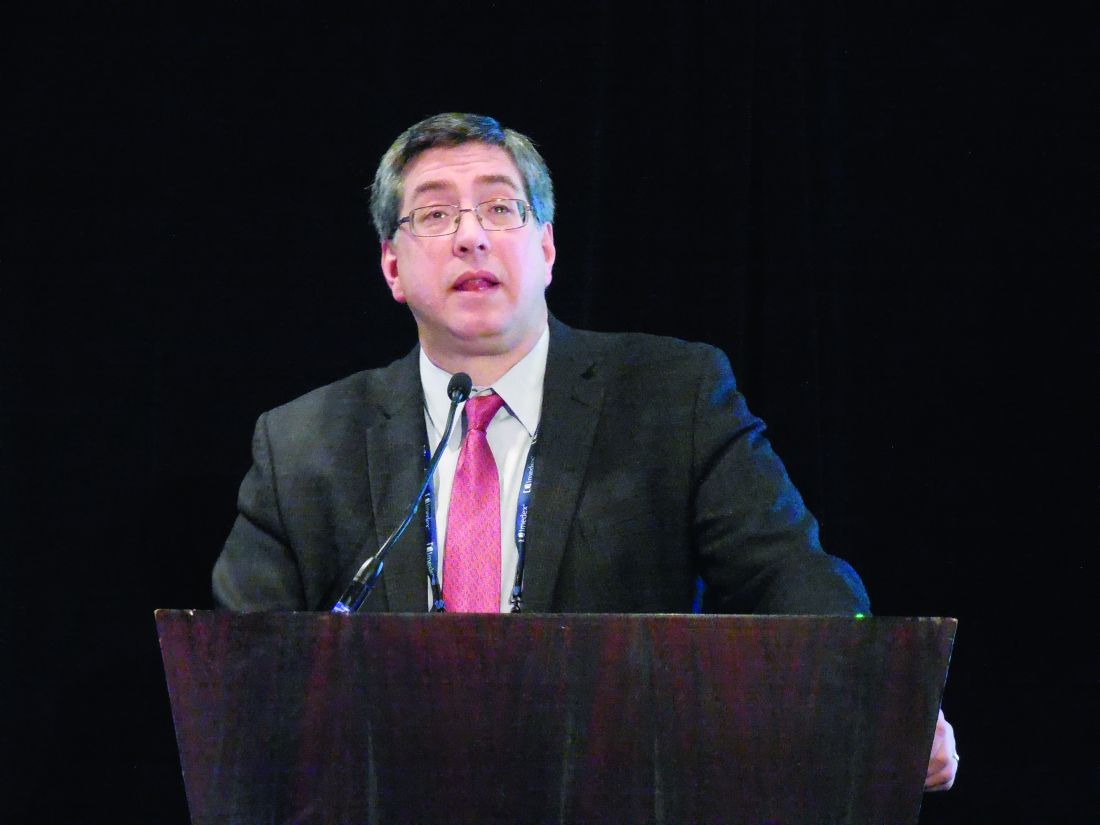
VTE rates in lenalidomide-treated NHL may warrant prophylaxis
ATLANTA – The rate of venous thromboembolism (VTE) in patients with non-Hodgkin lymphoma (NHL) treated with lenalidomide is similar to that seen in multiple myeloma, according to results of recent systematic review and meta-analysis of trials representing more than 10,000 treatment cycles.
Although rates of VTE for NHL and myeloma could not be directly compared statistically, the finding may have clinical implications for NHL patients, said lead study author Samuel Yamshon, MD, an internal medicine resident at Cornell University, New York.
“Although outpatient VTE prophylaxis is not currently recommended, it should be carefully considered in patients with lymphoma being treated with lenalidomide, especially those receiving lenalidomide as a single agent,” Dr. Yamshon said in a presentation of the results at the annual meeting of the American Society of Hematology.
The rate of thrombosis in patients with B cell NHL who received lenalidomide treatment was 0.75 events per 100 patient-cycles, according to results of the meta-analysis, which was based on 28 articles including 10,332 cycles of lenalidomide received by patients with B-cell NHL.
Reported rates of thrombosis in previously untreated myeloma patients treated with lenalidomide are between 0.7 and 0.8 per 100 patient-cycles, Dr. Yamshon said in his presentation.
Notably, single-agent lenalidomide was linked with a significantly increased risk of thrombosis compared with lenalidomide treatment in combinations. The relative risk of VTE for lenalidomide as a single agent versus lenalidomide in combination was 2.01 (95% confidence interval, 1.28-3.16; P = .002), according to the presented data.
The investigators were unsure why single-agent lenalidomide appeared to have caused increased rates of thrombosis compared to lenalidomide in combinations. “Perhaps patients treated with additional agents have a lower tumor burden, leading to less venous obstruction causing clots, or perhaps there’s a direct interaction between lenalidomide and tumor leading to effects on the vasculature and mediators of coagulation,” Dr. Yamshon said.
Chemotherapy and biologic combinations had somewhat different VTE rates when compared to single-agent lenalidomide. The rate in patients receiving lenalidomide alone was 1.06 events per 100 patient-cycles, compared with 0.73 and 0.41 events per 100 patient-cycles, respectively, for lenalidomide plus chemotherapy and lenalidomide plus biologics.
However, the lower event rate with lenalidomide and biologics compared with lenalidomide and chemotherapy was a “nonsignificant trend” that was likely caused by differences in patient characteristics between the two cohorts, according to Dr. Yamshon.
None of the studies included in the meta-analysis were prospectively designed to measure VTE as a primary or secondary outcome, Dr. Yamshon noted in a discussion of the study’s limitations.
Further studies are warranted to determine lenalidomide’s effect on the vasculature and how it effects mediators of coagulation, he added.
Based on the current results, Dr. Yamshon said it may be reasonable to consider VTE prophylaxis in NHL patients receiving lenalidomide.
“If we’re going to be recommending outpatient VTE prophylaxis in everyone on lenalidomide in multiple myeloma, and the rates (of VTE) are the same, I think it certainly makes sense based on the data to recommend it,” he said in a question-and-answer session.
Dr. Yamshon reported no conflicts related to the study. Coauthors reported disclosures related to Roche, Celgene, Seattle Genetics, Pharmacyclics, Cell Medica, Janssen, and AstraZeneca.
SOURCE: Yamshon S et al. Abstract 677.
ATLANTA – The rate of venous thromboembolism (VTE) in patients with non-Hodgkin lymphoma (NHL) treated with lenalidomide is similar to that seen in multiple myeloma, according to results of recent systematic review and meta-analysis of trials representing more than 10,000 treatment cycles.
Although rates of VTE for NHL and myeloma could not be directly compared statistically, the finding may have clinical implications for NHL patients, said lead study author Samuel Yamshon, MD, an internal medicine resident at Cornell University, New York.
“Although outpatient VTE prophylaxis is not currently recommended, it should be carefully considered in patients with lymphoma being treated with lenalidomide, especially those receiving lenalidomide as a single agent,” Dr. Yamshon said in a presentation of the results at the annual meeting of the American Society of Hematology.
The rate of thrombosis in patients with B cell NHL who received lenalidomide treatment was 0.75 events per 100 patient-cycles, according to results of the meta-analysis, which was based on 28 articles including 10,332 cycles of lenalidomide received by patients with B-cell NHL.
Reported rates of thrombosis in previously untreated myeloma patients treated with lenalidomide are between 0.7 and 0.8 per 100 patient-cycles, Dr. Yamshon said in his presentation.
Notably, single-agent lenalidomide was linked with a significantly increased risk of thrombosis compared with lenalidomide treatment in combinations. The relative risk of VTE for lenalidomide as a single agent versus lenalidomide in combination was 2.01 (95% confidence interval, 1.28-3.16; P = .002), according to the presented data.
The investigators were unsure why single-agent lenalidomide appeared to have caused increased rates of thrombosis compared to lenalidomide in combinations. “Perhaps patients treated with additional agents have a lower tumor burden, leading to less venous obstruction causing clots, or perhaps there’s a direct interaction between lenalidomide and tumor leading to effects on the vasculature and mediators of coagulation,” Dr. Yamshon said.
Chemotherapy and biologic combinations had somewhat different VTE rates when compared to single-agent lenalidomide. The rate in patients receiving lenalidomide alone was 1.06 events per 100 patient-cycles, compared with 0.73 and 0.41 events per 100 patient-cycles, respectively, for lenalidomide plus chemotherapy and lenalidomide plus biologics.
However, the lower event rate with lenalidomide and biologics compared with lenalidomide and chemotherapy was a “nonsignificant trend” that was likely caused by differences in patient characteristics between the two cohorts, according to Dr. Yamshon.
None of the studies included in the meta-analysis were prospectively designed to measure VTE as a primary or secondary outcome, Dr. Yamshon noted in a discussion of the study’s limitations.
Further studies are warranted to determine lenalidomide’s effect on the vasculature and how it effects mediators of coagulation, he added.
Based on the current results, Dr. Yamshon said it may be reasonable to consider VTE prophylaxis in NHL patients receiving lenalidomide.
“If we’re going to be recommending outpatient VTE prophylaxis in everyone on lenalidomide in multiple myeloma, and the rates (of VTE) are the same, I think it certainly makes sense based on the data to recommend it,” he said in a question-and-answer session.
Dr. Yamshon reported no conflicts related to the study. Coauthors reported disclosures related to Roche, Celgene, Seattle Genetics, Pharmacyclics, Cell Medica, Janssen, and AstraZeneca.
SOURCE: Yamshon S et al. Abstract 677.
ATLANTA – The rate of venous thromboembolism (VTE) in patients with non-Hodgkin lymphoma (NHL) treated with lenalidomide is similar to that seen in multiple myeloma, according to results of recent systematic review and meta-analysis of trials representing more than 10,000 treatment cycles.
Although rates of VTE for NHL and myeloma could not be directly compared statistically, the finding may have clinical implications for NHL patients, said lead study author Samuel Yamshon, MD, an internal medicine resident at Cornell University, New York.
“Although outpatient VTE prophylaxis is not currently recommended, it should be carefully considered in patients with lymphoma being treated with lenalidomide, especially those receiving lenalidomide as a single agent,” Dr. Yamshon said in a presentation of the results at the annual meeting of the American Society of Hematology.
The rate of thrombosis in patients with B cell NHL who received lenalidomide treatment was 0.75 events per 100 patient-cycles, according to results of the meta-analysis, which was based on 28 articles including 10,332 cycles of lenalidomide received by patients with B-cell NHL.
Reported rates of thrombosis in previously untreated myeloma patients treated with lenalidomide are between 0.7 and 0.8 per 100 patient-cycles, Dr. Yamshon said in his presentation.
Notably, single-agent lenalidomide was linked with a significantly increased risk of thrombosis compared with lenalidomide treatment in combinations. The relative risk of VTE for lenalidomide as a single agent versus lenalidomide in combination was 2.01 (95% confidence interval, 1.28-3.16; P = .002), according to the presented data.
The investigators were unsure why single-agent lenalidomide appeared to have caused increased rates of thrombosis compared to lenalidomide in combinations. “Perhaps patients treated with additional agents have a lower tumor burden, leading to less venous obstruction causing clots, or perhaps there’s a direct interaction between lenalidomide and tumor leading to effects on the vasculature and mediators of coagulation,” Dr. Yamshon said.
Chemotherapy and biologic combinations had somewhat different VTE rates when compared to single-agent lenalidomide. The rate in patients receiving lenalidomide alone was 1.06 events per 100 patient-cycles, compared with 0.73 and 0.41 events per 100 patient-cycles, respectively, for lenalidomide plus chemotherapy and lenalidomide plus biologics.
However, the lower event rate with lenalidomide and biologics compared with lenalidomide and chemotherapy was a “nonsignificant trend” that was likely caused by differences in patient characteristics between the two cohorts, according to Dr. Yamshon.
None of the studies included in the meta-analysis were prospectively designed to measure VTE as a primary or secondary outcome, Dr. Yamshon noted in a discussion of the study’s limitations.
Further studies are warranted to determine lenalidomide’s effect on the vasculature and how it effects mediators of coagulation, he added.
Based on the current results, Dr. Yamshon said it may be reasonable to consider VTE prophylaxis in NHL patients receiving lenalidomide.
“If we’re going to be recommending outpatient VTE prophylaxis in everyone on lenalidomide in multiple myeloma, and the rates (of VTE) are the same, I think it certainly makes sense based on the data to recommend it,” he said in a question-and-answer session.
Dr. Yamshon reported no conflicts related to the study. Coauthors reported disclosures related to Roche, Celgene, Seattle Genetics, Pharmacyclics, Cell Medica, Janssen, and AstraZeneca.
SOURCE: Yamshon S et al. Abstract 677.
AT ASH 2017
Key clinical point: The rates of VTE in patients on lenalidomide are similar whether they’re being treated for B cell non-Hodgkin lymphoma (NHL) or multiple myeloma, which suggests that VTE prophylaxis should be more carefully considered in B cell NHL patients.
Major finding: The rate of thrombosis in patients with B cell NHL who received lenalidomide treatment was 0.75 events per 100 patient-cycles.
Data source: A systematic review and meta-analysis of 28 articles including 10,332 cycles of lenalidomide received by patients with B cell NHL.
Disclosures: Authors of the study reported disclosures related to Roche, Celgene, Seattle Genetics, Pharmacyclics, Cell Medica, Janssen, and AstraZeneca.
Source: Yamshon S et al. Abstract 677.
Azacitidine maintenance improves PFS in older AML patients
ATLANTA – In older patients with acute myeloid leukemia (AML) in complete remission after intensive chemotherapy, the addition of maintenance therapy with azacitidine significantly improved disease-free survival (DFS), according to results of a randomized, placebo-controlled phase 3 study.
Compared with observation, DFS was significantly improved in the maintenance azacitidine arm, according to results from the 116-patient HOVON97 trial presented at the annual meeting of the American Society of Hematology.
Overall survival was not significantly different between arms, possibly because of an excess of allogeneic transplant in the observation arm, according to Geert Huls, MD, PhD, of the department of hematology, University Medical Center Groningen, the Netherlands.
“When censored for allogeneic transplant, maintenance with azacitidine improves overall survival,” Dr. Huls said during an oral presentation on the findings.
The randomized maintenance therapy trial was designed to include 126 patients aged 60 years or older who had a confirmed diagnosis of AML and refractory anemia with excess of blasts (RAEB, RAEB-t) and who were in complete remission or in complete remission with incomplete blood count recovery after two cycles of therapy.
Investigators randomly assigned 116 patients to maintenance versus observation. Researchers intended to assign a total of 126 patients, but the trial was stopped early because of slow accrual, Dr. Huls said.
Maintenance treatment with azacitidine was given until relapse for no more than 12 cycles, according to the study protocol. Disease-free survival, the primary endpoint, was measured from the date of randomization to relapse or death from any cause.
Azacitidine maintenance therapy significantly improved DFS (P = .03), Dr. Huls said. After researchers adjusted for poor risk cytogenetic abnormalities at diagnosis and platelet count at study entry, the DFS difference remained significant (hazard ratio, 0.61; 95% confidence interval, 0.4-0.92; P = .019).
Overall survival, a secondary endpoint of the trial, was not significantly different between arms, even after adjustment for cytogenetic abnormalities and platelet counts, Dr. Huls said.
However, investigators found an excess of allogeneic transplant in the observation arm (11 patients, vs. 3 in the azacitidine arm). After they censored those 14 patients, they saw a difference in overall survival favoring azacitidine maintenance that approached significance (P = .07).
Dr. Huls speculated that the excess of transplant may have been related to “the psychology of the doctors.” In the maintenance arm, the physician’s thought process may have been that “ ‘this patient has now had two lines of treatment and has a relapse, and we are done,’ and in the [observation] arm he says, ‘well, the patient has had one arm of treatment, let’s go for another,’ ” Dr. Huls said.
Tolerability data showed that 14 adverse events were reported in the azacitidine maintenance arm, versus 4 for observation. One serious adverse event of grade 3 was reported in the azacitidine arm. The proportion of patients without platelet transfusions during the study was 86% for azacitidine and 93% for observation, and the proportion of patients without red blood cell transfusions was similarly 86% and 92% for the azacitidine and observation arms, respectively.
Dr. Huls reported financial relationships with Janssen and Celgene.
SOURCE: Huls G et al. ASH 2017 Abstract 463.
ATLANTA – In older patients with acute myeloid leukemia (AML) in complete remission after intensive chemotherapy, the addition of maintenance therapy with azacitidine significantly improved disease-free survival (DFS), according to results of a randomized, placebo-controlled phase 3 study.
Compared with observation, DFS was significantly improved in the maintenance azacitidine arm, according to results from the 116-patient HOVON97 trial presented at the annual meeting of the American Society of Hematology.
Overall survival was not significantly different between arms, possibly because of an excess of allogeneic transplant in the observation arm, according to Geert Huls, MD, PhD, of the department of hematology, University Medical Center Groningen, the Netherlands.
“When censored for allogeneic transplant, maintenance with azacitidine improves overall survival,” Dr. Huls said during an oral presentation on the findings.
The randomized maintenance therapy trial was designed to include 126 patients aged 60 years or older who had a confirmed diagnosis of AML and refractory anemia with excess of blasts (RAEB, RAEB-t) and who were in complete remission or in complete remission with incomplete blood count recovery after two cycles of therapy.
Investigators randomly assigned 116 patients to maintenance versus observation. Researchers intended to assign a total of 126 patients, but the trial was stopped early because of slow accrual, Dr. Huls said.
Maintenance treatment with azacitidine was given until relapse for no more than 12 cycles, according to the study protocol. Disease-free survival, the primary endpoint, was measured from the date of randomization to relapse or death from any cause.
Azacitidine maintenance therapy significantly improved DFS (P = .03), Dr. Huls said. After researchers adjusted for poor risk cytogenetic abnormalities at diagnosis and platelet count at study entry, the DFS difference remained significant (hazard ratio, 0.61; 95% confidence interval, 0.4-0.92; P = .019).
Overall survival, a secondary endpoint of the trial, was not significantly different between arms, even after adjustment for cytogenetic abnormalities and platelet counts, Dr. Huls said.
However, investigators found an excess of allogeneic transplant in the observation arm (11 patients, vs. 3 in the azacitidine arm). After they censored those 14 patients, they saw a difference in overall survival favoring azacitidine maintenance that approached significance (P = .07).
Dr. Huls speculated that the excess of transplant may have been related to “the psychology of the doctors.” In the maintenance arm, the physician’s thought process may have been that “ ‘this patient has now had two lines of treatment and has a relapse, and we are done,’ and in the [observation] arm he says, ‘well, the patient has had one arm of treatment, let’s go for another,’ ” Dr. Huls said.
Tolerability data showed that 14 adverse events were reported in the azacitidine maintenance arm, versus 4 for observation. One serious adverse event of grade 3 was reported in the azacitidine arm. The proportion of patients without platelet transfusions during the study was 86% for azacitidine and 93% for observation, and the proportion of patients without red blood cell transfusions was similarly 86% and 92% for the azacitidine and observation arms, respectively.
Dr. Huls reported financial relationships with Janssen and Celgene.
SOURCE: Huls G et al. ASH 2017 Abstract 463.
ATLANTA – In older patients with acute myeloid leukemia (AML) in complete remission after intensive chemotherapy, the addition of maintenance therapy with azacitidine significantly improved disease-free survival (DFS), according to results of a randomized, placebo-controlled phase 3 study.
Compared with observation, DFS was significantly improved in the maintenance azacitidine arm, according to results from the 116-patient HOVON97 trial presented at the annual meeting of the American Society of Hematology.
Overall survival was not significantly different between arms, possibly because of an excess of allogeneic transplant in the observation arm, according to Geert Huls, MD, PhD, of the department of hematology, University Medical Center Groningen, the Netherlands.
“When censored for allogeneic transplant, maintenance with azacitidine improves overall survival,” Dr. Huls said during an oral presentation on the findings.
The randomized maintenance therapy trial was designed to include 126 patients aged 60 years or older who had a confirmed diagnosis of AML and refractory anemia with excess of blasts (RAEB, RAEB-t) and who were in complete remission or in complete remission with incomplete blood count recovery after two cycles of therapy.
Investigators randomly assigned 116 patients to maintenance versus observation. Researchers intended to assign a total of 126 patients, but the trial was stopped early because of slow accrual, Dr. Huls said.
Maintenance treatment with azacitidine was given until relapse for no more than 12 cycles, according to the study protocol. Disease-free survival, the primary endpoint, was measured from the date of randomization to relapse or death from any cause.
Azacitidine maintenance therapy significantly improved DFS (P = .03), Dr. Huls said. After researchers adjusted for poor risk cytogenetic abnormalities at diagnosis and platelet count at study entry, the DFS difference remained significant (hazard ratio, 0.61; 95% confidence interval, 0.4-0.92; P = .019).
Overall survival, a secondary endpoint of the trial, was not significantly different between arms, even after adjustment for cytogenetic abnormalities and platelet counts, Dr. Huls said.
However, investigators found an excess of allogeneic transplant in the observation arm (11 patients, vs. 3 in the azacitidine arm). After they censored those 14 patients, they saw a difference in overall survival favoring azacitidine maintenance that approached significance (P = .07).
Dr. Huls speculated that the excess of transplant may have been related to “the psychology of the doctors.” In the maintenance arm, the physician’s thought process may have been that “ ‘this patient has now had two lines of treatment and has a relapse, and we are done,’ and in the [observation] arm he says, ‘well, the patient has had one arm of treatment, let’s go for another,’ ” Dr. Huls said.
Tolerability data showed that 14 adverse events were reported in the azacitidine maintenance arm, versus 4 for observation. One serious adverse event of grade 3 was reported in the azacitidine arm. The proportion of patients without platelet transfusions during the study was 86% for azacitidine and 93% for observation, and the proportion of patients without red blood cell transfusions was similarly 86% and 92% for the azacitidine and observation arms, respectively.
Dr. Huls reported financial relationships with Janssen and Celgene.
SOURCE: Huls G et al. ASH 2017 Abstract 463.
AT ASH 2017
Key clinical point:
Major finding: Disease-free survival was significantly improved (HR, 0.61; 95% CI, 0.4-0.92; P = .019)
Data source: A randomized, multicenter phase 3 trial including 116 older patients (60 years or older) with AML and refractory anemia with excess of blasts (RAEB, RAEB-t).
Disclosures: Dr. Huls reported financial relationships with Janssen and Celgene.
Source: Huls G et al. ASH 2017 Abstract 463.
CLL drug combinations induce MRD negativity
Atlanta – The potential of two- and three-drug combinations to induce deep, minimal residual disease (MRD)–negative responses in patients with chronic lymphocytic leukemia (CLL) was demonstrated in multiple studies presented at the annual meeting of the American Society of Hematology.
Previous studies have suggested that, in contrast to single-agent kinase inhibitor treatment, combinations of treatments, namely kinase or B-cell lyphoma 2 inhibitors combined with anti-CD20 antibodies, can induce MRD negativity at a high rate. For example, in a report on the CLL14 trial, 11 of 12 previously untreated patients were MRD negative after treatment with the BCL-2 inhibitor venetoclax and anti-CD20 antibody obinutuzumab (Blood. 2017;129:2702-5. doi:10.1182/blood-2017-01-761973).
This new batch of studies presented at ASH 2017 provided additional evidence for the venetoclax and obinutuzumab combination, as well as other combinations that appear to provide favorable rates of MRD-negative CLL, including obinutuzumab and venetoclax plus ibrutinib and, notably, a combination that included venetoclax and ibrutinib but no anti-CD20 antibody.
A phase II trial presented by Nitin Jain, MD, of MD Anderson Cancer Center, Houston, looked at the combination of venetoclax and ibrutinib for patients with previously untreated high-risk CLL or relapsed/refractory CLL. The regimen under evaluation starts with daily ibrutinib monotherapy for 3 months before venetoclax is added.
For the first line cohort of 36 patients, the bone marrow MRD-negativity proportion was 0% after 3 months of ibrutinib and 21% after 3 months of ibrutinib plus venetoclax, then 45%, 80%, and 100%, respectively, after 6, 9, and 12 months of combination therapy, Dr. Jain reported. In the relapsed/refractory cohort, MRD negativity was 8% after 3 months of combination therapy and 40% after 12 months. “Responses continue to improve with time, with many patients achieving bone marrow MRD-negative remission,” Dr. Jain said.
The study showed “very impressive MRD rates,” commented Ian W. Flinn, MD, of Sarah Cannon Research Institute, Nashville, Tenn. “I think it’s still up for further discussion and research to find which is the best combination.”
Dr. Flinn presented results from a phase Ib GP28331 study of venetoclax and obinutuzumab in patients with previously untreated CLL in which MRD was assessed in peripheral blood and bone marrow.
All 32 patients achieved peripheral blood negativity at some point on study, Dr. Flinn said, and 75% achieved bone marrow negativity. The complete response rate was 72% (23/32), but notably, high rates of undetectable bone marrow MRD were seen irrespective of response status, Dr. Flinn said.
All patients had at least one adverse event, with grade 3-4 neutropenia, febrile neutropenia, and thrombocytopenia reported most commonly.
Preliminary progression-free survival data (PFS) suggested “durable clinical outcomes” for the combination, with an estimated 18-month PFS of 90.5%, he said.
A third study assessed the combination of obinutuzumab, ibrutinib, and venetoclax, finding that the combination induced MRD negativity in 14 of 24 (58%) treatment-naive CLL patients, according to Kerry A. Rogers, MD, of Ohio State University, Columbus.
The combination had a 96% response rate and is “extremely effective at eliminating detectable CLL,” Dr. Rogers noted.
Most adverse events were hematologic, and high-grade adverse events were rare, she said.
Results for the study’s primary endpoint, rate of MRD-negative complete remission, are expected by May 2018, Dr. Rogers said, adding that further follow-up will be needed to determine PFS for the combination.
Session attendees asked presenters whether they felt there was scientific justification for inclusion of the anti-CD20 antibody rituximab in future trials designed in part to assess MRD negativity.
“I think that obinutuzumab has greater efficacy in patients with CLL, compared to rituximab, and so our hypothesis is that it is a superior antibody to combine with venetoclax,” Dr. Flinn said.
AbbVie provided funding for the study on venetoclax and ibrutinib. Dr. Jain reported disclosures from venetoclax makers AbbVie and Genentech, ibrutinib makers Janssen and Pharmacyclics, and others.
Genentech and AbbVie provided support for the study on venetoclax and obinutuzumab. Dr. Flinn reported disclosures related to both companies and others.
Dr. Rogers reported no conflicts related to the study on obinutuzumab, ibrutinib, and venetoclax. One of her associates reported disclosures related to ibrutinib makers Novartis and Pharmacylics, among others.
SOURCE: Jain N et al. ASH 2017 Abstract 429; Flinn I et al. ASH 2017 Abstract 430; Rogers K et al. ASH 2017 Abstract 431.
Atlanta – The potential of two- and three-drug combinations to induce deep, minimal residual disease (MRD)–negative responses in patients with chronic lymphocytic leukemia (CLL) was demonstrated in multiple studies presented at the annual meeting of the American Society of Hematology.
Previous studies have suggested that, in contrast to single-agent kinase inhibitor treatment, combinations of treatments, namely kinase or B-cell lyphoma 2 inhibitors combined with anti-CD20 antibodies, can induce MRD negativity at a high rate. For example, in a report on the CLL14 trial, 11 of 12 previously untreated patients were MRD negative after treatment with the BCL-2 inhibitor venetoclax and anti-CD20 antibody obinutuzumab (Blood. 2017;129:2702-5. doi:10.1182/blood-2017-01-761973).
This new batch of studies presented at ASH 2017 provided additional evidence for the venetoclax and obinutuzumab combination, as well as other combinations that appear to provide favorable rates of MRD-negative CLL, including obinutuzumab and venetoclax plus ibrutinib and, notably, a combination that included venetoclax and ibrutinib but no anti-CD20 antibody.
A phase II trial presented by Nitin Jain, MD, of MD Anderson Cancer Center, Houston, looked at the combination of venetoclax and ibrutinib for patients with previously untreated high-risk CLL or relapsed/refractory CLL. The regimen under evaluation starts with daily ibrutinib monotherapy for 3 months before venetoclax is added.
For the first line cohort of 36 patients, the bone marrow MRD-negativity proportion was 0% after 3 months of ibrutinib and 21% after 3 months of ibrutinib plus venetoclax, then 45%, 80%, and 100%, respectively, after 6, 9, and 12 months of combination therapy, Dr. Jain reported. In the relapsed/refractory cohort, MRD negativity was 8% after 3 months of combination therapy and 40% after 12 months. “Responses continue to improve with time, with many patients achieving bone marrow MRD-negative remission,” Dr. Jain said.
The study showed “very impressive MRD rates,” commented Ian W. Flinn, MD, of Sarah Cannon Research Institute, Nashville, Tenn. “I think it’s still up for further discussion and research to find which is the best combination.”
Dr. Flinn presented results from a phase Ib GP28331 study of venetoclax and obinutuzumab in patients with previously untreated CLL in which MRD was assessed in peripheral blood and bone marrow.
All 32 patients achieved peripheral blood negativity at some point on study, Dr. Flinn said, and 75% achieved bone marrow negativity. The complete response rate was 72% (23/32), but notably, high rates of undetectable bone marrow MRD were seen irrespective of response status, Dr. Flinn said.
All patients had at least one adverse event, with grade 3-4 neutropenia, febrile neutropenia, and thrombocytopenia reported most commonly.
Preliminary progression-free survival data (PFS) suggested “durable clinical outcomes” for the combination, with an estimated 18-month PFS of 90.5%, he said.
A third study assessed the combination of obinutuzumab, ibrutinib, and venetoclax, finding that the combination induced MRD negativity in 14 of 24 (58%) treatment-naive CLL patients, according to Kerry A. Rogers, MD, of Ohio State University, Columbus.
The combination had a 96% response rate and is “extremely effective at eliminating detectable CLL,” Dr. Rogers noted.
Most adverse events were hematologic, and high-grade adverse events were rare, she said.
Results for the study’s primary endpoint, rate of MRD-negative complete remission, are expected by May 2018, Dr. Rogers said, adding that further follow-up will be needed to determine PFS for the combination.
Session attendees asked presenters whether they felt there was scientific justification for inclusion of the anti-CD20 antibody rituximab in future trials designed in part to assess MRD negativity.
“I think that obinutuzumab has greater efficacy in patients with CLL, compared to rituximab, and so our hypothesis is that it is a superior antibody to combine with venetoclax,” Dr. Flinn said.
AbbVie provided funding for the study on venetoclax and ibrutinib. Dr. Jain reported disclosures from venetoclax makers AbbVie and Genentech, ibrutinib makers Janssen and Pharmacyclics, and others.
Genentech and AbbVie provided support for the study on venetoclax and obinutuzumab. Dr. Flinn reported disclosures related to both companies and others.
Dr. Rogers reported no conflicts related to the study on obinutuzumab, ibrutinib, and venetoclax. One of her associates reported disclosures related to ibrutinib makers Novartis and Pharmacylics, among others.
SOURCE: Jain N et al. ASH 2017 Abstract 429; Flinn I et al. ASH 2017 Abstract 430; Rogers K et al. ASH 2017 Abstract 431.
Atlanta – The potential of two- and three-drug combinations to induce deep, minimal residual disease (MRD)–negative responses in patients with chronic lymphocytic leukemia (CLL) was demonstrated in multiple studies presented at the annual meeting of the American Society of Hematology.
Previous studies have suggested that, in contrast to single-agent kinase inhibitor treatment, combinations of treatments, namely kinase or B-cell lyphoma 2 inhibitors combined with anti-CD20 antibodies, can induce MRD negativity at a high rate. For example, in a report on the CLL14 trial, 11 of 12 previously untreated patients were MRD negative after treatment with the BCL-2 inhibitor venetoclax and anti-CD20 antibody obinutuzumab (Blood. 2017;129:2702-5. doi:10.1182/blood-2017-01-761973).
This new batch of studies presented at ASH 2017 provided additional evidence for the venetoclax and obinutuzumab combination, as well as other combinations that appear to provide favorable rates of MRD-negative CLL, including obinutuzumab and venetoclax plus ibrutinib and, notably, a combination that included venetoclax and ibrutinib but no anti-CD20 antibody.
A phase II trial presented by Nitin Jain, MD, of MD Anderson Cancer Center, Houston, looked at the combination of venetoclax and ibrutinib for patients with previously untreated high-risk CLL or relapsed/refractory CLL. The regimen under evaluation starts with daily ibrutinib monotherapy for 3 months before venetoclax is added.
For the first line cohort of 36 patients, the bone marrow MRD-negativity proportion was 0% after 3 months of ibrutinib and 21% after 3 months of ibrutinib plus venetoclax, then 45%, 80%, and 100%, respectively, after 6, 9, and 12 months of combination therapy, Dr. Jain reported. In the relapsed/refractory cohort, MRD negativity was 8% after 3 months of combination therapy and 40% after 12 months. “Responses continue to improve with time, with many patients achieving bone marrow MRD-negative remission,” Dr. Jain said.
The study showed “very impressive MRD rates,” commented Ian W. Flinn, MD, of Sarah Cannon Research Institute, Nashville, Tenn. “I think it’s still up for further discussion and research to find which is the best combination.”
Dr. Flinn presented results from a phase Ib GP28331 study of venetoclax and obinutuzumab in patients with previously untreated CLL in which MRD was assessed in peripheral blood and bone marrow.
All 32 patients achieved peripheral blood negativity at some point on study, Dr. Flinn said, and 75% achieved bone marrow negativity. The complete response rate was 72% (23/32), but notably, high rates of undetectable bone marrow MRD were seen irrespective of response status, Dr. Flinn said.
All patients had at least one adverse event, with grade 3-4 neutropenia, febrile neutropenia, and thrombocytopenia reported most commonly.
Preliminary progression-free survival data (PFS) suggested “durable clinical outcomes” for the combination, with an estimated 18-month PFS of 90.5%, he said.
A third study assessed the combination of obinutuzumab, ibrutinib, and venetoclax, finding that the combination induced MRD negativity in 14 of 24 (58%) treatment-naive CLL patients, according to Kerry A. Rogers, MD, of Ohio State University, Columbus.
The combination had a 96% response rate and is “extremely effective at eliminating detectable CLL,” Dr. Rogers noted.
Most adverse events were hematologic, and high-grade adverse events were rare, she said.
Results for the study’s primary endpoint, rate of MRD-negative complete remission, are expected by May 2018, Dr. Rogers said, adding that further follow-up will be needed to determine PFS for the combination.
Session attendees asked presenters whether they felt there was scientific justification for inclusion of the anti-CD20 antibody rituximab in future trials designed in part to assess MRD negativity.
“I think that obinutuzumab has greater efficacy in patients with CLL, compared to rituximab, and so our hypothesis is that it is a superior antibody to combine with venetoclax,” Dr. Flinn said.
AbbVie provided funding for the study on venetoclax and ibrutinib. Dr. Jain reported disclosures from venetoclax makers AbbVie and Genentech, ibrutinib makers Janssen and Pharmacyclics, and others.
Genentech and AbbVie provided support for the study on venetoclax and obinutuzumab. Dr. Flinn reported disclosures related to both companies and others.
Dr. Rogers reported no conflicts related to the study on obinutuzumab, ibrutinib, and venetoclax. One of her associates reported disclosures related to ibrutinib makers Novartis and Pharmacylics, among others.
SOURCE: Jain N et al. ASH 2017 Abstract 429; Flinn I et al. ASH 2017 Abstract 430; Rogers K et al. ASH 2017 Abstract 431.
REPORTING FROM ASH 2017
Guideline preview: ASH to recommend against VTE prophylaxis for lower-risk cancer patients
ATLANTA – An expert panel convened by the American Society of Hematology will recommend against routine venous thromboembolism (VTE) prophylaxis with low-molecular-weight heparin, except in patients deemed high risk, the panel chair told attendees at the group’s annual meeting.
The recommendations will be posted for public comment in early 2018 and are expected to be finalized and published later in the year.
The panel found strong evidence to recommend against prophylaxis in cancer patients at low risk of VTE, said Gary H. Lyman, MD, of the Fred Hutchinson Cancer Research Center and the University of Washington, both in Seattle.
For cancer patients at high risk of VTE, the panel will make a conditional recommendation – based on weaker evidence – in favor of low-molecular-weight thromboprophylaxis (LMWH) “with a caveat that patients should have no major bleeding risk or other contraindication to anticoagulation,” Dr. Lyman said.
The panel also found weaker evidence to support a conditional recommendation against routine prophylaxis in patients at intermediate risk of VTE, based on results from a systematic review.
These recommendations, which were described during a special education session at the annual meeting of the American Society of Hematology, are just one piece of a larger effort by ASH to develop evidence-based guidelines on VTE management. More than 100 thrombosis experts have reviewed evidence and drafted more than 200 recommendations on diagnosis, prevention, and treatment of VTE, according to ASH.
The cancer-specific recommendations described by Dr. Lyman are based in part on a meta-analysis of 17 randomized controlled trials of cancer patients receiving LMWH thromboprophylaxis that were published between 2008 and 2017. Across cancer types and settings, LMWH prophylaxis in these trials was associated with a reduced risk of VTE and an increased risk of bleeding, Dr. Lyman said.
For all cancer types, relative risk (RR) of VTE was 0.55 (95% confidence interval, 0.46-0.65), with an absolute risk reduction of just 2.7% “because of the low baseline risk of VTE in this setting,” Dr. Lyman said.
However, the baseline risk increased for certain cancer types, including lung cancer, which had a similar relative risk of 0.53 (95% CI, 0.41-0.69) but an absolute risk reduction of 4.3%, according to data Dr. Lyman presented. Likewise, pancreatic cancer was associated with a relative risk of 0.43 (95% CI, 0.25-0.73) but an absolute risk reduction of 10.1%.
Major bleeding across all trials was significantly increased (RR 1.40; 95% CI, 1.01-1.92), but the presented data show that, in absolute terms, the increase was just 0.7% overall and similarly, 0.7% and 0.9% for lung and pancreatic cancer, respectively.
However, VTE risk depends on more than the site of the cancer, Dr. Lyman noted. In their deliberations, the panel considered the validated Khorana Risk Score, which incorporates factors such as body mass index, platelet count, leukocyte count, and hemoglobin level.
Specific analysis of high-risk patients suggested a pronounced risk reduction associated with LMWH prophylaxis, according to Dr. Lyman, who noted that a patient-level analysis including nearly 8,000 patients from 13 randomized, controlled trials showed a relative risk of 0.58, with VTE events seen in 4.0% patients in the LMWH group versus 7.0% of controls.
The forthcoming ASH guidelines also will address other aspects of cancer-associated VTE, according to Dr. Lyman, including initial treatment, secondary prophylaxis, perioperative prophylaxis, and prophylaxis or treatment in patients with a central venous catheter.
“The risk of venous thromboembolism in patients with cancer is well recognized, and that risk is especially notable in patients receiving cancer treatment,” Dr. Lyman said.
Dr. Lyman reported having no relevant financial disclosures.
ATLANTA – An expert panel convened by the American Society of Hematology will recommend against routine venous thromboembolism (VTE) prophylaxis with low-molecular-weight heparin, except in patients deemed high risk, the panel chair told attendees at the group’s annual meeting.
The recommendations will be posted for public comment in early 2018 and are expected to be finalized and published later in the year.
The panel found strong evidence to recommend against prophylaxis in cancer patients at low risk of VTE, said Gary H. Lyman, MD, of the Fred Hutchinson Cancer Research Center and the University of Washington, both in Seattle.
For cancer patients at high risk of VTE, the panel will make a conditional recommendation – based on weaker evidence – in favor of low-molecular-weight thromboprophylaxis (LMWH) “with a caveat that patients should have no major bleeding risk or other contraindication to anticoagulation,” Dr. Lyman said.
The panel also found weaker evidence to support a conditional recommendation against routine prophylaxis in patients at intermediate risk of VTE, based on results from a systematic review.
These recommendations, which were described during a special education session at the annual meeting of the American Society of Hematology, are just one piece of a larger effort by ASH to develop evidence-based guidelines on VTE management. More than 100 thrombosis experts have reviewed evidence and drafted more than 200 recommendations on diagnosis, prevention, and treatment of VTE, according to ASH.
The cancer-specific recommendations described by Dr. Lyman are based in part on a meta-analysis of 17 randomized controlled trials of cancer patients receiving LMWH thromboprophylaxis that were published between 2008 and 2017. Across cancer types and settings, LMWH prophylaxis in these trials was associated with a reduced risk of VTE and an increased risk of bleeding, Dr. Lyman said.
For all cancer types, relative risk (RR) of VTE was 0.55 (95% confidence interval, 0.46-0.65), with an absolute risk reduction of just 2.7% “because of the low baseline risk of VTE in this setting,” Dr. Lyman said.
However, the baseline risk increased for certain cancer types, including lung cancer, which had a similar relative risk of 0.53 (95% CI, 0.41-0.69) but an absolute risk reduction of 4.3%, according to data Dr. Lyman presented. Likewise, pancreatic cancer was associated with a relative risk of 0.43 (95% CI, 0.25-0.73) but an absolute risk reduction of 10.1%.
Major bleeding across all trials was significantly increased (RR 1.40; 95% CI, 1.01-1.92), but the presented data show that, in absolute terms, the increase was just 0.7% overall and similarly, 0.7% and 0.9% for lung and pancreatic cancer, respectively.
However, VTE risk depends on more than the site of the cancer, Dr. Lyman noted. In their deliberations, the panel considered the validated Khorana Risk Score, which incorporates factors such as body mass index, platelet count, leukocyte count, and hemoglobin level.
Specific analysis of high-risk patients suggested a pronounced risk reduction associated with LMWH prophylaxis, according to Dr. Lyman, who noted that a patient-level analysis including nearly 8,000 patients from 13 randomized, controlled trials showed a relative risk of 0.58, with VTE events seen in 4.0% patients in the LMWH group versus 7.0% of controls.
The forthcoming ASH guidelines also will address other aspects of cancer-associated VTE, according to Dr. Lyman, including initial treatment, secondary prophylaxis, perioperative prophylaxis, and prophylaxis or treatment in patients with a central venous catheter.
“The risk of venous thromboembolism in patients with cancer is well recognized, and that risk is especially notable in patients receiving cancer treatment,” Dr. Lyman said.
Dr. Lyman reported having no relevant financial disclosures.
ATLANTA – An expert panel convened by the American Society of Hematology will recommend against routine venous thromboembolism (VTE) prophylaxis with low-molecular-weight heparin, except in patients deemed high risk, the panel chair told attendees at the group’s annual meeting.
The recommendations will be posted for public comment in early 2018 and are expected to be finalized and published later in the year.
The panel found strong evidence to recommend against prophylaxis in cancer patients at low risk of VTE, said Gary H. Lyman, MD, of the Fred Hutchinson Cancer Research Center and the University of Washington, both in Seattle.
For cancer patients at high risk of VTE, the panel will make a conditional recommendation – based on weaker evidence – in favor of low-molecular-weight thromboprophylaxis (LMWH) “with a caveat that patients should have no major bleeding risk or other contraindication to anticoagulation,” Dr. Lyman said.
The panel also found weaker evidence to support a conditional recommendation against routine prophylaxis in patients at intermediate risk of VTE, based on results from a systematic review.
These recommendations, which were described during a special education session at the annual meeting of the American Society of Hematology, are just one piece of a larger effort by ASH to develop evidence-based guidelines on VTE management. More than 100 thrombosis experts have reviewed evidence and drafted more than 200 recommendations on diagnosis, prevention, and treatment of VTE, according to ASH.
The cancer-specific recommendations described by Dr. Lyman are based in part on a meta-analysis of 17 randomized controlled trials of cancer patients receiving LMWH thromboprophylaxis that were published between 2008 and 2017. Across cancer types and settings, LMWH prophylaxis in these trials was associated with a reduced risk of VTE and an increased risk of bleeding, Dr. Lyman said.
For all cancer types, relative risk (RR) of VTE was 0.55 (95% confidence interval, 0.46-0.65), with an absolute risk reduction of just 2.7% “because of the low baseline risk of VTE in this setting,” Dr. Lyman said.
However, the baseline risk increased for certain cancer types, including lung cancer, which had a similar relative risk of 0.53 (95% CI, 0.41-0.69) but an absolute risk reduction of 4.3%, according to data Dr. Lyman presented. Likewise, pancreatic cancer was associated with a relative risk of 0.43 (95% CI, 0.25-0.73) but an absolute risk reduction of 10.1%.
Major bleeding across all trials was significantly increased (RR 1.40; 95% CI, 1.01-1.92), but the presented data show that, in absolute terms, the increase was just 0.7% overall and similarly, 0.7% and 0.9% for lung and pancreatic cancer, respectively.
However, VTE risk depends on more than the site of the cancer, Dr. Lyman noted. In their deliberations, the panel considered the validated Khorana Risk Score, which incorporates factors such as body mass index, platelet count, leukocyte count, and hemoglobin level.
Specific analysis of high-risk patients suggested a pronounced risk reduction associated with LMWH prophylaxis, according to Dr. Lyman, who noted that a patient-level analysis including nearly 8,000 patients from 13 randomized, controlled trials showed a relative risk of 0.58, with VTE events seen in 4.0% patients in the LMWH group versus 7.0% of controls.
The forthcoming ASH guidelines also will address other aspects of cancer-associated VTE, according to Dr. Lyman, including initial treatment, secondary prophylaxis, perioperative prophylaxis, and prophylaxis or treatment in patients with a central venous catheter.
“The risk of venous thromboembolism in patients with cancer is well recognized, and that risk is especially notable in patients receiving cancer treatment,” Dr. Lyman said.
Dr. Lyman reported having no relevant financial disclosures.
REPORTING FROM ASH 2017
Avapritinib yields high response rate in patients with systemic mastocytosis
ATLANTA – An oral investigational drug with specific activity against a mutation frequently found in advanced systemic mastocytosis (ASM) produced clinical responses in the majority treated patients, according to preliminary data presented at the annual meeting of the American Society of Hematology.
that included a 56% rate of complete or partial response, according to lead study author Daniel J. DeAngelo, MD, PhD, director of clinical and translational research at Dana-Farber Cancer Institute, Boston.
Currently, midostaurin, a multikinase inhibitor, is the only Food and Drug Administration–approved drug for the treatment of systemic mastocytosis. That approval, announced in April 2017, was based in part on a 17% rate of complete or partial response, Dr. DeAngelo noted at a press briefing.
The primary goal of the phase 1 trial was to evaluate the safety profile and establish a maximum-tolerated dose for once-daily oral avapritinib administration. Treatment-emergent side effects were primarily grade 1-2, according to Dr. DeAngelo. Most hematologic toxicities were mild to moderate, and the most common grade 3 nonhematologic toxicities were periorbital edema and fatigue.
This part of the phase 1 trial enrolled 18 patients with ASM, systemic mastocytosis with associated hematologic neoplasm (SM-AHN), and mantle cell lymphoma (MCL). Efficacy of avapritinib was assessed on International Working Group criteria for response rate in myelodysplasia.
The overall response rate was 72% (13 of 18 patients saw complete response, partial response, or clinical improvement), and a 56% rate of complete and partial response (10 of 18 patients), Dr. DeAngelo said.
Avapritinib was active in all ASM subtypes evaluated, including in patients who had previously been treated with midostaurin or chemotherapy, according to the investigators.
The data on avapritinib suggests the drug “has a potent and clinically important activity in systemic mastocytosis,” he said. “It has been a wonderful success in terms of getting the majority of patients into complete and partial remissions, and so as this evolves, having better targeted agents, I think, can improve the outcome for these patients.”
More patients are being enrolled as the phase 1 study continues into the dose-expansion phase at 300 mg once daily, and 30 of 32 patients remain on treatment with median duration of 9 months, Dr. DeAngelo said.
A phase 2 study in advanced systemic mastocytosis is planned for 2018, as well as phase 1 and phase 2 studies that will include patients with indolent or smoldering disease, he added.
Avapritinib is manufactured by Blueprint Medicines, which also supported the study. Dr. DeAngelo reported disclosures from Blueprint and several other companies in the hematologic space.
SOURCE: DeAngelo D et al. ASH 2017 Abstract 2.
ATLANTA – An oral investigational drug with specific activity against a mutation frequently found in advanced systemic mastocytosis (ASM) produced clinical responses in the majority treated patients, according to preliminary data presented at the annual meeting of the American Society of Hematology.
that included a 56% rate of complete or partial response, according to lead study author Daniel J. DeAngelo, MD, PhD, director of clinical and translational research at Dana-Farber Cancer Institute, Boston.
Currently, midostaurin, a multikinase inhibitor, is the only Food and Drug Administration–approved drug for the treatment of systemic mastocytosis. That approval, announced in April 2017, was based in part on a 17% rate of complete or partial response, Dr. DeAngelo noted at a press briefing.
The primary goal of the phase 1 trial was to evaluate the safety profile and establish a maximum-tolerated dose for once-daily oral avapritinib administration. Treatment-emergent side effects were primarily grade 1-2, according to Dr. DeAngelo. Most hematologic toxicities were mild to moderate, and the most common grade 3 nonhematologic toxicities were periorbital edema and fatigue.
This part of the phase 1 trial enrolled 18 patients with ASM, systemic mastocytosis with associated hematologic neoplasm (SM-AHN), and mantle cell lymphoma (MCL). Efficacy of avapritinib was assessed on International Working Group criteria for response rate in myelodysplasia.
The overall response rate was 72% (13 of 18 patients saw complete response, partial response, or clinical improvement), and a 56% rate of complete and partial response (10 of 18 patients), Dr. DeAngelo said.
Avapritinib was active in all ASM subtypes evaluated, including in patients who had previously been treated with midostaurin or chemotherapy, according to the investigators.
The data on avapritinib suggests the drug “has a potent and clinically important activity in systemic mastocytosis,” he said. “It has been a wonderful success in terms of getting the majority of patients into complete and partial remissions, and so as this evolves, having better targeted agents, I think, can improve the outcome for these patients.”
More patients are being enrolled as the phase 1 study continues into the dose-expansion phase at 300 mg once daily, and 30 of 32 patients remain on treatment with median duration of 9 months, Dr. DeAngelo said.
A phase 2 study in advanced systemic mastocytosis is planned for 2018, as well as phase 1 and phase 2 studies that will include patients with indolent or smoldering disease, he added.
Avapritinib is manufactured by Blueprint Medicines, which also supported the study. Dr. DeAngelo reported disclosures from Blueprint and several other companies in the hematologic space.
SOURCE: DeAngelo D et al. ASH 2017 Abstract 2.
ATLANTA – An oral investigational drug with specific activity against a mutation frequently found in advanced systemic mastocytosis (ASM) produced clinical responses in the majority treated patients, according to preliminary data presented at the annual meeting of the American Society of Hematology.
that included a 56% rate of complete or partial response, according to lead study author Daniel J. DeAngelo, MD, PhD, director of clinical and translational research at Dana-Farber Cancer Institute, Boston.
Currently, midostaurin, a multikinase inhibitor, is the only Food and Drug Administration–approved drug for the treatment of systemic mastocytosis. That approval, announced in April 2017, was based in part on a 17% rate of complete or partial response, Dr. DeAngelo noted at a press briefing.
The primary goal of the phase 1 trial was to evaluate the safety profile and establish a maximum-tolerated dose for once-daily oral avapritinib administration. Treatment-emergent side effects were primarily grade 1-2, according to Dr. DeAngelo. Most hematologic toxicities were mild to moderate, and the most common grade 3 nonhematologic toxicities were periorbital edema and fatigue.
This part of the phase 1 trial enrolled 18 patients with ASM, systemic mastocytosis with associated hematologic neoplasm (SM-AHN), and mantle cell lymphoma (MCL). Efficacy of avapritinib was assessed on International Working Group criteria for response rate in myelodysplasia.
The overall response rate was 72% (13 of 18 patients saw complete response, partial response, or clinical improvement), and a 56% rate of complete and partial response (10 of 18 patients), Dr. DeAngelo said.
Avapritinib was active in all ASM subtypes evaluated, including in patients who had previously been treated with midostaurin or chemotherapy, according to the investigators.
The data on avapritinib suggests the drug “has a potent and clinically important activity in systemic mastocytosis,” he said. “It has been a wonderful success in terms of getting the majority of patients into complete and partial remissions, and so as this evolves, having better targeted agents, I think, can improve the outcome for these patients.”
More patients are being enrolled as the phase 1 study continues into the dose-expansion phase at 300 mg once daily, and 30 of 32 patients remain on treatment with median duration of 9 months, Dr. DeAngelo said.
A phase 2 study in advanced systemic mastocytosis is planned for 2018, as well as phase 1 and phase 2 studies that will include patients with indolent or smoldering disease, he added.
Avapritinib is manufactured by Blueprint Medicines, which also supported the study. Dr. DeAngelo reported disclosures from Blueprint and several other companies in the hematologic space.
SOURCE: DeAngelo D et al. ASH 2017 Abstract 2.
REPORTING FROM ASH 2017
Key clinical point: Avapritinib produced complete or partial responses in the majority of patients with advanced systemic mastocytosis.
Major finding: The overall response rate was 72%, including a 56% rate of complete or partial response.
Data source: Phase 1 dose-escalation study of 18 patients with advanced systemic mastocytosis.
Disclosures: The study was supported by Blueprint Medicines. Dr. DeAngelo reported disclosures from Blueprint and several other companies in the hematologic space.
Source: DeAngelo D et al. ASH 2017 Abstract 2
Polymerization inhibitor improves hemoglobin levels in adolescents with SCD
ATLANTA – Voxelotor, an investigational inhibitor of hemoglobin polymerization, demonstrated consistent and sustained improvements in hemoglobin levels in adolescents with sickle cell disease (SCD), according to first results of a phase 2b study.
A hemoglobin response of at least 1 g/dL was achieved in 55% of patients (6 of 11) at 16 weeks, in results of the ongoing open-label, 24-week study presented at the annual meeting of the American Society of Hematology.

The treatment was well tolerated, associated with mostly grade 1-2 adverse events, and also improved patient-reported symptoms, according to Carolyn C. Hoppe, MD, of University of California, San Francisco, Benioff Children’s Hospital.
at a press conference. “We need therapies to treat this disease and prevent the complications.”
Dr. Hoppe presented data on the first 12 patients in a study designed to assess the safety, pharmacokinetics, and efficacy of voxelotor in adolescent patients with homozygous hemoglobin SS or hemoglobin S beta-0 thalassemia.
All patients except one were already receiving standard care with hydroxyurea, suggesting that the two drugs may provide additive effects, according to investigators.
Treatment with voxelotor was associated with improvements in hemoglobin at 16 weeks, along with improvements in clinical measures of hemolysis – a 34% median reductions in reticulocytes and a 27% reduction in indirect bilirubin, Dr. Hoppe reported.
Patient-reported symptoms improved in 10 of 12 patients, with a median reduction of 94% in total symptom scores (TSS) at week 16, including 5 subjects with a mean TSS of 0.
Voxelotor is designed to address the cause of sickle cell disease, according to Dr. Hoppe, by modulating hemoglobin’s affinity for oxygen, which in turn inhibits hemoglobin polymerization.
“If we can interrupt that early on, we can hopefully disrupt or interrupt the biologic pathways that lead to the consequences of the disease,” she said.
The study is ongoing, as is a phase 3 clinical trial evaluating voxelotor in patients aged 12 years and older with SCD.
Voxelotor was previously known as GBT440
The study was sponsored by Global Blood Therapeutics. Dr. Hoppe reported research funding from and advisory relationships with Global Blood Therapeutics. Several coauthors are employees of the company.
SOURCE: Hoppe C et al. ASH 2017. Abstract 689
ATLANTA – Voxelotor, an investigational inhibitor of hemoglobin polymerization, demonstrated consistent and sustained improvements in hemoglobin levels in adolescents with sickle cell disease (SCD), according to first results of a phase 2b study.
A hemoglobin response of at least 1 g/dL was achieved in 55% of patients (6 of 11) at 16 weeks, in results of the ongoing open-label, 24-week study presented at the annual meeting of the American Society of Hematology.
The treatment was well tolerated, associated with mostly grade 1-2 adverse events, and also improved patient-reported symptoms, according to Carolyn C. Hoppe, MD, of University of California, San Francisco, Benioff Children’s Hospital.
at a press conference. “We need therapies to treat this disease and prevent the complications.”
Dr. Hoppe presented data on the first 12 patients in a study designed to assess the safety, pharmacokinetics, and efficacy of voxelotor in adolescent patients with homozygous hemoglobin SS or hemoglobin S beta-0 thalassemia.
All patients except one were already receiving standard care with hydroxyurea, suggesting that the two drugs may provide additive effects, according to investigators.
Treatment with voxelotor was associated with improvements in hemoglobin at 16 weeks, along with improvements in clinical measures of hemolysis – a 34% median reductions in reticulocytes and a 27% reduction in indirect bilirubin, Dr. Hoppe reported.
Patient-reported symptoms improved in 10 of 12 patients, with a median reduction of 94% in total symptom scores (TSS) at week 16, including 5 subjects with a mean TSS of 0.
Voxelotor is designed to address the cause of sickle cell disease, according to Dr. Hoppe, by modulating hemoglobin’s affinity for oxygen, which in turn inhibits hemoglobin polymerization.
“If we can interrupt that early on, we can hopefully disrupt or interrupt the biologic pathways that lead to the consequences of the disease,” she said.
The study is ongoing, as is a phase 3 clinical trial evaluating voxelotor in patients aged 12 years and older with SCD.
Voxelotor was previously known as GBT440
The study was sponsored by Global Blood Therapeutics. Dr. Hoppe reported research funding from and advisory relationships with Global Blood Therapeutics. Several coauthors are employees of the company.
SOURCE: Hoppe C et al. ASH 2017. Abstract 689
ATLANTA – Voxelotor, an investigational inhibitor of hemoglobin polymerization, demonstrated consistent and sustained improvements in hemoglobin levels in adolescents with sickle cell disease (SCD), according to first results of a phase 2b study.
A hemoglobin response of at least 1 g/dL was achieved in 55% of patients (6 of 11) at 16 weeks, in results of the ongoing open-label, 24-week study presented at the annual meeting of the American Society of Hematology.
The treatment was well tolerated, associated with mostly grade 1-2 adverse events, and also improved patient-reported symptoms, according to Carolyn C. Hoppe, MD, of University of California, San Francisco, Benioff Children’s Hospital.
at a press conference. “We need therapies to treat this disease and prevent the complications.”
Dr. Hoppe presented data on the first 12 patients in a study designed to assess the safety, pharmacokinetics, and efficacy of voxelotor in adolescent patients with homozygous hemoglobin SS or hemoglobin S beta-0 thalassemia.
All patients except one were already receiving standard care with hydroxyurea, suggesting that the two drugs may provide additive effects, according to investigators.
Treatment with voxelotor was associated with improvements in hemoglobin at 16 weeks, along with improvements in clinical measures of hemolysis – a 34% median reductions in reticulocytes and a 27% reduction in indirect bilirubin, Dr. Hoppe reported.
Patient-reported symptoms improved in 10 of 12 patients, with a median reduction of 94% in total symptom scores (TSS) at week 16, including 5 subjects with a mean TSS of 0.
Voxelotor is designed to address the cause of sickle cell disease, according to Dr. Hoppe, by modulating hemoglobin’s affinity for oxygen, which in turn inhibits hemoglobin polymerization.
“If we can interrupt that early on, we can hopefully disrupt or interrupt the biologic pathways that lead to the consequences of the disease,” she said.
The study is ongoing, as is a phase 3 clinical trial evaluating voxelotor in patients aged 12 years and older with SCD.
Voxelotor was previously known as GBT440
The study was sponsored by Global Blood Therapeutics. Dr. Hoppe reported research funding from and advisory relationships with Global Blood Therapeutics. Several coauthors are employees of the company.
SOURCE: Hoppe C et al. ASH 2017. Abstract 689
REPORTING FROM ASH 2017
Key clinical point: Voxelotor was well tolerated and demonstrated consistent and sustained improvements in hemoglobin levels in adolescents with sickle cell disease (SCD).
Major finding: A hemoglobin response of at least 1 g/dL was achieved in 55% of subjects at 16 weeks.
Data source: A phase 2a open-label, interventional study of 12 adolescent patients with sickle cell disease.
Disclosures: The study was sponsored by Global Blood Therapeutics. Dr. Hoppe reported research funding from and advisory relationships with Global Blood Therapeutics. Several coauthors are employees of the company.
Source: Hoppe C et al. ASH 2017. Abstract #689
Hyperbaric oxygen may cut CO deaths
In patients with carbon monoxide poisoning, hyperbaric oxygen therapy was associated with a lower rate of mortality, according to results of a recent retrospective study.
The mortality reduction was particularly evident among patients under 20 years of age and in patients with acute respiratory failure, authors of the study said in a report published in Chest (2017 Nov. doi: 10.1016/j.chest.2017.03.049).
“The results provide important references for decision making in the treatment of carbon monoxide poisoning,” Chien-Cheng Huang, MD, department of emergency medicine, Chi-Mei Medical Center, Tainan, Taiwan, and colleagues said in their report.
While hyperbaric oxygen has been suggested for severe carbon monoxide poisoning, 100% normobaric oxygen is considered standard treatment, according to Dr. Huang and colleagues.
“There has been no consensus about whether hyperbaric oxygen therapy is better than 100% normobaric oxygen alone, or the number of sessions of hyperbaric oxygen therapy that are necessary regarding mortality and morbidity,” they wrote.
In a Taiwanese nationwide poisoning database, Dr. Huang and colleagues identified 25,737 patients diagnosed with carbon monoxide poisoning between 1999 and 2012. Of those patients, 7,278 had hyperbaric oxygen therapy.
After researchers adjusted for variables including age, sex, and underlying comorbidities, the mortality rate was lower in patients who underwent hyperbaric oxygen therapy, compared with those who did not (adjusted hazard ratio, 0.74; 95% confidence interval, 0.67-0.81), data show.
The reduction in mortality was especially notable in patients younger than age 20 years (adjusted HR, 0.45; 95% CI, 0.26-0.80), according to the researchers.
A similarly greater magnitude of mortality benefit also was found for patients who had acute respiratory failure, “which supports acute respiratory failure being an indication for hyperbaric oxygen therapy,” investigators wrote. “Further studies are warranted to clarify this issue.”
The number of hyperbaric oxygen therapy sessions appeared to make a difference in mortality. Patients who received two or more sessions had a lower rate of mortality than did those who had only one session, according to the report.
Predictors of mortality, described in more detail in the published report, included older age, diabetes, alcoholism, and suicide attempts, among other factors.
“In addition to considering hyperbaric oxygen therapy for reducing mortality, control of other concomitant mortality predictors is necessary,” the authors concluded based on their results.
Accidental deaths from carbon monoxide poisoning also are a major issue in the United States, where each year, there are an estimated 1,000-2,000 cases, according to the authors. Additionally, accidental carbon monoxide poisoning has “increased greatly in the past 10 years,” they said in the report.
Other studies have shown that, compared with normobaric oxygen, hyperbaric oxygen therapy did not reduce neurologic complications, the authors noted. Even so, that fact “does not suggest that hyperbaric oxygen therapy is not beneficial regarding mortality,” they wrote. “In fact, it is possible that reducing mortality may increase morbidities such as neurologic sequelae.”
Dr. Huang and coauthors reported no conflicts of interest related to the study, which was supported by Chi-Mei Medical Center in Taiwan.
Use of hyperbaric oxygen therapy to treat carbon monoxide poisioning has been “controversial since its inception” since early promoters “tended to place hyperbaric treatment ahead of strong supporting data,” wrote Clayton T. Cowl, MD, FCCP, in an editorial regarding the study by Dr. Huang and colleagues.

These data are compelling because they come from what is believed to be the first large-scale study that specifically examines mortality as an endpoint in an entire nation, as opposed to smaller cohorts in single centers or even multiple institutions, he said in his editorial.
“Have we reached the point of clearly establishing that delivery of pure oxygen in a high-pressure environment is more effective in treating patients who have carbon monoxide poisoning than is normobaric supplemental oxygen alone? Probably not,” Dr. Cowl wrote.
“The retrospective database study by Huang et al, despite its large size and interesting findings, remains distant from the ideal of a large blinded multicenter randomized controlled trial using a standardized protocol to compare normobaric supplemental oxygenation with hyperbaric oxygen therapy delivery for this cohort,” he explained. “However, its size, scale, and findings add credibility to the mounting data supporting HBOT for this indication.”
Clayton T. Cowl, MD, FCCP, is with the division of preventive, occupational, and aerospace medicine and the division of pulmonary and critical care medicine, Mayo Clinic. His comments came from an editorial in Chest (doi: 10.1016/j.chest.2017.07.022) He declared no financial or nonfinancial disclosures related to the editorial.
Use of hyperbaric oxygen therapy to treat carbon monoxide poisioning has been “controversial since its inception” since early promoters “tended to place hyperbaric treatment ahead of strong supporting data,” wrote Clayton T. Cowl, MD, FCCP, in an editorial regarding the study by Dr. Huang and colleagues.
These data are compelling because they come from what is believed to be the first large-scale study that specifically examines mortality as an endpoint in an entire nation, as opposed to smaller cohorts in single centers or even multiple institutions, he said in his editorial.
“Have we reached the point of clearly establishing that delivery of pure oxygen in a high-pressure environment is more effective in treating patients who have carbon monoxide poisoning than is normobaric supplemental oxygen alone? Probably not,” Dr. Cowl wrote.
“The retrospective database study by Huang et al, despite its large size and interesting findings, remains distant from the ideal of a large blinded multicenter randomized controlled trial using a standardized protocol to compare normobaric supplemental oxygenation with hyperbaric oxygen therapy delivery for this cohort,” he explained. “However, its size, scale, and findings add credibility to the mounting data supporting HBOT for this indication.”
Clayton T. Cowl, MD, FCCP, is with the division of preventive, occupational, and aerospace medicine and the division of pulmonary and critical care medicine, Mayo Clinic. His comments came from an editorial in Chest (doi: 10.1016/j.chest.2017.07.022) He declared no financial or nonfinancial disclosures related to the editorial.
Use of hyperbaric oxygen therapy to treat carbon monoxide poisioning has been “controversial since its inception” since early promoters “tended to place hyperbaric treatment ahead of strong supporting data,” wrote Clayton T. Cowl, MD, FCCP, in an editorial regarding the study by Dr. Huang and colleagues.
These data are compelling because they come from what is believed to be the first large-scale study that specifically examines mortality as an endpoint in an entire nation, as opposed to smaller cohorts in single centers or even multiple institutions, he said in his editorial.
“Have we reached the point of clearly establishing that delivery of pure oxygen in a high-pressure environment is more effective in treating patients who have carbon monoxide poisoning than is normobaric supplemental oxygen alone? Probably not,” Dr. Cowl wrote.
“The retrospective database study by Huang et al, despite its large size and interesting findings, remains distant from the ideal of a large blinded multicenter randomized controlled trial using a standardized protocol to compare normobaric supplemental oxygenation with hyperbaric oxygen therapy delivery for this cohort,” he explained. “However, its size, scale, and findings add credibility to the mounting data supporting HBOT for this indication.”
Clayton T. Cowl, MD, FCCP, is with the division of preventive, occupational, and aerospace medicine and the division of pulmonary and critical care medicine, Mayo Clinic. His comments came from an editorial in Chest (doi: 10.1016/j.chest.2017.07.022) He declared no financial or nonfinancial disclosures related to the editorial.
In patients with carbon monoxide poisoning, hyperbaric oxygen therapy was associated with a lower rate of mortality, according to results of a recent retrospective study.
The mortality reduction was particularly evident among patients under 20 years of age and in patients with acute respiratory failure, authors of the study said in a report published in Chest (2017 Nov. doi: 10.1016/j.chest.2017.03.049).
“The results provide important references for decision making in the treatment of carbon monoxide poisoning,” Chien-Cheng Huang, MD, department of emergency medicine, Chi-Mei Medical Center, Tainan, Taiwan, and colleagues said in their report.
While hyperbaric oxygen has been suggested for severe carbon monoxide poisoning, 100% normobaric oxygen is considered standard treatment, according to Dr. Huang and colleagues.
“There has been no consensus about whether hyperbaric oxygen therapy is better than 100% normobaric oxygen alone, or the number of sessions of hyperbaric oxygen therapy that are necessary regarding mortality and morbidity,” they wrote.
In a Taiwanese nationwide poisoning database, Dr. Huang and colleagues identified 25,737 patients diagnosed with carbon monoxide poisoning between 1999 and 2012. Of those patients, 7,278 had hyperbaric oxygen therapy.
After researchers adjusted for variables including age, sex, and underlying comorbidities, the mortality rate was lower in patients who underwent hyperbaric oxygen therapy, compared with those who did not (adjusted hazard ratio, 0.74; 95% confidence interval, 0.67-0.81), data show.
The reduction in mortality was especially notable in patients younger than age 20 years (adjusted HR, 0.45; 95% CI, 0.26-0.80), according to the researchers.
A similarly greater magnitude of mortality benefit also was found for patients who had acute respiratory failure, “which supports acute respiratory failure being an indication for hyperbaric oxygen therapy,” investigators wrote. “Further studies are warranted to clarify this issue.”
The number of hyperbaric oxygen therapy sessions appeared to make a difference in mortality. Patients who received two or more sessions had a lower rate of mortality than did those who had only one session, according to the report.
Predictors of mortality, described in more detail in the published report, included older age, diabetes, alcoholism, and suicide attempts, among other factors.
“In addition to considering hyperbaric oxygen therapy for reducing mortality, control of other concomitant mortality predictors is necessary,” the authors concluded based on their results.
Accidental deaths from carbon monoxide poisoning also are a major issue in the United States, where each year, there are an estimated 1,000-2,000 cases, according to the authors. Additionally, accidental carbon monoxide poisoning has “increased greatly in the past 10 years,” they said in the report.
Other studies have shown that, compared with normobaric oxygen, hyperbaric oxygen therapy did not reduce neurologic complications, the authors noted. Even so, that fact “does not suggest that hyperbaric oxygen therapy is not beneficial regarding mortality,” they wrote. “In fact, it is possible that reducing mortality may increase morbidities such as neurologic sequelae.”
Dr. Huang and coauthors reported no conflicts of interest related to the study, which was supported by Chi-Mei Medical Center in Taiwan.
In patients with carbon monoxide poisoning, hyperbaric oxygen therapy was associated with a lower rate of mortality, according to results of a recent retrospective study.
The mortality reduction was particularly evident among patients under 20 years of age and in patients with acute respiratory failure, authors of the study said in a report published in Chest (2017 Nov. doi: 10.1016/j.chest.2017.03.049).
“The results provide important references for decision making in the treatment of carbon monoxide poisoning,” Chien-Cheng Huang, MD, department of emergency medicine, Chi-Mei Medical Center, Tainan, Taiwan, and colleagues said in their report.
While hyperbaric oxygen has been suggested for severe carbon monoxide poisoning, 100% normobaric oxygen is considered standard treatment, according to Dr. Huang and colleagues.
“There has been no consensus about whether hyperbaric oxygen therapy is better than 100% normobaric oxygen alone, or the number of sessions of hyperbaric oxygen therapy that are necessary regarding mortality and morbidity,” they wrote.
In a Taiwanese nationwide poisoning database, Dr. Huang and colleagues identified 25,737 patients diagnosed with carbon monoxide poisoning between 1999 and 2012. Of those patients, 7,278 had hyperbaric oxygen therapy.
After researchers adjusted for variables including age, sex, and underlying comorbidities, the mortality rate was lower in patients who underwent hyperbaric oxygen therapy, compared with those who did not (adjusted hazard ratio, 0.74; 95% confidence interval, 0.67-0.81), data show.
The reduction in mortality was especially notable in patients younger than age 20 years (adjusted HR, 0.45; 95% CI, 0.26-0.80), according to the researchers.
A similarly greater magnitude of mortality benefit also was found for patients who had acute respiratory failure, “which supports acute respiratory failure being an indication for hyperbaric oxygen therapy,” investigators wrote. “Further studies are warranted to clarify this issue.”
The number of hyperbaric oxygen therapy sessions appeared to make a difference in mortality. Patients who received two or more sessions had a lower rate of mortality than did those who had only one session, according to the report.
Predictors of mortality, described in more detail in the published report, included older age, diabetes, alcoholism, and suicide attempts, among other factors.
“In addition to considering hyperbaric oxygen therapy for reducing mortality, control of other concomitant mortality predictors is necessary,” the authors concluded based on their results.
Accidental deaths from carbon monoxide poisoning also are a major issue in the United States, where each year, there are an estimated 1,000-2,000 cases, according to the authors. Additionally, accidental carbon monoxide poisoning has “increased greatly in the past 10 years,” they said in the report.
Other studies have shown that, compared with normobaric oxygen, hyperbaric oxygen therapy did not reduce neurologic complications, the authors noted. Even so, that fact “does not suggest that hyperbaric oxygen therapy is not beneficial regarding mortality,” they wrote. “In fact, it is possible that reducing mortality may increase morbidities such as neurologic sequelae.”
Dr. Huang and coauthors reported no conflicts of interest related to the study, which was supported by Chi-Mei Medical Center in Taiwan.
FROM CHEST
Key clinical point: In patients with carbon monoxide poisoning, hyperbaric oxygen therapy was associated with a lower rate of mortality.
Major finding: The mortality rate was lower in patients who received hyperbaric oxygen therapy, compared with those who did not (adjusted HR, 0.74; 95% CI, 0.67-0.81).
Data source: A retrospective nationwide population-based study from Taiwan including 25,737 individuals diagnosed with carbon monoxide poisoning during 1999-2012.
Disclosures: Chi-Mei Medical Center in Taiwan supported the study. The authors reported no conflicts of interest.
Gene therapy found promising in patients with hemophilia B
, according to results of a recent phase 1-2a study including 10 men with hemophilia B.
The treatment, known as SPK-9001, prevented bleeding and virtually eliminated the need for exogenous factors, said authors of the study, published online Dec. 6 in the New England Journal of Medicine.
The 10 men enrolled in the study had factor IX coagulation activity 2% or less of normal value. Within a week of treatment with SPK-9001, patients exhibited vector-derived factor IX coagulant activity, according to Dr. George and her colleagues.
For all participants, the mean vector-derived factor IX coagulant activity was 33.7% of normal value, they noted in the report.
Moreover, the bleeding rate was significantly reduced over follow-up, which ranged from 28 to 78 weeks. Annualized bleeding rate was 11.1 events per year before treatment and 0.4 events per year afterward (P = .02), with 9 of 10 patients experiencing no bleeds over the follow-up period, they reported.
Factor use also dropped substantially, from a mean dose of 2,908 IU/kg before vector administration to 49.3 IU/kg afterward, the researchers said, noting that 8 of 10 patients used no factor at all.
No serious adverse events were observed during vector infusion or afterward, but the long-term safety of adeno-associated viral gene transfer will require further study, the researchers said. “However, to date, no genotoxic or gene-silencing events have been noted in human participants, including those who have been followed since the first [adeno-associated virus] trials were reported in 1998,” Dr. George and her colleagues wrote.
Spark Therapeutics and Pfizer funded the study. Dr. George reported support from Spark Therapeutics for the study, and personal fees from Pfizer outside the submitted work. Some of the authors are employees of Spark or had other financial relationships with Spark and/or Pfizer.
The positive results seen in this trial of the adeno-associated viral vector SPK-9001 represent “an important milestone for the community of patients with hemophilia B and their caregivers and advocates, who now are within touching distance of having an ideal cure for this terrible disease,” Matthew Porteus, MD, PhD, wrote in an editorial.
To reduce spontaneous bleed risk in patients with hemophilia, the current standard of care is transitioning from prophylactic intravenous infusions of clotting factor multiple times per week to longer-acting agents that can be given every 7-10 days.
However, an “ideal therapy” according to Dr. Porteus, would be one that can be delivered once with minimal toxicity and last a lifetime, and be affordable for patients anywhere in the world.
“Gene therapy in which a sufficient number of cells are modified by the delivery of a gene with prolonged or even permanent expression to produce the missing clotting factor has the potential to be such an ideal therapy for hemophilia,” he wrote.
The findings regarding SPK-9001 are “striking” but are limited due to short follow-up, he said, although investigators have started a longer-term study to better investigate safety and efficacy.
Future research on hemophilia gene therapy should focus on broadening the number of patients who could benefit from it, including children, patients with preexisting antibodies, and the 80% of hemophilia patients with hemophilia A, he added.
Dr. Porteus is with the department of pediatrics at Stanford (Calif.) University. These comments are derived from his editorial (N Engl J Med. 2017;377[23]2274-5). Dr. Porteus reported receiving personal fees from CRISPR Therapeutics outside of his submitted editorial.
The positive results seen in this trial of the adeno-associated viral vector SPK-9001 represent “an important milestone for the community of patients with hemophilia B and their caregivers and advocates, who now are within touching distance of having an ideal cure for this terrible disease,” Matthew Porteus, MD, PhD, wrote in an editorial.
To reduce spontaneous bleed risk in patients with hemophilia, the current standard of care is transitioning from prophylactic intravenous infusions of clotting factor multiple times per week to longer-acting agents that can be given every 7-10 days.
However, an “ideal therapy” according to Dr. Porteus, would be one that can be delivered once with minimal toxicity and last a lifetime, and be affordable for patients anywhere in the world.
“Gene therapy in which a sufficient number of cells are modified by the delivery of a gene with prolonged or even permanent expression to produce the missing clotting factor has the potential to be such an ideal therapy for hemophilia,” he wrote.
The findings regarding SPK-9001 are “striking” but are limited due to short follow-up, he said, although investigators have started a longer-term study to better investigate safety and efficacy.
Future research on hemophilia gene therapy should focus on broadening the number of patients who could benefit from it, including children, patients with preexisting antibodies, and the 80% of hemophilia patients with hemophilia A, he added.
Dr. Porteus is with the department of pediatrics at Stanford (Calif.) University. These comments are derived from his editorial (N Engl J Med. 2017;377[23]2274-5). Dr. Porteus reported receiving personal fees from CRISPR Therapeutics outside of his submitted editorial.
The positive results seen in this trial of the adeno-associated viral vector SPK-9001 represent “an important milestone for the community of patients with hemophilia B and their caregivers and advocates, who now are within touching distance of having an ideal cure for this terrible disease,” Matthew Porteus, MD, PhD, wrote in an editorial.
To reduce spontaneous bleed risk in patients with hemophilia, the current standard of care is transitioning from prophylactic intravenous infusions of clotting factor multiple times per week to longer-acting agents that can be given every 7-10 days.
However, an “ideal therapy” according to Dr. Porteus, would be one that can be delivered once with minimal toxicity and last a lifetime, and be affordable for patients anywhere in the world.
“Gene therapy in which a sufficient number of cells are modified by the delivery of a gene with prolonged or even permanent expression to produce the missing clotting factor has the potential to be such an ideal therapy for hemophilia,” he wrote.
The findings regarding SPK-9001 are “striking” but are limited due to short follow-up, he said, although investigators have started a longer-term study to better investigate safety and efficacy.
Future research on hemophilia gene therapy should focus on broadening the number of patients who could benefit from it, including children, patients with preexisting antibodies, and the 80% of hemophilia patients with hemophilia A, he added.
Dr. Porteus is with the department of pediatrics at Stanford (Calif.) University. These comments are derived from his editorial (N Engl J Med. 2017;377[23]2274-5). Dr. Porteus reported receiving personal fees from CRISPR Therapeutics outside of his submitted editorial.
, according to results of a recent phase 1-2a study including 10 men with hemophilia B.
The treatment, known as SPK-9001, prevented bleeding and virtually eliminated the need for exogenous factors, said authors of the study, published online Dec. 6 in the New England Journal of Medicine.
The 10 men enrolled in the study had factor IX coagulation activity 2% or less of normal value. Within a week of treatment with SPK-9001, patients exhibited vector-derived factor IX coagulant activity, according to Dr. George and her colleagues.
For all participants, the mean vector-derived factor IX coagulant activity was 33.7% of normal value, they noted in the report.
Moreover, the bleeding rate was significantly reduced over follow-up, which ranged from 28 to 78 weeks. Annualized bleeding rate was 11.1 events per year before treatment and 0.4 events per year afterward (P = .02), with 9 of 10 patients experiencing no bleeds over the follow-up period, they reported.
Factor use also dropped substantially, from a mean dose of 2,908 IU/kg before vector administration to 49.3 IU/kg afterward, the researchers said, noting that 8 of 10 patients used no factor at all.
No serious adverse events were observed during vector infusion or afterward, but the long-term safety of adeno-associated viral gene transfer will require further study, the researchers said. “However, to date, no genotoxic or gene-silencing events have been noted in human participants, including those who have been followed since the first [adeno-associated virus] trials were reported in 1998,” Dr. George and her colleagues wrote.
Spark Therapeutics and Pfizer funded the study. Dr. George reported support from Spark Therapeutics for the study, and personal fees from Pfizer outside the submitted work. Some of the authors are employees of Spark or had other financial relationships with Spark and/or Pfizer.
, according to results of a recent phase 1-2a study including 10 men with hemophilia B.
The treatment, known as SPK-9001, prevented bleeding and virtually eliminated the need for exogenous factors, said authors of the study, published online Dec. 6 in the New England Journal of Medicine.
The 10 men enrolled in the study had factor IX coagulation activity 2% or less of normal value. Within a week of treatment with SPK-9001, patients exhibited vector-derived factor IX coagulant activity, according to Dr. George and her colleagues.
For all participants, the mean vector-derived factor IX coagulant activity was 33.7% of normal value, they noted in the report.
Moreover, the bleeding rate was significantly reduced over follow-up, which ranged from 28 to 78 weeks. Annualized bleeding rate was 11.1 events per year before treatment and 0.4 events per year afterward (P = .02), with 9 of 10 patients experiencing no bleeds over the follow-up period, they reported.
Factor use also dropped substantially, from a mean dose of 2,908 IU/kg before vector administration to 49.3 IU/kg afterward, the researchers said, noting that 8 of 10 patients used no factor at all.
No serious adverse events were observed during vector infusion or afterward, but the long-term safety of adeno-associated viral gene transfer will require further study, the researchers said. “However, to date, no genotoxic or gene-silencing events have been noted in human participants, including those who have been followed since the first [adeno-associated virus] trials were reported in 1998,” Dr. George and her colleagues wrote.
Spark Therapeutics and Pfizer funded the study. Dr. George reported support from Spark Therapeutics for the study, and personal fees from Pfizer outside the submitted work. Some of the authors are employees of Spark or had other financial relationships with Spark and/or Pfizer.
FROM NEW ENGLAND JOURNAL OF MEDICINE
Key clinical point: A single intravenous dose of the adeno-associated viral vector SPK-9001 produced sustained expression of factor IX coagulant activity, virtually eliminating bleeding and use of clotting factors in patients with hemophilia B.
Major finding: A mean functional clotting-factor activity of 33.7% of the normal value (median, 29.8% of the normal value) was achieved among study participants.
Data source: An open-label, nonrandomized, multicenter phase 1-2a study including 10 men with hemophilia B and factor IX coagulant activity 2% or less of normal value.
Disclosures: Spark Therapeutics and Pfizer funded the study. Lead author Lindsey A. George, MD, reported support from Spark Therapeutics for the study, and personal fees from Pfizer outside the submitted work. Full author disclosures were published on the New England Journal of Medicine website.