User login
Survey reveals misconceptions about FVIII storage
In a survey of 200 adults with hemophilia A, most were not aware that factor VIII (FVIII) products can be stored at room temperature.
A majority of patients surveyed thought FVIII products must be stored in the refrigerator at all times.
The minority of
patients who did store FVIII at room temperature felt significantly
more satisfied with their treatment and less restricted in their daily
lives than patients who refrigerated FVIII.
“People living with hemophilia A can feel restricted in their daily life based on the misconception that all FVIII treatments must be stored in the refrigerator,” said Mariasanta Napolitano, MD, of the University of Palermo in Italy.
“It is important that healthcare professionals communicate to patients that some FVIII products can be used portably and at room temperature, to enable them to go about their daily lives as actively as they wish.”
Dr Napolitano and her colleagues presented the results of this survey at the 10th Annual Congress of the European Association for Haemophilia and Allied Disorders (EAHAD, poster P024).
The researchers conducted the survey in adults with hemophilia A in 7 countries. Face-to-face surveys were conducted with 90 people in the European Union (France, Italy, and UK) and 90 people in Latin America (Argentina, Brazil, and Mexico). Online surveys were conducted with 20 people in Japan.
The questionnaire covered current use of FVIII products, patient satisfaction, and restrictions in daily life using verbalized rating scales (eg, “not restricted at all / somewhat restricted / restricted / strongly restricted”).
Seventy-four percent of patients used FVII as prophylaxis, and 26% used on-demand treatment. Sixty-seven percent used recombinant FVIII, and 33% used plasma-derived FVIII.
Storage
Most patients—85%—stored their FVIII product in the refrigerator, with 15% storing their treatment at room temperature.
Of those storing FVIII in the refrigerator, 88% said FVIII must be stored in the refrigerator at all times. Seventy-nine percent of patients said they worry about the temperature at which FVIII is stored.
Seventy-four percent said they wait for their FVIII product to reach room temperature before mixing and injecting it. The median wait time was 10 minutes.
Sixty-two percent of patients said an injection with cold FVIII is more unpleasant than an injection with room temperature FVIII.
Satisfaction
Patients storing FVIII at room temperature were significantly more likely than those storing FVIII in the refrigerator to report overall satisfaction with their FVIII product (52% vs 28%, P<0.05).
Patients storing FVIII at room temperature were also significantly more likely to report satisfaction with:
- Product efficacy (61% vs 43%, P<0.05)
- The procedure of mixing the product before injection (39% vs 22%, P<0.05)
- The flexibility of storage depending on the patients’ needs (55% vs 18%, P<0.05)
- The length of time the product can be stored outside the refrigerator (45% vs 19%, P<0.05)
- The size of vials (42% vs 18%, P<0.05)
- Storage temperature (39% vs 15%, P<0.05).
Daily life
Patients storing FVIII at room temperature travelled significantly more often—16 times per year vs 9 times per year (P<0.01).
Nineteen percent of these patients felt that storing, preparing, and mixing FVIII is disruptive to the normal course of the day, compared to 35% of patients who store FVIII in the refrigerator (P<0.05).
Significantly fewer patients in the room-temperature group said they feel restricted when it comes to sports activities, traveling, and their evening routine (P<0.05).
Forty-eight percent of patients storing FVIII at room temperature said they feel relaxed using FVIII in their daily life, compared to 20% of patients storing FVIII in the refrigerator (P<0.05). 
In a survey of 200 adults with hemophilia A, most were not aware that factor VIII (FVIII) products can be stored at room temperature.
A majority of patients surveyed thought FVIII products must be stored in the refrigerator at all times.
The minority of
patients who did store FVIII at room temperature felt significantly
more satisfied with their treatment and less restricted in their daily
lives than patients who refrigerated FVIII.
“People living with hemophilia A can feel restricted in their daily life based on the misconception that all FVIII treatments must be stored in the refrigerator,” said Mariasanta Napolitano, MD, of the University of Palermo in Italy.
“It is important that healthcare professionals communicate to patients that some FVIII products can be used portably and at room temperature, to enable them to go about their daily lives as actively as they wish.”
Dr Napolitano and her colleagues presented the results of this survey at the 10th Annual Congress of the European Association for Haemophilia and Allied Disorders (EAHAD, poster P024).
The researchers conducted the survey in adults with hemophilia A in 7 countries. Face-to-face surveys were conducted with 90 people in the European Union (France, Italy, and UK) and 90 people in Latin America (Argentina, Brazil, and Mexico). Online surveys were conducted with 20 people in Japan.
The questionnaire covered current use of FVIII products, patient satisfaction, and restrictions in daily life using verbalized rating scales (eg, “not restricted at all / somewhat restricted / restricted / strongly restricted”).
Seventy-four percent of patients used FVII as prophylaxis, and 26% used on-demand treatment. Sixty-seven percent used recombinant FVIII, and 33% used plasma-derived FVIII.
Storage
Most patients—85%—stored their FVIII product in the refrigerator, with 15% storing their treatment at room temperature.
Of those storing FVIII in the refrigerator, 88% said FVIII must be stored in the refrigerator at all times. Seventy-nine percent of patients said they worry about the temperature at which FVIII is stored.
Seventy-four percent said they wait for their FVIII product to reach room temperature before mixing and injecting it. The median wait time was 10 minutes.
Sixty-two percent of patients said an injection with cold FVIII is more unpleasant than an injection with room temperature FVIII.
Satisfaction
Patients storing FVIII at room temperature were significantly more likely than those storing FVIII in the refrigerator to report overall satisfaction with their FVIII product (52% vs 28%, P<0.05).
Patients storing FVIII at room temperature were also significantly more likely to report satisfaction with:
- Product efficacy (61% vs 43%, P<0.05)
- The procedure of mixing the product before injection (39% vs 22%, P<0.05)
- The flexibility of storage depending on the patients’ needs (55% vs 18%, P<0.05)
- The length of time the product can be stored outside the refrigerator (45% vs 19%, P<0.05)
- The size of vials (42% vs 18%, P<0.05)
- Storage temperature (39% vs 15%, P<0.05).
Daily life
Patients storing FVIII at room temperature travelled significantly more often—16 times per year vs 9 times per year (P<0.01).
Nineteen percent of these patients felt that storing, preparing, and mixing FVIII is disruptive to the normal course of the day, compared to 35% of patients who store FVIII in the refrigerator (P<0.05).
Significantly fewer patients in the room-temperature group said they feel restricted when it comes to sports activities, traveling, and their evening routine (P<0.05).
Forty-eight percent of patients storing FVIII at room temperature said they feel relaxed using FVIII in their daily life, compared to 20% of patients storing FVIII in the refrigerator (P<0.05).
In a survey of 200 adults with hemophilia A, most were not aware that factor VIII (FVIII) products can be stored at room temperature.
A majority of patients surveyed thought FVIII products must be stored in the refrigerator at all times.
The minority of
patients who did store FVIII at room temperature felt significantly
more satisfied with their treatment and less restricted in their daily
lives than patients who refrigerated FVIII.
“People living with hemophilia A can feel restricted in their daily life based on the misconception that all FVIII treatments must be stored in the refrigerator,” said Mariasanta Napolitano, MD, of the University of Palermo in Italy.
“It is important that healthcare professionals communicate to patients that some FVIII products can be used portably and at room temperature, to enable them to go about their daily lives as actively as they wish.”
Dr Napolitano and her colleagues presented the results of this survey at the 10th Annual Congress of the European Association for Haemophilia and Allied Disorders (EAHAD, poster P024).
The researchers conducted the survey in adults with hemophilia A in 7 countries. Face-to-face surveys were conducted with 90 people in the European Union (France, Italy, and UK) and 90 people in Latin America (Argentina, Brazil, and Mexico). Online surveys were conducted with 20 people in Japan.
The questionnaire covered current use of FVIII products, patient satisfaction, and restrictions in daily life using verbalized rating scales (eg, “not restricted at all / somewhat restricted / restricted / strongly restricted”).
Seventy-four percent of patients used FVII as prophylaxis, and 26% used on-demand treatment. Sixty-seven percent used recombinant FVIII, and 33% used plasma-derived FVIII.
Storage
Most patients—85%—stored their FVIII product in the refrigerator, with 15% storing their treatment at room temperature.
Of those storing FVIII in the refrigerator, 88% said FVIII must be stored in the refrigerator at all times. Seventy-nine percent of patients said they worry about the temperature at which FVIII is stored.
Seventy-four percent said they wait for their FVIII product to reach room temperature before mixing and injecting it. The median wait time was 10 minutes.
Sixty-two percent of patients said an injection with cold FVIII is more unpleasant than an injection with room temperature FVIII.
Satisfaction
Patients storing FVIII at room temperature were significantly more likely than those storing FVIII in the refrigerator to report overall satisfaction with their FVIII product (52% vs 28%, P<0.05).
Patients storing FVIII at room temperature were also significantly more likely to report satisfaction with:
- Product efficacy (61% vs 43%, P<0.05)
- The procedure of mixing the product before injection (39% vs 22%, P<0.05)
- The flexibility of storage depending on the patients’ needs (55% vs 18%, P<0.05)
- The length of time the product can be stored outside the refrigerator (45% vs 19%, P<0.05)
- The size of vials (42% vs 18%, P<0.05)
- Storage temperature (39% vs 15%, P<0.05).
Daily life
Patients storing FVIII at room temperature travelled significantly more often—16 times per year vs 9 times per year (P<0.01).
Nineteen percent of these patients felt that storing, preparing, and mixing FVIII is disruptive to the normal course of the day, compared to 35% of patients who store FVIII in the refrigerator (P<0.05).
Significantly fewer patients in the room-temperature group said they feel restricted when it comes to sports activities, traveling, and their evening routine (P<0.05).
Forty-eight percent of patients storing FVIII at room temperature said they feel relaxed using FVIII in their daily life, compared to 20% of patients storing FVIII in the refrigerator (P<0.05).
Kids, parents over-report ALL treatment adherence

New research published in Blood suggests young patients with acute lymphoblastic leukemia (ALL)—and their parents—are likely to over-report treatment adherence.
In a study of 416 pediatric ALL patients, 84% of patients or their parents said the patients took more 6-mercaptopurine (6MP) than they actually did.
6MP is prescribed for 2 years after chemotherapy with the goal of producing durable remissions, but studies show that over 95% of the prescribed doses must be taken for the medication to be effective.
“Because this therapy is administered orally every day, we cannot supervise our patients to make sure they are taking their pills,” said study author Smita Bhatia, MD, of the University of Alabama at Birmingham.
“Findings from this study suggest that we need better ways to monitor intake of medications as prescribed.”
This study included 416 pediatric ALL patients followed over 4 months. Patients received prescription pill bottles for their 6MP that contained a microprocessor chip in the cap to log the date and time the bottle was opened.
The logs were compared to self-report questionnaires completed by patients or their parents and provided to physicians at monthly check-ups.
Patients were classified as:
- Perfect reporters—self-report corresponded to data from the Medication Event Monitoring System (MEMS)
- Over-reporters—self-report was greater than MEMS data by more than 5 days per month for more than 50% of the study months
- Others—all patients not meeting criteria for perfect- or over-reporter.
Twelve percent of patients were classified as perfect reporters, 23.6% were over-reporters, 0.5% were under-reporters, and 63.9% were classified as “others.”
Self-reported 6MP intake exceeded MEMS data at least some of the time in 84% of patients.
“We observed that there was an inverse relationship between over-reporting and the extent of non-adherence,” Dr Bhatia noted.
Of the patients who adhered to their regimens (defined as taking their prescribed dose 95% of the time), a small percentage (8%) over-reported their intake.
However, among those found to be non-adherent, a substantially larger percent (47%) over-reported.
In order to find out why patients were not taking their prescribed medication, study author Wendy Landier, PhD, RN, also of the University of Alabama at Birmingham, organized interviews with patients and their parents.
In these interviews, Dr Landier noted that forgetfulness was the primary reason for non-adherence.
“We found that partnering with a parent was very conducive to our patients’ adherence, playing a key role in combatting forgetfulness,” she said.
Recognizing the importance of parental involvement in patient adherence, the researchers were inspired to conduct further research to make parents more involved.
In a trial that builds on this study, physicians send personalized text messages to both patients and their parents at a prescribed time reminding them to take their medicine. Both patient and parent then report back, via text, that the indicated dose was taken.
“Our first study showed that non-adherence was prevalent, increasing the risk of relapse,” Dr Bhatia said. “We then found that parental vigilance was an important facilitator to adherence, while forgetting to take the medication was the most commonly reported barrier.”
“We used these findings to inform the intervention trial to help families improve adherence to treatment. We hope that this will be a real step in improving outcomes in children with leukemia.”
New research published in Blood suggests young patients with acute lymphoblastic leukemia (ALL)—and their parents—are likely to over-report treatment adherence.
In a study of 416 pediatric ALL patients, 84% of patients or their parents said the patients took more 6-mercaptopurine (6MP) than they actually did.
6MP is prescribed for 2 years after chemotherapy with the goal of producing durable remissions, but studies show that over 95% of the prescribed doses must be taken for the medication to be effective.
“Because this therapy is administered orally every day, we cannot supervise our patients to make sure they are taking their pills,” said study author Smita Bhatia, MD, of the University of Alabama at Birmingham.
“Findings from this study suggest that we need better ways to monitor intake of medications as prescribed.”
This study included 416 pediatric ALL patients followed over 4 months. Patients received prescription pill bottles for their 6MP that contained a microprocessor chip in the cap to log the date and time the bottle was opened.
The logs were compared to self-report questionnaires completed by patients or their parents and provided to physicians at monthly check-ups.
Patients were classified as:
- Perfect reporters—self-report corresponded to data from the Medication Event Monitoring System (MEMS)
- Over-reporters—self-report was greater than MEMS data by more than 5 days per month for more than 50% of the study months
- Others—all patients not meeting criteria for perfect- or over-reporter.
Twelve percent of patients were classified as perfect reporters, 23.6% were over-reporters, 0.5% were under-reporters, and 63.9% were classified as “others.”
Self-reported 6MP intake exceeded MEMS data at least some of the time in 84% of patients.
“We observed that there was an inverse relationship between over-reporting and the extent of non-adherence,” Dr Bhatia noted.
Of the patients who adhered to their regimens (defined as taking their prescribed dose 95% of the time), a small percentage (8%) over-reported their intake.
However, among those found to be non-adherent, a substantially larger percent (47%) over-reported.
In order to find out why patients were not taking their prescribed medication, study author Wendy Landier, PhD, RN, also of the University of Alabama at Birmingham, organized interviews with patients and their parents.
In these interviews, Dr Landier noted that forgetfulness was the primary reason for non-adherence.
“We found that partnering with a parent was very conducive to our patients’ adherence, playing a key role in combatting forgetfulness,” she said.
Recognizing the importance of parental involvement in patient adherence, the researchers were inspired to conduct further research to make parents more involved.
In a trial that builds on this study, physicians send personalized text messages to both patients and their parents at a prescribed time reminding them to take their medicine. Both patient and parent then report back, via text, that the indicated dose was taken.
“Our first study showed that non-adherence was prevalent, increasing the risk of relapse,” Dr Bhatia said. “We then found that parental vigilance was an important facilitator to adherence, while forgetting to take the medication was the most commonly reported barrier.”
“We used these findings to inform the intervention trial to help families improve adherence to treatment. We hope that this will be a real step in improving outcomes in children with leukemia.”
New research published in Blood suggests young patients with acute lymphoblastic leukemia (ALL)—and their parents—are likely to over-report treatment adherence.
In a study of 416 pediatric ALL patients, 84% of patients or their parents said the patients took more 6-mercaptopurine (6MP) than they actually did.
6MP is prescribed for 2 years after chemotherapy with the goal of producing durable remissions, but studies show that over 95% of the prescribed doses must be taken for the medication to be effective.
“Because this therapy is administered orally every day, we cannot supervise our patients to make sure they are taking their pills,” said study author Smita Bhatia, MD, of the University of Alabama at Birmingham.
“Findings from this study suggest that we need better ways to monitor intake of medications as prescribed.”
This study included 416 pediatric ALL patients followed over 4 months. Patients received prescription pill bottles for their 6MP that contained a microprocessor chip in the cap to log the date and time the bottle was opened.
The logs were compared to self-report questionnaires completed by patients or their parents and provided to physicians at monthly check-ups.
Patients were classified as:
- Perfect reporters—self-report corresponded to data from the Medication Event Monitoring System (MEMS)
- Over-reporters—self-report was greater than MEMS data by more than 5 days per month for more than 50% of the study months
- Others—all patients not meeting criteria for perfect- or over-reporter.
Twelve percent of patients were classified as perfect reporters, 23.6% were over-reporters, 0.5% were under-reporters, and 63.9% were classified as “others.”
Self-reported 6MP intake exceeded MEMS data at least some of the time in 84% of patients.
“We observed that there was an inverse relationship between over-reporting and the extent of non-adherence,” Dr Bhatia noted.
Of the patients who adhered to their regimens (defined as taking their prescribed dose 95% of the time), a small percentage (8%) over-reported their intake.
However, among those found to be non-adherent, a substantially larger percent (47%) over-reported.
In order to find out why patients were not taking their prescribed medication, study author Wendy Landier, PhD, RN, also of the University of Alabama at Birmingham, organized interviews with patients and their parents.
In these interviews, Dr Landier noted that forgetfulness was the primary reason for non-adherence.
“We found that partnering with a parent was very conducive to our patients’ adherence, playing a key role in combatting forgetfulness,” she said.
Recognizing the importance of parental involvement in patient adherence, the researchers were inspired to conduct further research to make parents more involved.
In a trial that builds on this study, physicians send personalized text messages to both patients and their parents at a prescribed time reminding them to take their medicine. Both patient and parent then report back, via text, that the indicated dose was taken.
“Our first study showed that non-adherence was prevalent, increasing the risk of relapse,” Dr Bhatia said. “We then found that parental vigilance was an important facilitator to adherence, while forgetting to take the medication was the most commonly reported barrier.”
“We used these findings to inform the intervention trial to help families improve adherence to treatment. We hope that this will be a real step in improving outcomes in children with leukemia.”
Gene therapy increases FIX expression in hemophilia B

Image courtesy of the
National Institute of
General Medical Sciences
A gene therapy known as DTX101 has shown early promise for the treatment of adults with hemophilia B, according to the company developing the therapy.
DTX101 is designed to deliver stable expression of factor IX (FIX) in patients with hemophilia B.
Preliminary results from a phase 1/2 trial showed that DTX101 can increase FIX expression in these patients, allowing some to forgo prophylactic and on-demand treatment.
However, 5 of the 6 patients enrolled in this trial experienced elevations in alanine aminotransferase (ALT), with 1 patient experiencing a grade 4 adverse event as a result.
These results were released by Dimension Therapeutics, Inc., the company developing DTX101.
DTX101 is a non-replicating, recombinant adeno-associated viral vector, AAVrh10, with a codon-optimized FIX gene expressing wild-type FIX protein.
The phase 1/2 study of DTX101 has enrolled 6 patients, ages 28 to 70, with moderate/severe to severe hemophilia B. They had baseline FIX expression of ≤ 2%, which requires either prophylactic or on-demand recombinant FIX therapy.
These 6 patients were divided into 2 dose cohorts. Cohort 1 (n=3) received DXT101 at 1.6 x 10¹² GC/kg. And cohort 2 (n=3) received 5 x 10¹² GC/kg.
All patients have been in post-treatment follow-up ranging from 6 weeks to 52 weeks.
Efficacy
Researchers observed evidence of efficient liver transduction of DTX101 across the 2 cohorts.
Patients in the low-dose cohort achieved peak FIX expression levels of 10% to 11%, which stabilized to between 3% and 4% at last follow-up (weeks 24, 48, and 52).
Patients in the second dose cohort achieved peak FIX expression of 13%, 20%, and 12% at weeks 4, 8, and 8, respectively. FIX activity was 5% and 8% in 2 patients at 12 weeks of follow-up. It was 7% for the third patient at 7 weeks.
None of the patients in cohort 2 have required prophylactic or on-demand recombinant FIX therapy for spontaneous bleeds post-dosing.
Safety
None of the patients experienced a drug-related serious adverse event as of the January 28, 2017, data cutoff.
Five of the 6 patients had elevations in ALT. All elevated liver enzymes were clinically asymptomatic with no elevations of gamma-glutamyl transferase, alkaline phosphatase, or bilirubin.
Patient 3 in cohort 2 experienced a grade 4 adverse event due to an elevated laboratory ALT (defined as > 800 IU/L).
Preliminary findings from 2 patients in each cohort prompted the administration of a standard tapering course of corticosteroids to treat mild, asymptomatic elevations in ALT (52-98 IU/L).
The third patient in cohort 2 also received corticosteroids, experiencing a peak ALT of 914 IU/L, and was at 431 IU/L at 6 weeks post-dosing.
As of the January 28, 2017, data cutoff, 2 of 3 patients in cohort 2 had ALT levels in the normal range. Cohort 1 patients were all clinically stable and off steroids, with ALT levels in the normal range.
Dimension Therapeutics said it expects cohort 2 will continue to receive a standard tapering course of corticosteroid therapy.
As required by the trial protocol, the company reported the ALT levels for patient 3 in cohort 2 to the Data Safety Monitoring Committee, the US Food and Drug Administration, and the appropriate regulatory authorities.
The company said it will await their feedback prior to initiating dosing of cohort 3.
“We are encouraged by the apparent efficiency of gene transduction and the early trend we are seeing in sustained FIX activity across both cohorts with our wild-type FIX AAVrh10 vector in patients,” said Annalisa Jenkins, MBBS, chief executive officer of Dimension Therapeutics.
“We continue to explore the therapeutic window for DTX101 as our data mature and in light of the ALT rises that appear to be associated with a decline in FIX activity.”
Image courtesy of the
National Institute of
General Medical Sciences
A gene therapy known as DTX101 has shown early promise for the treatment of adults with hemophilia B, according to the company developing the therapy.
DTX101 is designed to deliver stable expression of factor IX (FIX) in patients with hemophilia B.
Preliminary results from a phase 1/2 trial showed that DTX101 can increase FIX expression in these patients, allowing some to forgo prophylactic and on-demand treatment.
However, 5 of the 6 patients enrolled in this trial experienced elevations in alanine aminotransferase (ALT), with 1 patient experiencing a grade 4 adverse event as a result.
These results were released by Dimension Therapeutics, Inc., the company developing DTX101.
DTX101 is a non-replicating, recombinant adeno-associated viral vector, AAVrh10, with a codon-optimized FIX gene expressing wild-type FIX protein.
The phase 1/2 study of DTX101 has enrolled 6 patients, ages 28 to 70, with moderate/severe to severe hemophilia B. They had baseline FIX expression of ≤ 2%, which requires either prophylactic or on-demand recombinant FIX therapy.
These 6 patients were divided into 2 dose cohorts. Cohort 1 (n=3) received DXT101 at 1.6 x 10¹² GC/kg. And cohort 2 (n=3) received 5 x 10¹² GC/kg.
All patients have been in post-treatment follow-up ranging from 6 weeks to 52 weeks.
Efficacy
Researchers observed evidence of efficient liver transduction of DTX101 across the 2 cohorts.
Patients in the low-dose cohort achieved peak FIX expression levels of 10% to 11%, which stabilized to between 3% and 4% at last follow-up (weeks 24, 48, and 52).
Patients in the second dose cohort achieved peak FIX expression of 13%, 20%, and 12% at weeks 4, 8, and 8, respectively. FIX activity was 5% and 8% in 2 patients at 12 weeks of follow-up. It was 7% for the third patient at 7 weeks.
None of the patients in cohort 2 have required prophylactic or on-demand recombinant FIX therapy for spontaneous bleeds post-dosing.
Safety
None of the patients experienced a drug-related serious adverse event as of the January 28, 2017, data cutoff.
Five of the 6 patients had elevations in ALT. All elevated liver enzymes were clinically asymptomatic with no elevations of gamma-glutamyl transferase, alkaline phosphatase, or bilirubin.
Patient 3 in cohort 2 experienced a grade 4 adverse event due to an elevated laboratory ALT (defined as > 800 IU/L).
Preliminary findings from 2 patients in each cohort prompted the administration of a standard tapering course of corticosteroids to treat mild, asymptomatic elevations in ALT (52-98 IU/L).
The third patient in cohort 2 also received corticosteroids, experiencing a peak ALT of 914 IU/L, and was at 431 IU/L at 6 weeks post-dosing.
As of the January 28, 2017, data cutoff, 2 of 3 patients in cohort 2 had ALT levels in the normal range. Cohort 1 patients were all clinically stable and off steroids, with ALT levels in the normal range.
Dimension Therapeutics said it expects cohort 2 will continue to receive a standard tapering course of corticosteroid therapy.
As required by the trial protocol, the company reported the ALT levels for patient 3 in cohort 2 to the Data Safety Monitoring Committee, the US Food and Drug Administration, and the appropriate regulatory authorities.
The company said it will await their feedback prior to initiating dosing of cohort 3.
“We are encouraged by the apparent efficiency of gene transduction and the early trend we are seeing in sustained FIX activity across both cohorts with our wild-type FIX AAVrh10 vector in patients,” said Annalisa Jenkins, MBBS, chief executive officer of Dimension Therapeutics.
“We continue to explore the therapeutic window for DTX101 as our data mature and in light of the ALT rises that appear to be associated with a decline in FIX activity.”
Image courtesy of the
National Institute of
General Medical Sciences
A gene therapy known as DTX101 has shown early promise for the treatment of adults with hemophilia B, according to the company developing the therapy.
DTX101 is designed to deliver stable expression of factor IX (FIX) in patients with hemophilia B.
Preliminary results from a phase 1/2 trial showed that DTX101 can increase FIX expression in these patients, allowing some to forgo prophylactic and on-demand treatment.
However, 5 of the 6 patients enrolled in this trial experienced elevations in alanine aminotransferase (ALT), with 1 patient experiencing a grade 4 adverse event as a result.
These results were released by Dimension Therapeutics, Inc., the company developing DTX101.
DTX101 is a non-replicating, recombinant adeno-associated viral vector, AAVrh10, with a codon-optimized FIX gene expressing wild-type FIX protein.
The phase 1/2 study of DTX101 has enrolled 6 patients, ages 28 to 70, with moderate/severe to severe hemophilia B. They had baseline FIX expression of ≤ 2%, which requires either prophylactic or on-demand recombinant FIX therapy.
These 6 patients were divided into 2 dose cohorts. Cohort 1 (n=3) received DXT101 at 1.6 x 10¹² GC/kg. And cohort 2 (n=3) received 5 x 10¹² GC/kg.
All patients have been in post-treatment follow-up ranging from 6 weeks to 52 weeks.
Efficacy
Researchers observed evidence of efficient liver transduction of DTX101 across the 2 cohorts.
Patients in the low-dose cohort achieved peak FIX expression levels of 10% to 11%, which stabilized to between 3% and 4% at last follow-up (weeks 24, 48, and 52).
Patients in the second dose cohort achieved peak FIX expression of 13%, 20%, and 12% at weeks 4, 8, and 8, respectively. FIX activity was 5% and 8% in 2 patients at 12 weeks of follow-up. It was 7% for the third patient at 7 weeks.
None of the patients in cohort 2 have required prophylactic or on-demand recombinant FIX therapy for spontaneous bleeds post-dosing.
Safety
None of the patients experienced a drug-related serious adverse event as of the January 28, 2017, data cutoff.
Five of the 6 patients had elevations in ALT. All elevated liver enzymes were clinically asymptomatic with no elevations of gamma-glutamyl transferase, alkaline phosphatase, or bilirubin.
Patient 3 in cohort 2 experienced a grade 4 adverse event due to an elevated laboratory ALT (defined as > 800 IU/L).
Preliminary findings from 2 patients in each cohort prompted the administration of a standard tapering course of corticosteroids to treat mild, asymptomatic elevations in ALT (52-98 IU/L).
The third patient in cohort 2 also received corticosteroids, experiencing a peak ALT of 914 IU/L, and was at 431 IU/L at 6 weeks post-dosing.
As of the January 28, 2017, data cutoff, 2 of 3 patients in cohort 2 had ALT levels in the normal range. Cohort 1 patients were all clinically stable and off steroids, with ALT levels in the normal range.
Dimension Therapeutics said it expects cohort 2 will continue to receive a standard tapering course of corticosteroid therapy.
As required by the trial protocol, the company reported the ALT levels for patient 3 in cohort 2 to the Data Safety Monitoring Committee, the US Food and Drug Administration, and the appropriate regulatory authorities.
The company said it will await their feedback prior to initiating dosing of cohort 3.
“We are encouraged by the apparent efficiency of gene transduction and the early trend we are seeing in sustained FIX activity across both cohorts with our wild-type FIX AAVrh10 vector in patients,” said Annalisa Jenkins, MBBS, chief executive officer of Dimension Therapeutics.
“We continue to explore the therapeutic window for DTX101 as our data mature and in light of the ALT rises that appear to be associated with a decline in FIX activity.”
Cheap manufacture of generic cancer drugs is feasible, study shows

Photo courtesy of FDA
AMSTERDAM—New research suggests some generic cancer drugs could be manufactured for less than 1% of the prices currently charged in the US and UK.
For example, researchers calculated that manufacturing a 400 mg tablet of imatinib costs $0.92.
Charging $1.04 per tablet would cover costs and allow for a 10% profit margin.
However, the current price of imatinib is $84.36 per tablet in the UK and $247.74 per tablet in the US.
Melissa Barber, of the London School of Hygiene and Tropical Medicine in the UK, reported these findings at ECCO 2017: European Cancer Congress (abstract 1032).
Barber and her colleagues collected data on per-kilogram costs of exported active pharmaceutical ingredients (APIs) from an online database of Indian export logs.
The team then estimated generic prices for tablets through an established costing algorithm. They calculated per-dose API costs and added excipient costs of $2.63 per kg of finished pharmaceutical product and per-tablet costs of production of $0.01, plus a 10% profit margin accounting for a 26.6% average tax on profits (assuming manufacture in India.)
Finally, the researchers compared the calculated price to current unit prices in the US, UK, Spain, and India.
For imatinib, the team determined the cost of the API to be $2284 per kg and the API cost per tablet to be $0.91. They then added excipient cost ($0.002 per tablet), conversion cost ($0.01 per tablet), and a 10% profit margin accounting for a 26.6% tax on profits.
This resulted in the estimated generic price of $1.04 per tablet. The per-tablet price is below the estimated price in India ($0.22) but much higher than the estimated price in Spain ($57.53), the UK ($84.36), and the US ($247.74).
Barber noted that, according to her group’s calculations, imatinib could be produced for $54 a month.
Another drug that could be produced for a low cost is etoposide. Barber and her colleagues calculated a generic price for etoposide of $0.97 per 100 mg tablet.
However, the per-tablet price is $1.50 in India, $8.65 in Spain, $11.34 in the UK, and $87.14 in the US.
The researchers calculated a generic price for mercaptopurine of $0.03 per 50 mg tablet, which is the same as the per-tablet price in India. However, a 50 mg mercaptopurine tablet costs $3.14 in Spain, $2.56 in the UK, and $0.40 in the US.
“Showing that certain cancers could be treated for very low prices could transform the future of people with these cancers in very low-income countries where there are usually few or no treatment options,” Barber said.
Photo courtesy of FDA
AMSTERDAM—New research suggests some generic cancer drugs could be manufactured for less than 1% of the prices currently charged in the US and UK.
For example, researchers calculated that manufacturing a 400 mg tablet of imatinib costs $0.92.
Charging $1.04 per tablet would cover costs and allow for a 10% profit margin.
However, the current price of imatinib is $84.36 per tablet in the UK and $247.74 per tablet in the US.
Melissa Barber, of the London School of Hygiene and Tropical Medicine in the UK, reported these findings at ECCO 2017: European Cancer Congress (abstract 1032).
Barber and her colleagues collected data on per-kilogram costs of exported active pharmaceutical ingredients (APIs) from an online database of Indian export logs.
The team then estimated generic prices for tablets through an established costing algorithm. They calculated per-dose API costs and added excipient costs of $2.63 per kg of finished pharmaceutical product and per-tablet costs of production of $0.01, plus a 10% profit margin accounting for a 26.6% average tax on profits (assuming manufacture in India.)
Finally, the researchers compared the calculated price to current unit prices in the US, UK, Spain, and India.
For imatinib, the team determined the cost of the API to be $2284 per kg and the API cost per tablet to be $0.91. They then added excipient cost ($0.002 per tablet), conversion cost ($0.01 per tablet), and a 10% profit margin accounting for a 26.6% tax on profits.
This resulted in the estimated generic price of $1.04 per tablet. The per-tablet price is below the estimated price in India ($0.22) but much higher than the estimated price in Spain ($57.53), the UK ($84.36), and the US ($247.74).
Barber noted that, according to her group’s calculations, imatinib could be produced for $54 a month.
Another drug that could be produced for a low cost is etoposide. Barber and her colleagues calculated a generic price for etoposide of $0.97 per 100 mg tablet.
However, the per-tablet price is $1.50 in India, $8.65 in Spain, $11.34 in the UK, and $87.14 in the US.
The researchers calculated a generic price for mercaptopurine of $0.03 per 50 mg tablet, which is the same as the per-tablet price in India. However, a 50 mg mercaptopurine tablet costs $3.14 in Spain, $2.56 in the UK, and $0.40 in the US.
“Showing that certain cancers could be treated for very low prices could transform the future of people with these cancers in very low-income countries where there are usually few or no treatment options,” Barber said.
Photo courtesy of FDA
AMSTERDAM—New research suggests some generic cancer drugs could be manufactured for less than 1% of the prices currently charged in the US and UK.
For example, researchers calculated that manufacturing a 400 mg tablet of imatinib costs $0.92.
Charging $1.04 per tablet would cover costs and allow for a 10% profit margin.
However, the current price of imatinib is $84.36 per tablet in the UK and $247.74 per tablet in the US.
Melissa Barber, of the London School of Hygiene and Tropical Medicine in the UK, reported these findings at ECCO 2017: European Cancer Congress (abstract 1032).
Barber and her colleagues collected data on per-kilogram costs of exported active pharmaceutical ingredients (APIs) from an online database of Indian export logs.
The team then estimated generic prices for tablets through an established costing algorithm. They calculated per-dose API costs and added excipient costs of $2.63 per kg of finished pharmaceutical product and per-tablet costs of production of $0.01, plus a 10% profit margin accounting for a 26.6% average tax on profits (assuming manufacture in India.)
Finally, the researchers compared the calculated price to current unit prices in the US, UK, Spain, and India.
For imatinib, the team determined the cost of the API to be $2284 per kg and the API cost per tablet to be $0.91. They then added excipient cost ($0.002 per tablet), conversion cost ($0.01 per tablet), and a 10% profit margin accounting for a 26.6% tax on profits.
This resulted in the estimated generic price of $1.04 per tablet. The per-tablet price is below the estimated price in India ($0.22) but much higher than the estimated price in Spain ($57.53), the UK ($84.36), and the US ($247.74).
Barber noted that, according to her group’s calculations, imatinib could be produced for $54 a month.
Another drug that could be produced for a low cost is etoposide. Barber and her colleagues calculated a generic price for etoposide of $0.97 per 100 mg tablet.
However, the per-tablet price is $1.50 in India, $8.65 in Spain, $11.34 in the UK, and $87.14 in the US.
The researchers calculated a generic price for mercaptopurine of $0.03 per 50 mg tablet, which is the same as the per-tablet price in India. However, a 50 mg mercaptopurine tablet costs $3.14 in Spain, $2.56 in the UK, and $0.40 in the US.
“Showing that certain cancers could be treated for very low prices could transform the future of people with these cancers in very low-income countries where there are usually few or no treatment options,” Barber said.
Company withdraws MAA for pegfilgrastim biosimilar
The European Medicines Agency’s Committee for Medicinal Products for Human Use (CHMP) has announced that Sandoz GmbH withdrew its marketing authorization application (MAA) for Zioxtenzo.
The active ingredient of Zioxtenzo is pegfilgrastim, and the product was intended to be biosimilar to Amgen’s Neulasta.
The intended use for Zioxtenzo was to reduce the duration of neutropenia and the occurrence of febrile neutropenia in cancer patients.
In its application for Zioxtenzo, Sandoz presented results of studies designed to show the product is highly similar to Neulasta in terms of chemical structure, purity, the way it works, and how the body handles the drug.
In addition, there were 2 studies comparing the safety and effectiveness of Zioxtenzo and Neulasta in patients receiving cancer drugs.
Sandoz withdrew the MAA for Zioxtenzo after the CHMP had evaluated the initial documentation provided by the company and formulated a list of questions. The company had not responded to the questions at the time of the withdrawal.
Based on a review of the data, at the time of the withdrawal, the CHMP had 2 main concerns and was of the provisional opinion that Zioxtenzo could not have been approved as a biosimilar of Neulasta.
One concern was that study results were not able to show that the concentrations of pegfilgrastim in blood were the same after taking Zioxtenzo and Neulasta.
The other concern was the lack of a certificate of Good Manufacturing Practice for Zioxtenzo’s manufacturing site. An inspection of the site would therefore be needed before the drug could be approved.
At the time of the MAA withdrawal, Sandoz had not demonstrated that Zioxtenzo is highly similar to Neulasta, and an inspection to confirm that Zioxtenzo was being manufactured according to Good Manufacturing Practice standards had not yet taken place.
In its letter notifying the CHMP of the MAA withdrawal, Sandoz said it would not be able to provide the additional data required by the CHMP within the timeframe allowed for the procedure.
The company also said the withdrawal of Zioxtenzo will not impact ongoing clinical trials, and there are no compassionate use programs for Zioxtenzo.
The European Medicines Agency’s Committee for Medicinal Products for Human Use (CHMP) has announced that Sandoz GmbH withdrew its marketing authorization application (MAA) for Zioxtenzo.
The active ingredient of Zioxtenzo is pegfilgrastim, and the product was intended to be biosimilar to Amgen’s Neulasta.
The intended use for Zioxtenzo was to reduce the duration of neutropenia and the occurrence of febrile neutropenia in cancer patients.
In its application for Zioxtenzo, Sandoz presented results of studies designed to show the product is highly similar to Neulasta in terms of chemical structure, purity, the way it works, and how the body handles the drug.
In addition, there were 2 studies comparing the safety and effectiveness of Zioxtenzo and Neulasta in patients receiving cancer drugs.
Sandoz withdrew the MAA for Zioxtenzo after the CHMP had evaluated the initial documentation provided by the company and formulated a list of questions. The company had not responded to the questions at the time of the withdrawal.
Based on a review of the data, at the time of the withdrawal, the CHMP had 2 main concerns and was of the provisional opinion that Zioxtenzo could not have been approved as a biosimilar of Neulasta.
One concern was that study results were not able to show that the concentrations of pegfilgrastim in blood were the same after taking Zioxtenzo and Neulasta.
The other concern was the lack of a certificate of Good Manufacturing Practice for Zioxtenzo’s manufacturing site. An inspection of the site would therefore be needed before the drug could be approved.
At the time of the MAA withdrawal, Sandoz had not demonstrated that Zioxtenzo is highly similar to Neulasta, and an inspection to confirm that Zioxtenzo was being manufactured according to Good Manufacturing Practice standards had not yet taken place.
In its letter notifying the CHMP of the MAA withdrawal, Sandoz said it would not be able to provide the additional data required by the CHMP within the timeframe allowed for the procedure.
The company also said the withdrawal of Zioxtenzo will not impact ongoing clinical trials, and there are no compassionate use programs for Zioxtenzo.
The European Medicines Agency’s Committee for Medicinal Products for Human Use (CHMP) has announced that Sandoz GmbH withdrew its marketing authorization application (MAA) for Zioxtenzo.
The active ingredient of Zioxtenzo is pegfilgrastim, and the product was intended to be biosimilar to Amgen’s Neulasta.
The intended use for Zioxtenzo was to reduce the duration of neutropenia and the occurrence of febrile neutropenia in cancer patients.
In its application for Zioxtenzo, Sandoz presented results of studies designed to show the product is highly similar to Neulasta in terms of chemical structure, purity, the way it works, and how the body handles the drug.
In addition, there were 2 studies comparing the safety and effectiveness of Zioxtenzo and Neulasta in patients receiving cancer drugs.
Sandoz withdrew the MAA for Zioxtenzo after the CHMP had evaluated the initial documentation provided by the company and formulated a list of questions. The company had not responded to the questions at the time of the withdrawal.
Based on a review of the data, at the time of the withdrawal, the CHMP had 2 main concerns and was of the provisional opinion that Zioxtenzo could not have been approved as a biosimilar of Neulasta.
One concern was that study results were not able to show that the concentrations of pegfilgrastim in blood were the same after taking Zioxtenzo and Neulasta.
The other concern was the lack of a certificate of Good Manufacturing Practice for Zioxtenzo’s manufacturing site. An inspection of the site would therefore be needed before the drug could be approved.
At the time of the MAA withdrawal, Sandoz had not demonstrated that Zioxtenzo is highly similar to Neulasta, and an inspection to confirm that Zioxtenzo was being manufactured according to Good Manufacturing Practice standards had not yet taken place.
In its letter notifying the CHMP of the MAA withdrawal, Sandoz said it would not be able to provide the additional data required by the CHMP within the timeframe allowed for the procedure.
The company also said the withdrawal of Zioxtenzo will not impact ongoing clinical trials, and there are no compassionate use programs for Zioxtenzo.
Recent price hikes for generic cancer meds exceed 100%

Photo by Steven Harbour
AMSTERDAM—The UK has seen substantial price increases for some generic cancer drugs over the last few years, according to a study presented at ECCO 2017: European Cancer Congress (abstract 966).
Of the 89 drugs analyzed in this study, 21 of them—including 17 generics—had price increases from 2011 to 2016.
Fourteen of the generic cancer drugs had price increases over 100%, and 2 of the drugs had increases exceeding 1000%.
“We were surprised to find several companies consistently raising the prices of cancer treatment,” said study investigator Andrew Hill, PhD, of the University of Liverpool in the UK.
“Twenty treatments have shown rises of over 100% in the last 5 years, and in 2—busulfan (used to treat leukemia) and tamoxifen (breast cancer)—prices have increased by over 1000%. We have found that some companies take over the supply of some generic cancer medicines and then raise the price progressively.”
Dr Hill and his co-investigator Melissa Barber, of the London School of Hygiene and Tropical Medicine in the UK, analyzed prices for 190 formulations of 89 cancer drugs.
Twenty-eight formulations of 21 drugs had price increases from 2011 to 2016. Seventeen of these 21 drugs were generic in 2016.
Twenty formulations of 14 generic cancer drugs had price increases exceeding 100%.
For example, the cost per tablet or injection increased for:
- Ifosfamide (2 g vial)—from £89 to £180, or 103%.
- Melphalan (50 mg vial)—from £33 to £137, or 315%.
- Chlorambucil (2 mg)—from £0.33 to £1.62, or 390%.
- Cyclophosphamide (50 mg)—from £0.20 to £1.39, or 695%.
- Busulfan (2 mg)—from £0.21 to £2.61, or 1227%.
Dr Hill said the UK’s Department of Health is aware of this issue and has introduced the Health Services Medical Supplies (Costs) Bill to enable price regulation in the future.
Companies found to be raising prices with no clear justification will be referred to the Competition and Markets Authority, and they could face fines.
However, Dr Hill and Barber said they found large price increases for generic cancer drugs in other European countries as well.
In Spain and Italy, failure to accept the high prices demanded for some generic drugs has led to warnings from companies that they could stop the supply of these drugs.
For instance, Italy fined the generic company Aspen €5 million after a 1500% increase in the price of cancer drugs, including melphalan and chlorambucil. Aspen then threatened Italy with drug shortages unless higher prices were accepted.
In Spain, Aspen demanded a 4000% increase in melphalan prices.
“We hope that, by explaining what we have found in the UK, other European countries will take note and protect themselves against these kinds of price rises,” Dr Hill said. “At a time when cancer patients are living longer and better lives due to effective treatments, this situation is particularly worrying.”
Photo by Steven Harbour
AMSTERDAM—The UK has seen substantial price increases for some generic cancer drugs over the last few years, according to a study presented at ECCO 2017: European Cancer Congress (abstract 966).
Of the 89 drugs analyzed in this study, 21 of them—including 17 generics—had price increases from 2011 to 2016.
Fourteen of the generic cancer drugs had price increases over 100%, and 2 of the drugs had increases exceeding 1000%.
“We were surprised to find several companies consistently raising the prices of cancer treatment,” said study investigator Andrew Hill, PhD, of the University of Liverpool in the UK.
“Twenty treatments have shown rises of over 100% in the last 5 years, and in 2—busulfan (used to treat leukemia) and tamoxifen (breast cancer)—prices have increased by over 1000%. We have found that some companies take over the supply of some generic cancer medicines and then raise the price progressively.”
Dr Hill and his co-investigator Melissa Barber, of the London School of Hygiene and Tropical Medicine in the UK, analyzed prices for 190 formulations of 89 cancer drugs.
Twenty-eight formulations of 21 drugs had price increases from 2011 to 2016. Seventeen of these 21 drugs were generic in 2016.
Twenty formulations of 14 generic cancer drugs had price increases exceeding 100%.
For example, the cost per tablet or injection increased for:
- Ifosfamide (2 g vial)—from £89 to £180, or 103%.
- Melphalan (50 mg vial)—from £33 to £137, or 315%.
- Chlorambucil (2 mg)—from £0.33 to £1.62, or 390%.
- Cyclophosphamide (50 mg)—from £0.20 to £1.39, or 695%.
- Busulfan (2 mg)—from £0.21 to £2.61, or 1227%.
Dr Hill said the UK’s Department of Health is aware of this issue and has introduced the Health Services Medical Supplies (Costs) Bill to enable price regulation in the future.
Companies found to be raising prices with no clear justification will be referred to the Competition and Markets Authority, and they could face fines.
However, Dr Hill and Barber said they found large price increases for generic cancer drugs in other European countries as well.
In Spain and Italy, failure to accept the high prices demanded for some generic drugs has led to warnings from companies that they could stop the supply of these drugs.
For instance, Italy fined the generic company Aspen €5 million after a 1500% increase in the price of cancer drugs, including melphalan and chlorambucil. Aspen then threatened Italy with drug shortages unless higher prices were accepted.
In Spain, Aspen demanded a 4000% increase in melphalan prices.
“We hope that, by explaining what we have found in the UK, other European countries will take note and protect themselves against these kinds of price rises,” Dr Hill said. “At a time when cancer patients are living longer and better lives due to effective treatments, this situation is particularly worrying.”
Photo by Steven Harbour
AMSTERDAM—The UK has seen substantial price increases for some generic cancer drugs over the last few years, according to a study presented at ECCO 2017: European Cancer Congress (abstract 966).
Of the 89 drugs analyzed in this study, 21 of them—including 17 generics—had price increases from 2011 to 2016.
Fourteen of the generic cancer drugs had price increases over 100%, and 2 of the drugs had increases exceeding 1000%.
“We were surprised to find several companies consistently raising the prices of cancer treatment,” said study investigator Andrew Hill, PhD, of the University of Liverpool in the UK.
“Twenty treatments have shown rises of over 100% in the last 5 years, and in 2—busulfan (used to treat leukemia) and tamoxifen (breast cancer)—prices have increased by over 1000%. We have found that some companies take over the supply of some generic cancer medicines and then raise the price progressively.”
Dr Hill and his co-investigator Melissa Barber, of the London School of Hygiene and Tropical Medicine in the UK, analyzed prices for 190 formulations of 89 cancer drugs.
Twenty-eight formulations of 21 drugs had price increases from 2011 to 2016. Seventeen of these 21 drugs were generic in 2016.
Twenty formulations of 14 generic cancer drugs had price increases exceeding 100%.
For example, the cost per tablet or injection increased for:
- Ifosfamide (2 g vial)—from £89 to £180, or 103%.
- Melphalan (50 mg vial)—from £33 to £137, or 315%.
- Chlorambucil (2 mg)—from £0.33 to £1.62, or 390%.
- Cyclophosphamide (50 mg)—from £0.20 to £1.39, or 695%.
- Busulfan (2 mg)—from £0.21 to £2.61, or 1227%.
Dr Hill said the UK’s Department of Health is aware of this issue and has introduced the Health Services Medical Supplies (Costs) Bill to enable price regulation in the future.
Companies found to be raising prices with no clear justification will be referred to the Competition and Markets Authority, and they could face fines.
However, Dr Hill and Barber said they found large price increases for generic cancer drugs in other European countries as well.
In Spain and Italy, failure to accept the high prices demanded for some generic drugs has led to warnings from companies that they could stop the supply of these drugs.
For instance, Italy fined the generic company Aspen €5 million after a 1500% increase in the price of cancer drugs, including melphalan and chlorambucil. Aspen then threatened Italy with drug shortages unless higher prices were accepted.
In Spain, Aspen demanded a 4000% increase in melphalan prices.
“We hope that, by explaining what we have found in the UK, other European countries will take note and protect themselves against these kinds of price rises,” Dr Hill said. “At a time when cancer patients are living longer and better lives due to effective treatments, this situation is particularly worrying.”
Switzerland to lift lifetime ban on MSM blood donors
The Swiss Agency for Therapeutic Products (Swissmedic) has agreed to lift the ban on blood donations from men who have sex with men (MSM).
Instead, MSMs will be allowed to donate blood if it has been at least 12 months since their last sexual contact with another man.
Swiss Transfusion SRC Inc. expects to implement the modified donation criteria for MSMs in regional blood transfusion services starting in mid-2017.
However, Swissmedic’s decision is subject to certain conditions.
Specifically, blood transfusion services will have to record additional data on the effects of the modified donation criteria and donors’ compliance with them, as well as closely monitor the risk trend.
Swissmedic said that, since January 2016, the tests for specific pathogens in donated blood in Switzerland have been further refined, resulting in a higher level of sensitivity.
The diagnostic window—the period in which any infections carried by blood donors cannot yet be discovered—for the relevant pathogens has been further narrowed. Depending on the virus, the diagnostic window is 3 days to 15 days after infection.
Therefore, Swissmedic believes that a 12-month deferral period for MSM blood donors would not expose recipients of blood transfusions to an increased risk of contracting a blood-borne infection.
Swissmedic noted that approximately half of all new HIV infections in Switzerland are attributable to MSMs. This is one of the reasons MSMs have been permanently excluded from giving blood since 1977.
The new 12-month deferral period for MSMs is in line with the precautionary measures applicable to various other behaviors that have been shown to increase the risk of HIV transmission, such as changing sexual partners, staying in countries with a high AIDS rate, and sexual contact with partners who have stayed in countries with a high AIDS rate for a lengthy period.
The change to a 1-year deferral period for MSM blood donors brings Switzerland into line with other nations that have adopted similar policies, such as Ireland, Canada, the US, and the UK.
The Swiss Agency for Therapeutic Products (Swissmedic) has agreed to lift the ban on blood donations from men who have sex with men (MSM).
Instead, MSMs will be allowed to donate blood if it has been at least 12 months since their last sexual contact with another man.
Swiss Transfusion SRC Inc. expects to implement the modified donation criteria for MSMs in regional blood transfusion services starting in mid-2017.
However, Swissmedic’s decision is subject to certain conditions.
Specifically, blood transfusion services will have to record additional data on the effects of the modified donation criteria and donors’ compliance with them, as well as closely monitor the risk trend.
Swissmedic said that, since January 2016, the tests for specific pathogens in donated blood in Switzerland have been further refined, resulting in a higher level of sensitivity.
The diagnostic window—the period in which any infections carried by blood donors cannot yet be discovered—for the relevant pathogens has been further narrowed. Depending on the virus, the diagnostic window is 3 days to 15 days after infection.
Therefore, Swissmedic believes that a 12-month deferral period for MSM blood donors would not expose recipients of blood transfusions to an increased risk of contracting a blood-borne infection.
Swissmedic noted that approximately half of all new HIV infections in Switzerland are attributable to MSMs. This is one of the reasons MSMs have been permanently excluded from giving blood since 1977.
The new 12-month deferral period for MSMs is in line with the precautionary measures applicable to various other behaviors that have been shown to increase the risk of HIV transmission, such as changing sexual partners, staying in countries with a high AIDS rate, and sexual contact with partners who have stayed in countries with a high AIDS rate for a lengthy period.
The change to a 1-year deferral period for MSM blood donors brings Switzerland into line with other nations that have adopted similar policies, such as Ireland, Canada, the US, and the UK.
The Swiss Agency for Therapeutic Products (Swissmedic) has agreed to lift the ban on blood donations from men who have sex with men (MSM).
Instead, MSMs will be allowed to donate blood if it has been at least 12 months since their last sexual contact with another man.
Swiss Transfusion SRC Inc. expects to implement the modified donation criteria for MSMs in regional blood transfusion services starting in mid-2017.
However, Swissmedic’s decision is subject to certain conditions.
Specifically, blood transfusion services will have to record additional data on the effects of the modified donation criteria and donors’ compliance with them, as well as closely monitor the risk trend.
Swissmedic said that, since January 2016, the tests for specific pathogens in donated blood in Switzerland have been further refined, resulting in a higher level of sensitivity.
The diagnostic window—the period in which any infections carried by blood donors cannot yet be discovered—for the relevant pathogens has been further narrowed. Depending on the virus, the diagnostic window is 3 days to 15 days after infection.
Therefore, Swissmedic believes that a 12-month deferral period for MSM blood donors would not expose recipients of blood transfusions to an increased risk of contracting a blood-borne infection.
Swissmedic noted that approximately half of all new HIV infections in Switzerland are attributable to MSMs. This is one of the reasons MSMs have been permanently excluded from giving blood since 1977.
The new 12-month deferral period for MSMs is in line with the precautionary measures applicable to various other behaviors that have been shown to increase the risk of HIV transmission, such as changing sexual partners, staying in countries with a high AIDS rate, and sexual contact with partners who have stayed in countries with a high AIDS rate for a lengthy period.
The change to a 1-year deferral period for MSM blood donors brings Switzerland into line with other nations that have adopted similar policies, such as Ireland, Canada, the US, and the UK.
CHMP recommends hybrid drug for ALL, other disorders
The European Medicines Agency’s Committee for Medicinal Products for Human Use (CHMP) has recommended marketing authorization for an oral formulation of methotrexate (Jylamvo) as a treatment for acute lymphoblastic leukemia (ALL) and other disorders.
Jylamvo is a hybrid medicine of Methotrexat “Lederle” 25 mg-Stechampulle and Methotrexate “Lederle” 2.5 mg tablets, which have been authorized in the European Union since 1984 and 1959, respectively.
Jylamvo contains the same active substance as these reference medicines—the antineoplastic and immunomodulating agent methotrexate—but is given by mouth as a solution (2 mg/mL).
Jylamvo is intended for use as maintenance treatment in ALL patients age 3 and older.
The drug is also intended to treat:
- Active rheumatoid arthritis in adults
- Polyarthritic forms of active, severe juvenile idiopathic arthritis in adolescents and children age 3 and older when the response to non-steroidal anti-inflammatory drugs has been inadequate
- Severe, treatment-refractory, disabling psoriasis that does not respond sufficiently to other forms of treatment (such as phototherapy, retinoids, and psoralen and ultraviolet A radiation therapy) and severe psoriatic arthritis in adults.
The applicant for Jylamvo is Therakind Limited. Applications for hybrid medicines rely, in part, on the results of preclinical tests and clinical trials for a reference product and, in part, on new data.
The CHMP said studies have demonstrated the satisfactory quality of Jylamvo and its bioequivalence to Methotrexate “Lederle” 2.5 mg tablets and a third product, Ebetrexat 10 mg tablets, which is authorized for similar indications.
The CHMP has proposed that Jylamvo be prescribed by physicians with experience of the various properties of the medicinal product and its mode of action.
Detailed recommendations for the use of Jylamvo will be described in the summary of product characteristics, which will be published in the European public assessment report and made available in all official European Union languages if the European Commission grants marketing authorization for Jylamvo.
The European Commission typically makes a decision on a product within 67 days of the time the CHMP adopts its opinion.
The European Medicines Agency’s Committee for Medicinal Products for Human Use (CHMP) has recommended marketing authorization for an oral formulation of methotrexate (Jylamvo) as a treatment for acute lymphoblastic leukemia (ALL) and other disorders.
Jylamvo is a hybrid medicine of Methotrexat “Lederle” 25 mg-Stechampulle and Methotrexate “Lederle” 2.5 mg tablets, which have been authorized in the European Union since 1984 and 1959, respectively.
Jylamvo contains the same active substance as these reference medicines—the antineoplastic and immunomodulating agent methotrexate—but is given by mouth as a solution (2 mg/mL).
Jylamvo is intended for use as maintenance treatment in ALL patients age 3 and older.
The drug is also intended to treat:
- Active rheumatoid arthritis in adults
- Polyarthritic forms of active, severe juvenile idiopathic arthritis in adolescents and children age 3 and older when the response to non-steroidal anti-inflammatory drugs has been inadequate
- Severe, treatment-refractory, disabling psoriasis that does not respond sufficiently to other forms of treatment (such as phototherapy, retinoids, and psoralen and ultraviolet A radiation therapy) and severe psoriatic arthritis in adults.
The applicant for Jylamvo is Therakind Limited. Applications for hybrid medicines rely, in part, on the results of preclinical tests and clinical trials for a reference product and, in part, on new data.
The CHMP said studies have demonstrated the satisfactory quality of Jylamvo and its bioequivalence to Methotrexate “Lederle” 2.5 mg tablets and a third product, Ebetrexat 10 mg tablets, which is authorized for similar indications.
The CHMP has proposed that Jylamvo be prescribed by physicians with experience of the various properties of the medicinal product and its mode of action.
Detailed recommendations for the use of Jylamvo will be described in the summary of product characteristics, which will be published in the European public assessment report and made available in all official European Union languages if the European Commission grants marketing authorization for Jylamvo.
The European Commission typically makes a decision on a product within 67 days of the time the CHMP adopts its opinion.
The European Medicines Agency’s Committee for Medicinal Products for Human Use (CHMP) has recommended marketing authorization for an oral formulation of methotrexate (Jylamvo) as a treatment for acute lymphoblastic leukemia (ALL) and other disorders.
Jylamvo is a hybrid medicine of Methotrexat “Lederle” 25 mg-Stechampulle and Methotrexate “Lederle” 2.5 mg tablets, which have been authorized in the European Union since 1984 and 1959, respectively.
Jylamvo contains the same active substance as these reference medicines—the antineoplastic and immunomodulating agent methotrexate—but is given by mouth as a solution (2 mg/mL).
Jylamvo is intended for use as maintenance treatment in ALL patients age 3 and older.
The drug is also intended to treat:
- Active rheumatoid arthritis in adults
- Polyarthritic forms of active, severe juvenile idiopathic arthritis in adolescents and children age 3 and older when the response to non-steroidal anti-inflammatory drugs has been inadequate
- Severe, treatment-refractory, disabling psoriasis that does not respond sufficiently to other forms of treatment (such as phototherapy, retinoids, and psoralen and ultraviolet A radiation therapy) and severe psoriatic arthritis in adults.
The applicant for Jylamvo is Therakind Limited. Applications for hybrid medicines rely, in part, on the results of preclinical tests and clinical trials for a reference product and, in part, on new data.
The CHMP said studies have demonstrated the satisfactory quality of Jylamvo and its bioequivalence to Methotrexate “Lederle” 2.5 mg tablets and a third product, Ebetrexat 10 mg tablets, which is authorized for similar indications.
The CHMP has proposed that Jylamvo be prescribed by physicians with experience of the various properties of the medicinal product and its mode of action.
Detailed recommendations for the use of Jylamvo will be described in the summary of product characteristics, which will be published in the European public assessment report and made available in all official European Union languages if the European Commission grants marketing authorization for Jylamvo.
The European Commission typically makes a decision on a product within 67 days of the time the CHMP adopts its opinion.
Targeting disease stem cells in AML, MDS
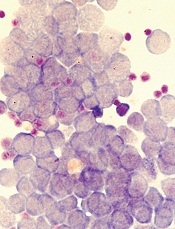
Image by Robert Paulson
The cell surface molecule CD99 occurs more frequently than normal on stem cells responsible for acute myeloid leukemia (AML) and myelodysplastic syndromes (MDS), according to research published in Science Translational Medicine.
Building on this discovery, researchers designed anti-CD99 monoclonal antibodies (mAbs).
In vitro and in vivo experiments
showed that these mAbs can recognize
and destroy AML and MDS stem/progenitor cells.
“Our findings not only identify a new molecule expressed on stem cells that drive these human malignancies, but we show that antibodies against this target can directly kill human AML stem cells,” said study author Christopher Y. Park, MD, PhD, of NYU Langone Medical Center in New York, New York.
“While we still have important details to work out, CD99 is likely to be an exploitable therapeutic target for most AML and MDS patients, and we are working urgently to finalize a therapy for human testing.”
Dr Park and his colleagues first examined stem cell populations from 79 patients with AML and 24 with MDS. More than 80% of stem cells in both groups expressed high levels of CD99.
The levels were so high that leukemia stem cells could be cleanly separated from normal hematopoietic stem cells in AML samples.
Upon confirming that CD99 was abundant on AML and MDS stem cells, the researchers made several anti-CD99 mAbs and tested them in vitro and in mouse models.
The mAbs destroyed AML and MDS stem cells by causing a sudden spike in the activity of SRC family kinases—a group of proteins that are implicated in invasion, tumor progression, and metastasis in a variety of cancers.
However, the mAbs had minimal effects on normal hematopoietic stem cells.
“With the appropriate support, we believe we can rapidly determine the best antibodies for use in patients, produce them at the quality needed to verify our results, and apply for permission to begin clinical trials,” Dr Park said.
Image by Robert Paulson
The cell surface molecule CD99 occurs more frequently than normal on stem cells responsible for acute myeloid leukemia (AML) and myelodysplastic syndromes (MDS), according to research published in Science Translational Medicine.
Building on this discovery, researchers designed anti-CD99 monoclonal antibodies (mAbs).
In vitro and in vivo experiments
showed that these mAbs can recognize
and destroy AML and MDS stem/progenitor cells.
“Our findings not only identify a new molecule expressed on stem cells that drive these human malignancies, but we show that antibodies against this target can directly kill human AML stem cells,” said study author Christopher Y. Park, MD, PhD, of NYU Langone Medical Center in New York, New York.
“While we still have important details to work out, CD99 is likely to be an exploitable therapeutic target for most AML and MDS patients, and we are working urgently to finalize a therapy for human testing.”
Dr Park and his colleagues first examined stem cell populations from 79 patients with AML and 24 with MDS. More than 80% of stem cells in both groups expressed high levels of CD99.
The levels were so high that leukemia stem cells could be cleanly separated from normal hematopoietic stem cells in AML samples.
Upon confirming that CD99 was abundant on AML and MDS stem cells, the researchers made several anti-CD99 mAbs and tested them in vitro and in mouse models.
The mAbs destroyed AML and MDS stem cells by causing a sudden spike in the activity of SRC family kinases—a group of proteins that are implicated in invasion, tumor progression, and metastasis in a variety of cancers.
However, the mAbs had minimal effects on normal hematopoietic stem cells.
“With the appropriate support, we believe we can rapidly determine the best antibodies for use in patients, produce them at the quality needed to verify our results, and apply for permission to begin clinical trials,” Dr Park said.
Image by Robert Paulson
The cell surface molecule CD99 occurs more frequently than normal on stem cells responsible for acute myeloid leukemia (AML) and myelodysplastic syndromes (MDS), according to research published in Science Translational Medicine.
Building on this discovery, researchers designed anti-CD99 monoclonal antibodies (mAbs).
In vitro and in vivo experiments
showed that these mAbs can recognize
and destroy AML and MDS stem/progenitor cells.
“Our findings not only identify a new molecule expressed on stem cells that drive these human malignancies, but we show that antibodies against this target can directly kill human AML stem cells,” said study author Christopher Y. Park, MD, PhD, of NYU Langone Medical Center in New York, New York.
“While we still have important details to work out, CD99 is likely to be an exploitable therapeutic target for most AML and MDS patients, and we are working urgently to finalize a therapy for human testing.”
Dr Park and his colleagues first examined stem cell populations from 79 patients with AML and 24 with MDS. More than 80% of stem cells in both groups expressed high levels of CD99.
The levels were so high that leukemia stem cells could be cleanly separated from normal hematopoietic stem cells in AML samples.
Upon confirming that CD99 was abundant on AML and MDS stem cells, the researchers made several anti-CD99 mAbs and tested them in vitro and in mouse models.
The mAbs destroyed AML and MDS stem cells by causing a sudden spike in the activity of SRC family kinases—a group of proteins that are implicated in invasion, tumor progression, and metastasis in a variety of cancers.
However, the mAbs had minimal effects on normal hematopoietic stem cells.
“With the appropriate support, we believe we can rapidly determine the best antibodies for use in patients, produce them at the quality needed to verify our results, and apply for permission to begin clinical trials,” Dr Park said.
Gene therapy granted breakthrough designation to treat hemophilia B

Image by Spencer Phillips
The US Food and Drug Administration (FDA) has granted breakthrough therapy designation for the investigational gene therapy AMT-060 as a treatment for patients with severe hemophilia B.
AMT-060 consists of a codon-optimized wild-type factor IX (FIX) gene cassette, the LP1 liver promoter, and an AAV5 viral vector manufactured by uniQure using its proprietary insect cell-based technology platform. uniQure is the company developing AMT-060.
The FDA’s breakthrough therapy designation is intended to expedite the development and review of new treatments for serious or life-threatening conditions.
Breakthrough designation entitles the company developing a therapy to more intensive FDA guidance on an efficient and accelerated development program, as well as eligibility for other actions to expedite FDA review, such as a rolling submission and priority review.
To earn breakthrough designation, a treatment must show encouraging early clinical results demonstrating substantial improvement over available therapies with regard to a clinically significant endpoint, or it must fulfill an unmet need.
Phase 1/2 trial
The breakthrough designation for AMT-060 is based on results from an ongoing phase 1/2 study. Updated data from this study were recently presented at the 2016 ASH Annual Meeting (abstract 2314).
In this trial, researchers are testing AMT-060 in 10 patients. All patients had severe or moderately severe hemophilia at baseline, including documented FIX levels less than 1% to 2% of normal, and required chronic infusions of prophylactic or on-demand FIX therapy at the time of enrollment.
Each patient received a 1-time, 30-minute, intravenous dose of AMT-060, without the use of corticosteroids. Five patients received AMT-060 at 5 x 10¹² gc/kg, and 5 received AMT-060 at 2 x 10¹³ gc/kg.
The data presented at ASH included up to 52 weeks of follow-up from the low-dose cohort and up to 31 weeks of follow-up from the higher-dose cohort.
Data from the higher-dose cohort show a dose response with improvement in disease state in all 5 patients. Four patients who previously required prophylactic FIX replacement therapy were able to stop this therapy.
As of the data cutoff date for the ASH presentation, 1 unconfirmed spontaneous bleed had been reported during an aggregate of 94 weeks of follow-up after the discontinuation of prophylaxis.
Researchers previously reported that 4 patients in the low-dose cohort were able to discontinue prophylactic therapy. The 1 patient who
remained on prophylaxis sustained an improved disease
phenotype and also required materially less FIX concentrate after
treatment with AMT-060.
According to uniQure, all 5 patients in the low-dose cohort continue to maintain “constant and clinically meaningful” levels of FIX activity for up to 52 weeks post-treatment. In fact, there were no spontaneous bleeds in these patients in the last 14 weeks of observation.
uniQure also said AMT-060 continues to be well-tolerated, and there have been no severe adverse events.
Three patients (2 in the higher-dose cohort and 1 previously reported from the low-dose cohort) experienced mild, asymptomatic elevations of alanine aminotransferase and received a tapering course of corticosteroids per protocol.
These temporary alanine aminotransferase elevations were not associated with any loss of endogenous FIX activity or T-cell response to the AAV5 capsid.
None of the patients in either cohort have developed inhibitory antibodies against FIX, and none of the patients screened tested positive for anti-AAV5 antibodies.
Image by Spencer Phillips
The US Food and Drug Administration (FDA) has granted breakthrough therapy designation for the investigational gene therapy AMT-060 as a treatment for patients with severe hemophilia B.
AMT-060 consists of a codon-optimized wild-type factor IX (FIX) gene cassette, the LP1 liver promoter, and an AAV5 viral vector manufactured by uniQure using its proprietary insect cell-based technology platform. uniQure is the company developing AMT-060.
The FDA’s breakthrough therapy designation is intended to expedite the development and review of new treatments for serious or life-threatening conditions.
Breakthrough designation entitles the company developing a therapy to more intensive FDA guidance on an efficient and accelerated development program, as well as eligibility for other actions to expedite FDA review, such as a rolling submission and priority review.
To earn breakthrough designation, a treatment must show encouraging early clinical results demonstrating substantial improvement over available therapies with regard to a clinically significant endpoint, or it must fulfill an unmet need.
Phase 1/2 trial
The breakthrough designation for AMT-060 is based on results from an ongoing phase 1/2 study. Updated data from this study were recently presented at the 2016 ASH Annual Meeting (abstract 2314).
In this trial, researchers are testing AMT-060 in 10 patients. All patients had severe or moderately severe hemophilia at baseline, including documented FIX levels less than 1% to 2% of normal, and required chronic infusions of prophylactic or on-demand FIX therapy at the time of enrollment.
Each patient received a 1-time, 30-minute, intravenous dose of AMT-060, without the use of corticosteroids. Five patients received AMT-060 at 5 x 10¹² gc/kg, and 5 received AMT-060 at 2 x 10¹³ gc/kg.
The data presented at ASH included up to 52 weeks of follow-up from the low-dose cohort and up to 31 weeks of follow-up from the higher-dose cohort.
Data from the higher-dose cohort show a dose response with improvement in disease state in all 5 patients. Four patients who previously required prophylactic FIX replacement therapy were able to stop this therapy.
As of the data cutoff date for the ASH presentation, 1 unconfirmed spontaneous bleed had been reported during an aggregate of 94 weeks of follow-up after the discontinuation of prophylaxis.
Researchers previously reported that 4 patients in the low-dose cohort were able to discontinue prophylactic therapy. The 1 patient who
remained on prophylaxis sustained an improved disease
phenotype and also required materially less FIX concentrate after
treatment with AMT-060.
According to uniQure, all 5 patients in the low-dose cohort continue to maintain “constant and clinically meaningful” levels of FIX activity for up to 52 weeks post-treatment. In fact, there were no spontaneous bleeds in these patients in the last 14 weeks of observation.
uniQure also said AMT-060 continues to be well-tolerated, and there have been no severe adverse events.
Three patients (2 in the higher-dose cohort and 1 previously reported from the low-dose cohort) experienced mild, asymptomatic elevations of alanine aminotransferase and received a tapering course of corticosteroids per protocol.
These temporary alanine aminotransferase elevations were not associated with any loss of endogenous FIX activity or T-cell response to the AAV5 capsid.
None of the patients in either cohort have developed inhibitory antibodies against FIX, and none of the patients screened tested positive for anti-AAV5 antibodies.
Image by Spencer Phillips
The US Food and Drug Administration (FDA) has granted breakthrough therapy designation for the investigational gene therapy AMT-060 as a treatment for patients with severe hemophilia B.
AMT-060 consists of a codon-optimized wild-type factor IX (FIX) gene cassette, the LP1 liver promoter, and an AAV5 viral vector manufactured by uniQure using its proprietary insect cell-based technology platform. uniQure is the company developing AMT-060.
The FDA’s breakthrough therapy designation is intended to expedite the development and review of new treatments for serious or life-threatening conditions.
Breakthrough designation entitles the company developing a therapy to more intensive FDA guidance on an efficient and accelerated development program, as well as eligibility for other actions to expedite FDA review, such as a rolling submission and priority review.
To earn breakthrough designation, a treatment must show encouraging early clinical results demonstrating substantial improvement over available therapies with regard to a clinically significant endpoint, or it must fulfill an unmet need.
Phase 1/2 trial
The breakthrough designation for AMT-060 is based on results from an ongoing phase 1/2 study. Updated data from this study were recently presented at the 2016 ASH Annual Meeting (abstract 2314).
In this trial, researchers are testing AMT-060 in 10 patients. All patients had severe or moderately severe hemophilia at baseline, including documented FIX levels less than 1% to 2% of normal, and required chronic infusions of prophylactic or on-demand FIX therapy at the time of enrollment.
Each patient received a 1-time, 30-minute, intravenous dose of AMT-060, without the use of corticosteroids. Five patients received AMT-060 at 5 x 10¹² gc/kg, and 5 received AMT-060 at 2 x 10¹³ gc/kg.
The data presented at ASH included up to 52 weeks of follow-up from the low-dose cohort and up to 31 weeks of follow-up from the higher-dose cohort.
Data from the higher-dose cohort show a dose response with improvement in disease state in all 5 patients. Four patients who previously required prophylactic FIX replacement therapy were able to stop this therapy.
As of the data cutoff date for the ASH presentation, 1 unconfirmed spontaneous bleed had been reported during an aggregate of 94 weeks of follow-up after the discontinuation of prophylaxis.
Researchers previously reported that 4 patients in the low-dose cohort were able to discontinue prophylactic therapy. The 1 patient who
remained on prophylaxis sustained an improved disease
phenotype and also required materially less FIX concentrate after
treatment with AMT-060.
According to uniQure, all 5 patients in the low-dose cohort continue to maintain “constant and clinically meaningful” levels of FIX activity for up to 52 weeks post-treatment. In fact, there were no spontaneous bleeds in these patients in the last 14 weeks of observation.
uniQure also said AMT-060 continues to be well-tolerated, and there have been no severe adverse events.
Three patients (2 in the higher-dose cohort and 1 previously reported from the low-dose cohort) experienced mild, asymptomatic elevations of alanine aminotransferase and received a tapering course of corticosteroids per protocol.
These temporary alanine aminotransferase elevations were not associated with any loss of endogenous FIX activity or T-cell response to the AAV5 capsid.
None of the patients in either cohort have developed inhibitory antibodies against FIX, and none of the patients screened tested positive for anti-AAV5 antibodies.