User login
Predicting risk of VTE in patients with leg casts
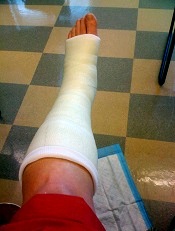
Photo by Nikki McLeod
Researchers say they have developed prediction models and a scoring system that can help identify a high risk of venous thromboembolism (VTE) in a patient who has a plaster leg cast.
The group utilized data from 3 large studies to develop and validate 3 prediction models and a risk score, known as the L-TRiP (cast) score, which are intended to help doctors decide whether patients with casts require thromboprophylaxis.
The models and the scoring system all predicted VTE with fairly high accuracy, but the researchers said this study had 2 major limitations.
First, due to the retrospective nature of the study, the team was unable to determine which of the patients may have received thromboprophylaxis. And second, blood samples were taken 3 months after VTE.
Banne Nemeth, MD, of Leiden University Medical Center in Leiden, Netherlands, and colleagues conducted this research and reported the results in PLOS Medicine.
Developing prediction tools
The researchers first analyzed data from the MEGA study, a population-based, case-control study in the Netherlands that included 4446 patients with VTE and 6118 controls.
From these data, the team attempted to identify biomarkers, genetic factors, and environmental factors predictive of VTE and build 3 different prediction models. Their full prediction model consists of 32 predictors for VTE, including 3 genetic factors and 6 biomarkers.
Their restricted model consists of 11 predictors for VTE, including 2 genetic factors and 1 biomarker. And their clinical model consists of 14 environmental predictors that can all be determined without drawing blood or performing any laboratory assays.
The predictors in the clinical model were given numerical values that, when summed, produce the L-TRiP (cast) score (Leiden–Thrombosis Risk Prediction for patients with cast immobilization score) to stratify patients into high- or low-risk groups for VTE.
To determine the discriminatory power of the models and the score in patients with casts, the researchers calculated the area under the curve (AUC) for each tool.
The AUC was 0.85 for the full model, 0.84 for the restricted model, 0.77 for the clinical model, and 0.76 for the L-TRiP (cast) score.
Validating the tools
The researchers validated the prediction models and risk score in 2 independent cohorts, THE-VTE study (784 VTE cases and 523 controls from the Netherlands and the UK) and the Milan study (2117 cases and 2088 controls from Italy).
In THE-VTE study, the AUC was 0.75 for the clinical model and 0.77 for the L-TRiP (cast) score. (There were no data provided for the full model or the restricted model in this cohort.)
In the Milan study, the AUC was 0.93 for the full model, 0.92 for the restricted model, 0.96 for the clinical model, and 0.95 for the L-TRiP (cast) score.
The researchers said these results suggest that genetic and biomarker information may provide added value in predicting VTE.
However, their clinical model (which consists solely of environmental factors) proved only slightly inferior to the full model in the derivation cohort and performed as well or better than the full model in the validation cohorts.
So it is unclear whether genetic and biomarker information will lead to higher accuracy in the prediction algorithm. 
Photo by Nikki McLeod
Researchers say they have developed prediction models and a scoring system that can help identify a high risk of venous thromboembolism (VTE) in a patient who has a plaster leg cast.
The group utilized data from 3 large studies to develop and validate 3 prediction models and a risk score, known as the L-TRiP (cast) score, which are intended to help doctors decide whether patients with casts require thromboprophylaxis.
The models and the scoring system all predicted VTE with fairly high accuracy, but the researchers said this study had 2 major limitations.
First, due to the retrospective nature of the study, the team was unable to determine which of the patients may have received thromboprophylaxis. And second, blood samples were taken 3 months after VTE.
Banne Nemeth, MD, of Leiden University Medical Center in Leiden, Netherlands, and colleagues conducted this research and reported the results in PLOS Medicine.
Developing prediction tools
The researchers first analyzed data from the MEGA study, a population-based, case-control study in the Netherlands that included 4446 patients with VTE and 6118 controls.
From these data, the team attempted to identify biomarkers, genetic factors, and environmental factors predictive of VTE and build 3 different prediction models. Their full prediction model consists of 32 predictors for VTE, including 3 genetic factors and 6 biomarkers.
Their restricted model consists of 11 predictors for VTE, including 2 genetic factors and 1 biomarker. And their clinical model consists of 14 environmental predictors that can all be determined without drawing blood or performing any laboratory assays.
The predictors in the clinical model were given numerical values that, when summed, produce the L-TRiP (cast) score (Leiden–Thrombosis Risk Prediction for patients with cast immobilization score) to stratify patients into high- or low-risk groups for VTE.
To determine the discriminatory power of the models and the score in patients with casts, the researchers calculated the area under the curve (AUC) for each tool.
The AUC was 0.85 for the full model, 0.84 for the restricted model, 0.77 for the clinical model, and 0.76 for the L-TRiP (cast) score.
Validating the tools
The researchers validated the prediction models and risk score in 2 independent cohorts, THE-VTE study (784 VTE cases and 523 controls from the Netherlands and the UK) and the Milan study (2117 cases and 2088 controls from Italy).
In THE-VTE study, the AUC was 0.75 for the clinical model and 0.77 for the L-TRiP (cast) score. (There were no data provided for the full model or the restricted model in this cohort.)
In the Milan study, the AUC was 0.93 for the full model, 0.92 for the restricted model, 0.96 for the clinical model, and 0.95 for the L-TRiP (cast) score.
The researchers said these results suggest that genetic and biomarker information may provide added value in predicting VTE.
However, their clinical model (which consists solely of environmental factors) proved only slightly inferior to the full model in the derivation cohort and performed as well or better than the full model in the validation cohorts.
So it is unclear whether genetic and biomarker information will lead to higher accuracy in the prediction algorithm.
Photo by Nikki McLeod
Researchers say they have developed prediction models and a scoring system that can help identify a high risk of venous thromboembolism (VTE) in a patient who has a plaster leg cast.
The group utilized data from 3 large studies to develop and validate 3 prediction models and a risk score, known as the L-TRiP (cast) score, which are intended to help doctors decide whether patients with casts require thromboprophylaxis.
The models and the scoring system all predicted VTE with fairly high accuracy, but the researchers said this study had 2 major limitations.
First, due to the retrospective nature of the study, the team was unable to determine which of the patients may have received thromboprophylaxis. And second, blood samples were taken 3 months after VTE.
Banne Nemeth, MD, of Leiden University Medical Center in Leiden, Netherlands, and colleagues conducted this research and reported the results in PLOS Medicine.
Developing prediction tools
The researchers first analyzed data from the MEGA study, a population-based, case-control study in the Netherlands that included 4446 patients with VTE and 6118 controls.
From these data, the team attempted to identify biomarkers, genetic factors, and environmental factors predictive of VTE and build 3 different prediction models. Their full prediction model consists of 32 predictors for VTE, including 3 genetic factors and 6 biomarkers.
Their restricted model consists of 11 predictors for VTE, including 2 genetic factors and 1 biomarker. And their clinical model consists of 14 environmental predictors that can all be determined without drawing blood or performing any laboratory assays.
The predictors in the clinical model were given numerical values that, when summed, produce the L-TRiP (cast) score (Leiden–Thrombosis Risk Prediction for patients with cast immobilization score) to stratify patients into high- or low-risk groups for VTE.
To determine the discriminatory power of the models and the score in patients with casts, the researchers calculated the area under the curve (AUC) for each tool.
The AUC was 0.85 for the full model, 0.84 for the restricted model, 0.77 for the clinical model, and 0.76 for the L-TRiP (cast) score.
Validating the tools
The researchers validated the prediction models and risk score in 2 independent cohorts, THE-VTE study (784 VTE cases and 523 controls from the Netherlands and the UK) and the Milan study (2117 cases and 2088 controls from Italy).
In THE-VTE study, the AUC was 0.75 for the clinical model and 0.77 for the L-TRiP (cast) score. (There were no data provided for the full model or the restricted model in this cohort.)
In the Milan study, the AUC was 0.93 for the full model, 0.92 for the restricted model, 0.96 for the clinical model, and 0.95 for the L-TRiP (cast) score.
The researchers said these results suggest that genetic and biomarker information may provide added value in predicting VTE.
However, their clinical model (which consists solely of environmental factors) proved only slightly inferior to the full model in the derivation cohort and performed as well or better than the full model in the validation cohorts.
So it is unclear whether genetic and biomarker information will lead to higher accuracy in the prediction algorithm.
Team describes new way to edit HSPCs

Image by Tom Ellenberger
Researchers say they have discovered a more efficient way to edit the genomes of hematopoietic stem and progenitor cells (HSPCs).
The approach involves adeno-associated virus (AAV) serotype 6 and zinc finger nuclease (ZFN) messenger RNA (mRNA).
Combining these delivery techniques allowed the team to “achieve high levels of precise genome editing” in HSPCs, including the most primitive cell population.
Paula Cannon, PhD, of the University of Southern California in Los Angeles, and her colleagues described this work in Nature Biotechnology.
The researchers have been using ZFNs to cut a cell’s DNA at a precise location or sequence. The cell normally uses a copy of the cut DNA sequence as a template to repair the DNA break.
During this process, there is the opportunity to introduce new DNA sequences or to repair mutations, effectively fooling the cell into making a genetic edit.
To provide the cell with both the targeted nuclease and the new DNA template, researchers can use a variety of delivery vehicles or vectors, including viruses and mRNA.
With this study, Dr Cannon and her colleagues found they could deliver the DNA repair template using AAV6, which can naturally enter HSPCs.
At the same time, they found that delivering the ZFNs as short-lived mRNA molecules allowed the DNA cutting and repair process to occur without disrupting the HSPCs.
By combining these delivery methods, the researchers were able to insert a gene at a precise site in even the most primitive human HSPCs, with efficiency rates ranging from 17% to 43%.
The team then transplanted these edited HSPCs into immune-deficient mice and found the cells thrived and differentiated into many different blood cell types, all of which retained the edits to their DNA.
“Our results provide a strategy for broadening the application of genome editing technologies in HSPCs,” said study author Michael C. Holmes, PhD, vice president of research at Sangamo BioSciences in Richmond, California.
“This significantly advances our progress towards applying genome editing to the treatment of human diseases of the blood and immune systems.”
Image by Tom Ellenberger
Researchers say they have discovered a more efficient way to edit the genomes of hematopoietic stem and progenitor cells (HSPCs).
The approach involves adeno-associated virus (AAV) serotype 6 and zinc finger nuclease (ZFN) messenger RNA (mRNA).
Combining these delivery techniques allowed the team to “achieve high levels of precise genome editing” in HSPCs, including the most primitive cell population.
Paula Cannon, PhD, of the University of Southern California in Los Angeles, and her colleagues described this work in Nature Biotechnology.
The researchers have been using ZFNs to cut a cell’s DNA at a precise location or sequence. The cell normally uses a copy of the cut DNA sequence as a template to repair the DNA break.
During this process, there is the opportunity to introduce new DNA sequences or to repair mutations, effectively fooling the cell into making a genetic edit.
To provide the cell with both the targeted nuclease and the new DNA template, researchers can use a variety of delivery vehicles or vectors, including viruses and mRNA.
With this study, Dr Cannon and her colleagues found they could deliver the DNA repair template using AAV6, which can naturally enter HSPCs.
At the same time, they found that delivering the ZFNs as short-lived mRNA molecules allowed the DNA cutting and repair process to occur without disrupting the HSPCs.
By combining these delivery methods, the researchers were able to insert a gene at a precise site in even the most primitive human HSPCs, with efficiency rates ranging from 17% to 43%.
The team then transplanted these edited HSPCs into immune-deficient mice and found the cells thrived and differentiated into many different blood cell types, all of which retained the edits to their DNA.
“Our results provide a strategy for broadening the application of genome editing technologies in HSPCs,” said study author Michael C. Holmes, PhD, vice president of research at Sangamo BioSciences in Richmond, California.
“This significantly advances our progress towards applying genome editing to the treatment of human diseases of the blood and immune systems.”
Image by Tom Ellenberger
Researchers say they have discovered a more efficient way to edit the genomes of hematopoietic stem and progenitor cells (HSPCs).
The approach involves adeno-associated virus (AAV) serotype 6 and zinc finger nuclease (ZFN) messenger RNA (mRNA).
Combining these delivery techniques allowed the team to “achieve high levels of precise genome editing” in HSPCs, including the most primitive cell population.
Paula Cannon, PhD, of the University of Southern California in Los Angeles, and her colleagues described this work in Nature Biotechnology.
The researchers have been using ZFNs to cut a cell’s DNA at a precise location or sequence. The cell normally uses a copy of the cut DNA sequence as a template to repair the DNA break.
During this process, there is the opportunity to introduce new DNA sequences or to repair mutations, effectively fooling the cell into making a genetic edit.
To provide the cell with both the targeted nuclease and the new DNA template, researchers can use a variety of delivery vehicles or vectors, including viruses and mRNA.
With this study, Dr Cannon and her colleagues found they could deliver the DNA repair template using AAV6, which can naturally enter HSPCs.
At the same time, they found that delivering the ZFNs as short-lived mRNA molecules allowed the DNA cutting and repair process to occur without disrupting the HSPCs.
By combining these delivery methods, the researchers were able to insert a gene at a precise site in even the most primitive human HSPCs, with efficiency rates ranging from 17% to 43%.
The team then transplanted these edited HSPCs into immune-deficient mice and found the cells thrived and differentiated into many different blood cell types, all of which retained the edits to their DNA.
“Our results provide a strategy for broadening the application of genome editing technologies in HSPCs,” said study author Michael C. Holmes, PhD, vice president of research at Sangamo BioSciences in Richmond, California.
“This significantly advances our progress towards applying genome editing to the treatment of human diseases of the blood and immune systems.”
Models predict impact of malaria vaccine candidate
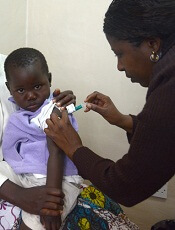
Photo by Caitlin Kleiboer
The malaria vaccine candidate RTS,S/AS01 (Mosquirix) could have a significant impact on public health in a range of settings across sub-Saharan Africa, according to mathematical models.
Researchers found that, over a 15-year time horizon, an average of 116,500 cases of clinical malaria and 484 malaria deaths would be averted for every 100,000 children vaccinated under a 4-dose schedule of immunizations at 6, 7.5, 9, and 27 months of age.
This translates to approximately 1.2 malaria cases averted per vaccinated child and 1 malaria death averted for every 200 children vaccinated.
These data apply to children living in regions of Africa that experience moderate to high malaria transmission—countries where prevalence rates for the malaria parasite Plasmodium falciparum range from 10% to 65%—and assumes a vaccine coverage rate at the fourth dose of approximately 70%.
The findings, published in The Lancet, contribute to the scientific evidence being considered by the World Health Organization, which is assessing the vaccine candidate for use in Africa.
“We took a realistic look at expected coverage of the RTS,S vaccine in a variety of African settings and found it would have significant impact on malaria disease in all but the lowest malaria transmission regions,” said Melissa Penny, PhD, of the Swiss Tropical and Public Health Institute in Basel.
“Our numbers indicate that 6% to 29% of malaria deaths in children younger than age 5 could potentially be averted by the vaccine in the areas in which it is implemented, when used alongside other malaria control interventions.”
This is the first modeling study to use final, site-specific results of the RTS,S phase 3 safety and efficacy trial coordinated by GlaxoSmithKline and conducted at 11 sites in 7 African countries. And it accounts for implementation of the vaccine alongside use of long-lasting, insecticide-treated bed nets.
There was consensus across the predictions from all 4 groups that took part in the study. The participating institutions are Imperial College London in the UK, Swiss Tropical and Public Health Institute, the Institute for Disease Modeling in the US, and GlaxoSmithKline in Belgium.
According to the study authors, public health authorities require these types of impact estimates on malaria disease and deaths to inform vaccine implementation.
Models can account for differences between the trial and real-life settings in transmission levels and healthcare accessibility, as well as predict RTS,S’s impact on malaria mortality, which was not possible to assess in the trial.
Cost-effectiveness
As part of the modeling study, the researchers considered a range of possible prices for RTS,S, from $2 to $10. They found that, compared to current malaria interventions, the vaccine would be cost-effective to implement under an assumed price of USD$5 per dose in areas of moderate and high malaria transmission.
”The cost-effectiveness of RTS,S is similar to what we’ve seen for other recently introduced childhood vaccines,” said Azra Ghani, PhD, of Imperial College London.
“It also overlaps within the ranges of cost-effectiveness of other malaria control interventions like bed nets and indoor residual sprays. However, it is important that the vaccine is introduced in addition to these other highly cost-effective interventions.”
The researchers measured cost-effectiveness in terms of disability-adjusted life years (DALYs), a metric used by health economists to compare the impacts of health interventions in populations over time. One DALY is equivalent to 1 lost year of healthy life. The lower the amount spent per DALY averted, the greater the cost-effectiveness of an intervention.
With the vaccine priced at $5 per dose, the researchers estimated a median cost of $87 per DALY averted for a 4-dose vaccine schedule across the range of transmission settings with parasite prevalence 10% to 65%.
This cost was estimated to vary depending on the level of malaria transmission found in a particular location—with the vaccine being increasingly cost-effective in areas with a higher malaria burden.
The researchers noted that, according to earlier studies, the cost per DALY averted for other malaria interventions indicate averages of $27 for long-lasting, insecticide-treated bed nets; $143 for indoor residual spraying; and $24 for intermittent preventative treatment.
Caveats
The researchers conceded that this study has its limitations. One is the remaining uncertainty regarding the vaccine’s efficacy after the 4 years of follow-up observed in the phase 3 trial.
The team also noted that, since the phase 3 trial of RTS,S was not large enough to test for a reduction in deaths from malaria (versus reduction in incidence of malaria cases) and the quality of care provided to participants was high, the modeling studies’ projection of deaths requires further validation during the implementation phase.
“It will be important to continue to track the long-term impact of this vaccine to ensure that the effectiveness predicted by the models is borne out in practice,” said Caitlin Bever, PhD, of the Institute for Disease Modeling in Bellevue, Washington.
Photo by Caitlin Kleiboer
The malaria vaccine candidate RTS,S/AS01 (Mosquirix) could have a significant impact on public health in a range of settings across sub-Saharan Africa, according to mathematical models.
Researchers found that, over a 15-year time horizon, an average of 116,500 cases of clinical malaria and 484 malaria deaths would be averted for every 100,000 children vaccinated under a 4-dose schedule of immunizations at 6, 7.5, 9, and 27 months of age.
This translates to approximately 1.2 malaria cases averted per vaccinated child and 1 malaria death averted for every 200 children vaccinated.
These data apply to children living in regions of Africa that experience moderate to high malaria transmission—countries where prevalence rates for the malaria parasite Plasmodium falciparum range from 10% to 65%—and assumes a vaccine coverage rate at the fourth dose of approximately 70%.
The findings, published in The Lancet, contribute to the scientific evidence being considered by the World Health Organization, which is assessing the vaccine candidate for use in Africa.
“We took a realistic look at expected coverage of the RTS,S vaccine in a variety of African settings and found it would have significant impact on malaria disease in all but the lowest malaria transmission regions,” said Melissa Penny, PhD, of the Swiss Tropical and Public Health Institute in Basel.
“Our numbers indicate that 6% to 29% of malaria deaths in children younger than age 5 could potentially be averted by the vaccine in the areas in which it is implemented, when used alongside other malaria control interventions.”
This is the first modeling study to use final, site-specific results of the RTS,S phase 3 safety and efficacy trial coordinated by GlaxoSmithKline and conducted at 11 sites in 7 African countries. And it accounts for implementation of the vaccine alongside use of long-lasting, insecticide-treated bed nets.
There was consensus across the predictions from all 4 groups that took part in the study. The participating institutions are Imperial College London in the UK, Swiss Tropical and Public Health Institute, the Institute for Disease Modeling in the US, and GlaxoSmithKline in Belgium.
According to the study authors, public health authorities require these types of impact estimates on malaria disease and deaths to inform vaccine implementation.
Models can account for differences between the trial and real-life settings in transmission levels and healthcare accessibility, as well as predict RTS,S’s impact on malaria mortality, which was not possible to assess in the trial.
Cost-effectiveness
As part of the modeling study, the researchers considered a range of possible prices for RTS,S, from $2 to $10. They found that, compared to current malaria interventions, the vaccine would be cost-effective to implement under an assumed price of USD$5 per dose in areas of moderate and high malaria transmission.
”The cost-effectiveness of RTS,S is similar to what we’ve seen for other recently introduced childhood vaccines,” said Azra Ghani, PhD, of Imperial College London.
“It also overlaps within the ranges of cost-effectiveness of other malaria control interventions like bed nets and indoor residual sprays. However, it is important that the vaccine is introduced in addition to these other highly cost-effective interventions.”
The researchers measured cost-effectiveness in terms of disability-adjusted life years (DALYs), a metric used by health economists to compare the impacts of health interventions in populations over time. One DALY is equivalent to 1 lost year of healthy life. The lower the amount spent per DALY averted, the greater the cost-effectiveness of an intervention.
With the vaccine priced at $5 per dose, the researchers estimated a median cost of $87 per DALY averted for a 4-dose vaccine schedule across the range of transmission settings with parasite prevalence 10% to 65%.
This cost was estimated to vary depending on the level of malaria transmission found in a particular location—with the vaccine being increasingly cost-effective in areas with a higher malaria burden.
The researchers noted that, according to earlier studies, the cost per DALY averted for other malaria interventions indicate averages of $27 for long-lasting, insecticide-treated bed nets; $143 for indoor residual spraying; and $24 for intermittent preventative treatment.
Caveats
The researchers conceded that this study has its limitations. One is the remaining uncertainty regarding the vaccine’s efficacy after the 4 years of follow-up observed in the phase 3 trial.
The team also noted that, since the phase 3 trial of RTS,S was not large enough to test for a reduction in deaths from malaria (versus reduction in incidence of malaria cases) and the quality of care provided to participants was high, the modeling studies’ projection of deaths requires further validation during the implementation phase.
“It will be important to continue to track the long-term impact of this vaccine to ensure that the effectiveness predicted by the models is borne out in practice,” said Caitlin Bever, PhD, of the Institute for Disease Modeling in Bellevue, Washington.
Photo by Caitlin Kleiboer
The malaria vaccine candidate RTS,S/AS01 (Mosquirix) could have a significant impact on public health in a range of settings across sub-Saharan Africa, according to mathematical models.
Researchers found that, over a 15-year time horizon, an average of 116,500 cases of clinical malaria and 484 malaria deaths would be averted for every 100,000 children vaccinated under a 4-dose schedule of immunizations at 6, 7.5, 9, and 27 months of age.
This translates to approximately 1.2 malaria cases averted per vaccinated child and 1 malaria death averted for every 200 children vaccinated.
These data apply to children living in regions of Africa that experience moderate to high malaria transmission—countries where prevalence rates for the malaria parasite Plasmodium falciparum range from 10% to 65%—and assumes a vaccine coverage rate at the fourth dose of approximately 70%.
The findings, published in The Lancet, contribute to the scientific evidence being considered by the World Health Organization, which is assessing the vaccine candidate for use in Africa.
“We took a realistic look at expected coverage of the RTS,S vaccine in a variety of African settings and found it would have significant impact on malaria disease in all but the lowest malaria transmission regions,” said Melissa Penny, PhD, of the Swiss Tropical and Public Health Institute in Basel.
“Our numbers indicate that 6% to 29% of malaria deaths in children younger than age 5 could potentially be averted by the vaccine in the areas in which it is implemented, when used alongside other malaria control interventions.”
This is the first modeling study to use final, site-specific results of the RTS,S phase 3 safety and efficacy trial coordinated by GlaxoSmithKline and conducted at 11 sites in 7 African countries. And it accounts for implementation of the vaccine alongside use of long-lasting, insecticide-treated bed nets.
There was consensus across the predictions from all 4 groups that took part in the study. The participating institutions are Imperial College London in the UK, Swiss Tropical and Public Health Institute, the Institute for Disease Modeling in the US, and GlaxoSmithKline in Belgium.
According to the study authors, public health authorities require these types of impact estimates on malaria disease and deaths to inform vaccine implementation.
Models can account for differences between the trial and real-life settings in transmission levels and healthcare accessibility, as well as predict RTS,S’s impact on malaria mortality, which was not possible to assess in the trial.
Cost-effectiveness
As part of the modeling study, the researchers considered a range of possible prices for RTS,S, from $2 to $10. They found that, compared to current malaria interventions, the vaccine would be cost-effective to implement under an assumed price of USD$5 per dose in areas of moderate and high malaria transmission.
”The cost-effectiveness of RTS,S is similar to what we’ve seen for other recently introduced childhood vaccines,” said Azra Ghani, PhD, of Imperial College London.
“It also overlaps within the ranges of cost-effectiveness of other malaria control interventions like bed nets and indoor residual sprays. However, it is important that the vaccine is introduced in addition to these other highly cost-effective interventions.”
The researchers measured cost-effectiveness in terms of disability-adjusted life years (DALYs), a metric used by health economists to compare the impacts of health interventions in populations over time. One DALY is equivalent to 1 lost year of healthy life. The lower the amount spent per DALY averted, the greater the cost-effectiveness of an intervention.
With the vaccine priced at $5 per dose, the researchers estimated a median cost of $87 per DALY averted for a 4-dose vaccine schedule across the range of transmission settings with parasite prevalence 10% to 65%.
This cost was estimated to vary depending on the level of malaria transmission found in a particular location—with the vaccine being increasingly cost-effective in areas with a higher malaria burden.
The researchers noted that, according to earlier studies, the cost per DALY averted for other malaria interventions indicate averages of $27 for long-lasting, insecticide-treated bed nets; $143 for indoor residual spraying; and $24 for intermittent preventative treatment.
Caveats
The researchers conceded that this study has its limitations. One is the remaining uncertainty regarding the vaccine’s efficacy after the 4 years of follow-up observed in the phase 3 trial.
The team also noted that, since the phase 3 trial of RTS,S was not large enough to test for a reduction in deaths from malaria (versus reduction in incidence of malaria cases) and the quality of care provided to participants was high, the modeling studies’ projection of deaths requires further validation during the implementation phase.
“It will be important to continue to track the long-term impact of this vaccine to ensure that the effectiveness predicted by the models is borne out in practice,” said Caitlin Bever, PhD, of the Institute for Disease Modeling in Bellevue, Washington.
Drug protects fertility in chemo-treated mice

Photo courtesy of UW Health
The heart medication dexrazoxane can protect fertility and improve survival in female mice receiving the chemotherapeutic agent doxorubicin, according to research published in PLOS ONE.
Dexrazoxane prevented ovarian damage, increased the number of healthy offspring mice had, and prolonged their survival.
If dexrazoxane has the same effects in humans, it could save young lives while also overcoming limitations to fertility treatments currently used during cancer treatment, according to study author Sana Salih, MD, of the University of Wisconsin School of Medicine and Public Health in Madison.
“Fertility preservation following chemotherapy for children and women diagnosed with cancer is a formidable challenge,” Dr Salih said. “For pre-pubescent girls, the only option to prevent chemo-induced ovarian failure is to preserve ovarian tissue by freezing.”
Unfortunately, that is an experimental procedure that requires surgery to harvest and again to re-implant the tissue after cancer treatment. The transplantation carries a small risk of cancer recurrence and provides only a short-term solution.
“The transplanted ovarian tissue can only function for 3 to 7 years,” Dr Salih said.
So she was pleased to discover that pre-administration of dexrazoxane diminished ovarian damage and preserved ovarian function and fertility in mice whose ovaries were exposed to doxorubicin.
“What really surprised us is that a very small dose of dexrazoxane was enough to give full ovarian protection,” Dr Salih said.
Mice treated with dexrazoxane also gave birth to healthier litters, with more pups and higher birth weights than mice that received doxorubicin alone.
In addition, the mice that received dexrazoxane and doxorubicin lived much longer than mice that only received doxorubicin. And mice given only dexrazoxane lived longer than control mice receiving no interventions.
“The [US Food and Drug Administration] currently limits the use of dexrazoxane to adults to protect their hearts from the toxic side effects of chemotherapy,” Dr Salih said. “But these patients are receiving very high doses of dexrazoxane that may actually be contributing to increased toxicity, leading to decreased survival in some patients.”
Dr Salih and her colleagues found they could achieve high mouse survival rates, ovarian protection, and birthing successes using a dose of dexrazoxane 10 times lower than what is used for adult human cardiac protection. Post-mortem studies on the mice showed protection of ovarian, heart, and other cells and tissues.
“This is exciting,” Dr Salih said. “We are now submitting a grant to look at low-dose dexrazoxane protection in nonhuman primates as a stepping stone to clinical translation in pediatric cancer patients.”
Dr Salih has begun studies needed to show that safe doses of dexrazoxane can protect developing primate ovaries. Nonhuman primate ovarian development, cycle time, and gestation are very similar to that of humans.
“My goal is to present data so that physicians can come up with dosage recommendations and safety profiles for early clinical trials in humans,” Dr Salih said. “Up to 6% of young girls with childhood cancers and 50% of women with breast cancer who endure chemotherapy face ovarian failure. We need to give more cancer survivors real hope that they can conceive a healthy child.”
Photo courtesy of UW Health
The heart medication dexrazoxane can protect fertility and improve survival in female mice receiving the chemotherapeutic agent doxorubicin, according to research published in PLOS ONE.
Dexrazoxane prevented ovarian damage, increased the number of healthy offspring mice had, and prolonged their survival.
If dexrazoxane has the same effects in humans, it could save young lives while also overcoming limitations to fertility treatments currently used during cancer treatment, according to study author Sana Salih, MD, of the University of Wisconsin School of Medicine and Public Health in Madison.
“Fertility preservation following chemotherapy for children and women diagnosed with cancer is a formidable challenge,” Dr Salih said. “For pre-pubescent girls, the only option to prevent chemo-induced ovarian failure is to preserve ovarian tissue by freezing.”
Unfortunately, that is an experimental procedure that requires surgery to harvest and again to re-implant the tissue after cancer treatment. The transplantation carries a small risk of cancer recurrence and provides only a short-term solution.
“The transplanted ovarian tissue can only function for 3 to 7 years,” Dr Salih said.
So she was pleased to discover that pre-administration of dexrazoxane diminished ovarian damage and preserved ovarian function and fertility in mice whose ovaries were exposed to doxorubicin.
“What really surprised us is that a very small dose of dexrazoxane was enough to give full ovarian protection,” Dr Salih said.
Mice treated with dexrazoxane also gave birth to healthier litters, with more pups and higher birth weights than mice that received doxorubicin alone.
In addition, the mice that received dexrazoxane and doxorubicin lived much longer than mice that only received doxorubicin. And mice given only dexrazoxane lived longer than control mice receiving no interventions.
“The [US Food and Drug Administration] currently limits the use of dexrazoxane to adults to protect their hearts from the toxic side effects of chemotherapy,” Dr Salih said. “But these patients are receiving very high doses of dexrazoxane that may actually be contributing to increased toxicity, leading to decreased survival in some patients.”
Dr Salih and her colleagues found they could achieve high mouse survival rates, ovarian protection, and birthing successes using a dose of dexrazoxane 10 times lower than what is used for adult human cardiac protection. Post-mortem studies on the mice showed protection of ovarian, heart, and other cells and tissues.
“This is exciting,” Dr Salih said. “We are now submitting a grant to look at low-dose dexrazoxane protection in nonhuman primates as a stepping stone to clinical translation in pediatric cancer patients.”
Dr Salih has begun studies needed to show that safe doses of dexrazoxane can protect developing primate ovaries. Nonhuman primate ovarian development, cycle time, and gestation are very similar to that of humans.
“My goal is to present data so that physicians can come up with dosage recommendations and safety profiles for early clinical trials in humans,” Dr Salih said. “Up to 6% of young girls with childhood cancers and 50% of women with breast cancer who endure chemotherapy face ovarian failure. We need to give more cancer survivors real hope that they can conceive a healthy child.”
Photo courtesy of UW Health
The heart medication dexrazoxane can protect fertility and improve survival in female mice receiving the chemotherapeutic agent doxorubicin, according to research published in PLOS ONE.
Dexrazoxane prevented ovarian damage, increased the number of healthy offspring mice had, and prolonged their survival.
If dexrazoxane has the same effects in humans, it could save young lives while also overcoming limitations to fertility treatments currently used during cancer treatment, according to study author Sana Salih, MD, of the University of Wisconsin School of Medicine and Public Health in Madison.
“Fertility preservation following chemotherapy for children and women diagnosed with cancer is a formidable challenge,” Dr Salih said. “For pre-pubescent girls, the only option to prevent chemo-induced ovarian failure is to preserve ovarian tissue by freezing.”
Unfortunately, that is an experimental procedure that requires surgery to harvest and again to re-implant the tissue after cancer treatment. The transplantation carries a small risk of cancer recurrence and provides only a short-term solution.
“The transplanted ovarian tissue can only function for 3 to 7 years,” Dr Salih said.
So she was pleased to discover that pre-administration of dexrazoxane diminished ovarian damage and preserved ovarian function and fertility in mice whose ovaries were exposed to doxorubicin.
“What really surprised us is that a very small dose of dexrazoxane was enough to give full ovarian protection,” Dr Salih said.
Mice treated with dexrazoxane also gave birth to healthier litters, with more pups and higher birth weights than mice that received doxorubicin alone.
In addition, the mice that received dexrazoxane and doxorubicin lived much longer than mice that only received doxorubicin. And mice given only dexrazoxane lived longer than control mice receiving no interventions.
“The [US Food and Drug Administration] currently limits the use of dexrazoxane to adults to protect their hearts from the toxic side effects of chemotherapy,” Dr Salih said. “But these patients are receiving very high doses of dexrazoxane that may actually be contributing to increased toxicity, leading to decreased survival in some patients.”
Dr Salih and her colleagues found they could achieve high mouse survival rates, ovarian protection, and birthing successes using a dose of dexrazoxane 10 times lower than what is used for adult human cardiac protection. Post-mortem studies on the mice showed protection of ovarian, heart, and other cells and tissues.
“This is exciting,” Dr Salih said. “We are now submitting a grant to look at low-dose dexrazoxane protection in nonhuman primates as a stepping stone to clinical translation in pediatric cancer patients.”
Dr Salih has begun studies needed to show that safe doses of dexrazoxane can protect developing primate ovaries. Nonhuman primate ovarian development, cycle time, and gestation are very similar to that of humans.
“My goal is to present data so that physicians can come up with dosage recommendations and safety profiles for early clinical trials in humans,” Dr Salih said. “Up to 6% of young girls with childhood cancers and 50% of women with breast cancer who endure chemotherapy face ovarian failure. We need to give more cancer survivors real hope that they can conceive a healthy child.”
Study raises questions about iron dosing

A new study suggests it may be difficult for the body to absorb iron in the necessary or desired quantities when iron supplements are administered in 24-hour intervals.
Investigators believe this is due to hepcidin. They found that giving subjects iron supplements at doses of 60 mg or higher increased hepcidin levels for up to 24 hours and was associated with lower iron absorption on the following day.
The team postulated that administering low-dose iron on alternate days may overcome this problem, but they said more research is needed to confirm this.
The investigators reported their findings in Blood.
Diego Moretti, PhD, of the Swiss Federal Institute of Technology Zürich, and his colleagues conducted this study in 54 young women.
The women had depleted iron reserves but were not yet anemic (plasma ferritin ≤20 mcg/L). They received a daily dose of at least 40 mg of iron, as is commonly prescribed in cases of iron deficiency.
Afterward, the investigators measured how the hepcidin concentration developed and quantified its effect on the absorption of subsequent doses of iron.
To analyze iron reabsorption, the team used stable iron isotopes as indicator substances. These substances have a modified ratio of stable iron isotopes. Iron-56 is the most frequent naturally occurring stable iron isotope (91.7%), followed by iron-54 (5.8%), and iron-57 (2.1%). Iron-58 occurs only in trace amounts.
The investigators used tablets with increased quantities of iron-57, iron-54, and iron-58. And they were able to measure endogenous iron absorption by observing isotope ratio changes within the body.
The team found that hepcidin reached its peak concentration after 6 to 8 hours, but even 24 hours after the first dose of iron, it was still present in high enough quantities to markedly reduce absorption of the second dose.
The body was only partly able to absorb a second dose of iron, which was given either on the same day or 24 hours after the first dose.
“To improve the percentage of iron absorbed, it would likely be more efficient to wait longer between doses,” Dr Moretti said.
However, he noted that more research is needed to confirm this, particularly because this study had 2 limitations. The first is that participants were all healthy young women without anemia, and the second is that iron absorption was observed over 2 days only.
The investigators are now preparing to conduct a follow-up study to analyze hepcidin concentration over the course of an iron supplementation regimen lasting several weeks.
A new study suggests it may be difficult for the body to absorb iron in the necessary or desired quantities when iron supplements are administered in 24-hour intervals.
Investigators believe this is due to hepcidin. They found that giving subjects iron supplements at doses of 60 mg or higher increased hepcidin levels for up to 24 hours and was associated with lower iron absorption on the following day.
The team postulated that administering low-dose iron on alternate days may overcome this problem, but they said more research is needed to confirm this.
The investigators reported their findings in Blood.
Diego Moretti, PhD, of the Swiss Federal Institute of Technology Zürich, and his colleagues conducted this study in 54 young women.
The women had depleted iron reserves but were not yet anemic (plasma ferritin ≤20 mcg/L). They received a daily dose of at least 40 mg of iron, as is commonly prescribed in cases of iron deficiency.
Afterward, the investigators measured how the hepcidin concentration developed and quantified its effect on the absorption of subsequent doses of iron.
To analyze iron reabsorption, the team used stable iron isotopes as indicator substances. These substances have a modified ratio of stable iron isotopes. Iron-56 is the most frequent naturally occurring stable iron isotope (91.7%), followed by iron-54 (5.8%), and iron-57 (2.1%). Iron-58 occurs only in trace amounts.
The investigators used tablets with increased quantities of iron-57, iron-54, and iron-58. And they were able to measure endogenous iron absorption by observing isotope ratio changes within the body.
The team found that hepcidin reached its peak concentration after 6 to 8 hours, but even 24 hours after the first dose of iron, it was still present in high enough quantities to markedly reduce absorption of the second dose.
The body was only partly able to absorb a second dose of iron, which was given either on the same day or 24 hours after the first dose.
“To improve the percentage of iron absorbed, it would likely be more efficient to wait longer between doses,” Dr Moretti said.
However, he noted that more research is needed to confirm this, particularly because this study had 2 limitations. The first is that participants were all healthy young women without anemia, and the second is that iron absorption was observed over 2 days only.
The investigators are now preparing to conduct a follow-up study to analyze hepcidin concentration over the course of an iron supplementation regimen lasting several weeks.
A new study suggests it may be difficult for the body to absorb iron in the necessary or desired quantities when iron supplements are administered in 24-hour intervals.
Investigators believe this is due to hepcidin. They found that giving subjects iron supplements at doses of 60 mg or higher increased hepcidin levels for up to 24 hours and was associated with lower iron absorption on the following day.
The team postulated that administering low-dose iron on alternate days may overcome this problem, but they said more research is needed to confirm this.
The investigators reported their findings in Blood.
Diego Moretti, PhD, of the Swiss Federal Institute of Technology Zürich, and his colleagues conducted this study in 54 young women.
The women had depleted iron reserves but were not yet anemic (plasma ferritin ≤20 mcg/L). They received a daily dose of at least 40 mg of iron, as is commonly prescribed in cases of iron deficiency.
Afterward, the investigators measured how the hepcidin concentration developed and quantified its effect on the absorption of subsequent doses of iron.
To analyze iron reabsorption, the team used stable iron isotopes as indicator substances. These substances have a modified ratio of stable iron isotopes. Iron-56 is the most frequent naturally occurring stable iron isotope (91.7%), followed by iron-54 (5.8%), and iron-57 (2.1%). Iron-58 occurs only in trace amounts.
The investigators used tablets with increased quantities of iron-57, iron-54, and iron-58. And they were able to measure endogenous iron absorption by observing isotope ratio changes within the body.
The team found that hepcidin reached its peak concentration after 6 to 8 hours, but even 24 hours after the first dose of iron, it was still present in high enough quantities to markedly reduce absorption of the second dose.
The body was only partly able to absorb a second dose of iron, which was given either on the same day or 24 hours after the first dose.
“To improve the percentage of iron absorbed, it would likely be more efficient to wait longer between doses,” Dr Moretti said.
However, he noted that more research is needed to confirm this, particularly because this study had 2 limitations. The first is that participants were all healthy young women without anemia, and the second is that iron absorption was observed over 2 days only.
The investigators are now preparing to conduct a follow-up study to analyze hepcidin concentration over the course of an iron supplementation regimen lasting several weeks.
Donor CAR T cells treat aggressive ALL in infant

person treated with UCART19
Photo courtesy of GOSH
A hospital in the UK has reported success with the first-in-human use of an allogeneic chimeric antigen receptor (CAR) T-cell treatment.
The therapy, UCART19, helped treat an aggressive case of acute lymphoblastic leukemia (ALL) in an infant named Layla Richards.
Chemotherapy, a first transplant, and blinatumomab all failed to treat Layla’s disease. But UCART19 provided a bridge to a second transplant, and Layla
is now free of leukemia.
“We have only used this treatment on one very strong little girl, and we have to be cautious about claiming that this will be a suitable treatment option for all children,” said Waseem Qasim, MBBS, PhD, a professor at University College London’s Institute of Child Health and a consultant immunologist at Great Ormond Street Hospital (GOSH) in London, where Layla was treated.
“But this is a landmark in the use of new gene-engineering technology, and the effects for this child have been staggering. If replicated, it could represent a huge step forward in treating leukemia and other cancers.”
Layla’s history
Layla was born in June 2014 and, at 14 weeks old, was diagnosed with CD19+ ALL (t[11;19] rearrangement). Doctors at GOSH described her leukemia as “one of the most aggressive forms of the disease we have ever seen.”
Layla underwent several rounds of chemotherapy at GOSH and then received a transplant from a mismatched, unrelated donor. Seven weeks later, her leukemia had returned.
A second round of chemotherapy wasn’t an option, so Layla went on to receive blinatumomab. This, too, ultimately failed.
Layla’s family was unwilling to accept palliative care, so her doctors mentioned the possibility of using UCART19.
“The approach was looking incredibly successful in laboratory studies, and so when I heard there were no options left for treating this child’s disease, I thought, ‘Why don’t we use the new UCART19 cells?’” Dr Qasim said.
“The treatment was highly experimental, and we had to get special permissions, but she appeared ideally suited for this type of approach.”
UCART19 treatment
Before Layla received UCART19, investigators from GOSH, University College London, and the biotech company Cellectis had been developing off-the-shelf banks of the cells for use in clinical trials.
UCART19 consists of donor T cells modified using transcription activator-like effector nucleases (TALEN). Like some other CAR T-cell products, UCART19 is designed to target CD19+ cancer cells.
But UCART19 cells are also programmed to be insensitive to alemtuzumab. That way, a patient can receive the drug to prevent rejection of HLA-mismatched cells.
Before receiving UCART19, Layla was given vincristine, dexamethasone, and asparaginase, followed by fludarabine, cyclophosphamide, and alemtuzumab. She then received a single dose (4.5 x 10⁶/kg) of UCART19.
After this, Layla spent several months in isolation to protect her from infections while her immune system was extremely weak. Within weeks of receiving UCART19, Layla demonstrated an immune response in the form of a rash.
The rash worsened, but, aside from that, Layla appeared to be well. To date, she has shown no signs of cytokine release syndrome.
She did, however, show signs of molecular and cytogenetic remission. Once she was deemed leukemia-free, Layla underwent a second transplant. One month later, she was well enough to go home. Today, Layla is still free of ALL.
More details on Layla’s story and UCART19 are scheduled to be presented at the 2015 ASH Annual Meeting (abstract 2046). Clinical trials of UCART19 (funded by Cellectis) are set to begin early next year.
person treated with UCART19
Photo courtesy of GOSH
A hospital in the UK has reported success with the first-in-human use of an allogeneic chimeric antigen receptor (CAR) T-cell treatment.
The therapy, UCART19, helped treat an aggressive case of acute lymphoblastic leukemia (ALL) in an infant named Layla Richards.
Chemotherapy, a first transplant, and blinatumomab all failed to treat Layla’s disease. But UCART19 provided a bridge to a second transplant, and Layla
is now free of leukemia.
“We have only used this treatment on one very strong little girl, and we have to be cautious about claiming that this will be a suitable treatment option for all children,” said Waseem Qasim, MBBS, PhD, a professor at University College London’s Institute of Child Health and a consultant immunologist at Great Ormond Street Hospital (GOSH) in London, where Layla was treated.
“But this is a landmark in the use of new gene-engineering technology, and the effects for this child have been staggering. If replicated, it could represent a huge step forward in treating leukemia and other cancers.”
Layla’s history
Layla was born in June 2014 and, at 14 weeks old, was diagnosed with CD19+ ALL (t[11;19] rearrangement). Doctors at GOSH described her leukemia as “one of the most aggressive forms of the disease we have ever seen.”
Layla underwent several rounds of chemotherapy at GOSH and then received a transplant from a mismatched, unrelated donor. Seven weeks later, her leukemia had returned.
A second round of chemotherapy wasn’t an option, so Layla went on to receive blinatumomab. This, too, ultimately failed.
Layla’s family was unwilling to accept palliative care, so her doctors mentioned the possibility of using UCART19.
“The approach was looking incredibly successful in laboratory studies, and so when I heard there were no options left for treating this child’s disease, I thought, ‘Why don’t we use the new UCART19 cells?’” Dr Qasim said.
“The treatment was highly experimental, and we had to get special permissions, but she appeared ideally suited for this type of approach.”
UCART19 treatment
Before Layla received UCART19, investigators from GOSH, University College London, and the biotech company Cellectis had been developing off-the-shelf banks of the cells for use in clinical trials.
UCART19 consists of donor T cells modified using transcription activator-like effector nucleases (TALEN). Like some other CAR T-cell products, UCART19 is designed to target CD19+ cancer cells.
But UCART19 cells are also programmed to be insensitive to alemtuzumab. That way, a patient can receive the drug to prevent rejection of HLA-mismatched cells.
Before receiving UCART19, Layla was given vincristine, dexamethasone, and asparaginase, followed by fludarabine, cyclophosphamide, and alemtuzumab. She then received a single dose (4.5 x 10⁶/kg) of UCART19.
After this, Layla spent several months in isolation to protect her from infections while her immune system was extremely weak. Within weeks of receiving UCART19, Layla demonstrated an immune response in the form of a rash.
The rash worsened, but, aside from that, Layla appeared to be well. To date, she has shown no signs of cytokine release syndrome.
She did, however, show signs of molecular and cytogenetic remission. Once she was deemed leukemia-free, Layla underwent a second transplant. One month later, she was well enough to go home. Today, Layla is still free of ALL.
More details on Layla’s story and UCART19 are scheduled to be presented at the 2015 ASH Annual Meeting (abstract 2046). Clinical trials of UCART19 (funded by Cellectis) are set to begin early next year.
person treated with UCART19
Photo courtesy of GOSH
A hospital in the UK has reported success with the first-in-human use of an allogeneic chimeric antigen receptor (CAR) T-cell treatment.
The therapy, UCART19, helped treat an aggressive case of acute lymphoblastic leukemia (ALL) in an infant named Layla Richards.
Chemotherapy, a first transplant, and blinatumomab all failed to treat Layla’s disease. But UCART19 provided a bridge to a second transplant, and Layla
is now free of leukemia.
“We have only used this treatment on one very strong little girl, and we have to be cautious about claiming that this will be a suitable treatment option for all children,” said Waseem Qasim, MBBS, PhD, a professor at University College London’s Institute of Child Health and a consultant immunologist at Great Ormond Street Hospital (GOSH) in London, where Layla was treated.
“But this is a landmark in the use of new gene-engineering technology, and the effects for this child have been staggering. If replicated, it could represent a huge step forward in treating leukemia and other cancers.”
Layla’s history
Layla was born in June 2014 and, at 14 weeks old, was diagnosed with CD19+ ALL (t[11;19] rearrangement). Doctors at GOSH described her leukemia as “one of the most aggressive forms of the disease we have ever seen.”
Layla underwent several rounds of chemotherapy at GOSH and then received a transplant from a mismatched, unrelated donor. Seven weeks later, her leukemia had returned.
A second round of chemotherapy wasn’t an option, so Layla went on to receive blinatumomab. This, too, ultimately failed.
Layla’s family was unwilling to accept palliative care, so her doctors mentioned the possibility of using UCART19.
“The approach was looking incredibly successful in laboratory studies, and so when I heard there were no options left for treating this child’s disease, I thought, ‘Why don’t we use the new UCART19 cells?’” Dr Qasim said.
“The treatment was highly experimental, and we had to get special permissions, but she appeared ideally suited for this type of approach.”
UCART19 treatment
Before Layla received UCART19, investigators from GOSH, University College London, and the biotech company Cellectis had been developing off-the-shelf banks of the cells for use in clinical trials.
UCART19 consists of donor T cells modified using transcription activator-like effector nucleases (TALEN). Like some other CAR T-cell products, UCART19 is designed to target CD19+ cancer cells.
But UCART19 cells are also programmed to be insensitive to alemtuzumab. That way, a patient can receive the drug to prevent rejection of HLA-mismatched cells.
Before receiving UCART19, Layla was given vincristine, dexamethasone, and asparaginase, followed by fludarabine, cyclophosphamide, and alemtuzumab. She then received a single dose (4.5 x 10⁶/kg) of UCART19.
After this, Layla spent several months in isolation to protect her from infections while her immune system was extremely weak. Within weeks of receiving UCART19, Layla demonstrated an immune response in the form of a rash.
The rash worsened, but, aside from that, Layla appeared to be well. To date, she has shown no signs of cytokine release syndrome.
She did, however, show signs of molecular and cytogenetic remission. Once she was deemed leukemia-free, Layla underwent a second transplant. One month later, she was well enough to go home. Today, Layla is still free of ALL.
More details on Layla’s story and UCART19 are scheduled to be presented at the 2015 ASH Annual Meeting (abstract 2046). Clinical trials of UCART19 (funded by Cellectis) are set to begin early next year.
Study challenges ‘textbook’ view of hematopoiesis
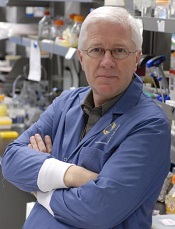
University Health Network
Results of a study published in Science challenge traditional ideas about how blood is made.
The findings suggest hematopoiesis does not occur through a gradual process consisting of multipotent, oligopotent, and unilineage progenitor stages.
Rather, hematopoietic stem cells (HSCs) mature into different types of blood cells quickly, and the process differs between early human development (fetal liver HSCs) and adulthood (HSCs from bone marrow).
The research indicates “that the whole classic ‘textbook’ view we thought we knew doesn’t actually even exist,” said study investigator John Dick, PhD, of Princess Margaret Cancer Centre in Toronto, Ontario, Canada.
He and his colleagues mapped the lineage potential of nearly 3000 single cells from 33 different populations of HSCs obtained from human blood samples taken at various life stages and ages.
The team’s discoveries build on research published in Science in 2011. In that paper, Dr Dick and his colleagues described isolating an HSC in its purest form—as a single cell capable of regenerating the entire blood system.
“Four years ago, when we isolated the pure stem cell, we realized we had also uncovered populations of stem-cell like ‘daughter’ cells that we thought at the time were other types of stem cells,” Dr Dick said.
“When we burrowed further to study these ‘daughters,’ we discovered they were actually already mature blood lineages. In other words, lineages that had broken off almost immediately from the stem cell compartment and had not developed downstream through the slow, gradual ‘textbook’ process.”
“So in human blood formation, everything begins with the stem cell, which is the executive decision-maker quickly driving the process that replenishes blood at a daily rate that exceeds 300 billion cells.”
The investigators believe this work could help advance the manufacture of blood cells in the lab, and it should aid the study of blood disorders.
“Our discovery means we will be able to understand far better a wide variety of human blood disorders and diseases—from anemia . . . to leukemia,” Dr Dick said. “Think of it as moving from the old world of black-and-white television into the new world of high-definition.”
University Health Network
Results of a study published in Science challenge traditional ideas about how blood is made.
The findings suggest hematopoiesis does not occur through a gradual process consisting of multipotent, oligopotent, and unilineage progenitor stages.
Rather, hematopoietic stem cells (HSCs) mature into different types of blood cells quickly, and the process differs between early human development (fetal liver HSCs) and adulthood (HSCs from bone marrow).
The research indicates “that the whole classic ‘textbook’ view we thought we knew doesn’t actually even exist,” said study investigator John Dick, PhD, of Princess Margaret Cancer Centre in Toronto, Ontario, Canada.
He and his colleagues mapped the lineage potential of nearly 3000 single cells from 33 different populations of HSCs obtained from human blood samples taken at various life stages and ages.
The team’s discoveries build on research published in Science in 2011. In that paper, Dr Dick and his colleagues described isolating an HSC in its purest form—as a single cell capable of regenerating the entire blood system.
“Four years ago, when we isolated the pure stem cell, we realized we had also uncovered populations of stem-cell like ‘daughter’ cells that we thought at the time were other types of stem cells,” Dr Dick said.
“When we burrowed further to study these ‘daughters,’ we discovered they were actually already mature blood lineages. In other words, lineages that had broken off almost immediately from the stem cell compartment and had not developed downstream through the slow, gradual ‘textbook’ process.”
“So in human blood formation, everything begins with the stem cell, which is the executive decision-maker quickly driving the process that replenishes blood at a daily rate that exceeds 300 billion cells.”
The investigators believe this work could help advance the manufacture of blood cells in the lab, and it should aid the study of blood disorders.
“Our discovery means we will be able to understand far better a wide variety of human blood disorders and diseases—from anemia . . . to leukemia,” Dr Dick said. “Think of it as moving from the old world of black-and-white television into the new world of high-definition.”
University Health Network
Results of a study published in Science challenge traditional ideas about how blood is made.
The findings suggest hematopoiesis does not occur through a gradual process consisting of multipotent, oligopotent, and unilineage progenitor stages.
Rather, hematopoietic stem cells (HSCs) mature into different types of blood cells quickly, and the process differs between early human development (fetal liver HSCs) and adulthood (HSCs from bone marrow).
The research indicates “that the whole classic ‘textbook’ view we thought we knew doesn’t actually even exist,” said study investigator John Dick, PhD, of Princess Margaret Cancer Centre in Toronto, Ontario, Canada.
He and his colleagues mapped the lineage potential of nearly 3000 single cells from 33 different populations of HSCs obtained from human blood samples taken at various life stages and ages.
The team’s discoveries build on research published in Science in 2011. In that paper, Dr Dick and his colleagues described isolating an HSC in its purest form—as a single cell capable of regenerating the entire blood system.
“Four years ago, when we isolated the pure stem cell, we realized we had also uncovered populations of stem-cell like ‘daughter’ cells that we thought at the time were other types of stem cells,” Dr Dick said.
“When we burrowed further to study these ‘daughters,’ we discovered they were actually already mature blood lineages. In other words, lineages that had broken off almost immediately from the stem cell compartment and had not developed downstream through the slow, gradual ‘textbook’ process.”
“So in human blood formation, everything begins with the stem cell, which is the executive decision-maker quickly driving the process that replenishes blood at a daily rate that exceeds 300 billion cells.”
The investigators believe this work could help advance the manufacture of blood cells in the lab, and it should aid the study of blood disorders.
“Our discovery means we will be able to understand far better a wide variety of human blood disorders and diseases—from anemia . . . to leukemia,” Dr Dick said. “Think of it as moving from the old world of black-and-white television into the new world of high-definition.”
FDA: Long-term clopidogrel doesn’t affect risk of death
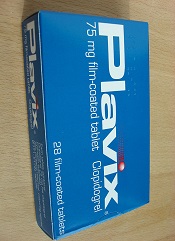
A review conducted by the US Food and Drug Administration (FDA) indicates that long-term use of the antiplatelet drug clopidogrel (Plavix) does not increase or decrease the overall risk of death in patients with, or at risk for, heart disease.
In addition, the FDA said there is no evidence to suggest that clopidogrel increases the risk of cancer or death from cancer.
These findings contradict those of the Dual Antiplatelet Therapy (DAPT) trial, the study that prompted the FDA’s review.
In this trial, researchers compared 12 months of DAPT (either clopidogrel or prasugrel plus aspirin) to 30 months of DAPT in patients who had a drug-eluting coronary stent.
Compared to patients taking clopidogrel for 12 months, patients who received clopidogrel for 30 months had lower rates of heart attacks and stent thrombosis but higher rates of death, primarily from cancer or trauma.
To investigate these findings, the FDA examined data from the DAPT trial and performed trial-level meta-analyses of other large, long-term trials.
The trials had a clopidogrel-plus-aspirin arm (long-term treatment was 12 months or longer) and a comparator arm of either aspirin alone or short-term clopidogrel plus aspirin (6 months or less). They also had a planned follow-up of at least 1 year.
All-cause death
In the DAPT trial, extended use of clopidogrel plus aspirin was associated with a significantly increased risk of death (2.2% for 30 months vs 1.5% for 12 months). But there was no increased risk for prasugrel plus aspirin (1.6% for 30 months vs 1.6% for 12 months).
The FDA’s initial meta-analysis on mortality included 12 trials (56,799 patients). The incidence of all-cause mortality was 6.7% for the long-term clopidogrel-plus-aspirin arm and 6.6% for the comparator arm, resulting in a Mantel Haenszel Risk Difference (MH RD) of 0.04% (95% CI, -0.35%-0.44%).
The FDA also conducted a meta-analysis of 9 of the 12 trials (45,374 patients), which enrolled patients with coronary artery disease or patients at risk of coronary artery disease. This analysis showed no difference in the risk of all-cause mortality—MH RD of -0.07% (95% CI, -0.43%-0.29%).
Cancer and death in DAPT
In the DAPT trial, the risk of cancer reported as an adverse event was not different between the 30-month (2.4% ) and 12-month (2.3%) groups receiving clopidogrel, when considering cancers reported after enrollment (from month 0 to 33 of the study).
The FDA performed several analyses of the cancer adverse event data, and the relative risk of cancer for the 30-month vs 12-month arm in the clopidogrel group ranged from 0.95 to 1.2, depending on the analysis.
Similar analyses for the prasugrel group revealed relative risks of cancer-related adverse events ranging from 1.4 to 1.6.
The FDA noted that, although there was no increase in the risk of cancer-related adverse events for clopidogrel in the 30-month arm, the risk of cancer-related death was higher than in the 12-month arm—0.7% and 0.2%, respectively.
For prasugrel, there was a trend toward a higher risk of cancer adverse events in the 30-month arm than in the 12-month arm, but the risk of cancer death was identical in both arms—0.4% vs 0.4%.
The FDA said these findings are difficult to reconcile.
Meta-analyses of cancer and death
The FDA performed 2 trial-level meta-analyses to investigate the role of clopidogrel in cancer and cancer death.
The first was an analysis of cancer-related adverse events from 4 trials (37,835 patients) that compared long-term clopidogrel and aspirin to either aspirin alone or short-term clopidogrel plus aspirin.
The incidence of cancer adverse events was 4.2% for the long-term clopidogrel-plus-aspirin arm and 4.0% for the comparator arm (MH RD of 0.19%; 95% CI, -0.2%-0.59%).
The FDA conducted the second meta-analysis to assess cancer-related death. The analysis included 5 trials (40,855 patients).
The incidence of cancer death was 0.9% for the long-term clopidogrel-plus-aspirin arm and 1.1% for the comparator arm (MH RD of -0.14%; 95% CI, -0.33%-0.06%).
The FDA said that, taken together, the results of this review do not suggest an increased risk of cancer adverse events, cancer-related death, or all-cause mortality with long-term clopidogrel therapy.
More details can be found in the FDA’s Drug Safety Communication on this topic.
A review conducted by the US Food and Drug Administration (FDA) indicates that long-term use of the antiplatelet drug clopidogrel (Plavix) does not increase or decrease the overall risk of death in patients with, or at risk for, heart disease.
In addition, the FDA said there is no evidence to suggest that clopidogrel increases the risk of cancer or death from cancer.
These findings contradict those of the Dual Antiplatelet Therapy (DAPT) trial, the study that prompted the FDA’s review.
In this trial, researchers compared 12 months of DAPT (either clopidogrel or prasugrel plus aspirin) to 30 months of DAPT in patients who had a drug-eluting coronary stent.
Compared to patients taking clopidogrel for 12 months, patients who received clopidogrel for 30 months had lower rates of heart attacks and stent thrombosis but higher rates of death, primarily from cancer or trauma.
To investigate these findings, the FDA examined data from the DAPT trial and performed trial-level meta-analyses of other large, long-term trials.
The trials had a clopidogrel-plus-aspirin arm (long-term treatment was 12 months or longer) and a comparator arm of either aspirin alone or short-term clopidogrel plus aspirin (6 months or less). They also had a planned follow-up of at least 1 year.
All-cause death
In the DAPT trial, extended use of clopidogrel plus aspirin was associated with a significantly increased risk of death (2.2% for 30 months vs 1.5% for 12 months). But there was no increased risk for prasugrel plus aspirin (1.6% for 30 months vs 1.6% for 12 months).
The FDA’s initial meta-analysis on mortality included 12 trials (56,799 patients). The incidence of all-cause mortality was 6.7% for the long-term clopidogrel-plus-aspirin arm and 6.6% for the comparator arm, resulting in a Mantel Haenszel Risk Difference (MH RD) of 0.04% (95% CI, -0.35%-0.44%).
The FDA also conducted a meta-analysis of 9 of the 12 trials (45,374 patients), which enrolled patients with coronary artery disease or patients at risk of coronary artery disease. This analysis showed no difference in the risk of all-cause mortality—MH RD of -0.07% (95% CI, -0.43%-0.29%).
Cancer and death in DAPT
In the DAPT trial, the risk of cancer reported as an adverse event was not different between the 30-month (2.4% ) and 12-month (2.3%) groups receiving clopidogrel, when considering cancers reported after enrollment (from month 0 to 33 of the study).
The FDA performed several analyses of the cancer adverse event data, and the relative risk of cancer for the 30-month vs 12-month arm in the clopidogrel group ranged from 0.95 to 1.2, depending on the analysis.
Similar analyses for the prasugrel group revealed relative risks of cancer-related adverse events ranging from 1.4 to 1.6.
The FDA noted that, although there was no increase in the risk of cancer-related adverse events for clopidogrel in the 30-month arm, the risk of cancer-related death was higher than in the 12-month arm—0.7% and 0.2%, respectively.
For prasugrel, there was a trend toward a higher risk of cancer adverse events in the 30-month arm than in the 12-month arm, but the risk of cancer death was identical in both arms—0.4% vs 0.4%.
The FDA said these findings are difficult to reconcile.
Meta-analyses of cancer and death
The FDA performed 2 trial-level meta-analyses to investigate the role of clopidogrel in cancer and cancer death.
The first was an analysis of cancer-related adverse events from 4 trials (37,835 patients) that compared long-term clopidogrel and aspirin to either aspirin alone or short-term clopidogrel plus aspirin.
The incidence of cancer adverse events was 4.2% for the long-term clopidogrel-plus-aspirin arm and 4.0% for the comparator arm (MH RD of 0.19%; 95% CI, -0.2%-0.59%).
The FDA conducted the second meta-analysis to assess cancer-related death. The analysis included 5 trials (40,855 patients).
The incidence of cancer death was 0.9% for the long-term clopidogrel-plus-aspirin arm and 1.1% for the comparator arm (MH RD of -0.14%; 95% CI, -0.33%-0.06%).
The FDA said that, taken together, the results of this review do not suggest an increased risk of cancer adverse events, cancer-related death, or all-cause mortality with long-term clopidogrel therapy.
More details can be found in the FDA’s Drug Safety Communication on this topic.
A review conducted by the US Food and Drug Administration (FDA) indicates that long-term use of the antiplatelet drug clopidogrel (Plavix) does not increase or decrease the overall risk of death in patients with, or at risk for, heart disease.
In addition, the FDA said there is no evidence to suggest that clopidogrel increases the risk of cancer or death from cancer.
These findings contradict those of the Dual Antiplatelet Therapy (DAPT) trial, the study that prompted the FDA’s review.
In this trial, researchers compared 12 months of DAPT (either clopidogrel or prasugrel plus aspirin) to 30 months of DAPT in patients who had a drug-eluting coronary stent.
Compared to patients taking clopidogrel for 12 months, patients who received clopidogrel for 30 months had lower rates of heart attacks and stent thrombosis but higher rates of death, primarily from cancer or trauma.
To investigate these findings, the FDA examined data from the DAPT trial and performed trial-level meta-analyses of other large, long-term trials.
The trials had a clopidogrel-plus-aspirin arm (long-term treatment was 12 months or longer) and a comparator arm of either aspirin alone or short-term clopidogrel plus aspirin (6 months or less). They also had a planned follow-up of at least 1 year.
All-cause death
In the DAPT trial, extended use of clopidogrel plus aspirin was associated with a significantly increased risk of death (2.2% for 30 months vs 1.5% for 12 months). But there was no increased risk for prasugrel plus aspirin (1.6% for 30 months vs 1.6% for 12 months).
The FDA’s initial meta-analysis on mortality included 12 trials (56,799 patients). The incidence of all-cause mortality was 6.7% for the long-term clopidogrel-plus-aspirin arm and 6.6% for the comparator arm, resulting in a Mantel Haenszel Risk Difference (MH RD) of 0.04% (95% CI, -0.35%-0.44%).
The FDA also conducted a meta-analysis of 9 of the 12 trials (45,374 patients), which enrolled patients with coronary artery disease or patients at risk of coronary artery disease. This analysis showed no difference in the risk of all-cause mortality—MH RD of -0.07% (95% CI, -0.43%-0.29%).
Cancer and death in DAPT
In the DAPT trial, the risk of cancer reported as an adverse event was not different between the 30-month (2.4% ) and 12-month (2.3%) groups receiving clopidogrel, when considering cancers reported after enrollment (from month 0 to 33 of the study).
The FDA performed several analyses of the cancer adverse event data, and the relative risk of cancer for the 30-month vs 12-month arm in the clopidogrel group ranged from 0.95 to 1.2, depending on the analysis.
Similar analyses for the prasugrel group revealed relative risks of cancer-related adverse events ranging from 1.4 to 1.6.
The FDA noted that, although there was no increase in the risk of cancer-related adverse events for clopidogrel in the 30-month arm, the risk of cancer-related death was higher than in the 12-month arm—0.7% and 0.2%, respectively.
For prasugrel, there was a trend toward a higher risk of cancer adverse events in the 30-month arm than in the 12-month arm, but the risk of cancer death was identical in both arms—0.4% vs 0.4%.
The FDA said these findings are difficult to reconcile.
Meta-analyses of cancer and death
The FDA performed 2 trial-level meta-analyses to investigate the role of clopidogrel in cancer and cancer death.
The first was an analysis of cancer-related adverse events from 4 trials (37,835 patients) that compared long-term clopidogrel and aspirin to either aspirin alone or short-term clopidogrel plus aspirin.
The incidence of cancer adverse events was 4.2% for the long-term clopidogrel-plus-aspirin arm and 4.0% for the comparator arm (MH RD of 0.19%; 95% CI, -0.2%-0.59%).
The FDA conducted the second meta-analysis to assess cancer-related death. The analysis included 5 trials (40,855 patients).
The incidence of cancer death was 0.9% for the long-term clopidogrel-plus-aspirin arm and 1.1% for the comparator arm (MH RD of -0.14%; 95% CI, -0.33%-0.06%).
The FDA said that, taken together, the results of this review do not suggest an increased risk of cancer adverse events, cancer-related death, or all-cause mortality with long-term clopidogrel therapy.
More details can be found in the FDA’s Drug Safety Communication on this topic.
FDA grants drug priority review as FL therapy
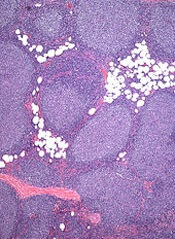
The US Food and Drug Administration (FDA) has accepted for priority review a supplemental biologics license application for obinutuzumab (Gazyva) to treat patients with follicular lymphoma (FL) who have relapsed after or are refractory to a rituximab-containing regimen.
Obinutuzumab is a glycoengineered, humanized, monoclonal antibody that selectively binds to the extracellular domain of the CD20 antigen on B cells.
The drug is already FDA-approved for use in combination with chlorambucil to treat patients with previously untreated chronic lymphocytic leukemia.
A priority review designation is granted to drugs thought to have the potential to provide significant improvements in the treatment, prevention, or diagnosis of a disease.
The designation means the FDA’s goal is to take action on a drug application within 6 months, compared to 10 months under standard review.
The FDA has accepted the supplemental application for obinutuzumab in FL based on results of the phase 3 GADOLIN study.
Interim results from this trial were presented at the 2015 ASCO Annual Meeting (abstract LBA8502). Additional data are scheduled to be presented at the 2015 ASH Annual Meeting in December (abstracts 1532 and 3978).
GADOLIN study
The trial included 413 patients with rituximab-refractory non-Hodgkin lymphoma, including FL, marginal zone lymphoma, small lymphocytic lymphoma, and Waldenstrom’s macroglobulinemia.
The patients were randomized to receive bendamustine alone (control arm) or a combination of bendamustine and obinutuzumab (OB) followed by obinutuzumab maintenance (every 2 months for 2 years or until progression).
In all, 156 patients completed induction in the OB arm, as did 129 patients in the control arm. Thirty-six patients completed maintenance with obinutuzumab, and 46 were still receiving maintenance at the time of the interim analysis.
According to an independent radiology facility, 69.2% of patients in the OB arm had responded to treatment at the end of induction, as had 63% of the control arm. The best overall response by the 12-month mark was 78.7% and 76.6%, respectively.
According to the radiology facility, the median progression-free survival (PFS) had not been reached in the OB arm at a median follow-up of 21 months. In the control arm, the median PFS was 14.9 months (P<0.0001).
According to investigators, the median PFS was 29.2 months and 14 months, respectively (P<0.0001).
The median overall survival had not been reached in either arm (P=0.4017). Thirty-four patients (18%) in the OB arm died, as did 41 (20%) in the control arm.
About 99% of patients in the OB arm experienced at least 1 adverse event (AE), as did 98% of patients in the control arm. Severe AEs occurred in 38.1% and 32.8% of patients, respectively, and grade 3/4 AEs occurred in 67% and 62.1%, respectively.
AEs leading to treatment withdrawal occurred in 18% and 15.7% of patients, respectively. And AEs leading to death occurred in 6.2% and 6.1%, respectively.
The US Food and Drug Administration (FDA) has accepted for priority review a supplemental biologics license application for obinutuzumab (Gazyva) to treat patients with follicular lymphoma (FL) who have relapsed after or are refractory to a rituximab-containing regimen.
Obinutuzumab is a glycoengineered, humanized, monoclonal antibody that selectively binds to the extracellular domain of the CD20 antigen on B cells.
The drug is already FDA-approved for use in combination with chlorambucil to treat patients with previously untreated chronic lymphocytic leukemia.
A priority review designation is granted to drugs thought to have the potential to provide significant improvements in the treatment, prevention, or diagnosis of a disease.
The designation means the FDA’s goal is to take action on a drug application within 6 months, compared to 10 months under standard review.
The FDA has accepted the supplemental application for obinutuzumab in FL based on results of the phase 3 GADOLIN study.
Interim results from this trial were presented at the 2015 ASCO Annual Meeting (abstract LBA8502). Additional data are scheduled to be presented at the 2015 ASH Annual Meeting in December (abstracts 1532 and 3978).
GADOLIN study
The trial included 413 patients with rituximab-refractory non-Hodgkin lymphoma, including FL, marginal zone lymphoma, small lymphocytic lymphoma, and Waldenstrom’s macroglobulinemia.
The patients were randomized to receive bendamustine alone (control arm) or a combination of bendamustine and obinutuzumab (OB) followed by obinutuzumab maintenance (every 2 months for 2 years or until progression).
In all, 156 patients completed induction in the OB arm, as did 129 patients in the control arm. Thirty-six patients completed maintenance with obinutuzumab, and 46 were still receiving maintenance at the time of the interim analysis.
According to an independent radiology facility, 69.2% of patients in the OB arm had responded to treatment at the end of induction, as had 63% of the control arm. The best overall response by the 12-month mark was 78.7% and 76.6%, respectively.
According to the radiology facility, the median progression-free survival (PFS) had not been reached in the OB arm at a median follow-up of 21 months. In the control arm, the median PFS was 14.9 months (P<0.0001).
According to investigators, the median PFS was 29.2 months and 14 months, respectively (P<0.0001).
The median overall survival had not been reached in either arm (P=0.4017). Thirty-four patients (18%) in the OB arm died, as did 41 (20%) in the control arm.
About 99% of patients in the OB arm experienced at least 1 adverse event (AE), as did 98% of patients in the control arm. Severe AEs occurred in 38.1% and 32.8% of patients, respectively, and grade 3/4 AEs occurred in 67% and 62.1%, respectively.
AEs leading to treatment withdrawal occurred in 18% and 15.7% of patients, respectively. And AEs leading to death occurred in 6.2% and 6.1%, respectively.
The US Food and Drug Administration (FDA) has accepted for priority review a supplemental biologics license application for obinutuzumab (Gazyva) to treat patients with follicular lymphoma (FL) who have relapsed after or are refractory to a rituximab-containing regimen.
Obinutuzumab is a glycoengineered, humanized, monoclonal antibody that selectively binds to the extracellular domain of the CD20 antigen on B cells.
The drug is already FDA-approved for use in combination with chlorambucil to treat patients with previously untreated chronic lymphocytic leukemia.
A priority review designation is granted to drugs thought to have the potential to provide significant improvements in the treatment, prevention, or diagnosis of a disease.
The designation means the FDA’s goal is to take action on a drug application within 6 months, compared to 10 months under standard review.
The FDA has accepted the supplemental application for obinutuzumab in FL based on results of the phase 3 GADOLIN study.
Interim results from this trial were presented at the 2015 ASCO Annual Meeting (abstract LBA8502). Additional data are scheduled to be presented at the 2015 ASH Annual Meeting in December (abstracts 1532 and 3978).
GADOLIN study
The trial included 413 patients with rituximab-refractory non-Hodgkin lymphoma, including FL, marginal zone lymphoma, small lymphocytic lymphoma, and Waldenstrom’s macroglobulinemia.
The patients were randomized to receive bendamustine alone (control arm) or a combination of bendamustine and obinutuzumab (OB) followed by obinutuzumab maintenance (every 2 months for 2 years or until progression).
In all, 156 patients completed induction in the OB arm, as did 129 patients in the control arm. Thirty-six patients completed maintenance with obinutuzumab, and 46 were still receiving maintenance at the time of the interim analysis.
According to an independent radiology facility, 69.2% of patients in the OB arm had responded to treatment at the end of induction, as had 63% of the control arm. The best overall response by the 12-month mark was 78.7% and 76.6%, respectively.
According to the radiology facility, the median progression-free survival (PFS) had not been reached in the OB arm at a median follow-up of 21 months. In the control arm, the median PFS was 14.9 months (P<0.0001).
According to investigators, the median PFS was 29.2 months and 14 months, respectively (P<0.0001).
The median overall survival had not been reached in either arm (P=0.4017). Thirty-four patients (18%) in the OB arm died, as did 41 (20%) in the control arm.
About 99% of patients in the OB arm experienced at least 1 adverse event (AE), as did 98% of patients in the control arm. Severe AEs occurred in 38.1% and 32.8% of patients, respectively, and grade 3/4 AEs occurred in 67% and 62.1%, respectively.
AEs leading to treatment withdrawal occurred in 18% and 15.7% of patients, respectively. And AEs leading to death occurred in 6.2% and 6.1%, respectively.
RIC can improve HSCT outcomes in older AML patients

Photo by Chad McNeeley
Results of a phase 2 study suggest that reduced-intensity conditioning (RIC) may allow older patients with acute myeloid leukemia (AML) to remain in long-term remission after allogeneic hematopoietic stem cell transplant (HSCT).
The study included patients age 60 and older who were in their first complete remission (CR1) at transplant.
Two years later, the probability of overall survival was 48%, and the probability of disease-free survival was 42%.
“This new data offers strong support against using biological age as a limiting factor for stem cell transplantation in AML patients who are otherwise well positioned to tolerate and achieve long-term remission with this approach,” said Steven Devine, MD, of The Ohio State University in Columbus.
He and his colleagues shared the data in the Journal of Clinical Oncology.
The researchers wanted to determine whether RIC could improve long-term remission rates after HSCT for older patients with AML.
So the team studied 114 patients with a median age of 65 (range, 60-74) who were treated at 21 US hospitals between November 2004 and November 2011. Most patients were male (62%), and most had intermediate cytogenetics (70%).
All of the patients were in CR1 according to International Working Group criteria. The CR had to be achieved after no more than 2 cycles of induction chemotherapy, and patients were required to undergo HSCT within 6 months of the initial documentation of morphologic CR.
The median time from CR1 documentation to HSCT was 85 days (range, 9-184), and the median time from AML diagnosis to HSCT was 138 days (range, 61-265).
All patients received RIC (fludarabine followed by busulfan) prior to HSCT, which essentially cut treatment strength by half compared to traditional high-dose conditioning. The patients received tacrolimus and methotrexate as graft-versus-host disease (GVHD) prophylaxis.
Forty-eight percent of patients underwent HSCT from a matched, related donor, and 52% had a matched, unrelated donor.
At 2 years, disease-free survival was 42%, and overall survival was 48%. Among patients with unrelated donors, disease-free survival was 40%, and overall survival was 50%.
The cumulative incidence of relapse was 44%, and non-relapse mortality was 15%. Twenty-eight percent of patients had chronic GVHD, and 9.6% had grade 2-4 acute GVHD.
“Close to half of the patients treated in this study achieved long-term, cancer-free survival after 2 years,” Dr Devine noted. “These outcomes are similar to what we would expect to see in younger patients and appear to be better results than those that can be achieved with conventional chemotherapy-based approaches typically used in AML patients over 60.”
Photo by Chad McNeeley
Results of a phase 2 study suggest that reduced-intensity conditioning (RIC) may allow older patients with acute myeloid leukemia (AML) to remain in long-term remission after allogeneic hematopoietic stem cell transplant (HSCT).
The study included patients age 60 and older who were in their first complete remission (CR1) at transplant.
Two years later, the probability of overall survival was 48%, and the probability of disease-free survival was 42%.
“This new data offers strong support against using biological age as a limiting factor for stem cell transplantation in AML patients who are otherwise well positioned to tolerate and achieve long-term remission with this approach,” said Steven Devine, MD, of The Ohio State University in Columbus.
He and his colleagues shared the data in the Journal of Clinical Oncology.
The researchers wanted to determine whether RIC could improve long-term remission rates after HSCT for older patients with AML.
So the team studied 114 patients with a median age of 65 (range, 60-74) who were treated at 21 US hospitals between November 2004 and November 2011. Most patients were male (62%), and most had intermediate cytogenetics (70%).
All of the patients were in CR1 according to International Working Group criteria. The CR had to be achieved after no more than 2 cycles of induction chemotherapy, and patients were required to undergo HSCT within 6 months of the initial documentation of morphologic CR.
The median time from CR1 documentation to HSCT was 85 days (range, 9-184), and the median time from AML diagnosis to HSCT was 138 days (range, 61-265).
All patients received RIC (fludarabine followed by busulfan) prior to HSCT, which essentially cut treatment strength by half compared to traditional high-dose conditioning. The patients received tacrolimus and methotrexate as graft-versus-host disease (GVHD) prophylaxis.
Forty-eight percent of patients underwent HSCT from a matched, related donor, and 52% had a matched, unrelated donor.
At 2 years, disease-free survival was 42%, and overall survival was 48%. Among patients with unrelated donors, disease-free survival was 40%, and overall survival was 50%.
The cumulative incidence of relapse was 44%, and non-relapse mortality was 15%. Twenty-eight percent of patients had chronic GVHD, and 9.6% had grade 2-4 acute GVHD.
“Close to half of the patients treated in this study achieved long-term, cancer-free survival after 2 years,” Dr Devine noted. “These outcomes are similar to what we would expect to see in younger patients and appear to be better results than those that can be achieved with conventional chemotherapy-based approaches typically used in AML patients over 60.”
Photo by Chad McNeeley
Results of a phase 2 study suggest that reduced-intensity conditioning (RIC) may allow older patients with acute myeloid leukemia (AML) to remain in long-term remission after allogeneic hematopoietic stem cell transplant (HSCT).
The study included patients age 60 and older who were in their first complete remission (CR1) at transplant.
Two years later, the probability of overall survival was 48%, and the probability of disease-free survival was 42%.
“This new data offers strong support against using biological age as a limiting factor for stem cell transplantation in AML patients who are otherwise well positioned to tolerate and achieve long-term remission with this approach,” said Steven Devine, MD, of The Ohio State University in Columbus.
He and his colleagues shared the data in the Journal of Clinical Oncology.
The researchers wanted to determine whether RIC could improve long-term remission rates after HSCT for older patients with AML.
So the team studied 114 patients with a median age of 65 (range, 60-74) who were treated at 21 US hospitals between November 2004 and November 2011. Most patients were male (62%), and most had intermediate cytogenetics (70%).
All of the patients were in CR1 according to International Working Group criteria. The CR had to be achieved after no more than 2 cycles of induction chemotherapy, and patients were required to undergo HSCT within 6 months of the initial documentation of morphologic CR.
The median time from CR1 documentation to HSCT was 85 days (range, 9-184), and the median time from AML diagnosis to HSCT was 138 days (range, 61-265).
All patients received RIC (fludarabine followed by busulfan) prior to HSCT, which essentially cut treatment strength by half compared to traditional high-dose conditioning. The patients received tacrolimus and methotrexate as graft-versus-host disease (GVHD) prophylaxis.
Forty-eight percent of patients underwent HSCT from a matched, related donor, and 52% had a matched, unrelated donor.
At 2 years, disease-free survival was 42%, and overall survival was 48%. Among patients with unrelated donors, disease-free survival was 40%, and overall survival was 50%.
The cumulative incidence of relapse was 44%, and non-relapse mortality was 15%. Twenty-eight percent of patients had chronic GVHD, and 9.6% had grade 2-4 acute GVHD.
“Close to half of the patients treated in this study achieved long-term, cancer-free survival after 2 years,” Dr Devine noted. “These outcomes are similar to what we would expect to see in younger patients and appear to be better results than those that can be achieved with conventional chemotherapy-based approaches typically used in AML patients over 60.”