User login
LMWH doesn’t pose increased bleeding risk
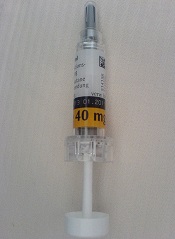
Cancer patients with brain metastases who develop venous thromboembolism can safely receive the anticoagulant enoxaparin without further
increasing their risk of intracranial hemorrhage, according to a study published in Blood.
Cancer patients with brain metastases are known to have an increased risk of intracranial hemorrhage, but it has not been clear whether receiving anticoagulant therapy further increases that risk.
So a group of researchers set out to assess the risk of intracranial hemorrhage in cancer patients with brain metastases who received the low-molecular-weight-heparin (LMWH) enoxaparin.
Jeffrey Zwicker, MD, of Harvard Medical School in Boston, Massachusetts, and his colleagues studied the medical records of 293 cancer patients with brain metastasis, 104 of whom had received the LMWH enoxaparin and 189 who did not.
The researchers matched the patients in each group by the year of brain metastases diagnosis, tumor type, age, and gender. The team conducted a blinded review of radiographic imaging and categorized intracranial hemorrhages as “trace,” “measurable,” and “significant.”
At 1 year of follow-up, there was no significant difference between the treatment groups regarding the incidence of intracranial hemorrhage.
Nineteen percent of patients in the enoxaparin arm had measurable intracranial hemorrhages, compared to 21% of patients in the control arm (P=0.97). And 21% of patients in the enoxaparin arm had significant intracranial hemorrhages, compared to 22% of patients in the control arm (P=0.87).
The cumulative incidence of intracranial hemorrhage was 44% in the enoxaparin arm and 37% in the control arm (P=0.13).
In addition, there was no significant difference in overall survival between the treatment arms. The median overall survival was 8.4 months in the enoxaparin arm and 9.7 months in the control arm (P=0.65).
“While it is a very common clinical scenario to treat a patient with a metastatic brain tumor who also develops a blood clot, before this study, there was very little data to inform the difficult decision of whether or not to anticoagulate these patients,” Dr Zwicker said.
“Our findings, which demonstrate that current practice is safe, should reassure physicians that anticoagulants can be safely administered to patients with brain metastases and a history of blood clots.” 
Cancer patients with brain metastases who develop venous thromboembolism can safely receive the anticoagulant enoxaparin without further
increasing their risk of intracranial hemorrhage, according to a study published in Blood.
Cancer patients with brain metastases are known to have an increased risk of intracranial hemorrhage, but it has not been clear whether receiving anticoagulant therapy further increases that risk.
So a group of researchers set out to assess the risk of intracranial hemorrhage in cancer patients with brain metastases who received the low-molecular-weight-heparin (LMWH) enoxaparin.
Jeffrey Zwicker, MD, of Harvard Medical School in Boston, Massachusetts, and his colleagues studied the medical records of 293 cancer patients with brain metastasis, 104 of whom had received the LMWH enoxaparin and 189 who did not.
The researchers matched the patients in each group by the year of brain metastases diagnosis, tumor type, age, and gender. The team conducted a blinded review of radiographic imaging and categorized intracranial hemorrhages as “trace,” “measurable,” and “significant.”
At 1 year of follow-up, there was no significant difference between the treatment groups regarding the incidence of intracranial hemorrhage.
Nineteen percent of patients in the enoxaparin arm had measurable intracranial hemorrhages, compared to 21% of patients in the control arm (P=0.97). And 21% of patients in the enoxaparin arm had significant intracranial hemorrhages, compared to 22% of patients in the control arm (P=0.87).
The cumulative incidence of intracranial hemorrhage was 44% in the enoxaparin arm and 37% in the control arm (P=0.13).
In addition, there was no significant difference in overall survival between the treatment arms. The median overall survival was 8.4 months in the enoxaparin arm and 9.7 months in the control arm (P=0.65).
“While it is a very common clinical scenario to treat a patient with a metastatic brain tumor who also develops a blood clot, before this study, there was very little data to inform the difficult decision of whether or not to anticoagulate these patients,” Dr Zwicker said.
“Our findings, which demonstrate that current practice is safe, should reassure physicians that anticoagulants can be safely administered to patients with brain metastases and a history of blood clots.”
Cancer patients with brain metastases who develop venous thromboembolism can safely receive the anticoagulant enoxaparin without further
increasing their risk of intracranial hemorrhage, according to a study published in Blood.
Cancer patients with brain metastases are known to have an increased risk of intracranial hemorrhage, but it has not been clear whether receiving anticoagulant therapy further increases that risk.
So a group of researchers set out to assess the risk of intracranial hemorrhage in cancer patients with brain metastases who received the low-molecular-weight-heparin (LMWH) enoxaparin.
Jeffrey Zwicker, MD, of Harvard Medical School in Boston, Massachusetts, and his colleagues studied the medical records of 293 cancer patients with brain metastasis, 104 of whom had received the LMWH enoxaparin and 189 who did not.
The researchers matched the patients in each group by the year of brain metastases diagnosis, tumor type, age, and gender. The team conducted a blinded review of radiographic imaging and categorized intracranial hemorrhages as “trace,” “measurable,” and “significant.”
At 1 year of follow-up, there was no significant difference between the treatment groups regarding the incidence of intracranial hemorrhage.
Nineteen percent of patients in the enoxaparin arm had measurable intracranial hemorrhages, compared to 21% of patients in the control arm (P=0.97). And 21% of patients in the enoxaparin arm had significant intracranial hemorrhages, compared to 22% of patients in the control arm (P=0.87).
The cumulative incidence of intracranial hemorrhage was 44% in the enoxaparin arm and 37% in the control arm (P=0.13).
In addition, there was no significant difference in overall survival between the treatment arms. The median overall survival was 8.4 months in the enoxaparin arm and 9.7 months in the control arm (P=0.65).
“While it is a very common clinical scenario to treat a patient with a metastatic brain tumor who also develops a blood clot, before this study, there was very little data to inform the difficult decision of whether or not to anticoagulate these patients,” Dr Zwicker said.
“Our findings, which demonstrate that current practice is safe, should reassure physicians that anticoagulants can be safely administered to patients with brain metastases and a history of blood clots.”
FDA grants inhibitor fast track designation for AML
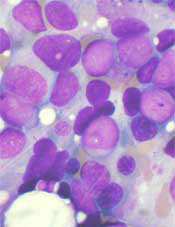
The US Food and Drug Administration (FDA) has granted fast track designation to AG-120 for the treatment of patients with acute myelogenous leukemia (AML) who harbor an isocitrate dehydrogenase-1 (IDH1) mutation.
AG-120 is an oral, selective inhibitor of the mutated IDH1 protein that is under investigation in two phase 1 clinical trials, one in hematologic malignancies and one in advanced solid tumors.
Data from the phase 1 trial in hematologic malignancies were previously presented at the 26th EORTC-NCI-AACR Symposium on Molecular Targets and Cancer Therapeutics in November 2014.
Updated data from this trial are scheduled to be presented at the 20th Annual Congress of the European Hematology Association (EHA) next month.
About fast track designation
The FDA’s fast track drug development program is designed to expedite clinical development and submission of new drug applications for medicines with the potential to treat serious or life-threatening conditions and address unmet medical needs.
Fast track designation facilitates frequent interactions with the FDA review team, including meetings to discuss all aspects of development to support a drug’s approval, and also provides the opportunity to submit sections of a new drug application on a rolling basis as data become available.
“We are pleased that now both AG-120 and AG-221 have been granted fast track designation, demonstrating the FDA’s commitment to facilitate the development and expedite the review of our lead IDH programs as important new therapies for people with AML who carry these mutations,” said Chris Bowden, MD, chief medical officer of Agios Pharmaceuticals, Inc., the company developing AG-120 in cooperation with Celgene Corporation.
Phase 1 results
At the EORTC-NCI-AACR symposium, researchers presented results from the ongoing phase 1 trial of AG-120 in hematologic malignancies. The data included 17 patients with relapsed and/or refractory AML who had received a median of 2 prior treatments.
The patients were scheduled to receive AG-120 in 1 of 4 dose groups: 100 mg twice a day, 300 mg once a day, 500 mg once a day, and 800 mg once a day over continuous, 28-day cycles.
Of the 14 patients evaluable for response, 7 responded. Four patients achieved a complete response, 2 had a complete response in the marrow, and 1 had a partial response.
Responses occurred at all the dose levels tested. The maximum-tolerated dose was not reached. All responding patients were still on AG-120 at the time of presentation, and 1 patient with stable disease remained on the drug.
Researchers said AG-120 was generally well-tolerated. The majority of adverse events were grade 1 and 2. The most common of these were nausea, fatigue, and dyspnea.
Eight patients experienced serious adverse events, but these were primarily related to disease progression.
One patient experienced a dose-limiting toxicity of asymptomatic grade 3 QT prolongation at the highest dose tested, which improved to grade 1 with dose reduction. The patient was in complete remission and remained on AG-120 at the time of presentation.
There were 6 patient deaths, all unrelated to AG-120. Five deaths occurred after patients discontinued treatment due to progressive disease, and 1 patient died due to disease-related intracranial hemorrhage while on treatment.
“We look forward to presenting new data from the ongoing phase 1 study at the EHA Annual Congress next month,” Dr Bowden said, “and remain on track to initiate a global, registration-enabling, phase 3 study in collaboration with Celgene in AML patients who harbor an IDH1 mutation in the first half of 2016.”
The US Food and Drug Administration (FDA) has granted fast track designation to AG-120 for the treatment of patients with acute myelogenous leukemia (AML) who harbor an isocitrate dehydrogenase-1 (IDH1) mutation.
AG-120 is an oral, selective inhibitor of the mutated IDH1 protein that is under investigation in two phase 1 clinical trials, one in hematologic malignancies and one in advanced solid tumors.
Data from the phase 1 trial in hematologic malignancies were previously presented at the 26th EORTC-NCI-AACR Symposium on Molecular Targets and Cancer Therapeutics in November 2014.
Updated data from this trial are scheduled to be presented at the 20th Annual Congress of the European Hematology Association (EHA) next month.
About fast track designation
The FDA’s fast track drug development program is designed to expedite clinical development and submission of new drug applications for medicines with the potential to treat serious or life-threatening conditions and address unmet medical needs.
Fast track designation facilitates frequent interactions with the FDA review team, including meetings to discuss all aspects of development to support a drug’s approval, and also provides the opportunity to submit sections of a new drug application on a rolling basis as data become available.
“We are pleased that now both AG-120 and AG-221 have been granted fast track designation, demonstrating the FDA’s commitment to facilitate the development and expedite the review of our lead IDH programs as important new therapies for people with AML who carry these mutations,” said Chris Bowden, MD, chief medical officer of Agios Pharmaceuticals, Inc., the company developing AG-120 in cooperation with Celgene Corporation.
Phase 1 results
At the EORTC-NCI-AACR symposium, researchers presented results from the ongoing phase 1 trial of AG-120 in hematologic malignancies. The data included 17 patients with relapsed and/or refractory AML who had received a median of 2 prior treatments.
The patients were scheduled to receive AG-120 in 1 of 4 dose groups: 100 mg twice a day, 300 mg once a day, 500 mg once a day, and 800 mg once a day over continuous, 28-day cycles.
Of the 14 patients evaluable for response, 7 responded. Four patients achieved a complete response, 2 had a complete response in the marrow, and 1 had a partial response.
Responses occurred at all the dose levels tested. The maximum-tolerated dose was not reached. All responding patients were still on AG-120 at the time of presentation, and 1 patient with stable disease remained on the drug.
Researchers said AG-120 was generally well-tolerated. The majority of adverse events were grade 1 and 2. The most common of these were nausea, fatigue, and dyspnea.
Eight patients experienced serious adverse events, but these were primarily related to disease progression.
One patient experienced a dose-limiting toxicity of asymptomatic grade 3 QT prolongation at the highest dose tested, which improved to grade 1 with dose reduction. The patient was in complete remission and remained on AG-120 at the time of presentation.
There were 6 patient deaths, all unrelated to AG-120. Five deaths occurred after patients discontinued treatment due to progressive disease, and 1 patient died due to disease-related intracranial hemorrhage while on treatment.
“We look forward to presenting new data from the ongoing phase 1 study at the EHA Annual Congress next month,” Dr Bowden said, “and remain on track to initiate a global, registration-enabling, phase 3 study in collaboration with Celgene in AML patients who harbor an IDH1 mutation in the first half of 2016.”
The US Food and Drug Administration (FDA) has granted fast track designation to AG-120 for the treatment of patients with acute myelogenous leukemia (AML) who harbor an isocitrate dehydrogenase-1 (IDH1) mutation.
AG-120 is an oral, selective inhibitor of the mutated IDH1 protein that is under investigation in two phase 1 clinical trials, one in hematologic malignancies and one in advanced solid tumors.
Data from the phase 1 trial in hematologic malignancies were previously presented at the 26th EORTC-NCI-AACR Symposium on Molecular Targets and Cancer Therapeutics in November 2014.
Updated data from this trial are scheduled to be presented at the 20th Annual Congress of the European Hematology Association (EHA) next month.
About fast track designation
The FDA’s fast track drug development program is designed to expedite clinical development and submission of new drug applications for medicines with the potential to treat serious or life-threatening conditions and address unmet medical needs.
Fast track designation facilitates frequent interactions with the FDA review team, including meetings to discuss all aspects of development to support a drug’s approval, and also provides the opportunity to submit sections of a new drug application on a rolling basis as data become available.
“We are pleased that now both AG-120 and AG-221 have been granted fast track designation, demonstrating the FDA’s commitment to facilitate the development and expedite the review of our lead IDH programs as important new therapies for people with AML who carry these mutations,” said Chris Bowden, MD, chief medical officer of Agios Pharmaceuticals, Inc., the company developing AG-120 in cooperation with Celgene Corporation.
Phase 1 results
At the EORTC-NCI-AACR symposium, researchers presented results from the ongoing phase 1 trial of AG-120 in hematologic malignancies. The data included 17 patients with relapsed and/or refractory AML who had received a median of 2 prior treatments.
The patients were scheduled to receive AG-120 in 1 of 4 dose groups: 100 mg twice a day, 300 mg once a day, 500 mg once a day, and 800 mg once a day over continuous, 28-day cycles.
Of the 14 patients evaluable for response, 7 responded. Four patients achieved a complete response, 2 had a complete response in the marrow, and 1 had a partial response.
Responses occurred at all the dose levels tested. The maximum-tolerated dose was not reached. All responding patients were still on AG-120 at the time of presentation, and 1 patient with stable disease remained on the drug.
Researchers said AG-120 was generally well-tolerated. The majority of adverse events were grade 1 and 2. The most common of these were nausea, fatigue, and dyspnea.
Eight patients experienced serious adverse events, but these were primarily related to disease progression.
One patient experienced a dose-limiting toxicity of asymptomatic grade 3 QT prolongation at the highest dose tested, which improved to grade 1 with dose reduction. The patient was in complete remission and remained on AG-120 at the time of presentation.
There were 6 patient deaths, all unrelated to AG-120. Five deaths occurred after patients discontinued treatment due to progressive disease, and 1 patient died due to disease-related intracranial hemorrhage while on treatment.
“We look forward to presenting new data from the ongoing phase 1 study at the EHA Annual Congress next month,” Dr Bowden said, “and remain on track to initiate a global, registration-enabling, phase 3 study in collaboration with Celgene in AML patients who harbor an IDH1 mutation in the first half of 2016.”
MRD doesn’t suggest need for more treatment
© Hind Medyouf, German
Cancer Research Center
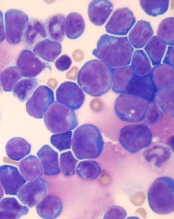
A new study suggests that minimal residual disease (MRD) alone is not predictive of outcomes in children with T-cell acute lymphoblastic leukemia (T-ALL).
Study investigators analyzed a small group of T-ALL patients who received similar treatment regimens, comparing those with and without MRD after induction.
None of the MRD-positive patients relapsed within the follow-up period, despite not receiving intensified treatment to fully eradicate their disease.
These results, published in Pediatric Blood & Cancer, suggest T-ALL patients with MRD may not need intensified treatment and can therefore avoid additional toxicities.
“Until now, the dogma has been that, for patients with leukemia who have minimal residual disease at the end of induction, we need to intensify their treatment, which also increases side effects,” said study author Hisham Abdel-Azim, MD, of Children’s Hospital Los Angeles in California.
“We have found, for T-ALL, patients have excellent outcomes without therapy intensification and its associated toxicities.”
Dr Abdel-Azim and his colleagues studied 33 children (ages 1 to 21) with newly diagnosed T-ALL. Their treatment included induction, augmented consolidation, interim maintenance (high-dose [5 g/m2] or escalating-dose intravenous methotrexate), 1 delayed intensification, and maintenance. Twenty-one patients underwent cranial irradiation, and 1 received a transplant.
After induction, 19 of the 32 patients analyzed had MRD, which was defined as ≥ 0.01% residual leukemia cells. At the end of consolidation, 6 of the 11 patients tested were MRD-positive. And at the end of interim maintenance, 2 of the 4 patients tested were MRD-positive.
The 19 patients who were MRD-positive after induction were in continuous complete remission at a median follow-up of 4 years (range, 1.3-7.1 years). The same was true for 13 of the 14 MRD-negative patients. One of the MRD-negative patients relapsed 18 months after diagnosis but was still alive with refractory disease at last follow-up.
Dr Abdel-Azim and his colleagues noted that there were no significant differences in treatment variables between MRD-positive patients and MRD-negative patients. However, 1 patient did receive a transplant for rising MRD at 5.4 months after diagnosis.
The investigators also said they did not find any associations between MRD positivity after induction and patients’ age, sex, ethnicity, weight, white blood cell count at diagnosis, cytogenetics, immunophenotype, or the type of steroid they received during induction therapy.
The team said these results may be explained by the fact that clearance of leukemia cells from the blood is slower in patients with T-ALL than in those with B-cell ALL. However, the leukemia cells ultimately clear in T-ALL without changes in therapy.
© Hind Medyouf, German
Cancer Research Center
A new study suggests that minimal residual disease (MRD) alone is not predictive of outcomes in children with T-cell acute lymphoblastic leukemia (T-ALL).
Study investigators analyzed a small group of T-ALL patients who received similar treatment regimens, comparing those with and without MRD after induction.
None of the MRD-positive patients relapsed within the follow-up period, despite not receiving intensified treatment to fully eradicate their disease.
These results, published in Pediatric Blood & Cancer, suggest T-ALL patients with MRD may not need intensified treatment and can therefore avoid additional toxicities.
“Until now, the dogma has been that, for patients with leukemia who have minimal residual disease at the end of induction, we need to intensify their treatment, which also increases side effects,” said study author Hisham Abdel-Azim, MD, of Children’s Hospital Los Angeles in California.
“We have found, for T-ALL, patients have excellent outcomes without therapy intensification and its associated toxicities.”
Dr Abdel-Azim and his colleagues studied 33 children (ages 1 to 21) with newly diagnosed T-ALL. Their treatment included induction, augmented consolidation, interim maintenance (high-dose [5 g/m2] or escalating-dose intravenous methotrexate), 1 delayed intensification, and maintenance. Twenty-one patients underwent cranial irradiation, and 1 received a transplant.
After induction, 19 of the 32 patients analyzed had MRD, which was defined as ≥ 0.01% residual leukemia cells. At the end of consolidation, 6 of the 11 patients tested were MRD-positive. And at the end of interim maintenance, 2 of the 4 patients tested were MRD-positive.
The 19 patients who were MRD-positive after induction were in continuous complete remission at a median follow-up of 4 years (range, 1.3-7.1 years). The same was true for 13 of the 14 MRD-negative patients. One of the MRD-negative patients relapsed 18 months after diagnosis but was still alive with refractory disease at last follow-up.
Dr Abdel-Azim and his colleagues noted that there were no significant differences in treatment variables between MRD-positive patients and MRD-negative patients. However, 1 patient did receive a transplant for rising MRD at 5.4 months after diagnosis.
The investigators also said they did not find any associations between MRD positivity after induction and patients’ age, sex, ethnicity, weight, white blood cell count at diagnosis, cytogenetics, immunophenotype, or the type of steroid they received during induction therapy.
The team said these results may be explained by the fact that clearance of leukemia cells from the blood is slower in patients with T-ALL than in those with B-cell ALL. However, the leukemia cells ultimately clear in T-ALL without changes in therapy.
© Hind Medyouf, German
Cancer Research Center
A new study suggests that minimal residual disease (MRD) alone is not predictive of outcomes in children with T-cell acute lymphoblastic leukemia (T-ALL).
Study investigators analyzed a small group of T-ALL patients who received similar treatment regimens, comparing those with and without MRD after induction.
None of the MRD-positive patients relapsed within the follow-up period, despite not receiving intensified treatment to fully eradicate their disease.
These results, published in Pediatric Blood & Cancer, suggest T-ALL patients with MRD may not need intensified treatment and can therefore avoid additional toxicities.
“Until now, the dogma has been that, for patients with leukemia who have minimal residual disease at the end of induction, we need to intensify their treatment, which also increases side effects,” said study author Hisham Abdel-Azim, MD, of Children’s Hospital Los Angeles in California.
“We have found, for T-ALL, patients have excellent outcomes without therapy intensification and its associated toxicities.”
Dr Abdel-Azim and his colleagues studied 33 children (ages 1 to 21) with newly diagnosed T-ALL. Their treatment included induction, augmented consolidation, interim maintenance (high-dose [5 g/m2] or escalating-dose intravenous methotrexate), 1 delayed intensification, and maintenance. Twenty-one patients underwent cranial irradiation, and 1 received a transplant.
After induction, 19 of the 32 patients analyzed had MRD, which was defined as ≥ 0.01% residual leukemia cells. At the end of consolidation, 6 of the 11 patients tested were MRD-positive. And at the end of interim maintenance, 2 of the 4 patients tested were MRD-positive.
The 19 patients who were MRD-positive after induction were in continuous complete remission at a median follow-up of 4 years (range, 1.3-7.1 years). The same was true for 13 of the 14 MRD-negative patients. One of the MRD-negative patients relapsed 18 months after diagnosis but was still alive with refractory disease at last follow-up.
Dr Abdel-Azim and his colleagues noted that there were no significant differences in treatment variables between MRD-positive patients and MRD-negative patients. However, 1 patient did receive a transplant for rising MRD at 5.4 months after diagnosis.
The investigators also said they did not find any associations between MRD positivity after induction and patients’ age, sex, ethnicity, weight, white blood cell count at diagnosis, cytogenetics, immunophenotype, or the type of steroid they received during induction therapy.
The team said these results may be explained by the fact that clearance of leukemia cells from the blood is slower in patients with T-ALL than in those with B-cell ALL. However, the leukemia cells ultimately clear in T-ALL without changes in therapy.
Team discovers target for antimalarial drugs
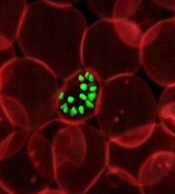
a red blood cell
Image courtesy of St. Jude
Children’s Research Hospital
New research indicates that manipulating the permeability of parasitophorous vacuoles could defeat malaria parasites.
The researchers unearthed this finding while studying the way in which the Toxoplasma gondii parasite, which causes toxoplasmosis, and Plasmodium parasites,
which cause malaria, access vital nutrients from their host cells.
The team described this work in Cell Host & Microbe.
Roughly a third of the world’s deadly infectious diseases are caused by pathogens that spend a large portion of their life inside parasitophorous vacuoles. This type of vacuole separates the host cytoplasm and the parasite by a membrane, protecting the parasite from the host cell’s defenses and providing an environment tailored to the parasite’s needs.
However, the membrane of the vacuole also acts as a barrier between the parasite and the host cell. This makes it more difficult for the parasite to release proteins involved in the transformation of the host cell beyond the membrane to spread the disease and for the pathogen to gain access to vital nutrients.
“Ultimately, what defines a parasite is that they require certain key nutrients from their host,” said study author Dan Gold, PhD, of the Massachusetts Institute of Technology in Cambridge.
“So they have had to evolve ways to get around their own barriers to gain access to these nutrients.”
Previous research suggested the vacuoles are selectively permeable to small molecules, allowing certain nutrients to pass through pores in the membrane. But until now, no one has been able to determine the molecular makeup of these pores or how they are formed.
When studying Toxoplasma, Dr Gold and his colleagues discovered 2 proteins secreted by the parasite, known as GRA17 and GRA23, which are responsible for forming these pores in the vacuole. The researchers discovered the proteins’ roles by accident while investigating how the parasites are able to release their own proteins out into the host cell beyond the vacuole membrane.
Similar research into how the related Plasmodium pathogens perform this trick revealed a protein export complex that transports encoded proteins from a parasite into its host red blood cell, which transforms the cell in a way that is vital to the spread of malaria.
“The clinical symptoms of malaria are dependent on this process and this remodeling of the red blood cell that occurs,” Dr Gold said.
The researchers identified proteins secreted by Toxoplasma that appeared to be homologues of this protein export complex in Plasmodium. But when they stopped these proteins from functioning, the team found it made no difference to the export of proteins from the parasite beyond the vacuole.
“We were left wondering what GRA17 and GRA23 actually do if they are not involved in protein export, and so we went back to look at this longstanding phenomenon of nutrient transport,” Dr Gold said.
When they added dyes to the host cell and knocked out the 2 proteins, the researchers found that it prevented the dyes flowing into the vacuole.
“That was our first indication that these proteins actually have a role in small-molecule transfer,” Dr Gold said.
When the researchers expressed a Plasmodium export complex gene in the modified Toxoplasma, they found the dyes were able to flow into the vacuole once again, suggesting this small-molecule transport function had been restored.
Since these proteins are only found in the parasite phylum Apicomplexa, to which both Toxoplasma and Plasmodium belong, they could be used as a drug target against the diseases they cause, the researchers said.
“This very strongly suggests that you could find small-molecule drugs to target these pores, which would be very damaging to these parasites but likely wouldn’t have any interaction with any human molecules,” Dr Gold said. “So I think this is a really strong potential drug target for restricting the access of these parasites to a set of nutrients.”
a red blood cell
Image courtesy of St. Jude
Children’s Research Hospital
New research indicates that manipulating the permeability of parasitophorous vacuoles could defeat malaria parasites.
The researchers unearthed this finding while studying the way in which the Toxoplasma gondii parasite, which causes toxoplasmosis, and Plasmodium parasites,
which cause malaria, access vital nutrients from their host cells.
The team described this work in Cell Host & Microbe.
Roughly a third of the world’s deadly infectious diseases are caused by pathogens that spend a large portion of their life inside parasitophorous vacuoles. This type of vacuole separates the host cytoplasm and the parasite by a membrane, protecting the parasite from the host cell’s defenses and providing an environment tailored to the parasite’s needs.
However, the membrane of the vacuole also acts as a barrier between the parasite and the host cell. This makes it more difficult for the parasite to release proteins involved in the transformation of the host cell beyond the membrane to spread the disease and for the pathogen to gain access to vital nutrients.
“Ultimately, what defines a parasite is that they require certain key nutrients from their host,” said study author Dan Gold, PhD, of the Massachusetts Institute of Technology in Cambridge.
“So they have had to evolve ways to get around their own barriers to gain access to these nutrients.”
Previous research suggested the vacuoles are selectively permeable to small molecules, allowing certain nutrients to pass through pores in the membrane. But until now, no one has been able to determine the molecular makeup of these pores or how they are formed.
When studying Toxoplasma, Dr Gold and his colleagues discovered 2 proteins secreted by the parasite, known as GRA17 and GRA23, which are responsible for forming these pores in the vacuole. The researchers discovered the proteins’ roles by accident while investigating how the parasites are able to release their own proteins out into the host cell beyond the vacuole membrane.
Similar research into how the related Plasmodium pathogens perform this trick revealed a protein export complex that transports encoded proteins from a parasite into its host red blood cell, which transforms the cell in a way that is vital to the spread of malaria.
“The clinical symptoms of malaria are dependent on this process and this remodeling of the red blood cell that occurs,” Dr Gold said.
The researchers identified proteins secreted by Toxoplasma that appeared to be homologues of this protein export complex in Plasmodium. But when they stopped these proteins from functioning, the team found it made no difference to the export of proteins from the parasite beyond the vacuole.
“We were left wondering what GRA17 and GRA23 actually do if they are not involved in protein export, and so we went back to look at this longstanding phenomenon of nutrient transport,” Dr Gold said.
When they added dyes to the host cell and knocked out the 2 proteins, the researchers found that it prevented the dyes flowing into the vacuole.
“That was our first indication that these proteins actually have a role in small-molecule transfer,” Dr Gold said.
When the researchers expressed a Plasmodium export complex gene in the modified Toxoplasma, they found the dyes were able to flow into the vacuole once again, suggesting this small-molecule transport function had been restored.
Since these proteins are only found in the parasite phylum Apicomplexa, to which both Toxoplasma and Plasmodium belong, they could be used as a drug target against the diseases they cause, the researchers said.
“This very strongly suggests that you could find small-molecule drugs to target these pores, which would be very damaging to these parasites but likely wouldn’t have any interaction with any human molecules,” Dr Gold said. “So I think this is a really strong potential drug target for restricting the access of these parasites to a set of nutrients.”
a red blood cell
Image courtesy of St. Jude
Children’s Research Hospital
New research indicates that manipulating the permeability of parasitophorous vacuoles could defeat malaria parasites.
The researchers unearthed this finding while studying the way in which the Toxoplasma gondii parasite, which causes toxoplasmosis, and Plasmodium parasites,
which cause malaria, access vital nutrients from their host cells.
The team described this work in Cell Host & Microbe.
Roughly a third of the world’s deadly infectious diseases are caused by pathogens that spend a large portion of their life inside parasitophorous vacuoles. This type of vacuole separates the host cytoplasm and the parasite by a membrane, protecting the parasite from the host cell’s defenses and providing an environment tailored to the parasite’s needs.
However, the membrane of the vacuole also acts as a barrier between the parasite and the host cell. This makes it more difficult for the parasite to release proteins involved in the transformation of the host cell beyond the membrane to spread the disease and for the pathogen to gain access to vital nutrients.
“Ultimately, what defines a parasite is that they require certain key nutrients from their host,” said study author Dan Gold, PhD, of the Massachusetts Institute of Technology in Cambridge.
“So they have had to evolve ways to get around their own barriers to gain access to these nutrients.”
Previous research suggested the vacuoles are selectively permeable to small molecules, allowing certain nutrients to pass through pores in the membrane. But until now, no one has been able to determine the molecular makeup of these pores or how they are formed.
When studying Toxoplasma, Dr Gold and his colleagues discovered 2 proteins secreted by the parasite, known as GRA17 and GRA23, which are responsible for forming these pores in the vacuole. The researchers discovered the proteins’ roles by accident while investigating how the parasites are able to release their own proteins out into the host cell beyond the vacuole membrane.
Similar research into how the related Plasmodium pathogens perform this trick revealed a protein export complex that transports encoded proteins from a parasite into its host red blood cell, which transforms the cell in a way that is vital to the spread of malaria.
“The clinical symptoms of malaria are dependent on this process and this remodeling of the red blood cell that occurs,” Dr Gold said.
The researchers identified proteins secreted by Toxoplasma that appeared to be homologues of this protein export complex in Plasmodium. But when they stopped these proteins from functioning, the team found it made no difference to the export of proteins from the parasite beyond the vacuole.
“We were left wondering what GRA17 and GRA23 actually do if they are not involved in protein export, and so we went back to look at this longstanding phenomenon of nutrient transport,” Dr Gold said.
When they added dyes to the host cell and knocked out the 2 proteins, the researchers found that it prevented the dyes flowing into the vacuole.
“That was our first indication that these proteins actually have a role in small-molecule transfer,” Dr Gold said.
When the researchers expressed a Plasmodium export complex gene in the modified Toxoplasma, they found the dyes were able to flow into the vacuole once again, suggesting this small-molecule transport function had been restored.
Since these proteins are only found in the parasite phylum Apicomplexa, to which both Toxoplasma and Plasmodium belong, they could be used as a drug target against the diseases they cause, the researchers said.
“This very strongly suggests that you could find small-molecule drugs to target these pores, which would be very damaging to these parasites but likely wouldn’t have any interaction with any human molecules,” Dr Gold said. “So I think this is a really strong potential drug target for restricting the access of these parasites to a set of nutrients.”
Combo targets AML, BL in the same way
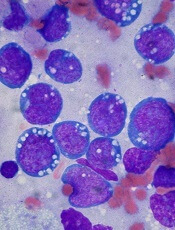
Image by Ed Uthman
Combining a cholesterol-lowering drug and a contraceptive steroid could be a safe, effective treatment for leukemias, lymphomas, and other malignancies, according to researchers.
Their work helps explain how this combination treatment, bezafibrate and medroxyprogesterone acetate (BaP), kills cancer cells.
The team discovered that BaP’s mechanism of action is the same in acute myeloid leukemia (AML) and Burkitt lymphoma (BL) cells.
The findings have been published in Cancer Research.
BaP has been shown to prolong survival in early stage trials of elderly AML patients, when compared to standard palliative care. BaP has also been used alongside chemotherapy to successfully treat children with BL.
However, it was unclear whether BaP’s activity against these 2 very different malignancies was mediated by a common mechanism or by different effects in each cancer.
To gain some insight, Andrew Southam, PhD, of the University of Birmingham in the UK, and his colleagues investigated the drugs’ effects on the metabolism and chemical make-up of AML and BL cells.
They found that, in both cell types, BaP blocks stearoyl CoA desaturase, an enzyme crucial to the production of fatty acids, which cancer cells need to grow and multiply. The team also showed that BaP’s ability to deactivate stearoyl CoA desaturase was what prompted the cancer cells to die.
“Developing drugs to target the fatty-acid building blocks of cancer cells has been a promising area of research in recent years,” Dr Southam said. “It is very exciting we have identified these non-toxic drugs already sitting on pharmacy shelves.”
He and his colleagues believe these findings also open up the possibility that BaP could be used to treat other cancers that rely on high levels of stearoyl CoA desaturase to grow, including chronic lymphocytic leukemia and some types of non-Hodgkin lymphoma, as well as prostate, colon, and esophageal cancers.
“This drug combination shows real promise,” said Chris Bunce, PhD, also of the University of Birmingham.
“Affordable, effective, non-toxic treatments that extend survival, while offering a good quality of life, are in demand for almost all types of cancer.”
Image by Ed Uthman
Combining a cholesterol-lowering drug and a contraceptive steroid could be a safe, effective treatment for leukemias, lymphomas, and other malignancies, according to researchers.
Their work helps explain how this combination treatment, bezafibrate and medroxyprogesterone acetate (BaP), kills cancer cells.
The team discovered that BaP’s mechanism of action is the same in acute myeloid leukemia (AML) and Burkitt lymphoma (BL) cells.
The findings have been published in Cancer Research.
BaP has been shown to prolong survival in early stage trials of elderly AML patients, when compared to standard palliative care. BaP has also been used alongside chemotherapy to successfully treat children with BL.
However, it was unclear whether BaP’s activity against these 2 very different malignancies was mediated by a common mechanism or by different effects in each cancer.
To gain some insight, Andrew Southam, PhD, of the University of Birmingham in the UK, and his colleagues investigated the drugs’ effects on the metabolism and chemical make-up of AML and BL cells.
They found that, in both cell types, BaP blocks stearoyl CoA desaturase, an enzyme crucial to the production of fatty acids, which cancer cells need to grow and multiply. The team also showed that BaP’s ability to deactivate stearoyl CoA desaturase was what prompted the cancer cells to die.
“Developing drugs to target the fatty-acid building blocks of cancer cells has been a promising area of research in recent years,” Dr Southam said. “It is very exciting we have identified these non-toxic drugs already sitting on pharmacy shelves.”
He and his colleagues believe these findings also open up the possibility that BaP could be used to treat other cancers that rely on high levels of stearoyl CoA desaturase to grow, including chronic lymphocytic leukemia and some types of non-Hodgkin lymphoma, as well as prostate, colon, and esophageal cancers.
“This drug combination shows real promise,” said Chris Bunce, PhD, also of the University of Birmingham.
“Affordable, effective, non-toxic treatments that extend survival, while offering a good quality of life, are in demand for almost all types of cancer.”
Image by Ed Uthman
Combining a cholesterol-lowering drug and a contraceptive steroid could be a safe, effective treatment for leukemias, lymphomas, and other malignancies, according to researchers.
Their work helps explain how this combination treatment, bezafibrate and medroxyprogesterone acetate (BaP), kills cancer cells.
The team discovered that BaP’s mechanism of action is the same in acute myeloid leukemia (AML) and Burkitt lymphoma (BL) cells.
The findings have been published in Cancer Research.
BaP has been shown to prolong survival in early stage trials of elderly AML patients, when compared to standard palliative care. BaP has also been used alongside chemotherapy to successfully treat children with BL.
However, it was unclear whether BaP’s activity against these 2 very different malignancies was mediated by a common mechanism or by different effects in each cancer.
To gain some insight, Andrew Southam, PhD, of the University of Birmingham in the UK, and his colleagues investigated the drugs’ effects on the metabolism and chemical make-up of AML and BL cells.
They found that, in both cell types, BaP blocks stearoyl CoA desaturase, an enzyme crucial to the production of fatty acids, which cancer cells need to grow and multiply. The team also showed that BaP’s ability to deactivate stearoyl CoA desaturase was what prompted the cancer cells to die.
“Developing drugs to target the fatty-acid building blocks of cancer cells has been a promising area of research in recent years,” Dr Southam said. “It is very exciting we have identified these non-toxic drugs already sitting on pharmacy shelves.”
He and his colleagues believe these findings also open up the possibility that BaP could be used to treat other cancers that rely on high levels of stearoyl CoA desaturase to grow, including chronic lymphocytic leukemia and some types of non-Hodgkin lymphoma, as well as prostate, colon, and esophageal cancers.
“This drug combination shows real promise,” said Chris Bunce, PhD, also of the University of Birmingham.
“Affordable, effective, non-toxic treatments that extend survival, while offering a good quality of life, are in demand for almost all types of cancer.”
How mAbs produce lasting antitumor effects
Photo by Linda Bartlett
Results of preclinical research help explain how antitumor monoclonal antibodies (mAbs) fight lymphoma.
Researchers uncovered a 2-step process that revolves around 2 antibody-binding receptors found on different types of immune cells.
Experiments suggested that these Fc receptors are needed to eradicate lymphoma and ensure it doesn’t return.
The researchers reported these findings in an article published in Cell.
“These findings suggests ways current anticancer antibody treatments might be improved, as well as combined with other immune-system-stimulating therapies to help cancer patients,” said study author Jeffrey Ravetch, MD, PhD, of The Rockefeller University in New York, New York.
Previous research has shown that antitumor mAbs bind to Fc receptors on activated immune cells, prompting those immune cells to kill tumors.
However, it was unclear which Fc receptors are involved or how the tumor killing led the immune system to generate memory T cells against these same antigens, in case the tumor producing them should return.
Dr Ravetch and David DiLillo, PhD, also of The Rockefeller University, investigated this process by injecting CD20-expressing lymphoma cells into mice with immune systems engineered to contain human Fc receptors, treating the mice with anti-CD20 mAbs, and then re-introducing lymphoma.
Wild-type C57BL/6 mice received syngeneic EL4 lymphoma cells expressing human CD20 (EL4-hCD20 cells). When these mice received treatment with an mIgG2a isotype anti-hCD20 mAb, they all survived.
Ninety days later, after the mAb had been cleared from their systems, the mice were re-challenged with EL4-hCD20 tumor cells, at a dose 10-fold greater than the initial challenge, but they did not receive any additional mAb.
All of these mice survived, but tumor/mAb-primed mice that were re-challenged with EL4-wild-type cells, which don’t express hCD20, had poor survival. Results were similar with a different anti-hCD20 mAb, clone 2B8.
The researchers also re-challenged tumor/mAb-primed mice with B6BL lymphoma cells that expressed either hCD20 or an irrelevant antigen, mCD20. All of the mice re-challenged with B6BL-mCD20 cells had died by day 31, but 80% of the mice re-challenged with B6BL-hCD20 cells survived at least 90 days.
Drs Ravetch and DiLillo said these results suggest an anti-hCD20 immune response is generated after the initial FcγR-mediated clearance of tumor cells by antibody-dependent cellular cytotoxicity.
The researchers then took a closer look at the role of Fc receptors, keeping in mind that different types of immune cells can express different receptors.
Based on the cells the researchers thought were involved, they looked to the Fc receptors expressed by cytotoxic immune cells that carried out the initial attack on tumors, as well as the Fc receptors found on dendritic cells, which are crucial to the formation of memory T cells.
To test the involvement of these receptors, the pair altered the mAbs delivered to the lymphoma-infected mice so as to change their affinity for the receptors. Then, they looked for changes in the survival rate of the mice after the first and second challenges with lymphoma cells.
When they dissected this process, the researchers uncovered 2 steps. The Fc receptor FcγRIIIA, which is found on macrophages, responded to mAbs and prompted the macrophages to engulf and destroy the antibody-laden tumor cells.
These same antibodies, still attached to tumor antigens, activated a second receptor, FcγRIIA, on dendritic cells, which used the antigen to prime T cells. The result was the generation of a T-cell memory response that protected the mice against future lymphoma cells expressing CD20.
“By engineering the antibodies so as to increase their affinity for both FcγRIIIA and FcγRIIA, we were able to optimize both steps in this process,” Dr DiLillo said.
“Current antibody therapies are only engineered to improve the immediate killing of tumor cells but not the formation of immunological memory. We are proposing that an ideal antibody therapy would be engineered to take full advantage of both steps.”
Photo by Linda Bartlett
Results of preclinical research help explain how antitumor monoclonal antibodies (mAbs) fight lymphoma.
Researchers uncovered a 2-step process that revolves around 2 antibody-binding receptors found on different types of immune cells.
Experiments suggested that these Fc receptors are needed to eradicate lymphoma and ensure it doesn’t return.
The researchers reported these findings in an article published in Cell.
“These findings suggests ways current anticancer antibody treatments might be improved, as well as combined with other immune-system-stimulating therapies to help cancer patients,” said study author Jeffrey Ravetch, MD, PhD, of The Rockefeller University in New York, New York.
Previous research has shown that antitumor mAbs bind to Fc receptors on activated immune cells, prompting those immune cells to kill tumors.
However, it was unclear which Fc receptors are involved or how the tumor killing led the immune system to generate memory T cells against these same antigens, in case the tumor producing them should return.
Dr Ravetch and David DiLillo, PhD, also of The Rockefeller University, investigated this process by injecting CD20-expressing lymphoma cells into mice with immune systems engineered to contain human Fc receptors, treating the mice with anti-CD20 mAbs, and then re-introducing lymphoma.
Wild-type C57BL/6 mice received syngeneic EL4 lymphoma cells expressing human CD20 (EL4-hCD20 cells). When these mice received treatment with an mIgG2a isotype anti-hCD20 mAb, they all survived.
Ninety days later, after the mAb had been cleared from their systems, the mice were re-challenged with EL4-hCD20 tumor cells, at a dose 10-fold greater than the initial challenge, but they did not receive any additional mAb.
All of these mice survived, but tumor/mAb-primed mice that were re-challenged with EL4-wild-type cells, which don’t express hCD20, had poor survival. Results were similar with a different anti-hCD20 mAb, clone 2B8.
The researchers also re-challenged tumor/mAb-primed mice with B6BL lymphoma cells that expressed either hCD20 or an irrelevant antigen, mCD20. All of the mice re-challenged with B6BL-mCD20 cells had died by day 31, but 80% of the mice re-challenged with B6BL-hCD20 cells survived at least 90 days.
Drs Ravetch and DiLillo said these results suggest an anti-hCD20 immune response is generated after the initial FcγR-mediated clearance of tumor cells by antibody-dependent cellular cytotoxicity.
The researchers then took a closer look at the role of Fc receptors, keeping in mind that different types of immune cells can express different receptors.
Based on the cells the researchers thought were involved, they looked to the Fc receptors expressed by cytotoxic immune cells that carried out the initial attack on tumors, as well as the Fc receptors found on dendritic cells, which are crucial to the formation of memory T cells.
To test the involvement of these receptors, the pair altered the mAbs delivered to the lymphoma-infected mice so as to change their affinity for the receptors. Then, they looked for changes in the survival rate of the mice after the first and second challenges with lymphoma cells.
When they dissected this process, the researchers uncovered 2 steps. The Fc receptor FcγRIIIA, which is found on macrophages, responded to mAbs and prompted the macrophages to engulf and destroy the antibody-laden tumor cells.
These same antibodies, still attached to tumor antigens, activated a second receptor, FcγRIIA, on dendritic cells, which used the antigen to prime T cells. The result was the generation of a T-cell memory response that protected the mice against future lymphoma cells expressing CD20.
“By engineering the antibodies so as to increase their affinity for both FcγRIIIA and FcγRIIA, we were able to optimize both steps in this process,” Dr DiLillo said.
“Current antibody therapies are only engineered to improve the immediate killing of tumor cells but not the formation of immunological memory. We are proposing that an ideal antibody therapy would be engineered to take full advantage of both steps.”
Photo by Linda Bartlett
Results of preclinical research help explain how antitumor monoclonal antibodies (mAbs) fight lymphoma.
Researchers uncovered a 2-step process that revolves around 2 antibody-binding receptors found on different types of immune cells.
Experiments suggested that these Fc receptors are needed to eradicate lymphoma and ensure it doesn’t return.
The researchers reported these findings in an article published in Cell.
“These findings suggests ways current anticancer antibody treatments might be improved, as well as combined with other immune-system-stimulating therapies to help cancer patients,” said study author Jeffrey Ravetch, MD, PhD, of The Rockefeller University in New York, New York.
Previous research has shown that antitumor mAbs bind to Fc receptors on activated immune cells, prompting those immune cells to kill tumors.
However, it was unclear which Fc receptors are involved or how the tumor killing led the immune system to generate memory T cells against these same antigens, in case the tumor producing them should return.
Dr Ravetch and David DiLillo, PhD, also of The Rockefeller University, investigated this process by injecting CD20-expressing lymphoma cells into mice with immune systems engineered to contain human Fc receptors, treating the mice with anti-CD20 mAbs, and then re-introducing lymphoma.
Wild-type C57BL/6 mice received syngeneic EL4 lymphoma cells expressing human CD20 (EL4-hCD20 cells). When these mice received treatment with an mIgG2a isotype anti-hCD20 mAb, they all survived.
Ninety days later, after the mAb had been cleared from their systems, the mice were re-challenged with EL4-hCD20 tumor cells, at a dose 10-fold greater than the initial challenge, but they did not receive any additional mAb.
All of these mice survived, but tumor/mAb-primed mice that were re-challenged with EL4-wild-type cells, which don’t express hCD20, had poor survival. Results were similar with a different anti-hCD20 mAb, clone 2B8.
The researchers also re-challenged tumor/mAb-primed mice with B6BL lymphoma cells that expressed either hCD20 or an irrelevant antigen, mCD20. All of the mice re-challenged with B6BL-mCD20 cells had died by day 31, but 80% of the mice re-challenged with B6BL-hCD20 cells survived at least 90 days.
Drs Ravetch and DiLillo said these results suggest an anti-hCD20 immune response is generated after the initial FcγR-mediated clearance of tumor cells by antibody-dependent cellular cytotoxicity.
The researchers then took a closer look at the role of Fc receptors, keeping in mind that different types of immune cells can express different receptors.
Based on the cells the researchers thought were involved, they looked to the Fc receptors expressed by cytotoxic immune cells that carried out the initial attack on tumors, as well as the Fc receptors found on dendritic cells, which are crucial to the formation of memory T cells.
To test the involvement of these receptors, the pair altered the mAbs delivered to the lymphoma-infected mice so as to change their affinity for the receptors. Then, they looked for changes in the survival rate of the mice after the first and second challenges with lymphoma cells.
When they dissected this process, the researchers uncovered 2 steps. The Fc receptor FcγRIIIA, which is found on macrophages, responded to mAbs and prompted the macrophages to engulf and destroy the antibody-laden tumor cells.
These same antibodies, still attached to tumor antigens, activated a second receptor, FcγRIIA, on dendritic cells, which used the antigen to prime T cells. The result was the generation of a T-cell memory response that protected the mice against future lymphoma cells expressing CD20.
“By engineering the antibodies so as to increase their affinity for both FcγRIIIA and FcγRIIA, we were able to optimize both steps in this process,” Dr DiLillo said.
“Current antibody therapies are only engineered to improve the immediate killing of tumor cells but not the formation of immunological memory. We are proposing that an ideal antibody therapy would be engineered to take full advantage of both steps.”
Combo can fight infection, GVHD
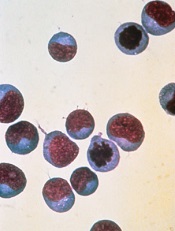
Image courtesy of NIAID
NEW ORLEANS—Results of a phase 1 trial suggest that modified T cells can fight infection in patients who have undergone haploidentical hematopoietic
stem cell transplant (haplo-HSCT), and subsequent administration of a bio-inert drug can ameliorate graft-vs-host disease (GVHD) in these patients.
Researchers introduced the suicide gene inducible caspase 9 (iC9) into T cells and infused them into transplant recipients to promote immune reconstitution.
For patients who went on to develop GVHD, the researchers activated the suicide gene by administering a dose of the drug rimiducid (AP1903).
This cleared the patients of GVHD symptoms without jeopardizing the remaining T cells’ ability to fight infection.
The researchers presented these results at the American Society of Gene and Cell Therapy Annual Meeting and reported them in Blood.
The trial was sponsored by Baylor College of Medicine, but Bellicum Pharmaceuticals is the company developing rimiducid and the so-called iC9 “safety switch,” also known as CaspaCIDe.
“We’ve shown that the therapy works, fighting viruses that threaten immune-compromised patients,” said Xiaoou Zhou, PhD, of Baylor College of Medicine in Houston, Texas.
“We have also shown that the switch can turn off the T cells that reproduce out of control, attacking the patient’s graft-vs-host disease. This study was the first to look at any potential effect on the ability of the T cells to fight infection. We found there was no compromise.”
The study included 12 patients with a median age of 10 (range, 2-50) who had undergone haplo-HSCT. They received donor-derived T cells engineered with CaspaCIDe using a dose escalation schedule from 1×10⁴ to 5×10⁶ cells/kg, at a median of 42 days after transplant (range, 31-82 days).
All 12 patients had more rapid immune reconstitution and fewer infections after the infusions, when compared with previously reported results in T-cell-depleted, haplo-HSCT procedures. The CaspaCIDe T cells successfully provided protection from EBV, CMV, VZV, HHV6, and BKV viruses.
The researchers said there were no immediate toxicities related to the T-cell infusions, but 4 patients went on to develop GVHD.
Treatment with rimiducid resolved the patients’ GVHD symptoms within 6 to 48 hours. The researchers found that rimiducid could eliminate the uncontrolled T cells in the central nervous system as well as the peripheral blood.
Even after the problematic T cells were killed, the remaining T cells were able to fight infection without causing further GVHD.
One patient experienced a decrease in cell counts after receiving rimiducid, but counts had normalized by 48 hours. The researchers said there were no other immediate or delayed adverse effects associated with the drug.
One patient developed cytokine release syndrome, but this was resolved in 2 hours with a single dose of rimiducid.
“This study shows that infusing larger numbers of haploidentical donor T cells engineered with CaspaCIDe leads to better infection control,” Dr Zhou said. “We also showed that, if GVHD occurs, it can be rapidly controlled and eliminated by removing alloreactive cells with rimiducid in vivo, and that the productive, antiviral and anticancer cells remain, repopulate, and maintain immunity.”
“This is a significant finding that can lead to broader adoption of curative haploidentical transplants for cancers and genetic blood disorders. It also suggests that CaspaCIDe has great potential with CAR T and TCR therapies, where rapid control of dangerous T-cell-mitigated toxicities, such as cytokine release syndrome, is needed to achieve wide adoption.”
Image courtesy of NIAID
NEW ORLEANS—Results of a phase 1 trial suggest that modified T cells can fight infection in patients who have undergone haploidentical hematopoietic
stem cell transplant (haplo-HSCT), and subsequent administration of a bio-inert drug can ameliorate graft-vs-host disease (GVHD) in these patients.
Researchers introduced the suicide gene inducible caspase 9 (iC9) into T cells and infused them into transplant recipients to promote immune reconstitution.
For patients who went on to develop GVHD, the researchers activated the suicide gene by administering a dose of the drug rimiducid (AP1903).
This cleared the patients of GVHD symptoms without jeopardizing the remaining T cells’ ability to fight infection.
The researchers presented these results at the American Society of Gene and Cell Therapy Annual Meeting and reported them in Blood.
The trial was sponsored by Baylor College of Medicine, but Bellicum Pharmaceuticals is the company developing rimiducid and the so-called iC9 “safety switch,” also known as CaspaCIDe.
“We’ve shown that the therapy works, fighting viruses that threaten immune-compromised patients,” said Xiaoou Zhou, PhD, of Baylor College of Medicine in Houston, Texas.
“We have also shown that the switch can turn off the T cells that reproduce out of control, attacking the patient’s graft-vs-host disease. This study was the first to look at any potential effect on the ability of the T cells to fight infection. We found there was no compromise.”
The study included 12 patients with a median age of 10 (range, 2-50) who had undergone haplo-HSCT. They received donor-derived T cells engineered with CaspaCIDe using a dose escalation schedule from 1×10⁴ to 5×10⁶ cells/kg, at a median of 42 days after transplant (range, 31-82 days).
All 12 patients had more rapid immune reconstitution and fewer infections after the infusions, when compared with previously reported results in T-cell-depleted, haplo-HSCT procedures. The CaspaCIDe T cells successfully provided protection from EBV, CMV, VZV, HHV6, and BKV viruses.
The researchers said there were no immediate toxicities related to the T-cell infusions, but 4 patients went on to develop GVHD.
Treatment with rimiducid resolved the patients’ GVHD symptoms within 6 to 48 hours. The researchers found that rimiducid could eliminate the uncontrolled T cells in the central nervous system as well as the peripheral blood.
Even after the problematic T cells were killed, the remaining T cells were able to fight infection without causing further GVHD.
One patient experienced a decrease in cell counts after receiving rimiducid, but counts had normalized by 48 hours. The researchers said there were no other immediate or delayed adverse effects associated with the drug.
One patient developed cytokine release syndrome, but this was resolved in 2 hours with a single dose of rimiducid.
“This study shows that infusing larger numbers of haploidentical donor T cells engineered with CaspaCIDe leads to better infection control,” Dr Zhou said. “We also showed that, if GVHD occurs, it can be rapidly controlled and eliminated by removing alloreactive cells with rimiducid in vivo, and that the productive, antiviral and anticancer cells remain, repopulate, and maintain immunity.”
“This is a significant finding that can lead to broader adoption of curative haploidentical transplants for cancers and genetic blood disorders. It also suggests that CaspaCIDe has great potential with CAR T and TCR therapies, where rapid control of dangerous T-cell-mitigated toxicities, such as cytokine release syndrome, is needed to achieve wide adoption.”
Image courtesy of NIAID
NEW ORLEANS—Results of a phase 1 trial suggest that modified T cells can fight infection in patients who have undergone haploidentical hematopoietic
stem cell transplant (haplo-HSCT), and subsequent administration of a bio-inert drug can ameliorate graft-vs-host disease (GVHD) in these patients.
Researchers introduced the suicide gene inducible caspase 9 (iC9) into T cells and infused them into transplant recipients to promote immune reconstitution.
For patients who went on to develop GVHD, the researchers activated the suicide gene by administering a dose of the drug rimiducid (AP1903).
This cleared the patients of GVHD symptoms without jeopardizing the remaining T cells’ ability to fight infection.
The researchers presented these results at the American Society of Gene and Cell Therapy Annual Meeting and reported them in Blood.
The trial was sponsored by Baylor College of Medicine, but Bellicum Pharmaceuticals is the company developing rimiducid and the so-called iC9 “safety switch,” also known as CaspaCIDe.
“We’ve shown that the therapy works, fighting viruses that threaten immune-compromised patients,” said Xiaoou Zhou, PhD, of Baylor College of Medicine in Houston, Texas.
“We have also shown that the switch can turn off the T cells that reproduce out of control, attacking the patient’s graft-vs-host disease. This study was the first to look at any potential effect on the ability of the T cells to fight infection. We found there was no compromise.”
The study included 12 patients with a median age of 10 (range, 2-50) who had undergone haplo-HSCT. They received donor-derived T cells engineered with CaspaCIDe using a dose escalation schedule from 1×10⁴ to 5×10⁶ cells/kg, at a median of 42 days after transplant (range, 31-82 days).
All 12 patients had more rapid immune reconstitution and fewer infections after the infusions, when compared with previously reported results in T-cell-depleted, haplo-HSCT procedures. The CaspaCIDe T cells successfully provided protection from EBV, CMV, VZV, HHV6, and BKV viruses.
The researchers said there were no immediate toxicities related to the T-cell infusions, but 4 patients went on to develop GVHD.
Treatment with rimiducid resolved the patients’ GVHD symptoms within 6 to 48 hours. The researchers found that rimiducid could eliminate the uncontrolled T cells in the central nervous system as well as the peripheral blood.
Even after the problematic T cells were killed, the remaining T cells were able to fight infection without causing further GVHD.
One patient experienced a decrease in cell counts after receiving rimiducid, but counts had normalized by 48 hours. The researchers said there were no other immediate or delayed adverse effects associated with the drug.
One patient developed cytokine release syndrome, but this was resolved in 2 hours with a single dose of rimiducid.
“This study shows that infusing larger numbers of haploidentical donor T cells engineered with CaspaCIDe leads to better infection control,” Dr Zhou said. “We also showed that, if GVHD occurs, it can be rapidly controlled and eliminated by removing alloreactive cells with rimiducid in vivo, and that the productive, antiviral and anticancer cells remain, repopulate, and maintain immunity.”
“This is a significant finding that can lead to broader adoption of curative haploidentical transplants for cancers and genetic blood disorders. It also suggests that CaspaCIDe has great potential with CAR T and TCR therapies, where rapid control of dangerous T-cell-mitigated toxicities, such as cytokine release syndrome, is needed to achieve wide adoption.”
Group learns how protein promotes AML
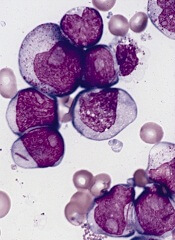
A few years ago, researchers discovered that inhibiting the protein BRD4 can treat acute myeloid leukemia (AML). However, the mechanism that explains how the protein works has remained a mystery.
Now, investigators have discovered the larger signaling pathway to which BRD4 belongs. The team said their discovery points to additional therapeutic targets for AML and other malignancies.
The group described this work in Molecular Cell.
BRD4: A retrospective
In 2011, Christopher Vakoc, MD, PhD, of Cold Spring Harbor Laboratory in Cold Spring Harbor, New York, and his colleagues identified potential drug targets for AML using RNA interference. Out of that screen came BRD4 and the realization that leukemia cells were “extremely sensitive” to inhibition of this protein.
In a bit of serendipity, drugs to inhibit BRD4 had just been developed for other purposes. Dr Vakoc and his colleagues tested these drugs and found that one in particular, JQ1, worked well against a mouse model of aggressive AML.
In the past few years, several groups have reported similar therapeutic results in mice using JQ1 and closely related drugs.
“It’s been very satisfying to see that other groups have independently validated our findings,” Dr Vakoc said.
Due to the evidence of their effectiveness in mice, inhibitors of BRD4 moved into clinical trials starting in 2013. Currently, there are 12 active clinical trials targeting BRD4 in leukemia and other cancers, including one sponsored by a company to which Dr Vakoc has licensed JQ1.
“Once we published the first paper in 2011, the main objective in our lab has been to understand why these drugs work,” Dr Vakoc said. “Knowing the mechanism of action of a drug is essential to making the drug better because there will likely be many generations of BRD4 inhibitors.”
JQ1 and BRD4: How they work
In the current study, Dr Vakoc and his colleagues discovered that BRD4 works very closely with transcription factors that bind to DNA and selectively control the activity of certain genes. The transcription factors control blood formation and essentially give blood cells their “identity.”
The researchers found that JQ1 can make leukemia cells shed their leukemia characteristics and differentiate into normal white blood cells. The team also identified an intermediary molecule called p300 between BRD4 and the leukemia-associated transcription factors.
Active areas of research in Dr Vakoc’s lab include exploring other players in the pathway, particularly the molecules that BRD4 controls, and learning more about the transcription factors.
“This new work is leading us to realize that transcription factors are the masters of the biological universe,” Dr Vakoc said. “Clearly, they are driving the cancer phenotype.”
A few years ago, researchers discovered that inhibiting the protein BRD4 can treat acute myeloid leukemia (AML). However, the mechanism that explains how the protein works has remained a mystery.
Now, investigators have discovered the larger signaling pathway to which BRD4 belongs. The team said their discovery points to additional therapeutic targets for AML and other malignancies.
The group described this work in Molecular Cell.
BRD4: A retrospective
In 2011, Christopher Vakoc, MD, PhD, of Cold Spring Harbor Laboratory in Cold Spring Harbor, New York, and his colleagues identified potential drug targets for AML using RNA interference. Out of that screen came BRD4 and the realization that leukemia cells were “extremely sensitive” to inhibition of this protein.
In a bit of serendipity, drugs to inhibit BRD4 had just been developed for other purposes. Dr Vakoc and his colleagues tested these drugs and found that one in particular, JQ1, worked well against a mouse model of aggressive AML.
In the past few years, several groups have reported similar therapeutic results in mice using JQ1 and closely related drugs.
“It’s been very satisfying to see that other groups have independently validated our findings,” Dr Vakoc said.
Due to the evidence of their effectiveness in mice, inhibitors of BRD4 moved into clinical trials starting in 2013. Currently, there are 12 active clinical trials targeting BRD4 in leukemia and other cancers, including one sponsored by a company to which Dr Vakoc has licensed JQ1.
“Once we published the first paper in 2011, the main objective in our lab has been to understand why these drugs work,” Dr Vakoc said. “Knowing the mechanism of action of a drug is essential to making the drug better because there will likely be many generations of BRD4 inhibitors.”
JQ1 and BRD4: How they work
In the current study, Dr Vakoc and his colleagues discovered that BRD4 works very closely with transcription factors that bind to DNA and selectively control the activity of certain genes. The transcription factors control blood formation and essentially give blood cells their “identity.”
The researchers found that JQ1 can make leukemia cells shed their leukemia characteristics and differentiate into normal white blood cells. The team also identified an intermediary molecule called p300 between BRD4 and the leukemia-associated transcription factors.
Active areas of research in Dr Vakoc’s lab include exploring other players in the pathway, particularly the molecules that BRD4 controls, and learning more about the transcription factors.
“This new work is leading us to realize that transcription factors are the masters of the biological universe,” Dr Vakoc said. “Clearly, they are driving the cancer phenotype.”
A few years ago, researchers discovered that inhibiting the protein BRD4 can treat acute myeloid leukemia (AML). However, the mechanism that explains how the protein works has remained a mystery.
Now, investigators have discovered the larger signaling pathway to which BRD4 belongs. The team said their discovery points to additional therapeutic targets for AML and other malignancies.
The group described this work in Molecular Cell.
BRD4: A retrospective
In 2011, Christopher Vakoc, MD, PhD, of Cold Spring Harbor Laboratory in Cold Spring Harbor, New York, and his colleagues identified potential drug targets for AML using RNA interference. Out of that screen came BRD4 and the realization that leukemia cells were “extremely sensitive” to inhibition of this protein.
In a bit of serendipity, drugs to inhibit BRD4 had just been developed for other purposes. Dr Vakoc and his colleagues tested these drugs and found that one in particular, JQ1, worked well against a mouse model of aggressive AML.
In the past few years, several groups have reported similar therapeutic results in mice using JQ1 and closely related drugs.
“It’s been very satisfying to see that other groups have independently validated our findings,” Dr Vakoc said.
Due to the evidence of their effectiveness in mice, inhibitors of BRD4 moved into clinical trials starting in 2013. Currently, there are 12 active clinical trials targeting BRD4 in leukemia and other cancers, including one sponsored by a company to which Dr Vakoc has licensed JQ1.
“Once we published the first paper in 2011, the main objective in our lab has been to understand why these drugs work,” Dr Vakoc said. “Knowing the mechanism of action of a drug is essential to making the drug better because there will likely be many generations of BRD4 inhibitors.”
JQ1 and BRD4: How they work
In the current study, Dr Vakoc and his colleagues discovered that BRD4 works very closely with transcription factors that bind to DNA and selectively control the activity of certain genes. The transcription factors control blood formation and essentially give blood cells their “identity.”
The researchers found that JQ1 can make leukemia cells shed their leukemia characteristics and differentiate into normal white blood cells. The team also identified an intermediary molecule called p300 between BRD4 and the leukemia-associated transcription factors.
Active areas of research in Dr Vakoc’s lab include exploring other players in the pathway, particularly the molecules that BRD4 controls, and learning more about the transcription factors.
“This new work is leading us to realize that transcription factors are the masters of the biological universe,” Dr Vakoc said. “Clearly, they are driving the cancer phenotype.”
Genome editing increases hemoglobin production
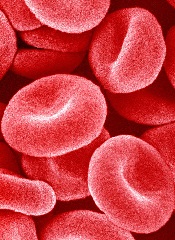
Scientists have found they can use a genome-editing technique to increase hemoglobin production, and they described this method in Nature Communications.
The team used transcription activator-like effector nucleases (TALENs) to introduce the hereditary persistence of fetal hemoglobin (HPFH)-175T4C point mutation into erythroid cell lines.
This served to switch on the fetal hemoglobin gene and increase hemoglobin production.
“Our laboratory study provides a proof of concept that changing just one letter of DNA in a gene could alleviate the symptoms of sickle cell anemia and thalassemia—inherited diseases in which people have damaged hemoglobin,” said Merlin Crossley, PhD, of the University of New South Wales in Sydney, Australia.
“Because the good genetic variation we introduced already exists in nature, this approach should be effective and safe. However, more research is needed before it can be tested in people as a possible cure for serious blood diseases.”
Dr Crossley and his colleagues introduced the HPFH-175T4C point mutation into erythroid cell lines using TALENs, which can be designed to cut a gene at a specific point, as well as provide the desired piece of donor DNA for insertion.
“Breaks in DNA can be lethal to cells, so they have in-built machinery to repair any nicks as soon as possible, by grabbing any spare DNA that seems to match . . . ,” Dr Crossley explained.
“We exploited this effect. When our genome-editing protein cuts the DNA, the cell quickly replaces it with the donor DNA that we have also provided.”
The researchers pointed out that the HPFH-175T4C point mutation increased fetal globin expression via de novo recruitment of the activator TAL1, which promoted chromatin looping of distal enhancers to the modified γ-globin promoter.
The team also said that, if their editing technique proves safe and effective in hematopoietic stem cells, it could offer significant advantages over other approaches used to treat hemoglobin disorders, such as conventional gene therapy.
Scientists have found they can use a genome-editing technique to increase hemoglobin production, and they described this method in Nature Communications.
The team used transcription activator-like effector nucleases (TALENs) to introduce the hereditary persistence of fetal hemoglobin (HPFH)-175T4C point mutation into erythroid cell lines.
This served to switch on the fetal hemoglobin gene and increase hemoglobin production.
“Our laboratory study provides a proof of concept that changing just one letter of DNA in a gene could alleviate the symptoms of sickle cell anemia and thalassemia—inherited diseases in which people have damaged hemoglobin,” said Merlin Crossley, PhD, of the University of New South Wales in Sydney, Australia.
“Because the good genetic variation we introduced already exists in nature, this approach should be effective and safe. However, more research is needed before it can be tested in people as a possible cure for serious blood diseases.”
Dr Crossley and his colleagues introduced the HPFH-175T4C point mutation into erythroid cell lines using TALENs, which can be designed to cut a gene at a specific point, as well as provide the desired piece of donor DNA for insertion.
“Breaks in DNA can be lethal to cells, so they have in-built machinery to repair any nicks as soon as possible, by grabbing any spare DNA that seems to match . . . ,” Dr Crossley explained.
“We exploited this effect. When our genome-editing protein cuts the DNA, the cell quickly replaces it with the donor DNA that we have also provided.”
The researchers pointed out that the HPFH-175T4C point mutation increased fetal globin expression via de novo recruitment of the activator TAL1, which promoted chromatin looping of distal enhancers to the modified γ-globin promoter.
The team also said that, if their editing technique proves safe and effective in hematopoietic stem cells, it could offer significant advantages over other approaches used to treat hemoglobin disorders, such as conventional gene therapy.
Scientists have found they can use a genome-editing technique to increase hemoglobin production, and they described this method in Nature Communications.
The team used transcription activator-like effector nucleases (TALENs) to introduce the hereditary persistence of fetal hemoglobin (HPFH)-175T4C point mutation into erythroid cell lines.
This served to switch on the fetal hemoglobin gene and increase hemoglobin production.
“Our laboratory study provides a proof of concept that changing just one letter of DNA in a gene could alleviate the symptoms of sickle cell anemia and thalassemia—inherited diseases in which people have damaged hemoglobin,” said Merlin Crossley, PhD, of the University of New South Wales in Sydney, Australia.
“Because the good genetic variation we introduced already exists in nature, this approach should be effective and safe. However, more research is needed before it can be tested in people as a possible cure for serious blood diseases.”
Dr Crossley and his colleagues introduced the HPFH-175T4C point mutation into erythroid cell lines using TALENs, which can be designed to cut a gene at a specific point, as well as provide the desired piece of donor DNA for insertion.
“Breaks in DNA can be lethal to cells, so they have in-built machinery to repair any nicks as soon as possible, by grabbing any spare DNA that seems to match . . . ,” Dr Crossley explained.
“We exploited this effect. When our genome-editing protein cuts the DNA, the cell quickly replaces it with the donor DNA that we have also provided.”
The researchers pointed out that the HPFH-175T4C point mutation increased fetal globin expression via de novo recruitment of the activator TAL1, which promoted chromatin looping of distal enhancers to the modified γ-globin promoter.
The team also said that, if their editing technique proves safe and effective in hematopoietic stem cells, it could offer significant advantages over other approaches used to treat hemoglobin disorders, such as conventional gene therapy.
FDA grants drug orphan designation for AML
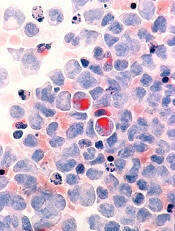
Image by Lance Liotta
The US Food and Drug Administration (FDA) has granted orphan designation for GMI-1271 to treat acute myeloid leukemia (AML).
GMI-1271, an E-selectin antagonist, has shown promise in preclinical research and proven safe in a phase 1 trial of healthy volunteers, according to GlycoMimetics, Inc., the company developing the drug.
Now, the company is recruiting adults with AML in a phase 1/2 study to test GMI-1271 in combination with chemotherapy.
“Having the FDA designate GMI-1271 as an orphan drug for the treatment of AML is an important accomplishment for GlycoMimetics,” said Helen Thackray, MD, vice president of clinical development and chief medical officer at GlycoMimetics. “This is a significant regulatory milestone for our program.”
The FDA’s orphan drug designation program is designed to promote the development of drugs intended to treat diseases affecting fewer than 200,000 people in the US.
Orphan designation provides a drug’s developer with benefits such as a 7-year period of marketing exclusivity if the drug is approved, protocol assistance, the ability to apply for research funding, tax credits for certain research expenses, and regulatory fee waivers.
Research with GMI-1271
Preclinical research presented at ASH 2013 suggested that GMI-1271 was able to overcome chemotherapy resistance in AML cells in vitro. The drug also reduced the leukemic burden in mouse models of AML when given in combination with daunorubicin and cytarabine.
Murine research presented at ASH 2014 suggested that, by inhibiting E-selectin, GMI-1271 may increase leukemic stem cells’ sensitivity to chemotherapeutic drugs.
At the same meeting, researchers presented preclinical data on GMI-1271 as a treatment for chronic myeloid leukemia, multiple myeloma, and venous thromboembolism.
In November 2014, GlycoMimetics announced results of phase 1 trial of GMI-1271 in healthy volunteers. Twenty-eight adults were enrolled in cohorts to receive the drug at 3 dose levels.
The company said subjects tolerated GMI-1271 well, and pharmacokinetics were as predicted based on preclinical research.
A multicenter, phase 1/2 trial of GMI-1271 in combination with chemotherapy is now recruiting adult patients with AML.
Image by Lance Liotta
The US Food and Drug Administration (FDA) has granted orphan designation for GMI-1271 to treat acute myeloid leukemia (AML).
GMI-1271, an E-selectin antagonist, has shown promise in preclinical research and proven safe in a phase 1 trial of healthy volunteers, according to GlycoMimetics, Inc., the company developing the drug.
Now, the company is recruiting adults with AML in a phase 1/2 study to test GMI-1271 in combination with chemotherapy.
“Having the FDA designate GMI-1271 as an orphan drug for the treatment of AML is an important accomplishment for GlycoMimetics,” said Helen Thackray, MD, vice president of clinical development and chief medical officer at GlycoMimetics. “This is a significant regulatory milestone for our program.”
The FDA’s orphan drug designation program is designed to promote the development of drugs intended to treat diseases affecting fewer than 200,000 people in the US.
Orphan designation provides a drug’s developer with benefits such as a 7-year period of marketing exclusivity if the drug is approved, protocol assistance, the ability to apply for research funding, tax credits for certain research expenses, and regulatory fee waivers.
Research with GMI-1271
Preclinical research presented at ASH 2013 suggested that GMI-1271 was able to overcome chemotherapy resistance in AML cells in vitro. The drug also reduced the leukemic burden in mouse models of AML when given in combination with daunorubicin and cytarabine.
Murine research presented at ASH 2014 suggested that, by inhibiting E-selectin, GMI-1271 may increase leukemic stem cells’ sensitivity to chemotherapeutic drugs.
At the same meeting, researchers presented preclinical data on GMI-1271 as a treatment for chronic myeloid leukemia, multiple myeloma, and venous thromboembolism.
In November 2014, GlycoMimetics announced results of phase 1 trial of GMI-1271 in healthy volunteers. Twenty-eight adults were enrolled in cohorts to receive the drug at 3 dose levels.
The company said subjects tolerated GMI-1271 well, and pharmacokinetics were as predicted based on preclinical research.
A multicenter, phase 1/2 trial of GMI-1271 in combination with chemotherapy is now recruiting adult patients with AML.
Image by Lance Liotta
The US Food and Drug Administration (FDA) has granted orphan designation for GMI-1271 to treat acute myeloid leukemia (AML).
GMI-1271, an E-selectin antagonist, has shown promise in preclinical research and proven safe in a phase 1 trial of healthy volunteers, according to GlycoMimetics, Inc., the company developing the drug.
Now, the company is recruiting adults with AML in a phase 1/2 study to test GMI-1271 in combination with chemotherapy.
“Having the FDA designate GMI-1271 as an orphan drug for the treatment of AML is an important accomplishment for GlycoMimetics,” said Helen Thackray, MD, vice president of clinical development and chief medical officer at GlycoMimetics. “This is a significant regulatory milestone for our program.”
The FDA’s orphan drug designation program is designed to promote the development of drugs intended to treat diseases affecting fewer than 200,000 people in the US.
Orphan designation provides a drug’s developer with benefits such as a 7-year period of marketing exclusivity if the drug is approved, protocol assistance, the ability to apply for research funding, tax credits for certain research expenses, and regulatory fee waivers.
Research with GMI-1271
Preclinical research presented at ASH 2013 suggested that GMI-1271 was able to overcome chemotherapy resistance in AML cells in vitro. The drug also reduced the leukemic burden in mouse models of AML when given in combination with daunorubicin and cytarabine.
Murine research presented at ASH 2014 suggested that, by inhibiting E-selectin, GMI-1271 may increase leukemic stem cells’ sensitivity to chemotherapeutic drugs.
At the same meeting, researchers presented preclinical data on GMI-1271 as a treatment for chronic myeloid leukemia, multiple myeloma, and venous thromboembolism.
In November 2014, GlycoMimetics announced results of phase 1 trial of GMI-1271 in healthy volunteers. Twenty-eight adults were enrolled in cohorts to receive the drug at 3 dose levels.
The company said subjects tolerated GMI-1271 well, and pharmacokinetics were as predicted based on preclinical research.
A multicenter, phase 1/2 trial of GMI-1271 in combination with chemotherapy is now recruiting adult patients with AML.