User login
The patient who changed the way I practice family medicine

To commemorate The Journal of Family Practice’s 40th anniversary, JFP invited readers to tell us about the patient who changed the way you practice family medicine. We received numerous entries describing a variety of patients, from those who prompted the physician to confront his or her own biases and insecurities to patients whose circumstances reminded doctors why they became physicians in the first place.
With so many excellent entries, determining which ones to publish was a difficult task. “All of the entries were great stories, teaching a number of lessons,” said JFP Editor-in-Chief John Hickner, MD, MSc, who served as one of the judges.
There was the doctor who learned about patience, compassion, and perseverance while caring for a 480 gm full-term infant whose mother smoked and abused cocaine and alcohol during her pregnancy. Another family physician (FP) described the day he learned the importance of always asking patients about the reason for their visit; on this particular day, he mistakenly performed a Pap smear on a patient who came in to the office for a hepatitis shot.
Another physician described witnessing a husband’s poignant goodbye to his dying wife in the hospital and making the decision to change her residency from dermatology to oncology. There was even a doctor who foiled the kidnapping of one of his patients, a 5-yearold girl who told him in the emergency department (ED) that the man she’d just been in a one-car accident with was “not her Daddy.”
Who was he?
She didn’t know, as he’d just taken her from her house.
Two doctors wrote about the importance of listening to—rather than overriding—that “inner voice” that tells you the proper course of action. One physician wrote about the months of unnecessary worry and invasive testing she’d set into motion because she wasn’t confident enough to stand by her own assessment that a patient’s chest pain actually was caused by anxiety.
Another physician described caring for a 5-year-old girl with an earache and malaise. “No specific findings and a normal blood count should have been reassuring,” he noted, “but a little voice … said ‘something’s not right here.’ ” He overrode that “voice” and sent the young patient home. The next morning she was rushed back to the ED in full blown Waterhouse-Friderichsen syndrome. The child survived, but “ended up losing half of her extremities.”
So many poignant stories…
In the end, the judges selected the 3 entries they felt best captured the essence of the contest. First-place winner Jon Temte, MD, PhD, wrote about what he learned from caring for a patient plagued by pain, addiction, and mental illness.
“Dr. Temte has proven that a true clinician can serve the most desperate members of our society with dignity, grace, and respect,” said JFP Editorial Board member Jeffrey R. Unger, MD, who also judged the contest. “If only one could provide an encounter code for ‘compassion’ …”
Second-place winner Luis Perez, DO, described how he learned to set aside his prejudices by really listening to a “frequent flier” patient who insisted that he “do something” for her. Dr. Perez’s decision to check his patient one more time led to a discovery that saved the patient’s life.
And third-place winner Pamela Levine, MD, wrote about an encounter with a drug-seeking patient who later wrote to thank her for saying ‘No,’ and prompting the woman to get the help she needed.
We’re confident that each of these stories will touch you as they did us. We also believe that these stories will remind you of the gratifying and beautifully imperfect art that is family medicine.
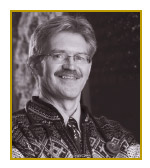
[First-Place Winner]
A housefly, an earwig, a click beetle, and a toad
Jon Temte, MD, PhD
University of Wisconsin School of Medicine and Public Health, Madison
Alice was not attractive in any sense of the word. In fact, she was the antithesis of attractive. She had a broken carapace, arched by osteoporosis, pegged and spindled teeth (the familiar product of the years’ accumulation of addiction), and matted and greasy, grey-blackened hair, with ample holes. To Alice, I was never Dr. Temte, or Dr. Anybody, or anyone resembling anything official, just “Jon-Jon.” I was equally dismissive and somewhat rude in a playful way. “Alice,” I’d say, “Halloween was 2 weeks ago. You’re scaring the little kids.” She’d look up at me, and with a twinkle in her eye, say “Boo!”
I had inherited her from a colleague, who had fired her from the practice many months before. But Alice had managed to take advantage of our lax system of keeping the outcasts cast away, and returned in the manner of a fed stray cat. By the time of her reinstatement, she had graduated to methadone, was racked with chronic pain, and smoldered hepatitis C. She was one of my new pain patients, part of diaspora that move to a new practitioner (with plenty of open slots) who is temporarily free from a jaded, jaundiced view of medicine.
Over the ensuing years, Alice taught me how to talk doctors out of narcotics, how to game pharmacists, and how to play the system. (I almost convinced her to counsel our residents on her techniques, but agoraphobia created too high a wall.) In turn, I catered to her health care needs, and there were many. I treated her pain and I treated her in a manner to which she was not accustomed to being treated by doctors.
Addiction is nearly as heritable as pervasive mental illness. For a time, I cared for Alice’s daughter, Erika—a similar phenotype of chronic pain, addiction, “bipolar disorder,” bad teeth. I cared for her son-in-law as well. After too many episodes, too many violations, I let Erika go … another in a string of outcasts. She circled awhile, found a new provider, died of an overdose. I suspected something more ominous perpetrated by her husband. No proof. He moved on and away.
In my dealing with Alice and Erika and the myriad of their ilk that populates my practice, a song—from the soundtrack to The Hunchback of Notre Dame—often imposes itself. Written by composer Alan Menken and lyricist Stephen Schwartz, “God Help the Outcasts” reminds us of a shared journey:
Winds of misfortune
Have blown them about
You made the outcasts
Don’t cast them out
The poor and unlucky
The weak and the odd
I thought we all were
The children of God.
Alice continued to see me. I did what I could to help her cope. Missed appointments were more a consequence of her fears and quirks than maliciousness or irresponsibility. When she did come in, she shuffled down the hall, humped over a cane, and later, a walker, appearing as a hag making an unwelcome appearance among mortals.
Alice ultimately died of sepsis emerging from delayed presentation of cholecystitis. It was not a pleasant death, spelled out on the wards of our teaching hospital, of tubes and lines and bright lights; an affront to her guarded soul. She had not wanted to come in. By the time she called, it was already too late.
One of my last visits with Alice was in August, a few months before her death. My note recorded “critters under… skin.” On prior occasions, she had been concerned with lice, scabies—the usual players; sometimes real and sometimes imagined. She did have dermatitis and tended to be a scratcher and a picker. This time was different.
Sealed in one of her medication pouches—the kind the pharmacy prepared for her—were things she said she had extracted from the skin of her left forearm. The cellophane bag held a housefly, an earwig, a click beetle, and a toad (the diminutive amphibian smashed pancake flat). Being a naturalist and biologist long before a physician, I was intrigued. I readily identified all 4 species and explained, in no uncertain terms, that these confederates do not burrow or otherwise get under the skin. Alice was adamant. “What can you do to take care of this?”
Recognizing defeat, I ordered clotrimazole and betamethasone dipropionate cream. I explained to her how to use the cream. “Two to 3 times a day for a week should take care of all the vermin,” I added.
My action was repaid with a broken smile and the deep, twinkling dark eyes. “I knew you’d do the right thing,” she beamed.
I am haunted by her eyes.

[Second-Place Winner]
"I just know there's something wrong with me!"
Luis Perez, DO
Firelands Physician Group
Sandusky, OH
It had been a long day at the resident clinic, where we provided free care to uninsured and underinsured patients in exchange for valuable opportunities to learn clinical medicine with “real” patients under close preceptor supervision. It was 5 PM Friday, and I was looking forward to finishing the day and enjoying the weekend. I glanced at my schedule and groaned. My last patient of the day was 27-year-old “Natalie,” a frequent visitor to our clinic.
It was Natalie’s third visit to our clinic that week, all for the same issue: cough and shortness of breath with “wheezing.” I tried to stifle my judgment before entering the exam room. I looked at her chart; in her 2 previous visits she had been diagnosed with a viral upper respiratory infection and then bronchitis, and had been prescribed albuterol and antibiotics.
Natalie appeared comfortable and her physical exam was completely unremarkable, including a complete absence of wheezing on auscultation. With a bit of exasperation, I advised her to continue the previously prescribed treatments and to just give it some more time. Not satisfied, Natalie begged me to “do something” for her because she was still short of breath. “I just know there’s something wrong with me!”
I took a deep breath to calm myself down and then offered to check her pulse oximetry again. It was 98%. I don’t remember why, but I decided to have her wear the pulse oximeter and walk around our clinic. Natalie took a few steps and her oxygenation plummeted to 87%. My heart almost skipped a beat. How could this be? The only plausible explanation I could come up with was a pulmonary embolism. But why would a healthy 27-year-old develop an embolism?
I explained my thoughts to Natalie and recommended that she be taken to the local emergency department (ED) immediately. She agreed. An hour after she left our clinic, the ED physician called to tell me that Natalie had been admitted to the medical floor. She had large bilateral pulmonary emboli. A
few days later, after Natalie was discharged from the hospital, she came to our clinic for a follow-up visit. She broke into tears and thanked me for being “the only doctor who took me seriously when I said I knew there was something wrong with me.” Her use of oral hormonal contraceptives was found to be the cause of her pulmonary emboli.
Natalie taught me a lesson I will never forget: Always put my prejudice and fatigue aside and treat each patient encounter with a fresh perspective, as difficult as that can sometimes be.
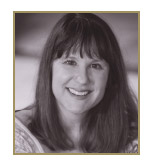
[Third-Place Winner]
Words that transform
Pamela Levine, MD
Loveland, CO
It was early in my career and I had just enough experience to feel competent. It was a usual day at the clinic: On my schedule were women getting physicals, children with sore throats, babies getting their immunizations. These are the sorts of patients we care for in family medicine; we enjoy it, we receive thank-you notes and holiday cards, and we establish relationships.
And on this day, I encountered another sort of patient, one that some refer to as a “drug seeker.” These patients may or may not have pain, but they have a history of obtaining narcotic prescriptions from multiple doctors, losing prescriptions, asking to have their dose escalated, and/or selling their medication. Because the Drug Enforcement Agency (DEA) can come after a doctor who overprescribes pain medication, many of us view encounters with drug-seeking patients as adversarial. We are on guard so as not to be tricked and possibly lose our DEA license.
That was the type of patient with whom my day ended. I had stayed late to finish recording my notes. I was on call and someone had paged me with a question that required a chart. So I ventured into the dark medical records room (this was long before we had electronic medical records) and I committed myself to the unsavory task of locating the chart.
There was a loud knock at the side door. If it occurred to me that I was alone and it was dark outside, the thought flew out of my mind; I decided the knocking was probably a staffer who’d gotten locked out. That happened all the time. I would let them in, and they would help me find the missing chart.
Well, I was wrong. When I opened the door, I found a woman who was hoping our clinic was still open. She was from out of town and had never been seen at our clinic. She had chronic headaches and took a large amount of oxycodone and acetaminophen daily. And, of course, she was out of medication.
I could have just closed the door, explaining that our clinic had a policy against after-hours narcotic prescriptions. Her story was suspicious and she wasn’t even an established patient. I could have gone back to finding the errant chart, as I still had tons of paperwork and more calls coming in.
But it wasn’t so easy: There was desperation in this woman’s eyes and in her demeanor. I remember standing at that door having a conversation, one I was sure she’d had plenty of times before. With the high dose of pain medication she had been taking, had she considered that she might have a drug addiction? Had she considered that there could be other ways to manage the headaches, but that she would have to get off the narcotics first? Would she go to the emergency department and ask to be admitted to a rehabilitation facility?
She left unconvinced, and I returned to my on-call chores. I chastised myself for what I perceived as a waste of my time.
Six months later, I received a note from this woman. She explained that although at the time she had been angry with me for not giving her what she wanted, she also realized for the first time that she had a prescription drug addiction. Maybe no one else had been quite as blunt as I had been, or maybe it was just the right time for her to hear those words. After our encounter, this brave woman had gotten help from a rehabilitation facility, and now she was thanking me for that difficult conversation—“the confrontation,” as she called it.
I learned a huge lesson that day: Don’t give up on people. You never know when your words might touch someone in ways not foreseen or imagined.
The authors reported no potential conflict of interest relevant to this article.
To commemorate The Journal of Family Practice’s 40th anniversary, JFP invited readers to tell us about the patient who changed the way you practice family medicine. We received numerous entries describing a variety of patients, from those who prompted the physician to confront his or her own biases and insecurities to patients whose circumstances reminded doctors why they became physicians in the first place.
With so many excellent entries, determining which ones to publish was a difficult task. “All of the entries were great stories, teaching a number of lessons,” said JFP Editor-in-Chief John Hickner, MD, MSc, who served as one of the judges.
There was the doctor who learned about patience, compassion, and perseverance while caring for a 480 gm full-term infant whose mother smoked and abused cocaine and alcohol during her pregnancy. Another family physician (FP) described the day he learned the importance of always asking patients about the reason for their visit; on this particular day, he mistakenly performed a Pap smear on a patient who came in to the office for a hepatitis shot.
Another physician described witnessing a husband’s poignant goodbye to his dying wife in the hospital and making the decision to change her residency from dermatology to oncology. There was even a doctor who foiled the kidnapping of one of his patients, a 5-yearold girl who told him in the emergency department (ED) that the man she’d just been in a one-car accident with was “not her Daddy.”
Who was he?
She didn’t know, as he’d just taken her from her house.
Two doctors wrote about the importance of listening to—rather than overriding—that “inner voice” that tells you the proper course of action. One physician wrote about the months of unnecessary worry and invasive testing she’d set into motion because she wasn’t confident enough to stand by her own assessment that a patient’s chest pain actually was caused by anxiety.
Another physician described caring for a 5-year-old girl with an earache and malaise. “No specific findings and a normal blood count should have been reassuring,” he noted, “but a little voice … said ‘something’s not right here.’ ” He overrode that “voice” and sent the young patient home. The next morning she was rushed back to the ED in full blown Waterhouse-Friderichsen syndrome. The child survived, but “ended up losing half of her extremities.”
So many poignant stories…
In the end, the judges selected the 3 entries they felt best captured the essence of the contest. First-place winner Jon Temte, MD, PhD, wrote about what he learned from caring for a patient plagued by pain, addiction, and mental illness.
“Dr. Temte has proven that a true clinician can serve the most desperate members of our society with dignity, grace, and respect,” said JFP Editorial Board member Jeffrey R. Unger, MD, who also judged the contest. “If only one could provide an encounter code for ‘compassion’ …”
Second-place winner Luis Perez, DO, described how he learned to set aside his prejudices by really listening to a “frequent flier” patient who insisted that he “do something” for her. Dr. Perez’s decision to check his patient one more time led to a discovery that saved the patient’s life.
And third-place winner Pamela Levine, MD, wrote about an encounter with a drug-seeking patient who later wrote to thank her for saying ‘No,’ and prompting the woman to get the help she needed.
We’re confident that each of these stories will touch you as they did us. We also believe that these stories will remind you of the gratifying and beautifully imperfect art that is family medicine.
[First-Place Winner]
A housefly, an earwig, a click beetle, and a toad
Jon Temte, MD, PhD
University of Wisconsin School of Medicine and Public Health, Madison
Alice was not attractive in any sense of the word. In fact, she was the antithesis of attractive. She had a broken carapace, arched by osteoporosis, pegged and spindled teeth (the familiar product of the years’ accumulation of addiction), and matted and greasy, grey-blackened hair, with ample holes. To Alice, I was never Dr. Temte, or Dr. Anybody, or anyone resembling anything official, just “Jon-Jon.” I was equally dismissive and somewhat rude in a playful way. “Alice,” I’d say, “Halloween was 2 weeks ago. You’re scaring the little kids.” She’d look up at me, and with a twinkle in her eye, say “Boo!”
I had inherited her from a colleague, who had fired her from the practice many months before. But Alice had managed to take advantage of our lax system of keeping the outcasts cast away, and returned in the manner of a fed stray cat. By the time of her reinstatement, she had graduated to methadone, was racked with chronic pain, and smoldered hepatitis C. She was one of my new pain patients, part of diaspora that move to a new practitioner (with plenty of open slots) who is temporarily free from a jaded, jaundiced view of medicine.
Over the ensuing years, Alice taught me how to talk doctors out of narcotics, how to game pharmacists, and how to play the system. (I almost convinced her to counsel our residents on her techniques, but agoraphobia created too high a wall.) In turn, I catered to her health care needs, and there were many. I treated her pain and I treated her in a manner to which she was not accustomed to being treated by doctors.
Addiction is nearly as heritable as pervasive mental illness. For a time, I cared for Alice’s daughter, Erika—a similar phenotype of chronic pain, addiction, “bipolar disorder,” bad teeth. I cared for her son-in-law as well. After too many episodes, too many violations, I let Erika go … another in a string of outcasts. She circled awhile, found a new provider, died of an overdose. I suspected something more ominous perpetrated by her husband. No proof. He moved on and away.
In my dealing with Alice and Erika and the myriad of their ilk that populates my practice, a song—from the soundtrack to The Hunchback of Notre Dame—often imposes itself. Written by composer Alan Menken and lyricist Stephen Schwartz, “God Help the Outcasts” reminds us of a shared journey:
Winds of misfortune
Have blown them about
You made the outcasts
Don’t cast them out
The poor and unlucky
The weak and the odd
I thought we all were
The children of God.
Alice continued to see me. I did what I could to help her cope. Missed appointments were more a consequence of her fears and quirks than maliciousness or irresponsibility. When she did come in, she shuffled down the hall, humped over a cane, and later, a walker, appearing as a hag making an unwelcome appearance among mortals.
Alice ultimately died of sepsis emerging from delayed presentation of cholecystitis. It was not a pleasant death, spelled out on the wards of our teaching hospital, of tubes and lines and bright lights; an affront to her guarded soul. She had not wanted to come in. By the time she called, it was already too late.
One of my last visits with Alice was in August, a few months before her death. My note recorded “critters under… skin.” On prior occasions, she had been concerned with lice, scabies—the usual players; sometimes real and sometimes imagined. She did have dermatitis and tended to be a scratcher and a picker. This time was different.
Sealed in one of her medication pouches—the kind the pharmacy prepared for her—were things she said she had extracted from the skin of her left forearm. The cellophane bag held a housefly, an earwig, a click beetle, and a toad (the diminutive amphibian smashed pancake flat). Being a naturalist and biologist long before a physician, I was intrigued. I readily identified all 4 species and explained, in no uncertain terms, that these confederates do not burrow or otherwise get under the skin. Alice was adamant. “What can you do to take care of this?”
Recognizing defeat, I ordered clotrimazole and betamethasone dipropionate cream. I explained to her how to use the cream. “Two to 3 times a day for a week should take care of all the vermin,” I added.
My action was repaid with a broken smile and the deep, twinkling dark eyes. “I knew you’d do the right thing,” she beamed.
I am haunted by her eyes.
[Second-Place Winner]
"I just know there's something wrong with me!"
Luis Perez, DO
Firelands Physician Group
Sandusky, OH
It had been a long day at the resident clinic, where we provided free care to uninsured and underinsured patients in exchange for valuable opportunities to learn clinical medicine with “real” patients under close preceptor supervision. It was 5 PM Friday, and I was looking forward to finishing the day and enjoying the weekend. I glanced at my schedule and groaned. My last patient of the day was 27-year-old “Natalie,” a frequent visitor to our clinic.
It was Natalie’s third visit to our clinic that week, all for the same issue: cough and shortness of breath with “wheezing.” I tried to stifle my judgment before entering the exam room. I looked at her chart; in her 2 previous visits she had been diagnosed with a viral upper respiratory infection and then bronchitis, and had been prescribed albuterol and antibiotics.
Natalie appeared comfortable and her physical exam was completely unremarkable, including a complete absence of wheezing on auscultation. With a bit of exasperation, I advised her to continue the previously prescribed treatments and to just give it some more time. Not satisfied, Natalie begged me to “do something” for her because she was still short of breath. “I just know there’s something wrong with me!”
I took a deep breath to calm myself down and then offered to check her pulse oximetry again. It was 98%. I don’t remember why, but I decided to have her wear the pulse oximeter and walk around our clinic. Natalie took a few steps and her oxygenation plummeted to 87%. My heart almost skipped a beat. How could this be? The only plausible explanation I could come up with was a pulmonary embolism. But why would a healthy 27-year-old develop an embolism?
I explained my thoughts to Natalie and recommended that she be taken to the local emergency department (ED) immediately. She agreed. An hour after she left our clinic, the ED physician called to tell me that Natalie had been admitted to the medical floor. She had large bilateral pulmonary emboli. A
few days later, after Natalie was discharged from the hospital, she came to our clinic for a follow-up visit. She broke into tears and thanked me for being “the only doctor who took me seriously when I said I knew there was something wrong with me.” Her use of oral hormonal contraceptives was found to be the cause of her pulmonary emboli.
Natalie taught me a lesson I will never forget: Always put my prejudice and fatigue aside and treat each patient encounter with a fresh perspective, as difficult as that can sometimes be.
[Third-Place Winner]
Words that transform
Pamela Levine, MD
Loveland, CO
It was early in my career and I had just enough experience to feel competent. It was a usual day at the clinic: On my schedule were women getting physicals, children with sore throats, babies getting their immunizations. These are the sorts of patients we care for in family medicine; we enjoy it, we receive thank-you notes and holiday cards, and we establish relationships.
And on this day, I encountered another sort of patient, one that some refer to as a “drug seeker.” These patients may or may not have pain, but they have a history of obtaining narcotic prescriptions from multiple doctors, losing prescriptions, asking to have their dose escalated, and/or selling their medication. Because the Drug Enforcement Agency (DEA) can come after a doctor who overprescribes pain medication, many of us view encounters with drug-seeking patients as adversarial. We are on guard so as not to be tricked and possibly lose our DEA license.
That was the type of patient with whom my day ended. I had stayed late to finish recording my notes. I was on call and someone had paged me with a question that required a chart. So I ventured into the dark medical records room (this was long before we had electronic medical records) and I committed myself to the unsavory task of locating the chart.
There was a loud knock at the side door. If it occurred to me that I was alone and it was dark outside, the thought flew out of my mind; I decided the knocking was probably a staffer who’d gotten locked out. That happened all the time. I would let them in, and they would help me find the missing chart.
Well, I was wrong. When I opened the door, I found a woman who was hoping our clinic was still open. She was from out of town and had never been seen at our clinic. She had chronic headaches and took a large amount of oxycodone and acetaminophen daily. And, of course, she was out of medication.
I could have just closed the door, explaining that our clinic had a policy against after-hours narcotic prescriptions. Her story was suspicious and she wasn’t even an established patient. I could have gone back to finding the errant chart, as I still had tons of paperwork and more calls coming in.
But it wasn’t so easy: There was desperation in this woman’s eyes and in her demeanor. I remember standing at that door having a conversation, one I was sure she’d had plenty of times before. With the high dose of pain medication she had been taking, had she considered that she might have a drug addiction? Had she considered that there could be other ways to manage the headaches, but that she would have to get off the narcotics first? Would she go to the emergency department and ask to be admitted to a rehabilitation facility?
She left unconvinced, and I returned to my on-call chores. I chastised myself for what I perceived as a waste of my time.
Six months later, I received a note from this woman. She explained that although at the time she had been angry with me for not giving her what she wanted, she also realized for the first time that she had a prescription drug addiction. Maybe no one else had been quite as blunt as I had been, or maybe it was just the right time for her to hear those words. After our encounter, this brave woman had gotten help from a rehabilitation facility, and now she was thanking me for that difficult conversation—“the confrontation,” as she called it.
I learned a huge lesson that day: Don’t give up on people. You never know when your words might touch someone in ways not foreseen or imagined.
The authors reported no potential conflict of interest relevant to this article.
To commemorate The Journal of Family Practice’s 40th anniversary, JFP invited readers to tell us about the patient who changed the way you practice family medicine. We received numerous entries describing a variety of patients, from those who prompted the physician to confront his or her own biases and insecurities to patients whose circumstances reminded doctors why they became physicians in the first place.
With so many excellent entries, determining which ones to publish was a difficult task. “All of the entries were great stories, teaching a number of lessons,” said JFP Editor-in-Chief John Hickner, MD, MSc, who served as one of the judges.
There was the doctor who learned about patience, compassion, and perseverance while caring for a 480 gm full-term infant whose mother smoked and abused cocaine and alcohol during her pregnancy. Another family physician (FP) described the day he learned the importance of always asking patients about the reason for their visit; on this particular day, he mistakenly performed a Pap smear on a patient who came in to the office for a hepatitis shot.
Another physician described witnessing a husband’s poignant goodbye to his dying wife in the hospital and making the decision to change her residency from dermatology to oncology. There was even a doctor who foiled the kidnapping of one of his patients, a 5-yearold girl who told him in the emergency department (ED) that the man she’d just been in a one-car accident with was “not her Daddy.”
Who was he?
She didn’t know, as he’d just taken her from her house.
Two doctors wrote about the importance of listening to—rather than overriding—that “inner voice” that tells you the proper course of action. One physician wrote about the months of unnecessary worry and invasive testing she’d set into motion because she wasn’t confident enough to stand by her own assessment that a patient’s chest pain actually was caused by anxiety.
Another physician described caring for a 5-year-old girl with an earache and malaise. “No specific findings and a normal blood count should have been reassuring,” he noted, “but a little voice … said ‘something’s not right here.’ ” He overrode that “voice” and sent the young patient home. The next morning she was rushed back to the ED in full blown Waterhouse-Friderichsen syndrome. The child survived, but “ended up losing half of her extremities.”
So many poignant stories…
In the end, the judges selected the 3 entries they felt best captured the essence of the contest. First-place winner Jon Temte, MD, PhD, wrote about what he learned from caring for a patient plagued by pain, addiction, and mental illness.
“Dr. Temte has proven that a true clinician can serve the most desperate members of our society with dignity, grace, and respect,” said JFP Editorial Board member Jeffrey R. Unger, MD, who also judged the contest. “If only one could provide an encounter code for ‘compassion’ …”
Second-place winner Luis Perez, DO, described how he learned to set aside his prejudices by really listening to a “frequent flier” patient who insisted that he “do something” for her. Dr. Perez’s decision to check his patient one more time led to a discovery that saved the patient’s life.
And third-place winner Pamela Levine, MD, wrote about an encounter with a drug-seeking patient who later wrote to thank her for saying ‘No,’ and prompting the woman to get the help she needed.
We’re confident that each of these stories will touch you as they did us. We also believe that these stories will remind you of the gratifying and beautifully imperfect art that is family medicine.
[First-Place Winner]
A housefly, an earwig, a click beetle, and a toad
Jon Temte, MD, PhD
University of Wisconsin School of Medicine and Public Health, Madison
Alice was not attractive in any sense of the word. In fact, she was the antithesis of attractive. She had a broken carapace, arched by osteoporosis, pegged and spindled teeth (the familiar product of the years’ accumulation of addiction), and matted and greasy, grey-blackened hair, with ample holes. To Alice, I was never Dr. Temte, or Dr. Anybody, or anyone resembling anything official, just “Jon-Jon.” I was equally dismissive and somewhat rude in a playful way. “Alice,” I’d say, “Halloween was 2 weeks ago. You’re scaring the little kids.” She’d look up at me, and with a twinkle in her eye, say “Boo!”
I had inherited her from a colleague, who had fired her from the practice many months before. But Alice had managed to take advantage of our lax system of keeping the outcasts cast away, and returned in the manner of a fed stray cat. By the time of her reinstatement, she had graduated to methadone, was racked with chronic pain, and smoldered hepatitis C. She was one of my new pain patients, part of diaspora that move to a new practitioner (with plenty of open slots) who is temporarily free from a jaded, jaundiced view of medicine.
Over the ensuing years, Alice taught me how to talk doctors out of narcotics, how to game pharmacists, and how to play the system. (I almost convinced her to counsel our residents on her techniques, but agoraphobia created too high a wall.) In turn, I catered to her health care needs, and there were many. I treated her pain and I treated her in a manner to which she was not accustomed to being treated by doctors.
Addiction is nearly as heritable as pervasive mental illness. For a time, I cared for Alice’s daughter, Erika—a similar phenotype of chronic pain, addiction, “bipolar disorder,” bad teeth. I cared for her son-in-law as well. After too many episodes, too many violations, I let Erika go … another in a string of outcasts. She circled awhile, found a new provider, died of an overdose. I suspected something more ominous perpetrated by her husband. No proof. He moved on and away.
In my dealing with Alice and Erika and the myriad of their ilk that populates my practice, a song—from the soundtrack to The Hunchback of Notre Dame—often imposes itself. Written by composer Alan Menken and lyricist Stephen Schwartz, “God Help the Outcasts” reminds us of a shared journey:
Winds of misfortune
Have blown them about
You made the outcasts
Don’t cast them out
The poor and unlucky
The weak and the odd
I thought we all were
The children of God.
Alice continued to see me. I did what I could to help her cope. Missed appointments were more a consequence of her fears and quirks than maliciousness or irresponsibility. When she did come in, she shuffled down the hall, humped over a cane, and later, a walker, appearing as a hag making an unwelcome appearance among mortals.
Alice ultimately died of sepsis emerging from delayed presentation of cholecystitis. It was not a pleasant death, spelled out on the wards of our teaching hospital, of tubes and lines and bright lights; an affront to her guarded soul. She had not wanted to come in. By the time she called, it was already too late.
One of my last visits with Alice was in August, a few months before her death. My note recorded “critters under… skin.” On prior occasions, she had been concerned with lice, scabies—the usual players; sometimes real and sometimes imagined. She did have dermatitis and tended to be a scratcher and a picker. This time was different.
Sealed in one of her medication pouches—the kind the pharmacy prepared for her—were things she said she had extracted from the skin of her left forearm. The cellophane bag held a housefly, an earwig, a click beetle, and a toad (the diminutive amphibian smashed pancake flat). Being a naturalist and biologist long before a physician, I was intrigued. I readily identified all 4 species and explained, in no uncertain terms, that these confederates do not burrow or otherwise get under the skin. Alice was adamant. “What can you do to take care of this?”
Recognizing defeat, I ordered clotrimazole and betamethasone dipropionate cream. I explained to her how to use the cream. “Two to 3 times a day for a week should take care of all the vermin,” I added.
My action was repaid with a broken smile and the deep, twinkling dark eyes. “I knew you’d do the right thing,” she beamed.
I am haunted by her eyes.
[Second-Place Winner]
"I just know there's something wrong with me!"
Luis Perez, DO
Firelands Physician Group
Sandusky, OH
It had been a long day at the resident clinic, where we provided free care to uninsured and underinsured patients in exchange for valuable opportunities to learn clinical medicine with “real” patients under close preceptor supervision. It was 5 PM Friday, and I was looking forward to finishing the day and enjoying the weekend. I glanced at my schedule and groaned. My last patient of the day was 27-year-old “Natalie,” a frequent visitor to our clinic.
It was Natalie’s third visit to our clinic that week, all for the same issue: cough and shortness of breath with “wheezing.” I tried to stifle my judgment before entering the exam room. I looked at her chart; in her 2 previous visits she had been diagnosed with a viral upper respiratory infection and then bronchitis, and had been prescribed albuterol and antibiotics.
Natalie appeared comfortable and her physical exam was completely unremarkable, including a complete absence of wheezing on auscultation. With a bit of exasperation, I advised her to continue the previously prescribed treatments and to just give it some more time. Not satisfied, Natalie begged me to “do something” for her because she was still short of breath. “I just know there’s something wrong with me!”
I took a deep breath to calm myself down and then offered to check her pulse oximetry again. It was 98%. I don’t remember why, but I decided to have her wear the pulse oximeter and walk around our clinic. Natalie took a few steps and her oxygenation plummeted to 87%. My heart almost skipped a beat. How could this be? The only plausible explanation I could come up with was a pulmonary embolism. But why would a healthy 27-year-old develop an embolism?
I explained my thoughts to Natalie and recommended that she be taken to the local emergency department (ED) immediately. She agreed. An hour after she left our clinic, the ED physician called to tell me that Natalie had been admitted to the medical floor. She had large bilateral pulmonary emboli. A
few days later, after Natalie was discharged from the hospital, she came to our clinic for a follow-up visit. She broke into tears and thanked me for being “the only doctor who took me seriously when I said I knew there was something wrong with me.” Her use of oral hormonal contraceptives was found to be the cause of her pulmonary emboli.
Natalie taught me a lesson I will never forget: Always put my prejudice and fatigue aside and treat each patient encounter with a fresh perspective, as difficult as that can sometimes be.
[Third-Place Winner]
Words that transform
Pamela Levine, MD
Loveland, CO
It was early in my career and I had just enough experience to feel competent. It was a usual day at the clinic: On my schedule were women getting physicals, children with sore throats, babies getting their immunizations. These are the sorts of patients we care for in family medicine; we enjoy it, we receive thank-you notes and holiday cards, and we establish relationships.
And on this day, I encountered another sort of patient, one that some refer to as a “drug seeker.” These patients may or may not have pain, but they have a history of obtaining narcotic prescriptions from multiple doctors, losing prescriptions, asking to have their dose escalated, and/or selling their medication. Because the Drug Enforcement Agency (DEA) can come after a doctor who overprescribes pain medication, many of us view encounters with drug-seeking patients as adversarial. We are on guard so as not to be tricked and possibly lose our DEA license.
That was the type of patient with whom my day ended. I had stayed late to finish recording my notes. I was on call and someone had paged me with a question that required a chart. So I ventured into the dark medical records room (this was long before we had electronic medical records) and I committed myself to the unsavory task of locating the chart.
There was a loud knock at the side door. If it occurred to me that I was alone and it was dark outside, the thought flew out of my mind; I decided the knocking was probably a staffer who’d gotten locked out. That happened all the time. I would let them in, and they would help me find the missing chart.
Well, I was wrong. When I opened the door, I found a woman who was hoping our clinic was still open. She was from out of town and had never been seen at our clinic. She had chronic headaches and took a large amount of oxycodone and acetaminophen daily. And, of course, she was out of medication.
I could have just closed the door, explaining that our clinic had a policy against after-hours narcotic prescriptions. Her story was suspicious and she wasn’t even an established patient. I could have gone back to finding the errant chart, as I still had tons of paperwork and more calls coming in.
But it wasn’t so easy: There was desperation in this woman’s eyes and in her demeanor. I remember standing at that door having a conversation, one I was sure she’d had plenty of times before. With the high dose of pain medication she had been taking, had she considered that she might have a drug addiction? Had she considered that there could be other ways to manage the headaches, but that she would have to get off the narcotics first? Would she go to the emergency department and ask to be admitted to a rehabilitation facility?
She left unconvinced, and I returned to my on-call chores. I chastised myself for what I perceived as a waste of my time.
Six months later, I received a note from this woman. She explained that although at the time she had been angry with me for not giving her what she wanted, she also realized for the first time that she had a prescription drug addiction. Maybe no one else had been quite as blunt as I had been, or maybe it was just the right time for her to hear those words. After our encounter, this brave woman had gotten help from a rehabilitation facility, and now she was thanking me for that difficult conversation—“the confrontation,” as she called it.
I learned a huge lesson that day: Don’t give up on people. You never know when your words might touch someone in ways not foreseen or imagined.
The authors reported no potential conflict of interest relevant to this article.