User login
Lucas Franki is an associate editor for MDedge News, and has been with the company since 2014. He has a BA in English from Penn State University and is an Eagle Scout.
Early liver transplant good for patients with severe alcoholic hepatitis
Early liver transplantation was associated with good short-term survival in patients with severe alcoholic hepatitis, but a significant number of patients started consuming alcohol again, according to a study presented at the annual meeting of the American Association for the Study of Liver Diseases.
The study was a retrospective review of the ACCELERATE-AH trial, utilizing a cohort of 147 patients with severe AH who underwent liver transplant prior to a 6-month abstinence period and were discharged home after surgery, said Dr. Brian Lee of the University of California, San Francisco, and his colleagues. Patients also underwent a follow-up period with a median time of 1.6 years.
Pretransplant abstinence time was a median of 55 days, and 54% received steroids for alcoholic hepatitis before the surgery. A total of 141 patients were discharged home after surgery, and 132 survived past 3 months. Of the nine patients who died within 3 months of their liver transplant, eight had received steroid therapy, and five died from sepsis.
No deaths were reported between 3 months and 1 year post transplant, but nine deaths were reported after 1 year, seven of which were alcohol related. The probability of alcohol use after 1 year was 25% and was 34% after 3 years.
After adjustment, a lack of self-admission into a hospital was associated with alcohol usage post transplant, with a hazard ratio of 4.3. In multivariate analysis, any alcohol use post transplant was associated with death, with a hazard ratio of 3.9, Dr. Lee and his colleagues noted.
Dr. Lee, Dr. Mehta, Dr. Platt, Dr. Gurakar, Dr. Im, Dr. Han, Dr. Victor, Dr. Rinella, Dr. Maddur, Dr. Eswaran, Dr. Hause, Dr. Foley, Dr. Dodge, Dr. Li, and Dr. Terrault reported conflicts of interest.
Early liver transplantation was associated with good short-term survival in patients with severe alcoholic hepatitis, but a significant number of patients started consuming alcohol again, according to a study presented at the annual meeting of the American Association for the Study of Liver Diseases.
The study was a retrospective review of the ACCELERATE-AH trial, utilizing a cohort of 147 patients with severe AH who underwent liver transplant prior to a 6-month abstinence period and were discharged home after surgery, said Dr. Brian Lee of the University of California, San Francisco, and his colleagues. Patients also underwent a follow-up period with a median time of 1.6 years.
Pretransplant abstinence time was a median of 55 days, and 54% received steroids for alcoholic hepatitis before the surgery. A total of 141 patients were discharged home after surgery, and 132 survived past 3 months. Of the nine patients who died within 3 months of their liver transplant, eight had received steroid therapy, and five died from sepsis.
No deaths were reported between 3 months and 1 year post transplant, but nine deaths were reported after 1 year, seven of which were alcohol related. The probability of alcohol use after 1 year was 25% and was 34% after 3 years.
After adjustment, a lack of self-admission into a hospital was associated with alcohol usage post transplant, with a hazard ratio of 4.3. In multivariate analysis, any alcohol use post transplant was associated with death, with a hazard ratio of 3.9, Dr. Lee and his colleagues noted.
Dr. Lee, Dr. Mehta, Dr. Platt, Dr. Gurakar, Dr. Im, Dr. Han, Dr. Victor, Dr. Rinella, Dr. Maddur, Dr. Eswaran, Dr. Hause, Dr. Foley, Dr. Dodge, Dr. Li, and Dr. Terrault reported conflicts of interest.
Early liver transplantation was associated with good short-term survival in patients with severe alcoholic hepatitis, but a significant number of patients started consuming alcohol again, according to a study presented at the annual meeting of the American Association for the Study of Liver Diseases.
The study was a retrospective review of the ACCELERATE-AH trial, utilizing a cohort of 147 patients with severe AH who underwent liver transplant prior to a 6-month abstinence period and were discharged home after surgery, said Dr. Brian Lee of the University of California, San Francisco, and his colleagues. Patients also underwent a follow-up period with a median time of 1.6 years.
Pretransplant abstinence time was a median of 55 days, and 54% received steroids for alcoholic hepatitis before the surgery. A total of 141 patients were discharged home after surgery, and 132 survived past 3 months. Of the nine patients who died within 3 months of their liver transplant, eight had received steroid therapy, and five died from sepsis.
No deaths were reported between 3 months and 1 year post transplant, but nine deaths were reported after 1 year, seven of which were alcohol related. The probability of alcohol use after 1 year was 25% and was 34% after 3 years.
After adjustment, a lack of self-admission into a hospital was associated with alcohol usage post transplant, with a hazard ratio of 4.3. In multivariate analysis, any alcohol use post transplant was associated with death, with a hazard ratio of 3.9, Dr. Lee and his colleagues noted.
Dr. Lee, Dr. Mehta, Dr. Platt, Dr. Gurakar, Dr. Im, Dr. Han, Dr. Victor, Dr. Rinella, Dr. Maddur, Dr. Eswaran, Dr. Hause, Dr. Foley, Dr. Dodge, Dr. Li, and Dr. Terrault reported conflicts of interest.
FROM THE LIVER MEETING 2017
Key clinical point:
Major finding: The survival rate post transplant was 94% after 1 year.
Data source: A retrospective review from the ACCELERATE-AH trial of 147 alcoholic hepatitis patients who received liver transplants.
Disclosures: Dr. Lee, Dr. Mehta, Dr. Platt, Dr. Gurakar, Dr. Im, Dr. Han, Dr. Victor, Dr. Rinella, Dr. Maddur, Dr. Eswaran, Dr. Hause, Dr. Foley, Dr. Dodge, Dr. Li, and Dr. Terrault reported conflicts of interest.
Asians have highest rate of herbal dietary supplement DILI liver transplantations
There is a significant relationship between race/ethnicity and drug-induced liver disease requiring liver transplantation caused by herbal and dietary supplements (HDS), according to a study presented at the annual meeting of the American Association for the Study of Liver Diseases.
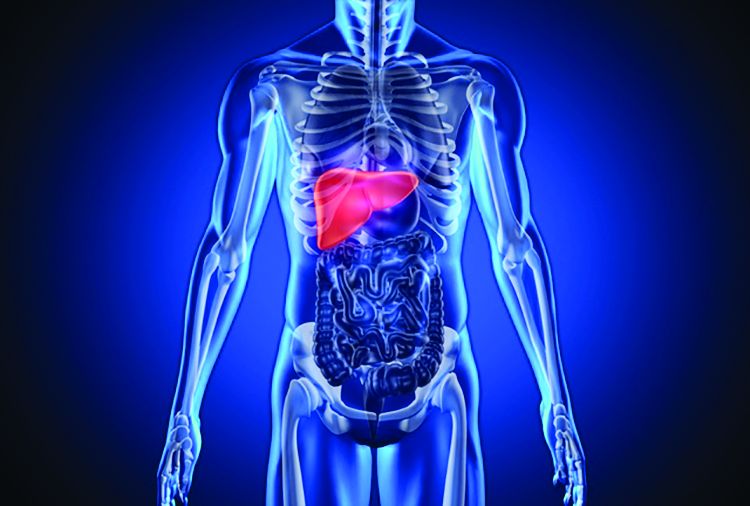
Asian people had significantly higher rates of HDS DILI that required transplant than did blacks, Hispanics, whites, and others (American Indian/Alaskan native, multiracial, and native Hawaii/Pacific Islander). White people had significantly lower rates of HDS DILI than did blacks, Hispanics, and others.
While the proportion of white people with HDS DILI requiring transplant was much lower than other races/ethnicities, the rate from 2005 to 2015 was significantly higher in this population than in 1995-2005, Dr. Kesar and his colleagues noted.
Dr. Odin is a member of Intercept Pharmaceuticals advisory committees or review panels and is an AASLD member. Dr. Ahmad is an AASLD member.
There is a significant relationship between race/ethnicity and drug-induced liver disease requiring liver transplantation caused by herbal and dietary supplements (HDS), according to a study presented at the annual meeting of the American Association for the Study of Liver Diseases.
Asian people had significantly higher rates of HDS DILI that required transplant than did blacks, Hispanics, whites, and others (American Indian/Alaskan native, multiracial, and native Hawaii/Pacific Islander). White people had significantly lower rates of HDS DILI than did blacks, Hispanics, and others.
While the proportion of white people with HDS DILI requiring transplant was much lower than other races/ethnicities, the rate from 2005 to 2015 was significantly higher in this population than in 1995-2005, Dr. Kesar and his colleagues noted.
Dr. Odin is a member of Intercept Pharmaceuticals advisory committees or review panels and is an AASLD member. Dr. Ahmad is an AASLD member.
There is a significant relationship between race/ethnicity and drug-induced liver disease requiring liver transplantation caused by herbal and dietary supplements (HDS), according to a study presented at the annual meeting of the American Association for the Study of Liver Diseases.
Asian people had significantly higher rates of HDS DILI that required transplant than did blacks, Hispanics, whites, and others (American Indian/Alaskan native, multiracial, and native Hawaii/Pacific Islander). White people had significantly lower rates of HDS DILI than did blacks, Hispanics, and others.
While the proportion of white people with HDS DILI requiring transplant was much lower than other races/ethnicities, the rate from 2005 to 2015 was significantly higher in this population than in 1995-2005, Dr. Kesar and his colleagues noted.
Dr. Odin is a member of Intercept Pharmaceuticals advisory committees or review panels and is an AASLD member. Dr. Ahmad is an AASLD member.
FROM THE LIVER MEETING 2017
Key clinical point:
Major finding: People of Asian descent were most likely to require transplantation because of drug-induced liver injury from herbal dietary supplements.
Data source: Retrospective data analysis of 645 patients from the Organ Procurement and Transplantation Network database.
Disclosures: Dr. Odin is a member of Intercept Pharmaceuticals advisory committees or review panels and is an AASLD member. Dr. Ahmad is an AASLD member.
Deep learning can assist real-time polyp detection during colonoscopies
A deep-learning algorithm for automatic polyp detection during colonoscopies showed both high sensitivity and high specificity, according to a study presented at the World Congress of Gastroenterology at ACG 2017.
The algorithm was set up using a retrospective set of 5,545 images annotated by colonoscopists, while the validation set used for the study consisted of 27,461 colonoscopy images from 1,235 patients, according to Pu Wang, MD, of the Sichuan Academy of Medical Sciences & Sichuan Provincial People’s Hospital, Chengdu, China, and his associates.
At the high-sensitivity operating point, the algorithm had a sensitivity of 94.96% and a specificity of 92.01%, and at the low–false positive rate operating point, the algorithm had a sensitivity of 92.35% and a specificity of 97.05%. The area under the curve was 0.958 in a receiver operating characteristic curve analysis.
In subgroup analyses of flat polyps, polyps less than or equal to 0.5 cm, and isochromatic polyps, the algorithm had areas under the curve of 0.943, 0.957, and 0.957 respectively.
The algorithm reported results in 60-80 ms, offering real-time assistance with polyp detection during colonoscopies, Dr. Wang and his colleagues noted.
The study was not funded by industry grants, and no disclosures were reported.
A deep-learning algorithm for automatic polyp detection during colonoscopies showed both high sensitivity and high specificity, according to a study presented at the World Congress of Gastroenterology at ACG 2017.
The algorithm was set up using a retrospective set of 5,545 images annotated by colonoscopists, while the validation set used for the study consisted of 27,461 colonoscopy images from 1,235 patients, according to Pu Wang, MD, of the Sichuan Academy of Medical Sciences & Sichuan Provincial People’s Hospital, Chengdu, China, and his associates.
At the high-sensitivity operating point, the algorithm had a sensitivity of 94.96% and a specificity of 92.01%, and at the low–false positive rate operating point, the algorithm had a sensitivity of 92.35% and a specificity of 97.05%. The area under the curve was 0.958 in a receiver operating characteristic curve analysis.
In subgroup analyses of flat polyps, polyps less than or equal to 0.5 cm, and isochromatic polyps, the algorithm had areas under the curve of 0.943, 0.957, and 0.957 respectively.
The algorithm reported results in 60-80 ms, offering real-time assistance with polyp detection during colonoscopies, Dr. Wang and his colleagues noted.
The study was not funded by industry grants, and no disclosures were reported.
A deep-learning algorithm for automatic polyp detection during colonoscopies showed both high sensitivity and high specificity, according to a study presented at the World Congress of Gastroenterology at ACG 2017.
The algorithm was set up using a retrospective set of 5,545 images annotated by colonoscopists, while the validation set used for the study consisted of 27,461 colonoscopy images from 1,235 patients, according to Pu Wang, MD, of the Sichuan Academy of Medical Sciences & Sichuan Provincial People’s Hospital, Chengdu, China, and his associates.
At the high-sensitivity operating point, the algorithm had a sensitivity of 94.96% and a specificity of 92.01%, and at the low–false positive rate operating point, the algorithm had a sensitivity of 92.35% and a specificity of 97.05%. The area under the curve was 0.958 in a receiver operating characteristic curve analysis.
In subgroup analyses of flat polyps, polyps less than or equal to 0.5 cm, and isochromatic polyps, the algorithm had areas under the curve of 0.943, 0.957, and 0.957 respectively.
The algorithm reported results in 60-80 ms, offering real-time assistance with polyp detection during colonoscopies, Dr. Wang and his colleagues noted.
The study was not funded by industry grants, and no disclosures were reported.
FROM WORLD CONGRESS OF GASTROENTEROLOGY
Key clinical point:
Major finding: The deep-learning algorithm had a sensitivity of 95% and a specificity of 92% when adjusted to the high-sensitivity operating point.
Data source: A set of 27,461 colonoscopy images from 1,235 patients.
Disclosures: The study was not funded by industry grants, and no disclosures were reported.

Better care reduces time to successful refeeding in acute pancreatitis
Enhanced recovery approaches were safe and effective at promoting earlier restoration of gut function in acute pancreatitis patients, according to a study presented at the World Congress of Gastroenterology at ACG 2017.
Patients recruited for the trial were admitted directly from an emergency department and received either enhanced care consisting of patient-directed oral intake, early ambulation, and nonopioid analgesia or received normal care consisting of opioid analgesia, physician-directed diet, and nursing parameters, Elizabeth Dong, MD, of the Kaiser Permanente Los Angeles Medical Center and her associates said.
Among the 46 patients included in the study, 61% had an etiology of gallstones, 15% had an etiology of alcohol, 13% had hyperglyceridemia, and 11% had a different etiology. Median age was 53.1 years, Dr. Dong and her associates noted.
Time to successful oral refeeding, the primary study endpoint, was significantly reduced in the enhanced treatment group, with a median time of 13.8 hours, compared with the normal treatment group, in which median time to oral refeeding was 124.8 hours. In addition, patients in the enhanced care group had a mean pancreatitis activity score of 43.5 after 48-72 hours, while patients in the control group had a mean score of 72.1.
Length of stay and frequency of 30-day readmission did not differ significantly between study groups.
The study was not funded by industry grants, and no disclosures were reported.
Enhanced recovery approaches were safe and effective at promoting earlier restoration of gut function in acute pancreatitis patients, according to a study presented at the World Congress of Gastroenterology at ACG 2017.
Patients recruited for the trial were admitted directly from an emergency department and received either enhanced care consisting of patient-directed oral intake, early ambulation, and nonopioid analgesia or received normal care consisting of opioid analgesia, physician-directed diet, and nursing parameters, Elizabeth Dong, MD, of the Kaiser Permanente Los Angeles Medical Center and her associates said.
Among the 46 patients included in the study, 61% had an etiology of gallstones, 15% had an etiology of alcohol, 13% had hyperglyceridemia, and 11% had a different etiology. Median age was 53.1 years, Dr. Dong and her associates noted.
Time to successful oral refeeding, the primary study endpoint, was significantly reduced in the enhanced treatment group, with a median time of 13.8 hours, compared with the normal treatment group, in which median time to oral refeeding was 124.8 hours. In addition, patients in the enhanced care group had a mean pancreatitis activity score of 43.5 after 48-72 hours, while patients in the control group had a mean score of 72.1.
Length of stay and frequency of 30-day readmission did not differ significantly between study groups.
The study was not funded by industry grants, and no disclosures were reported.
Enhanced recovery approaches were safe and effective at promoting earlier restoration of gut function in acute pancreatitis patients, according to a study presented at the World Congress of Gastroenterology at ACG 2017.
Patients recruited for the trial were admitted directly from an emergency department and received either enhanced care consisting of patient-directed oral intake, early ambulation, and nonopioid analgesia or received normal care consisting of opioid analgesia, physician-directed diet, and nursing parameters, Elizabeth Dong, MD, of the Kaiser Permanente Los Angeles Medical Center and her associates said.
Among the 46 patients included in the study, 61% had an etiology of gallstones, 15% had an etiology of alcohol, 13% had hyperglyceridemia, and 11% had a different etiology. Median age was 53.1 years, Dr. Dong and her associates noted.
Time to successful oral refeeding, the primary study endpoint, was significantly reduced in the enhanced treatment group, with a median time of 13.8 hours, compared with the normal treatment group, in which median time to oral refeeding was 124.8 hours. In addition, patients in the enhanced care group had a mean pancreatitis activity score of 43.5 after 48-72 hours, while patients in the control group had a mean score of 72.1.
Length of stay and frequency of 30-day readmission did not differ significantly between study groups.
The study was not funded by industry grants, and no disclosures were reported.
FROM WORLD CONGRESS OF GASTROENTEROLOGY
Key clinical point:
Major finding: Median time to successful oral refeeding was more than 4 days faster in patients who received enhanced care.
Data source: A pilot single-blind, randomized, controlled trial of 46 patients admitted from an emergency department between July 2016 and April 2017.
Disclosures: The study was not funded by industry grants, and no disclosures were reported.
Serrated polyps alone not associated with future high-risk adenomas
The presence of serrated polyps on index colonoscopies without low-risk adenomas was not associated with metachronous high-risk adenomas on surveillance exams, according to a study presented at the World Congress of Gastroenterology at ACG 2017.
Data for the study were collected from 4,616 adults who had two colonoscopies on record with the New Hampshire Colonoscopy Registry. Patients with high-risk adenomas at the index colonoscopy were excluded from the study. The median time between index and surveillance exams was 4.9 years, and median age was 61 years, according to Joseph Anderson, MD, of Geisel School of Medicine at Dartmouth, Hanover, N.H., and his associates.

Overall, the risk for metachronous high-risk adenomas in the study group was 6.3% and the risk of large serrated polyps greater than or equal to 1 cm was 1.2%. After patient age, sex, smoking, body mass index, and time between the two exams were adjusted for, low-risk adenomas at the time of the index colonoscopy were associated with an increased metachronous risk of high-risk adenomas, Dr. Anderson and his colleagues noted.
Large serrated polyps and the presence of sessile serrated polyps or traditional serrated adenomas at index exam increased the risk of metachronous serrated polyps at the surveillance colonoscopy 10-fold and 14-fold, respectively, but did not increase the risk of high-risk adenomas. The presence of both low-risk adenomas and significant serrated polyps was not associated with an increased risk of high-risk adenomas over the presence of low-risk adenomas alone.
The study was not funded by industry grants, and no disclosures were reported.
The presence of serrated polyps on index colonoscopies without low-risk adenomas was not associated with metachronous high-risk adenomas on surveillance exams, according to a study presented at the World Congress of Gastroenterology at ACG 2017.
Data for the study were collected from 4,616 adults who had two colonoscopies on record with the New Hampshire Colonoscopy Registry. Patients with high-risk adenomas at the index colonoscopy were excluded from the study. The median time between index and surveillance exams was 4.9 years, and median age was 61 years, according to Joseph Anderson, MD, of Geisel School of Medicine at Dartmouth, Hanover, N.H., and his associates.
Overall, the risk for metachronous high-risk adenomas in the study group was 6.3% and the risk of large serrated polyps greater than or equal to 1 cm was 1.2%. After patient age, sex, smoking, body mass index, and time between the two exams were adjusted for, low-risk adenomas at the time of the index colonoscopy were associated with an increased metachronous risk of high-risk adenomas, Dr. Anderson and his colleagues noted.
Large serrated polyps and the presence of sessile serrated polyps or traditional serrated adenomas at index exam increased the risk of metachronous serrated polyps at the surveillance colonoscopy 10-fold and 14-fold, respectively, but did not increase the risk of high-risk adenomas. The presence of both low-risk adenomas and significant serrated polyps was not associated with an increased risk of high-risk adenomas over the presence of low-risk adenomas alone.
The study was not funded by industry grants, and no disclosures were reported.
The presence of serrated polyps on index colonoscopies without low-risk adenomas was not associated with metachronous high-risk adenomas on surveillance exams, according to a study presented at the World Congress of Gastroenterology at ACG 2017.
Data for the study were collected from 4,616 adults who had two colonoscopies on record with the New Hampshire Colonoscopy Registry. Patients with high-risk adenomas at the index colonoscopy were excluded from the study. The median time between index and surveillance exams was 4.9 years, and median age was 61 years, according to Joseph Anderson, MD, of Geisel School of Medicine at Dartmouth, Hanover, N.H., and his associates.
Overall, the risk for metachronous high-risk adenomas in the study group was 6.3% and the risk of large serrated polyps greater than or equal to 1 cm was 1.2%. After patient age, sex, smoking, body mass index, and time between the two exams were adjusted for, low-risk adenomas at the time of the index colonoscopy were associated with an increased metachronous risk of high-risk adenomas, Dr. Anderson and his colleagues noted.
Large serrated polyps and the presence of sessile serrated polyps or traditional serrated adenomas at index exam increased the risk of metachronous serrated polyps at the surveillance colonoscopy 10-fold and 14-fold, respectively, but did not increase the risk of high-risk adenomas. The presence of both low-risk adenomas and significant serrated polyps was not associated with an increased risk of high-risk adenomas over the presence of low-risk adenomas alone.
The study was not funded by industry grants, and no disclosures were reported.
FROM THE 13TH WORLD CONGRESS OF GASTROENTEROLOGY
Key clinical point:
Major finding: After patient age, sex, smoking, body mass index, and time between index and surveillance exams were adjusted for, the presence of index serrated polyps without additional low-risk adenomas did not increase risk of high-risk adenomas at surveillance exams.
Data source: Data collected from 4,616 patients in the New Hampshire Colonoscopy Registry.
Disclosures: The study was not funded by industry grants, and no disclosures were reported.
G. lamblia assemblage B more common in HIV-positive people
The intestinal parasite Giardia lamblia assemblage B was more likely in people with HIV than in people without HIV, according to research published in Acta Tropica.
Of the 65 patients with G. lamblia included in a study undertaken by Clarissa Perez Faria, PhD, and her associates at the University of Coimbra (Portugal), 38 were HIV positive, 27 were HIV negative, and 60 patients were microscopy-positive for G. lamblia. In the HIV-positive group, 19 of the 34 microscopy-positive samples were assemblage B, and 15 were assemblage A. In the HIV-negative group, 9 of the 26 microscopy-positive samples were assemblage B, and 17 were assemblage A.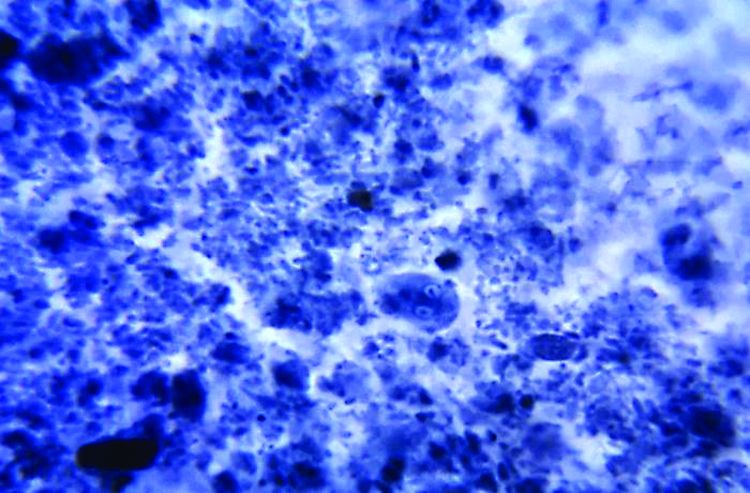
“HIV infection increases the risk of having intestinal parasitic infections, including G. lamblia. The detection and treatment of infections are important measures to improve the quality of life of HIV-infected patients,” the investigators concluded.
Find the full study in Acta Tropica (doi: 10.1016/j.actatropica.2017.04.026).
The intestinal parasite Giardia lamblia assemblage B was more likely in people with HIV than in people without HIV, according to research published in Acta Tropica.
Of the 65 patients with G. lamblia included in a study undertaken by Clarissa Perez Faria, PhD, and her associates at the University of Coimbra (Portugal), 38 were HIV positive, 27 were HIV negative, and 60 patients were microscopy-positive for G. lamblia. In the HIV-positive group, 19 of the 34 microscopy-positive samples were assemblage B, and 15 were assemblage A. In the HIV-negative group, 9 of the 26 microscopy-positive samples were assemblage B, and 17 were assemblage A.
“HIV infection increases the risk of having intestinal parasitic infections, including G. lamblia. The detection and treatment of infections are important measures to improve the quality of life of HIV-infected patients,” the investigators concluded.
Find the full study in Acta Tropica (doi: 10.1016/j.actatropica.2017.04.026).
The intestinal parasite Giardia lamblia assemblage B was more likely in people with HIV than in people without HIV, according to research published in Acta Tropica.
Of the 65 patients with G. lamblia included in a study undertaken by Clarissa Perez Faria, PhD, and her associates at the University of Coimbra (Portugal), 38 were HIV positive, 27 were HIV negative, and 60 patients were microscopy-positive for G. lamblia. In the HIV-positive group, 19 of the 34 microscopy-positive samples were assemblage B, and 15 were assemblage A. In the HIV-negative group, 9 of the 26 microscopy-positive samples were assemblage B, and 17 were assemblage A.
“HIV infection increases the risk of having intestinal parasitic infections, including G. lamblia. The detection and treatment of infections are important measures to improve the quality of life of HIV-infected patients,” the investigators concluded.
Find the full study in Acta Tropica (doi: 10.1016/j.actatropica.2017.04.026).
FROM ACTA TROPICA
Consider PBC in diagnosing hepatobiliary disorders in UC patients
While primary sclerosing cholangitis (PSC) is the most common hepatobiliary disorder associated with ulcerative colitis, primary biliary cholangitis (PBC) should not be forgotten, according to Erietta Polychronopoulou, MD, and her associates.
In two case studies, a 67-year-old woman and a 71-year-old man presented with long-standing cases of asymptomatic elevation of cholestatic enzymes. Both patients had long histories of ulcerative colitis, but both were in remission. Both patients had previous clinical diagnoses of either small duct PSC or drug-induced liver injury. Both patients denied drug use, and imaging studies revealed nothing in either patient.
In testing for hepatobiliary disorders, both patients showed high titers of antimitochondrial antibodies, the hallmark of PBC. Despite the asymptomatic nature of the PBC, both patients were treated with 13 mg/kg per day ursodeoxycholic acid and have remained stable for 17 and 18 months, respectively.
“The relationship of PBC with UC [ulcerative colitis] remains obscure as there are few reported cases regarding the combined presentation of these diseases. Although the pathogenesis of either disease has not yet been completely clarified, environmental and genetic factors are considered important in the susceptibility to both diseases, suggesting that the two diseases may share common immunopathogenetic pathways,” the investigators noted.
Find the full report in BMJ Case Reports (2017 Sep 25. doi: 10.1136/bcr-2017-220824).
While primary sclerosing cholangitis (PSC) is the most common hepatobiliary disorder associated with ulcerative colitis, primary biliary cholangitis (PBC) should not be forgotten, according to Erietta Polychronopoulou, MD, and her associates.
In two case studies, a 67-year-old woman and a 71-year-old man presented with long-standing cases of asymptomatic elevation of cholestatic enzymes. Both patients had long histories of ulcerative colitis, but both were in remission. Both patients had previous clinical diagnoses of either small duct PSC or drug-induced liver injury. Both patients denied drug use, and imaging studies revealed nothing in either patient.
In testing for hepatobiliary disorders, both patients showed high titers of antimitochondrial antibodies, the hallmark of PBC. Despite the asymptomatic nature of the PBC, both patients were treated with 13 mg/kg per day ursodeoxycholic acid and have remained stable for 17 and 18 months, respectively.
“The relationship of PBC with UC [ulcerative colitis] remains obscure as there are few reported cases regarding the combined presentation of these diseases. Although the pathogenesis of either disease has not yet been completely clarified, environmental and genetic factors are considered important in the susceptibility to both diseases, suggesting that the two diseases may share common immunopathogenetic pathways,” the investigators noted.
Find the full report in BMJ Case Reports (2017 Sep 25. doi: 10.1136/bcr-2017-220824).
While primary sclerosing cholangitis (PSC) is the most common hepatobiliary disorder associated with ulcerative colitis, primary biliary cholangitis (PBC) should not be forgotten, according to Erietta Polychronopoulou, MD, and her associates.
In two case studies, a 67-year-old woman and a 71-year-old man presented with long-standing cases of asymptomatic elevation of cholestatic enzymes. Both patients had long histories of ulcerative colitis, but both were in remission. Both patients had previous clinical diagnoses of either small duct PSC or drug-induced liver injury. Both patients denied drug use, and imaging studies revealed nothing in either patient.
In testing for hepatobiliary disorders, both patients showed high titers of antimitochondrial antibodies, the hallmark of PBC. Despite the asymptomatic nature of the PBC, both patients were treated with 13 mg/kg per day ursodeoxycholic acid and have remained stable for 17 and 18 months, respectively.
“The relationship of PBC with UC [ulcerative colitis] remains obscure as there are few reported cases regarding the combined presentation of these diseases. Although the pathogenesis of either disease has not yet been completely clarified, environmental and genetic factors are considered important in the susceptibility to both diseases, suggesting that the two diseases may share common immunopathogenetic pathways,” the investigators noted.
Find the full report in BMJ Case Reports (2017 Sep 25. doi: 10.1136/bcr-2017-220824).
FROM BMJ CASE REPORTS
To boost HCV testing in baby boomers, offer the option
Rates of hepatitis C testing increased among New York adults born between 1945 and 1965 after the state passed a law mandating that health care providers offer HCV testing to people of that age, according to a report from the Centers for Disease Control and Prevention.
In 2013, the year before the new law became effective on Jan. 1, 2014, the total of specimens collected for HCV testing from the 106 clinics that reported data for both 2013 and 2014 was 538,229. In the following year after the law became effective, 813,492 samples were collected from the same clinics, an increase of 51.1% over 2013. The rate of increase for New York Medicaid recipients was similar at 52%.
“This report highlights the potential for state laws to promote HCV testing and the utility of HCV surveillance and Medicaid claims data to monitor the quality of HCV testing and linkage to care for HCV-infected persons,” the CDC investigators concluded.
Find the full report in the MMWR (doi: 10.15585/mmwr.mm6638a3).
Rates of hepatitis C testing increased among New York adults born between 1945 and 1965 after the state passed a law mandating that health care providers offer HCV testing to people of that age, according to a report from the Centers for Disease Control and Prevention.
In 2013, the year before the new law became effective on Jan. 1, 2014, the total of specimens collected for HCV testing from the 106 clinics that reported data for both 2013 and 2014 was 538,229. In the following year after the law became effective, 813,492 samples were collected from the same clinics, an increase of 51.1% over 2013. The rate of increase for New York Medicaid recipients was similar at 52%.
“This report highlights the potential for state laws to promote HCV testing and the utility of HCV surveillance and Medicaid claims data to monitor the quality of HCV testing and linkage to care for HCV-infected persons,” the CDC investigators concluded.
Find the full report in the MMWR (doi: 10.15585/mmwr.mm6638a3).
Rates of hepatitis C testing increased among New York adults born between 1945 and 1965 after the state passed a law mandating that health care providers offer HCV testing to people of that age, according to a report from the Centers for Disease Control and Prevention.
In 2013, the year before the new law became effective on Jan. 1, 2014, the total of specimens collected for HCV testing from the 106 clinics that reported data for both 2013 and 2014 was 538,229. In the following year after the law became effective, 813,492 samples were collected from the same clinics, an increase of 51.1% over 2013. The rate of increase for New York Medicaid recipients was similar at 52%.
“This report highlights the potential for state laws to promote HCV testing and the utility of HCV surveillance and Medicaid claims data to monitor the quality of HCV testing and linkage to care for HCV-infected persons,” the CDC investigators concluded.
Find the full report in the MMWR (doi: 10.15585/mmwr.mm6638a3).
FROM THE MMWR
Current pneumococcal vaccines knock out many serotypes, but others take their place
The introduction of pneumococcal conjugate vaccines 7 (PCV7) and 13 (PCV13) has significantly reduced pneumococcal colonization of the serotypes targeted by the vaccines, but serotypes not covered by these vaccines have picked up the slack, according to an analysis of more than 6,000 young Massachusetts children tested at well child or acute care visits over 15 years.
In the past 15 years, use of pneumococcal vaccines in the United States has led to dramatic declines in invasive pneumococcal disease (IPD) in young children, reductions in pneumonia hospitalizations, and herd protection in older adults against disease that otherwise would be caused by the vaccinated serotypes, studies have found. But not all serotypes of Streptococcus pneumoniae are covered by the vaccines.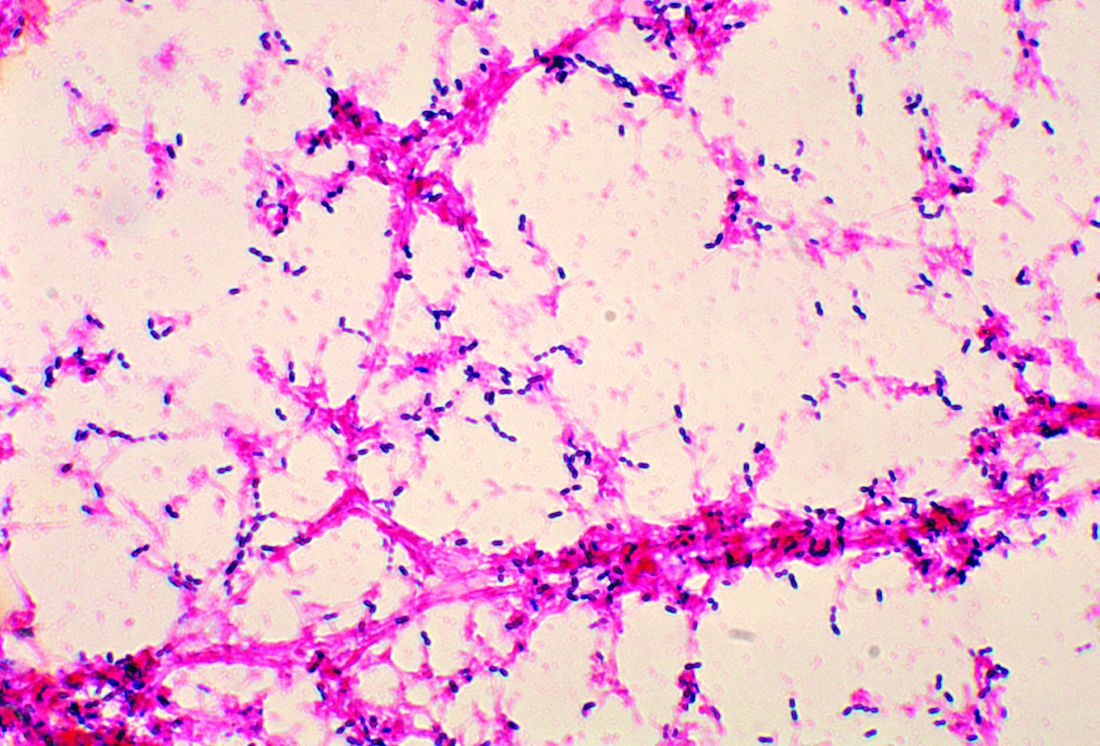
The data used in the Massachusetts study included results from nasopharyngeal swabs taken from 6,537 children younger than 7 years of age in various Massachusetts communities during six respiratory illness seasons during 2000-2001, 2003-2004, 2006-2007, 2008-2009, 2010-2011, and 2013-2014. The highest rate of pneumococcal colonization was in 2011 at 32%, and the lowest was in 2004 at 23%, Grace M. Lee, MD, MPH, of the Harvard Medical School and Harvard Pilgrim Health Care Institute, both in Boston, and her associates reported (Pediatrics. 2017;140[3]:e20170001).
In 2001, PCV7 serotypes were the most common, but after the rapid introduction of the vaccine, infection rates for those serotypes quickly declined, nearly disappearing by 2007. Serotype 19A became the most common serotype in 2004, but after the introduction of PCV13 in 2010, it and other serotypes targeted by PCV13 also began to decline. In 2014, the most common serotypes were 15B/C, 35B, 23B, 11A, and 23A.
Non-PCV13 serotypes accounted for about a third of observed Streptococcus pneumoniae colonizations in 2001, but by 2014 they accounted for nearly all colonizations. In addition, the overall rate of infection did not decrease over the study period. While a reduction was seen from 2011 to 2014, it remains to be seen whether this drop is transient.
“Replacement with nonincluded serotypes remains a risk with vaccines that do not cover the full range of serotype diversity. As new selective pressures are applied, such as the introduction of a vaccine into a community, the void may be filled by nontargeted serotypes,” as was observed after PCV7, Dr. Lee and her fellow researchers noted.
Nonsusceptibility to erythromycin was most common in 2014, with 35% of pneumococcal isolates displaying either moderate susceptibility or resistance. Nonsusceptibility to ceftriaxone (12%), clindamycin (9%), and penicillin (6%) was significantly less common, and no isolates were found to have vancomycin resistance.
“First-line penicillins continue to be the most frequently prescribed antibiotic across all age groups among young children in Massachusetts, which may result in the continued success of 19A associated with penicillin resistance,” the researchers said.
Risk factors associated with colonization by either PCV13 serotypes or non-PCV13 serotypes include younger age, more hours of child care exposure, and having a respiratory tract infection on the day of sampling. The presence of a smoker in the house and recent usage of antibiotics was associated with colonization by PCV13 serotypes but not by non-PCV13 serotypes.
“As newer pneumococcal vaccines are developed, there will continue to be a need for monitoring both the intended and unintended consequences of altering the nasopharyngeal niche through immunization,” Dr. Lee and her associates concluded.
This work was funded by a National Institute of Allergy and Infectious Diseases grant and the National Institutes of Health. Marc Lipsitch, PhD; William P. Hanage, PhD; Ken Kleinman; Stephen Pelton, MD; and Susan S. Huang, MD, MPH, reported various conflicts of interest. Dr. Lee and the remaining investigators indicated that they had no potential conflicts of interest.
“The hope that IPD and antibiotic resistance would disappear after widespread use of PCV vaccines has yet to be realized,” Douglas S. Swanson, MD, and Christopher J. Harrison, MD, wrote in an accompanying editorial (Pediatrics. 2017;140[5]:e20172034).
While some invasive pneumococcal diseases, such as occult bacteremia and meningitis, have been significantly reduced due to PCV7 and PCV13, “one concern is whether some replacement serotypes could have invasive disease potential. For example, post-PCV7, there was increased severity of IPD from non-PCV7 serogroup organisms among children in the Intermountain West of the United States,” the authors noted. Newly dominant strains, such as post-PCV13 serotype 35B, could cause increased IPD in vulnerable populations, becoming the equivalent of a post-PCV7 serotype 19A.
While addressing emerging serotypes in additional PCVs is possible, reformulating the vaccine and obtaining Food and Drug Administration approval would take time and resources, with no clear guarantee of ultimate success, making “this strategy seem like playing a game of whack-a-mole. To overcome the phenomenon of serotype replacement, vaccine strategies need to expand beyond serotype specificity by identifying antigens common to all Streptococcus pneumoniae, regardless of serotype,” Dr. Swanson and Dr. Harrison said.
“Shifts back to less penicillin resistance may soon preclude the need for high dose amoxicillin for acute otitis media, and the near absence of occult Streptococcus pneumoniae bacteremia may drastically reduce empirical ceftriaxone for fever without a focus. To assist providers in ongoing vigilance for the now less frequent IPD, algorithms based on new epidemiologic data are in development and should decrease the number of ‘sepsis work-ups’ performed,” they said.
On-time PCV13 vaccination would help address the risk factor of young age, and judicious antibiotic use could further reduce antibiotic resistance. Social engineering approaches, although difficult, also might help. These approaches include continued parent education to restrict secondhand smoke exposure and the risk of S. pneumoniae nasopharyngeal colonization, as well as having young children spend fewer hours in day care in order to reduce two other risk factors – pathogen exposure and frequency of viral upper respiratory tract infections.

Dr. Swanson and Dr. Harrison are with the division of infectious diseases at Children’s Mercy Kansas City, University of Missouri-Kansas City. Both reported conducting pneumococcal research supported by funding from Pfizer.
“The hope that IPD and antibiotic resistance would disappear after widespread use of PCV vaccines has yet to be realized,” Douglas S. Swanson, MD, and Christopher J. Harrison, MD, wrote in an accompanying editorial (Pediatrics. 2017;140[5]:e20172034).
While some invasive pneumococcal diseases, such as occult bacteremia and meningitis, have been significantly reduced due to PCV7 and PCV13, “one concern is whether some replacement serotypes could have invasive disease potential. For example, post-PCV7, there was increased severity of IPD from non-PCV7 serogroup organisms among children in the Intermountain West of the United States,” the authors noted. Newly dominant strains, such as post-PCV13 serotype 35B, could cause increased IPD in vulnerable populations, becoming the equivalent of a post-PCV7 serotype 19A.
While addressing emerging serotypes in additional PCVs is possible, reformulating the vaccine and obtaining Food and Drug Administration approval would take time and resources, with no clear guarantee of ultimate success, making “this strategy seem like playing a game of whack-a-mole. To overcome the phenomenon of serotype replacement, vaccine strategies need to expand beyond serotype specificity by identifying antigens common to all Streptococcus pneumoniae, regardless of serotype,” Dr. Swanson and Dr. Harrison said.
“Shifts back to less penicillin resistance may soon preclude the need for high dose amoxicillin for acute otitis media, and the near absence of occult Streptococcus pneumoniae bacteremia may drastically reduce empirical ceftriaxone for fever without a focus. To assist providers in ongoing vigilance for the now less frequent IPD, algorithms based on new epidemiologic data are in development and should decrease the number of ‘sepsis work-ups’ performed,” they said.
On-time PCV13 vaccination would help address the risk factor of young age, and judicious antibiotic use could further reduce antibiotic resistance. Social engineering approaches, although difficult, also might help. These approaches include continued parent education to restrict secondhand smoke exposure and the risk of S. pneumoniae nasopharyngeal colonization, as well as having young children spend fewer hours in day care in order to reduce two other risk factors – pathogen exposure and frequency of viral upper respiratory tract infections.
Dr. Swanson and Dr. Harrison are with the division of infectious diseases at Children’s Mercy Kansas City, University of Missouri-Kansas City. Both reported conducting pneumococcal research supported by funding from Pfizer.
“The hope that IPD and antibiotic resistance would disappear after widespread use of PCV vaccines has yet to be realized,” Douglas S. Swanson, MD, and Christopher J. Harrison, MD, wrote in an accompanying editorial (Pediatrics. 2017;140[5]:e20172034).
While some invasive pneumococcal diseases, such as occult bacteremia and meningitis, have been significantly reduced due to PCV7 and PCV13, “one concern is whether some replacement serotypes could have invasive disease potential. For example, post-PCV7, there was increased severity of IPD from non-PCV7 serogroup organisms among children in the Intermountain West of the United States,” the authors noted. Newly dominant strains, such as post-PCV13 serotype 35B, could cause increased IPD in vulnerable populations, becoming the equivalent of a post-PCV7 serotype 19A.
While addressing emerging serotypes in additional PCVs is possible, reformulating the vaccine and obtaining Food and Drug Administration approval would take time and resources, with no clear guarantee of ultimate success, making “this strategy seem like playing a game of whack-a-mole. To overcome the phenomenon of serotype replacement, vaccine strategies need to expand beyond serotype specificity by identifying antigens common to all Streptococcus pneumoniae, regardless of serotype,” Dr. Swanson and Dr. Harrison said.
“Shifts back to less penicillin resistance may soon preclude the need for high dose amoxicillin for acute otitis media, and the near absence of occult Streptococcus pneumoniae bacteremia may drastically reduce empirical ceftriaxone for fever without a focus. To assist providers in ongoing vigilance for the now less frequent IPD, algorithms based on new epidemiologic data are in development and should decrease the number of ‘sepsis work-ups’ performed,” they said.
On-time PCV13 vaccination would help address the risk factor of young age, and judicious antibiotic use could further reduce antibiotic resistance. Social engineering approaches, although difficult, also might help. These approaches include continued parent education to restrict secondhand smoke exposure and the risk of S. pneumoniae nasopharyngeal colonization, as well as having young children spend fewer hours in day care in order to reduce two other risk factors – pathogen exposure and frequency of viral upper respiratory tract infections.
Dr. Swanson and Dr. Harrison are with the division of infectious diseases at Children’s Mercy Kansas City, University of Missouri-Kansas City. Both reported conducting pneumococcal research supported by funding from Pfizer.
The introduction of pneumococcal conjugate vaccines 7 (PCV7) and 13 (PCV13) has significantly reduced pneumococcal colonization of the serotypes targeted by the vaccines, but serotypes not covered by these vaccines have picked up the slack, according to an analysis of more than 6,000 young Massachusetts children tested at well child or acute care visits over 15 years.
In the past 15 years, use of pneumococcal vaccines in the United States has led to dramatic declines in invasive pneumococcal disease (IPD) in young children, reductions in pneumonia hospitalizations, and herd protection in older adults against disease that otherwise would be caused by the vaccinated serotypes, studies have found. But not all serotypes of Streptococcus pneumoniae are covered by the vaccines.
The data used in the Massachusetts study included results from nasopharyngeal swabs taken from 6,537 children younger than 7 years of age in various Massachusetts communities during six respiratory illness seasons during 2000-2001, 2003-2004, 2006-2007, 2008-2009, 2010-2011, and 2013-2014. The highest rate of pneumococcal colonization was in 2011 at 32%, and the lowest was in 2004 at 23%, Grace M. Lee, MD, MPH, of the Harvard Medical School and Harvard Pilgrim Health Care Institute, both in Boston, and her associates reported (Pediatrics. 2017;140[3]:e20170001).
In 2001, PCV7 serotypes were the most common, but after the rapid introduction of the vaccine, infection rates for those serotypes quickly declined, nearly disappearing by 2007. Serotype 19A became the most common serotype in 2004, but after the introduction of PCV13 in 2010, it and other serotypes targeted by PCV13 also began to decline. In 2014, the most common serotypes were 15B/C, 35B, 23B, 11A, and 23A.
Non-PCV13 serotypes accounted for about a third of observed Streptococcus pneumoniae colonizations in 2001, but by 2014 they accounted for nearly all colonizations. In addition, the overall rate of infection did not decrease over the study period. While a reduction was seen from 2011 to 2014, it remains to be seen whether this drop is transient.
“Replacement with nonincluded serotypes remains a risk with vaccines that do not cover the full range of serotype diversity. As new selective pressures are applied, such as the introduction of a vaccine into a community, the void may be filled by nontargeted serotypes,” as was observed after PCV7, Dr. Lee and her fellow researchers noted.
Nonsusceptibility to erythromycin was most common in 2014, with 35% of pneumococcal isolates displaying either moderate susceptibility or resistance. Nonsusceptibility to ceftriaxone (12%), clindamycin (9%), and penicillin (6%) was significantly less common, and no isolates were found to have vancomycin resistance.
“First-line penicillins continue to be the most frequently prescribed antibiotic across all age groups among young children in Massachusetts, which may result in the continued success of 19A associated with penicillin resistance,” the researchers said.
Risk factors associated with colonization by either PCV13 serotypes or non-PCV13 serotypes include younger age, more hours of child care exposure, and having a respiratory tract infection on the day of sampling. The presence of a smoker in the house and recent usage of antibiotics was associated with colonization by PCV13 serotypes but not by non-PCV13 serotypes.
“As newer pneumococcal vaccines are developed, there will continue to be a need for monitoring both the intended and unintended consequences of altering the nasopharyngeal niche through immunization,” Dr. Lee and her associates concluded.
This work was funded by a National Institute of Allergy and Infectious Diseases grant and the National Institutes of Health. Marc Lipsitch, PhD; William P. Hanage, PhD; Ken Kleinman; Stephen Pelton, MD; and Susan S. Huang, MD, MPH, reported various conflicts of interest. Dr. Lee and the remaining investigators indicated that they had no potential conflicts of interest.
The introduction of pneumococcal conjugate vaccines 7 (PCV7) and 13 (PCV13) has significantly reduced pneumococcal colonization of the serotypes targeted by the vaccines, but serotypes not covered by these vaccines have picked up the slack, according to an analysis of more than 6,000 young Massachusetts children tested at well child or acute care visits over 15 years.
In the past 15 years, use of pneumococcal vaccines in the United States has led to dramatic declines in invasive pneumococcal disease (IPD) in young children, reductions in pneumonia hospitalizations, and herd protection in older adults against disease that otherwise would be caused by the vaccinated serotypes, studies have found. But not all serotypes of Streptococcus pneumoniae are covered by the vaccines.
The data used in the Massachusetts study included results from nasopharyngeal swabs taken from 6,537 children younger than 7 years of age in various Massachusetts communities during six respiratory illness seasons during 2000-2001, 2003-2004, 2006-2007, 2008-2009, 2010-2011, and 2013-2014. The highest rate of pneumococcal colonization was in 2011 at 32%, and the lowest was in 2004 at 23%, Grace M. Lee, MD, MPH, of the Harvard Medical School and Harvard Pilgrim Health Care Institute, both in Boston, and her associates reported (Pediatrics. 2017;140[3]:e20170001).
In 2001, PCV7 serotypes were the most common, but after the rapid introduction of the vaccine, infection rates for those serotypes quickly declined, nearly disappearing by 2007. Serotype 19A became the most common serotype in 2004, but after the introduction of PCV13 in 2010, it and other serotypes targeted by PCV13 also began to decline. In 2014, the most common serotypes were 15B/C, 35B, 23B, 11A, and 23A.
Non-PCV13 serotypes accounted for about a third of observed Streptococcus pneumoniae colonizations in 2001, but by 2014 they accounted for nearly all colonizations. In addition, the overall rate of infection did not decrease over the study period. While a reduction was seen from 2011 to 2014, it remains to be seen whether this drop is transient.
“Replacement with nonincluded serotypes remains a risk with vaccines that do not cover the full range of serotype diversity. As new selective pressures are applied, such as the introduction of a vaccine into a community, the void may be filled by nontargeted serotypes,” as was observed after PCV7, Dr. Lee and her fellow researchers noted.
Nonsusceptibility to erythromycin was most common in 2014, with 35% of pneumococcal isolates displaying either moderate susceptibility or resistance. Nonsusceptibility to ceftriaxone (12%), clindamycin (9%), and penicillin (6%) was significantly less common, and no isolates were found to have vancomycin resistance.
“First-line penicillins continue to be the most frequently prescribed antibiotic across all age groups among young children in Massachusetts, which may result in the continued success of 19A associated with penicillin resistance,” the researchers said.
Risk factors associated with colonization by either PCV13 serotypes or non-PCV13 serotypes include younger age, more hours of child care exposure, and having a respiratory tract infection on the day of sampling. The presence of a smoker in the house and recent usage of antibiotics was associated with colonization by PCV13 serotypes but not by non-PCV13 serotypes.
“As newer pneumococcal vaccines are developed, there will continue to be a need for monitoring both the intended and unintended consequences of altering the nasopharyngeal niche through immunization,” Dr. Lee and her associates concluded.
This work was funded by a National Institute of Allergy and Infectious Diseases grant and the National Institutes of Health. Marc Lipsitch, PhD; William P. Hanage, PhD; Ken Kleinman; Stephen Pelton, MD; and Susan S. Huang, MD, MPH, reported various conflicts of interest. Dr. Lee and the remaining investigators indicated that they had no potential conflicts of interest.
FROM PEDIATRICS
Key clinical point:
Major finding: Serotype 19A became the most dominant serotype in 2004 but was significantly reduced by 2014 and replaced largely by serotypes 15B/C and 35B.
Data source: An analysis of pneumococcal serotypes in 6,537 children younger than 7 years of age who had well-child or acute care visits during six surveillance periods from 2000 to 2014.
Disclosures: This work was funded by a National Institute of Allergy and Infectious Diseases grant and the National Institutes of Health. Marc Lipsitch, PhD; William P. Hanage, PhD; Ken Kleinman; Stephen I. Pelton, MD; and Susan S. Huang, MD, MPH, reported various conflicts of interest. Dr. Lee and the remaining investigators indicated that they had no potential conflicts of interest.
FDA approves first non–finger-stick glucose monitoring system
The Food and Drug Administration has approved the FreeStyle Libre Flash Glucose Monitoring System for the continuous monitoring of glucose in adults with diabetes, the first system of its type that does not require blood samples for calibration, according to a press release.
Instead of using a more standard finger stick with which patients must draw blood samples multiple times a day to measure glucose levels, the FreeStyle Libre Flash Glucose Monitoring System uses a thin wire less than 0.4-mm thick inserted underneath the skin in the back of the upper arm to continually monitor glucose. Blood glucose levels are read by swiping a mobile reader over the wire. After a 12-hour start-up period, the wire can be worn for 10 days.
FDA approval was based on results from a study of diabetes patients older than 18 years, as well as a performance review comparing readings obtained by the device with readings obtained in a traditional laboratory method utilizing blood samples.
“This system allows people with diabetes to avoid the additional step of finger-stick calibration, which can sometimes be painful, but still provides necessary information for treating their diabetes – with a wave of the mobile reader,” Donald St. Pierre, acting director of the Office of In Vitro Diagnostics and Radiological Health and deputy director of new product evaluation in the FDA’s Center for Devices and Radiological Health, said in the press release.
Find the full press release on the FDA website.
The Food and Drug Administration has approved the FreeStyle Libre Flash Glucose Monitoring System for the continuous monitoring of glucose in adults with diabetes, the first system of its type that does not require blood samples for calibration, according to a press release.
Instead of using a more standard finger stick with which patients must draw blood samples multiple times a day to measure glucose levels, the FreeStyle Libre Flash Glucose Monitoring System uses a thin wire less than 0.4-mm thick inserted underneath the skin in the back of the upper arm to continually monitor glucose. Blood glucose levels are read by swiping a mobile reader over the wire. After a 12-hour start-up period, the wire can be worn for 10 days.
FDA approval was based on results from a study of diabetes patients older than 18 years, as well as a performance review comparing readings obtained by the device with readings obtained in a traditional laboratory method utilizing blood samples.
“This system allows people with diabetes to avoid the additional step of finger-stick calibration, which can sometimes be painful, but still provides necessary information for treating their diabetes – with a wave of the mobile reader,” Donald St. Pierre, acting director of the Office of In Vitro Diagnostics and Radiological Health and deputy director of new product evaluation in the FDA’s Center for Devices and Radiological Health, said in the press release.
Find the full press release on the FDA website.
The Food and Drug Administration has approved the FreeStyle Libre Flash Glucose Monitoring System for the continuous monitoring of glucose in adults with diabetes, the first system of its type that does not require blood samples for calibration, according to a press release.
Instead of using a more standard finger stick with which patients must draw blood samples multiple times a day to measure glucose levels, the FreeStyle Libre Flash Glucose Monitoring System uses a thin wire less than 0.4-mm thick inserted underneath the skin in the back of the upper arm to continually monitor glucose. Blood glucose levels are read by swiping a mobile reader over the wire. After a 12-hour start-up period, the wire can be worn for 10 days.
FDA approval was based on results from a study of diabetes patients older than 18 years, as well as a performance review comparing readings obtained by the device with readings obtained in a traditional laboratory method utilizing blood samples.
“This system allows people with diabetes to avoid the additional step of finger-stick calibration, which can sometimes be painful, but still provides necessary information for treating their diabetes – with a wave of the mobile reader,” Donald St. Pierre, acting director of the Office of In Vitro Diagnostics and Radiological Health and deputy director of new product evaluation in the FDA’s Center for Devices and Radiological Health, said in the press release.
Find the full press release on the FDA website.