User login
Official news magazine of the Society of Hospital Medicine
Copyright by Society of Hospital Medicine or related companies. All rights reserved. ISSN 1553-085X
nav[contains(@class, 'nav-ce-stack nav-ce-stack__large-screen')]
header[@id='header']
div[contains(@class, 'header__large-screen')]
div[contains(@class, 'read-next-article')]
div[contains(@class, 'main-prefix')]
div[contains(@class, 'nav-primary')]
nav[contains(@class, 'nav-primary')]
section[contains(@class, 'footer-nav-section-wrapper')]
footer[@id='footer']
section[contains(@class, 'nav-hidden')]
div[contains(@class, 'ce-card-content')]
nav[contains(@class, 'nav-ce-stack')]
div[contains(@class, 'view-medstat-quiz-listing-panes')]
div[contains(@class, 'pane-article-sidebar-latest-news')]
div[contains(@class, 'pane-pub-article-hospitalist')]

Centers for Medicare & Medicaid Services (CMS) Eliminates Two-Midnight Rule's Inpatient Payment Cuts: Report
According to the report, CMS estimated the two-midnight policy would increase Medicare spending by ~$220 million due to expected increases in admissions. Hospitals also will see a one-time increase of 0.6% in fiscal 2017, making up for the 0.2% reduction to the rates the last three years.
According to the report, CMS estimated the two-midnight policy would increase Medicare spending by ~$220 million due to expected increases in admissions. Hospitals also will see a one-time increase of 0.6% in fiscal 2017, making up for the 0.2% reduction to the rates the last three years.
According to the report, CMS estimated the two-midnight policy would increase Medicare spending by ~$220 million due to expected increases in admissions. Hospitals also will see a one-time increase of 0.6% in fiscal 2017, making up for the 0.2% reduction to the rates the last three years.
SHM Welcomes Member No. 15,000

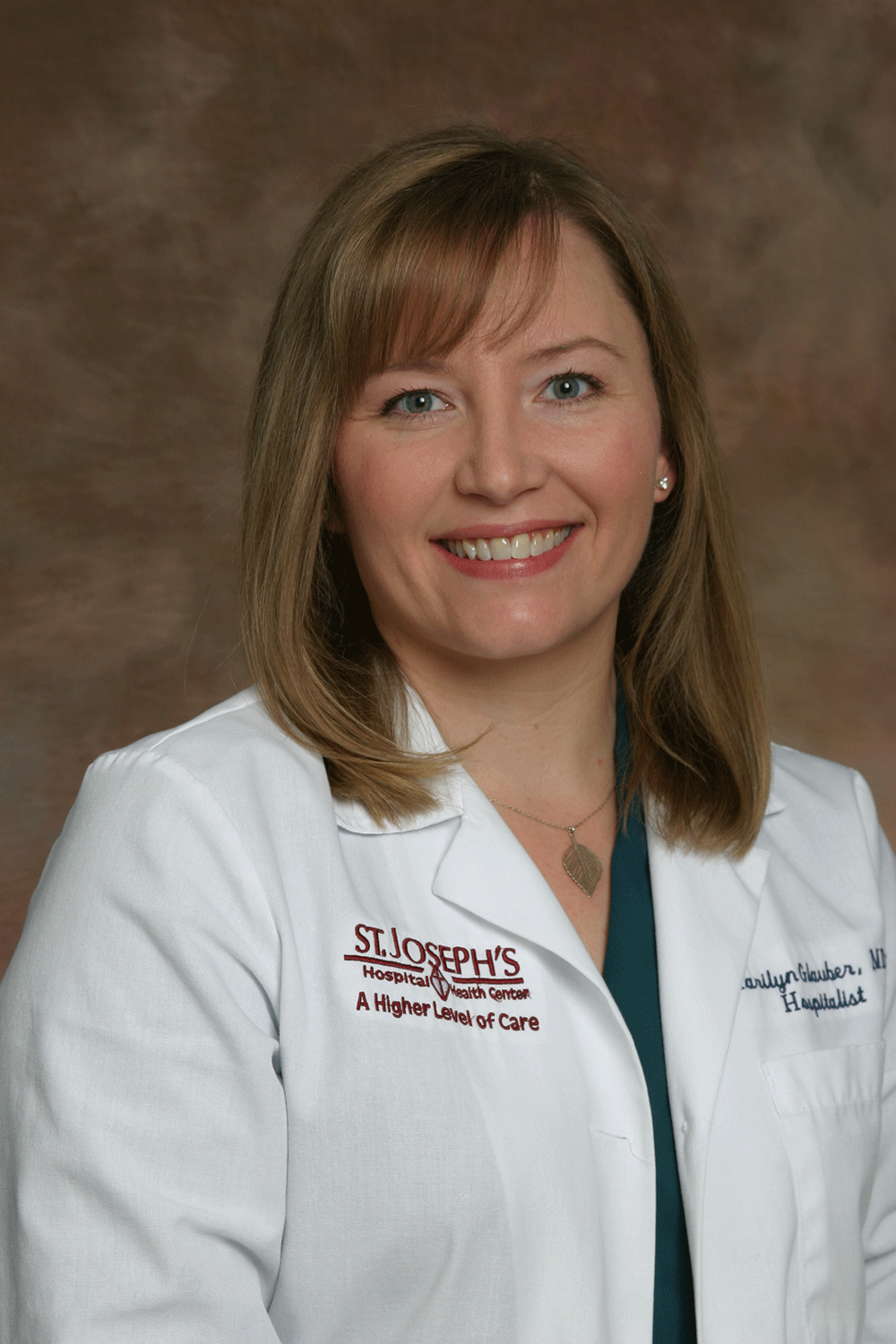
Now with 15,000 members and growing, SHM continues to change the face of medicine—one patient at a time. We recently spoke with Dr. Glauber about her path to hospital medicine and why she believes in its continued growth and success during these times of unprecedented change.
Question: What steered you toward a career in hospital medicine?
Answer: Believe it or not, I did not enter medical school at New York Medical College with dreams of becoming a hospitalist. I first became aware of hospital medicine as a career path during my internal medicine residency at Loyola University School of Medicine in Maywood, Ill. I had some great hospitalist mentors during residency who clearly enjoyed their careers.
As I completed my training, hospital medicine was the clear choice for me. I wanted to manage patients with a variety of diagnoses and wasn’t ready to limit myself to any one subspecialty. I had always found diagnosis and management of acutely ill hospitalized patients to be the most interesting part of medicine, and I thoroughly enjoy working in the hospital environment. The field of hospital medicine was rapidly evolving, and I was curious to see where I could go with it. After four years, I can say with confidence that it has been a great experience.
Q: What do you see as the most rewarding part of your job?
A: Although my experiences practicing hospital medicine have been rewarding in a variety of ways, in the end, it’s pretty simple: I get satisfaction from helping my patients heal and helping them through the experience of hospitalization. It may take days, or it may take months to accomplish, and it is often the result of a cumulative effort of numerous hospitalists, consultants, and the entire hospital staff. But the reward for me is seeing my patient sitting in a chair, dressed in their street clothes, and waiting for their ride to come pick them up.
Q: Why do you think hospital medicine is the fastest-growing specialty in medicine? How can this momentum be sustained moving forward?
A: The growth of hospital medicine reflects the changing landscape of medicine nationwide. Hospitalist jobs are available because hospitals recognize the benefits of having us on hand to provide efficient and quality care to the patients. In terms of career choices, it is appealing to those coming straight out of residency, more experienced physicians practicing outpatient medicine, and even subspecialists who are looking for a career change. It is a satisfying and interesting job, which by nature benefits from unconventional work schedules. I think this flexibility is a big draw as well, in addition to the rewarding career.
Q: Why were you intrigued to join SHM and also attend Hospital Medicine 2016 (HM16)?
A: I think joining SHM is probably long overdue! I have been practicing for four years and feel that it’s time to take stock of my strengths and weaknesses as a hospitalist and try to improve. Through SHM, I can stay up to date on relevant medical topics, including everything from antibiotic resistance to glycemic control, as well as learn how to be a better hospitalist through the experience and research of colleagues. Attending HM16 seemed like a great way to get started, learn some new things, and network with hospitalists around the country.
Q: As a new member to SHM, what do you hope to gain from your membership?
A: I hope to hone my skills as a hospitalist and keep my finger on the pulse of hospital medicine. Keeping abreast of recent developments in medical knowledge and patient management is crucial to providing excellent patient care. There are also many other aspects of our day-to-day practice—for example, documentation and billing—that we weren’t taught how to manage in medical school. By joining SHM, I expect to benefit from the advice and experience of other hospitalists to improve my performance in these areas—and probably more I’ll learn about along the way.
Brett Radler is SHM’s communications coordinator.
Now with 15,000 members and growing, SHM continues to change the face of medicine—one patient at a time. We recently spoke with Dr. Glauber about her path to hospital medicine and why she believes in its continued growth and success during these times of unprecedented change.
Question: What steered you toward a career in hospital medicine?
Answer: Believe it or not, I did not enter medical school at New York Medical College with dreams of becoming a hospitalist. I first became aware of hospital medicine as a career path during my internal medicine residency at Loyola University School of Medicine in Maywood, Ill. I had some great hospitalist mentors during residency who clearly enjoyed their careers.
As I completed my training, hospital medicine was the clear choice for me. I wanted to manage patients with a variety of diagnoses and wasn’t ready to limit myself to any one subspecialty. I had always found diagnosis and management of acutely ill hospitalized patients to be the most interesting part of medicine, and I thoroughly enjoy working in the hospital environment. The field of hospital medicine was rapidly evolving, and I was curious to see where I could go with it. After four years, I can say with confidence that it has been a great experience.
Q: What do you see as the most rewarding part of your job?
A: Although my experiences practicing hospital medicine have been rewarding in a variety of ways, in the end, it’s pretty simple: I get satisfaction from helping my patients heal and helping them through the experience of hospitalization. It may take days, or it may take months to accomplish, and it is often the result of a cumulative effort of numerous hospitalists, consultants, and the entire hospital staff. But the reward for me is seeing my patient sitting in a chair, dressed in their street clothes, and waiting for their ride to come pick them up.
Q: Why do you think hospital medicine is the fastest-growing specialty in medicine? How can this momentum be sustained moving forward?
A: The growth of hospital medicine reflects the changing landscape of medicine nationwide. Hospitalist jobs are available because hospitals recognize the benefits of having us on hand to provide efficient and quality care to the patients. In terms of career choices, it is appealing to those coming straight out of residency, more experienced physicians practicing outpatient medicine, and even subspecialists who are looking for a career change. It is a satisfying and interesting job, which by nature benefits from unconventional work schedules. I think this flexibility is a big draw as well, in addition to the rewarding career.
Q: Why were you intrigued to join SHM and also attend Hospital Medicine 2016 (HM16)?
A: I think joining SHM is probably long overdue! I have been practicing for four years and feel that it’s time to take stock of my strengths and weaknesses as a hospitalist and try to improve. Through SHM, I can stay up to date on relevant medical topics, including everything from antibiotic resistance to glycemic control, as well as learn how to be a better hospitalist through the experience and research of colleagues. Attending HM16 seemed like a great way to get started, learn some new things, and network with hospitalists around the country.
Q: As a new member to SHM, what do you hope to gain from your membership?
A: I hope to hone my skills as a hospitalist and keep my finger on the pulse of hospital medicine. Keeping abreast of recent developments in medical knowledge and patient management is crucial to providing excellent patient care. There are also many other aspects of our day-to-day practice—for example, documentation and billing—that we weren’t taught how to manage in medical school. By joining SHM, I expect to benefit from the advice and experience of other hospitalists to improve my performance in these areas—and probably more I’ll learn about along the way.
Brett Radler is SHM’s communications coordinator.
Now with 15,000 members and growing, SHM continues to change the face of medicine—one patient at a time. We recently spoke with Dr. Glauber about her path to hospital medicine and why she believes in its continued growth and success during these times of unprecedented change.
Question: What steered you toward a career in hospital medicine?
Answer: Believe it or not, I did not enter medical school at New York Medical College with dreams of becoming a hospitalist. I first became aware of hospital medicine as a career path during my internal medicine residency at Loyola University School of Medicine in Maywood, Ill. I had some great hospitalist mentors during residency who clearly enjoyed their careers.
As I completed my training, hospital medicine was the clear choice for me. I wanted to manage patients with a variety of diagnoses and wasn’t ready to limit myself to any one subspecialty. I had always found diagnosis and management of acutely ill hospitalized patients to be the most interesting part of medicine, and I thoroughly enjoy working in the hospital environment. The field of hospital medicine was rapidly evolving, and I was curious to see where I could go with it. After four years, I can say with confidence that it has been a great experience.
Q: What do you see as the most rewarding part of your job?
A: Although my experiences practicing hospital medicine have been rewarding in a variety of ways, in the end, it’s pretty simple: I get satisfaction from helping my patients heal and helping them through the experience of hospitalization. It may take days, or it may take months to accomplish, and it is often the result of a cumulative effort of numerous hospitalists, consultants, and the entire hospital staff. But the reward for me is seeing my patient sitting in a chair, dressed in their street clothes, and waiting for their ride to come pick them up.
Q: Why do you think hospital medicine is the fastest-growing specialty in medicine? How can this momentum be sustained moving forward?
A: The growth of hospital medicine reflects the changing landscape of medicine nationwide. Hospitalist jobs are available because hospitals recognize the benefits of having us on hand to provide efficient and quality care to the patients. In terms of career choices, it is appealing to those coming straight out of residency, more experienced physicians practicing outpatient medicine, and even subspecialists who are looking for a career change. It is a satisfying and interesting job, which by nature benefits from unconventional work schedules. I think this flexibility is a big draw as well, in addition to the rewarding career.
Q: Why were you intrigued to join SHM and also attend Hospital Medicine 2016 (HM16)?
A: I think joining SHM is probably long overdue! I have been practicing for four years and feel that it’s time to take stock of my strengths and weaknesses as a hospitalist and try to improve. Through SHM, I can stay up to date on relevant medical topics, including everything from antibiotic resistance to glycemic control, as well as learn how to be a better hospitalist through the experience and research of colleagues. Attending HM16 seemed like a great way to get started, learn some new things, and network with hospitalists around the country.
Q: As a new member to SHM, what do you hope to gain from your membership?
A: I hope to hone my skills as a hospitalist and keep my finger on the pulse of hospital medicine. Keeping abreast of recent developments in medical knowledge and patient management is crucial to providing excellent patient care. There are also many other aspects of our day-to-day practice—for example, documentation and billing—that we weren’t taught how to manage in medical school. By joining SHM, I expect to benefit from the advice and experience of other hospitalists to improve my performance in these areas—and probably more I’ll learn about along the way.
Brett Radler is SHM’s communications coordinator.

New SHM Members – May 2016
N. Abel, MD, Alabama
A. Aboutalib, California
A. Afzal, MD, FACP, California
J. Allison, California
K. Anand, MD, California
K. Andruchow, APN, California
A. Anter, DO, California
M. Aresery, MD, California
L. Atkins, MD, California
N. Bassi, MD, PhD, California
H. Briggs, MD, PhD, California
E. Burgh, California
C. Caulfield, MD, California
P. C. Mohan, MD, California
D. Chau, MD, California
D. DeVere, MD, California
O. Dimitrijevic, MD, Colorado
P. Dodson, MD, Delaware
A. Domaoal, Florida
J. Dzundza, MD, Florida
A. Ellis, FNP, Florida
R. Erickson, Florida
A. Falescky, MD, Florida
W. Folad, MD, Georgia
K. Forb, Georgia
B. Fromkin, APN, Idaho
N. Gabriel, MD, Idaho
K. Gausewitz, Illinois
B. George, MD, Illinois
G. Goldman, MD, Kansas
A. Gonzalez, Kansas
G. Goyal, Kansas
W. Griffo, MD, Kentucky
D. Grygla, DO, MPH, FAAFP, Louisiana
B. Hammond, Louisiana
H. Haque, Louisiana
G. Harris, MD, Massachusetts
J. Harris, DO, Massachusetts
J. Hasan-Jones, FACHE, Massachusetts
L. Hsu, MD, Michigan
C. Janish, Michigan
S. Jindal, MD, Michigan
M. Johl, Minnesota
T. John, Missouri
D. Julka, MD, Missouri
O. Kamalu, MD, North Carolina
N. Kapadia, MD, New Jersey
K. Kaye, New Jersey
M. Keating, New Jersey
L. Kendall, New Jersey
M. L. Kerlin, New Jersey
T. Khan, New Jersey
A. Kim, APN, New Jersey
R. Klett, New Jersey
K. Knox, New Jersey
M. Kraynyak, MD, New Jersey
C. Larion, ACNP, New Jersey
D. Leforce, New Jersey
C. Leon, New Jersey
X. Li, MD, New Jersey
C. Maturo, DO, New Jersey
L. McGann, New York
R. Mercado Garcia, New York
J. Mikulca, PharmD, New York
M. Minock, APN, New York
Z. Moyenda, MD, MBA, New York
G. Nanna, USA, New York
I. Nasir, New York
D. Nestler, APN, New York
H. Nurse Bey, MD, New York
B. Oran, New York
N. Patel, MD, New York
V. Paulson, MD, New York
R. Porter, PA, Ohio
P. Prabhakar, Ohio
R. Quansah, MD, Ohio
F. Qureshi, MD, Ohio
M. Rahman, Ohio
R. Rajeshwar, Ohio
E. Randal, Ohio
A. Ray, Ohio
R. Regidor, Oklahoma
R. Reyes, MD, Oregon
T. Richardson, NP, Oregon
L. Rivera-Crespo, Oregon
T. Rothwell, PA, Oregon
E. Sacolick, MD, Pennsylvania
D. Sakai, Pennsylvania
M. Sapon-Amoah, FNP, Pennsylvania
M. M. Scoulos-Hanson, Pennsylvania
K. Seger, Pennsylvania
K. Shah, MD, Pennsylvania
S. Shah, MD, Pennsylvania
K. Shaukat, MD, Pennsylvania
J. Shipe-Spotloe, MS, PA-C, Pennsylvania
S. Sim, South Carolina
M. N. Simon, MD, MMM, CPE, South Carolina
A. Singh, South Carolina
S. Singh-Patel, DO, South Carolina
A. Srikanth, MBBS, South Carolina
R. Stanhiser, MD, Tennessee
J. Steinberg, MD, PhD, ACLS, Texas
L. Taylor, PA-C, Texas
E. Taylor, MD, Texas
L. Theaker, Texas
M. Thieman, Texas
J. Tong, Texas
L. Tuazon, MD, FACP, Texas
S. Tummalapalli, Utah
A. Ufferman, MD, Washington
N. Van Groningen, Washington
D. Vaughn, MD, Washington
K. Vo, Washington
T. Washko, MD, Wisconson
T. Waters, DO, West Virginia
L. Weisberger, USA, West Virginia
K. Welch, West Virginia
A. Whitehead, West Virginia
A. Yoon, MD, West Virginia
M. A. Yu, West Virginia
A. Yuen, DO, West Virginia
N. Abel, MD, Alabama
A. Aboutalib, California
A. Afzal, MD, FACP, California
J. Allison, California
K. Anand, MD, California
K. Andruchow, APN, California
A. Anter, DO, California
M. Aresery, MD, California
L. Atkins, MD, California
N. Bassi, MD, PhD, California
H. Briggs, MD, PhD, California
E. Burgh, California
C. Caulfield, MD, California
P. C. Mohan, MD, California
D. Chau, MD, California
D. DeVere, MD, California
O. Dimitrijevic, MD, Colorado
P. Dodson, MD, Delaware
A. Domaoal, Florida
J. Dzundza, MD, Florida
A. Ellis, FNP, Florida
R. Erickson, Florida
A. Falescky, MD, Florida
W. Folad, MD, Georgia
K. Forb, Georgia
B. Fromkin, APN, Idaho
N. Gabriel, MD, Idaho
K. Gausewitz, Illinois
B. George, MD, Illinois
G. Goldman, MD, Kansas
A. Gonzalez, Kansas
G. Goyal, Kansas
W. Griffo, MD, Kentucky
D. Grygla, DO, MPH, FAAFP, Louisiana
B. Hammond, Louisiana
H. Haque, Louisiana
G. Harris, MD, Massachusetts
J. Harris, DO, Massachusetts
J. Hasan-Jones, FACHE, Massachusetts
L. Hsu, MD, Michigan
C. Janish, Michigan
S. Jindal, MD, Michigan
M. Johl, Minnesota
T. John, Missouri
D. Julka, MD, Missouri
O. Kamalu, MD, North Carolina
N. Kapadia, MD, New Jersey
K. Kaye, New Jersey
M. Keating, New Jersey
L. Kendall, New Jersey
M. L. Kerlin, New Jersey
T. Khan, New Jersey
A. Kim, APN, New Jersey
R. Klett, New Jersey
K. Knox, New Jersey
M. Kraynyak, MD, New Jersey
C. Larion, ACNP, New Jersey
D. Leforce, New Jersey
C. Leon, New Jersey
X. Li, MD, New Jersey
C. Maturo, DO, New Jersey
L. McGann, New York
R. Mercado Garcia, New York
J. Mikulca, PharmD, New York
M. Minock, APN, New York
Z. Moyenda, MD, MBA, New York
G. Nanna, USA, New York
I. Nasir, New York
D. Nestler, APN, New York
H. Nurse Bey, MD, New York
B. Oran, New York
N. Patel, MD, New York
V. Paulson, MD, New York
R. Porter, PA, Ohio
P. Prabhakar, Ohio
R. Quansah, MD, Ohio
F. Qureshi, MD, Ohio
M. Rahman, Ohio
R. Rajeshwar, Ohio
E. Randal, Ohio
A. Ray, Ohio
R. Regidor, Oklahoma
R. Reyes, MD, Oregon
T. Richardson, NP, Oregon
L. Rivera-Crespo, Oregon
T. Rothwell, PA, Oregon
E. Sacolick, MD, Pennsylvania
D. Sakai, Pennsylvania
M. Sapon-Amoah, FNP, Pennsylvania
M. M. Scoulos-Hanson, Pennsylvania
K. Seger, Pennsylvania
K. Shah, MD, Pennsylvania
S. Shah, MD, Pennsylvania
K. Shaukat, MD, Pennsylvania
J. Shipe-Spotloe, MS, PA-C, Pennsylvania
S. Sim, South Carolina
M. N. Simon, MD, MMM, CPE, South Carolina
A. Singh, South Carolina
S. Singh-Patel, DO, South Carolina
A. Srikanth, MBBS, South Carolina
R. Stanhiser, MD, Tennessee
J. Steinberg, MD, PhD, ACLS, Texas
L. Taylor, PA-C, Texas
E. Taylor, MD, Texas
L. Theaker, Texas
M. Thieman, Texas
J. Tong, Texas
L. Tuazon, MD, FACP, Texas
S. Tummalapalli, Utah
A. Ufferman, MD, Washington
N. Van Groningen, Washington
D. Vaughn, MD, Washington
K. Vo, Washington
T. Washko, MD, Wisconson
T. Waters, DO, West Virginia
L. Weisberger, USA, West Virginia
K. Welch, West Virginia
A. Whitehead, West Virginia
A. Yoon, MD, West Virginia
M. A. Yu, West Virginia
A. Yuen, DO, West Virginia
N. Abel, MD, Alabama
A. Aboutalib, California
A. Afzal, MD, FACP, California
J. Allison, California
K. Anand, MD, California
K. Andruchow, APN, California
A. Anter, DO, California
M. Aresery, MD, California
L. Atkins, MD, California
N. Bassi, MD, PhD, California
H. Briggs, MD, PhD, California
E. Burgh, California
C. Caulfield, MD, California
P. C. Mohan, MD, California
D. Chau, MD, California
D. DeVere, MD, California
O. Dimitrijevic, MD, Colorado
P. Dodson, MD, Delaware
A. Domaoal, Florida
J. Dzundza, MD, Florida
A. Ellis, FNP, Florida
R. Erickson, Florida
A. Falescky, MD, Florida
W. Folad, MD, Georgia
K. Forb, Georgia
B. Fromkin, APN, Idaho
N. Gabriel, MD, Idaho
K. Gausewitz, Illinois
B. George, MD, Illinois
G. Goldman, MD, Kansas
A. Gonzalez, Kansas
G. Goyal, Kansas
W. Griffo, MD, Kentucky
D. Grygla, DO, MPH, FAAFP, Louisiana
B. Hammond, Louisiana
H. Haque, Louisiana
G. Harris, MD, Massachusetts
J. Harris, DO, Massachusetts
J. Hasan-Jones, FACHE, Massachusetts
L. Hsu, MD, Michigan
C. Janish, Michigan
S. Jindal, MD, Michigan
M. Johl, Minnesota
T. John, Missouri
D. Julka, MD, Missouri
O. Kamalu, MD, North Carolina
N. Kapadia, MD, New Jersey
K. Kaye, New Jersey
M. Keating, New Jersey
L. Kendall, New Jersey
M. L. Kerlin, New Jersey
T. Khan, New Jersey
A. Kim, APN, New Jersey
R. Klett, New Jersey
K. Knox, New Jersey
M. Kraynyak, MD, New Jersey
C. Larion, ACNP, New Jersey
D. Leforce, New Jersey
C. Leon, New Jersey
X. Li, MD, New Jersey
C. Maturo, DO, New Jersey
L. McGann, New York
R. Mercado Garcia, New York
J. Mikulca, PharmD, New York
M. Minock, APN, New York
Z. Moyenda, MD, MBA, New York
G. Nanna, USA, New York
I. Nasir, New York
D. Nestler, APN, New York
H. Nurse Bey, MD, New York
B. Oran, New York
N. Patel, MD, New York
V. Paulson, MD, New York
R. Porter, PA, Ohio
P. Prabhakar, Ohio
R. Quansah, MD, Ohio
F. Qureshi, MD, Ohio
M. Rahman, Ohio
R. Rajeshwar, Ohio
E. Randal, Ohio
A. Ray, Ohio
R. Regidor, Oklahoma
R. Reyes, MD, Oregon
T. Richardson, NP, Oregon
L. Rivera-Crespo, Oregon
T. Rothwell, PA, Oregon
E. Sacolick, MD, Pennsylvania
D. Sakai, Pennsylvania
M. Sapon-Amoah, FNP, Pennsylvania
M. M. Scoulos-Hanson, Pennsylvania
K. Seger, Pennsylvania
K. Shah, MD, Pennsylvania
S. Shah, MD, Pennsylvania
K. Shaukat, MD, Pennsylvania
J. Shipe-Spotloe, MS, PA-C, Pennsylvania
S. Sim, South Carolina
M. N. Simon, MD, MMM, CPE, South Carolina
A. Singh, South Carolina
S. Singh-Patel, DO, South Carolina
A. Srikanth, MBBS, South Carolina
R. Stanhiser, MD, Tennessee
J. Steinberg, MD, PhD, ACLS, Texas
L. Taylor, PA-C, Texas
E. Taylor, MD, Texas
L. Theaker, Texas
M. Thieman, Texas
J. Tong, Texas
L. Tuazon, MD, FACP, Texas
S. Tummalapalli, Utah
A. Ufferman, MD, Washington
N. Van Groningen, Washington
D. Vaughn, MD, Washington
K. Vo, Washington
T. Washko, MD, Wisconson
T. Waters, DO, West Virginia
L. Weisberger, USA, West Virginia
K. Welch, West Virginia
A. Whitehead, West Virginia
A. Yoon, MD, West Virginia
M. A. Yu, West Virginia
A. Yuen, DO, West Virginia
Virtual MDs are No Match for the Real Thing When it Comes to Urgent Medical Problems
(Reuters Health) - When it comes to urgent medical problems like ankle injuries or suspected strep, virtual MDs may be no match for the real thing, a new U.S. study suggests.
Researchers enlisted 67 volunteers to test out how well eight popular virtual visit companies diagnosed these problems and four other common medical issues - sore throat, sinus infection, low back pain, and urinary tract infection.
About one in four patients got the wrong diagnosis or none at all from the virtual visits, the study found. What's more, virtual doctors followed standard protocols for diagnosing and treating these problems only 54% of the time.
"One of the more surprising findings of the study was the universally low rate of testing when it was needed," said lead researcher Dr. Adam Schoenfeld, of the University of California, San Francisco.
"We don't know why, but it may reflect the challenges of ordering or following up on tests performed near where the patient lives but far from where the doctor is, or concern about the costs to the patient of additional testing," Schoenfeld added by email.
Virtual visits using videoconferences, phone calls and web chats are becoming a more common way for patients to seek urgent care because it can save the inconvenience of a clinic visit or provide access to care when people can't get an appointment with their regular doctor.
Some insurers are starting to pay for virtual visits in certain situations, making this option more viable for patients who worry about costs.
For the current study, Schoenfeld and colleagues trained volunteers to act as if they had common acute medical problems and then sent them to virtual doctors provided by companies including Ameridoc, Amwell, Consult a Doctor, Doctor on Demand, MDAligne, MDLIVE, MeMD and NowClinic.
Altogether, the volunteers completed 599 virtual visits in 2013 and 2014.
The companies varied in how well they followed treatment guidelines, with standard care given anywhere from 34 to 66% of the time across the eight websites, the researchers report in JAMA Internal Medicine April 4.
Mode of communication - such as web chat or videoconference - didn't appear to influence how often treatment guidelines were
followed.
Virtual doctors got complete histories and did thorough exams anywhere from 52% to 82% of the time. Virtual visits resulted in correct diagnoses anywhere from 65% to 94% of the time.
Often, virtual doctors failed to order urine tests needed to assess urinary tract infections, or to request images needed to diagnoses ankle pain, for example, and antibiotics were often prescribed inappropriately.
One limitation of the study is that the researchers only looked at virtual visits, so they couldn't compare these online doctors' visits to what might have happened with in-person clinical exams.
Still, it's possible that at least some of the variation in quality of care was the result of the remote visits, said Dr. Jeffrey Linder, a researcher at Brigham and Women's Hospital and Harvard Medical School who co-authored an editorial accompanying the study.
"There is a built-in barrier to getting testing, which led to worse care for ankle pain and recurrent urinary tract infections - for which the doctors should have ordered a test - and better care for low back pain - for which doctors should not have ordered a test," Linder said by email.
In an ideal world, patients would be able to have occasional virtual visits with their primary care providers, who know their medical histories, said Dr. David Levine, co-author of the editorial and also a researcher at Brigham and Women's and Harvard.
Although virtual urgent care and in-person urgent care have not been compared head-to-head, virtual urgent care has its downsides - indirect physical exam, difficult access to testing, and unclear follow-up," Levine said by email. "While the quality of care is not perfect anywhere, a patient's primary care doctor should be a person's first point of contact."
(Reuters Health) - When it comes to urgent medical problems like ankle injuries or suspected strep, virtual MDs may be no match for the real thing, a new U.S. study suggests.
Researchers enlisted 67 volunteers to test out how well eight popular virtual visit companies diagnosed these problems and four other common medical issues - sore throat, sinus infection, low back pain, and urinary tract infection.
About one in four patients got the wrong diagnosis or none at all from the virtual visits, the study found. What's more, virtual doctors followed standard protocols for diagnosing and treating these problems only 54% of the time.
"One of the more surprising findings of the study was the universally low rate of testing when it was needed," said lead researcher Dr. Adam Schoenfeld, of the University of California, San Francisco.
"We don't know why, but it may reflect the challenges of ordering or following up on tests performed near where the patient lives but far from where the doctor is, or concern about the costs to the patient of additional testing," Schoenfeld added by email.
Virtual visits using videoconferences, phone calls and web chats are becoming a more common way for patients to seek urgent care because it can save the inconvenience of a clinic visit or provide access to care when people can't get an appointment with their regular doctor.
Some insurers are starting to pay for virtual visits in certain situations, making this option more viable for patients who worry about costs.
For the current study, Schoenfeld and colleagues trained volunteers to act as if they had common acute medical problems and then sent them to virtual doctors provided by companies including Ameridoc, Amwell, Consult a Doctor, Doctor on Demand, MDAligne, MDLIVE, MeMD and NowClinic.
Altogether, the volunteers completed 599 virtual visits in 2013 and 2014.
The companies varied in how well they followed treatment guidelines, with standard care given anywhere from 34 to 66% of the time across the eight websites, the researchers report in JAMA Internal Medicine April 4.
Mode of communication - such as web chat or videoconference - didn't appear to influence how often treatment guidelines were
followed.
Virtual doctors got complete histories and did thorough exams anywhere from 52% to 82% of the time. Virtual visits resulted in correct diagnoses anywhere from 65% to 94% of the time.
Often, virtual doctors failed to order urine tests needed to assess urinary tract infections, or to request images needed to diagnoses ankle pain, for example, and antibiotics were often prescribed inappropriately.
One limitation of the study is that the researchers only looked at virtual visits, so they couldn't compare these online doctors' visits to what might have happened with in-person clinical exams.
Still, it's possible that at least some of the variation in quality of care was the result of the remote visits, said Dr. Jeffrey Linder, a researcher at Brigham and Women's Hospital and Harvard Medical School who co-authored an editorial accompanying the study.
"There is a built-in barrier to getting testing, which led to worse care for ankle pain and recurrent urinary tract infections - for which the doctors should have ordered a test - and better care for low back pain - for which doctors should not have ordered a test," Linder said by email.
In an ideal world, patients would be able to have occasional virtual visits with their primary care providers, who know their medical histories, said Dr. David Levine, co-author of the editorial and also a researcher at Brigham and Women's and Harvard.
Although virtual urgent care and in-person urgent care have not been compared head-to-head, virtual urgent care has its downsides - indirect physical exam, difficult access to testing, and unclear follow-up," Levine said by email. "While the quality of care is not perfect anywhere, a patient's primary care doctor should be a person's first point of contact."
(Reuters Health) - When it comes to urgent medical problems like ankle injuries or suspected strep, virtual MDs may be no match for the real thing, a new U.S. study suggests.
Researchers enlisted 67 volunteers to test out how well eight popular virtual visit companies diagnosed these problems and four other common medical issues - sore throat, sinus infection, low back pain, and urinary tract infection.
About one in four patients got the wrong diagnosis or none at all from the virtual visits, the study found. What's more, virtual doctors followed standard protocols for diagnosing and treating these problems only 54% of the time.
"One of the more surprising findings of the study was the universally low rate of testing when it was needed," said lead researcher Dr. Adam Schoenfeld, of the University of California, San Francisco.
"We don't know why, but it may reflect the challenges of ordering or following up on tests performed near where the patient lives but far from where the doctor is, or concern about the costs to the patient of additional testing," Schoenfeld added by email.
Virtual visits using videoconferences, phone calls and web chats are becoming a more common way for patients to seek urgent care because it can save the inconvenience of a clinic visit or provide access to care when people can't get an appointment with their regular doctor.
Some insurers are starting to pay for virtual visits in certain situations, making this option more viable for patients who worry about costs.
For the current study, Schoenfeld and colleagues trained volunteers to act as if they had common acute medical problems and then sent them to virtual doctors provided by companies including Ameridoc, Amwell, Consult a Doctor, Doctor on Demand, MDAligne, MDLIVE, MeMD and NowClinic.
Altogether, the volunteers completed 599 virtual visits in 2013 and 2014.
The companies varied in how well they followed treatment guidelines, with standard care given anywhere from 34 to 66% of the time across the eight websites, the researchers report in JAMA Internal Medicine April 4.
Mode of communication - such as web chat or videoconference - didn't appear to influence how often treatment guidelines were
followed.
Virtual doctors got complete histories and did thorough exams anywhere from 52% to 82% of the time. Virtual visits resulted in correct diagnoses anywhere from 65% to 94% of the time.
Often, virtual doctors failed to order urine tests needed to assess urinary tract infections, or to request images needed to diagnoses ankle pain, for example, and antibiotics were often prescribed inappropriately.
One limitation of the study is that the researchers only looked at virtual visits, so they couldn't compare these online doctors' visits to what might have happened with in-person clinical exams.
Still, it's possible that at least some of the variation in quality of care was the result of the remote visits, said Dr. Jeffrey Linder, a researcher at Brigham and Women's Hospital and Harvard Medical School who co-authored an editorial accompanying the study.
"There is a built-in barrier to getting testing, which led to worse care for ankle pain and recurrent urinary tract infections - for which the doctors should have ordered a test - and better care for low back pain - for which doctors should not have ordered a test," Linder said by email.
In an ideal world, patients would be able to have occasional virtual visits with their primary care providers, who know their medical histories, said Dr. David Levine, co-author of the editorial and also a researcher at Brigham and Women's and Harvard.
Although virtual urgent care and in-person urgent care have not been compared head-to-head, virtual urgent care has its downsides - indirect physical exam, difficult access to testing, and unclear follow-up," Levine said by email. "While the quality of care is not perfect anywhere, a patient's primary care doctor should be a person's first point of contact."
New Model May Predict Risk of Acute Kidney Injury in Orthopedic Patients
Clinical question: What is the risk of acute kidney injury after orthopedic surgery, and does it impact mortality?

Background: Current studies show that acute kidney injury is associated with increased long-term mortality, future development of chronic kidney disease, and increased healthcare costs. However, no externally validated models are available to predict patients undergoing non-cardiac surgery at risk of postoperative acute kidney injury.
Study design: Observational, cohort study.
Setting: Teaching and private hospitals in the National Health Service (NHS) in the Tayside region of Scotland.
Synopsis: Investigators enrolled 10,615 adults >18 years of age undergoing orthopedic surgery into two groups: development cohort (6,220 patients) and validation cohort (4,395 patients). Using the development cohort, seven predictors were identified in the risk model: age at operation, male sex, diabetes, lower estimated glomerular filtration rate (GFR), use of ACE inhibitor/ARB, number of prescribing drugs, and American Society of Anesthesiologists (ASA) grade.
The model’s predictive performance for discrimination was good in the development cohort (C statistic 0.74; 95% CI, 0.72–0.76) and validation cohort (C statistic 0.7). Calibration was good in the development cohort but overestimated the risk in the validation cohort. Postoperative acute kidney injury developed in 672 (10.8%) patients in the development cohort and 295 (6.7%) in the validation cohort. Thirty percent (3,166) of the 10,615 patients enrolled in this study died over the median follow-up of 4.58 years. Survival was worse in the patients with acute kidney injury (adjusted hazard ratio 1.53; 95% CI, 1.38–1.70), worse in the short term (90-day adjusted hazard ratio 2.36; 95% CI, 1.94–2.87), and diminished over time.
Bottom line: A predictive model using age, male sex, diabetes, lower GFR, use of ACE inhibitor/ARB, multiple medications, and ASA grades might predict risk of postoperative acute kidney injury in orthopedic patients.
Citation: Bell S, Dekker FW, Vadiveloo T, et al. Risk of postoperative acute kidney injury in patients undergoing orthopaedic surgery—development and validation of a risk score and effect of acute kidney injury on survival: observational cohort study. BMJ 2015; 351:h5639.
Clinical question: What is the risk of acute kidney injury after orthopedic surgery, and does it impact mortality?
Background: Current studies show that acute kidney injury is associated with increased long-term mortality, future development of chronic kidney disease, and increased healthcare costs. However, no externally validated models are available to predict patients undergoing non-cardiac surgery at risk of postoperative acute kidney injury.
Study design: Observational, cohort study.
Setting: Teaching and private hospitals in the National Health Service (NHS) in the Tayside region of Scotland.
Synopsis: Investigators enrolled 10,615 adults >18 years of age undergoing orthopedic surgery into two groups: development cohort (6,220 patients) and validation cohort (4,395 patients). Using the development cohort, seven predictors were identified in the risk model: age at operation, male sex, diabetes, lower estimated glomerular filtration rate (GFR), use of ACE inhibitor/ARB, number of prescribing drugs, and American Society of Anesthesiologists (ASA) grade.
The model’s predictive performance for discrimination was good in the development cohort (C statistic 0.74; 95% CI, 0.72–0.76) and validation cohort (C statistic 0.7). Calibration was good in the development cohort but overestimated the risk in the validation cohort. Postoperative acute kidney injury developed in 672 (10.8%) patients in the development cohort and 295 (6.7%) in the validation cohort. Thirty percent (3,166) of the 10,615 patients enrolled in this study died over the median follow-up of 4.58 years. Survival was worse in the patients with acute kidney injury (adjusted hazard ratio 1.53; 95% CI, 1.38–1.70), worse in the short term (90-day adjusted hazard ratio 2.36; 95% CI, 1.94–2.87), and diminished over time.
Bottom line: A predictive model using age, male sex, diabetes, lower GFR, use of ACE inhibitor/ARB, multiple medications, and ASA grades might predict risk of postoperative acute kidney injury in orthopedic patients.
Citation: Bell S, Dekker FW, Vadiveloo T, et al. Risk of postoperative acute kidney injury in patients undergoing orthopaedic surgery—development and validation of a risk score and effect of acute kidney injury on survival: observational cohort study. BMJ 2015; 351:h5639.
Clinical question: What is the risk of acute kidney injury after orthopedic surgery, and does it impact mortality?
Background: Current studies show that acute kidney injury is associated with increased long-term mortality, future development of chronic kidney disease, and increased healthcare costs. However, no externally validated models are available to predict patients undergoing non-cardiac surgery at risk of postoperative acute kidney injury.
Study design: Observational, cohort study.
Setting: Teaching and private hospitals in the National Health Service (NHS) in the Tayside region of Scotland.
Synopsis: Investigators enrolled 10,615 adults >18 years of age undergoing orthopedic surgery into two groups: development cohort (6,220 patients) and validation cohort (4,395 patients). Using the development cohort, seven predictors were identified in the risk model: age at operation, male sex, diabetes, lower estimated glomerular filtration rate (GFR), use of ACE inhibitor/ARB, number of prescribing drugs, and American Society of Anesthesiologists (ASA) grade.
The model’s predictive performance for discrimination was good in the development cohort (C statistic 0.74; 95% CI, 0.72–0.76) and validation cohort (C statistic 0.7). Calibration was good in the development cohort but overestimated the risk in the validation cohort. Postoperative acute kidney injury developed in 672 (10.8%) patients in the development cohort and 295 (6.7%) in the validation cohort. Thirty percent (3,166) of the 10,615 patients enrolled in this study died over the median follow-up of 4.58 years. Survival was worse in the patients with acute kidney injury (adjusted hazard ratio 1.53; 95% CI, 1.38–1.70), worse in the short term (90-day adjusted hazard ratio 2.36; 95% CI, 1.94–2.87), and diminished over time.
Bottom line: A predictive model using age, male sex, diabetes, lower GFR, use of ACE inhibitor/ARB, multiple medications, and ASA grades might predict risk of postoperative acute kidney injury in orthopedic patients.
Citation: Bell S, Dekker FW, Vadiveloo T, et al. Risk of postoperative acute kidney injury in patients undergoing orthopaedic surgery—development and validation of a risk score and effect of acute kidney injury on survival: observational cohort study. BMJ 2015; 351:h5639.

Treating Asymptomatic Bacteriuria Can Be Dangerous
Clinical question: Does treating asymptomatic bacteriuria (AB) cause harm in women?
Background: In women with recurrent UTIs, AB is often treated, increasing the risk of multi-drug-resistant bacteria. At the same time, little data exist on the relationship between AB treatment and risk of higher antibiotic resistance in women with recurrent UTIs.
Study design: Follow-up observational, analytical, longitudinal study on a previously randomized clinical trial (RCT).
Setting: Sexually transmitted disease (STD) center in Florence, Italy.
Synopsis: Using the patients from the authors’ previous RCT, the study followed 550 women with recurrent UTIs and AB for a mean of 38.8 months in parallel groups: One group had AB treated, and the other group did not. In the group of women treated with antibiotics, the recurrence rate was 69.6% versus 37.7% in the group not treated (P<0.001). In addition, E. coli isolates showed more resistance to amoxicillin/clavulanic acid (P=0.03), trimethoprim/sulfamethazole (P=0.01), and ciprofloxacin (P=0.03) in the group previously treated with antibiotics.
Given the observational design of the study, data must be interpreted with caution in determining a causal relationship. However, prior studies have shown this relationship, and current Infectious Diseases Society of America guidelines support neither screening nor treating AB.
Bottom line: In women with recurrent UTIs, previous treatment of AB is associated with higher rates of antibiotic-resistant bacteria, causing symptomatic UTIs.
Citation: Cai T, Nsei G, Mazzoli S, et al. Asymptomatic bacteriuria treatment is associated with a higher prevalence of antibiotic resistant strains in women with urinary tract infection. Clin Infect Dis. 2015;61(11):1655-1661.
Short Take
National Healthcare Spending Increased in 2014
Led by expansions under the Affordable Care Act, healthcare spending increased 5.3% from the previous year and now totals $3 trillion, which represents 17.5% of the gross domestic product.
Citation: Martin AB, Hartman M, Benson J, Catlin A. National health spending in 2014: faster growth drive by coverage expansion and prescription drug spending. Health Aff. 2016;35(1):150-160.
Clinical question: Does treating asymptomatic bacteriuria (AB) cause harm in women?
Background: In women with recurrent UTIs, AB is often treated, increasing the risk of multi-drug-resistant bacteria. At the same time, little data exist on the relationship between AB treatment and risk of higher antibiotic resistance in women with recurrent UTIs.
Study design: Follow-up observational, analytical, longitudinal study on a previously randomized clinical trial (RCT).
Setting: Sexually transmitted disease (STD) center in Florence, Italy.
Synopsis: Using the patients from the authors’ previous RCT, the study followed 550 women with recurrent UTIs and AB for a mean of 38.8 months in parallel groups: One group had AB treated, and the other group did not. In the group of women treated with antibiotics, the recurrence rate was 69.6% versus 37.7% in the group not treated (P<0.001). In addition, E. coli isolates showed more resistance to amoxicillin/clavulanic acid (P=0.03), trimethoprim/sulfamethazole (P=0.01), and ciprofloxacin (P=0.03) in the group previously treated with antibiotics.
Given the observational design of the study, data must be interpreted with caution in determining a causal relationship. However, prior studies have shown this relationship, and current Infectious Diseases Society of America guidelines support neither screening nor treating AB.
Bottom line: In women with recurrent UTIs, previous treatment of AB is associated with higher rates of antibiotic-resistant bacteria, causing symptomatic UTIs.
Citation: Cai T, Nsei G, Mazzoli S, et al. Asymptomatic bacteriuria treatment is associated with a higher prevalence of antibiotic resistant strains in women with urinary tract infection. Clin Infect Dis. 2015;61(11):1655-1661.
Short Take
National Healthcare Spending Increased in 2014
Led by expansions under the Affordable Care Act, healthcare spending increased 5.3% from the previous year and now totals $3 trillion, which represents 17.5% of the gross domestic product.
Citation: Martin AB, Hartman M, Benson J, Catlin A. National health spending in 2014: faster growth drive by coverage expansion and prescription drug spending. Health Aff. 2016;35(1):150-160.
Clinical question: Does treating asymptomatic bacteriuria (AB) cause harm in women?
Background: In women with recurrent UTIs, AB is often treated, increasing the risk of multi-drug-resistant bacteria. At the same time, little data exist on the relationship between AB treatment and risk of higher antibiotic resistance in women with recurrent UTIs.
Study design: Follow-up observational, analytical, longitudinal study on a previously randomized clinical trial (RCT).
Setting: Sexually transmitted disease (STD) center in Florence, Italy.
Synopsis: Using the patients from the authors’ previous RCT, the study followed 550 women with recurrent UTIs and AB for a mean of 38.8 months in parallel groups: One group had AB treated, and the other group did not. In the group of women treated with antibiotics, the recurrence rate was 69.6% versus 37.7% in the group not treated (P<0.001). In addition, E. coli isolates showed more resistance to amoxicillin/clavulanic acid (P=0.03), trimethoprim/sulfamethazole (P=0.01), and ciprofloxacin (P=0.03) in the group previously treated with antibiotics.
Given the observational design of the study, data must be interpreted with caution in determining a causal relationship. However, prior studies have shown this relationship, and current Infectious Diseases Society of America guidelines support neither screening nor treating AB.
Bottom line: In women with recurrent UTIs, previous treatment of AB is associated with higher rates of antibiotic-resistant bacteria, causing symptomatic UTIs.
Citation: Cai T, Nsei G, Mazzoli S, et al. Asymptomatic bacteriuria treatment is associated with a higher prevalence of antibiotic resistant strains in women with urinary tract infection. Clin Infect Dis. 2015;61(11):1655-1661.
Short Take
National Healthcare Spending Increased in 2014
Led by expansions under the Affordable Care Act, healthcare spending increased 5.3% from the previous year and now totals $3 trillion, which represents 17.5% of the gross domestic product.
Citation: Martin AB, Hartman M, Benson J, Catlin A. National health spending in 2014: faster growth drive by coverage expansion and prescription drug spending. Health Aff. 2016;35(1):150-160.
Edoxban has Advantages over Warfarin for Patients with Venous Thromboembolism
NEW YORK (Reuters Health) - Edoxaban (Savaysa, Daiichi-Sankyo) shows advantages over warfarin in long-term treatment of patients with venous thromboembolism (VTE), according to a post-hoc analysis of multinational trial data.
As Dr. Gary Raskob told Reuters Health by email, "Our results indicate that once-daily edoxaban provides an effective
and more convenient alternative to warfarin, with lower major bleeding risk, for patients who require extended treatment
beyond three months to prevent recurrent venous thromboembolism."
In a March 22 online paper in the Lancet Haematology, Dr.Raskob, of the University of Oklahoma, Oklahoma City, and colleagues note that guidelines recommend anticoagulant treatment for at least three months. However, "The risk of recurrence is substantial for patients with unprovoked venous thromboembolism or continuing risk factors and many of these
patients need extended anticoagulation therapy beyond three months."
To shed more light on longer term effects, the team examined outcome after three to 12 months in 3,633 patients treated with heparin and edoxaban and 3,594 treated with heparin and warfarin who took part in a randomized, double-blind trial. Median treatment duration was close to 9 months.
At three months, recurrent VTE was seen in 1.1% of the edoxaban group and 1.2% of the warfarin patients. At three to six months, the corresponding proportions were 0.7% and 0.5%. At more than six but less than 12 months, they were 0.2% and 0.8%.
Among other findings was that the cumulative incidence of major bleeding was 0.3% in the edoxaban-treated group and 0.7%
in the warfarin-treated patients. Intention-to-treat analysis gave similar results to these per-protocol findings.
Use of edoxaban, Dr. Raskob concluded, "may enable more patients to stay on extended anticoagulant treatment and help reduce the burden from recurrent venous thromboembolism."
Commenting on the findings by email, Dr. Jerrold H. Levy, coauthor of an accompanying editorial, told Reuters Health, "This post-hoc analysis reports that edoxaban is an alternative to warfarin for extended use in the secondary prevention of venous thromboembolism."
Dr. Levy, of Duke University Hospital, Durham, North Carolina, concluded, "The only other study where a direct oral anticoagulant was compared with warfarin for extended use in this setting was the RE-MEDY trial that compared dabigatran with warfarin in patients for six to 36 months and found dabigatran was similar to warfarin for efficacy with a lower incidence of clinically relevant major bleeding."
This study was funded by Daiichi-Sankyo. Dr. Raskob received fees from the company during the study. Other coauthors
also have ties to the company and a number are employees of Daiichi-Sankyo.
NEW YORK (Reuters Health) - Edoxaban (Savaysa, Daiichi-Sankyo) shows advantages over warfarin in long-term treatment of patients with venous thromboembolism (VTE), according to a post-hoc analysis of multinational trial data.
As Dr. Gary Raskob told Reuters Health by email, "Our results indicate that once-daily edoxaban provides an effective
and more convenient alternative to warfarin, with lower major bleeding risk, for patients who require extended treatment
beyond three months to prevent recurrent venous thromboembolism."
In a March 22 online paper in the Lancet Haematology, Dr.Raskob, of the University of Oklahoma, Oklahoma City, and colleagues note that guidelines recommend anticoagulant treatment for at least three months. However, "The risk of recurrence is substantial for patients with unprovoked venous thromboembolism or continuing risk factors and many of these
patients need extended anticoagulation therapy beyond three months."
To shed more light on longer term effects, the team examined outcome after three to 12 months in 3,633 patients treated with heparin and edoxaban and 3,594 treated with heparin and warfarin who took part in a randomized, double-blind trial. Median treatment duration was close to 9 months.
At three months, recurrent VTE was seen in 1.1% of the edoxaban group and 1.2% of the warfarin patients. At three to six months, the corresponding proportions were 0.7% and 0.5%. At more than six but less than 12 months, they were 0.2% and 0.8%.
Among other findings was that the cumulative incidence of major bleeding was 0.3% in the edoxaban-treated group and 0.7%
in the warfarin-treated patients. Intention-to-treat analysis gave similar results to these per-protocol findings.
Use of edoxaban, Dr. Raskob concluded, "may enable more patients to stay on extended anticoagulant treatment and help reduce the burden from recurrent venous thromboembolism."
Commenting on the findings by email, Dr. Jerrold H. Levy, coauthor of an accompanying editorial, told Reuters Health, "This post-hoc analysis reports that edoxaban is an alternative to warfarin for extended use in the secondary prevention of venous thromboembolism."
Dr. Levy, of Duke University Hospital, Durham, North Carolina, concluded, "The only other study where a direct oral anticoagulant was compared with warfarin for extended use in this setting was the RE-MEDY trial that compared dabigatran with warfarin in patients for six to 36 months and found dabigatran was similar to warfarin for efficacy with a lower incidence of clinically relevant major bleeding."
This study was funded by Daiichi-Sankyo. Dr. Raskob received fees from the company during the study. Other coauthors
also have ties to the company and a number are employees of Daiichi-Sankyo.
NEW YORK (Reuters Health) - Edoxaban (Savaysa, Daiichi-Sankyo) shows advantages over warfarin in long-term treatment of patients with venous thromboembolism (VTE), according to a post-hoc analysis of multinational trial data.
As Dr. Gary Raskob told Reuters Health by email, "Our results indicate that once-daily edoxaban provides an effective
and more convenient alternative to warfarin, with lower major bleeding risk, for patients who require extended treatment
beyond three months to prevent recurrent venous thromboembolism."
In a March 22 online paper in the Lancet Haematology, Dr.Raskob, of the University of Oklahoma, Oklahoma City, and colleagues note that guidelines recommend anticoagulant treatment for at least three months. However, "The risk of recurrence is substantial for patients with unprovoked venous thromboembolism or continuing risk factors and many of these
patients need extended anticoagulation therapy beyond three months."
To shed more light on longer term effects, the team examined outcome after three to 12 months in 3,633 patients treated with heparin and edoxaban and 3,594 treated with heparin and warfarin who took part in a randomized, double-blind trial. Median treatment duration was close to 9 months.
At three months, recurrent VTE was seen in 1.1% of the edoxaban group and 1.2% of the warfarin patients. At three to six months, the corresponding proportions were 0.7% and 0.5%. At more than six but less than 12 months, they were 0.2% and 0.8%.
Among other findings was that the cumulative incidence of major bleeding was 0.3% in the edoxaban-treated group and 0.7%
in the warfarin-treated patients. Intention-to-treat analysis gave similar results to these per-protocol findings.
Use of edoxaban, Dr. Raskob concluded, "may enable more patients to stay on extended anticoagulant treatment and help reduce the burden from recurrent venous thromboembolism."
Commenting on the findings by email, Dr. Jerrold H. Levy, coauthor of an accompanying editorial, told Reuters Health, "This post-hoc analysis reports that edoxaban is an alternative to warfarin for extended use in the secondary prevention of venous thromboembolism."
Dr. Levy, of Duke University Hospital, Durham, North Carolina, concluded, "The only other study where a direct oral anticoagulant was compared with warfarin for extended use in this setting was the RE-MEDY trial that compared dabigatran with warfarin in patients for six to 36 months and found dabigatran was similar to warfarin for efficacy with a lower incidence of clinically relevant major bleeding."
This study was funded by Daiichi-Sankyo. Dr. Raskob received fees from the company during the study. Other coauthors
also have ties to the company and a number are employees of Daiichi-Sankyo.
3 Hospitalists Honored on Modern Healthcare’s List of 50 Most Influential Physician Executives and Leaders
The Society of Hospital Medicine (SHM) congratulates three hospitalists who appear on Modern Healthcare’s list of the 50 Most Influential Physician Executives and Leaders of 2016. Pediatric hospitalist Patrick Conway, MD, MSc, MHM, Deputy Administrator for Innovation and Quality and Chief Medical Officer of the Centers for Medicare and Medicaid Services (CMS), takes the No. 3 spot; national leader in healthcare quality and an architect of the hospital medicine movement, Robert M. Wachter, MD, MHM, of the University of California, San Francisco (UCSF), comes in at No. 4; and US Surgeon General and hospitalist Vivek Murthy, MD, MBA, ranks at No. 22.
In this Year of the Hospitalist, SHM’s celebration of the 20th anniversary of the New England Journal of Medicine paper by Drs. Robert Wachter and Lee Goldman that first used the term “hospitalist” to describe physicians who care for hospitalized patients, this distinct honor demonstrates hospitalists’ integral role in the hospital and health system, particularly in this era of monumental change. By nature of their work, hospitalists possess a deep understanding of how hospitals operate and how to add value to their institutions, improve patient outcomes and lead teams to solve the most complex problems both inside hospitals’ walls and in the U.S. healthcare system.
“I’m always proud to be a hospitalist, but it is in moments like these when hospitalists are recognized on the national stage that my pride is confirmed and amplified, validating that we are the change agents for improved quality of care and teamwork across the care continuum,” SHM President Brian Harte, MD, SFHM, said. “Congratulations to our colleagues and respected leaders, Drs. Conway, Wachter, and Murthy!”
The Society of Hospital Medicine (SHM) congratulates three hospitalists who appear on Modern Healthcare’s list of the 50 Most Influential Physician Executives and Leaders of 2016. Pediatric hospitalist Patrick Conway, MD, MSc, MHM, Deputy Administrator for Innovation and Quality and Chief Medical Officer of the Centers for Medicare and Medicaid Services (CMS), takes the No. 3 spot; national leader in healthcare quality and an architect of the hospital medicine movement, Robert M. Wachter, MD, MHM, of the University of California, San Francisco (UCSF), comes in at No. 4; and US Surgeon General and hospitalist Vivek Murthy, MD, MBA, ranks at No. 22.
In this Year of the Hospitalist, SHM’s celebration of the 20th anniversary of the New England Journal of Medicine paper by Drs. Robert Wachter and Lee Goldman that first used the term “hospitalist” to describe physicians who care for hospitalized patients, this distinct honor demonstrates hospitalists’ integral role in the hospital and health system, particularly in this era of monumental change. By nature of their work, hospitalists possess a deep understanding of how hospitals operate and how to add value to their institutions, improve patient outcomes and lead teams to solve the most complex problems both inside hospitals’ walls and in the U.S. healthcare system.
“I’m always proud to be a hospitalist, but it is in moments like these when hospitalists are recognized on the national stage that my pride is confirmed and amplified, validating that we are the change agents for improved quality of care and teamwork across the care continuum,” SHM President Brian Harte, MD, SFHM, said. “Congratulations to our colleagues and respected leaders, Drs. Conway, Wachter, and Murthy!”
The Society of Hospital Medicine (SHM) congratulates three hospitalists who appear on Modern Healthcare’s list of the 50 Most Influential Physician Executives and Leaders of 2016. Pediatric hospitalist Patrick Conway, MD, MSc, MHM, Deputy Administrator for Innovation and Quality and Chief Medical Officer of the Centers for Medicare and Medicaid Services (CMS), takes the No. 3 spot; national leader in healthcare quality and an architect of the hospital medicine movement, Robert M. Wachter, MD, MHM, of the University of California, San Francisco (UCSF), comes in at No. 4; and US Surgeon General and hospitalist Vivek Murthy, MD, MBA, ranks at No. 22.
In this Year of the Hospitalist, SHM’s celebration of the 20th anniversary of the New England Journal of Medicine paper by Drs. Robert Wachter and Lee Goldman that first used the term “hospitalist” to describe physicians who care for hospitalized patients, this distinct honor demonstrates hospitalists’ integral role in the hospital and health system, particularly in this era of monumental change. By nature of their work, hospitalists possess a deep understanding of how hospitals operate and how to add value to their institutions, improve patient outcomes and lead teams to solve the most complex problems both inside hospitals’ walls and in the U.S. healthcare system.
“I’m always proud to be a hospitalist, but it is in moments like these when hospitalists are recognized on the national stage that my pride is confirmed and amplified, validating that we are the change agents for improved quality of care and teamwork across the care continuum,” SHM President Brian Harte, MD, SFHM, said. “Congratulations to our colleagues and respected leaders, Drs. Conway, Wachter, and Murthy!”
Higher Risk of Cataracts After Percutaneous Coronary Intervention
NEW YORK (Reuters Health) - The risk of cataracts increases after percutaneous coronary intervention (PCI), suggesting the need for eye protection in patients undergoing these procedures, researchers from Taiwan report.
Although previous studies have identified a link between occupational radiation exposure and excess risk of cataract formation, the research in patients has been more limited. Lead eyeglasses are currently recommended for interventionists, but there are no guidelines for patient eye protection.
Dr. Yu-Tung Huang, from Kaohsiung Medical University,Kaohsiung, Taiwan, and colleagues used data from Taiwan's National Health Insurance research database to evaluate the risk of cataract surgery in 13,807 patients exposed to PCI and 27,614 patients not exposed to PCI.
Patients who underwent PCI were 25% more likely than those not exposed to PCI to have cataract surgery, according to the April 4 JAMA Internal Medicine online report.
The risk of cataract surgery increased with increasing numbers of PCI procedures, from 23% increased risk with one procedure to 29% increased risk with two to four procedures to 43% increased risk with five or more procedures.
"Because this was an observational study," they note, "we cannot establish causation, and there may be unmeasured confounders."
Nevertheless, the researchers conclude, "providing lead eyeglasses to protect patients' eyes, as is already done during cosmetic laser procedures, during the PCI procedures is recommended."
Dr. Huang did not respond to a request for comments.The authors reported no funding or disclosures.
NEW YORK (Reuters Health) - The risk of cataracts increases after percutaneous coronary intervention (PCI), suggesting the need for eye protection in patients undergoing these procedures, researchers from Taiwan report.
Although previous studies have identified a link between occupational radiation exposure and excess risk of cataract formation, the research in patients has been more limited. Lead eyeglasses are currently recommended for interventionists, but there are no guidelines for patient eye protection.
Dr. Yu-Tung Huang, from Kaohsiung Medical University,Kaohsiung, Taiwan, and colleagues used data from Taiwan's National Health Insurance research database to evaluate the risk of cataract surgery in 13,807 patients exposed to PCI and 27,614 patients not exposed to PCI.
Patients who underwent PCI were 25% more likely than those not exposed to PCI to have cataract surgery, according to the April 4 JAMA Internal Medicine online report.
The risk of cataract surgery increased with increasing numbers of PCI procedures, from 23% increased risk with one procedure to 29% increased risk with two to four procedures to 43% increased risk with five or more procedures.
"Because this was an observational study," they note, "we cannot establish causation, and there may be unmeasured confounders."
Nevertheless, the researchers conclude, "providing lead eyeglasses to protect patients' eyes, as is already done during cosmetic laser procedures, during the PCI procedures is recommended."
Dr. Huang did not respond to a request for comments.The authors reported no funding or disclosures.
NEW YORK (Reuters Health) - The risk of cataracts increases after percutaneous coronary intervention (PCI), suggesting the need for eye protection in patients undergoing these procedures, researchers from Taiwan report.
Although previous studies have identified a link between occupational radiation exposure and excess risk of cataract formation, the research in patients has been more limited. Lead eyeglasses are currently recommended for interventionists, but there are no guidelines for patient eye protection.
Dr. Yu-Tung Huang, from Kaohsiung Medical University,Kaohsiung, Taiwan, and colleagues used data from Taiwan's National Health Insurance research database to evaluate the risk of cataract surgery in 13,807 patients exposed to PCI and 27,614 patients not exposed to PCI.
Patients who underwent PCI were 25% more likely than those not exposed to PCI to have cataract surgery, according to the April 4 JAMA Internal Medicine online report.
The risk of cataract surgery increased with increasing numbers of PCI procedures, from 23% increased risk with one procedure to 29% increased risk with two to four procedures to 43% increased risk with five or more procedures.
"Because this was an observational study," they note, "we cannot establish causation, and there may be unmeasured confounders."
Nevertheless, the researchers conclude, "providing lead eyeglasses to protect patients' eyes, as is already done during cosmetic laser procedures, during the PCI procedures is recommended."
Dr. Huang did not respond to a request for comments.The authors reported no funding or disclosures.
Ten-Year Results Find that Bypass Lowers the Odds of Cardiovascular Death
NEW YORK (Reuters Health) - Ten-year results from a comparison of coronary-artery bypass grafting (CABG) with medical therapy alone has found that bypass lowers the odds of cardiovascular death by about nine percentage points in people with ischemic cardiomyopathy.
The 16% reduction in the death rate meant volunteers who received bypass grafting typically lived nearly a year and a half longer than those who received optimal nonsurgical therapy.
The findings are based on a study population of 1,212 patients with an ejection fraction of 35% or less who received bypass grafts between 2002 and 2007.
Death from any cause, the primary endpoint, occurred in 66.1% of the control patients and 58.9% of the bypass recipients (p=0.02).
When the researchers looked exclusively at cardiovascular deaths, the rates were 49.3% in the medical-therapy group and 40.5% in the group receiving bypass in addition to standard medical care (p=0.006).
The combined odds of hospitalization or death from any cause were also lower with bypass.
For death or hospitalization for cardiovascular causes, there was a 10.4 percentage point difference (p<0.001). For death or hospitalization for heart failure, the difference was 8.6 points (p<0.002). It was for 6.4 percentage points for death or hospitalization for any cause (p=0.001).
Results from the study, known as STICHES, were released April 3 at the American College of Cardiology annual scientific session in Chicago and online by the New England Journal of Medicine.
Bypass grafting "was associated with more favorable results than medical therapy alone across all clinically relevant long-term outcomes we evaluated," said the team, led by Dr. Eric Velazquez of the Duke Clinical Research Institute at Duke University, Durham, North Carolina.
The trends "resulted from a persistent and perhaps increasing effect size over time," they said. "Thus, it appears that the operative risk associated with CABG is offset by a durable effect that translates into increasing clinical benefit to at least 10 years."
Coronary artery disease kills more than 538,000 people in the United States each year. Most of the studies establishing the benefits of bypass grafting were done more than 40 years ago.
The initial version of the new study was known as STICH and it followed patients at 99 sites in 22 countries for a median of just over four and a half years. It found no significant difference between the two treatments when it came to the rate of death from any cause. However, bypass recipients were less likely to die from a cardiovascular event or to die from any cause or be hospitalized for cardiovascular causes.
STICHES extends those results to 10 years and found that any-cause death became significant.
Median survival was 7.73 years with bypass and 6.29 years without. The researchers calculated that the number needed to treat to prevent one death was 14 patients. The number needed to prevent one death from a cardiovascular cause was 11.
Other secondary measures were the rates of death combined with specific cardiovascular events. Once again, they consistently found a benefit for bypass.
There was a 15.8 percentage point difference for any cause of death or revascularization (p<0.001). For death or nonfatal myocardial infarction the difference was 6.3 points and it was for 7.2 percentage points for death or nonfatal stroke (both p=0.03).
Among the 610 people originally assigned to the bypass group, 9% did not receive a graft before the end of the trial. In the 602 assigned to medical therapy alone, 19.8% underwent bypass surgery. Eleven percent had it within the first year.
In an accompanying editorial, Drs. Robert Guyton and Andrew Smith of Emory University in Atlanta, wrote, "The STICHES 10-year results firmly extend the survival benefit of CABG in patients with advanced coronary artery disease to patients with heart failure and severe ischemic cardiomyopathy. These findings should prompt strong consideration of coronary bypass as an addition to medical therapy in shared decision making with these patients."
The National Heart Lung and Blood Institute funded this research. Two coauthors reported disclosures.
NEW YORK (Reuters Health) - Ten-year results from a comparison of coronary-artery bypass grafting (CABG) with medical therapy alone has found that bypass lowers the odds of cardiovascular death by about nine percentage points in people with ischemic cardiomyopathy.
The 16% reduction in the death rate meant volunteers who received bypass grafting typically lived nearly a year and a half longer than those who received optimal nonsurgical therapy.
The findings are based on a study population of 1,212 patients with an ejection fraction of 35% or less who received bypass grafts between 2002 and 2007.
Death from any cause, the primary endpoint, occurred in 66.1% of the control patients and 58.9% of the bypass recipients (p=0.02).
When the researchers looked exclusively at cardiovascular deaths, the rates were 49.3% in the medical-therapy group and 40.5% in the group receiving bypass in addition to standard medical care (p=0.006).
The combined odds of hospitalization or death from any cause were also lower with bypass.
For death or hospitalization for cardiovascular causes, there was a 10.4 percentage point difference (p<0.001). For death or hospitalization for heart failure, the difference was 8.6 points (p<0.002). It was for 6.4 percentage points for death or hospitalization for any cause (p=0.001).
Results from the study, known as STICHES, were released April 3 at the American College of Cardiology annual scientific session in Chicago and online by the New England Journal of Medicine.
Bypass grafting "was associated with more favorable results than medical therapy alone across all clinically relevant long-term outcomes we evaluated," said the team, led by Dr. Eric Velazquez of the Duke Clinical Research Institute at Duke University, Durham, North Carolina.
The trends "resulted from a persistent and perhaps increasing effect size over time," they said. "Thus, it appears that the operative risk associated with CABG is offset by a durable effect that translates into increasing clinical benefit to at least 10 years."
Coronary artery disease kills more than 538,000 people in the United States each year. Most of the studies establishing the benefits of bypass grafting were done more than 40 years ago.
The initial version of the new study was known as STICH and it followed patients at 99 sites in 22 countries for a median of just over four and a half years. It found no significant difference between the two treatments when it came to the rate of death from any cause. However, bypass recipients were less likely to die from a cardiovascular event or to die from any cause or be hospitalized for cardiovascular causes.
STICHES extends those results to 10 years and found that any-cause death became significant.
Median survival was 7.73 years with bypass and 6.29 years without. The researchers calculated that the number needed to treat to prevent one death was 14 patients. The number needed to prevent one death from a cardiovascular cause was 11.
Other secondary measures were the rates of death combined with specific cardiovascular events. Once again, they consistently found a benefit for bypass.
There was a 15.8 percentage point difference for any cause of death or revascularization (p<0.001). For death or nonfatal myocardial infarction the difference was 6.3 points and it was for 7.2 percentage points for death or nonfatal stroke (both p=0.03).
Among the 610 people originally assigned to the bypass group, 9% did not receive a graft before the end of the trial. In the 602 assigned to medical therapy alone, 19.8% underwent bypass surgery. Eleven percent had it within the first year.
In an accompanying editorial, Drs. Robert Guyton and Andrew Smith of Emory University in Atlanta, wrote, "The STICHES 10-year results firmly extend the survival benefit of CABG in patients with advanced coronary artery disease to patients with heart failure and severe ischemic cardiomyopathy. These findings should prompt strong consideration of coronary bypass as an addition to medical therapy in shared decision making with these patients."
The National Heart Lung and Blood Institute funded this research. Two coauthors reported disclosures.
NEW YORK (Reuters Health) - Ten-year results from a comparison of coronary-artery bypass grafting (CABG) with medical therapy alone has found that bypass lowers the odds of cardiovascular death by about nine percentage points in people with ischemic cardiomyopathy.
The 16% reduction in the death rate meant volunteers who received bypass grafting typically lived nearly a year and a half longer than those who received optimal nonsurgical therapy.
The findings are based on a study population of 1,212 patients with an ejection fraction of 35% or less who received bypass grafts between 2002 and 2007.
Death from any cause, the primary endpoint, occurred in 66.1% of the control patients and 58.9% of the bypass recipients (p=0.02).
When the researchers looked exclusively at cardiovascular deaths, the rates were 49.3% in the medical-therapy group and 40.5% in the group receiving bypass in addition to standard medical care (p=0.006).
The combined odds of hospitalization or death from any cause were also lower with bypass.
For death or hospitalization for cardiovascular causes, there was a 10.4 percentage point difference (p<0.001). For death or hospitalization for heart failure, the difference was 8.6 points (p<0.002). It was for 6.4 percentage points for death or hospitalization for any cause (p=0.001).
Results from the study, known as STICHES, were released April 3 at the American College of Cardiology annual scientific session in Chicago and online by the New England Journal of Medicine.
Bypass grafting "was associated with more favorable results than medical therapy alone across all clinically relevant long-term outcomes we evaluated," said the team, led by Dr. Eric Velazquez of the Duke Clinical Research Institute at Duke University, Durham, North Carolina.
The trends "resulted from a persistent and perhaps increasing effect size over time," they said. "Thus, it appears that the operative risk associated with CABG is offset by a durable effect that translates into increasing clinical benefit to at least 10 years."
Coronary artery disease kills more than 538,000 people in the United States each year. Most of the studies establishing the benefits of bypass grafting were done more than 40 years ago.
The initial version of the new study was known as STICH and it followed patients at 99 sites in 22 countries for a median of just over four and a half years. It found no significant difference between the two treatments when it came to the rate of death from any cause. However, bypass recipients were less likely to die from a cardiovascular event or to die from any cause or be hospitalized for cardiovascular causes.
STICHES extends those results to 10 years and found that any-cause death became significant.
Median survival was 7.73 years with bypass and 6.29 years without. The researchers calculated that the number needed to treat to prevent one death was 14 patients. The number needed to prevent one death from a cardiovascular cause was 11.
Other secondary measures were the rates of death combined with specific cardiovascular events. Once again, they consistently found a benefit for bypass.
There was a 15.8 percentage point difference for any cause of death or revascularization (p<0.001). For death or nonfatal myocardial infarction the difference was 6.3 points and it was for 7.2 percentage points for death or nonfatal stroke (both p=0.03).
Among the 610 people originally assigned to the bypass group, 9% did not receive a graft before the end of the trial. In the 602 assigned to medical therapy alone, 19.8% underwent bypass surgery. Eleven percent had it within the first year.
In an accompanying editorial, Drs. Robert Guyton and Andrew Smith of Emory University in Atlanta, wrote, "The STICHES 10-year results firmly extend the survival benefit of CABG in patients with advanced coronary artery disease to patients with heart failure and severe ischemic cardiomyopathy. These findings should prompt strong consideration of coronary bypass as an addition to medical therapy in shared decision making with these patients."
The National Heart Lung and Blood Institute funded this research. Two coauthors reported disclosures.