User login
Official news magazine of the Society of Hospital Medicine
Copyright by Society of Hospital Medicine or related companies. All rights reserved. ISSN 1553-085X
nav[contains(@class, 'nav-ce-stack nav-ce-stack__large-screen')]
header[@id='header']
div[contains(@class, 'header__large-screen')]
div[contains(@class, 'read-next-article')]
div[contains(@class, 'main-prefix')]
div[contains(@class, 'nav-primary')]
nav[contains(@class, 'nav-primary')]
section[contains(@class, 'footer-nav-section-wrapper')]
footer[@id='footer']
section[contains(@class, 'nav-hidden')]
div[contains(@class, 'ce-card-content')]
nav[contains(@class, 'nav-ce-stack')]
div[contains(@class, 'view-medstat-quiz-listing-panes')]
div[contains(@class, 'pane-article-sidebar-latest-news')]
div[contains(@class, 'pane-pub-article-hospitalist')]
Study Finds: Blood Pressure Medication and Stain Cholesterol Fighter Decreases the Risk of Heart Attack and Stroke in Patients with Hypertension and Moderate Risk of Heart Disease
(Reuters) - Patients with hypertension and moderate risk of heart disease slashed their long-term risk of heart attack and stroke 40 percent by taking a blood pressure medication as well as a statin cholesterol fighter, according to a large global study that could change medical practice.
Results from the trial, called HOPE-3, could prod far more doctors to add a statin to antihypertensive therapy for such patients who have no prior history of heart attack or stroke, researchers said.
The data was presented on Saturday at the annual scientific session of the American College of Cardiology in Chicago.
To enroll in the trial, patients had to have at least one risk factor for heart disease such as obesity or smoking, in addition to being over 60 for women and over 55 for men.
"Intermediate-risk people with hypertension had a clear benefit when taking both a statin and an agent that lowers blood pressure," Dr. Salim Yusuf, a professor of cardiology at McMaster University in Ontario, Canada who headed the 12,000-patient global study, said in an interview.
Patients with systolic blood pressure of 140 and higher were deemed in the study to have high blood pressure. They experienced a 40 percent reduced risk of heart attack and stroke over a six-year period when taking AstraZeneca Plc's statin Crestor (rosuvastatin) as well as a combination tablet containing blood pressure treatment candesartan and the diuretic hydrochlorothiazide.
Patients with normal or low systolic pressure had the same approximate 25 percent reduction in cardiovascular events as seen among patients in one arm of the study who took only statins.
Yusuf said the trial underscores that if a patient at moderate heart risk has high blood pressure, defined as 140 or higher, "give them both a statin and a blood pressure medication as a matter of course." He said statins are not automatically given now to patients with hypertension that are at only moderate risk of heart attack or stroke.
Yusuf's trial included research centers in China, India, Latin America, Africa and Canada, but not the United States because of far greater research costs there. The trial was funded by the Canadian Institutes of Health Research and AstraZeneca.
A separate study published in November found that lowering blood pressure to below 120 dramatically reduced heart failure and risk of death in adults aged 50 and older. But the five-year U.S. government-sponsored study of more than 9,300 patients showed a higher rate of adverse side effects, including kidney damage, in the aggressively treated patients.
(Reuters) - Patients with hypertension and moderate risk of heart disease slashed their long-term risk of heart attack and stroke 40 percent by taking a blood pressure medication as well as a statin cholesterol fighter, according to a large global study that could change medical practice.
Results from the trial, called HOPE-3, could prod far more doctors to add a statin to antihypertensive therapy for such patients who have no prior history of heart attack or stroke, researchers said.
The data was presented on Saturday at the annual scientific session of the American College of Cardiology in Chicago.
To enroll in the trial, patients had to have at least one risk factor for heart disease such as obesity or smoking, in addition to being over 60 for women and over 55 for men.
"Intermediate-risk people with hypertension had a clear benefit when taking both a statin and an agent that lowers blood pressure," Dr. Salim Yusuf, a professor of cardiology at McMaster University in Ontario, Canada who headed the 12,000-patient global study, said in an interview.
Patients with systolic blood pressure of 140 and higher were deemed in the study to have high blood pressure. They experienced a 40 percent reduced risk of heart attack and stroke over a six-year period when taking AstraZeneca Plc's statin Crestor (rosuvastatin) as well as a combination tablet containing blood pressure treatment candesartan and the diuretic hydrochlorothiazide.
Patients with normal or low systolic pressure had the same approximate 25 percent reduction in cardiovascular events as seen among patients in one arm of the study who took only statins.
Yusuf said the trial underscores that if a patient at moderate heart risk has high blood pressure, defined as 140 or higher, "give them both a statin and a blood pressure medication as a matter of course." He said statins are not automatically given now to patients with hypertension that are at only moderate risk of heart attack or stroke.
Yusuf's trial included research centers in China, India, Latin America, Africa and Canada, but not the United States because of far greater research costs there. The trial was funded by the Canadian Institutes of Health Research and AstraZeneca.
A separate study published in November found that lowering blood pressure to below 120 dramatically reduced heart failure and risk of death in adults aged 50 and older. But the five-year U.S. government-sponsored study of more than 9,300 patients showed a higher rate of adverse side effects, including kidney damage, in the aggressively treated patients.
(Reuters) - Patients with hypertension and moderate risk of heart disease slashed their long-term risk of heart attack and stroke 40 percent by taking a blood pressure medication as well as a statin cholesterol fighter, according to a large global study that could change medical practice.
Results from the trial, called HOPE-3, could prod far more doctors to add a statin to antihypertensive therapy for such patients who have no prior history of heart attack or stroke, researchers said.
The data was presented on Saturday at the annual scientific session of the American College of Cardiology in Chicago.
To enroll in the trial, patients had to have at least one risk factor for heart disease such as obesity or smoking, in addition to being over 60 for women and over 55 for men.
"Intermediate-risk people with hypertension had a clear benefit when taking both a statin and an agent that lowers blood pressure," Dr. Salim Yusuf, a professor of cardiology at McMaster University in Ontario, Canada who headed the 12,000-patient global study, said in an interview.
Patients with systolic blood pressure of 140 and higher were deemed in the study to have high blood pressure. They experienced a 40 percent reduced risk of heart attack and stroke over a six-year period when taking AstraZeneca Plc's statin Crestor (rosuvastatin) as well as a combination tablet containing blood pressure treatment candesartan and the diuretic hydrochlorothiazide.
Patients with normal or low systolic pressure had the same approximate 25 percent reduction in cardiovascular events as seen among patients in one arm of the study who took only statins.
Yusuf said the trial underscores that if a patient at moderate heart risk has high blood pressure, defined as 140 or higher, "give them both a statin and a blood pressure medication as a matter of course." He said statins are not automatically given now to patients with hypertension that are at only moderate risk of heart attack or stroke.
Yusuf's trial included research centers in China, India, Latin America, Africa and Canada, but not the United States because of far greater research costs there. The trial was funded by the Canadian Institutes of Health Research and AstraZeneca.
A separate study published in November found that lowering blood pressure to below 120 dramatically reduced heart failure and risk of death in adults aged 50 and older. But the five-year U.S. government-sponsored study of more than 9,300 patients showed a higher rate of adverse side effects, including kidney damage, in the aggressively treated patients.
Failure of Promising Treatments for Controlling Cholesterol Leads to More Studies
(Reuters) - New ways of controlling cholesterol, including possibly directly injecting "good" HDL cholesterol into patients, need to be studied following the failure of promising treatments from Eli Lilly, Pfizer Inc and Roche Holding AG, according to top heart researchers.
Lilly in October halted a 12,000-patient study of its experimental drug evacetrapib, an oral medication that in smaller earlier studies slashed "bad" LDL cholesterol and doubled levels of HDL.
But improved cholesterol levels did not prevent heart attacks and strokes, diminishing hopes for the approach to treating heart disease - by raising HDL through blockage of a protein called CETP.
Roche in 2012 scrapped its own CETP inhibitor after it also failed to help patients. Pfizer's similar drug was discontinued in 2006 after being linked to deaths in trials.
Although Merck & Co continues to develop its own CETP inhibitor in a 30,000-patient study expected to be completed next year, researchers on Sunday said the failures of the Lilly, Roche and Pfizer drugs bode poorly for it.
"Merck's drug is the fourth shot on goal for CETP inhibitors, but with disappointment or lack of success for the other agents you have to be increasingly pessimistic" about the class of drugs, said Dr. Stephen Nicholls, deputy director of the South Australian Health and Medical Research Institute in Adelaide, Australia. He was a lead investigator for the failed trial of Lilly's drug.
Nicholls and Dr. Steve Nissen, the head of cardiology for the Cleveland Clinic, who co-lead the evacetrapib study, on Sunday reviewed the baffling evacetrapib data in a presentation at the annual scientific sessions of the American College of Cardiology in Chicago.
"This drug lowered LDL by 37 percent and raised HDL by 130 percent and had absolutely no effect" on preventing deaths and heart attacks, Nissen said in an interview.
Although other ways of raising HDL cholesterol might eventually prove protective, Nissen said all attempts so far have been fruitless.
Nicholls said he remains hopeful of future HDL therapies and is testing whether artificial HDL can be made in the laboratory and injected directly into high-risk heart patients. "There is enthusiasm it may be able to shrink plaque" in heart arteries, he said.
He said he is studying variations of that approach with French drugmaker Cerenis Therapeutics and the Medicines Company. Nicholls said another possible approach would be to instruct the liver to make more HDL.
(Reuters) - New ways of controlling cholesterol, including possibly directly injecting "good" HDL cholesterol into patients, need to be studied following the failure of promising treatments from Eli Lilly, Pfizer Inc and Roche Holding AG, according to top heart researchers.
Lilly in October halted a 12,000-patient study of its experimental drug evacetrapib, an oral medication that in smaller earlier studies slashed "bad" LDL cholesterol and doubled levels of HDL.
But improved cholesterol levels did not prevent heart attacks and strokes, diminishing hopes for the approach to treating heart disease - by raising HDL through blockage of a protein called CETP.
Roche in 2012 scrapped its own CETP inhibitor after it also failed to help patients. Pfizer's similar drug was discontinued in 2006 after being linked to deaths in trials.
Although Merck & Co continues to develop its own CETP inhibitor in a 30,000-patient study expected to be completed next year, researchers on Sunday said the failures of the Lilly, Roche and Pfizer drugs bode poorly for it.
"Merck's drug is the fourth shot on goal for CETP inhibitors, but with disappointment or lack of success for the other agents you have to be increasingly pessimistic" about the class of drugs, said Dr. Stephen Nicholls, deputy director of the South Australian Health and Medical Research Institute in Adelaide, Australia. He was a lead investigator for the failed trial of Lilly's drug.
Nicholls and Dr. Steve Nissen, the head of cardiology for the Cleveland Clinic, who co-lead the evacetrapib study, on Sunday reviewed the baffling evacetrapib data in a presentation at the annual scientific sessions of the American College of Cardiology in Chicago.
"This drug lowered LDL by 37 percent and raised HDL by 130 percent and had absolutely no effect" on preventing deaths and heart attacks, Nissen said in an interview.
Although other ways of raising HDL cholesterol might eventually prove protective, Nissen said all attempts so far have been fruitless.
Nicholls said he remains hopeful of future HDL therapies and is testing whether artificial HDL can be made in the laboratory and injected directly into high-risk heart patients. "There is enthusiasm it may be able to shrink plaque" in heart arteries, he said.
He said he is studying variations of that approach with French drugmaker Cerenis Therapeutics and the Medicines Company. Nicholls said another possible approach would be to instruct the liver to make more HDL.
(Reuters) - New ways of controlling cholesterol, including possibly directly injecting "good" HDL cholesterol into patients, need to be studied following the failure of promising treatments from Eli Lilly, Pfizer Inc and Roche Holding AG, according to top heart researchers.
Lilly in October halted a 12,000-patient study of its experimental drug evacetrapib, an oral medication that in smaller earlier studies slashed "bad" LDL cholesterol and doubled levels of HDL.
But improved cholesterol levels did not prevent heart attacks and strokes, diminishing hopes for the approach to treating heart disease - by raising HDL through blockage of a protein called CETP.
Roche in 2012 scrapped its own CETP inhibitor after it also failed to help patients. Pfizer's similar drug was discontinued in 2006 after being linked to deaths in trials.
Although Merck & Co continues to develop its own CETP inhibitor in a 30,000-patient study expected to be completed next year, researchers on Sunday said the failures of the Lilly, Roche and Pfizer drugs bode poorly for it.
"Merck's drug is the fourth shot on goal for CETP inhibitors, but with disappointment or lack of success for the other agents you have to be increasingly pessimistic" about the class of drugs, said Dr. Stephen Nicholls, deputy director of the South Australian Health and Medical Research Institute in Adelaide, Australia. He was a lead investigator for the failed trial of Lilly's drug.
Nicholls and Dr. Steve Nissen, the head of cardiology for the Cleveland Clinic, who co-lead the evacetrapib study, on Sunday reviewed the baffling evacetrapib data in a presentation at the annual scientific sessions of the American College of Cardiology in Chicago.
"This drug lowered LDL by 37 percent and raised HDL by 130 percent and had absolutely no effect" on preventing deaths and heart attacks, Nissen said in an interview.
Although other ways of raising HDL cholesterol might eventually prove protective, Nissen said all attempts so far have been fruitless.
Nicholls said he remains hopeful of future HDL therapies and is testing whether artificial HDL can be made in the laboratory and injected directly into high-risk heart patients. "There is enthusiasm it may be able to shrink plaque" in heart arteries, he said.
He said he is studying variations of that approach with French drugmaker Cerenis Therapeutics and the Medicines Company. Nicholls said another possible approach would be to instruct the liver to make more HDL.
HM16 Q&A: How Do You try to Make a Positive Impact on Public Health in Your Daily Work?
U.S. Surgeon General Vivek Murthy, MD, MBA, formerly a hospitalist in Boston, said in a keynote speech that hospitalists have more power than they think to improve public health. The Hospitalist asked HM16 attendees: As a hospitalist, how empowered do you feel in having a positive impact on public health, and how do you try to make such an impact in your daily work?
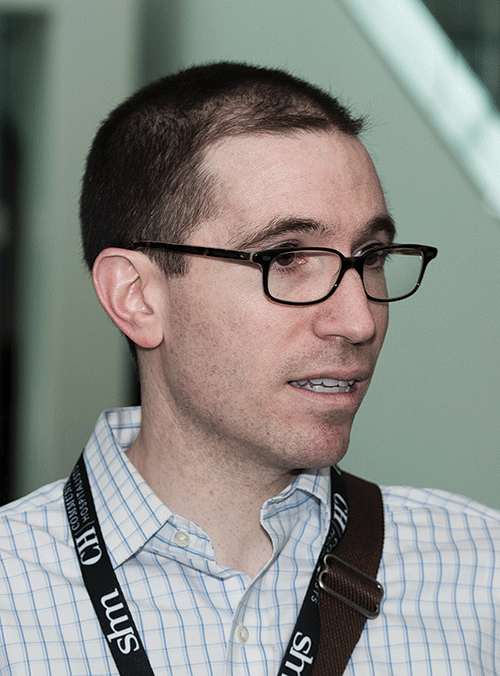
L. Scott Sussman, MD, associate director of the hospitalist service, Yale-New Haven Hospital, Conn.
“We see patients in a time of crisis, so they’re coming in, they’re scared, they’re sick, and it’s a really teachable moment. Because once we start treating them, they start feeling better … [and] what happens is we start to gain their confidence. We use that as a point where we can say, ‘Let’s talk about your other health issues.’”
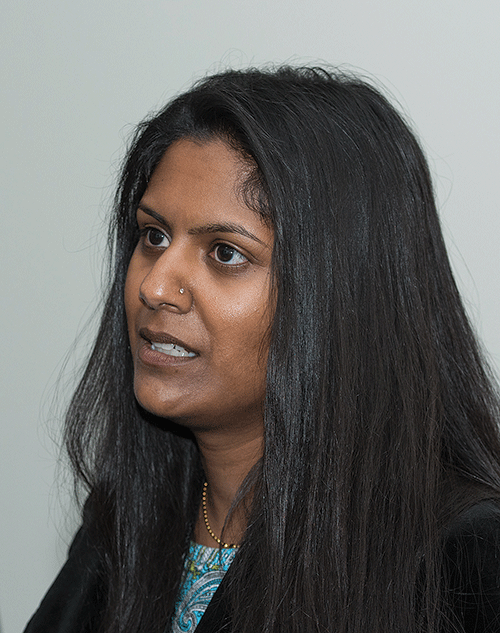
Nazima Allaudeen, MD, hospitalist, director of quality improvement, Veterans Affairs Palo Alto Healthcare System, Calif.
“I don’t feel like I do [have an impact] very much, but I think his talk kind of made me feel like we probably can and should do a lot more. … You know how sometimes you’ll get an email that has a standard thing that you can send to your congressperson about something like that? I feel like we were all like, ‘Yes, we should,’ and it would have been a great opportunity. … I feel like we kind of need it spelled out for us, you know? But it’s a good reminder.”
Gilbert Wergowske, MD, TeamHealth hospitalist, Vallejo, Calif.
“We try to arrange the best follow-up you can. That’s a difficult problem. The area that I work in is not an area that really has a lot of options … as far as giving care is concerned. So it’s really important to try to get in touch with the primary care provider directly. If that doesn’t happen, most of our patients will end up using the ED as their primary care provider. It’s important mainly for two reasons: Disjointed care like that is suboptimal; the patients do not get the best benefit from the care. And also it’s very wasteful because tests and procedures tend to be repeated over and over again.”
Cory Ritter, MD, hospitalist, soon to be working at the Veterans Affairs Medical Center, Houston
“After Dr. Murthy’s talk, I feel much more empowered to call up my local government representatives and express what I feel should be done for public health in our area. Before today, I didn’t think there was much we could do except for supporting the Society of Hospital Medicine because I know they’ve been very engaged in Obamacare and CMS. But otherwise, before today, it wasn’t much on my radar. … On a one-on-one level, you have some impact, but I’ve never really thought much about a larger public health–scale type of impact.”
U.S. Surgeon General Vivek Murthy, MD, MBA, formerly a hospitalist in Boston, said in a keynote speech that hospitalists have more power than they think to improve public health. The Hospitalist asked HM16 attendees: As a hospitalist, how empowered do you feel in having a positive impact on public health, and how do you try to make such an impact in your daily work?
L. Scott Sussman, MD, associate director of the hospitalist service, Yale-New Haven Hospital, Conn.
“We see patients in a time of crisis, so they’re coming in, they’re scared, they’re sick, and it’s a really teachable moment. Because once we start treating them, they start feeling better … [and] what happens is we start to gain their confidence. We use that as a point where we can say, ‘Let’s talk about your other health issues.’”
Nazima Allaudeen, MD, hospitalist, director of quality improvement, Veterans Affairs Palo Alto Healthcare System, Calif.
“I don’t feel like I do [have an impact] very much, but I think his talk kind of made me feel like we probably can and should do a lot more. … You know how sometimes you’ll get an email that has a standard thing that you can send to your congressperson about something like that? I feel like we were all like, ‘Yes, we should,’ and it would have been a great opportunity. … I feel like we kind of need it spelled out for us, you know? But it’s a good reminder.”
Gilbert Wergowske, MD, TeamHealth hospitalist, Vallejo, Calif.
“We try to arrange the best follow-up you can. That’s a difficult problem. The area that I work in is not an area that really has a lot of options … as far as giving care is concerned. So it’s really important to try to get in touch with the primary care provider directly. If that doesn’t happen, most of our patients will end up using the ED as their primary care provider. It’s important mainly for two reasons: Disjointed care like that is suboptimal; the patients do not get the best benefit from the care. And also it’s very wasteful because tests and procedures tend to be repeated over and over again.”
Cory Ritter, MD, hospitalist, soon to be working at the Veterans Affairs Medical Center, Houston
“After Dr. Murthy’s talk, I feel much more empowered to call up my local government representatives and express what I feel should be done for public health in our area. Before today, I didn’t think there was much we could do except for supporting the Society of Hospital Medicine because I know they’ve been very engaged in Obamacare and CMS. But otherwise, before today, it wasn’t much on my radar. … On a one-on-one level, you have some impact, but I’ve never really thought much about a larger public health–scale type of impact.”
U.S. Surgeon General Vivek Murthy, MD, MBA, formerly a hospitalist in Boston, said in a keynote speech that hospitalists have more power than they think to improve public health. The Hospitalist asked HM16 attendees: As a hospitalist, how empowered do you feel in having a positive impact on public health, and how do you try to make such an impact in your daily work?
L. Scott Sussman, MD, associate director of the hospitalist service, Yale-New Haven Hospital, Conn.
“We see patients in a time of crisis, so they’re coming in, they’re scared, they’re sick, and it’s a really teachable moment. Because once we start treating them, they start feeling better … [and] what happens is we start to gain their confidence. We use that as a point where we can say, ‘Let’s talk about your other health issues.’”
Nazima Allaudeen, MD, hospitalist, director of quality improvement, Veterans Affairs Palo Alto Healthcare System, Calif.
“I don’t feel like I do [have an impact] very much, but I think his talk kind of made me feel like we probably can and should do a lot more. … You know how sometimes you’ll get an email that has a standard thing that you can send to your congressperson about something like that? I feel like we were all like, ‘Yes, we should,’ and it would have been a great opportunity. … I feel like we kind of need it spelled out for us, you know? But it’s a good reminder.”
Gilbert Wergowske, MD, TeamHealth hospitalist, Vallejo, Calif.
“We try to arrange the best follow-up you can. That’s a difficult problem. The area that I work in is not an area that really has a lot of options … as far as giving care is concerned. So it’s really important to try to get in touch with the primary care provider directly. If that doesn’t happen, most of our patients will end up using the ED as their primary care provider. It’s important mainly for two reasons: Disjointed care like that is suboptimal; the patients do not get the best benefit from the care. And also it’s very wasteful because tests and procedures tend to be repeated over and over again.”
Cory Ritter, MD, hospitalist, soon to be working at the Veterans Affairs Medical Center, Houston
“After Dr. Murthy’s talk, I feel much more empowered to call up my local government representatives and express what I feel should be done for public health in our area. Before today, I didn’t think there was much we could do except for supporting the Society of Hospital Medicine because I know they’ve been very engaged in Obamacare and CMS. But otherwise, before today, it wasn’t much on my radar. … On a one-on-one level, you have some impact, but I’ve never really thought much about a larger public health–scale type of impact.”
Improve Your Treatment of VTE
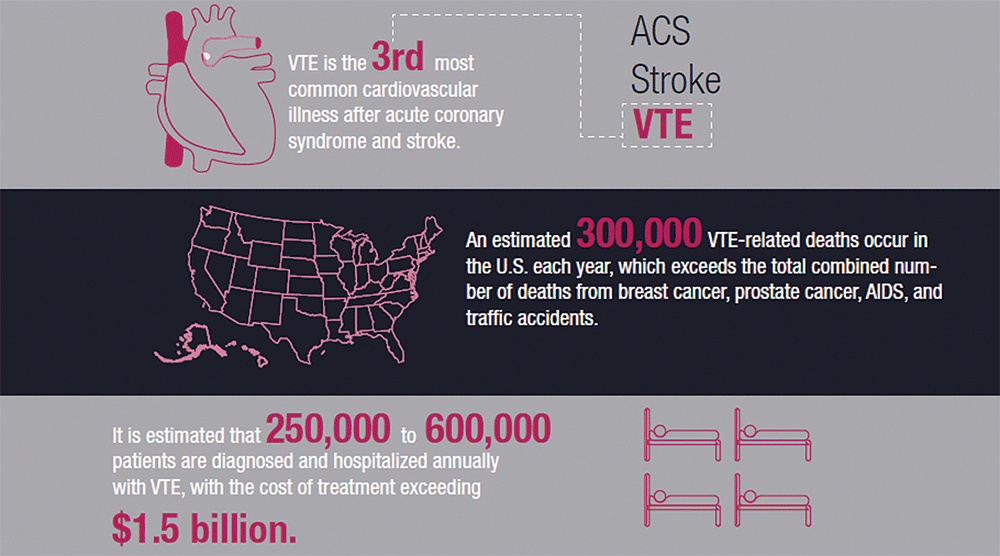
It is estimated that 250,000 to 600,000 patients are diagnosed and hospitalized annually with venous thromboembolism (VTE), the third most common cardiovascular illness after acute coronary syndrome and stroke. An estimated 300,000 VTE-related deaths occur in the U.S. each year, which exceeds the total number of deaths from breast cancer, prostate cancer, AIDS, and traffic accidents combined.
Communication among care providers is an essential part of medical care; it influences patients’ quality of life and effective disease treatment. Hospitalists educate both patients and providers regarding appropriate steps to take to improve care transitions and reduce any associated risks.
To ensure hospitalists have the latest information about diagnosis, treatment, and transition of inpatients with VTE, SHM is developing:
- An online tool kit, including a literature review; implementation guide; and other references, materials, and tools (e.g., discharge instructions and checklists)
- A webinar series with free CME
To be notified when SHM’s VTE resources become available, visit www.hospitalmedicine.org/VTEtreatment.

It is estimated that 250,000 to 600,000 patients are diagnosed and hospitalized annually with venous thromboembolism (VTE), the third most common cardiovascular illness after acute coronary syndrome and stroke. An estimated 300,000 VTE-related deaths occur in the U.S. each year, which exceeds the total number of deaths from breast cancer, prostate cancer, AIDS, and traffic accidents combined.
Communication among care providers is an essential part of medical care; it influences patients’ quality of life and effective disease treatment. Hospitalists educate both patients and providers regarding appropriate steps to take to improve care transitions and reduce any associated risks.
To ensure hospitalists have the latest information about diagnosis, treatment, and transition of inpatients with VTE, SHM is developing:
- An online tool kit, including a literature review; implementation guide; and other references, materials, and tools (e.g., discharge instructions and checklists)
- A webinar series with free CME
To be notified when SHM’s VTE resources become available, visit www.hospitalmedicine.org/VTEtreatment.
It is estimated that 250,000 to 600,000 patients are diagnosed and hospitalized annually with venous thromboembolism (VTE), the third most common cardiovascular illness after acute coronary syndrome and stroke. An estimated 300,000 VTE-related deaths occur in the U.S. each year, which exceeds the total number of deaths from breast cancer, prostate cancer, AIDS, and traffic accidents combined.
Communication among care providers is an essential part of medical care; it influences patients’ quality of life and effective disease treatment. Hospitalists educate both patients and providers regarding appropriate steps to take to improve care transitions and reduce any associated risks.
To ensure hospitalists have the latest information about diagnosis, treatment, and transition of inpatients with VTE, SHM is developing:
- An online tool kit, including a literature review; implementation guide; and other references, materials, and tools (e.g., discharge instructions and checklists)
- A webinar series with free CME
To be notified when SHM’s VTE resources become available, visit www.hospitalmedicine.org/VTEtreatment.
HM16 AUDIO: U.S. Surgeon General Vivek Murthy, MD, MBA, Discusses Hospital Medicine's Role in Public Health
U.S. Surgeon General Vivek Murthy, MD, MBA, talks about the role hospitalists can play in public health.
U.S. Surgeon General Vivek Murthy, MD, MBA, talks about the role hospitalists can play in public health.
U.S. Surgeon General Vivek Murthy, MD, MBA, talks about the role hospitalists can play in public health.
HM16 AUDIO: Alyssa Stephany, MD, Talks about the HM16 RIV Scientific Abstract Competition
Alyssa Stephany, MD, then assistant professor at Duke and now section chief of pediatric hospital medicine at Children’s Hospital of Wisconsin, talks about the evolution in training stemming from her experience in the HM16 RIV competition. This year, she oversaw a study for which resident
Jennifer Ladd, MD, won an award for pediatric clinical vignette.
Alyssa Stephany, MD, then assistant professor at Duke and now section chief of pediatric hospital medicine at Children’s Hospital of Wisconsin, talks about the evolution in training stemming from her experience in the HM16 RIV competition. This year, she oversaw a study for which resident
Jennifer Ladd, MD, won an award for pediatric clinical vignette.
Alyssa Stephany, MD, then assistant professor at Duke and now section chief of pediatric hospital medicine at Children’s Hospital of Wisconsin, talks about the evolution in training stemming from her experience in the HM16 RIV competition. This year, she oversaw a study for which resident
Jennifer Ladd, MD, won an award for pediatric clinical vignette.
HM16 AUDIO: Vineet Chopra, MD, MSc, Chats up His Research on Costs and Complications with PICC Line Usage
RIV winner Vineet Chopra, MD, MSc, assistant professor at the University of Michigan in Ann Arbor, talks about his research on the costs and complications associated with PICC line use.
RIV winner Vineet Chopra, MD, MSc, assistant professor at the University of Michigan in Ann Arbor, talks about his research on the costs and complications associated with PICC line use.
RIV winner Vineet Chopra, MD, MSc, assistant professor at the University of Michigan in Ann Arbor, talks about his research on the costs and complications associated with PICC line use.
HM16 AUDIO: Jordan Romano Discusses Getting Published, Hospitalist Burnout
Jordan Romano, DO, a hospitalist at Massachusetts General Hospital, talks about lessons gleaned at HM16 on the importance of taking small steps toward your goals of getting published and how burnout can be relative.
Jordan Romano, DO, a hospitalist at Massachusetts General Hospital, talks about lessons gleaned at HM16 on the importance of taking small steps toward your goals of getting published and how burnout can be relative.
Jordan Romano, DO, a hospitalist at Massachusetts General Hospital, talks about lessons gleaned at HM16 on the importance of taking small steps toward your goals of getting published and how burnout can be relative.
Annual Meeting Highlights Latest Research, Project Completion
One of the things that Jennifer Feighner, MD, cheerfully came away with at HM16 was how to better complete a task that is distinctly uncheerful but also important to any high-performing hospital: how to collect the data of the dead.
The quality improvement session “Reducing Inpatient Mortality: A Standardized Approach to Identify Preventable Deaths” demonstrated still evolving but, so far, well-performing projects that have been rolled out at Brigham and Women’s Hospital and the Duke University Health System.
“I was struck by the methodology for getting input from multiple providers and the nursing staff,” said Dr. Feighner, director of hospital medicine at Marcus Daly Memorial Hospital in Hamilton, Mont.
As the role of the hospitalist as agent of change and improvement continues to grow, the topic of quality improvement (QI) maintained a high profile at the annual meeting, with talks on the latest literature, sustaining motivation to complete projects, and dealing with issues such as handoffs and frequent fliers.
In the mortality review session, presenters set out to give details that could be a model to be used elsewhere. At Brigham and Women’s, all of the frontline clinicians are asked by email to fill out a report when a death occurs in any case with which they’ve been involved, with the Web-based reports to be completed within 48 to 72 hours of the death.
The number of deaths, the report completion rate, death “preventability,” and issues that arose for the patient during hospitalization are some of the data that are tracked. So far, the system has identified such themes as “alarm fatigue,” high oxygen requirements on non-intensive-care floors, handoffs, and transfers from other hospitals, said Kiran Gupta, MD, MPH, who completed her residency at Brigham and is now assistant professor of clinical medicine at the University of California San Francisco.
At Duke, where the mortality review system improvements have been led by Jonathan Bae, MD, assistant professor of medicine, self-nicknamed “Dr. Death,” inpatient deaths undergo a similarly comprehensive review, with an enhanced end-of-life section to cover issues particular to those cases and flags for cases that need independent review.
Dr. Gupta and Dr. Bae emphasized the confidentiality of the reviews and that they are non-discoverable in the event of litigation, which they hope give clinicians the freedom to fully report their observations.
Dr. Feighner said that her 23-bed hospital is far smaller than either Brigham or Duke, of course, but that the overall ideas can translate.
“I am the medical director of our hospitalist program, and our chief of staff and I’ve created a peer-review medical staff quality improvement committee,” she said. “So this obviously has a lot of interest to me.”
With only 4.2 full-time equivalents (FTEs) in her department, she said changes would be even easier to put into place.
“I think that will be really helpful for our peer-review committee and our quality and safety committee. I could see how we could take this and kind of revise it a little bit,” she said. “When you’re in charge of that few people, it’s easy to get processes implemented. We are more limited in monetary resources, but we make up for that in manpower-to-problem ratio, I guess.”
In another session, Jordan Messler, MD, SFHM, a hospitalist and former medical director of the hospitalist group at Morton Plant Hospital in Clearwater, Fla., confronted the startling statistic that 80% of initiatives in hospitals never meet their objectives. Hurdles such as burnout and disengagement, he said, often stand in the way of successful QI projects.
He emphasized the importance of intrinsic motivation (a sense of ownership and passion for the work) over extrinsic motivation (a fear of reprisal if something isn’t done). A step as simple as assigning a title (e.g., “head of readmissions”) can be a motivator, he said. But he also emphasized that project ideas need to be timed correctly and the ideas should ideally come from the physicians leading them.
Robert Clothier, RN, a practice manager for the hospitalist group at ThedaCare in Wisconsin, said he was struck by the lessons gleaned in a workshop on the I-PASS system of handoffs—a standardized system with a handoff sheet, studied prospectively, in which medical errors decreased by 23% and preventable adverse events fell by 30%.1 The system was created in pediatric departments but was deliberately made to be translatable to other settings.
“Instead of focusing on the outcome of the quality of the handoff, they focus on the quality of the feedback sessions,” Clothier said. “So it’s not the person giving the handoff or receiving the handoff that actually assesses it. It’s just the person who’s sitting there watching.”
He said the workshop underscored the importance of standardization, a concept with which he was familiar but which now seemed particularly vital.
“If you do the process and everybody does it the same, then it’s not only the person that’s giving the information who can do it in a very standardized way but the person who’s listening already knows what they’re going to be listening for so they hear it more clearly because they don’t have to discern what’s coming next,” Clothier said. “They already know what’s coming next.” TH
Reference
1. Starmer AJ, Spector ND, Srivastava R, et al. Changes in medical errors after implementation of a handoff program. N Engl J Med. 2014;371:1803-1812.
One of the things that Jennifer Feighner, MD, cheerfully came away with at HM16 was how to better complete a task that is distinctly uncheerful but also important to any high-performing hospital: how to collect the data of the dead.
The quality improvement session “Reducing Inpatient Mortality: A Standardized Approach to Identify Preventable Deaths” demonstrated still evolving but, so far, well-performing projects that have been rolled out at Brigham and Women’s Hospital and the Duke University Health System.
“I was struck by the methodology for getting input from multiple providers and the nursing staff,” said Dr. Feighner, director of hospital medicine at Marcus Daly Memorial Hospital in Hamilton, Mont.
As the role of the hospitalist as agent of change and improvement continues to grow, the topic of quality improvement (QI) maintained a high profile at the annual meeting, with talks on the latest literature, sustaining motivation to complete projects, and dealing with issues such as handoffs and frequent fliers.
In the mortality review session, presenters set out to give details that could be a model to be used elsewhere. At Brigham and Women’s, all of the frontline clinicians are asked by email to fill out a report when a death occurs in any case with which they’ve been involved, with the Web-based reports to be completed within 48 to 72 hours of the death.
The number of deaths, the report completion rate, death “preventability,” and issues that arose for the patient during hospitalization are some of the data that are tracked. So far, the system has identified such themes as “alarm fatigue,” high oxygen requirements on non-intensive-care floors, handoffs, and transfers from other hospitals, said Kiran Gupta, MD, MPH, who completed her residency at Brigham and is now assistant professor of clinical medicine at the University of California San Francisco.
At Duke, where the mortality review system improvements have been led by Jonathan Bae, MD, assistant professor of medicine, self-nicknamed “Dr. Death,” inpatient deaths undergo a similarly comprehensive review, with an enhanced end-of-life section to cover issues particular to those cases and flags for cases that need independent review.
Dr. Gupta and Dr. Bae emphasized the confidentiality of the reviews and that they are non-discoverable in the event of litigation, which they hope give clinicians the freedom to fully report their observations.
Dr. Feighner said that her 23-bed hospital is far smaller than either Brigham or Duke, of course, but that the overall ideas can translate.
“I am the medical director of our hospitalist program, and our chief of staff and I’ve created a peer-review medical staff quality improvement committee,” she said. “So this obviously has a lot of interest to me.”
With only 4.2 full-time equivalents (FTEs) in her department, she said changes would be even easier to put into place.
“I think that will be really helpful for our peer-review committee and our quality and safety committee. I could see how we could take this and kind of revise it a little bit,” she said. “When you’re in charge of that few people, it’s easy to get processes implemented. We are more limited in monetary resources, but we make up for that in manpower-to-problem ratio, I guess.”
In another session, Jordan Messler, MD, SFHM, a hospitalist and former medical director of the hospitalist group at Morton Plant Hospital in Clearwater, Fla., confronted the startling statistic that 80% of initiatives in hospitals never meet their objectives. Hurdles such as burnout and disengagement, he said, often stand in the way of successful QI projects.
He emphasized the importance of intrinsic motivation (a sense of ownership and passion for the work) over extrinsic motivation (a fear of reprisal if something isn’t done). A step as simple as assigning a title (e.g., “head of readmissions”) can be a motivator, he said. But he also emphasized that project ideas need to be timed correctly and the ideas should ideally come from the physicians leading them.
Robert Clothier, RN, a practice manager for the hospitalist group at ThedaCare in Wisconsin, said he was struck by the lessons gleaned in a workshop on the I-PASS system of handoffs—a standardized system with a handoff sheet, studied prospectively, in which medical errors decreased by 23% and preventable adverse events fell by 30%.1 The system was created in pediatric departments but was deliberately made to be translatable to other settings.
“Instead of focusing on the outcome of the quality of the handoff, they focus on the quality of the feedback sessions,” Clothier said. “So it’s not the person giving the handoff or receiving the handoff that actually assesses it. It’s just the person who’s sitting there watching.”
He said the workshop underscored the importance of standardization, a concept with which he was familiar but which now seemed particularly vital.
“If you do the process and everybody does it the same, then it’s not only the person that’s giving the information who can do it in a very standardized way but the person who’s listening already knows what they’re going to be listening for so they hear it more clearly because they don’t have to discern what’s coming next,” Clothier said. “They already know what’s coming next.” TH
Reference
1. Starmer AJ, Spector ND, Srivastava R, et al. Changes in medical errors after implementation of a handoff program. N Engl J Med. 2014;371:1803-1812.
One of the things that Jennifer Feighner, MD, cheerfully came away with at HM16 was how to better complete a task that is distinctly uncheerful but also important to any high-performing hospital: how to collect the data of the dead.
The quality improvement session “Reducing Inpatient Mortality: A Standardized Approach to Identify Preventable Deaths” demonstrated still evolving but, so far, well-performing projects that have been rolled out at Brigham and Women’s Hospital and the Duke University Health System.
“I was struck by the methodology for getting input from multiple providers and the nursing staff,” said Dr. Feighner, director of hospital medicine at Marcus Daly Memorial Hospital in Hamilton, Mont.
As the role of the hospitalist as agent of change and improvement continues to grow, the topic of quality improvement (QI) maintained a high profile at the annual meeting, with talks on the latest literature, sustaining motivation to complete projects, and dealing with issues such as handoffs and frequent fliers.
In the mortality review session, presenters set out to give details that could be a model to be used elsewhere. At Brigham and Women’s, all of the frontline clinicians are asked by email to fill out a report when a death occurs in any case with which they’ve been involved, with the Web-based reports to be completed within 48 to 72 hours of the death.
The number of deaths, the report completion rate, death “preventability,” and issues that arose for the patient during hospitalization are some of the data that are tracked. So far, the system has identified such themes as “alarm fatigue,” high oxygen requirements on non-intensive-care floors, handoffs, and transfers from other hospitals, said Kiran Gupta, MD, MPH, who completed her residency at Brigham and is now assistant professor of clinical medicine at the University of California San Francisco.
At Duke, where the mortality review system improvements have been led by Jonathan Bae, MD, assistant professor of medicine, self-nicknamed “Dr. Death,” inpatient deaths undergo a similarly comprehensive review, with an enhanced end-of-life section to cover issues particular to those cases and flags for cases that need independent review.
Dr. Gupta and Dr. Bae emphasized the confidentiality of the reviews and that they are non-discoverable in the event of litigation, which they hope give clinicians the freedom to fully report their observations.
Dr. Feighner said that her 23-bed hospital is far smaller than either Brigham or Duke, of course, but that the overall ideas can translate.
“I am the medical director of our hospitalist program, and our chief of staff and I’ve created a peer-review medical staff quality improvement committee,” she said. “So this obviously has a lot of interest to me.”
With only 4.2 full-time equivalents (FTEs) in her department, she said changes would be even easier to put into place.
“I think that will be really helpful for our peer-review committee and our quality and safety committee. I could see how we could take this and kind of revise it a little bit,” she said. “When you’re in charge of that few people, it’s easy to get processes implemented. We are more limited in monetary resources, but we make up for that in manpower-to-problem ratio, I guess.”
In another session, Jordan Messler, MD, SFHM, a hospitalist and former medical director of the hospitalist group at Morton Plant Hospital in Clearwater, Fla., confronted the startling statistic that 80% of initiatives in hospitals never meet their objectives. Hurdles such as burnout and disengagement, he said, often stand in the way of successful QI projects.
He emphasized the importance of intrinsic motivation (a sense of ownership and passion for the work) over extrinsic motivation (a fear of reprisal if something isn’t done). A step as simple as assigning a title (e.g., “head of readmissions”) can be a motivator, he said. But he also emphasized that project ideas need to be timed correctly and the ideas should ideally come from the physicians leading them.
Robert Clothier, RN, a practice manager for the hospitalist group at ThedaCare in Wisconsin, said he was struck by the lessons gleaned in a workshop on the I-PASS system of handoffs—a standardized system with a handoff sheet, studied prospectively, in which medical errors decreased by 23% and preventable adverse events fell by 30%.1 The system was created in pediatric departments but was deliberately made to be translatable to other settings.
“Instead of focusing on the outcome of the quality of the handoff, they focus on the quality of the feedback sessions,” Clothier said. “So it’s not the person giving the handoff or receiving the handoff that actually assesses it. It’s just the person who’s sitting there watching.”
He said the workshop underscored the importance of standardization, a concept with which he was familiar but which now seemed particularly vital.
“If you do the process and everybody does it the same, then it’s not only the person that’s giving the information who can do it in a very standardized way but the person who’s listening already knows what they’re going to be listening for so they hear it more clearly because they don’t have to discern what’s coming next,” Clothier said. “They already know what’s coming next.” TH
Reference
1. Starmer AJ, Spector ND, Srivastava R, et al. Changes in medical errors after implementation of a handoff program. N Engl J Med. 2014;371:1803-1812.
Study Suggests that Elderly Patients with Hip Fractures get Better Care at Smaller Hospitals
(Reuters Health) - Elderly patients with hip fractures may get better care at smaller hospitals, a new study suggests. Seniors with hip fractures waited longer for surgery and were more likely to be rehospitalized if they were treated at a major trauma center than if they went to a smaller emergency room, researchers found.
Seniors in level 1 trauma centers were also more likely to develop blood clots in their legs, compared to their peers who were treated in settings designed for less serious injuries, the researchers reported March 11 in the journal Medical Care.
Level 1 trauma centers have the resources to treat very serious injuries, said lead author Dr. David Metcalfe of Brigham and Women's Hospital in Boston.
"However, because they care for the most complex patients, these hospitals are often very busy. There is therefore a risk that some groups of patients might be disadvantaged or 'lost' in the system," Metcalfe told Reuters Health by email.
For example, patients with multiple injuries or bones breaking through skin may be treated before seniors with hip fractures.
Each year in the U.S. alone, more than 250,000 people aged 65 and older are hospitalized for hip fractures, according to the Centers for Disease Control and Prevention.
The study team used statewide data from California on 91,401 seniors hospitalized between 2007 and 2011. All were over age 65 and had surgery for hip fractures.
Overall, 6% were treated at a level 1 trauma center, 18% at a level 2 trauma center and 70% in a non-trauma center.
On average, patients stayed in the hospital for five days and waited one day for surgery.
Patients in level 1 trauma centers stayed for one day longer than those in the other settings and waited nearly eight hours longer for surgery.
Seniors treated at level 1 centers were 62% more likely to be readmitted to the hospital within a month of their surgery than seniors treated in level 2 or non-trauma settings.Seniors were also 32% more likely to develop blood clots in their legs at level 1 centers.
Patients at level 2 trauma centers had the same outcomes as those at non-trauma centers, the authors found. There was no difference between any of the groups in risk of death, bed sores, or pneumonia, however.
"We now know that it is important to treat patients with hip fractures as quickly as possible," said Metcalfe, noting that older adults who wait too long for treatment may be at risk for bed sores, blood clots, and lung infections.
"The concern is that this delay will lead to increasing length of stay in hospital as well as increased complications for the patients because they spend longer in bed waiting for surgery," said Dr. Chris Gooding, a surgeon at Addenbrookes Hospital, a level 1 trauma center in Cambridge, UK. Gooding was not involved in the study.
"This is an important subject as in developed countries we have an aging population and as a result we are seeing increasing numbers of patients with hip fractures," Gooding told Reuters Health by email.
At the same time, Gooding noted, there are also a growing number of level 1 trauma centers.
"One of the best ways to help these patients is to get their operation done quickly so that they can start walking again and return to their own homes as soon as possible," Metcalfe advised.
(Reuters Health) - Elderly patients with hip fractures may get better care at smaller hospitals, a new study suggests. Seniors with hip fractures waited longer for surgery and were more likely to be rehospitalized if they were treated at a major trauma center than if they went to a smaller emergency room, researchers found.
Seniors in level 1 trauma centers were also more likely to develop blood clots in their legs, compared to their peers who were treated in settings designed for less serious injuries, the researchers reported March 11 in the journal Medical Care.
Level 1 trauma centers have the resources to treat very serious injuries, said lead author Dr. David Metcalfe of Brigham and Women's Hospital in Boston.
"However, because they care for the most complex patients, these hospitals are often very busy. There is therefore a risk that some groups of patients might be disadvantaged or 'lost' in the system," Metcalfe told Reuters Health by email.
For example, patients with multiple injuries or bones breaking through skin may be treated before seniors with hip fractures.
Each year in the U.S. alone, more than 250,000 people aged 65 and older are hospitalized for hip fractures, according to the Centers for Disease Control and Prevention.
The study team used statewide data from California on 91,401 seniors hospitalized between 2007 and 2011. All were over age 65 and had surgery for hip fractures.
Overall, 6% were treated at a level 1 trauma center, 18% at a level 2 trauma center and 70% in a non-trauma center.
On average, patients stayed in the hospital for five days and waited one day for surgery.
Patients in level 1 trauma centers stayed for one day longer than those in the other settings and waited nearly eight hours longer for surgery.
Seniors treated at level 1 centers were 62% more likely to be readmitted to the hospital within a month of their surgery than seniors treated in level 2 or non-trauma settings.Seniors were also 32% more likely to develop blood clots in their legs at level 1 centers.
Patients at level 2 trauma centers had the same outcomes as those at non-trauma centers, the authors found. There was no difference between any of the groups in risk of death, bed sores, or pneumonia, however.
"We now know that it is important to treat patients with hip fractures as quickly as possible," said Metcalfe, noting that older adults who wait too long for treatment may be at risk for bed sores, blood clots, and lung infections.
"The concern is that this delay will lead to increasing length of stay in hospital as well as increased complications for the patients because they spend longer in bed waiting for surgery," said Dr. Chris Gooding, a surgeon at Addenbrookes Hospital, a level 1 trauma center in Cambridge, UK. Gooding was not involved in the study.
"This is an important subject as in developed countries we have an aging population and as a result we are seeing increasing numbers of patients with hip fractures," Gooding told Reuters Health by email.
At the same time, Gooding noted, there are also a growing number of level 1 trauma centers.
"One of the best ways to help these patients is to get their operation done quickly so that they can start walking again and return to their own homes as soon as possible," Metcalfe advised.
(Reuters Health) - Elderly patients with hip fractures may get better care at smaller hospitals, a new study suggests. Seniors with hip fractures waited longer for surgery and were more likely to be rehospitalized if they were treated at a major trauma center than if they went to a smaller emergency room, researchers found.
Seniors in level 1 trauma centers were also more likely to develop blood clots in their legs, compared to their peers who were treated in settings designed for less serious injuries, the researchers reported March 11 in the journal Medical Care.
Level 1 trauma centers have the resources to treat very serious injuries, said lead author Dr. David Metcalfe of Brigham and Women's Hospital in Boston.
"However, because they care for the most complex patients, these hospitals are often very busy. There is therefore a risk that some groups of patients might be disadvantaged or 'lost' in the system," Metcalfe told Reuters Health by email.
For example, patients with multiple injuries or bones breaking through skin may be treated before seniors with hip fractures.
Each year in the U.S. alone, more than 250,000 people aged 65 and older are hospitalized for hip fractures, according to the Centers for Disease Control and Prevention.
The study team used statewide data from California on 91,401 seniors hospitalized between 2007 and 2011. All were over age 65 and had surgery for hip fractures.
Overall, 6% were treated at a level 1 trauma center, 18% at a level 2 trauma center and 70% in a non-trauma center.
On average, patients stayed in the hospital for five days and waited one day for surgery.
Patients in level 1 trauma centers stayed for one day longer than those in the other settings and waited nearly eight hours longer for surgery.
Seniors treated at level 1 centers were 62% more likely to be readmitted to the hospital within a month of their surgery than seniors treated in level 2 or non-trauma settings.Seniors were also 32% more likely to develop blood clots in their legs at level 1 centers.
Patients at level 2 trauma centers had the same outcomes as those at non-trauma centers, the authors found. There was no difference between any of the groups in risk of death, bed sores, or pneumonia, however.
"We now know that it is important to treat patients with hip fractures as quickly as possible," said Metcalfe, noting that older adults who wait too long for treatment may be at risk for bed sores, blood clots, and lung infections.
"The concern is that this delay will lead to increasing length of stay in hospital as well as increased complications for the patients because they spend longer in bed waiting for surgery," said Dr. Chris Gooding, a surgeon at Addenbrookes Hospital, a level 1 trauma center in Cambridge, UK. Gooding was not involved in the study.
"This is an important subject as in developed countries we have an aging population and as a result we are seeing increasing numbers of patients with hip fractures," Gooding told Reuters Health by email.
At the same time, Gooding noted, there are also a growing number of level 1 trauma centers.
"One of the best ways to help these patients is to get their operation done quickly so that they can start walking again and return to their own homes as soon as possible," Metcalfe advised.