User login
Bariatric surgery may be appropriate for class 1 obesity
LAS VEGAS – Once reserved for the most obese patients, bariatric surgery is on the road to becoming an option for millions of Americans who are just a step beyond overweight, even those with a body mass index as low as 30 kg/m2.
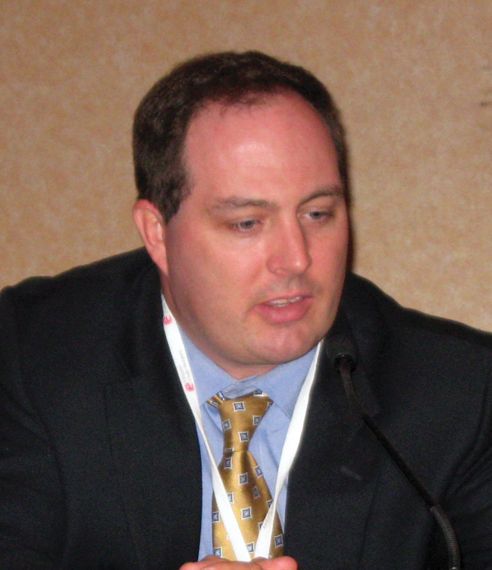
In regard to patients with lower levels of obesity, “we should be intervening in this chronic disease earlier rather than later,” said Stacy A. Brethauer, MD, professor of surgery at the Ohio State University, Columbus, in a presentation about new standards for bariatric surgery at the 2019 Annual Minimally Invasive Surgery Symposium by Global Academy for Medical Education.
Bariatric treatment “should be offered after nonsurgical [weight-loss] therapy has failed,” he said. “That’s not where you stop. You continue to escalate as you would for heart disease or cancer.”
As Dr. Brethauer noted, research suggests that all categories of obesity – including so-called class 1 obesity (defined as a BMI from 30.0 to 34.9 kg/m2) – boost the risk of multiple diseases, including hypertension, coronary artery disease, congestive heart failure, stroke, asthma, pulmonary embolism, gallbladder disease, several types of cancer, osteoarthritis, knee pain and chronic back pain.
“There is no question that class 1 obesity is clearly putting people at risk,” he said. “Ultimately, you can conclude from all this evidence that class 1 is a chronic disease, and it deserves to be treated effectively.”
There are, of course, various nonsurgical treatments for obesity, including diet and exercise and pharmacotherapy. However, systematic reviews have found that people find it extremely difficult to keep the weight off after 1 year regardless of the strategy they adopt.
Beyond a year, Dr. Brethauer said, “you get poor maintenance of weight control, and you get poor control of metabolic burden. You don’t have a durable efficacy.”
In the past, bariatric surgery wasn’t considered an option for patients with class 1 obesity. It’s traditionally been reserved for patients with BMIs at or above 35 kg/m2. But this standard has evolved in recent years.
In 2018, Dr. Brethauer coauthored an updated position statement by the American Society for Metabolic and Bariatric Surgery that encouraged bariatric surgery in certain mildly obese patients.
“For most people with class I obesity,” the statement on bariatric surgery states, “it is clear that the nonsurgical group of therapies will not provide a durable solution to their disease of obesity.”
The statement went on to say that “surgical intervention should be considered after failure of nonsurgical treatments” in the class 1 population.
Bariatric surgery in the class 1 population does more than reduce obesity, Dr. Brethauer said. “Over the last 5 years or so, a large body of literature has emerged,” he said, and both systematic reviews and randomized trails have shown significant postsurgery improvements in comorbidities such as diabetes.
“It’s important to emphasize that these patients don’t become underweight,” he said. “The body finds a healthy set point. They don’t become underweight or malnourished because you’re operating on a lower-weight group.”
Are weight-loss operations safe in class 1 patients? The American Society for Metabolic and Bariatric Surgery statement says that research has found “bariatric surgery is associated with modest morbidity and very low mortality in patients with class I obesity.”
In fact, Dr. Brethauer said, the mortality rate in this population is “less than gallbladder surgery, less than hip surgery, less than hysterectomy, less than knee surgery – operations people are being referred for and undergoing all the time.”
He added: “The case can be made very clearly based on this data that these operations are safe in this patient population. Not only are they safe, they have durable and significant impact on comorbidities.”
Global Academy for Medical Education and this news organization are owned by the same parent company. Dr. Brethauer discloses relationships with Medtronic (speaker) and GI Windows (consultant).
LAS VEGAS – Once reserved for the most obese patients, bariatric surgery is on the road to becoming an option for millions of Americans who are just a step beyond overweight, even those with a body mass index as low as 30 kg/m2.
In regard to patients with lower levels of obesity, “we should be intervening in this chronic disease earlier rather than later,” said Stacy A. Brethauer, MD, professor of surgery at the Ohio State University, Columbus, in a presentation about new standards for bariatric surgery at the 2019 Annual Minimally Invasive Surgery Symposium by Global Academy for Medical Education.
Bariatric treatment “should be offered after nonsurgical [weight-loss] therapy has failed,” he said. “That’s not where you stop. You continue to escalate as you would for heart disease or cancer.”
As Dr. Brethauer noted, research suggests that all categories of obesity – including so-called class 1 obesity (defined as a BMI from 30.0 to 34.9 kg/m2) – boost the risk of multiple diseases, including hypertension, coronary artery disease, congestive heart failure, stroke, asthma, pulmonary embolism, gallbladder disease, several types of cancer, osteoarthritis, knee pain and chronic back pain.
“There is no question that class 1 obesity is clearly putting people at risk,” he said. “Ultimately, you can conclude from all this evidence that class 1 is a chronic disease, and it deserves to be treated effectively.”
There are, of course, various nonsurgical treatments for obesity, including diet and exercise and pharmacotherapy. However, systematic reviews have found that people find it extremely difficult to keep the weight off after 1 year regardless of the strategy they adopt.
Beyond a year, Dr. Brethauer said, “you get poor maintenance of weight control, and you get poor control of metabolic burden. You don’t have a durable efficacy.”
In the past, bariatric surgery wasn’t considered an option for patients with class 1 obesity. It’s traditionally been reserved for patients with BMIs at or above 35 kg/m2. But this standard has evolved in recent years.
In 2018, Dr. Brethauer coauthored an updated position statement by the American Society for Metabolic and Bariatric Surgery that encouraged bariatric surgery in certain mildly obese patients.
“For most people with class I obesity,” the statement on bariatric surgery states, “it is clear that the nonsurgical group of therapies will not provide a durable solution to their disease of obesity.”
The statement went on to say that “surgical intervention should be considered after failure of nonsurgical treatments” in the class 1 population.
Bariatric surgery in the class 1 population does more than reduce obesity, Dr. Brethauer said. “Over the last 5 years or so, a large body of literature has emerged,” he said, and both systematic reviews and randomized trails have shown significant postsurgery improvements in comorbidities such as diabetes.
“It’s important to emphasize that these patients don’t become underweight,” he said. “The body finds a healthy set point. They don’t become underweight or malnourished because you’re operating on a lower-weight group.”
Are weight-loss operations safe in class 1 patients? The American Society for Metabolic and Bariatric Surgery statement says that research has found “bariatric surgery is associated with modest morbidity and very low mortality in patients with class I obesity.”
In fact, Dr. Brethauer said, the mortality rate in this population is “less than gallbladder surgery, less than hip surgery, less than hysterectomy, less than knee surgery – operations people are being referred for and undergoing all the time.”
He added: “The case can be made very clearly based on this data that these operations are safe in this patient population. Not only are they safe, they have durable and significant impact on comorbidities.”
Global Academy for Medical Education and this news organization are owned by the same parent company. Dr. Brethauer discloses relationships with Medtronic (speaker) and GI Windows (consultant).
LAS VEGAS – Once reserved for the most obese patients, bariatric surgery is on the road to becoming an option for millions of Americans who are just a step beyond overweight, even those with a body mass index as low as 30 kg/m2.
In regard to patients with lower levels of obesity, “we should be intervening in this chronic disease earlier rather than later,” said Stacy A. Brethauer, MD, professor of surgery at the Ohio State University, Columbus, in a presentation about new standards for bariatric surgery at the 2019 Annual Minimally Invasive Surgery Symposium by Global Academy for Medical Education.
Bariatric treatment “should be offered after nonsurgical [weight-loss] therapy has failed,” he said. “That’s not where you stop. You continue to escalate as you would for heart disease or cancer.”
As Dr. Brethauer noted, research suggests that all categories of obesity – including so-called class 1 obesity (defined as a BMI from 30.0 to 34.9 kg/m2) – boost the risk of multiple diseases, including hypertension, coronary artery disease, congestive heart failure, stroke, asthma, pulmonary embolism, gallbladder disease, several types of cancer, osteoarthritis, knee pain and chronic back pain.
“There is no question that class 1 obesity is clearly putting people at risk,” he said. “Ultimately, you can conclude from all this evidence that class 1 is a chronic disease, and it deserves to be treated effectively.”
There are, of course, various nonsurgical treatments for obesity, including diet and exercise and pharmacotherapy. However, systematic reviews have found that people find it extremely difficult to keep the weight off after 1 year regardless of the strategy they adopt.
Beyond a year, Dr. Brethauer said, “you get poor maintenance of weight control, and you get poor control of metabolic burden. You don’t have a durable efficacy.”
In the past, bariatric surgery wasn’t considered an option for patients with class 1 obesity. It’s traditionally been reserved for patients with BMIs at or above 35 kg/m2. But this standard has evolved in recent years.
In 2018, Dr. Brethauer coauthored an updated position statement by the American Society for Metabolic and Bariatric Surgery that encouraged bariatric surgery in certain mildly obese patients.
“For most people with class I obesity,” the statement on bariatric surgery states, “it is clear that the nonsurgical group of therapies will not provide a durable solution to their disease of obesity.”
The statement went on to say that “surgical intervention should be considered after failure of nonsurgical treatments” in the class 1 population.
Bariatric surgery in the class 1 population does more than reduce obesity, Dr. Brethauer said. “Over the last 5 years or so, a large body of literature has emerged,” he said, and both systematic reviews and randomized trails have shown significant postsurgery improvements in comorbidities such as diabetes.
“It’s important to emphasize that these patients don’t become underweight,” he said. “The body finds a healthy set point. They don’t become underweight or malnourished because you’re operating on a lower-weight group.”
Are weight-loss operations safe in class 1 patients? The American Society for Metabolic and Bariatric Surgery statement says that research has found “bariatric surgery is associated with modest morbidity and very low mortality in patients with class I obesity.”
In fact, Dr. Brethauer said, the mortality rate in this population is “less than gallbladder surgery, less than hip surgery, less than hysterectomy, less than knee surgery – operations people are being referred for and undergoing all the time.”
He added: “The case can be made very clearly based on this data that these operations are safe in this patient population. Not only are they safe, they have durable and significant impact on comorbidities.”
Global Academy for Medical Education and this news organization are owned by the same parent company. Dr. Brethauer discloses relationships with Medtronic (speaker) and GI Windows (consultant).
REPORTING FROM MISS
Telehospitalist, workload projects win RIV competition
A program using “telehospitalists” to hasten and improve patient care won the top prize in the Innovations category of the RIV competition on Monday night at HM19. In the Research category, a study on workload to improve overnight cross-coverage care took the top prize.
Jeetinder Kaur Gujral, MD, a family medicine and palliative care physician at Northwell Health in Bay Shore, N.Y., said that the telehospitalist program at her institution uses a telehealth hub that is on call to consult with patients when the on-site hospitalist is unable to evaluate a patient in the emergency department within 30 minutes.
Dr. Gujral’s winning study – presented on Monday night and evaluated based on its novelty and the quality of the presentation and the poster – examined results at one of Northwell’s tertiary centers from January to October of 2018, where a telehospitalist works from 12 p.m. to 10 p.m.
Researchers found there was no significant difference in the severity of illness between the patients seen by the on-site hospitalist and the telehospitalist – if anything, the patients consulted by the telehospitalist were a bit sicker, Dr. Gujral said. But there was significantly less variation in the time it took for a telehospitalist to consult with a patient than the on-site physician.
“We are more predictable, because it’s a press of a button, and we are there,” Dr. Gujral said. “And the orders go in faster. I don’t have to leave to go down to the ED to see the patient. I’m seeing the patient right there.”
Kelly Sponsler, MD, assistant professor at Vanderbilt University Medical Center in Nashville, Tenn., who led the Innovations judging, said the project seems to be a brand-new idea: taking a concept built to cover long distances at rural centers and using it within a center’s own program to improve care.
“We really felt like this was something we had not seen before,” Dr. Sponsler said. “There was a clear problem that the team had identified, and it’s a common problem that I think can be scalable, or that other groups probably encounter.”
In the cross-coverage study that won in the Research category, an index developed by NASA to quantify perceived workload was used to assess the factors that boost workload during night shifts, said Ruth Bates, MD, an assistant professor at Mayo Clinic in Rochester, Minn.
The key finding was that it wasn’t the number of patients that boosts workload during these hours, but the number of pages, action items, and rapid-response team and ICU activations. The number of unnecessary pages that overnight hospitalists receive is the prime target as a way to reduce the workload.
The idea is to reduce “low-value communication,” Dr. Bates said. An example is a page about a lab value that is a “tiny bit off.”
“That’s just one example of really low-value communication that has interrupted somebody’s work flow and is not really increasing the quality of patient care.”
Trainee winners were Cameron Locke, MD, a resident physician at the University of California, San Francisco, for a study on a multidisciplinary approach to reduce endoscopy delays, which won in the Innovations category. That study was presented by Molly Kantor, MD, assistant clinical professor at UCSF.
The Research category trainee winner was Monisha Bhatia, MD, JD, MPH, of Jackson Memorial Hospital in Miami for her work on using phenotypic data from electronic health records to predict discharge destination.
On Tuesday afternoon, Erin Frost, MD, a resident in internal medicine and pediatrics at Duke University, Durham, N.C., won the top prize in the Clinical Vignettes category, for her presentation of a case of a woman with acute digital ischemia after an injection of sublingual buprenorphine and naloxone.
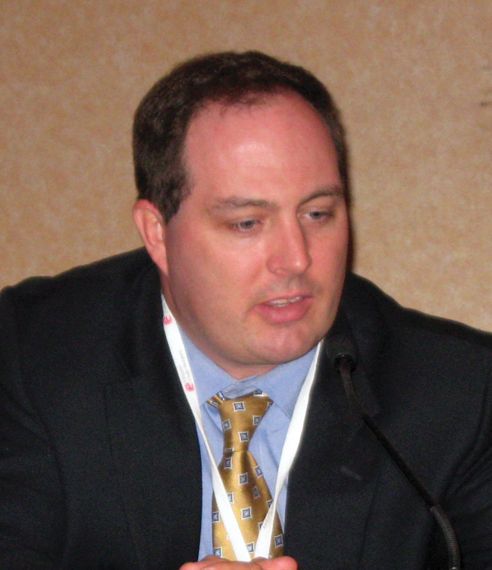
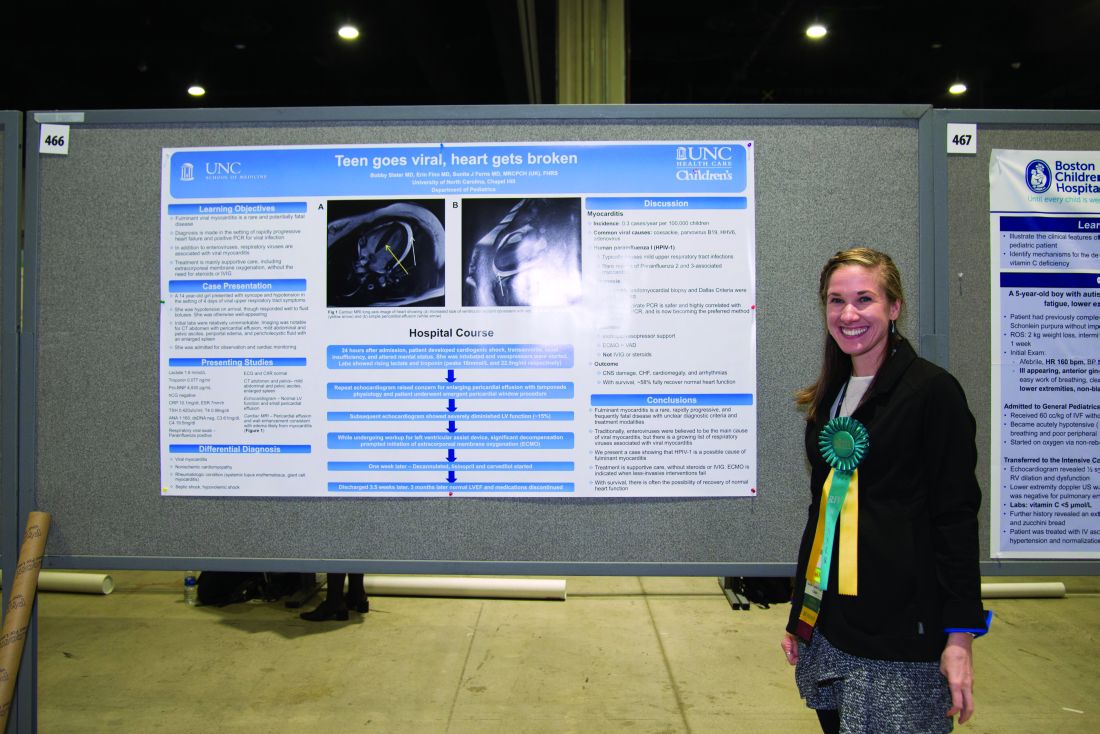
The trainee winner in Clinical Vignettes was a case of C. difficile infection of a total hip arthroplasty, presented by Benjamin Claxton, MPH, a medical student at Penn State University, Hershey. The category’s pediatrics winner was Erin Finn, MD, a resident at the University of North Carolina, Chapel Hill, for her presentation of a case of myocarditis in a 14-year-old.
The oral presentation winner for the Innovations category was Nainesh Shah, MD, of UT Southwestern Medical Center, Dallas, for his abstract presentation "Alert: Structured Radiology Reports are Here." For the Research category, the oral presentation winner was David Meltzer, MD, PhD, section chief of hospital medicine at University of Chicago Medicine, for his abstract presentation "Effects of Comprehensive Care Physicians on Patient Experience, Outcomes and Hospitalization."
A program using “telehospitalists” to hasten and improve patient care won the top prize in the Innovations category of the RIV competition on Monday night at HM19. In the Research category, a study on workload to improve overnight cross-coverage care took the top prize.
Jeetinder Kaur Gujral, MD, a family medicine and palliative care physician at Northwell Health in Bay Shore, N.Y., said that the telehospitalist program at her institution uses a telehealth hub that is on call to consult with patients when the on-site hospitalist is unable to evaluate a patient in the emergency department within 30 minutes.
Dr. Gujral’s winning study – presented on Monday night and evaluated based on its novelty and the quality of the presentation and the poster – examined results at one of Northwell’s tertiary centers from January to October of 2018, where a telehospitalist works from 12 p.m. to 10 p.m.
Researchers found there was no significant difference in the severity of illness between the patients seen by the on-site hospitalist and the telehospitalist – if anything, the patients consulted by the telehospitalist were a bit sicker, Dr. Gujral said. But there was significantly less variation in the time it took for a telehospitalist to consult with a patient than the on-site physician.
“We are more predictable, because it’s a press of a button, and we are there,” Dr. Gujral said. “And the orders go in faster. I don’t have to leave to go down to the ED to see the patient. I’m seeing the patient right there.”
Kelly Sponsler, MD, assistant professor at Vanderbilt University Medical Center in Nashville, Tenn., who led the Innovations judging, said the project seems to be a brand-new idea: taking a concept built to cover long distances at rural centers and using it within a center’s own program to improve care.
“We really felt like this was something we had not seen before,” Dr. Sponsler said. “There was a clear problem that the team had identified, and it’s a common problem that I think can be scalable, or that other groups probably encounter.”
In the cross-coverage study that won in the Research category, an index developed by NASA to quantify perceived workload was used to assess the factors that boost workload during night shifts, said Ruth Bates, MD, an assistant professor at Mayo Clinic in Rochester, Minn.
The key finding was that it wasn’t the number of patients that boosts workload during these hours, but the number of pages, action items, and rapid-response team and ICU activations. The number of unnecessary pages that overnight hospitalists receive is the prime target as a way to reduce the workload.
The idea is to reduce “low-value communication,” Dr. Bates said. An example is a page about a lab value that is a “tiny bit off.”
“That’s just one example of really low-value communication that has interrupted somebody’s work flow and is not really increasing the quality of patient care.”
Trainee winners were Cameron Locke, MD, a resident physician at the University of California, San Francisco, for a study on a multidisciplinary approach to reduce endoscopy delays, which won in the Innovations category. That study was presented by Molly Kantor, MD, assistant clinical professor at UCSF.
The Research category trainee winner was Monisha Bhatia, MD, JD, MPH, of Jackson Memorial Hospital in Miami for her work on using phenotypic data from electronic health records to predict discharge destination.
On Tuesday afternoon, Erin Frost, MD, a resident in internal medicine and pediatrics at Duke University, Durham, N.C., won the top prize in the Clinical Vignettes category, for her presentation of a case of a woman with acute digital ischemia after an injection of sublingual buprenorphine and naloxone.
The trainee winner in Clinical Vignettes was a case of C. difficile infection of a total hip arthroplasty, presented by Benjamin Claxton, MPH, a medical student at Penn State University, Hershey. The category’s pediatrics winner was Erin Finn, MD, a resident at the University of North Carolina, Chapel Hill, for her presentation of a case of myocarditis in a 14-year-old.
The oral presentation winner for the Innovations category was Nainesh Shah, MD, of UT Southwestern Medical Center, Dallas, for his abstract presentation "Alert: Structured Radiology Reports are Here." For the Research category, the oral presentation winner was David Meltzer, MD, PhD, section chief of hospital medicine at University of Chicago Medicine, for his abstract presentation "Effects of Comprehensive Care Physicians on Patient Experience, Outcomes and Hospitalization."
A program using “telehospitalists” to hasten and improve patient care won the top prize in the Innovations category of the RIV competition on Monday night at HM19. In the Research category, a study on workload to improve overnight cross-coverage care took the top prize.
Jeetinder Kaur Gujral, MD, a family medicine and palliative care physician at Northwell Health in Bay Shore, N.Y., said that the telehospitalist program at her institution uses a telehealth hub that is on call to consult with patients when the on-site hospitalist is unable to evaluate a patient in the emergency department within 30 minutes.
Dr. Gujral’s winning study – presented on Monday night and evaluated based on its novelty and the quality of the presentation and the poster – examined results at one of Northwell’s tertiary centers from January to October of 2018, where a telehospitalist works from 12 p.m. to 10 p.m.
Researchers found there was no significant difference in the severity of illness between the patients seen by the on-site hospitalist and the telehospitalist – if anything, the patients consulted by the telehospitalist were a bit sicker, Dr. Gujral said. But there was significantly less variation in the time it took for a telehospitalist to consult with a patient than the on-site physician.
“We are more predictable, because it’s a press of a button, and we are there,” Dr. Gujral said. “And the orders go in faster. I don’t have to leave to go down to the ED to see the patient. I’m seeing the patient right there.”
Kelly Sponsler, MD, assistant professor at Vanderbilt University Medical Center in Nashville, Tenn., who led the Innovations judging, said the project seems to be a brand-new idea: taking a concept built to cover long distances at rural centers and using it within a center’s own program to improve care.
“We really felt like this was something we had not seen before,” Dr. Sponsler said. “There was a clear problem that the team had identified, and it’s a common problem that I think can be scalable, or that other groups probably encounter.”
In the cross-coverage study that won in the Research category, an index developed by NASA to quantify perceived workload was used to assess the factors that boost workload during night shifts, said Ruth Bates, MD, an assistant professor at Mayo Clinic in Rochester, Minn.
The key finding was that it wasn’t the number of patients that boosts workload during these hours, but the number of pages, action items, and rapid-response team and ICU activations. The number of unnecessary pages that overnight hospitalists receive is the prime target as a way to reduce the workload.
The idea is to reduce “low-value communication,” Dr. Bates said. An example is a page about a lab value that is a “tiny bit off.”
“That’s just one example of really low-value communication that has interrupted somebody’s work flow and is not really increasing the quality of patient care.”
Trainee winners were Cameron Locke, MD, a resident physician at the University of California, San Francisco, for a study on a multidisciplinary approach to reduce endoscopy delays, which won in the Innovations category. That study was presented by Molly Kantor, MD, assistant clinical professor at UCSF.
The Research category trainee winner was Monisha Bhatia, MD, JD, MPH, of Jackson Memorial Hospital in Miami for her work on using phenotypic data from electronic health records to predict discharge destination.
On Tuesday afternoon, Erin Frost, MD, a resident in internal medicine and pediatrics at Duke University, Durham, N.C., won the top prize in the Clinical Vignettes category, for her presentation of a case of a woman with acute digital ischemia after an injection of sublingual buprenorphine and naloxone.
The trainee winner in Clinical Vignettes was a case of C. difficile infection of a total hip arthroplasty, presented by Benjamin Claxton, MPH, a medical student at Penn State University, Hershey. The category’s pediatrics winner was Erin Finn, MD, a resident at the University of North Carolina, Chapel Hill, for her presentation of a case of myocarditis in a 14-year-old.
The oral presentation winner for the Innovations category was Nainesh Shah, MD, of UT Southwestern Medical Center, Dallas, for his abstract presentation "Alert: Structured Radiology Reports are Here." For the Research category, the oral presentation winner was David Meltzer, MD, PhD, section chief of hospital medicine at University of Chicago Medicine, for his abstract presentation "Effects of Comprehensive Care Physicians on Patient Experience, Outcomes and Hospitalization."
Robotic surgery offers minimally invasive approach to complex patients
LAS VEGAS – Colorectal surgeon Jamie Cannon, MD, doesn’t think there’s a rivalry between laparoscopic surgery and robotic surgery. Instead, she told colleagues, they should be seen as parts of the same whole: “Robotics is laparoscopy. It’s just a tool that allows us to do laparoscopic surgery better.”

Specifically, robotic surgery deserves a prominent place in treatment for rectal cancer, Dr. Cannon, associate professor of surgery at the University of Alabama at Birmingham, said in a presentation at the Annual Minimally Invasive Surgery Symposium by Global Academy for Medical Education.
“We can reduce the conversion rate and offer more complex patients a minimally invasive operation,” she said.
Dr. Cannon listed these benefits of robotic surgery:
• Better cameras offer 3-D visualization.
• A stable operating platform provides tremor control.
• Instruments are fully articulated.
• The ability to perform fine dissection and complex suturing in confined spaces is enhanced.
• Ergonomics are improved.
“From a surgeon’s standpoint, it’s a lot more fun and a lot more comfortable,” she said. “You’re sitting there rather than straining your neck and arms to accomplish something difficult.”
Statistics show that robotics is gaining on open surgery in anterior rectal resection procedures while laparoscopy remains flat, she noted. In 2008, she said, the percentages for open, laparoscopic and robotic procedures were 81%, 18% and 1%, respectively. In 2015, they were 60%, 20% and 19%, respectively.
According to Dr. Cannon, other benefits of robotic surgery in rectal resections include better outcomes in difficult patients and lower conversion rates.
A 2017 prospective, randomized study did not show a difference between laparoscopic and robotic approaches to conversion rates in rectal resection, she noted (JAMA. 2017;318[16]:1569-80).
However, she said, a newer study presented at the Academic Surgical Congress in 2018 did show a major difference, with a conversion rate of 17% in laparoscopic procedures (n = 128) and 1% in robotic procedures (n = 92, P less than .05). Conversion rates in obese patients were similar.
In regard to obese patients, “we know they don’t do well,” Dr. Cannon said. “One thing we don’t always talk about is the impact on surgeons. These cases are very difficult to do.” Robotic technology allows surgeons to “make up for the challenges you experience laparoscopically” in these procedures, she said.
Robotics can be helpful because they allow surgeons to offer minimally invasive surgery to patients who pose challenges because of morbid obesity, inflammatory conditions such as Crohn’s disease and enteric fistulas, and histories of multiple previous surgeries, she added.
Global Academy for Medical Education and this news organization are owned by the same parent company. Dr. Cannon disclosed serving as an instructor for Intuitive Surgical.
LAS VEGAS – Colorectal surgeon Jamie Cannon, MD, doesn’t think there’s a rivalry between laparoscopic surgery and robotic surgery. Instead, she told colleagues, they should be seen as parts of the same whole: “Robotics is laparoscopy. It’s just a tool that allows us to do laparoscopic surgery better.”
Specifically, robotic surgery deserves a prominent place in treatment for rectal cancer, Dr. Cannon, associate professor of surgery at the University of Alabama at Birmingham, said in a presentation at the Annual Minimally Invasive Surgery Symposium by Global Academy for Medical Education.
“We can reduce the conversion rate and offer more complex patients a minimally invasive operation,” she said.
Dr. Cannon listed these benefits of robotic surgery:
• Better cameras offer 3-D visualization.
• A stable operating platform provides tremor control.
• Instruments are fully articulated.
• The ability to perform fine dissection and complex suturing in confined spaces is enhanced.
• Ergonomics are improved.
“From a surgeon’s standpoint, it’s a lot more fun and a lot more comfortable,” she said. “You’re sitting there rather than straining your neck and arms to accomplish something difficult.”
Statistics show that robotics is gaining on open surgery in anterior rectal resection procedures while laparoscopy remains flat, she noted. In 2008, she said, the percentages for open, laparoscopic and robotic procedures were 81%, 18% and 1%, respectively. In 2015, they were 60%, 20% and 19%, respectively.
According to Dr. Cannon, other benefits of robotic surgery in rectal resections include better outcomes in difficult patients and lower conversion rates.
A 2017 prospective, randomized study did not show a difference between laparoscopic and robotic approaches to conversion rates in rectal resection, she noted (JAMA. 2017;318[16]:1569-80).
However, she said, a newer study presented at the Academic Surgical Congress in 2018 did show a major difference, with a conversion rate of 17% in laparoscopic procedures (n = 128) and 1% in robotic procedures (n = 92, P less than .05). Conversion rates in obese patients were similar.
In regard to obese patients, “we know they don’t do well,” Dr. Cannon said. “One thing we don’t always talk about is the impact on surgeons. These cases are very difficult to do.” Robotic technology allows surgeons to “make up for the challenges you experience laparoscopically” in these procedures, she said.
Robotics can be helpful because they allow surgeons to offer minimally invasive surgery to patients who pose challenges because of morbid obesity, inflammatory conditions such as Crohn’s disease and enteric fistulas, and histories of multiple previous surgeries, she added.
Global Academy for Medical Education and this news organization are owned by the same parent company. Dr. Cannon disclosed serving as an instructor for Intuitive Surgical.
LAS VEGAS – Colorectal surgeon Jamie Cannon, MD, doesn’t think there’s a rivalry between laparoscopic surgery and robotic surgery. Instead, she told colleagues, they should be seen as parts of the same whole: “Robotics is laparoscopy. It’s just a tool that allows us to do laparoscopic surgery better.”
Specifically, robotic surgery deserves a prominent place in treatment for rectal cancer, Dr. Cannon, associate professor of surgery at the University of Alabama at Birmingham, said in a presentation at the Annual Minimally Invasive Surgery Symposium by Global Academy for Medical Education.
“We can reduce the conversion rate and offer more complex patients a minimally invasive operation,” she said.
Dr. Cannon listed these benefits of robotic surgery:
• Better cameras offer 3-D visualization.
• A stable operating platform provides tremor control.
• Instruments are fully articulated.
• The ability to perform fine dissection and complex suturing in confined spaces is enhanced.
• Ergonomics are improved.
“From a surgeon’s standpoint, it’s a lot more fun and a lot more comfortable,” she said. “You’re sitting there rather than straining your neck and arms to accomplish something difficult.”
Statistics show that robotics is gaining on open surgery in anterior rectal resection procedures while laparoscopy remains flat, she noted. In 2008, she said, the percentages for open, laparoscopic and robotic procedures were 81%, 18% and 1%, respectively. In 2015, they were 60%, 20% and 19%, respectively.
According to Dr. Cannon, other benefits of robotic surgery in rectal resections include better outcomes in difficult patients and lower conversion rates.
A 2017 prospective, randomized study did not show a difference between laparoscopic and robotic approaches to conversion rates in rectal resection, she noted (JAMA. 2017;318[16]:1569-80).
However, she said, a newer study presented at the Academic Surgical Congress in 2018 did show a major difference, with a conversion rate of 17% in laparoscopic procedures (n = 128) and 1% in robotic procedures (n = 92, P less than .05). Conversion rates in obese patients were similar.
In regard to obese patients, “we know they don’t do well,” Dr. Cannon said. “One thing we don’t always talk about is the impact on surgeons. These cases are very difficult to do.” Robotic technology allows surgeons to “make up for the challenges you experience laparoscopically” in these procedures, she said.
Robotics can be helpful because they allow surgeons to offer minimally invasive surgery to patients who pose challenges because of morbid obesity, inflammatory conditions such as Crohn’s disease and enteric fistulas, and histories of multiple previous surgeries, she added.
Global Academy for Medical Education and this news organization are owned by the same parent company. Dr. Cannon disclosed serving as an instructor for Intuitive Surgical.
REPORTING FROM MISS
Spending on combination products for acne has increased significantly
WASHINGTON – Expenditures for combination acne products increased from $82 million in 1996 to $487 million in 2016, according to an analysis presented at the annual meeting of the American Academy of Dermatology.
During a late-breaking research session, David Li, a fourth-year medical student at Tufts University, Boston, presented the results of a retrospective cost analysis study, conducted to identify trends in overall spending for combination acne products. Spending measures were adjusted for inflation to 2016 U.S. dollars.
he noted. Combination products are more expensive than the sum of their component parts, and prescribing generic formulations of individual acne treatments could potentially reduce costs, but possible advantages of combination products for acne include improved patient adherence and increased efficacy.
Mr. Li, a research fellow in the department of dermatology at Brigham and Women’s Hospital in Boston, and his colleagues drafted a comprehensive list of available combination products (eight brand-name products and two generics). Most combine benzoyl peroxide with another common acne medication. To analyze trends in medication use, they performed a retrospective cost analysis using Medical Expenditure Panel Survey (MEPS) data from 1996 to 2016, searching for these combination medications to gather the annual number of prescriptions, number of users, expenditures, and aggregate demographics for each product. The data were weighted to represent national estimates.
They also used data from the National Average Drug Acquisition Cost (NADAC) database, used by the Centers for Medicare & Medicaid Services as a pricing benchmark, and calculated the difference between the unit price of each combination product and the sum of the prices of its generic components. They multiplied this difference by the median number of units prescribed annually for the given combination.
The researchers found that most users of combination acne products were younger than 18 years (23%), female (55%), and white (83%), and the most commonly prescribed combination product changed over time. From 1996 to 2002, Benzamycin (benzoyl peroxide and erythromycin) was the most frequently prescribed combination. Several years later, its place was taken by BenzaClin (benzoyl peroxide and clindamycin) from 2003 to 2010, followed by Ziana (clindamycin and tretinoin) in 2011 and Epiduo (adapalene and benzoyl peroxide) from 2012 to 2016.
“Spending has increased steadily from a little bit over $82 million in 1996 to nearly half a billion dollars in 2016,” Mr. Li said. “That’s a rise of more than 500% in the last 20 years. Based on the median pricing and utilization data that we derived from the NADAC database, we determined that substitution with component generics can provide median annual savings of at least a quarter billion dollars each year.”
Although the data indicate a trend toward increased use of and spending on new, branded combination products, the literature includes “minimal data to suggest whether one combination acne product is better than the next one, or how it compares to its component medications when used in combination,” he said. He and his colleagues found no comparative data apart from a 2001 study that examined Benzamycin and BenzaClin, which suggested that there was no difference in efficacy or tolerability between the products.
The present study is limited by reporting bias and recall bias because it relies partly on MEPS, a survey, and the NADAC pricing database had information only for 2013-2016. The researchers consequently used the most recent prices to calculate potential savings.
“Until we have more meaningful data to suggest otherwise, we’re in a state of equipoise,” said Mr. Li.
The research was funded by the National Center for Advancing Translational Sciences, part of the National Institutes of Health.
SOURCE: Li D et al. AAD 2019, Abstract 11333.
WASHINGTON – Expenditures for combination acne products increased from $82 million in 1996 to $487 million in 2016, according to an analysis presented at the annual meeting of the American Academy of Dermatology.
During a late-breaking research session, David Li, a fourth-year medical student at Tufts University, Boston, presented the results of a retrospective cost analysis study, conducted to identify trends in overall spending for combination acne products. Spending measures were adjusted for inflation to 2016 U.S. dollars.
he noted. Combination products are more expensive than the sum of their component parts, and prescribing generic formulations of individual acne treatments could potentially reduce costs, but possible advantages of combination products for acne include improved patient adherence and increased efficacy.
Mr. Li, a research fellow in the department of dermatology at Brigham and Women’s Hospital in Boston, and his colleagues drafted a comprehensive list of available combination products (eight brand-name products and two generics). Most combine benzoyl peroxide with another common acne medication. To analyze trends in medication use, they performed a retrospective cost analysis using Medical Expenditure Panel Survey (MEPS) data from 1996 to 2016, searching for these combination medications to gather the annual number of prescriptions, number of users, expenditures, and aggregate demographics for each product. The data were weighted to represent national estimates.
They also used data from the National Average Drug Acquisition Cost (NADAC) database, used by the Centers for Medicare & Medicaid Services as a pricing benchmark, and calculated the difference between the unit price of each combination product and the sum of the prices of its generic components. They multiplied this difference by the median number of units prescribed annually for the given combination.
The researchers found that most users of combination acne products were younger than 18 years (23%), female (55%), and white (83%), and the most commonly prescribed combination product changed over time. From 1996 to 2002, Benzamycin (benzoyl peroxide and erythromycin) was the most frequently prescribed combination. Several years later, its place was taken by BenzaClin (benzoyl peroxide and clindamycin) from 2003 to 2010, followed by Ziana (clindamycin and tretinoin) in 2011 and Epiduo (adapalene and benzoyl peroxide) from 2012 to 2016.
“Spending has increased steadily from a little bit over $82 million in 1996 to nearly half a billion dollars in 2016,” Mr. Li said. “That’s a rise of more than 500% in the last 20 years. Based on the median pricing and utilization data that we derived from the NADAC database, we determined that substitution with component generics can provide median annual savings of at least a quarter billion dollars each year.”
Although the data indicate a trend toward increased use of and spending on new, branded combination products, the literature includes “minimal data to suggest whether one combination acne product is better than the next one, or how it compares to its component medications when used in combination,” he said. He and his colleagues found no comparative data apart from a 2001 study that examined Benzamycin and BenzaClin, which suggested that there was no difference in efficacy or tolerability between the products.
The present study is limited by reporting bias and recall bias because it relies partly on MEPS, a survey, and the NADAC pricing database had information only for 2013-2016. The researchers consequently used the most recent prices to calculate potential savings.
“Until we have more meaningful data to suggest otherwise, we’re in a state of equipoise,” said Mr. Li.
The research was funded by the National Center for Advancing Translational Sciences, part of the National Institutes of Health.
SOURCE: Li D et al. AAD 2019, Abstract 11333.
WASHINGTON – Expenditures for combination acne products increased from $82 million in 1996 to $487 million in 2016, according to an analysis presented at the annual meeting of the American Academy of Dermatology.
During a late-breaking research session, David Li, a fourth-year medical student at Tufts University, Boston, presented the results of a retrospective cost analysis study, conducted to identify trends in overall spending for combination acne products. Spending measures were adjusted for inflation to 2016 U.S. dollars.
he noted. Combination products are more expensive than the sum of their component parts, and prescribing generic formulations of individual acne treatments could potentially reduce costs, but possible advantages of combination products for acne include improved patient adherence and increased efficacy.
Mr. Li, a research fellow in the department of dermatology at Brigham and Women’s Hospital in Boston, and his colleagues drafted a comprehensive list of available combination products (eight brand-name products and two generics). Most combine benzoyl peroxide with another common acne medication. To analyze trends in medication use, they performed a retrospective cost analysis using Medical Expenditure Panel Survey (MEPS) data from 1996 to 2016, searching for these combination medications to gather the annual number of prescriptions, number of users, expenditures, and aggregate demographics for each product. The data were weighted to represent national estimates.
They also used data from the National Average Drug Acquisition Cost (NADAC) database, used by the Centers for Medicare & Medicaid Services as a pricing benchmark, and calculated the difference between the unit price of each combination product and the sum of the prices of its generic components. They multiplied this difference by the median number of units prescribed annually for the given combination.
The researchers found that most users of combination acne products were younger than 18 years (23%), female (55%), and white (83%), and the most commonly prescribed combination product changed over time. From 1996 to 2002, Benzamycin (benzoyl peroxide and erythromycin) was the most frequently prescribed combination. Several years later, its place was taken by BenzaClin (benzoyl peroxide and clindamycin) from 2003 to 2010, followed by Ziana (clindamycin and tretinoin) in 2011 and Epiduo (adapalene and benzoyl peroxide) from 2012 to 2016.
“Spending has increased steadily from a little bit over $82 million in 1996 to nearly half a billion dollars in 2016,” Mr. Li said. “That’s a rise of more than 500% in the last 20 years. Based on the median pricing and utilization data that we derived from the NADAC database, we determined that substitution with component generics can provide median annual savings of at least a quarter billion dollars each year.”
Although the data indicate a trend toward increased use of and spending on new, branded combination products, the literature includes “minimal data to suggest whether one combination acne product is better than the next one, or how it compares to its component medications when used in combination,” he said. He and his colleagues found no comparative data apart from a 2001 study that examined Benzamycin and BenzaClin, which suggested that there was no difference in efficacy or tolerability between the products.
The present study is limited by reporting bias and recall bias because it relies partly on MEPS, a survey, and the NADAC pricing database had information only for 2013-2016. The researchers consequently used the most recent prices to calculate potential savings.
“Until we have more meaningful data to suggest otherwise, we’re in a state of equipoise,” said Mr. Li.
The research was funded by the National Center for Advancing Translational Sciences, part of the National Institutes of Health.
SOURCE: Li D et al. AAD 2019, Abstract 11333.
REPORTING FROM AAD 2019
DoJ refuses to challenge Texas ACA ruling
The U.S. Department of Justice has signaled it will not oppose any aspect of the recent court ruling to invalidate the Affordable Care Act.

“The Department of Justice has determined that the district court’s judgment should be affirmed, according to a March 25 letter to the U.S. Court of Appeal for the Fifth Circuit in New Orleans. “Because the United States is not urging that any portion of the district court’s judgment be reversed, the government intends to file a brief on the appellees’ schedule.”
At the onset of the trial in the U.S. District Court for the Northern District of Texas, the DOJ had initially challenged portions of the ACA, including declaring guaranteed issue unconstitutional by arguing that it could not be enacted with no penalty for failure to obtain coverage.
However, the judge ruled in the Texas v. United States case that the tax bill passed by Congress in December 2017 effectively rendered the entire health law unconstitutional.
“We said before that the district court’s decision was misguided and wrong. So, too, is the government’s reversal to now support it,” Matt Eyles, president and CEO of America’s Health Insurance Plans said in a statement. “This harmful position puts coverage at risk for more than 100 million Americans that rely on it. We will continue to engage on this issue as it continues through the appeals process so we can support and strengthen affordable coverage for every American.”
The U.S. Department of Justice has signaled it will not oppose any aspect of the recent court ruling to invalidate the Affordable Care Act.
“The Department of Justice has determined that the district court’s judgment should be affirmed, according to a March 25 letter to the U.S. Court of Appeal for the Fifth Circuit in New Orleans. “Because the United States is not urging that any portion of the district court’s judgment be reversed, the government intends to file a brief on the appellees’ schedule.”
At the onset of the trial in the U.S. District Court for the Northern District of Texas, the DOJ had initially challenged portions of the ACA, including declaring guaranteed issue unconstitutional by arguing that it could not be enacted with no penalty for failure to obtain coverage.
However, the judge ruled in the Texas v. United States case that the tax bill passed by Congress in December 2017 effectively rendered the entire health law unconstitutional.
“We said before that the district court’s decision was misguided and wrong. So, too, is the government’s reversal to now support it,” Matt Eyles, president and CEO of America’s Health Insurance Plans said in a statement. “This harmful position puts coverage at risk for more than 100 million Americans that rely on it. We will continue to engage on this issue as it continues through the appeals process so we can support and strengthen affordable coverage for every American.”
The U.S. Department of Justice has signaled it will not oppose any aspect of the recent court ruling to invalidate the Affordable Care Act.
“The Department of Justice has determined that the district court’s judgment should be affirmed, according to a March 25 letter to the U.S. Court of Appeal for the Fifth Circuit in New Orleans. “Because the United States is not urging that any portion of the district court’s judgment be reversed, the government intends to file a brief on the appellees’ schedule.”
At the onset of the trial in the U.S. District Court for the Northern District of Texas, the DOJ had initially challenged portions of the ACA, including declaring guaranteed issue unconstitutional by arguing that it could not be enacted with no penalty for failure to obtain coverage.
However, the judge ruled in the Texas v. United States case that the tax bill passed by Congress in December 2017 effectively rendered the entire health law unconstitutional.
“We said before that the district court’s decision was misguided and wrong. So, too, is the government’s reversal to now support it,” Matt Eyles, president and CEO of America’s Health Insurance Plans said in a statement. “This harmful position puts coverage at risk for more than 100 million Americans that rely on it. We will continue to engage on this issue as it continues through the appeals process so we can support and strengthen affordable coverage for every American.”
Time to revisit fasting rules for surgery patients
LAS VEGAS – Anesthesiologist Michael W. Manning, MD, has a few unusual rules about preparing patients for surgery: Give them a carb-heavy beverage. Definitely provide caffeine to coffee addicts who haven’t had a cup for quite a while. And tell them – again and again – what to expect in terms of pain.

All of these strategies can boost recovery, Dr. Manning, assistant professor of anesthesiology at Duke University Medical Center, Durham, N.C., said in a pair of presentations at the Annual Minimally Invasive Surgery Symposium by Global Academy for Medical Education.
Dr. Manning’s tips
Don’t starve patients before procedures: “We should prep for a surgery like a marathon,” Dr. Manning recommended. That means allowing patients to eat and drink instead of starving them via fasting out of fear that they’ll aspirate under anesthesia, he said.
He pointed to 2017 guidelines issued by the American Society of Anesthesiologists, indicating that patients may drink clear liquids for up to 2 hours before procedures that require general or regional anesthesia or procedural sedation and anesthesia. And patients may consume a light meal, such as toast and a clear liquid, or nonhuman milk, until 6 hours before a procedure. However, they should fast 8 hours after eating fried or fatty foods or meat (Anesthesiology 2017:376-93).
Extensive research supports carb-loading via liquid prior to surgery, said Dr. Manning, who cited a 2014 Cochrane Library review that examined 27 trials on preoperative consumption of carbs prior to various types of surgery. The review found no increase in complications in patients who consumed carbs, compared with placebo or fasting, and there was a slight decrease in length of stay (Cochrane Database Syst Rev. 2014 Aug 14;[8]).
In terms of benefits, research suggests that carb-loading improves patient comfort and gastric emptying, Dr. Manning said, and patients welcome it.
Educate patients about pain expectations
“We surgeons and anesthesiologists need to partner together and talk to patients and define what the pain expectations are,” Dr. Manning said.
At Duke, physicians worked together to set up a script that patients will hear four different times by medical personnel such as the surgeon, the anesthesiologist, and nursing staff, he said.
The script aims to educate patients about what to expect in terms of pain. For example, he says, before some surgeries, patients might be told: “You’re going to have shoulder pain that’s going to feel like you’ve been in the garage all day putting boxes on the shelf all the time,” or “Your belly is going to feel like you did 1,000 sit-ups.”
This eliminates the “fear and anxiety” that comes with not knowing what to expect regarding pain, he said.
Ask about coffee. Yes, coffee.
According to Dr. Manning, patients who regularly drink “a robust amount” of coffee may experience more postoperative pain following afternoon surgery because they’ve gone for an unusually long time without caffeine. Take a “coffee history,” he advised, and ask how much coffee the patient would have consumed by this time on a normal day. Then give patients caffeine as needed. (Coffee is considered a clear beverage under the American Society of Anesthesiologists guidelines.)
“It takes the edge off and helps reduce postoperative pain,” he said.
Global Academy for Medical Education and this news organization are owned by the same parent company. Dr. Manning has no disclosures.
LAS VEGAS – Anesthesiologist Michael W. Manning, MD, has a few unusual rules about preparing patients for surgery: Give them a carb-heavy beverage. Definitely provide caffeine to coffee addicts who haven’t had a cup for quite a while. And tell them – again and again – what to expect in terms of pain.
All of these strategies can boost recovery, Dr. Manning, assistant professor of anesthesiology at Duke University Medical Center, Durham, N.C., said in a pair of presentations at the Annual Minimally Invasive Surgery Symposium by Global Academy for Medical Education.
Dr. Manning’s tips
Don’t starve patients before procedures: “We should prep for a surgery like a marathon,” Dr. Manning recommended. That means allowing patients to eat and drink instead of starving them via fasting out of fear that they’ll aspirate under anesthesia, he said.
He pointed to 2017 guidelines issued by the American Society of Anesthesiologists, indicating that patients may drink clear liquids for up to 2 hours before procedures that require general or regional anesthesia or procedural sedation and anesthesia. And patients may consume a light meal, such as toast and a clear liquid, or nonhuman milk, until 6 hours before a procedure. However, they should fast 8 hours after eating fried or fatty foods or meat (Anesthesiology 2017:376-93).
Extensive research supports carb-loading via liquid prior to surgery, said Dr. Manning, who cited a 2014 Cochrane Library review that examined 27 trials on preoperative consumption of carbs prior to various types of surgery. The review found no increase in complications in patients who consumed carbs, compared with placebo or fasting, and there was a slight decrease in length of stay (Cochrane Database Syst Rev. 2014 Aug 14;[8]).
In terms of benefits, research suggests that carb-loading improves patient comfort and gastric emptying, Dr. Manning said, and patients welcome it.
Educate patients about pain expectations
“We surgeons and anesthesiologists need to partner together and talk to patients and define what the pain expectations are,” Dr. Manning said.
At Duke, physicians worked together to set up a script that patients will hear four different times by medical personnel such as the surgeon, the anesthesiologist, and nursing staff, he said.
The script aims to educate patients about what to expect in terms of pain. For example, he says, before some surgeries, patients might be told: “You’re going to have shoulder pain that’s going to feel like you’ve been in the garage all day putting boxes on the shelf all the time,” or “Your belly is going to feel like you did 1,000 sit-ups.”
This eliminates the “fear and anxiety” that comes with not knowing what to expect regarding pain, he said.
Ask about coffee. Yes, coffee.
According to Dr. Manning, patients who regularly drink “a robust amount” of coffee may experience more postoperative pain following afternoon surgery because they’ve gone for an unusually long time without caffeine. Take a “coffee history,” he advised, and ask how much coffee the patient would have consumed by this time on a normal day. Then give patients caffeine as needed. (Coffee is considered a clear beverage under the American Society of Anesthesiologists guidelines.)
“It takes the edge off and helps reduce postoperative pain,” he said.
Global Academy for Medical Education and this news organization are owned by the same parent company. Dr. Manning has no disclosures.
LAS VEGAS – Anesthesiologist Michael W. Manning, MD, has a few unusual rules about preparing patients for surgery: Give them a carb-heavy beverage. Definitely provide caffeine to coffee addicts who haven’t had a cup for quite a while. And tell them – again and again – what to expect in terms of pain.
All of these strategies can boost recovery, Dr. Manning, assistant professor of anesthesiology at Duke University Medical Center, Durham, N.C., said in a pair of presentations at the Annual Minimally Invasive Surgery Symposium by Global Academy for Medical Education.
Dr. Manning’s tips
Don’t starve patients before procedures: “We should prep for a surgery like a marathon,” Dr. Manning recommended. That means allowing patients to eat and drink instead of starving them via fasting out of fear that they’ll aspirate under anesthesia, he said.
He pointed to 2017 guidelines issued by the American Society of Anesthesiologists, indicating that patients may drink clear liquids for up to 2 hours before procedures that require general or regional anesthesia or procedural sedation and anesthesia. And patients may consume a light meal, such as toast and a clear liquid, or nonhuman milk, until 6 hours before a procedure. However, they should fast 8 hours after eating fried or fatty foods or meat (Anesthesiology 2017:376-93).
Extensive research supports carb-loading via liquid prior to surgery, said Dr. Manning, who cited a 2014 Cochrane Library review that examined 27 trials on preoperative consumption of carbs prior to various types of surgery. The review found no increase in complications in patients who consumed carbs, compared with placebo or fasting, and there was a slight decrease in length of stay (Cochrane Database Syst Rev. 2014 Aug 14;[8]).
In terms of benefits, research suggests that carb-loading improves patient comfort and gastric emptying, Dr. Manning said, and patients welcome it.
Educate patients about pain expectations
“We surgeons and anesthesiologists need to partner together and talk to patients and define what the pain expectations are,” Dr. Manning said.
At Duke, physicians worked together to set up a script that patients will hear four different times by medical personnel such as the surgeon, the anesthesiologist, and nursing staff, he said.
The script aims to educate patients about what to expect in terms of pain. For example, he says, before some surgeries, patients might be told: “You’re going to have shoulder pain that’s going to feel like you’ve been in the garage all day putting boxes on the shelf all the time,” or “Your belly is going to feel like you did 1,000 sit-ups.”
This eliminates the “fear and anxiety” that comes with not knowing what to expect regarding pain, he said.
Ask about coffee. Yes, coffee.
According to Dr. Manning, patients who regularly drink “a robust amount” of coffee may experience more postoperative pain following afternoon surgery because they’ve gone for an unusually long time without caffeine. Take a “coffee history,” he advised, and ask how much coffee the patient would have consumed by this time on a normal day. Then give patients caffeine as needed. (Coffee is considered a clear beverage under the American Society of Anesthesiologists guidelines.)
“It takes the edge off and helps reduce postoperative pain,” he said.
Global Academy for Medical Education and this news organization are owned by the same parent company. Dr. Manning has no disclosures.
REPORTING FROM MISS
Tweet this! Social media as career development
Social media can be more than a tool to connect with friends and family, said Vineet Chopra, MD, MBBS, FHM, Charlie Wray, DO, and Vineet Arora, MD, MAPP, MHM, at Monday’s “Tweet Your Way to the Top? Social Media as a Career Development Tool in Hospital Medicine” session.
Online outreach can play crucial roles in everything from continuing education and research to networking and career advancement, but most of the conversations in medicine are really focused in the Twittersphere, the three hospitalists said.
“Social media has allowed me to connect with leaders in hospital medicine and many other medical communities,” said Dr. Wray, an assistant professor of medicine at the University of California, San Francisco. “It has allowed me to share my work and success with the hospitalist community in addition to highlighting my trainees’ and colleagues’ successes. My engagement has created opportunities to get involved with projects that I could never have previously imagined. And it has extended my networking circle and made annual gatherings like the SHM Annual Conference even more beneficial and high yield for my career.”
For session copresenter Dr. Chopra, associate professor and chief of the division of hospital medicine at the University of Michigan, Ann Arbor, social media “helps develop your brand and your identity. It is a wonderful way for people to know what you do, who you are, what you stand for, and your views and opinions on various topics.”
On the career front, social media “can connect you to leaders in the community so that they know who you are and what you are accomplishing. So when time comes for you to move on, people within this community will know who you are and what you’re known for at a national level,” said Dr. Wray, who is also deputy digital media editor for the Journal of Hospital Medicine.
Sharing on social media – and Twitter in particular – for the medical profession is focused mainly on dissemination of information, engaging in communities, and networking beyond your institution. The three presenters shared tips of the trade during the session, such as how to boost exposure to a tweet by including hashtags, posting photos, and sharing links. To overcome time commitment barriers, tie your Twitter contributions to something you are doing already, said Dr. Arora, associate chief medical officer-clinical learning environment at the University of Chicago.
A presence on social media isn’t just a tool to boost your own profile, Dr. Wray said. It also helps you stay on top of medical news. “There is so much information and new data coming out nowadays, it can be hard to keep up,” he said. “A properly curated social media feed can help a busy clinician stay on top of what is really important. This is an invaluable skill for the modern hospitalist.”
But be careful how much you disclose on social media about yourself and, especially, other people. “A good rule of thumb is: Don’t put anything online that you wouldn’t want your mother to read,” Dr. Chopra said. “As well, sharing any personal or patient information without understanding your institution’s guidelines or obtaining explicit permission is a general no-no,” he said.
“Also, many employers look at social media profiles before they hire people. We certainly do so when we are looking at various individuals. We often call this a ‘Google biopsy.’ ”
Randy Dotinga contributed to this report.
Social media can be more than a tool to connect with friends and family, said Vineet Chopra, MD, MBBS, FHM, Charlie Wray, DO, and Vineet Arora, MD, MAPP, MHM, at Monday’s “Tweet Your Way to the Top? Social Media as a Career Development Tool in Hospital Medicine” session.
Online outreach can play crucial roles in everything from continuing education and research to networking and career advancement, but most of the conversations in medicine are really focused in the Twittersphere, the three hospitalists said.
“Social media has allowed me to connect with leaders in hospital medicine and many other medical communities,” said Dr. Wray, an assistant professor of medicine at the University of California, San Francisco. “It has allowed me to share my work and success with the hospitalist community in addition to highlighting my trainees’ and colleagues’ successes. My engagement has created opportunities to get involved with projects that I could never have previously imagined. And it has extended my networking circle and made annual gatherings like the SHM Annual Conference even more beneficial and high yield for my career.”
For session copresenter Dr. Chopra, associate professor and chief of the division of hospital medicine at the University of Michigan, Ann Arbor, social media “helps develop your brand and your identity. It is a wonderful way for people to know what you do, who you are, what you stand for, and your views and opinions on various topics.”
On the career front, social media “can connect you to leaders in the community so that they know who you are and what you are accomplishing. So when time comes for you to move on, people within this community will know who you are and what you’re known for at a national level,” said Dr. Wray, who is also deputy digital media editor for the Journal of Hospital Medicine.
Sharing on social media – and Twitter in particular – for the medical profession is focused mainly on dissemination of information, engaging in communities, and networking beyond your institution. The three presenters shared tips of the trade during the session, such as how to boost exposure to a tweet by including hashtags, posting photos, and sharing links. To overcome time commitment barriers, tie your Twitter contributions to something you are doing already, said Dr. Arora, associate chief medical officer-clinical learning environment at the University of Chicago.
A presence on social media isn’t just a tool to boost your own profile, Dr. Wray said. It also helps you stay on top of medical news. “There is so much information and new data coming out nowadays, it can be hard to keep up,” he said. “A properly curated social media feed can help a busy clinician stay on top of what is really important. This is an invaluable skill for the modern hospitalist.”
But be careful how much you disclose on social media about yourself and, especially, other people. “A good rule of thumb is: Don’t put anything online that you wouldn’t want your mother to read,” Dr. Chopra said. “As well, sharing any personal or patient information without understanding your institution’s guidelines or obtaining explicit permission is a general no-no,” he said.
“Also, many employers look at social media profiles before they hire people. We certainly do so when we are looking at various individuals. We often call this a ‘Google biopsy.’ ”
Randy Dotinga contributed to this report.
Social media can be more than a tool to connect with friends and family, said Vineet Chopra, MD, MBBS, FHM, Charlie Wray, DO, and Vineet Arora, MD, MAPP, MHM, at Monday’s “Tweet Your Way to the Top? Social Media as a Career Development Tool in Hospital Medicine” session.
Online outreach can play crucial roles in everything from continuing education and research to networking and career advancement, but most of the conversations in medicine are really focused in the Twittersphere, the three hospitalists said.
“Social media has allowed me to connect with leaders in hospital medicine and many other medical communities,” said Dr. Wray, an assistant professor of medicine at the University of California, San Francisco. “It has allowed me to share my work and success with the hospitalist community in addition to highlighting my trainees’ and colleagues’ successes. My engagement has created opportunities to get involved with projects that I could never have previously imagined. And it has extended my networking circle and made annual gatherings like the SHM Annual Conference even more beneficial and high yield for my career.”
For session copresenter Dr. Chopra, associate professor and chief of the division of hospital medicine at the University of Michigan, Ann Arbor, social media “helps develop your brand and your identity. It is a wonderful way for people to know what you do, who you are, what you stand for, and your views and opinions on various topics.”
On the career front, social media “can connect you to leaders in the community so that they know who you are and what you are accomplishing. So when time comes for you to move on, people within this community will know who you are and what you’re known for at a national level,” said Dr. Wray, who is also deputy digital media editor for the Journal of Hospital Medicine.
Sharing on social media – and Twitter in particular – for the medical profession is focused mainly on dissemination of information, engaging in communities, and networking beyond your institution. The three presenters shared tips of the trade during the session, such as how to boost exposure to a tweet by including hashtags, posting photos, and sharing links. To overcome time commitment barriers, tie your Twitter contributions to something you are doing already, said Dr. Arora, associate chief medical officer-clinical learning environment at the University of Chicago.
A presence on social media isn’t just a tool to boost your own profile, Dr. Wray said. It also helps you stay on top of medical news. “There is so much information and new data coming out nowadays, it can be hard to keep up,” he said. “A properly curated social media feed can help a busy clinician stay on top of what is really important. This is an invaluable skill for the modern hospitalist.”
But be careful how much you disclose on social media about yourself and, especially, other people. “A good rule of thumb is: Don’t put anything online that you wouldn’t want your mother to read,” Dr. Chopra said. “As well, sharing any personal or patient information without understanding your institution’s guidelines or obtaining explicit permission is a general no-no,” he said.
“Also, many employers look at social media profiles before they hire people. We certainly do so when we are looking at various individuals. We often call this a ‘Google biopsy.’ ”
Randy Dotinga contributed to this report.
Anti-mesh trend may be felt by surgeons doing hernia repairs
LAS VEGAS – Hernia surgeons are square in the path of a growing backlash against the use of mesh in surgery, a fellow surgeon says, and he’s warning colleagues to take heed of the trend.
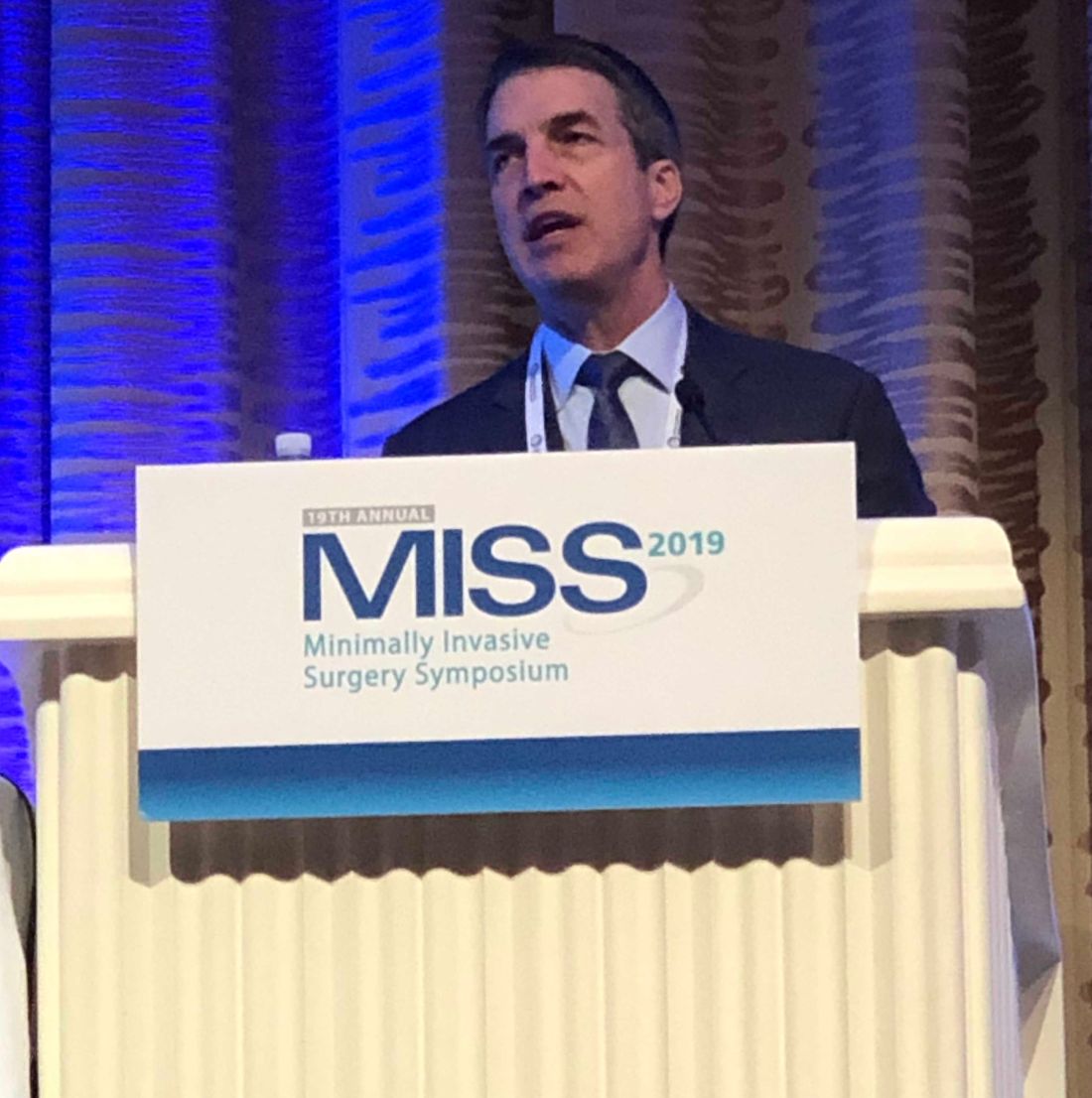
“I tell you, it’s coming,” B. Todd Heniford, MD,, professor and chief of gastrointestinal and minimally invasive surgery at Carolinas Medical Center, Charlotte, N.C., declared in a presentation at the Annual Minimally Invasive Surgery Symposium by Global Academy for Medical Education.
“This is no time to abandon surgical mesh in hernia procedures,” he argued. Instead, he said surgeons should engage in better communication with patients. Otherwise, “we are not helping ourselves as surgeons.”
In the United States, most of the controversy around the use of mesh in surgery has revolved around transvaginal procedures in women. As a 2017 historical review explained, “mesh used to augment transvaginal repair of [pelvic organ prolapse] was introduced in the United States in 2005 without clinical safety and efficacy data. In the subsequent years of use, both major and minor complications were increasingly reported, leading to several [Food and Drug Administration] notifications and warnings” (Int Urogynecol J. 2017 Apr;28[4]:527-35).
An FDA safety alert in 2011 and new requirements for postmarked surveillance orders convinced most manufacturers to stop marketing surgical mesh for transvaginal repair of pelvic organ prolapse. According to a 2018 report, an estimated 73,000 patients in the United States have filed product liability claims regarding complications from mesh used in transvaginal procedures (Female Pelvic Med Reconstr Surg. 2018 Jan/Feb;24[1]:21-25).
Outside the United States, Dr. Heniford said, concerns about surgical mesh have spawned a global outcry about its use in another kind of procedure – hernia surgery. “It is gaining speed in Europe, Australia and New Zealand,” he said.
Indeed, these are some recent headlines in Australian and British news outlets: “Concern grows over hernia mesh as more patients share post-surgery horror stories,” “Hernia mesh concerns grow among men as more patients report surgery complications,” “Pelvic and hernia mesh patients will confront politicians and bureaucrats in April over the medical device industry,” and “Mesh implants: Man speaks of procedure’s devastating impact.”
“When people read this, it influences them,” Dr. Heniford said. “And mesh companies are not helping us, let’s be frank about it,” he added, noting that manufacturers have launched recalls due to problems and complications.
Is the anti-mesh frenzy regarding hernias coming to the United States? “Absolutely,” said Dr. Heniford, noting that an online search will turn up many legal websites devoted to hernia mesh lawsuits. And, he said, hernia patients are already concerned because of commercials they’ve seen on TV. “One of the issues is that the lawyers in the United States have become real experts on mesh for pelvic slings,” he said. “They’ve just about run through that.” It’s not just lawyers who are taking advantage of the anti-mesh trend. “If you go online and you type in ‘no-mesh surgery,’ ” he said, “you’ll see loads of surgeons who are trying to take advantage of this.”
In reality, research supports the use of mesh in hernia procedures. A 2018 Cochrane Library review found that “overall, hernia repairs with and without mesh both proved effective in the treatment of hernias, although mesh repairs demonstrated fewer hernia recurrences, a shorter operation time and faster return to normal activities. Non-mesh repairs are still widely used, often due to the cost and poor availability of the mesh product itself” (Cochrane Database Syst Rev. 2018, Issue 9.)
Dr. Heniford suggested that surgeons can do much more to calm patients about the use of mesh. One strategy, he said, is to help them understand that they may face pain after their procedures that has nothing to do with surgical mesh.
“We do not counsel our patients enough about postoperative pain,” he said. “If you see someone who had real pain prior to the operation, you really have to counsel them about postoperation pain. Patients who present with pain are much more likely to have pain after surgery.”
He noted that surgical mesh isn’t appropriate for all patients.
Dr. Heniford left colleagues with this message: “If we use mesh, there’s no question we improve our outcomes long term. But we’ve got to be careful about how we place it and the patients we choose.”
Global Academy for Medical Education and this news organization are owned by the same parent company. Dr. Heniford disclosed relationships with Allergan, Stryker, and W.L. Gore.
LAS VEGAS – Hernia surgeons are square in the path of a growing backlash against the use of mesh in surgery, a fellow surgeon says, and he’s warning colleagues to take heed of the trend.
“I tell you, it’s coming,” B. Todd Heniford, MD,, professor and chief of gastrointestinal and minimally invasive surgery at Carolinas Medical Center, Charlotte, N.C., declared in a presentation at the Annual Minimally Invasive Surgery Symposium by Global Academy for Medical Education.
“This is no time to abandon surgical mesh in hernia procedures,” he argued. Instead, he said surgeons should engage in better communication with patients. Otherwise, “we are not helping ourselves as surgeons.”
In the United States, most of the controversy around the use of mesh in surgery has revolved around transvaginal procedures in women. As a 2017 historical review explained, “mesh used to augment transvaginal repair of [pelvic organ prolapse] was introduced in the United States in 2005 without clinical safety and efficacy data. In the subsequent years of use, both major and minor complications were increasingly reported, leading to several [Food and Drug Administration] notifications and warnings” (Int Urogynecol J. 2017 Apr;28[4]:527-35).
An FDA safety alert in 2011 and new requirements for postmarked surveillance orders convinced most manufacturers to stop marketing surgical mesh for transvaginal repair of pelvic organ prolapse. According to a 2018 report, an estimated 73,000 patients in the United States have filed product liability claims regarding complications from mesh used in transvaginal procedures (Female Pelvic Med Reconstr Surg. 2018 Jan/Feb;24[1]:21-25).
Outside the United States, Dr. Heniford said, concerns about surgical mesh have spawned a global outcry about its use in another kind of procedure – hernia surgery. “It is gaining speed in Europe, Australia and New Zealand,” he said.
Indeed, these are some recent headlines in Australian and British news outlets: “Concern grows over hernia mesh as more patients share post-surgery horror stories,” “Hernia mesh concerns grow among men as more patients report surgery complications,” “Pelvic and hernia mesh patients will confront politicians and bureaucrats in April over the medical device industry,” and “Mesh implants: Man speaks of procedure’s devastating impact.”
“When people read this, it influences them,” Dr. Heniford said. “And mesh companies are not helping us, let’s be frank about it,” he added, noting that manufacturers have launched recalls due to problems and complications.
Is the anti-mesh frenzy regarding hernias coming to the United States? “Absolutely,” said Dr. Heniford, noting that an online search will turn up many legal websites devoted to hernia mesh lawsuits. And, he said, hernia patients are already concerned because of commercials they’ve seen on TV. “One of the issues is that the lawyers in the United States have become real experts on mesh for pelvic slings,” he said. “They’ve just about run through that.” It’s not just lawyers who are taking advantage of the anti-mesh trend. “If you go online and you type in ‘no-mesh surgery,’ ” he said, “you’ll see loads of surgeons who are trying to take advantage of this.”
In reality, research supports the use of mesh in hernia procedures. A 2018 Cochrane Library review found that “overall, hernia repairs with and without mesh both proved effective in the treatment of hernias, although mesh repairs demonstrated fewer hernia recurrences, a shorter operation time and faster return to normal activities. Non-mesh repairs are still widely used, often due to the cost and poor availability of the mesh product itself” (Cochrane Database Syst Rev. 2018, Issue 9.)
Dr. Heniford suggested that surgeons can do much more to calm patients about the use of mesh. One strategy, he said, is to help them understand that they may face pain after their procedures that has nothing to do with surgical mesh.
“We do not counsel our patients enough about postoperative pain,” he said. “If you see someone who had real pain prior to the operation, you really have to counsel them about postoperation pain. Patients who present with pain are much more likely to have pain after surgery.”
He noted that surgical mesh isn’t appropriate for all patients.
Dr. Heniford left colleagues with this message: “If we use mesh, there’s no question we improve our outcomes long term. But we’ve got to be careful about how we place it and the patients we choose.”
Global Academy for Medical Education and this news organization are owned by the same parent company. Dr. Heniford disclosed relationships with Allergan, Stryker, and W.L. Gore.
LAS VEGAS – Hernia surgeons are square in the path of a growing backlash against the use of mesh in surgery, a fellow surgeon says, and he’s warning colleagues to take heed of the trend.
“I tell you, it’s coming,” B. Todd Heniford, MD,, professor and chief of gastrointestinal and minimally invasive surgery at Carolinas Medical Center, Charlotte, N.C., declared in a presentation at the Annual Minimally Invasive Surgery Symposium by Global Academy for Medical Education.
“This is no time to abandon surgical mesh in hernia procedures,” he argued. Instead, he said surgeons should engage in better communication with patients. Otherwise, “we are not helping ourselves as surgeons.”
In the United States, most of the controversy around the use of mesh in surgery has revolved around transvaginal procedures in women. As a 2017 historical review explained, “mesh used to augment transvaginal repair of [pelvic organ prolapse] was introduced in the United States in 2005 without clinical safety and efficacy data. In the subsequent years of use, both major and minor complications were increasingly reported, leading to several [Food and Drug Administration] notifications and warnings” (Int Urogynecol J. 2017 Apr;28[4]:527-35).
An FDA safety alert in 2011 and new requirements for postmarked surveillance orders convinced most manufacturers to stop marketing surgical mesh for transvaginal repair of pelvic organ prolapse. According to a 2018 report, an estimated 73,000 patients in the United States have filed product liability claims regarding complications from mesh used in transvaginal procedures (Female Pelvic Med Reconstr Surg. 2018 Jan/Feb;24[1]:21-25).
Outside the United States, Dr. Heniford said, concerns about surgical mesh have spawned a global outcry about its use in another kind of procedure – hernia surgery. “It is gaining speed in Europe, Australia and New Zealand,” he said.
Indeed, these are some recent headlines in Australian and British news outlets: “Concern grows over hernia mesh as more patients share post-surgery horror stories,” “Hernia mesh concerns grow among men as more patients report surgery complications,” “Pelvic and hernia mesh patients will confront politicians and bureaucrats in April over the medical device industry,” and “Mesh implants: Man speaks of procedure’s devastating impact.”
“When people read this, it influences them,” Dr. Heniford said. “And mesh companies are not helping us, let’s be frank about it,” he added, noting that manufacturers have launched recalls due to problems and complications.
Is the anti-mesh frenzy regarding hernias coming to the United States? “Absolutely,” said Dr. Heniford, noting that an online search will turn up many legal websites devoted to hernia mesh lawsuits. And, he said, hernia patients are already concerned because of commercials they’ve seen on TV. “One of the issues is that the lawyers in the United States have become real experts on mesh for pelvic slings,” he said. “They’ve just about run through that.” It’s not just lawyers who are taking advantage of the anti-mesh trend. “If you go online and you type in ‘no-mesh surgery,’ ” he said, “you’ll see loads of surgeons who are trying to take advantage of this.”
In reality, research supports the use of mesh in hernia procedures. A 2018 Cochrane Library review found that “overall, hernia repairs with and without mesh both proved effective in the treatment of hernias, although mesh repairs demonstrated fewer hernia recurrences, a shorter operation time and faster return to normal activities. Non-mesh repairs are still widely used, often due to the cost and poor availability of the mesh product itself” (Cochrane Database Syst Rev. 2018, Issue 9.)
Dr. Heniford suggested that surgeons can do much more to calm patients about the use of mesh. One strategy, he said, is to help them understand that they may face pain after their procedures that has nothing to do with surgical mesh.
“We do not counsel our patients enough about postoperative pain,” he said. “If you see someone who had real pain prior to the operation, you really have to counsel them about postoperation pain. Patients who present with pain are much more likely to have pain after surgery.”
He noted that surgical mesh isn’t appropriate for all patients.
Dr. Heniford left colleagues with this message: “If we use mesh, there’s no question we improve our outcomes long term. But we’ve got to be careful about how we place it and the patients we choose.”
Global Academy for Medical Education and this news organization are owned by the same parent company. Dr. Heniford disclosed relationships with Allergan, Stryker, and W.L. Gore.
REPORTING FROM MISS
Experts offer insight on embracing diversity in the profession
Physicians have had diverse patients as long as there have been physicians (and patients). But diversity among health professionals remains elusive.

Can we do better? Absolutely, says a team of experts who will offer perspective to colleagues in a Wednesday morning session titled, “Best Practices and Tips for Developing Diversity in a Hospitalist Group.”
“The goals of our session are to review best practices for recruiting and retaining a diverse health care workforce, discuss strategies for dealing with implicit and explicit bias, and identify ways in which we can achieve common goals when working across cultures,” said hospitalist Amira del Pino-Jones, MD, assistant professor of medicine at the University of Colorado at Denver, Aurora, and director of the CU Hospitalist Scholars Program.
“Those who are interested in achieving excellence in hospital medicine through prioritizing diversity and equity efforts within their divisions, departments, and groups should attend,” said Dr. del Pino-Jones, who will be one of the speakers at the session.
Why is diversity important in hospital medicine? “Studies have shown that diversity enhances learning and work environments, promotes innovation, broadens research agendas, and improves the quality of care we provide for patients,” Dr. del Pino-Jones said. “In short, it is central to achieving excellence in hospital medicine.”
The session will focus on diverse groups, which have been historically underrepresented or discriminated against in medicine, including racial and ethnic minorities, women, LGBTQ+ individuals, and those with disabilities.
All speakers at the session are physicians, and each has seen or experienced challenges in diversifying their groups and divisions. “We hope to share our experiences, what we have learned, and ways to approach each of these issues. We also are hoping to hear from others and come up with new ways to approach these issues as a collective,” Dr. del Pino-Jones said.
Women and members of minority groups often have small numbers in their hospital medicine workplaces, especially in higher-level positions, and have trouble developing the critical mass to make progress on the diversity front, she said. Even when leaders recognize the importance of a diverse workforce, she said, “there is often a disconnect between motivation for increasing diversity and the ability to develop tangible, evidence-based methods that can be used to increase diversity.”
The session will tackle more than diversity at the workplace. Speakers also will discuss the relationship between medical professionals and patients.
“We will focus on the importance of inclusion and belonging, both of which are essential for creating a positive climate for all individuals,” Dr. del Pino-Jones said. “We will also discuss ways in which to cultivate cultural intelligence and enhance cross-cultural interactions between patients and providers. And we’ll look at ways to reduce and/or mitigate implicit and explicit bias in medicine.”
Dr. del Pino-Jones has no relevant disclosures.
Best Practices and Tips
for Developing Diversity in a Hospitalist Group
Wednesday, 10 - 11:30 a.m.
Potomac 4-6
Physicians have had diverse patients as long as there have been physicians (and patients). But diversity among health professionals remains elusive.
Can we do better? Absolutely, says a team of experts who will offer perspective to colleagues in a Wednesday morning session titled, “Best Practices and Tips for Developing Diversity in a Hospitalist Group.”
“The goals of our session are to review best practices for recruiting and retaining a diverse health care workforce, discuss strategies for dealing with implicit and explicit bias, and identify ways in which we can achieve common goals when working across cultures,” said hospitalist Amira del Pino-Jones, MD, assistant professor of medicine at the University of Colorado at Denver, Aurora, and director of the CU Hospitalist Scholars Program.
“Those who are interested in achieving excellence in hospital medicine through prioritizing diversity and equity efforts within their divisions, departments, and groups should attend,” said Dr. del Pino-Jones, who will be one of the speakers at the session.
Why is diversity important in hospital medicine? “Studies have shown that diversity enhances learning and work environments, promotes innovation, broadens research agendas, and improves the quality of care we provide for patients,” Dr. del Pino-Jones said. “In short, it is central to achieving excellence in hospital medicine.”
The session will focus on diverse groups, which have been historically underrepresented or discriminated against in medicine, including racial and ethnic minorities, women, LGBTQ+ individuals, and those with disabilities.
All speakers at the session are physicians, and each has seen or experienced challenges in diversifying their groups and divisions. “We hope to share our experiences, what we have learned, and ways to approach each of these issues. We also are hoping to hear from others and come up with new ways to approach these issues as a collective,” Dr. del Pino-Jones said.
Women and members of minority groups often have small numbers in their hospital medicine workplaces, especially in higher-level positions, and have trouble developing the critical mass to make progress on the diversity front, she said. Even when leaders recognize the importance of a diverse workforce, she said, “there is often a disconnect between motivation for increasing diversity and the ability to develop tangible, evidence-based methods that can be used to increase diversity.”
The session will tackle more than diversity at the workplace. Speakers also will discuss the relationship between medical professionals and patients.
“We will focus on the importance of inclusion and belonging, both of which are essential for creating a positive climate for all individuals,” Dr. del Pino-Jones said. “We will also discuss ways in which to cultivate cultural intelligence and enhance cross-cultural interactions between patients and providers. And we’ll look at ways to reduce and/or mitigate implicit and explicit bias in medicine.”
Dr. del Pino-Jones has no relevant disclosures.
Best Practices and Tips
for Developing Diversity in a Hospitalist Group
Wednesday, 10 - 11:30 a.m.
Potomac 4-6
Physicians have had diverse patients as long as there have been physicians (and patients). But diversity among health professionals remains elusive.
Can we do better? Absolutely, says a team of experts who will offer perspective to colleagues in a Wednesday morning session titled, “Best Practices and Tips for Developing Diversity in a Hospitalist Group.”
“The goals of our session are to review best practices for recruiting and retaining a diverse health care workforce, discuss strategies for dealing with implicit and explicit bias, and identify ways in which we can achieve common goals when working across cultures,” said hospitalist Amira del Pino-Jones, MD, assistant professor of medicine at the University of Colorado at Denver, Aurora, and director of the CU Hospitalist Scholars Program.
“Those who are interested in achieving excellence in hospital medicine through prioritizing diversity and equity efforts within their divisions, departments, and groups should attend,” said Dr. del Pino-Jones, who will be one of the speakers at the session.
Why is diversity important in hospital medicine? “Studies have shown that diversity enhances learning and work environments, promotes innovation, broadens research agendas, and improves the quality of care we provide for patients,” Dr. del Pino-Jones said. “In short, it is central to achieving excellence in hospital medicine.”
The session will focus on diverse groups, which have been historically underrepresented or discriminated against in medicine, including racial and ethnic minorities, women, LGBTQ+ individuals, and those with disabilities.
All speakers at the session are physicians, and each has seen or experienced challenges in diversifying their groups and divisions. “We hope to share our experiences, what we have learned, and ways to approach each of these issues. We also are hoping to hear from others and come up with new ways to approach these issues as a collective,” Dr. del Pino-Jones said.
Women and members of minority groups often have small numbers in their hospital medicine workplaces, especially in higher-level positions, and have trouble developing the critical mass to make progress on the diversity front, she said. Even when leaders recognize the importance of a diverse workforce, she said, “there is often a disconnect between motivation for increasing diversity and the ability to develop tangible, evidence-based methods that can be used to increase diversity.”
The session will tackle more than diversity at the workplace. Speakers also will discuss the relationship between medical professionals and patients.
“We will focus on the importance of inclusion and belonging, both of which are essential for creating a positive climate for all individuals,” Dr. del Pino-Jones said. “We will also discuss ways in which to cultivate cultural intelligence and enhance cross-cultural interactions between patients and providers. And we’ll look at ways to reduce and/or mitigate implicit and explicit bias in medicine.”
Dr. del Pino-Jones has no relevant disclosures.
Best Practices and Tips
for Developing Diversity in a Hospitalist Group
Wednesday, 10 - 11:30 a.m.
Potomac 4-6
How has hospital medicine changed? (VIDEO)

HM19 attendees describe how hospital medicine has changed over the years.
HM19 attendees describe how hospital medicine has changed over the years.
HM19 attendees describe how hospital medicine has changed over the years.