User login
Risk for In-Hospital Adverse Cardiac Events Low for Some Patients with Chest Pain
Clinical question: Do stable, low-risk patients hospitalized for chest pain after negative ED evaluation experience adverse cardiac events in the hospital?
Background: Chest pain results in more than seven million ED visits annually, with a cost of over $11 billion to hospitalize these patients for closer monitoring. It is not well known to what extent these low-risk patients experience in-hospital adverse cardiac events after a negative ED evaluation.
Study design: Blinded data review from a prospectively collected, multicenter database.
Setting: Three community teaching hospitals in the U.S.
Synopsis: Researchers identified 11,230 patients, aged 18 and older, hospitalized with chest pain symptoms after negative serial troponin, from July 2008 through June 2013. Demographics included mean age 58 years, 55% female, with several co-morbid medical illnesses. One hundred ninety-seven patients met the primary outcomes of in-hospital life-threatening arrhythmia, ST segment elevation MI, cardiac or respiratory arrest, and death.
Blinded reviewers further stratified these patients and excluded any patients with initial abnormal vital signs, with ECG evidence of ischemia, or with an uninterpretable ECG. This resulted in four patients who experienced the primary outcome in hospital after presenting with chest pain, stable vital signs, and no evidence of ischemia. By verifying inclusion data from 5% of the primary cohort and extrapolating, they calculated a primary outcome incidence of 0.06% [95% CI, 0.02%-0.14%].
Results were in hospital only and were not time specific. Authors were unable to control for confounders, prevent data collection bias, or verify inclusion criteria for more than 5% of the initial sample.
Bottom line: Risk for in-hospital adverse cardiac events is low in patients hospitalized from the ED with chest pain and normal vital signs, negative serial troponin, and non-ischemic ECG.
Citation: Weinstock MB, Weingart S, Orth F, et al. Risk for clinically relevant adverse cardiac events in patients with chest pain at hospital admission. JAMA Intern Med. 2015;175(7):1207-1212. doi: 10.1001/jamainternmed.2015.1674.
Clinical question: Do stable, low-risk patients hospitalized for chest pain after negative ED evaluation experience adverse cardiac events in the hospital?
Background: Chest pain results in more than seven million ED visits annually, with a cost of over $11 billion to hospitalize these patients for closer monitoring. It is not well known to what extent these low-risk patients experience in-hospital adverse cardiac events after a negative ED evaluation.
Study design: Blinded data review from a prospectively collected, multicenter database.
Setting: Three community teaching hospitals in the U.S.
Synopsis: Researchers identified 11,230 patients, aged 18 and older, hospitalized with chest pain symptoms after negative serial troponin, from July 2008 through June 2013. Demographics included mean age 58 years, 55% female, with several co-morbid medical illnesses. One hundred ninety-seven patients met the primary outcomes of in-hospital life-threatening arrhythmia, ST segment elevation MI, cardiac or respiratory arrest, and death.
Blinded reviewers further stratified these patients and excluded any patients with initial abnormal vital signs, with ECG evidence of ischemia, or with an uninterpretable ECG. This resulted in four patients who experienced the primary outcome in hospital after presenting with chest pain, stable vital signs, and no evidence of ischemia. By verifying inclusion data from 5% of the primary cohort and extrapolating, they calculated a primary outcome incidence of 0.06% [95% CI, 0.02%-0.14%].
Results were in hospital only and were not time specific. Authors were unable to control for confounders, prevent data collection bias, or verify inclusion criteria for more than 5% of the initial sample.
Bottom line: Risk for in-hospital adverse cardiac events is low in patients hospitalized from the ED with chest pain and normal vital signs, negative serial troponin, and non-ischemic ECG.
Citation: Weinstock MB, Weingart S, Orth F, et al. Risk for clinically relevant adverse cardiac events in patients with chest pain at hospital admission. JAMA Intern Med. 2015;175(7):1207-1212. doi: 10.1001/jamainternmed.2015.1674.
Clinical question: Do stable, low-risk patients hospitalized for chest pain after negative ED evaluation experience adverse cardiac events in the hospital?
Background: Chest pain results in more than seven million ED visits annually, with a cost of over $11 billion to hospitalize these patients for closer monitoring. It is not well known to what extent these low-risk patients experience in-hospital adverse cardiac events after a negative ED evaluation.
Study design: Blinded data review from a prospectively collected, multicenter database.
Setting: Three community teaching hospitals in the U.S.
Synopsis: Researchers identified 11,230 patients, aged 18 and older, hospitalized with chest pain symptoms after negative serial troponin, from July 2008 through June 2013. Demographics included mean age 58 years, 55% female, with several co-morbid medical illnesses. One hundred ninety-seven patients met the primary outcomes of in-hospital life-threatening arrhythmia, ST segment elevation MI, cardiac or respiratory arrest, and death.
Blinded reviewers further stratified these patients and excluded any patients with initial abnormal vital signs, with ECG evidence of ischemia, or with an uninterpretable ECG. This resulted in four patients who experienced the primary outcome in hospital after presenting with chest pain, stable vital signs, and no evidence of ischemia. By verifying inclusion data from 5% of the primary cohort and extrapolating, they calculated a primary outcome incidence of 0.06% [95% CI, 0.02%-0.14%].
Results were in hospital only and were not time specific. Authors were unable to control for confounders, prevent data collection bias, or verify inclusion criteria for more than 5% of the initial sample.
Bottom line: Risk for in-hospital adverse cardiac events is low in patients hospitalized from the ED with chest pain and normal vital signs, negative serial troponin, and non-ischemic ECG.
Citation: Weinstock MB, Weingart S, Orth F, et al. Risk for clinically relevant adverse cardiac events in patients with chest pain at hospital admission. JAMA Intern Med. 2015;175(7):1207-1212. doi: 10.1001/jamainternmed.2015.1674.
Movers and Shakers in Hospital Medicine September 2015
Solomon Noguera, MD, is the new assistant medical director at Serenity HospiceCare in Farmington, Mo. Dr. Noguera most recently served as a hospitalist for both St. Anthony’s Hospital in St. Louis and St. Genevieve (Mo.) Hospital. He also practices primary care at Millennium Medical PC in Festus, Mo., and attends to patients at several other St. Louis-area hospitals.


Leonard Castiglione is the new chief executive officer of Ob Hospitalist Group (OBHG). Castiglione joins the Greenville, S.C.-based company after recently serving as CEO of Florida Gulf to Bay Anesthesia Holdings, LLC, in Tampa, Fla. OBHG has been providing OB/GYN emergency and hospitalist services since 2006.


We’re always looking for hospitalists “on the move”? Send us details of your recent award, promotion, or business deal to Jason Carris.
Business Moves



Solomon Noguera, MD, is the new assistant medical director at Serenity HospiceCare in Farmington, Mo. Dr. Noguera most recently served as a hospitalist for both St. Anthony’s Hospital in St. Louis and St. Genevieve (Mo.) Hospital. He also practices primary care at Millennium Medical PC in Festus, Mo., and attends to patients at several other St. Louis-area hospitals.
Leonard Castiglione is the new chief executive officer of Ob Hospitalist Group (OBHG). Castiglione joins the Greenville, S.C.-based company after recently serving as CEO of Florida Gulf to Bay Anesthesia Holdings, LLC, in Tampa, Fla. OBHG has been providing OB/GYN emergency and hospitalist services since 2006.
We’re always looking for hospitalists “on the move”? Send us details of your recent award, promotion, or business deal to Jason Carris.
Business Moves
Solomon Noguera, MD, is the new assistant medical director at Serenity HospiceCare in Farmington, Mo. Dr. Noguera most recently served as a hospitalist for both St. Anthony’s Hospital in St. Louis and St. Genevieve (Mo.) Hospital. He also practices primary care at Millennium Medical PC in Festus, Mo., and attends to patients at several other St. Louis-area hospitals.
Leonard Castiglione is the new chief executive officer of Ob Hospitalist Group (OBHG). Castiglione joins the Greenville, S.C.-based company after recently serving as CEO of Florida Gulf to Bay Anesthesia Holdings, LLC, in Tampa, Fla. OBHG has been providing OB/GYN emergency and hospitalist services since 2006.
We’re always looking for hospitalists “on the move”? Send us details of your recent award, promotion, or business deal to Jason Carris.
Business Moves
Hospitalists Play Vital Role in Patients’ View of Hospital Stay
Special Reports
Hospitalists are often perceived as the face of the hospital, whether that is their official responsibility or not. They are on the front lines of hearing, seeing, and understanding where gaps exist in a patient’s experience.
“Whenever I hear a patient complain, I can almost piece together what happened without having to interview other staff,” says Jairy C. Hunter III, MD, MBA, SFHM, associate CMO for care transitions at the Medical University of South Carolina in Charleston.
“Up to this point, there hasn’t been as much accountability regarding customer satisfaction in our industry compared to other industries,” Dr. Hunter says.
The paradigm shift has occurred because payers are demanding it. They want value and satisfaction in what they are paying for. In fact, there is a movement to try to standardize procedures whenever possible, such as the amount of time it takes someone to answer a call bell or the volume of noise in a hallway.
“Patients are being asked questions about such topics in surveys,” Dr. Hunter says. “Although these types of questions don’t involve medical decision-making or a course of treatment, they do include personal interactions that influence how patients feel about their hospital experience.”
Another reason for the shift is the significant increase in the use of electronic communication devices and the explosion of online ratings of consumer products and services. Naturally, consumers want access to accurate and easy-to-use information about the quality of healthcare services.
Patient experience surveys focus on how patients’ experienced or perceived key aspects of their care, not how satisfied they were with their care.1 One way a hospital can measure patient experience is with the Hospital Consumer Assessment of Healthcare Providers and Systems (HCAHPS) survey, which was developed by the Centers for Medicare and Medicaid Services (CMS) and the Agency for Healthcare Research and Quality (AHRQ).2 Although other patient satisfaction/experience vendors offer surveys, the Deficit Reduction Act of 2005 states that all Inpatient Prospective Payment Systems (IPPS) hospitals who wish to receive their full annual payment update must collect and submit HCAHPS data to CMS.
The HCAHPS survey, which employs standardized survey instrument and data collection methodology to measure patients’ perspectives on hospital care, is administered to a random sample of patients throughout the year. CMS cleans, adjusts, and analyzes the data and then publicly reports the results. All CAHPS products are available at no cost at www.cahps.ahrq.gov.2
Christine Crofton, PhD, director of CAHPS in Rockville, Md., notes that the HCAHPS survey focuses on patient experience measures because they are considered more understandable, unambiguous, actionable, and objective compared to general satisfaction ratings. Although CAHPS surveys do ask respondents to provide overall ratings (e.g. rate the physician on a scale of one to 10), their primary focus is to ask patients to report on their experiences with specific aspects of care in order to provide information that is not biased by different expectations.
For example, if a patient doesn’t understand what symptoms or problems to report to his or her provider after leaving the hospital, the lack of understanding could lead to a complication, a worsening condition, or readmission.
“A specific survey question about written discharge instructions will give hospital administrators more actionable information concerning an increase in readmission rates than a response to a 10-point satisfaction scale,” Dr. Crofton explains.
Efforts to Improve
At medical institutions across the nation, hospitalists and their team members are making conscious efforts to improve the patient experience in light of the growing importance of surveys. Baylor Scott and White Health in Round Rock, Texas, offers a lecture series and provider coaching as part of its continuing education program. The training, says Trina E. Dorrah, MD, MPH, a BSWH hospitalist and physician director for quality improvement, encompasses such topics as:
- Dealing with difficult patient scenarios;
- Patient experience improvement tips;
- Tips to improve providers’ explanations; and
- Tips to improve patients’ understanding.
Dr. Dorrah uses one-on-one shadowing to help providers improve the patient experience.
“I accompany the provider when visiting the patient and observe his or her interactions,” she says. “This enables me to help providers to see what skills they can incorporate to positively impact patient experience.”
Interdisciplinary rounds have also helped to improve the patient experience.
“Patients want to know that their entire healthcare team is focused on them and that they are working together to improve their experience,” Dr. Dorrah says. On weekdays, hospitalists lead interdisciplinary rounds with the rest of the care team, including case management, nursing, and therapy. “We discuss our patients and ensure that we are all on the same page regarding the plan.”
In addition, hospitalists round with nurses each morning. “Everyone benefits,” Dr. Dorrah says. “The patient gets more coordinated care and the nurse is better educated about the plan of care for the day. The number of pages from the nurse to the physician is also reduced because the nurse better understands the care plan.”
BSWH, which uses Press Ganey Associates to administer HCAHPS surveys, considers the scores for the doctor communication domain when establishing a hospitalist team goal for the year.
“If our team reaches the goal, the leadership/administrative team rewards the hospitalist team with a financial bonus,” Dr. Dorrah says.
Lawrence General Hospital, in Lawrence, Mass., which also uses Press Ganey Associates to administer and manage its HCAHPS satisfaction surveys, is working to increase the ability of hospitalists and other caregivers to proactively meet and exceed patients’ needs with its Five-to-Thrive program. The program consists of these five strategies:
- Care-Out-Loud: an initiative that charges every clinical and nonclinical staff member to be present, sensitive, and compassionate to the patient and explain each step of the clinical interaction;
- Manager rounding on staff and patients;
- Hourly staff rounding on patients;
- Interdisciplinary bedside rounding; and
- Senior leader rounding.

“It is based on best practice tactics that aim to improve the overall patient and family experience,” says Damaris Valera, MS, CMPE, director of the hospital’s Service Excellence Program.
Cogent Healthcare at University of Florida Health in Jacksonville, Fla., places a large emphasis on AIDET principles—acknowledge, introduce, duration, explanation, and thank you—during each patient encounter, says Larry Sharp, MD, SFHM, system medical director. AIDET principles entail offering a pleasant greeting and introducing yourself to patients, keeping patients abreast of wait times, explaining procedures, and thanking patients for the opportunity to participate in their care.
The medical director makes shadow rounds with providers and then ghost rounds by surveying the patients after rounds to get the patients’ direct feedback about encounters.

“We provide information to our providers from these rounds as a method to improve care,” Dr. Sharp says.
Northwestern University Feinberg School of Medicine in Chicago trains hospitalists on communication skills and consequently saw a trend toward improved satisfaction scores and used physician face cards to improve patients’ knowledge of the names and roles of physicians, which did not impact patient satisfaction, reports Kevin J. O’Leary, MD, MS, SFHM, associate professor of medicine, chief of the division of hospital medicine, and associate chair for quality in the department of medicine at Northwestern.3,4 Findings were published in the Journal of Hospital Medicine.
“These efforts have reinforced the need for multifaceted interventions,” Dr. O’Leary says. “Alone, each one has had little effect, but combined they may have a greater effect. The data is intended to be formative and to identify opportunities to learn.”
Additional improvements have been made due to a better understanding of drivers of low satisfaction.
“Unit medical directors [hospitalists] have started to visit patients to get a qualitative sense of what things affect patient experience,” Dr. O’Leary says. As a result, two previously unidentified issues—ED personnel making promises that can’t be kept to patients and patients receiving conflicting information from specialist consultants and hospitalists—surfaced which could now be addressed.”
Challenges and Limitations
Despite their best efforts to improve the patient experience, hospitalists face myriad obstacles. First, the HCAHPS survey asks about the collective care delivered by doctors during the hospitalization, as opposed to the care given by one particular hospitalist.
“One challenge hospitalists face by not having individual data is not knowing which hospitalists excel at the patient experience and which ones do not,” Dr. Dorrah says. “When no one feels that he or she is the problem, it is difficult to hold individual hospitalists accountable.”

Another problem, Dr. Dorrah reports, stems from the fact that patients may see more than one physician—perhaps several hospitalists or specialists—during their hospitalization. When the HCAHPS survey asks patients to assess the care given by all physicians, patients consider the care given by multiple different physicians.
“Therefore, it is difficult to hold a particular hospitalist accountable for the physician communication domain when he or she is not the only provider influencing patients’ perceptions.”
Some hospital systems still have chosen to attribute HCAHPS doctor communication scores to individual hospitalists. These health systems address the issue by attributing the survey results to the admitting physician, the discharging physician, or all hospitalists who participated in the patient’s care.
“None of these methods are perfect, but health systems are increasingly wanting to ensure their inpatient providers are as invested in the patient experience as their outpatient physicians,” Dr. Dorrah says.
Another obstacle hospitalist groups face is the fact that more attention is given to raising HCAHPS survey scores than to improving the overall patient experience.
“In an effort to raise survey scores, hospitals often lose sight of what truly matters to patients,” Dr. Dorrah says. “Many things contribute to a positive or negative patient experience that are not necessarily measured by the survey. If you only pay attention to the survey, your hospital may overlook things that truly matter to your patients.”
Finally, with the increasing focus on the patient experience, the focus on maintaining a good provider experience can fall short.
“While it’s tempting to ask hospitalists to do more—see more patients, take on more responsibility, and participate in more committees—if hospitals fail to provide a positive environment for their hospitalists, they will have a difficult time fully engaging their hospitalists with the patient experience,” Dr. Dorrah says.
Some situations are out of the hospitalists’ hands. A patient may get upset or angry, and the cause is outside of anyone’s control.
“They may have to spend a night in the emergency department or have an unfavorable outcome,” Dr. Hunter says. “In those instances, employ the art of personal interaction—try to empathize with patients and let them know that you care about them.”
Another limitation, Dr. Sharp says, is that you can’t specifically script encounters to “teach to the test,” by using verbiage with the patient that is verbatim from the satisfaction survey questions.
“Nor can we directly control the temperature in patients’ rooms or the quality of their food,” he says. “We also do not have direct control over a negative experience in the emergency department before patients are referred to us, and many surveys show that it is very difficult to overcome a bad experience.”
Tools at Your Fingertips
As a result of the growing emphasis on patient-centered care, SHM created a Patient Experience Committee this year. SHM defines patient experience as “everything we say and do that affects our patients’ thoughts, feelings, and well-being.” The committee is looking at the issues at hand and defining the patient experience and what makes it good.
“We are looking at success stories, as well as not so successful stories, from some of our members to identify what seems to work and what doesn’t work,” says Dr. Sharp, a member of the committee. “By identifying best practices, we can then share this knowledge with the rest of the society, along with methods to implement these practices. We can centralize the gathered knowledge and data and then analyze and make it available to SHM members for their implementation and use.”
The hospitalist plays a key role in the patient experience. Now, more than ever, it’s important to do what you can to make it positive. Consider initiatives you might want to participate in—and perhaps even start your own.
Karen Appold is a medical writer in Pennsylvania.
References
- Consumer Assessment of Healthcare Providers & Systems (CAHPS). CMS.gov. Accessed August 2, 2015.
- Survey of patients’ experiences (HCAHPS). Medicare.gov/Hospital Compare. Accessed August 2, 2015.
- O’Leary KJ, Darling TA, Rauworth J, Williams MV. Impact of hospitalist communication-skills training on patient-satisfaction scores. J Hosp Med. 2013;8(6):315-320.
- Simons Y, Caprio T, Furiasse N, Kriss M, Williams MV, O’Leary KJ. The impact of facecards on patients’ knowledge, satisfaction, trust, and agreement with hospital physicians: a pilot study. J Hosp Med. 2014;9(3):137-141.
Special Reports
Hospitalists are often perceived as the face of the hospital, whether that is their official responsibility or not. They are on the front lines of hearing, seeing, and understanding where gaps exist in a patient’s experience.
“Whenever I hear a patient complain, I can almost piece together what happened without having to interview other staff,” says Jairy C. Hunter III, MD, MBA, SFHM, associate CMO for care transitions at the Medical University of South Carolina in Charleston.
“Up to this point, there hasn’t been as much accountability regarding customer satisfaction in our industry compared to other industries,” Dr. Hunter says.
The paradigm shift has occurred because payers are demanding it. They want value and satisfaction in what they are paying for. In fact, there is a movement to try to standardize procedures whenever possible, such as the amount of time it takes someone to answer a call bell or the volume of noise in a hallway.
“Patients are being asked questions about such topics in surveys,” Dr. Hunter says. “Although these types of questions don’t involve medical decision-making or a course of treatment, they do include personal interactions that influence how patients feel about their hospital experience.”
Another reason for the shift is the significant increase in the use of electronic communication devices and the explosion of online ratings of consumer products and services. Naturally, consumers want access to accurate and easy-to-use information about the quality of healthcare services.
Patient experience surveys focus on how patients’ experienced or perceived key aspects of their care, not how satisfied they were with their care.1 One way a hospital can measure patient experience is with the Hospital Consumer Assessment of Healthcare Providers and Systems (HCAHPS) survey, which was developed by the Centers for Medicare and Medicaid Services (CMS) and the Agency for Healthcare Research and Quality (AHRQ).2 Although other patient satisfaction/experience vendors offer surveys, the Deficit Reduction Act of 2005 states that all Inpatient Prospective Payment Systems (IPPS) hospitals who wish to receive their full annual payment update must collect and submit HCAHPS data to CMS.
The HCAHPS survey, which employs standardized survey instrument and data collection methodology to measure patients’ perspectives on hospital care, is administered to a random sample of patients throughout the year. CMS cleans, adjusts, and analyzes the data and then publicly reports the results. All CAHPS products are available at no cost at www.cahps.ahrq.gov.2
Christine Crofton, PhD, director of CAHPS in Rockville, Md., notes that the HCAHPS survey focuses on patient experience measures because they are considered more understandable, unambiguous, actionable, and objective compared to general satisfaction ratings. Although CAHPS surveys do ask respondents to provide overall ratings (e.g. rate the physician on a scale of one to 10), their primary focus is to ask patients to report on their experiences with specific aspects of care in order to provide information that is not biased by different expectations.
For example, if a patient doesn’t understand what symptoms or problems to report to his or her provider after leaving the hospital, the lack of understanding could lead to a complication, a worsening condition, or readmission.
“A specific survey question about written discharge instructions will give hospital administrators more actionable information concerning an increase in readmission rates than a response to a 10-point satisfaction scale,” Dr. Crofton explains.
Efforts to Improve
At medical institutions across the nation, hospitalists and their team members are making conscious efforts to improve the patient experience in light of the growing importance of surveys. Baylor Scott and White Health in Round Rock, Texas, offers a lecture series and provider coaching as part of its continuing education program. The training, says Trina E. Dorrah, MD, MPH, a BSWH hospitalist and physician director for quality improvement, encompasses such topics as:
- Dealing with difficult patient scenarios;
- Patient experience improvement tips;
- Tips to improve providers’ explanations; and
- Tips to improve patients’ understanding.
Dr. Dorrah uses one-on-one shadowing to help providers improve the patient experience.
“I accompany the provider when visiting the patient and observe his or her interactions,” she says. “This enables me to help providers to see what skills they can incorporate to positively impact patient experience.”
Interdisciplinary rounds have also helped to improve the patient experience.
“Patients want to know that their entire healthcare team is focused on them and that they are working together to improve their experience,” Dr. Dorrah says. On weekdays, hospitalists lead interdisciplinary rounds with the rest of the care team, including case management, nursing, and therapy. “We discuss our patients and ensure that we are all on the same page regarding the plan.”
In addition, hospitalists round with nurses each morning. “Everyone benefits,” Dr. Dorrah says. “The patient gets more coordinated care and the nurse is better educated about the plan of care for the day. The number of pages from the nurse to the physician is also reduced because the nurse better understands the care plan.”
BSWH, which uses Press Ganey Associates to administer HCAHPS surveys, considers the scores for the doctor communication domain when establishing a hospitalist team goal for the year.
“If our team reaches the goal, the leadership/administrative team rewards the hospitalist team with a financial bonus,” Dr. Dorrah says.
Lawrence General Hospital, in Lawrence, Mass., which also uses Press Ganey Associates to administer and manage its HCAHPS satisfaction surveys, is working to increase the ability of hospitalists and other caregivers to proactively meet and exceed patients’ needs with its Five-to-Thrive program. The program consists of these five strategies:
- Care-Out-Loud: an initiative that charges every clinical and nonclinical staff member to be present, sensitive, and compassionate to the patient and explain each step of the clinical interaction;
- Manager rounding on staff and patients;
- Hourly staff rounding on patients;
- Interdisciplinary bedside rounding; and
- Senior leader rounding.
“It is based on best practice tactics that aim to improve the overall patient and family experience,” says Damaris Valera, MS, CMPE, director of the hospital’s Service Excellence Program.
Cogent Healthcare at University of Florida Health in Jacksonville, Fla., places a large emphasis on AIDET principles—acknowledge, introduce, duration, explanation, and thank you—during each patient encounter, says Larry Sharp, MD, SFHM, system medical director. AIDET principles entail offering a pleasant greeting and introducing yourself to patients, keeping patients abreast of wait times, explaining procedures, and thanking patients for the opportunity to participate in their care.
The medical director makes shadow rounds with providers and then ghost rounds by surveying the patients after rounds to get the patients’ direct feedback about encounters.
“We provide information to our providers from these rounds as a method to improve care,” Dr. Sharp says.
Northwestern University Feinberg School of Medicine in Chicago trains hospitalists on communication skills and consequently saw a trend toward improved satisfaction scores and used physician face cards to improve patients’ knowledge of the names and roles of physicians, which did not impact patient satisfaction, reports Kevin J. O’Leary, MD, MS, SFHM, associate professor of medicine, chief of the division of hospital medicine, and associate chair for quality in the department of medicine at Northwestern.3,4 Findings were published in the Journal of Hospital Medicine.
“These efforts have reinforced the need for multifaceted interventions,” Dr. O’Leary says. “Alone, each one has had little effect, but combined they may have a greater effect. The data is intended to be formative and to identify opportunities to learn.”
Additional improvements have been made due to a better understanding of drivers of low satisfaction.
“Unit medical directors [hospitalists] have started to visit patients to get a qualitative sense of what things affect patient experience,” Dr. O’Leary says. As a result, two previously unidentified issues—ED personnel making promises that can’t be kept to patients and patients receiving conflicting information from specialist consultants and hospitalists—surfaced which could now be addressed.”
Challenges and Limitations
Despite their best efforts to improve the patient experience, hospitalists face myriad obstacles. First, the HCAHPS survey asks about the collective care delivered by doctors during the hospitalization, as opposed to the care given by one particular hospitalist.
“One challenge hospitalists face by not having individual data is not knowing which hospitalists excel at the patient experience and which ones do not,” Dr. Dorrah says. “When no one feels that he or she is the problem, it is difficult to hold individual hospitalists accountable.”
Another problem, Dr. Dorrah reports, stems from the fact that patients may see more than one physician—perhaps several hospitalists or specialists—during their hospitalization. When the HCAHPS survey asks patients to assess the care given by all physicians, patients consider the care given by multiple different physicians.
“Therefore, it is difficult to hold a particular hospitalist accountable for the physician communication domain when he or she is not the only provider influencing patients’ perceptions.”
Some hospital systems still have chosen to attribute HCAHPS doctor communication scores to individual hospitalists. These health systems address the issue by attributing the survey results to the admitting physician, the discharging physician, or all hospitalists who participated in the patient’s care.
“None of these methods are perfect, but health systems are increasingly wanting to ensure their inpatient providers are as invested in the patient experience as their outpatient physicians,” Dr. Dorrah says.
Another obstacle hospitalist groups face is the fact that more attention is given to raising HCAHPS survey scores than to improving the overall patient experience.
“In an effort to raise survey scores, hospitals often lose sight of what truly matters to patients,” Dr. Dorrah says. “Many things contribute to a positive or negative patient experience that are not necessarily measured by the survey. If you only pay attention to the survey, your hospital may overlook things that truly matter to your patients.”
Finally, with the increasing focus on the patient experience, the focus on maintaining a good provider experience can fall short.
“While it’s tempting to ask hospitalists to do more—see more patients, take on more responsibility, and participate in more committees—if hospitals fail to provide a positive environment for their hospitalists, they will have a difficult time fully engaging their hospitalists with the patient experience,” Dr. Dorrah says.
Some situations are out of the hospitalists’ hands. A patient may get upset or angry, and the cause is outside of anyone’s control.
“They may have to spend a night in the emergency department or have an unfavorable outcome,” Dr. Hunter says. “In those instances, employ the art of personal interaction—try to empathize with patients and let them know that you care about them.”
Another limitation, Dr. Sharp says, is that you can’t specifically script encounters to “teach to the test,” by using verbiage with the patient that is verbatim from the satisfaction survey questions.
“Nor can we directly control the temperature in patients’ rooms or the quality of their food,” he says. “We also do not have direct control over a negative experience in the emergency department before patients are referred to us, and many surveys show that it is very difficult to overcome a bad experience.”
Tools at Your Fingertips
As a result of the growing emphasis on patient-centered care, SHM created a Patient Experience Committee this year. SHM defines patient experience as “everything we say and do that affects our patients’ thoughts, feelings, and well-being.” The committee is looking at the issues at hand and defining the patient experience and what makes it good.
“We are looking at success stories, as well as not so successful stories, from some of our members to identify what seems to work and what doesn’t work,” says Dr. Sharp, a member of the committee. “By identifying best practices, we can then share this knowledge with the rest of the society, along with methods to implement these practices. We can centralize the gathered knowledge and data and then analyze and make it available to SHM members for their implementation and use.”
The hospitalist plays a key role in the patient experience. Now, more than ever, it’s important to do what you can to make it positive. Consider initiatives you might want to participate in—and perhaps even start your own.
Karen Appold is a medical writer in Pennsylvania.
References
- Consumer Assessment of Healthcare Providers & Systems (CAHPS). CMS.gov. Accessed August 2, 2015.
- Survey of patients’ experiences (HCAHPS). Medicare.gov/Hospital Compare. Accessed August 2, 2015.
- O’Leary KJ, Darling TA, Rauworth J, Williams MV. Impact of hospitalist communication-skills training on patient-satisfaction scores. J Hosp Med. 2013;8(6):315-320.
- Simons Y, Caprio T, Furiasse N, Kriss M, Williams MV, O’Leary KJ. The impact of facecards on patients’ knowledge, satisfaction, trust, and agreement with hospital physicians: a pilot study. J Hosp Med. 2014;9(3):137-141.
Special Reports
Hospitalists are often perceived as the face of the hospital, whether that is their official responsibility or not. They are on the front lines of hearing, seeing, and understanding where gaps exist in a patient’s experience.
“Whenever I hear a patient complain, I can almost piece together what happened without having to interview other staff,” says Jairy C. Hunter III, MD, MBA, SFHM, associate CMO for care transitions at the Medical University of South Carolina in Charleston.
“Up to this point, there hasn’t been as much accountability regarding customer satisfaction in our industry compared to other industries,” Dr. Hunter says.
The paradigm shift has occurred because payers are demanding it. They want value and satisfaction in what they are paying for. In fact, there is a movement to try to standardize procedures whenever possible, such as the amount of time it takes someone to answer a call bell or the volume of noise in a hallway.
“Patients are being asked questions about such topics in surveys,” Dr. Hunter says. “Although these types of questions don’t involve medical decision-making or a course of treatment, they do include personal interactions that influence how patients feel about their hospital experience.”
Another reason for the shift is the significant increase in the use of electronic communication devices and the explosion of online ratings of consumer products and services. Naturally, consumers want access to accurate and easy-to-use information about the quality of healthcare services.
Patient experience surveys focus on how patients’ experienced or perceived key aspects of their care, not how satisfied they were with their care.1 One way a hospital can measure patient experience is with the Hospital Consumer Assessment of Healthcare Providers and Systems (HCAHPS) survey, which was developed by the Centers for Medicare and Medicaid Services (CMS) and the Agency for Healthcare Research and Quality (AHRQ).2 Although other patient satisfaction/experience vendors offer surveys, the Deficit Reduction Act of 2005 states that all Inpatient Prospective Payment Systems (IPPS) hospitals who wish to receive their full annual payment update must collect and submit HCAHPS data to CMS.
The HCAHPS survey, which employs standardized survey instrument and data collection methodology to measure patients’ perspectives on hospital care, is administered to a random sample of patients throughout the year. CMS cleans, adjusts, and analyzes the data and then publicly reports the results. All CAHPS products are available at no cost at www.cahps.ahrq.gov.2
Christine Crofton, PhD, director of CAHPS in Rockville, Md., notes that the HCAHPS survey focuses on patient experience measures because they are considered more understandable, unambiguous, actionable, and objective compared to general satisfaction ratings. Although CAHPS surveys do ask respondents to provide overall ratings (e.g. rate the physician on a scale of one to 10), their primary focus is to ask patients to report on their experiences with specific aspects of care in order to provide information that is not biased by different expectations.
For example, if a patient doesn’t understand what symptoms or problems to report to his or her provider after leaving the hospital, the lack of understanding could lead to a complication, a worsening condition, or readmission.
“A specific survey question about written discharge instructions will give hospital administrators more actionable information concerning an increase in readmission rates than a response to a 10-point satisfaction scale,” Dr. Crofton explains.
Efforts to Improve
At medical institutions across the nation, hospitalists and their team members are making conscious efforts to improve the patient experience in light of the growing importance of surveys. Baylor Scott and White Health in Round Rock, Texas, offers a lecture series and provider coaching as part of its continuing education program. The training, says Trina E. Dorrah, MD, MPH, a BSWH hospitalist and physician director for quality improvement, encompasses such topics as:
- Dealing with difficult patient scenarios;
- Patient experience improvement tips;
- Tips to improve providers’ explanations; and
- Tips to improve patients’ understanding.
Dr. Dorrah uses one-on-one shadowing to help providers improve the patient experience.
“I accompany the provider when visiting the patient and observe his or her interactions,” she says. “This enables me to help providers to see what skills they can incorporate to positively impact patient experience.”
Interdisciplinary rounds have also helped to improve the patient experience.
“Patients want to know that their entire healthcare team is focused on them and that they are working together to improve their experience,” Dr. Dorrah says. On weekdays, hospitalists lead interdisciplinary rounds with the rest of the care team, including case management, nursing, and therapy. “We discuss our patients and ensure that we are all on the same page regarding the plan.”
In addition, hospitalists round with nurses each morning. “Everyone benefits,” Dr. Dorrah says. “The patient gets more coordinated care and the nurse is better educated about the plan of care for the day. The number of pages from the nurse to the physician is also reduced because the nurse better understands the care plan.”
BSWH, which uses Press Ganey Associates to administer HCAHPS surveys, considers the scores for the doctor communication domain when establishing a hospitalist team goal for the year.
“If our team reaches the goal, the leadership/administrative team rewards the hospitalist team with a financial bonus,” Dr. Dorrah says.
Lawrence General Hospital, in Lawrence, Mass., which also uses Press Ganey Associates to administer and manage its HCAHPS satisfaction surveys, is working to increase the ability of hospitalists and other caregivers to proactively meet and exceed patients’ needs with its Five-to-Thrive program. The program consists of these five strategies:
- Care-Out-Loud: an initiative that charges every clinical and nonclinical staff member to be present, sensitive, and compassionate to the patient and explain each step of the clinical interaction;
- Manager rounding on staff and patients;
- Hourly staff rounding on patients;
- Interdisciplinary bedside rounding; and
- Senior leader rounding.
“It is based on best practice tactics that aim to improve the overall patient and family experience,” says Damaris Valera, MS, CMPE, director of the hospital’s Service Excellence Program.
Cogent Healthcare at University of Florida Health in Jacksonville, Fla., places a large emphasis on AIDET principles—acknowledge, introduce, duration, explanation, and thank you—during each patient encounter, says Larry Sharp, MD, SFHM, system medical director. AIDET principles entail offering a pleasant greeting and introducing yourself to patients, keeping patients abreast of wait times, explaining procedures, and thanking patients for the opportunity to participate in their care.
The medical director makes shadow rounds with providers and then ghost rounds by surveying the patients after rounds to get the patients’ direct feedback about encounters.
“We provide information to our providers from these rounds as a method to improve care,” Dr. Sharp says.
Northwestern University Feinberg School of Medicine in Chicago trains hospitalists on communication skills and consequently saw a trend toward improved satisfaction scores and used physician face cards to improve patients’ knowledge of the names and roles of physicians, which did not impact patient satisfaction, reports Kevin J. O’Leary, MD, MS, SFHM, associate professor of medicine, chief of the division of hospital medicine, and associate chair for quality in the department of medicine at Northwestern.3,4 Findings were published in the Journal of Hospital Medicine.
“These efforts have reinforced the need for multifaceted interventions,” Dr. O’Leary says. “Alone, each one has had little effect, but combined they may have a greater effect. The data is intended to be formative and to identify opportunities to learn.”
Additional improvements have been made due to a better understanding of drivers of low satisfaction.
“Unit medical directors [hospitalists] have started to visit patients to get a qualitative sense of what things affect patient experience,” Dr. O’Leary says. As a result, two previously unidentified issues—ED personnel making promises that can’t be kept to patients and patients receiving conflicting information from specialist consultants and hospitalists—surfaced which could now be addressed.”
Challenges and Limitations
Despite their best efforts to improve the patient experience, hospitalists face myriad obstacles. First, the HCAHPS survey asks about the collective care delivered by doctors during the hospitalization, as opposed to the care given by one particular hospitalist.
“One challenge hospitalists face by not having individual data is not knowing which hospitalists excel at the patient experience and which ones do not,” Dr. Dorrah says. “When no one feels that he or she is the problem, it is difficult to hold individual hospitalists accountable.”
Another problem, Dr. Dorrah reports, stems from the fact that patients may see more than one physician—perhaps several hospitalists or specialists—during their hospitalization. When the HCAHPS survey asks patients to assess the care given by all physicians, patients consider the care given by multiple different physicians.
“Therefore, it is difficult to hold a particular hospitalist accountable for the physician communication domain when he or she is not the only provider influencing patients’ perceptions.”
Some hospital systems still have chosen to attribute HCAHPS doctor communication scores to individual hospitalists. These health systems address the issue by attributing the survey results to the admitting physician, the discharging physician, or all hospitalists who participated in the patient’s care.
“None of these methods are perfect, but health systems are increasingly wanting to ensure their inpatient providers are as invested in the patient experience as their outpatient physicians,” Dr. Dorrah says.
Another obstacle hospitalist groups face is the fact that more attention is given to raising HCAHPS survey scores than to improving the overall patient experience.
“In an effort to raise survey scores, hospitals often lose sight of what truly matters to patients,” Dr. Dorrah says. “Many things contribute to a positive or negative patient experience that are not necessarily measured by the survey. If you only pay attention to the survey, your hospital may overlook things that truly matter to your patients.”
Finally, with the increasing focus on the patient experience, the focus on maintaining a good provider experience can fall short.
“While it’s tempting to ask hospitalists to do more—see more patients, take on more responsibility, and participate in more committees—if hospitals fail to provide a positive environment for their hospitalists, they will have a difficult time fully engaging their hospitalists with the patient experience,” Dr. Dorrah says.
Some situations are out of the hospitalists’ hands. A patient may get upset or angry, and the cause is outside of anyone’s control.
“They may have to spend a night in the emergency department or have an unfavorable outcome,” Dr. Hunter says. “In those instances, employ the art of personal interaction—try to empathize with patients and let them know that you care about them.”
Another limitation, Dr. Sharp says, is that you can’t specifically script encounters to “teach to the test,” by using verbiage with the patient that is verbatim from the satisfaction survey questions.
“Nor can we directly control the temperature in patients’ rooms or the quality of their food,” he says. “We also do not have direct control over a negative experience in the emergency department before patients are referred to us, and many surveys show that it is very difficult to overcome a bad experience.”
Tools at Your Fingertips
As a result of the growing emphasis on patient-centered care, SHM created a Patient Experience Committee this year. SHM defines patient experience as “everything we say and do that affects our patients’ thoughts, feelings, and well-being.” The committee is looking at the issues at hand and defining the patient experience and what makes it good.
“We are looking at success stories, as well as not so successful stories, from some of our members to identify what seems to work and what doesn’t work,” says Dr. Sharp, a member of the committee. “By identifying best practices, we can then share this knowledge with the rest of the society, along with methods to implement these practices. We can centralize the gathered knowledge and data and then analyze and make it available to SHM members for their implementation and use.”
The hospitalist plays a key role in the patient experience. Now, more than ever, it’s important to do what you can to make it positive. Consider initiatives you might want to participate in—and perhaps even start your own.
Karen Appold is a medical writer in Pennsylvania.
References
- Consumer Assessment of Healthcare Providers & Systems (CAHPS). CMS.gov. Accessed August 2, 2015.
- Survey of patients’ experiences (HCAHPS). Medicare.gov/Hospital Compare. Accessed August 2, 2015.
- O’Leary KJ, Darling TA, Rauworth J, Williams MV. Impact of hospitalist communication-skills training on patient-satisfaction scores. J Hosp Med. 2013;8(6):315-320.
- Simons Y, Caprio T, Furiasse N, Kriss M, Williams MV, O’Leary KJ. The impact of facecards on patients’ knowledge, satisfaction, trust, and agreement with hospital physicians: a pilot study. J Hosp Med. 2014;9(3):137-141.
Hospitalists Get Prep Tool for ABIM’s Hospital Medicine MOC Exam

Now, SHM is introducing hospital medicine’s first preparation tool for the exam.
For the hundreds of hospitalists considering taking the American Board of Internal Medicine’s Focused Practice in Hospital Medicine Maintenance of Certification exam in the near future, SHM’s SPARK exam prep tool is the perfect way to brush up on the skills and knowledge needed to pass.
SHM SPARK gives hospitalists the peace of mind that comes from knowing they are ready for the topics unique to hospitalists in the exam, including:
- Palliative care, medical ethics, and decision making;
- Peri-operative care and consultative comanagement; and
- Quality, safety, and clinical reasoning.
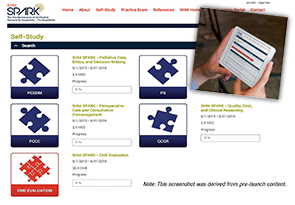
Best of all, SPARK is available exclusively online, making it easy to access from the hospital, the home, the coffee shop, or on the go.
SHM SPARK is a unique online self-assessment tool featuring 175 vignette-style, single-best-answer, multiple-choice questions, complete with answers, discussion, reasoning, references, and quizzing capabilities.
In addition to educating hospitalists with nearly 200 questions online, SHM SPARK empowers users to:
- Create customized practice quizzes in topic areas that meet your specific knowledge gaps/study needs;
- Progress at your own pace using the self-study reference feature; and
- Claim MOC Part II medical knowledge points through ABIM and download a CME certificate for earned AMA Physician’s Recognition Award (PRA) Category 1 Credit™.
The tool includes:
- Robust teaching points for each vignette;
- The option to save key questions for later review; and
- Question-level comparisons to the average response.
Access to SHM Spark is $199 for SHM members and $349 for nonmembers. Groups of 10 or more hospitalists receive a 10% discount.
Now, SHM is introducing hospital medicine’s first preparation tool for the exam.
For the hundreds of hospitalists considering taking the American Board of Internal Medicine’s Focused Practice in Hospital Medicine Maintenance of Certification exam in the near future, SHM’s SPARK exam prep tool is the perfect way to brush up on the skills and knowledge needed to pass.
SHM SPARK gives hospitalists the peace of mind that comes from knowing they are ready for the topics unique to hospitalists in the exam, including:
- Palliative care, medical ethics, and decision making;
- Peri-operative care and consultative comanagement; and
- Quality, safety, and clinical reasoning.
Best of all, SPARK is available exclusively online, making it easy to access from the hospital, the home, the coffee shop, or on the go.
SHM SPARK is a unique online self-assessment tool featuring 175 vignette-style, single-best-answer, multiple-choice questions, complete with answers, discussion, reasoning, references, and quizzing capabilities.
In addition to educating hospitalists with nearly 200 questions online, SHM SPARK empowers users to:
- Create customized practice quizzes in topic areas that meet your specific knowledge gaps/study needs;
- Progress at your own pace using the self-study reference feature; and
- Claim MOC Part II medical knowledge points through ABIM and download a CME certificate for earned AMA Physician’s Recognition Award (PRA) Category 1 Credit™.
The tool includes:
- Robust teaching points for each vignette;
- The option to save key questions for later review; and
- Question-level comparisons to the average response.
Access to SHM Spark is $199 for SHM members and $349 for nonmembers. Groups of 10 or more hospitalists receive a 10% discount.
Now, SHM is introducing hospital medicine’s first preparation tool for the exam.
For the hundreds of hospitalists considering taking the American Board of Internal Medicine’s Focused Practice in Hospital Medicine Maintenance of Certification exam in the near future, SHM’s SPARK exam prep tool is the perfect way to brush up on the skills and knowledge needed to pass.
SHM SPARK gives hospitalists the peace of mind that comes from knowing they are ready for the topics unique to hospitalists in the exam, including:
- Palliative care, medical ethics, and decision making;
- Peri-operative care and consultative comanagement; and
- Quality, safety, and clinical reasoning.
Best of all, SPARK is available exclusively online, making it easy to access from the hospital, the home, the coffee shop, or on the go.
SHM SPARK is a unique online self-assessment tool featuring 175 vignette-style, single-best-answer, multiple-choice questions, complete with answers, discussion, reasoning, references, and quizzing capabilities.
In addition to educating hospitalists with nearly 200 questions online, SHM SPARK empowers users to:
- Create customized practice quizzes in topic areas that meet your specific knowledge gaps/study needs;
- Progress at your own pace using the self-study reference feature; and
- Claim MOC Part II medical knowledge points through ABIM and download a CME certificate for earned AMA Physician’s Recognition Award (PRA) Category 1 Credit™.
The tool includes:
- Robust teaching points for each vignette;
- The option to save key questions for later review; and
- Question-level comparisons to the average response.
Access to SHM Spark is $199 for SHM members and $349 for nonmembers. Groups of 10 or more hospitalists receive a 10% discount.
Student Hospitalist Scholar Grant Winners Blog About Patient Safety
The following are excerpts of those posts.
Why We Should Care about Alarm Fatigue

When I arrived back at the Children’s Hospital of Philadelphia (CHOP) after my first year of medical school, I knew what was awaiting me: thousands of alarms from physiologic monitors, most of them inconsequential, lined up neatly in spreadsheets, splattered all over research databases, lighting up on video screens, chirping down hallways and up elevators. Of course, they were incessantly firing at the bedside, but when patient care is video recorded for Dr. Bonafide’s research study on alarm fatigue, those patient care hours turn into data points that live on hard drives and servers waiting to be classified, annotated, and cataloged by a team of research assistants, including me.
I began working at the CHOP while attending the University of Pennsylvania’s post-baccalaureate premed program. What started as a temporary summer research position turned into an almost three-year endeavor. The pilot that I helped design uses video cameras in hospitalized patient rooms to record patient care. We download the video, edit it so we can review multiple viewing angles at one time, download a spreadsheet of all of the alarms that fired during the study period, and then, with a little patience and some subtraction, we can line up every alarm that fired with the video clip. That’s the easy part.
This small pilot has transformed into a much larger study with a much larger volume of alarms. Since I started medical school last July, the research team has steadily collected video data all year. With support from SHM’s student scholar grant program, I have been able to return to CHOP for the summer. And now the video review begins.
The First Two Years—Pathways and Patient Outcomes
The first two years of our medical curriculum are an introduction to the human body’s normal and pathophysiology and an attempt to untangle the complex pathways involved in the interactions between self and nonself. We hope to make connections between our physical exam findings and the physiologic pathways we have at our educational foundation. We begin to realize that there is a fine line to walk when treating a patient: Altering the inputs of a single system can drastically affect the outputs of another.
If we place patient outcomes in the context of the dance that occurs in clinical care for patients on the wards, similar to the downstream effects of disrupting biological pathways in illness, there is a multifactorial system underlying hospitalized patient outcomes.
Prior to medical school, I worked for several years as a population health epidemiologist in the Democratic Republic of Congo and then as a research data analyst at the University of Chicago. During my work in both of these settings, I quickly learned the relevance of contextual clues in complex systems-based problem solving. Over the course of my first year of medical school, I realized that nowhere is this creative use of information more important than in the inpatient setting, where we attempt to distill out the most important available information when assessing a patient.
But there are caveats to our interpretations of data points: Are we recognizing the most relevant physiologic associations when making clinical decisions? Are patient data really telling us what we think they are? What systemic factors are at play when patients experience an adverse outcome?
In my exploration of the importance of contextualizing inpatient data, I have been incredibly fortunate to work with Dana Edelson, MD, MS, and Matthew Churpek, MD, PhD, MPH, two mentors at the University of Chicago who are equally passionate about asking these same questions surrounding clinical care. Using ward patient data, we have investigated the importance of physician judgment in clinical deterioration and documented the need for greater sensitivity in recognition of sepsis and organ dysfunction in ward patients. But what can be done to reorient clinicians who are overwhelmed by and desensitized to data streams and bedside alarms?
Improving Patient Care as a Trainee

Patient safety has always been a priority for me, but it is only recently that I became aware of the many issues that threaten quality of care for patients. As a medical student, I vividly remember shadowing at the hospital and being shocked at what I saw. I walked through patient rooms and noticed loud beeps, the constant chatter of hospital staff, and the automatic entrance into patients’ rooms without even a knock. I wondered whether all of the disruptions and commotion impacted patient recovery in the hospital and after discharge. After pondering this, I decided that I wanted to take action and see what I, as a medical student, could do to improve daily inpatient conditions.
In order to begin addressing my vision, I knew I needed to find the right mentor in the right location. As a medical student, I feel like my life is on pause at times. During the school year, when exams come in constant waves and my days are spent with my head in notes and books, I am pausing my time with friends and family, using my energy to pursue my dream of helping others improve their health. While I am blessed to have such an opportunity, I knew that during my time off between my first and second year of medical school, I wanted to be in Chicago, near my close friends. And, from there, it seemed as if everything fell into place perfectly. I found on the University of Chicago Medical School website that Dr. Vineet Arora is a prominent Society of Hospital Medicine member who was looking for medical students to conduct research on sleep/functional recovery during hospital stay and post-discharge. The minute I spoke to Dr. Arora, I knew that she would be a great mentor. Not only are her credentials and accomplishments unbelievable, but I could tell she is really passionate about the work she is doing. Her excitement for the project is contagious, and I started getting really excited to start!
The following are excerpts of those posts.
Why We Should Care about Alarm Fatigue
When I arrived back at the Children’s Hospital of Philadelphia (CHOP) after my first year of medical school, I knew what was awaiting me: thousands of alarms from physiologic monitors, most of them inconsequential, lined up neatly in spreadsheets, splattered all over research databases, lighting up on video screens, chirping down hallways and up elevators. Of course, they were incessantly firing at the bedside, but when patient care is video recorded for Dr. Bonafide’s research study on alarm fatigue, those patient care hours turn into data points that live on hard drives and servers waiting to be classified, annotated, and cataloged by a team of research assistants, including me.
I began working at the CHOP while attending the University of Pennsylvania’s post-baccalaureate premed program. What started as a temporary summer research position turned into an almost three-year endeavor. The pilot that I helped design uses video cameras in hospitalized patient rooms to record patient care. We download the video, edit it so we can review multiple viewing angles at one time, download a spreadsheet of all of the alarms that fired during the study period, and then, with a little patience and some subtraction, we can line up every alarm that fired with the video clip. That’s the easy part.
This small pilot has transformed into a much larger study with a much larger volume of alarms. Since I started medical school last July, the research team has steadily collected video data all year. With support from SHM’s student scholar grant program, I have been able to return to CHOP for the summer. And now the video review begins.
The First Two Years—Pathways and Patient Outcomes
The first two years of our medical curriculum are an introduction to the human body’s normal and pathophysiology and an attempt to untangle the complex pathways involved in the interactions between self and nonself. We hope to make connections between our physical exam findings and the physiologic pathways we have at our educational foundation. We begin to realize that there is a fine line to walk when treating a patient: Altering the inputs of a single system can drastically affect the outputs of another.
If we place patient outcomes in the context of the dance that occurs in clinical care for patients on the wards, similar to the downstream effects of disrupting biological pathways in illness, there is a multifactorial system underlying hospitalized patient outcomes.
Prior to medical school, I worked for several years as a population health epidemiologist in the Democratic Republic of Congo and then as a research data analyst at the University of Chicago. During my work in both of these settings, I quickly learned the relevance of contextual clues in complex systems-based problem solving. Over the course of my first year of medical school, I realized that nowhere is this creative use of information more important than in the inpatient setting, where we attempt to distill out the most important available information when assessing a patient.
But there are caveats to our interpretations of data points: Are we recognizing the most relevant physiologic associations when making clinical decisions? Are patient data really telling us what we think they are? What systemic factors are at play when patients experience an adverse outcome?
In my exploration of the importance of contextualizing inpatient data, I have been incredibly fortunate to work with Dana Edelson, MD, MS, and Matthew Churpek, MD, PhD, MPH, two mentors at the University of Chicago who are equally passionate about asking these same questions surrounding clinical care. Using ward patient data, we have investigated the importance of physician judgment in clinical deterioration and documented the need for greater sensitivity in recognition of sepsis and organ dysfunction in ward patients. But what can be done to reorient clinicians who are overwhelmed by and desensitized to data streams and bedside alarms?
Improving Patient Care as a Trainee
Patient safety has always been a priority for me, but it is only recently that I became aware of the many issues that threaten quality of care for patients. As a medical student, I vividly remember shadowing at the hospital and being shocked at what I saw. I walked through patient rooms and noticed loud beeps, the constant chatter of hospital staff, and the automatic entrance into patients’ rooms without even a knock. I wondered whether all of the disruptions and commotion impacted patient recovery in the hospital and after discharge. After pondering this, I decided that I wanted to take action and see what I, as a medical student, could do to improve daily inpatient conditions.
In order to begin addressing my vision, I knew I needed to find the right mentor in the right location. As a medical student, I feel like my life is on pause at times. During the school year, when exams come in constant waves and my days are spent with my head in notes and books, I am pausing my time with friends and family, using my energy to pursue my dream of helping others improve their health. While I am blessed to have such an opportunity, I knew that during my time off between my first and second year of medical school, I wanted to be in Chicago, near my close friends. And, from there, it seemed as if everything fell into place perfectly. I found on the University of Chicago Medical School website that Dr. Vineet Arora is a prominent Society of Hospital Medicine member who was looking for medical students to conduct research on sleep/functional recovery during hospital stay and post-discharge. The minute I spoke to Dr. Arora, I knew that she would be a great mentor. Not only are her credentials and accomplishments unbelievable, but I could tell she is really passionate about the work she is doing. Her excitement for the project is contagious, and I started getting really excited to start!
The following are excerpts of those posts.
Why We Should Care about Alarm Fatigue
When I arrived back at the Children’s Hospital of Philadelphia (CHOP) after my first year of medical school, I knew what was awaiting me: thousands of alarms from physiologic monitors, most of them inconsequential, lined up neatly in spreadsheets, splattered all over research databases, lighting up on video screens, chirping down hallways and up elevators. Of course, they were incessantly firing at the bedside, but when patient care is video recorded for Dr. Bonafide’s research study on alarm fatigue, those patient care hours turn into data points that live on hard drives and servers waiting to be classified, annotated, and cataloged by a team of research assistants, including me.
I began working at the CHOP while attending the University of Pennsylvania’s post-baccalaureate premed program. What started as a temporary summer research position turned into an almost three-year endeavor. The pilot that I helped design uses video cameras in hospitalized patient rooms to record patient care. We download the video, edit it so we can review multiple viewing angles at one time, download a spreadsheet of all of the alarms that fired during the study period, and then, with a little patience and some subtraction, we can line up every alarm that fired with the video clip. That’s the easy part.
This small pilot has transformed into a much larger study with a much larger volume of alarms. Since I started medical school last July, the research team has steadily collected video data all year. With support from SHM’s student scholar grant program, I have been able to return to CHOP for the summer. And now the video review begins.
The First Two Years—Pathways and Patient Outcomes
The first two years of our medical curriculum are an introduction to the human body’s normal and pathophysiology and an attempt to untangle the complex pathways involved in the interactions between self and nonself. We hope to make connections between our physical exam findings and the physiologic pathways we have at our educational foundation. We begin to realize that there is a fine line to walk when treating a patient: Altering the inputs of a single system can drastically affect the outputs of another.
If we place patient outcomes in the context of the dance that occurs in clinical care for patients on the wards, similar to the downstream effects of disrupting biological pathways in illness, there is a multifactorial system underlying hospitalized patient outcomes.
Prior to medical school, I worked for several years as a population health epidemiologist in the Democratic Republic of Congo and then as a research data analyst at the University of Chicago. During my work in both of these settings, I quickly learned the relevance of contextual clues in complex systems-based problem solving. Over the course of my first year of medical school, I realized that nowhere is this creative use of information more important than in the inpatient setting, where we attempt to distill out the most important available information when assessing a patient.
But there are caveats to our interpretations of data points: Are we recognizing the most relevant physiologic associations when making clinical decisions? Are patient data really telling us what we think they are? What systemic factors are at play when patients experience an adverse outcome?
In my exploration of the importance of contextualizing inpatient data, I have been incredibly fortunate to work with Dana Edelson, MD, MS, and Matthew Churpek, MD, PhD, MPH, two mentors at the University of Chicago who are equally passionate about asking these same questions surrounding clinical care. Using ward patient data, we have investigated the importance of physician judgment in clinical deterioration and documented the need for greater sensitivity in recognition of sepsis and organ dysfunction in ward patients. But what can be done to reorient clinicians who are overwhelmed by and desensitized to data streams and bedside alarms?
Improving Patient Care as a Trainee
Patient safety has always been a priority for me, but it is only recently that I became aware of the many issues that threaten quality of care for patients. As a medical student, I vividly remember shadowing at the hospital and being shocked at what I saw. I walked through patient rooms and noticed loud beeps, the constant chatter of hospital staff, and the automatic entrance into patients’ rooms without even a knock. I wondered whether all of the disruptions and commotion impacted patient recovery in the hospital and after discharge. After pondering this, I decided that I wanted to take action and see what I, as a medical student, could do to improve daily inpatient conditions.
In order to begin addressing my vision, I knew I needed to find the right mentor in the right location. As a medical student, I feel like my life is on pause at times. During the school year, when exams come in constant waves and my days are spent with my head in notes and books, I am pausing my time with friends and family, using my energy to pursue my dream of helping others improve their health. While I am blessed to have such an opportunity, I knew that during my time off between my first and second year of medical school, I wanted to be in Chicago, near my close friends. And, from there, it seemed as if everything fell into place perfectly. I found on the University of Chicago Medical School website that Dr. Vineet Arora is a prominent Society of Hospital Medicine member who was looking for medical students to conduct research on sleep/functional recovery during hospital stay and post-discharge. The minute I spoke to Dr. Arora, I knew that she would be a great mentor. Not only are her credentials and accomplishments unbelievable, but I could tell she is really passionate about the work she is doing. Her excitement for the project is contagious, and I started getting really excited to start!
Palliative Care, Advance Care Planning Conversations Needed Between Patients, Hospitalists

Last week, the Centers for Medicare and Medicaid Services (CMS), the nation’s largest payer of healthcare services and the 800-pound gorilla in setting medical necessity and coverage policies, announced a proposal to begin paying for goals of care and advance care planning (ACP) discussions between medical providers and patients. Sound familiar? It should. This is the same, seemingly no-brainer proposal that in 2009 was stricken from the eventually approved Patient Protection and Affordable Care Act (PPACA, aka the ACA, aka “Obamacare”) in response to the intentional and patently false accusations of government-run “death panels,” in the hopes of salvaging some measure of bipartisan support. As we all know, the bill eventually passed the following year without a single Republican voting in favor in either the House or Senate, and without funding for ACP sessions!
The need for ACP and access to primary and specialty palliative care is so great and accepted in the healthcare community. In their Choosing Wisely recommendations, numerous medical specialty societies, including ACEP [American College of Emergency Physicians], AAHPM [American Academy of Hospice and Palliative Medicine], AGS [American Geriatrics Society], and AMDA [The Society for Post-Acute and Long-Term Care Medicine], have included early and reliable access to palliative care and avoidance of non-value added care, such as placement of feeding tubes in patients with advanced dementia, calling out the gap between quality, evidence-based, patient and family-centered care, and “usual care” (e.g. medical and disease-focused care) that patients receive too often near the end of life.
So where is the disconnect between what people want and what actually happens to them at end of life?
The answer is clear: We’re not having “The Conversation.”
And, though our primary care and even specialty care colleagues are involved regularly in the care of these patients, they may be inclined to postpone or avoid ACP with patients and families in the outpatient setting due to lack of comfort [or] skill or even recognizing that the person they’ve been trying valiantly to cure or at least prolong the inevitable [for] is on that downslope of life we all eventually experience—it’s called dying.
Our current reimbursement system throws another barrier in front of providers. Like many other “nonprocedural” activities, ACP is not only undervalued; there is currently a lack of value assigned to this important cognitive, empathic, and communication-based “procedure.” And I refer to it as a procedure because, like a surgical or invasive vascular procedure, when it goes badly, the consequences and sequelae can be just as damaging, and even irreparable.
Thus, intentionally or not, the can is kicked further down the proverbial road until the patient reaches the hospital in a state of crisis—sometimes in extremis—and the hospitalist is left to make sense of all the clinical, emotional, psychological, spiritual, and frequently familial history (baggage?) leading up to that hospital admission. We are expected to develop instant rapport and trust while simultaneously attempting to develop (in collaboration with our specialty care providers and, preferably, the patient’s primary care provider) a plan of care that takes into account the personal values and treatment preferences for that individual within the clinical realities of the patient’s illness and disease trajectory as they lie before us.
Sound familiar?
For the full blog post, including Dr. Epstein’s recommendations for what hospitalists can do to support the CMS proposal, visit Hospital Leader.
Last week, the Centers for Medicare and Medicaid Services (CMS), the nation’s largest payer of healthcare services and the 800-pound gorilla in setting medical necessity and coverage policies, announced a proposal to begin paying for goals of care and advance care planning (ACP) discussions between medical providers and patients. Sound familiar? It should. This is the same, seemingly no-brainer proposal that in 2009 was stricken from the eventually approved Patient Protection and Affordable Care Act (PPACA, aka the ACA, aka “Obamacare”) in response to the intentional and patently false accusations of government-run “death panels,” in the hopes of salvaging some measure of bipartisan support. As we all know, the bill eventually passed the following year without a single Republican voting in favor in either the House or Senate, and without funding for ACP sessions!
The need for ACP and access to primary and specialty palliative care is so great and accepted in the healthcare community. In their Choosing Wisely recommendations, numerous medical specialty societies, including ACEP [American College of Emergency Physicians], AAHPM [American Academy of Hospice and Palliative Medicine], AGS [American Geriatrics Society], and AMDA [The Society for Post-Acute and Long-Term Care Medicine], have included early and reliable access to palliative care and avoidance of non-value added care, such as placement of feeding tubes in patients with advanced dementia, calling out the gap between quality, evidence-based, patient and family-centered care, and “usual care” (e.g. medical and disease-focused care) that patients receive too often near the end of life.
So where is the disconnect between what people want and what actually happens to them at end of life?
The answer is clear: We’re not having “The Conversation.”
And, though our primary care and even specialty care colleagues are involved regularly in the care of these patients, they may be inclined to postpone or avoid ACP with patients and families in the outpatient setting due to lack of comfort [or] skill or even recognizing that the person they’ve been trying valiantly to cure or at least prolong the inevitable [for] is on that downslope of life we all eventually experience—it’s called dying.
Our current reimbursement system throws another barrier in front of providers. Like many other “nonprocedural” activities, ACP is not only undervalued; there is currently a lack of value assigned to this important cognitive, empathic, and communication-based “procedure.” And I refer to it as a procedure because, like a surgical or invasive vascular procedure, when it goes badly, the consequences and sequelae can be just as damaging, and even irreparable.
Thus, intentionally or not, the can is kicked further down the proverbial road until the patient reaches the hospital in a state of crisis—sometimes in extremis—and the hospitalist is left to make sense of all the clinical, emotional, psychological, spiritual, and frequently familial history (baggage?) leading up to that hospital admission. We are expected to develop instant rapport and trust while simultaneously attempting to develop (in collaboration with our specialty care providers and, preferably, the patient’s primary care provider) a plan of care that takes into account the personal values and treatment preferences for that individual within the clinical realities of the patient’s illness and disease trajectory as they lie before us.
Sound familiar?
For the full blog post, including Dr. Epstein’s recommendations for what hospitalists can do to support the CMS proposal, visit Hospital Leader.
Last week, the Centers for Medicare and Medicaid Services (CMS), the nation’s largest payer of healthcare services and the 800-pound gorilla in setting medical necessity and coverage policies, announced a proposal to begin paying for goals of care and advance care planning (ACP) discussions between medical providers and patients. Sound familiar? It should. This is the same, seemingly no-brainer proposal that in 2009 was stricken from the eventually approved Patient Protection and Affordable Care Act (PPACA, aka the ACA, aka “Obamacare”) in response to the intentional and patently false accusations of government-run “death panels,” in the hopes of salvaging some measure of bipartisan support. As we all know, the bill eventually passed the following year without a single Republican voting in favor in either the House or Senate, and without funding for ACP sessions!
The need for ACP and access to primary and specialty palliative care is so great and accepted in the healthcare community. In their Choosing Wisely recommendations, numerous medical specialty societies, including ACEP [American College of Emergency Physicians], AAHPM [American Academy of Hospice and Palliative Medicine], AGS [American Geriatrics Society], and AMDA [The Society for Post-Acute and Long-Term Care Medicine], have included early and reliable access to palliative care and avoidance of non-value added care, such as placement of feeding tubes in patients with advanced dementia, calling out the gap between quality, evidence-based, patient and family-centered care, and “usual care” (e.g. medical and disease-focused care) that patients receive too often near the end of life.
So where is the disconnect between what people want and what actually happens to them at end of life?
The answer is clear: We’re not having “The Conversation.”
And, though our primary care and even specialty care colleagues are involved regularly in the care of these patients, they may be inclined to postpone or avoid ACP with patients and families in the outpatient setting due to lack of comfort [or] skill or even recognizing that the person they’ve been trying valiantly to cure or at least prolong the inevitable [for] is on that downslope of life we all eventually experience—it’s called dying.
Our current reimbursement system throws another barrier in front of providers. Like many other “nonprocedural” activities, ACP is not only undervalued; there is currently a lack of value assigned to this important cognitive, empathic, and communication-based “procedure.” And I refer to it as a procedure because, like a surgical or invasive vascular procedure, when it goes badly, the consequences and sequelae can be just as damaging, and even irreparable.
Thus, intentionally or not, the can is kicked further down the proverbial road until the patient reaches the hospital in a state of crisis—sometimes in extremis—and the hospitalist is left to make sense of all the clinical, emotional, psychological, spiritual, and frequently familial history (baggage?) leading up to that hospital admission. We are expected to develop instant rapport and trust while simultaneously attempting to develop (in collaboration with our specialty care providers and, preferably, the patient’s primary care provider) a plan of care that takes into account the personal values and treatment preferences for that individual within the clinical realities of the patient’s illness and disease trajectory as they lie before us.
Sound familiar?
For the full blog post, including Dr. Epstein’s recommendations for what hospitalists can do to support the CMS proposal, visit Hospital Leader.
Society of Hospital Medicine Posts Quality Improvement Resources Online

Glycemic Control Webinar
Subcutaneous Insulin Order Sets in the Inpatient Setting: Design and Implementation
Presenter: Kristi Kulasa, MD
Date: September 17
Time: 4 p.m. EDT
General QI Webinars
Quality Improvement for Hospital Medicine Groups: Self-Assessment and Self-Improvement Using the SHM Key Characteristics
Presenter: Steve Deitelzweig, MD, SFHM
Date: September 16
Time: 2 p.m. EDT
Other online resources at www.hospitalmedicine.org:
- New FREE clinical topics and guide: chronic obstructive pulmonary disease.
- Coming soon: antibiotic stewardship.
- And now, all of SHM’s popular SHMConsults modules are available on the Learning Portal.
With new quality improvement resources available online every month, Hospital Medicine is THE source for hospitalists ready to improve their hospitals.
Glycemic Control Webinar
Subcutaneous Insulin Order Sets in the Inpatient Setting: Design and Implementation
Presenter: Kristi Kulasa, MD
Date: September 17
Time: 4 p.m. EDT
General QI Webinars
Quality Improvement for Hospital Medicine Groups: Self-Assessment and Self-Improvement Using the SHM Key Characteristics
Presenter: Steve Deitelzweig, MD, SFHM
Date: September 16
Time: 2 p.m. EDT
Other online resources at www.hospitalmedicine.org:
- New FREE clinical topics and guide: chronic obstructive pulmonary disease.
- Coming soon: antibiotic stewardship.
- And now, all of SHM’s popular SHMConsults modules are available on the Learning Portal.
With new quality improvement resources available online every month, Hospital Medicine is THE source for hospitalists ready to improve their hospitals.
Glycemic Control Webinar
Subcutaneous Insulin Order Sets in the Inpatient Setting: Design and Implementation
Presenter: Kristi Kulasa, MD
Date: September 17
Time: 4 p.m. EDT
General QI Webinars
Quality Improvement for Hospital Medicine Groups: Self-Assessment and Self-Improvement Using the SHM Key Characteristics
Presenter: Steve Deitelzweig, MD, SFHM
Date: September 16
Time: 2 p.m. EDT
Other online resources at www.hospitalmedicine.org:
- New FREE clinical topics and guide: chronic obstructive pulmonary disease.
- Coming soon: antibiotic stewardship.
- And now, all of SHM’s popular SHMConsults modules are available on the Learning Portal.
With new quality improvement resources available online every month, Hospital Medicine is THE source for hospitalists ready to improve their hospitals.
Start Planning for State of Hospital Medicine Survey 2016
SHM’s practice analysis committee has geared up over the last month or two in preparation for January’s biannual State of Hospital Medicine survey. We’ve been reviewing topics included in the survey with an eye toward making sure the content stays relevant to what hospitalists and hospital leaders want to know. And we’ve been parsing the language and construction of each question with the goal of making it as clear as possible.
Once the committee finalizes the survey questions, it will be time for our intrepid SHM staffer Patrick Vulgamore, MPH, to build and test the survey instrument. At the same time, the committee will complete supporting materials like FAQs, the survey guide, and the communication plan.
But not all the work is on our side. There are a number of things that you can do now to begin preparing for your survey participation.
First, Commit to Participating
The survey is only as good as the number and quality of responses that we receive. We need everyone to participate, whether your hospital medicine group works in an academic or community setting, whether you serve adult or pediatric patients or both, and whether you are employed by a hospital/system, a management company, or a private group.
Go ask the leaders of your group whether they plan to participate, and lobby heavily to be part of the process. In addition to helping define the current state of hospital medicine, your group will also receive a free copy of the survey report.
Make a Plan
Your next step is to identify who will be responsible for pulling together the required information and completing the survey instrument. You’ll also want to be thinking now about where the various pieces of information you’ll need will come from. The survey includes topics such as scope of clinical practice, schedule, skill mix and work allocation, compensation methodology and benefits, CPT code distribution, and amount of financial support received. Then make sure you set aside time in the January-March period to complete the survey, and check to see that any necessary approvals have been obtained.
Look for Survey Communications in January 2016
The practice analysis committee tries hard to cover every possible communication avenue, but invariably people will say, “We didn’t know it was time for the survey.” So this is your heads up to be on the lookout for your survey invitation—in the regular mail, in both targeted and general emails, in The Hospitalist and other SHM publications, and on the SHM website.

Participate in the MGMA Survey, Too
The SoHM survey doesn’t include questions about individual provider productivity and compensation, but those are some of the most often looked for data points. Instead, SHM partners with the Medical Group Management Association (MGMA) to encourage hospital medicine groups to participate in the MGMA compensation and production survey—which will be conducted concurrently with SHM’s survey for both academic and non-academic groups. SHM then licenses this information for inclusion in the SoHM report.
Full participation in the SHM survey process means not just completing SHM’s SoHM survey but also completing the applicable MGMA survey. This is the only way we can obtain robust information about trends in hospitalist compensation and productivity to share with you.
So don’t wait until January. Start working now to ensure your group is well positioned to contribute to what we learn about the state of hospital medicine!
Leslie Flores is a member of SHM’s Practice Analysis Committee and a partner in Nelson Flores Hospital Medicine Consultants.
SHM’s practice analysis committee has geared up over the last month or two in preparation for January’s biannual State of Hospital Medicine survey. We’ve been reviewing topics included in the survey with an eye toward making sure the content stays relevant to what hospitalists and hospital leaders want to know. And we’ve been parsing the language and construction of each question with the goal of making it as clear as possible.
Once the committee finalizes the survey questions, it will be time for our intrepid SHM staffer Patrick Vulgamore, MPH, to build and test the survey instrument. At the same time, the committee will complete supporting materials like FAQs, the survey guide, and the communication plan.
But not all the work is on our side. There are a number of things that you can do now to begin preparing for your survey participation.
First, Commit to Participating
The survey is only as good as the number and quality of responses that we receive. We need everyone to participate, whether your hospital medicine group works in an academic or community setting, whether you serve adult or pediatric patients or both, and whether you are employed by a hospital/system, a management company, or a private group.
Go ask the leaders of your group whether they plan to participate, and lobby heavily to be part of the process. In addition to helping define the current state of hospital medicine, your group will also receive a free copy of the survey report.
Make a Plan
Your next step is to identify who will be responsible for pulling together the required information and completing the survey instrument. You’ll also want to be thinking now about where the various pieces of information you’ll need will come from. The survey includes topics such as scope of clinical practice, schedule, skill mix and work allocation, compensation methodology and benefits, CPT code distribution, and amount of financial support received. Then make sure you set aside time in the January-March period to complete the survey, and check to see that any necessary approvals have been obtained.
Look for Survey Communications in January 2016
The practice analysis committee tries hard to cover every possible communication avenue, but invariably people will say, “We didn’t know it was time for the survey.” So this is your heads up to be on the lookout for your survey invitation—in the regular mail, in both targeted and general emails, in The Hospitalist and other SHM publications, and on the SHM website.
Participate in the MGMA Survey, Too
The SoHM survey doesn’t include questions about individual provider productivity and compensation, but those are some of the most often looked for data points. Instead, SHM partners with the Medical Group Management Association (MGMA) to encourage hospital medicine groups to participate in the MGMA compensation and production survey—which will be conducted concurrently with SHM’s survey for both academic and non-academic groups. SHM then licenses this information for inclusion in the SoHM report.
Full participation in the SHM survey process means not just completing SHM’s SoHM survey but also completing the applicable MGMA survey. This is the only way we can obtain robust information about trends in hospitalist compensation and productivity to share with you.
So don’t wait until January. Start working now to ensure your group is well positioned to contribute to what we learn about the state of hospital medicine!
Leslie Flores is a member of SHM’s Practice Analysis Committee and a partner in Nelson Flores Hospital Medicine Consultants.
SHM’s practice analysis committee has geared up over the last month or two in preparation for January’s biannual State of Hospital Medicine survey. We’ve been reviewing topics included in the survey with an eye toward making sure the content stays relevant to what hospitalists and hospital leaders want to know. And we’ve been parsing the language and construction of each question with the goal of making it as clear as possible.
Once the committee finalizes the survey questions, it will be time for our intrepid SHM staffer Patrick Vulgamore, MPH, to build and test the survey instrument. At the same time, the committee will complete supporting materials like FAQs, the survey guide, and the communication plan.
But not all the work is on our side. There are a number of things that you can do now to begin preparing for your survey participation.
First, Commit to Participating
The survey is only as good as the number and quality of responses that we receive. We need everyone to participate, whether your hospital medicine group works in an academic or community setting, whether you serve adult or pediatric patients or both, and whether you are employed by a hospital/system, a management company, or a private group.
Go ask the leaders of your group whether they plan to participate, and lobby heavily to be part of the process. In addition to helping define the current state of hospital medicine, your group will also receive a free copy of the survey report.
Make a Plan
Your next step is to identify who will be responsible for pulling together the required information and completing the survey instrument. You’ll also want to be thinking now about where the various pieces of information you’ll need will come from. The survey includes topics such as scope of clinical practice, schedule, skill mix and work allocation, compensation methodology and benefits, CPT code distribution, and amount of financial support received. Then make sure you set aside time in the January-March period to complete the survey, and check to see that any necessary approvals have been obtained.
Look for Survey Communications in January 2016
The practice analysis committee tries hard to cover every possible communication avenue, but invariably people will say, “We didn’t know it was time for the survey.” So this is your heads up to be on the lookout for your survey invitation—in the regular mail, in both targeted and general emails, in The Hospitalist and other SHM publications, and on the SHM website.
Participate in the MGMA Survey, Too
The SoHM survey doesn’t include questions about individual provider productivity and compensation, but those are some of the most often looked for data points. Instead, SHM partners with the Medical Group Management Association (MGMA) to encourage hospital medicine groups to participate in the MGMA compensation and production survey—which will be conducted concurrently with SHM’s survey for both academic and non-academic groups. SHM then licenses this information for inclusion in the SoHM report.
Full participation in the SHM survey process means not just completing SHM’s SoHM survey but also completing the applicable MGMA survey. This is the only way we can obtain robust information about trends in hospitalist compensation and productivity to share with you.
So don’t wait until January. Start working now to ensure your group is well positioned to contribute to what we learn about the state of hospital medicine!
Leslie Flores is a member of SHM’s Practice Analysis Committee and a partner in Nelson Flores Hospital Medicine Consultants.
New Strategy in Patients with Suspected Heparin-Induced Thrombocytopenia Improves Diagnostic Accuracy
Clinical question: Can a diagnostic strategy that utilizes a clinical prediction rule combined with an immunoassay appropriately guide management for patients with suspected heparin-induced thrombocytopenia (HIT)?
Background: The appropriate and timely diagnosis of HIT can decrease the risks of thromboembolic and major bleeding events. Unfortunately, the reference standard tests for diagnosing HIT (e.g. serotonin release assay) are time-intensive. Immunoassays such as PF4/H-PaGIA provide a faster diagnostic approach but have been limited by poor specificity.
Study design: Single-group prospective cohort trial.
Setting: Four hospitals in Ontario, Canada between 2008 and 2013.
Synopsis: In 526 patients with suspected HIT, the results of a diagnostic strategy that combined the 4Ts score system and a PF4/H-PaGIA assay were compared to a HIT reference standard. For the identification of patients with HIT, the use of (1) an intermediate 4Ts score and negative PF4/H-PaGIA or (2) a low 4Ts score regardless of PF4/H-PaGIA result incorrectly excluded patients with HIT in 1.1% of cases (95% confidence interval 0.2-2.1%). For patients with low and intermediate 4Ts scores, however, a negative PF4/H-PaGIA result did not result in any incorrect exclusion.
Bottom line: In patients with low or intermediate 4Ts scores, a negative PF4/H-PaGIA assay may be used to exclude HIT, but further research into how to approach patients with a low 4Ts score and a positive PF4/H-PaGIA assay is needed.
Citation: Linkins LA, Bates SM, Lee AY, Heddle NM, Wang G, Warkentin TE. Combination of 4Ts score and PF4/H-PaGIA for diagnosis and management of heparin-induced thrombocytopenia: prospective cohort study. Blood. 2015;126(5):597-603.
Clinical question: Can a diagnostic strategy that utilizes a clinical prediction rule combined with an immunoassay appropriately guide management for patients with suspected heparin-induced thrombocytopenia (HIT)?
Background: The appropriate and timely diagnosis of HIT can decrease the risks of thromboembolic and major bleeding events. Unfortunately, the reference standard tests for diagnosing HIT (e.g. serotonin release assay) are time-intensive. Immunoassays such as PF4/H-PaGIA provide a faster diagnostic approach but have been limited by poor specificity.
Study design: Single-group prospective cohort trial.
Setting: Four hospitals in Ontario, Canada between 2008 and 2013.
Synopsis: In 526 patients with suspected HIT, the results of a diagnostic strategy that combined the 4Ts score system and a PF4/H-PaGIA assay were compared to a HIT reference standard. For the identification of patients with HIT, the use of (1) an intermediate 4Ts score and negative PF4/H-PaGIA or (2) a low 4Ts score regardless of PF4/H-PaGIA result incorrectly excluded patients with HIT in 1.1% of cases (95% confidence interval 0.2-2.1%). For patients with low and intermediate 4Ts scores, however, a negative PF4/H-PaGIA result did not result in any incorrect exclusion.
Bottom line: In patients with low or intermediate 4Ts scores, a negative PF4/H-PaGIA assay may be used to exclude HIT, but further research into how to approach patients with a low 4Ts score and a positive PF4/H-PaGIA assay is needed.
Citation: Linkins LA, Bates SM, Lee AY, Heddle NM, Wang G, Warkentin TE. Combination of 4Ts score and PF4/H-PaGIA for diagnosis and management of heparin-induced thrombocytopenia: prospective cohort study. Blood. 2015;126(5):597-603.
Clinical question: Can a diagnostic strategy that utilizes a clinical prediction rule combined with an immunoassay appropriately guide management for patients with suspected heparin-induced thrombocytopenia (HIT)?
Background: The appropriate and timely diagnosis of HIT can decrease the risks of thromboembolic and major bleeding events. Unfortunately, the reference standard tests for diagnosing HIT (e.g. serotonin release assay) are time-intensive. Immunoassays such as PF4/H-PaGIA provide a faster diagnostic approach but have been limited by poor specificity.
Study design: Single-group prospective cohort trial.
Setting: Four hospitals in Ontario, Canada between 2008 and 2013.
Synopsis: In 526 patients with suspected HIT, the results of a diagnostic strategy that combined the 4Ts score system and a PF4/H-PaGIA assay were compared to a HIT reference standard. For the identification of patients with HIT, the use of (1) an intermediate 4Ts score and negative PF4/H-PaGIA or (2) a low 4Ts score regardless of PF4/H-PaGIA result incorrectly excluded patients with HIT in 1.1% of cases (95% confidence interval 0.2-2.1%). For patients with low and intermediate 4Ts scores, however, a negative PF4/H-PaGIA result did not result in any incorrect exclusion.
Bottom line: In patients with low or intermediate 4Ts scores, a negative PF4/H-PaGIA assay may be used to exclude HIT, but further research into how to approach patients with a low 4Ts score and a positive PF4/H-PaGIA assay is needed.
Citation: Linkins LA, Bates SM, Lee AY, Heddle NM, Wang G, Warkentin TE. Combination of 4Ts score and PF4/H-PaGIA for diagnosis and management of heparin-induced thrombocytopenia: prospective cohort study. Blood. 2015;126(5):597-603.
Vasoactive Medications Safe in ICU via Peripheral Intravenous Access
Clinical question: Can vasoactive medications be safely given in the ICU via peripheral intravenous (PIV) access instead of central venous access?
Background: Vasoactive medications are given to a variety of patients in shock to maintain hemodynamic function. These medications are given through central venous catheters, partly out of concern for extravasation and tissue injury from PIV access use; however, placement and use of central catheters are also associated with significant morbidity.
Study design: Single-arm, observational, consecutive patient study.
Setting: Single, 18-bed medical ICU.
Synopsis: Investigators identified 734 ICU patients who received vasoactive medications through PIV lines between September 2002 and June 2014. They were 54% male gender, with an average age of 72 years and a SAPS II score average of 75. Norepinephrine, dopamine, and phenylephrine were included in the study. The decision to use these medications was based on clinical judgment. A specific pre-approved protocol, involving PIV and vein size and location, use of ultrasound confirmation, and a maximum duration of 72 hours, was used to administer these medications via PIV. Extravasation was immediately treated with injected phentolamine and topical nitroglycerin.
The average duration of PIV vasoactive medication use was 49 hours. Of the study patients, 13% eventually required central catheters, 2% experienced peripheral extravasation of medication, and none experienced tissue injury as defined by the study group.
Because the study was observational, there was no control group, and outcomes/efficacy compared to central catheters could not be assessed. Patient characteristics and other variables were not controlled for, and its single-center design makes reproducibility uncertain.
Bottom line: Vasoactive medications can be safely and feasibly administered to ICU patients through PIV lines using adequate protocols.
Citation: Cardenas-Garcia J, Schaub KF, Belchikov YG, Narasimhan M, Koenig SJ, Mayo PH. Safety of peripheral intravenous administration of vasoactive medication [published online ahead of print May 26, 2015]. J Hosp Med. doi: 10.1002/jhm.2394.
Clinical question: Can vasoactive medications be safely given in the ICU via peripheral intravenous (PIV) access instead of central venous access?
Background: Vasoactive medications are given to a variety of patients in shock to maintain hemodynamic function. These medications are given through central venous catheters, partly out of concern for extravasation and tissue injury from PIV access use; however, placement and use of central catheters are also associated with significant morbidity.
Study design: Single-arm, observational, consecutive patient study.
Setting: Single, 18-bed medical ICU.
Synopsis: Investigators identified 734 ICU patients who received vasoactive medications through PIV lines between September 2002 and June 2014. They were 54% male gender, with an average age of 72 years and a SAPS II score average of 75. Norepinephrine, dopamine, and phenylephrine were included in the study. The decision to use these medications was based on clinical judgment. A specific pre-approved protocol, involving PIV and vein size and location, use of ultrasound confirmation, and a maximum duration of 72 hours, was used to administer these medications via PIV. Extravasation was immediately treated with injected phentolamine and topical nitroglycerin.
The average duration of PIV vasoactive medication use was 49 hours. Of the study patients, 13% eventually required central catheters, 2% experienced peripheral extravasation of medication, and none experienced tissue injury as defined by the study group.
Because the study was observational, there was no control group, and outcomes/efficacy compared to central catheters could not be assessed. Patient characteristics and other variables were not controlled for, and its single-center design makes reproducibility uncertain.
Bottom line: Vasoactive medications can be safely and feasibly administered to ICU patients through PIV lines using adequate protocols.
Citation: Cardenas-Garcia J, Schaub KF, Belchikov YG, Narasimhan M, Koenig SJ, Mayo PH. Safety of peripheral intravenous administration of vasoactive medication [published online ahead of print May 26, 2015]. J Hosp Med. doi: 10.1002/jhm.2394.
Clinical question: Can vasoactive medications be safely given in the ICU via peripheral intravenous (PIV) access instead of central venous access?
Background: Vasoactive medications are given to a variety of patients in shock to maintain hemodynamic function. These medications are given through central venous catheters, partly out of concern for extravasation and tissue injury from PIV access use; however, placement and use of central catheters are also associated with significant morbidity.
Study design: Single-arm, observational, consecutive patient study.
Setting: Single, 18-bed medical ICU.
Synopsis: Investigators identified 734 ICU patients who received vasoactive medications through PIV lines between September 2002 and June 2014. They were 54% male gender, with an average age of 72 years and a SAPS II score average of 75. Norepinephrine, dopamine, and phenylephrine were included in the study. The decision to use these medications was based on clinical judgment. A specific pre-approved protocol, involving PIV and vein size and location, use of ultrasound confirmation, and a maximum duration of 72 hours, was used to administer these medications via PIV. Extravasation was immediately treated with injected phentolamine and topical nitroglycerin.
The average duration of PIV vasoactive medication use was 49 hours. Of the study patients, 13% eventually required central catheters, 2% experienced peripheral extravasation of medication, and none experienced tissue injury as defined by the study group.
Because the study was observational, there was no control group, and outcomes/efficacy compared to central catheters could not be assessed. Patient characteristics and other variables were not controlled for, and its single-center design makes reproducibility uncertain.
Bottom line: Vasoactive medications can be safely and feasibly administered to ICU patients through PIV lines using adequate protocols.
Citation: Cardenas-Garcia J, Schaub KF, Belchikov YG, Narasimhan M, Koenig SJ, Mayo PH. Safety of peripheral intravenous administration of vasoactive medication [published online ahead of print May 26, 2015]. J Hosp Med. doi: 10.1002/jhm.2394.